Palestinian groups condemn prison footage as humiliation and intimidation.
Israel’s Minister of National Security Itamar Ben-Gvir visits the site of a rocket attack on March 1, 2026 in Tel Aviv, Israe[Erik Marmor/Getty Images]
Israeli National Security Minister Itamar Ben-Gvir has posted footage from a prison holding Palestinian women on social media, boasting that he is responsible for the harsh conditions imposed on them.
The video, posted on Ben-Gvir’s X account on Sunday, shows him entering a section holding female prisoners and confronting them about their complaints regarding detention conditions.
One prisoner tells him: “This is our third day without showering. We are not receiving medical treatment, and our clothes are not clean.”
Ben-Gvir responds: “The good conditions in the prisons are over. This is the current situation, and I am directly responsible for everything. I am pleased with these conditions.”
In a post accompanying the video, the far-right minister wrote that the “whining” of prisoners over their conditions would not influence him, arguing that Israeli captives held in Gaza had not enjoyed adequate conditions.
“I’ll continue to lead a policy of the bare minimum of the minimum,” he said.
Palestinian groups condemn footage
Gaza’s Commission of Detainees and Ex-Detainees Affairs condemned Ben-Gvir’s visit, saying the filming of female prisoners amounted to intimidation and humiliation.
It said his entry into the women’s section of the facility was “not an inspection visit”, but rather a “political spectacle and public incitement against the female prisoners” aimed at intimidating them and breaking their will in front of cameras.
The Palestinian agency said Ben-Gvir’s remarks showed that conditions inside Israeli prisons were part of what it described as a systematic policy of retaliation based on “humiliation, torture, starvation and deprivation”.
An Israeli police officer outside Ofer military prison near Jerusalem, October 13, 2025 [Mahmoud Illean/AP Photo]
The Palestinian Prisoner’s Society also condemned the footage, telling Al Jazeera that Ben-Gvir’s filming and publication of the women constituted “an assault on their human dignity”.
It said hundreds of testimonies from released detainees and prisoners had documented serious abuses inside Israeli prisons and detention facilities.
Push for harsher conditions
Since becoming national security minister in late 2022, Ben-Gvir has pushed for tougher conditions for Palestinian prisoners, including reducing food and water supplies, restricting family visits, limiting shower times and removing privileges inside prison sections.
He has also overseen the transfer of hundreds of Palestinian prisoners between facilities.
Ben-Gvir has previously rejected efforts to improve conditions for prisoners. In 2025, he publicly opposed an Israeli court ruling requiring authorities to ensure Palestinian prisoners received adequate food, insisting that harsh conditions should continue.
According to the Commission of Detainees and Ex-Detainees Affairs, about 9,400 Palestinians are currently being held in Israeli prisons, including 88 women and more than 350 children.
US President Donald Trump shakes hands with ExxonMobil CEO Darren Woods, during a meeting with US oil companies executives in the East Room of the White House in Washington, DC on January 9, 2026.
(Photo by Saul Loeb / AFP via Getty Images)
“This is proof Trump put our service members at risk to get Venezuelan oil for his billionaire buddies,” one Democratic senator said. “Putting our soldiers’ lives on the line for private profit is a gross dereliction of his constitutional duty.”
President Donald Trumpannounced on Truth Social on Friday that his government had “secured majority US control” of Venezuelan oil reserves containing 65 billion barrels of oil.
The announcement followed on reporting from Axios that a deal was in the works, prompting criticisms that such a move would be “colonial” and calls for Congress to reject any such proposal.
“Let’s be clear: This isn’t a win,” Sen. Chris Van Hollen (D-Md.) wrote on social media in response to the announcement. “This is proof Trump put our service members at risk to get Venezuelan oil for his billionaire buddies. Putting our soldiers’ lives on the line for private profit is a gross dereliction of his constitutional duty.”
When US forces invaded Caracas and kidnapped Venezuelan President Nicolás Maduro and his wife First Combatant Cilia Fores on January 3, Trump’s own words following the invasion confirmed suspicions that he acted largely to gain access to the country’s oil.
“These are some of the largest crimes of our lifetimes.”
“We’re going to get the oil flowing the way it should be,” he said in a press conference following the attack.
Friday’s deal, which seems like an attempt to make good on that promise, was also announced by Secretary of State Marco Rubio and acting Venezuelan President Delcy Rodriguez, who provided more details.
Rodríguez stated that the deal will involve private corporations developing 17 “strategic fields” with 65 billion barrels of proven reserves. She echoed Rubio’s $100 billion investment claim and pledged that the projects would yield $209 billion in tax revenues. According to the acting president, the announced agreement “ushers in a new era of growth and prosperity.”
However, economist Francisco Rodríguez, a senior research fellow at the Center for Economic and Policy Research, argued that the agreement was actually a bad deal for Venezuelans.
“President: According to your figures, this agreement will generate tax revenues of just $3.22 per barrel of Venezuelan oil. This represents 4.7% of the current price, and less than half of the royalty rate contemplated in concessions granted by Juan Vicente Gómez,” he wrote on social media, addressing the current Venezuelan leader and referring to a Venezuelan dictator from the early 20th century.
Joseph Bouchard, a journalist and researcher who focuses on Latin America, agreed with Rodriguez’s criticism of the deal, writing on social media that “Trump [was] ‘generously’ buying billions of barrels of Venezuelan oil at less than 5% its market price. He’s stealing their oil for his own family and cronies’ profit. Guessing this may be used as a chip to manipulate the midterms. These are some of the largest crimes of our lifetimes.”
Francisco Rodriguez had earlier pointed out that the deal violated the Venezuelan Constitution, which holds that all minerals and hydrocarbons are “inalienable public domain,” according to Venezuelanalysis. For the deal to go through, therefore, Venezula would have to alter its Constitution.
Former head of Human Rights Watch Kenneth Roth noted on social media that “senior Venezuelan officials, all fearing arrest, are hardly in a position to negotiate vigorously, making the whole thing seems like one big military theft.”
Trump is under pressure to lower gas prices that have spiked due to the fallout of his war on Iran, which entered its sixth month on Friday, and promised in his announcement, “This Historic Transaction MORE THAN DOUBLES American Oil Reserves, greatly increases our Oil Supply, and will substantially lower Gas Prices for all Americans, long into the future.”
However, The Associated Press pointed out: “A significant drop in US gas prices tied to the agreement should not be expected immediately. Experts have repeatedly warned that a substantial boost in Venezuelan oil production will not happen quickly as repairing and expanding infrastructure takes years and requires billions of dollars.”
Exploiting Venezuela’s oil reserves would also exacerbate the climate crisis, which just this summer intensified a deadly heatwave in Europe and is supercharging an El Niño that could contribute to a significant increase in food prices in 2026 and 2027.
It’s been nearly 30 years since I co-founded Common Dreams with my late wife, Lina Newhouser. We had the radical notion that journalism should serve the public good, not corporate profits.
It was clear to us from the outset what it would take to build such a project. No paid advertisements. No corporate sponsors. No millionaire publisher telling us what to think or do.
Many people said we wouldn’t last a year, but we proved those doubters wrong.
Together with a tremendous team of journalists and dedicated staff, we built an independent media outlet free from the constraints of profits and corporate control. Our mission has always been simple: To inform. To inspire. To ignite change for the common good.
Building Common Dreams was not easy. Our survival was never guaranteed. When you take on the most powerful forces—Wall Street greed, fossil fuel industry destruction, Big Tech lobbyists, and uber-rich oligarchs who have spent billions upon billions rigging the economy and democracy in their favor—the only bulwark you have is supporters who believe in your work.
But here’s the urgent message from me today. It’s never been this bad out there. And it’s never been this hard to keep us going. At the very moment Common Dreams is most needed, the threats we face are intensifying. We need your support now more than ever.
We don’t accept corporate advertising and never will. We don’t have a paywall because we don’t think people should be blocked from critical news based on their ability to pay. Everything we do is funded by the donations of readers like you.
When everyone does the little they can afford, we are strong. But if that support retreats or dries up, so do we. Will you donate now to make sure Common Dreams not only survives but thrives?
—Craig Brown, Co-founder
about:blank
about:blank
Our work is licensed under Creative Commons (CC BY-NC-ND 3.0). Feel free to republish and share widely.
Police arrest protesters at a sit-in opposing the U.K. government’s crackdown on Palestine Action in London on April 11, 2026.Photo: Andrea Domeniconi/LightRocket via Getty Images
When police in Kent, United Kingdom, arrested American peace activist Max Geller in 2021 for chaining himself to a van parked in front of an Israeli-owned weapons factory, he knew he might be jailed and face charges for his protest.
What he didn’t realize was that he could be hit with U.S. sanctions five years later for his past ties to a so-called terrorist organization.
The Trump administration on Wednesday announced sanctions against the U.K.-based anti-genocide protest group Palestine Action, which organized the 2021 demonstration and dozens of subsequent actions at U.K. factories owned by Israel’s largest weapons manufacturer, Elbit Systems. The goal, in the U.S. government’s words, is to “protect Americans from the risks posed by far-left terrorism.”
“A major threshold has been crossed,” said Geller, who was previously Palestine Action’s spokesperson but left the group in 2025, when the British government made membership punishable by 14 years in prison. “They’re now treating regular Americans who want to effectively oppose genocide as terrorists.”
The specific parameters of the U.S. sanctions are not yet clear, but Treasury Secretary Scott Bessent pledged the government would “continue to cut the financial lifelines of these groups until they are eliminated.” Sanctioned groups and individuals cannot receive funds, goods, or services from American people or business — meaning they’re cut off from both the U.S. banking system and from any donations from Americans who might want to support them. They can have an isolating global effect: Financial institutions outside the U.S. that do business with American companies are often hesitant to affiliate with sanctioned individuals.
As a result, the sanctions could severely curtail their organizing abilities — and restrict their ability to try to stop the flow of weapons that Israel is using to carry out its ongoing genocide in Gaza.
“We are facing unprecedented attacks on dissent by the same powers that are committing genocide in Gaza,” said Huda Ammori, co-founder of Palestine Action, in an interview with The Intercept. “We are at a point in history where it’s extremely crucial to continue to resist and grow in our movement, rather than back down and to adapt and become less reliant on institutions which are essentially controlled by the powers we’re fighting against.”
While the new U.S. sanctions are a part of a long history of post-9/11 policies in its so-called war on terror, the U.K. government has made itself notorious for its specific draconian crackdown on pro-Palestine dissent. Last year, as Palestine Action members began to face terror charges in court for their demonstrations, the U.K. government proscribed the group as a terrorist organization. The organization in the U.K. immediately ceased operations after the terror proscription. Dozens of members in the U.K. are facing criminal trials for their actions at Elbit weapons factories, and more than 1,200 people have been arrested and charged under the U.K.’s Terror Act for attending rallies merely supporting the group.
Reporting from The Telegraph, which first reported the sanctions, suggested Ammori and fellow co-founder Richard Barnard would face lifetime bans from traveling to the U.S., and that British citizens who continue to support the group would be met with harsh visa restrictions.
Geller, who lives in London, wondered if his bank accounts would be frozen, along with his Venmo and PayPal accounts. He said he normally travels back and forth between the U.S. and U.K. to visit his elderly parents — and the thought of doing so now “suddenly has become scary.”
“They want people scared to even think about supporting or engaging in this kind of work,” Geller said. “This is about materially hurting Palestine.”
The new sanctions against Palestine Action, which were announced alongside sanctions against Autistici/Inventati and Masar Badil, were the latest attack in President Donald Trump’s ongoing campaign to suppress advocacy for Palestinian rights and opposition to Israel’s genocide in Gaza. Last year, Trump issued sanctions against the International Criminal Court after the court ordered war crime arrest warrants for Israel’s leaders. Those sanctions targeted people and organizations that work with the court, such as U.N. Special Rapporteur on the Occupied Palestinian Territories Francesca Albanese, who has been outspoken about the crippling effects of the sanctions. The administration has also sanctioned long-standing Palestinian human rights organizations for their work with the ICC.
“The Trump administration is once again weaponizing counterterrorism authorities to criminalize Palestinian political organizing and solidarity,” said Raed Jarrar, advocacy director with Democracy for the Arab World Now, which last month sued to reverse the Trump sanctions on the ICC. “Sanctions are supposed to target genuine threats to national security, not serve as a political weapon against movements challenging Israel’s treatment of Palestinians.”
The vagueness of the new sanctions is meant to strike fear in anyone who is considering support for the sanctioned group, civil liberties advocates told The Intercept. Does a social media post expressing support violate sanctions? How about hosting a talk with an individual in the group?
“Treasury hasn’t been clear on where the line is, and that’s part of the chilling effect,” said Xiangnong (George) Wang, a staff attorney at the Knight First Amendment Institute who specializes in U.S. sanctions. “In sanctioning Palestine Action, I think their target is more broadly a community of people and groups, including Americans who engage with Palestine Action.”
The sanctions also follow the government’s case against pro-Palestine organizer Fergie Chambers, a past supporter of Palestine Action who was detained for extradition in Spain last month on alleged charges of funding terror groups. The humanitarian aid group Sameer Project, which provided meals and services to Palestinians in Gaza, previously received financial support from Chambers and this month announced it had paused operations in Gaza due to lack of funds.
The repression, said Ammori, has “expanded much more overtly to be used to crush any type of dissent.”
Despite the U.K.’s crackdown on Palestine Action, support for the group and Palestine remains energetic. Rallies in solidarity with Palestine Action and Palestinian rights continue to sprout up across the country even as the government has arrested at least 3,000 people for simple actions such as holding signs that read “I support Palestine Action.” And last year, Elbit closed its facility in Bristol after being targeted by Palestine Action, days before the government outlawed the group.
In the U.S., the group formerly known as Palestine Action U.S., now called Unity Fields as of August 2024, no longer has ties to the U.K.-based group. Though Palestine Action in the U.K. is dormant, secretive cells of Palestine Action are based throughout the U.S. and are continuing to carry out actions. Other Palestine Action cells are targeting the Israeli weapons supply chain in other countries such as Spain, Germany, Ireland, and Poland.
“We have a responsibility to create a huge dent in the Israeli war machine,” Ammori said. “They need to be profitable to operate, and if they’re operating, they’re killing Palestinians — it’s really as simple as that.”
As pressure mounts to disarm and incorporate it into a reconstructed Palestinian order, the movement needs strategic patience to preserve its independence and resistance identity
Hamas fighters secure the area as Egyptian workers and Red Cross officials search for the remains of the last Israeli captive, in the Zeitoun neighbourhood of Gaza City, on 8 December 2025 (Omar al-Qattaa/AFP)
Some moments in the history of liberation movements require courage to act; others require equal courage to wait.
Operation Al-Aqsa Flood, on 7 October 2023, was a daring decision that shattered assumptions that had governed the Palestinian question for years.
It brought Palestine back to the centre of world politics, exposed the illusion that it could be managed or bypassed, and confronted Israel and its western supporters with a conflict they had convinced themselves could be contained indefinitely.
Nothing that followed can justify transferring responsibility for Gaza’s destruction from those who destroyed it to those who resisted them.
Responsibility for the devastation of Gaza, the killing of its civilians and the ruin of its homes, hospitals, universities and schools belongs to those who carried it out. Criticism of Palestinian strategy must never become a mechanism for absolving the perpetrators and their supporters.
New MEE newsletter: Jerusalem Dispatch
Sign up to get the latest insights and analysis on Israel-Palestine, alongside Turkey Unpacked and other MEE newsletters
The scale of that sacrifice demands a harder look at how it is being managed politically.
Hamas today faces perhaps the most difficult transition in its history. The movement that entered Al-Aqsa Flood as an armed resistance organisation now confronts enormous pressure to emerge from the war disarmed, removed from governing Gaza, integrated into a reconstructed Palestinian political system and dependent upon arrangements designed principally by the US and Israel with the tacit support of regional mediators.
Tactical flexibility is indispensable to any resistance movement, but it must serve a coherent strategy rather than gradually displace it.
Four developments should concern anyone who believes the resistance must preserve its independence: the political trajectory signalled by Hamas’s 2017 document, the handling of postwar negotiations, the mounting pressure for disarmament and the movement’s re-engagement with its old Fatah-aligned rivals.
A political wager
Hamas’s 2017 Document of General Principles and Policies, issued well before Al-Aqsa Flood, was widely understood as an effort to present a more pragmatic face to the world. It accepted a sovereign Palestinian state along the 4 June 1967 lines as a formula of national consensus, while refusing to recognise the legitimacy of the Zionist state and maintaining the right of resistance.
The position had a long pedigree. As early as 2009, Khaled Meshaal, then the head of Hamas’s political bureau, told the New York Times that his group “had accepted a Palestinian state on the 1967 borders, including East Jerusalem, the dismantling of settlements and the right of return [of Palestinian refugees] based on a long-term truce”.
The document represented a political wager: that moderation would break the movement’s isolation and open doors in Europe and beyond.
Hamas should study Fatah’s experience and refuse ever to surrender a strategic position in exchange for a promise of future reciprocity
European figures discussed whether it justified engagement. Former UK Prime Minister Tony Blair after leaving his post as the envoy for the Middle East Quartet – which includes the US, EU, UN and Russia – courted Hamas’s leadership, and later acknowledged that the boycott imposed after the movement won the 2006 elections had been a mistake. Yet the broader political opening never came.
Therein lies the lesson: a liberation movement should distinguish between flexibility exchanged for concrete political gains and concessions offered in anticipation of western acceptance. The real danger is a process in which each concession becomes the starting point for the next.
Fatah travelled down that road decades earlier, with each concession presented as the gateway to the next diplomatic breakthrough: recognition was to produce reciprocity, negotiation to deliver statehood and security cooperation to build confidence, while Oslo itself was supposed to be transitional.
Instead, the transitional became permanent as settlements expanded, the occupation deepened and sovereignty receded, leaving Fatah today a shadow of its past.
Hamas should study that experience and refuse ever to surrender a strategic position in exchange for a promise of future reciprocity. Western approval is not a Palestinian national objective.
Squandered leverage
The second concern is more immediate. Negotiations are a contest over interests conducted through bargaining power, yet since the war entered its diplomatic phase, Hamas has repeatedly appeared willing to relinquish leverage before securing reciprocal, enforceable gains.
The release of the Israeli-American soldier Edan Alexander in May 2025 was presented as a goodwill gesture intended to reopen diplomatic space, but goodwill has value in negotiation only when the other side treats it as something to reciprocate.
The larger test came with US President Donald Trump‘s Gaza initiative in September 2025. In its initial response, Hamas agreed to release the Israeli captives, living and dead, under the exchange formula, and accepted the transfer of Gaza’s administration to an independent Palestinian technocratic body.
As the world fixates on Hamas, who will disarm the Israeli settlers storming West Bank villages?
On the broader future of Gaza and fundamental Palestinian rights, however, it insisted that such questions belonged within a comprehensive national framework.
I had argued for precisely this approach days before the movement issued its response on 3 October 2025.
Once the captives were exchanged and that undertaking fulfilled, Hamas should have considered stepping back from direct negotiation over the larger questions, since a resistance leadership does not have to conduct every negotiation itself.
It could have entrusted the bargaining to experienced independent Palestinian negotiators versed in international law, diplomacy, American politics, Israeli negotiating practice, maps and security arrangements, while itself defining the objectives and the red lines.
One of the tragedies of the Palestinian negotiating experience since the 1980s has been the repeated confusion of revolutionary legitimacy with negotiating competence, which was among Fatah’s costliest mistakes under Yasser Arafat.
The record of Oslo makes the asymmetry plain. Israel fielded specialised teams, serving generals and the seasoned foreign ministry lawyer Joel Singer; as Mahmoud Abbas himself later acknowledged, the Palestinians were negotiating against “an experienced, capable delegation” without comparable expertise of their own. Negotiation is a profession, and recognising that a movement lacks it costs far less than pretending otherwise.
The Vietnamese understood this well. Throughout the long Paris talks, Hanoi treated diplomacy as one instrument within a larger political and military strategy: the Politburo set the objectives and the permissible concessions, while veteran negotiators such as Le Duc Tho conducted the bargaining.
When the talks moved beyond positions the leadership was prepared to accept, the negotiators were instructed to return to the earlier agreement as the basis for settlement. The art lay in knowing what could be traded, what had to be preserved and when compromise served the wider goal.
More than weapons
These questions have become urgent because Hamas has moved from discussing governance to entertaining formulas concerning its weapons.
Recent proposals would see them stored or transferred as part of a demilitarisation arrangement tied to Israeli withdrawal, an approach Israel has rejected while insisting on complete disarmament first. Are Palestinians really expected to hand over their weapons while the tanks are still at the border?
The pattern is familiar from the Oslo years: a Palestinian concession enters the diplomatic record, Israel rejects the arrangement as insufficient, and the next negotiation begins from the concession rather than from the position that preceded it. The reward for an unreciprocated concession is usually another demand.
Disarmament therefore goes to the identity and strategic purpose of the movement itself. Restraint can itself be a form of resistance, and Hamas need not return to governing Gaza: relinquishing direct administration might even free the movement from the contradiction between governing a besieged population and functioning as a resistance organisation. Leaving government and abandoning resistance are entirely different propositions.
The greater danger is that a movement exhausted by war and subjected to extraordinary pressure from mediators and international powers could be transformed, incrementally, into merely another Palestinian faction seeking a place in an electoral order whose parameters others have designed.
Fatah’s transformation came about exactly that way. A concession was justified as tactical, another was required to preserve the political process, and another was demanded to demonstrate seriousness, until an organisation established to liberate Palestine became the governing component of an authority operating under occupation.
The movement’s re-engagement with its old rivals in Fatah’s orbit belongs to the same set of concerns. In August, Hamas met officials from the Democratic Reform bloc of the former Gaza security chief Mohammed Dahlan, in contacts a Hamas official confirmed to Al Jazeera, ahead of Palestinian legislative elections scheduled for November.
Weeks earlier, a senior aide had said that Dahlan intervened in the disarmament negotiations through direct contacts with the US president’s son-in-law, Jared Kushner.
Political circumstances change, and old adversaries meet. Yet Hamas should ask what purpose these returns are designed to serve, and why the very powers now pressing for its disarmament appear so comfortable with them.
Strategic patience
Defenders of the present course will ask what the alternative is, and the answer is strategic patience: a movement under immense pressure does not have to resolve every question immediately. Hamas can fulfil the limited agreements it has made while declining to negotiate away questions that belong to the Palestinian people as a whole, using the intervening period to reorganise while the environment becomes clearer.
The region has changed since 2023 in ways in which the consequences are still unfolding. A growing number of analysts argue that the confrontation involving Iran, Israel and the US may leave Tehran strategically stronger than many anticipated. Washington and Tel Aviv, meanwhile, have expended enormous military, political and diplomatic capital.
Gaza itself remains under a fragile ceasefire, with the sequencing of Israeli withdrawal and disarmament unresolved. Why should Hamas negotiate as though today’s balance of power were permanent?
There is a time to fight, a time to negotiate and a time simply to hold one’s position
Elections are a legitimate instrument of popular representation, and Palestinian institutions desperately need renewal after years of stagnation and eroded democratic legitimacy. Taking part in them is one thing; allowing them to redefine the movement’s relationship to resistance is another. Hamas needs to state clearly what it now considers its strategic constants, and how armed, popular, political, legal and diplomatic forms of resistance fit within them. Such questions cannot be answered through piecemeal agreements negotiated under pressure.
There is a time to fight, a time to negotiate and a time simply to hold one’s position, which is sometimes nothing more than the refusal to make irreversible concessions under temporary pressure.
Al-Aqsa Flood came at an almost unimaginable human cost to Gaza, and that cost must never be used to delegitimise Palestinian resistance or shift responsibility from those who devastated the Strip. Neither does the magnitude of Palestinian sacrifice exempt Palestinian leaders from strategic accountability: a resistance movement has to protect the political value of the sacrifices made in the name of its cause.
Hamas can leave the government of Gaza, contest elections under the right conditions and negotiate when circumstances require, without allowing tactical concessions made under extraordinary pressure to redefine its principles. Where its own negotiating capacity is inadequate, it should have the confidence to entrust the bargaining to professionals while retaining the authority to set the red lines.
The gravest danger facing Hamas now lies beyond the battlefield. Having survived one of the most destructive wars in modern history, it could gradually concede at the negotiating table what its adversaries failed to attain by force.
What Israel could not extinguish through military might and genocide should not be surrendered through the fine print of an agreement concocted in Washington.
The views expressed in this article belong to the author and do not necessarily reflect the editorial policy of Middle East Eye.
Sami Al-Arian is the Director of the Center for Islam and Global Affairs (CIGA) at Istanbul Zaim University. Originally from Palestine, he lived in the US for four decades (1975-2015) where he was a tenured academic, prominent speaker and human rights activist before relocating to Turkey. He is the author of several studies and books. He can be contacted at: nolandsman1948@gmail.com.
There are growing fears that Israel may be creating the conditions for local atrocities in Gaza “reminiscent of the Sabra and Shatila massacre,” according to a report by the Israeli daily newspaper Haaretz.
During the 1982 massacre, Israeli-allied Lebanese Phalangist forces slaughtered up to 3,500 Palestinian and Lebanese civilians as Israeli troops surrounded the Beirut refugee camps and oversaw the killing.
In a report publish on Wednesday Haaretz warned that the Israeli army is expanding its use of mercenaries, criminal gangs and drug dealers to commit “war crimes” on Israel’s behalf in Gaza.
Based on testimony from Israeli soldiers, UN reports and satellite imagery, the investigation found that increasingly well-armed collaborator militias have expelled Palestinians from their homes and carried out operations across Gaza.
Israel has trained at least five militia groups, and potentially a sixth, operating from heavily fortified bases inside Israeli-occupied areas of the enclave.
New MEE newsletter: Jerusalem Dispatch
Sign up to get the latest insights and analysis on Israel-Palestine, alongside Turkey Unpacked and other MEE newsletters
One Israeli soldier described how the state, army and Shin Bet intelligence service send armed and “trained militias to commit war crimes, and I’m the one who has to protect them during their operations so they don’t get hurt”.
Israel faces a genocide case at the International Court of Justice, while the International Criminal Court has issued arrest warrants for Prime Minister Benjamin Netanyahu and former Defense Minister Yoav Gallant for war crimes and crimes against humanity.
At least one militia armed and supported by Israel had links to the Islamic State group. Its leader, Yasser Abu Shabab, was killed by Hamas in December 2025.
Many Palestinians celebrated Abu Shabab’s death, while his own family had renounced him as a traitor for collaborating with Israel.
“But the militia project he came to symbolize continues to evolve and expand – particularly since the October 2025 ceasefire was announced,” Haaretz reported.
Another militia leader, Shawqi Abu Nasira, openly acknowledged his collaboration with Israel in a video posted online.
“I made the decision to liberate the land from Hamas. If people say that makes me a collaborator, then I’m a collaborator.”
The vast majority of Palestinians view collaboration with Israel as treason and betrayal, regardless of their position on Hamas.
‘They entered every structure, looted everything they could get their hands on, came out with piles of stuff – and then burned down the house’
– Unnamed Israeli soldier
Israel has also built infrastructure for the gangs amid Gaza’s widespread destruction. Near a militia base in Shujaiya, Israeli forces levelled a large Palestinian cemetery and replaced it with an extensive training ground.
The relationship between the gangs and the Israeli military has become increasingly intertwined. Fighters roam freely around Israeli army outposts, according to soldiers who spoke to Haaretz.
“The gunmen stage displays of force, film them and upload the footage to their Facebook pages for propaganda and recruitment purposes,” the investigation said.
Israel supplies the gangs with weapons and provides artillery and drone support during their operations.
‘Reminiscent of Sabra and Shatila ‘
The mercenaries also serve another purpose. They attack Palestinians struggling to survive Israel’s genocide, drive families from their homes, loot their belongings and burn their houses.
Israeli ministers have repeatedly called for making life in Gaza unbearable as part of efforts to ethnically cleanse the enclave and replace its Palestinian population with Jewish settlers.
In one account, Israeli soldiers said the mercenaries arrived in pickup trucks before “they just ran and shot at people”.
“They entered every structure, looted everything they could get their hands on, came out with piles of stuff – and then burned down the house,” one unnamed Israeli soldier said.
Boys fly a kite against the backdrop of smoke rising from the Gath shelter for displaced Palestinians, after an Israeli air strike in Gaza, on 31 January (AFP/Bashar Taleb)
Reports that Israel has used local gangs to outsource parts of its strategy to ethnically cleanse Gaza are not new. Their activities have been documented for more than a year.
The soldiers’ testimony, however, provides further evidence that the mercenaries now function as an “operational arm” of the Israeli army and Shin Bet.
Israel continues to arm criminal gangs while demanding that Hamas disarm and opposing the formation of any independent Palestinian security force in Gaza. The arrangement allows Israel to use the militias against anyone it labels a Hamas member while unleashing them against ordinary Palestinians.
Hamas sources told Haaretz that they would not surrender their “defensive weapons” while the militias remain armed and receive Israeli support, because the groups would seek to target them.
Middle East Eye delivers independent and unrivalled coverage and analysis of the Middle East, North Africa and beyond. To learn more about republishing this content and the associated fees, please fill out this form. More about MEE can be found here.
Treasury Secretary Scott Bessent speaks to members of the media outside the White House in Washington, Thursday, Aug. 20, 2026. [AP Photo/Jacquelyn Martin]
The Trump administration on Monday launched what Treasury Secretary Scott Bessent called an “economic D-Day” against Iran—a campaign of secondary sanctions aimed at every country, bank and company that trades with Tehran, above all China, which took roughly nine-tenths of Iran’s oil exports before the US blockade choked them off.
Six months of US and Israeli bombardment, which killed at least 3,468 people in Iran by June 10, has not brought down the government in Tehran, and most shipping still avoids the Strait of Hormuz. The administration is now carrying the war into the world economy, on a course that leads to confrontation with China.
The campaign Bessent announced at a Washington press conference Monday adds shipping, gold, digital assets, aviation and technology to the sectors covered by US secondary sanctions, which already reach Iran’s oil and banks.
Among the nearly 60 companies, people and ships sanctioned Monday are trading and logistics firms in China and Hong Kong and entities in Singapore, the United Arab Emirates, Malaysia, Switzerland, Britain, France, Greece, Syria, Ukraine and the Marshall Islands, according to Al Jazeera’s tally of the Treasury list.
“Every country has a defined timeline to shut down activities we have identified,” Bessent said, without naming them. China, India, Turkey, Iraq and the UAE are the most exposed, experts told CNN.
Asked by reporters whether Chinese banks would be hit, Bessent replied that “no one is above the reach of US sanctions” and said to expect “a major announcement of a financial institution being sanctioned by the end of this week.”
Bessent followed on CNBC on Thursday, calling the campaign “a one-two punch” of blockade and sanctions and saying that Washington was telling other governments, “You’re either with us or against us.” He added, “Keep in mind that the Chinese get 50 percent… of their energy from inside the Gulf.”
Three days before the announcement, the Wall Street Journal’s editorial board, in a lead editorial printed Saturday, made clear that the central target is China. “After six months of war with Iran, President Trump has a credibility problem,” it wrote. “No President has yet climbed the Iran sanctions ladder with China, moving from the isolated ‘teapot’ refineries that buy Iran’s oil to the Chinese state-owned enterprises that support them. Nor has any President given Dubai an ultimatum to shut down Iran’s illicit financial network and meant it.”
The editorial’s final paragraph warned that “Iran may lash out militarily in response, targeting Gulf energy again, and the US will have to be ready with a firm response.”
The Washington Post’s editorial board wrote Monday evening that delivering Bessent’s “zero-leakage approach… will require picking a big fight with China, the largest buyer of Iranian oil.” The editorial noted that US sanctions so far have fallen on “independent refiners and intermediaries rather than major Chinese banks or state-owned companies.”
The Post continued: “The Trump team cannot help but describe its recalibrated approach in martial terms… But D-Day evokes a military campaign with a clear objective: the enemy’s unconditional surrender. Economic pressure rarely works that way… That’s why containment is not really about regime change. Its immediate goal is to make an already battered Iran weaker so that it’s less capable of threatening its neighbors and developing nuclear weapons.”
This is a testament to the deepening political crisis triggered by the failure of US imperialism to achieve its strategic objectives in its war against Iran.
The war was conceived as a means of seizing the chokepoint of the world’s oil supply and gaining a decisive advantage over China. Instead, the United States confronts a political debacle, and it is China’s position that has been strengthened.
The sanctions campaign is an attempt to recoup by economic force what could not be won by bombing, and it aims that force at Beijing. Washington has paused the bombing since late July but has not renounced it; Defense Secretary Pete Hegseth said Monday that “by no means are we foreclosing using kinetic strikes anywhere in the Strait of Hormuz or around Iran.”
The war the sanctions are meant to salvage began on February 28, when Washington and Tel Aviv started the bombing. A cease-fire in April and a June 17 memorandum with Tehran lifted the blockade and let Iran export oil until Washington broke the arrangement in early July by sending ships through a route in the strait to which Iran had not agreed. When Iran fired on the ships the US struck back, and on July 8 Trump declared the cease-fire over. The blockade was reimposed. On August 17, the day the memorandum expired, Trump said of Oman, with which Iran is negotiating a shipping corridor, “If Oman gets in the way, we’ll bomb the shit out of them.”
To “sever every economic lifeline” of Iran, as Bessent put it, means to sanction the Chinese refineries, shipping companies and banks that buy and move its oil, and behind them the Chinese state. Behind the refineries stands the largest manufacturing economy in the world, whose trade in raw materials and finished goods a “zero-leakage” sanctions regime would have to police.
Chinese Foreign Ministry spokesman Lin Jian said at a briefing Tuesday that “China will do everything necessary to firmly safeguard its rights and interests.” Asked by Bloomberg whether China would change course, he said its cooperation with Iran “should not be disrupted.” Beijing, the Financial Times reported Tuesday, has told Washington that any broad extension of the sanctions to Chinese companies will bring retaliation.
Asked on Monday why the sanctions were not being imposed at once, Bessent replied: “Well, we are giving everyone the opportunity to remedy bad behavior. Why would I want to blow up the global financial system?”
Bessent’s statements are an admission of the provocative character of US actions. Desperate to shore up its geopolitical position, it is taking a series of increasingly reckless and desperate steps, whose impact is to widen the global scope of the war.
The Financial Times wrote in an editorial Tuesday that the operation “seemed more like a series of warning shots fired from far offshore,” and concluded that it “amounts to another risky gamble on a road that, for both sides, ultimately has to lead back to the negotiating table.”
However, the sequence Washington has followed does not lead to a negotiating table. It leads to a widening global conflagration, centrally targeting Russia and China.
Western media, by employing double standards, censorship, deceptive language, amplifying Israeli lies and dehumanizing Palestinians, facilitates the genocide in Gaza.
Chris Hedges ScheerPost
The Western media manufactures consent for genocide. It normalizes Israel’s decades-long military occupation and apartheid. It erases Israel’s flagrant violations of international law. It perpetuates the fallacy of Israeli victimhood. It betrays, discredits and demonizes the work of Palestinian journalists and media workers in Gaza, at least 220 of whom have been killed by Israel between Oct. 7, 2023, and August 2025. It supinely accepts draconian Israeli censorship. It acquiesces with tepid letters of protest at Israel’s refusal to allow foreign reporters in Gaza — an effort by Israel to mask its war crimes. It amplifies Israeli lies, from beheaded babies to widespread sexual assault of Israeli women on Oct. 7, to obfuscate the truth.
When writing about Gaza, verbs are in the passive tense. There is no subject. No one is accountable. Genocide, it seems, is an act of God. No different from an earthquake or tsunami. Clichés and opaque adjectives such as the “cycle of violence” or “clashes” distort and falsify reality.
“If thought corrupts language, language can also corrupt thought,” George Orwell warned.
Terms such as “genocide,” “atrocity,” “ethnic cleansing” and “occupied territories” magically disappear from media reports on Palestinians, whose resistance is routinely described as “savage” and “barbaric.” New York Times reporters are instructed by editors to avoid terms such as “Palestine,” “genocide,” “carnage,” “refugee camp,” “slaughter” and “massacre,” when referencing Palestinians.
The media slavishly regurgitates what Israel feeds it. Saturation bombing becomes “surgical air strikes.” Israel’s weaponization of famine becomes a “food shortage.” The killing of unarmed civilians — including children — becomes “clashes.” The hilltop fortress-like compounds of Jewish colonists becomes “neighborhoods.” Extrajudicial assassination of a journalist or a doctor becomes “died.”
Genocide, referred to as the “Israel-Hamas war” is justified as “self-defense,” part of the mantra of Israel’s “right to defend itself.” When schools, hospitals, clinics, ambulances, mosques, churches and other civilian targets are obliterated, they are labeled “Hamas command centers” or targeted because Hamas is “using civilians as human shields” — something Israel does routinely, when the army binds detained Palestinians and forces them to enter potentially booby-trapped buildings and tunnels ahead of Israeli troops.
When Israelis are held by Hamas, they are “hostages,” even if they serve in the military. When Palestinians — including children — are held without charges or trial and disappeared into Israeli detention centers, where torture is “widespread” and “systematic,” they are “prisoners.”
Missile attacks on tent cities or hospitals are blamed on Palestinian armed groups firing errant rockets. If Israel acknowledges the attacks — which very rarely happens — they are described as a “tragic mistake.”
Civil institutions in Gaza are characterized as “Hamas-run” to cast doubt on the veracity of what they report. The New York Times routinely qualifies announcements from the Gaza Health Ministry by noting it “does not distinguish between civilians and combatants,” masking the slaughter of tens of thousands of civilians.
The result is some of the most convoluted writing in the history of journalism, including the Nov. 5, 2023 New York Times headline that reads: “Explosions Gazans Say Was Airstrike Leaves Many Casualties in Dense Neighborhood.”
“When Middle East Eye journalists Mohamed Salama and Ahmed Abu Aziz, along with Reuters photojournalist Hussam al-Masri, and freelancers Moaz Abu Taha, and Mariam Dagga — who had worked with several media outlets, including the Associated Press — were killed in a “double tap” strike — designed to kill first responders arriving to treat casualties from initial strikes — at Nasser Medical Complex, how did Western news agencies respond?” I asked in my column The Betrayal of Palestinian Journalists.
“Israeli military says strikes on Gaza hospital targeted what it says was a Hamas camera,” the Associated Press reported.
“IDF claims hospital strike was aimed at Hamas camera,” announced CNN.
The camera belonged to Reuters, which said Israel was “fully aware” the news agency was filming from the hospital.
“When Al Jazeera correspondent Anas Al Sharif and three other journalists were killed on Aug. 10 in their media tent near Al Shifa Hospital, how was it reported in the Western press?” I asked.
“Israel Kills Al Jazeera Journalist It Says Was Hamas Leader,” Reuters titled its story, despite the fact al-Sharif was part of a Reuters team that won a 2024 Pulitzer Prize.
The German newspaper Bild, published a front page story headlined: “Terrorist disguised as a journalist killed in Gaza.”
Mainstream media failed to describe Israel’s repeated breaches of the ceasefire with the language of violation. Instead, the coverage followed the same patterns of rationalizing Israel’s attacks and uncritically parroting Israel’s claims to justify its actions. As Palestinians continued to be killed — during a ‘ceasefire’ — and the flow of aid did not reach the level of need or what was agreed to, Western media framed these flagrant violations as ‘tests’ or ‘challenges’ to a ‘shaky ceasefire.’ As leading human rights organizations like Amnesty International warned that the genocide was, in fact, not over, legacy media continued to frame it as a war with a ‘fragile ceasefire.’
Words matter. Words justify actions. If there is no genocide, if Israel is defending itself in a war, the U.S. and Israel’s European allies have the right to provide tens of billions of dollars in military aid. If this is a war begun by Hamas on Oct. 7 then it is possible to lament the obliteration of Gaza and mass slaughter by Israel as the regrettable result of the Hamas attack.
This corruption of language is designed, as Orwell noted, to defend the indefensible:
Things like the continuance of British rule in India, the Russian purges and deportations, the dropping of the atom bombs on Japan, can indeed be defended, but only by arguments which are too brutal for most people to face, and which do not square with the professed aims of political parties. Thus political language has to consist largely of euphemism, question-begging and sheer cloudy vagueness. Defenseless villages are bombarded from the air, the inhabitants driven out into the countryside, the cattle machine-gunned, the huts set on fire with incendiary bullets: this is called pacification. Millions of peasants are robbed of their farms and sent trudging along the roads with no more than they can carry: this is called transfer of population or rectification of frontiers. People are imprisoned for years without trial, or shot in the back of the neck or sent to die of scurvy in Arctic lumber camps: this is called elimination of unreliable elements.
Adam Johnson in “How to Sell a Genocide: The Media’s Complicity in the Destruction of Gaza,” examined over 12,000 articles from The New York Times, The Washington Post, CNN.com, Politico, Axios, USA Today, and The Associated Press, along with 5,000 TV segments aired on CNN and MSNBC. His carefully researched book is a damning indictment of the “liberal” media’s justification of the genocide.
CNN and The New York Times instructed their editors and journalists that attacks could only be attributed to Israel after confirmation from the IDF and GPS coordinates. Johnson quotes a source at CNN:
Whether it’s in the newsroom or in the field, we couldn’t credit anything to Israel unless we were held to this impossibly high bar of having to call it an “explosion,” until we geolocated the site of the explosion, sent the coordinates to the Israelis and asked them for comment.
You can see an interview with Johnson about his book at The Electronic Intifada here.
CNN journalists reporting on Israel and Palestine must submit their work for review to the network’s Jerusalem bureau prior to airing. The CNN bureau, like all news bureaus in Israel, is required to abide by restrictions imposed by Israeli military censors.
The very few Palestinians who appear on CNN and other legacy media outlets, are routinelyasked — usually before they are even permitted on air — if they “condemn” Hamas. Guests who express even tepid criticism of Israel are asked whether Israel “has a right to exist.”
No one is ever asked if they condemn Zionism, apartheid, ethnic cleansing, genocide or Israel’s 100 year war on Palestine. Nor are they asked if the Palestinians have a right to defend themselves — which under international law they do, including with weapons.
Our domesticated journalists and news organizations are, as Robert Fisk pointed out, “prisoners of the language of power.” They dutifully parrot the official lexicon. This makes them not only propagandists, but accomplices to genocide.
Those who protest the genocide, including students on university campuses — many of whom are Jewish — are smeared as “Hamas supporters” and “antisemites.” Journalists ferret out Zionist students, usually found esconced in campus Hillel houses, who claim to be “fearful for their safety,” because of the protests. The media pays little attention to the rise in anti-Muslim bigotry or the repression meted out to student protestors, which includes not only police brutality and 3,000 detainments and arrests, but suspensions, probations, expulsions, withholding of diplomas and the firing of sympathetic faculty.
Slogans which call for Palestinian liberation — including “From the river to the sea, Palestine will be free” — along with the Palestinian flag, have been criminalized.
The message is clear: Jewish lives matter. Palestinian lives do not.
“The reports of UN agencies, of respected human rights monitors, of medical journals, and of professional medical personnel, are generally treated with respect and given prominence in the mainstream media,” writes the historian Rashid Khalidi in the introduction to Robin Anderson’s book, “The Complicit Lens: US Media Coverage of Israel’s Genocide in Gaza:”
Not in this war: instead, if such sources are cited at all, equal media treatment is given to the outrageous slanders and calumnies against these organizations and individuals, smears that are produced in profusion by Israel’s legion of professional propagandists and its myriad of defenders in the US. Besides smearing critics of Israel’s genocide as supporters of Hamas or terrorist sympathizers, the main weapon in their arsenal of defamation is their systematic and outrageous misuse of the deadly accusation of antisemitism.
The massive defections of readers and viewers from mainstream media to social media platforms that do not filter news through the Israel lobby, the U.S. government or corporations, are a stark indicator of the media’s bankruptcy. The response to these defections has been “platformicide” — the use of algorithms, shadow banning, restriction of live streaming capabilities and the closing of accounts by social media giants such as Facebook, Instagram, X, YouTube and TikTok, to dramatically reduce the reach of reporting on Palestine.
This censorship is part of a coordinated effort to hide the horror of the genocide from the public.
By constantly referencing Oct. 7, the Western media decontextualizes the genocide. It ignores Israel’s 19-year siege of Gaza. Oct. 7 is characterized in the Western media as “unprovoked.” Israel’s massacres of unarmed Palestinians in Gaza in the winter of 2008 and 2009, along with its attacks on Gaza in 2012, 2014 and during the Great March of Return in 2018 and 2019 are ignored.
The 1948 Nakba — when European Zionists seized more than 78 percent of historic Palestine, violently expelled 750,000 Palestinians, destroyed more than 530 Palestinian villages and killed 15,000 Palestinians — is rarely referenced. Seventy percent of those driven from their homes in 1948 were forced into Gaza.
The Zionist project is predicated on fostering historical amnesia.
“Once Hamas was established as a brutal, terrorist group whose members gleefully tortured, dismembered, and beheaded babies without conscience, no further explanation was needed,” writes Anderson in her book. “The media simply avoided reporting Israel’s history of violence and as a result, establishment media also avoided the conditions of everyday life for Palestinians.”
The fiction that there is currently a ceasefire in Gaza — Israel has killed at least 1,286 Palestinians and injured 4,257 since it supposedly went into effect — has become the excuse used by Western media to turn its back on Gaza. This genocide denial has characterized the coverage since its inception. It masks not only Israel’s crimes, but Israel’s stated intention to ethnically cleanse all Palestinians from Gaza. It effectively neuters international law. And it makes a mockery of the profession of journalism.
When the last act of ethnic cleansing happens, Western media will, I am sure, continue to bombard us with Israeli agitprop, euphemisms and clichés.
It will justify the genocide until the end.
NOTE TO SCHEERPOST READERS FROM CHRIS HEDGES: There is now no way left for me to continue to write a weekly column for ScheerPost and produce my weekly television show without your help. The walls are closing in, with startling rapidity, on independent journalism, with the elites, including the Democratic Party elites, clamoring for more and more censorship. Bob Scheer, who runs ScheerPost on a shoestring budget, and I will not waver in our commitment to independent and honest journalism, and we will never put ScheerPost behind a paywall, charge a subscription for it, sell your data or accept advertising. Please, if you can, sign up at chrishedges.substack.com so I can continue to post my now weekly Monday column on ScheerPost and produce my weekly television show, The Chris Hedges Report.
Chris Hedges is a Pulitzer-prize winning journalist, best-selling author & activist
Editor’s Note: At a moment when the once vaunted model of responsible journalism is overwhelmingly the play thing of self-serving billionaires and their corporate scribes, alternatives of integrity are desperately needed, and ScheerPost is one of them. Please support our independent journalism by contributing to our online donation platform, Network for Good, or send a check to our new PO Box. We can’t thank you enough, and promise to keep bringing you this kind of vital news.
Migrants being loaded into US Air Force C-17s, January 2025 [Photo: White House]
A US deportation flight carrying 20 people landed shortly before 1 p.m. local time Thursday at Roberts International Airport outside Monrovia, Liberia. The reported nationalities of those aboard included Venezuelans, Cubans and Colombians, according to Reuters.
Five men refused to leave the plane. The New York Times reported that American federal agents forced them off, and that all five were eventually returned to the aircraft. A video verified by the Times shows deportees sitting on the tarmac beside the plane, surrounded by roughly 20 agents. The Liberian government has not clarified their status.
This is the first flight under an agreement permitting Washington to transfer up to 1,200 people to Liberia over the next year. Liberia is the 26th country to receive them. Some 23,000 people have already been sent abroad under at least 35 bilateral arrangements, according to Third Country Deportation Watch.
The three nationalities named in Thursday’s flight are not incidental. Venezuela, Colombia and Cuba today face three of the greatest humanitarian catastrophes in the Western Hemisphere that have been greatly worsened by the recolonization drive by US imperialism.
In Venezuela, the confirmed death toll from the June 24 earthquakes stands at 6,438, with 86,358 injured. The site Venezuelareporta.org counts 41,334 still missing. In Colombia, the August 10 earthquake has killed 319, with 4,611 injured and 290 missing. In both countries, thousands of buildings collapsed and thousands more were structurally compromised—revealing that entire cities were built to engineering codes wholly inadequate to meet the known seismic risk.
In Cuba, UN officials have described the effects of the US economic and fuel blockade as a “silent Gaza.” In 2025, registered deaths reached double the births, even as millions have migrated in recent years. Infant mortality rose 148 percent between 2018 and 2025, from 4.0 to 9.9 per thousand.
These are not separate disasters. Venezuela’s economy was strangled by 15 years of US sanctions before Washington invaded outright on January 3, abducted the president and impounded its oil revenues. Colombia absorbed over $10 billion in US military aid across a quarter century of Plan Colombia, financing an ongoing civil war before helping install the President Abelardo de la Espriella, a lawyer associated with fascist paramilitaries. Cuba has been blockaded for six decades, and the Trump administration has cut off its oil supply and sanctioned investors across multiple sectors this year.
US imperialism manufactured the conditions that drove millions from these countries and caused the current devastation. It is now deporting those who escaped to US soil to one of the ten poorest countries in the world.
Liberia: the disposal ground
Liberia is not a random destination. It was founded in 1822 by freed American slaves and became a de facto US colony within decades—rich in minerals and heavily exploited by American capital after the Second World War and throughout the Cold War. When Cold War support ended, the country collapsed into civil war; the 1989–2003 conflicts alone killed some 300,000 people.
Its health system never recovered from the 2014–15 Ebola epidemic, and the US State Department currently maintains a Level 2 travel advisory for Liberia, citing crime, civil unrest and health infrastructure concerns.
The arrangement is completely venal. Following Liberia’s October 2025 agreement to accept Kilmar Abrego Garcia, who continues to fight his deportation in the US, Washington extended Liberian business and tourism visas from 12 to 36 months and signed a $124 million health sector memorandum. Reuters reports $5 million allocated for Liberian “immigration management.”
The conditions awaiting deportees across Africa follow a consistent pattern of indefinite confinement. In Congo, deportees told the Associated Press they were held behind locked gates, forbidden to leave alone, and permitted outside roughly once a week under IOM escort. In Equatorial Guinea, the AP found deportees confined in a hotel owned by the family of President Teodoro Obiang Nguema Mbasogo, barred from leaving, given uneven access to medical care, and subjected to repeated pressure to return to the countries they had fled—of at least 32 people held there, 25 had been sent home by May. An international coalition sued Ghana in June on behalf of 27 deportees, alleging that most were rapidly returned to their home countries in defiance of US protection orders, some having been held under armed guard.
Thousands of miles from any court with jurisdiction over their captivity, this amounts to indefinite imprisonment without charge, trial, or sentence—cruel and unusual punishment by any honest definition, permitted only because US law pretends immigration detention is “civil” rather than punitive.
The apparatus of disappearances
Third-country deportation flights are the end point of a machinery being built across the United States. Politico reports that in the past year, judges have ruled against ICE’s detention tactics more than 16,000 times, roughly two-thirds of those cases stemming from a single two-page memo reinterpreting a 1996 statute to permit the detention of people who had lived in the country for years.
Third-country deportation exists precisely to circumvent the courts. When a judge rules a person cannot be returned home because they face persecution or torture, they are stationed 7,000 kilometers away instead, where no US court has jurisdiction and no one is watching.
The precedent was set much earlier. Beginning February 4, 2025, the administration flew Venezuelan detainees to Guantánamo Bay—the site built expressly to hold prisoners where US constitutional protections were said not to apply. In March 2025, 238 Venezuelans were flown to El Salvador’s CECOT prison, 137 of them under the Alien Enemies Act of 1798, in open defiance of a federal court order to turn the planes around. They were imprisoned without charge, trial or sentence on allegations of Tren de Aragua membership that rested in many cases on nothing more than tattoos. Held incommunicado for four months, they were released only in a July 2025 prisoner exchange.
Asked in April 2025 about sending US citizens to the same prison, Trump told El Salvador’s Bukele that “homegrowns are next,” adding that he would need “five more places.” In other words, what is being tested on migrants—detention without charges, imprisonment abroad, defiance of the courts—is being prepared for citizens and political opponents.
These agreements are being challenged in U.T. v. Bondi, which contests whether the contracted third countries provide the “full and fair” asylum procedures US law requires.
Deportation flights continue to Venezuela, Colombia and Cuba
While Washington opens new routes to third countries, the flights going directly to Venezuela, Cuba and Colombia carry their own lethal consequences. On June 24, a flight carrying 146 Venezuelans deported from the United States landed hours before the earthquakes. Venezuelan authorities locked them inside the Hotel Sanitario Negra Hipólita in La Llanada—as they had thousands of others arriving on more than 160 flights coordinated between Washington and Caracas since 2025. When the building collapsed that evening, 134 of them died.
Oswadeliz Núñez, whose son Daniel died there, told El País: “They were locked in those rooms, under key. The night of the earthquake I wrote to the numbers on the Vuelta a la Patria page and nobody answered me.” Daniel had been stopped while driving in Jacksonville. “I fixed up his room as nicely as I could, but he never arrived. I received the little box with his ashes.”
The deportation flights have since resumed through an airport in eastern Venezuela while Maiquetía remains disabled, with two landing in August.
Colombia’s experience follows the same pattern. The country accepted 475 deportation flights from the United States between 2020 and 2024. When former President Gustavo Petro briefly suspended them last year after migrants arrived in chains, the pause lasted only days before Washington forced their resumption—and there has been no announcement suggesting they will be discontinued after the earthquake.
Whether a deportee is flown to Caracas, Bogotá, Havana or Monrovia, the underlying principle is the same and it is indefensible: workers are being forcibly removed from places where they had built lives and sent to places where their safety cannot be guaranteed. This reality is summed up by the 20 agents surrounding five men who refused to get off the plane, on a tarmac in a country none of them had chosen or to which they had the slightest connection.
The right of workers to live and work where they choose, without fear of persecution or deportation, is not a concession to be granted by any government. It requires the independent political mobilization of the international working class on a socialist program that abolishes the outmoded capitalist nation-state system.
Former Chicago Police Superintendent Eddie Johnson listens as former Chicago Mayor Rahm Emanuel speaks about Chicago’s weekend of gun violence during a news conference at the Chicago Police Department 6th District station August 6, 2018 in Chicago, Illinois.
(Photo by Joshua Lott/Getty Images)
The Democratic base is fed up with a system that gives inordinate power to the wealthy and to large corporations.
We’ve been hearing a lot of panicky warnings lately after Democratic primary voters chose socialists and other leftists instead of “moderates” in several major elections. The alarm bells got louder this month after Michigan’s progressive Senate candidate Abdul El-Sayed defeated Rep. Haley Stevens—who was, the New York Timesreported, “the moderate establishment-backed candidate.”
The soothing “moderate” label routinely goes to candidates like Stevens who’ve supported continual arming of Israel. She “benefited from about $62 million in advertising spending from half a dozen outside groups,” the Times noted. “Over half of that sum came from the super PAC arm of the American Israel Public Affairs Committee, the country’s most influential pro-Israel group.”
The Democratic base is fed up with a system that gives inordinate power to the wealthy and to large corporations. In the real world, the so-called “moderates” are aligned with a status quo that continues to inflict widespread suffering and preventable death at home and abroad.
To hear timeworn party strategists like James Carville and Paul Begala tell it, leftwing candidates are duping the Democratic electorate. As this month began, Carville threatened to leave the party. Begala made headlines by declaring, “I don’t like the socialists. I can’t stand them.”
But last month, a CNN poll found that “about a third of Democrats and Democratic-leaning adults identify as democratic socialists.” At a time when defeating the fascistic Republican Party is imperative, any strategist’s prescription that would denigrate or seek to exclude them amounts to political malpractice.
Treating so many Democratic voters like interlopers to be scolded might play well with corporate donors. But it’s a feeble swim against the political current. Polling shows that the younger Democratic voters are, the more favorable they’re apt to be toward socialism. “Younger adults are more likely to be in groups on the left, while older adults tend to cluster in more conservative groups,” the Pew Research Center noted.
Drawing on the results of its new public opinion survey, Global Strategy Group just reported that “socialist Democrats skew younger, with 57 percent of them being between the ages of 18 and 44.” Another poll, released a month ago by Tufts University’s Center for Information and Research, found that two-thirds of young people “said that their political views have changed in some way in recent years”—and “youth whose views did shift were almost twice as likely to become more liberal/progressive instead of more conservative.”
As socialists and others on the left prevail in many high-profile races, the refrains of condemnation coming from some of the Democratic Party establishment are potshots in a losing battle. By definition, young voters are the future of the party. Its prospects for winning elections are diminished to the extent that younger voters are made to feel unwelcome, or even vilified.
To the ears of many young Democratic voters, derision about how they cast their ballots is coming from out-of-touch party elders who treat crucial problems as abstractions or matters worthy only of lip service. Millions of Americans in early adulthood are facing financial stress with bleak outlooks for jobs and careers. College tuitions are often prohibitive, and college debt can be debilitating. Rents and mortgages are high. Everyday expenses are worse than a challenge. The climate crisis is real.
Such realities cast a shadow over the future. The last thing those voters want is arrogant leadership that refuses to grasp the urgency of this political moment.
Charcoal seller Elio Galvan, 44, shows his hands as he waits for customers next to a sign advertising his product on a road in Havana on February 6, 2026. Across Cuba, families are scrambling to cope with relentless blackouts and shortages worsening under economic pressure from US President Donald Trump.
(Photo by Adalberto Roque / AFP via Getty Images)
Life in Cuba is full of suffering not because of socialism but because of a 67-year-long blockade by the world’s largest superpower.
Recently, while listening to an NPRinterview with Cuban-American musician Arturo Sandoval, I was reminded of the late political scientist Michael Parenti’s classic text, “Inventing Reality: The Politics of the Mass Media.”
In his 1986 book, Parenti described a situation that is still relevant 40 years later—when the US fears that another country’s non-capitalistic political model (and its attendant advances in social justice and quality of life) could cause US citizens to question their own system, it regularly imposes an embargo and sanctions against the country. Next, the news media reports on the suffering caused by these policies while, at the same time, avoiding any mention of the embargo and sanctions. Finally, when after years or decades of suffering, the people of this blockaded country take out their anger on the closest target and begin protesting against their government, the US steps in. It places a puppet president in power and pours into the country the money it had withheld throughout the embargo. Then, the media reports on how well everyone is now doing without, once more, acknowledging the oversized role the embargo played in the prior devastation.
In the aforementioned NPR interview, host Scott Simon perfectly perpetuated this model of media complicity by announcing towards the interview’s conclusion, “Arturo Sandoval, I’ve got to put you on the spot a little. You’ve been pretty quiet about politics over the years, but obviously you fled Cuba. When Fidel Castro died, you spoke out about your disdain for his regime. It was ten years ago.” Then, with no historical or even recent context, Simon concluded with, “Cuba seems to be almost worse than ever now.”
With this final declaration in which he erroneously implied a connection between Cuba’s current immiseration and Fidel Castro’s rule, Simon led Sandoval into his response: “Sixty-seven and a half years is way too long, man… The people in Cuba are desperate and hopeless.”
Citizens who are not given the context of the news cannot be engaged participants in the democratic process.
Simon allowed his guest to say this unchallenged as if these decades of desperation and hopelessness are the result of Cuba’s 1959 revolution. To the contrary, in addition to footing the bill for Sandoval’s musical education (he attended the free Cuban National Art School, founded by Fidel Castro), the Cuban Revolution redefined human rights as access for all to free education, free healthcare, low-cost daycare centers, and highly subsidized housing.
The desperation Sandoval referred to is the direct result of the 67-year-old embargo against Cuba imposed by the United States, the longest embargo in the history of the world. Combined with its multitude of supplementary sanctions (more than 200 of which were enacted during Trump’s first term in office), these punitive measures prohibit Cuba from purchasing products, including medicine, manufactured abroad if they contain more than 10% of US-origin components. They restrict US residents’ ability to travel to Cuba. They hinder Cubans residing in the US from wiring money to their families, a common way for immigrants from all parts of the world to supplement the income of relatives back home.
The Cuban embargo has received worldwide condemnation. For more than three decades now, the UN General Assembly has annually presented its members with a resolution to denounce the embargo. Year after year, its 193 member states cast a near-unanimous vote affirming the resolution. The only two countries that consistently vote against it—and in favor of the embargo— are, unsurprisingly, the US and Israel.
Unfortunately, the UN resolution, while a significant show of solidarity, has no authority to end the embargo. As codified by US law, only the US Congress has this power.
In addition and sadly, the suffering caused by the embargo is not a mere result of the blockade but the explicit objective of it as stated in a declassified 1960 government document posted on the National Security Archive’s website and abstracted as follows: “This memo, written by Deputy Assistant Secretary of State for Inter-American Affairs Lestor Mallory, provides the original, unvarnished, policy rationale for imposing trade restrictions on Cuba. Fidel Castro’s revolution is quite popular in Cuba, Mallory points out; since there is no effective opposition against him, the only way to undercut Castro’s support is ‘through disenchantment and disaffection based on economic dissatisfaction and hardship.’ Mallory advocates a set of punitive economic actions designed to deny ‘money and supplies to Cuba, to decrease monetary and real wages, to bring about hunger, desperation, and the overthrow of [the] government.’”
Beyond the embargo and its sanctions, the US designation of Cuba as a State Sponsor of Terrorism (SSOT) contributes to what Sandoval referred to as the Cuban people’s hopelessness and desperation. The partisan political boomerang of the SSOT was initiated by President Ronald Reagan in 1982 for Cuba’s support of Latin American leftist groups. It was removed by Obama in 2015, reinstated by Trump in 2021, symbolically removed by Biden on January 14th, 2025, at the end of his presidency, and again reinstated by Trump on January 20th, 2025, at the start of his second term.
Along with other restrictions, the sponsor-of-terrorism status forbids US international aid organizations, including Food for Peace and the Peace Corps, from offering humanitarian assistance to Cuba. It prohibits Cuba from receiving loans from the World Bank and other international financial institutions. These are loans which could be used for much-needed projects such as an overhaul of the island’s aging electrical grid, which has caused multiple nationwide blackouts over the past two years.
Furthermore, as described by the Washington Office on Latin America, the SSOT “has a chilling effect on businesses, including banking or telecommunications investments that are crucial to promoting the type of transformation essential to expanding freedom on the island.” Ironically, this freedom (ie: the opening of business and economic opportunities) is precisely what the US purports to desire for the Cuban people. And it is this lack of this freedom, which Sandoval said in the somber closing statement of his NPR interview, that prevents him from returning to Cuba and will leave him to “die dreaming” of a homecoming.
At this point in the interview, what Scott Simon didn’t say becomes as, if not more, significant than what he did. It is that, in Fidel Castro’s final two years of life, a sense of hope and a feeling of, yes, freedom pervaded Cuba.
Hope came to Cubans with Obama’s 2014 détente, which, while not a revocation of the embargo [only able to be repealed by Congress], still enabled the US Embassy in Cuba and the Cuban Embassy in the US to reopen for the first time in 50 years. Washington’s rapprochement permitted commercial and direct mail flights between the two countries to be reinstated and for restrictions on remittances to be loosened. This, in turn, allowed Cuban-Americans, like immigrants from other countries, to now easily send money to their families on the island.
Freedom came from an opening of the Cuban economy, from the government’s expanded opportunities for private businesses. Cubans responded enthusiastically, opening record numbers of cafés and restaurants and music and art venues, among other enterprises to which their new American friends, now able to travel freely to Cuba, flocked in record numbers.
It was a boon for both sides—and evidence that another way of engaging with Cuba was possible. Until, that is, Trump was elected at the end of 2016 and, soon thereafter, began systematically shutting everything down once more.
If not for the very real damage it inflicts on the country, the SSOT designation could be considered laughable, as, during all these decades as a supposed sponsor of terrorism, Cuba has remained steadfast in its commitment to a peaceful coexistence with its neighbors near and far. For the past quarter of a century, Cuba’s Latin American Medical School, esteemed for both its size (enrollment-wise, it is considered the largest medical school in the world) and its focus on preventative healthcare, has offered a full-ride, plus a monthly living stipend, for students from low-income communities around the world, including the US.
Additionally, in the wake of Hurricane Katrina, Cuba offered aid workers to the US, although President Bush rebuffed this overture. In the early days of COVID-19, Cuba sent medical brigades to help Italy contain its outbreak. And this was in addition to the doctors Cuba regularly sent to countries in need from Algeria to Honduras to Sri Lanka. Until, that is, in 2025 the US began threatening to deny visas to the leaders of countries accepting assistance from Cuban doctors; and the targeted countries, fearing retribution, terminated their contracts with Cuba.
This past March, as Jamaica’s Cuban doctors headed home following one such termination, hundreds of Jamaicans took to the streets for what they called a “Gratitude Walk.” For three miles, they marched wearing t-shirts reading, “Thank you Cuba for 50 years of medical service” and chanting, “We love Cuba” and “Bring back the doctors.”
Walk participant Rupert Walters, President of the Jamaica-Cuba Friendship Association’s St. Catherine’s chapter and a beneficiary of Cuban care for his prostate cancer, called his government’s decision to cave to US pressure “crazy.” Walters told the Jamaica Observer that he wished the government had “allowed the Cubans to support and give their services to the hundreds of thousands of Jamaicans who can’t afford it,” and warned that, as a result of the medical program termination, Jamaicans would die.
Rather than supporting terrorism, Cuba has long been the target of terrorist attacks by the US government. There was the CIA’s half-century of documented assassination attempts against Fidel Castro, involving everything from poison pens to exploding cigars.
Less comical and more lethal were terrorist attacks led by Luis Posada Carriles, a Cuban exile and CIA operative. In 1976, 35 years before September 11th, Posada Carriles masterminded the Western Hemisphere’s first act of political terrorism against a civilian flight. His bombing of a Cubana de Aviación airplane killed all 73 passengers, 24 of whom comprised the entirety of the Juvenile Cuban National Fencing team. In the summer of 1997, Posada Carrilles began another bombing campaign, this time targeting Havana hotels, restaurants, and discotheques—and killing an Italian tourist. Finally arrested in Panama in 2000 for attempting to assassinate Fidel Castro at a conference he was attending there, Posada Carrilles later fled to the US, where he was detained for illegal entry and then pardoned by President Bush. In 2018, he died a free man in Miami.
Although Scott Simon didn’t say this in his interview with Arturo Sandoval, the current “worse-than-ever” situation he referenced is due to the US’s oil blockade, initiated by an Executive Order from Trump in January. Under this latest act of economic warfare, tankers trying to deliver petroleum to the island are threatened with tariffs and, if they still attempt to do so, they are chased away by US Coast Guard vessels.
Like the embargo, like the sanctions, like the SSOT status, the fuel blockade has caused widespread suffering for the Cuban people. It impedes access to electricity and also to water, which arrives at most houses in Cuba via an electric pump. It prevents the preservation of not just food but also of medicines that need refrigeration.
Many Cubans now sleep outside, on rooftops or on the Malecón seawall, to escape the sweltering summer heat, made all the more unbearable without the electricity to run their fans. Because electricity (which has been prioritized for hospitals and schools) is now available in most houses for just two hours per day, Cubans must wake up whenever it arrives (even if it is at 3 AM) to do all they couldn’t without it—wash clothes and dishes, cook and bathe. And collect water for the next outage. So, sleep too, has become a casualty of this US-provoked humanitarian crisis, referred to by a group of US Representatives who visited the island in July as a “silent Gaza.”
By engaging in de-contextualized reporting rather than shedding light on the reasons why the current situation is as it is, mainstream US media outlets like NPR do their listeners a grave and dangerous disservice. For, as The Washington Post’s motto warns us, albeit a little more ironically after Jeff Bezos’ purchase of it, “Democracy dies in darkness.”
Citizens who are not given the context of the news cannot be engaged participants in the democratic process. Without the full story as to why what is happening in our world is happening, we are rendered powerless to change it. Without our consent, we become cogs in the bulldozer of US interventionism and imperialism.
Life in Cuba is full of suffering not because of socialism but because of a 67-year-long blockade by the world’s largest superpower. In a government now absent of checks and balances, we need to call out the offending media. We need to let them know that we’re paying attention, that we hold them accountable for their lies of omission— and that we demand better.


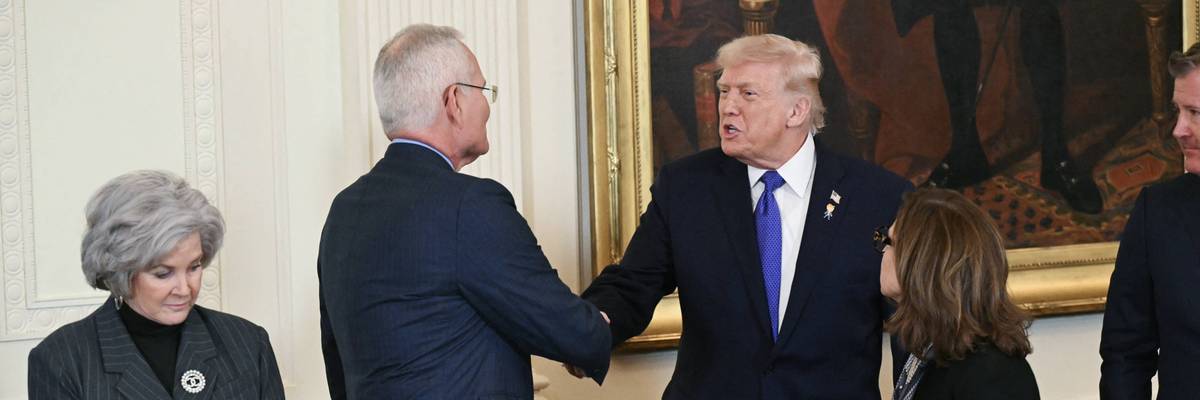
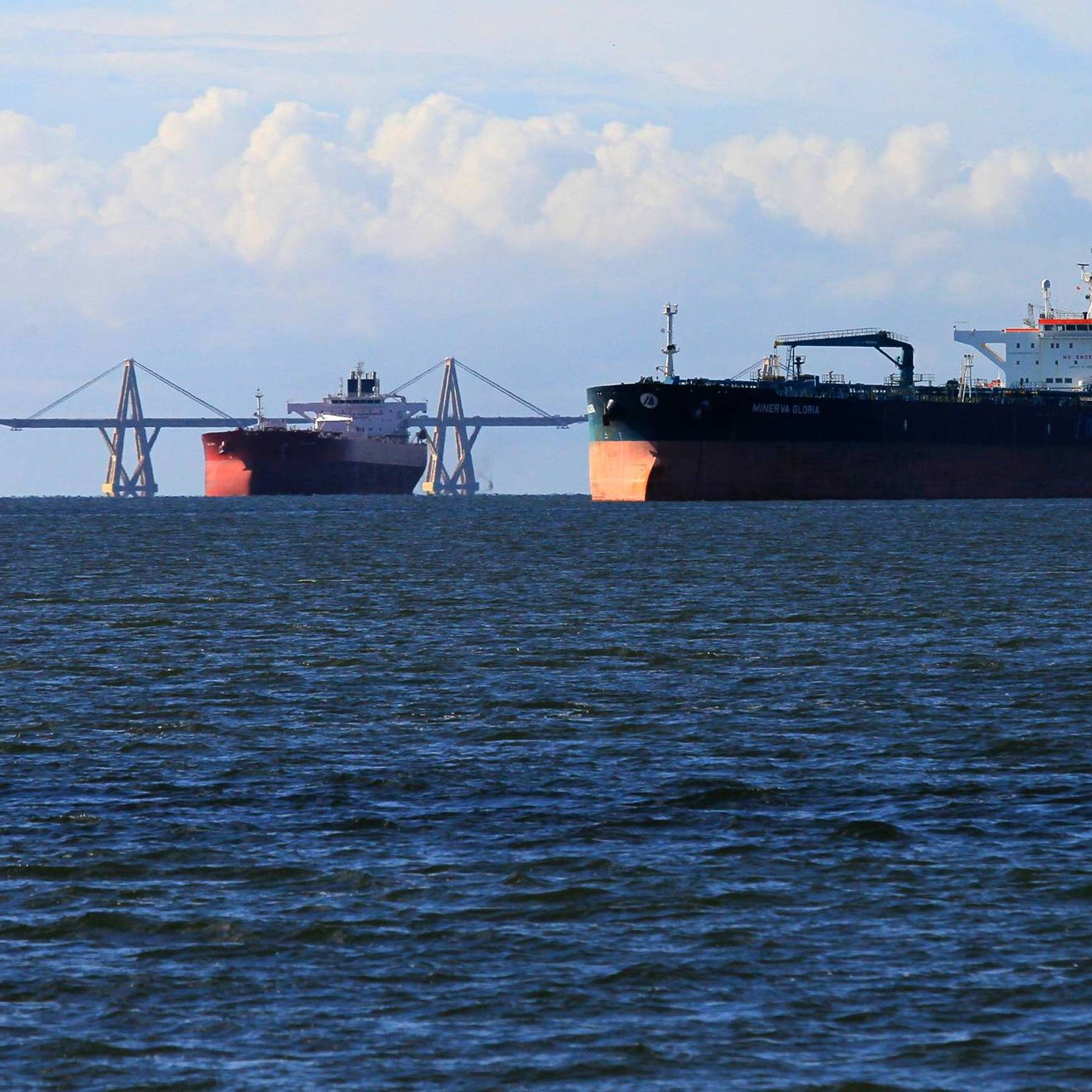

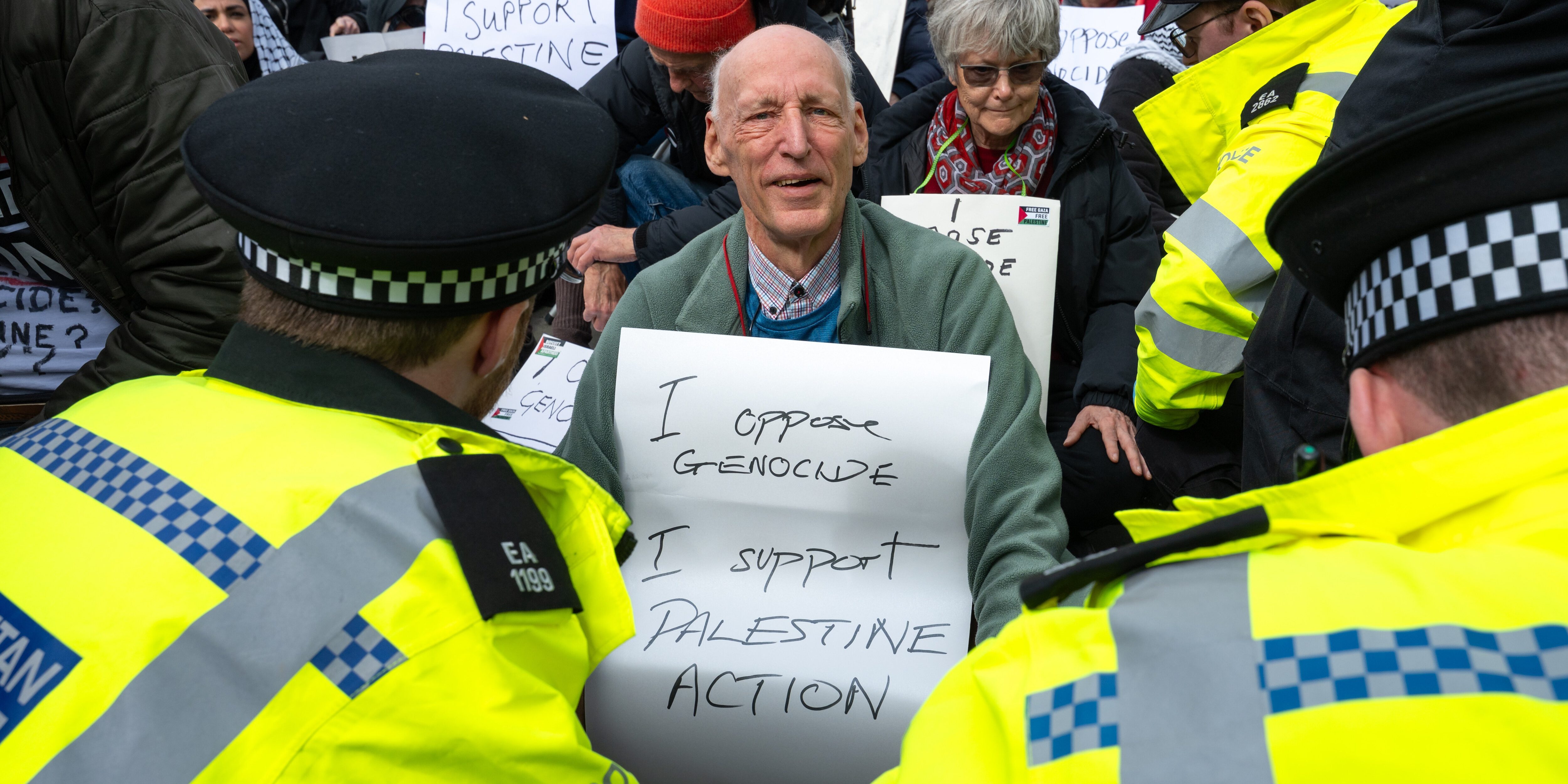
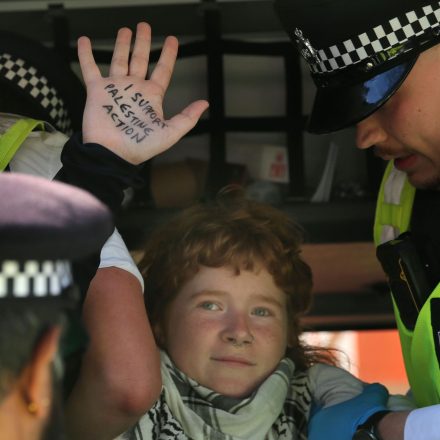
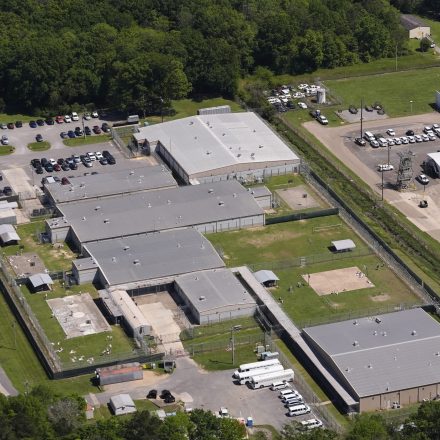


 Read our complete coverage Chilling Dissent


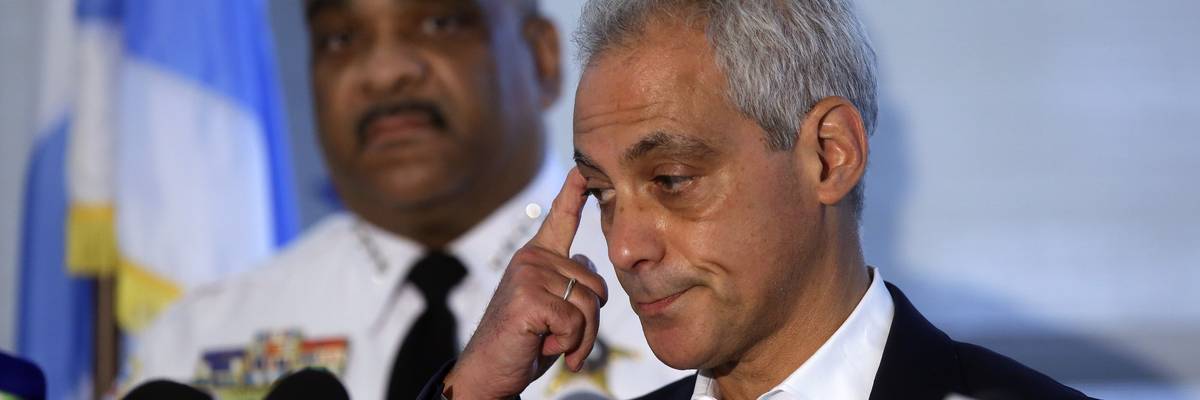
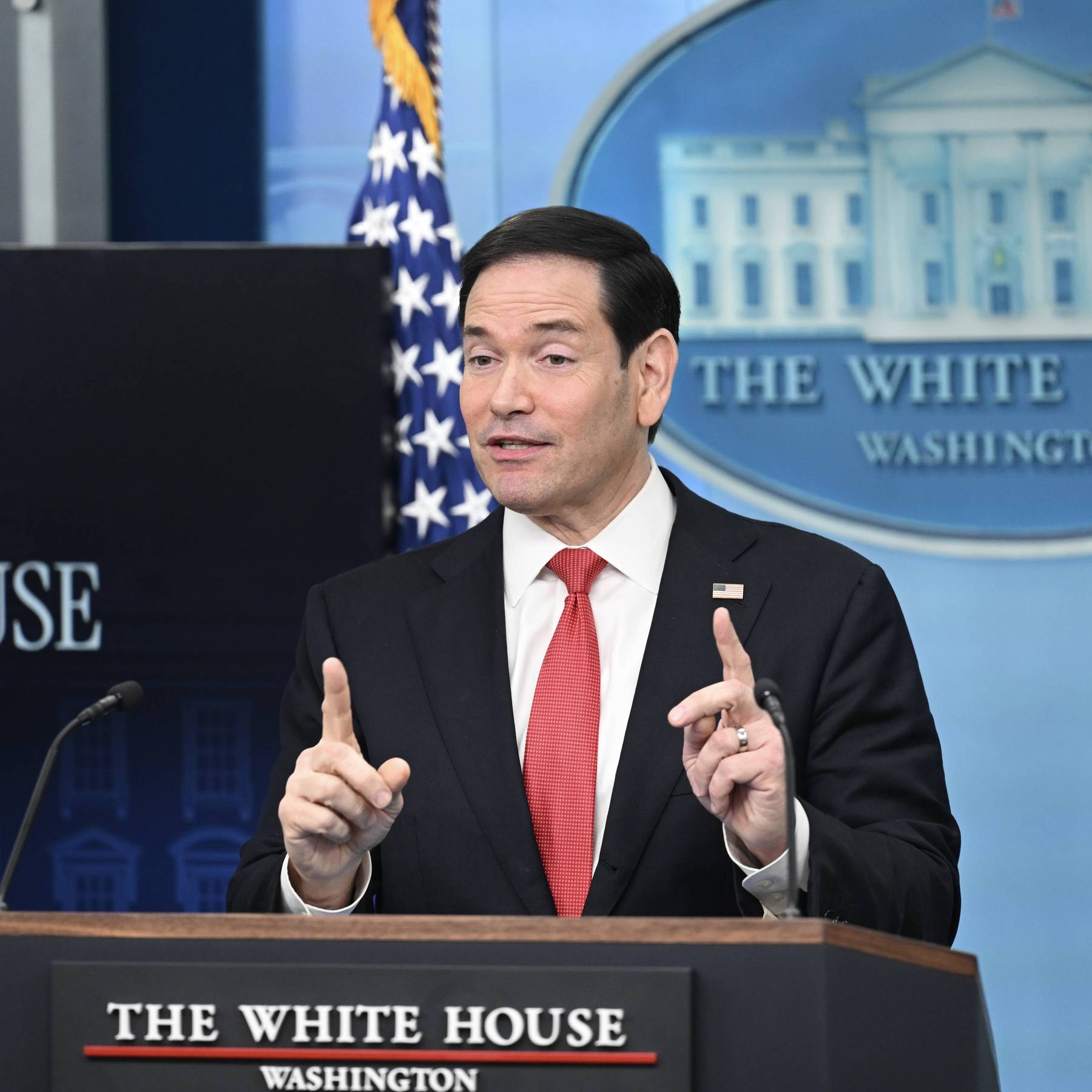
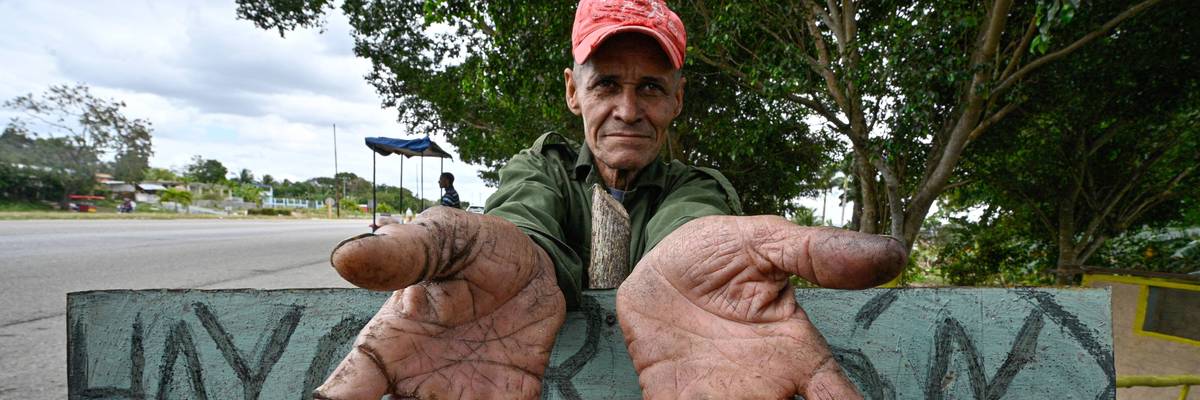
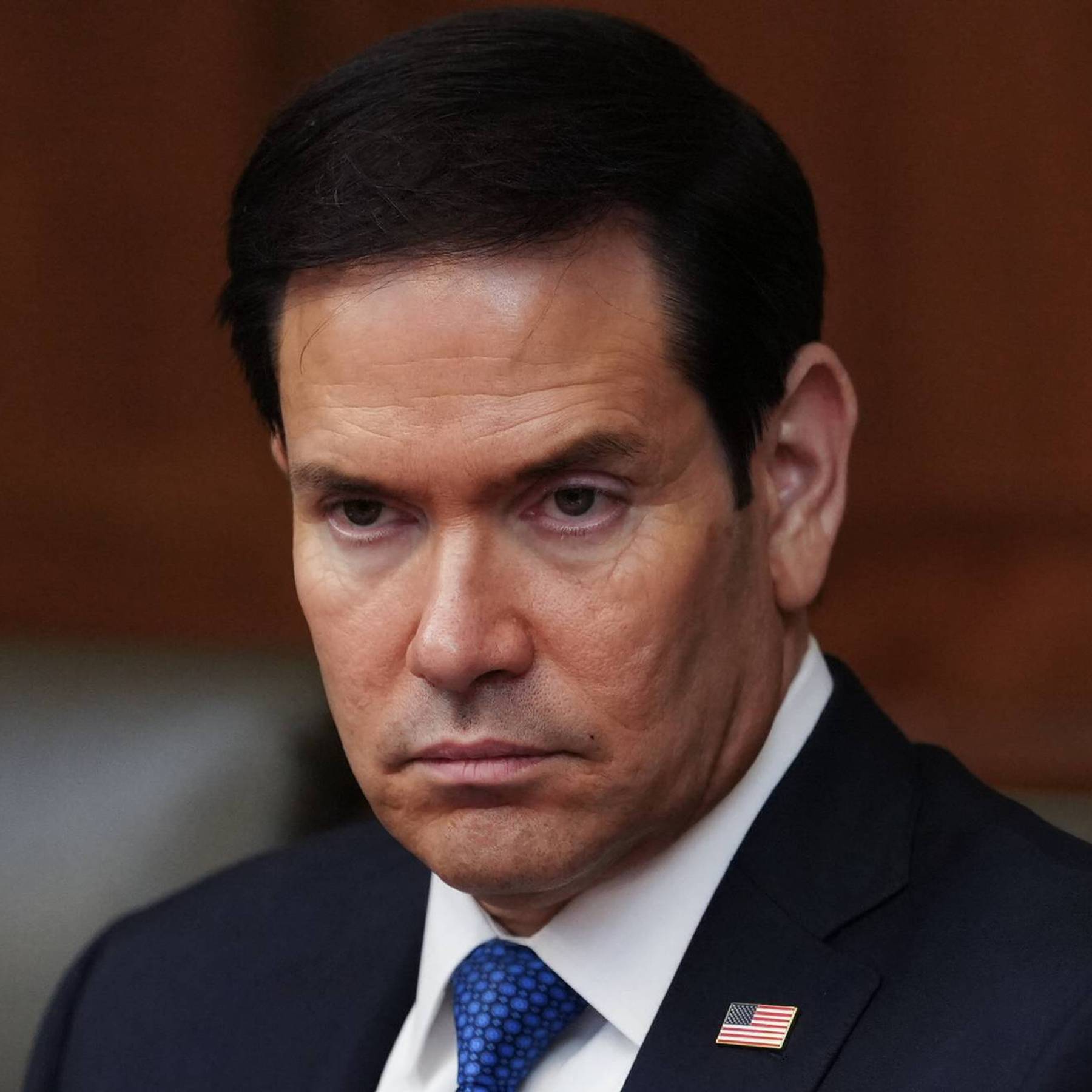


You must be logged in to post a comment.