Posts Tagged ‘Lebanon’

No ‘Total Victory’: Hezbollah, Iran are Defeating ‘Greater Israel’ Project Once and for All

June 28, 2026

The Palestine Chronicle, June 26, 2026

Hezbollah’s Secretary-General Naim Qassem and Israeli Prime Minister Benjamin Netanyahu. (Design: Palestine Chronicle)

By Robert Inlakesh

The Iranian-led Axis of Resistance has used its joint power in order to successfully confront all the challenges before it.

The goal of the war on Iran was to pave the way towards “Greater Israel” and total US-Israeli dominance through achieving regime change, yet the outcome of the war may have just buried this project forever.

Hezbollah’s unprecedented comeback, combined with Iran’s impressive performance, has shifted the balance of power so dramatically that the Israelis are being cut back to size.

From the outset of the attack on Iran, it was clear that the goal was to overthrow the Islamic Republic and, by default, achieve the “total victory” across “seven fronts” that Israeli Prime Minister Benjamin Netanyahu has been pledging to reach for over two years. Very quickly, Iran’s military response, followed by its carefully calibrated strategy involving its regional allies, threw the goal of regime change into the meat grinder.

In a recent opinion poll conducted by the Israeli public, roughly 92% of the population said they believe that Iran has emerged as the winner of the war. When we compare this to the various opinion polls conducted following Israel’s initial 12-day war in June of 2025, the outcome couldn’t be more stark. The majority of Israelis not only supported the war on Iran last year, but were also satisfied with the way it was managed.

This time around, Iran is using the threat of continued hostilities and the closure of the Strait of Hormuz as its weapons to secure a victory that has become a political nightmare for the Israelis.

Under the current Memorandum of Understanding (MoU), the US has ceded to Iran on countless points– Tehran will rake in billions in fees collected from those transiting the Strait of Hormuz, it will get its frozen assets, have all the sanctions lifted, and even get access to a $300 billion reconstruction fund.

If these pledges were to be met by the United States, then Iran would be able to thrive economically for the first time since its Islamic Revolution in 1979. However, the economic benefits are not even the biggest achievement.

While the Israelis managed to ride on the wave of delusion, in using their blows dealt to Hezbollah back in 2024 as evidence of a historic victory against the Iranian-led Axis of Resistance, this narrative has now collapsed. Iran’s Islamic Revolutionary Guard Corps (IRGC) has managed over the past months to effectively deter Israeli actions inside Lebanon through the threat of force. Even if the Israelis seek to challenge this, it has for now successfully achieved a deterrence equation whereby Tel Aviv fears bombing the Lebanese Capital.

On the ground, Hezbollah has managed to deal devastating blows to the Israeli military, dragging it deep into southern Lebanon and using asymmetric warfare tactics that have left the Israeli public disgusted with its leadership and led to a loss of confidence in the army’s ability to defend the northern settlements.

A reality that has now started to set in, as Israel repeatedly fails to capture areas such as the Ali Al-Taher Hills, instead resorting to figuring out a method that will allow them to extract the charred remains of their soldiers, trapped inside destroyed tanks that still remain inside Hezbollah-controlled territory.

The Iranian-led Axis of Resistance has used its joint power in order to successfully confront all the challenges before it. This includes the coordination with Yemen’s Ansarallah to close the Bab al-Mandab Strait to Israeli shipping, even threatening to blockade it completely in the event of the war escalating once again.

Arab Gulf States have also taken notice of the changes in regional power dynamics, with the neighboring nations attempting to repair their relations with Tehran. This even appears to be including the UAE, which was actively bombing Iran only months ago. Now the model of Oman, which remained somewhat neutral – some may say they leaned towards Iran – during the conflict, appears to be the most favorable one amongst the GCC States.

Israel had hoped that the war would collapse, or at the very least severely weaken the Iranian State, which would lead to all of the Arab States lining up to normalize and build closer relations with it. Instead, this war appears to be deterring future normalisation efforts.

The Greater Israel Project, of expanding the borders of the Israeli regime, depended upon the collapse of the Iranian-led Axis of Resistance, or at the very least its weakening. The only real option that could help Israel survive today is securing a Two-State Solution, but even that could lead to internal chaos because of how radicalized Israeli society has become.

The Two-State Solution is the pro-Israel outcome. The only other option is that they continue to fight endless wars they cannot win, until they reach the point of total collapse, whether that be at the hands of resistance forces or their own public. Any sane nation would see the writing on the wall and embrace diplomacy, but we are not dealing with a sane nation.

– Robert Inlakesh is a journalist, writer, and documentary filmmaker. He focuses on the Middle East, specializing in Palestine. He contributed this article to The Palestine Chronicle.

𝐄𝐝𝐢𝐭𝐨𝐫𝐢𝐚𝐥: 𝐈𝐬𝐫𝐚𝐞𝐥 𝐦𝐮𝐬𝐭 𝐛𝐞 𝐬𝐭𝐨𝐩𝐩𝐞𝐝 𝐛𝐞𝐟𝐨𝐫𝐞 𝐢𝐭 𝐝𝐞𝐬𝐭𝐫𝐨𝐲𝐬 𝐚 𝐡𝐚𝐫𝐝-𝐰𝐨𝐧 𝐜𝐡𝐚𝐧𝐜𝐞 𝐚𝐭 𝐌𝐢𝐝𝐝𝐥𝐞 𝐄𝐚𝐬𝐭 𝐩𝐞𝐚𝐜𝐞

June 21, 2026

Dawn, 21 June 2026

THE fate of Lebanon could determine whether the recently signed MoU between the US and Iran survives.

True to form, Israel is doing all possible to ensure the nascent peace deal is destroyed before the proverbial ink dries, as it continues to mercilessly pound Lebanon. While a supposed ceasefire was announced on Friday, Israeli attacks in Lebanon continued yesterday, with a large number of casualties reported, as the Zionist state hit both the southern and eastern parts of the Arab state in apparent pursuit of its arch-foe Hezbollah.

Tragically, a large number of non-combatants have also been killed in Tel Aviv’s murderous forays, with even steadfast supporters like US President Donald Trump expressing displeasure over its bloodstained tactics.

But the Israeli leadership seems very clear on what it wants to do. For example, the Israeli prime minister has refused to end the occupation of southern Lebanon, while the extremist national security minister has said that “Lebanon must burn”. If this happens, the Iran-US MoU — and the entire region including Israel— may also burn.

At one end of the spectrum, the signatories of the MoU, as well as nations such as Pakistan, which have played key roles in finding a diplomatic off-ramp, are again actively trying to take the negotiation process forward. At the other end, Israel is hell-bent on sabotaging the process.

The international community, principally the US and Europe, must be firm with their friends in Tel Aviv and tell them that their destabilising behaviour must end. The past few months have proven that the biggest threat to Middle East peace is not Iran, but Israel, which has attacked one sovereign state after the other, along with carrying out the Gaza genocide. It must be stopped before it destroys a hard-won chance at peace.

While nearly all US administrations in the past — as well as European states — have mollycoddled Israel and ignored its atrocious behaviour, this time the tone in Washington seems to be hardening. For example, US Vice President J.D. Vance has told Israel to “wake up and smell the reality of the situation”, with reference to Tel Aviv’s displeasure with the Iran deal.

But tough words will not be enough. If the US wants Israel to change its bad behaviour, it must withhold the funds and weapons that are needed by the Zionist war machine to keep functioning. Israel has hardly any friends left in the world, and if the US starts asserting itself, Tel Aviv should listen.

The MoU is unambiguous: the ceasefire must apply to all fronts, including Lebanon. Either Israel must silence its guns and withdraw from all of Lebanon, or face isolation and boycott from the international community until it mends its ways.

US intelligence warns Israel could undermine Iran peace deal: Report

June 20, 2026

MEM, June 19, 2026 at 7:22 pm

Benjamin Netanyahu, Israel's prime minister in Washington, DC, US, on Monday, Sept. 29, 2025. [Will Oliver/EPA/Bloomberg via Getty Images]

Benjamin Netanyahu, Israel’s prime minister in Washington, DC, US, on Monday, Sept. 29, 2025. [Will Oliver/EPA/Bloomberg via Getty Images]

  • US intelligence agencies have warned the Trump administration that Israeli Prime Minister Benjamin Netanyahu is likely to take actions that could undermine President Donald Trump’s efforts to secure a lasting peace agreement with Iran, according to a report on Friday.

Citing current and former US officials familiar with intelligence assessments, The Washington Post reported that Israel appears determined to continue military operations against Hezbollah in Lebanon despite provisions in the recently signed US-Iran memorandum of understanding calling for an end to military operations on all fronts, including Lebanon.

Even short of escalation, Israel’s refusal to withdraw troops from southern Lebanon is likely to doom the fragile accord, a US official told the Post.

“Continuing to occupy part of Lebanon is a recipe for disaster,” the official said. “Without a full Israeli withdrawal, the likelihood of resumed hostilities between the (Israeli military) and Hezbollah is all but certain.”

READ: Israel, Hezbollah agree to ceasefire starting Friday, US official says

Vice President JD Vance on Thursday warned Israel against alienating its “only powerful ally,” saying Trump “is the only head of state in the entire world who is sympathetic to the nation of Israel at this moment in time.”

Separately, a US official confirmed to Anadolu Agency that Israel and Hezbollah agreed to a ceasefire to take effect at 4 pm local time (1300GMT) Friday.

Earlier Friday, at least 31 people were killed and several others injured in a series of Israeli attacks on southern and eastern Lebanon, according to Lebanon’s official National News Agency.

According to the latest official figures, Israel’s military offensive in Lebanon, which began on March 2, has killed 3,912 people, injured 11,873 others, and displaced more than one million residents.

Israeli Ministers Say Israel Isn’t Bound by US-Iran Deal, Won’t Withdraw From Lebanon

June 15, 2026

Iran reaffirmed that any deal with the US hinges on an end to Israel’s war in Lebanon

by Dave DeCamp | June 15, 2026 at 12:41 pm ET | Iran, Lebanon

In the wake of the US and Iran announcing a Memorandum of Understanding to end the conflict between the two nations that includes a ceasefire in Lebanon, Israeli ministers have said Israel isn’t bound by the agreement.

Israeli Defense Minister Israel Katz vowed that the IDF will not withdraw from its so-called “security zones” in southern Lebanon, which include a major swathe of Lebanese territory, and will also continue the occupation in southwest Syria and Gaza.

“Prime Minister Benjamin Netanyahu and I are leading a clear policy that determines that the IDF will remain in the security zones in Lebanon, Syria, and Gaza, without any time limit, to protect, from there, the border and Israeli communities against jihadist elements,” Katz said.

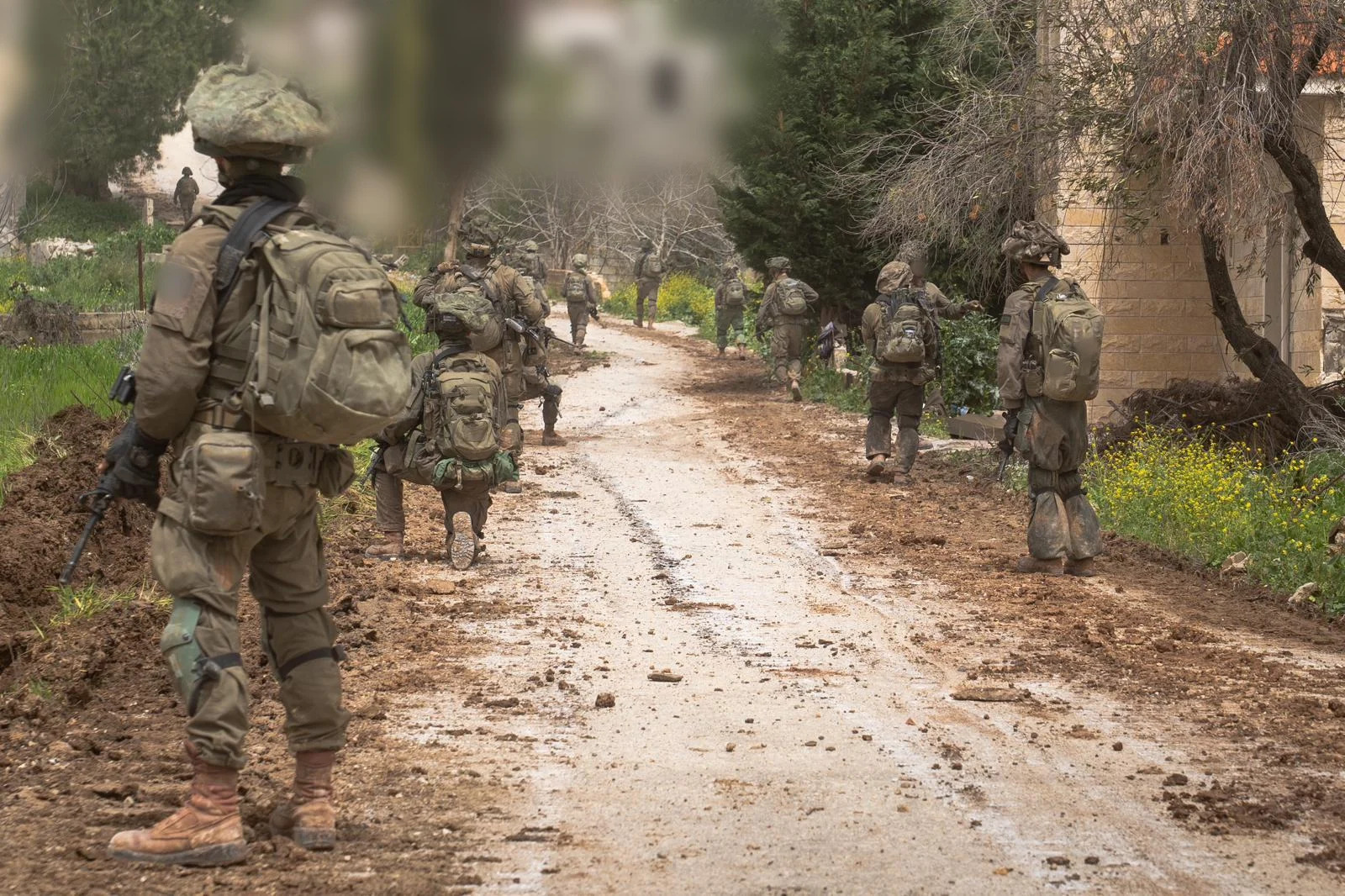
Israeli soldiers in southern Lebanon in April 2026 (IDF photo)

The Israeli defense minister said that the IDF will continue its destruction campaign in southern Lebanon and its forced displacement of Lebanese civilians. “We oppose an IDF withdrawal from Lebanon, despite all the existing pressures and those that will still come,” he said.

Katz added that Netanyahu “made these points clear to US President Trump and to other senior American officials,” which aligns with a report from Ynet that said Netanyahu told Trump that Israel is not bound by the Lebanon clause of the US-Iran MOU. Katz also said that if Iran strikes Israel over its continued war in Lebanon, Israel will hit Iran “with full force.”

Israeli Finance Minister Bezalel Smotrich slammed the agreement Trump reached with Iran, saying it is “bad for Israel and for the entire free world. Period.” Israeli opposition leaders also attacked Netanyahu, with former Prime Minister Yair Lapid saying there has “never, ever, been a more absolute failure than Netanyahu’s diplomatic failure on the Iranian front.”

Iranian officials on Monday reaffirmed that an end to Israel’s war in Lebanon was key to a lasting deal with the US. “Lebanon and the termination of the war in Lebanon are an inseparable part of the understanding on ending the [US-Israeli] war [on Iran]. We have shown that we are determined in this regard and have proven in practice that we are serious, and we will continue to monitor developments carefully in the future,” said Iranian Foreign Ministry spokesman Esmaeil Baghaei.

“The word Lebanon is used three times in the understanding. It is mentioned that ending the war includes Lebanon and respecting the country’s sovereignty and territorial integrity … The United States must honor its commitments and ensure that the Zionist regime fulfills its obligation not to attack Lebanon,” he added.

If you liked this article, please support Antiwar.com.
We are 100% reader-supported.

Dave DeCamp is the news editor of Antiwar.com, follow him on Twitter @decampdave.

With One Strike, Netanyahu Tries To Kill Two Peace Deals

June 15, 2026

Netanyahu knew exactly what he was doing when he defied Trump’s red line and struck Beirut this morning

by Trita Parsi | Jun 15, 2026 | 0 comments

Reprinted with permission from Trita Parsi’s Substack.

It’s important to understand that, contrary to Donald Trump’s quip to Barak Ravid that Netanyahu has “no f***ing judgment,” the Israeli Prime Minister knows exactly what he is doing: With a set of strikes at the Dahiyeh neighborhood in Beirut, he is trying to kill both the pending US-Iran peace deal and the fragile peace between Israel and Lebanon that would come with it.

There is a further strategic dividend. Netanyahu is also seeking to preempt Iran’s attempt to establish a new regional deterrence equation – one in which attacks on Beirut, and potentially on Lebanon more broadly, would trigger a direct Iranian response against Israel. By striking now, he is not merely targeting an adversary; he is challenging the emergence of a regional order that would constrain Israel’s freedom of military action.

Netanyahu even posted a video on his Twitter bragging about the attack:

תקפנו בדאחייה בביירות מטרות טרור של ארגון הטרור חיזבאללה. ישראל לא תסבול ירי לשטחה pic.twitter.com/wVARFCkDQe

— Benjamin Netanyahu – בנימין נתניהו (@netanyahu) June 14, 2026

The exchange of fire between Israel and Iran last week was about far more than retaliation. After Israel defied President Trump and struck Beirut’s Dahiyeh neighborhood, Iran responded by attacking Israel directly – the first time Tehran had launched strikes on Israel in response to an Israeli attack on Lebanon. Israel defied Trump once more and retaliated against Iran, prompting another Iranian response, after which Israel confined its next strike to southern Lebanon rather than Beirut.

The cycle reflected Iran’s attempt to establish a new regional equation: that attacks on Lebanon would no longer be cost-free for Israel, but would carry the risk of direct Iranian retaliation. For the first time in decades, a major regional power was seeking to place hard-power constraints on Israel’s freedom of military action beyond its borders.

Having reestablished its own deterrence, Tehran was now attempting to establish extended deterrence to its partners as part of a broader effort to rebuild its forward-defense posture. Israel, unsurprisingly, viewed this as a direct challenge to its long-standing freedom of maneuver and moved quickly to prevent the new doctrine from taking hold.

Of course, extended deterrence can not be established through a single exchange of fire. At a minimum, it would require several rounds of action and reaction before either side accepted it as a new reality. And even then, it would never be foolproof. Tehran understands that its purpose cannot simply be to eliminate Israeli strikes on Lebanon, but to force Israeli leaders to think twice before authorizing them by attaching a new and significant cost: the likelihood of direct Iranian retaliation.

It was therefore clear that Netanyahu had not abandoned the fight. Yet for several days, even as Hezbollah and Israel continued to exchange fire, he refrained from striking Beirut’s southern suburbs and testing Iran’s new red line.

But today, just hours before President Trump was expecting Iran to sign a memorandum that would end the U.S.-Iran war and reopen the Strait of Hormuz, Netanyahu crossed both Tehran’s and Trump’s red line: keeping Beirut out of the conflict.

Netanyahu clearly timed this for maximum impact. With a single set of strikes, Netanyahu may have advanced two goals at once – torpedoing Trump’s peace deal and preventing the emergence of a new deterrence equation that would impose meaningful constraints on Israel’s military operations in Lebanon.

A diplomat involved in the talks told Fox News that: “This is a clear attempt by Israel to sabotage the President’s deal and drag the United States back into war.”

Trump, meanwhile, is once again reportedly “pissed off” at Netanyahu. In a Truth Social post, the president declared that the strike on Beirut “should not have happened,” while pointedly questioning whether it was a proportionate response to Hezbollah’s latest attack on Israel.

“Israel has the right to defend itself against threats,” Trump wrote, “but the attack it was responding to was very small and meaningless. Nobody was hurt, injured, or killed, and it should not disrupt this important process.”

The statement was notable not merely for its criticism of Netanyahu, but for what it implied: that Israel’s strike was neither militarily necessary nor diplomatically prudent at a moment when a potential breakthrough with Iran appeared within reach.

Washington is frustrated by Tehran’s insistence that Trump rein in Israel, even as American officials believe Iran has failed to similarly restrain Hezbollah. It is equally frustrated that a deal it urgently wants with Iran is now being held hostage by Israel, ironically at the request of the Iranians, since it is Tehran that insists that any ceasefire must be region-wide and prevent Israel from having the ability to restart the war.

That frustration is understandable. But Washington must also recognize a basic reality: the only way to delink a U.S.-Iran agreement from the Israel-Lebanon conflict is to delink the United States itself from Israel’s recurring resort to military escalation.

As long as Israel retains the capacity to drag the United States back into conflict, Tehran will see little reason to separate diplomacy with Washington from the wars Israel chooses to start and pull the US into.

Indeed, the principal reason Tehran insists on a region-wide ceasefire is to deny Israel the ability to draw the United States into yet another war with Iran itself.

If Trump were to clearly establish that the United States would neither participate in nor defend an unjustified Israeli military escalation, Tehran might no longer see the need to link a U.S.-Iran accord to the Israel-Lebanon front.

Such a calculated distancing from Israel would serve American interests in any case. But the need for it has rarely been more apparent than it is today.

Trita Parsi is the Executive VP of the Quincy Institute for Responsible Statecraft and an award-winning author. Washingtonian Magazine has named him one of the 25 most influential voices on foreign policy. Noam Chomsky calls him “one of the most distinguished scholars on Iran”

Visit Trita Paris’s Substack and subscribe.

Israel Is Emptying Lebanon of Its People

June 12, 2026

In Lebanon, Israel is reusing the same strategy as in Gaza and the West Bank. Demanding the “evacuation” of the population and destroying civilian architecture, it wants to make it impossible for residents ever to return.

By Ahlam Chemlali, June 6, 2026

Source: Jacobin

Facebook Twitter Reddit Bluesky Email

People carry their luggage as they cross on foot into Syria through a crater caused by an Israeli air strike to cut the road between the Lebanese and the Syrian checkpoints, at the Masnaa crossing, in the eastern Bekaa Valley, Lebanon, October 4, 2024

In 1895, Theodor Herzl wrote in his diary that the penniless population of Palestine must be “spirited across the border,” discreetly and circumspectly. In 1948, that vision became policy. With the Nakba, approximately 750,000 Palestinians were forcibly displaced, their land absorbed by the newly declared state of Israel. In 1967 came the Naksa. In 1978, 1982, 1993, 1996, 2006, it happened to southern Lebanon. Each time the world called it a “crisis”; each time it was Israeli strategy.

Since Israel’s latest assault on Lebanon began this March 2, more than 1.3 million people — nearly one in four of the entire Lebanese population — have been displaced. More than three hundred thousand of them are children. In the first weeks of the assault alone, UNICEF recorded at least nineteen thousand girls and boys forced from their homes every single day. More than 3,400 Lebanese have been killed and over ten thousand wounded, a toll that surged dramatically when Israel launched Operation Eternal Darkness — over a hundred strikes across the country in a single ten-minute window, killing at least 357 people and wounding over 1,200, with many more believed buried beneath the rubble. At least nine bridges over the Litani River have been struck, seven destroyed, fifty-five primary health care centers and hospitals have been forced to shut down, fuel depots, water stations and schools have been targeted, a systematic severing of the south from the rest of the country, cutting tens of thousands of people off from humanitarian aid.

Israel’s own Defense Minister Israel Katz explicitly described this as the “Beit Hanoun and Rafah model,” invoking the ongoing destruction of Gaza. This is not collateral damage but the same playbook; Israel is not even hiding it. And still it continues: on June 1, Israeli forces struck Tyre — the ancient Mediterranean port city and UNESCO World Heritage Site — triggering a fresh wave of mass displacement as families fled north. A ceasefire, extended for forty-five days and currently being renegotiated in Washington, has stopped nothing.

What is unfolding in Lebanon today is neither new nor an escalation but in continuity with these past offensives. Displacement is not a by-product of this war. It has always been the point. To understand what is happening today in Lebanon, we must understand Gaza. And to understand Gaza, we must go further back.

The Gaza Playbook

Displacement has been a deliberate instrument of Israeli governance since 1948. The historian Patrick Wolfe put it plainly: “Settler colonizers come to stay: invasion is a structure not an event.” Elimination, he argued, is “an organizing principle of settler-colonial society rather than a one-off occurrence,” pursued through the annexation of land, the renaming of places, the demolition of buildings and the erasure of historical heritage, all in service of building an entirely new civilization on expropriated ground. “Settler colonialism,” he wrote, “destroys to replace.”

Following the October 7, 2023, attacks, Israel’s military campaign in Gaza produced near-total displacement. By early 2024, Israel had dropped more than twenty-five thousand tons of explosives on Gaza, the equivalent, the United Nations confirmed, of two nuclear bombs. By April 2024, the total had surpassed seventy thousand tons, exceeding the combined tonnage dropped on Dresden, Hamburg, and London during World War II. By May 2024, more than 90 percent of Gaza’s population, around 1.9 million people, had been displaced at least once. Many had been displaced ten times or more.

Israel boasted of its evacuation orders as evidence of its humanitarian conduct, distributed by leaflet, SMS, QR code, and radio broadcast, and cited repeatedly at the International Court of Justice as proof that it was protecting civilians. In reality, the orders directed entire districts to relocate within impossibly short time frames, often into areas without food, water, or shelter, and often into areas that were then deliberately bombed. Forensic Architecture’s landmark investigation found that the evacuation system had produced not safety but “mass displacement and forced transfer,” with Palestinians “being bombed, shot at, executed, arrested and tortured” along the very corridors Israel designated as safe. The areas Israel told people to flee to were attacked immediately after they arrived. On July 13, 2024, Israel dropped eight two-thousand-pound bombs on the Al-Mawasi humanitarian zone it had itself created, killing at least ninety people, many of them burned alive in their tents.

Human Rights Watch concluded that these evacuations constituted the war crime of forcible transfer. B’Tselem, the Israeli human rights organization, reached the same conclusion in its report “No Place Under Heaven,” documenting that displacement was a central tool of the assault on Gaza. The report’s title comes from Finance Minister Bezalel Smotrich’s own words, spoken at a government security cabinet meeting in April 2024, calling for the “total annihilation” of Gaza’s cities: “You will blot out the remembrance of Amalek from under heaven — there’s no place under heaven.” The reference to Amalek, the nation the Hebrew Bible commands the Israelites to exterminate entirely, man, woman, and child, was not incidental. Benjamin Netanyahu had used the same comparison in the first days of the war, and it was cited by South Africa in its genocide case at the International Court of Justice as evidence of genocidal intent. Smotrich also described Gaza City as a “real estate bonanza,” stating: “The demolition, the first stage in its renewal, we have already done. Now we need to build.” This bluntly posed Israel’s agenda in the language of colonial dispossession.

From the West Bank to Lebanon

The same logic has spread beyond Gaza. Since October 2023, scholars and analysts have described the “Gazafication” of the West Bank: the extension of governance practices long characteristic of Gaza — military siege, aerial bombardment, the systematic targeting of civilian infrastructure — into the occupied territory. Armed drones carry out targeted killings, fighter jets strike densely populated areas, and homes are demolished.

More than forty thousand Palestinians were internally displaced in the West Bank in 2025, the highest annual figure since 1967. Senior Israeli ministers have called openly for annexation and the “voluntary migration” of Palestinians, language that legal scholars identify as a euphemism for ethnic cleansing. Leading Zionist figures explicitly discussed demographic transfer in the 1920s and 1930s, using terms like “transfer,” “relocation,” and “voluntary migration” — the same vocabulary in use today.

Settler violence has risen sharply alongside this rhetoric. According to data recorded jointly by the Israeli army and the Shin Bet, settler attacks increased by 27 percent in 2025, while severe attacks — shootings, arson, violent assault — rose by more than 50 percent. Accountability remains almost nonexistent. Settlement expansion has accelerated to unprecedented levels, with outposts legalized retroactively and construction advancing deep inside Palestinian territory.

In this, Lebanon is not a new front but an old one, today reopened with new ferocity.

The people in southern Lebanon have been displaced before: in 1978, when Israel first invaded; in 1982, when it laid siege to Beirut and its Palestinian refugee camps, a siege that culminated in the Sabra and Shatila massacre; in 1993, during Operation Accountability; in 1996, during Operation Grapes of Wrath, which culminated in the Qana massacre; and in 2006, when nearly one million people fled, most returning within weeks of a ceasefire. Today, those same communities are being uprooted again.

What we are witnessing is the same architecture of control applied more extensively. Evacuation orders are being issued with the same design as in Gaza, and civilian infrastructure targeted to prevent people ever returning. This means deliberately making the population precarious, unable to settle, unable to rebuild, unable to plan. Here, we see that Gaza, the West Bank, and Lebanon are not three separate crises.

European Blind Spot

And what has the international community’s response been? The International Court of Justice, in its landmark advisory opinion of July 19, 2024, concluded that Israel’s occupation of the Palestinian territories — the West Bank, East Jerusalem, and Gaza — is unlawful under international law and must be brought to an end as rapidly as possible. It has separately ruled that there is a plausible risk of genocide in Gaza. The UN General Assembly followed in September 2024, demanding Israel end its unlawful presence within twelve months. Israel has ignored both. The United Nations Security Council has been rendered structurally incapable of acting: the United States has now vetoed ceasefire resolutions seven times, each time casting the sole vote against resolutions supported by fourteen other members of the council.

Meanwhile, the United States has provided at least $21.7 billion in military aid to Israel since October 7, 2023, according to Brown University’s Costs of War project — the highest annual total of military aid to Israel ever recorded. Arms transfers from several European states have continued alongside this. The weapons that have flattened Gaza’s neighborhoods, bombed its hospitals, and burned civilians alive in tent camps have been supplied, in large part, by those same governments now expressing concern about humanitarian conditions in Lebanon.

I have spent years researching migration, borders, and displacement across the Mediterranean region. Since March, journalists across Europe have been asking me some version of the same question: Will we face a new refugee crisis? Should Europe be worried about the flows?

The question reveals everything. For most European publics and their governments, the primary concern is not what is happening to the people of Lebanon. It is how to keep those people away. How to avoid a repeat of the aftermath of the Syrian civil war and the so-called refugee crisis of 2015. During the carpet bombing of Gaza since October 2023, this anxiety was all but absent, for Gazans had nowhere to flee: they were contained inside the Strip. For some European governments, even medically evacuating critically ill children was not on the table. Denmark refused to do so despite a formal World Health Organization appeal to EU member states, and despite evacuating and treating over two hundred Ukrainian patients — citing, in a written reply to Parliament, migration concerns. In Britain, Prime Minister Keir Starmer had to reassure the public that Palestinian refugees wouldn’t be welcome in Britain under a scheme for war refugees. Europe’s fear of displacement only activates when movement becomes possible.

In May 2024, the European Commission pledged €1 billion in support to Lebanon for the period up to 2027. This package included funding for border management and anti-smuggling operations, with the first €500 million explicitly linked to reducing irregular sea departures toward Cyprus and to exploring “voluntary return” frameworks. Lebanon was positioned not only as a host country in crisis but as a frontline partner in Europe’s own strategy to contain migration flows. This is the increasingly common practice of externalization: the outsourcing of displacement management to third countries outside Europe, while the conditions producing displacement go unchallenged.

Lebanon already hosts one of the highest numbers of refugees per capita in the world, with long-standing Palestinian communities and over a million Syrians displaced since 2011. Funding this state to police its own borders in the middle of an Israeli assault that is actively producing new displacement is the same containment logic that operates in Gaza and the West Bank.

What is unfolding across Gaza, the West Bank, and southern Lebanon is not a sequence of emergencies. It is a deliberate and recurring strategy of Israeli governance, rooted in decades of settler-colonial and military control. Evacuation orders, cycles of flight and forced return, and the systematic destruction of civilian infrastructure, are today the instruments of war and Israeli expansionism.

The displacement created in Gaza and in Lebanon has been normalized precisely because the international community has consistently chosen migration management over accountability. What looks like crisis is the effect of deliberate policies, and what looks like a humanitarian response is, too often, the infrastructure of containment dressed in the language of protection.

The question is not whether Europe will face a refugee crisis. The question is whether the world will finally treat the deliberate production of displacement as what it has always been, a strategy of governance, and respond with the recognition, accountability, and rights-based redress it demands.

Exodus From Lebanon’s Tyre as Israel Orders Locals Out of Christian Quarter

June 10, 2026

Lebanese church leaders appear for international intervention amid attacks

by Jason Ditz | June 9, 2026

For the first time since they invaded Lebanon in March, the Israeli military issued an explicit evacuation warning for the Christian quarter of the ancient city of Tyre, claiming there were Hezbollah secretly hiding amongst the Christians.

What followed was an attempt by the remaining Christian population to flee northward, an effort that would’ve been a lot easier if Israel hadn’t destroyed the bridge over the Litani River that is directly north of the city over a month ago. The locals are trying to reach Sidon and in some cases Beirut.

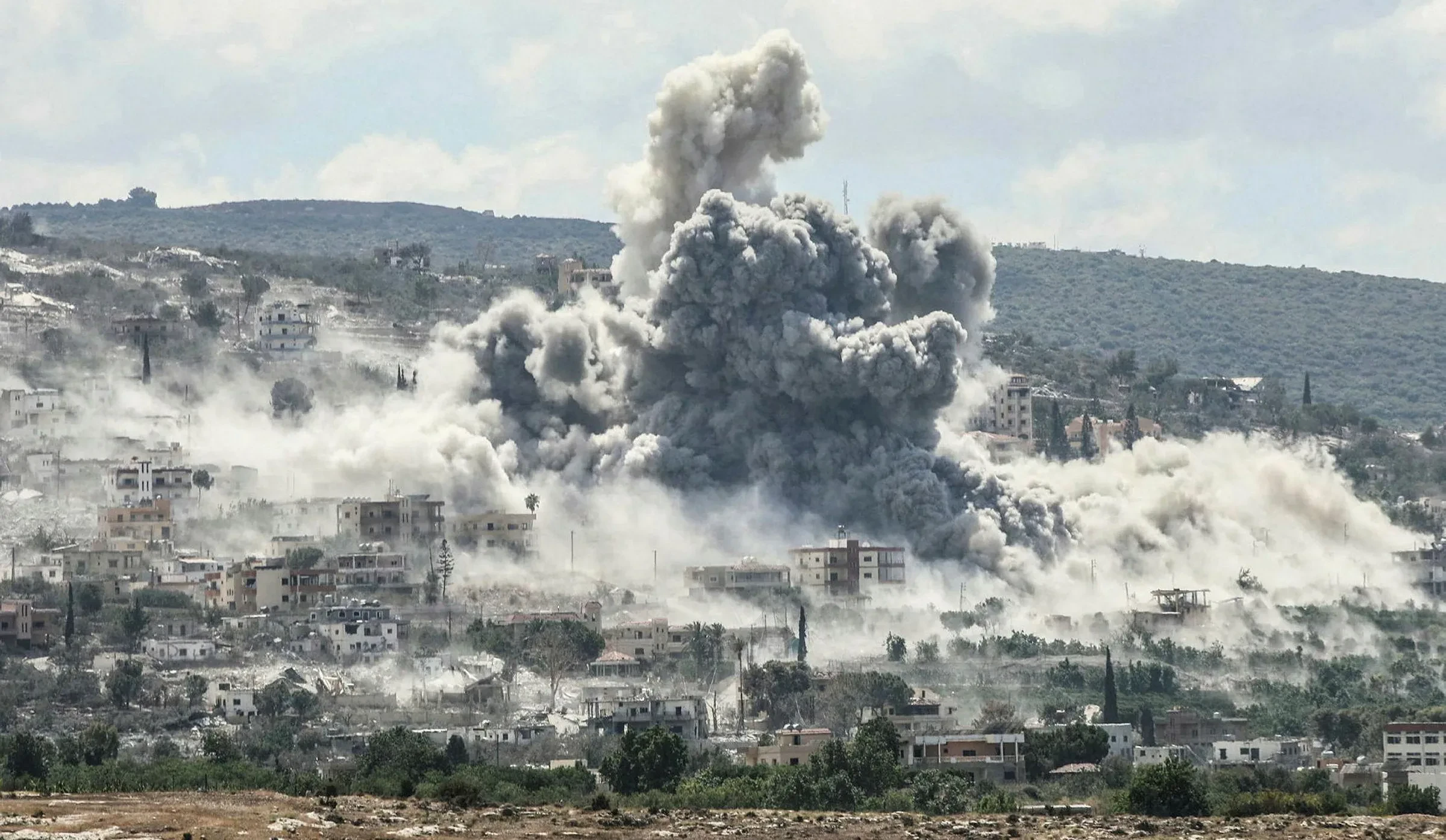
Meanwhile, attacks on Tyre continued apace, killing at least 9 and wounded dozens of others. At least 15 strikes were reported against Tyre on Tuesday morning alone, with no signs that the attacks are slowing, and no signs that any of the people hit in the airstrikes are actually anything to do with Hezbollah.

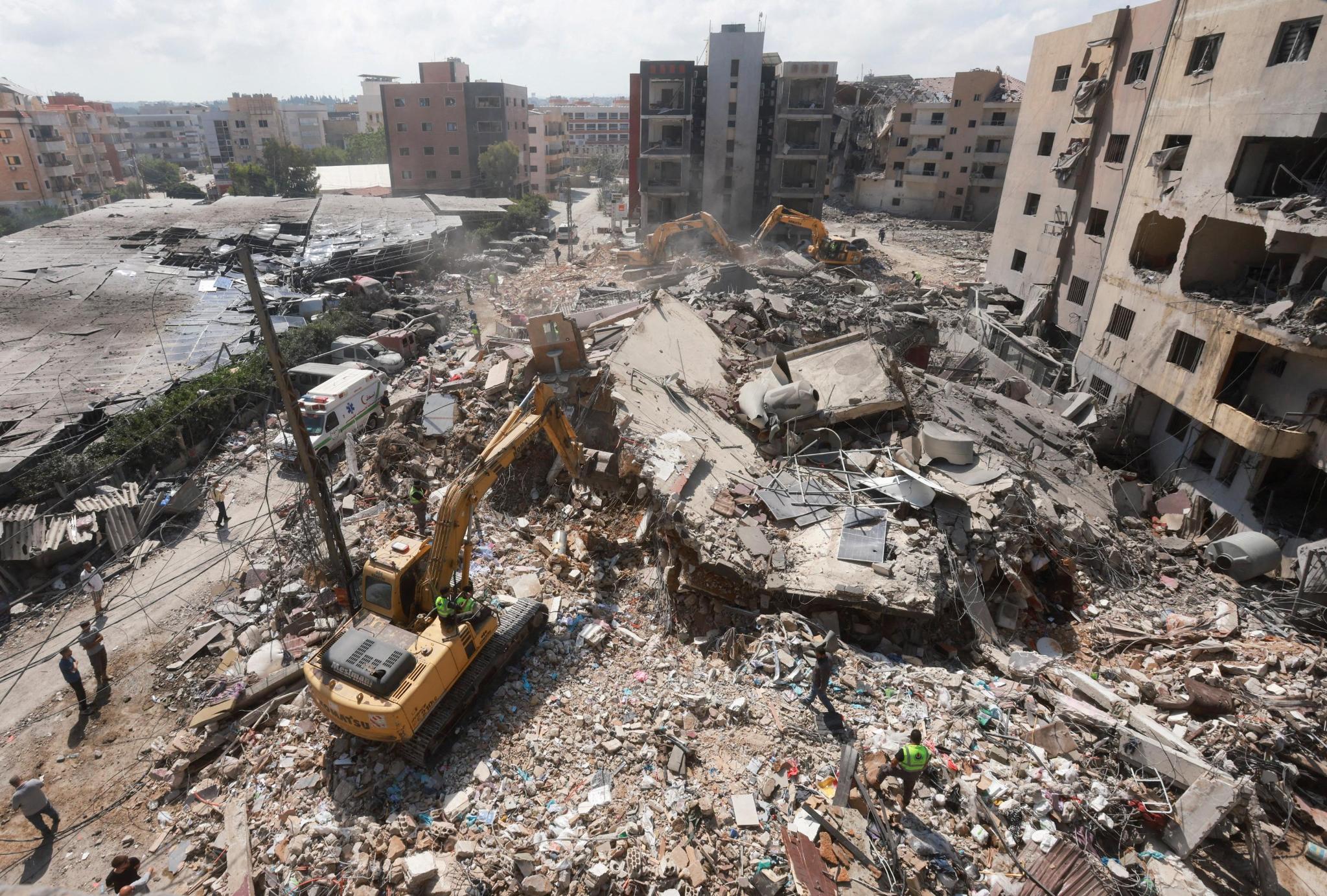
People inspect the damage in the aftermath of an Israeli strike that hit near Jabal Amel Hospital on Monday, in Tyre, Lebanon, June 2, 2026. REUTERS/Aziz Taher

Christian religious leaders from Tyre were quick to call for international intervention to protect their historic neighborhood, saying the targeting of the Christian quarter would amount to a humanitarian catastrophe.

Christian leaders further disputed the claim that Hezbollah was operating in the Christian neighborhood in the first place, saying it was a fabricated Israeli pretext to justify attacking that part of the city, which had previously been largely left alone.

Not that Tyre in general hasn’t been a constant target of the IDF. Jabal Amel Hospital, one of Tyre’s largest, has been hit no less than three times so far this month, most recently over the weekend. The hospital has been significantly damaged by the attacks, and a large number of health care workers wounded.

If you liked this article, please support Antiwar.com.
We are 100% reader-supported.

Jason Ditz is Senior Editor for Antiwar.com. He has 20 years of experience in foreign policy research and his work has appeared in The American Conservative, Responsible Statecraft, Forbes, Toronto Star, Minneapolis Star-Tribune, Providence Journal, Washington Times, and the Detroit Free Press.

Israel escalates assault on Lebanon and drives to annex Gaza

June 6, 2026
Andre Damon@Andre__Damon, 6 June 2026

    Smoke rises from an Israeli airstrike that hit Qlaileh village, as it seen from the southern port city of Tyre, Lebanon, Tuesday, June 2, 2026. [AP Photo/Mohammed Zaatari]

    Israeli strikes killed at least four people in Southern Lebanon on Friday, and the military ordered the forced displacement of nine more towns and villages in the Sidon district.

    Hundreds of families fled Aanqoun, a village already sheltering some 2,500 people displaced from earlier attacks, after the army announced it would strike what it called Hezbollah positions there and ordered residents out. Cars jammed the roads toward Sidon as families searched for shelter.

    The Lebanon strikes are an escalation of the Israeli war, waged in coordination with the US-Israeli war against Iran, that has killed at least 3,516 people and wounded 10,674 since March 2, the Lebanese health ministry reported. The United Nations counted at least 88 killed over the May 30-31 weekend, and Israeli attacks killed at least eight on Tuesday, nine on Wednesday and four on Thursday. Among the dead was a paramedic, one of more than 130 medics killed since March.

    On Thursday, Israeli Prime Minister Benjamin Netanyahu declared the occupation of Southern Lebanon permanent. Israel needs “security zones: separation and security areas on the other side of the border,” he told mayors in Northern Israel. “This is a fundamental change.”

    While the US media remains focused on “peace” negotiations between Trump and Iran, events in Lebanon, Gaza and the West Bank make clear that any “ceasefire” is merely a cover for ongoing mass killing.

    On Wednesday the United States announced that Israel and Lebanon had agreed to renew a ceasefire, one requiring Hezbollah to halt all fire and pull its fighters back from Southern Lebanon but demanding nothing of Israel’s occupying forces. Hours later, Israeli Defense Minister Israel Katz declared that the army would not withdraw, that hundreds of thousands of displaced Lebanese would not be allowed home and that Israel retains “freedom of action, backed by the United States, to strike in Beirut.” Hezbollah leader Naim Qassem rejected the deal, telling Al-Manar television that ordering his fighters to leave the south while under attack would mean “surrender, defeat and achieving the enemy’s goals.”

    A United Nations peacekeeper was killed near Marjayoun by mortar fire that Israel and Hezbollah each blamed on the other.

    Israeli forces seized Beaufort Castle and crossed the Litani River last week, pushing their occupation to about 2,000 square kilometers of Southern Lebanon, nearly one-fifth of the country. The Israeli military, armed and backed by US President Donald Trump, has turned the south into a free-fire zone.

    The United Nations humanitarian office reported more than a million people driven from their homes and 1.24 million, nearly a quarter of the population, going hungry.

    In Gaza, Netanyahu said last week that Israel holds 60 percent of the strip, up from 50, and that he has ordered the army to take more. “First of all, 70,” he said, as the crowd shouted “100!”

    Under the October 2025 ceasefire built on Trump’s 20-point plan, Israeli forces were to pull back behind a so-called yellow line; instead, they have pushed past it.

    The Gaza health ministry has counted 929 Palestinians killed and 2,811 wounded in the seven months since the truce took effect. Katz announced May 27 that the “voluntary emigration” plan to empty Gaza of its people would proceed “at the right timing and in the right manner.”

    Israeli Finance Minister Bezalel Smotrich has demanded the army “prepare immediately for the full conquest of the Gaza Strip” and build Jewish settlements on it. Rights groups call the emigration scheme a plan for ethnic cleansing.

    In the occupied West Bank, Israeli forces shot and killed a seven-month-old Palestinian baby near Hebron on Friday and wounded his parents.

    The escalations in Lebanon and Palestine take place amid a deepening crisis over the US-Israeli war on Iran. The war has failed to achieve its aims. On February 28, the US and Israel launched a surprise attack that killed much of the Iranian leadership, including Supreme Leader Ali Khamenei and as many as ten other senior officials. This failed to bring about the collapse of the regime; Khamenei’s son Mojtaba was installed within days, and no uprising came.Available from Mehring BooksThe struggle against imperialism and for workers’ power in IranA pamphlet by Keith Jones

    The US then moved to strangle Iran with a naval blockade of the Strait of Hormuz, but this effort has likewise failed to force Tehran to terms. More than three months on, 13 US service members are dead, and the fighting drags on with no end in sight.

    The reported differences between Trump and Netanyahu are a falling-out among thieves over that failure. Axios reported June 1 that Trump called Netanyahu “crazy” over the Lebanon escalation, adding, “You’d be in prison if it weren’t for me” and “Everybody hates Israel because of this.” Trump confirmed the call June 3, saying he was “a little bit perturbed” but that he likes Netanyahu and had told him, “we’ve got to stop this.”

    Despite the “ceasefire” talks, the US is regularly attacking Iran. This week US forces struck Iranian radar sites after shooting down four Iranian drones over the Strait of Hormuz, which the US is blockading. Trump extended the ceasefire indefinitely and said the blockade would hold until negotiations end “one way or the other.”

    The Democratic Party shares the war’s aims. On Thursday the House defeated a War Powers resolution by Democratic Representatives Rashida Tlaib of Michigan and Delia Ramirez of Illinois to remove US forces from the war in Lebanon, 324-92. Ninety-one Democrats voted for it; 117 voted against, and the only Republican in favor was Thomas Massie.

    House Democratic Leader Hakeem Jeffries, Minority Whip Katherine Clark and Caucus Chair Pete Aguilar led the opposition. In a joint statement, they declared: “We stand with the Lebanese people, the government of Lebanon, and the Lebanese Armed Forces in their efforts to live peacefully and defeat Hezbollah, a violent terrorist organization that is a sworn enemy of the United States.”

    The statement exposes the real policy of the Democratic Party. Despite its tactical criticisms of the Trump administration, it backs the administration’s basic aim of subjugating the Middle East.

    Whatever “deal” Trump strikes with Tehran—if such an agreement is even possible—Lebanon and Gaza show its content in advance. Katz will not leave the south; Netanyahu intends to take the rest of Gaza and the displaced of both will not be allowed home. An agreement with this administration means continued slaughter and plunder, signed and dated.

    Trump Says a Ceasefire in the Middle East Means “Shooting in a Moderate Manner”

    June 5, 2026

    Trump’s comments excuse his failure to end the Iran war, and justify Israel’s violations in Gaza and Lebanon.

    By Shireen Akram-Boshar , Truthout Published June 4, 2026

    US President Donald Trump speaks to the press in the Oval Office of the White House in Washington, DC, on June 3, 2026.
    US President Donald Trump speaks to the press in the Oval Office of the White House in Washington, DC, on June 3, 2026.

    Did you know that Truthout is a nonprofit and independently funded by readers like you? If you value what we do, please support our work with a donation.

    In remarks in the Oval Office on Wednesday, President Donald Trump stated that in the Middle East, “a ceasefire is when you’re shooting in a more moderate manner.”

    “A ceasefire there is much different than in other parts of the world,” Trump said, in response to a question by a reporter about his definition of a ceasefire.

    “In that part of the world, a ceasefire is when you’re shooting in a more moderate manner,” he went on, excusing his own failure to bring an end to his unprovoked war on Iran.

    Trump has muddied the waters about the meaning of the term “ceasefire” in the U.S.-Israeli war on Iran, claiming for weeks that the April 8 ceasefire is intact despite blockading Iran and conducting so-called “self defense” strikes on the country. Iran also bombed Kuwait on Wednesday – though Trump was seemingly nonchalant about the attack in his Oval Office comments, saying that it was in retaliation for U.S. strikes over the previous day.

    Trump’s comments also serve as justification for Israel’s repeated violations of its so-called ceasefires in Gaza and Lebanon, which have come to be seen as one-sided.

    Related Story

    News

    |

    War & Peace

    Trump Attacks GOP Lawmakers After House Passes Bipartisan Iran War Resolution

    Despite Trump calling the vote “unpatriotic,” nearly 7 in 10 Americans back ending the war in Iran as soon as possible. By Chris Walker , Truthout

    June 4, 2026

    In the year after Israel’s 2024 ceasefire with Hezbollah, UNIFIL, the UN peacekeeping force in Lebanon, said that Israel violated the ceasefire more than 10,000 times. And Israel repeatedly takes advantage of ceasefires to put pressure on Lebanon and the U.S. through mass strikes – like on April 8, when Israel killed 357 people in Lebanon to make a point that Lebanon could not be part of the agreement with Iran.

    Al Jazeera noted on June 1 that Israel violated the October 2025 ceasefire agreement in Gaza over 3,000 times, on a near-daily basis. These attacks have killed at least 932 Palestinians.

    In both Lebanon and in Gaza, residents repeatedly ask, “Where is the ceasefire?”

    Later, Trump repeated the sentiment, saying, “That’s a very volatile part of the world, probably the most volatile part of the world. The people are volatile, the leadership [as well].” This is an excuse that Israel has also used to justify its brutality across the region.

    But the region is largely volatile as a result of imperialist intervention — led by the U.S., and with the help of Israel, which has played the role of the U.S.’s watchdog in the Middle East since 1967.

    During his remarks in the Oval Office on Wednesday, Trump stated that the issue of Lebanon should be separate from a deal with Iran – which is what Israel has demanded, and Iran has repeatedly pushed back on.

    Trump also said that he spoke with Hezbollah leaders. “We actually spoke with Hezbollah for the first time ever,” he said. “We didn’t know they spoke,” he added, continuing with his racist commentary on the region. Trump reportedly called both Hezbollah leaders and Israeli Prime Minister Benjamin Netanyahu on Tuesday to push for a de-escalation after Israel expanded its occupation of southern Lebanon and threatened to resume bombing Beirut.

    Although Lebanon and Israel both agreed to renew their “ceasefire” on Thursday, this was done without the participation of Hezbollah, and is contingent on Hezbollah removing its fighters from the south – which is under Israeli occupation and has faced continuous bombardment since March. The U.S. and Israel have pressured factions of the Lebanese government to turn on Hezbollah over the past year.

    But after this announcement on Thursday, Israel’s Defense Minister Israel Katz said that Israel will remain in southern Lebanon. Israel continued its airstrikes on both southern Lebanon and the Bekaa valley region.

    Israel has attacked three hospitals in southern Lebanon over the past few days.

    Rima Majed, professor of sociology at the American University of Beirut, condemned Israel’s repeated escalations in Lebanon in comments to Truthout earlier this week.

    “We now live in a world where ceasefire means that Israel can continue bombing, and that we can keep reaching ceasefire agreements within ceasefire agreements without all of this meaning any real protection for people,” she said.

    One fourth of Lebanon’s population faces acute hunger due to US-backed Israeli war

    April 30, 2026

    Indiscriminate Israeli attacks and mass displacement have pushed nearly 25 percent of the population to critical levels of food insecurity

    News Desk, The Cradle, APR 29, 2026

    (Photo credit: Emilio Morenatti/AP Photo/picture alliance)

    An aggregated food security report released on 29 April warns that more than 1.2 million people in Lebanon will face acute hunger from April to August 2026 due to worsening living conditions from the US-sponsored Israeli war.

    Joint findings by the World Food Programme (WFP), the Food and Agriculture Organization (FAO), and Lebanon’s Agriculture Ministry have concluded that around one in four people will fall into the “crisis” phase of food insecurity or worse. 

    This marks a steep increase from November to March, when 874,000 people – around 17 percent of the country’s population – were already in that category, as more than one million people were displaced by Israel’s campaign of ethnic cleansing and deliberate destruction of civilian infrastructure.

    Israeli forces continue their attacks in south Lebanon, where residents have been warned not to return, with both sides continuing to exchange fire despite a ceasefire announced on 17 April.

    The instability has compounded existing vulnerabilities in agriculture and rural livelihoods, particularly in the south and the Bekaa Valley, where some of the heaviest Israeli attacks have taken place.

    WFP official Allison Oman Lawi said earlier gains had been reversed, warning that “families who were just managing to cope are now being pushed back into crisis.”

    The Integrated Food Security Phase Classification (IPC) analysis indicates that households are increasingly unable to meet basic food needs, with many reducing meal sizes, skipping meals, or turning to debt and asset sales to survive.

    FAO representative Nora Ourabah Haddad said the findings confirm “continued and deepening fragility,” calling for urgent agricultural support to prevent further collapse.

    The report warns that without sustained humanitarian assistance, acute food insecurity is likely to deepen further in the coming months.

    Israeli forces intensified attacks across Lebanon on 27 April, expanding strikes to the Bekaa region for the first time in weeks while continuing heavy bombardment across southern towns, causing injuries and widespread destruction. 

    The escalation came alongside Hebrew media claims that Israeli occupation forces had begun scaling back parts of their ground presence, redeploying units while maintaining “limited operations” that include raids and the demolition of buildings under claims of Hezbollah affiliation. 

    Despite these reports of partial withdrawal, airstrikes and artillery fire persisted, with jets flying low over areas such as Bint Jbeil, where Lebanese resistance fighters continue to operate.