Posts Tagged ‘Hamas’

Hamas must not concede in talks what Israel failed to win on the battlefield

August 29, 2026

Sami Al-Arian

MME, 28 August 2026

As pressure mounts to disarm and incorporate it into a reconstructed Palestinian order, the movement needs strategic patience to preserve its independence and resistance identity

Hamas fighters secure the area as Egyptian workers and Red Cross officials search for the remains of the last Israeli captive, in the Zeitoun neighbourhood of Gaza City, on 8 December 2025

Hamas fighters secure the area as Egyptian workers and Red Cross officials search for the remains of the last Israeli captive, in the Zeitoun neighbourhood of Gaza City, on 8 December 2025 (Omar al-Qattaa/AFP)

Some moments in the history of liberation movements require courage to act; others require equal courage to wait.

Operation Al-Aqsa Flood, on 7 October 2023, was a daring decision that shattered assumptions that had governed the Palestinian question for years.

It brought Palestine back to the centre of world politics, exposed the illusion that it could be managed or bypassed, and confronted Israel and its western supporters with a conflict they had convinced themselves could be contained indefinitely.

Nothing that followed can justify transferring responsibility for Gaza’s destruction from those who destroyed it to those who resisted them.

Responsibility for the devastation of Gaza, the killing of its civilians and the ruin of its homes, hospitals, universities and schools belongs to those who carried it out. Criticism of Palestinian strategy must never become a mechanism for absolving the perpetrators and their supporters.

New MEE newsletter: Jerusalem Dispatch

Sign up to get the latest insights and analysis on Israel-Palestine, alongside Turkey Unpacked and other MEE newsletters

The scale of that sacrifice demands a harder look at how it is being managed politically.

Hamas today faces perhaps the most difficult transition in its history. The movement that entered Al-Aqsa Flood as an armed resistance organisation now confronts enormous pressure to emerge from the war disarmed, removed from governing Gaza, integrated into a reconstructed Palestinian political system and dependent upon arrangements designed principally by the US and Israel with the tacit support of regional mediators.

Tactical flexibility is indispensable to any resistance movement, but it must serve a coherent strategy rather than gradually displace it.

Four developments should concern anyone who believes the resistance must preserve its independence: the political trajectory signalled by Hamas’s 2017 document, the handling of postwar negotiations, the mounting pressure for disarmament and the movement’s re-engagement with its old Fatah-aligned rivals.

A political wager

Hamas’s 2017 Document of General Principles and Policies, issued well before Al-Aqsa Flood, was widely understood as an effort to present a more pragmatic face to the world. It accepted a sovereign Palestinian state along the 4 June 1967 lines as a formula of national consensus, while refusing to recognise the legitimacy of the Zionist state and maintaining the right of resistance.

The position had a long pedigree. As early as 2009, Khaled Meshaal, then the head of Hamas’s political bureau, told the New York Times that his group “had accepted a Palestinian state on the 1967 borders, including East Jerusalem, the dismantling of settlements and the right of return [of Palestinian refugees] based on a long-term truce”.

The document represented a political wager: that moderation would break the movement’s isolation and open doors in Europe and beyond.

Hamas should study Fatah’s experience and refuse ever to surrender a strategic position in exchange for a promise of future reciprocity

European figures discussed whether it justified engagement. Former UK Prime Minister Tony Blair after leaving his post as the envoy for the Middle East Quartet – which includes the US, EU, UN and Russia – courted Hamas’s leadership, and later acknowledged that the boycott imposed after the movement won the 2006 elections had been a mistake. Yet the broader political opening never came.

Therein lies the lesson: a liberation movement should distinguish between flexibility exchanged for concrete political gains and concessions offered in anticipation of western acceptance. The real danger is a process in which each concession becomes the starting point for the next.

Fatah travelled down that road decades earlier, with each concession presented as the gateway to the next diplomatic breakthrough: recognition was to produce reciprocity, negotiation to deliver statehood and security cooperation to build confidence, while Oslo itself was supposed to be transitional.

Instead, the transitional became permanent as settlements expanded, the occupation deepened and sovereignty receded, leaving Fatah today a shadow of its past.

Hamas should study that experience and refuse ever to surrender a strategic position in exchange for a promise of future reciprocity. Western approval is not a Palestinian national objective.

Squandered leverage

The second concern is more immediate. Negotiations are a contest over interests conducted through bargaining power, yet since the war entered its diplomatic phase, Hamas has repeatedly appeared willing to relinquish leverage before securing reciprocal, enforceable gains.

The release of the Israeli-American soldier Edan Alexander in May 2025 was presented as a goodwill gesture intended to reopen diplomatic space, but goodwill has value in negotiation only when the other side treats it as something to reciprocate.

The larger test came with US President Donald Trump‘s Gaza initiative in September 2025. In its initial response, Hamas agreed to release the Israeli captives, living and dead, under the exchange formula, and accepted the transfer of Gaza’s administration to an independent Palestinian technocratic body.

As the world fixates on Hamas, who will disarm the Israeli settlers storming West Bank villages?

Read More »

On the broader future of Gaza and fundamental Palestinian rights, however, it insisted that such questions belonged within a comprehensive national framework.

I had argued for precisely this approach days before the movement issued its response on 3 October 2025.

Once the captives were exchanged and that undertaking fulfilled, Hamas should have considered stepping back from direct negotiation over the larger questions, since a resistance leadership does not have to conduct every negotiation itself.

It could have entrusted the bargaining to experienced independent Palestinian negotiators versed in international law, diplomacy, American politics, Israeli negotiating practice, maps and security arrangements, while itself defining the objectives and the red lines.

One of the tragedies of the Palestinian negotiating experience since the 1980s has been the repeated confusion of revolutionary legitimacy with negotiating competence, which was among Fatah’s costliest mistakes under Yasser Arafat.

The record of Oslo makes the asymmetry plain. Israel fielded specialised teams, serving generals and the seasoned foreign ministry lawyer Joel Singer; as Mahmoud Abbas himself later acknowledged, the Palestinians were negotiating against “an experienced, capable delegation” without comparable expertise of their own. Negotiation is a profession, and recognising that a movement lacks it costs far less than pretending otherwise.


Follow Middle East Eye’s coverage of Israel’s genocide in Gaza


The Vietnamese understood this well. Throughout the long Paris talks, Hanoi treated diplomacy as one instrument within a larger political and military strategy: the Politburo set the objectives and the permissible concessions, while veteran negotiators such as Le Duc Tho conducted the bargaining.

When the talks moved beyond positions the leadership was prepared to accept, the negotiators were instructed to return to the earlier agreement as the basis for settlement. The art lay in knowing what could be traded, what had to be preserved and when compromise served the wider goal.

More than weapons

These questions have become urgent because Hamas has moved from discussing governance to entertaining formulas concerning its weapons.

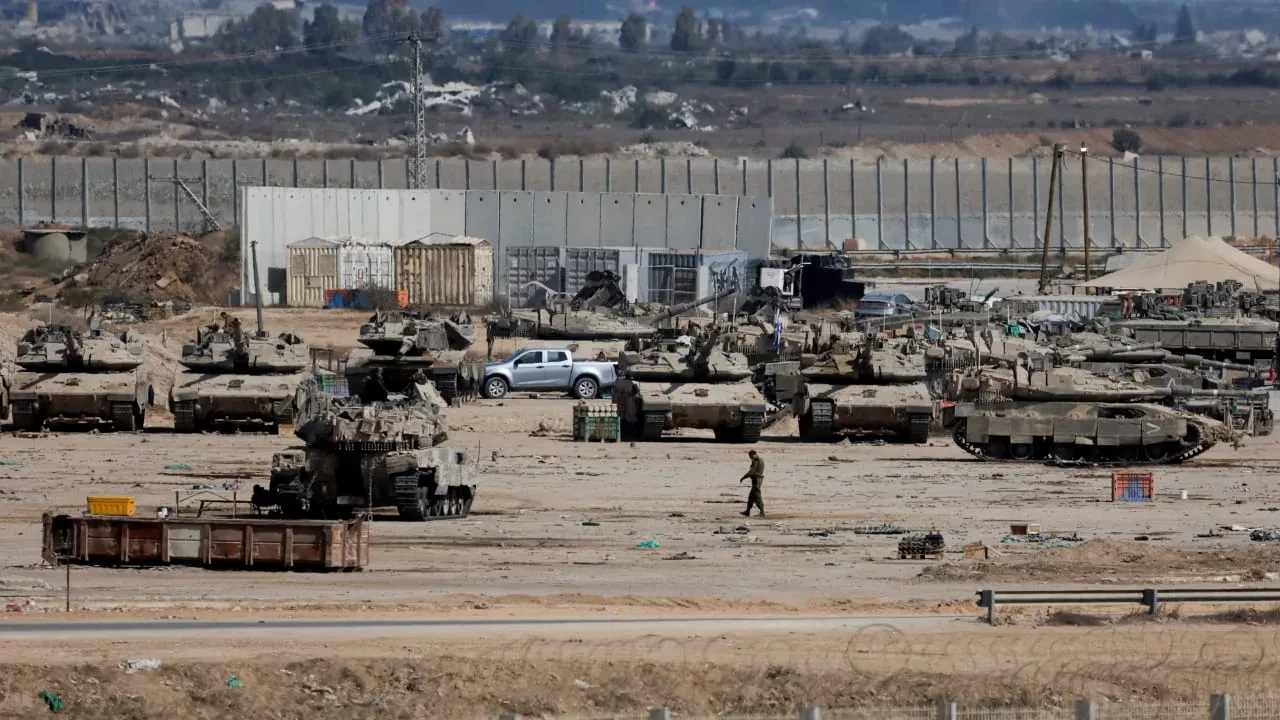
Recent proposals would see them stored or transferred as part of a demilitarisation arrangement tied to Israeli withdrawal, an approach Israel has rejected while insisting on complete disarmament first. Are Palestinians really expected to hand over their weapons while the tanks are still at the border?

The pattern is familiar from the Oslo years: a Palestinian concession enters the diplomatic record, Israel rejects the arrangement as insufficient, and the next negotiation begins from the concession rather than from the position that preceded it. The reward for an unreciprocated concession is usually another demand.

Disarmament therefore goes to the identity and strategic purpose of the movement itself. Restraint can itself be a form of resistance, and Hamas need not return to governing Gaza: relinquishing direct administration might even free the movement from the contradiction between governing a besieged population and functioning as a resistance organisation. Leaving government and abandoning resistance are entirely different propositions.

The greater danger is that a movement exhausted by war and subjected to extraordinary pressure from mediators and international powers could be transformed, incrementally, into merely another Palestinian faction seeking a place in an electoral order whose parameters others have designed.

Fatah’s transformation came about exactly that way. A concession was justified as tactical, another was required to preserve the political process, and another was demanded to demonstrate seriousness, until an organisation established to liberate Palestine became the governing component of an authority operating under occupation.

The movement’s re-engagement with its old rivals in Fatah’s orbit belongs to the same set of concerns. In August, Hamas met officials from the Democratic Reform bloc of the former Gaza security chief Mohammed Dahlan, in contacts a Hamas official confirmed to Al Jazeera, ahead of Palestinian legislative elections scheduled for November.

Weeks earlier, a senior aide had said that Dahlan intervened in the disarmament negotiations through direct contacts with the US president’s son-in-law, Jared Kushner.

Political circumstances change, and old adversaries meet. Yet Hamas should ask what purpose these returns are designed to serve, and why the very powers now pressing for its disarmament appear so comfortable with them.

Strategic patience

Defenders of the present course will ask what the alternative is, and the answer is strategic patience: a movement under immense pressure does not have to resolve every question immediately. Hamas can fulfil the limited agreements it has made while declining to negotiate away questions that belong to the Palestinian people as a whole, using the intervening period to reorganise while the environment becomes clearer.

The region has changed since 2023 in ways in which the consequences are still unfolding. A growing number of analysts argue that the confrontation involving Iran, Israel and the US may leave Tehran strategically stronger than many anticipated. Washington and Tel Aviv, meanwhile, have expended enormous military, political and diplomatic capital.

Gaza itself remains under a fragile ceasefire, with the sequencing of Israeli withdrawal and disarmament unresolved. Why should Hamas negotiate as though today’s balance of power were permanent?

There is a time to fight, a time to negotiate and a time simply to hold one’s position

Elections are a legitimate instrument of popular representation, and Palestinian institutions desperately need renewal after years of stagnation and eroded democratic legitimacy. Taking part in them is one thing; allowing them to redefine the movement’s relationship to resistance is another. Hamas needs to state clearly what it now considers its strategic constants, and how armed, popular, political, legal and diplomatic forms of resistance fit within them. Such questions cannot be answered through piecemeal agreements negotiated under pressure.

There is a time to fight, a time to negotiate and a time simply to hold one’s position, which is sometimes nothing more than the refusal to make irreversible concessions under temporary pressure.

Al-Aqsa Flood came at an almost unimaginable human cost to Gaza, and that cost must never be used to delegitimise Palestinian resistance or shift responsibility from those who devastated the Strip. Neither does the magnitude of Palestinian sacrifice exempt Palestinian leaders from strategic accountability: a resistance movement has to protect the political value of the sacrifices made in the name of its cause.

Hamas can leave the government of Gaza, contest elections under the right conditions and negotiate when circumstances require, without allowing tactical concessions made under extraordinary pressure to redefine its principles. Where its own negotiating capacity is inadequate, it should have the confidence to entrust the bargaining to professionals while retaining the authority to set the red lines.

The gravest danger facing Hamas now lies beyond the battlefield. Having survived one of the most destructive wars in modern history, it could gradually concede at the negotiating table what its adversaries failed to attain by force.

What Israel could not extinguish through military might and genocide should not be surrendered through the fine print of an agreement concocted in Washington.

The views expressed in this article belong to the author and do not necessarily reflect the editorial policy of Middle East Eye.

Sami Al-Arian is the Director of the Center for Islam and Global Affairs (CIGA) at Istanbul Zaim University. Originally from Palestine, he lived in the US for four decades (1975-2015) where he was a tenured academic, prominent speaker and human rights activist before relocating to Turkey. He is the author of several studies and books. He can be contacted at: nolandsman1948@gmail.com.

Trump’s ‘Board of Peace’ Considers Abandoning Original Hamas Disarmament Plan Due To Israeli Pushback

August 19, 2026

The board may rework the proposal to require full Hamas disarmament before any Israeli withdrawal

by Dave DeCamp | August 18, 2026 at 3:03 pm ET | Gaza, Israel

President Trump’s so-called “Board of Peace” is considering altering its framework for a Hamas disarmament deal due to pushback from Israel, The Times of Israel reported on Tuesday.

Under the initial plan announced by President Trump, Hamas would begin “decommissioning” its weapons in phases, which would correspond with Israeli withdrawals from certain areas where demilitarization is confirmed. But Israel has rejected the proposal and wants Hamas to hand over all of its weapons before any Israeli pullback.

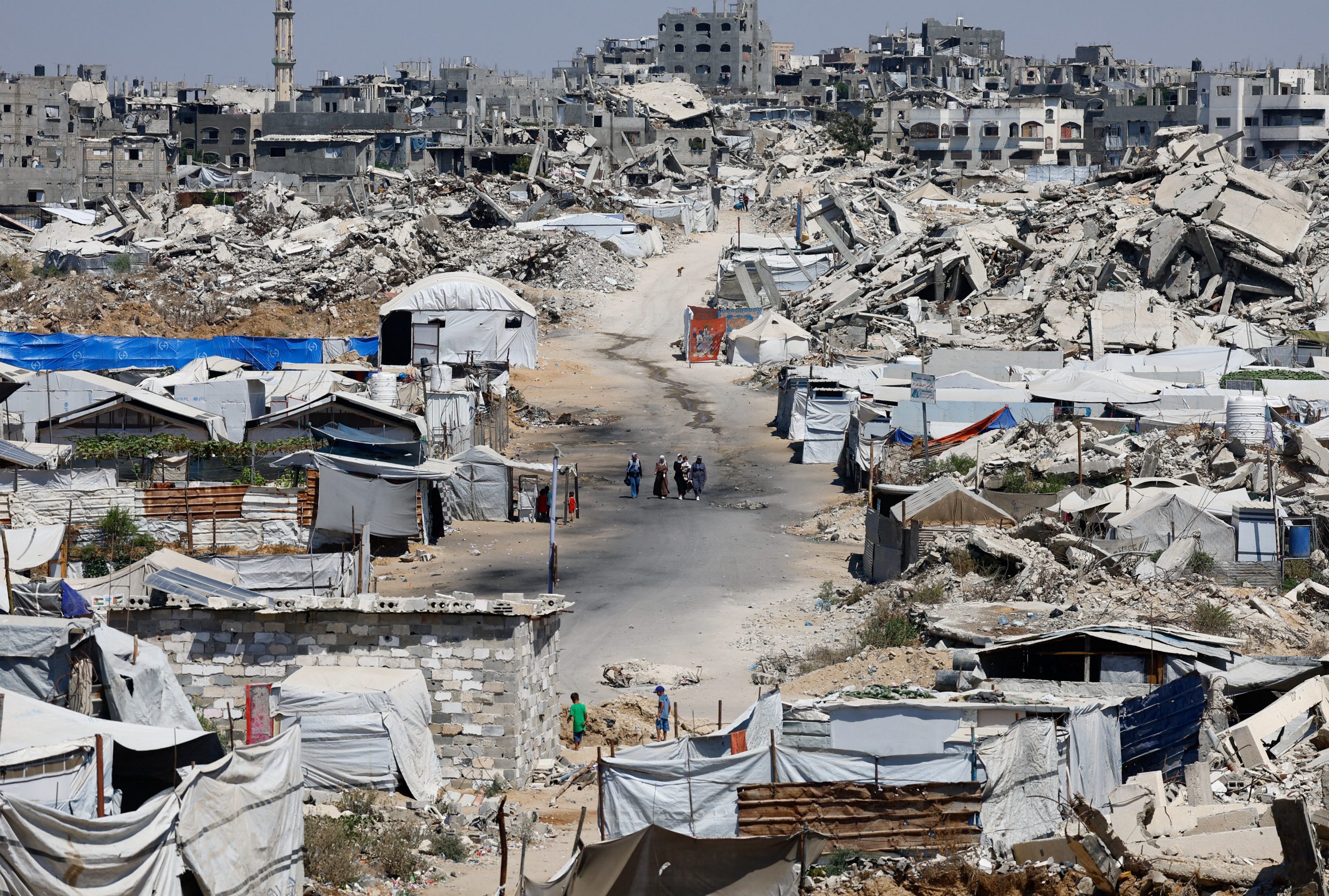
People walk at a site destroyed during the Israeli offensive, in Beit Lahiya, in the northern Gaza Strip, August 18, 2026. REUTERS/Mahmoud Issa

A source told the Times that the Board of Peace is considering the changes, but the dispute over the deal’s terms was not settled during a meeting on Monday between President Trump’s son-in-law, Jared Kushner, and Israeli Prime Minister Benjamin Netanyahu, which ended with an agreement that Israel would continue strikes in Gaza.

The Board of Peace previously suggested it was making changes to the disarmament plan after an earlier meeting of its officials with Netanyahu on August 3. After those talks, the board said that the IDF would withdraw from Gaza only after Hamas disarmed, contradicting its previous statements that said the disarmament and withdrawal would happen “in lockstep.”

The report acknowledged that making the change to the disarmament framework would risk losing Hamas’s support, as the Palestinian group agreed to the US proposal after months of negotiations. Hamas also has no reason to trust that Israel would withdraw after it disarmed, since Israel has blatantly violated the October 2025 ceasefire deal with daily attacks.

Israeli Defense Minister Israel Katz has also said that the IDF won’t withdraw from Gaza, even if Hamas disarms, and that the ultimate goal was to establish Jewish settlements in the Palestinian territory.

If you liked this article, please support Antiwar.com.
We are 100% reader-supported.

Dave DeCamp is the news editor of Antiwar.com, follow him on Twitter @decampdave.

Report: Kushner-Netanyahu Meeting Ends With Agreement That Israel Will Keep Bombing Gaza

August 18, 2026

by Dave DeCamp | August 17, 2026 at 3:09 pm ET | Gaza, Israel

A meeting between Israeli Prime Minister Benjamin Netanyahu and President Trump’s son-in-law, Jared Kushner, a long-time family friend of the Israeli leader, ended with an agreement that Israel will continue so-called “targeted strikes” in Gaza, Haaretz reported on Monday.

The reported agreement to allow Israel to continue attacks in Gaza comes despite Kushner holding a meeting a day earlier with Hamas officials, who said they were committed to the disarmament plan announced by President Trump and the so-called “Board of Peace.”

Later in the day, Kushner told Fox News that the US wouldn’t “restrict Israel’s right to defend itself” and that one purpose of the meeting was to “clarify what that means.” He also described the disarmament deal as a “win-win” for Israel because either Hamas disarms, or Hamas doesn’t “follow through” and then Israel would have “a lot more support from the US and others to go and finish the job.”

Also on Monday, President Trump said that Israel should “stop striking Gaza” because Hamas agreed to “lay down their weapons,” comments that Hamas welcomed, though the results of the Kushner-Netanyahu meeting suggest Trump isn’t serious about putting pressure on Israel to halt all of its attacks.

Kushner and Netanyahu were joined by the Board of Peace’s top Gaza envoy, Bulgarian politician Nikolay Mladenov, former British Prime Minister Tony Blair, and US Ambassador to Israel Mike Huckabee.

Kushner and Netanyahu speaking at the White House on September 29, 2025 (White House photo)

The Haaretz report said the officials agreed to allow work to begin in Gaza on sanitation infrastructure to prevent disease outbreaks and contamination of groundwater and coastal waters, but broader reconstruction will still not be allowed.

They also discussed a preliminary plan that would involve Hamas handing over its weapons to a force led by Jasper Jeffires, a US Army general who’s been designated as the commander of the “International Stabilization Force,” which is supposed to deploy to Gaza under President Trump’s plan.

But the Haaretz report said Israeli officials expressed skepticism about the disarmament plan, and Netanyahu and other Israeli officials have repeatedly rejected the overall proposal. An Israeli official told The Guardian that there had been no breakthrough in the meeting and that Israel would continue to carry out operations in Gaza.

Israel’s attacks in Gaza since the so-called ceasefire deal was signed in October 2025 have killed at least 1,265 Palestinians and wounded 4,198, according to the latest numbers released by Gaza’s Health Ministry. The ministry said that over the previous 48 hours, Israeli attacks have killed at least two Palestinians and injured 15.

If you liked this article, please support Antiwar.com.
We are 100% reader-supported.

Dave DeCamp is the news editor of Antiwar.com, follow him on Twitter @decampdave.

Inspired by Trump, Israel Advances Plan for Crocodile-Ringed Prison for Palestinians

July 18, 2026

Senior Israeli police officials take a fact-finding tour of a crocodile farm in Hamat Gader

Senior Israeli police officials take a fact-finding tour of a crocodile farm in Hamat Gader on January 1, 2026.

(Photo by Israel Police)

“This is some Bond villain-level lunacy,” said one Reddit user.

Brett Wilkins., Common Dreams, Jul 17, 2026

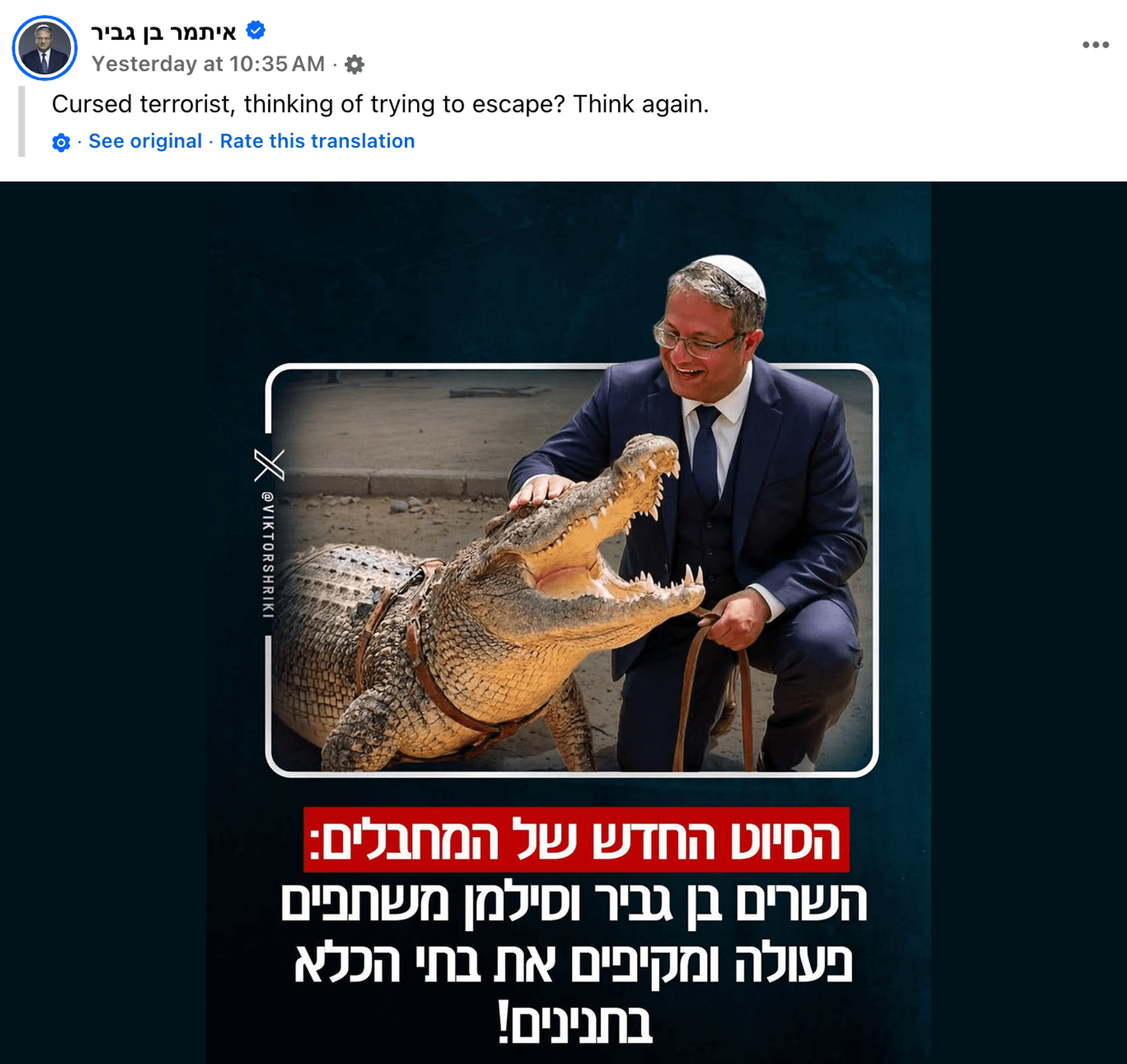
The Israeli government this week stripped Nile crocodiles of their protected status in order to advance a proposal that National Security Minister Itamar Ben-Gvir said was inspired by the Trump administration’s now-shuttered Alligator Alcatraz to build a prison for Palestinians surrounded by a moat full of the ravenous reptiles.

“You read that right,” the liberal US Jewish group J Street said in response to the news. “When cruelty becomes a governing principle instead of an aberration within the Israeli government, something has gone deeply wrong.”

RECOMMENDED…

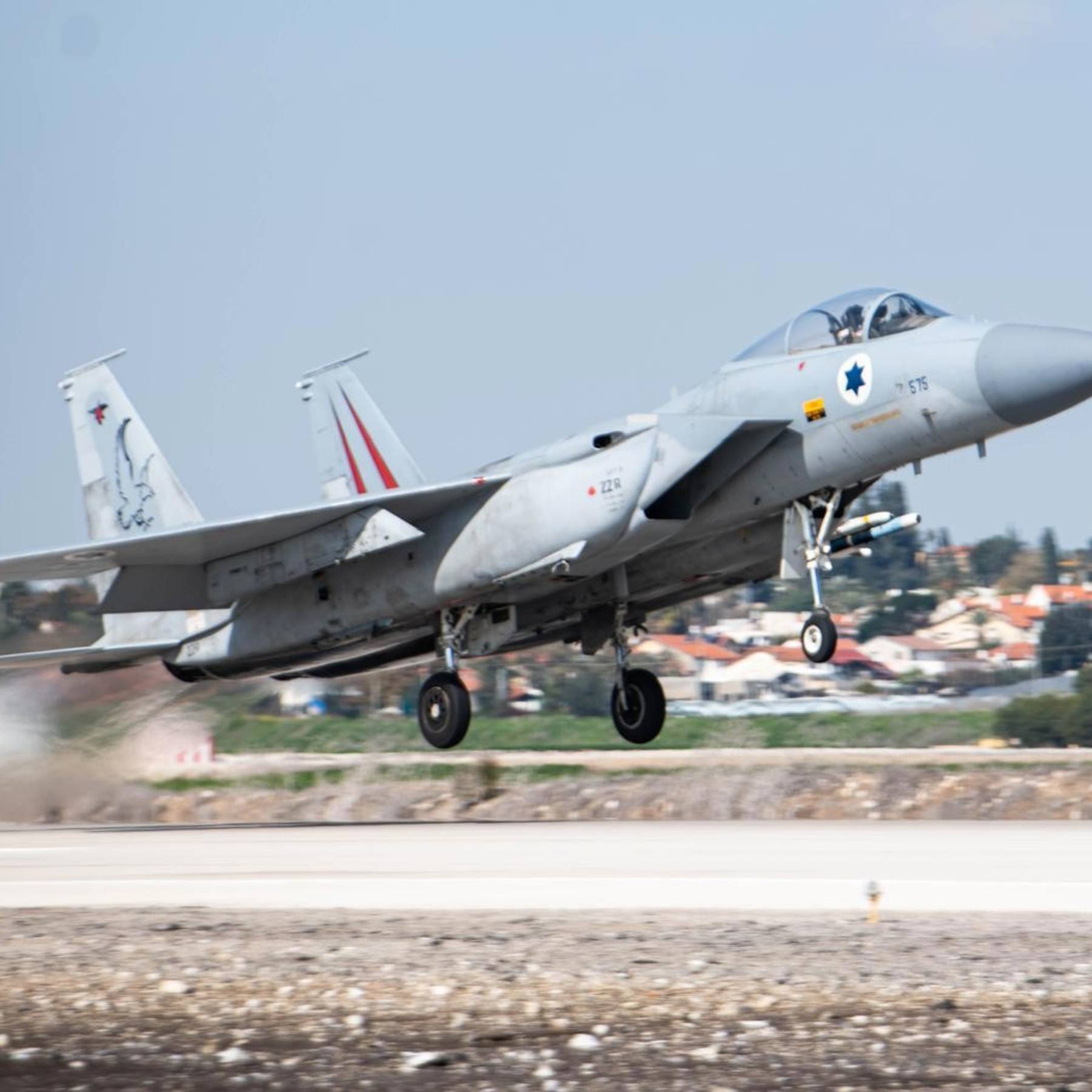
An IDF warplane takes off

How Section 219, the US-Israel Military Merger, Would Thwart American Democracy

CHINA-US-DIPLOMACY

‘Unconscionable and Impeachable’: Experts Appalled at Report of Marco Rubio Acting as Venezuela ‘Viceroy’

Israeli Environmental Minister Idit Silman signed a directive Wednesday reclassifying Nile crocodiles as “specially managed wild animals,” a novel legal category enabling the government to keep them for security purposes.

Ben-Gvir, who heads the Israel Prison Service (IPS), said he was inspired by the Trump administration’s recently closed Alligator Alcatraz immigrant detention center in Florida. He is seeking to first introduce crocodiles into a moat around Ketziot Prison in southern Israel.

While it is not certain that the plan will come to fruition, Ben-Gvir celebrated Silman’s decree in a social media post showing him petting a crocodile, with the caption: “Cursed terrorist, thinking of trying to escape? Think again.”

Palestinians have occasionally escaped from Israeli lockups, such as in September 2021, when six men used improvised tools, including spoons, to tunnel out of the high-security Gilboa Prison. All six escapees were caught within weeks.

(Photo by Itamar Ben-Gvir/Facebook)

The move by Silman—who gained international notoriety by calling for the ethnic cleansing of all Palestinians from the Gaza Strip—came despite objections from her own ministry’s legal adviser and the Nature and Parks Authority.

IPS, which sent a fact-finding mission to the Hamat Gader crocodile farm in January, argued that its employees could handle the animals, citing the agency’s experience working with the attack dogs that Palestinian prisoners and human rights groups have claimed were used to maul and even sexually abuse detainees.

Silman’s approval is contingent upon IPS meeting animal welfare requirements and appropriate holding conditions.

Meanwhile, Ben-Gvir has openly boasted about the dramatic deterioration in conditions endured by Palestinian prisoners since the Hamas-led attack of October 7, 2023 and Israel’s retaliatory obliteration of Gaza, which United Nations and other experts describe as a genocide.

“We go into the prisons, and they wet themselves,” Ben-Gvir said of Palestinian prisoners during a speech on Friday. “I’m not joking. They’re afraid. Fear rules them, and that’s how it should be.”

Katz Says Israel Won’t Withdraw From Gaza Even If Hamas Disarms and Will Establish ‘Nahal’ Settlements

July 15, 2026

The Israeli defense minister also said the destruction of Gaza gives him a ‘good feeling’

by Dave DeCamp | July 14, 2026 at 12:59 pm ET | Gaza, Israel

Israeli Defense Minister Israel Katz has said that the Israeli military won’t withdraw from Gaza even if Hamas disarms and that he plans to establish three settlements in the area of northern Gaza that the IDF has destroyed.

“We are not retreating from the Yellow Line,” Katz said on Monday during a visit to northern Gaza with reporters from Israel’s Channel 14. “Unequivocally, as long as Hamas does not truly disarm, and even after that, we remain inside of Gaza to bring up three Nahal outposts (military settlements).”

Nahal settlements are a type of Jewish settlement in Israeli-occupied territory that are established by Israeli soldiers with the goal of transitioning them to permanent civilian communities. Katz first vowed in December 2025 that Israel would “never leave” Gaza and would establish Nahala settlements, though he has remained quiet about the plan since then, likely due to international backlash.

Israeli Defence Minister Israel Katz said in a report aired on Monday that the destruction in Gaza, which he described as “the result of a deliberate policy”, “feels good”. pic.twitter.com/4bfytEmzYN— Middle East Eye (@MiddleEastEye) July 14, 2026

In his remarks on Monday, Katz said that a permanent Israeli presence was needed in Gaza to “improve the hold and defense of the communities,” referring to Israeli towns near the Gaza border.

Israeli Finance Minister Bezalel Smotrich has also recently said that plans have been drawn up for the establishment of three Jewish settlements inside Gaza and that he is just waiting on approval from Israeli Prime Minister Benjamin Netanyahu.

Katz also boasted of the destruction of Gaza cities during his visit to the northern part of the Strip. When asked how the view of the destruction made him feel, the Israeli minister said, “I feel good. Thank God. This is all the result of a deliberate policy aimed at removing threats. Instead of the raid method—going in and out—the IDF is inside, the terrorists are outside, and the houses are destroyed.”

Katz’s plans for Gaza go against the US-backed outline for a peace plan for Gaza that was approved by the UN Security Council, and the US has remained silent as Israel continues to constantly violate the ceasefire deal signed in October 2025, which was meant to lead to the implementation of the full peace plan.

Now that Hamas has released all Israeli captives and recovered the bodies of the deceased, Israeli officials try to justify the continued occupation and attacks in Gaza by demanding that Hamas disarm, but the comments from Katz and other Israeli officials reveal that the real goal is permanent occupation.

Palestinians Report Intensified Israeli Military Operations in the Gaza Strip

July 1, 2026

Gaza’s Health Ministry said Tuesday that at least eight Palestinians were killed over the previous 24 hour period

by Dave DeCamp , Antiwar. com, | June 30, 2026 at 1:30 pm ET | Gaza, Israel

The Israeli military has intensified its military operations across Gaza, the Palestinian news agency WAFA reported on Tuesday, citing its correspondents in the Strip, as the IDF continues its constant violations of the US-backed ceasefire deal.

The report said that the ramped-up activity included the large-scale demolition of homes and civilian infrastructure in the eastern and northeastern areas of the southern city of Khan Younis. In the nearby city of Rafah, WAFA reported heavy artillery shelling and gunfire toward Khan Younis.

In Gaza City, the report said that “Israeli forces detonated a booby-trapped robot loaded with a large quantity of explosives, targeting homes in the Tuffah neighborhood in the northeast of the city” and that there was also “heavy gunfire from military vehicles” in the area and “sporadic explosions.”

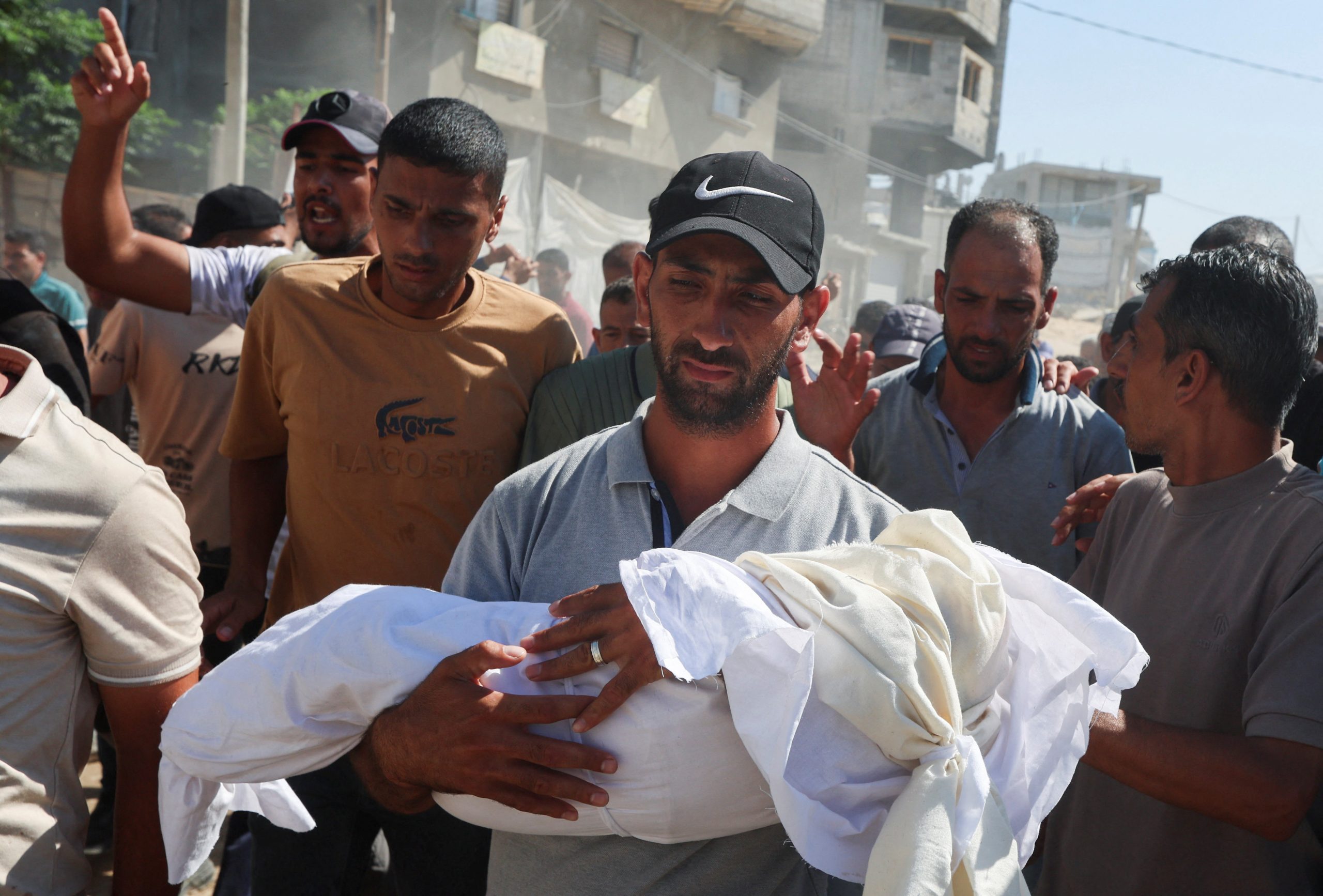
Mourners attend the funeral of Palestinian woman Diana Abu Daraz and her one-year-old daughter, Sewar, who were killed in an Israeli strike on tents, according to medics, outside Nasser Hospital in Khan Younis, in the southern Gaza Strip, June 30, 2026. REUTERS/Ramadan Abed

The news agency also reported that at least two people were killed by an Israeli airstrike near Khan Younis and multiple people were injured by Israeli attacks in Gaza City. Gaza’s Health Ministry said in its daily update that it recorded the Israeli killing of at least eight Palestinians and the injury of 26.

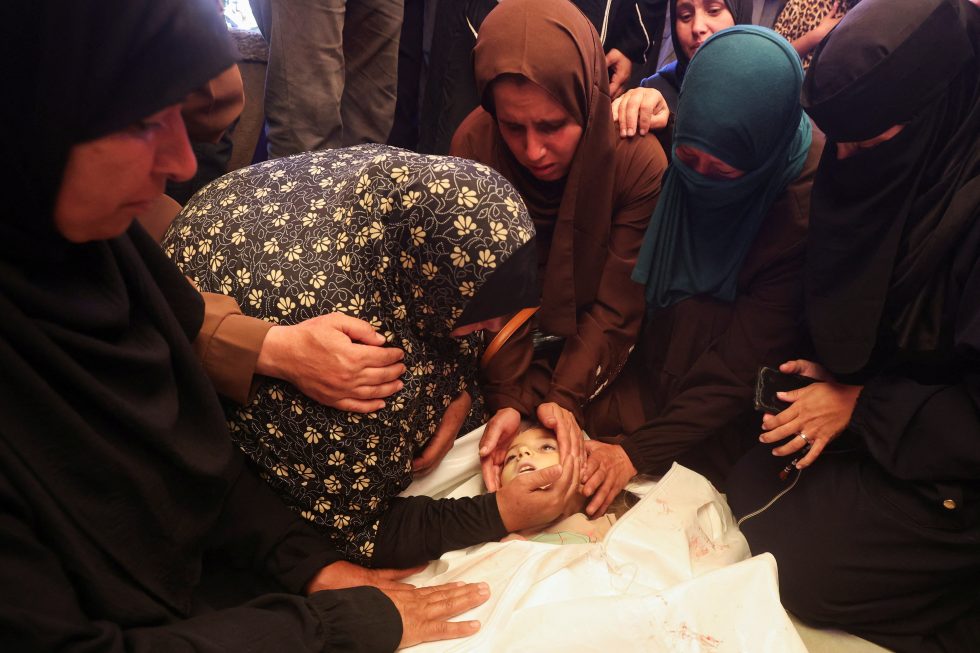
In recent days, Israeli forces have killed multiple children, including a one-year-old girl who was killed alongside her mother in an airstrike targeting a tent in southern Gaza. Palestinians held a funeral for the child and her mother at the Nasser Hospital in Khan Younis on Tuesday.

The escalation in Israeli attacks comes as the IDF has been taking more territory in Gaza, a clear violation of the ceasefire deal. Israeli Prime Minister Benjamin Netanyahu said last month that he ordered the Israeli military to take 70% of Gaza’s territory, up from 60%, and Israeli military officials said last week that the IDF has achieved that goal.

Since the so-called ceasefire deal was signed, the Health Ministry has recorded the Israeli killing of 1,053 Palestinians and the injury of 3,406. “A number of victims are still under the rubble and in the streets, as ambulance and civil defense crews have been unable to reach them so far,” the ministry wrote on Telegram.

Israel Has Killed More Than 1,000 Palestinians in Gaza Since So-Called Ceasefire Deal Was Signed in October 2025

June 18, 2026

by Dave DeCamp | June 17, 2026

Israeli attacks in Gaza since the so-called ceasefire deal was signed in October 2025 have now killed more than 1,000 Palestinians, according to Gaza’s Health Ministry, as the IDF has continued its constant violations of the agreement.

The Health Ministry said that over the previous 24 hours, Israeli attacks killed two Palestinians in Gaza, and six Palestinians who succumbed to wounds from previous strikes were added to the death toll, bringing the total number of Palestinians killed since the deal was signed to 1,005.

Another 3,157 Palestinians have been wounded in the time, meaning there have been more than 4,000 Palestinian casualties in the eight-month period.

Mourners react during the funeral of six-year-old Palestinian girl Mennatallah Abu Libda, who was killed in an Israeli strike on a tent encampment for displaced families, according to medics, in Khan Younis in the southern Gaza Strip, May 25, 2026. REUTERS/Ramadan Abed

Israeli attacks continued in Gaza on Wednesday, with witnesses telling the Anadolu Agency that an Israeli strike hit beachgoers in the al-Mawasi tent camp in southern Gaza. At least two Palestinians were killed, and six were wounded.

The report said that the area that was bombed was “crowded with beachgoers and displaced families, many of whom had sought refuge by the sea as their only escape from soaring temperatures and deteriorating living conditions in displacement camps.”

Besides the constant strikes, Israel has also violated the deal by taking more territory in Gaza. After the ceasefire agreement was signed, IDF troops occupied about 53% of Gaza, but that has increased to about 60%, and Israeli Prime Minister Benjamin Netanyahu has said that he ordered the military to expand it to 70%.

In recent days, Palestinians have reported IDF troops advancing the “yellow line,” the vague boundary that separates the IDF-occupied side of Gaza from the rest of the Strip, and several families were reportedly displaced in Gaza City on Tuesday as Israeli troops pushed tanks into the area.

The US and Israeli officials have accused Hamas of violating the ceasefire deal by not laying down its weapons, but the agreement that was actually signed didn’t commit Hamas to disarmament.

The two sides agreed to a US proposal that called for the “demilitarization” of Gaza as a framework for negotiations, but the issue of disarmament was meant to be worked out in follow-up negotiations. Hamas has also maintained that it won’t disarm unless there is movement toward the establishment of a Palestinian state. Negotiations on implementing the US plan for Gaza have been ongoing, but there’s been no sign of progress.

If you liked this article, please support Antiwar.com.
We are 100% reader-supported.

Dave DeCamp is the news editor of Antiwar.com, follow him on Twitter @decampdave.

US military begins construction of ‘huge base’ outside Gaza to oversee Trump’s colonization plan

June 14, 2026

While talks in Cairo center on disarming Hamas, Israel has kept killing hundreds of Palestinians without accountability and is expanding its control over the strip despite an alleged ‘ceasefire’

News Desk, The Cradle, JUN 13, 2026

(Photo credit: REUTERS/AMMAR AWAD)

The US military has begun constructing a “huge base” on the Gaza envelope to implement US President Donald Trump’s plan to “take over” the strip, Israel Hayom reported on 13 June.

The US base, being built near the Israeli military base at Reim settlement, will function as both a military and civilian headquarters for the organizations and forces arriving in the area to implement the Trump plan.

In February 2025, Trump proposed a US “takeover” of the Gaza Strip. 

The plan called for the forced displacement of approximately two million Palestinians to neighboring lands and redeveloping the territory as a high-tech business and tourism hub that Trump said would become the “Riviera of the Middle East.”

The new base will replace the US facility in the Israeli town of Kiryat Gat, established under the direction of Trump’s Board of Peace in the wake of the October 2025 “ceasefire.”

Representatives from more than 24 countries staffed the multinational headquarters and were tasked with overseeing the ceasefire and the entry of humanitarian aid.

The Kiryat Gat base was also meant to direct the operations of an International Stabilization Force (ISF) tasked with providing security in Gaza.

However, Israel has continued to severely restrict the entry of aid into Gaza, recently suspending all shipments, while the ISF has yet to be formed.

After the US and Israel launched a war on Iran on 28 February, the overwhelming majority of personnel left Kiryat Gat.

Israel Hayom noted that plans for the new US base include the construction of a tower intended for the command and control of forces in the field. 

The US military has already begun issuing tenders to private contractors, including for the supply of mobile structures to house personnel and serve as a headquarters until permanent buildings are established at the site.

The new base will also host troops from the ISF if it is formed. 

Five countries previously agreed to send forces to Gaza, namely Indonesia, Morocco, Kazakhstan, Kosovo, and Albania. Bangladesh, Pakistan, and Azerbaijan have expressed a willingness to participate but have made no firm commitment.

Currently, no countries are willing to send troops due to fears that their forces will be tasked with disarming the Palestinian resistance, as well as concerns about the ongoing US-Israeli conflict with Iran.

The construction of the new US base is being fully coordinated with the Israeli Defense Ministry. Military officials expect the base to be constructed and staffed within a few months.

The report comes as talks continue between Hamas and Israel via negotiators in Cairo. 

Israel persists in demanding Hamas disarmament before progressing the ceasefire, while simultaneously continuing to kill Palestinians in Gaza without consequences and expanding its occupation rather than withdrawing from the territory seized during the genocide.

Israel has killed nearly 1,000 Palestinians in Gaza and expanded its control of the strip from 50 percent to at least 60 percent since the ceasefire.

One security source told Israel Hayom that the “chance of renewed fighting in the Gaza Strip is greater than the possibility that Hamas will actually be disarmed through a diplomatic agreement.”

“Demilitarizing Gaza became a bigger aim than stopping Israel’s genocide; such is the absurd truth,” wrote author Ramona Wadi.

While “colonial expansion as the reason behind Israel’s genocide in Gaza, utterly exposed for the entire world to see, [it] is never discussed by the international community. On the contrary, the Board of Peace promotes it and sets the conditions that justify colonialism instead of preventing it, using an extension of the same narrative Israel used to destroy Gaza,” Wadi added.

Itamar Ben-Gvir is suddenly the villain of Israeli politics for one reason: he revealed Israel’s true face to the world

May 24, 2026

Itamar Ben-Gvir has been attacked across Israeli politics for a cruel video showing him mocking flotilla activists as they were being abused by officers. His offense was not his fascist celebration, but rather showing the true face of Israel.

By Jonathan Ofir, Mondoweissw, May 23, 20265

Itamar Ben-Gvir (Photo: Wikipedia) Itamar Ben-Gvir (Photo: Wikipedia)
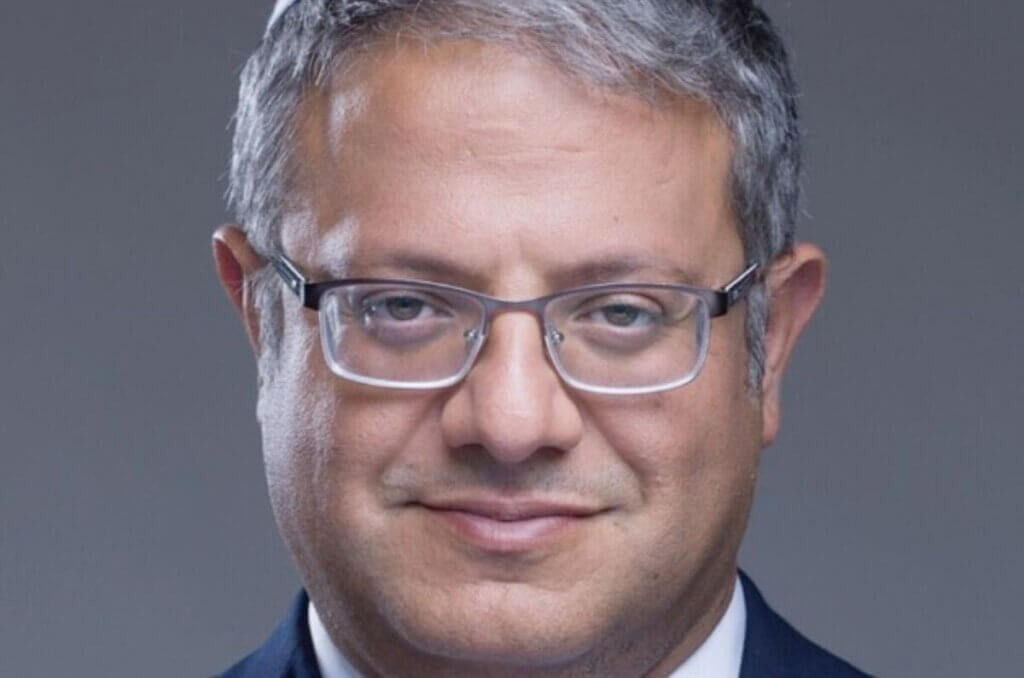
This week, Israel’s Minister of National Security Itamar Ben-Gvir became an unlikely target of derision across the Israeli political spectrum, including the right-wing. His offense? Revealing the true face of Israel to the world.

The story begins with the latest Gaza freedom flotilla, which again was sending boats and activists to try to break Israel’s illegal and inhumane siege on Gaza. Similar to past flotillas, Israel hijacked the boats at sea, and detained the activists. 430 activists were kidnapped in Israel’s recent act of piracy, coming from over 40 countries.

This time, all of the activists were to be taken to Israel. Ben-Gvir was waiting for them and made a video mocking the activists for social media. “This is how we welcome the terror supporters”, he wrote in Hebrew, where his English title was “Welcome to Israel”. 

At the beginning of the video, an activist who is standing up, chanting “free free Palestine” is seen being pushed violently to the floor by security who shout “quiet, quiet,” Ben-Gvir continues to march in, waving an Israeli flag, and a mass of kidnapped activists is seen being forced into stress positions with their heads down to the floor. “Good work”, Ben-Gvir says to the guards, and shouts to everyone: “Welcome to Israel! We are the masters of the house!” 

It is important to note that this is a common scenario in these arrests, and there is nothing really new about it. It is a light variation of what is being done to Palestinians every day, and various snuff videos showing such systemic torture have been aired on mainstream Israeli television channels. These videos have also commonly included Ben-Gvir’s mantra “We are the masters of the house”, which was his election slogan. 

The Israeli Prison Service even went as far as issuing a statement to Ha’aretz, saying that the detention was “carried out in accordance with procedure and professional considerations.” Times of Israel notes that this was done “as media outlets suggested the prison officials present in the clip were acting against political and military policies”. These are, in fact, their procedures, these are their policies.1

Yet, despite this, and perhaps in a sign of how Israel’s international standing has fallen, Ben-Gvir’s video set off an international firestorm, and has become a PR problem of its own. Both Poland and France have issued entry bans against Ben-Gvir with French Foreign Affairs Minister Jean-Noël Barrot saying, “we cannot tolerate French nationals being threatened, intimidated, or brutalized in this way, especially by a public official” and calling for other EU countries to issue sanctions against him. Italy’s Giorgia Meloni said it was “unacceptable” that “these demonstrators, including many Italian citizens, are subject to this treatment.” British Foreign Minister Yvette Cooper was “truly appalled” by the video, which “violates the most basic standards of respect and dignity in the way people should be treated.”

Of course, no such outrage is to be found when it’s Palestinians, but that’s always another story. Now it’s a problem that internationals, including Europeans, are being jeered at by Ben-Gvir as they were paraded through detention like animals.

Given the response, Israel’s hasbara central turned to damage control mode, and Ben-Gvir was thrown under the bus as a bad apple. 

Prime Minister Netanyahu claimed that Ben-Gvir’s video was “not in line with Israel’s values.” It wasn’t the what, it was the how: “Israel has every right to prevent provocative flotillas of Hamas terrorist supporters from entering our territorial waters and reaching Gaza. However, the way that Minister Ben-Gvir dealt with the flotilla activists is not in line with Israel’s values and norms,” he added. 

Foreign Minister Gideon Sa’ar, who thus heads the hasbara office, shared Netanyahu’s message, but had a message of his own, even more condemnatory of Ben-Gvir, claiming Ben-Gvir wasn’t the face of Israel: “You knowingly caused harm to our State in this disgraceful display – and not for the first time. You have undone tremendous, professional, and successful efforts made by so many people – from IDF soldiers to Foreign Ministry staff and many others. No, you are not the face of Israel”, he wrote in his sharing of Ben Gvir’s tweet. 

And then the Foreign Ministry posted a tweet with one video and three photos: 

A video of a guard giving water to a hostage; A photo of another offering water to a hostage; a hostage being questioned at a table; a woman smiling (presumably a hostage). 

“These are our values,” says the caption. 

All we’re missing is candy being handed around, and maybe a choral performance to top it off. 

The reality of the situation was that the activists had been held in these stress positions for many hours, and the human rights organization Adalah reported that activists were sent to the hospital, suspected of having broken ribs due to breathing difficulty, having been subject to electric shock, and shot with rubber bullets. Activists also reported sexual assault, including rape. On one particular Israeli ship, at least 12 sexual assaults were documented, “including anal rape and forcible penetration by a handgun.” This is, of course, standard procedure when it comes to Palestinians, including the systematic use of rape, which was effectively legitimized when the Sde Teiman gang rape case was recently closed.  

So this moral panic over Ben-Gvir’s crude behavior is really an attempt to draw attention away from this abuse, and it appears to be working. He is being made out to be an obnoxious fascist outlier, when in fact Ben-Gvir represents the true face of Israel. 

This is all about Israel, as a whole. It’s Israel’s siege, it’s Israel’s genocide, and the world needs to awaken to this understanding. It’s not just about a few rotten apples, a particularly vile minister, or a few bad cops. 


Jonathan Ofir
Jonathan Ofir is an Israeli musician, conductor and writer based in Denmark.

Netanyahu Admits Israel Is Taking More Territory in Gaza in Violation of Ceasefire Deal

May 19, 2026

Israel has also violated the deal by launching daily attacks across Gaza

by Dave DeCamp | May 18, 2026 at 12:33 pm ET | Gaza, Israel, Palestine

Israeli Prime Minister Benjamin Netanyahu has admitted at a cabinet meeting that Israel has taken more territory in Gaza since the ceasefire was supposed to go into effect in October 2025, an acknowledgment of an Israeli violation of the truce deal.

When the deal was signed in October 2025, Israeli troops pulled back to an agreed-upon line, known as the “yellow line,” which left about 53% of Gaza under IDF occupation, but that area of control has expanded. “In Gaza now, we already control not 50%, but 60%,” he said, according to The Times of Israel, confirming reports that said Israel now controls 60% of the Palestinian territory.

Palestinians live in difficult conditions near the so-called yellow line east of Khan Younis, southern Gaza, on April 27, 2026 (IMAGO/APAimages via Reuters Connect)

The ceasefire deal that Israel and Hamas signed in October 2025 said that the “IDF will not return to areas that have been withdrawn from, as long as Hamas fully implements the agreement,” and Hamas had fulfilled its side of the deal by releasing all living Israeli hostages and bodies that it had and working to recover other Israeli remains.

Israeli officials have claimed Hamas is violating the deal by not disarming, but the agreement didn’t commit Hamas to giving up its weapons. The two sides agreed to a US proposal that called for the “demilitarization” of Gaza as a framework for negotiations, but the issue of disarmament was meant to be worked out in follow-up negotiations.

For its part, Hamas has maintained that disarmament must be linked to a path toward a Palestinian state and has also stated that it won’t discuss the issue until the first phase of the ceasefire is actually implemented. Israel has constantly violated the agreement by launching daily attacks in Gaza, killing more than 870 Palestinians since it was supposed to go into effect, and it has also not consistently allowed the agreed-upon number of aid trucks to enter the besieged territory.

Despite the constant Israeli violations, the so-called “Board of Peace,” a US-led body meant to oversee the implementation of the agreement, has put the blame on Hamas’s unwillingness to disarm for the lack of progress in implementing President Trump’s plan for the Palestinian territroy.