Israeli security forces demolish buildings and mosque in the Bedouin village of Umm al-Hiran, where an evacuation and demolition order has been issued for the construction of Israeli settlements, in Negev Region, Israel on November 14, 2024 [Mostafa Alkharouf/Anadolu Agency]
Israeli authorities demolished around 80 homes in the Palestinian village of Al-Dhahiya in the Negev region of southern Israel on Monday, displacing around 400 people, amid accusations that extremist National Security Minister Itamar Ben-Gvir is using home demolitions as part of his election campaign.
Israel’s public broadcaster KAN said teams from the Israel Land Authority, accompanied by reinforced police forces under Ben-Gvir’s ministry, demolished around 80 homes on claims that they had been “built without permits” in Al-Dhahiya, an unrecognized village north of the city of Rahat.
The demolition came after the Beersheba District Court on Sunday rejected a petition seeking to postpone the demolitions, the broadcaster said, adding that around 400 people had been living in the homes.
In recent weeks, Ben-Gvir has publicly highlighted the demolition of hundreds of homes belonging to Palestinian citizens of Israel, or Israeli Arabs, over alleged construction without permits.
Last Tuesday, Ben-Gvir took part in the demolition of a five-story building housing 70 Palestinians in the At-Tur neighborhood of occupied East Jerusalem, an action the Jerusalem Governorate described as the “electoral exploitation of Jerusalem at the expense of Palestinians.”
The Joint List, an alliance of three Arab parties, denounced the home demolitions as “a blatant assault on the most basic human and national rights of our people.”
“The demolitions were a continuation of the successive Israeli governments’ policies of demolition, uprooting and displacement against residents of Arab villages in the Negev,” the alliance said.
Hassan al-Nasasra, deputy mayor of Rahat, also denounced the demolitions.
“The demolitions are not an implementation of the law in any way, but merely election propaganda for the racist Ben-Gvir and his group,” he said in a statement.
KAN also reported that United Arab List leader Mansour Abbas sent an urgent letter to Attorney General Gali Baharav-Miara demanding an immediate freeze on home demolition orders until the elections are over and a new government is formed.
Israel’s general elections are scheduled for Oct. 27.
Abbas warned against using home demolitions for “political and electoral purposes,” saying Ben-Gvir had publicly boasted about participating in demolitions “in a way that undermines the integrity of the election and the neutrality of law enforcement agencies.”
“Residents of unrecognized villages in the Negev are unable to obtain building permits because of a lack of planning for which the state bears responsibility,” he said, calling for a complete halt to demolitions of inhabited homes in such villages.
Dozens of Palestinian villages in the Negev are not recognized by Israeli authorities, which consider their homes unauthorized and do not connect them to water, electricity or road networks or provide schools, clinics and other basic services.
Last year, the daily Yedioth Ahronoth reported that demolition orders in the region had risen by as much as 400% since the beginning of that year, drawing fire from Israeli rights organizations, which described the campaign as “discriminatory” and specifically targeting the Bedouin community.
Palestinian Bedouins in the Negev are Arab tribes that have lived in the area for centuries and were there before the establishment of Israel in 1948.
Israel was established in 1948 on lands captured by Zionist armed groups, before occupying the remaining Palestinian territories in 1967, including the West Bank, Gaza Strip and East Jerusalem.
Even Israel’s traditional allies are distancing themselves from Netanyahu, Modi’s India has embraced the country.
Add Al Jazeera on Google
Israeli Prime Minister Benjamin Netanyahu greets his Indian counterpart Narendra Modi during a meeting with the Indian community at the Tel Aviv Convention Center in the Israeli city, on July 5, 2017 [Gil Cohen-Magen/AFP]
New Delhi, India – The United Kingdom, France, Australia, New Zealand, Canada and Norway had already banned the entry of Bezalel Smotrich, Israel’s far-right finance minister, who had advocated the ethnic cleansing of Palestinians in Gaza and the annexation of the occupied West Bank.
But in September 2025, as the European Union was planning bloc-wide sanctions against him and his fellow far-right colleague Itamar Ben-Gvir that it would eventually announce late that month, Smotrich was welcomed with garlands and a multi-city trip to India. In New Delhi, he signed a trade deal; in Mumbai, he visited the stock exchange; and in Gujarat – the home state of Indian Prime Minister Narendra Modi – he travelled to a new investment hub.
As Israel was conducting its genocidal war on Gaza, bombing and killing dozens on the very days he was visiting India, New Delhi was ready to expand business with Israel like never before. For decades, India had been one of the world’s staunchest supporters of Palestine, and Europe one of Israel’s closest backers. India’s position has shifted firmly since 2014, when Modi and his Hindu majoritarian Bharatiya Janata Party came to power. But analysts say the optics of Smotrich’s visit underlined something even more dramatic: At a time when even Europe, traditionally seen as backing Israel, has veered away from Prime Minister Benjamin Netanyahu’s government, the genocidal war on Gaza appears to have escalated India’s embrace of Israel.
In February this year, Modi visited Israel as Netanyahu – who faces an arrest warrant from the International Criminal Court over war crimes carried out in Gaza – faced growing isolation in the international arena.
“You are a great friend of Israel. You are more than a friend. You are a brother,” Netanyahu told Modi when both leaders addressed the Israeli parliament in Jerusalem.
Indian Prime Minister Narendra Modi and Israeli Prime Minister Benjamin Netanyahu attend an innovation conference with Israeli and Indian CEOs in Tel Aviv, Israel, on July 6, 2017 [Oded Balilty/Reuters]
How October 7 attack changed tones
Three years of Israeli attacks have killed at least 74,000 Palestinians, including at least 21,000 children. That is about one in every 30 people, or 3 percent of the pre-war population.
Historically, India has argued that diplomacy and dialogue are the way forward to resolve conflicts – whether between Russia and Ukraine, the US and Iran, or Israel and Palestine. New Delhi has maintained that war doesn’t solve anything.
But investigations by Al Jazeera and other reporting have revealed that New Delhi exported weapons to Israel during the ongoing genocidal war on Gaza. Meanwhile, under Modi, India has become Israel’s largest weapons buyer.
Just hours after the Hamas-led attack on Israel on October 7, 2023, India’s Modi unequivocally condemned the “terrorist attack”, adding that he was “deeply shocked”. When he visited Israel in February this year, Modi referred to the Mumbai attacks in 2008, carried out by Pakistani fighters, which New Delhi has blamed on the Pakistani government. “Like you, we have a consistent and uncompromising policy of zero tolerance for terrorism with no double standards,” Modi said.
Analysts believe that the framing of Israel as a country under attack has helped Modi justify pushing India closer to it. For decades, much of the politics of Modi’s BJP “has hovered around Islamist expansionism or Islamic terrorism”, said Rasheed Kidwai, a political analyst in New Delhi.
Download our app for breaking news, personalized updates, and instant alerts.
“So it helps [in relationship with Israel],” Kidwai said, pointing to the link between Modi’s Israel policy and his domestic politics. “Take this relationship as an extension of the domestic narrative that one sees in India.”
The Indian Hindu right has long supported the ideology of Zionism, analysts note. Modi’s BJP has roots in a philosophy, Hindutva, which ultimately seeks to transform India into a Hindu nation and a natural homeland for Hindus anywhere in the world – similar to Israel’s view of itself as a Jewish homeland.
Since the October 7 attacks on Israel, Kidwai noted, “the anti-Muslim sentiments fill in that block in India.” This feeling is, of course, coupled with “pragmatism in New Delhi because Israel is a potent international player”.
Navdeep Suri, a former Indian diplomat who served as ambassador to Egypt and the United Arab Emirates, told Al Jazeera that people-to-people ties are also a central pillar of the India-Israel relationship, “particularly within a section of Indian society that has strong admiration for the muscular policy that Israel adopts”.
Time and again, there have been calls from within Indian right-wing echelons for Modi to adopt more Israel-like policies, from clampdowns in Indian-administered Kashmir to attacking neighbouring Pakistan.
Suri noted that a shift towards Israel predates the ongoing genocidal war in Gaza. “Under PM Modi, a relationship that was largely covert or under the carpet has become a much more open relationship,” the former Indian diplomat said.
“There has been a recognition in Delhi that Israel has been a very strong defence and intelligence partner,” he told Al Jazeera, referring to another pillar of the bilateral relationship. “There’s a genuine convergence when it comes to the perceptions on security.”
India’s Prime Minister Narendra Modi (C) signs the guestbook after paying respect at the Hall of Remembrance as his Israeli counterpart Benjamin Netanyahu (L) and Dani Dayan, chairman of the Yad Vashem Holocaust Memorial Museum, watch during Modi’s visit to the museum in Jerusalem on February 26, 2026 [Ilia Yefimovich/AFP]
India ‘should take principled positions’
Even several of Israel’s closest European allies have moved from criticism of the genocidal war on Gaza and expansive illegal settlements in the occupied West Bank to concrete measures. At least 11 European countries and Canada have imposed trade measures against products from illegal Israeli settlements. Many have imposed sanctions on settlers and networks accused of conducting pogroms against Palestinians in the occupied West Bank, as well as on ministers like Smotrich and Ben-Gvir.
India, for its part, has avoided anything more than homilies and mild opposition to war and West Bank attacks.
Diplomatically, New Delhi still backs a two-state solution and has called for aid access and peace in the region. Suri, the former Indian diplomat who served in the Middle East, said New Delhi “should be able to take more principled positions on these things”.
However, from his experience in office, Suri added, “there is such a close alignment at the political levels between the governments in Israel and India that there is a reluctance [in India] to criticise Israel.
“That reluctance manifests in various aspects,” Suri explained to Al Jazeera. “The refusal to criticise the settlers’ attacks; refusal to criticise the brutal use of force in Gaza; refusal to criticise the attack on Iran and point out violation of international norms.”
Unlike Western countries, India’s current leaders “lack that kind of dynamic thinking and are rather far more dogmatic”, said Kidwai, the political analyst.
Now Playing01:56 How has Israel’s genocide changed Gaza?
Next00:46 Video said to show Mali army in Kidal after retaking city
Show more videos
India’s shift and Modi’s calculus
Netanyahu’s disruptive and fatal assault on Gaza has drawn ire from even the White House in Washington, where Israel enjoys bipartisan support. United States President Donald Trump has previously threatened to cut off support for Israel’s bombing of Lebanon – even while signing off on huge weapons sales to Israel.
However, nothing has moved Modi’s bonhomie with Israel’s Netanyahu.
In fact, Modi’s February visit on the eve of the joint US-Israel attacks on Iran appeared “as almost a personal favour to Netanyahu by boosting his image as an international statesman just as Israeli election campaigning is getting under way”, Max Rodenbeck, Israel/Palestine programme director at the Washington-based International Crisis Group, had told Al Jazeera.
Such an act would have been unthinkable from an Indian leader in previous decades.
In 1948, India opposed the creation of Israel. A relationship with Israel was once frowned upon in New Delhi – a legacy of India’s anti-colonial past – though the two had clandestine ties since at least the 1970s.
India backed the 1975 United Nations General Assembly resolution calling Zionism a form of racism, was the first non-Arab nation to recognise the Palestine Liberation Organization, and was among the first in the world to recognise Palestinian statehood. It only established diplomatic ties with Israel in 1992, and though governments since then slowly built up relations, Modi, in 2016, was the first Indian PM to visit that country.
The Congress party that’s now in opposition, but ruled India for most of its post-independence period before Modi, also viewed its support for Palestine as helpful with Muslim voters – only Indonesia and Pakistan have more Muslims than India – said Kidwai. Modi’s Hindu-first politics, by contrast, thrives on othering Indian Muslims.
“Modi’s party believes it stands to gain nothing from a pro-Palestine posture,” Kidwai told Al Jazeera. “Instead, Modi has sought to link the attack on Israel with the so-called reign of terror and Islamic extremism and make a case against Muslims – and within those realms lies the justification of everything.”
Israeli politician Moshe Feiglin, the leader of Israel’s Zehut party, who has a clear path to a seat in the Knesset in the upcoming election, has said in a new interview that it would be “moral” to kill babies in Gaza.
Feiglin made headlines last year when he declared that every child and every baby in Gaza is the “enemy,” a viewpoint he doubled down on in an English-language interview that was published by The Jerusalem Post on Monday.
Feiglin said in the interview that he personally doesn’t want to see babies killed even though he thinks it is “morally” the right thing to do, and that he would prefer all Palestinians to be expelled from Gaza instead.
“I’m saying again again because I’m Jewish and I guess I’m a bit a little bit weak morally. I don’t want to see babies killed, okay? Morally, that should have been done, because of everything I explained. So, but because … I’m Jewish with a soft heart, I would open the borders and let them all go, but no one can stay. And it has to be a part of the Jewish land, Jewish state,” he said.
Elsewhere in the interview, Feiglin said it was “100%” a Jewish point of view to “wipe out” Gaza, expel all the Palestinians, and annex Gaza and the West Bank. He labeled all of Gaza as the “enemy,” not just Hamas.
“The baby that would be born — I’ll say something very tough now, excuse me for saying it — the baby that will be born tomorrow in Gaza, the Arab baby. Notice I’m not saying Hamas, I’m not saying Palestinian … the enemy is Gaza, not Hamas. The baby that will be born in Gaza tomorrow will do exactly the same — God forbid — to your baby that would be born in Jerusalem,” he said.
Feiglin served in the Knesset from 2013 to 2015 as a member of Prime Minister Benjamin Netanyahu’s Likud party and founded Zehut in 2015. Zehut is now running on a joint electoral list with Religious Zionism, the party led by Finance Minister Bezalel Smotrich, another outspoken proponent of the ethnic cleansing of Gaza. Feiglin holds the No. 2 spot on the joint list, and recent polling has shown the alliance clearing the electoral threshold needed to win seats in the Knesset.
Moscow’s call for Palestinian statehood is empty rhetoric from a state that chose Israel in 1948 and stands by it today through genocide in Gaza and war on Iran
Russian Foreign Minister Sergei Lavrov addresses the 81st session of the UN General Assembly in New York on 26 September 2026 (Charly Triballeau/AFP)
In his address to the 81st session of the UN General Assembly last week, Russian Foreign Minister Sergei Lavrov emphasised: “The time has also come to address the main issue in the Middle East – ensuring the Palestinian statehood on the basis of countless United Nations decisions.”
Support for Palestinian statehood has been Moscow’s position since the Soviet Union backed partition in 1947, and it has remained so since the Russian Federation’s establishment in December 1991.
Rather than providing the Palestinians with substantial support against their Israeli colonisers, the Russian Federation has, since 1991, at best offered nothing more than empty diplomatic rhetoric in support of a defunct two-state solution while maintaining cordial relations with Israel.
Even after Israel openly aligned itself with the all-out western war against Russia through the war in Ukraine, the Russians have not abandoned their alliance with Israel. In that alliance, and in its pretence of “both-sidesism” through continued support for the defunct two-state solution, the Russian Federation has fared much worse than the USSR.
Aside from meaningless diplomatic declarations like Lavrov’s last week, Russia’s lukewarm support for Iran in the current war is hardly a major deviation from the Soviets’ careful balancing act in the post-war period. The Soviet and subsequent Russian commitment to alienating the Arab public continues apace.
New MEE newsletter: Jerusalem Dispatch
Sign up to get the latest insights and analysis on Israel-Palestine, alongside Turkey Unpacked and other MEE newsletters
Far from forging a new path, the Russian Federation has refused to change its policies towards the Palestinians and Zionism, except by increasing trade and security coordination with Israel over the past three and a half decades. Its support for the Palestinian Authority (PA), which collaborates with Israel and the West, hardly counts as support for the Palestinians.
Given these realities, it is curious that no one in Russia’s ruling circles has thought of radically changing its failed Middle East policy.
Soviet alternatives
The Russian Bolsheviks, both Christians and Jews, had all along vehemently opposed not only Zionism but even the anti-Zionist Jewish nationalism of the General Jewish Labour Bund in Lithuania, Poland and Russia (known as the Bund), which called for non-territorial Jewish cultural autonomy.
It was after the Russian Revolution and the establishment of the Soviet Union that Bolshevik opposition to Zionism became state policy, while their earlier opposition to Bundist Jewish nationalism wavered. The Bund soon dissolved itself, and most of its members joined the Communist Party of the Soviet Union (CPSU).
Indeed, many former Bundists became officials in the party’s Jewish Section (Yevsektsia), implementing Soviet cultural and linguistic (Yiddish) policies towards the union’s Jewish population.
It was after the Russian Revolution and the establishment of the Soviet Union that Bolshevik opposition to Zionism became state policy
It was the Jewish Section of the CPSU that led the charge against Zionism in the country. Zionist organising became illegal in the USSR, and prominent Soviet Jewish and Christian figures railed against the settler-colonial movement in speeches and publications, describing Zionists as colonialists who aimed to subordinate indigenous Palestinian workers to British capital.
At the same time, the Soviets embarked on a policy that continued the tsars’ sponsorship of Jewish agricultural colonisation inside the country, which dated back to the late 18th century.
Under the tsars, Russian Jews were dispatched to Siberia, southern Russia, the Caucasus and Crimea to establish agricultural settlements, a number of which were still prospering at the time of the Russian Revolution.
The onslaught of the tsarist White armies and their western European sponsors against the revolution devastated the Pale of Settlement, where most Jews had lived under the tsars, killing upwards of 100,000 Jews and destroying the livelihoods of the survivors.
It was in that context that the nascent Soviet government co-sponsored and co-financed a new project with the American Jewish Joint Distribution Committee to establish more agricultural colonies for Jews in southern Ukraine, the North Caucasus, the Volga region and Crimea. The project ran from 1924 until 1938, when the joint committee ran out of the funding to continue.
Soviet Zion
In 1934, the Soviets, who refused to create a “Jewish” province in Crimea because of opposition from the indigenous Crimean Tatars, created one in sparsely populated Birobidzhan. This was intended to satisfy anti-Zionist Jewish nationalists who saw the principled Soviet policies of fighting antisemitism and integrating Soviet Jews as the best riposte to settler-colonial Zionism.
While many Jewish officials opposed the project, a pro-Birobidzhan article in the Communist International’s (Comintern) International Press Correspondence (Inprecor) declared:
Now proof has been furnished that the Jews, like all the other peoples, are able like pioneers, under the hardest physical conditions, to convert an undeveloped country into a country of socialist culture. There is no “Arab question”, no conflict of imperialist interests, no flight from one anti-Semitism to another. That is the solution to the Jewish question by the Soviet Power.
The article, by an author identified only as MZ, was titled “Socialist Construction in the Soviet Union: Biro Bijan, an Autonomous Jewish Province” and appeared in Inprecor, volume 14, number 32, on 1 June 1934.
Indeed, it was the soft Zionist and hard anti-communist Hannah Arendt who admitted as much: “The Russian Revolution has dealt a blow to the first [Zionist] contention that the Jewish Question can be solved only in Palestine and that antisemitism is only to be eradicated by the building up of Palestine, in other words by the exodus of Jews from their former homelands.”
Still, the majority of Soviet Jews remained anti-nationalist and supported assimilation into Soviet society. Only a small percentage moved to Birobidzhan or to the agricultural colonies, while the majority moved to large Soviet cities in Russia, Belorussia and Ukraine, spurning Jewish nationalism in all its guises – Zionist, Bundist and Soviet-sponsored alike.
By the Second World War, Jews were so integrated into Soviet society that more than 100 Jewish generals served during the war in the Red Army, which the Jewish Bolshevik Leon Trotsky had founded and led.
The Soviets and their Communist International defended the Palestinians’ right to revolt against the British and the Zionists in both the 1920s and the 1930s, condemning the Zionists outright. In the wake of the 1929 Palestinian Buraq Wall uprising, Georgy Safarov, deputy director of the Comintern’s Eastern Department, strongly condemned the “Zionist colonies in Palestine”, describing “the Jewish community in Palestine [as] a British imperialist avant-garde”.
By the end of the war and after the Holocaust, however, Stalin had made an about-face.
Zionist reversal
Zionist lobbying of Soviet embassies in Britain and Turkey helped, but was not the main reason. At the beginning of the Cold War, the reactionary Arab monarchies and the conservative Palestinian leadership were allied with the imperialist West. Their post-war alliances and hostility to communism did not endear them to the Soviets.
Zionist pretensions to being committed socialists and non-partisan in the Cold War helped convince the Soviets to support a one-state solution for Palestinians and Jewish settlers or, failing that, the partition of Palestine into two states – one for the settlers and the other for the indigenous population.
The Soviet ambassador to the UN, Andrei Gromyko, received new instructions from Moscow in April 1947 that upended the previous Soviet anti-Zionist position. Gromyko gave impassioned speeches in May and November 1947, defending the Jewish settlers’ alleged right to establish a state in Palestine while blaming western European countries for failing to help Jews during the war.
When Israel was proclaimed, the Soviets rushed to recognise it, earning the hostility of the majority of the Arab world and permanently alienating all Arab communist parties, which toed the Soviet line, from the Arab public. If the Soviets thought they had gained an ally in the Middle East by supporting the Zionists, they soon realised their miscalculation.
Still, under Nikita Khrushchev, who had succeeded Stalin as party leader the previous year, the Soviet legation in Israel was upgraded to an embassy in June 1954.
It was the Arab republics, however, that would prove the friendliest Arab regimes to the Soviets: Egypt from the mid-1950s, Iraq after 1958 and Algeria after 1962, followed by others.
The Soviets continued their diplomatic relations with Israel, while their support for the Arab republics remained lukewarm compared with western imperialism’s support for Israel and the reactionary Arab regimes.
Israel’s alliance with imperialism and hostility to the Soviets were such that it launched a campaign branding the Soviets, the first regime in the world committed to fighting antisemitism in word and deed, as “antisemites”.
As Jews in western countries refused to move to Israel and immigration dried up, the Israelis sought to bring Soviet Jews to populate their settler-colony. That was the context in which they charged the Soviets with antisemitism for refusing to allow Soviet Jews to leave for Israel.
Diplomatic limits
The Soviets cut off relations with the Jewish settler-colony after the Israeli invasion of three Arab countries in 1967. Israel then intensified its campaign against Soviet “antisemitism” until the Soviets finally succumbed and allowed large-scale Jewish emigration from 1971 onwards. Half of those who left chose the US rather than Israel.
The relaxation was part of the Soviet attempt to maintain detente with the US, which led the anti-Soviet campaign on Israel’s behalf. It was Soviet leader Mikhail Gorbachev who relaxed emigration restrictions between 1987 and 1989, allowing a million Soviet Jews to leave the collapsing USSR for Israel, the only country that would readily take them.
Gorbachev re-established diplomatic relations with Israel in October 1991, and on 16 December that year, under US pressure, the Soviet Union voted to repeal the UN’s “Zionism is racism” resolution, which the Soviets had supported in 1975.
Unless it radically changes its Middle East strategy, Russia will remain an insignificant factor in the ongoing struggle to end Zionist settler-colonialism and Israeli regional imperialism
If Stalin’s about-face on Zionism was motivated by the Holocaust, the Cold War and the dearth of pro-Soviet Arab rulers, would the current western war against Russia, the genocide of the Palestinians and the anti-imperialism of Iran and the Lebanese and Palestinian resistance not be sufficient to prompt another reversal?
It is true that all the Arab regimes, including the collaborationist PA, are in the West’s back pocket today, as they were in 1948. They are not, however, the only players in the political field.
Western support for the Zionist project was aimed, as the antisemitic Winston Churchill put it in his 1920 article “Zionism versus Bolshevism”, at striking a blow against the Russian Revolution and “international communism”, which he identified as a Jewish “world-wide conspiracy”.
Britain’s Balfour Declaration, issued in 1917 in support of what Churchill called the “National Jews”, five days before the triumph of the Russian Revolution, was engineered to prevent Russian Jewish support for the revolution. The plan failed.
Under Gorbachev, however, the Soviet Union aptly cast one of its last votes at the UN to rehabilitate Zionism. By supporting the repeal of the “Zionism is racism” resolution days before the curtain dropped on the USSR, it erased the Soviet era’s anti-Zionism once and for all.
In view of this history, the Russian Federation should expect little change in its standing in the Middle East. Unless it radically changes its Middle East strategy, it will remain an insignificant factor in the ongoing struggle to end Zionist settler-colonialism and Israeli regional imperialism.
The views expressed in this article belong to the author and do not necessarily reflect the editorial policy of Middle East Eye.
Joseph Massad is professor of modern Arab politics and intellectual history at Columbia University, New York. He is the author of many books and academic and journalistic articles. His books include Colonial Effects: The Making of National Identity in Jordan; Desiring Arabs; The Persistence of the Palestinian Question: Essays on Zionism and the Palestinians, and most recently Islam in Liberalism. His books and articles have been translated into a dozen languages.
Finance minister says Israel should dismantle the Palestinian Authority and expand Israeli territorial control of occupied territory
Israel’s Finance Minister Bezalel Smotrich is surrounded by Israeli settlers during a settlement ceremony of Sa-Nur, in the occupied West Bank, on 19 April 2026 (Marco Longari/AFP)
Israeli Finance Minister Bezalel Smotrich has called for Israel to “go to war” in the occupied West Bank and “do there what we did in Gaza”, as the country heads towards general elections next month.
Smotrich, the leader of the far-right Religious Zionism party, in an interview with Ynet’s 120 and One political podcast, also reasserted his demand for dismantling the Palestinian Authority, which exercises limited self-rule in parts of the occupied West Bank.
The call for a full-scale Israeli war comes amid relentless settler violence and movement restrictions across the West Bank.
On Sunday, Israeli authorities ordered a “comprehensive closure” of the crossings into the occupied territory for the Jewish holiday of Sukkot.
Israeli forces tightened restrictions around the West Bank city of Ramallah, closing roads and entrances to several towns and villages, the Palestinian news agency Wafa reported.
New MEE newsletter: Jerusalem Dispatch
Sign up to get the latest insights and analysis on Israel-Palestine, alongside Turkey Unpacked and other MEE newsletters
Local sources told Wafa that the entrance gate to Turmus Ayya, north of Ramallah, was closed and residents were “harassed”.
Wafa also reported that entrances to Aboud, Nabi Saleh, Atara and Taybeh were closed, while military checkpoints were set up at the entrances to Yabroud and Ein Sinyah.
Smotrich, who is a leading advocate of expanding illegal Israeli settlements and extending Israeli sovereignty over the occupied West Bank, also defended his wider political agenda ahead of the 27 October elections.
“I don’t turn my back on my partners,” he said, rejecting the possibility of joining a unity government between rival political blocs.
Smotrich announces plan to judaise Negev and Galilee
“I am part of the national camp, which shares a broad common denominator of Jewish identity, Zionism, love of the land, settlement and a distinct security doctrine.”
When asked about former Israeli military officer Ofer Winter, who is running a new political party, Smotrich accused him of taking an “irresponsible gamble” that could compromise Israel’s security.
“There is a 99.9 percent chance he won’t cross the threshold,” Smotrich said. “Anyone voting for him is throwing their vote in the trash, and that is what will bring the left to power, establish a Palestinian state and erode Israel’s Jewish identity.”
Amcha Yisrael, the group for which Winter is a spokesperson, rejected Smotrich’s assessment, accusing Israel’s political leadership of failing to win what it called a decisive victory in Gaza.
“Three years after October 7, there is no decisive victory in Gaza and no voluntary migration,” said the party. “The failed mindset persists.”
Smotrich also rejected the idea of working with Raam, an Arab-led party that has been part of Israeli coalition politics, saying in the interview that its leadership ultimately sought Israel’s destruction.
Pressure in the West Bank
Smotrich’s comments come as conditions deteriorate in the occupied West Bank. In an August report, the UN Office for the Coordination of Humanitarian Affairs (Ocha) said Israeli settlement outposts had increasingly encroached on areas of the West Bank over which the Palestinian Authority exercises limited administrative control.
Israeli settlement outposts, previously concentrated in Area C, were increasingly extending into Area B, the agency said, adding that violence and threats have been used to restrict Palestinian access to land.
Israel displaces hundreds of Palestinians amid wave of demolitions in West Bank
According to the Israeli organisation Peace Now, settlers have taken over more than 100,000 dunams (10,000 hectares) of land in Areas A and B of the West Bank.
As of July, the UN agency said some 850 Palestinians had been injured in settler attacks in the occupied West Bank since the start of 2026, with an average of more than three injuries a day attributed to settler attacks.
The UN says the West Bank is already criss-crossed by a vast array of Israeli checkpoints, gates, barriers and permit restrictions.
In December 2025, Ocha recorded 925 obstacles to movement, saying the system, along with the separation barrier, severely restricts Palestinian movement.
In July 2024, the International Court of Justice ruled that Israel’s continued presence in the occupied Palestinian territory is unlawful and that new settlement activity must cease.
The court also found that measures almost entirely separating Israeli settlers from Palestinians in the West Bank and East Jerusalem violated the Convention on the Elimination of Racial Discrimination.
The UN has repeatedly stated that Israeli settlements in occupied Palestinian territory have no legal validity under international law. It has also warned that expansion of settlements and related measures risk further dispossession and displacement of Palestinians.
In 1948, with war raging in Palestine, Harry Truman found himself trapped.
On one side were Zionist lobbyists and the president’s domestic political advisers, who were urging him to support the establishment of a Jewish state in as much of Palestine as possible. On the other were his top foreign policy and national security officials, led by the secretary of state, George C Marshall. Their unanimous recommendation was to prevent the establishment of a Jewish state, which they believed would trigger war in the Middle East and endanger the future of US relations with the Arab and Muslim world.
With the exception perhaps of George Washington, no diplomatic or military leader in American history had a reputation for patriotic virtue and skilled devotion to duty comparable to that of Marshall. Truman was in awe of the secretary of state, who, as chief of staff of the US armed forces, had been hailed by Winston Churchill as “the true organizer of victory” in the second world war. After the war, it had been Marshall who launched the plan named after him to rebuild Europe.
In the mid-1940s, Marshall pushed quietly but steadily against the Zionist movement’s proposals to establish a Jewish state in Palestine. He was concerned that American support would open opportunities for the Soviet Union to exploit Arab anger, put Middle Eastern oil supplies at risk in the event of a war between the Soviet Union and the United States, and require the deployment of unavailable American troops to prevent bloodshed and instability in Palestine. These were, indeed, the strongly held views of virtually all of Truman’s most important military and foreign policy advisers.
Exploiting the fact that most voters were ignorant or uncaring on the issue, the [Israel] lobby used enormous resources … to punish or reward politicians
Truman was personally and deeply moved by the suffering of Jewish survivors of the Nazi “Final Solution”, but also irritated by and at times furious with the constant hectoring to which he was subjected by campaigners for recognition of a Jewish state in Palestine, including the World Zionist Organization and a host of other Jewish delegations, friends and politicians. Despite his personal exasperation, he could not ignore them. Coming in an election year that would pit him against Governor Thomas Dewey of New York, pressures from the Zionist lobby forced him into an excruciating and embarrassing position.
With Palestine engulfed by civil war, Arab states threatening to invade and the last British soldiers about to leave the country, Truman called a meeting of his top advisers on 12 May 1948. According to Marshall’s own account of the meeting, he warned Truman against adopting the policy strongly advanced by Clark Clifford, his main political adviser, to recognize the state of Israel before it was established.
President Harry Truman shakes hands with secretary of state George Marshall in Washington DC on 29 May 1947. Photograph: Hulton Archive/Getty Images
Such a move, according to Marshall, would be a “transparent dodge to win a few votes”, he said, leaving the “great dignity of the office of the President … seriously diminished”. Marshall declared he would not personally be able to vote for Truman should he bow to political pressure on the issue. A shaken Truman closed the meeting by saying he agreed with Marshall.
However, within two days, exquisitely sensitive to the tenuousness of his hold on the presidency and the power of Zionist sympathizers to throw New York’s electoral votes to the Republicans, he ordered that the US recognize Israel.
Today, the influence of the groups loosely known as the Israel lobby has only become more powerful. Truman’s bind – caught between his sense of the national interest and the domestic political price of defying a powerful lobby – was something that, in the decades to come, president after president would experience.
To fast forward: Donald Trump’s decision to go to war on Iran earlier this year came after a sustained campaign by Israel to convince the US to join the disastrous operation. It also came in defiance of several of his top advisers, as well as the 45% of Republicans who hold an unfavorable view of Israel. That decision may be most quickly explained as yet another example of the erratic policymaking that define Trump’s two terms as president. But a closer examination of the experience of several of his predecessors reveals that this presidential decision is more the rule than the exception.
The fact is that from Truman to Trump, most American presidents have caved to the demands of Israel and its advocates. Driven by the fear of domestic political defeats, presidents have regularly rejected or abandoned foreign policies that both they and their most senior advisers believed were in the best interests of the US and at the expense of making meaningful progress in bringing a peaceful resolution to the Israeli-Palestinian conflict.
Our new book, Israel’s Lobby, tracks the growth over decades of the most powerful foreign policy lobby in American history. Composed of a panoply of organizations, groups and individuals who advocate American policies that explicitly favor the interests of Israel, the lobby was nurtured – and has been encouraged and guided – by Israeli governments. Exploiting the fact that most voters were ignorant or uncaring on the issue, the lobby used enormous resources and concentrated attention to punish or reward politicians at every level depending on their willingness to follow lobby instructions.
Over 20 years after the Truman episode, for example, President Gerald Ford launched what he referred to as a “reassessment” of US policy in the Middle East. The initiative had been advanced by Ford and his secretary of state, Henry Kissinger, as a way to escape from two years of embarrassing failures to move toward a comprehensive Arab-Israeli peace agreement. Both Ford and Kissinger had become intensely dissatisfied with Israeli stonewalling.
President Gerald Ford talks with secretary of state Henry Kissinger, in Vladivostok, Soviet Union, on 23 November 1974. Photograph: Consolidated News Pictures/Getty Images
The reassessment was conducted by the committee of “Wise Men” convened by Kissinger: former government officials who had served as pillars of the postwar US foreign policy establishment. The unanimous recommendation of the committee was pressure on Israel to withdraw from the West Bank and Gaza Strip in order to achieve a comprehensive peace, in cooperation with the Soviet Union.
Clear indications that Ford intended to accept this recommendation triggered a powerful mobilization by leading Israel lobby organizations, such as the Conference of Presidents of Major Jewish Organizations and the American-Israel Public Affairs Committee (Aipac). The lobby’s decisive achievement was a letter drafted by Aipac and delivered to Ford demanding that the president “make it clear … that the United States, acting in its own national interests, stands firmly with Israel in the search for peace in future negotiations”, signed by 76 senators.
Ford was “mad as hell” at what he believed to be an Israeli campaign to use the lobby to obstruct diplomacy. But he was cowed. To protect his chances for election the following year, Ford rejected the unanimous recommendation from the “Wise Men”, returning instead to the step-by-step process that had so infuriated him, a process of essentially buying slices of the Sinai Peninsula – seized from Egypt in 1967 – from Israel with increasing amounts of aid and then returning them to Egypt. Ford and Kissinger also vastly increased the scale and scope of US support for Israel.
That included a sweeping new collection of US political, economic, military and diplomatic commitments made in a US-Israeli Memorandum of Agreement that, along with secret annexes, was signed on 1 September 1975. Aides to Kissinger described the guarantees and concessions made to Israel in these negotiations as “mind-boggling” and “simply incredible”. In his memoir, Ford wrote bitterly about the Aipac letter signed by three-quarters of the Senate that had ruined his diplomatic plans and cast a pall on his election campaign.
Indeed, Ford lost the election to Jimmy Carter. The lobby hoped Carter, who won 71% of the Jewish vote, would abandon aspirations for a comprehensive Middle East peace, but he was quick to disappoint. The president set his sights on a peace treaty resolving the core issues of the Arab-Israeli conflict. With high poll numbers and an American public that seemed ready for a commonsense, problem-solving president, Carter voiced his belief in March 1977 in the need for a “Palestinian homeland” as a key feature of the Middle East peace he wished to achieve.
The pro-Israel lobby immediately mobilized against Carter’s peace initiative. In a closely held 50-page memorandum for the president in early June, Carter’s senior adviser on domestic political affairs warned him that he would suffer serious consequences, including risks of failing to receive the renomination of his party, as a result of lobby opposition to his public consideration of a Palestinian homeland. Undeterred, Carter offered direct criticism of what he described in an Oval Office meeting as the prime minister Yitzhak Rabin’s increasingly inflexible positions. His differences with Menachem Begin, who became Israel’s prime minister in May 1977, were even sharper. Meanwhile Carter began intensive communications with Egyptian, Syrian and Palestinian leaders.
In October 1977, the US secretary of state, Cyrus Vance, issued a joint communique with Soviet foreign minister, Andrei Gromyko, committing the superpowers to achieving “as soon as possible a just and lasting settlement of the Arab-Israeli conflict”. Though fully expecting opposition to the president’s Middle East policy, the administration was stunned by the nearly apoplectic reaction to the US-Soviet statement by both the Israeli government and the lobby. Profoundly concerned with the political damage, Carter requested a meeting with the Israeli foreign minister, Moshe Dayan, in New York. According to Zbigniew Brzezinski, Carter’s national security adviser, who was present at the meeting, “Dayan in effect blackmailed the President by saying that unless he had assurances that we would oppose an independent West Bank and that we would give them economic and military aid, he would have to indicate our unwillingness in his public statements here in the United States … ‘I can go,’ said Dayan, ‘to the American Jews.’” Faced with this threat, Carter surrendered.
The next day, Vance and Dayan issued a joint statement summarizing a US-Israeli “working paper” prepared in the early hours of the morning. The statement affirmed negotiations would be dramatically scaled back and would not frame a Palestinian homeland as a central issue. The end result was a celebrated “separate peace” between Israel and Egypt that earned Carter, Begin and Sadat Nobel peace prizes, but also led to the isolation of Egypt in the Arab world and the assassination of Sadat. It also set the stage for Israel’s invasion of Lebanon in 1982 and settlement projects that resulted in Israel’s de facto annexation of the West Bank and Gaza Strip.
The Egyptian president, Anwar Sadat, left; US president, Jimmy Carter, center; and Israeli prime minister, Menachem Begin clasp hands on the north lawn of the White House after signing the peace treaty between Egypt and Israel, on 26 March 1979. Photograph: Bob Daugherty/AP
It is likely, 13 years later, that President George HW Bush felt just as Carter must have felt when, faced with the Israel lobby’s ferocious opposition to his Arab-Israeli peace initiatives, he made public his frustration with its influence. In a failed effort to boost the prospects for the upcoming Madrid peace conference, Bush suspended US loan guarantees amounting to what Israel was spending on housing in occupied territories and faced ferocious opposition from the Israel lobby for doing so. In a press conference he described his exasperation.
“We’re up against very strong and effective, sometimes, groups that go up to [Capitol Hill]” Bush said. “I heard today there was something like a thousand lobbyists on the hill working the other side of the question. We’ve got one lonely little guy down here doing it.”
The lobby’s ability to thwart presidential peace initiatives was on particularly powerful display again during the Obama administration. No president before him had entered the White House with such detailed knowledge of the Israeli-Palestinian dispute, such a record of personal engagement with both Jews and Palestinians, and such a sustained commitment to closer American relations with Arabs and Muslims. Fully embracing a “two-state solution” to the problem, he launched a high-profile peace initiative to be jumpstarted by a full-scale Israeli freeze on West Bank settlements.
But a storm of outrage in Israel and among leaders of Israel’s lobby in the United States, and the public feud that erupted between Barack Obama and Benjamin Netanyahu, proved more costly to the former than the latter. Obama quickly reversed course, in effect replacing his peace process envoy George Mitchell, who was closely identified as friendly to the Palestinians, with Dennis Ross, a lobby insider, whose advice to ditch the effort altogether the president quickly implemented. Instead of pressing Israel to stop settlements, Obama made a personal call to Mahmoud Abbas, president of the Palestinian Authority, threatening to pull $450m in American aid to the Palestinians if Abbas did not withdraw an anti-settlement resolution put forward at the UN security council. In Obama’s address to the United Nations, general assembly, in the first year of his second term, he shifted dramatically from language used in his previous UN speeches. Instead of criticizing Israeli settlements and pressing for a two-state solution, he identified himself with Israeli victims of Palestinian terrorism, opposed any UN action contrary to Israel’s insistence on direct negotiations between the parties, and condemned challenges to the legitimacy of Israel as a Jewish state.
President Barack Obama, center, arrives with the Israeli prime minister, Benjamin Netanyahu, left, and Palestinian president, Mahmoud Abbas, right, to make a statement on Middle East peace talks in the east room of the White House on 1 September 2010. Photograph: Jason Reed/Reuters
The reason for Obama’s dramatic retreat is easily inferable from his memoir, A Promised Land, in which he complains about Aipac’s ability to cow American politicians into obeisance by invoking fears of being labelled antisemitic, and emphasized his own particular vulnerability to such threats as “a Black man with a Muslim name who lived in the same neighborhood as Louis Farrakhan”.
In the wake of the genocide, the politics of the issue in America have changed as numerous Americans react with passion to Israeli onslaughts
More recently, in Joe Biden, the Israel lobby found a president who genuinely believed the Jewish state deserved the “special relationship” with the US. The firmness of that commitment was put to the test by Israel’s response to the 7 October 2023 attacks by Hamas and Islamic Jihad.
Socialized into accepting the lobby’s mantra that any “daylight” between Washington and Jerusalem would encourage Arab intransigence, and remembering the political punishment Obama received for showing “tough love” to the Israelis, Biden, quashed all recommendations from his top advisers to do something meaningful to stop the Israeli onslaught on Gazan Palestinians. When he did make limited complaints about excessive civilian casualties and implemented minor delays in American resupply of Israeli armaments, the Republican Jewish Coalition responded by slamming the administration for inserting daylight into the US-Israel relationship, while Aipac sent a detailed memorandum to members of Congress defending Israeli actions as limited, necessary and designed to reduce civilian casualties.
The experience of these administrations demonstrates the wisdom and extraordinary insight of America’s first president, George Washington. In his Farewell Address, Washington warned that the American system of government could all too easily be exploited by a group with a “passionate attachment” to a foreign country. In a system designed to rely on the mobilization of countervailing power to limit the effects of factions driven by self-interest or very particular points of view, Washington argued that since any faction committed to the interests of another country would not naturally find its influence checked by effective domestic opposition, it would therefore drive the United States into exaggerated and dangerous commitments abroad and implicate it in quarrels and wars contrary to the country’s interests.
In the wake of the genocide, the politics of the issue in America have changed as numerous Americans react with passion to Israeli onslaughts in Gaza, Lebanon and the West Bank. Biden and Kamala Harris paid heavy costs for knuckling to Israel and its lobby. Nearly a third of voters who voted for Biden in 2020 and did not vote for Harris in 2024 said that ending Israel’s violence in Gaza was the top issue influencing their voting decisions. Across both parties, support for Israel has plummeted; 60% of Americans hold an unfavorable view of Israel, and a record number of Israel critics are winning congressional primaries.
But these losses have not deterred Israel or its lobby from working to reverse Trump’s 2024 campaign promises to avoid wars in the Middle East, to pursue even closer relations between the US and Israeli militaries, and to spend millions to thwart the rise of critics of the country.
To be sure, American supporters of Israel and its governments have every right to express their opinions and work to shape public policy, and the lobby is by no means the only vehicle for moneyed interests that warp American democracy. Moreover, American presidents have free will: the George W Bush administration was run by many who were in perfect ideological alignment with the Israeli right. An incompetent and gullible Trump is plainly responsible for yielding to Israeli pressure and dragging the US into the latest war.
But unless other groups are able to act freely with other interests in mind – and without the threat of antisemitism accusations – US policy in the Middle East will remain dangerously distorted. Both to secure and advance American interests abroad and to protect American freedoms at home, Americans must unite to prevent any foreign power from enjoying the influence over policy and public debate that Israel has exercised, both directly and through the faction operating on its behalf.
Eli Clifton is a co-founder and senior adviser at the Quincy Institute for Responsible Statecraft
Ian Lustick is professor emeritus of political science at the University of Pennsylvania specializing in Arab-Israeli relations and US foreign policy
President of the United States Donald Trump with Saudi Crown Prince Mohammed Bin Salman and President of Syria Ahmed al-Sharaa during Donald Trump’s state visit to Saudi Arabia. US State Department.
The modern Middle East suffers from a consequentially glaring paradox: oil-rich Arab states undoubtedly possess some of the most concentrated geopolitical and economic leverage on the planet. Yet, they have, since the 1970s, declined to use their economic indispensability in defense of Palestinian statehood and to uphold their own sovereignty.
The pivot of Arab Gulf states away from historical Arab nationalism to Western alignment reflects a fundamental shift in regional priorities. Arab monarchs have traded their independence and vast regional clout for Western economic integration, advanced defense technology and foreign security assurances.
The global community has, for decades, been led to believe that the path to Palestinian self-determination is a knot too complex to untangle. The reality, however, is far more transactional.
The wealthy Gulf capitals and the wider Arab oil-producing bloc possess four critical pressure points that could be acted on to force a diplomatic breakthrough or affect meaningful regional change. None, however, have been employed: 1) oil power; 2) sovereignty over waterways; 3) petrodollars; and 4) power of the umma.
Oil Power
In 1973, Arab oil-producers demonstrated the efficacy of wielding oil as an economic weapon. It was one of those rare moments when Arab regimes exploited their leverage to challenge Western imperialism.
After the start of the October 1973 Arab-Israel War between Egypt, Syria and Israel, the Organization of Arab Petroleum Exporting Countries (OAPEC) imposed a total oil embargo in response to U.S. support for Israel during the war. They demanded that Israel withdraw from Palestinian lands they occupied in the 1967 War.
OAPEC’s collective action caused shortages, triggered a massive recession and led to a realignment of the global economy. The embargo generated massive revenue windfalls for producing states. The sudden influx of capital accelerated the nationalization of their oil industries, allowing them to gain control of assets previously held by U.S. and British stakeholders.
Despite the unprecedented wealth gained by Arab producers, the geopolitical landscape remained unchanged when OAPEC lifted the embargo in March 1974. Israeli forces remained entrenched in occupied Palestine.
The weaponization of oil has, since 1973, been unilaterally retired by Gulf elites. During successive crises, including the catastrophic destruction and genocide in occupied Gaza and the West Bank, as well as the current war on non-Arab Iran, they have explicitly ruled out oil embargoes or production cuts to pressure Israel’s western enablers.
Rather than utilizing energy as a tool of opposition to U.S.-Israeli hegemony, Arab regimes have aligned with and normalized relations with the perpetrators of occupation, apartheid and genocide.
They have, for example, prioritized maintaining market predictability and maximizing revenues to fund domestic mega-ventures and “eco-normalization” energy projects, integrating Israeli infrastructure (in a dominant position) into Arab utility grids and gas imports.
Sovereignty Over Waterways
Some of the most critical maritime corridors and strategic chokepoints, indispensable to global commerce, are situated in the Middle East; most notably the Suez Canal, connecting the Mediterranean Sea to the Red Sea, Strait of Hormuz in the Persian Gulf and the Bab al-Mandab in the Red Sea.
The ongoing U.S. Israel war on Iran has underscored the critical importance of the region’s waterways to global commerce and how military disruptions can send shockwaves through energy and financial markets.
In the current asymmetrical war, Iran has demonstrated how to effectively use a vital waterway as a strategic tool. It has leveraged the closure and disruption of the Strait of Hormuz to establish control over the waterway and force major strategic concessions. Like Iran, Yemen’s Ansar Allah has threatened to close the Bab al-Mandab—the only entry point to the Red Sea from the Indian Ocean, which facilitates trade between Asia and Europe.
Major Arab states have not advantaged their geography to challenge U.S.-Israel regional supremacy. Instead, they have acted as guardians of the imperial status quo, securing these indispensable passages to ensure the uninterrupted flow of global commerce to the very nations underwriting the occupation of Palestine and genocide in Gaza.
Petrodollars
The structural foundation of America’s financial dominance has been the “petrodollar”—a decades-old system in which oil is priced in dollars, with resulting surplus recycled back into U.S. Treasury bonds and Western financial assets.
In addition to holding the “petrodollar card,” vast critical energy supplies and pivotal energy chokepoints, Arab states, particularly the Gulf Cooperation Council monarchies (Bahrain, Kuwait, Oman, Qatar, Saudi Arabia and the United Arab Emirates) control approximately six trillion dollars in sovereign wealth funds in Western markets.
Any coordinated effort to price energy in alternative currencies, diversify reserve holdings away from the dollar, or liquidate U.S. Treasuries would pose an existential threat to Western financial hegemony.
Instead of harnessing their immense economic and financial wealth to advance regional and Palestinian interests, Arab regimes continue to park petrodollars in Western institutions; effectively subsidizing the very financial systems of countries that have used their United Nations Security Council vetoes to block Palestinian statehood.
Power of the Umma
The force of the umma—the global community of Muslims—stems from the powerful concept of unity that transcends borders. It is sustained by spiritual solidarity rather than military might or economic dominance. The collective consciousness of the faith is reflected in the Prophet’s teaching that the umma is one body—when any limb aches, the whole body feels the pain.
The global Muslim community maintains a deep solidarity with Palestine, which is intrinsically woven into Islamic history and spirituality. The conscience of the community has been awakened by the ongoing atrocities and the suffering inflicted on the Palestinians and on the destruction of Palestine, revered as sacred land.
Across the artificial boundaries of the Middle East, the umma is an ocean of untapped revolutionary power willing to confront imperialism and the colonial Zionist occupation of Palestine.
Arab political classes should pay heed that geopolitical strength stems from regional integration and solidarity with the umma, not the West. Instead of understanding Palestine as a unifying force and security imperative, they have used it as a card to be traded for Washington’s favor. In so doing, they have sacrificed the moral authority of a righteous cause and converted their vast geopolitical clout into an instrument of passive complicity and regime survival, at the expense of liberation, integrity and dignity.
The liberation of Palestine will not be won by the ink of compromised treaties and flawed diplomacy. Instead it will be driven by the unified strength, outrage and heartbeat of millions across the Arab world, who refuse to let artificial borders or foreign forces dictate the limits of their solidarity.
Following months of deadly U.S. airstrikes on Iran, Arab states that have hosted American military bases and provided airspace for the war, are facing retaliatory strikes and severe economic disruptions.
Caught in the crossfire, they face a critical choice: submit to continued foreign subjugation or utilize the collective power and resources they possess to rectify the historical and ongoing injustice inflicted on Palestinians, rid the region of destructive foreign meddling and restore dignity to the region.
The Palestinian quest for statehood is not solely over external occupation; rather, it is about regional abandonment masked by rhetorical solidarity. By prioritizing regime survival, lucrative global trade networks and authoritarian stability over pan-Arab alignment and the Palestinian cause, Arab states have allowed themselves to become structurally subservient to the geopolitical dictates of Washington and the strategic ambitions of Tel Aviv.
The ruling elite across the Arab world have been blind to the reality that the U.S. and Israel are wedded to subjugation, not cooperation.
In the final analysis, the black gold that once promised regional self-determination has instead financed a status quo of complicity and servitude, leaving the Palestinian cause marooned on an altar of transactional diplomacy and dynastic preservation.
Dr. Behnam is a political scientist who specializes in comparative politics with a focus on West Asia. His “Cultural Foundations of Iranian Politics,” published by University of Utah Press, and still in print, was recognized by Choice as Outstanding Academic Book for 1987-1988.
The country that once was the United States of America is now, in its 250th year, led by a president whose ignorance of history and policy is so profound that almost anything goes, including the initiation of wars fought for a foreign nation that is widely regarded as manifestly evil. I am of course speaking of the power that Israel has over US foreign policy in particular, though that leverage has been increasingly also impacting on the running of the economy and the elimination of fundamental liberties like freedom of speech. One has to ask, what kind of independence does America actually have when it allows another country, supported by domestic Jewish and Christian Zionists, to drain resources stolen from taxpayers through endless wars and a managed foreign policy that doesn’t benefit American citizens in any significant way. Above all, it is a “policy” driven by false religious beliefs that the former Palestine should become a wholly Jewish state that is “chosen” to expand and become “Greater” through wars initiated throughout the Middle East.
And pretty much the same elite Zionists that control the White House and Congress largely manage the other elements in the federal government while also controlling central banking through the Federal Reserve, which is privately operated and has less than 5% of money in “Reserve.” Most Americans are unaware that this financial runaway train will soon bring bankruptcy to the nation by way of a current $39.4 trillion in Federal government debt (122.1% of GDP), which amounts to $356,620 per taxpayer.
And there is more bad news! President Donald J Trump might rightly be regarded as the most pro-Israeli in the history of our nation, which is saying quite a lot, and it comes as no surprise that when one of his most ardent Jewish supporters Mark Levin recently described him as the “First Jewish president!” Trump responded “That’s true!” Whether that was confirmation of the reality of the assertion or merely agreement that Levin had said that can perhaps be in dispute, but it does reflect a certain reality. In a speech at Mount Rushmore on July 3rd Trump went on and on about purging the country of its “communists” but what he was really talking about was its liberals who are critics of Israel such as the New York Mayor Zohran Mamdani and Congressman Ilhan Omar!
Trump has been fighting a totally pointless and extremely unpopular war with a non-threatening Iran due to Israel convincing him to do so and he has tolerated a horrific genocide in what was once Palestine while also making the US complicit in the slaughter by providing the weapons, money and the political cover to permit Prime Minister Benjamin Netanyahu to get away with the war crimes. And now there are reports that Trump has ordered the US military to begin preparations to engage in Lebanon to destroy Hezbollah, which is no threat to American though an enemy of Israel.
That is the current reality. Our America, a victim of the powerful domestic Israel Lobby which has corrupted Congress with money and which controls most of the mainstream media, is truly a slave of what Israel regards as its national security policy. This has led some American critics of what is taking place to begin to refer to the USA as the “Zionization of America to create a Zionocracy” a name that has a certain resonance as it reflects a certain reality in that maintaining Jewish/Israeli dominance of the United States has stripped the nation of what once were basic constitutional rights.
Consider for example what already exists to favor Israel and what is impending that will make the US a virtual client state of the ruthless apartheid entity that has taken control of both the White House and Congress. It is often noted how the US Congress gave war criminal Netanyahu 58 standing ovations when he addressed that body in 2024. And there is already in the State Department a Bureau that exists to counter what it describes as antisemitism worldwide. It is called the Office of the Special Envoy to Monitor and Combat Antisemitism (SEAS), which was created to advance US efforts in addressing antisemitism globally. It was established by the Global Antisemitism Review Act of 2004 and is led by a special envoy with ambassador status who reports directly to the Secretary of State. It is currently headed by a Rabbi Yehuda Kaploun. It accepts the International Holocaust Remembrance Alliance (IHRA) definition of antisemitism to include verbal or written criticism of the behavior of Jewish groups or of Israel as ipso facto evidence of antisemitism, which it regards as a crime. By way of comparison, no other country except Israel has an office that goes around the world with a mission to root out what it chooses to regard as antisemites.
So all right, let us accept that it is really bad, but there are some new initiatives that have surfaced that are about to make things worse at a time when we have a president who is prepared to give the Israelis and the Jewish domestic lobby anything they ask for. Some of the legislation coming out of Congress will dramatically strengthen Israel’s ability to interfere directly with the policies that might be supported by the US government. There is in fact serious discussion going on concerning several bills passing through the House of Representatives and Senate that will dramatically reshape the relationship with “best friend and greatest ally” Israel. The debate relates to section 224 of the National Defense Appropriations Act (NDAA) for 2027, and section 622 of the National Intelligence Act for the same year. There is also a proposed re-configuration and granting of American military veteran benefits to citizens who choose to fight for the Israel Defense Force, requiring amendment of title 38 of the United States Code as well as of the Servicemembers Civil Relief Act. All the relevant bills are currently circulating in Congress including the questionable sections and, though there is growing resistance to them, they are at this time expected to pass.
NDAA Section 224, entitled the “United States-Israel Defense Technology Cooperation Initiative,” reads in part: “The Secretary of Defense shall designate an executive agent, as such term is defined in Department of Defense Directive 5101.01 (relating to 6 DoD Executive Agent, issued February 7, 2022), responsible for synchronizing cooperative efforts between the United States and Israel, to expand and accelerate bilateral defense technology research, development, testing, evaluation, integration, and industrial cooperation, by… identifying jointly developed or Israeli-origin technologies with operational utility for potential integration into United States systems and programs of record.”
As one can easily discern, the arrangement is very broadly conceived and exists to greatly benefit Israel. It is already being mooted that the “executive agent” of the program will be an Israeli. If all of the legislation passes into law, which is almost certain, and is signed on by Trump, who has been seeking a “new security cooperation framework” with Israel, it would bind Israel to the United States in a way that is unique. Its broad commitment is not one shared even by NATO allies, and is well-nigh irreversible, something that Israeli Prime Minister Benjamin Netanyahu clearly has been seeking to accomplish. When he is speaking in Hebrew to a Jewish audience, Netanyahu even grins and takes credit for having covertly manipulated an acquiescent White House and Congress to incorporate the sections of the bills on Defense and Intelligence. Netanyahu has said he wants America’s elected officials, whom he largely owns and has even thanked for their subjugation, to ram the broad new “partnership” arrangement through over the next two years before Trump leaves office.
And even worse is being contemplated! In May and June, a bipartisan coalition of 15 House Republicans and 14 Democrats led by Congressman Dan Goldman of New York formally sponsored the Jewish American Security Act (JASA), a piece of legislation that if passed would possible constitute one of the most devastating attacks on the First Amendment in American history. It would also, uniquely, make Jews as a group and the state of Israel deserving of special treatment and protection by the federal government. The bill is supported by nearly all Jewish non-profits and Zionist activist groups and is headed “To strengthen Federal efforts to counter antisemitism in the United States and protect the Jewish community.”
The bill includes the appointment of an Anti-Semitism commissar to run the Department of Education’s already existing program to eliminate pro-Palestinian activism on college campuses, a $1 billion dollar cash fund to “secure” Zionist and Jewish properties, mandatory government monitoring of online social media to compel the censorship of “anti-Semitic” political speech or writing on their platforms, and recasting the law enforcement missions of the FBI, Department of Homeland Security, and National Counterintelligence and Security Center to prioritize the targeting of critics of Jews and Israel as “foreign enemy actors and domestic terrorists.” Ironically, in addition to the $1 billion proposed in the bill to protect Jewish properties, those properties already get more than 90% of the discretionary security spending by the Department of Homeland, amounting to more than $300 million per year!
The act will also reinforce and make permanent Donald Trump’s Executive Order 14188 (“Additional Measures to Combat Antisemitism”), which included making Israelis a “protected class above criticism” under the 1964 Civil Rights Act. Eric Striker observes how “Under executive orders signed by Joe Biden and Donald Trump, this interpretation of the law has been used to weaponize access to federal subsidies to American higher learning institutions in order to shut down pro-Palestinian and anti-war activism among students. In addition to having an ‘Antisemitism Coordinator’ micro-manage this ongoing war on dissent, JASA calls for a ‘public awareness campaign’ that will plaster propaganda posters in ‘high-traffic public places, such as a cafeteria, gymnasium, or student center, and digital posting on 1 or more high-traffic institution web pages, such as a web page for a student services department’ warning students and professors about the consequences of partaking in speech and activism that offends Jews or singles out Israel.”
Interestingly, 37 states already have laws or rules that deny jobs or services to anyone who supports boycotts or otherwise seeks to damage Israeli interests, so the concept of punishing presumed “antisemites” is already on the table. But a federal mandate takes it to a new and much higher level. Striker comments how “Such a law, if passed, would treat figures as prominent as Tucker Carlson, Marjorie Taylor Greene, Megyn Kelly, Thomas Massie, Ana Kasparian, Ilhan Omar and Candace Owens, as well as many smaller critics that have arisen in recent years, as terrorists and enemies of the state.” The move to criminalize any criticism of Israel or the collective behavior of Jewish groups, if pursued aggressively at a national level, would have a devastating impact on the freedom of Americans to speak openly and honestly on issues like war and peace, for example. And of course that it what it is intended to do and you can count on the Jewish billionaires who have corrupted congress and bought the media to do what is wanted by monsters like Netanyahu to bring about that result. And it is all also just one part of the deliberate murder of American democracy. It is a major step to arrive at the “Zionocracy.”
Philip M. Giraldi, Ph.D., is Executive Director of the Council for the National Interest, a 501(c)3 tax deductible educational foundation (Federal ID Number #52-1739023) that seeks a more interests-based U.S. foreign policy in the Middle East. Website is https://councilforthenationalinterest.orgaddress is P.O. Box 2157, Purcellville VA 20134 and its email is inform@cnionline.org.
Addressing the Second Jewish Anti-Zionist Congress, Ilan Pappé urged Jewish anti-Zionists to challenge Zionism while advancing Palestinian liberation.
‘Universal Voice for Palestine’
DUBLIN – Opening his keynote address at the Second Jewish Anti-Zionist Congress in Dublin, Israeli historian Ilan Pappé admitted that, after more than four decades of activism, he had often questioned whether a specifically Jewish anti-Zionist movement was necessary at all.
After all, he reflected, the struggle for Palestine should never depend on religious or ethnic identity.
“What we need is a universal voice for Palestine,” Pappé said during his address. “Who cares whether you are Jewish, Muslim or Christian? If you are a human being with even a modicum of decency, how can you remain indifferent to the suffering of the Palestinian people?”
Yet, he acknowledged, recent political developments had convinced him that a distinct Jewish anti-Zionist voice remains indispensable—not because Jews bear greater moral responsibility than others, but because Judaism continues to be invoked to justify Israel’s policies and silence criticism of them.
Referring to the appointment of a prominent pro-Israel lobbyist as chief adviser to Britain’s incoming prime minister, Pappé argued that whether such lobbying networks possess the extraordinary influence often attributed to them is almost secondary. What matters politically, he said, is that governments believe they do.
That perception, he argued, continues to shape Western policy, where accusations of antisemitism are routinely weaponized to shield Israel from accountability despite overwhelming evidence documenting occupation, apartheid and genocide.
“This is abnormal,” Pappé said. “It is unjust. It is immoral.”
For that reason, he argued, Jewish anti-Zionists carry a particular responsibility to dismantle the idea that Zionism represents Judaism itself.
“If we fail to challenge the idea that Zionism represents the only authentic expression of Judaism,” he warned, “we should not be surprised if others eventually conclude that this is what Judaism itself represents.”
Solidarity Begins by Listening
Although much of his address focused on challenging dominant political narratives, Pappé repeatedly returned to a simpler principle: solidarity begins by listening to Palestinians rather than speaking for them.
“This Congress is devoted to action,” he said, referring to its theme, From Words to Action. “Solidarity does not consist of telling Palestinians what they need.”
Instead, he argued, Palestinians themselves must define the priorities of the international solidarity movement.
“Our role is to listen,” Pappé said, expressing concern that even within progressive circles, authentic Palestinian voices are still too often marginalized by what he described as lingering colonial—and sometimes Islamophobic—assumptions.
“The stage belongs to Palestinians,” he insisted, “not only to describe their suffering—but to articulate their political vision.”
That responsibility, he argued, extends beyond immediate solidarity work.
Jewish anti-Zionists must also continue dismantling two narratives that remain deeply entrenched across Western societies: the claim that Zionism is the natural expression of Judaism, and the assertion that anti-Zionism is inherently antisemitic.
Both, he said, require sustained historical education rather than political slogans.
Those conversations, he argued, must move beyond audiences already sympathetic to Palestine and reach ordinary people whose understanding of the conflict has largely been shaped by decades of political mythmaking.
Europe’s Unfinished Reckoning
Moving beyond the present, Pappé devoted much of his address to what he described as Europe’s unresolved historical responsibility for Palestine.
The international order established after the Second World War, he argued, presented itself as universal through institutions such as the United Nations and the Universal Declaration of Human Rights. Yet the people designing that order were almost exclusively representatives of colonial powers, while the colonized world remained absent from the conversation.
That omission, he suggested, became decisive when Europe confronted what it called “the Jewish question.”
“When those same leaders confronted what they called ‘the Jewish question,’ almost none of them proposed the obvious solution,” Pappé said. “Almost nobody said: ‘Let us invite Europe’s Jews back into Europe.’”
Instead, he argued, European governments embraced Zionist colonization in Palestine, transferring the consequences of centuries of European antisemitism onto a people who bore no responsibility for those crimes.
Germany, he said, occupies a central place in that history.
Contrary to the dominant postwar narrative, Pappé argued that Germany “was not denazified” in any meaningful political sense. Instead, he said, the country’s relationship with Israel became a substitute for confronting the deeper structures that had produced Nazism and antisemitism.
According to Pappé, postwar reparations did more than compensate Holocaust survivors. They also helped build Israel’s military establishment, while subsequent German political and military support—including assistance that strengthened Israel’s strategic capabilities—cemented a relationship that continues to shape European policy today.
“This historical relationship still shapes contemporary politics,” he said, arguing that Europe has “never fully reckoned with the consequences of exporting its own historical crimes onto the Palestinian people.”
For Pappé, acknowledging that history does not mean imagining that Israeli Jews should somehow return to Europe. Rather, it requires Europe to recognize that Palestinians paid the price for crimes committed on another continent.
Recovering another forgotten history, he continued, is equally important.
Long before Zionism, Palestine formed part of a broader Arab world in which Muslims, Christians and Jews lived together despite inevitable tensions and inequalities.
“There was a Jewish presence in Palestine,” Pappé recalled. “There were Arab Jews.” Almost nobody, he said, believed that the future required an exclusively Jewish state.
That history of coexistence was fractured by colonialism and Zionism, yet it remains one of the strongest challenges to the ideological foundations of the Israeli state.
“Recovering the history of Arab Jewish life,” he argued, “is one of the most powerful ways of dismantling Zionist mythology,” because it demonstrates that coexistence existed before colonialism intervened—and therefore can exist again.
Returning to the central theme of his address, Pappé rejected the idea that nationalism or ethnic supremacy could ever constitute a meaningful response to centuries of antisemitism.
“The greatest response to antisemitism today,” he concluded, “is the decolonization of Palestine.”
That, he argued, requires dismantling Zionism “as a colonial political project” while allowing Palestinians to live as free people “on their own land.”
(The Palestine Chronicle)
– Romana Rubeo is an Italian writer and the managing editor of The Palestine Chronicle. Her articles appeared in many online newspapers and academic journals. She holds a Master’s Degree in Foreign Languages and Literature and specializes in audio-visual and journalism translation.
The Palestinian Authority’s war on the resistance is the continuation of a collaboration with colonialism that Palestinian elites have practised for more than a century
A member of the Palestinian Authority security forces fires tear gas towards a protest against their security operation in Jenin in the occupied West Bank on 16 December 2024 (Jaafar Ashtiyeh/AFP)
Amid the ongoing Israeligenocide in Gaza and its terror in the West Bank and Lebanon, the Palestinian and Lebanese resistance must confront not only their Israeli enemy, but also their own elites who are collaborating with that enemy.
The historical reaction to colonial conquest and imperial control across much of the world has been threefold.
First, radical resistance by the majority of poor peasants and workers, and by a substantial sector of the urban middle class.
Second, cooperation and compromise by much of the wealthy elite and some sectors of the middle class, justified by the belief that such cooperation would lead to colonial concessions and avert an outright confrontation in which the colonised would surely be the losers.
Third, complete subservience and collaboration by another sector of the wealthy, hoping to receive preferential treatment over rival elite cooperators and compromisers, based on the logic that the persistence of colonial control benefits the elite as local agents of colonialism.
New MEE newsletter: Jerusalem Dispatch
Sign up to get the latest insights and analysis on Israel-Palestine, alongside Turkey Unpacked and other MEE newsletters
These responses have been recorded across the colonised and post-colonial world – from Asia to Africa.
The Arab world – including the Palestinians – has been no exception.
Pre-Nakba Palestinian society responded to British colonialism and Zionist settler-colonialism by following this script exactly
Indeed, pre-Nakba Palestinian society responded to British colonialism and Zionist settler-colonialism by following this script exactly, as it would after the Nakba.
Since the early 1920s, while divided among themselves, wealthy Palestinian elites broadly agreed that resisting Zionist colonialism required cooperation with the British occupiers.
The strategy was led by the Arab Executive and the Supreme Muslim Council, both dominated by major wealthy Jerusalem, Jaffa and other urban Palestinian families.
They were opposed by other elites, mainly a rival Jerusalem family and other families marginalised within these two bodies, who supported full collaboration with the British and the Zionists.
The latter, with Zionist funding and support, established the “Agricultural Party” (al-Hizb al-Zirai), the National Muslim Society and later al-Hizb al-Watani (the National Party).
The majority of peasants and workers chose resistance, with substantial support from the urban middle classes.
The independence movement
Middle-class intellectuals were so dismayed by Palestinian elites – whether the outright smaller group of collaborators or the larger group of “cooperators” – that they formed Hizb al-Istiqlal (the party of “independence”) in 1932.
The party supported peasant and worker resistance and launched a civil rights movement of demonstrations, boycotts and civil disobedience.
A story of a 1930s uprising against British colonialism is key to understanding Gaza today
Hamdi al-Husayni of Gaza (unrelated to the elite Jerusalem Husayni family) and other young Istiqlal leaders were inspired by other anti-colonial struggles, especially Gandhi’s activities in India.
Emulating Gandhi, the Istiqlal Party leadership, including Husayni and Akram Zuaytar, a young schoolteacher from Nablus, Izzat Darwazah, a nationalist publicist and teacher, and the lawyer Awni Abd al-Hadi, who was also a secretary of the elite-controlled Arab Executive after 1928, called for non-cooperation with the British rulers of Palestine.
They borrowed tactics, including Gandhi’s March 1930 month-long Salt March across India, as well as boycott and civil disobedience.
Soon after forming the party, Istiqlal leaders openly criticised elite Palestinians for complicity with British rule.
At the party’s first mass meeting in December 1932, its leaders called for independence, denounced Britain and Zionism, and called for cooperation with newly independent Iraq, Saudi Arabia and Egypt.
Accusing the Arab Executive of passivity, they demanded its leaders refuse cooperation with the British Mandatory authorities.
The following year, Istiqlal’s capacity for mobilisation peaked, as British suppression, Zionist apartheid, evictions of Palestinian peasants and Jewish immigration to Palestine reached unprecedented levels.
Resistance and repression
Failing to persuade the Arab Executive to adopt non-cooperation, the Istiqlal Party mobilised demonstrations in October 1933, protesting British policy and Jewish colonisation.
The executive eventually relented and backed calls for demonstrations, despite “opposition” from the collaborationist elite faction.
Thousands marched across Palestine, including 8,000 in Jaffa alone – among them 600 Palestinians from Wadi al-Hawarith whose lands were taken over by Zionist colonists a few months earlier. Rampaging British police killed 26 unarmed demonstrators in Jaffa and Haifa and injured dozens more.
Palestinian elites began to organise political parties that competed for British favour and to curry favour with the Zionists
British authorities, wealthy elite Palestinians of both camps and Zionists all saw a common interest in suppressing the Istiqlal Party.
Their combined efforts succeeded in all but destroying what had become the most popular Palestinian anti-colonial party by 1934-1935.
Still, younger Palestinian activists, including former members of Istiqlal and the Congress for Youth, intensified their calls on Palestinian elites to abandon their futile efforts to win British support against Zionism and adopt non-cooperation instead.
By 1936, Palestinian workers launched multiple strikes that elite leaders opposed, costing them further support among the youth movement, the rump of the Istiqlal Party and its working-class supporters.
As elite politicians continued talks with the High Commissioner about establishing a legislative assembly, new meetings – led by Istiqlalists such as Hamdi al-Husayni and joined by urban workers – culminated in a major general strike declared on 19 April 1936.
Lasting for six months, it remains the world’s longest general strike to date.
Highly mobilised Palestinians, led by Istiqlalists and youth groups, including the Young Muslim Men’s Association, moved to the forefront of political life.
Their momentum compelled elite politicians – among them the Mufti Amin al-Husayni, who had initially opposed the strike – to establish the Arab Higher Committee a week later as a coalition to replace the defunct Arab Executive, which had been dissolved in August 1934 amid elite factionalism.
The Higher Committee sought to moderate demands for civil disobedience, while the British High Commissioner reminded the elite leadership of their role in restraining the masses.
The 1936 Palestine strike: A history of Palestinian revolt
The mufti’s reticence to support the general strike and the broader Palestinian revolt lasted well into the summer of 1936.
Meanwhile, Palestinian elites began to organise political parties that competed for British favour and, in the case of the collaborationist National Defence Party, to curry favour with the Zionists.
Amid the commitment to resistance among peasants, workers and middle-class youth and intellectuals, and the elite’s continued cooperation and collaboration, the Palestinians’ Great Revolt erupted and lasted until its final brutal suppression by the British and their Zionist colonial settlers in 1939, with more than 8,000 Palestinians killed.
Palestinian elite collaborators formed a counter-revolutionary militia called the “peace bands” to kill Palestinian revolutionaries.
The defeat of the Revolt led to the 1948 Nakba nine years later.
Oslo’s heirs
These dynamics re-emerged in the post-Nakba period.
The children of expelled Palestinian peasants and workers, alongside some of the middle classes, launched a new political struggle in the late 1950s, which transformed into an armed resistance movement by the late 1960s.
Elite Palestinians would soon co-opt the movement, ostensibly to help it gain “international” legitimacy, first by interceding with Arab regimes to recognise the Palestine Liberation Organization (PLO) in 1974 as “the sole legitimate representative of the Palestinian people”.
Funding from Arab regimes soon domesticated the PLO.
Replicating the strategy of the pre-Nakba Palestinian elite, the PLO sought to cooperate with the US and Europe by “moderating” its demands for Palestinian liberation from Zionist settler-colonialism to calling instead for a “two-state solution”.
Secret channels with the US and open channels with Europe ultimately diminished the erstwhile PLO agenda from total liberation to demanding a mini-state on a fraction of Palestine’s territory.
But if the PLO after 1974 replicated the role of elite Palestinian cooperators and compromisers between the 1920s and 1940s, the signing of the 1993 Oslo accords transformed the PLO yet again into that other part of the 1920s-1940s elite – including the Agricultural Party and the National Defence Party – who collaborated outright with the Zionists and their colonial sponsors.
The Palestinian Authority (PA) today is a mirror image of these collaborator forces.
Meanwhile, Yasser Arafat’s PLO and the successor PA have tried to extinguish all attempts to reinvigorate the struggle championed by the Istiqlal Party and the peasant revolutionaries, which was initially espoused by the PLO’s “rejectionist front” since the mid-1970s, as well as by Hamas, Islamic Jihad and what remained of the PLO left since the late 1980s and early 1990s.
This culminated in the coup against the elected Hamas government in 2007, organised by the US, Israel and the PA, echoing how a similar coalition ganged up against the Istiqlal Party in the 1930s.
The PA security forces played the role of the 1930s “peace bands”. This is the situation that the Palestinian people have found themselves in since 1993.
Their struggle today continues to be one between a collaborationist PA and a pro-liberation resistance intent on ending settler-colonialism.
The Gaza genocide is how Israel and its western sponsors have responded to the Palestinian resistance, while their PA proxy has intensified its war and repression against the resistance in the PA-controlled West Bank areas during the genocide.
The PA is aided in its efforts by the Israeli occupation army and armed Jewish colonial settlers.
But just as the collaborating and cooperating Palestinian elites of the 1920s to 1940s were unable to halt the resistance, the current PA collaborators are failing at their assigned task of vanquishing the spirit of resistance among Palestinians.
It is this ongoing resistance to Israel and its western sponsors, and the collaborating PA and the wealthy Palestinian elites who support it, that will ultimately decide the future of the Palestinian people.
After more than a century of collaboration and resistance, and Israel’s refusal to halt its genocide, the scales continue to tip persistently in favour of the resistance.
![Israeli security forces demolish buildings and mosque in the Bedouin village of Umm al-Hiran, where an evacuation and demolition order has been issued for the construction of Israeli settlements, in Negev Region, Israel on November 14, 2024 [Mostafa Alkharouf/Anadolu Agency]](https://i0.wp.com/www.middleeastmonitor.com/wp-content/uploads/2024/11/AA-20241114-36192165-36192157-ISRAELI_FORCES_DEMOLISH_MOSQUE_IN_BEDOUIN_VILLAGE_AFTER_ISSUING_DEMOLITION_ORDER_IN_NEGEV_REGION-scaled-e1731590876636.jpg?fit=920%2C613&ssl=1)


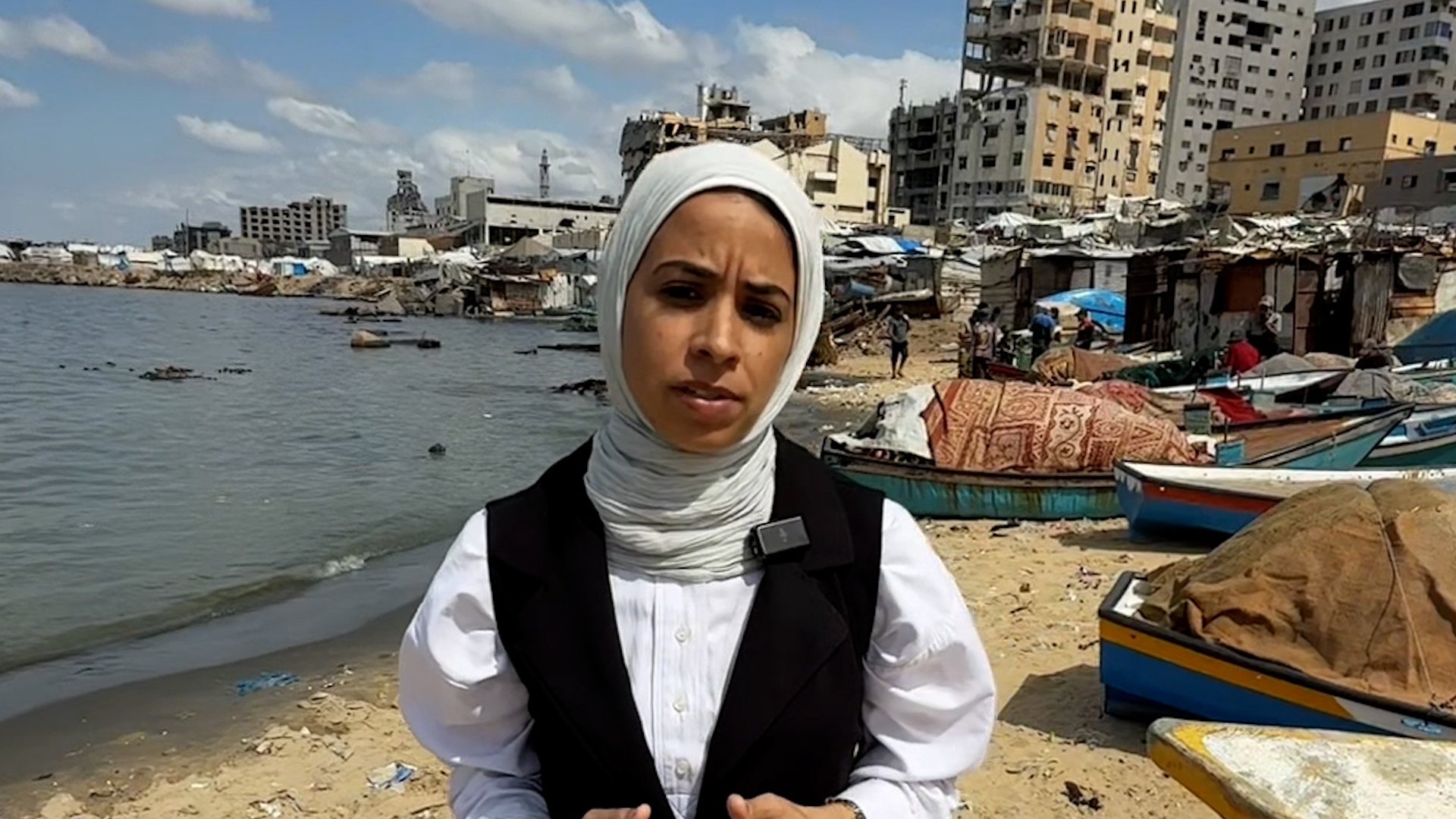
 How has Israel’s genocide changed Gaza?
 Video said to show Mali army in Kidal after retaking city


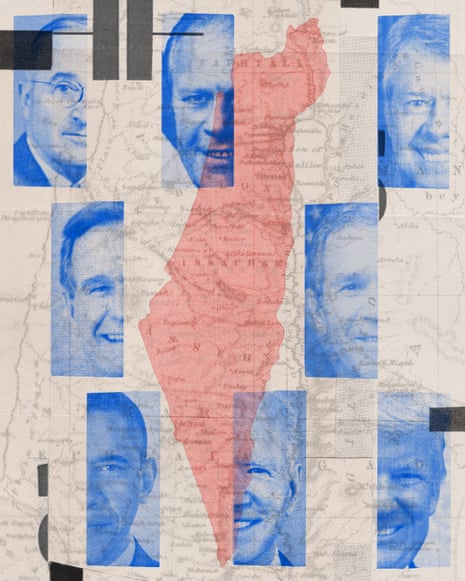
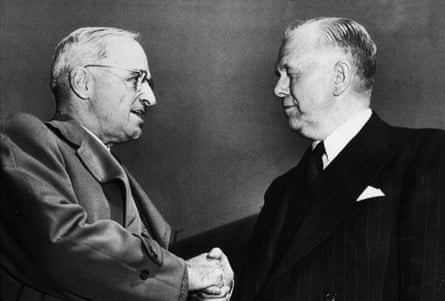
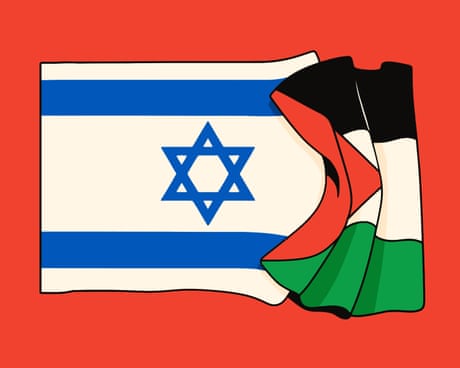
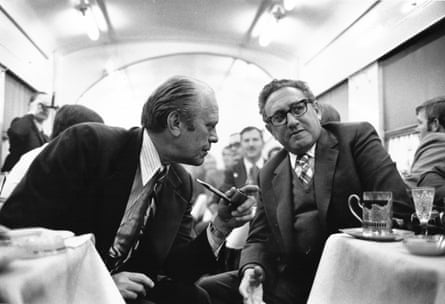

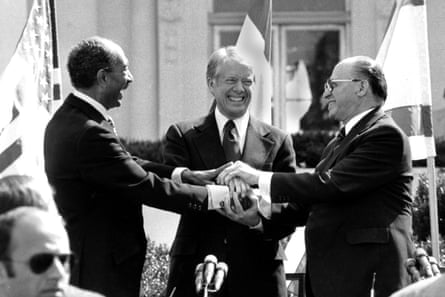
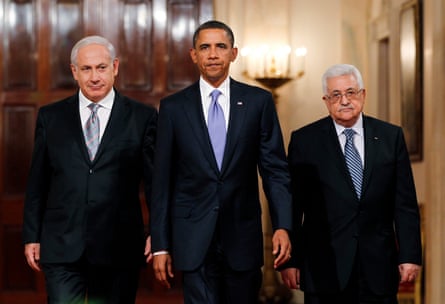
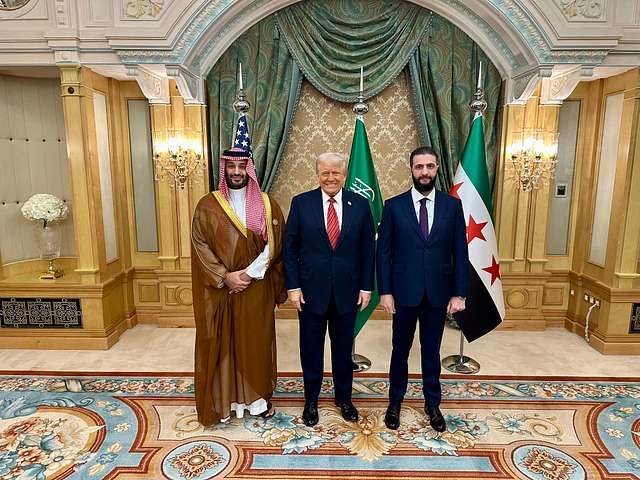

 RSS
RSS





You must be logged in to post a comment.