Cuba has accused the United States of threatening countries with tariffs, visa restrictions and other retaliatory measures in an effort to get them to change their votes on an upcoming United Nations resolution calling for an end to the long-running embargo against the island.
Every year, a majority in the UN General Assembly votes in favour of a nonbinding resolution seeking a stop to the US embargo, which began in the early 1960s.
The embargo, considered the longest in modern history, has been credited with exacerbating economic hardship on the island.
But on Wednesday, Cuban Foreign Minister Bruno Rodriguez said that the administration of US President Donald Trump was seeking to pressure members of the UN General Assembly to vote against the resolution this year.
He explained that US Secretary of State Marco Rubio and Washington’s ambassador to the UN Mike Waltz were personally leading the campaign, which he alleged had been going on for months.
“It is a new and dangerous way of conducting multilateral diplomacy,” Rodriguez wrote in a statement on the social media platform X. “It reflects the impotence of those who know they are in the wrong and whose only remaining recourse is force.”
Rodriguez said US officials had threatened to suspend cooperation programmes, deny visas to government officials and their families, and even back opposition parties in upcoming elections if countries refused to change their positions.
He also accused the US of urging some countries to abstain or skip the vote altogether if they were unwilling to vote against Cuba.
Al Jazeera has reached out to the US State Department and the US Mission to the UN for comment, but it did not receive a reply by the time of publication.
Heightening pressure on Cuba
The allegations come amid escalating tensions between the two countries ahead of the vote on the resolution, expected to take place on October 27 or 28.
The Trump administration has long maintained that the Cuban government — not the embargo — is to blame for the country’s struggling economy, and it has called for regime change.
On Monday, Waltz accused Cuban diplomats of harassing and intimidating participants at a US-hosted panel on alleged human rights abuses in Cuba.
Cuba’s UN Ambassador Ernesto Soberon Guzman and other representatives had confronted Waltz as he left the event at UN headquarters in New York City.
Speaking to reporters afterward, Waltz said that, every year, the Cuban government “propagates a lie through its annual resolution”.
“It uses excuse after excuse to justify its oppression, to justify the misery of the Cuban people, and what we are doing here at the US Mission to the UN is exposing those lies,” he said.
In a separate briefing that day, Waltz also acknowledged that Washington had been lobbying European countries to reconsider their support for the resolution. He pointed to allegations from Ukraine that Cuban nationals fighting for Russia weren’t being paid and that the money was instead going to the Cuban government.
“Yes, we’ve asked many of our European colleagues: Given this evidence from the Ukrainian government, how can they continue to vote for this resolution that is a propaganda tool for the Cuban regime and that is directly affecting their national security?” Waltz said.
The UN General Assembly has voted overwhelmingly in support of resolutions calling for an end to the US economic embargo on Cuba almost every year since 1992. The embargo itself has been in place for more than six decades.
Since the start of 2026, the Trump administration has intensified pressure on Cuba by blocking oil supplies and threatening tariffs on countries supplying the country with fuel, leaving Cubans to face more severe shortages of essential supplies and prolonged blackouts.
Iran believes the U.S. and Israel may strike before the midterms. Top security official Gen. Mohsen Rezaei tells Drop Site Iran has new targets in its sights.
Drop Site is a reader-funded, independent news outlet. Without your support, we can’t operate. Please consider becoming a paid subscriber or making a 501(c)(3) tax-deductible donation today. Subscribe
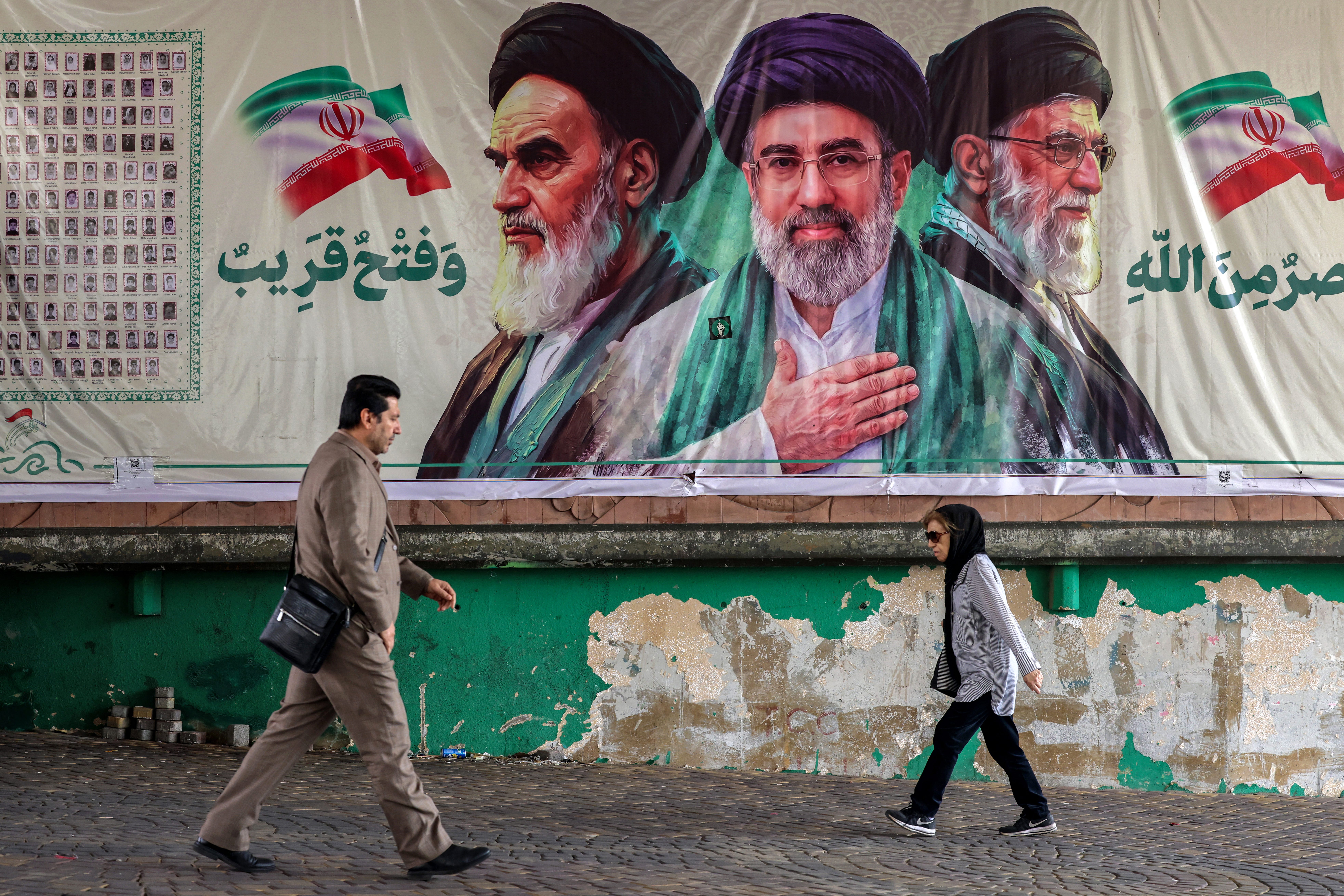
People walk past a banner depicting the portraits of Iran’s former supreme leader Ayatollah Ruhollah Khomeini (L), Iran’s supreme leader Ayatollah Mojtaba Khamenei (C), and slain supreme leader Ayatollah Ali Khamenei (R) in Tehran on October 21, 2026. Photo by ATTA KENARE / AFP via Getty Images.
The U.S. and Israel are preparing to resume attacks on Iran, according to senior Iranian officials and a U.S. official, and may even launch operations before next week’s Israeli elections. Prime Minister Benjamin Netanyahu is fighting for his political life, and the Israeli press is rife with reports that he is looking for a way to exploit the Iran standoff to his advantage. In the U.S., President Donald Trump’s approval ratings are at historic lows, and the midterm elections are less than two weeks away.
Iran’s top security official, Gen. Mohsen Rezaei, the Secretary of Iran’s Supreme National Security Council and personal representative of Supreme Leader Ayatollah Mojtaba Khamenei, told Drop Site that, in the event of an attack, Iran still has capacity to continue launching missiles and drones at various U.S. assets across the region in retaliation and that it would expand its range of targets.
“If the question is whether Iran still has the ability to continue missile and drone operations, the answer is yes,” Rezaei said in an exclusive written interview. “The United States has valuable assets in the region. In the event of war, cables, data centers and artificial intelligence facilities could also come within range. If the conflict begins again, we will have a broader plan.”
“Everyone must understand that action against Iran carries a cost,” he added. “If diplomacy can bring about that understanding, we prefer diplomacy. But if the war continues, Iran has the tools it needs to keep responding.”
A senior Iranian official told Drop Site that Tehran’s current internal intelligence assessment indicates a high likelihood that large-scale bombing may even begin before Tuesday’s Israeli elections. “Trump has sat on Iran’s proposed package for ending the war, and negotiations have stalled,” said the official, who is not authorized to speak publicly. “Contrary to the show he is putting on, Trump has no clear or actionable plan for [ending] the war with Iran. This has been the cause of a diplomatic deadlock.” He warned that Iran should not be underestimated, claiming, “Should another war against Iran begin, given our knowledge of the patterns of American force deployment in the countries of the region, their casualty figures will be ten times higher.”
The White House denied it was planning to strike Iran in the next two weeks. “The United States will not be attacking Iran at any time prior to the midterm elections,” White House Principal Deputy Press Secretary Anna Kelly said in a statement to Drop Site.
Tehran believes Israel would be tasked with firing the first shots, the senior Iranian official said, aimed at “destroying Iran’s newly deployed air defense systems, in order to open the path for American bombers.” The U.S., he said, would likely focus on attacking Iran’s southern defense systems along the Strait of Hormuz and potentially attempt to seize one of the islands off the Iranian mainland after heavy bombing. Trump, he said, is continuing his quest for a notable action that he can use to proclaim victory, adding that Iran believes he may seek to launch a “token” attack on one of Iran’s underground nuclear sites, such as Pickaxe Mountain, and subsequently portray it as a definitive blow. “Trump is flat-out lying about Iran’s nuclear program,” the official said.
A U.S. official confirmed to Drop Site that military assets are being moved rapidly into place in preparation for an expected green light from Trump. Among the American officials pushing for renewed attacks is U.S. Central Command chief Gen. Bradley Cooper, the official said. “CENTCOM is putting all the pieces into place to renew major combat operations,” added the official, who is not authorized to discuss war plans. He was skeptical the war would resume before the Israeli elections, but conceded, “We did start Epic Fury without all our assets in place.”
The USS Theodore Roosevelt carrier and the 13th Marine Expeditionary Unit are heading to the Middle East, bringing approximately 10,000 additional sailors and Marines to the region. The Roosevelt, which departed Japan on Monday, could reach the region by the end of next week ahead of its initially expected deployment slated for late November. It will join the USS George H.W. Bush and USS George Washington, both currently in the Arabian Sea.
While the U.S. official said the likelihood of new U.S.-Israeli attacks was high, he acknowledged that Trump has gone to the brink of military action and pulled back more times than is publicly known. “Trump has backed off major combat operations against Iran or the Houthis seven times since July,” the U.S. official said, referring to Ansarallah, who launched a major offensive against Saudi-backed groups in Yemen. “At the last minute, he calls it off.”
Netanyahu, who is behind in the polls, claimed Wednesday without evidence that Iran was actively working on the development of a nuclear weapon and said he had ordered the Israeli military to prepare for preemptive action. “The Iranian regime still has not learned its lesson. Mojtaba Khamenei decided to follow in his father’s footsteps. He has taken off the safety, and Iran is once again trying to develop its weapons of death,” Netanyahu said. “There is only one way to remove this threat once and for all, to topple the regime in Iran, and that is my directive to the IDF, the Mossad and the security agencies.”
Drop Site News is reader-supported. Consider becoming a free or paid subscriber.Subscribe
Analysts say that Trump is continuing to pursue an elusive clean victory narrative, while Netanyahu understands this may be his last chance at continuing the war he has agitated for his entire political career.
“This is Netanyahu’s last chance to do so. And he’s not going to leave until he turns every stone to be able to achieve it. Particularly knowing that either his career is going to end or the United States is going to go in a direction in which this no longer will be an option,” said Trita Parsi, a leading Iran expert and the executive Vice President of the Quincy Institute. “Trump, I suspect, has already made a decision that he’s going to go to war,” he added. “The Israelis have been very successful playing to his psychology, which is that he’s willing to take massive risks as long as he has the belief that it can get him a victory so that he avoids accepting defeat, which is so crucial for him. But it is a massive miscalculation that will make the situation 100 times worse.”
The intersection of Trump’s and Netanyahu’s political interests increases the chances that the war will resume, argues former senior U.S. Iran negotiator Robert Malley. “Netanyahu may want a longer campaign with broader objectives. Trump may want something shorter that he could quickly get out of. The overlap between the two might well be an intensive campaign that doesn’t last too long,” said Malley, a key figure in brokering the 2015 Iran nuclear deal. “President Trump may want a victory lap and an exit ramp. But as has been proven time and time again, the exit is not decided by him alone,” said Malley, who currently directs the Middle East Program at the International Crisis Group. “There is every reason to believe the Iranians are preparing all kinds of steps, whether by them or by their regional partners, whether in or out of theater, to ensure that however much he wants a victory lap and an exit ramp, he is deprived of both.”
“We Are Prepared for the Next Stage”
Gen. Rezaei is one of the most prominent military figures in modern Iranian history. A former commander of the Islamic Revolutionary Guard Corps, he was tapped to serve as the top military advisor to Khamenei in August. His comments are often viewed as reflecting the consensus at the top of Iran’s power structure. He told Drop Site that despite U.S. claims to have “obliterated” or “decimated” Iran’s military infrastructure, Iran spent decades preparing for a broader war waged by the U.S.
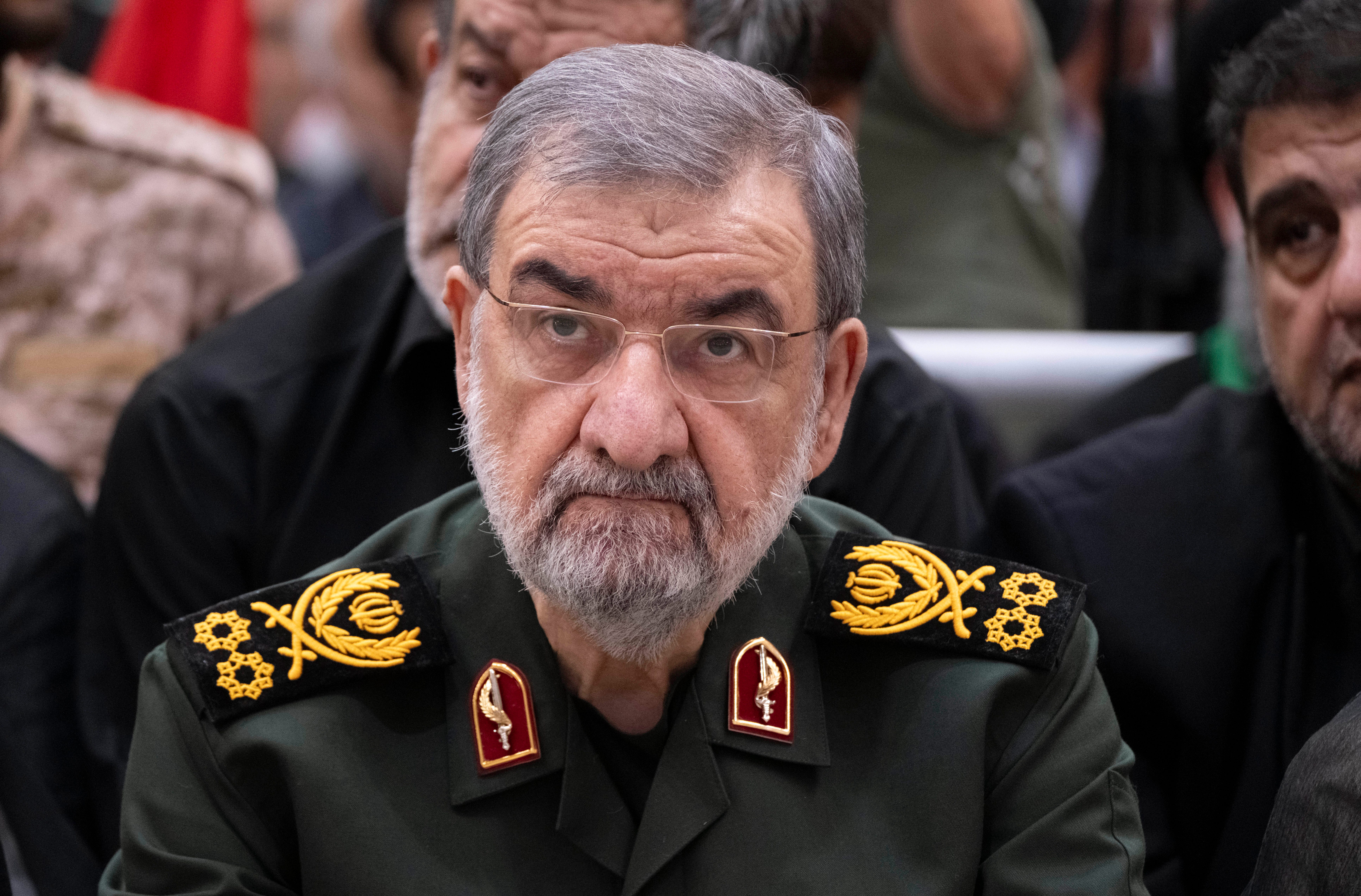
Gen. Mohsen Rezaei attends a ceremony at Ayatollah Ruhollah Khomeini’s shrine in southern Tehran, Iran, on June 4, 2026. Photo by Morteza Nikoubazl/NurPhoto via Getty Images.
“Iran has invested for years in building redundancy into these capabilities: dispersed production, underground facilities, different launch systems and the ability to repair damage and replace losses,” Rezaei told Drop Site. “More importantly, you should not assess our capacity solely by asking how many missiles remain in storage. In a prolonged war, the central question is whether a country can sustain a continuous cycle of production, deployment and response. We have shown that, even months after the war began, we can still impose costs on the other side.”
Rezaei also indicated that Tehran would deploy new capabilities in its retaliatory response. “We did not deploy all our capabilities in the previous stages. We brought more capabilities into operation in proportion to the intensity of the war, and we are also prepared for the next stage,” Rezaei said.
During the war, Iran carried out at least 135 drone and missile strikes on 84 critical infrastructure sites across seven countries—Saudi Arabia, the UAE, Iraq, Qatar, Kuwait, Oman, and Bahrain, according to a Reuters investigation. While Gulf governments repeatedly attributed the damage to falling debris from intercepted Iranian missiles and drones, the investigation found evidence of deliberate, precision strikes targeting critical equipment. The attacks demonstrated “precision, targeting expertise, and patience,” Ryan Stevens, a former U.S. Marine Corps special operations airstrike coordinator, told Reuters.
Echoing Rezaei’s warning about communications infrastructure, Iran’s Islamic Revolutionary Guard Corps spokesperson, Hossein Mohebi, also threatened to target internet cables passing through the Strait of Hormuz if the U.S. launched renewed attacks. Mohebi further warned Monday that another U.S. military operation would trigger a global energy crisis. “If America takes a new action—even a limited one—the world will face a serious energy crisis,” he told the Tehran Times.
Rezaei did not rule out targeting energy infrastructure in Gulf states as a retaliatory measure. “If the U.S. strategy is to prolong the war while using neighboring countries’ energy infrastructure to offset the pressure arising from Hormuz and maintain the blockade of Iran, those governments should not assume they can participate in economic warfare against Iran without putting themselves at risk,” he said. “The message is not that Iran wants to destroy the Persian Gulf’s energy system. The message is that there can be no arrangement in which Iran’s economic lifelines come under attack while the economic architecture enabling those attacks is considered untouched and immune.”
The senior Iranian official said Trump’s approach to Iran has been focused on short-term objectives that are often disconnected from geopolitical realities or core U.S. interests, likening him to a day trader. “The wartime secrecy surrounding military operations has given him and his family exclusive and extraordinary access to information regarding forthcoming actions and the state of the markets—access that benefits only those closest to him,” he said. “Perpetuating the current situation will carry strategic consequences, not least that the energy markets will not find calm for the next three years. The continuation of this war has shifted the dynamics of relations in Iran’s favor, as the littoral states of the Persian Gulf are rapidly redefining their relationship with Iran, having become convinced that the U.S. military is incapable of defending its own bases, this at a time when those same states had expected America to defend their countries.”
Iranian officials have said repeatedly that Iran will not back away from its red lines in any negotiations, consistently pointing to Tehran’s acceptance of the June 17 Memorandum of Understanding, which was swiftly violated by the U.S., leading to a breakdown in the diplomatic process in early July.
Iranian Foreign Minister Abbas Araghchi said he presented a “Seven-Day Plan” to the U.S. through mediators at last month’s UN General Assembly, outlining steps for an end to the war and the reopening of the Strait of Hormuz. “Under this proposal, the U.S. would not be expected to do anything that it has not already agreed to,” Araghchi wrote in an op-ed for the Financial Times on Wednesday. He said the framework’s steps and outcome were clear: “The Strait would reopen on Day 6, with the resumption of talks for a final deal commencing on Day 7.” Araghchi claimed in an interview with Iraqi television that the U.S. had accepted the seven-day proposal but requested the addition of a “few more clauses,” adding that diplomatic contacts through mediators remain ongoing.
“As President Trump stated, Iran is in very bad condition, both economically and militarily, and the blockade will remain in full force and effect, with oil flowing in record numbers of barrels through the Hormuz Strait,” Kelly told Drop Site in a statement.
Rezaei told Drop Site that Iran’s negotiating strategy has evolved as a result of Trump’s unreliability. “We will not return to our previous approach to diplomacy, but we will not abandon diplomacy either. We have presented seven new conditions through intermediaries. Until those conditions are fulfilled, Iran will neither reopen the strait nor return to negotiations,” Rezaei said. “The first memorandum failed because the commitments were implemented in the wrong order. We opened the strait and maritime traffic resumed, but the other side’s political and economic commitments were not implemented in a way that could sustain the agreement. Once the United States obtained what it immediately needed, the balance of leverage shifted. That experience matters to us.”
“If Washington honors its commitments, there is a path to reopening the Strait of Hormuz and continuing diplomacy,” he continued. “But Iran will not first give up the leverage that brought the other side to the negotiating table and then wait to see whether its promises are fulfilled.”
Parsi said that Iran is not eager to resume the war, but has recognized that the diplomatic track has been treated by the U.S. as an ultimatum operation masquerading as negotiations. “Their conclusion—based on extensive experience with Trump now—is that he simply won’t back off unless his policy is reaching a cost to him that is intolerable. And that it’s not concessions or face saving exits that will get Trump to back off, but simply that the policy becomes too costly.”
Attacks on ships in and around the Strait of Hormuz have surged to a record high in recent weeks, with more than two dozen vessels reporting attacks so far in October, according to data released Friday by the UK Maritime Trade Operations agency. The agency said the actual number was likely far higher, as the “majority of vessels attacked” were refusing to report incidents.
The IRGC reported further attacks over the weekend and into Tuesday, including a supertanker carrying two million barrels of oil struck Saturday, another tanker hit Sunday, and two tankers that it said caught fire Tuesday after striking naval mines south of the Strait. Iran says it is targeting vessels violating its maritime restrictions or using unauthorized shipping routes.
“Over the past two or three months, we have struck an average of five vessels belonging to these smugglers every night,” Rezaei said. “Smuggling is taking place along the southern edge of the strait at enormous cost and with considerable risk. Trump then says the Strait of Hormuz is open.”
Despite the escalating attacks, oil exports from the Middle East appear to have rebounded past prewar levels, primarily through tanker-to-tanker transfers in the Gulf of Oman, and expanded use of Saudi and Emirati pipelines bypassing the Strait of Hormuz. However, oil prices remain high, hovering well above $100 per barrel of Brent crude amid fears of the ongoing attacks and diminishing U.S. fuel stockpiles. “The current price of oil reflects the reality,” Rezaei said.
“The management of Hormuz is a national asset for us, and this is not simply about collecting tolls. The main issue is security,” he continued. “Charges can also be collected for security, insurance and environmental costs, but the importance of managing the strait goes far beyond the revenue it generates,” he said. “We will continue managing it to maintain peace and security in the region, and we will not back down from this position.”
The senior Iranian official said that the standoff over the Strait of Hormuz “has become the new pretext—the nuclear issue, previously, was a lie upon which the war was launched—for the United States to prolong the war.” Trump, he charged, “has fallen into the trap of prolonging what was advertised as the shortest of wars.” A “war of attrition,” he said, “will work to Iran’s advantage and to America’s detriment.”
The war has had a devastating impact on Iran’s economy. As part of its escalation over the summer, the U.S. reimposed a blockade on Iran’s southern ports and launched a new campaign of sanctions dubbed Operation Economic Outcast. The Iranian rial subsequently collapsed, falling to record lows, making imports dramatically more expensive and imposing even more scarcity on people in Iran.
“Iran will suffer from a prolonged blockade; anyone who says otherwise is not being realistic. Families will bear the costs, investment will suffer, and sustaining some sectors of the economy will become more difficult. But economic pain and strategic collapse are not the same thing,” Rezaei said. “Washington has repeatedly made the mistake of assuming that, if it can make life inside Iran difficult enough, Iran’s political system will consequently accept America’s strategic demands. These are two different calculations.”
“Our goal is not to make it to 2029. Our goal is to end the war on terms that reduce the likelihood of another war.”
Sharif Abdel Kouddous contributed to this report. This article is published in collaboration with Egab.
Palestinians struggle with flooding after heavy rain hits Deir al-Balah, Gaza, on December 11, 2025. [Mohammed Nassar – Anadolu Agency]
Around 950,000 displaced people in the Gaza Strip are living in areas at medium to high risk of flooding, including more than 400,000 facing a high risk, the United Nations said on Tuesday.
The UN Office for the Coordination of Humanitarian Affairs (OCHA) said “Available supplies could partially assist only 18 per cent of the 294,250 families requiring shelter assistance for the rainy season.”
On 17 August, the Gaza government media office said 2.15 million displaced Palestinians, representing 509,393 families, are living in “dire” humanitarian conditions. More than 800,000 of them are staying in tents unfit for “human habitation”, it added.
In September, the office warned that conditions for hundreds of thousands of displaced people in Gaza are deteriorating as winter approached, saying more than 60 per cent of their tents are worn out and need immediate replacement.
Palestinian and UN human rights officials have previously warned that winter storms and rainwater flooding have destroyed or damaged thousands of tents and temporary shelters, forcing displaced people to endure cold, damp and unsafe living conditions.
Israel’s Prime Minister Benjamin Netanyahu speaks at a state memorial ceremony in memory of those killed in the Oct. 7, 2023, Hamas attack on Israel, at Mount Herzl Cemetery in Jerusalem, Monday, Oct. 5, 2026. [AP Photo/Debbie Hill/Pool Photo]
US Defense Secretary Pete Hegseth met Israeli Prime Minister Benjamin Netanyahu on Monday at Ovda air base in southern Israel, which hosts US fighter jets and refueling aircraft. Hegseth’s visit, kept secret until the news site Axios reported it, took place eight days before Israel’s October 27 election and one day after US President Donald Trump endorsed Netanyahu for reelection.
The United States and Israel are preparing to resume the war against Iran after Israel’s election and the November 3 US midterm elections. The Israeli settler rampage in the occupied West Bank and the starvation of Gaza accompany the US-Israeli escalation against Iran.
Netanyahu’s spokesman Doron Spielman confirmed the meeting Tuesday. Spielman said Hegseth and Netanyahu had discussed “the threats in the region” and how the United States and Israel would deal with them, offensively and defensively. Hegseth thanked Israel for hosting the thousands of American troops stationed there, Spielman said.
Trump told Time magazine in late September that it would be “possible” to step up the bombing of Iran after the elections. At the start of October the US military sent about 2,000 Marines and 7,000 sailors toward the Middle East, including the USS Theodore Roosevelt carrier strike group.
The Roosevelt carrier strike group is due to arrive by the end of November, the Jerusalem Post reported Tuesday, citing Fox News, and the 13th Marine Expeditionary Unit has sailed from San Diego aboard the USS Makin Island amphibious ready group. The carriers USS George H.W. Bush and USS George Washington are already in the region with hundreds of US aircraft. The new ships raise the US force in the region to about 20,000 troops, Al Jazeera reported October 9.
Fox News chief national security correspondent Jennifer Griffin wrote Tuesday that the Roosevelt deployment “will provide more options for the US as President [Donald] Trump is reportedly considering ramping up strikes on Iran after the [November 3] Midterms.”
Netanyahu told reporters Sunday: “The regime must fall, and I will bring it down.” On Tuesday, at Tel Hai University near the Lebanese border, Netanyahu said: “Finishing the job means bringing down the terrorist regime in Iran.” Netanyahu said he had spoken with Trump about overthrowing the Iranian government “more than once, including the day before yesterday.”
In his endorsement of Netanyahu, posted Sunday on Truth Social, Trump wrote that unless the Iranians “change their ways, rapidly, we will soon finish the job.” Trump also wrote: “If Israel has the wrong Leader, which would be anyone other than Bibi, America will have to do this work ourselves, and I am not inclined to do so.”
The United States and Israel began bombing Iran on February 28, and on April 13 the US military blockaded Iran’s ports. Washington signed a “ceasefire” with Iran on June 17 and broke it on July 7 and 8, when US forces struck what the US military said were about 170 Iranian military sites and boats.
Israeli ministers are calling for war in the West Bank alongside the war against Iran. Israeli Finance Minister Bezalel Smotrich told a podcast of the Israeli news site Ynet on September 27 that Israel should “go to war in Judea and Samaria,” the official Israeli term for the West Bank, “to dismantle the Palestinian Authority.”
About 80 settlers, many of them masked, attacked Palestinian olive harvesters on Friday at Abu Falah, a village northeast of Ramallah, beating the harvesters and a Washington Post photographer, Heidi Levine, while Israeli soldiers tear-gassed the harvesters. On Saturday settlers attacked Belgian, French and Polish diplomats in Taybeh, a Palestinian Christian village northeast of Ramallah. Netanyahu called the international condemnation of the settler attacks “a huge exaggeration” on Sunday.
The Health Ministry in Gaza said Saturday that Israel has killed 1,511 Palestinians there since the “ceasefire” began on October 10, 2025. On October 14, Israel cut off all commercial deliveries into Gaza. The UN World Food Programme, which has received less than half its usual funding for Gaza and the West Bank this year, said Monday that its food distributions in Gaza will reach 1.1 million people instead of 1.6 million.
Netanyahu’s coalition partners are demanding the annexation of Gaza and the expulsion of its population. Smotrich said at a Jerusalem conference on October 6: “I demand that the State of Israel permanently apply its sovereignty over the territories it currently holds, both in Gaza and in Lebanon.” On September 3, Israeli National Security Minister Itamar Ben-Gvir, who leads the far-right Otzma Yehudit party, presented a plan to push 1.86 million Palestinians, nearly the entire population of Gaza, out of the territory within seven years through what he calls “emigration.”
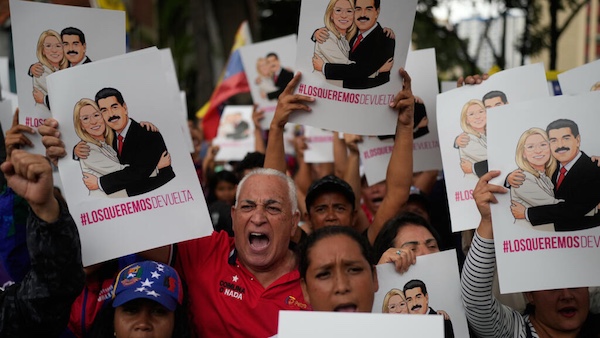
Caracas, Venezuela, Jan. 10, 2026 – protesters call for the release of Venezuelan leaders Cilia Flores and Nicolás Maduro, kidnapped by United States forces on Jan. 3, 2026.
Venezuelan President Nicolás Maduro Moros and First Combatant Cilia Adela Flores were brought to a federal court in Manhattan this morning shackled and defiant. Facing Judge Alvin Hellerstein, both prisoners of war were arraigned on phony charges of torture. Neither is even accused of torturing anyone. They declared themselves innocent.
The week before this same judge rejected Cilia Flores request to be placed under house arrest because of her deteriorating health, which includes an untreated possible heart attack. Isn’t that torture?
The same Trump regime that kidnapped President Maduro and First Combatant Flores on Jan. 3 has killed at least 238 people on the high seas for allegedly being drug traffickers. No evidence was produced, no trials were held and those accused died horrible, painful deaths.
That’s not just torture committed by the Pentagon. These lethal attacks were lynchings.
These new torture charges are being brought because the United States government’s case against Maduro and Flores as drug kingpins may be crumbling. Jason Richman, who supervised this case as national security co-chief in the federal prosecutor’s office in Manhattan, suddenly resigned on Sept. 25.
The Cartel de los Soles–Cartel of the Suns–which Maduro and Flores were allegedly involved in, doesn’t exist. Even the Justice Department quietly dropped that claim from its rewritten indictment in January. Meanwhile, Trump pardoned an actual drug lord, the former right-wing president of Honduras, Juan Orlando Hernández.
Both Maduro and Flores appeared in court dressed in their prison uniforms. Their jailers couldn’t take away their dignity.
This writer was part of a delegation in the courtroom that wore red to show our support. Its organizer was Lucy Pagoada, who is co-host of the Voices of Resistance radio program that runs on New York’s WBAI (99.5 FM), on Tuesdays at 7 p.m.
Before President Maduro was seated, he turned around and raised his hands together in a gesture of strength. When Judge Hellerstein asked for his plea, Nicolás Maduro declared the charges false.
“I have seen [this indictment] in its entirety,” he said. “I reject this document in its entirety.” Representing President Maduro is Barry Pollack, while Mark Donnelly is Cilia Flores’ attorney.
Judge Hellerstein has set the tentative trial date for June 2027, when he will be 93 years old.
After the court appearance, supporters went outside the Moynihan federal courthouse in Lower Manhattan— named for the pig who advised President Nixon to show “benign neglect” towards Black people–to talk to the media. They were able to get the truth out despite the presence of counterrevolutionaries.
These characters want to turn back the clock in Venezuela and have the country once again become a United States oil colony. They attacked reporters for teleSUR, who were able to defend themselves.
Remember the Panther 21!
Back in 1969, 21 members of the Black Panther Party in New York City were indicted on over 200 charges. These ridiculous counts included attempting to blow up a Macy’s department store.
Because of a massive defense campaign, a jury acquitted the Panthers of all charges. We need to build such an effort to free President Nicolás Maduro and First Combatant Cilia Flores.
Netanyahu released a phone call he had with Trump after the US president endorsed him for the upcoming Israeli elections
by Dave DeCamp, Antiwar. com, October 19, 2026
Israeli Prime Minister Benjamin Netanyahu released footage on Monday of a call with President Trump, during which the US president told the Israeli leader, “You’re the man I want by my side.”
The call came after Trump endorsed Netanyahu for the upcoming October 27 Israeli elections in a long post on Truth Social, where he suggested that the US may have to “finish the job” against Iran without the help of Israel if Netanyahu doesn’t remain prime minister. In the phone call, the two leaders alluded to the Iran war, with Netanyahu using the same language as Trump’s post.
“Donald, we have a job to finish. You said it, and we’ll finish it together. We’ll finish it, and no one else will do it,” Netanyahu said.
Trump told Netanyahu that he “crafted” the post himself. “You’re a warrior, and you’ve been treated unfairly by your country and from some others … but you’re a great warrior, and we will prove that. We will prove that very soon,” he said. “I think you’re terrific, Bibi … You’re the man I want by my side, Bibi.”
Iranian Foreign Minister Abbas Araghchi on Sunday responded to Trump’s post and the suggestion that the US and Israel will “finish the job” against Iran, suggesting that Netanyahu was leading the US into another war.
“Last time you wanted to ‘finish the job,’ Iran emerged even stronger. Want to try your luck again? Be our guest. But be careful; we have unfinished jobs too,” Araghchi wrote on X. “Netanyahu is driving America into another war to stay out of jail, whatever the consequences for Israel—let alone POTUS.”
If you liked this article, please support Antiwar.com.
We are 100% reader-supported.
Dave DeCamp is the news editor of Antiwar.com, follow him on Twitter @decampdave.
Israeli soldiers block the road to prevent Palestinian farmers from reaching their land during the olive harvest on October 17, 2026 in Abu Falah, West Bank.
(Photo by Faiz Abu Rmeleh/Getty Images)
“European diplomats got a glimpse of everyday life for Palestinians in the West Bank.”
The Israeli military reportedly ignored repeated distress calls before masked settlers attacked a group of European diplomats with metal bars during a visit to the illegally occupied West Bank this past weekend, sparking international outrage.
The Israeli newspaper Haaretz reported that “despite the warnings, security forces were not sent to the area to prevent the attack or intervene as it unfolded. The outlet noted that ”an activist who was in the area following reports of attacks on Palestinian olive pickers sent a report of the settlers’ attack to a phone in the brigade’s operations room used to receive messages from settlement security coordinators. The soldiers in the operations room did not recognize the sender’s number, so they ignored the message and did not relay it to forces in the field.“
In the Saturday attack, settlers targeted diplomats from France, Belgium, and Poland, as well as Catholic representatives. Israeli authorities said Monday that they had arrested 10 suspects as part of an investigation into the incident, but critics expressed doubt that the Israeli government would hold the perpetrators to account given the general pattern of impunity for violent settlers.
“It was clear to me this had to come for Israel to save face,” Mairav Zonszein, a senior analyst on Israel at the International Crisis Group, wrote in response to the arrests. “They probably will be released shortly.”
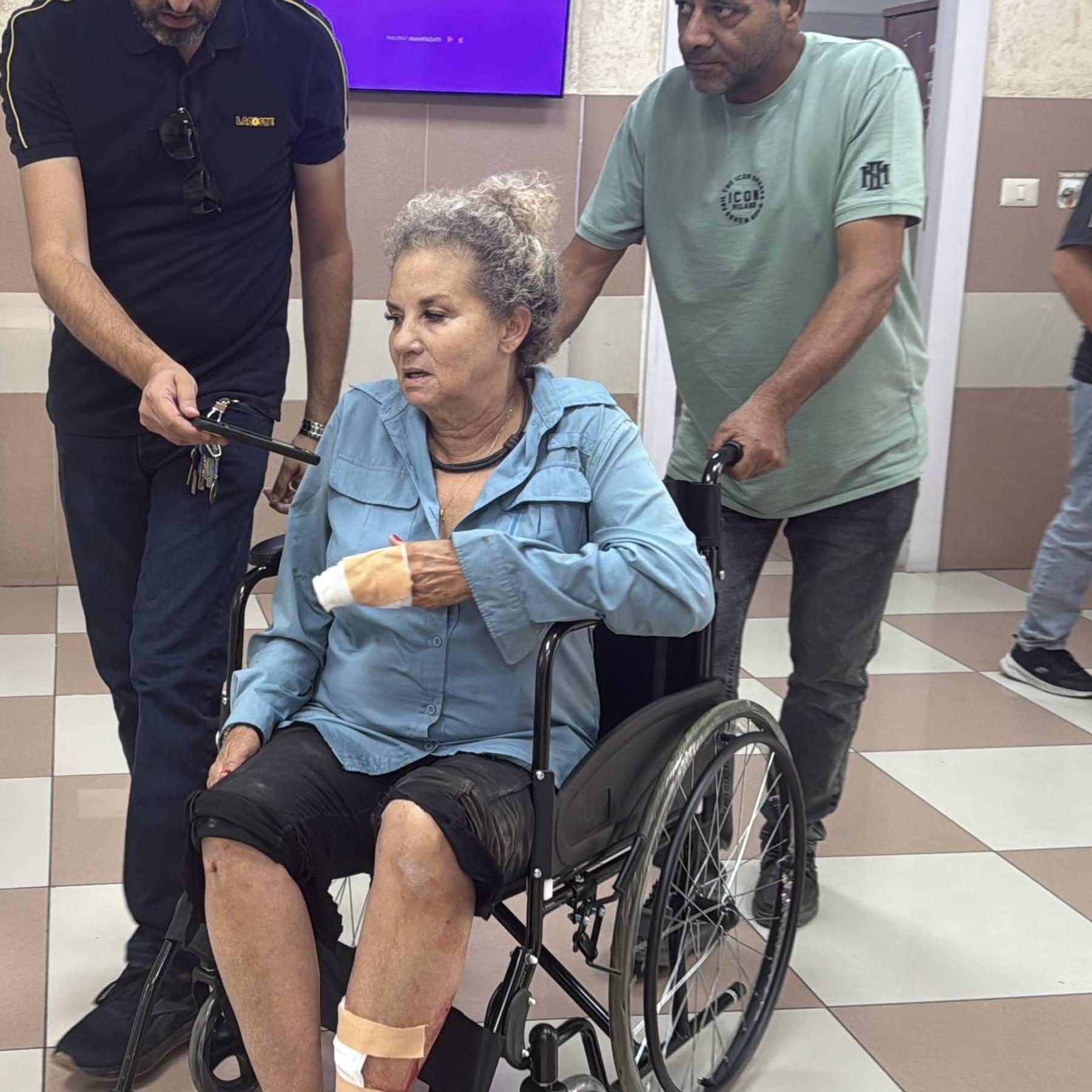
The attack on diplomats came a day after Israeli settlers in the West Bank brutally attacked 63-year-old Heidi Levine, a photojournalist with The Washington Post and a US citizen. The office of Israeli Prime Minister Benjamin Netanyahuissued a statement casting doubt on Levine’s account and news reports, and said the incident was under investigation.
Netanyahu’s office took a similar line following the Saturday attack on European diplomats, saying in a statement, “The more serious the accusation, the greater the demand for compelling evidence.”
France’s foreign affairs ministry denounced the attacks on diplomats as “acts of terror” and called on Israeli authorities to “arrest the perpetrators of this extremely serious assault and bring them to justice.” Bernard Baudoux, a French mayor who was attacked, said he was “struck with metal bars and kicked before being thrown to the ground.”
“We were finally able to get back to our vehicles,” Baudoux added.
Breaking the Silence, an Israeli anti-occupation group, said in a statement on Sunday that “European diplomats got a glimpse of everyday life for Palestinians in the West Bank.”
The group added that the IDF “will always have a bureaucratic excuse” for not acting to prevent such attacks, “but the real reason is that backing settler terrorists is its policy.”
“This horrifying routine serves a purpose,” the group said. “Through daily terror and economic strangulation, it aims to drive Palestinians off their land. The ultimate goals: ethnic cleansing and annexation.”
The attacks also drew condemnation from lawmakers in the US, where Republicans and Democratic Sen. John Fetterman recently blocked legislation aimed at shining light on Israeli abuses in the West Bank.
“I condemn the brutal settler attacks on American photojournalist Heidi Levine, European diplomats, and Palestinian olive harvesters in the West Bank,” US Rep. Gregory Meeks (D-NY), ranking member of the House Foreign Affairs Committee, said in a statement on Sunday. “Prime Minister Netanyahu must act now to stop settler violence, protect civilians, and ensure those responsible are brought to justice. The impunity must end.”
It’s been nearly 30 years since I co-founded Common Dreams with my late wife, Lina Newhouser. We had the radical notion that journalism should serve the public good, not corporate profits.
It was clear to us from the outset what it would take to build such a project. No paid advertisements. No corporate sponsors. No millionaire publisher telling us what to think or do.
Many people said we wouldn’t last a year, but we proved those doubters wrong.
Together with a tremendous team of journalists and dedicated staff, we built an independent media outlet free from the constraints of profits and corporate control. Our mission has always been simple: To inform. To inspire. To ignite change for the common good.
Building Common Dreams was not easy. Our survival was never guaranteed. When you take on the most powerful forces—Wall Street greed, fossil fuel industry destruction, Big Tech lobbyists, and uber-rich oligarchs who have spent billions upon billions rigging the economy and democracy in their favor—the only bulwark you have is supporters who believe in your work.
But here’s the urgent message from me today. It’s never been this bad out there. And it’s never been this hard to keep us going. At the very moment Common Dreams is most needed, the threats we face are intensifying. We need your support now more than ever.
We don’t accept corporate advertising and never will. We don’t have a paywall because we don’t think people should be blocked from critical news based on their ability to pay. Everything we do is funded by the donations of readers like you.
When everyone does the little they can afford, we are strong. But if that support retreats or dries up, so do we.
Will you donate now to make sure Common Dreams not only survives but thrives?
—Craig Brown, Co-founder
about:blank
about:blank
Our work is licensed under Creative Commons (CC BY-NC-ND 3.0). Feel free to republish and share widely.
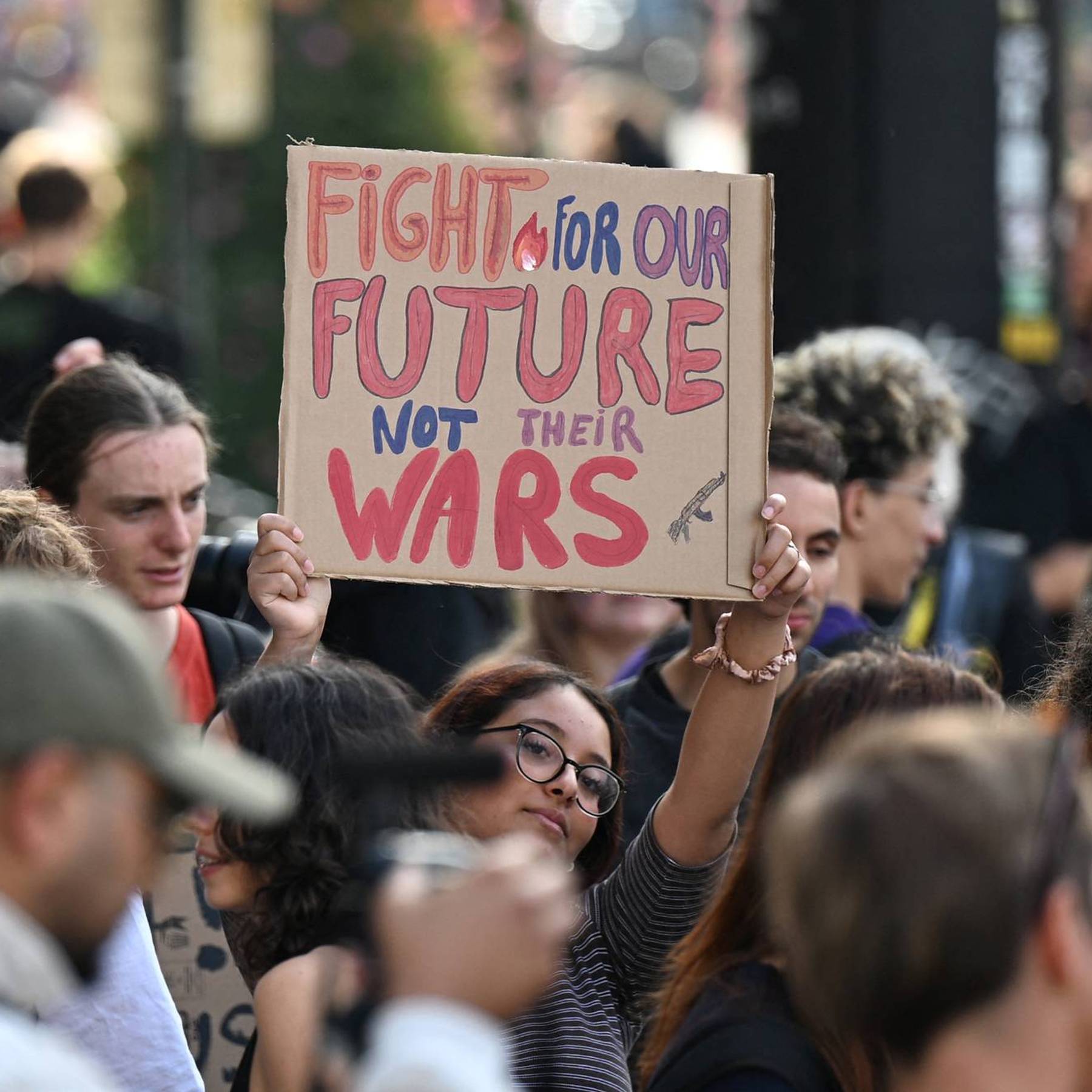
Protests erupted throughout France on Saturday, with demonstrators citing a wide variety of grievances, including inequality, the high cost of living, and poor conditions in the nation’s schools.
As reported by Agence France-Presse, tens of thousands of demonstrators marched in Paris and other cities to protest what they said was inaction by the French government on the biggest problems facing the country.
“For years we’ve had climate, economy, and equality problems,” one protester identified as Agnes told AFP, “but the government is not doing anything about it.”
18-year-old student Kamil Alahyan told AFP that there are “so many reasons” to protest, including “the elections coming up in 2027, politicians who lie, the ultra-rich who’ve been taking more and more wealth over the past 10 years.”
A 19-year-old protester identified as Lola expressed a similar view in an interview published by The Guardian on Saturday.
“We are fighting because the cost of living is too harsh,” Lola said, “because the price of fuel is too high, because high school pupils are being violently attacked and hurt all over the country just for trying to protest and ask for more teachers and decent learning conditions.”
Student organizer Ryad Rani told AFP that “the government is trembling and it’s right to tremble because when the French people are angry, they never let up.”
Saturday’s demonstrations mark the expansion of a movement that began last month when students blockaded their schools to protest staffing shortages, dilapidated buildings, and a widely criticized university application system.
According to The New York Times, demonstrations took place in at least 140 cities across the country.
Some of the protests did turn violent in major cities including Lyon, Marseille, and Paris, AFP reported. A Saturday BBC report claimed that more than 270 protesters have been arrested nationwide.
French Prime Minister Sébastien Lecornu accused “ultra-left groups” of inciting violence at the demonstrations.
“To those who clearly want to use these acts of violence as a ‘warm-up’ ahead of the presidential election, let me be clear: we will not be intimidated,” Lecornu wrote in a social media post. “No one will impose their political agenda through violence.”
Jean-Luc Mélenchon, leader the left-wing France Unbowed party, slammed the media for focusing too much on the isolated incidents of violence and not reporting on the overwhelmingly peaceful nature of the demonstrations.
“Crowds of people everywhere, calm and joyful everywhere when the police aren’t around,” Mélenchon wrote in a social media post that featured photos of peaceful marches from across the country, which he described as “images you won’t see in the official media.”
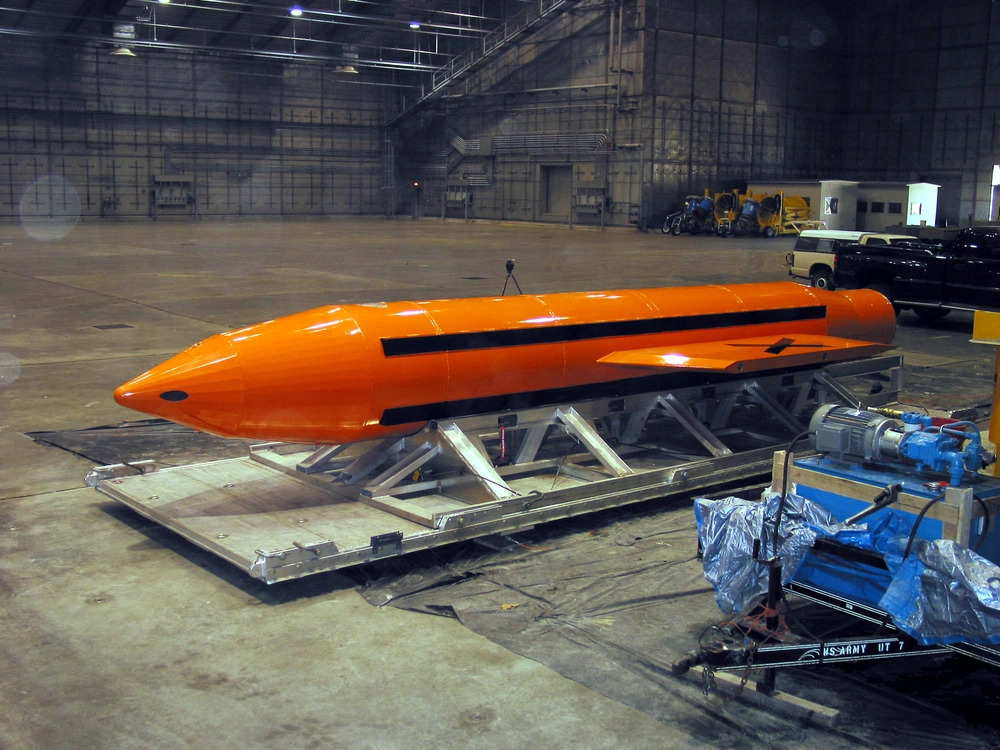
The US military has drawn up new strike plans against Iran that include potentially using the GBU-43/B Massive Ordnance Air Blast Bomb (MOAB), nicknamed the “mother of all bombs,” according to a report from CNN.
The MOAB is the most powerful non-nuclear bomb in the US arsenal and has been used only once before in a strike on a village in Afghanistan’s Nangarhar province in 2017. The US said the strike killed dozens of ISIS-K fighters, and the now-defunct US-backed Afghan government said no civilians were killed because they evacuated due to the ISIS occupation. But since returning, the residents have dealt with environmental effects and the damage from the attack, which destroyed about 30 civilian homes.
The MOAB is about 30 feet long, and due to its size, it must be dropped from a C-130 cargo aircraft close to the intended target, meaning that any MOAB strike on Iran would be vulnerable to Iranian air defenses.
A MOAB is prepared for testing at the Eglin Air Force Armament Center on March 11, 2003 (Pentagon photo)
The CNN report said that the potential target of the MOAB includes Iranian energy infrastructure, with one source telling the outlet that President Trump ordered the military to develop additional strike packages against Iranian targets that include “a lot of energy infrastructure” and the potential use of a MOAB.
The other potential target is Iran’s Pickaxe Mountain, known in Iran as Kolang Kouh. The US and Israel have alleged there may be nuclear activity underneath the mountain, allegations that Iranian officials have denied. The problem with a MOAB strike is that it is designed for a massive surface-level blast, not for penetrating underground like the GBU-57 Massive Ordnance Penetrator (MOP), the bunker-busting bomb that the US dropped on Iranian nuclear facilities in June 2025, which is heavier than the MOAB but carries less explosive.
Sources speaking to CNN said a potential MOAB strike could be more of a psychological operation. “POTUS has unfortunately put himself in a situation where he is almost compelled to do something and, without the ammunition designed to penetrate that level … you have to look at psychological effects for which the MOAB is well-equipped,” a source familiar with the planning told the outlet.
Any MOAB strike could result in devastating civilian casualties since the bomb has the power to destroy nine city blocks. The CNN report said that some US officials have warned that dropping the massive bomb was unlikely to force Iran’s capitulation or achieve a strategic military victory.
Homeland Security officers leave the Washington residence of Rep. Ilhan Omar, Democratic-Minnesota, after a search, Monday, Oct. 12, 2026. [AP Photo/J. Scott Applewhite]
On Monday, federal agents searched the Washington home of Minnesota Representative Ilhan Omar and confiscated her phone, her personal computers, her notebooks and passport. The search, conducted by Homeland Security Investigations, the criminal investigative arm of Immigration and Customs Enforcement (ICE), is the opening move in an effort by the Trump administration to strip a sitting member of Congress of her citizenship and deport her.
The immigration Gestapo has been deployed against an elected representative over paperwork filed when she was a child three weeks before an election in which she is all but certain to win a fifth term. The first Somali elected to Congress, Omar won her last two elections with 74 percent of the vote and her August primary with 81 percent.
The Trump administration is asserting the power to overturn the election and drive a political opponent out of Congress and out of the country. This is an attack on democratic rights that must be opposed by the entire working class.
To obtain a search warrant, prosecutors must persuade a judge that there is probable cause to believe a crime was committed and that evidence of it will be found. What is this supposed crime? Investigators working for Trump claim that Omar or her late father misstated her age by one year on the paperwork through which she became a citizen in 2000, when she was 17. Her father died in 2020. The same allegation was examined in 2019 and again under the Biden administration, and both reviews found insufficient evidence to proceed.
Denaturalization cases ordinarily proceed as civil lawsuits based on the government’s own records. Former immigration officials told Reuters that it is “extremely unusual for them to involve search warrants.” No raid was needed to read a 26-year-old immigration file. The administration is searching for a basis to impose the punishment Trump has repeatedly demanded, deportation.
On the evening of October 12, hours after the raid, Trump took the stage at a campaign rally in Youngstown, Ohio and delivered a fascist diatribe against Omar. “She’s a disaster,” he said. “She comes in from a country without laws, without police, without military. All they do is shoot each other, and she comes into our country and she says, ‘I have a constitutional right.’” The crowd answered with chants of “deport.”
On the same day his administration raided her home, the president mocked the idea that a Somali-born member of Congress had constitutional rights at all.
Omar is a member of the Democratic Party, and the Socialist Equality Party has fundamental political differences with her politics. But she is being targeted for definite political reasons.
Omar came to the United States as a child refugee from the civil war in Somalia and has represented Minneapolis in Congress since 2019. She was an original member of the “Squad” of four “progressive” Democratic women first elected to Congress in 2018, including Alexandria Ocasio-Cortez, Ayanna Pressely and Rashida Tlaib.
Omar and Tlaib are in the crosshairs of the Trump administration due to their characterization of Israel’s war on Gaza as a genocide. Omar has also called Trump’s war against Iran an “unlawful operation” that “must end immediately.” In January, at a town hall in her district, she declared, “We must abolish ICE for good.”
The persecution of Omar is also bound up with a fascistic and racist campaign against Somali immigrants. At a cabinet meeting last December, Trump called Somali immigrants “garbage,” and said, “Their country stinks.” That month, ICE launched Operation Metro Surge in Minneapolis, which spread across Minnesota and produced more than 3,000 ICE abductions, along with the murders of US citizens Renée Good and Alex Pretti.
The administration has ended Temporary Protected Status (TPS) for Somalis and opened a review of naturalization cases from Somalia and 18 other countries for possible denaturalization. On October 8, four days before the raid on Omar’s home, Trump wrote on Truth Social that Minnesota “is being taken over by Somali Immigrants,” and urged, “Fight back Minnesota, fight back!”
The fusion of anti-immigrant agitation with the persecution of left-wing opposition has a long history in the United States. Between 1917 and 1921, as the United States entered the First World War and the ruling class reacted with fear to the Russian Revolution, the American state waged a war against democratic rights at home.
Victor Berger, the Socialist Party congressman from Milwaukee and himself an immigrant, was convicted under the Espionage Act for opposing the war. On November 10, 1919, the House voted 311 to 1 to bar him from his seat. His constituents elected him again, and on January 10, 1920, the House excluded him again, 330 to 6.
The anarchist Emma Goldman’s citizenship derived from her marriage to Jacob Kershner, and in 1908 the government revoked his naturalization. When it moved to deport her in 1919, officials ruled that the revocation of her husband’s citizenship had annulled hers as well. On December 21, 1919, Goldman and 248 others were put aboard the Buford, the “Soviet Ark,” and deported to Russia. J. Edgar Hoover, then 24, was on board to see them off.
This was part of a broader assault on all political opposition. Opponents of the war were jailed under the Espionage Act, socialist newspapers were barred from the mails, and the Immigration Act of 1918 authorized the deportation of immigrant anarchists, socialists and labor organizers. Joe Hill, singer, song writer and labor activist, was executed at the Sugar House Prison in Utah in 1915 after being framed for murder. Frank Little, like Hill a member of the Industrial Workers of the World (IWW), was brutally lynched by Pinkertons in Butte, Montana in 1917.
The lesson of that period is that the attack on immigrants and the attack on left-wing politics form a single operation. Opposition to war and exploitation is branded the work of foreigners, and foreign birth is made grounds for silencing it.
In the current situation, the stakes extend far beyond one Democratic Party congresswoman. Some 26 million naturalized citizens live in the United States, according to the Congressional Research Service. The Transactional Records Access Clearinghouse counted at least 105 civil denaturalization suits in the first seven months of 2026, including 50 in July alone. In the entire period from 2008 through 2025, it counted 125.
The attack on Omar is also part of a conspiracy against the elections themselves. On October 15, the Justice Department sued California to block the counting of mail ballots from more than 20,000 registered voters it claims are likely noncitizens. A similar claim of nearly 16,000 noncitizens on Nevada’s rolls collapsed when the state’s review did not establish a single one.
The aim is not to purge the rolls of a handful of ineligible voters. The administration is laying the basis for declaring the results of the November 3 election fraudulent, for throwing out ballots in states it does not control, and for treating any outcome it rejects as the product of “alien” voting.
The response of the Democratic Party establishment is virtual silence. Democratic Socialists of America (DSA) Democrat and fellow “Squad” member Alexandria Ocasio-Cortez does not have so much as a press release on her congressional web site denouncing the fascistic campaign against Omar. While Ocasio-Cortez’s Instagram is filled with daily updates on the congresswoman’s’ efforts to freeze her eggs, there is nothing about ICE and the Trump administration’s attempt to denaturalize and deport her colleague.
Senate Minority Leader Chuck Schumer, an ardent supporter of the genocide in Gaza, has said nothing during the more than five days since Omar’s home was raided.
The Democrats’ sharpest attacks on Trump are reserved for his policy toward Russia, not for his assault on democratic rights. What they fear is not dictatorship, but a movement of the working class they cannot control. A party that answers the persecution of one of its own office-holders with nothing more than a mildly worded press release will not defend the rights of workers.
Trump is the personification of a financial oligarchy that confronts a deepening economic and geo-political crisis. It is waging an escalating global war and faces growing resistance from the working class at home. The unprecedented concentration of wealth in the hands of a small group of billionaires is incompatible with democratic forms of rule, and the ruling class is turning to dictatorship. As was the case a century ago, the scapegoating of immigrants serves to divide the working class and prepare repression against every form of opposition.
The defense of the democratic rights is a class question. Native-born and immigrant workers must unite in rank-and-file committees in every workplace and neighborhood to oppose the raids, deportations and denaturalizations. This fight must be connected to the struggle against war, the capitalist oligarchy and the system that give rise to them.


![Palestinians struggle with flooding after heavy rain hits Deir al-Balah, Gaza, on December 11, 2025. [Mohammed Nassar - Anadolu Agency]](https://i0.wp.com/www.middleeastmonitor.com/wp-content/uploads/2025/12/AA-20251211-39951511-39951492-HEAVY_RAINS_FLOOD_THOUSANDS_OF_TENTS_SHELTERING_DISPLACED_CIVILIANS_IN_GAZA-1.jpg?fit=920%2C613&ssl=1)

 Caracas, Venezuela, Jan. 10, 2026 – protesters call for the release of Venezuelan leaders Cilia Flores and Nicolás Maduro, kidnapped by United States forces on Jan. 3, 2026.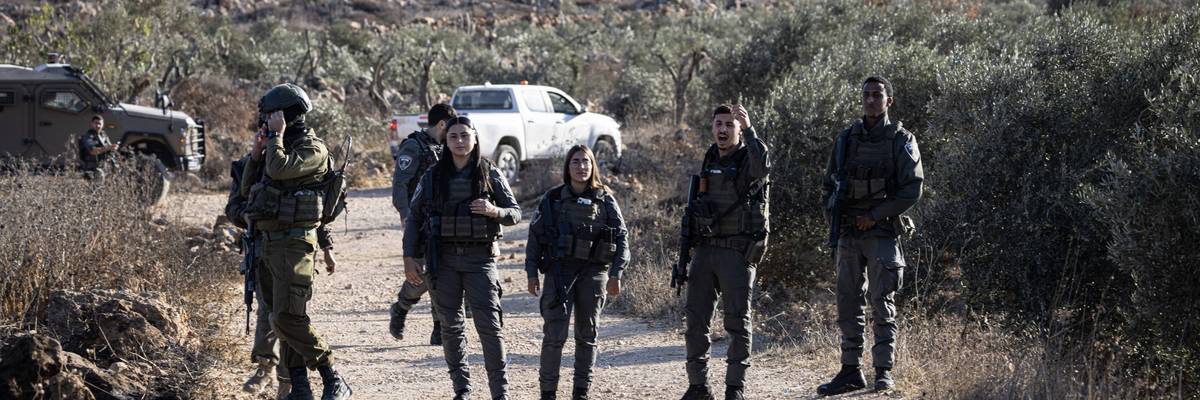




You must be logged in to post a comment.