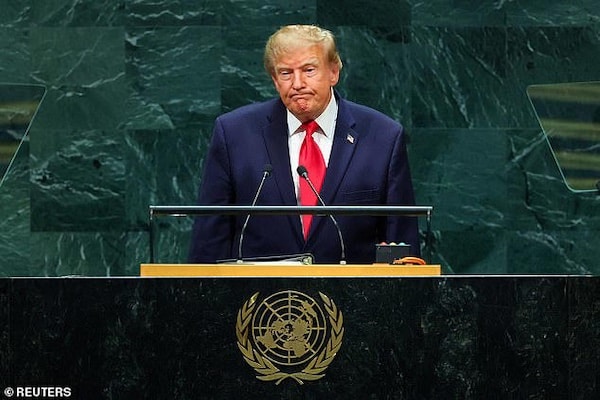
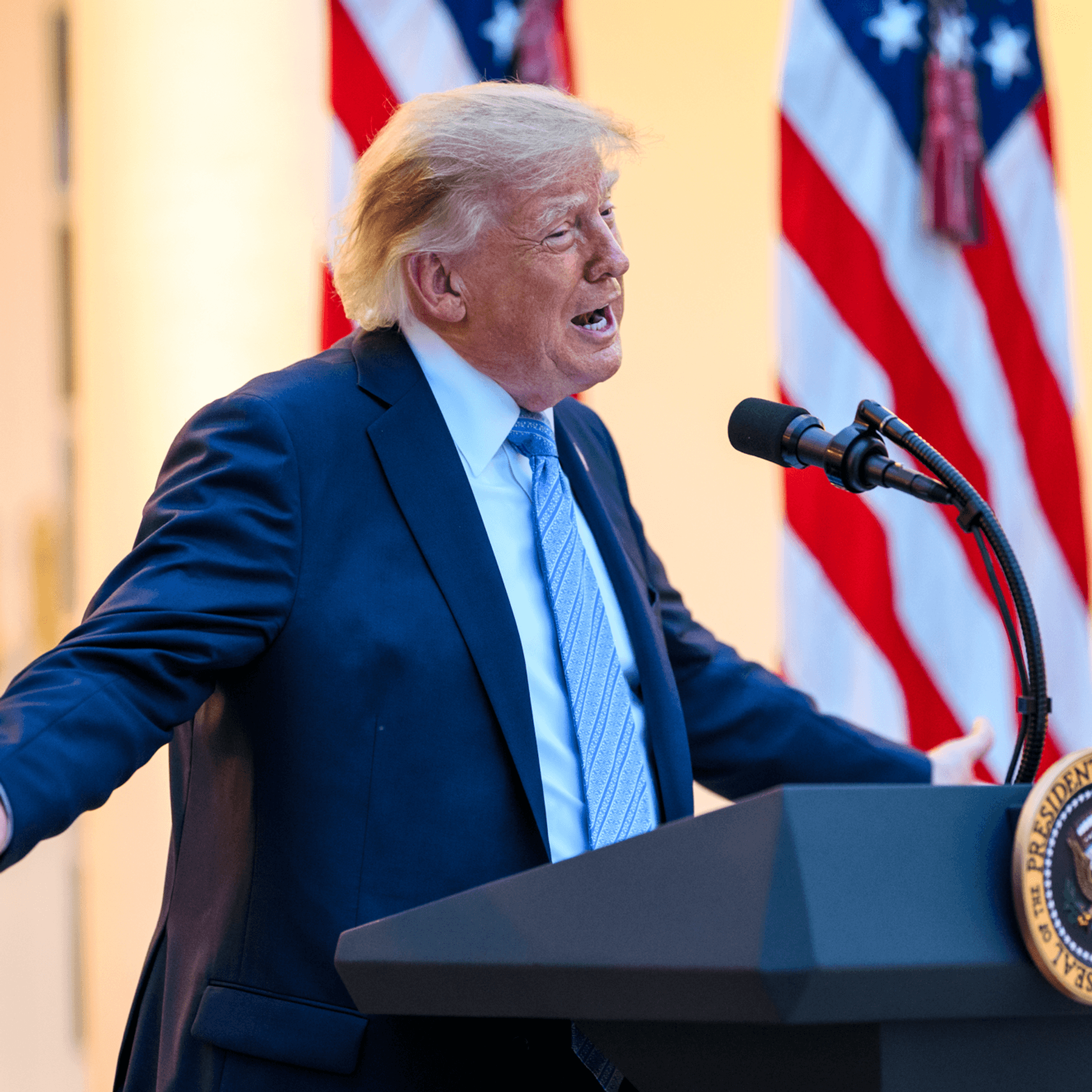
US President Donald Trump gives his speech at the 81st session of the UN General Assembly, September 22, 2026. Photo: UN.
In his speech at the United Nations General Assembly, the president of the United States, Donald Trump, threatened Cuba, claiming that the country is under the highest level of pressure and that it will eventually fall.
In protest against Trump’s words, the Cuban delegation, led by Foreign Minister Bruno Rodríguez Parrilla, walked out of the room. Prior to the threats from the US president, which he often repeats, the president of Brazil, Luiz Inácio Lula da Silva, had expressed his condemnation of foreign interference in the region and criticized the measures imposed by the US against Cuba. Lula emphasized that the intensified blockade represents collective punishment against 10 million people.
Trump claimed that Cuba is a failed state, and backed up his claims by referring to the added pressure of the economic and energy blockade policy. “It is failing like never before, and it is going to fall,” the US president said in his usual bellicose tone. He also mentioned that US Secretary of State Marco Rubio is leading ongoing negotiations with the Cuban government, a claim that has been denied by Cuba.
In addition to his warlike tone against Cuba, the US president uttered warnings against Iran. Trump stated that he must decide between quickly annihilating Iran to supposedly prevent it from attacking other countries or allowing an agreement that favors the reconstruction of the country under Washington’s terms, although he toned down the bravado by adding that he expects to reach a pact after the US midterm elections. He also insisted that the Iranian government will never have a nuclear weapon, despite the fact that Iran has a declared policy of not making any nuclear weapons.
Earlier, upon his arrival at the UN headquarters in New York, Trump had an incident with the press, when he reproached a CNN reporter for covering his attendance, citing his ban on CNN.
Trump also boasted about the achievements of the US economy, calling it the envy of the world, although the country is experiencing high inflation, elevated fuel costs, and rising mortgage rates faced by the US population.
Cuba condemns Trump’s attacks The Cuban government responded to Trump’s attacks by reaffirming its right to sovereignty and condemning the economic and social impact of the intensified US blockade.
The president of Cuba, Miguel Díaz-Canel, decried on social media that the characterization of Cuba as a threat has the objective of justifying the genocidal US economic war against the Cuban population.
Díaz-Canel stated that Trump’s resorting to lies reflects a refusal to accept the self-determination of the Cuban people and reaffirmed that the country will maintain the defense of its sovereignty, working to overcome US imperialist aggression. He added that the blockade is the real threat.
Similarly, Foreign Minister Bruno Rodríguez said that the US government is incapable of recognizing Cuba as an independent and fully sovereign nation.
Rodríguez dismissed Trump’s accusations as falsehoods and slander, insisting that Cuba does not pose a danger to the United States or any other country, while the current economic restrictions and energy blockade do threaten Cuba and the rest of the world.
“The blockade is an act of genocide and collective punishment. We are a country of peace and we deserve peace,” emphasized the foreign minister, adding that the blockade has been systematically denounced by the majority of the international community.
The U.S. president took the podium at the United Nations General Assembly to reaffirm that he considers the region his country’s backyard. He cited Venezuela as an example of what he is willing to do and reaffirmed that he will continue to strangle Cuba until the Revolution falls.
He went on to promise before the UN General Assembly to use “unmatched military might” to secure Washington’s interests in Latin America.
“The United States will no longer allow threats against the Americas to gain ground anywhere in the Western Hemisphere. And, if necessary, we will use our unmatched military might to secure the vital national interests of the United States,” Trump said.
He cited the case of Venezuela as an example of his policy for the region. He recalled the “major military operation” that ended with the kidnapping of President Nicolás Maduro, whom Trump described as a “dictator and criminal” in the presence of Venezuela’s acting head of state, Delcy Rodríguez.
The U.S. president celebrated the fact that last month he signed “the largest oil deal in history” with the new Venezuelan authorities and made no secret of the fact that his country is the primary beneficiary of that measure. “To the victor go the spoils,” he remarked.
Cuba in Trump’s Crosshairs
He also reaffirmed his intention to continue suffocating the Cuban government and said that Cuba “will fall.” “The communist regime is under intense pressure—the strongest it has ever faced. It will fall,” he said. Following these remarks, the Cuban delegation present in the plenary session was seen leaving the room.
“Communism will never reach the United States, but freedom will reach Cuba,” the U.S. president noted, accusing the island of having coordinated for “decades” with communist networks and left-wing groups in his country, such as the Communist Party of the United States, the Antifa group, and the Democratic Socialists of America—the party led by New York City Mayor Zohran Mamdani.
“Mexico must regain control of its territory”
In addition, Trump issued a veiled threat to Mexico. Although he said he has a good relationship with Mexican President Claudia Sheinbaum, he stated that Mexico is “the epicenter” of drug trafficking.
“Mexico is the epicenter of cartel violence. Unfortunately, it is unacceptable for the United States to share a 2,000-mile border with a territory controlled by enemy cartels. Therefore, Mexico must regain control of its territory from the enemies of humanity,” he declared during his speech before the UN General Assembly.
Along those lines, he asserted that members of drug cartels should be executed, exiled, or detained as if they were enemy combatants in an armed conflict. “The cartels are the ISIS [Islamic State] of the hemisphere” and, like ISIS fighters, “they should be executed, exiled, or detained,” declared Trump, who noted that his administration designated these groups as “terrorist organizations” last year.
Artificial Intelligence According to Trump
The U.S. president once again spoke out against regulating or curbing the advance of AI and insisted on using a new term to refer to the issue. He asserted that the United States will begin using the term “superintelligence” because “it sounds much better” and is “much more appropriate.”
“Whoever wins the race for super artificial intelligence is the one who will truly win, and we are far outpacing China,” he said, reaffirming that there will be no restrictions on the development of this technology despite experts’ warnings about the risks to humanity.
In that vein, he rejected any attempt to build a “globalist scheme” or to impose regulation and declared: “I am not going to stifle in any way the growth of something that will surpass the Industrial Revolution.”
Iran: Between Threat and Negotiation
“The Islamic Republic of Iran was the number one sponsor of terrorism; they were the thugs of the Middle East, but not anymore,” Trump said, celebrating his military actions against that country. He claimed that U.S. ships are hauling “millions of barrels of oil” through the Strait of Hormuz.
He then said that he must decide between making a deal with Iran or sending it “to hell” and “annihilating the Islamic Republic”. “Do I push them into hell with no chance of survival and no hope of achieving any greatness in the future or for future generations?” he insisted.
“I think we’ll reach an agreement right after the elections,” he added, referring to the U.S. midterm elections.
Russia and Ukraine
After patting himself on the back for allegedly having ended eight armed conflicts, Trump said that an agreement between Russia and Ukraine to end the war will come “quickly,” sooner than expected.
“We are working very closely with the leaders of Russia and Ukraine, and we are going to reach that agreement. It’s going to happen, I think, faster than people realize. They’re fed up,” he said.
Bases in Greenland
The U.S. president also announced that his country will build two large military bases in Greenland under an agreement with Denmark that is being signed today.
“We will immediately begin the process of establishing a major military presence in appropriate locations. We will build two very important military bases,” Trump stated in his speech.
Trump against the International Criminal Court
In another part of his address, Trump called for all member countries of the International Criminal Court (ICC) to withdraw from that body, which he accused of being “out of control.”
“The United States also opposes this out-of-control institution that is the International Criminal Court,” he declared from the UN podium. “I urge all ICC member countries to officially and immediately withdraw,” he added.
Source: Pagina 12, translation Resumen Latinoamericano – English
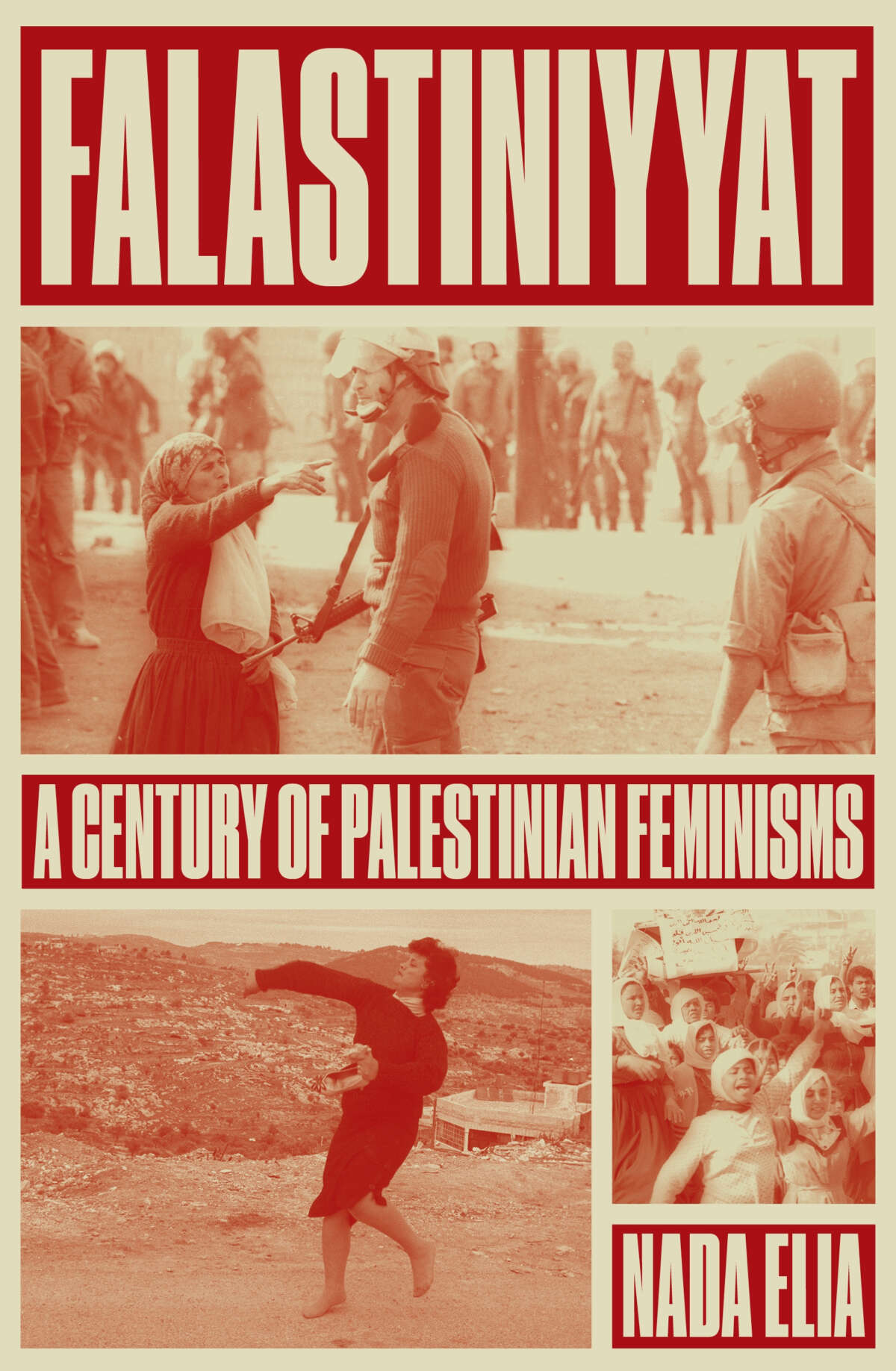
They follow in the footsteps of Palestinian women and children who have resisted colonialism in the past century.
By Nada Elia , Verso Books Published September 23, 2026
Palestinian activist Ahed Tamimi (center) arrives for a press conference with her mother Nariman (right) after her release from an Israeli prison where she served a sentence of eight months for slapping an Israeli soldier in her hometown of Nabi Saleh, West Bank, on July 29, 2018.
Support justice-driven, accurate and transparent news — make aquick donationto Truthout today!
“I am a freedom fighter. So I will not be the victim.” —Ahed Tamimi, upon her release at age seventeen from Israeli prison for slapping an occupation soldier (Guardian, July 30, 2018)
I grew up in a household of women and children that, as my sisters and I matured, eventually became a household of only women. My father was frequently gone on long overseas business trips before his untimely death when I was seven. I often wonder if this is the reason the expression “women and children” strikes me as essentially flawed: It suggests that women and children are the more vulnerable members of society, rather than its resilient survivors. It infantilizes women by grouping them with children, rather than adult men.
In the context of a national struggle, it strips women of agency, as if such agency can only manifest through armed revolt. In a military context, the expression “women and children” — or “womenandchildren,” to use the term coined by antimilitary feminist scholar Cynthia Enloe — presumes that women and children never take up arms or participate in resistance, even as we see such actions occurring in numerous struggles around the world. And in listing casualties, it implies that men’s deaths and injuries are less tragic, less mournable.
In the case of Palestine, women and youth have led, and continue to lead, some of the most transformative efforts and initiatives in our people’s quest for justice — that is, our resistance first to imperialism, then to settler colonialism and apartheid. They have not been spared Israel’s violence, just for being women, or children, and many have been and remain at the forefront of popular resistance to Zionism’s ultimate aim of eliminating all Palestinians. While this may have become more obvious during Israel’s accelerated genocidal assault on Gaza following Hamas’s October 7, 2023, attacks, it had always been clear to anyone not deliberately looking away.
From a number of uprisings over the past century in Palestine, it is obvious that youth, “the children,” are not just among the leaders; they are the more effective, more transformational leaders. Unfettered by traditions and social norms they do not relate to, they engage in novel forms of organizing, seeking the complete abolition of oppressive systems, rather than their reversal. And women, in their capacity as autonomous adults, rather than merely as wives and mothers, have consistently resisted both the imperial ideology targeting their country, and the military assaults that accompanied it. They did so while providing men, as well as the youth and children, the moral, emotional, and practical support the Palestinian people need in order to persist. This was perhaps most evident on a global scale during the 1987–93 Intifada, when women organized most of the popular committees tending to the educational, nutritional, and health needs of Palestinians resisting Israel’s clampdown, as youth took to the streets daily to express their rejection of Israel’s decades-long oppressive rule. These defenseless children hurled rocks at armored tanks, fully aware of the hefty price they would pay for their defiant act, because they knew that risking limb and life is preferable to living without freedom and dignity.
Verso Books
Women’s and children’s agency is enacted daily in the courage of girls such as Janna Jihad, who was dubbed “the world’s youngest journalist” when she started documenting Israel’s crimes at a mere seven years of age. Jihad started recording Israel’s attacks using her mother’s cell phone, posting her recordings far and wide on social media. She has repeatedly said that her camera is her weapon of choice. Jihad is the cousin of Ahed Tamimi, the “lioness” who has confronted heavily armed Israeli soldiers determined to take over her village lands since she was a toddler. Israel imprisoned Tamimi for eight months when she was sixteen; she used the time behind bars to read up on international law, later enrolling in college planning to go to law school, so as to hold Israel accountable for its violations. “I am a freedom fighter. So I will not be the victim,” she told journalists upon her release.
We can’t let Western media continue normalizing the acute dehumanization and pathologization of Palestinian men. By Sa’ed Atshan , Truthout
January 17, 2024
Palestinian children’s agency was also clear in the 2022 uprising of rebellious youth standing up to Israel’s might. Ibrahim al-Nabulsi, dubbed “the Lion of Nablus,” was eighteen when he was brutally assassinated by the Israeli Occupation Forces. Following his martyrdom, his mother, Huda al-Nabulsi, declared, “There are hundreds of Ibrahims now. You are all Ibrahim, you are all my children.” She did not mean that all young Palestinians will be martyred like her own son but, rather, that they will carry on the struggle she raised her son Ibrahim to fight.
Her statement recalls that of Fatima Breijeh, a decade earlier. Breijeh, who had lost one son to Israel’s violence, asserted: “I have decided to continue to resist until the last breath and to continue to urge people to resist and to teach my children to resist and to lay the foundation for this through their milk.”
Breijeh, al-Nabulsi, Tamimi, and Jihad are some of the more recent Palestinian women and children challenging Israel’s might, and its mighty oppression. They do not present a new social development but, rather, follow in the footsteps of generations of Palestinian women and children who have stood up to colonialism in the past century, deftly navigating their social and political circumstances as they have sought their liberation, and that of their people. And in the Diaspora, it is groups like the Palestine Youth Movement, the Palestinian Feminist Collective, and the youth-led Within Our Lifetime who are at the forefront of organizing for total liberation.
Since we are not yet a sovereign people, it is impossible to separate Palestinian women’s activism from the national struggle for liberation. However, there is no doubt that, while the struggles of Palestinian women in the opening decades of the twentieth century were inextricably connected to the broader national struggle for liberation, their activism also challenged the internal status quo of Palestinian society and should be understood as random acts of feminism, as it not only charted new paths for these women themselves but also sought to improve the circumstances of all women, whatever their social status.
25 Years of Truthout: An important fundraising appeal
This September, Truthout is celebrating 25 years of publication. For over two decades, we have been a trusted source for fiercely independent journalism thanks to readers like you.
As we look to the next 25 years, we have launched a special fundraising campaign. At this moment, we have a goal to raise $27,000 in the next 24 hours.
We are asking for your support at this juncture because we face greater threats than ever before in our organizational history. Trump and his MAGA allies are determined to control the information ecosystem, and movement-based organizations are subject to dangerous censorship and scrutiny.
If you can support Truthout with a one-time or monthly donation, you will make a significant impact on our work and our legacy. Anything you can do makes a difference!
about:blank This piece was reprinted by Truthout with permission or license. It may not be reproduced in any form without permission or license from the source.
Nada Elia is a diasporic Palestinian scholar and activist whose work, both in the classroom and the streets, focuses on exposing and redressing structural systems of oppression. She is the author of Greater Than the Sum of Our Parts: Feminism, Inter/Nationalism, and Palestine. Nada also teaches in the Department of Ethnic Studies at Western Washington University.
In truly deranged remarks to world leaders at the UN, Donald Trump declared that “I have a big decision to make,” whether to negotiate a deal with Iran or instead to “annihilate the Islamic Republic” and drive Iran “into hell with no chance of survival.”
He posed it as his personal choice. The fact that the American people are dead set against Trump’s war means nothing. And as for the voters, he added that he gives “absolutely no credence” to the coming midterm elections in deciding on his actions and on Iran’s fate.
The President’s threat to annihilate a member state of the United Nations, delivered from the General Assembly podium, disgraced Trump in front of the world.
Nothing binds this President. He is not bound by law, the Constitution, the UN Charter, or public opinion at home and abroad. When asked at the start of the year whether he has any limits on his power, he said “Yeah, there is one thing. My own morality. My own mind. It’s the only thing that can stop me.”
Trump opened his speech with the 250th anniversary of the Declaration of Independence, hailing America’s freedom. The fact is that Trump’s authoritarianism far outdoes that of King George III, against whom the colonies rebelled. Among the founders’ indictments of Mad King George was that “He has affected to render the Military independent of and superior to the Civil power.” Yet our own mad king has decided that the survival of a whole civilization is in his hands alone.
Trump is emboldened in his contempt for Congress because the Republican members of Congress have abdicated their constitutional responsibilities, terrified of their own president, and forsaking their constituents for campaign lucre from AIPAC and the military-industrial complex.
The Constitution is unambiguous regarding Congress’s responsibility. Article I, Section 8 assigns Congress, not the President, the sole power to declare war. That is not a choice or an option. The Constitution doesn’t say that Congress can play dead and let the President declare war. The Framers made this choice deliberately, because they were explicitly rejecting the power of a king to take the nation to war.
In Federalist 69, Hamilton assured the public that the President’s war powers would be far less than the British monarch’s. Madison stated the principle plainly in a letter to Jefferson in 1798: “The constitution supposes, what the History of all Govts demonstrates, that the Ex. is the branch of power most interested in war, & most prone to it. It has accordingly with studied care vested the question of war in the Legislature.”
The founders’ careful design has been overturned because of the unconstitutional subservience of the Republican members of Congress to Trump and to the military-industrial-digital complex. And yes, under Democratic presidents, most Democratic members of Congress also looked the other way when those presidents chose to go to war.
The war with Iran is Trump’s folly but Congress’s disgrace for not stopping it. It is a war without a purpose that has created mass suffering in Iran, tens of billions of dollars of direct outlays, and staggering damage to American military bases in eight countries of the Middle East. The closure of the Strait of Hormuz has sent world and American prices soaring for oil, gas, fertilizers, and more. And the world has duly noted that Iran can hold its own against US aggression, albeit at great sacrifice to the people of Iran and the region.
America’s much vaunted AI battlefield has been exposed in the most horrifying way. On the first day of the war, an American missile struck the girls’ elementary school there, killing more than 150 people, most of them girls aged seven to twelve, and the military’s own inquiry reportedly found that overreliance on artificial intelligence contributed to the targeting. Trump blamed “Iran or somebody else,” and seven months later the administration has offered no findings, no apology and no compensation to the families.
The President’s threat to annihilate a member state of the United Nations, delivered from the General Assembly podium, disgraced Trump in front of the world. It also violated Article 2(4) of the UN Charter, which prohibits even the threat of force against another state. Nearly all the world stands aghast.
I write to you because you cannot simply walk away from Trump’s recklessness, shaking your heads silently. You have a job to do, so do it. The craven Republican Party has to find even a minimal level of guts to tell Trump, “No, you do not have the power to destroy Iran. Any war with Iran depends on us, and we don’t support you and our constituents want this war to stop.” A clear majority of Americans oppose this war, and poll after poll shows that the opposition to the war is growing. A few Republicans have found that courage. Last week three more Republicans broke ranks to support ending the war. Their colleagues should follow.
Many of you receive campaign contributions from military contractors and technology companies deeply involved in the war. Many of you take money from AIPAC, which champions the war that Netanyahu did so much to help launch. This has to stop, as it is a dereliction of your constitutional duty and a violation of your oath.
Congress holds the power of the purse. The fiscal year ends on September 30, and every bill that funds the Pentagon is your opportunity to prohibit funds for unauthorized offensive operations against Iran.
The right course for the US is simple. Congress should cut off funding, and the US should stop further attacks and go home. We need no agreement with Iran or anyone else to stop the war that we started. By ending the war you will immediately restore some sanity and safety to the world energy markets, food supplies, and prices faced by Americans and others around the world.
How America has declined from the glorious moment when John F. Kennedy stood at the same podium at the UN on September 20, 1963, after having negotiated the Partial Nuclear Test Ban Treaty with the Soviet Union. He told the assembled leaders that the treaty can be a lever, and Archimedes, in explaining the principles of the lever, was said to have declared to his friends: “Give me a place where I can stand—and I shall move the world.” My fellow inhabitants of this planet: Let us take our stand here in this Assembly of nations. And let us see if we, in our own time, can move the world to a just and lasting peace.
Members of Congress, to save our nation’s honor and our Constitution, you must do your duty to stop this war, and stop Trump’s brazen, destructive, and unconstitutional grab for power.
It’s been nearly 30 years since I co-founded Common Dreams with my late wife, Lina Newhouser. We had the radical notion that journalism should serve the public good, not corporate profits.
It was clear to us from the outset what it would take to build such a project. No paid advertisements. No corporate sponsors. No millionaire publisher telling us what to think or do.
Many people said we wouldn’t last a year, but we proved those doubters wrong.
Together with a tremendous team of journalists and dedicated staff, we built an independent media outlet free from the constraints of profits and corporate control. Our mission has always been simple: To inform. To inspire. To ignite change for the common good.
Building Common Dreams was not easy. Our survival was never guaranteed. When you take on the most powerful forces—Wall Street greed, fossil fuel industry destruction, Big Tech lobbyists, and uber-rich oligarchs who have spent billions upon billions rigging the economy and democracy in their favor—the only bulwark you have is supporters who believe in your work.
But here’s the urgent message from me today. It’s never been this bad out there. And it’s never been this hard to keep us going. At the very moment Common Dreams is most needed, the threats we face are intensifying. We need your support now more than ever.
We don’t accept corporate advertising and never will. We don’t have a paywall because we don’t think people should be blocked from critical news based on their ability to pay. Everything we do is funded by the donations of readers like you.
When everyone does the little they can afford, we are strong. But if that support retreats or dries up, so do we.
Will you donate now to make sure Common Dreams not only survives but thrives?
—Craig Brown, Co-founder
about:blank
about:blank
Our work is licensed under Creative Commons (CC BY-NC-ND 3.0). Feel free to republish and share widely.
Jeffrey D. Sachs is a University Professor and Director of the Center for Sustainable Development at Columbia University, where he directed The Earth Institute from 2002 until 2016. He is also President of the UN Sustainable Development Solutions Network and a commissioner of the UN Broadband Commission for Development. He has been advisor to three United Nations Secretaries-General, and currently serves as an SDG Advocate under Secretary-General Antonio Guterres. Sachs is the author, most recently, of “A New Foreign Policy: Beyond American Exceptionalism” (2020). Other books include: “Building the New American Economy: Smart, Fair, and Sustainable” (2017) and “The Age of Sustainable Development,” (2015) with Ban Ki-moon.
A new poll from The Economist/YouGov found that a majority of registered US voters support impeaching US Secretary of War Pete Hegseth, after Rep. Thomas Massie (R-KY) of Kentucky introduced a resolution to remove him.
The poll, conducted from September 18 to September 21, found that 51% of registered voters surveyed support impeaching Hegseth for starting the war with Iran without congressional authorization, while 34% oppose it. Support for impeachment rises among likely voters to 54%, and opposition rises to 35%.
“This is why [House Speaker Mike Johnson] adjourned Congress to avoid the vote and why the President isn’t defending [Hegseth],” Massie wrote on X in response to the results.
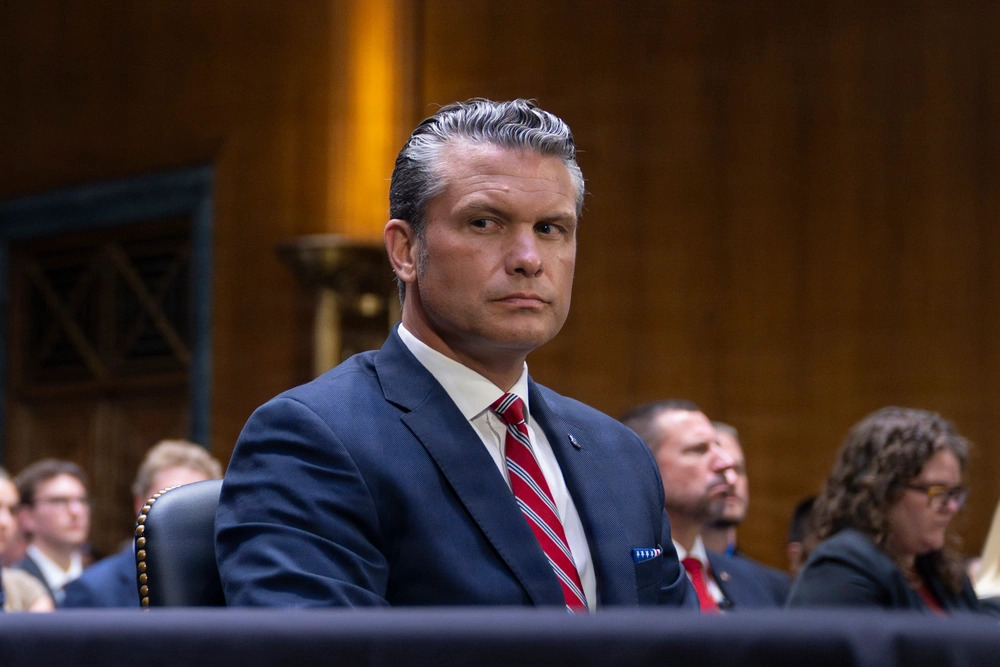
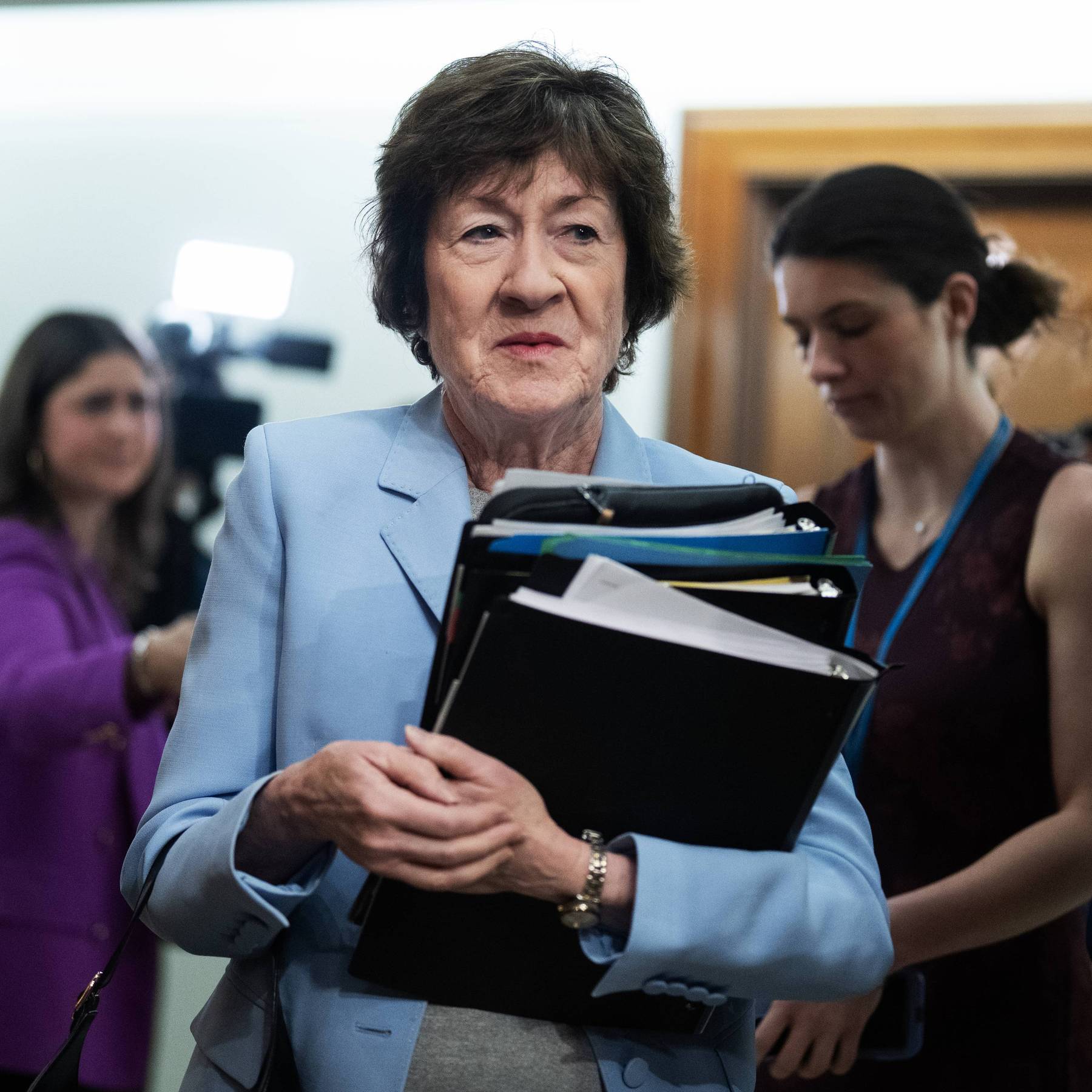
Hegseth before the Senate Appropriations Committee on July 21, 2026 (Pentagon photo)
Massie introduced the articles of impeachment on September 15, and because it was a privileged resolution, a vote had to happen within two days. But Johnson canceled the House’s voting session for September 17, sending lawmakers home early for a long recess that pushes the impeachment vote until after midterm elections.
Impeachment is much more popular among Democrats, with the YouGov poll showing 77% supporting it compared to just 22% of Republicans. But Massie only needs a few Republican votes to pass the impeachment resolution through the House, and seven House Republicans supported the latest War Powers Resolution calling for an end to the war with Iran, signaling that he may get enough.
While the poll asked only about Hegseth’s role in the Iran war, Massie’s eight articles of impeachment also address how Hegseth has ignored US laws designed to mitigate civilian casualties, his role in extrajudicial executions at sea (strikes on alleged drug-running boats), the attack on Venezuela to abduct President Maduro, the bombing campaign in Yemen last year, and his efforts to chill free speech.
President Donald Trump speaks to the United Nations General Assembly, Tuesday, Sept. 22, 2026, at the UN headquarters. [AP Photo/Julia Demaree Nikhinson]
US President Donald Trump told the United Nations General Assembly on Tuesday that he is deciding whether to “annihilate the Islamic Republic” of Iran and “drive them into hell with no chance of survival.”
The American president asked: “Do I annihilate the Islamic Republic and do it quickly, never giving them a chance to kill and destroy people and countries again?”
Trump’s murderous language marks a new stage in the criminalization of imperialist foreign policy amid the eruption of global war. It is without precedent in modern politics outside the discourse of Adolf Hitler’s regime, which waged a Vernichtungskrieg, a war of annihilation, against the Soviet Union.
Unlike Trump, however, Hitler did not announce his war of extermination in public. He gave the order in private, to his generals. On March 30, 1941, in a closed meeting with some 200 senior officers, he told them the coming invasion would be a Vernichtungskampf, “a war of extermination,” according to the diary of his army chief of staff, Franz Halder.
The extermination of the population of Iran, which has resisted Trump’s efforts to subjugate the country through war, is in fact being actively discussed at the White House. The journalist Seymour Hersh reported on June 10 that Trump had raised using nuclear weapons against Iran, a country of 93 million people, in a secret meeting with his senior staff.
Trump’s criminal war of aggression against Iran had killed at least 3,468 people and wounded more than 26,500 by June 10, according to Iran’s Health Ministry. Last week, a UN fact-finding mission found “reasonable grounds to believe that the United States committed war crimes,” citing the US missile attack on February 28 on an elementary school in Minab that killed more than 150 people, 120 of them children.
The war against Iran is one component of the US-Israeli onslaught throughout the Middle East, whose highest expression is the genocide in Gaza, which has killed 73,919 Palestinians, according to Gaza’s Health Ministry.
The threat against Iran was one item in a series. Trump boasted that the US military had penetrated “deep into the Venezuelan capital” and “arrested” Maduro, and that the reward was “the largest oil deal in history,” 65 billion barrels. “To the victor belong the spoils,” Trump declared. Cuba “is an absolutely failed state … and it will fall.” Greenland is to pass under the “permanent control” of the United States, with two “very major military bases.”
During Trump’s speech, only the delegations of Iran and Cuba, whose government Trump threatened to overthrow, left the hall in protest. The representatives of the European imperialist powers, for all their constant talk of democracy and human rights, sat there and did nothing. Khalilur Rahman, the Bangladeshi foreign minister who presides over the Assembly, thanked the American president.
The UN Charter was signed in San Francisco on June 26, 1945, seven weeks after the surrender of Nazi Germany, “to save succeeding generations from the scourge of war, which twice in our lifetime has brought untold sorrow to mankind.”
Its Article 2 binds every member to “refrain in their international relations from the threat or use of force against the territorial integrity or political independence of any state.” Trump’s speech was such a threat, made in the building constructed to outlaw it by the leader of a state almost seven months into an illegal war of aggression. Trump’s speech itself is indictable as a violation of international law.
The European counterpoint to Trump was given Tuesday by French President Emmanuel Macron, who spoke of “the return of imperialism, of arrogance, the return of unrestrained force which knows no rules … A world in which some believe that they can undermine the international order so as to push their borders outwards.”
He added, “War crimes have been industrialized. We’ve seen the destruction of civilian infrastructure, human rights violations.”
But while some commentators took his remarks as a veiled critique of Trump, he never named the American president. Rather, his speech was a vocal and explicit denunciation of Russia and a declaration of intent to continue, alongside Trump, to fund and arm Ukraine.
Macron declared that “Russia has been waging a cruel war on civilians. It’s been occupying the territory of a sovereign state. France will continue providing unstinting support” for Ukraine in its war against Russia.
In Macron’s view, the appropriate response to Russia’s “imperialism” and “war crimes” is for the European imperialist powers to intensify their war against Russia. Macron made no effort to square his claims that the war against Russia is a war for democracy with the fact that Trump, his ally in that war, had just threatened to exterminate the population of an entire country.
In 1920 Lenin described the League of Nations, the UN’s predecessor, as “a league of mad dogs who are snatching each other’s bones.” The phrase is perhaps somewhat quaint. The UN General Assembly of 2026 is an active planning center for war.
After meeting Ukrainian President Volodymyr Zelensky the same day, Macron announced a contract to supply Ukraine with radars and air-defense missiles, the Kyiv Independent reported Tuesday. Trump, for his part, also met Zelensky on Tuesday and confirmed that the manufacture of Patriot air-defense missiles in Ukraine was under discussion.
As the Trump-Zelensky meeting opened, a British reporter told Trump that “a lot of people in the UK are very worried about the mood music from the UK and other European leaders about the inevitability of direct conflict between us and Russia,” and asked: “Can you stop that happening?” Trump refused to give a serious answer.
In fact, Trump’s blood-curdling threats against Iran, and the fact that they provoked no serious protest among the leaders of the imperialist powers, demonstrate the extent to which global war, and its corollary, the extermination of entire populations, has been normalized by world capitalism.
The Democrats are not an alternative to this warmongering. Just days earlier, they had given Trump a blank check to escalate the war not only against Russia but against Iran. On September 16, 58 House Democrats voted for the Lindsey O. Graham Sanctioning Russia and Iran Act, which authorizes the president to tax imports from China, India and the other largest purchasers of Russian oil at rates as high as 100 percent and extends for five years the sanctions on Iran’s energy and arms sectors. Thirty-six of the 45 Senate Democrats had voted for it on August 7.
House Minority Leader Hakeem Jeffries voted no because, he said, the bill did not go far enough against Russia: “You have to confront the bully, not appease the bully.” A Democratic majority in Congress after November 3 would take the war further and faster.
The day before his speech, Trump met New York Mayor Zohran Mamdani, a member of the Democratic Socialists of America (DSA), at Gracie Mansion. Mamdani said nothing about the war and told reporters: “We appreciate the president’s commitment to the city.”
Trump began his speech by boasting of “the golden age of America,” declaring, “The entire world is being lifted by the wealth, strength, spirit, and momentum of a newly energized and a very powerful United States of America.”
In fact, Trump presides over a social order and political system that is rotting on its feet—what Trotsky described on the eve of World War II as “the death agony of capitalism.” The same crisis is producing its opposite: the growth of social opposition, mass protests and global class struggle.
The opposition to Trump’s criminal warmongering will come neither from the European imperialist powers nor from the Democrats and their accomplices in the DSA. It will come from the international working class, armed with the program of international socialism.
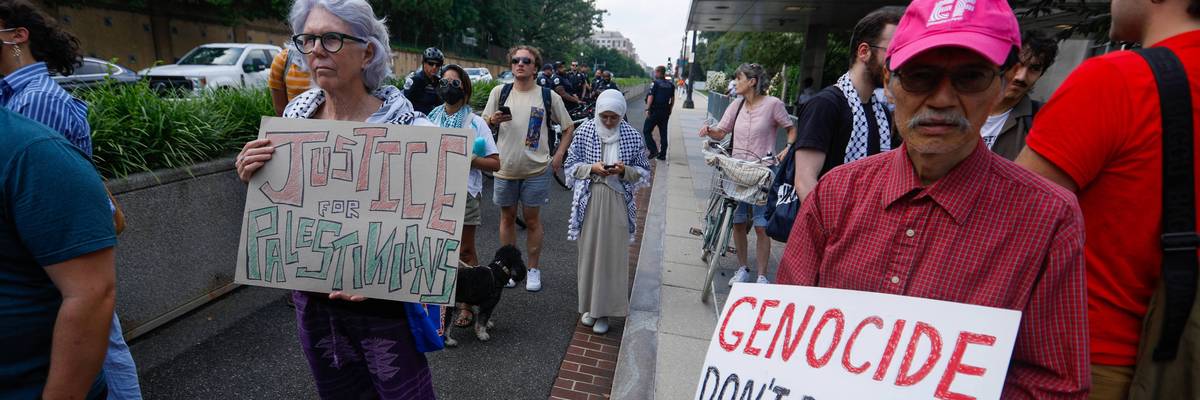
Protesters gathered in front of the US State Department demanding an immediate ceasefire in Gaza, an end to the US-backed Israeli military operations, and unrestricted humanitarian aid access on July 22, 2025, in Washington, DC.
(Photo by Yasin Ozturk/Anadolu via Getty Images)
The vast majority of Democratic voters believe Israel has committed a genocide in Gaza and want its supporters in both parties to face consequences.
The majority of Democratic voters believe Israel has committed genocide in Gaza for the past three years. And they want the American politicians in both parties who supported it to pay.
In a poll released on Monday by the Center for Strategic Politics and commissioned by the magazine Liberal Currents, 683 Democratic voters were asked whether the next Democratic administration should “pursue criminal prosecution of members of the Trump and Biden administrations for actions taken related to Israel’s genocide in Gaza.”
More than half, 57%, of the Democrats surveyed answered “yes,” while only 22% answered “no” and another 22% said they “don’t know.”
Self-described “socialists” and “progressives” were most bullish on Gaza-focused prosecutions. But so were 52% of “liberals” and even 48% of Democrats who called themselves “moderate” or “conservative.”
It is one of several questions in the poll about a hypothetical Democratic administration prosecuting its predecessors over policies considered deadly and destructive.
About two-thirds, 66%, said they wanted to see Trump administration officials prosecuted for actions taken during its aggressive war with Iran, which has led to the deaths of more than 1,700 civilians and wrought economic turmoil.
Nearly three-quarters, 72%, believed Trump officials should face similar accountability for their campaign of extrajudicial strikes on boats in the Caribbean and Pacific, which have killed more than 234 people in what a top United Nations official recently said may constitute “crimes against humanity.”
And more than three-quarters said they wanted to see Trump officials face legal penalties for actions committed by US Immigration and Customs Enforcement (ICE) and Customs and Border Protection (CBP), which have waged a violent mass deportation campaign that has entailed numerous documented due process violations, instances of racial profiling, and several shootings of immigrants and US citizens without clear justification.
The question about Gaza is the only one in the survey in which Democrats were asked about the prospect of prosecuting members of their own party as well as Republicans. And while fewer Democrats ultimately answered yes, it indicates that their ire toward the American politicians supporting the genocide transcends party loyalty.
The poll results come as some activists pursue accountability for the Biden administration in other ways. Last week, organizers launched a campaign to pressure universities and other prominent institutions to cut ties with what they called the “Genocide 20.”
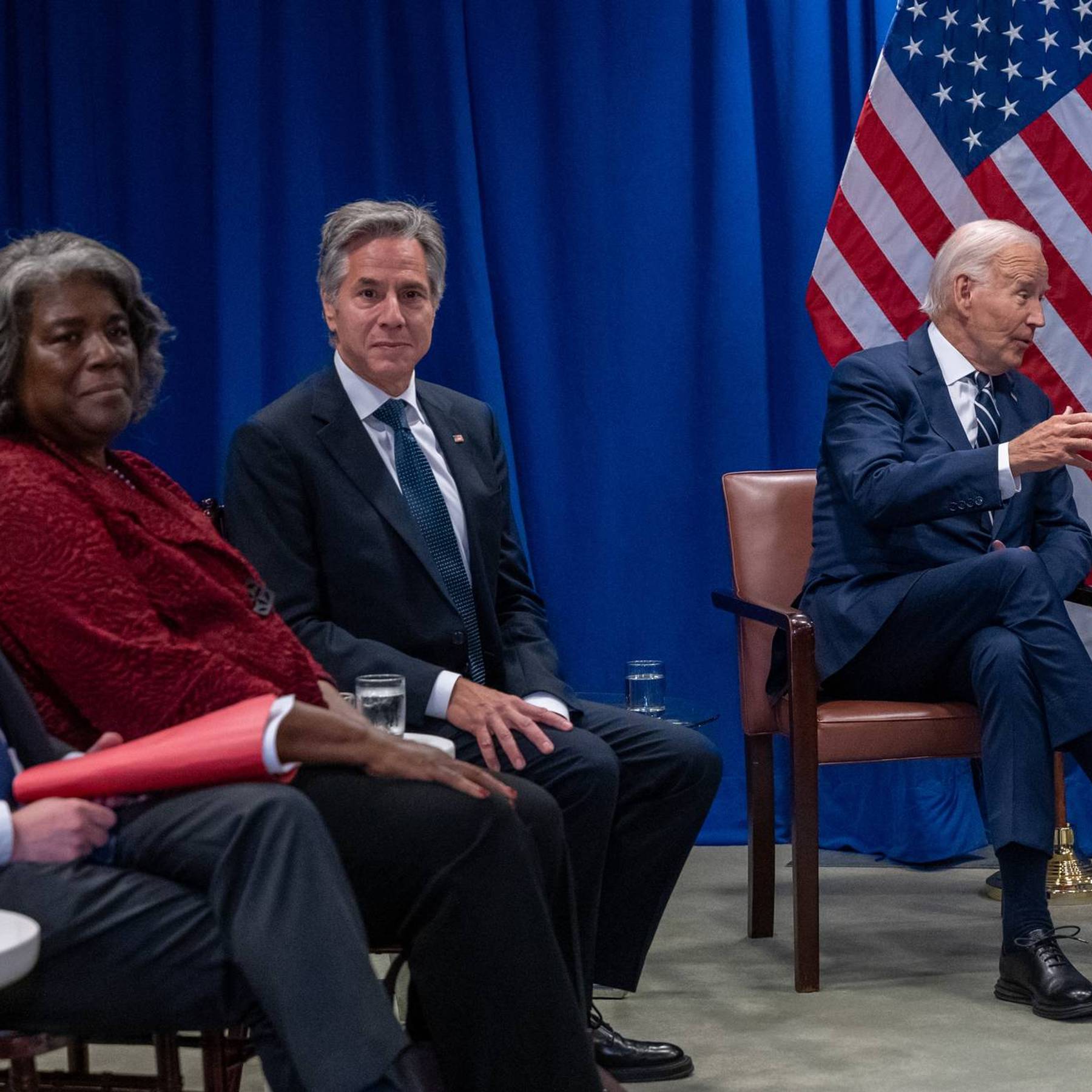
These are officials like former Secretary of State Tony Blinken and former National Security Adviser Jake Sullivan who crafted and defended the administration’s policy of unrestricted military aid for Israel despite mounting evidence that it was killing scores of civilians and enacting a campaign of starvation against the people of Gaza.
The United Statesprovided Israel with at least $17.9 billion in military assistance between October 7, 2023, and the end of former President Joe Biden’s term in January 2025, according to Brown University’s Costs of War project. During that period, more than 47,000 Palestinians were confirmed killed, according to the Gaza Ministry of Health.
Since President Donald Trump returned to office, the US has continued to provide Israel with billions of dollars in military assistance, including $3.8 billion in regular annual military aid, while the Trump administration has approved billions more in arms sales and expedited weapons deliveries. The death toll has risen to nearly 74,000, according to official figures, but independent experts have suggested this may be a significant undercount.
According to Monday’s poll, more than 4 in 5 Democrats said that “foreign policy (including Israel and Iran)” is important to them in deciding which candidates to support, compared with just 4% who said it is not.
Foreign policy has been a critical dividing line in several recent Democratic primaries, in which voters have revolted against candidates backed by the American Israel Public Affairs Committee (AIPAC).
This includes Democratic Michigan Congresswoman Haley Stevens, who was defeated by Abdul El-Sayed in a contest for the US Senate despite her more than $30 million in backing from AIPAC, which helped to turn it into the most expensive Democratic primary ever.
AIPAC-backed House candidates have similarly suffered high-profile defeats at the hands of progressives calling to cut off US funding for Israel. Some of the victors include Chris Rabb in Pennsylvania, Brad Lander and Darializa Avila Chevalier in New York, and Aisha Wahab, who won a special election in California.
It’s been nearly 30 years since I co-founded Common Dreams with my late wife, Lina Newhouser. We had the radical notion that journalism should serve the public good, not corporate profits.
It was clear to us from the outset what it would take to build such a project. No paid advertisements. No corporate sponsors. No millionaire publisher telling us what to think or do.
Many people said we wouldn’t last a year, but we proved those doubters wrong.
Together with a tremendous team of journalists and dedicated staff, we built an independent media outlet free from the constraints of profits and corporate control. Our mission has always been simple: To inform. To inspire. To ignite change for the common good.
Building Common Dreams was not easy. Our survival was never guaranteed. When you take on the most powerful forces—Wall Street greed, fossil fuel industry destruction, Big Tech lobbyists, and uber-rich oligarchs who have spent billions upon billions rigging the economy and democracy in their favor—the only bulwark you have is supporters who believe in your work.
But here’s the urgent message from me today. It’s never been this bad out there. And it’s never been this hard to keep us going. At the very moment Common Dreams is most needed, the threats we face are intensifying. We need your support now more than ever.
We don’t accept corporate advertising and never will. We don’t have a paywall because we don’t think people should be blocked from critical news based on their ability to pay. Everything we do is funded by the donations of readers like you.
When everyone does the little they can afford, we are strong. But if that support retreats or dries up, so do we.
Will you donate now to make sure Common Dreams not only survives but thrives?
In Gaza, thousands of children have been killed amid the genocide that’s being imposed by Israel with total impunity. Thousands of them are unaccounted for and buried beneath the rubble. In Cuba, millions of people have survived for years amid blackouts, shortages, difficulties accessing medicines, fuel scarcity, and a profound economic crisis imposed upon them by the United States.
These are different realities, but there is a question that connects them. One that should challenge the conscience of the international community: How much civilian suffering is the world willing to tolerate before taking action? It is an important question as the 81st session of the United Nations General Assembly approaches.
In Cuba, the government consistently denounces that U.S. sanctions and restrictions are worsening an already critical situation.
When fuel is scarce, the crisis ceases to be an abstraction. It enters people’s homes. It enters the room where a child tries to do homework during a blackout. It enters the home where a mother fans her baby because the heat becomes unbearable.
It also enters the kitchen, where food begins to spoil; the hospital, where a patient needs medicine that does not arrive; and the life of a worker who does not know how they will get to work because public transportation is nearly paralyzed.
An Island in the Dark
In mid-September, Cuban Foreign Minister Bruno Rodríguez Parrilla presented a report on the damage caused by the U.S. blockade between March 2025 and February 2026.
Rodríguez described months in which many families have lived with barely two or three hours of electricity a day, or even less.
Behind those hours of blackouts lies much more than an energy statistic: there is a child whose sleep is interrupted, a grandfather left without television or radio, a student trying to concentrate without light, and a mother struggling to find a way to preserve food.
Blackouts disrupt the entire life of a family. The Cuban government maintains that the lack of fuel is one of the main factors behind the energy crisis and denounces that U.S. measures make it difficult to obtain the fuel and diesel needed for electricity generation.
It also points out that the restrictions affect the acquisition of parts and equipment for thermoelectric power plants and hinder the expansion of renewable energy sources such as solar power.
When a Sanction Reaches a Hospital Bed
One of the most painful dimensions of any sanctions policy is the one that does not immediately appear in the headlines: the way it ultimately affects a patient.
Rodríguez stated that thousands of containers have been prevented from reaching Cuba because of the pressure and threats faced by shipping companies by the U.S. government. The figure cited by the foreign minister exceeds 7,000 containers.
To someone observing the situation from afar, a container may simply be a shipping unit.
For a family, it may contain medicine. For a hospital, it may mean essential supplies. For a patient, it may represent the difference between receiving treatment on time and continuing to wait. And when that patient is a child, that wait can become unbearable.
They Are Children, Not Numbers
Palestinian children in the rubble of their community. (Foto: UN)
Referring to the increase in infant mortality between 2018 and 2025, the Cuban foreign minister made a statement that should transcend any political debate:
They are children, not numbers.
The statement matters because behind every mortality statistic there is a life that ended and a family that will carry that loss forever.
The tragedy in Gaza and the Cuban crisis belong to different historical and political contexts; but they converge at their roots in a history of struggle and resistance against the imperial thirst of powerful nations.
The international community has condemned, debated, and voted for years on the U.S. blockade against Cuba. At the same time, the great powers have repeatedly demonstrated that their international decisions are shaped by political, economic, and strategic interests. And the same happens with the Palestinian cause and their constant outcry for their international recognition as a sovereign state.
Meanwhile, families continue to live with the consequences. Both in Gaza and Cuba, a child dies everyday due to bombs or invisible sanctions. May the deaths of those children never become something to which we grow indifferent to.
Monthly Review does not necessarily adhere to all of the views conveyed in articles republished at MR Online. Our goal is to share a variety of left perspectives that we think our readers will find interesting or useful. —Eds.
In March 2006, the Anti-Defamation League (ADL) denounced the essay by John Mearsheimer and Stephen Walt, “The Israel Lobby and U.S. Foreign Policy,” as a “a classical conspiratorial anti-Semitic analysis invoking the canards of Jewish power and Jewish control.”
In their essay, which was the basis of the book of the same name that appeared the next year, Mearsheimer and Walt had been careful to distinguish the Israel lobby from a lobby by and for Jews, but it was to no avail in the furor that the essay and book provoked.
Two decades later, as the United States and Israel wage a senseless war against Iran, Mearsheimer and Walt’s case for the inordinate influence of Israel and the Israel lobby over American foreign policy looks pretty good. So does their contention that the policies promoted by Israel and its lobby are not in America’s interest.
Eli Clifton, an investigative journalist who has documented the lobby’s influence, and Ian Lustick, a retired political scientist and expert on the Middle East, have written a worthy sequel to Mearsheimer and Walt’s book, entitled “Israel’s Lobby: America in the Grip of a Foreign Power”. Like Mearsheimer and Walt, they use the term “lobby” to refer to a “loose network” of groups, media outlets, and wealthy individuals. They do an excellent job of explaining how this lobby has grown and altered its approach over the last two decades.
As Clifton and Lustick show, the lobby has changed the way it tries to influence election outcomes. Before the Supreme Court ruled on Citizens United v. FEC in 2010, which opened the door to super-PACs and unlimited contributions, AIPAC and affiliated groups tried to influence elections and elected officials through campaign contributions. But AIPAC itself did not contribute to candidates or officials. Instead, its leadership urged its members, which included the very wealthy, to back certain politicians and to oppose others based on whether they had backed or opposed measures that were in Israel’s interest. Members of the House and Senate committees that oversaw foreign aid could expect generous contributions if they backed aid to Israel. Donors gave these contributions directly to candidates and to sympathetic local PACs like Badger PAC or Gold Coast PAC, which in turn doled them out to candidates.
In the last decade, national groups that support Israel’s government have established their own super PACs that wage independent expenditure campaigns either for or against candidates. In 2019, Mark Mellman founded Democratic Majority for Israel. In 2021, AIPAC founded the United Democracy Project. These committees have spent huge sums. According to Federal Election Commission records, the United Democracy Project has doled out $104 million between January 1, 2025, and July 31, 2026. In August, the UDP alone spent $2.5 million to oppose an Afghan-American candidate, Aisha Wahab, in a runoff for the northern California congressional seat vacated by Democratic Rep. Eric Swalwell.
In the past, wealthy American supporters of Israel’s government also exercised influence as individuals. Businessman Abraham Feinberg was a major funder of Harry Truman’s 1948 campaign, which gained him access to Truman and allowed him to influence Truman’s policy toward the new state of Israel. Feinberg was, however, small potatoes by current standards. During the last decade, what Clifton and Lustick describe as a “small set of megadonors” have backed unconditional support for Israel. Clifton and Lustick highlight nine donors, including Miriam and the late Sheldon Adelson, Jeff Yass, Larry Ellison, Haim Saban, the late Bernard Marcus, and Paul Singer, who have contributed over $1.7 billion in disclosed contributions since 2012. These contributions, they note, do not include undisclosed “dark money.”
Some of these contributions, like those from the Adelsons, directly affected policy. The Adelsons’ contributions to Donald Trump in 2016 were reportedly based on an understanding that he would recognize Jerusalem as Israel’s capital and move the U.S. embassy to Jerusalem, which he did upon taking office. While AIPAC and the formal lobbies have influenced Congress, the megadonors have specialized in winning over the executive branch.
The groups supportive of Israel’s government have also changed how they have made their case for supporting Israel. When Mearsheimer and Walt were writing their book, the groups could still rely on widespread public support for Israel. If anything, the pro-Israel set in American politics had grown to include Republican evangelicals as well as Democratic liberals. Labeling politicians as “anti-Israel” or “pro-Palestinian” could discredit them. In AIPAC’s successful 1984 campaign to unseat Sen. Charles Percy (R-Ill.), for instance, one of the groups sent around a mailer describing Percy as “Israel’s worst adversary in Congress.”
But as Israel’s popularity has plummeted in the wake of its disproportionate response to Hamas’s October 7, 2023, massacre and to Israel’s continuing expansion in the Palestinian West Bank, the groups have had to resort to deception and diversion against Israel’s critics.
Instead of engaging the arguments of Israel’s critics, groups like the ADL, American Jewish Committee, the Adelson-backed Brandeis Center for Human Rights and Law, and watchdog groups like CAMERA and the Canary Mission began charging Israel’s critics with antisemitism. “Their goal was not to win debates about Israel,” Clifton and Lustick write, “but to prevent discussion about it.” They successfully lobbied the Biden and Trump administrations to endorse an official definition of antisemitism that included criticisms of Israel. The Trump administration used charges of antisemitism to bludgeon liberal universities and law firms they disliked. It would be surprising if Clifton and Lustick escape being charged with antisemitism for exposing the machinations of the Israel lobby.
The groups have also altered their campaign strategy. In their advertising, the UDP and allied PACs have eschewed mention of American policy toward Israel. Instead, they have attacked candidates they opposed by citing their stands on whatever issues might resonate with the relevant electorate. In their ads this year against Wahab, the groups advanced a spurious claim that she had made “teenage girls more vulnerable to predators” by opposing a sex trafficking bill in the state legislature.
In Michigan’s Democratic Senate primary, AIPAC ran ads claiming that Abdul El-Sayed “disrespected women.” None of the ads mentioned Israel. This tactic seemed to work in 2024 campaigns AIPAC and the groups waged against then-Reps. Cori Bush (D-Mo.) and Jamaal Bowman (D-N.Y.), but as the Iran War has deepened discontent with the U.S.-Israel alliance, it failed against Wahab and El-Sayed. Mike Rogers, El-Sayed’s Republican opponent in the general election, even requested that AIPAC drop its plans to support him with ads against El-Sayed.
Subscribe now to our weekly round-up and don’t miss a beat with your favorite RS contributors and reporters, as well as staff analysis, opinion, and news promoting a positive, non-partisan vision of U.S. foreign policy.
Invalid emailEnter your email Subscribe
As Clifton and Lustick show, the groups composing the Lobby have seen a sharp growth in their staffs and revenues over the quarter century. AIPAC and its educational foundation enjoyed a “fivefold increase in revenue between 2000 and 2022.” The Washington Institute for Near East Policy (an AIPAC spinoff) increased its revenues from $5.2 million in 2001 to $21.9 million in 2023. The Foundation for Defense of Democracies (FDD), which led the charge in 2015 against the Iran nuclear pact, increased its annual haul from $1.12 million in 2001 to $17.8 million in 2022. Along with the megadonors, the Israel groups enjoy the support of wealthy foundations, including the $256 million Koret Foundation and the $220 million Swartz Foundation. But the growth of revenue has not been matched by a growth in influence. If anything, the lobby’s influence has declined, forcing it to resort to deceptive advertising and incendiary accusations.
There are two parts of Clifton’s and Lustick’s argument about which I wanted to read more. The first has to do with situating the lobby in American politics. Clifton and Lustick accept Mearsheimer and Walt’s definition of the Israel lobby as “the loose coalition of individuals and organizations that actively work to shape US foreign policy in a pro-Israel direction.” That might have been OK in 2007, but in 2008, Jeremy Ben-Ami founded J Street, which billed itself as “pro-Israel,” and which has attempted to move American foreign policy in a completely different direction from AIPAC and the other “pro-Israel” groups that Mearsheimer and Walt had assigned to the lobby. The lobby Clifton and Lustick describe represents one interpretation of what it means to be “pro-Israel.”
As Clifton and Lustick note, the lobby has gradually shifted rightward in American politics and in its view of Israel. AIPAC, which was initially run by liberal Democrats and had its base in the Democratic Congress, began moving toward the Republicans in 1982, when it made Robert Asher its president. In 1993, it replaced its executive director Thomas Dine, a former aide to Sen. Edward Kennedy (D-Mass.), with Howard Kohr, a Republican operative. In its early days, AIPAC was aligned with Israel’s social-democratic Labor Party, but it has moved closer to Prime Minister Benjamin Netanyahu’s Likud Party and its aim for a Greater Israel. It harried Barack Obama’s attempts to achieve a two-state solution. Its PAC has not merely targeted harsh critics of Israel like El-Sayed, but liberal Zionists like former Reps. Andy Levin (D-Mich.) and Tom Malinowksi (D-N.J.).
And it’s not just AIPAC. The constellation of groups is now weighted toward Republican proponents of a greater Israel. It includes Christians United for Israel, which boasts a larger membership than AIPAC; a revived, Adelson-funded Zionist Organization of America; and the Republican Jewish Coalition, which dwarfs its Democratic counterpart. The funders have also tilted rightward. In the 1970s, AIPAC’s president and major donor was real estate developer Larry Weinberg, a liberal Democrat close to Vice President Hubert Humphrey. Clifton and Lustick’s lobby still includes major Democratic donors including Saban, but more of the money is coming from Trump supporters like Miriam Adelson, Yass, Singer, and Ellison.
In short, the lobby is increasingly part of a conservative, pro-Trump Republican faction that backs the right wing of Israel’s politics. It is opposed not only by the Democrats who support J Street — or beyond that, Jewish Voice for Peace and IfNotNow — but also by a growing group of Republican conservatives who believe that in his support for Israel, Trump has betrayed his commitment to “America First.” I would have liked to know more about the political debates that took place inside AIPAC in the 1990s when it shifted most decisively rightward and in AIPAC and other groups during the Trump years.
What I would have also liked to read more about is the precise relationship between the lobby and the Israeli government. AIPAC, the main group in question, grew out of the American Zionist Council, which was founded in 1949 and was funded by the Israeli government. In 1963, in response to demands that it register as a foreign agent, AZC changed its name to the American Israel Public Affairs Committee (AIPAC) and rewrote its charter to exclude foreign contributions.
Since then, as far as is known, AIPAC has no financial or other legal ties to Israel’s government or institutions. But Clifton and Lustick suggest that the lobby is “the agent of a foreign power.” The title of their book is similarly provocative. They called it “Israel’s Lobby” rather than “The Israel Lobby,” and they subtitle the book, “America in the Grip of a Foreign Power.” That implies that the lobby is subordinate to the Israeli government, even if it is not financed or staffed by it.
They give one example of how that relationship has worked, citing a quote in a book about U.S.-Israel relations from an unnamed Israeli diplomat who served when George Shultz was Ronald Reagan’s Secretary of State. They wrote that the Israeli diplomat:
came up with the idea of “turning Israel into a Major Non-NATO Ally. We told AIPAC, which started rolling the idea up and down Capitol Hill corridors until it was accepted.”
They also cite what an Israel official, unaware that he was being recorded, said in 2015 to an American audience about the government’s efforts to get the Senate to oppose the Iran nuclear arms deal. “We have the FDD. We have others working on …data gathering, working on activist organizations, money trail.”
They summarize the relationship in this way: “Israeli government operatives do not control the organizations … Israeli officials send signals that guide the behavior and the rhetoric of Lobby leaders and thousands of activists.” But these two examples don’t go far enough in making that case. The first is from a single source decades ago, and the second is ambiguous. What does “having FDD” mean? One wants to know whether the staff or the leadership in these groups have relationships with people in Israeli government ministries who send them signals. Are there examples of Israel’s government persuading one of the groups to do something it had not thought of doing or was wary of undertaking?
Answering these questions about the group’s political evolution or its precise relationship to the Israeli government would have required trying to get people who have worked in these groups to talk candidly about what went on. That kind of journalism is, perhaps, beyond the call of duty for this book.
What Clifton and Lustick have provided is a comprehensive and much-needed account of how the groups and individuals that make up the lobby have attempted to influence American politics and policy. That’s quite an achievement, and anyone interested in America’s relationship with Israel should pick up Clifton and Lustick’s book.
John B. Judis is the author of eleven books, including “Genesis: Truman, American Jews and the Origins of the Arab-Israeli Conflict.” He was a longtime senior editor of The New Republic and currently writes for his Substack, Foreign & Domestic.
The views expressed by authors on Responsible Statecraft do not necessarily reflect those of the Quincy Institute or its associates.

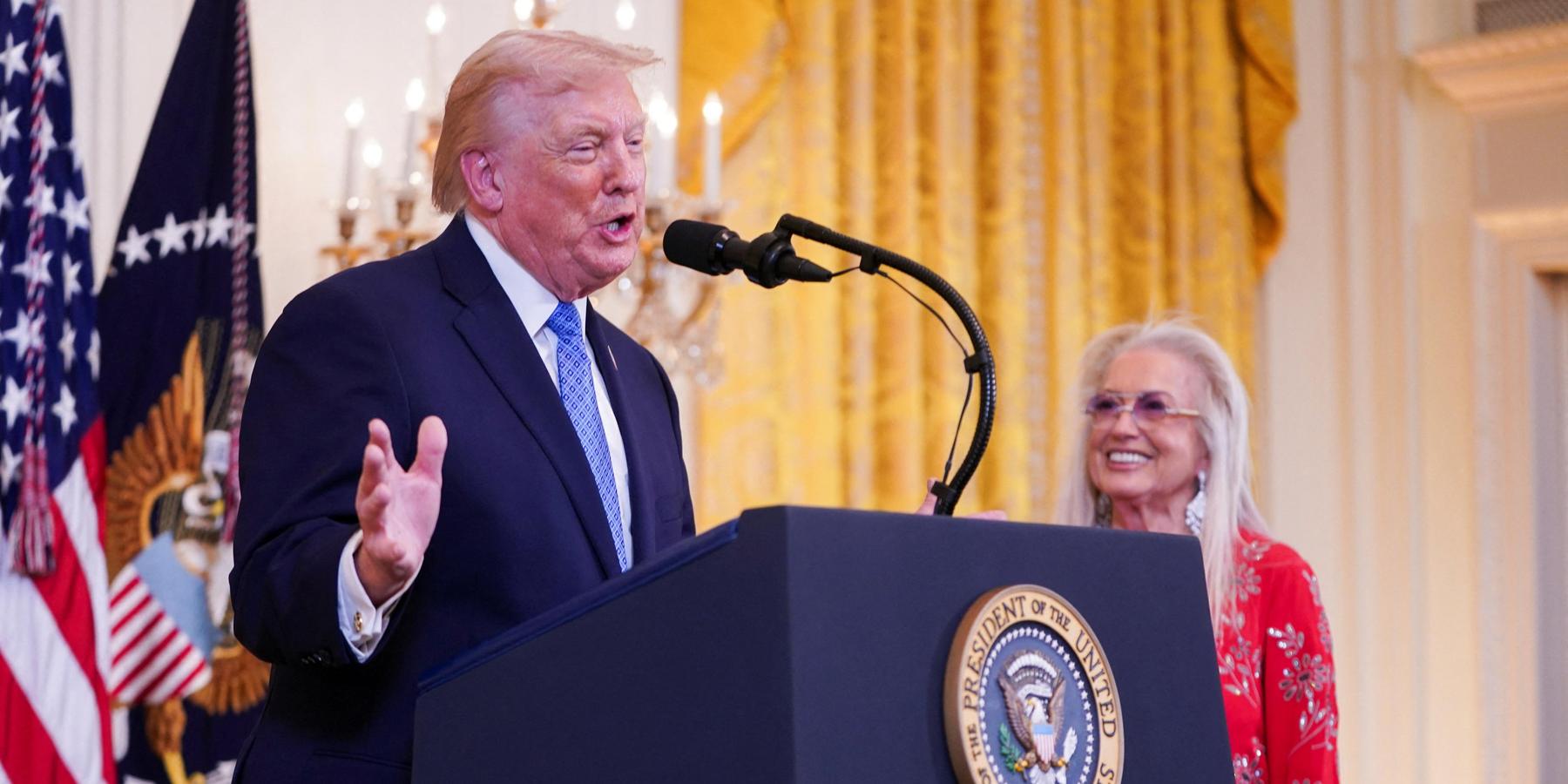
 Melania admits Trump sometimes ‘doesn’t want to hear the truth’ as she grades his UN speech. (Photo: MSN(cc))


 Havana, the author working in darkness. (Foto: Bill Hackwell)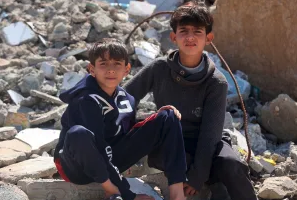


You must be logged in to post a comment.