The office of Rep. Ilhan Omar slammed the Trump administration on Thursday over its reported plot to have the Minnesota Democrat stripped of her US citizenship.
On Wednesday, The Wall Street Journal reported that the raid on Omar’s home carried out earlier this week by Department of Homeland Security agents was part of and effort to build “a case to strip her of her US citizenship and ultimately deport her.”
“The multipronged effort is focused at least in part on how Omar obtained her citizenship after she arrived in the US from Somalia decades ago,” the Journal explained. “Investigators are focused both on the congresswoman and actions of her deceased father.”
Omar spokesperson Jackie Rogers responded to the report by accusing President Donald Trump of engaging in “desperate attempt to justify his extraordinary abuse of power.”
“This is politically motivated and an escalation of Trump’s personal vendetta against her lasting over a decade,” Rogers told HuffPost. “He has lied about her family, about her immigration history, and about her love of this country.”
Rogers also accused Trump of acting like a dictator by singling out a member of the opposition party for punishment.
“This isn’t a legitimate law enforcement action,” said Rogers, “it is an authoritarian move to silence an opponent right before an election where he and his party will be rejected by Americans in historic proportions… To Trump, no American value or principle is too important to be shredded for his own personal gain.”
Author John Ganz on Thursday published an analysis of the reported Omar deportation plot, which he said is “undoubtedly driven by racial and religious animus” and also “a serious assault on the constitutional order being carried out through the executive branch’s legal and bureaucratic machinery.”
Ganz argued that a serious attempt to strip Omar of her citizenship and remove her from the country would be a major escalation from the Trump administration toward establishing an outright totalitarian state.
“Authoritarian governments suppress political opposition and deprive their subjects of particular rights,” Ganz explained. “Totalitarian movements aspire to something much more radical: the destruction of the independent political and juridical personhood. They attack not merely the liberties of particular citizens they seek to repress, but the concept of citizenship itself—and then, ultimately, the concept of shared humanity.”
Published date: 22 September 2026 15:59 BST | Last update:3 weeks 2 days ago
The International Criminal Court (ICC) has taken no steps to withdraw arrest warrants or related applications concerning Israeli officials, despite mounting pressure and sanctions from the United States, Deputy Prosecutor Nazhat Shameem Khan has said.
“The case is still proceeding,” Khan told CNN in a weekend interview.
“We have taken no steps to try and withdraw any of those arrest warrant applications or the arrest warrants themselves, and the team continues to investigate in that situation.”
The ICC issued arrest warrants in November 2024 for Israeli Prime Minister Benjamin Netanyahu and his then defence minister, Yoav Gallant, over alleged war crimes and crimes against humanity committed in Gaza since October 2023.
Since then, the US has imposed sanctions on most of the court’s leadership, including the former chief prosecutor Karim Khan, the two deputy prosecutors, and nine judges including the court’s president.
New MEE newsletter: Jerusalem Dispatch
Sign up to get the latest insights and analysis on Israel-Palestine, alongside Turkey Unpacked and other MEE newsletters
Israel has also taken steps to challenge the warrants at the ICC. Two appeals remain in progress, including one challenging the court’s jurisdiction over Israeli nationals because Israel is not a member of the court.
Meanwhile, Middle East Eye has reported that the prosecutor’s office had pursued further cases against senior Israeli officials over the past two years.
In May, MEE reported that the prosecutor’s office had filed a confidential application seeking arrest for Israel’s Finance Minister Bezalal Smotrich over alleged crimes committed against Palestinians in the occupied West Bank.
The charges included forced displacement as both a war crime and crime against humanity, transferring Israel’s civilian population into occupied territory as a war crime, and persecution and apartheid as crimes against humanity.
An evidence review had also been held to consider two further applications, including one targeting National Security Minister Itamar Ben Gvir.
‘We have trials in court’
Khan’s comments came amid an escalating campaign by the administration of US President Donald Trump against the Hague-based court.
US Secretary of State Marco Rubio announced in July that Washington would use every tool at its disposal to “dismantle the ICC – brick by brick, if necessary”, while urging member states to withdraw their support for the institution.
In other press statements, Rubio also described the court as a “stupid organisation” run by “lunatics and crazies”, and warned that it would face consequences for attempting to exercise jurisdiction over American nationals.
Trump’s ‘sweeping’ ICC sanctions over Netanyahu arrest warrant are imminent: Reports
Khan said the court remained grounded in the Rome Statute, its founding treaty, which was adopted through the sovereign decisions of its member states after decades of negotiations.
“The work of the court continues unabated,” she said.
“We have trials in court. We have a trial scheduled for November of this year and one for next year. We have, in the course of the last year, seen convictions in two major trials, and we continue to conduct our investigations and our prosecutions, and appear in court on a regular basis, regardless of these events.”
Established in 2002, the ICC is the only permanent international court with the jurisdiction to prosecute senior officials for war crimes, crimes against humanity, genocide and the crime of aggression.
In addition to the Palestine investigation, the court has more than a dozen active situations, including Ukraine, Darfur, Libya and Afghanistan.
Khan acknowledged that the court and its staff were operating under considerable pressure.
“The nature of the work that we do means that we inevitably will face pressure of all sorts to try and toe a political line, for instance, or to take a different position on the charging of accused persons, or to follow a path in investigation and prosecution,” she said.
“So, indeed, we do feel pressure, but, as I’ve said, the dedication of our staff is extraordinary, and they continue to do their work.”
Washington sanctioned Khan and fellow Deputy Prosecutor Mame Mandiaye Niang in August 2025, alongside two ICC judges. The sanctions froze any US-based assets they held and prohibited American individuals and companies from providing them with funds, goods or services.
Describing the personal consequences, Khan said sanctioned officials could lose access to banks and have their credit cards revoked, while financial transactions in Europe could be restricted to the Single Euro Payments Area.
‘We do feel pressure, but, as I’ve said, the dedication of our staff is extraordinary, and they continue to do their work’
– Nazhat Khan, ICC deputy prosecutor
Other service providers, including health insurance companies, might also sever ties, she said, while family members could be prevented from entering the US.
“I was never given any reasons for the sanctioning,” Khan said. “However, I believe it was because I am a deputy prosecutor at the Office of the Prosecutor.”
The Trump administration is now reportedly preparing broader sanctions against the ICC as an institution, potentially cutting it off from dollar transactions and hitting its access to banking, insurance and technology services.
Despite the pressure, Khan said she remained hopeful about the future of international law.
“The work that we do for victims, the fact that we continue to hear their voices stridently, with so much sincerity – they believe in this court,” she said.
“For them, this provides an avenue of justice that may not necessarily be provided in many courts around the world.
“Every single member of this court works for humanity,” she added, “and there can be nothing better than that.”
President Donald Trump attempted to spin high oil prices as a boon for the United States at a rally in Arizona on Wednesday, just hours after new federal data showed that inflation reached its highest level in months in September.
“Because of the price of oil, Texas and Oklahoma and North Dakota and all these places, we’re making a fortune,” Trump declared, referring to states that produce large amounts of crude oil. Those states are home to major fossil fuel companies that have reported windfall profits amid Trump’s illegal war on Iran.
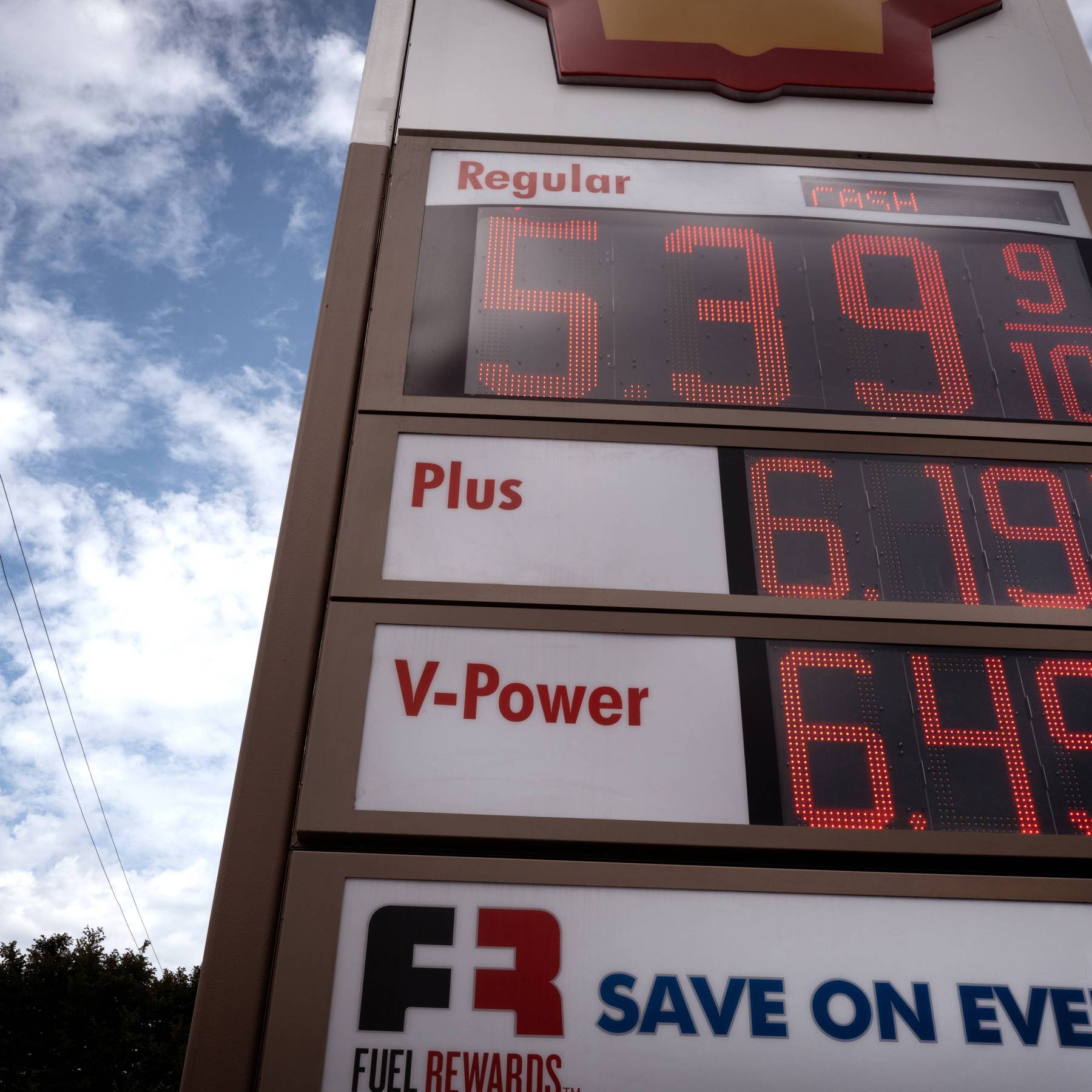
Trump insisted that gas prices—currently at an average of $4.33 per gallon for regular gas and $6.32 for diesel—would tumble once the Iran war ends, but his administration has repeatedly given false timelines for the deadly conflict and has shown no indication that it is willing to reach a lasting diplomatic agreement.
Trump, who has profited massively from his second term in the White House, is a major investor in oil and gas companies. According to one recent analysis, the president’s investments in fossil fuel stocks have boosted his net worth by up to $15.5 million since January.
Working-class Americans, meanwhile, are struggling to make ends meet as high gas prices compound a broader affordability crisis that extends to food, housing, and other necessities. A tracker maintained by the Watson School of International and Public Affairs estimates that American consumers have paid an extra $135 billion combined in fuel costs since the start of the Iran war—roughly $1,030 per household.
Wage growth has not kept up with inflation, which rose to an annualized rate of 3.7% last month.
“ Workers are losing the race between wages and prices,” Elise Gould, senior economist at the Economic Policy Institute, wrote on Wednesday. “Nominal wage growth continues to decelerate as workers lose bargaining power at work. Workers simply don’t have the leverage to bid up their wages. Reduced leverage and higher prices translated into falling [year-over-year] real wages for six months in a row.”
“Workers have seen zero progress on affordability compared to January 2025,” Gould added. “Real wages are essentially stagnant as workers’ leverage has declined and prices have risen. It’s no wonder workers feel left behind in the current economy.”
A Harris poll published by The Guardian on Thursday shows that three-quarters of US voters are concerned about a recession, and a “vast majority of Americans agreed that there is an affordability crisis, including 96% of Republicans.”
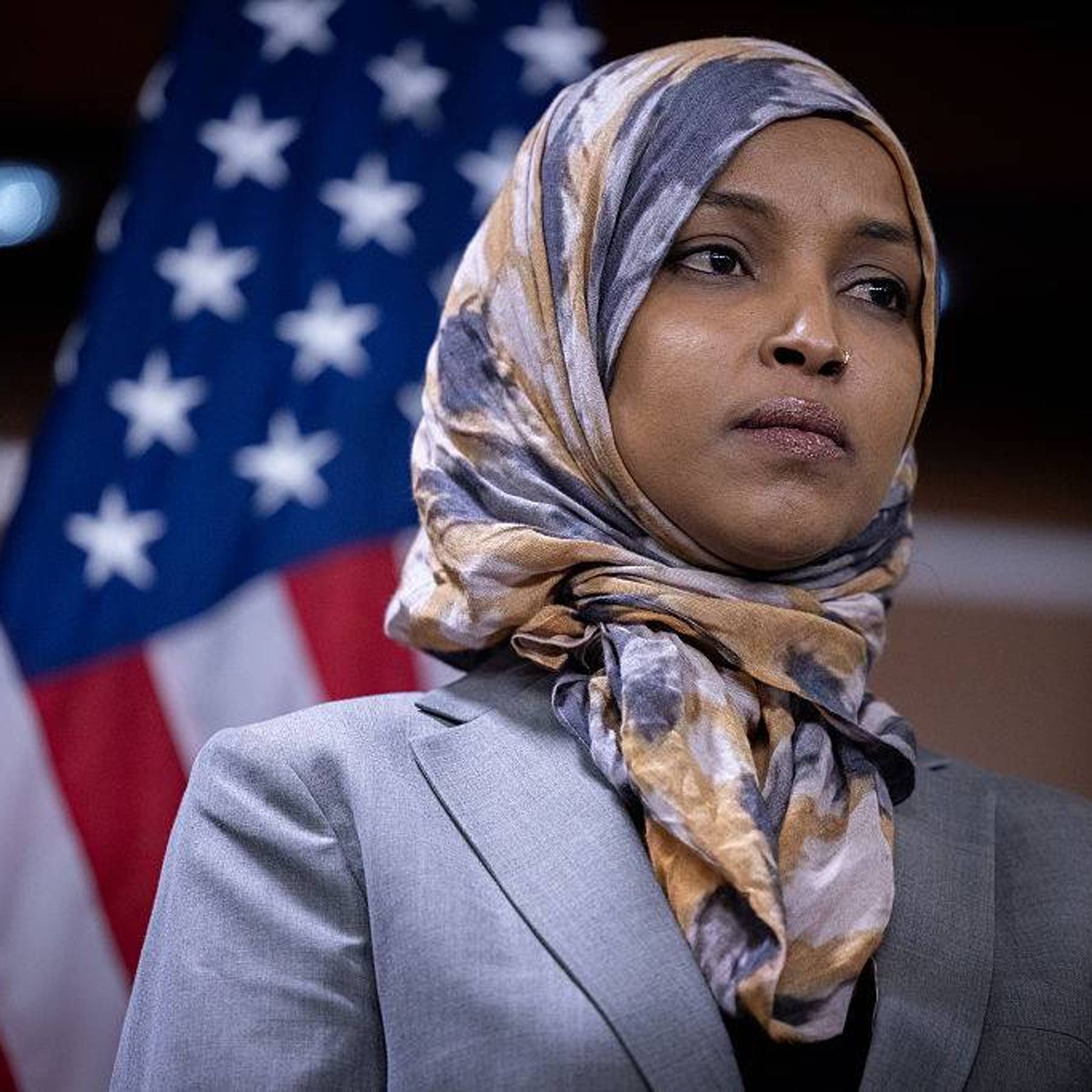
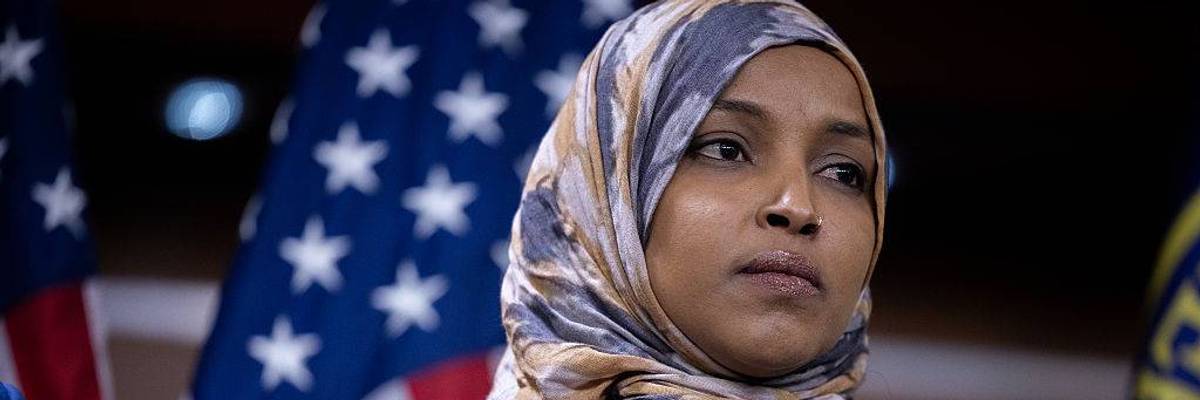
Rep. Ilhan Omar (D-Minn.) is seen at a press conference with other members of the Congressional Progressive Caucus on funding for and efforts to reform the Department of Homeland Security, in Washington, DC on, January 13, 2026.
(Photo by Nathan Posner/Anadolu via Getty Images)
Trump and other Republicans have called for Omar to be stripped of her citizenship and deported for years.
Following years of threats from President Donald Trump and other Republicans to deport Rep. Ilhan Omar, the Minnesota congresswoman’s Washington, DC home was raided on Monday morning by agents with the Department of Homeland Security.
The US Department of Justice (DOJ) has confirmed that the raid was carried out as part of a judicially authorized warrant, which it said was part of an ongoing criminal investigation.
Fox News, which first reported news of the raid, said it was part of a probe into the naturalization paperwork filed by Omar’s late father when she became a US citizen in 2000 after immigrating to the US as a refugee from Somalia in 1995.
In September, The New York Post reported that federal investigators were examining whether Omar may have been older than 17 when she obtained citizenship through her father as a minor in 2000. The allegation, which stems partly from a discrepancy in historical records of her birth year, has not been substantiated.
Aaron Reichlin-Melnick, a fellow at the American Immigration Council, argued that the case was “even weaker than it already seems,” since federal immigration law includes a waiver for people who obtain legal status through fraud they were unaware of.
Joyce Vance, who served as the US attorney for the Northern District of Alabama under President Barack Obama, noted that the raid took place just weeks before the November 3 midterms, inside the 60-day window where DOJ typically avoids such dramatic actions.
“To state what’s obvious to prosecutors here, we are within the period before an election where DOJ doesn’t take overt steps in an investigation that might influence its outcome,” she said, adding that it was “another hard norm out the window.”
Omar has not yet commented on the raid as of Monday morning, and the DOJ has not indicated what, if any, specific charges have been filed against her.
The search comes after years of demands from Trump and other Republicans for Omar—who has served in the US House of Representatives since 2019—to be deported, imprisoned, or otherwise removed from office.
In a statement Monday morning, Joel Payne, a spokesperson for the progressive advocacy group MoveOn condemned the raid on Omar as a political attack.
“Rep. Omar is a dedicated public servant and a true ally for working families, and Donald Trump has done nothing but use racist tropes and stereotypes to attack her,” he said. “Now, he’s abusing his power to physically intimidate and harass her.”
Last November, Trump remarked that Omar should be thrown out of the country because she is “always complaining” and referenced her religious attire, referring to it as a “swaddling hijab.” In another post that day, he called for the US to “denaturalize migrants who undermine domestic tranquility.”
He also said Rep. Rashida Tlaib (D-Mich.), the only Palestinian American member of Congress, should be “sent back” along with Omar after the two protested his state of the Union address in February.
Trump has often referenced Omar while calling for all Somali immigrants to be deported from the country—even though most are US citizens. Trump has referred to Somalis collectively as “garbage” and said they have “low IQs.”
Last week, Trump called for the people of Minnesota to “fight back” against Somalis living there in a post on Truth Social, which was widely interpreted as an incitement to violence.
In March, Vice President JD Vancesaid on a podcast that the administration believed Omar had “definitely committed immigration fraud against the United States of America” and that he’d discussed with senior Trump adviser Stephen Miller—who is not a federal prosecutor—how to “go after” her.
Beau Tremitiere, counsel and deputy director of impact programs for Protect Democracy, told Common Dreams that “raiding the home of a prominent critic and longtime target of President Trump’s racist attacks on the eve of an election is an obvious attempt to intimidate the opposition.”
“This administration already has a long track record of failed political prosecutions,” he said. “Each new one should both anger and stiffen the spine of those standing up for our democracy.”
Several Republican members of Congress have referenced Omar’s religion and political viewpoints as reasons for her to be stripped of citizenship and deported.
Rep. Randy Fine (R-Fla.), who introduced a resolution to expel Omar from Congress last year, referred to her as a “Muslim terrorist” because of her outspoken criticism of Israel’s genocide in Gaza and said she should not “be a citizen.”
Rep. Brandon Gill (R-Texas) has also called for her deportation, claiming she helped to facilitate the “invasion” of the US after she discussed informing Somali American residents of her district of their constitutional rights should they encounter immigration officers.
In a statement Monday, House Democratic leadership called the raid on Omar’s residence “deeply disturbing” and said it “raises serious questions about the continued corrupt weaponization of the federal government against Donald Trump’s adversaries.”
“For years, Donald Trump and far-right extremists have relentlessly targeted Congresswoman Omar with vile personal attacks and baseless accusations,” they said. “Now, less than 30 days until the midterm election, his violent mass deportation machine has descended upon the home of a duly elected Member of Congress and her family.”
They added that “the American people deserve transparency, and we will deliver full accountability for the rogue abuse of power from the Department of Homeland Security and Department of Justice.”
Trump has wrongly tried to blame the student-led movement on migrants and Islam. In reality, it is propelled by the gradual disappearance of any prospect of a stable future
A placard reads “The youth shouts, the state brings out its weapons” during a student protest in eastern France, on 8 October 2026 (Jean-Christophe Verhaegen/AFP)
Originating in a low-income suburb of Paris, the movement spread like wildfire across France, quickly expanding to encompass university students and union activists.
While the movement is mostly made up of teenagers who have overwhelmingly remained peaceful, state authorities have responded with disproportionate force.
Rather than insisting on moderation, Interior Minister Laurent Nunez called for police to use the full range of intermediate weapons, such as tear gas and rubber bullets, as necessary on protesters. More than 6,000 people, mostly minors, have been arrested in the crackdown.
Predictably, since day one, the mainstream media has worked hand-in-hand with the Macron government to discredit the movement, showing almost exclusively the more sensationalist, scary and spectacular images from the protests.
New MEE newsletter: Jerusalem Dispatch
Sign up to get the latest insights and analysis on Israel-Palestine, alongside Turkey Unpacked and other MEE newsletters
The coverage aims to create the false impression that “France is burning”, presenting the protests as “violent riots”, rather than as a largely peaceful student movement with legitimate and reasonable demands.
Deliberately ignored in such coverage is the fact that the vast majority of the countless protests, blockades, marches and actions in recent days, including the massive nationwide demonstration this week, remained non-violent.
Media coverage has also portrayed the students as being manipulated or instrumentalised by the France Unbowed party and its leader, Jean-Luc Melenchon, who is running in next year’s presidential election. They have presented no evidence for this claim, beyond the party’s support for the youth movement.
Enter Trump
Beating the French media and politicians – from the centre left to the far right – at their own Islamophobic and racist games, US President Donald Trump recently weighed in by publicly blaming the protests on uncontrolled mass migration and Islam.
Such outlandish accusations hardly deserve a response, and in France, they have essentially been ignored as the ravings of a despicable lunatic.
Students complain about severe underfunding of the public education system, even as the state spends billions of dollars in subsidies on private, usually Catholic schools
There are, however, two other explanations. Trump and others in his entourage might genuinely believe in the Great Replacement fantasy that “European civilisation” is being eclipsed by Muslims and Arabs, who want to build some sort of “Islamist caliphate”. Alternatively, he might simply be playing to his largely xenophobic Maga base, ahead of November midterms that his party is poised to lose.
But Trump’s grotesque posturing as a defender of “western civilisation” against invading hordes from the Global South does not seem to have swayed many people, even in the US, likely because few American voters have much interest in the politics of France.
Despite vast disparities across the nation, the primary grievances of students include the often appalling physical conditions of their crumbling schools; severe and systematic shortages of teachers and support staff; and overcrowded classrooms, where the numbers of students sometimes exceed available chairs.
In general, students complain about severe underfunding and governmental neglect of the public education system, even as the state spends billions of dollars in subsidies on private, usually Catholic schools – a cruel irony for a supposedly secular state whose elected officials constantly brag about the strictness of French laicite.
Restless generation
Another reason cited by student protesters is the strong and mounting anxiety they feel about their prospects for the future. This deep-seated fear crystallises around a state-run web portal called “Parcoursup”, which launched in 2018 with a goal of sorting out university applications.
Widely viewed as a failure, the automated selection system pits students against other students for their choice of universities and specialisations, in a process that has been criticised as opaque and discriminatory.
While France legally guarantees postsecondary access for students who have completed high school, 320,000 students were left without a place last year by the Parcoursup platform. In a nation of just 2.26 million high school students, many of whom will not even apply for higher education, the ratio is worrying.
And this is just the tip of the iceberg. History shows that behind concrete, practical and material demands, and beyond massive and spectacular popular demonstrations, larger problems often loom.
What we are hearing in France is an expression of generalised anxiety over the future, both individually and globally, and a rejection of the state of affairs at home after a decade of disastrous Macronism, which has broken the country and greatly aggravated inequalities, deepening the divide between rich and poor, and thrusting most of the population into ever-worsening precarity.
Researchers have suggested that young people in Generation Z will be worse off than their parents, facing a more difficult path to adulthood than any generation in half a century. Such is the future many of these student protesters see in front of them.
Add to this their emerging awareness that AI is killing and replacing many of the jobs that were supposed to be theirs, and there is no need to see the hands of shadowy “Islamists” behind this historic movement.
The views expressed in this article belong to the author and do not necessarily reflect the editorial policy of Middle East Eye.
Dr Alain Gabon is Associate Professor of French Studies and chair of the Department of Foreign Languages & Literatures at Virginia Wesleyan University in Virginia Beach, USA. He has written and lectured widely in the US, Europe and beyond on contemporary French culture, politics, literature and the arts and more recently on Islam and Muslims. His works have been published in several countries in academic journals, think tanks, and mainstream and specialized media such as Saphirnews, Milestones. Commentaries on the Islamic World, and Les Cahiers de l’Islam. His recent essay entitled “The Twin Myths of the Western ‘Jihadist Threat’ and ‘Islamic Radicalisation ‘” is available in French and English on the site of the UK Cordoba Foundation.
The Pentagon on Thursday confirmed plans to livestream an execution by firing squad in December—a revelation that came amid fresh calls for the United States to end the death penalty after Tennesseebotched two attempts to kill Christa Pike with injections of pentobarbital.
The US Army announced Wednesday that Nidal Hasan—a former military psychiatrist convicted of killing 13 people and injuring 32 more in a 2009 mass shooting at Fort Hood—will be executed at the Texas base at 1:00 pm Central Standard Time on December 3.
Secretary of Defense Pete Hegseth told the right-wing outlet Real America’s Voice News that “we’ll make sure that people are able to watch it, that it’s public, because people need to understand that… there’s serious consequences for these types of things.”
Then, other outlets, including The Associated Press, reported that “officials in the Pentagon clarified Thursday that the execution would be livestreamed and that more details would follow.”
The Washington Postreported that “if Hasan’s execution is carried out, it would mark the first US military execution since April 13, 1961, when Army Pvt. John A. Bennett was hanged after being convicted of rape and attempted murder, according to the nonprofit Death Penalty Information Center, which monitors capital punishment. The military’s last known firing squad execution was carried out by ‘musketry’ on November 9, 1945.”
Hegseth’s comments and the subsequent confirmation from the US Department of Defense were met with disgust and outrage.
“What a sick man,” former National Nurses United communications director Charles Idelson said of the Pentagon chief on social media. “A. Executions have never been proven to be a deterrent to capital crimes. B. The spectacle of a public execution is morbid, it recalls the public lynchings so common during the Jim Crow era. C. If the shooter was white, I don’t believe this would be public.”
Hasan is a US citizen born to Palestinian immigrant parents. Just before he opened fire on soldiers who were set to deploy to Afghanistan, he shouted “Allahu akbar,” an Arabic phrase commonly used by Muslims that translates to “God is great!”
While some critics called out Hesgeth, Obama administration speechwriter-turned-podcaster Jon Favreau took aim at Vice President JD Vance, who recently published a book about his faith journey, including his conversion to Catholicism. Favreau said that “I would like to hear our Catholic vice president explain why they’re intentionally choosing to broadcast the death of a human being for the entire world to see, including children.”
Producer and journalist Simon Thompson wrote: on social media: “Just when I think this administration couldn’t get any worse. Livestreaming executions by firing squad? This administration, a Christian administration apparently, is making a snuff movie and treating it like a [pay-per-view] event.”
Journalist Séamus Malekafzali similarly said, “Content with having desensitized the American public by broadcasting faceless images of Iranian sailors dying and buildings full of people leveled to the soundtrack to Halo, the government is now moving to live-streaming snuff films, faces and all.”
“I know people hate when people make comparisons to American adversaries, but this is literally what ISIS did, save for the live aspect,” he added. “Those executions were also done on camera under the auspices of nominally government institutions, just a different kind of government.”
Although Trump left office the first time after overseeing a federal execution spree, American Immigration Council senior fellow Aaron Reichlin-Melnick said Thursday, “Jesus Christ, I didn’t think we’d actually get to the ‘public executions’ stage of Trump’s project to roll back the last 100 years of societal development.”
Corbin Trent, co-founder of Justice Democrats, suggested it could backfire for the Republican administration. He wrote: “I’m completely in favor of this. I think more of this would go a long way to ending the death penalty.”
In this photograph released by the U.S. Navy, military planes stand on the flight deck of the Nimitz-class aircraft carrier USS Theodore Roosevelt, July 4, 2024, in the South China Sea. [AP Photo/Seaman Ryan Holloway]
The events of the past week leave no doubt that the Trump administration, w complicity of the entire US political establishment, is preparing a major escalation of the Iran war. Having failed to achieve its objectives through a massive bombardment and then a blockade of the country, the White House is preparing a new and desperate gambit, potentially involving the deployment of ground troops or even the use of nuclear weapons.With the complicity of media and Democrats, Trump prepares major escalation of Iran war
The greatest danger is the chasm between the scale of what is being prepared and the public’s awareness of it. One month before the 2026 midterm elections, Trump’s conspiracy to escalate the war is being greeted with a wall of silence by the US media—which devoted just minutes to the war in this weekend’s Sunday talk shows—and by the Democratic Party, which has done nothing to alert the public to the renewed onslaught against Iran that the administration is preparing.
On September 22, US President Donald Trump threatened in his speech before the United Nations to “annihilate the Islamic Republic, and do it quickly.” His threat followed a secret White House meeting, reported by the journalist Seymour Hersh on June 10, at which Trump spoke “about a nuclear option that could perhaps bring a quicker end to the war.”
These threats cannot be dismissed as bluster. Trump is the president of the United States and has already killed thousands of people in the months-long bombardment of Iran. The forces now converging on the Persian Gulf give him the means to carry out his threats. Nothing would be more dangerous than complacency.
After seven months of war, US imperialism has failed to achieve its aims of dominating the Strait of Hormuz, militarily defeating Iran and overthrowing its government. The administration is improvising, desperately seeking a way out of the political disaster the war has produced. But its improvisation is driven by the logic of events. American imperialism cannot accept defeat in the Persian Gulf, and each failure becomes the basis for an ever-greater escalation.
Last week, the Wall Street Journal and the Associated Press reported that the White House had sent a third aircraft carrier to the Middle East. The USS Theodore Roosevelt left San Diego on September 27, followed the next day by the amphibious assault ship USS Makin Island with about 2,200 Marines. They will join the carrier USS George Washington and more than 50,000 US troops deployed across the region.
Trump “has told aides he expects to resume bombing Iran after the November midterms,” the Journal reported September 25. He was briefed in August on options including “sending in ground forces to seize Iranian islands near Hormuz,” the Journal reported last month.
The deployment of amphibious assault ships along with thousands of Marines is particularly ominous. They are the means of seizing territory, and the next phase of the war may include landings on the islands near Hormuz, at the Kharg Island oil terminal or at Iran’s nuclear sites.
The administration’s top national security officials met Friday at Camp David, the presidential retreat, “to discuss next steps in the Iran war and the Saudi-Houthi conflict in Yemen,” Axios reported that night. The last similar meeting, Axios noted, was in June 2025, just days before Israel and then the United States attacked Iran. The new US military deployments targeting Iran parallels a renewed offensive by Saudi Arabia, supported by the United States, in Yemen.
The Pentagon confirmed Sunday that all US bombers at Britain’s Fairford air base, used for strikes on Iran, had been flown back to the United States. The withdrawal followed British Prime Minister Andy Burnham’s claim on September 30 that Iran “played a part” in an alleged plot against the base. The unproven allegation provides a ready-made pretext for escalation.
The war against Iran is part of a broader global offensive by US imperialism, centrally targeting Russia and China. Significantly, the plans to expand the Iran war accompany a sharp intensification of NATO’s war on Russia in Ukraine, which threatens at any moment to erupt into direct warfare between nuclear-armed states.
Each president since the 1979 Iranian revolution, Democratic and Republican, has worked to bring Iran back under American domination. Trump’s war against Iran is the latest stage of a 35-year offensive to subjugate the Middle East and Central Asia: the Gulf War of 1991, the invasions of Afghanistan and Iraq, the destruction of Libya, the proxy war in Syria and Israel’s genocide in Gaza.
Amid overwhelming popular opposition to the war and the ensuing surge in the cost of living, particularly of energy, the Democratic Party is expected to make significant gains on November 3. It is determined, however, to ensure that any electoral repudiation of Trump does not lead to a let-up in the drive by US imperialism in the Middle East.
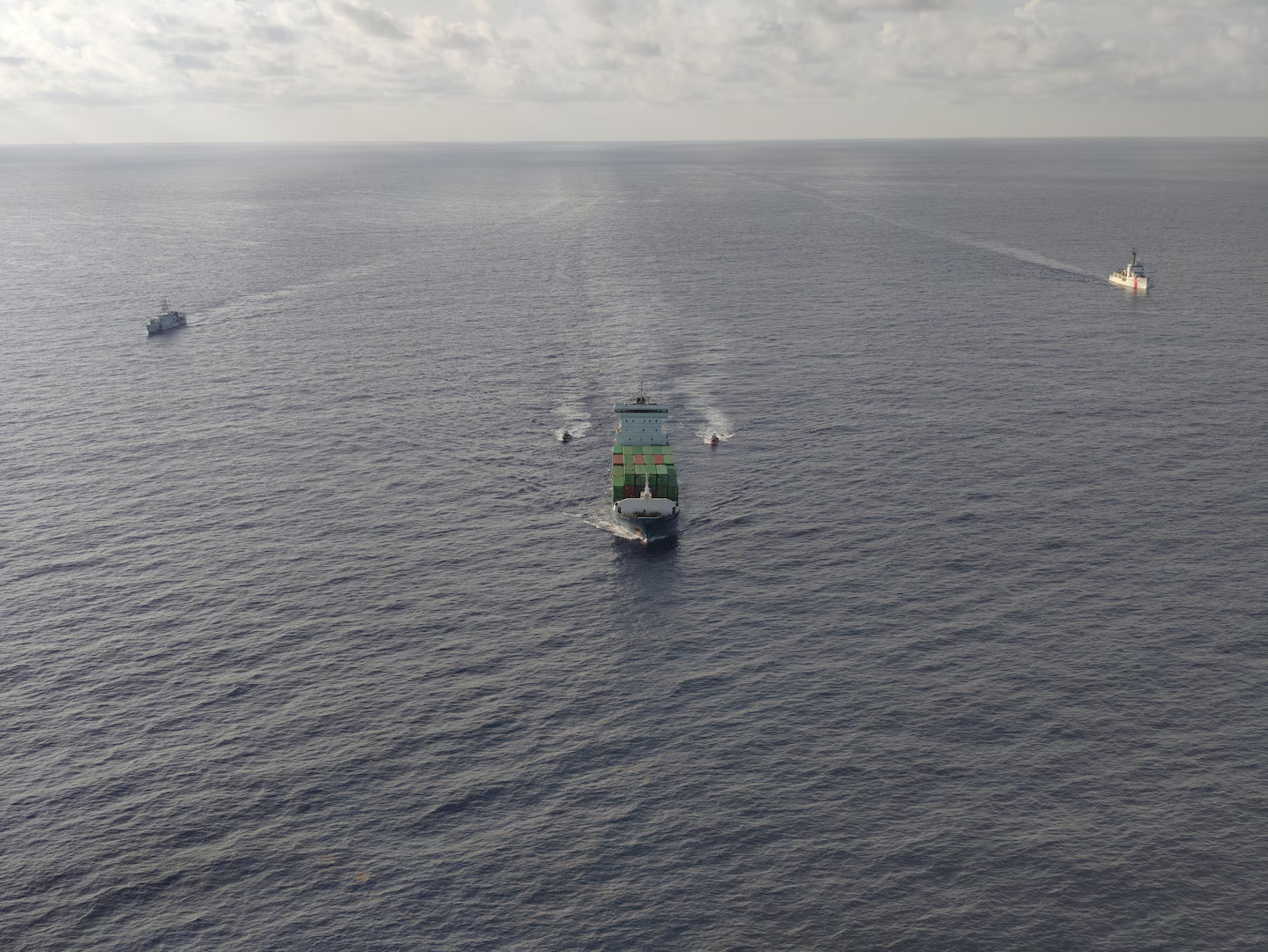
The US Coast Guard said Friday that its forces intercepted a ship that was attempting to bring fuel to Cuba, as the US continues to enforce a ramped-up oil embargo on the country, which has caused a devastating humanitarian crisis.
The Coast Guard said that the incident occurred in early September, when a “Coast Guard tactical team” boarded the M/V Grace, a 300-foot-long container ship, in the Caribbean Sea.
Photo of the interception released by the Coast Guard
The Coast Guard said it then escorted the ship to Mexico, where Mexican authorities found fuel stored in the ship’s ballast tanks. It said that earlier in the summer, US Coast Guard personnel stopped and boarded the M/V Jaira Provider, another vessel it accused of carrying fuel bound for Cuba.
The Trump administration ramped up the oil embargo on Cuba after it attacked Venezuela to abduct President Nicolas Maduro in January, which gave the US the power to cut off Venezuelan oil shipments to the island nation. The US also pressured Mexico to end its oil exports to Cuba.
The embargo has caused daily blackouts, which have been detrimental to the civilian population of Cuba. Cuban doctors told The New York Times back in March that patients were dying due to the US blockade, as the conditions at hospitals caused by the fuel shortages were leading to preventable deaths.
The escalated blockade has come with threats and preparations for military action against Cuba. CBS Newsrecently reported that the US Military has been working to establish “the groundwork for potential action around Cuba.”
As the Trump administration fights to keep deporting immigrants to countries where they have no connections, we studied the system that profits from these grave abuses.
The Intercept, September 29, 2026, 11:00 a.m. ET Share
An ICE flight operates out of King County International Airport, also known as Boeing Field, on Aug. 23, 2025, in Seattle. Photo: Lindsey Wasson/AP
Tyler McBrien is the managing editor of Lawfare.
More than 25,000 people have had their lives upended and been forced into unfamiliar cultures, governments, and legal systems when the Department of Homeland Security deported them to so-called “third countries,” places where immigrants previously living in the United States have no connections and few rights — and where a deportation business booming under the second Trump administration finds its murky endpoints.
“The point is to scare people,” said one Trump administration official, according to a Senate Foreign Relations Committee minority report. “With countries like Palau or Eswatini, the point is that the Administration can threaten people that they will literally be dropped in the middle of nowhere.”
As is the case for many tools of its cruelty, the Trump administration did not invent third-country removals — it refashioned them to serve its own excesses. In the past, the U.S. used the obscure administrative compromise for people who could prove they would face persecution or harm if returned to their home country yet did not meet other requirements for asylum. The U.S. had to meet humanitarian and legal obligations, such as ensuring third countries would not turn around and deport migrants right back to their home countries. It was a last-resort tool that still left people displaced from their homes and communities in service of the country’s arcane immigration laws. But the current Trump administration’s policy, premised on agreements with at least 35 countries, has been anything but humane.
Nor has it been particularly legal. After the 1st U.S. Circuit Court of Appeals struck down the third-country deportation scheme, DHS scheduled a flight to deport migrants involved in a class-action lawsuit challenging the policy to Burundi, Rwanda, and the Central African Republic. Despite a successful emergency motion their lawyers filed last week, an Immigration and Customs Enforcement jet flew to two African countries that hold third-country removal agreements, according to the American Prospect. It is not yet clear who was on the plane or whether ICE carried out third-country removals in violation of a federal court order, and the Trump administration is now aiming to take the legal fight to the Supreme Court.
The saga illustrates the Trump administration’s proclivity for obfuscation, secret contracts, nondisclosure, and dealmaking of the backroom variety. Whether digitally disappearing people from ICE’s online detainee locator tool last week, or inking multimillion-dollar sole-source contracts with inexperienced companies of questionable provenance, the Trump administration has pursued its immigration goals under the cover of darkness, often justifying the secrecy with invocations of national security, all while attempting to shield itself from public scrutiny and accountability in the process.
“Deportation, Inc.: The Rise of the Immigration Enforcement Economy,” an ongoing investigative video series from Lawfare and SITU Research, in partnership with The Intercept, examines how U.S. immigration enforcement has evolved into a multibillion-dollar industry shaped by private profit and political power — where contracts, capital flows, and institutional incentives increasingly govern detention, deportation, and surveillance. The project joins other efforts to shed light on the often invisible economy of immigration enforcement, including the Berkeley Human Rights Center, Human Rights First, Third Country Deportation Watch, and others.
The first installment, released last December, focuses on the business of migrant detention and profit motive underpinning the brutality of privately run ICE detention facilities. The second chapter, out today, looks at the network of flights shuffling migrants between those facilities, as well as the shady deals brokered with the governments of deportation destinations.
Many details of these bilateral third-country removal agreements are not public, but the logic is transactional: Countries accept asylum-seekers and other immigrants from the United States in exchange for aid or other forms of financial compensation. Many of the countries involved in what The Intercept’s Nick Turse has called Trump’s “global gulag” are so dangerous that the State Department includes them on its “Level 4 Do Not Travel” list, “the highest advisory level due to life-threatening risks. And the very fact that these people are sent to a third country, rather than repatriated, means they have at least a viable asylum case.
Some but not all of the underlying texts of these agreements have come to light, often popping up in far-flung corners of the internet. This is not only a bad practice in government transparency, but a potentially illegal one as well. Lawfare, where I serve as managing editor, has argued as much in a federal district court in Washington, D.C., where the publication has sued the State Department over its failure to disclose international agreements into which the Trump administration has entered — in violation of the Case-Zablocki Act.
Though accelerated by the Trump administration, the secrecy that has enabled the growth of the vast, invisible economy of immigration enforcement traces back to at least 2001 with the creation of the Department of Homeland Security. Following the September 11 attacks, the new Cabinet-level department, along with other federal reforms, for the first time linked immigration with national security, which resulted in massive budget increases, new abilities to shield immigration information from the public, and general judicial deference to the executive branch that accompanies matters of foreign policy and national security.
Even the current Trump administration’s third-country deportation apparatus is beginning to build up its own record of cruel precedent. In the same class-action case last year, the Department of Homeland Security attempted to deport class members to Libya and South Sudan, in apparent violation of a temporary restraining order granted by a federal judge only weeks prior. During a hastily arranged hearing, a federal judge asked a Justice Department lawyer about the plane’s whereabouts, to which the government attorney responded, “I’m told that that information is classified, and I am told that the final destination is also classified.” Asked under what authority the government had classified the location, the Justice Department lawyer did not have an answer.
In this picture obtained by AFP from the Iranian news agency Tasnim on September 2, 2026 a child lies on a hospital bed receiving treatment following injuries from an overnight strike in Kuhestak, Sirik County, in Iran’s southern Hormozgan province on September 2, 2026.
(Photo by Morteza Akhondi/Tasnim News/AFP via Getty Images)
If we truly believe that all human life has equal value, then we must demand that those who order and carry out attacks on civilians face the same scrutiny and consequences, whoever they are.
On Tuesday, September 1, 2026, the United States military struck a home in the town of Kuhestak, in Sirik County, southern Iran, where a wedding was underway, killing four people and wounding more than 50. The youngest victim was 4-year-old Amir Ali Karimi. Asked about the strike, US Vice President JD Vancetold reporters: “What I can say with 100% confidence is that, unlike the IRGC, the United States never targets civilians in combat. We never will do that. We never have done that.” However, he added, “Sometimes, things happen.”
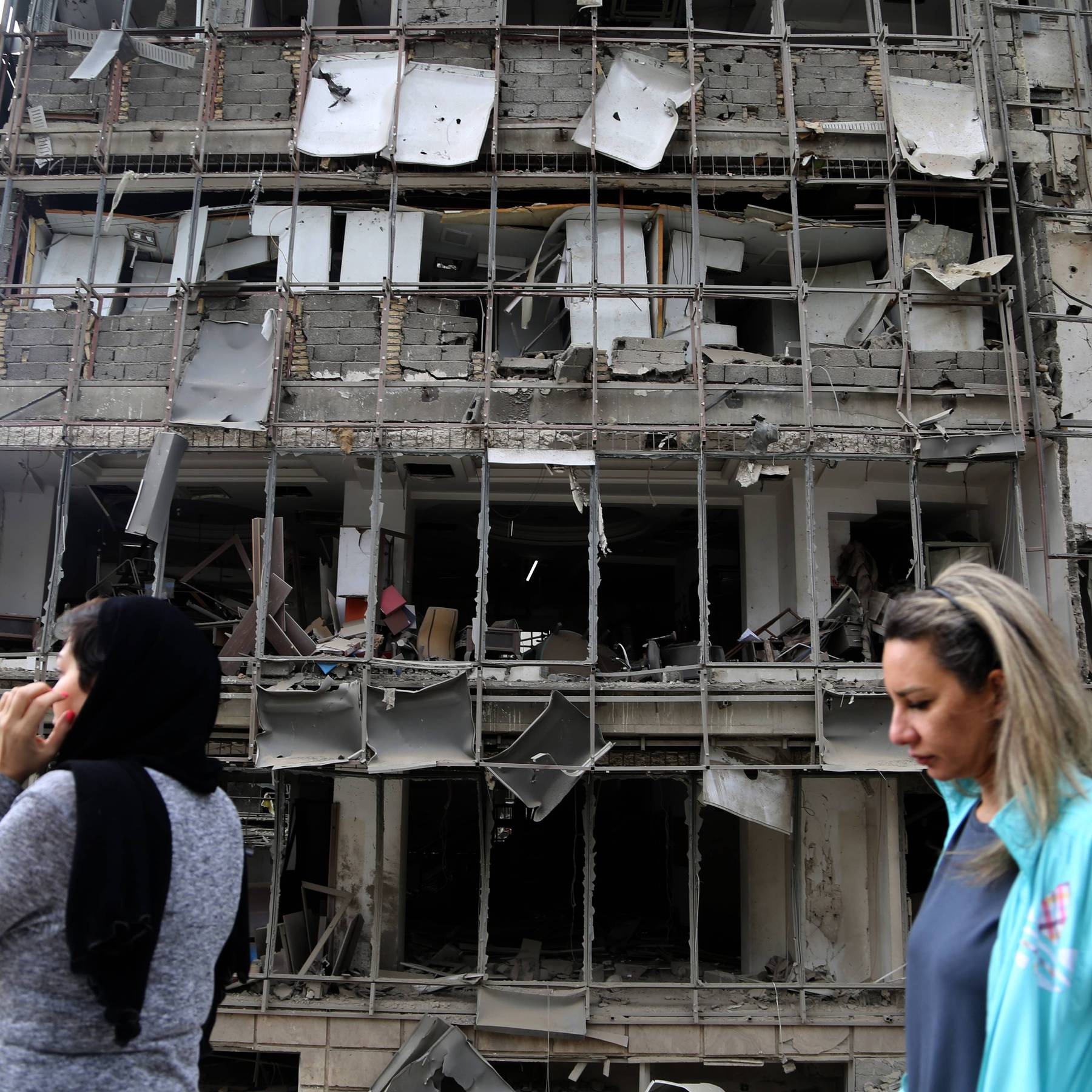
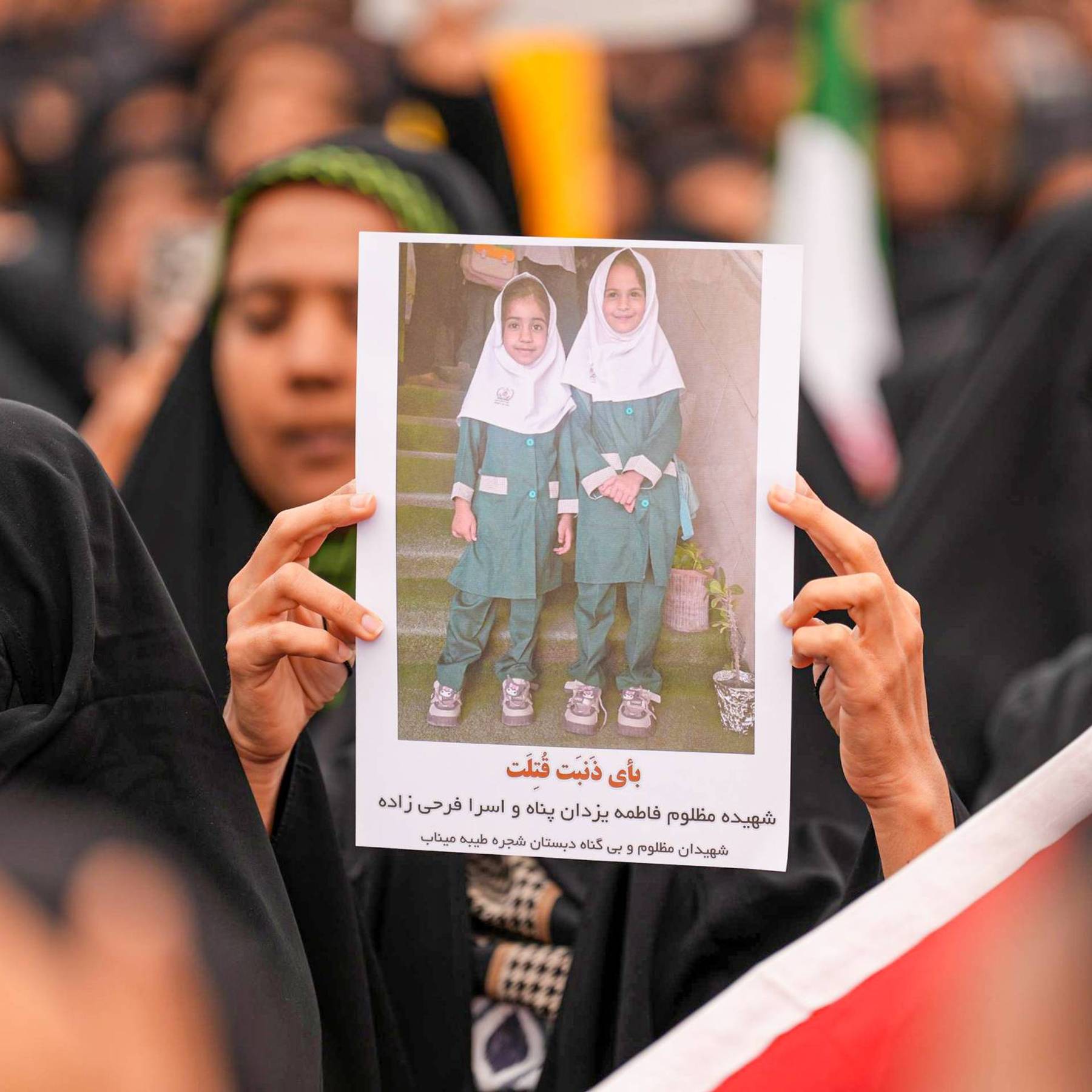
It’s worth remembering that the campaign the United States and Israel waged against Iran—launched without United Nations Security Council authorization—opened with a strike on the office of Iran’s Supreme Leader that killed him along with his daughter, son-in-law, daughter-in-law, and his 14-month-old granddaughter. Roughly an hour or two later, the US struck the Shajareh Tayyebeh elementary school in Minab with Tomahawk cruise missiles, killing 156 people, including 120 schoolchildren between the ages of six and 13. That same day, an attack on the small town of Lamerd used Precision Strike Missiles (PrSM)—munitions that burst in midair and scatter thousands of tungsten fragments—killing at least 21 people, including four children, among them 2-year-old Avina Barzegar, and wounding 100 more. In the months since, the US and Israel have struck not only military sites but universities, bridges, power plants, police stations, and even desalination plants serving remote islands in southern Iran. Whatever assurances Vance offers, the record is clear that the United States has a long history of striking civilians.
Of course none of this is new. More than two years have now passed since Israel launched its full-scale assault on Gaza, backed fully by the United States and most Western governments. Over those two years the world has watched strikes on hospitals, schools, and universities, the shooting of civilians, even an assault captured on camera—and despite an International Criminal Court arrest warrant for Israel’s prime minister, no action has been taken either to enforce that warrant or to halt the war. It was hardly surprising that a year-plus of unanswered war crimes in Gaza—what many now call a genocide—normalized the same conduct elsewhere. Israel applied much the same pattern in Lebanon, violating that country’s sovereignty to bomb schools, apartment buildings, universities, and villages. The absence of any serious response to crimes broadcast live to the world sent every power on Earth a clear message: If you are strong enough, you can commit any crime—including the crime of crimes.
Isn’t it time that those responsible for striking a bridge, a wedding, a power plant, a desalination plant, be held to account?
President Donald Trump himself has, through his own public statements, documented attacks that could easily amount to war crimes. In one Truth Social post, he wrote, “A whole civilization will die tonight, never to be brought back again.” In another, he shared footage of the strike that brought down Karaj’s unfinished B1 bridge—a civilian structure, not yet even complete, hit on Sizdah Bedar, the 13th day of Nowruz, when most Iranians are out picnicking in nature and many families were gathered under and around the bridge. The strike was a so-called double tap: A second missile hit after rescue workers arrived to help the wounded, killing two more and injuring several others. In all, 13 people were killed and 95 wounded.
This scale of targeting civilians, met with so little response from the media or the international community, is itself a troubling kind of normalization—one we cannot afford to treat with indifference. Imagine, for a moment, that Iran had bombed the White House on a holiday morning, killing the American president along with members of his family, and then struck an elementary school in Texas, killing more than 120 American students along with their teachers. How would American society, and the West more broadly, have responded? Would the dead children be called a “necessary action” or “mistake”? Or would the entire West have mobilized to respond to such an atrocity?
This same Western indifference to the deaths of people in the Global South—particularly at American hands—is visible in the words of Afghanistan’s former president, Hamid Karzai. Asked recently why he, perhaps alone among Afghan leaders, had wept in public, Karzai spoke of “our national helplessness before powers that had come in the name of helping Afghanistan,” and recalled asking American officials a simple question: If their bombs killed Afghan children, was that terrorism? They told him no—terrorism, he said they told him, is when American interests are put at risk.
This becomes painfully concrete when you consider that the Sirik wedding was only the latest entry in a long, grim record of American strikes on wedding celebrations across Afghanistan, Iraq, and Yemen going back more than two decades—a pattern trackers have documented since at least December 2001.
Isn’t it time that those responsible for striking a bridge, a wedding, a power plant, a desalination plant, be held to account? Don’t the citizens of a country whose president launched a war on another nation without UN authorization, and whose forces have committed numerous documented war crimes in the process, bear some responsibility for holding their own leaders accountable? Would the West have stayed this indifferent if a wedding, or a school, had been hit at home—or would it have moved heaven and Earth to bring the perpetrators to justice? These are the questions that demand an answer. The world cannot continue to condemn violence selectively while treating the deaths of civilians in the Global South as an unfortunate but acceptable consequence of geopolitics.
Every time a war crime is ignored, the threshold for the next one becomes lower. Every time accountability is abandoned, impunity becomes stronger. If we truly believe that all human life has equal value, then we must demand that those who order and carry out attacks on civilians face the same scrutiny and consequences, whoever they are. The first step toward ending war-crime normalization is refusing to look away.















You must be logged in to post a comment.