Spanish Prime Minister Pedro Sanchez awards the Order of Civil Merit to UN Special Rapporteur Francesca Albanese, on 7 May 2026 [sanchezcastejon/X]
Spanish Prime Minister Pedro Sanchez awarded on Thursday the Order of Civil Merit to UN Special Rapporteur Francesca Albanese, recognizing her work documenting violations of international law in the Gaza Strip, Anadolu reports.
Sanchez received Francesca Albanese in Madrid, where they discussed the situation in Palestine, the importance of international law and “the need for an immediate end to the violence and the building of a lasting peace based on dignity and humanity,” according to a government statement.
“Public responsibility also implies the moral obligation of not looking away,” Sanchez wrote on social media, praising Albanese as “a voice that upholds the conscience of the world.”
The Order of Civil Merit is one of Spain’s highest civilian honors and is awarded to Spanish and foreign citizens for extraordinary services benefiting the state or society.
Albanese, an Italian legal scholar, has served since 2022 as the UN special rapporteur on the situation of human rights in the occupied Palestinian territories. She has become one of the most prominent international voices criticizing Israel’s military operations in Gaza.
On Tuesday, Sanchez also sent a letter to the European Commission calling for the activation of the EU’s Blocking Statute to counter US sanctions imposed on Albanese as well as judges and prosecutors from the International Criminal Court.
“It’s like an international mafia — they want to silence everyone who demands an end to genocide, an end to the crimes,” Albanese told Spanish broadcaster RTVE, referring to the sanctions against her.
Also on Thursday, Spanish Foreign Minister Jose Manuel Albares criticized Israel’s continued detention of Spanish-Palestinian activist Saif Abukeshek, calling it “inadmissible and unacceptable.”
Jose Manuel Albares told the Spanish parliament that he summoned Israel’s top envoy in Spain on Wednesday to discuss the situation and had also spoken with Israeli Foreign Minister Gideon Saar.
Albares said Abukeshek was “illegally” detained in international waters where Israel had “no jurisdiction” while traveling with a Gaza-bound humanitarian aid flotilla.
“Spain reacted without hesitation, with complete clarity and firmness, in response to violations of international law,” Albares said.
It has now emerged that Trump’s decision to pause the operation was driven by complaints by Saudi Arabia, two US officials told NBC News.
Saudi Arabia’s leaders had been angered by the announcement and the government told the US it would not allow American military forces to fly aircraft through Prince Sultan Airbase, located southeast of its capital, Riyadh.
Officials said the Kingdom denied access for any US aircraft to fly through Saudi airspace as part of Project Freedom.
A call is reported to have taken place between Trump and Saudi Crown Prince Mohammed bin Salman, but the pair were unable to reach a resolution – forcing the US president to axe the operation.
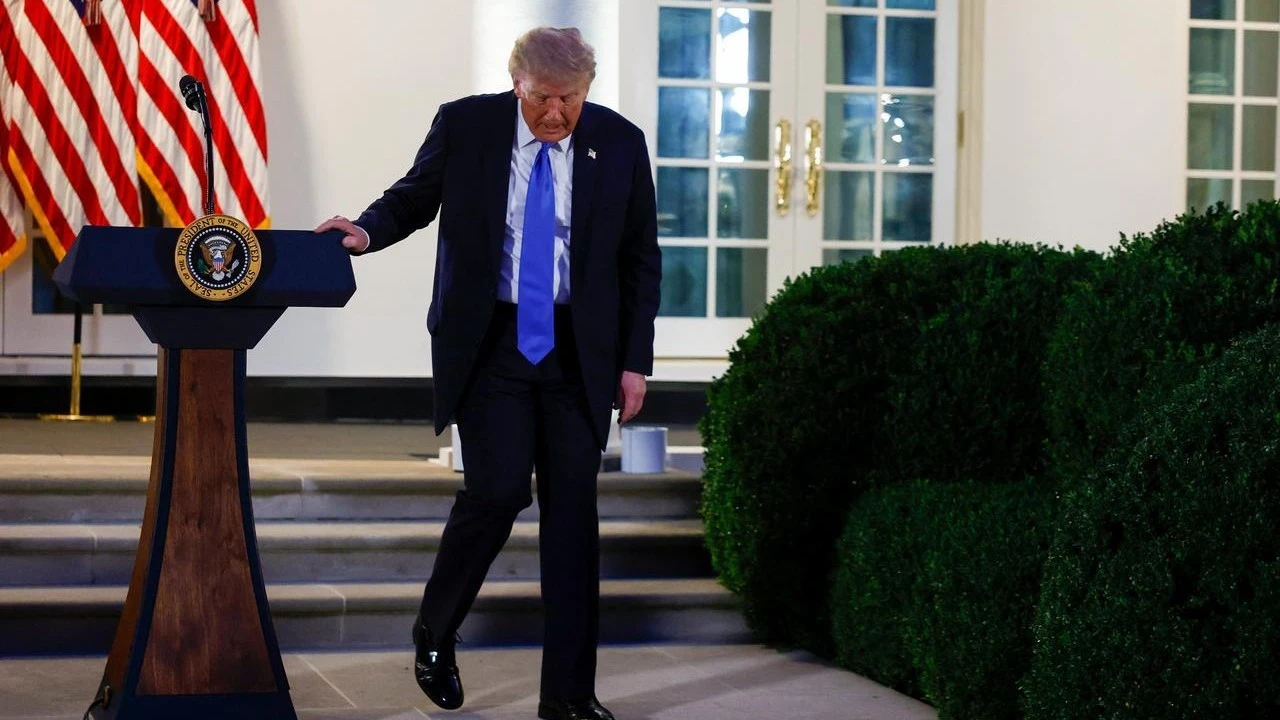
Trump has ruffled feathers across the Gulf with seemingly unilateral decisions (Reuters)
The leaders “have been in touch regularly” and officials are also in touch with vice president JD Vance, secretary of state Marco Rubio, a Saudi source told NBC News.
“The problem with that premise is that things are happening quickly in real time,” the source said about the announcement, adding that the country was “very supportive of the diplomatic efforts” by Pakistan to guide the countries towards an agreement.
A White House official told NBC News that “regional allies were notified in advance.”
The Independent has contacted the White House for comment.
A diplomat in the region said that the operation was not coordinated with Oman either. “The US made an announcement and then coordinated with us,” they said, adding, “We were not upset or angry.”
Trump’s project is said to have angered the Saudi leadership (Getty)
“Because of geography, you need cooperation from regional partners to utilise their airspace along their borders,” one US official explained about the success of the scheme.
The Strait of Hormuz is a vital shipping route for global supplies of oil, fertiliser and other commodities that has been virtually closed since the US and Israel attacked Iran on 28 February, causing global price rises.
West Bank commander boasts about high death toll and defends looser rules of engagement, including firing at unarmed Palestinians
An Israeli soldier stands on guard during an army raid at a cafe in the Rafidia neighbourhood of Nablus in the occupied West Bank on 23 April 2026 (Nasser Ishtayeh / SOPA Images via Reuters)
Published date: 4 May 2026 14:13 BST | Last update:2 days 20 hours ago
Israel’s top commander in the occupied West Bank has said the army is killing Palestinians at levels “not seen since 1967”, according to Haaretz.
Avi Bluth, head of the Israeli army’s Central Command, made the remarks in a closed forum, where he also defended looser rules of engagement allowing troops to fire at unarmed Palestinians.
He acknowledged a discriminatory approach whereby Jewish Israeli stone-throwers are not targeted while Palestinians carrying out similar acts are fired at.
“In three years, we have killed 1,500 terrorists,” he said, referring to Palestinians.
“So how is there no intifada? Why aren’t they taking to the streets? Why is the Palestinian public indifferent? Why are there no disturbances?” Bluth, a settler who has been the Israeli army commander in the West Bank since 2024, added.
New MEE newsletter: Jerusalem Dispatch
Sign up to get the latest insights and analysis on Israel-Palestine, alongside Turkey Unpacked and other MEE newsletters
“The Arabs understand that ‘if someone rises to kill you, kill him first’ is part of the rules of the Middle East, and therefore we are killing like we have not killed since 1967.”
According to the United Nations Office for the Coordination of Humanitarian Affairs (Ocha), since 7 October 2023, Israel has killed 1,081 Palestinians in the West Bank and the occupied East Jerusalem, including at least 235 children.
Bluth attributed the high number of Palestinian deaths to orders he gave, which made it easier for Israeli soldiers to open fire at civilians.
He said troops are permitted to shoot, from the knee down, at Palestinians attempting to cross the West Bank separation barrier.
“Today, there are many ‘limping memorials’ in Palestinian villages of those who tried to infiltrate and got hit, so there is a price that is paid,” Bluth said, according to Haaretz.
Preferential treatment for settlers
Bluth admitted that his subordinates do not shoot Israelis who throw stones at army forces because of “sociological implications,” while they kill Palestinians who do the same.
He added that in 2025, Israeli forces killed 42 Palestinians accused of stone-throwing, which he described as terrorism.
When shown footage of settlers throwing stones at troops, he cited an incident in which two masked Israelis were shot, noting it caused a public outcry.
Bluth’s remarks come amid growing discontent about his actions among hilltop youth, the settler militias who terrorise Palestinians communities in the West Bank, who view him as yielding to left-wing and international pressure.
Ex-Mossad chief says Israeli settler violence reminds him of the Holocaust
Last week, Haaretz reported that Bluth labelled the growing numbers of settler attacks as “terror,” and criticised hilltop youth who establish outposts without coordinating it first with the army’s command.
Bluth added that the army, with the coordination of the settlers, established some 150 outposts in Area C in the West Bank in recent years, which he alleged helped prevent Palestinian “terror” and building expansion.
Last week, Knesset Member Limor Son Har-Melech, a vocal supporter of the settler militias, called Israel Defence Minister Israel Katz to immediately fire Bluth from his post over his remarks.
Meanwhile, the Israeli NGO Peace Now reported on Sunday that the Israeli government assigned some 130 million shekels to those same settler groups under the guise of curbing settler violence.
The funds were allocated towards “reducing risk situations and expanding positive responses for youth in the Judea and Samaria area,” using the Israeli name for the West Bank.
Peace Now said the funds will, in practice, be used to strengthen the settlements and “channel millions” to their regional councils.
“The government uses every excuse to justify pouring more and more millions into settlements. This is a programme to expand settlements under the guise of combating violence,” Peace Now statement said.
“The government is directing a significant portion of the funds to the same actors and activities that currently serve as the main supporters of the outposts and farms from which the violence originates,” the NGO added, calling on the government to stop the funds and the army and police to stop the violent acts.
Lawyers says two activists are being subjected to ‘psychological torture’ as their detention is extended for another week
Activist Thiago Avila, a member of the Global Sumud Flotilla seized by Israel in international waters, sits at a magistrate’s court hearing in Ashkelon, Israel, 3 May 2026 (Amir Cohen/Reuters)
Published date: 5 May 2026 12:08 BST | Last update:21 hours 34 mins ago
Two activists seized by Israeli forces in international waters while en route to deliver humanitarian aid to Gaza have been threatened with death or lengthy imprisonment, their lawyers said on Monday.
The legal centre Adalah, which represents Thiago Avila and Saif Abu Keshek, said the pair have been subjected to psychological abuse and held in solitary confinement since their capture last week.
On Tuesday, a court in the southern Israeli city of Ashkelon extended their detention until Sunday.
Abu Keshek, a Spanish-Swedish national of Palestinian origin, and Avila, a Brazilian national, were detained late on Wednesday when Israeli naval forces raided a Gaza-bound aid flotilla in international waters off Greece.
They were taken to Israel and accused of assisting the enemy during wartime, contact with a foreign agent, membership of and providing services to a terrorist organisation, and transferring funds to such a group. Both deny the charges.
New MEE newsletter: Jerusalem Dispatch
Sign up to get the latest insights and analysis on Israel-Palestine, alongside Turkey Unpacked and other MEE newsletters
Since their detention, the men have been held in cells under constant bright light, a practice intended to cause sleep deprivation and disorientation, according to Adalah. They are also blindfolded whenever taken out of their cells, including during medical examinations, which it described as a serious breach of medical ethics.
Global Sumud Flotilla: When states fail, humanity sets sail
Avila reported being subjected to repeated interrogations lasting up to eight hours, during which he was allegedly threatened that they would be “killed” or “imprisoned for 100 years”.
He is also being held in very low temperatures, the group said.
The two men, now in solitary confinement, have entered their sixth day of a hunger strike in protest at what legal experts have described as an unlawful seizure outside Israel’s territorial waters.
Lawyers Hadeel Abu Salih and Lubna Tuma of Adalah told the court the case was “flawed and unlawful”, arguing there is no legal basis for applying Israeli law to foreign nationals in international waters.
During Friday’s raid, Israeli forces intercepted at least 21 Gaza-bound vessels and detained 175 activists, in what organisers from the Global Sumud Flotilla described as an act of “piracy”.
The boats were seized about 600 nautical miles from Gaza’s coast, near the Greek island of Crete.
Spain and Brazil issued a joint statement on Friday describing the detention of Avila and Abu Keshek as illegal.
(L/R) US Secretary of State Marco Rubio looks on as US President Donald Trump speaks to the press following US military actions in Venezuela, at his Mar-a-Lago residence in Palm Beach, Florida, on January 3, 2026.
(Photo by Jim Watson/ AFP via Getty Images)
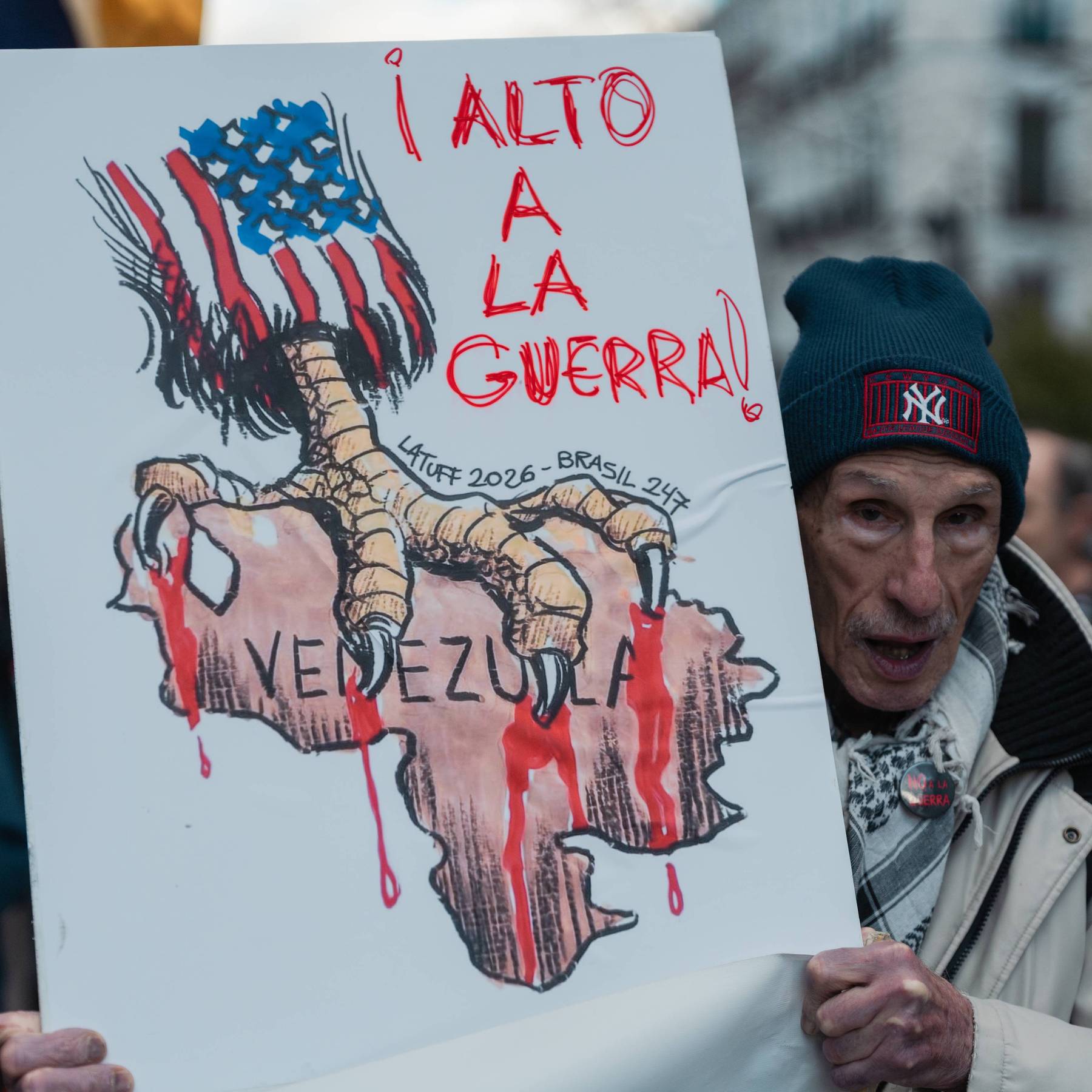
The president is using the power of the US military to steal the wealth of Latin American countries to enrich himself, his family, his closest business associates, and US corporations.
Some lawmakers have grown so alarmed by the Trump administration’s actions in Latin America that they are beginning to accuse the administration of gangsterism.
Representative Stephen Lynch (D-Mass.) saw the possibility of gangsterism at the start of the second Trump administration when he warned that the United States could “join the ranks of gangster nations,” but there is a growing sense in Congress that the day has arrived.
At a congressional hearing last month, Rep. Joaquin Castro (D-Texas) asserted that the Trump administration is exploiting the US military to take Latin American resources for US corporations. Castro seemingly channeled the anti-war critiques of Smedley Butler, the US military hero of the early 20th century, who condemned war as a racket and lamented his exploitation as a racketeer for capitalism.
“For decades, our men and women in uniform who volunteered to protect our country became mercenaries ordered to risk their lives to protect the profits of US corporations,” Castro said. “Today, President Trump is ordering them to do so again.”
The Case of Venezuela
The Trump administration’s critics in Congress have been warning about the administration’s gangsterism due to its actions in Venezuela.
Since the Trump administration directed a military operation earlier this year to seize Venezuelan President Nicolás Maduro and take control of the country’s oil and minerals, several lawmakers have suggested that the administration has begun to employ force and intimidation as its basic tools of statecraft.
Lawmakers have condemned the administration for conducting a military operation without congressional approval, meddling in Venezuela’s internal politics, displaying contempt for Venezuela’s political process, facilitating corruption in Venezuela and the United States, and using the US military to take control of Venezuela’s resources.
Now that the Trump administration has moved against Venezuela, establishing new leadership and doling out profits from its resources, lawmakers anticipate that it will move against Cuba next.
“You are taking their oil at gunpoint,” Senator Chris Murphy (D-Conn.) told Secretary of State Marco Rubio earlier this year.
Although Congress has not held the president accountable, as the Republican majority in each chamber supports the president, critics have kept pressure on the White House, prompting officials to defend the administration’s actions.
At the congressional hearing last month, State Department official Michael Kozak claimed that the intervention in Venezuela advanced US interests. He cited the Monroe Doctrine, which marks Latin America as a sphere of influence. Like the president, he boasted that the United States now controls the country’s resources.
“We’ve got very significant control over the oil revenues at this point,” Kozak said.
Several Democratic lawmakers responded with strong criticisms. They condemned the Trump administration for acting so aggressively in the hemisphere, and they warned that its actions would create a backlash against the United States.
Representative Sydney Kamlager-Dove (D-Calif.) described the administration’s approach as “shameful.” She insisted that the United States should not be “reviving a policy of domination and subjugation in the Western Hemisphere through the Monroe Doctrine.”
Castro repeated his warning that the Trump administration is focused on commerce and profits. He suggested that the president is using the US military to enrich people close to him.
“What has happened now is that there’s a group of folks that the president favors in his circle that is able to commence commerce and make money off of, whether it’s valuable minerals, oil, anything else in Venezuela,” Castro said.
Kozak expressed disagreement with Castro’s analysis, but he acknowledged that the Trump administration has established significant controls over Venezuela. Once again, he boasted that the Trump administration controls the country’s resources.
“People can lift oil and sell it on the open market, but all that money goes into an account that we have control over,” Kozak said. “All the revenues that are coming from the mining sector and everything, instead of going into their bank accounts, are coming into the Treasury accounts, and then we can dole it out as we see fit.”
The Case of Cuba
Now that the Trump administration has moved against Venezuela, establishing new leadership and doling out profits from its resources, lawmakers anticipate that it will move against Cuba next.
For months, President Donald Trump has been openly threatening Cuba. He has moved to block oil shipments to the country, causing an economic crisis. Knowing that he has put tremendous pressure on the Cuban government, he has demanded that the country’s president leave office.
“I do believe I’ll be having the honor of taking Cuba,” Trump said in March. “I think I could do anything I want with it, if you want to know the truth.”
Critics are giving serious consideration to the idea that Trump’s wars are a racket and that Cuba may be next.
Although the Trump administration’s military intervention in Iran has shifted its focus away from Cuba, the administration is maintaining an economic stranglehold over the island nation, making its recovery impossible. The US military continues blocking the free flow of oil to Cuba, even while Trump demands the free flow of oil through the Strait of Hormuz. The few oil shipments that have reached Cuba, for instance a recent tanker from Russia, have provided little relief.
At the congressional hearing last month, several lawmakers argued that the Trump administration is a major reason why Cuba is facing such tremendous hardship, including island-wide blackouts and preventable deaths at hospitals and health clinics.
“We cannot ignore our own country’s role in the ongoing humanitarian catastrophe in Cuba,” Castro said.
Rep. Jonathan Jackson (D-Ill.), who recently visited the country, made the strongest criticisms. Warning that the administration’s policies are causing tremendous harm to the Cuban people, he indicated that the Trump administration is violating international humanitarian law.
“We have engaged in collective punishment,” Jackson said.
The congressman also accused the Trump administration of trying to make life so miserable for the Cuban people that they would rise up and overthrow the Cuban government. He described it as a failed “policy of starving” Cuba.
“It was one of the most cruel things I had ever seen in my life,” he said.
Just as the Trump administration has been able to get away with its actions in Venezuela, however, it has been able to continue its policies toward Cuba. The administration maintains support among Republicans and some Democrats, few of whom oppose the administration’s goal of regime change.
The president, who knows that he faces little opposition in Congress, continues threatening to direct a military intervention in Cuba, even citing the operation in Venezuela as a precedent.
“In January, our warriors flew straight into the heart of the Venezuelan capital, captured the outlawed dictator Nicolás Maduro, and brought him to face American justice,” Trump said last month. “And very soon this great strength will also bring about a day 70 years in waiting. It’s called, ‘A New Dawn for Cuba.’”
War Is a Racket
When Smedley Butler spoke against his exploitation as a racketeer for capitalism nearly a century ago, he made a criticism of the American way of war that was considered to be so radical by US leaders that it has been largely excluded from mainstream political discourse.
Only a few politicians, such as former Rep. Cynthia McKinney (D-Ga.) and Ron Paul (R-Texas), have cited Butler and his warnings. Rarely, if ever, does the mass media report on war as a racket in which the country’s leaders are exploiting US military forces as gangsters for capitalism.
Today, however, some elected leaders are beginning to issue the same kinds of warnings about the Trump administration. Alarmed by the president’s insatiable lust for wealth and power, they are starting to suggest that the president is engaging in a kind of gangsterism across Latin America. The president, they say, is using the power of the US military to steal the wealth of Latin American countries to enrich himself, his family, his closest business associates, and US corporations.
“By any measure, this is the most corrupt administration in American history,” Sen. Chris Van Hollen (D-Md.) said earlier this year.
Now that the Trump administration is openly pillaging Venezuela and getting away with it, several lawmakers are warning that it may apply the same approach to other Latin American countries.
“It’s making me think that the goal in Cuba is going to be the same,” Castro said at the hearing in April. “It’s who’s going to go over there that’s friends with the president to make money and who’s going to profit off of Cuba and the Cuban people.”
Indeed, there is a growing sense in Congress that the Trump administration is turning to gangsterism. Moving beyond standard establishment critiques of the president’s contempt for norms and traditions, critics are giving serious consideration to the idea that Trump’s wars are a racket and that Cuba may be next.
Published date: 4 May 2026 12:14 BST | Last update:19 hours 42 mins ago
Israel has expanded its control of the Gaza Strip to nearly 60 percent of the territory despite the ceasefire, as it prepares for a possible resumption of the war, Army Radio reported on Sunday.
Senior military officials, cited by the broadcaster, said they are pressing to restart fighting, arguing that now is the optimal moment to defeat Hamas.
Operational plans for renewed attacks have been completed, the report said, with a final decision pending approval from Israel’s political leadership.
The military has also reduced forces in southern Lebanon while redeploying brigades to Gaza and the occupied West Bank.
The Army Radio also reported there has been an increase in attacks lately.
New MEE newsletter: Jerusalem Dispatch
Sign up to get the latest insights and analysis on Israel-Palestine, alongside Turkey Unpacked and other MEE newsletters
Meanwhile, Israeli forces have expanded the so-called “Yellow Line” to absorb more of Gaza, pushing the population into roughly 40 percent of the enclave while troops remain stationed across the remaining 60 percent in the south, north and east.
Gaza cannot be rebuilt until Palestinians control their own political future
The US brokered a ceasefire in the Gaza Strip in October, intended to end Israel’s two-year genocide by halting attacks and allowing humanitarian aid to flow into the territory.
However, Israel has repeatedly violated the ceasefire, killing at least 832 Palestinians in near-daily shelling, according to the Palestinian health ministry.
Overall, Israeli forces killed more than 72,000 Palestinians since October 2023. Thousands more remain missing and beneath rubble.
Under the agreement, Israel was required to lift restrictions and allow up to 600 aid trucks a day carrying food, fuel, medical supplies, shelter materials and commercial goods. However, Gaza authorities say Israeli limits have kept the average at just over 200 trucks daily.
Additionally, the Israeli military controlled nearly half of Gaza when the ceasefire began, establishing a unilateral demarcation known as the “Yellow Line”. The agreement’s later phases envisaged a gradual Israeli withdrawal from all of Gaza.
However, Israeli forces have since steadly expanded the “Yellow Line” and now control 59 percent of the territory, according to Army Radio.
In one of the scariest moments in modern history, we're doing our best at ScheerPost to pierce the fog of lies that conceal it but we need some help to pay our writers and staff. Please consider a tax-deductible donation.
Joshua Scheer
Former U.S. Deputy Secretary of State Wendy Sherman has delivered a rare rupture in official Washington’s script: accusing Israel of carrying out a genocide in Gaza—and acknowledging that the United States is not a bystander, but a participant in its outcome.
Speaking to Bloomberg, Sherman pointed directly to the policies of Israeli Prime Minister Benjamin Netanyahu, arguing they have driven the devastation in Gaza while fueling wider instability across the Middle East. This is not the language of ambiguity or “both sides”—it is an indictment from within the establishment itself.
More damning still, Sherman underscored the uncomfortable truth at the heart of U.S. foreign policy: Washington’s actions are inseparable from its alliance with Israel. That relationship, she suggested, is no longer politically or morally sustainable without serious reassessment.
Her comments carry unusual weight. Sherman is not an outsider—she helped shape U.S. diplomacy at the highest levels. And her warning comes as global outrage grows over the scale of destruction in Gaza and the mounting civilian toll.
According to Gaza health authorities, at least 817 Palestinians have been killed and 2,296 wounded in reported Israeli violations of a ceasefire agreement since it took effect—figures that continue to climb as the violence grinds on.
International pressure is now building to force a reckoning: calls are intensifying to condition U.S. support for Israel on adherence to international law. The question is no longer whether the world is watching—it’s whether Washington will finally be forced to see what it has helped make possible.
In the full interview, former U.S. Deputy Secretary of State Wendy Sherman—no outsider, but a career diplomat and reliable mouthpiece of empire—did not arrive at the word lightly. She is not a campus protester, not an antiwar dissident, not someone who has challenged the foundations of U.S. power. She is a lifelong architect and defender of it. That is precisely what makes her admission so jarring: Israel, she said, has “in essence created a genocide in Gaza,” and the United States helped pave the road that made it possible.
Let’s be clear—this is not an endorsement of Sherman’s worldview. She has spent decades advancing the very system now producing this devastation. But when even a figure so deeply embedded in that machinery begins to name what is happening, it signals something deeper than dissent—it signals rupture.
This is the moral collapse Washington keeps trying to launder as strategy. Gaza has been demolished, civilians slaughtered, hospitals and homes reduced to rubble, and still the political class hides behind euphemism while the dead pile up faster than the truth can be spoken. Sherman’s words matter not because she stands outside power, but because she doesn’t. They expose what official Washington already knows and refuses to confront: this is not an accident, not collateral damage, not a tragic excess of war. It is the destruction of a people—enabled, armed, and excused by the United States.
When a figure like that uses the word “genocide,” it punctures the careful language Washington relies on to avoid accountability. But it also reveals the limits of insider critique: naming the crime without challenging the structure that enables it. Her words expose a truth the political class already understands—that U.S. power is deeply entangled in this devastation—yet still stops short of confronting what that means. And that is the real indictment: not just what has been done, but how fully it has been absorbed into the logic of empire itself.
More from the interview
“Genocide” from inside the system Sherman—no outsider—says Israel has “in essence created a genocide in Gaza,” and admits the U.S. helped create the conditions for it. U.S. power ≠ strategy She warns Trump’s approach is “tactical” and impulsive, lacking any real long-term strategy—despite massive military escalation. Iran cannot be forced to surrender The idea that Iran will simply capitulate is fantasy—its nuclear knowledge, regional ties, and strategic posture cannot be bombed away. War is weakening U.S. global dominance Allies are drifting, trust is collapsing, and countries are turning toward China—accelerating a shift away from U.S. power. China and Russia are the real winners The war strengthens China economically and geopolitically, while also giving it justification for its own future military actions. Strait of Hormuz = permanent leverage Even after military strikes, Iran retains the ability to disrupt global trade—meaning the U.S. cannot fully control the situation. Negotiations are not about trust—only power Sherman bluntly states diplomacy isn’t about trust but managing competing interests between adversaries. U.S. foreign policy built this crisis She acknowledges decades of American decisions—from coups to wars—helped create today’s instability. Both parties share blame Republicans and Democrats alike failed to create stability in the Middle East, with Iraq and failed diplomacy fueling long-term chaos. Even insiders are “angrier” now Sherman admits growing anger and fear over the global cost—economic, political, and human—of current U.S. policy.
Leading U.K. media don’t mention the Israel Lobby because they’re part of it, writes Mark Curtis. But its influence over U.K. politics is likely to be greater than any other state, except perhaps the U.S.
BBC Bias Kills – London protest against Israel’s assault on Gaza, May 15, 2021. (Alisdaire Hickson, Flickr, CC BY-SA 2.0)
Britain’s national media fails to recognise the influence – and even the existence – of an Israel lobby, our new media analysis shows.
Declassified researched two years of reporting by seven British media outlets and found only 16 mentions of the phrase Israel lobby without speech marks.
Nearly all those mentions are in comment articles rather than news pieces and none we found expound on what influence such an Israel lobby might have.
The phrase “Israel lobby” – used with speech marks – is slightly more common in these outlets, with 26 mentions in two years, and tends to be used to quote others in a disparaging way or to suggest such a lobby does not exist.
For example, one Guardian article refers to “the trope of the ‘Israel lobby’.” The Daily Mail reported in May 2024 of hecklers at a speech by then foreign secretary secretary David Lammy “accusing the MP of having taken ‘shady money’ from the ‘pro-Israel lobby’ on the grounds that he once lawfully accepted £30,000 from a Zionist lobbyist named Trevor Chinn.”
In fact, British businessman Trevor Chinn has funded Keir Starmer and several senior Labour ministers and was awarded the Israeli medal of honour for his “dedication” to and “love” for Israel.
Of seven media outlets analysed — BBC, Express, Guardian, Independent, Mail, Telegraph and Times — the BBC and the Express are the most extreme. No mentions of the phrase Israel lobby, used without speech marks, could be found at all in their publications.
BBC Broadcasting Building entrance at night, 2013. (Zizzu02/Wikimedia Commons/CC BY-SA 3.0)
The BBC is failing to mention the Israel lobby while having regular meetings with it. As Declassified recently revealed, the BBC held nine meetings with Jewish groups strongly sympathetic to Israel in the first year of the Gaza genocide.
TheGuardian was found to have made only five mentions of an Israel lobby without speech marks, three of which are in comment pieces by columnist Owen Jones.
By contrast, independent Scottish newspaper The National, which has consistently criticised U.K. policy towards Israel, has mentioned the Israel lobby twenty-three times in the two-year sample period, never in speech marks.
Israel Lobby
The Israel lobby in Britain is extensive. Declassified has revealed that a quarter of MPs have been funded by pro-Israel individuals and groups, as have one half of Keir Starmer’s Cabinet.
Neither of these findings have been reported in the mainstream media, as far as Declassified is aware.
British ministers and officials are known to hold off-the-books meetings with pro-Israel lobbyists, and under Starmer’s government, the Foreign Office has held numerous meetings with pro-Israel advocacy groups such as Board of Deputies of British Jews and the European Leadership Network (ELNET).
The U.K. government’s total proscription of the Lebanese movement Hezbollah in 2019 was the work of pro-Israel lobbyists while the lobby group, We Believe in Israel, has taken credit for the U.K. government’s proscription of Palestine Action last year.
Keir Starmer, as Labour Party leader, attending the Labour Friends of Israel vigil on Oct. 10, 2023, at Labour Party conference in Liverpool following the Hamas attacks on Gaza on Oct. 7, 2023. (Keir Starmer, Flickr, CC BY-NC-ND 2.0)
As long ago as 2009, a landmark Channel Four documentary, Inside Britain’s Israel Lobby, which was presented by journalist Peter Oborne, revealed the close relationship between the Israel lobby and the Conservative and Labour parties, and its attempts to curb criticism of Israel in the media.
The Israel lobby’s influence over U.K. politics is likely to be greater than any other state except perhaps the U.S., and certainly far more than Russia which has received decidedly more media attention.
Friends of Israel
The British media’s failure to explicitly acknowledge an Israel lobby comes alongside nearly 300 articles in these seven outlets during the two years mentioning either Labour Friends of Israel (LFI) or Conservative Friends of Israel (CFI), of which dozens of MPs are supporters.
These lobby groups are invariably mentioned in the media without any analysis of their influence or even that they are explicitly part of a lobby that advocates for goals which benefit a foreign country, such as opposing an arms embargo on Israel.
TheIndependent has mentioned the phrase “influential Labour Friends of Israel” group three times, and TheTimes once, without mentioning how it is influential.
Yet CFI has been the largest donor of free overseas trips for MPs in recent years, and both CFI and LFI refuse to provide a list of their funders. LFI says its work is funded by “the generosity of members of the Jewish community and those who share our commitment to the State of Israel.” It adds that it “does not receive any money from the Israeli government or the Israeli Embassy.”
The Times has mentioned the phrase Israel lobby, without speech marks, on only four occasions in the two years, but has mentioned Labour Friends of Israel in over 50 articles. That LFI might be a part of a broader Israel lobby has apparently not been spelled out by The Times to its readers.
Part of the Lobby
These omissions might be because the seven media outlets we analysed often function as part of the Israel lobby that they refuse to sufficiently recognise.
The most extreme is TheTelegraph, which routinely publishes articles supportive of Israel during its genocide in Gaza, illegal war on Iran and brutal attacks on Lebanon.
The paper has recently called to restore U.K. military ties to Israel, headlined with “Israel condemns ‘hateful and racist’ Greens,” and published an article by pro-Israel writer Jake Wallis Simons headlined “The case for Trump attacking Iran,” among many similar articles.
Some articles in these outlets suggest that recognition of an Israel lobby is anti-semitic. One opinion piece in TheTelegraph runs:
“Anti-Semitism is a conspiracy theory about how the world works. You think you live in a democracy, it runs, but actually there is this secret invisible system of Jewish power that rules the world through the banking system, the media and the Israel lobby.”
Similarly, TheGuardianreported on Labour MP Diane Abbott in May 2024, stating:
“She apologised for liking tweets about the influence of the Israel lobby, which she admitted could be interpreted as an anti-semitic trope.”
TheGuardian has been found to cave in to pro-Israel pressure, to amplify Israeli propaganda, and to be responsible for the same “systemic bias, deliberate distortion and deceptive underreporting” on Israeli crimes as the rest of the British media.
When the vice chair of LFI, Damian Egan, was forced to pull out of a school visit in January this year due to pressure from a pro-Palestinian group, both TheIndependent and TheTimes chose to focus on Egan simply being Jewish, headlining: “Jewish MP’s visit to local school cancelled after pro-Palestine campaign.”
Over 100,000 people have recently signed a petition calling for a public inquiry into pro-Israel influence on politics and democracy.
Note – our media analysis covered the period Apr. 7, 2024 to Apr. 7, 2026, using the Nexis media database and conducting website searches of the seven media outlets.
Mark Curtis is the co-director of Declassified UK and the author of five books and many articles on U.K. foreign policy.
Secretary of Defense Pete Hegseth appears before a House Committee on Armed Services business meeting on the Department of Defense Fiscal Year 2027, on Capitol Hill, Wednesday, April 29, 2026, in Washington. [AP Photo/Rod Lamkey Jr.]
Defense Secretary Pete Hegseth testified before the House Armed Services Committee on Wednesday on the Trump administration’s plan to increase military spending by 50 percent, from $1 trillion this year to $1.5 trillion in Fiscal Year 2027.
Hegseth, who has rebranded the Pentagon as “the Department of War,” told the committee the budget would put the defense industrial base “back on a wartime footing.”
The request is the sharpest single-year jump in US military spending in the postwar era. It would lift outlays to 4.5 percent of gross domestic product, with House Republican leaders calling for 5 percent as the eventual target.
The buildup is preparation for war with nuclear-armed China and Russia, the two states Trump’s National Defense Strategy names as principal adversaries.
In the face of a broadly unpopular administration openly stating its intent to commit war crimes in pursuit of global domination, the Democrats on the committee made it their highest priority to emphasize—despite tactical disagreements—their solidarity with the Trump administration’s megalomaniacal program of world conquest.
Democratic ranking member Adam Smith of Washington opened by expressing his sympathy with the Iran war and with the 50 percent surge in military spending. “I think we should all recognize that our troops deserve nothing but our praise for the incredible job that they have done,” Smith told Hegseth. “We have demonstrated to the world that we have a highly capable military, and I hear the chairman on the need for an increased” budget.
Smith then condemned the mass popular opposition to the war. “I strongly disagree with the folks on the far left who say that we don’t really face any threats, that the US is a malign influence in the world and always has been. I don’t agree with that,” Smith said. “China, Russia, Iran, North Korea, Hezbollah, Hamas, the Houthis,” he continued, “They want to push us aside.”
Republican Don Bacon of Nebraska summed up the bipartisan consensus for global war. “We are the most bipartisan committee out of 20 in Congress. We have a tradition of voting on NDAAs with large, large majorities year after year,” Bacon said. “And it’s important not to be a Republican first in here or a Democrat first. We’re Americans trying to ensure that our country is well defended. And in that spirit, I compliment the operations in Iran.”
Bacon is correct about the bipartisanship of the war drive. The Democrats funded the buildup before the Iran war began and refused to halt it once it was under way. The House passed the FY26 National Defense Authorization Act on December 10, 2025, by 312 to 112, with the entire Democratic House leadership voting yes; the Senate followed 77 to 20. On January 22, 2026, the House cleared an $839 billion defense appropriations bill 341 to 88. On February 2, 21 House Democrats supplied the margin for a continuing resolution to keep the government funded; the same day, a US F-35 from the USS Abraham Lincoln shot down an Iranian drone over the Arabian Sea. Twenty-six days later, the US-Israeli assault on Iran began. Once it had, both chambers voted down War Powers Act resolutions to stop it.
The plan’s largest line item, $71 billion, would massively expand the US nuclear arsenal—new ballistic-missile submarines, long-range bombers and intercontinental missiles aimed at China and Russia. Shipbuilding receives $65 billion. Bombs and conventional missiles get $25 billion. The “Golden Dome” missile-defense program is funded at $22 billion. The Space Force budget doubles. Procurement rises 76 percent and research and development 64 percent. Another $54.6 billion is earmarked for a Defense Autonomous Warfare Group to wage drone war, most of it contingent on a future reconciliation bill.
Hegseth said the budget would put 14 munitions production lines on a sustained wartime tempo—Patriot, PAC-3, THAAD, Tomahawk, AMRAAM and JASSM missiles among them—with companies offered multi-year demand signals to expand their factories. The active-duty force grows by 44,000 troops. The Pentagon claims to have triggered more than $50 billion in private investment, 280 new factories and 18 million square feet of American manufacturing floorspace. Joint Chiefs Chairman Gen. Dan Caine called the budget “a historic down payment on future security.”
Republican Mike Rogers of Alabama, chair of the House committee, framed the request around preparation for war with China. “China builds 47% of the world’s ships. The US builds one-tenth of 1%. We build fewer ships than Croatia or the Netherlands,” Rogers said. The Chinese military, he added, has become “a modernized military force capable of projecting power well into the Pacific.”
Caine said the Pentagon was reviewing “all three legs of the nuclear triad”—submarines, missiles and bombers—to make sure they were “reliable, redundant, and workable” for, in his words, “our nation’s most important day.” Hegseth warned the committee that “the country that dominates in quantum will dominate the future in C2, in comms, in every way that we fight.” Bacon called for a nuclear buildup expressly aimed at Beijing: “Russia, China needs to know no matter what they do, we can launch those 400 ICBMs.”
The defense secretary spoke the vocabulary of a crime boss. He said the spending would build a military that “instills nothing less than unrelenting fear in our adversaries.” He cited the year’s operations as proof. “That matters when you go 37 hours around the world for Midnight Hammer,” he said, referring to the June 2025 B-2 bombing of Iranian nuclear sites. “That matters when you go downtown in Venezuela and grab the indicted dictator of a country in the middle of the night.” Russian air defenses sent to protect Venezuelan President Nicolás Maduro before his January 3 abduction, Hegseth said, “were defeated in 15 minutes.”
Democratic Representative Seth Moulton of Massachusetts questioned Hegseth over his March 13 press conference order to give boats in the Caribbean “no quarter, no mercy.” Moulton, a former Marine Corps officer with four combat tours in Iraq from 2003 to 2008, said, “An order for no quarter or no survivors is a war crime under the Geneva Conventions.” Hegseth did not retract the order. “The Department of War fights to win,” he replied.
Wednesday’s hearing made clear that the war on Iran is one phase of a global war the American ruling class is preparing for control of the world.
An aggregated food security report released on 29 April warns that more than 1.2 million people in Lebanon will face acute hunger from April to August 2026 due to worsening living conditions from the US-sponsored Israeli war.
Joint findings by the World Food Programme (WFP), the Food and Agriculture Organization (FAO), and Lebanon’s Agriculture Ministry have concluded that around one in four people will fall into the “crisis” phase of food insecurity or worse.
This marks a steep increase from November to March, when 874,000 people – around 17 percent of the country’s population – were already in that category, as more than one million people were displaced by Israel’s campaign of ethnic cleansing and deliberate destruction of civilian infrastructure.
Israeli forces continue their attacks in south Lebanon, where residents have been warned not to return, with both sides continuing to exchange fire despite a ceasefire announced on 17 April.
The instability has compounded existing vulnerabilities in agriculture and rural livelihoods, particularly in the south and the Bekaa Valley, where some of the heaviest Israeli attacks have taken place.
WFP official Allison Oman Lawi said earlier gains had been reversed, warning that “families who were just managing to cope are now being pushed back into crisis.”
The Integrated Food Security Phase Classification (IPC) analysis indicates that households are increasingly unable to meet basic food needs, with many reducing meal sizes, skipping meals, or turning to debt and asset sales to survive.
FAO representative Nora Ourabah Haddad said the findings confirm “continued and deepening fragility,” calling for urgent agricultural support to prevent further collapse.
The report warns that without sustained humanitarian assistance, acute food insecurity is likely to deepen further in the coming months.
Israeli forces intensified attacks across Lebanon on 27 April, expanding strikes to the Bekaa region for the first time in weeks while continuing heavy bombardment across southern towns, causing injuries and widespread destruction.
The escalation came alongside Hebrew media claims that Israeli occupation forces had begun scaling back parts of their ground presence, redeploying units while maintaining “limited operations” that include raids and the demolition of buildings under claims of Hezbollah affiliation.
Despite these reports of partial withdrawal, airstrikes and artillery fire persisted, with jets flying low over areas such as Bint Jbeil, where Lebanese resistance fighters continue to operate.
You must be logged in to post a comment.