Posts Tagged ‘politics’

𝐈𝐬𝐫𝐚𝐞𝐥𝐢 𝐆𝐨𝐯𝐞𝐫𝐧𝐦𝐞𝐧𝐭 𝐇𝐨𝐧𝐨𝐫𝐬 𝐈𝐬𝐫𝐚𝐞𝐥𝐢 𝐑𝐚𝐛𝐛𝐢 𝐖𝐡𝐨 𝐁𝐨𝐚𝐬𝐭𝐞𝐝 𝐨𝐟 𝐃𝐞𝐬𝐭𝐫𝐨𝐲𝐢𝐧𝐠 𝐂𝐢𝐯𝐢𝐥𝐢𝐚𝐧 𝐇𝐨𝐦𝐞𝐬 𝐢𝐧 𝐆𝐚𝐳𝐚

April 23, 2026

Rabbi Avraham Zarbiva operated a bulldozer in Gaza and has called for Israel to ‘flatten’ the Palestinian territory

by Dave DeCamp, Antiwar. com, April 22, 2026 at 4:52 pm ET | Gaza, Israel

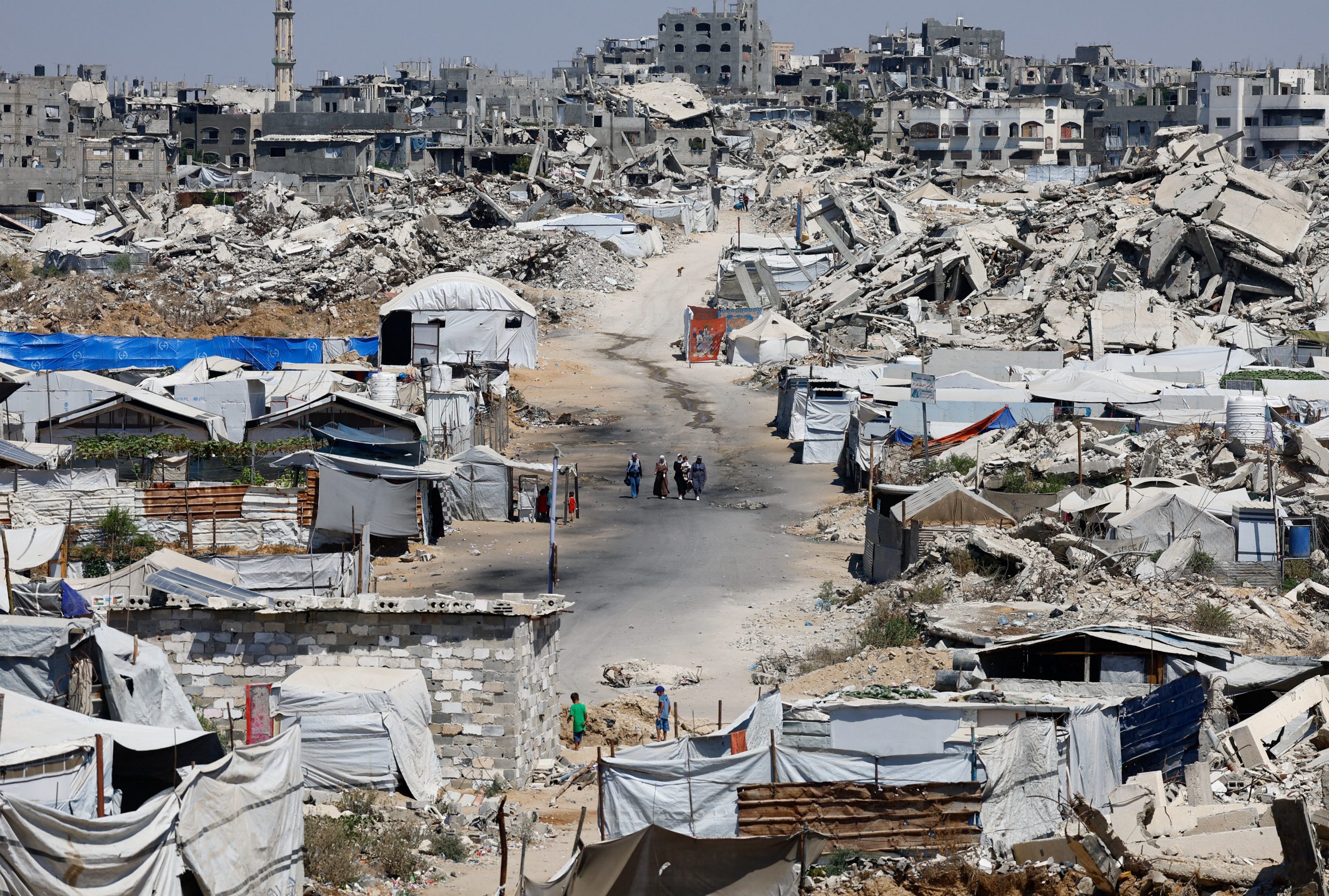
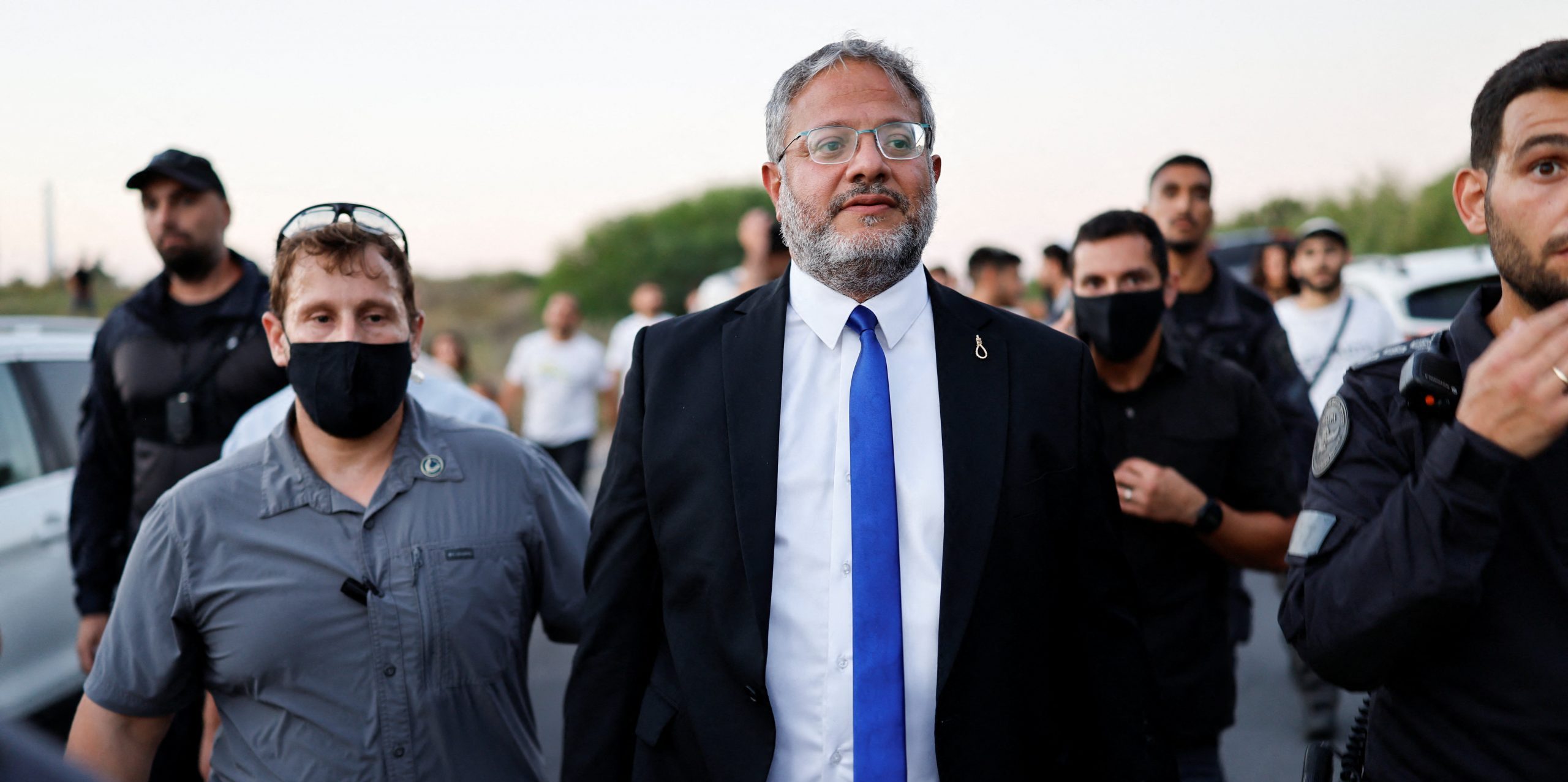
During an independence day ceremony in Israel on Tuesday, the Israeli government honored an extremist rabbi known for bulldozing homes in Gaza and calling for Israel to “flatten” the Palestinian territory.
According to The Guardian, Rabbi Avraham Zarbiv was one of fourteen people chosen by the Israeli government for their “extraordinary contribution to society and the state” to light a torch at the ceremony.
Zarbiv serves as a rabbinical judge for an illegal Jewish settlement in the Israeli-occupied West Bank, and an Israeli state ombudsman recently ruled that he violated ethical guidelines by expressing “extremist views,” which included his call to flatten Gaza and boasting about the destruction of civilian homes and the IDF’s mass killing of Palestinians.
“Israel, let me tell you, we have crushed them. There are tens of thousands of dead. The dogs and the cats ate them because no one collected them,” Zarbiv said in a TV interview last year. “Tens of thousands of families – they have not a piece of paper, no childhood photo, no IDs, they have nothing. No home, there is nothing. They come, they have no idea where their house is. It’s something unbelievable.”
Zarbiv became well known in Israel for posting videos of himself destroying homes in Gaza, and his name has become slang for destruction. “We’re here in Beit Hanoun attacking this cursed village until we finish it,” Zarbiv said in one of his videos, which was shared by the Israeli rights group B’Tselem. “All the way to victory, to settlement. We will not give up until this village is erased.”
B’Tselem strongly condemned the Israeli government’s move to honor Zarbiv. “Bestowing one of the highest civilian honors in Israel on a citizen who committed war crimes illustrates how deeply the dehumanization of Palestinians has taken root in the Israeli mainstream. It is yet another terrifying signal that genocide has officially become part of the national ethos,” the group said.

US imperialism’s war on Iran unleashes global economic and social catastrophe for the working class

April 23, 2026

 Jordan Shilton, WSWS, Apr 23 2026

Less than two months after fascist US President Donald Trump launched the criminal US/Israeli war against Iran in the dead of night on February 28, the conflict is having a devastating economic impact on tens of millions of workers around the globe.

American imperialism’s determination to consolidate its dominance over the Middle East, one of the world’s most critical energy-producing regions, has already claimed the lives of thousands of Iranians in six weeks of brutal and indiscriminate bombardment. But the economic fallout from the US-instigated war and blockade of the Strait of Hormuz could prove even more deadly.

Prior to the war’s outbreak, the Strait of Hormuz accounted for some 20 percent of global oil traffic and a significant portion of natural gas shipments. The consequences produced by the disruption of these energy supplies are already reverberating across the world economy. They include rising fuel costs, higher electricity prices and escalating transportation expenses for billions of people.

The Middle East is also a major producer of fertilisers, so prices have jumped amid the planting season for farmers in the northern hemisphere. The result is both increased production costs for crops and reduced harvests, as farmers plant less to cut costs or use less fertiliser, which will fuel a food-price spiral over the coming months and into 2027.

Shipping disruptions, compounded by heightened insurance premiums and rerouted trade flows, have further increased the price of food imports. The Containerised Freight Index rose 10 percent within a month of the war’s outbreak, underscoring that even traffic not directly impacted by the Strait of Hormuz blockade is affected. 

On top of the destruction of schools, hospitals and other civilian infrastructure by US and Israeli missiles, the working class in Iran is bearing the economic brunt of the war. A government spokesman admitted that approximately 2 million workers have lost their jobs as a direct consequence of the conflict.

The impact of the war has been particularly acute across the Asia-Pacific region, due to its heavy reliance on oil imports from the Middle East. Over 80 percent of crude and LNG normally transiting the Strait of Hormuz is destined for countries in the Asia-Pacific, including major industrial economies like China and Japan. Fuel prices have risen sharply in India’s major cities, with petrol and diesel costs increasing by roughly 10-15 percent within weeks.

In Indonesia, nickel producers have cut output by at least 10 percent due to shortages of natural gas and sulphur, which are required to produce the high temperatures necessary for extraction and refining of the metal. Severe disruptions to the garment factories of Bangladesh have also been reported due to a lack of polyester and nylon, fossil fuel byproducts used to make clothing.

Another critical channel of impact is the disruption of remittances. Millions of workers from South Asia and Africa are employed in the Gulf region, sending vital income back to their impoverished families. The war has disrupted these flows, as economic activity slows and employment opportunities shrink.

Motorists queue up to get fuel at a pump, fearing a possible fuel shortage due to the US Iran war, in Ahmedabad, India, Monday, March 23, 2026. [AP Photo/Ajit Solanki]

The United Nations Development Programme estimated in a recent report that the war on Iran could cost 36 countries in the Asia-Pacific nearly $300 billion and plunge up to 8.8 million people into poverty. Five million of these people live in Iran, where the human development index has already lost 1–1.5 years due to the war.

The New York Times worried in a lengthy analysis published April 20 that countries throughout the Asia-Pacific may face “shortages [that] could push several countries into convulsions of unrest, followed by recession,” if the Strait of Hormuz remains blocked for just a few more weeks. Even high-end production, including of semiconductors essential for producing chips built in Taiwan, faces problems. Prior to the war, Qatar produced a third of the world’s helium, a critical component of the semiconductor production process. But it stopped production on March 2 after an Iranian retaliatory attack hit its gas facilities. As the Times put it, cuts to chip production “would roll through everything from electronics to cars.”

In Africa, Nigeria has seen fuel prices rise by over 50 percent, despite the country being a massive oil producer and exporter. Since the country of some 240 million people is heavily dependent on imports of refined oil products, petrol prices have risen significantly, leading to increases in public transport costs and the price of staple foods. In Kenya, the fuel price regulator hiked petrol prices by over 16 percent and diesel prices by over 24 percent in mid April, following a 68 percent increase in the cost of oil imports.

Many African countries depend on imported fertilisers. The surge in natural gas prices has driven up costs for farmers, threatening lower crop yields and outright famine in areas where subsistence farming prevails. At the same time, currency depreciation in several countries is amplifying the impact of global price increases, making imports even more expensive, eroding real wages and pushing up already crippling debt repayment costs for financially strapped governments.

In Europe and North America, fuel prices have also risen sharply, placing yet another burden on working people’s budgets amid stagnant economic growth, mass layoffs and social attacks by the ruling elites in every country to pay for bloated military budgets and the enrichment of the financial oligarchy. In Germany, national airline Lufthansa announced the immediate closure of its CityLine subsidiary amid a strike by thousands of airline workers for job security and pay increases. The continent’s governments are investing trillions of euros in their own war machines to prosecute their predatory imperialist interests at the expense of workers’ livelihoods and social programmes.

Across the Atlantic, the Wall Street Journal has announced the era of the “mega layoff,” with job cuts in finance, technology, entertainment and manufacturing.

By contrast, the war is proving to be a bonanza for the corporations and financial oligarchy. According to one investigation, the world’s major oil conglomerates will pull in additional profits of over $230 billion in 2026 alone.

The World Socialist Web Site has insisted that US imperialism’s war on Iran is one front in the early stages of a third world war, which includes the US/NATO war on Russia in Ukraine and preparations for a military conflagration with China. As the imperialist powers in North America and Europe scramble for the upper hand in the redivision of the world, they are totally indifferent to the impact on billions of workers from the global economic and social disaster produced by crisis-ridden capitalism and their crazed policies. But this very disaster creates the material conditions for the development of a working class movement to end the war and the capitalist profit system which is its root cause.

The parallels to World War I are striking, when food riots across Europe during 1916 and 1917 gave an initial expression to growing popular opposition to the imperialist slaughter. The most consequential of these were protests that erupted demanding bread in Petrograd in early 1917, marking the beginning of Russia’s February Revolution. Eight months later, the Bolsheviks under Lenin and Trotsky led the working class to power on a socialist programme that would bring the world war to an end.

Today, the world economy is integrated to such a degree that initial expressions of social unrest provoked by the war have already erupted in its first weeks. Beginning on April 10, tens of thousands of industrial workers in India’s national capital region launched strikes and protests against price hikes triggered by the war. Workers demanded wage increases to cover higher rents, fuel costs, and food prices. Protests have also erupted in countries as diverse as the Philippines and Ireland.

Now, as in 1917, the decisive tasks are the fight to develop a conscious, unified movement of the international working class and build a mass revolutionary party capable of leading the struggle for workers’ political power.

The global nature of the crisis demands an international response, transcending national divisions and opposing militarism. Workers in Iran, the United States, Europe, Asia and Africa share a common interest in ending the war and the bankrupt capitalist order that gave rise to it. This requires the independent political mobilisation of the working class on a socialist programme to place the commanding heights of the economy under democratic workers’ control, ensuring that production is organised to meet human needs rather than private profit.

Under these conditions, the upcoming International May Day Online Rally 2026 assumes critical importance. It will articulate the revolutionary socialist programme and perspective workers around the world require to fight imperialist war and its barbaric consequences. Register today to participate, and encourage your work colleagues and friends to do the same.

Netanyahu, Trump: On Gaza and the Iran war, the parallels with World War Two are clear

April 21, 2026

Joe Gill MEE, 21 April 2026 09:07 BST | Last update:8 hours 4 mins ago

Comparisons between the US-Israeli war on Iran, the Gaza genocide, and Hitler’s attack on the Soviet Union are being made by scholars

A picture of US President Donald Trump and Israeli Prime Minister Benjamin Netanyahu on fire during a protest against the US-Israeli military action in Iran, near the US Embassy in Manila, Philippines, 9 April 2026 (AFP)

It has long been considered offensive and antisemitic to draw comparisons between Nazi Germany and Israel, but on the specific question of Israel’s genocide in Gaza and its wars of expansion, including the war on Iran, the dam has broken.

Norman Finkelstein, the eminent American Jewish scholar and son of Holocaust survivors, drew the direct comparison between Hitler’s war in the east and the war launched by Donald Trump and Benjamin Netanyahu on Iran on 28 February in a recent Middle East Eye interview.

I have long thought the comparison is merited, for a number of reasons, beginning in 2023 with the start of the war on Gaza.

Like Hitler’s Germany, Israel’s leaders made the fatal error of not knowing when to stop, and opening up several fronts – seven at one point. Each tactical victory – against Hamas, then Hezbollah, encouraged further audacious attacks. Having waged a genocidal campaign in Gaza, colonial expansion in the West Bank, and relentless attacks on Lebanon, Syria and Yemen, Prime Minister Netanyahu turned to Iran in 2025.

Why? A messianic ideology of Jewish supremacy that drives the prime minister and the settler politicians on whom he depends. The politics of ethnonationalism, territorial expansion and hyper militarism are similar, if not identical, to the ideology of the Second World War fascist axis led by Nazi Germany. And this ideology of ethnic supremacy leads to overreach.

New MEE newsletter: Jerusalem Dispatch

Sign up to get the latest insights and analysis on Israel-Palestine, alongside Turkey Unpacked and other MEE newsletters

Trump, as a white nationalist who believes in US exceptionalism, shares the same inflated belief in unlimited US power, but is less unequivocally bent on permanent war. (Trump bears some comparison with Italian fascist dictator Benito Mussolini, whose record of failed imperial adventures more closely resembles Trump’s.) 

Iran and the Soviet Union

Finkelstein, speaking of the Iran war, compared it to how the war of extermination waged by Hitler on the Soviet people inspired them to rally and defend the country. “This was the same mistake made by Trump. The more Trump turned it into a war of extermination like the Nazis did with Russia… the people rallied, it was the Soviet Union’s Great Patriotic war, a second time.”

Another parallel to the Second World War is that the West’s enemy is a revolutionary regime which is facing severe internal pressures. The Soviet Union in the 1930s was perceived as being weak due to violent internal upheaval; the similar position of Iran before the war encouraged Netanyahu and Trump to believe that a surprise attack would lead to a rapid victory.

The Soviet Union in the 1930s was perceived as being weak due to violent internal upheaval; similar to the position of Iran before the war

Both the Soviets and Iran lacked major global allies prepared to come to their defence. Like the Soviet Union, Iran had non-state groups in different countries that supported its international vision, but these groups pose a limited threat to the world’s most advanced military, and a nuclear-armed regional military power. 

Like Iran, the Soviet Union had sought to avoid war by making agreements with its chief enemy, Germany, in the Nazi-Soviet pact of 1939. In the case of Iran, the 2015 nuclear deal was supposed to end the threat of conflict. But Trump ripped it up in 2018. 

Both Iran and the Soviet Union had been through very difficult years preceding this frontal military attack. Iran had faced comprehensive sanctions, which helped to spark three major uprisings against the regime, in 2019, 2022 and lastly in January 2026. 

The Soviet regime, while in the process of rapidly industrialising, had waged a terror campaign against kulaks, national minority groups, and swathes of the Bolshevik administration, including the officer corp of the Red Army, in which millions died – a point explicitly made by Finkelstein (although he exaggerated by saying “tens of millions” died). As a result, Hitler saw Soviet Russia as weak and vulnerable. He predicted a sweeping victory over Stalin.

As Finkelstein explained: “The first months of the war were a cake walk, disaster for the Soviets… but the Germans made one big mistake: they wanted what was called living space, lebensraum, and [that] means they had to get rid of the people living there, and so they embarked on a war of extermination… Notwithstanding the brutality of Stalin’s regime, notwithstanding collectivisation and the purge trials, which eliminated the entire military and political leadership, the people embraced the “Great Patriotic War”.

Like the Israelis and the Trump White House, the Nazis had a racial contempt for their Slavic enemies who they considered to be inferior and not able to resist the advance of the German armed forces. Trump and Netanyahu likewise consistently belittle the capacity of their enemies, believed the Iranian regime would crumble under direct assault, and see their technological and military superiority as decisive over the “Arabs” and Iran. Trump called the Iranians “animals”.

These Iranians supported the US-Israeli war. Now they realise their mistake

Read More »

The killing of Supreme Leader Ali Khamenei on the first day of the war was supposed to be the knockout blow. It would be as if Hitler had a rocket system that could accurately target Stalin’s rooms in the Kremlin and wipe out the dictator and his politburo. Would that have caused the Soviet regime to collapse amid invasion? Unlikely.

The first year of the Nazis’ invasion saw a devastating series of retreats and defeats for the Soviets. The Wehrmacht rolled through Ukraine, where the famine and terror of the previous decade had drained support for the Soviets, allowing the Germans to march rapidly on to the Russian steppe; in the north the Nazis advanced through Belarus to the gates of Moscow and Leningrad, imposing a brutal siege on the latter. Hitler had every reason to think victory over the Communist regime in Russia was all but certain.

But to successfully overthrow a regime one needs to find new, pliable rulers who are able to replace the old ones. This has not proved possible in Iran, with Reza Pahlavi shown to be wholly inadequate to the task, lacking political skills and wide popular support in Iran.

Germany, and the US and Israel, overlooked the lack of strategic route to defeat their enemies in the long run. In the short to medium term, they win based on superior air power, intelligence, and destructive offensive forces, but in the longterm, the outlook is more problematic, as people constantly attacked in their own lands are certain to resist.

Iranians have come to realise that Trump and Netanyahu are not interested in their liberation – they wish to destroy the country’s independent existence and to fragment it along ethnic lines. 

Iran’s new leaders

Moreover, in the case of Iran, the wiping out of the older generation of leaders and commanders has changed the calculus of the regime, brought in new commanders, and if anything ended the restraint that was the policy under Khamenei. The attacks on Gulf states, the blockade of Hormuz, and the insistence that Lebanon must be part of a lasting ceasefire deal show how much Iran, post-February, is no longer afraid to directly confront the encirclement imposed by the US and its allies. 

The wiping out of the older generation of leaders has changed the calculus of the regime, ending the restraint that was the policy under Khamenei

Iran, like Russia, is a vast continental nation, and presents huge challenges for any foreign power wishing to conquer or dismember it. Hitler openly saw the Soviet Union as part of the future Third Reich, as a vast colonial territory providing resources and agricultural lands to feed the empire, while turning its people into little more than slaves. After the victories of the first year of the war in the east, things turned sour for the Nazis at Stalingrad in late 1942.

Netanyahu and other Israeli leaders long declared their intention to remove the Iranian regime, using agents on the ground, assassinations and sabotage, and imploring Iranians to rise up against the ayatollahs. But after the mass protests and brutal crackdown in January, these calls have not been heeded. Iranians have rallied to the nation.

If, however unlikely it seems, the latest US-Iran ceasefire somehow transitions to a more permanent agreement to end hostilities on Iran’s terms, it would be seen as a historic defeat for the US, on par with Vietnam. And a break with the total war that killed tens of millions in the 1940s.

As of now, the US is blockading Iran’s ports and seized an Iranian ship, while moving thousands of troops into the region. At home, Trump is on a war footing, putting the auto sector on notice to convert to weapons production, while asking Congress for a $1.5 trillion “defence” budget, the largest ever. This does not look like imminent peace, but with Trump, who knows?

When will it end?

And what about Gaza? The genocide is far from over. For the Palestinians, this question is existential.

History offers some clues. No modern genocide has lasted more than four years. Rwanda’s lasted 100 days – the fastest, most brutal, in history. Cambodia’s lasted over three years until Vietnam invaded and overthrew the Khmer Rouge. The Armenian genocide lasted just over one year. Stalin’s special operation against the Poles, Ukrainians and other national minorities lasted 16 months. The German siege of Leningrad lasted 872 days. The Holocaust, the worst of all, lasted four years. 

So far the Palestinians have endured 926 days of extermination and siege. According to a 2025 household survey and joint mortality study, the Gaza death toll had reached 84,000 by January 2025 and is likely now well over 100,000, on top of 6,500 killed by Israel in Lebanon, and thousands more in Iran.

The biggest defeat of all is not in Lebanon, or Iran, but in Washington. US voters have had enough of wars and Israel

Crucially, in most cases, genocide precedes the collapse or military defeat of the perpetrator.

Israel has always relied on unconditional US support, which culminated in Washington arming a genocide, then backing not one, but two unprovoked assaults on Iran, and a prolonged war against Hezbollah. All of them failed, at appalling human cost. And now that US weapons pipeline is in jeopardy.

The vote last week in the US Senate on supplying arms to Israel was historic. Even though it passed, 40 out of 47 Democratic senators voted for Bernie Sander’s resolution blocking a batch of military aid. By contrast, last April, only 15 of the Democratic caucus’s 47 members supported similar measures. This signals a dramatic shift against Israel in Washington. 

Democrats who want to be re-elected in November know they must now distance themselves, not just rhetorically, but also financially and politically, from Israel and its powerful US lobby. Aipac is still spending hundreds of millions to get its candidates elected, but the taint of lobby money is increasingly electoral poison.

Netanyahu had his golden time with Trump’s first term, then Joe Biden, and Trump two. That time is coming to an end. Most likely, he will look for a way to prolong Israel’s campaign for regional supremacy and remain in office as long as possible, but he is running out of road.

He now faces his biggest defeat of all; not in Lebanon, or Iran, but in Washington. US voters have had enough of forever wars and Israel.

In Israel, as Finkelstein warns, it is not just Netanyahu, but the whole of Israeli society that “has turned into homicidal maniacs” supporting war on Iran, ethnic cleansing in the West Bank and Lebanon, and genocide in Gaza.

The final lesson of World War Two was that fascism was defeated after its leaders’ disastrous military overreach and defeat at the hands of the Soviet Red Army and partisan resistance. Today’s fascist war leaders have learned nothing from this history.

The views expressed in this article belong to the author and do not necessarily reflect the editorial policy of Middle East Eye.

Joe Gill has worked as a journalist in London, Venezuela and Oman, for newspapers including Financial Times, Morning Star and Middle East Eye. His focus is on geopolitics, economic history, social movements, and the arts.

Iran war brings massive price and profit gouging

April 19, 2026

Nick Beams, WSWS, 16 April 2026

    Elevenlabs AudioNative Player

    As workers around the world are hit with the ever-worsening consequences of the US war on Iran—crippling rises in petrol and gas prices, food price hikes and the growing threat of food shortages in poorer countries—major corporations and banks are raking in increased profits to the tune of hundreds of billions of dollars.

    First in line to benefit from the profit bonanza, as could be expected, are the oil companies. But the flow of increased money extends across the board.

    The price of diesel is advertised at a gas station Thursday, March 19, 2026, in Hyattsville, Md. [AP Photo/Stephanie Scarbrough]

    According to an investigation by the Guardian, the results of which were published on Wednesday, with oil at around $100 per barrel the major oil conglomerates in Saudi Arabia, Russia, the United States, Britain and Europe will collect an additional $234 billion in profit for 2026, an extra inflow of $30 million an hour for the rest of the year.

    The biggest winner is Saudi Arabia’s Aramco, which is expected to make a war profit of $25.5 billion, with the Russian petro-giants set to make an additional $23.9 billion.

    The US firm ExxonMobil will take in an additional $11 billion. Shell’s revenue will rise by $6.8 billion, and Chevron stands to make an additional $9.2 billion.

    The additional profits are on top of the $1 trillion the oil industry takes in every year while receiving explicit subsidies which totalled $1.3 trillion in 2022, according to calculations by the International Monetary Fund.

    There are other benefits as well flowing from the rise in share prices. The market value of ExxonMobil has increased by $118 billion, while that of Shell is up $34 billion.

    Apart from the oil producers, trading firms which deal in oil, food, metals and other necessary commodities, largely dominating global markets, are already cashing in. The Wall Street Journal reported that the Swiss commodities trader Gunvor said it had already made as much money in the first quarter of this year as it did in all of 2025 when it made a profit of $1.6 billion. Others will be experiencing a similar boost.

    Also not surprisingly, US arms manufacturers have been cashing in. On the first day of the US attack on Iran major firms recorded a rise in their total market value of up to $30 billion.

    The profit and price gouging extends across the US economy under conditions where, according to a recent article in the New York Times, corporate profits “have reached a record share of the US economy.” Corporate America intends to keep it that way.

    Sonu Varghese, the global macro strategist at the Carson group, a financial firm, told the Times that many companies viewed inflation from “outside shocks,” such as war, “as an opportunity to raise prices and boost margins” and that there was going to be some “margin expansion.”

    This points to a repeat of the experience of the inflation surge of 2022 when, as the Times reported, data from the US Producer Price Index “showed that wholesalers and retailers generally expanded the margin between their sales prices and their cost of acquiring goods.”

    Major US banks have also been cashing in on the opportunities generated by the war. The six major US banks reported collective profits of $47.6 billion for the first quarter, much of it generated because market volatility provided conditions for significantly profitable trading.

    Reporting on the profit hike, the Financial Times noted that the first quarter was marked by geopolitical shocks—the military operation in Venezuela and the Iran war—triggering volatility, which is “good for investment banks which make money from financing and facilitating client trades.”

    JPMorgan led the way in absolute terms with a 13 percent increase in profits, over the same period last year, to $16.5 billion, with market jitters being characterised as a “gift to trading desks.” Goldman Sachs reported a 19 percent increase in profits to $5.6 billion. Citigroup reported a 42 percent profit surge and Morgan Stanley’s profits rose 29 percent.

    The combined increase in the profits from the trading desks of the major banks is estimated to be the highest in 12 years.

    Much of this money is being used to finance share buybacks to boost the portfolios of the banks’ senior executives and big investors. The largest US banks spent a record $33 billion on buybacks in the first quarter, with JPMorgan, Goldman Sachs and Citigroup making their largest ever repurchases.

    The banks have benefited from the relaxation of regulations under Trump. Bank of America chief financial officer Alastair Borthwick said the bank was “encouraged by the work the administration is doing,” as it bought back $7.2 billion of its own stock in the quarter, the highest level in four years. The Trump regime is moving to reduce the amount of capital the banks must hold as a reserve, freeing up money for trading and buybacks.

    The overall sentiment on Wall Street is that the profit bonanza will continue, at least for now, with the S&P 500 passing the 7,000 mark for the first time on Wednesday. Inflation profiteering fuelled by the war is one factor. Another is the wave of mass layoffs, hitting tens of thousands of workers in many cases, especially in the high-tech industries.

    Commenting on what it called a new era of mega-layoffs, the Wall Street Journal noted that “employers are seizing on the potential financial upsides of severing swaths of their workforces at once.”

    In the past, mass layoffs by a company may have signalled troubles or mismanagement. “Now, such a company is more likely to get a big stock bump and praise from investors for acting boldly.”

    Giant corporations and banks are feeding on death, destruction and the impoverishment of the working class the world over. This makes it urgently necessary for workers and youth to draw the sharpest political conclusions.

    The war on Iran itself is not the product of the individual Donald Trump, but is driven by the historic crisis of imperialism, of which he is the most grotesque personification.

    Likewise, the obscenity expressed in the present day economic and financial system is not the product of the individual greed of the ruling oligarchs, though that exists in abundance. It is a product of the capitalist system itself, the objective logic of which, as Marx explained 150 years ago, is the creation of fabulous wealth at one pole of society and poverty, misery and degradation at the other.

    Today the necessity for its overthrow and the establishment of socialism is not confined to the pages of Das Kapital but is being written large in the language of daily life.

    Why do Lebanese leaders keep courting Israel?

    April 19, 2026

    Joseph Massad

    MEE, 16 April 2026 12:11 BST

    Direct talks in Washington for the first time in 30 years continue a long history of overtures that predate resistance and persist despite repeated Israeli attacks on civilians

    Lebanese protesters gather in Martyrs' Square in Beirut to reject direct negotiations with Israel, expressing opposition to normalisation and diplomatic engagement, on 13 April 2026 (Abdul Kader Al Bay/ZUMA Press Wire)

    Lebanese protesters gather in Martyrs’ Square in Beirut to reject direct negotiations with Israel, expressing opposition to normalisation and diplomatic engagement, on 13 April 2026 (Abdul Kader Al Bay/ZUMA Press Wire)

    Since Lebanese President Joseph Aoun and Prime Minister Nawaf Salam assumed office in early 2025, mere weeks after the November 2024 ceasefire between the Lebanese resistance and the genocidal state of Israel, the new leadership, under strong US and Saudi advice, moved urgently to offer friendship and full cooperation to Israel.

    Not only did they fail to protest the more than 10,000 ceasefire violations that Israel committed over the 15 months leading up to the US-Israeli aggression on Iran in late February 2026 – including thousands of air strikes, drone attacks and ground incursions that killed more than 500 people, most of them civilians – but they went as far as offering, even pleading, for direct negotiations to achieve permanent peace with the Jewish settler-colony.

    Rather than blaming Israel for its ongoing crimes against the Lebanese people, the two leaders blamed Hezbollah, as if Israeli attacks were a response to the resistance, when in fact the resistance has been retaliating against unceasing Israeli aggression and occupation of Lebanese land.

    Such magnanimous offers were last made by the Phalangist president of Lebanon, Bashir Gemayel, who collaborated with Israeli invaders of his country in 1982, and his brother Amin, but they were scrapped afterwards due to much opposition.

    The Israeli government initially rebuffed these recent overtures, which Salam repeatedly extended until it finally agreed last week. Facing pressure from the Trump administration, Israel met with Lebanese officials in Washington this week for their first direct talks in more than 30 years, even as it continues to bomb Lebanon, including the capital, Beirut, killing upwards of 2,000 people in the past six weeks alone.

    New MEE newsletter: Jerusalem Dispatch

    Sign up to get the latest insights and analysis on Israel-Palestine, alongside Turkey Unpacked and other MEE newsletters

    Israel has justified its multiple invasions and incursions into Lebanon since the late 1960s, which have killed tens of thousands of civilians, as efforts to defeat Palestinian resistance fighters who moved there after 1969, and who were forced to withdraw in 1982. It has since invoked the same justification to confront post-1982 Lebanese resistance to its illegal occupation of Lebanese territory, especially Hezbollah.

    Yet present claims that resistance movements provoke Israeli aggression, and that Lebanese leaders must therefore normalise relations with Israel to achieve stability, obscure the historical record: Israeli relations with Lebanese political and religious figures eager to offer it friendship and cooperation date back to the 1920s, long before the settler-colony was even established, let alone the arrival of the Palestinian resistance in Lebanon or the emergence of Hezbollah.

    Indeed, Aoun and Salam are part of a long chain of Lebanese politicians eager to please Israel.

    Sectarian myths

    In Lebanon, a common claim is that right-wing sectarian Maronite leaders only sought to befriend Israel after 1948, in response to the arrival of more than 100,000 Palestinian refugees expelled during the 1948 Zionist conquest of Palestine by Jewish colonists – the majority of them Muslim – and the resulting demographic shift.

    This, however, proves to be a fabrication. Sectarian Maronite hostility towards Lebanese Muslims precedes the arrival of the Palestinians by nearly three decades.

    In March 1920, Jewish Agency representative Yehoshua Hankin and Lebanese Maronite representatives signed a treaty of cooperation that also included “prominent Muslim families”, many of whom were absentee landlords who sold land in Palestine to Zionist settlers.

    In March 1920, Jewish Agency representative Yehoshua Hankin and Lebanese Maronite representatives signed a treaty of cooperation that also included ‘prominent Muslim families’

    Contacts between Lebanese Maronite leader Emile Edde and Zionist representatives began in the early 1930s. During this period, Edde expressed his support for establishing friendly relations with Jewish colonists and “even of a Zionist-Maronite alliance”.

    Edde was elected president of Lebanon in 1936 and remained in contact with the Jewish Agency for the next two years.

    Edde’s prime minister, Khayr al-Din al-Ahdab, the first Sunni Muslim to hold the position in Lebanon’s history, offered his country’s guarantees of order and security to the Jewish colonial-settlements along the Lebanese border. After leaving office and seeking to regain power, Edde resumed his contacts with the Israelis in 1948 while vacationing in France.

    This was followed by the signing of the infamous political treaty between the Jewish Agency and the Maronite Patriarch Antoine Arida, on behalf of the Maronite Church, on 30 May 1946.

    The treaty established guidelines for close ties between the Maronites and the Jewish colonists, based on mutual recognition of rights and nationalist aspirations, including the Jewish Agency’s recognition of Lebanon’s “Christian character” and its assurance that the Jewish colonists had no territorial ambitions in Lebanon.

    In return, the Maronite Church supported Jewish immigration and the establishment of a Jewish state in Palestine.

    Deepening collaboration

    Edde, al-Ahdab, and the Maronite Church were not the only parties in Lebanon offering love and friendship to Israel. The Phalangists were next. Israel established relations with them at the end of 1948 in the United States, through the mediation of the Maronite priest Yusuf ‘Awad, who had contacts with representatives of the US Zionist Federation.

    The main Phalangist contact was Elias Rababi, who, along with other Phalangists, held several meetings with the Zionist representatives in Europe.

    Rababi informed the Israelis that if the Phalangists took over the government, they would establish diplomatic relations with Israel. In exchange, he requested funding to support Phalangist political activity and procure weapons.

    While the Israelis were unconvinced of the movement’s strength, the foreign ministry nevertheless paid him $2,000.

    In February 1949, three envoys of the Maronite Archbishop of Beirut, Ignatius Mubarak, arrived in Israel and met with a foreign ministry official. The three claimed that Mubarak “wished to know the position of the Israeli Government on plans for a coup in Lebanon” against President Bechara Khoury due to the latter’s support of integrating Lebanon in the Arab world.

    Emile Edde and Pierre Gemayel were said to be parties to the plan. The Israelis responded by welcoming any attempt on the part of Lebanon’s Christians to “liberate themselves from the yoke of pan-Arab leaders”, but requested a detailed plan of how the coup would be staged, what forces they had backing them and the level of assistance required from Israel. The plan ultimately came to naught.

    But the plan to install a pro-Israel government in Lebanon through a coup was an idea Zionists had entertained since the 1920s.

    In response to former prime minister David Ben-Gurion’s 1954 proposal that Israel encourage a military coup in Lebanon to establish a Christian regime allied with Israel, then prime minister Moshe Sharett dismissed it as “nonsense“, writing in his diaries that no movement was strong enough to establish an exclusively Maronite state.

    Given the proposal’s unfeasibility, Moshe Dayan, who was the army chief of staff at the time, proposed in 1955 that Israel annex Lebanon south of the Litani River.

    Before resistance

    Just as there is a long history of Lebanese politicians offering a loving friendship to Israel, Israeli atrocities against the Lebanese people between 1948 and 1969 were also the order of the day, long before the existence of the Palestine Liberation Organization (PLO) or Hezbollah.

    During the 1948 war, even though the Lebanese army did not engage in battle with the Israelis, Zionist forces conquered southern Lebanon in what they dubbed “Operation Hiram”, occupying 15 Lebanese villages as far as the Litani River.


    Follow Middle East Eye’s live coverage of Israel’s genocide in Gaza


    Zionist commander General Mordechai Makleff asked Ben-Gurion for permission to occupy Beirut, which he said could be done in 12 hours, but the latter refused, fearing international condemnation given Lebanon’s neutrality.

    During their occupation of southern Lebanon, Zionist forces committed one of the worst massacres of the 1948 war in the Lebanese village of al-Hula, where they slaughtered 85 civilians on 31 October. When the Israelis invaded it again in 2024, soldiers defaced the monument to the massacre, listing the names of those killed.

    Ceasefire not included: Lebanon begins ‘exploratory’ talks with Israel

    Read More »

    In early 1949, Lebanese and Israeli officials began formal armistice negotiations at Ras al-Naqura, which proceeded “more smoothly” than with all other Arab states. Rather than express horror at Israeli atrocities committed against Lebanese civilians a few weeks earlier, Lebanese delegates privately informed the Israelis that they “were not really Arabs”. They also discussed the possibility of establishing diplomatic relations with Israel.

    The Israelis withdrew from Lebanese territory in March 1949.

    This week’s meeting in Washington DC was a repeat performance by the Lebanese ambassador to the US, who did not condemn Israel’s recent massacres of Lebanese civilians but reportedly shook hands with the Israelis in a two-hour private meeting away from the cameras.

    None of this will halt continued Israeli attacks on Lebanese civilians, any more than the extra-friendly 1949 talks halted subsequent aggression.

    In the 1950s and 1960s, long before the PLO guerrillas arrived in Lebanon, Israel attacked the country close to 200 times – including raids and shootings, stealing Lebanese cattle, burning crops in border villages and towns, destroying homes and property and kidnapping Lebanese civilians – resulting in at least 23 killed, 39 injured and 81 abducted.

    In 1965, Israel bombed a dam under construction intended to divert the Banyas, Hasbani and Litani rivers in Lebanon and Syria, in response to Israeli theft of water belonging to Arab states, which it sought to divert to the Naqab desert in violation of international law. It destroyed the project.

    Atrocities continue

    Perhaps Israel’s most daring crime during this period was the machine-gunning of a Lebanese civilian plane in July 1950 by one of its air force fighters inside Lebanese airspace.

    The attack on the plane, en route from East Jerusalem’s Qalandya airport to Beirut, killed two people and injured seven Jordanian passengers, including a five-year-old girl whose leg had to be amputated. Among those killed were Lebanese radio operator Antoine Wazir and Arab Jewish student Musa Fuad Dweik, whose head was blown off by one of the bullets.

    In 1967, Israel occupied the Shib’a Farms, even though Lebanon was not a party to the war. It continues to occupy them today.

    The following year, in December 1968, two days after two Palestinian refugees from Lebanon machine-gunned an Israeli passenger plane parked at Athens airport, killing a marine engineer, Israel bombed Beirut International Airport, destroying 13 civilian passenger planes worth almost $44m at the time, as well as hangars and other airport installations.

    The Lebanese government is offering Israel extensive support to neutralise Hezbollah, including criminalising the only Lebanese resistance movement that ever liberated Lebanese territory from occupation

    All these atrocities were committed before Palestinian guerrillas in Lebanon began to launch resistance operations against the settler-colony. Likewise, Lebanese politicians who offered cooperation with Israel did so long before these developments were later invoked to justify Israeli aggression.

    Neither Aoun nor Salam is proposing anything new to the Israelis that previous Lebanese allies had not offered.

    The Lebanese government is offering Israel extensive support to neutralise Hezbollah, including criminalising the only Lebanese resistance movement that ever liberated Lebanese territory from occupation and disseminating anti-Iranian propaganda.

    Lebanese Justice Minister Adel Nassar posted on X this week the complete fabrication that Iran abandoned its condition for a comprehensive ceasefire that includes Lebanon in return for the Americans releasing its funds in western banks.

    Yet despite all this help, nothing will sway Israel from committing more atrocities in Lebanon, and no one – not the Americans, the Saudis or the Israel-friendly Lebanese government – will be able to stop the Lebanese resistance from fighting back against this genocidal, predatory state.

    Ultimately, Israel did not need to orchestrate a coup in Lebanon to secure a regime allied with it. The United States and Saudi Arabia did the job on its behalf and then some – as Israeli Ambassador to the US Yechiel Leiter, who participated in Israel’s 1982 invasion of Lebanon, affirmed when he emerged from this week’s talks declaring: “We are on the same side.”

    The views expressed in this article belong to the author and do not necessarily reflect the editorial policy of Middle East Eye.

    Joseph Massad is professor of modern Arab politics and intellectual history at Columbia University, New York. He is the author of many books and academic and journalistic articles. His books include Colonial Effects: The Making of National Identity in Jordan; Desiring Arabs; The Persistence of the Palestinian Question: Essays on Zionism and the Palestinians, and most recently Islam in Liberalism. His books and articles have been translated into a dozen languages.

    War on Iran, war on dissent: Gulf states weaponize fear to crush free expression

    April 18, 2026

    The US-Israeli war on Iran has given Gulf monarchies fresh cover to deepen repression, criminalize dissent, and tighten their grip over every version of reality that falls outside the state line.

    A Cradle Correspondent

    APR 16, 2026

    Photo Credit: The Cradle

    Since 28 February, the US and Israel have been waging war on Iran, with consequences that reach far beyond the battlefield. Across the Persian Gulf, governments have seized on the conflict to expand repression at home. 

    Under the pretext of combating “disinformation” and “rumors” on social media, Gulf states have launched sweeping arrest campaigns against hundreds of citizens and residents, making clear that any expression outside the official narrative can now be treated as a “security threat” or even the “voice of the enemy.”

    Calls not to photograph or publish footage did not arrive as casual advice. Interior ministries across the Gulf issued them as official warnings. At first glance, the arguments appeared plausible: avoid panic, protect national security, deny useful information to the enemy. Within days, however, these directives became the basis for a much broader campaign of repression, one that moved quickly from warnings to prosecutions.

    The Gulf states have imposed a near-total blackout on the flow of information, claiming that independent content could spread fear, aid the enemy militarily, or amount to treason. In practice, the war on Iran has become a ready-made excuse to criminalize speech.

    Bahrain: From emergency measures to mass arrests

    Manama justified its tightening security measures through a series of official statements. The Interior Ministry’s Civil Defense Council announced a ban on gatherings “in order to maintain compliance with public safety responsibilities in light of the blatant Iranian aggression against Bahrain.” What appeared to be a response to regional escalation quickly turned into cover for a far broader crackdown.

    Authorities arrested more than 260 citizens on charges including “misuse of platforms” and “sympathy for Iranian aggression.” According to human rights sources, three of those detained were women. Authorities also published photographs of detainees in an effort to shame them publicly.

    According to Human Rights Watch (HRW), the arrests went far beyond any legal framework. On 4 March, dozens of men stormed the home of Munir Mirza Ahmed Mushaima. Some wore black uniforms and white helmets, while others were in civilian clothing. They arrested him without presenting a warrant, accusing him of running a social media account that contained “illegal content.”

    The crackdown has not been limited to Bahraini citizens. Residents of various nationalities have also been arrested for filming, posting, or reposting videos related to attacks on the country. Bahrain’s Public Prosecution has even asked courts to impose the death penalty on people accused of “spying with the enemy.”

    The campaign has also turned deadly. Mohammad Mohsen Mousavi, who was arrested in mid-March, reportedly showed signs of torture on his body during funeral preparations. The Interior Ministry responded by defending his detention and accusing him of links to the Islamic Revolutionary Guard Corps (IRGC). 

    The UAE and Saudi Arabia move to monopolize the narrative

    Abu Dhabi has followed Bahrain’s path closely. Since the outbreak of the war on Iran, restrictions on the movements of citizens and residents, as well as on what they can post online, have sharply increased.

    The Public Prosecution warned X users against circulating images or videos from attack sites. These measures followed months of tighter digital censorship linked to tensions with Saudi Arabia over Yemen.

    Authorities in Abu Dhabi alone have reportedly arrested more than 100 people, including foreigners, on charges of filming, publishing videos, or spreading “inaccurate information.” The State Security Agency also announced that it had dismantled a network allegedly “funded and managed” by Hezbollah and Iran. Officials claimed the network was planning to destabilize the country’s financial system.

    Content creators have also come under pressure. Authorities now require prior approval before influencers or public figures can post, even when discussing routine issues such as hotel overcrowding or the effects of the war on daily life.

    According to UAE sources, prosecutors circulated lists of accounts accused of publishing “illegal content offensive to the state and its leadership.” Dozens of accounts were blocked on X, including “Elon Trades,” after it posted a video showing a fire at Dubai’s Fairmont Hotel that drew more than one million views.

    Outside of the UAE, several prominent accounts reported receiving notices from X informing them that their profiles had been blocked inside the Gulf state following requests linked to Emirati authorities.

    Among them were Yemeni lawyer Mohammad al-Maswari who insisted that his posts were “based on rejecting the division of Yemen, Sudan, Somalia, and Libya, and any support for terrorist militias”; Egyptian presenter Osama Gaweesh; Al Jazeera‘s Yemeni affairs editor Ahmed al-Shalafi, who received a message from the UAE Public Prosecution, “with charges of insulting state institutions, inciting hatred and sedition, and other charges”; and Doha-based academic Marc Owen Jones, whose work focuses on digital repression and authoritarianism in the Gulf. Their cases suggest that the crackdown is no longer limited to those inside the country, but is increasingly targeting critics abroad as well.

    Saudi Arabia has taken a similar route. In early March, state agencies launched a media campaign under the hashtag “#التصوير_يخدم_العدو” – “filming serves the enemy” – to frame any attempt to document strikes as a threat to national security.

    Riyadh crafted a campaign designed to portray cameras and mobile phones as weapons in enemy hands. The government also circulated memos banning what it called “infringing content,” “anonymous videos,” and “rumors,” while urging the public to rely exclusively on official sources.

    The result was a tightly controlled media environment in which the state monopolized the narrative and criminalized any attempt to challenge it.

    Saudi authorities have not publicly announced arrests linked to the war, but Saudi sources tell The Cradle that several citizens and residents have been detained. Those arrested reportedly include Sheikh Hassan Al-Mutawa, the preacher of Al-Khader Mosque in Al-Rabiiya on Tarut Island in Qatif governorate.

    Kuwait and Qatar widen the dragnet

    As the war escalated, Kuwait issued Law No. 47 on “Counter-Terrorism” on 15 March 2026. The text of the law includes broad and vague language that can easily be used to restrict freedoms.

    Article 1 defines a “terrorist act” as any act aimed at spreading fear among the population or endangering public safety. Such wording leaves the law open to broad interpretation and allows authorities to treat almost any form of dissent as a security offense.

    Kuwaiti authorities later announced the arrest of dozens of alleged Hezbollah members, including Kuwaiti and Lebanese nationals, accusing them of plotting attacks and threatening the country’s sovereignty. At the same time, the Interior Ministry warned against publishing any photos or information related to strikes, claiming they could destabilize public opinion.

    Authorities also detained several Kuwaitis and foreigners, including content creator Badr al-Husseinan. He was charged with broadcasting false news, harming national interests, and misusing a phone after posting a satirical video about the hardship people faced during the war.

    On 14 April, the Committee to Protect Journalists (CPJ) called for the release of US-Kuwaiti journalist Ahmed Shihab-Eldin, who had been detained for more than six weeks over social media posts linked to the war. 

    Authorities accused him of spreading false information, harming national security, and misusing a mobile phone after he shared footage of a US fighter jet crash near a military base in Kuwait. CPJ said the material was already public and verified, describing his detention as part of a wider campaign to silence scrutiny and tighten control over the narrative.

    Qatar has adopted many of the same measures. Since the beginning of the war, the Interior Ministry has banned the publication of photos and videos related to attacks inside the country, describing them as threats to national security.

    The Department of Combating Cyber Economic Crimes announced the arrest of more than 300 people of different nationalities over the circulation of what it described as “misleading” videos and information.

    One of those detained was Egyptian teacher Mohamed Tawhid, who lived in Doha. Tawhid commented on the breaking news broadcast by Al Jazeera in March about a drone attack on Al-Udeid Air Base. Quoting the Qatari Defense Ministry, the report said the attack had been intercepted.

    Tawhid replied: “You are idiots who protect those who do not protect you.” He deleted the comment soon after posting it, but was arrested shortly afterward.

    Screenshot of Egyptian teacher Mohamed Tawhid’s now-deleted X post, which was one of the main reasons behind his arrest by Qatari authorities.

    Rumors also circulated that Jordanian researcher Fatima al-Samadi had been arrested. A source later denied the reports, but confirmed that she had come under pressure and temporarily deactivated her accounts before returning online.

    Israeli spyware and the Gulf security state

    At the time of writing, there is still no conclusive evidence linking spyware such as Pegasus, developed by Israel’s NSO Group, or Graphite, developed by Paragon Solutions, to the latest arrest campaigns across the Gulf.

    Still, the possibility cannot be dismissed. Saudi Arabia, the UAE, and Bahrain have all previously been linked to Pegasus use against dissidents under the banner of “national security.”

    In February, a Paragon Solutions employee briefly posted an image on LinkedIn that appeared to show details from the Graphite spyware interface. Before it was deleted, the image reportedly revealed operating logs, encrypted messaging data, and other technical details.

    The Paragon employee’s now-deleted LinkedIn image that showed the Graphite control panel on the screen in the background. 

    There is no documented use of Graphite in the Gulf so far. Yet the history of Gulf states purchasing Israeli spyware and using it against dissidents means the possibility remains very real. Graphite can reportedly exploit security vulnerabilities without requiring the target to click a malicious link or interact with the device in any way. The absence of official confirmation does not mean such tools are not being used.

    The Gulf states have shifted from claiming to defend national security to building systems of permanent repression. They have exploited the war on Iran to expand prosecutions under labels such as “combating disinformation,” “preventing rumors,” “treason,” and “sympathy with the enemy.”

    What is taking shape is not a temporary wartime response, but a deeper transformation in the meaning of security itself. Across the Gulf, governments are imposing the official narrative by force and treating any alternative version of events as a punishable offense.

    The repression machine continues in war as in peace.

    Poll

    Has the war on Iran given Gulf governments a new pretext to suppress dissent?Yes, the war is being used to justify a major expansion of repressionGulf states are reacting to real security threats, not targeting dissentThe crackdown began long before the war, but the conflict accelerated itRepression varies from one Gulf state to another

    25 votes, 4 days and 15 hours left

    US & Israel Bomb 307+ Medical Facilities in Iran

    April 17, 2026

    April 16, 2026

    The carefully planned destruction of Iran’s healthcare infrastructure fits into a long history of deliberate U.S. attacks on hospitals, writes Alan Macleod. 

    The aftermath of the attack by the United States and Israel on Tehran’s Gandhi Hotel Hospital. (Hossein Zohrevand / Tasnim News Agency / CC BY 4.0)

    By Alan MacLeod
    MintPress News

    The United States and Israel are systematically targeting hospitals in Iran. In one month of bombing, the two countries have hit at least 307 health centers across the country, according to reports from the Iranian Red Crescent.

    The carefully planned destruction of the Islamic Republic’s medical infrastructure fits into a long history of deliberate U.S. attacks on hospitals. Since the end of World War Two, Washington has targeted medical centers in at least 16 countries, and the 307 Iranian sites hit does not even come close to the record for the number of hospitals in any country destroyed by American bombs and missiles.

    There was no warning. U.S. and Israeli airstrikes hit Gandhi Hotel Hospital in northern Tehran on March 1, and again on March 2.

    Locals were fasting for Ramadan as missiles tore into the building, shattering glass and wrecking its neo-natal unit and ICU. Completed in 2009 and described as “beacon” of Iranian medicine and one of the most advanced medical centers in West Asia, the 17-storey building was among the country’s most important hospitals.

    Gandhi Hospital in Tehran on March 2, after U.S.-Israeli strikes. (Tasnim News Agency / Wikimedia Commons/ CC BY 4.0)

    Images of the aftermath show a once proud building in ruins, with floor after floor devastated. Gandhi Hotel Hospital is one of more than 300 medical centers that have been hit by U.S. and Israeli strikes. Nine days afterward, on March 11, the Persian Gulf Martyrs Educational and Medical Center in Bushehr on Iran’s southern coast was targeted and severely damaged.

    Missile explosions destroyed much of the hospital’s medical equipment. Even as the glass was still falling, authorities made the decision to rush patients to the nearby Nuclear Scientists Martyrs Hospital, despite the fear of a double-tap strike, like the ones often seen in Israeli attacks on Palestine.

    On March 21, the Imam Ali Hospital in Andimeshk, Khuzestan Province, was targeted. Video footage from the aftermath of the attack shows wards, waiting rooms, and corridors completely devastated, with both walls and roofs collapsing under the strain of U.S./Israeli bombardment.

    The Imam Ali is Andimeshk’s only hospital, and patients were forced to be bussed to healthcare facilities in other cities, according to Hossein Kermanpour, head of public relations for the Iranian Ministry of Health. “I wish [Donald Trump and Benjamin Netanyahu] understood that this is a crime against humanity,” he said.

    Other medical infrastructure, including a first responders’ center, an Iranian Red Crescent office, and the Pasteur Institute, a medical research laboratory, have also been hit. “What message does attacking hospitals, pharmaceutical companies and the Pasteur Institute as a medical research center in Iran convey?” asked Iranian president Masoud Pezeshkian;

    “As a specialist physician, I urge WHO, the Red Cross, Doctors Without Borders and physicians worldwide to respond to this crime against humanity.”

    The attacks have been largely ignored by Western media. Few newspapers or TV news reports have even mentioned the damage to the country’s healthcare system, let alone centered it as a major news story.

    Long US History of Bombing Hospitals

    President Trump has a history of targeting medical facilities. Last year, U.S. forces carried out 14 separate airstrikes on the Al Rasool Al-Azam Oncology Hospital in Saada, Yemen, the centerpiece of the country’s healthcare network.

    For a full investigation into the attack, and the U.S.’ long history of targeting civilian medical infrastructure around the world, see the MintPress News report: “With Yemen Attack, U.S. Continues Long History of Deliberately Bombing Hospitals.”

    Repeated attacks against hospitals is more of a pattern than an aberration for Trump. In 2017, the U.S. carried out 20 strikes against a hospital in Raqqa, Syria, using white phosphorous munitions to do so, killing at least 30 civilians in the process.

    Trump’s predecessor, Barack Obama, was not less fond of targeting healthcare facilities. In 2015, his administration ordered a bombing campaign against a Doctors Without Borders hospital in Kunduz, Afghanistan.

    The building was one of the largest and most recognizable in the city, and an internal inquiry found that the airmen aboard the gunship pushed back against the order, citing its illegality. They were overruled and forced to carry out the strike, killing at least 42 people.

    Obama speaking on the military intervention in Libya at the National Defense University, March 28, 2011. (National Defense University, CC BY 2.0, Wikimedia Commons)

    Obama’s attack on Doctors Without Borders marked the only time in history that one Nobel Peace Prize winner has attacked another one. During his time in office, Obama bombed seven countries, including Libya, where U.S. planes struck a hospital in Zliten, leveling it completely. At least 11 people were killed in the operation.

    Perhaps no nation on Earth has felt the impact of American power in the 21st century as badly as Iraq. Successive administrations attacked critical infrastructure there, including in 2003, when President Bush bombed the Red Crescent Maternity Hospital in Baghdad.

    While many were killed in the strike, the real death toll, as UNICEF noted, was far higher, as with no medical care, maternal mortality spiked after the attack.

    The 1990s is often remembered in the West as a time of peace. Yet President Clinton used the period to target medical infrastructure in three separate countries. In Yugoslavia, U.S. planes bombed a number of hospitals, including dropping now-banned cluster munitions on a facility in Niš, killing at least 15 people.

    In Somalia in 1993, U.S. soldiers carried out a mortar attack against the Digfer Hospital in Mogadishu, destroying the building’s main reception area. They then proceeded to bomb the journalists attempting to cover the incident. Meanwhile, in Sudan, Clinton ordered a hit on the Al-Shifa medicine factory in Sudan.

    Fourteen cruise missiles pounded the plant, turning what had been the largest producer of medicine in the country into a pile of twisted metal. The German Ambassador to Sudan estimated that, without the antibiotics, antimalarials, and other drugs it produced, the true death toll of the strike was in the “tens of thousands.” Few Americans know about this incident.

    The 1980s were a dangerous time to be a doctor in a country designated for regime change.

    The U.S. invaded Grenada in 1983, in order to put an end to the socialist revolution on the Caribbean island. In the process, it bombed the Richmond Hill Mental Hospital, killing dozens.

    In El Salvador, U.S.-backed death squads flying in American aircraft stormed a hospital in San Ildefonso, killing five people. Paratroopers also kidnapped, raped, and tortured the staff, including French nurse Madeleine Lagadec, causing a major diplomatic incident.

    Between 1981 and 1984, at least 63 health centers in Nicaragua were forced to close, due to attacks from U.S.-backed and trained “Contra” death squads, whom President Reagan labeled “the moral equivalent of our Founding Fathers.”

    The most well-documented case of U.S. attacks on Vietnamese medical infrastructure occurred in December 1972, when American planes dropped over 100 bombs on the giant Bach Mai Hospital in Hanoi, killing at least 28 staff and an unconfirmed number of patients.

    During a Congressional hearing on clandestine activities in Laos and Cambodia, lawmakers were told that bombing of hospitals in those countries was “routine.”

    To this day, Laos remains the most bombed country in history. North Korea, however, suffered the brunt of American attacks. In the course of the Korean War, the U.S. military destroyed an estimated 1,000 hospitals through bombing, as entire cities were leveled.

    Professor Bruce Cummings, America’s foremost expert on Korea, estimates that the U.S. killed around 25 percent of the entire North Korean population between 1950 and 1953.

    Israeli Crimes & American Dreams

    Special surgery building at Al-Shifa Hospital in Gaza, after being bombed by Israel on March 21, 2024. (Jaber Jehad Badwan/ Wikimedia Commons/ CC BY-SA 4.0)

    Israel, of course, is no stranger to bombing hospitals, either. Virtually every health center in Gaza has been damaged or destroyed. Israeli Defense Forces snipers have targeted healthcare workers inside hospitals, and have kidnapped, and tortured doctors.

    A particularly noteworthy example is that of Adnan Al-Bursh, head of orthopedics at al-Shifa Hospital. In December 2023, al-Bursh was arrested and detained for months, and was likely raped to death by IDF troops.

    Israel is now systematically targeting Lebanon’s health system, as it did with Palestine, shelling hospitals deep inside the country. As a result, at least 57 Lebanese healthcare workers have died. The U.S. attacks on Iranian infrastructure are part of a wider regime change operation aimed at overthrowing the Islamic Republic and installing a U.S.-compliant administration.

    In recent times, Washington has assassinated the country’s supreme leader, carried out protracted economic warfare that has seriously harmed Iran, and fomented protests aimed at destabilizing and dislodging the government.

    Trump also confirmed that his administration smuggled arms to Kurdish groups and to protestors leading the recent anti-government demonstrations — a key factor in the violence that erupted. Thus, while systematic U.S./Israeli attacks on Iranian hospitals are shocking acts, they fit into a clear pattern stretching back over 80 years.

    As cataloged here, the United States has bombed healthcare infrastructure in at least 16 countries since the end of World War Two. Hitting hospitals may be a war crime, but it is as American as apple pie.

    Alan MacLeod is senior staff writer for MintPress News. After completing his PhD in 2017 he published two books: Bad News From Venezuela: Twenty Years of Fake News and Misreporting and Propaganda in the Information Age: Still Manufacturing Consent, as well as number of academic articles. He has also contributed to FAIR.orgThe GuardianSalonThe GrayzoneJacobin Magazine, and Common Dreams.

    US Sends Thousands More Troops to Middle East, Considers Ground Ops in Iran

    April 16, 2026

    by Dave DeCamp | April 15, 2026 at 1:05 pm ET | Iran

    The US is sending thousands of additional troops to the Middle East and is considering restarting the bombing campaign against Iran or launching ground operations in the country, The Washington Post reported on Wednesday, citing unnamed US officials.

    The report said that the forces include 6,000 troops aboard the aircraft carrier USS George H. W. Bush and its accompanying warships. Notably, the Bush traveled around southern Africa on its way to the region instead of going through the Mediterranean and the Suez Canal, the typical route of US warships, signaling the US is concerned the Houthis in Yemen could close the Bab el-Mandeb Strait.

    About 4,200 other US troops, including thousands of Marines, are heading to the region from the Pacific aboard the Boxer Amphibious Ready Group. The Post said they are expected to reach the Middle East by the end of April. Once both forces arrive, the US will have more than 60,000 troops in the region.

    Marines aboard the USS Portland, part of the Boxer Amphibious Ready Group, conducting weapons functions check during a drill in the Pacific Ocean on April 9, 2026 (US Marines Corps photo)

    The buildup and the US blockade of Iranian ports are framed as an effort to get Iran to agree to US demands for a diplomatic deal. But according to President Trump, the US is continuing to demand that Iran make a commitment to never again enrich uranium for civilian purposes, a condition that’s seen as a non-starter and will likely lead to a renewal of the bombing campaign if the US sticks to it.

    The current ceasefire between the US and Iran will expire on April 22 if it’s not extended. Other reports have said that President Trump has considered launching “limited” strikes in Iran to get Tehran to capitulate, but any renewed bombing campaign would mean a return to full-blown war.

    Concerning possible ground operations, the Post report said that Trump administration officials have “discussed everything from launching a complex Special Operations mission to extract Iranian nuclear material, to landing Marines on coastal areas and islands to protect the strait, to seizing Kharg Island, an Iranian export facility in the Persian Gulf.”

    ‘I wished for death’: Sexual violence in Israel’s prisons is an ‘organised state policy’

    April 13, 2026

    Palestinian testimonies reveal how sexual violence, including rape using objects and dogs, is approved by ‘highest levels’ of Israeli leadership

    Soldiers lock a gate at Sde Teiman detention facility after Israeli military police arrived as part of an investigation into the suspected abuse of a Palestinian detainee on 29 July 2025 (Reuters)

    Soldiers lock a gate at Sde Teiman detention facility after Israeli military police arrived as part of an investigation into the suspected abuse of a Palestinian detainee on 29 July 2025 (Reuters)

    By Katherine Hearst

    Published date: 11 April 2026 11:53 BST | Last update:1 day 21 hours ago

    Sexual torture of Palestinian detainees from Gaza in Israeli prisons is an “organised state policy”, endorsed by the “highest, political, military, and judicial authorities”, a new report has revealed.

    The report, seen exclusively by Middle East Eye, is based on testimonies from Palestinian former prisoners gathered by the rights watchdog Euro-Mediterranean Human Rights Monitor.

    It reveals how the scope of sexual violence of Palestinian prisoners, including rape using objects and trained military dogs, constitutes an “organised state policy”, aided and abetted by Israeli institutions and leadership.

    One former detainee, a 42-year-old woman from north Gaza who was held in the notorious Sde Teiman detention centre, said she was bound naked to a metal table and repeatedly raped by two masked soldiers over the course of two days. 

    She recalled that she was left shackled, naked and bleeding throughout the night before the soldiers returned the next day to continue raping her.

    New MEE newsletter: Jerusalem Dispatch

    Sign up to get the latest insights and analysis on Israel-Palestine, alongside Turkey Unpacked and other MEE newsletters

    She said she wished for death and likened her experience to “another genocide behind walls”.

    Throughout her ordeal, she was filmed. Soldiers later showed her the footage while she was hung by her wrists under interrogation, threatening to publish the videos if she did not “cooperate”.

    Amir, a 35-year-old Palestinian man also held at Sde Teiman, recounted how soldiers forced him to strip naked, before their dogs urinated on him and raped him.

    He described how the dog “penetrated my anus in a trained manner while I was being beaten”.

    “This continued for several minutes. I felt profoundly humiliated and violated.”

    Khaled Mahajna, an attorney with the Commission of Detainees and Ex-Detainees Affairs, described how a soldier in Sde Teiman inserted a fire extinguisher nozzle into a Palestinian prisoner’s anus and then discharged its contents into his body, resulting in severe internal injuries and intense pain.

    ‘Etched into their memory’

    Another former prisoner, 43-year-old Wajdi, recounted being shackled to a metal bed and repeatedly raped by soldiers and a trained dog.

    “I felt severe pain in my anus and screamed, but every time I screamed, I was beaten. This continued for several minutes, while soldiers filmed and mocked me, Wajdi said.

    “The soldier left after ejaculating inside me. I was left in a humiliating position. I wished for death. I was bleeding.”

    He said he was then untied and raped by the dog. Later, another soldier forced his penis into the victim’s mouth and urinated on him. Over the following days, the abuse continued, with repeated rapes carried out by multiple soldiers.

    “This case is particularly devastating because it reflects an accumulation of almost every form of torture, physical, psychological, and moral, layered with systematic humiliation,” Khaled Ahmed, a Euro-Med field researcher, told MEE.

    “It also includes the deliberate use of multiple perpetrators and trained dogs as instruments of sexual violence. The result is not a single act of abuse, but an extended pattern of cruelty designed to destroy dignity, bodily integrity, and any sense of safety. These are acts that defy comprehension.”

    Victims said the attacks were filmed and often conducted in “well-equipped institutional logistical settings… intentionally designed to enable torture and sexual violence”. The report said this evidenced the institutionalised nature of the violence.

    Ahmed, who conducted some of the interviews with the victims, said the process was “by no means an easy task”.

    “The soldier left after ejaculating inside me. I was left in a humiliating position. I wished for death. I was bleeding”

    -Wajdi, former prisoner

    “The details the survivors described and the way they relived the emotions and events were overwhelming,” Ahmed told MEE. 

    He described how some interviewees broke down in crying fits while recounting their stories, noting that the participants’ fear of reprisals and social stigmas around sexual abuse stopped some of them from speaking altogether.

    “But what we noticed was that all of them spoke about what happened as if they were seeing it in front of them,” Ahmed told MEE.

    “They remembered every detail, as though the scene had been etched into their memory and could never leave it.”

    Ahmed said that most of the victims he spoke to were men, as women who experience sexual violence face a much deeper and more complex stigma in Palestinian society, “making it nearly impossible for a woman or her family to disclose that she has been assaulted”.

    He noted that, while the sexual violence used against men and women is largely similar, women’s bodies in particular were used as a means to blackmail men.

    “We documented several cases of sexual assault against women due to their familial ties to wanted individuals,” Ahmed said.

    ‘A complex crime’

    Euro-Med monitor concluded that the testimonies are not isolated incidents but stand as evidence “of a policy supported by senior civilian and military leaders, either through direct orders or by tacit approval and a climate of impunity”.

    It said that the scale of the abuse was made possible by legislation, military directives and emergency regulations, such as the “Unlawful Combatants Law”, which vastly expanded detention powers without judicial oversight and stripped detainees of any legal protections. 

    These legal mechanisms turbocharged enforced disappearances of Palestinian detainees and transformed Israeli detention centres into unaccountable “black holes” in the aftermath of 7 October 2023. Notable among them is Sde Teiman prison, where multiple reports have found torture, rape and murder to be rife, while the Red Cross and lawyers are denied access.

    The report insists that responsibility for the abuse does not stop with its perpetrators; it is facilitated by the collusion of medical and legal personnel and the Israeli judicial system.

    Euro-Med reported that doctors have helped to obscure incidents of torture by hiding the perpetrators’ identities, burying the victims’ injuries in medical records and issuing them “fit for interrogation” certificates.

    Meanwhile, the Israeli justice system has shielded perpetrators by restricting evidence given by victims and witnesses, and reclassifying serious incidents as minor offences, resulting in the dismissal of charges. 

    In Israel, raping Palestinian prisoners is justified. Leaking the footage is betrayal

    Read More »

    In March, the Israeli military announced it was dropping charges against five soldiers accused of gang-raping a Palestinian detainee at Sde Teiman, despite leaked CCTV footage showing soldiers surrounding the detainee as he was pinned against a wall.

    The report said that these abuses breach the Convention on the Prevention and Punishment of the Crime of Genocide, as they have caused serious harm to group members and are aimed at preventing births within the group – “all within a larger objective of partially or fully destroying the Palestinian community in the Gaza Strip”.

    It emphasised that responsibility for these crimes extends “beyond the direct perpetrators, encompassing leadership and institutions that shelter them”.

    Numerous reports by rights groups and investigations by news sites, including MEE, have extensively documented the widespread use of sexual violence and rape of Palestinian detainees across the Israeli prison system.

    A United Nations inquiry accused Israel of using sexualised torture and rape as “a method of war… to destabilize, dominate, oppress and destroy the Palestinian people”.

    Ahmed emphasised that the proliferation of sexual violence in Israeli prisons serves a specific purpose, “because it encompasses almost all types of torture”.

    “It keeps the victim trapped in a cycle of violence, unable to escape it, even after the violence has practically stopped,” Ahmed said.

    “It continues to accompany the victim throughout their life. The survivor keeps experiencing both physical and psychological pain, and in many cases feelings of shame, humiliation, self-blame, inferiority, loss of dignity, and a lack of safety.”

    He noted that the trauma does not stop with the victim, but spreads to their family and community.

    “Especially in a conservative society where anything related to sexual assault is seen as an attack on the dignity of the entire family. It is a complex crime that deeply impacts and fractures the very fabric of society.”

    Gaza aid flotilla aims to break Israeli blockade

    April 12, 2026

    By Reuters

    April 12, 2026

    Summary

    • About 30 boats due to set sail from Barcelona
    • More vessels expected to join along way
    • Israel denies withholding supplies for Gaza’s more than 2 million residents

    MADRID, April 12 (Reuters) – A ​second flotilla carrying humanitarian aid to Palestinians in Gaza was due to set ‌sail on Sunday from the Spanish port of Barcelona to try to break the Israeli blockade.

    About 30 boats planned to leave the Mediterranean port city laden with medical aid and other supplies ​on the Global Sumud Flotilla, and more vessels are expected to join along ​the route towards Palestine.

    The Reuters Iran Briefing newsletter keeps you informed with the latest developments and analysis of the Iran war. Sign up here.

    The Israeli military halted the roughly 40 boats ⁠assembled by the same organisation last October as they attempted to reach blockaded Gaza, ​arresting Swedish activist Greta Thunberg and more than 450 other participants.

    MISSION TO ‘OPEN HUMANITARIAN CORRIDOR’

    Israel, ​which controls all access to the Gaza Strip, denies withholding supplies for its more than 2 million residents. Yet Palestinians and international aid bodies say supplies reaching the territory are still insufficient, despite ​a ceasefire reached in October which included guarantees of increased aid.

    Liam Cunningham, an ​actor who starred in the Game of Thrones television series who is supporting the flotilla but not ‌taking ⁠part, told Reuters: “Every kilogram of aid that is on these ships is a failure because all these people on these ships giving up their time to help their fellow human beings are doing what their governments are legally obliged to do.”

    The World ​Health Organization has said ​that even during ⁠armed conflicts, states are obligated under international humanitarian law to ensure that people are able to reach medical care in safety.

    “This is ​a mission that aims to open a humanitarian corridor so ​the aid ⁠delivery organisations can arrive,” Saif Abukeshak, a Palestinian activist and member of the flotilla’s organising committee, told Reuters.

    Swiss and Spanish activists on last year’s flotilla said they were subjected to ⁠inhumane ​conditions during their detention by Israeli forces – an allegation ​that was rejected by an Israeli foreign ministry spokesperson.

    Reporting by Graham Keeley; Additional reporting by Silvio Castellanos, ​Horaci Garcia, Nacho Doce, Albert Gea, Michele Spatari and Amy McConaghy; Editing by David Holmes