Posts Tagged ‘wars’

Do US War Crimes Doom the World to Endless War and Chaos?

May 27, 2026

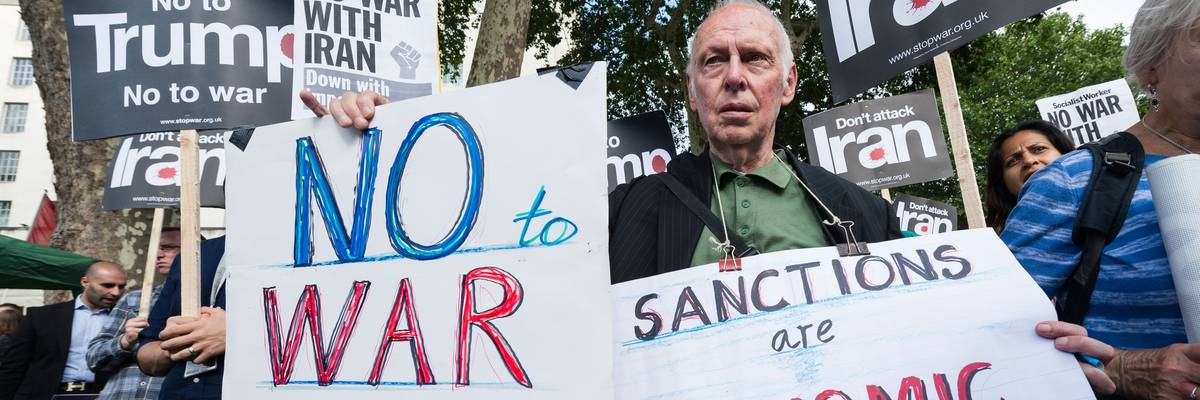
Don't Attack Iran Protest in London

Anti-war demonstrators gather outside Downing Street on 26 June, 2019 in London, England, to call on the government to publicly oppose the escalation of conflict between Donald Trump’s administration and Iran and demand that military action is ruled out.

(Photo: Wiktor Szymanowicz / Barcroft Media via Getty Images)

The supposedly unlimited freedom of action attained by disdaining and trampling international law and institutions has proved to be a double-edged sword.

Nicolas J.S. Davies

May 26, 2026Common Dreams

On May 24, Iran rejected President Trump’s latest fake peace deal, confirming that he had misrepresented what Iran had agreed to and that the two sides are still very far apart, on nuclear enrichment, on control of the Strait of Hormuz, on peace in Palestine and Lebanon, and on lifting US sanctions, paying war reparations, and Iran’s $100 billion in frozen assets.

Iran’s conditions for a peace agreement are necessarily uncompromising, in response to the US record of using negotiations as cover for sneak attacks, and the charade of one-sided “ceasefires with Israeli characteristics,” in which the US and Israel routinely ignore and violate every ceasefire they agree to, including the present ones in Gaza, Lebanon, and Iran.

RECOMMENDED…
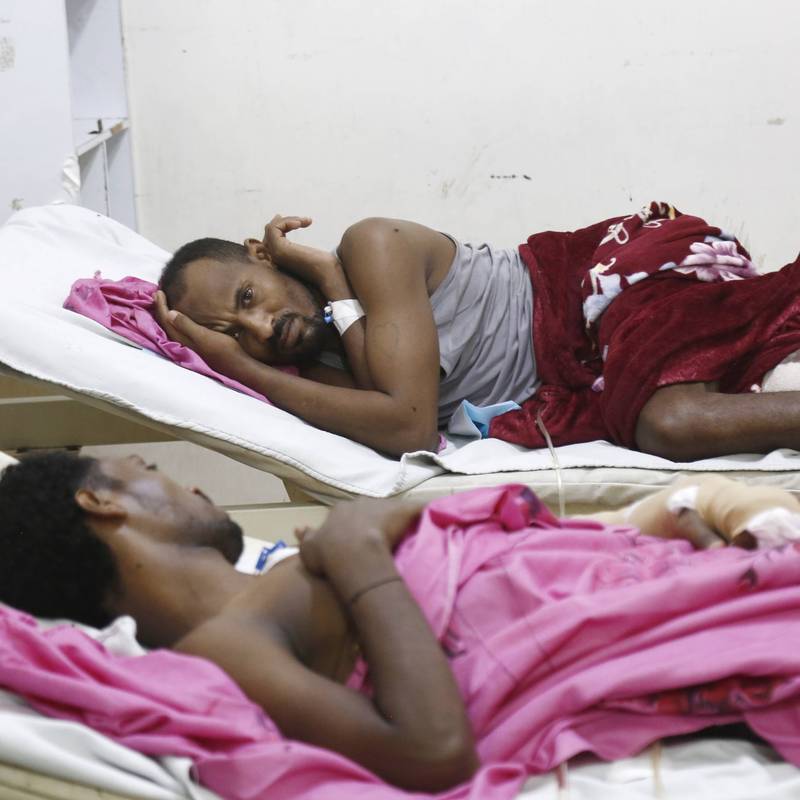
UN Official In Sa'dah, Houthi Stronghold In Yemen

Sharing ‘Grim’ Survivor Stories, Amnesty Renews Call for War Crimes Probe of US Strike in Yemen
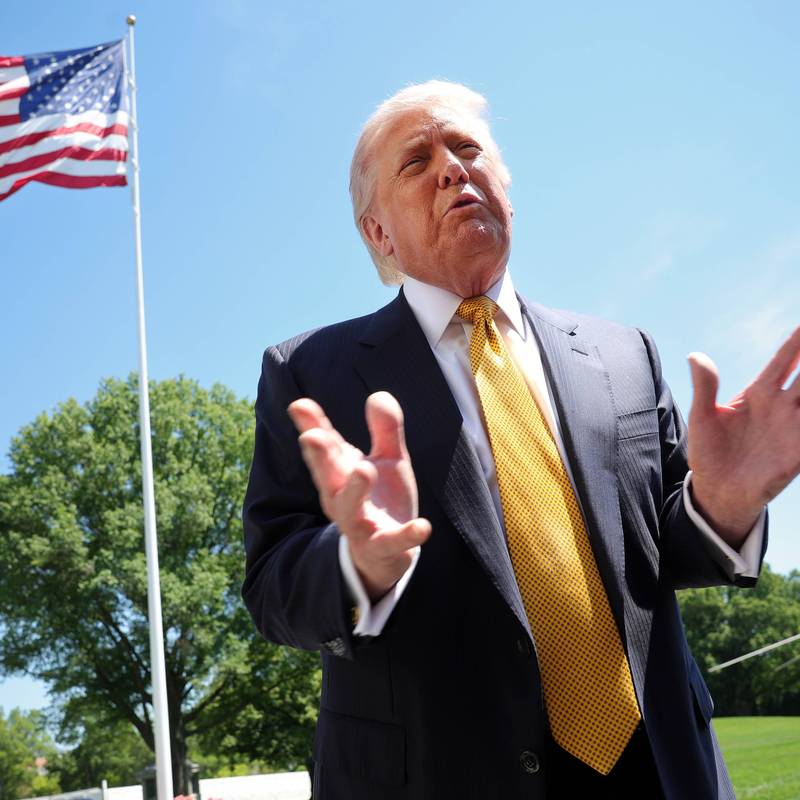
President Trump Departs Washington For Trip To China

100% Tax Proposed to Counter ‘Most Corrupt Thing… Ever Seen From an American President’

Since no agreement with the United States or Israel is worth the paper it’s written on, it’s hard to imagine an agreement that would really protect Iran from future attacks. Without a more radical change in US policy, the United States and Israel will keep attacking Iran, in open violation of the UN Charter, no matter what they all agree to.

The only effective ways Iran has found to protect its land and its people are to build strong military defenses, including the capacity for devastating retaliation, and to retain control of the Strait of Hormuz, regardless of the impact on the world’s oil and gas supply and the global economy. By attacking Iran, the United States and Israel forced it to defend itself and triggered a war that is reshaping the Middle East and possibly the world.

The final sinking of the neocon dream in the troubled waters of the Persian Gulf provides the US and the world with a historic chance to recommit to a more peaceful and democratic international order.

Losing this war is forcing the United States to finally start reevaluating the neoconservative tactics it has blindly substituted for a rational US foreign and military policy since the 1990s: sanction; threaten; bomb; kill; destroy; occupy; escalate; leave countries mired in violence and chaos—in Afghanistan, Iraq, Haiti, Somalia, Libya, Syria, Yemen, Ukraine, Palestine and Lebanon—never admit defeat; never question American exceptionalism or superiority.

The systematic US disdain for the rule of international law that undergirds this policy appears to make peace impossible in today’s world. But the final sinking of the neocon dream in the troubled waters of the Persian Gulf provides the US and the world with a historic chance to recommit to a more peaceful and democratic international order.

Since the end of the Cold War, the United States has effectively exempted itself from the entire system of treaties, international laws and agreements that are supposed to govern international affairs, starting with the UN Charter, which prohibits the threat or use of force between countries, and the Geneva Conventions, which protect civilians, prisoners-of-war and wounded soldiers and sailors from the impacts of war.

These treaties were drawn up and universally adopted in the wake of the Second World War, to “save succeeding generations from the scourge of war,” as the UN Charter says in its preamble. President Roosevelt returned from his Yalta conference with Churchill and Stalin in 1945 to tell a joint session of Congress that they were designing the United Nations as a “permanent structure of peace.”

“It ought to spell the end of the system of unilateral action, the exclusive alliances, the spheres of influence, the balances of power, and all the other expedients that have been tried for centuries—and have always failed,” FDR told Congress. “We propose to substitute for all these, a universal organization in which all peace-loving Nations will finally have a chance to join.”

The UN Charter codified and strengthened the age-old common law prohibition against international aggression, and the renunciation of war as an instrument of national policy in the 1928 Kellogg Briand Pact, which German leaders tried at Nuremberg were sentenced to death for violating.

However, amid overblown Western triumphalism after the end of the Cold War, a new generation of US leaders, like Madeleine Albright and Dick Cheney, came to see the UN Charter and Geneva Conventions as obstacles to their ambitions to further expand US global power by more widespread and unrestricted use of military force.

Believing that the new imbalance in military power freed them from compliance with post-1945 treaties and conventions based on the hard-earned wisdom of past leaders in two world wars, the US and its allies unleashed their armed forces to attack and invade other countries, torture, rape and kill prisoners, and massacre civilians.

US officials assumed that the new military imbalance so greatly favored the United States that neither the UN, international courts, other powerful countries, nor even the entire people of the world could enforce the rules of international law and the laws of armed conflict on the United States if it chose to ignore them.

It is ironic, and deeply frustrating and confusing to US officials, to find out that what they hailed as a position of overwhelming power and impunity has led them to squander America’s day in the sun and waste the chance that its great good fortune provided to improve the quality of life for Americans and their neighbors.

The supposedly unlimited freedom of action attained by disdaining and trampling international law and institutions has proved to be a double-edged sword. There is no such thing as unlimited military power, short of the mass suicide of nuclear war. The idea that America’s virtually unlimited investment in weapons and war would give it the final word in every dispute was a mirage, as even Trump is now finding out.

As Americans reexamine the state of the world and the conflicts by which warmongering US leaders have tried to define it, it is obvious that war and military power do not lead to peace or prosperity, for Americans or anyone else. The more countries the Pentagon and the CIA take aim at, the more people they kill, and the more resources our leaders throw at them, the more other people all over the world rightly come to see the United States as a threat to their own lives and futures.

Governments around the world face difficult choices between meeting the needs and aspirations of their own people or complying with the hegemonic and undemocratic demands of the United States.

After holding itself up as the champion of democracy and freedom for 250 years, the United States is only accelerating its own decline by wasting trillions of dollars, and what little is left of the world’s good will, on this failed, ill-fated bid for global imperial power.

When the United States rose to great power in the first half of the 20th century, its leaders were wise enough to recognize that exercising naked imperial power would not succeed in a world still fighting to free itself from the ravages of European colonialism. So FDR and his colleagues based the UN system on sovereign equality between nations, and created a framework for international relations that the whole world could agree to.

While the United States and Israel commit systematic and barbaric war crimes, presuming themselves immune from accountability, the world is slowly—too slowly—coming to grips with the international cooperation needed to enforce the “permanent structure of peace” that all countries have agreed to live by.

Like all legal and political systems, the success or failure of the UN system rests on whether the most powerful countries will agree to live by the same rules as the others. The veto is a poison pill that corrupts the system, as Albert Camus predicted when it was unveiled in 1945.

“If this report is accurate, … it would effectively put an end to any idea of international democracy,” Camus wrote in Combat, the underground French Resistance newspaper he edited. “The world would be ruled by a directorate of five powers… The Five would thus retain forever the freedom of maneuver that would be forever denied the others.”

However, the UN has developed the “Uniting For Peace” process, which allows the General Assembly to hold Emergency Special Sessions (ESS) on international problems when a veto prevents the Security Council from acting to resolve them. The General Assembly used that process to resolve the Suez Crisis in 1956, and it has been using it, albeit intermittently and inadequately, to address the crisis in Palestine since 1997.

In response to a request from the General Assembly in its Emergency Special Session on Palestine, the International Court of Justice ruled that the Israeli occupation is illegal and must end without delay. And so, the General Assembly passed a resolution demanding that Israel must bring “to an end without delay its unlawful presence in the Occupied Palestinian Territories… and do so no later than” September 2025.

Israel did not comply, so the General Assembly must take further steps, such as an arms embargo and an economic boycott. But it does have the means to do so and just needs to muster the political will.

While the United States and Israel commit systematic and barbaric war crimes, presuming themselves immune from accountability, the world is slowly—too slowly—coming to grips with the international cooperation needed to enforce the “permanent structure of peace” that all countries have agreed to live by, and on which the lives of millions of vulnerable people and the future of humanity depend.

While US leaders are finally realizing that they do not have the power to intimidate and conquer the whole world, the American people are gradually understanding that we have an even greater power, the power to refuse to fight their criminal wars, and to insist on making peace and cooperating with all our neighbors on this small planet that we all share.

Hegseth details White House plan to surge military spending by 50 percent

April 30, 2026
Andre Damon@Andre__Damon6 hours ago
    Secretary of Defense Pete Hegseth appears before a House Committee on Armed Services business meeting on the Department of Defense Fiscal Year 2027, on Capitol Hill, Wednesday, April 29, 2026, in Washington. [AP Photo/Rod Lamkey Jr.]

    Defense Secretary Pete Hegseth testified before the House Armed Services Committee on Wednesday on the Trump administration’s plan to increase military spending by 50 percent, from $1 trillion this year to $1.5 trillion in Fiscal Year 2027.

    Hegseth, who has rebranded the Pentagon as “the Department of War,” told the committee the budget would put the defense industrial base “back on a wartime footing.”

    The request is the sharpest single-year jump in US military spending in the postwar era. It would lift outlays to 4.5 percent of gross domestic product, with House Republican leaders calling for 5 percent as the eventual target.

    The buildup is preparation for war with nuclear-armed China and Russia, the two states Trump’s National Defense Strategy names as principal adversaries.

    In the face of a broadly unpopular administration openly stating its intent to commit war crimes in pursuit of global domination, the Democrats on the committee made it their highest priority to emphasize—despite tactical disagreements—their solidarity with the Trump administration’s megalomaniacal program of world conquest.

    Democratic ranking member Adam Smith of Washington opened by expressing his sympathy with the Iran war and with the 50 percent surge in military spending. “I think we should all recognize that our troops deserve nothing but our praise for the incredible job that they have done,” Smith told Hegseth. “We have demonstrated to the world that we have a highly capable military, and I hear the chairman on the need for an increased” budget.

    Smith then condemned the mass popular opposition to the war. “I strongly disagree with the folks on the far left who say that we don’t really face any threats, that the US is a malign influence in the world and always has been. I don’t agree with that,” Smith said. “China, Russia, Iran, North Korea, Hezbollah, Hamas, the Houthis,” he continued, “They want to push us aside.”

    Republican Don Bacon of Nebraska summed up the bipartisan consensus for global war. “We are the most bipartisan committee out of 20 in Congress. We have a tradition of voting on NDAAs with large, large majorities year after year,” Bacon said. “And it’s important not to be a Republican first in here or a Democrat first. We’re Americans trying to ensure that our country is well defended. And in that spirit, I compliment the operations in Iran.”

    Bacon is correct about the bipartisanship of the war drive. The Democrats funded the buildup before the Iran war began and refused to halt it once it was under way. The House passed the FY26 National Defense Authorization Act on December 10, 2025, by 312 to 112, with the entire Democratic House leadership voting yes; the Senate followed 77 to 20. On January 22, 2026, the House cleared an $839 billion defense appropriations bill 341 to 88. On February 2, 21 House Democrats supplied the margin for a continuing resolution to keep the government funded; the same day, a US F-35 from the USS Abraham Lincoln shot down an Iranian drone over the Arabian Sea. Twenty-six days later, the US-Israeli assault on Iran began. Once it had, both chambers voted down War Powers Act resolutions to stop it.

    The plan’s largest line item, $71 billion, would massively expand the US nuclear arsenal—new ballistic-missile submarines, long-range bombers and intercontinental missiles aimed at China and Russia. Shipbuilding receives $65 billion. Bombs and conventional missiles get $25 billion. The “Golden Dome” missile-defense program is funded at $22 billion. The Space Force budget doubles. Procurement rises 76 percent and research and development 64 percent. Another $54.6 billion is earmarked for a Defense Autonomous Warfare Group to wage drone war, most of it contingent on a future reconciliation bill.

    Hegseth said the budget would put 14 munitions production lines on a sustained wartime tempo—Patriot, PAC-3, THAAD, Tomahawk, AMRAAM and JASSM missiles among them—with companies offered multi-year demand signals to expand their factories. The active-duty force grows by 44,000 troops. The Pentagon claims to have triggered more than $50 billion in private investment, 280 new factories and 18 million square feet of American manufacturing floorspace. Joint Chiefs Chairman Gen. Dan Caine called the budget “a historic down payment on future security.”

    Republican Mike Rogers of Alabama, chair of the House committee, framed the request around preparation for war with China. “China builds 47% of the world’s ships. The US builds one-tenth of 1%. We build fewer ships than Croatia or the Netherlands,” Rogers said. The Chinese military, he added, has become “a modernized military force capable of projecting power well into the Pacific.”

    Caine said the Pentagon was reviewing “all three legs of the nuclear triad”—submarines, missiles and bombers—to make sure they were “reliable, redundant, and workable” for, in his words, “our nation’s most important day.” Hegseth warned the committee that “the country that dominates in quantum will dominate the future in C2, in comms, in every way that we fight.” Bacon called for a nuclear buildup expressly aimed at Beijing: “Russia, China needs to know no matter what they do, we can launch those 400 ICBMs.”

    The defense secretary spoke the vocabulary of a crime boss. He said the spending would build a military that “instills nothing less than unrelenting fear in our adversaries.” He cited the year’s operations as proof. “That matters when you go 37 hours around the world for Midnight Hammer,” he said, referring to the June 2025 B-2 bombing of Iranian nuclear sites. “That matters when you go downtown in Venezuela and grab the indicted dictator of a country in the middle of the night.” Russian air defenses sent to protect Venezuelan President Nicolás Maduro before his January 3 abduction, Hegseth said, “were defeated in 15 minutes.”

    Democratic Representative Seth Moulton of Massachusetts questioned Hegseth over his March 13 press conference order to give boats in the Caribbean “no quarter, no mercy.” Moulton, a former Marine Corps officer with four combat tours in Iraq from 2003 to 2008, said, “An order for no quarter or no survivors is a war crime under the Geneva Conventions.” Hegseth did not retract the order. “The Department of War fights to win,” he replied.

    Wednesday’s hearing made clear that the war on Iran is one phase of a global war the American ruling class is preparing for control of the world.

    US War Machine Is Built on Decades of Lies. The Assault on Iran Is No Exception.

    April 6, 2026

    Trump’s endless falsehoods about the Iran war build on a long history of US military mythmaking.

    By Scott Kurashige , Truthout Published April 5, 2026

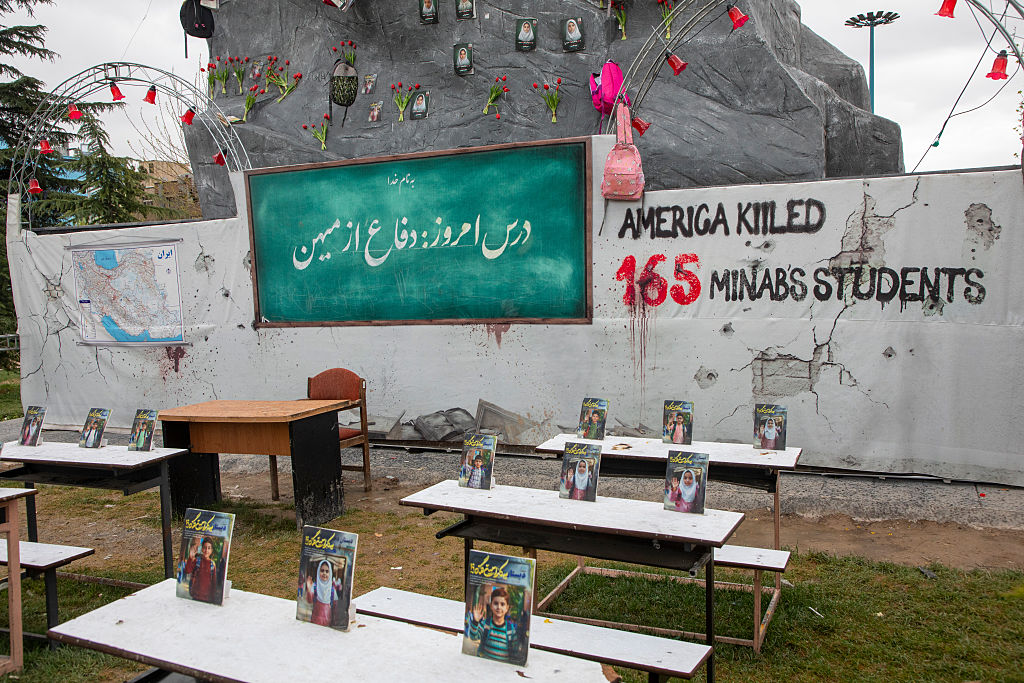
    A memorial for the victims of the Shajareh Tayyebeh primary school bombing is on display on March 28, 2026, in Tehran, Iran.

    Truthout is a vital news source and a living history of political struggle. If you think our work is valuable, support us with a donation of any size.

    The first casualty of war is the truth.

    This truism — understandably repeated at the outset of each new U.S. war — is proving itself once again.

    With all evidence pointing toward U.S. responsibility for the February 28 bombing of Shajarah Tayyebeh elementary school, President Trump claimed that the attack “was done by Iran.” In spreading this blatant misinformation, Trump was not in fact shattering presidential norms — rather, he was continuing a White House tradition.

    Back in 1945, in a public statement announcing the U.S.’s atomic bomb strike on Japan, President Harry Truman falsely described the city of Hiroshima as “an important Japanese Army base.” In fact, the overwhelming majority of those killed were civilians. The bomb targeted thousands of schoolchildren, including nearly 6,000 who died as part of a service patrol near the center of Hiroshima. In Nagasaki, more than 1,400 students and teachers at Shiroyama Elementary School were killed.

    But like most students attending U.S. schools after World War II, I was taught that dropping the atomic bombs saved lives.

    Related Story

    A livestream shows Jerome Powell, chairman of the U.S. Federal Reserve, speaking after a Federal Open Market Committee meeting, on the floor of the New York Stock Exchange in New York City on March 18, 2026.

    Interview

    |

    Politics & Elections

    Trump’s Iran War May Mark the Beginning of the End for Dollar-Backed US Empire

    Radical economist Costas Lapavitsas discusses the crumbling of the dollar-backed world system and what could be next. By C.J. Polychroniou , Truthout

    March 25, 2026

    Long before George W. Bush asserted that Saddam Hussein had WMDs, dubious claims and outright lies served as pretexts for the U.S. to launch major wars. A jingoistic fervor following an explosion on the battleship USS Maine prompted the Spanish-American War in 1898. In 1964, LBJ cited a “phantom battle” to push the Tonkin Gulf Resolution authorizing military intervention in Vietnam.

    Trump stands out mostly because he made little effort to sell his lies before going to war. In his prime-time address on April 1, 2026, he retroactively offered his first attempt to justify the war, claiming without evidence that Obama’s nuclear deal made Iran a greater threat and that Iran was on the cusp of aiming missiles at “the American homeland.”

    Long before George W. Bush asserted that Saddam Hussein had WMDs, dubious claims and outright lies served as pretexts for the U.S. to launch major wars.

    Calling truth a casualty of war may imply, however, that truth survives between wars. But the reality is that militarism and the warfare state are sustained by lies which stretch over decades. The ideology of American exceptionalism is driven by the myth that U.S. intervention plays a unique role in spreading freedom and democracy around the globe. Keeping the public uninformed and miseducated has been a key tactic to tamp down dissent.

    The most common and continuous form these lies take is omission, erasing the pattern of U.S. war crimes from military records, history textbooks, and public memory. This record of erasure has proven so effective that many of those speaking out against war crimes do not seem to understand the degree to which they, too, have been miseducated. Chastising the Trump administration’s response to the school bombing, The New York Times’s David Wallace-Wells recoiled at the notion of a mass civilian massacre being “treated by U.S. officials as the normal cost of waging war.”

    That civilian massacres have been a regular feature of warfare under Democratic and Republican administrations throughout U.S. history has apparently been lost on Wallace-Wells and countless others. Racism and xenophobia play a crucial role in this erasure, as they are used to rally support for war while devaluing the millions of nonwhite lives lost in pursuit of U.S. interests. As General William Westmoreland said bluntly during the Vietnam War, “The Oriental doesn’t put the same high price on life as does a Westerner.”

    In this way, war-related lies have been integral to the formation of our national identity.

    Trump stands out mostly because he made little effort to sell his lies before going to war.

    This is particularly true for the series of wars stretching across East, Central, and West Asia since the late 19th century that I researched for my book, American Peril: The Violent History of Anti-Asian Racism. Rudyard Kipling’s invocation of “the white man’s burden” in his 1899 call for the U.S. to colonize the Philippines was unmistakably racist. But in its time, it was meant to be instructive: Waging the “savage wars of peace” required Americans to shed their “childish” innocence and embrace the brutish nature of imperial power.

    The message was sadly taken to heart by U.S. troops in the Philippines, where lynching, torture, concentration camps, and mass murder became all too common. Some atrocities continued long after the U.S. declared an end to combat. In 1906, American troops on Jolo Island in the southern Philippines killed 1,000 Moro people in what the U.S. recorded as a great military victory over Muslim fanatics in the “Battle of Bud Dajo.” Recounted by historian Kim A. Wagner, it was a horrific massacre, whose victims included women and children, as well as outgunned or unarmed men attempting to surrender.

    Regarding the firebombing of Tokyo during World War II, Robert McNamara admitted, “In that single night, we burned to death 100,000 Japanese civilians in Tokyo: men, women, and children.” After WWII, McNamara served as secretary of defense, overseeing the escalation of the Vietnam War that resulted in over 3 million deaths. The My Lai massacre, which was marked by wanton slaughter and sexual assault — was initially recorded as a successful defeat of “enemy” combatants in March 1968, but more accurate news about it finally broke through decades of silence on U.S. war crimes. Most Americans quickly bracketed it off, a horrific exception rather than the culmination of a pattern.

    But My Lai was a near replay of tragedies from the Korean War that the U.S. military systematically covered up. South Koreans had long memorialized the hundreds of unarmed and defenseless civilians, from babies to elders, massacred by U.S. soldiers at No Gun Ri. It was only brought to the attention of the U.S. public, however, by a Pulitzer Prize-winning team of Associated Press reporters nearly a half-century later. Even today, mainstream histories largely ignore U.S. military involvement in the brutal partition and occupation of Korea.

    And My Lai was far from the only civilian massacre in Vietnam. Indeed, on the same day, dozens of Vietnamese civilians in My Khe were killed by U.S. troops. American soldiers commonly used the most vile, racist epithets and dehumanizing stereotypes to characterize Vietnamese people — both combatants and civilians, friends and foes alike. “Murder, torture, rape, abuse, forced displacement, home burnings, specious arrests, [and] imprisonment without due process,” as author Nick Turse documented in Kill Anything That Moves, “were virtually a daily fact of life” for Vietnamese people.

    The most common and continuous form these lies take is omission, erasing the pattern of U.S. war crimes from military records, history textbooks, and public memory.

    Although the U.S. defeat in Vietnam caused veterans like Colin Powell to adopt a more protective approach to the deployment of U.S. troops, the pattern of civilian massacres continued. On February 13, 1991, over 400 Iraqi civilians taking refuge in a shelter were killed in Amiriyah by two laser-guided “smart bombs” in the U.S.-led war on Iraq. Though in this case U.S. officials did acknowledge the civilian deaths, they were largely dismissed as “collateral damage” from a strike on a military target.

    Amnesty International investigated 10 incidents involving at least 140 civilians, including at least 50 children, killed in the U.S.-led war on Afghanistan, for which there were no war crimes prosecutions of any kind. Retired Lieutenant General Douglas Lute, the former deputy national security advisor, acknowledged, “We virtually never held anyone accountable for civilian casualties.”

    Whether actively or passively, our culture — just as it fails to value all American lives equally — has internalized the lies that elevate the value of American lives far above those who look like the enemy.

    None of this is meant to imply that the U.S. always targets civilians deliberately or to deny that America’s enemies have committed atrocious crimes against humanity. Lies and dehumanization are a common tactic that all parties use in war. But with America’s unrivaled post-WWII military and economic superpower has come the concordant privilege to act with impunity, to disregard what the rest of the world thinks of us, and to dismiss the suffering of others.

    Civilian massacres have been a regular feature of warfare under Democratic and Republican administrations throughout U.S. history.

    When the Tokyo Trials were set up after World War II to prosecute Japanese war crimes, the U.S. ensured that the conduct of its military was barred from review, setting in motion a chain of disregard for equitable governance under international law. Since 2002, the U.S. has failed to endorse the International Criminal Court. The Trump administration has gone much further, attacking and placing sanctions on its judges, while waging war on Iran with Israel as Prime Minister Benjamin Netanyahu is wanted for arrest by the ICC for war crimes in Gaza.

    The incremental steps our own government has taken have been rapidly reversed, as well. Pete Hegseth, the Fox News host turned self-proclaimed “Secretary of War,” bombastically declared that “We negotiate with bombs,” while expressing disdain for “stupid rules of engagement.” Signaling this intent last year, he dismantled Pentagon programs intended to mitigate civilian harm. Such actions complement the misinformation campaign to eliminate “controversial” and “unpatriotic” topics from our public schools and national monuments.

    But as the latest wrongheaded war reveals another layer of the United States’s limitations and declining power, those imperial privileges are waning. Trump’s threat to obliterate Iran’s civilian infrastructure should be opposed because it is a war crime in the making against innocent people and because such attacks could boomerang into a global economic meltdown, intensifying suffering at home and abroad.

    Holding the individuals responsible for these decisions accountable — at the ballot box and under international law — is just the first step that people in the U.S. can take to become responsible citizens of a global community and stop the next atrocities before they occur. But we cannot wait for change to come from those at the top.

    Historian Judy Tzu-Chun Wu has chronicled the diverse U.S. activists who built transnational and multiracial solidarity through travels to Vietnam while it was under siege from the U.S. Since the 1990s, the International Women’s Network Against Militarism has brought U.S. educators, artists, and activists together with women in many of the places most impacted by war and the negative effects of permanent overseas U.S bases. Their multifaceted efforts to overcome militarism advance a decolonial model of solidarity crossing Asia, the Pacific Islands, and the Caribbean.

    More recently, the humanitarian aid flotillas acting to alleviate starvation and death in Gaza and Cuba owing to Israel’s and the U.S.’s respective illegal blockades serve as important examples of the people-to-people relations necessary to break the chain of the lies that have torn us apart for too long. Reckoning with the legacy of empire ultimately requires a level of awareness that can best be achieved through these forms of solidarity from below.

    Pentagon’s Christmas Present: Largest Military Budget Since World War II

    December 26, 2010

    By Rick Rozoff, opednews.com, Dec 23, 2010

    On December 22 both houses of the U.S. Congress unanimously passed a bill authorizing $725 billion for next year’s Defense Department budget.

    The bill, the National Defense Authorization Act for Fiscal Year 2011, was approved by all 100 senators as required and by a voice vote in the House.

    The House had approved the bill, now sent to President Barack Obama to sign into law, five days earlier in a 341-48 roll call, but needed to vote on it again after the Senate altered it in the interim.

    The proposed figure for the Pentagon’s 2011 war chest includes, in addition to the base budget, $158.7 billion for what are now euphemistically referred to as overseas contingency operations: The military occupation of Iraq and the war in Afghanistan.

    The $725 billion figure, although $17 billion more than the White House had requested, is not the final word on the subject, however, as supplements could be demanded as early as the beginning of next year, especially in regard to the Afghan war that will then be in its eleventh calendar year.

    Continues >>

    Mercenary Soldiers on Sale… Who’s In Charge of These Hired Killers?

    March 23, 2010

    Eric S. Margolis, Khaleej Times Online, March 22, 2010

    A fascinating scandal has erupted in Washington over the use of mercenaries (‘private contractors’ in US terminology) that is exposing the dark underbelly of America’s foreign wars. It has been that the Pentagon and other US intelligence agencies secretly fielded mercenaries in Afghanistan, Pakistan (aka “Af-Pak”), and Iraq to assassinate tribal militants.

    US law forbids murder or using mercenaries.  But, as the Roman jurist Cicero said, “laws are silent in times of war.”

    A former senior Pentagon official specialising in clandestine operations, Mike Furlong, set up a shell company, International Media Ventures (IMV), to supposedly provide the US military with “cultural information” about Afghanistan’s Pashtun tribes.  Two obscure Pentagon outfits, the “Cultural Engineering Group” in Florida, and “Counter-Narco-terrorism Technology Programme” of Virginia funded Furlong with $24.6 million. Furlong hired a bunch of former Special Forces types and assorted thugs. These rent-a-Rambos’s real mission was to assassinate Pashtun leaders in Pakistan and Afghanistan, and target tribal compounds for strikes by US Predator drones. Welcome to the modern version of the Mafia’s infamous contract killers, “Murder Inc.”

    Thickening this plot, retired CIA types, including the flamboyant Dewey Clarridge, whom I well recall from the 1980’s Afghan war, were involved. So were other would-be bounty-hunters, eager to cash in one the Pentagon’s cash bonanza. It is uncertain if Furlong’s Murder Inc had time to go operational.  But its exposure is causing uproar.  In best US government tradition, the Pentagon denied backing Furlong and cut him adrift. He is now under criminal investigation. Shades of former CIA agent Edwin Wilson, whose frightful case I long followed. Wilson was set up as a deniable “independent” by CIA to supply arms and explosives to Libya and Angola in the 1980’s. When this intrigue blew wide open, Wilson was kidnapped by US agents and buried alive in federal prison for 27 years.

    The Furlong scandal comes at a time of growing criticism of the US government’s use of over 275,000 mercenaries in Iraq, Afghanistan and Pakistan.   These hired gunmen and logistics personnel operate without any accountability, legal structure, or oversight. Lack of command and control of such free-lancers infuriates traditional military men, who detest US Special Forces and these hired gunmen as ‘cowboys.’

    It certainly is no way to win over Muslim hearts and minds.

    Private mercenary firms like Xe (formerly Blackwater) and DynCorp have raked in fortunes running private armies for the US. They are major donors to the far right of the Republican Party. Deeply worried civil libertarians call these private armies potential Brownshirts, after the Nazi Party’s private army in the late 1920’s.

    Amazingly, US Special Forces in Af-Pak have not until this month been under the control of supreme commander, Gen. Stanley McChrystal. They apparently reported to his rival, Central Command chief Gen. David Petraeus in Tampa, Florida.

    To the Pentagons’s anger, CIA runs its own killer paramilitary units and drone assassination operations, 90 per cent of whose victims are civilians, according to Pakistani media investigations.   CIA’s paramilitaries report only to HQ in Langley —which does not talk to the Pentagon. Pakistan’s feeble government is not even informed in advance of Predator strikes and assassinations on its own territory.   How many of the 15 other US intelligence agencies and NATO forces are running their own little illegal private armies? US mercenaries are responsible for a growing number of civilian deaths. It’s only a matter of time before all these cowboys begin shooting at one another.  Reliable sources in Pakistan report that US-paid mercenaries are staging bombings there and in Afghanistan in an attempt to incite popular anger against Islamic or tribal militants, and draw Pakistan’s army deep into the fray.

    Washington brands all Al Qaeda and Taleban “illegal combatants,” denying them due process of law and the Geneva Convention’s prisoner protections.  Murdering or torturing such “terrorists,” says Washington, is lawful.  So what about all the US mercenary Rambos running amok, who wear no uniform, kill at will, and have no legal oversight and, as we saw in Iraq, get away with murder?

    Eric Margolis is a veteran US journalist who reported from the Middle East and Asia for nearly two decades

    USA: Thousands rally on anniversary of invasion of Iraq

    March 21, 2010

    By MATTHEW BARAKAT (Associated Press Writer)

    The Washington Post,  March 21, 2010

    WASHINGTON — Thousands of protesters – many directing their anger squarely at President Barack Obama – marched through the nation’s capital Saturday to urge immediate withdrawal of troops from Iraq and Afghanistan.

    At least eight people, including activist Cindy Sheehan, were arrested by U.S. Park Police at the end of the march, after laying coffins at a fence outside the White House. Friday marked the seventh anniversary of the U.S.-led invasion of Iraq.

    “Arrest that war criminal!” Sheehan shouted outside the White House before her arrest, referring to Obama.

    At a rally before the march, Sheehan asked whether “the honeymoon was over with that war criminal in the White House” – an apparent reference to Obama – prompting moderate applause.

    Continues >>

    Disillusion among Liberal Supporters: Obama’s Foreign / Military Policy

    January 19, 2010
    by Jack A. Smith
    Global Research, January 19, 2010

    A year has gone by since Sen. Barack Obama assumed the presidency, replacing George W. Bush, who was among the worst chief executives in American history.

    The election of an African American to the White House is an historically positive development. And his first year in office  has shown his superiority to Bush and his defeated opponent, rightist Sen. John McCain, in several areas.

    At the same time, in terms of foreign/military policy, President Obama has essentially continued many of the Bush Administration’s initiatives  first and foremost his predecessor’s “global war on terrorism,” but in other international endeavors as well.

    Democrats of the political center and center right have remained uncritical of President Obama‹ some to the extent of keeping quiet about, or supporting, his administration’s expanding wars, although they may have opposed the wars during Bush’s reign.

    But a number of liberal Obama supporters who identify with the party’s center left are expressing serious disappointment. Center right governance, continual compromise with the right wing Republicans, and more wars are not the changes they expected from a candidate some believed to harbor progressive intentions.

    In this article we will explore the first year of President Obama’s foreign/military policies ‹ a principal source of progressive dissatisfaction.

    On one level, the Bush-Obama global war on terrorism, with its military moves in Afghanistan, Iraq, Pakistan, Yemen, Somalia, the Philippines and elsewhere, are aimed at defeating al-Qaeda, which claims responsibility for the attack of Sept. 11, 2001, and other organizations it deems to be “terrorist,” even if their activities are confined to their own countries or in fact are not actually terrorists at all.

    But on another far more important level the real objective of this endless series of wars is the attainment of geostrategic advantage against any country or bloc that potentially might undermine Washington’s dominion over world affairs.

    Within this strategic context the Obama government is particularly interested in five objectives: (1) Winning the Afghan war, or at least conveying the impression that the U.S. has not lost; (2) Making sure Washington’s old Cold War rivals ‹ now reconstituted as the economic powerhouse of China and resource-rich Russia ‹ are “contained,” or at least are not subverting American power; (3) keeping the European Union in tow as a junior partner; (4) insuring that Latin America and the Caribbean remain firmly within the Yankee sphere of influence; and (5) certifying that the lion’s share of the world’s petroleum and natural gas resources continue to accrue to the world’s only military superpower.

    Obama’s foreign/military strategy is a continuation of policies that began in the aftermath of World War II in 1945. For the first 45 years, to 1990, the main goal was to dominate and lead the capitalist countries in a Cold War to overpower socialist and communist alternatives to capitalism. For the remaining 20 years the main goal was for the U.S. to dominate and lead all of countries of the world as the “indispensable” unipolar hegemon.

    The eight years of the Bush Administration deviated from America’s postwar international line, but not in its devotion to fulfilling the political system’s hegemonic and militarist goals. Where Bush ruptured the continuity of traditional U.S. foreign/military policy was in the counterproductive methodology and dysfunctional risk evaluation emanating from the hubris and gross misperceptions of the neoconservative ideologists who crafted presidential decisions.

    Starting unjust wars against much smaller countries hardly contradicts traditional U.S. international behavior. Indeed, it is the hallmark of such behavior. But responding to 9/11 with an amorphous, endless, and unwinnable “war on terrorism” was absurd. The subsequent attack on desperate, underdeveloped Afghanistan, and then invading already half-crippled Iraq, were disastrous errors that have cost Washington mightily in terms of treasure and reputation.

    Bush announced early in his administration: (1) that the Pentagon would exercise its full spectrum military dominance, preemptively when desired, against any challenge from anywhere ‹ and demanded worldwide allegiance to Washington’s adventurism; (2) that the mission of the White House was to transform the governments of “rogue countries,” “failed states,” and societies that “harbored terrorists” into “democratic” subsidiaries of the U.S. government by violence if persuasion failed; (3) that other countries ‹ especially America’s NATO allies ‹ must dance to Washington’s martial music or risk being shunned or even tossed aside like a used tissue or an Old Europe.

    The result of Bush’ overt imperialist grab to extend Washington’s global domination, coupled with rude treatment and bullying of hesitant allies, was the weakening of U.S. world power politically, militarily, and economically.

    Politically, many allied nations grew more distant. Much of heretofore subordinate Latin America began to move left and to ignore Uncle Sam’s orders. The Muslim world was aghast at Bush’s unjust wars against two Islamic countries and 100% support for Israel. Militarily, the Pentagon’s armies suffered the humiliation of being fought to a stalemate by small and poorly armed guerrilla forces in Iraq and Afghanistan. Economically during this period the U.S. became the world’s greatest debtor nation, and of course it sank into a painful recession.

    Regarding debt, which is often brushed aside, an article in the Dec. 29 Financial Times pointed out: “Over the next decade U.S. publicly held debt is forecast to more than double to 85% of gross domestic product ‹ the highest rate since the second world war. And that is without including the intra-government debt in Social Security and Medicare, the government health scheme for the elderly, which would push U.S. indebtedness well above 100% of GDP during Mr. Obama¹s second term. Hegemons cannot for long survive such rising indebtedness.”

    As President Obama entered the White House a year ago, the U.S. was still the world’s only superpower and despite its debts and the recession it remained a rich and dominant country. Its share of global income remains about where it has been for decades: 22%. But America’s standing in the world was greatly diminished because of its past and especially more recent policies. Also, other nations were rising, such as the BRICs (Brazil, Russia, India, China). And some previously subordinate countries were disinclined to continue playing follow the leader after Washington’s neoliberal economic model caused them grave hardship and its extreme laissez faire form of capitalism sparked the present recession.

    What principally props up the U.S. today is

    (1) its overall military power and hair-trigger willingness to use it;

    (2) the continuing political and organizational weakness of the European Union, a potentially powerful economic competitor and rival were it to leave Washington’s orbit;

    (3) and China’s expressed indifference to displacing the U.S. as the global hegemon. Beijing has been committed for decades to multipolarity,  global leadership by several countries and blocs, not just the present unipolar superstate. Many other countries support such a reorganization.

    Washington grudgingly recognizes that some form of multipolarity is unavoidable within the next decade or two at most, in which case it would certainly seize the opportunity to become “first among equals,”  retaining as much “leadership” as possible.

    This is where Obama fits in, and we’ll begin at the beginning. At 48, he is an exceptionally intelligent, self-confident and ambitious man who obviously feels comfortable wielding power. He had not even served a full first Senate term in Washington, after several years as an obscure Illinois state legislator, when he put himself forward and was selected by the power elite to seek the Democratic nomination for the presidency.

    By power elite ‹the term coined by the great sociologist C. Wright Mills ‹ we’re speaking of that informal assemblage of corporate, financial, military, and political leaders and their intellectual minions in the U.S. who together possess hugely disproportionate influence and access to wealth. During the grueling primaries and the presidential campaign corporate and financial institutions were among Obama’s biggest contributors, uniquely investing more in the Democrat this time than in his openly pro-business Republican opponent.

    Obama of course was elected by the masses of American people, but it is extremely doubtful he would have been a serious candidate to begin with were it not for the backing of these powerful interests.

    The elite wanted a chief executive who would (1) repair the damage Bush caused, and quickly restore U.S. dominance in world affairs; and (2) should the days of unipolarity prove short, as seems likely, manipulate the transition to multipolarity so that the United States comes out on top.

    Obama made it clear in the two years before the election that his foreign/military strategy would rest upon a combination of the reliable hegemonic policies of the Democratic Clinton Administration and the “realist” international program of the Republican administration of George H. W. Bush (the First). These were the “successful” policies that existed during the dozen halcyon years before the neocon Vandals sacked Washington.

    Obama won election for several reasons. The most important were that the Democratic candidate followed eight dreadful years of President Bush, and the country was in an economic recession. But equally important was the “hope for change” he cultivated in the minds of multitudes of Democrats and independents, while never specifying clearly what that “change” was supposed to be, though many voters assumed it would be progressive. That he opposed the Iraq war was a big plus, even though he voted to fund it during each of his few years in national politics. Not to be overlooked, of course, were his winning personality, and spellbinding ability as a public speaker.

    Obama’s first payback to his elite backers was the selection of an economic team that would not impose overly harsh regulations on the financial system. Treasury Secretary Geithner, National Economic Council Director Summers, and Federal Reserve Chairman Ben Bernanke had also supported policies that facilitated the recession but they’ve supposedly learned from their colossal mistakes.

    The second payback was keeping Bush’s Defense Secretary Robert Gates (who is also connected to Bush the First’s administration) in his old job, naming pro-Iraq war Democratic Sen. Hillary Clinton Secretary of State, and retaining Gen. David Petraeus as head of Central Command. This triumvirate seems mainly responsible for the vast expansion of the Afghan war, its overlapping into Pakistan and now the extension to Yemen. With their help, Obama  believes he will “win” the Afghan war (and thus a second term).

    Obama’s immediate task upon assuming office was to repair the Bush Administration’s mishandling of relations with the rest of the world. He quickly made peace with the major U.S. allies who had been offended by the Bush regime’s arrogance and unilateralism. He promised a new policy for Latin America based on equality and mutual respect. He assured the nearly 1.6 billion Muslims that America was their friend.

    When these overtures were made, it seemed as though the conduct of the old foreign policy ‹ which had served the  U.S. handsomely since the mid-1940s until the neoconservative train wreck ‹ was back on track. No more alienating our friends, and no more harebrained wars.

    After a year, what does this foreign/military policy look like? It’s quite similar to Bush’s but without with  the neocon management, so it looks better.

    There has been a huge expansion of the Afghan war, increasing thrusts into Pakistan, and now Yemen’s the target of Washington’s bombings, pilotless drones, military aid and bribes. The war budget is more bloated than ever before. The costs of it all are astronomical, but it will be future generations of Americans ‹ those of our children and grandchildren ‹ who will pay big time for the imperial wars of the Bush-Obama years.

    The overture to Latin America was a charade. Washington mildly criticized but facilitated the successful anti-democratic Honduran coup to prevent a reliable satellite from possibly turning toward the left in future years. Meanwhile, the Pentagon is taking over seven new military bases in Colombia, threatening adjacent Venezuela ‹ the CIA’s number one target in South America. And of course the Cold War with Cuba is as cold as ever.

    The Obama Administration is still pursuing the goal of exercising hegemony over the entire oil-rich Middle East. Washington’s total partiality to Israel at the expense of the Palestinian people remains unchanged. The attitude of the Democratic Congress and the Obama White house toward the suffering people of Gaza is unforgivably cruel. The White House still supports dictatorial Egypt and backward Saudi Arabia against the aspirations of their own people.

    Muslims around the world welcomed Obama’s Cairo speech June 4, but the good will it generated has dissipated. Efforts to destabilize Iran are continuing apace, along with threats of “killer” sanctions, and the prospect of war remains “on the table.”

    NATO, which is remotely controlled from Washington like a drone over western Pakistan, is still inching toward Russia, to Moscow’s continuing annoyance. And by penetrating Afghanistan, the armies of the North Atlantic are situated close to the Central Asian oil and gas reserves located in several former southern republics of the late Soviet Union. NATO bases are now virtually touching western China.

    Billions are being spent to convert Guam into a major U.S. base in the Pacific, undoubtedly with China in mind. In northeast Asia Obama is continuing Washington’s 57-year refusal to sign a peace treaty with North Korea to officially end the Korean War ‹ a major irritant stimulating Pyongyang’s antipathy toward Washington. All the over 700 U.S. major military outposts abroad ‹ “America’s Empire of Bases,” as Chalmers Johnson puts it ‹ are remaining in place, as are the nuclear-armed missiles targeting China’s cities, a push-button away from oblivion.

    Despite its rhetoric about taking environmental action ‹ a foreign policy issue of enormous importance ‹ the Obama Administration’s performance at the UN’s December climate conference in Copenhagen was big on posturing but small indeed on programmatic commitments.

    The Obama White House couldn’t do much about Iraq because Bush made the deal with the Baghdad government to withdraw at the end of 2011. We will believe the complete withdrawal when we see it. At this stage it is likely that there will be an eventual agreement between Baghdad and Washington to prolong the Iraq occupation with a substantial number of American troops remaining indefinitely.

    Progressives have every reason to be dismayed by the Obama Administration’s foreign/military policy. It’s essentially a continuation of the postwar policy that brought the U.S. to global power, though in a bright new wrapping. It’s better than the Bush years, but that’s the faintest of praise.

    Barack Obama was the candidate of change, but the reality in international endeavors is small change indeed. Social commentator Glenn Greenwald remarked on this general point during an interview on Democracy Now in early January:

    “It’s ironic, given that the campaign was all based on changing the nature of how Washington works ‹ [but] the central attribute of the Obama Administration is to accommodate and keep in place the same power factions that have run Washington forever, and as a result, the same mindset, the same dynamic that governs Washington in virtually every area.”

    Unless we Americans take a public stance against war and hegemony, and associate ourselves with the antiwar and social movements struggling for substantial change, there will be no change at all. It’ll just be war after war. Maybe if Albert Einstein said this it would be more convincing. Well, he did:

    “We must not conceal from ourselves that no improvement in the present depressing situation is possible without a severe struggle; for the handful of those who are really determined to do something is minute in comparison with the mass of the lukewarm and the misguided. And those who have an interest in keeping the machinery of war going are a very powerful body; they will stop at nothing to make public opinion subservient to their murderous ends.”

    Jack A. Smith is editor of the Activist Newsletter (http://activistnewsletter.blogspot.com/), and former editor of the now defunct Guardian newsweekly. He may be reached at jacdon@earthlink.net.

    Obama wants record $708 billion for military next year

    January 15, 2010
    Yahoo! News
    Associated Press

    By ANNE GEARAN and ANNE FLAHERTY, Associated Press Writers Anne Gearan And Anne Flaherty, Associated Press Writers Wed Jan 13, 2010

    WASHINGTON – President Barack Obama will ask Congress for an additional $33 billion to fight unpopular wars in Afghanistan and Iraq on top of a record $708 billion for the Defense Department next year, The Associated Press has learned — a request that could be an especially hard sell to some of the administration’s Democratic allies.

    The extra $33 billion in 2010 would mostly go toward the expansion of the war in Afghanistan. Obama ordered an extra 30,000 troops for that war as part of an overhaul of the war strategy late last year.

    Continues >>

    The new decade begins

    January 4, 2010

    Barry Grey,wsws.org, Jan 4, 2010

    The new decade has begun with a series of events signaling that the United States will intensify its aggressive and militarist policies in Central Asia, East Africa, the Middle East and beyond. These actions indicate that international tensions, fueled over the previous decade by the US-led wars in Iraq and Afghanistan and military interventions in a number of other countries, will grow even more embittered and explosive.

    Continues >>

    War and Profits

    November 25, 2009

    by Stephen Fleischman |The Smirking Chimp,  November 23, 2009

    We know why there are wars, and we’ve known it for a long time. Good wars, that is, necessary wars, not wars by powerful foreign invaders, wars that might threaten our country.

    Everybody knows we’re in the process of old-hat empire building, the kind designed by the British in the salad days of colonialism and for which they eventually took hits around the world by the likes of George Washington and Mahatma Gandhi.

    No lessons learned there. President Obama is about to make a momentous decision on Afghanistan. He has been mulling over, for the last few weeks, how many more troops he will be sending to McChrystal, to further his counter-insurgency in that country. Ten thousand? Eighty thousand? Whichever, it’s a process of foregone futility. And everybody knows it. But the mainstream media, heavy with punditry, spends endless hours hashing over every detail. And you don’t have to be a weatherman to know which way the wind is blowing. The propaganda circle from government handout to media coverage is complete.

    Continues >>