Raúl Castro is certainly not a criminal, regardless of how desperately the Trump administration attempts to portray him as one. He is a revolutionary who dedicated his life to the struggle against dictatorship, foreign domination and capitalist exploitation in Cuba. The renewed threats surrounding a possible U.S. arrest warrant against him are nothing more than another act of imperial arrogance by a state that has spent more than sixty years trying to suffocate the Cuban Revolution through blockade, sabotage, economic warfare and permanent political aggression.
Washington’s hypocrisy is difficult to overstate. The same United States that invaded countries, organized coups, armed reactionary forces and destroyed entire societies in defense of its geopolitical interests now attempts to present itself as a defender of “justice” and “democracy.” The same political establishment that finances wars, supports collective punishment and openly backs criminal regimes across the world suddenly claims moral authority when it comes to revolutionary Cuba.
The United States also has a long history of protecting and legitimizing violent anti-Castro extremists operating out of Miami–individuals and networks tied to sabotage, bombings and decades of terrorist aggression against Cuba. That same political establishment now attempts to lecture the world about “justice” and “democracy.”
Raúl Castro belongs to the historic generation that overthrew the Batista dictatorship–a regime of repression, corruption and total subordination to U.S. economic interests. Together with Fidel Castro, Che Guevara and thousands of Cuban revolutionaries, that generation transformed Cuba from a playground of American corporations and mafia interests into an independent country that guaranteed healthcare, education, literacy and dignity to millions of ordinary people.
This is the real reason Cuba has been targeted for decades. As Fidel Castro once famously said,
They can never forgive us for having made a socialist revolution under the very nose of the United States.
For more than sixty years, the United States has attempted to break the Cuban Revolution by every possible means. Economic strangulation, diplomatic isolation, assassination plots, destabilization campaigns and endless sanctions were all meant to force Cuba back into dependency and submission. Yet Cuba endured. Despite enormous difficulties, socialist Cuba achieved social gains that remain out of reach for large sections of the population even inside the wealthiest capitalist countries.
Donald Trump and the increasingly reactionary forces surrounding him represent the most aggressive face of contemporary American imperialism. Their obsession with Cuba has nothing to do with “human rights.” Cuba remains a target because it represents a historic act of defiance–a small country that resisted the power of the United States and survived. That reality continues to infuriate the imperial establishment in Washington.
The campaign against Raúl Castro is therefore not simply directed against one individual. It is an attack against the entire historical legitimacy of the Cuban Revolution. It seeks to criminalize anti-imperialist struggle itself while erasing the long record of violence, intervention and domination carried out by the United States across Latin America and the wider world.
But there is a historical memory that imperialism cannot erase so easily.
Millions of people across the world still view the Cuban Revolution as a symbol of sovereignty, resistance and international solidarity. Whatever debates may exist around Cuba’s path, one fact remains undeniable: the Revolution broke the chains of foreign domination and proved that even a small nation could stand against imperial power without surrendering.
No matter what happens, Raúl Castro will remain part of that glorious history. On the other hand, the architects of sanctions, aggression and imperial domination will remain part of the long historical record of imperialism, oppression and violence.
Nikos Mottas is the Editor-in-Chief of In Defense of Communism.
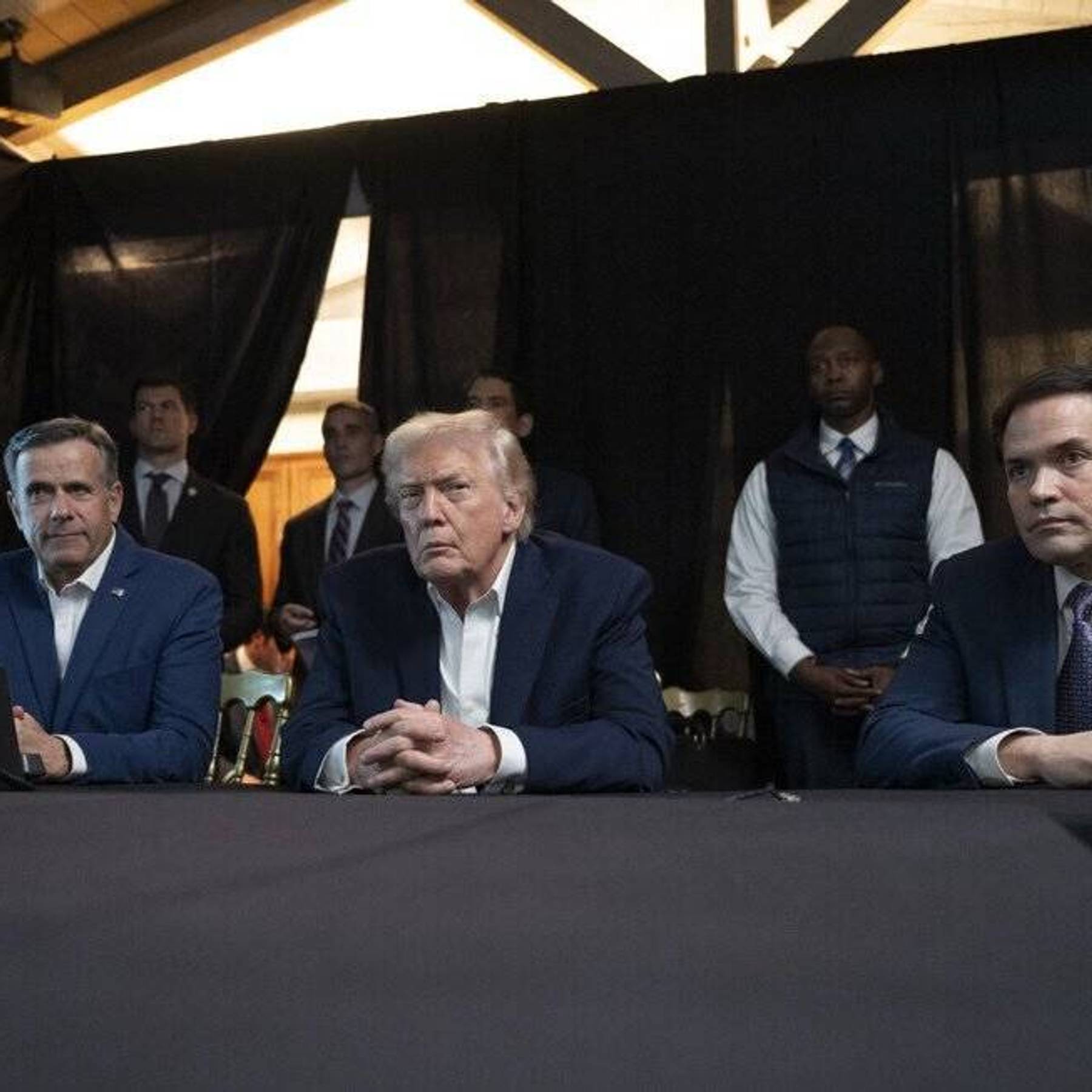
(L/R) US Secretary of State Marco Rubio looks on as US President Donald Trump speaks to the press following US military actions in Venezuela, at his Mar-a-Lago residence in Palm Beach, Florida, on January 3, 2026.
(Photo by Jim Watson/ AFP via Getty Images)
The president is using the power of the US military to steal the wealth of Latin American countries to enrich himself, his family, his closest business associates, and US corporations.
Some lawmakers have grown so alarmed by the Trump administration’s actions in Latin America that they are beginning to accuse the administration of gangsterism.
Representative Stephen Lynch (D-Mass.) saw the possibility of gangsterism at the start of the second Trump administration when he warned that the United States could “join the ranks of gangster nations,” but there is a growing sense in Congress that the day has arrived.
At a congressional hearing last month, Rep. Joaquin Castro (D-Texas) asserted that the Trump administration is exploiting the US military to take Latin American resources for US corporations. Castro seemingly channeled the anti-war critiques of Smedley Butler, the US military hero of the early 20th century, who condemned war as a racket and lamented his exploitation as a racketeer for capitalism.
“For decades, our men and women in uniform who volunteered to protect our country became mercenaries ordered to risk their lives to protect the profits of US corporations,” Castro said. “Today, President Trump is ordering them to do so again.”
The Case of Venezuela
The Trump administration’s critics in Congress have been warning about the administration’s gangsterism due to its actions in Venezuela.
Since the Trump administration directed a military operation earlier this year to seize Venezuelan President Nicolás Maduro and take control of the country’s oil and minerals, several lawmakers have suggested that the administration has begun to employ force and intimidation as its basic tools of statecraft.
Lawmakers have condemned the administration for conducting a military operation without congressional approval, meddling in Venezuela’s internal politics, displaying contempt for Venezuela’s political process, facilitating corruption in Venezuela and the United States, and using the US military to take control of Venezuela’s resources.
Now that the Trump administration has moved against Venezuela, establishing new leadership and doling out profits from its resources, lawmakers anticipate that it will move against Cuba next.
“You are taking their oil at gunpoint,” Senator Chris Murphy (D-Conn.) told Secretary of State Marco Rubio earlier this year.
Although Congress has not held the president accountable, as the Republican majority in each chamber supports the president, critics have kept pressure on the White House, prompting officials to defend the administration’s actions.
At the congressional hearing last month, State Department official Michael Kozak claimed that the intervention in Venezuela advanced US interests. He cited the Monroe Doctrine, which marks Latin America as a sphere of influence. Like the president, he boasted that the United States now controls the country’s resources.
“We’ve got very significant control over the oil revenues at this point,” Kozak said.
Several Democratic lawmakers responded with strong criticisms. They condemned the Trump administration for acting so aggressively in the hemisphere, and they warned that its actions would create a backlash against the United States.
Representative Sydney Kamlager-Dove (D-Calif.) described the administration’s approach as “shameful.” She insisted that the United States should not be “reviving a policy of domination and subjugation in the Western Hemisphere through the Monroe Doctrine.”
Castro repeated his warning that the Trump administration is focused on commerce and profits. He suggested that the president is using the US military to enrich people close to him.
“What has happened now is that there’s a group of folks that the president favors in his circle that is able to commence commerce and make money off of, whether it’s valuable minerals, oil, anything else in Venezuela,” Castro said.
Kozak expressed disagreement with Castro’s analysis, but he acknowledged that the Trump administration has established significant controls over Venezuela. Once again, he boasted that the Trump administration controls the country’s resources.
“People can lift oil and sell it on the open market, but all that money goes into an account that we have control over,” Kozak said. “All the revenues that are coming from the mining sector and everything, instead of going into their bank accounts, are coming into the Treasury accounts, and then we can dole it out as we see fit.”
The Case of Cuba
Now that the Trump administration has moved against Venezuela, establishing new leadership and doling out profits from its resources, lawmakers anticipate that it will move against Cuba next.
For months, President Donald Trump has been openly threatening Cuba. He has moved to block oil shipments to the country, causing an economic crisis. Knowing that he has put tremendous pressure on the Cuban government, he has demanded that the country’s president leave office.
“I do believe I’ll be having the honor of taking Cuba,” Trump said in March. “I think I could do anything I want with it, if you want to know the truth.”
Critics are giving serious consideration to the idea that Trump’s wars are a racket and that Cuba may be next.
Although the Trump administration’s military intervention in Iran has shifted its focus away from Cuba, the administration is maintaining an economic stranglehold over the island nation, making its recovery impossible. The US military continues blocking the free flow of oil to Cuba, even while Trump demands the free flow of oil through the Strait of Hormuz. The few oil shipments that have reached Cuba, for instance a recent tanker from Russia, have provided little relief.
At the congressional hearing last month, several lawmakers argued that the Trump administration is a major reason why Cuba is facing such tremendous hardship, including island-wide blackouts and preventable deaths at hospitals and health clinics.
“We cannot ignore our own country’s role in the ongoing humanitarian catastrophe in Cuba,” Castro said.
Rep. Jonathan Jackson (D-Ill.), who recently visited the country, made the strongest criticisms. Warning that the administration’s policies are causing tremendous harm to the Cuban people, he indicated that the Trump administration is violating international humanitarian law.
“We have engaged in collective punishment,” Jackson said.
The congressman also accused the Trump administration of trying to make life so miserable for the Cuban people that they would rise up and overthrow the Cuban government. He described it as a failed “policy of starving” Cuba.
“It was one of the most cruel things I had ever seen in my life,” he said.
Just as the Trump administration has been able to get away with its actions in Venezuela, however, it has been able to continue its policies toward Cuba. The administration maintains support among Republicans and some Democrats, few of whom oppose the administration’s goal of regime change.
The president, who knows that he faces little opposition in Congress, continues threatening to direct a military intervention in Cuba, even citing the operation in Venezuela as a precedent.
“In January, our warriors flew straight into the heart of the Venezuelan capital, captured the outlawed dictator Nicolás Maduro, and brought him to face American justice,” Trump said last month. “And very soon this great strength will also bring about a day 70 years in waiting. It’s called, ‘A New Dawn for Cuba.’”
War Is a Racket
When Smedley Butler spoke against his exploitation as a racketeer for capitalism nearly a century ago, he made a criticism of the American way of war that was considered to be so radical by US leaders that it has been largely excluded from mainstream political discourse.
Only a few politicians, such as former Rep. Cynthia McKinney (D-Ga.) and Ron Paul (R-Texas), have cited Butler and his warnings. Rarely, if ever, does the mass media report on war as a racket in which the country’s leaders are exploiting US military forces as gangsters for capitalism.
Today, however, some elected leaders are beginning to issue the same kinds of warnings about the Trump administration. Alarmed by the president’s insatiable lust for wealth and power, they are starting to suggest that the president is engaging in a kind of gangsterism across Latin America. The president, they say, is using the power of the US military to steal the wealth of Latin American countries to enrich himself, his family, his closest business associates, and US corporations.
“By any measure, this is the most corrupt administration in American history,” Sen. Chris Van Hollen (D-Md.) said earlier this year.
Now that the Trump administration is openly pillaging Venezuela and getting away with it, several lawmakers are warning that it may apply the same approach to other Latin American countries.
“It’s making me think that the goal in Cuba is going to be the same,” Castro said at the hearing in April. “It’s who’s going to go over there that’s friends with the president to make money and who’s going to profit off of Cuba and the Cuban people.”
Indeed, there is a growing sense in Congress that the Trump administration is turning to gangsterism. Moving beyond standard establishment critiques of the president’s contempt for norms and traditions, critics are giving serious consideration to the idea that Trump’s wars are a racket and that Cuba may be next.
In one of the scariest moments in modern history, we're doing our best at ScheerPost to pierce the fog of lies that conceal it but we need some help to pay our writers and staff. Please consider a tax-deductible donation.
The government of Mexican President Claudia Sheinbaum announced the shipment of 814 tons of milk, meat, beans, rice, and other foodstuffs to Cuba on Sunday, February 8. The move came days after Cuban President Miguel Díaz-Canel presented a series of emergency measures being adopted by his government to mitigate the impact of the severe fuel shortage facing the island.
Cuba is currently facing a serious crisis, provoked by recent maneuvers from the US government which, emboldened by its massive military build up in the Caribbean and its recent bombing of Caracas, has sought to further tighten the blockade on the island, hoping to finally force the overthrow of the government. On January 29, Trump announced an executive order under which any country that trades hydrocarbons with Havana will see a 10% increase in tariffs on its products exported to the United States. The executive order was said to have targeted Cuba’s main energy suppliers: Venezuela, Mexico, and Russia.
Venezuela was already effectively forced to halt oil shipments to Cuba due to the naval blockade imposed by the US against Venezuela, which already resulted in the illegal seizure of a Cuba-bound Venezuelan oil tanker.
Russia, a country which, due to heavy sanctions, is the most decoupled from the US economy, has declared that it will continue supplying fuel to Cuba. The government has said that “the situation in Cuba is truly critical” and top government spokesperson Dimitry Peskov, said “We are in close contact with our Cuban friends through diplomatic and other channels.”
Mexico, for its part, announced that it was engaged in negotiations with the US over oil shipments. President Claudia Sheinbaum has openly declared her rejection of the Trump measure: “You can’t suffocate people like that. It is very unfair.”
She also promised that Mexico would continue to help Cuba in any way possible: “We will continue to support Cuba and take all necessary diplomatic action to resume oil shipments.” In recent days, after learning of the Trump administration’s “threat”. Mexico, one of the few countries that sent oil to Cuba, said it would consult with Washington to determine the extent of possible retaliation.
According to Cuban President Miguel Díaz-Canel, not a single drop of oil has entered the island in 2026, posing a serious threat to a country that depends heavily on fuel for its power grid and to keep transportation, health, education, and other key systems functioning. Government officials and political analysts have claimed that the recent measure seeks to annihilate the Cuban people.
Former Colombian President Ernesto Samper shared this opinion in a post: “SOS for Cuba. The genocide of the Cuban people is being prepared by suffocating their vital conditions for survival. A United Nations humanitarian mission could lead a deployment of humanitarian ships loaded with the fuel that the island needs today, like the oxygen we breathe every day to stay alive.”
Mexican solidarity with Cuba
For his part, the Cuban president said, regarding the Mexican shipment that departed in two ships from the port of Veracruz: “Thank you, Mexico. For your solidarity, affection, and always warm embrace of Cuba.”
Cuban Foreign Minister Bruno Rodríguez wrote on X: “We thank the Government of Mexico, under the leadership of President Claudia Sheinbaum, for sending more than 800 tons of aid to Cuba, amid the intensification of the blockade following the recent Executive Order by the US government. While some try to suffocate our population, sister nations extend their hand in solidarity.”
Editor’s Note: At a moment when the once vaunted model of responsible journalism is overwhelmingly the play thing of self-serving billionaires and their corporate scribes, alternatives of integrity are desperately needed, and ScheerPost is one of them. Please support our independent journalism by contributing to our online donation platform, Network for Good, or send a check to our new PO Box. We can’t thank you enough, and promise to keep bringing you this kind of vital news.
The Secretary of State has told the president that talks are happening with high-level Cuban officials. No such talks exist. Purported negotiations in Mexico? Actual fake news.
A crisis is rapidly developing in Cuba, as the Trump administration’s efforts to block fuel from reaching the island have become increasingly effective since an executive order threatened tariffs on any country trading with Cuba. Mexican President Claudia Sheinbaum has buckled under the pressure and halted oil deliveries to Cuba. Drop Site’s José Luis Granados Ceja reports on the catastrophic consequences of the energy starvation.
Meanwhile, back in Washington, President Trump claims that negotiations are underway to resolve the standoff. That, it turns out, is simply false—a lie being told to him by Secretary of State Marco Rubio as part of his ambitious play to overthrow the Cuban government.
The story below is written by Noah Kulwin, who reported from Havana; Granados Ceja, who reported from Mexico City; and myself. This kind of reporting isn’t cheap, but is made available to the public for free thanks to readers who fund Drop Site News.
Help us keep pushing by making a tax-deductible donation today.
If you haven’t upgraded your subscription, please consider doing so.
Secretary of State Marco Rubio hands a note to President Donald Trump during a meeting with U.S. oil companies executives at the White House on January 9, 2026. Photo by SAUL LOEB / AFP via Getty Images.
To hear President Donald Trump tell it, the United States is deep in negotiations with Cuban government officials as the U.S. applies maximum pressure to the island. “We’re talking to the people from Cuba, the highest people in Cuba, to see what happens,” Trump told reporters at his Mar-a-Lago resort on Sunday, February 1. “I think we’re going to make a deal with Cuba.”
Cuban leaders, meanwhile, have said they are open to negotiations on everything from human rights to democracy to tourism and direct foreign investment. Cuban President Miguel Díaz-Canel said in a recent press conference that Cuba is willing to engage in dialogue with the United States on any issue, provided talks take place without pressure or preconditions, on the basis of respect for Cuban sovereignty. Senior Cuban leaders reiterated to Drop Site that the government is serious about being open to wide-ranging talks. And Trump is no stranger to the island’s potential for American companies, having himself long held a registered trademark for a Trump Havana property that he has annually renewed.
All the evidence would seem to suggest that the opportunity for Trump to strike a historic deal is at hand. But, despite the president’s claims, there are and have been no negotiations involving high-level officials between Havana and Washington, according to five Cuban and American officials, all of whom asked for anonymity given the sensitivity of the Cuba-U.S. relationship.
When it comes to Trump’s claims of those talks, it turns out he isn’t lying. Instead, sources tell Drop Site, he’s being lied to. “He’s saying that because that’s what Marco is telling him,” said a senior Trump official, referring to an internal effort by Secretary of State Marco Rubio to make Trump believe that the U.S. and Cuba are engaged in serious negotiations without ever doing so. The idea, the source said, is that in a few weeks or months, Rubio will be able to claim that the talks were futile because of Cuban intransigence. With diplomatic off-ramps being blocked, this would make Rubio’s vision of regime change the only path forward for an administration loath to reverse course on anything.
Asked about the fact that Rubio is misleading Trump about talks that aren’t going on, the State Department’s press office stood by the claim that such negotiations are indeed happening, forwarding along comment from an administration official: “As the President stated, we are talking to Cuba, whose leaders should make a deal. Cuba is a failing nation whose rulers have had a major setback with the loss of support from Venezuela and with Mexico ceasing to send them oil.” The statement offered no evidence the talks are taking place, named no officials participating, no dates of any meetings, nor did it identify a location where the supposed talks are happening.
Trump, meanwhile, has indicated he isn’t interested in an ideological confrontation with Cuba. This, sources suggest, is one way to understand why, after kidnapping Venezuelan President Nicolás Maduro, the U.S. has made Venezuela roll back key Chávez-era oil legislation via a reform that opens up the country to foreign investment instead of changing its regime. Rubio, meanwhile, pushed hard internally for a full regime change in Venezuela, but had to settle for merely removing Maduro. Ultimately, though, for Rubio, the real prize has always been Cuba.
The Cuban-American Rubio answers to a political base in south Florida that would revolt if he struck any deal normalizing relations with the communist government—and who, ultimately, would have the power to undo him. Rubio’s rise through Florida and national politics — which now has him on the cusp of the Oval Office — has been accompanied by a string of corruptionscandals, yet with unified support back home, he has managed to emerge with a relatively clean reputation nationally. If Trump successfully lands a deal with the Cuban government that Rubio would have to sign off on, Rubio would be left to either betray his life’s cause and that of his backers in Miami, or resign in protest.
For Rubio’s opponents inside the administration, the moment represents an opportunity to make Cuba into his Waterloo.
No Dialogue
In the wake of Trump’s claims of high-level talks, confused Cuban officials insisted to Drop Site that no such talks were then underway, but that they were eager for them to start. Misinformation in the media, however, has muddied the situation.
On February 2, the day after Trump’s comments, Politico highlighted a report that the son of Raúl Castro had traveled to Mexico City for talks with the Central Intelligence Agency and asked in a headline: “Could a Castro become our man in Havana?”
The article, however, is sourced to 14YMedio, a news outlet run by Havana-based dissident blogger Yoani Sánchez, which itself based its reporting on a single, fantastical Facebook post made by a Spain-based Cuban journalist. Yet the Politico report began circulating in Washington and has been accepted as fact. Senior Cuban officials tell Drop Site there are no talks going on in Mexico or anywhere else.
“At the moment, we’ve had some exchanges of messages, but we cannot say we have set a bilateral dialogue at this moment,” Cuba’s Deputy Minister of Foreign Affairs Carlos Fernandez de Cossio affirmed in a CNN interview this past Wednesday. “Most things in Cuba dealing with the United States are linked to the highest level. It’s a large issue for us, so there’s no decision, no action taken that doesn’t involve the high level of government in Cuba.”
A “senior State Department official” told the New York Times recently that contact between the Cuban and U.S. government was “not substantive” and merely discussed migrant repatriation. Elaborating, a senior Cuban official told Drop Site that the contacts are purely technical, with the U.S. telling Cuban officials when flights with deported migrants would be heading to Havana, and Cuban officials acknowledging receipt of the message.
An article on Wednesday in the Spanish outlet ABC Internacional added to the confusion, claiming that Mexican official Efraín Guadarrama is facilitating the talks. A well-placed source with direct knowledge tells Drop Site Guadarrama is doing no such thing.
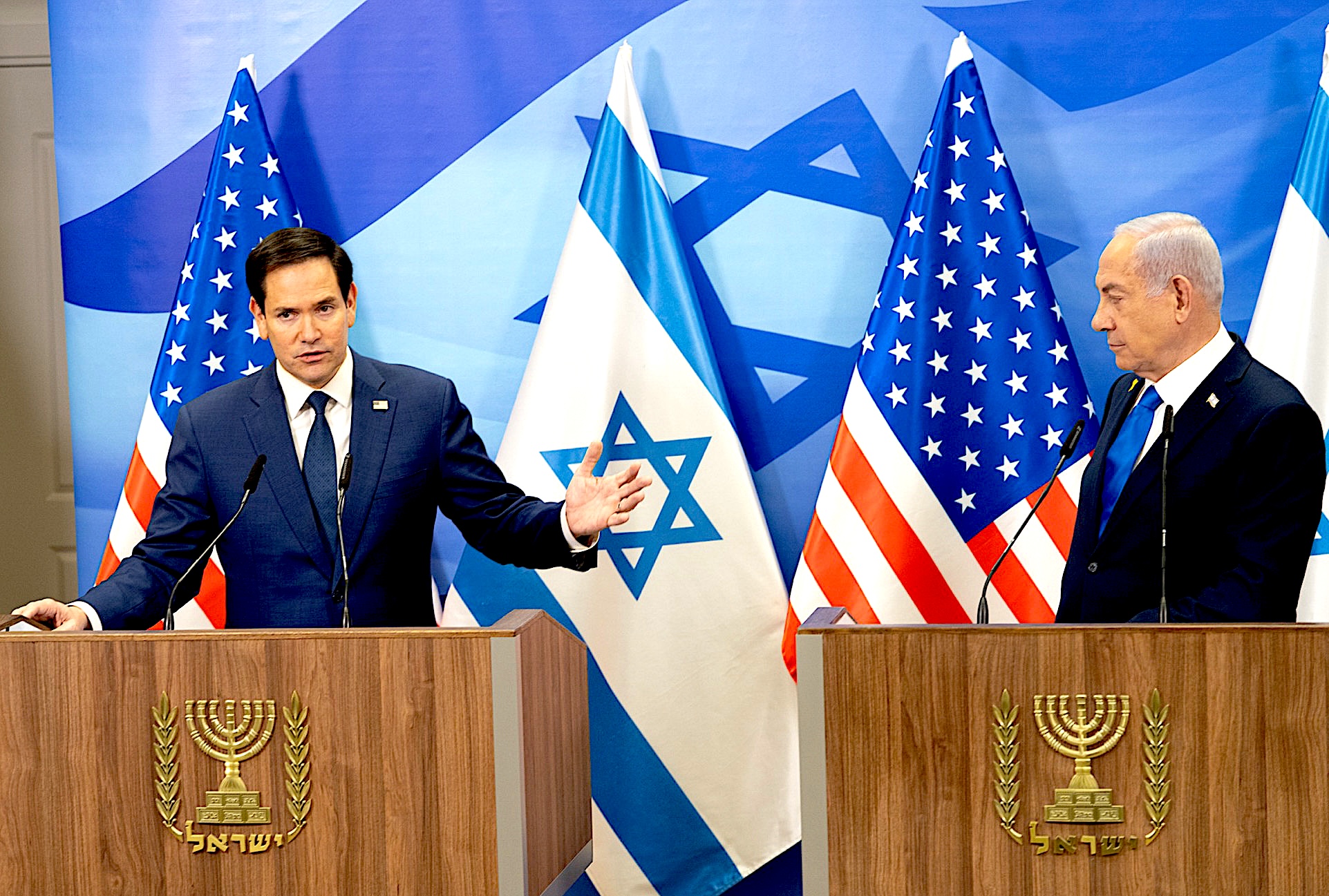
In the wake of the abduction of Venezuelan President Nicolas Maduro, top Cuban government officials have become increasingly interested in wide-ranging talks with the Trump administration—talks that could even include Rubio, a longtime foe of the government, multiple Cuban officials tell Drop Site. The only red line, they said, is that the island’s sovereignty is not up for negotiation.
Havana’s desire for talks, bordering on desperation, has been signaled to the United States through a variety of channels, including through press statements and recent interviews with the Associated Press and CNN. “Cuba reiterates its willingness to sustain a respectful and reciprocal dialogue with the Government of the United States,” the Cuban foreign ministry said in a February 1 release, “directed toward concrete outcomes, grounded in mutual interest and international law.”
The ministry added that Cuba was willing to “broaden” the scope of talks, saying the country “firmly rejects being portrayed as a threat to the security of the United States. It has never engaged in hostile actions against that country, nor will it permit its territory to be used against any other nation. Cuba, on the contrary, is prepared to resume and broaden bilateral cooperation with the United States in addressing shared transnational threats, while unwaveringly defending its sovereignty and independence.”
In an interview with Newsweek, Cuban Permanent Representative to the U.N. Ernesto Soberón Guzmán said Cuba would be happy to work with Trump on immigration, drug interdiction, health research—he noted Trump’s praise for Cuba’s relatively lower rates of autism—and other areas.
In addition to the ongoing economic crisis, the proximate cause for Cuban concern is an executive order issued on January 29 by President Donald Trump threatening heavy tariffs on “any other country that directly or indirectly sells or otherwise provides any oil to Cuba.”
Though not mentioned by name, the tariff threat is aimed at Mexico, whose state oil company has in recent years been the primary supplier of oil to the small island nation located 90 miles off the southern coast of Florida. In response, Mexico’s state oil company, PEMEX, has reportedly suspended at least one planned shipment of oil to its Cuban ally, leaving Cuba with an estimated two to three weeks’ worth of oil to keep the country running.
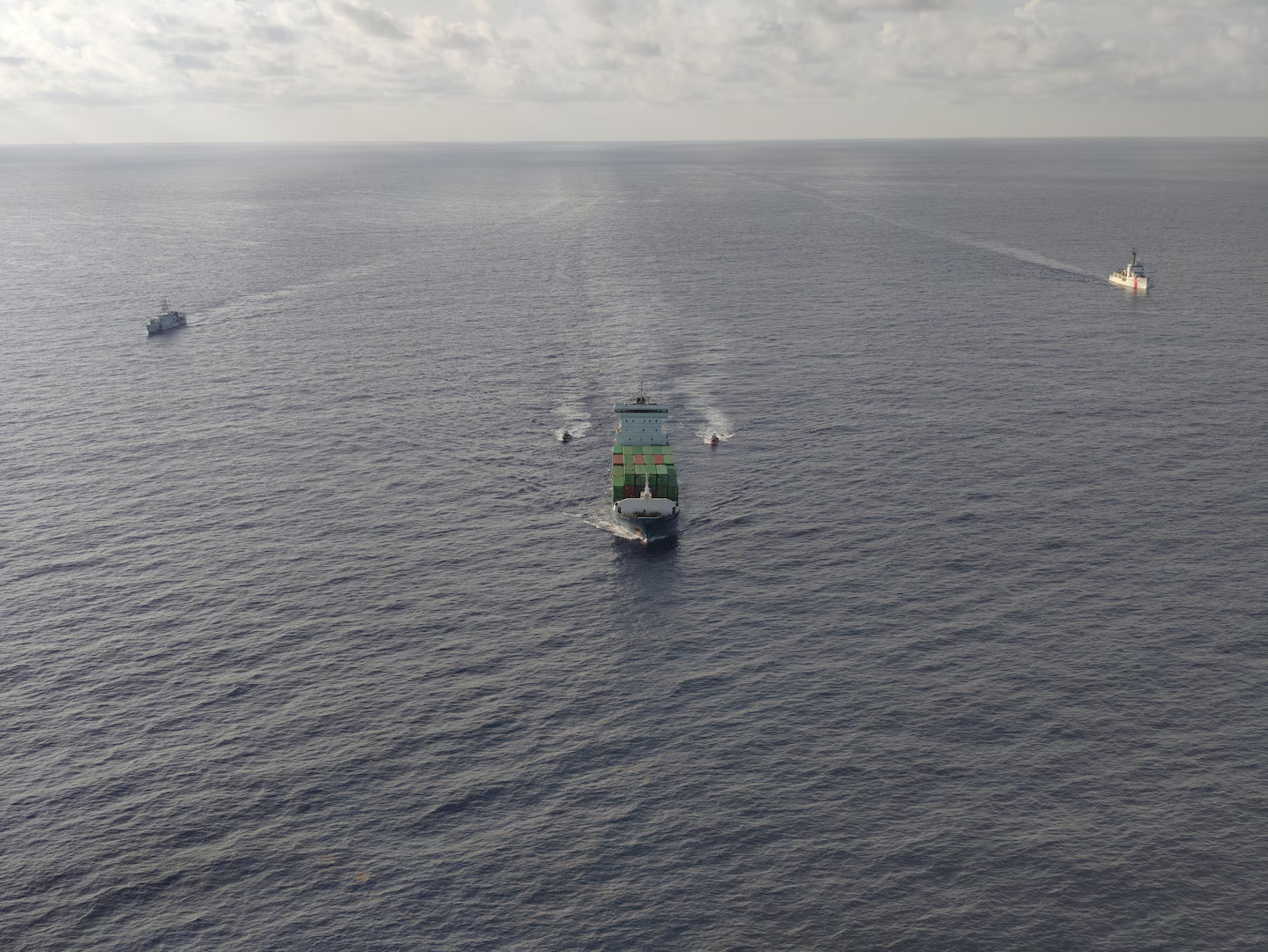
Overburdened, underfueled, and obsolete, Cuba’s electricity grid is barely hanging on, while the Cuban government publicly says it is preparing to administer life in the country with almost zero power. On Friday, ministers began to roll out a nationwide energyrationing plan. The measures include cutting mass transit, slashing individual gasoline allotments, and reducing in-person days for secondary school students. While Americans sat down for Super Bowl Sunday, Cuban authorities told airlines there was only one day’s supply of aviation fuel left in the country. On Monday, the U.S. intercepted an oil tanker as far away as the Indian Ocean for allegedly planning to ship fuel to Cuba.
At a lengthy press conference this past Thursday, Cuban President Miguel Díaz-Canel reiterated his country’s emphatic openness to negotiation with the United States without “pressure” or “preconditions.” Broadcasted on TV and radio around the world, Díaz-Canel’s comments were made, as one Wall Street Journal reporter observed, “with an audience of one in Washington”—Donald Trump.
“We are a country of peace,” Díaz-Canel said. “We are not a threat to the United States.”
Noah Kulwin reported from Havana, José Luis Granados Ceja reported from Mexico City, and Ryan Grim reported from Washington, D.C.
Since the Cuban Revolution overthrew a US-backed dictatorship and asserted national independence, Cuba has remained in the United States’ crosshairs. The country has endured nearly 600 assassination attempts against its leadership, along with countless covert and overt operations aimed at destabilizing its government. For more than six decades, the US has also imposed an economic embargo explicitly designed to bring about regime change.
By any honest measure, this policy has failed. What it has succeeded in doing is fostering deep resentment toward the United States, not only in Cuba, but across much of the world, while inflicting immense suffering on ordinary Cubans.
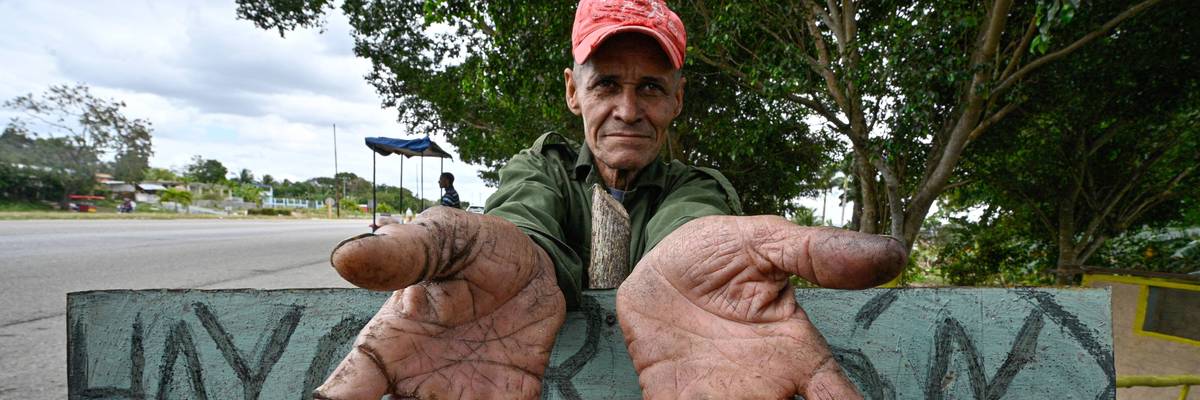
Basic necessities such as food, paint, printing paper, baby formula, syringes, and other lifesaving supplies, including vaccines and cancer treatment drugs, are either restricted by the embargo or priced far beyond most people’s reach. A simple walk through Havana tells the story: crumbling infrastructure, uncollected trash, and growing numbers of people gathering near tourist areas, hands outstretched in desperation.
Fuel shortages are widespread, inflation is at historic highs, and a sharp decline in tourism, Cuba’s primary economic lifeline, has made daily life nearly unbearable for many.
It is time for the United States to respect Cuba’s sovereignty and lift the embargo and accompanying sanctions.
In response, the Cuban government has expanded the private sector, legalized small- and medium-sized enterprises, decentralized food production, and opened its markets to limited foreign investment, all while attempting to maintain the core socialist principles of the revolution. It has also reduced reliance on fossil fuels, slowly shifting to solar energy. In 2025, renewable energy accounted for more than 10% of Cuba’s energy consumption, an increase from 3% the year before.
Yet these measures alone cannot offset the outsize impact of US policy and the blockade, which has been dramatically tightened in recent months. The latest effort to cut off of nearly all oil shipments to the island has led to daily blackouts and deepened human suffering.
It is time for the United States to respect Cuba’s sovereignty and lift the embargo and accompanying sanctions. They are a cruel and inhumane form of collective punishment that disproportionately harms the most vulnerable. These sanctions, without legitimate justification, have restricted travel for Americans, made remittances far more difficult, and unjustly placed Cuba on the State Sponsor of Terrorism list. That designation effectively cuts the country off from the global banking system, making even basic international transactions nearly impossible. The absurdity is stark: Cuban biotechnology produced five globally used Covid-19 vaccines, while the US embargo restricted Cuba’s ability to purchase syringes to administer them.
Cuba should not be treated as a political chess piece to demonstrate US economic and military might. It is a proud nation of nearly 11 million people who want nothing more than to be good neighbors. It is time for the United States to end its asphyxiation of Cuba and allow the Cuban people to determine their own future, a future free from US interference, coercion, and perpetual threat.
The U.S. is on a fast track to authoritarianism like nothing I’ve ever seen. Meanwhile, corporate news outlets are utterly capitulating to Trump, twisting their coverage to avoid drawing his ire while lining up to stuff cash in his pockets.
That’s why I believe that Common Dreams is doing the best and most consequential reporting that we’ve ever done.
Our small but mighty team is a progressive reporting powerhouse, covering the news every day that the corporate media never will. Our mission has always been simple: To inform. To inspire. And to ignite change for the common good.
Now here’s the key piece that I want all our readers to understand: None of this would be possible without your financial support.
That’s not just some fundraising cliche. It’s the absolute and literal truth. We don’t accept corporate advertising and never will. We don’t have a paywall because we don’t think people should be blocked from critical news based on their ability to pay. Everything we do is funded by the donations of readers like you.
Will you donate now to help power the nonprofit, independent reporting of Common Dreams?
Thank you for being a vital member of our community. Together, we can keep independent journalism alive when it’s needed most.
– Craig Brown, Co-founder
about:blank
about:blank
Our work is licensed under Creative Commons (CC BY-NC-ND 3.0). Feel free to republish and share widely.
Cuba’s repressive legal system has created a climate of fear among journalists, dissidents and activists, putting them at risk of arbitrary arrest and harassment by the authorities, Amnesty International said in a report released on Wednesday.
The report Restrictions on Freedom of Expression in Cuba highlights provisions in the legal system and government practices that restrict information provided to the media and which have been used to detain and prosecute hundreds of critics of the government.
“The laws are so vague that almost any act of dissent can be deemed criminal in some way, making it very difficult for activists to speak out against the government. There is an urgent need for reform to make all human rights a reality for all Cubans,” said Kerrie Howard, Deputy Americas Director at Amnesty International.
The release of a Cuban prisoner of conscience who spent almost a year in pre-trial detention at a maximum security prison after organizing protests critical of the government is long overdue, Amnesty International has said.
Darsi Ferrer was convicted on Tuesday on spurious charges of receiving illegally obtained goods and “violence or intimidation against a state official”.
Two days after the catastrophe in Haiti which destroyed that neighbouring sister nation, I wrote: “In the area of health care and others the Haitian people has received the co-operation of Cuba, even though this is a small and blockaded country.
“Approximately 400 doctors and health-care workers are helping the Haitian people free of charge. Our doctors are working every day at 227 of the 237 communes of that country. On the other hand, no less than 400 young Haitians have graduated as medical doctors in our country.
Lincoln Gordon died a few weeks ago at the age of 96. He had graduated summa cum laude from Harvard at the age of 19, received a doctorate from Oxford as a Rhodes Scholar, published his first book at 22, with dozens more to follow on government, economics, and foreign policy in Europe and Latin America. He joined the Harvard faculty at 23. Dr. Gordon was an executive on the War Production Board during World War II, a top administrator of Marshall Plan programs in postwar Europe, ambassador to Brazil, held other high positions at the State Department and the White House, a fellow at the Woodrow Wilson International Center for Scholars, economist at the Brookings Institution, president of Johns Hopkins University. President Lyndon B. Johnson praised Gordon’s diplomatic service as “a rare combination of experience, idealism and practical judgment”.
You get the picture? Boy wonder, intellectual shining light, distinguished leader of men, outstanding American patriot.
Once again I have turned to the Website of the only man who can save the world, Barack Obama who forty days ago amazed and delighted the world with his statement that he would abolish all nuclear weapons, but who since has reneged on that promise and today keeps the most warlike company of those who want to conquer Iraq and Afghanistan and other places for their oil, and precious metals while puppet governments in Asia and elsewhere are quite willing to give their assets to the Western Neo-Coms, but find it necessary to deceive their own people and the rest of the world by fulsome false promises that they are not serving their own material interests but are patriots serving the interests of their countries.
In the meantime Obama has his own problems with his ‘allies’ notably NATO and the European Union and the basic trio of Nuclear Maniacs – Bush, Blair and Brown are now desperately trying to defy the Human Rights authorities who are chasing them for Crimes against Humanity and they will eventually suffer the same fate as did the Nazi genocidists at Nuremburg in 1946.
Restrictions to freedom of expression create climate of fear in Cuba
June 30, 2010Cuba has tried to justify its failure to protect human rights by blaming the US embargo
© Lode Rummens
Cuba’s repressive legal system has created a climate of fear among journalists, dissidents and activists, putting them at risk of arbitrary arrest and harassment by the authorities, Amnesty International said in a report released on Wednesday.
The report Restrictions on Freedom of Expression in Cuba highlights provisions in the legal system and government practices that restrict information provided to the media and which have been used to detain and prosecute hundreds of critics of the government.
“The laws are so vague that almost any act of dissent can be deemed criminal in some way, making it very difficult for activists to speak out against the government. There is an urgent need for reform to make all human rights a reality for all Cubans,” said Kerrie Howard, Deputy Americas Director at Amnesty International.
Continues >>
Share this:
Tags:Cuba, Cuban penal code, dissidents arrested, restrictions on liberties, Yosvani Anzardo Hernández
Posted in Commentary, Human rights, Uncategorized | Leave a Comment »