Posts Tagged ‘History’

9/11: The day the ‘war on terror’ began

September 11, 2026

The attacks of September 2001 became the pretext for a new era of US-led intervention. Twenty-five years on, millions are dead and the promised ‘victories’ remain nowhere to be seen, says ANDREW MURRAY

Crowds in Manhattan watch smoke billowing from the World Trade Centre, September 11 2001

Andrew Murray

THE “war on terror” began 25 years ago today, when two hijacked passenger airliners were flown into the skyscrapers of the World Trade Centre in New York.

A third crashed into the Pentagon in Washington while a fourth, apparently targeting the US capitol, crashed in Pennsylvania after its passengers fought back.

It was immediately assumed that the hijackers — nearly all of them Saudi Arabian by nationality — were organised by al-Qaida, an Islamist militant group then headquartered in Afghanistan. Despite many subsequent conspiracy theories, it would seem that this was indeed the case.

Al-Qaida attributed their actions — which killed nearly 3,000 people, almost all civilian, in the first foreign attack on the US mainland since 1812 — to opposition to Israel’s US-supported oppression of the Palestinians, to the presence of US troops in the holy land of Saudi Arabia, and the sanctions-driven starvation of Iraqi children.

9/11 was thus an act of terror already sitting in a continuum of US-driven violence and oppression across the Middle East — an explanation but not a justification.

It was immediately clear that the attacks would be the basis for a further aggressive extension of US war, across the Middle East and south Asia in particular.

In fact, it led to a devastating series of wars which caused the effective collapse of several states, millions of deaths and millions more made refugees. Afghanistan, Iraq, Libya, Syria and Yemen have been the principal victims of this war, which has also extended to parts of Africa and, in its impact and influence, most of the world.

Some of these wars had not the slightest connection to terrorism or al-Qaida and — in particular the Bush attack on Iraq — had been meditated long before 9/11.

The “war on terror” began with boasts of military omnipotence from Washington, along with brazen calls for the introduction of a new colonialism to deal with “failed states.”
But nowhere has it ended with an outcome anything like that sought by the aggressors.

Most notoriously, the first theatre of war — Afghanistan — began with the ousting of the Taliban government in 2001 and ended with the return of the self-same regime 20 years, uncounted lives and massive destruction later.

However rightly it can be felt that the people of Afghanistan deserve a much better government, it cannot be denied that this outcome marked a historic defeat for US imperialism.

It scarcely fared better in Iraq, where the overthrow of Saddam Hussein led to a brutal occupation, sectarian civil conflict, economic despoliation and the wrecking of a state which George Bush had fancied turning into a “beacon of democracy.”

The occupation there was wound down in more-or-less ignominy — total in the case of the British forces deployed in Basra, driven out in humiliation.

Libya, the third major target, was turned into a failed state, split between rival governments and generating an immense refugee crisis, as a result of a Nato-sponsored intervention.

In Syria, Western interference in civil war not only sparked a massive refugee crisis but the rise of Isis and the eventual ascension of a jihadi-rooted government in Damascus.

Yemen, one of the world’s poorest countries, has been further degraded by a conflict to a large extent armed and directed from Britain, working alongside Gulf dictatorships. Yet the Houthis remain still standing and defiant.

The “war on terror” also spread further afield, to both west and east Africa in particular, with no better results for either the peoples there or the plans of the imperialists.

The full balance sheet for these wars remains yet to be calculated, but it does not seem to yield a single victory of the US and its allies, Britain first among them. The present war against Iran is a linear descendant of these conflicts, and does not look like changing that record.

Despite numerous contingent and specific factors, all these wars are rooted in the structuring of a world around US hegemony, in which Washington arrogates to itself the right to intervene where it wills in order to ensure subordination to its own strategic and commercial interests.

They are thus the main contemporary political expression of imperialism.

9/11 and these subsequent conflicts had the political consequence of restoring the concept of imperialism to the centre of public discourse.

After a generation in which it had been relegated to jargon as the world wallowed in the post-cold war “end of history,” the wars of aggression launched by the US, with British governments invariably at its side, whatever the views of the people, shone an unforgiving light on the realities of global power.

Imperialism has generally taken some care to present its depredations as being motivated by the most high-minded interests.

In the 19th century, colonial adventures were usually promoted as expediting the spread of Christian civilisation to peoples who had the audacity to get along without it.

In the 20th century, a more secular age, interventions were often explained as being necessary to stop the spread of communism, notwithstanding that communism, for all its global potency, was often entirely absent from the territories concerned.

In the present century the “war against terror” has stood duty, the first conflict even declared as being against an abstraction rather than a country or peoples.

This war elided with the developing notion of “liberal” or “humanitarian” intervention, which had been trialled, to its progenitors’ satisfaction, in the 1999 war against Yugoslavia.

It was ideologically amplified by Tony Blair, then still fairly popular, who went to Chicago to spell out the conditions in which great powers, or those with the approved political markers, could and should intervene in other countries’ affairs.

He spelt out five criteria. International law or United Nations approval were not among them, and the wars to follow did not meet all of them in any case. Blair’s political reputation is now collateral damage following his decision to lead Britain into the Iraq aggression alongside George Bush.

That decision, above all, gave rise to the largest anti-war movement in Britain’s history, indeed probably the strongest mass movement of the left since the high days of Chartism in the 1840s.

Its effects resonate to this day, not least in the enduring movement of solidarity with the Palestinian people.

At its core lay an alliance of most of the socialist left with Muslim communities, alongside trade unions, the mass of young people and sections, like military families, never previously drawn into mass anti-war campaigning.

That coalition was described by the New York Times as the “second superpower” in the world, at the time when the US believed itself to be effectively unchallengeable.

The movement also laid much of the foundation for Jeremy Corbyn’s ascension to the Labour Party leadership in 2015, something that was certainly not on Blair or Bush’s agenda when they embarked on their policy of open-ended war.

These developments have placed anti-imperialism at the heart of socialist politics in Britain, to the teeth-grinding rage of those savants and organs of the soi-disant left who embrace the international politics of the ruling class even as they pretend to a domestic radicalism.

9/11 also had more negative impacts in Britain — it led to a rising tide of Islamophobia, now reaching epidemic proportions, as well as occasioning one attack after another on our liberties, exemplified in the harassment of the Palestine solidarity movement and the mass arrests of peaceful sympathisers with Palestine Action.

Today, the “war on terror” has faded somewhat behind the darkening shadow of great power conflict. With the rise of China, it is clear that the US is no longer the sole superpower.

The proxy war being waged by Nato in Ukraine is the harbinger of still more devastating conflicts, as the anti-war movement warned from 9/11 onwards.

Today, 9/11 is best marked by the renewal of the anti-war movement in the face of impending neofascism and war, by the re-establishment of its broad fighting unity, and by absorbing the greatest single lesson of those terrible events a quarter of a century ago — that there can never be peace alongside imperialism.

Andrew Murray was the first chair of the Stop the War Coalition, serving from 2001 to 2011, and is now its deputy president

Anger Grows Over ‘Pathological Liar-in-Chief’ Donald Trump’s $5,000 Midterm Bribes

September 11, 2026

 President Donald Trump

President Donald Trump attends a meeting at the White House Oval Office in Washington, DC on September 9, 2026.

(Photo by White House)

“Even for the notoriously corrupt and lawless Trump, this explicit and desperate attempt to buy votes in the November election is a new low,” said one watchdog leader.

Jessica Corbett, Common Dreams, Sep 10, 2026

Many Democrats in Congress are on the growing list of critics calling out President Donald Trump for his Wednesday night vow to give US voters $5,000 each if they help Republicans win control of the Senate and House of Representatives—where they already have majorities—in the November midterm elections.

“Nothing says confidence like trying to bribe people for votes,” Congressman Jim McGovern (D-Mass.) quipped Thursday.

RECOMMENDED…

US Vice President JD Vance

‘I Wouldn’t Call It a War,’ Says JD Vance After 6 Months of Trump’s Failed, Costly, and Illegal War on Iran

President Donald Trump posted on his Truth Social platform a map showing the US flag over not only the United States but also Canada, Greenland, Iceland, the Caribbean, Mexico, and multiple countries in Central America.​

‘Absolutely Bonkers’ and ‘Unacceptable’: Trump Posts Map Showing US Takeovers of Other Nations

When Fox News’ Laura Ingraham later asked, “Why not just give the money now?” Trump attempted to blame Democrats.

Noting the president’s jumbled response to that question, Rep. Don Beyer (D-Va.) said: “I don’t know what this even means, but I do know the reason Trump won’t give a straight answer is that he doesn’t really mean to send these checks to anyone. He has lied about this over and over again, and he’s lying now. Just like he lied when he said he would lower costs.”

Some critics highlighted other cases of Trump pledging to give Americans money, including alleged savings from the actions of his so-called Department of Government Efficiency (DOGE), an effort spearheaded by billionaire Elon Musk.

Congressman Mark Pocan (D-Wis.) said: “So now it’s $5,000 bribes that Trump will never deliver to attempt to make voters forget what they are paying for gas and food. What ever happened to those promised DOGE checks? Americans are not fools, we know he lies daily.”

Blasting the president as “our pathological liar-in-chief,” Sen. Bernie Sanders (I-Vt.) also pointed to previous instances of Trump promising money, from a 10% cap on credit card interest rates to $2 for a gallon of gasoline.

“The Trump administration is not about helping working families,” the former presidential candidate stressed. “It’s about giving a trillion dollars in tax breaks to the 1% and throwing 15 million Americans off the healthcare they have.”

Sen. Elizabeth Warren (D-Mass.), who has also sought the Democratic Party’s presidential nomination, shared on social media Groundwork Collaborative’s roundup of 15 times Trump has promised a check, dividend, or rebate—and not delivered.

Some Democratic governors also took aim at Trump. California’s Gavin Newsom, who is expected to run for president in 2028, said: “After making you sicker and poorer with his war, Donald Trump now wants to buy your vote with $5,000 in taxpayer-funded blood money. The most corrupt man ever to occupy the Oval Office.”

New York Gov. Kathy Hochul emphasized that “Trump owes New Yorkers $13.5 billion for his illegal tariffs and hasn’t paid up.”

“Now he’s dangling $5,000 checks if Republicans win Congress. A trillion-dollar campaign bribe from a guy who doesn’t pay his bills,” she added. “Fool me once…”

It’s not just elected Democrats ripping Trump’s new pledge. Lisa Gilbert, co-president of the watchdog group Public Citizen, said in a Thursday statement that “even for the notoriously corrupt and lawless Trump, this explicit and desperate attempt to buy votes in the November election is a new low.”

“Trump knows he can’t do this, and yet he’s attempting to bribe voters with the false promise of cash to help his party win an election, which is antithetical to every principle of American democracy,” she continued. “Every Republican at the convention and across the country should loudly and vehemently denounce Trump for proposing this dangerous and transparently illegal scheme. The fact that no one has done that yet is cause for deep alarm about the future of American elections.”

Twilight’s Last Gleaming

September 6, 2026

by Andrew P. Napolitano | Sep 4, 2026

There is a point in the decline of republics when the problem is no longer that government breaks its own laws. Governments will always behave unlawfully. The deeper problem comes when the constitutional machinery designed to prevent those acts stops functioning — when spending becomes detached from arithmetic, presidential power becomes detached from law, and Congress and the courts become detached from the Constitution.

That’s where America is today.

The fiscal warning could hardly be clearer. The government’s debt has now passed $40 trillion. The Congressional Budget Office projects a $1.9 trillion federal deficit for fiscal year 2026, with annual deficits rising to $3.1 trillion by 2036.

Worse, borrowing itself is becoming more expensive. Ten-year Treasury yields recently reached 4.6% and 30-year yields 5.2%, as investors demand greater compensation for lending money to Washington. The July 2026 deficit alone reached $432 billion.

The uniparty government in the past 110 years has produced a vicious circle: It spends more than it collects, borrows the difference, pays interest on the borrowing and borrows still more to pay the interest. Eventually, arithmetic becomes destiny.

But fiscal insolvency is only half the story. What is more frightening is the simultaneous deterioration of constitutional norms.

The president increasingly acts as though his personality is the source of his legal authority.

The United States has gone to war without the congressional authorization that the Constitution was designed to require. And the U.S. has attacked speedboats in the Caribbean and eastern Pacific, with more than 220 people murdered and no legal basis for killing and dispensing with due process.

In January, the United States military killed 47 persons in Venezuela during its violent kidnapping of President Nicolas Maduro and his wife. Whatever one’s opinion of Maduro, the fundamental question remains: By what constitutional authority does an American president decide that a foreign head of state may be violently seized by the United States? None.

This is not a defense of Maduro. It is a defense of the principle that American presidents do not possess a roving commission to decide whom the United States may depose, kidnap or kill.

The distinction matters because constitutional government is supposed to stand between political power and its targets. The president is supposed to enforce the law, not create it. Congress is supposed to write the laws, not ignore them. The courts are supposed to enforce the Constitution, not evade it.

Yet Congress increasingly behaves as though presidential power is someone else’s problem.

Members of Congress complain loudly when the other party occupies the White House and become remarkably accommodating when their own party holds it. The result is an informal bipartisan transfer of power from the legislative to the executive. Every president inherits the precedents accumulated by his predecessor and then adds a few of his own. The next president inherits those precedents and stretches them further.

Eventually, there are no meaningful limits.

The same disease infects the courts. Judicial review remains theoretically formidable, but judicial intervention often comes after the government has already exercised power unconstitutionally. A constitutional right that can be violated first and litigated later is a fragile right. The person who has been silenced, imprisoned, deported, injured or killed cannot be restored to his previous condition merely because a court eventually announces that the government acted unlawfully and awards damages. Nor can a half-built, never-congressionally-authorized, $1 billion ballroom-for-billionaires be feasibly demolished.

The central question should be: What are the government’s legal authorities and what are their limits?

Instead that question has become: What can the president get away with?

A free people should not have to depend upon the temperament of the person occupying the Oval Office. The Constitution was designed precisely because the founders understood that limited government cannot depend upon a few good people. They assumed that presidents would sometimes be venal and unscrupulous, Congress sometimes pliant and cowardly, and judges sometimes wrong. So they constructed competing institutions, with divided authorities and checks and balances, making governing difficult.

That difficulty was intentional.

A government that can spend without limit, wage war without Congress, kill without trial, kidnap without consequence and employ overwhelming force without due process is a government behaving outside the Constitution.

And the financial numbers make the constitutional deterioration even more ominous. A government approaching $40 trillion in debt cannot endlessly promise every constituency that someone else will pay.

This is how great powers decline — not necessarily with a dramatic explosion, but through accumulated exemptions, exceptions and evasions.

The president says the Constitution permits whatever he wants to do because the national security demands it. Congress permits the president to do what he wants because confronting him is politically inconvenient. The courts intervene only after it is too late to undo the damage and strain at a gnat to avoid hard decisions. The Treasury borrows another trillion dollars because balancing the books would be a nightmare.

The public becomes accustomed to extraordinary government power because yesterday’s outrage becomes today’s precedent.

Then, one morning, people wake up and discover that the constitutional republic they inherited exists mostly on paper.

But the night before this realization — at twilight’s last gleaming — the nation that once possessed protections for personal freedoms, opportunities for wealth, and a unique cultural environment sees its former fidelity to the first principles that made those things possible slipping away.

A republic survives only when the passionate among us light brushfires of freedom by insisting that the U.S. stays out of other countries’ business, presidents obey the law, Congresses exercise constitutional powers, courts enforce constitutional limits, war is a last resort, and governments acknowledge that borrowed money is not free money.

The alternative is gradual normalization of unlimited debt, unlimited executive discretion and unlimited rationalizations.

The twilight of our constitutional republic has not arrived because the sun suddenly disappeared. It has arrived because, little by little, nearly everyone became accustomed to the darkness.

If you liked this article, please support Antiwar.com.
We are 100% reader-supported.

Andrew P. Napolitano, a former judge of the Superior Court of New Jersey, is the senior judicial analyst at Fox News Channel. Judge Napolitano has written seven books on the US Constitution. The most recent isSuicide Pact: The Radical Expansion of Presidential Powers and the Lethal Threat to American Liberty. To find out more about Judge Napolitano and to read features by other Creators Syndicate writers and cartoonists, visit www.creators.com. COPYRIGHT 2025 ANDREW P. NAPOLITANO – DISTRIBUTED BY CREATORS.COM

The Deplorable Extremism of the So-Called “Moderates”

August 22, 2026

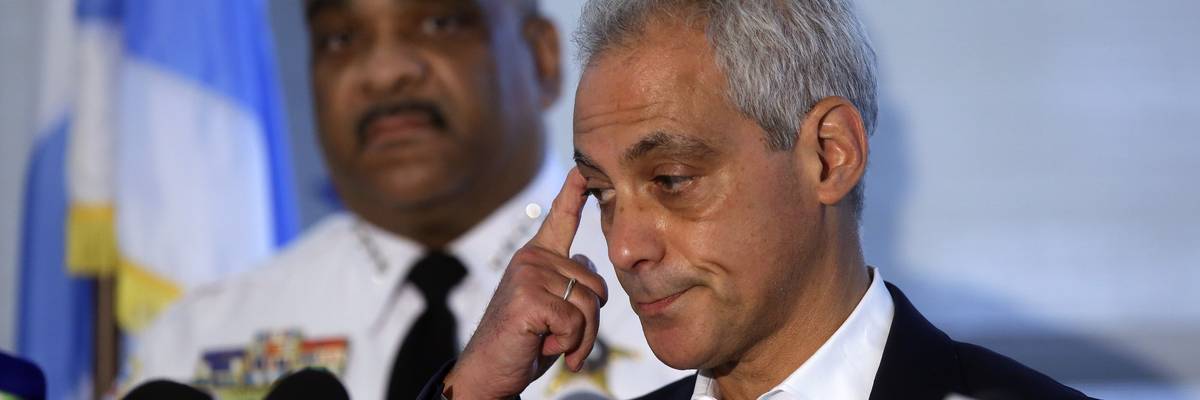
Chicago PD Superintendent Eddie Johnson Holds News Conf. On Record Weekend Shootings

Former Chicago Police Superintendent Eddie Johnson listens as former Chicago Mayor Rahm Emanuel speaks about Chicago’s weekend of gun violence during a news conference at the Chicago Police Department 6th District station August 6, 2018 in Chicago, Illinois.

(Photo by Joshua Lott/Getty Images)

The Democratic base is fed up with a system that gives inordinate power to the wealthy and to large corporations.

Norman Solomon

Aug 17, 2026, Common Dreams

We’ve been hearing a lot of panicky warnings lately after Democratic primary voters chose socialists and other leftists instead of “moderates” in several major elections. The alarm bells got louder this month after Michigan’s progressive Senate candidate Abdul El-Sayed defeated Rep. Haley Stevens—who was, the New York Times reported, “the moderate establishment-backed candidate.”

The soothing “moderate” label routinely goes to candidates like Stevens who’ve supported continual arming of Israel. She “benefited from about $62 million in advertising spending from half a dozen outside groups,” the Times noted. “Over half of that sum came from the super PAC arm of the American Israel Public Affairs Committee, the country’s most influential pro-Israel group.”

RECOMMENDED…

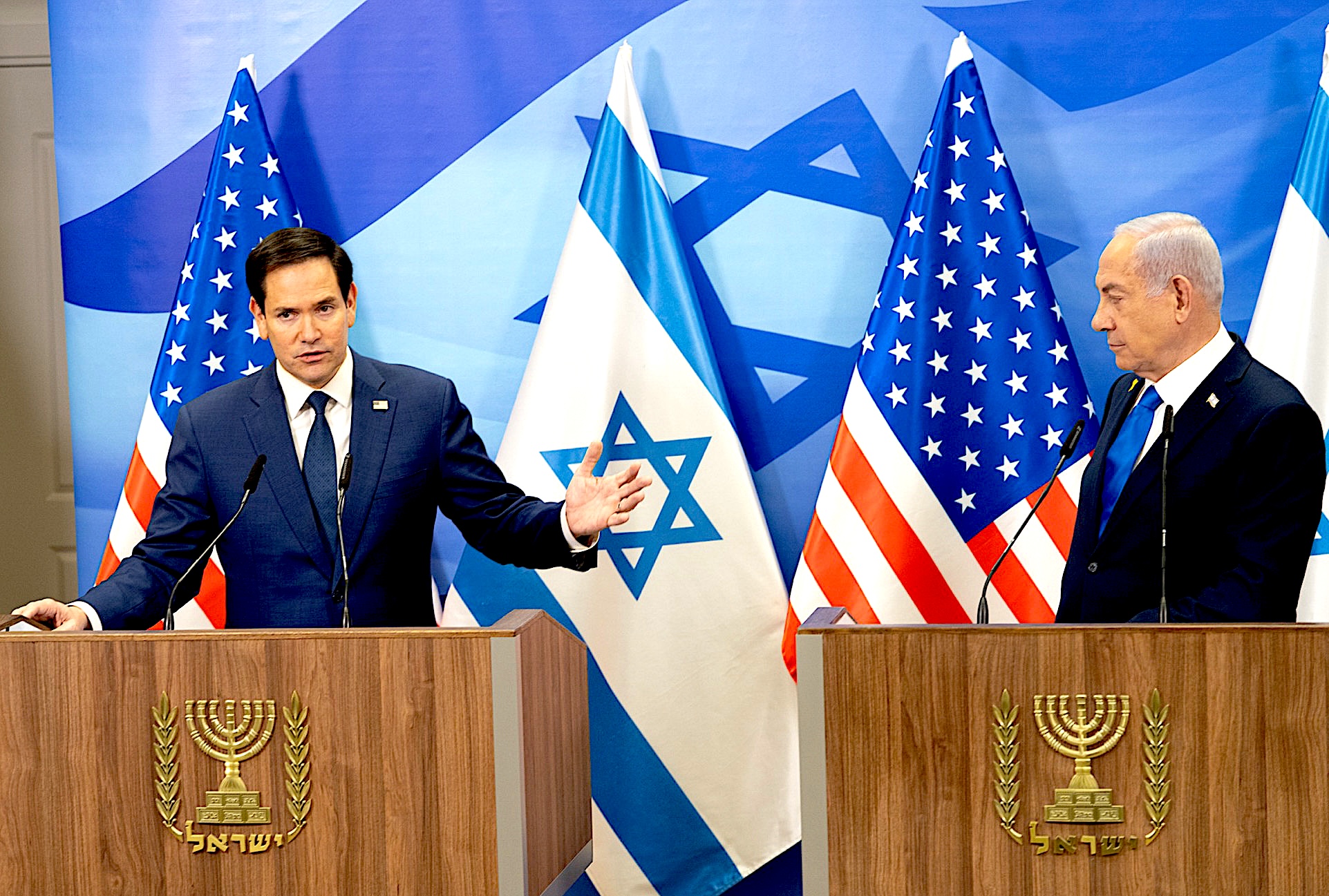
U.S. Secretary of State Marco Rubio

House Democrats Probe Use of Trump’s NSPM-7 to Target ‘Left-Leaning Political Groups’

Democratic Senate Candidate James Talarico Holds Rally Day After GOP Primary

Possibly ‘Best Political Ad Yet This Season’ Shows Texas Republican Ken Paxton’s 2012 Pen Theft

What’s so “moderate” about supporting genocide?

Politicians are also routinely dubbed “moderate” when they’re running interference for extreme income inequality and deadly healthcare inequities – helping to block popular policy options like tax hikes on the rich and Medicare for All, which is supported by three-quarters of Democrats.

The Democratic base is fed up with a system that gives inordinate power to the wealthy and to large corporations. In the real world, the so-called “moderates” are aligned with a status quo that continues to inflict widespread suffering and preventable death at home and abroad.

To hear timeworn party strategists like James Carville and Paul Begala tell it, leftwing candidates are duping the Democratic electorate. As this month began, Carville threatened to leave the party. Begala made headlines by declaring, “I don’t like the socialists. I can’t stand them.”

But last month, a CNN poll found that “about a third of Democrats and Democratic-leaning adults identify as democratic socialists.” At a time when defeating the fascistic Republican Party is imperative, any strategist’s prescription that would denigrate or seek to exclude them amounts to political malpractice.

Treating so many Democratic voters like interlopers to be scolded might play well with corporate donors. But it’s a feeble swim against the political current. Polling shows that the younger Democratic voters are, the more favorable they’re apt to be toward socialism. “Younger adults are more likely to be in groups on the left, while older adults tend to cluster in more conservative groups,” the Pew Research Center noted.

Drawing on the results of its new public opinion survey, Global Strategy Group just reported that “socialist Democrats skew younger, with 57 percent of them being between the ages of 18 and 44.” Another poll, released a month ago by Tufts University’s Center for Information and Research, found that two-thirds of young people “said that their political views have changed in some way in recent years”—and “youth whose views did shift were almost twice as likely to become more liberal/progressive instead of more conservative.”

As socialists and others on the left prevail in many high-profile races, the refrains of condemnation coming from some of the Democratic Party establishment are potshots in a losing battle. By definition, young voters are the future of the party. Its prospects for winning elections are diminished to the extent that younger voters are made to feel unwelcome, or even vilified.

To the ears of many young Democratic voters, derision about how they cast their ballots is coming from out-of-touch party elders who treat crucial problems as abstractions or matters worthy only of lip service. Millions of Americans in early adulthood are facing financial stress with bleak outlooks for jobs and careers. College tuitions are often prohibitive, and college debt can be debilitating. Rents and mortgages are high. Everyday expenses are worse than a challenge. The climate crisis is real.

Such realities cast a shadow over the future. The last thing those voters want is arrogant leadership that refuses to grasp the urgency of this political moment.

What the Corporate Media Never Says In Its Coverage of Cuba

August 21, 2026

Cuba

TOPSHOT-CUBA-US-DIPLOMACY-ENERGY-SANCTIONS

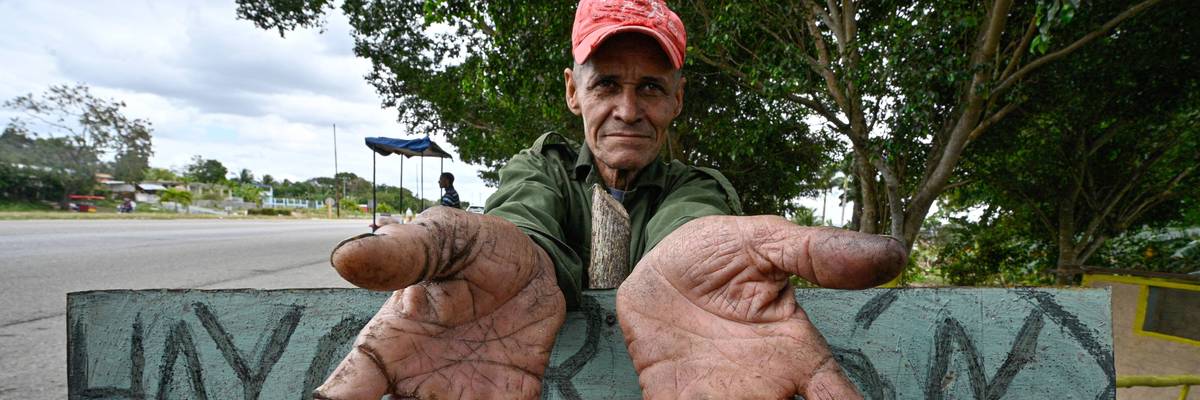
Charcoal seller Elio Galvan, 44, shows his hands as he waits for customers next to a sign advertising his product on a road in Havana on February 6, 2026. Across Cuba, families are scrambling to cope with relentless blackouts and shortages worsening under economic pressure from US President Donald Trump.

(Photo by Adalberto Roque / AFP via Getty Images)

Life in Cuba is full of suffering not because of socialism but because of a 67-year-long blockade by the world’s largest superpower.

Lea Aschkenas, Common Dreams, Aug 20, 2026

Recently, while listening to an NPR interview with Cuban-American musician Arturo Sandoval, I was reminded of the late political scientist Michael Parenti’s classic text, “Inventing Reality: The Politics of the Mass Media.”

In his 1986 book, Parenti described a situation that is still relevant 40 years later—when the US fears that another country’s non-capitalistic political model (and its attendant advances in social justice and quality of life) could cause US citizens to question their own system, it regularly imposes an embargo and sanctions against the country. Next, the news media reports on the suffering caused by these policies while, at the same time, avoiding any mention of the embargo and sanctions. Finally, when after years or decades of suffering, the people of this blockaded country take out their anger on the closest target and begin protesting against their government, the US steps in. It places a puppet president in power and pours into the country the money it had withheld throughout the embargo. Then, the media reports on how well everyone is now doing without, once more, acknowledging the oversized role the embargo played in the prior devastation.

RECOMMENDED…

US President Donald Trump

‘Bay of Pigs Reloaded’: New CIA Task Force to Further Destabilize Cuba Revealed

US Secretary of State Marco Rubio

Rubio’s Latest Claims About Cuba Spying Powers Decried as ‘Completely Batshit Insane’

In the aforementioned NPR interview, host Scott Simon perfectly perpetuated this model of media complicity by announcing towards the interview’s conclusion, “Arturo Sandoval, I’ve got to put you on the spot a little. You’ve been pretty quiet about politics over the years, but obviously you fled Cuba. When Fidel Castro died, you spoke out about your disdain for his regime. It was ten years ago.” Then, with no historical or even recent context, Simon concluded with, “Cuba seems to be almost worse than ever now.”

With this final declaration in which he erroneously implied a connection between Cuba’s current immiseration and Fidel Castro’s rule, Simon led Sandoval into his response: “Sixty-seven and a half years is way too long, man… The people in Cuba are desperate and hopeless.”

Citizens who are not given the context of the news cannot be engaged participants in the democratic process.

Simon allowed his guest to say this unchallenged as if these decades of desperation and hopelessness are the result of Cuba’s 1959 revolution. To the contrary, in addition to footing the bill for Sandoval’s musical education (he attended the free Cuban National Art School, founded by Fidel Castro), the Cuban Revolution redefined human rights as access for all to free education, free healthcare, low-cost daycare centers, and highly subsidized housing.

The desperation Sandoval referred to is the direct result of the 67-year-old embargo against Cuba imposed by the United States, the longest embargo in the history of the world. Combined with its multitude of supplementary sanctions (more than 200 of which were enacted during Trump’s first term in office), these punitive measures prohibit Cuba from purchasing products, including medicine, manufactured abroad if they contain more than 10% of US-origin components. They restrict US residents’ ability to travel to Cuba. They hinder Cubans residing in the US from wiring money to their families, a common way for immigrants from all parts of the world to supplement the income of relatives back home.

The Cuban embargo has received worldwide condemnation. For more than three decades now, the UN General Assembly has annually presented its members with a resolution to denounce the embargo. Year after year, its 193 member states cast a near-unanimous vote affirming the resolution. The only two countries that consistently vote against it—and in favor of the embargo— are, unsurprisingly, the US and Israel.

Unfortunately, the UN resolution, while a significant show of solidarity, has no authority to end the embargo. As codified by US law, only the US Congress has this power.

In addition and sadly, the suffering caused by the embargo is not a mere result of the blockade but the explicit objective of it as stated in a declassified 1960 government document posted on the National Security Archive’s website and abstracted as follows: “This memo, written by Deputy Assistant Secretary of State for Inter-American Affairs Lestor Mallory, provides the original, unvarnished, policy rationale for imposing trade restrictions on Cuba. Fidel Castro’s revolution is quite popular in Cuba, Mallory points out; since there is no effective opposition against him, the only way to undercut Castro’s support is ‘through disenchantment and disaffection based on economic dissatisfaction and hardship.’ Mallory advocates a set of punitive economic actions designed to deny ‘money and supplies to Cuba, to decrease monetary and real wages, to bring about hunger, desperation, and the overthrow of [the] government.’”

Beyond the embargo and its sanctions, the US designation of Cuba as a State Sponsor of Terrorism (SSOT) contributes to what Sandoval referred to as the Cuban people’s hopelessness and desperation. The partisan political boomerang of the SSOT was initiated by President Ronald Reagan in 1982 for Cuba’s support of Latin American leftist groups. It was removed by Obama in 2015, reinstated by Trump in 2021, symbolically removed by Biden on January 14th, 2025, at the end of his presidency, and again reinstated by Trump on January 20th, 2025, at the start of his second term.

Along with other restrictions, the sponsor-of-terrorism status forbids US international aid organizations, including Food for Peace and the Peace Corps, from offering humanitarian assistance to Cuba. It prohibits Cuba from receiving loans from the World Bank and other international financial institutions. These are loans which could be used for much-needed projects such as an overhaul of the island’s aging electrical grid, which has caused multiple nationwide blackouts over the past two years.

Furthermore, as described by the Washington Office on Latin America, the SSOT “has a chilling effect on businesses, including banking or telecommunications investments that are crucial to promoting the type of transformation essential to expanding freedom on the island.” Ironically, this freedom (ie: the opening of business and economic opportunities) is precisely what the US purports to desire for the Cuban people. And it is this lack of this freedom, which Sandoval said in the somber closing statement of his NPR interview, that prevents him from returning to Cuba and will leave him to “die dreaming” of a homecoming.

At this point in the interview, what Scott Simon didn’t say becomes as, if not more, significant than what he did. It is that, in Fidel Castro’s final two years of life, a sense of hope and a feeling of, yes, freedom pervaded Cuba.

Hope came to Cubans with Obama’s 2014 détente, which, while not a revocation of the embargo [only able to be repealed by Congress], still enabled the US Embassy in Cuba and the Cuban Embassy in the US to reopen for the first time in 50 years. Washington’s rapprochement permitted commercial and direct mail flights between the two countries to be reinstated and for restrictions on remittances to be loosened. This, in turn, allowed Cuban-Americans, like immigrants from other countries, to now easily send money to their families on the island.

Freedom came from an opening of the Cuban economy, from the government’s expanded opportunities for private businesses. Cubans responded enthusiastically, opening record numbers of cafés and restaurants and music and art venues, among other enterprises to which their new American friends, now able to travel freely to Cuba, flocked in record numbers.

It was a boon for both sides—and evidence that another way of engaging with Cuba was possible. Until, that is, Trump was elected at the end of 2016 and, soon thereafter, began systematically shutting everything down once more.

If not for the very real damage it inflicts on the country, the SSOT designation could be considered laughable, as, during all these decades as a supposed sponsor of terrorism, Cuba has remained steadfast in its commitment to a peaceful coexistence with its neighbors near and far. For the past quarter of a century, Cuba’s Latin American Medical School, esteemed for both its size (enrollment-wise, it is considered the largest medical school in the world) and its focus on preventative healthcare, has offered a full-ride, plus a monthly living stipend, for students from low-income communities around the world, including the US.

Additionally, in the wake of Hurricane Katrina, Cuba offered aid workers to the US, although President Bush rebuffed this overture. In the early days of COVID-19, Cuba sent medical brigades to help Italy contain its outbreak. And this was in addition to the doctors Cuba regularly sent to countries in need from Algeria to Honduras to Sri Lanka. Until, that is, in 2025 the US began threatening to deny visas to the leaders of countries accepting assistance from Cuban doctors; and the targeted countries, fearing retribution, terminated their contracts with Cuba.

This past March, as Jamaica’s Cuban doctors headed home following one such termination, hundreds of Jamaicans took to the streets for what they called a “Gratitude Walk.” For three miles, they marched wearing t-shirts reading, “Thank you Cuba for 50 years of medical service” and chanting, “We love Cuba” and “Bring back the doctors.”

Walk participant Rupert Walters, President of the Jamaica-Cuba Friendship Association’s St. Catherine’s chapter and a beneficiary of Cuban care for his prostate cancer, called his government’s decision to cave to US pressure “crazy.” Walters told the Jamaica Observer that he wished the government had “allowed the Cubans to support and give their services to the hundreds of thousands of Jamaicans who can’t afford it,” and warned that, as a result of the medical program termination, Jamaicans would die.

Rather than supporting terrorism, Cuba has long been the target of terrorist attacks by the US government. There was the CIA’s half-century of documented assassination attempts against Fidel Castro, involving everything from poison pens to exploding cigars.

Less comical and more lethal were terrorist attacks led by Luis Posada Carriles, a Cuban exile and CIA operative. In 1976, 35 years before September 11th, Posada Carriles masterminded the Western Hemisphere’s first act of political terrorism against a civilian flight. His bombing of a Cubana de Aviación airplane killed all 73 passengers, 24 of whom comprised the entirety of the Juvenile Cuban National Fencing team. In the summer of 1997, Posada Carrilles began another bombing campaign, this time targeting Havana hotels, restaurants, and discotheques—and killing an Italian tourist. Finally arrested in Panama in 2000 for attempting to assassinate Fidel Castro at a conference he was attending there, Posada Carrilles later fled to the US, where he was detained for illegal entry and then pardoned by President Bush. In 2018, he died a free man in Miami.

Although Scott Simon didn’t say this in his interview with Arturo Sandoval, the current “worse-than-ever” situation he referenced is due to the US’s oil blockade, initiated by an Executive Order from Trump in January. Under this latest act of economic warfare, tankers trying to deliver petroleum to the island are threatened with tariffs and, if they still attempt to do so, they are chased away by US Coast Guard vessels.

Like the embargo, like the sanctions, like the SSOT status, the fuel blockade has caused widespread suffering for the Cuban people. It impedes access to electricity and also to water, which arrives at most houses in Cuba via an electric pump. It prevents the preservation of not just food but also of medicines that need refrigeration.

Many Cubans now sleep outside, on rooftops or on the Malecón seawall, to escape the sweltering summer heat, made all the more unbearable without the electricity to run their fans. Because electricity (which has been prioritized for hospitals and schools) is now available in most houses for just two hours per day, Cubans must wake up whenever it arrives (even if it is at 3 AM) to do all they couldn’t without it—wash clothes and dishes, cook and bathe. And collect water for the next outage. So, sleep too, has become a casualty of this US-provoked humanitarian crisis, referred to by a group of US Representatives who visited the island in July as a “silent Gaza.”

By engaging in de-contextualized reporting rather than shedding light on the reasons why the current situation is as it is, mainstream US media outlets like NPR do their listeners a grave and dangerous disservice. For, as The Washington Post’s motto warns us, albeit a little more ironically after Jeff Bezos’ purchase of it, “Democracy dies in darkness.”

Citizens who are not given the context of the news cannot be engaged participants in the democratic process. Without the full story as to why what is happening in our world is happening, we are rendered powerless to change it. Without our consent, we become cogs in the bulldozer of US interventionism and imperialism.

Life in Cuba is full of suffering not because of socialism but because of a 67-year-long blockade by the world’s largest superpower. In a government now absent of checks and balances, we need to call out the offending media. We need to let them know that we’re paying attention, that we hold them accountable for their lies of omission— and that we demand better.

Mutiny Aboard US Carrier Abraham Lincoln Off Iranian Coast

August 13, 2026

August 13, 2026

Share this:

Bruce Gagnon, Space for Peace.

Recent reports indicate a serious mutiny situation aboard the USS Abraham Lincoln. Seven U.S. Navy personnel have possibly been killed and several others injured in a violent clash among the crew, highlighting growing unrest and morale issues during an extended deployment.

Worried families vented their anxieties about loved ones onboard the Lincoln at an emotional town hall meeting with navy leaders in San Diego last Thursday, Stars and Stripes reported. One spouse among the 200 or so family members said that her husband had texted her that day saying “he hopes he doesn’t wake up tomorrow”.

A woman at the meeting told acting navy secretary, Hung Cao that the navy had “broken trust between us and the leadership”, the paper reported. The Navy Times gave details of thwarted suicide attempts onboard the aircraft carrier during the current deployment. Annabelle Loma told the outlet that her husband had tried to jump overboard after his spell at sea kept being extended. “He’s scared. He thinks he’ll get a dishonorable discharge, and just because he was burnt out his 13-year career is ruined, just like that,” she said. 

Bonnie York, whose stepson is aboard the Lincoln, told MS NOW she had been told a doctor or therapist on the ship warned the crew needed to reach port before people started “losing their minds.” She voted for Trump—and partly because he promised not to start any new wars. She no longer believes the country is safer for it. “You’ve essentially stranded them out there,” she said of the crew. 

Seven US Navy personnel have reportedly been killed and several others wounded in a violent clash aboard the USS Abraham Lincoln, as growing unrest among the carrier’s crew has exposed mounting pressure inside the US military amid a prolonged deployment. 

The incident erupted after an adviser to US Central Command (CENTCOM) chief Brad Cooper boarded the carrier to address mounting complaints from crew members following protests by their families over the ship’s prolonged deployment, according to Tasnim News Agency, citing an informed military source. The adviser was reportedly met with boos and had water bottles thrown at him while addressing a gathering of personnel. The confrontation subsequently escalated into a fight among crew members involving knives and other bladed weapons, leaving seven personnel dead and several others wounded, according to the source.

Pistol Pete Hegseth, the defense secretary, dismissed the accounts as “more fake news”.

Deployment Context

The USS Abraham Lincoln has been deployed for over 260 days, which is a modern-era record for a U.S. aircraft carrier. This prolonged deployment has led to significant stress and mental health challenges among the crew

Conditions and Morale

Reports from military families describe poor living conditions, including food shortages and inadequate facilities, contributing to the deteriorating morale. 

Response and Claims

In addition to internal conflicts, there are external tensions, with Iran claiming to have attacked the carrier, although U.S. officials have denied these allegations. 

Editor’s Note: At a moment when the once vaunted model of responsible journalism is overwhelmingly the play thing of self-serving billionaires and their corporate scribes, alternatives of integrity are desperately needed, and ScheerPost is one of them. Please support our independent journalism by contributing to our online donation platform, Network for Good, or send a check to our new PO Box. We can’t thank you enough, and promise to keep bringing you this kind of vital news.

Donate Online

Send a Check

You can also make a donation to our PayPal or subscribe to our Patreon.

Please share this story and help us grow our network!

Marco ‘McCarthy’ Rubio: Wrong on Cuba & ‘Terrorism’

August 10, 2026

Consortium News, August 10, 2026

Those who challenge and protest U.S. policies are not foreign-paid terrorists; Rubio and other Trump appointees are using “McCarthy” tactics to stop dissent, says Ann Wright.

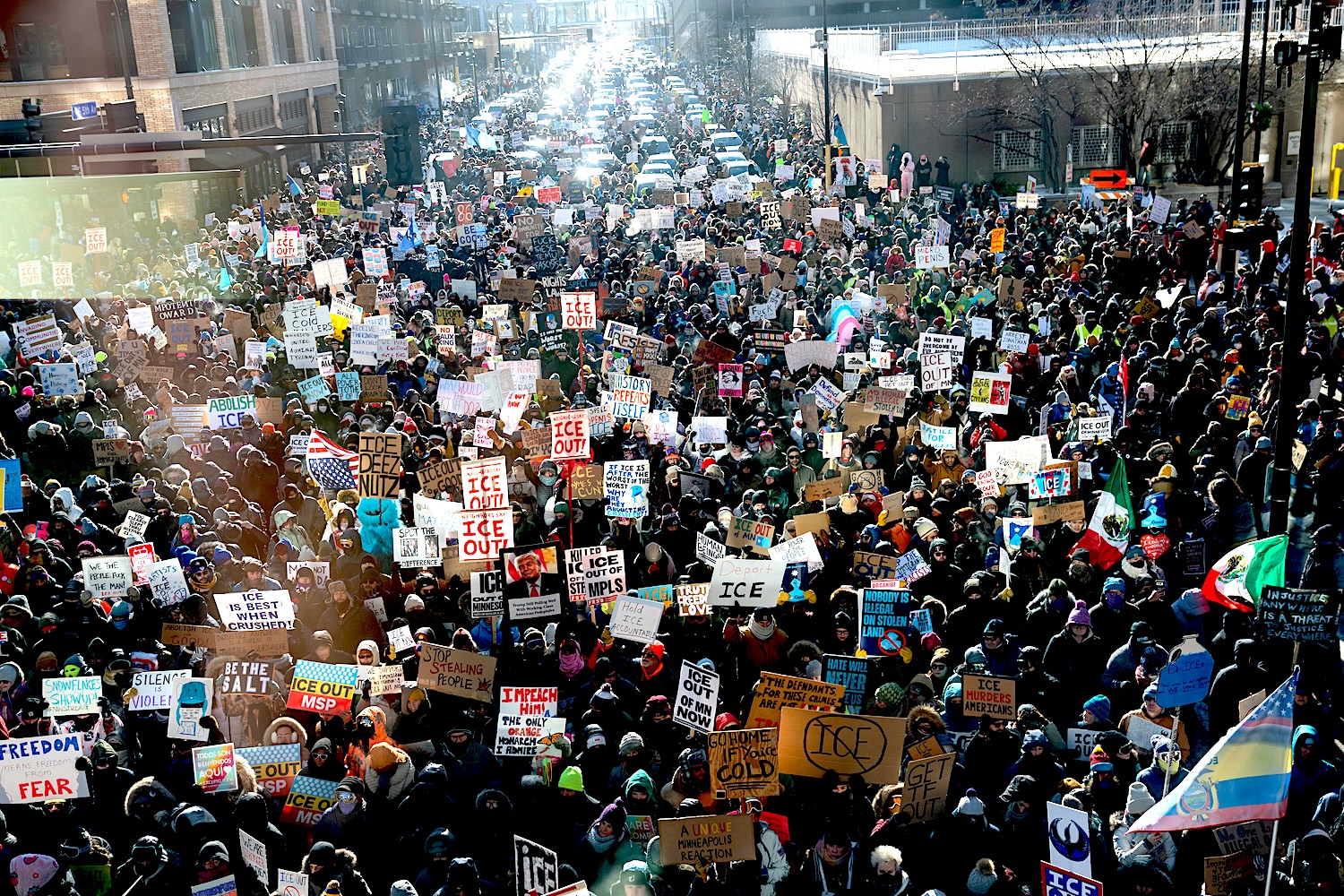
Downtown Minneapolis ICE-out demonstration on Jan. 23 following ICE agent Jonathan Ross’ fatal shooting of civilian Renée Good. (Lorie Shaull /Flickr/ Wikimedia Commons/ CC BY 4.0)

By Ann Wright

Thin-skinned and heavy-handed, the Trump administration apparently feels like it is being singled out by those who dissent from its policies. As a result, Trump appointees are taking drastic “McCarthy” tactics to stop dissent.

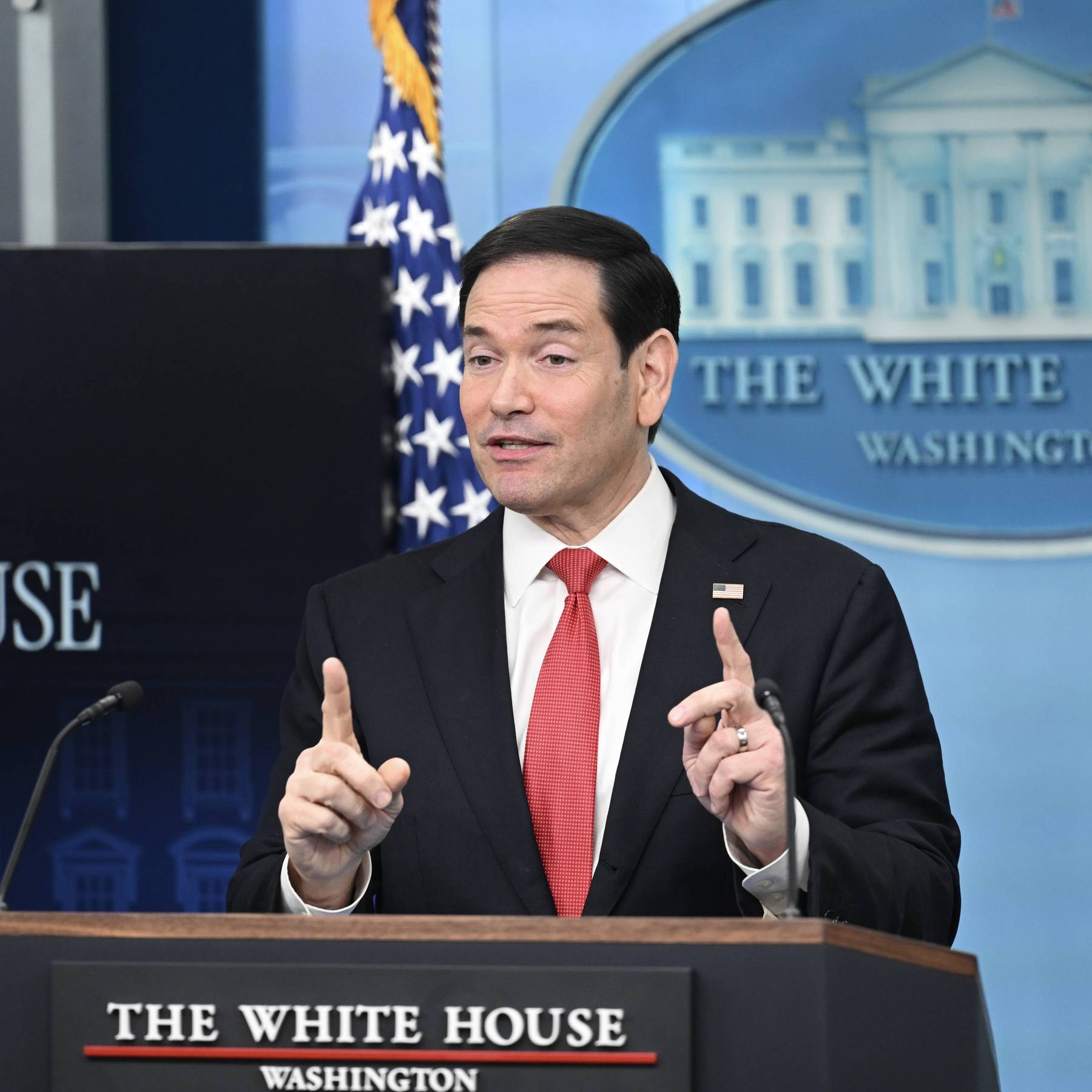
In less than one month, alleging that dissent and protests are part of attempts of other governments “to overthrow the government of the United States,” Secretary of State Marco Rubio has sponsored two major initiatives to frighten those who oppose the Trump administration’s policies.

The first salvo was orchestrating a conference with 60 countries participating over “Threats From Left-Wing Terrorists.” The second was the report on Cuba that alleged virtually every group that has ever visited Cuba is paid by the Cuban government.

If You Are Not Outraged, You Aren’t Watching

These allegations of paid protest and travelling on the dime of another country are unfounded, untrue, and fly in the face of the history of protests in the U.S. and travel by U.S. citizens to see the effects of U.S. polices on other countries.

President Donald Trump’s erratic foreign policy, including the disastrous attacks on Iran as a favor to Benjamin Netanyahu’s Israeli war machine; attacks domestically cutting health and education; horrific treatment of migrants; daily outlandish statements on just about every subject; and disregard for facts in virtually every issue all provide good reasons for protests by outraged U.S. citizens.

I have not been paid by any country to protest U.S. policies, nor do I know anyone who has been paid.

No one needs to be paid to be outraged!!!

Dissent Is Not Illegal, Nor Paid by Other Countries

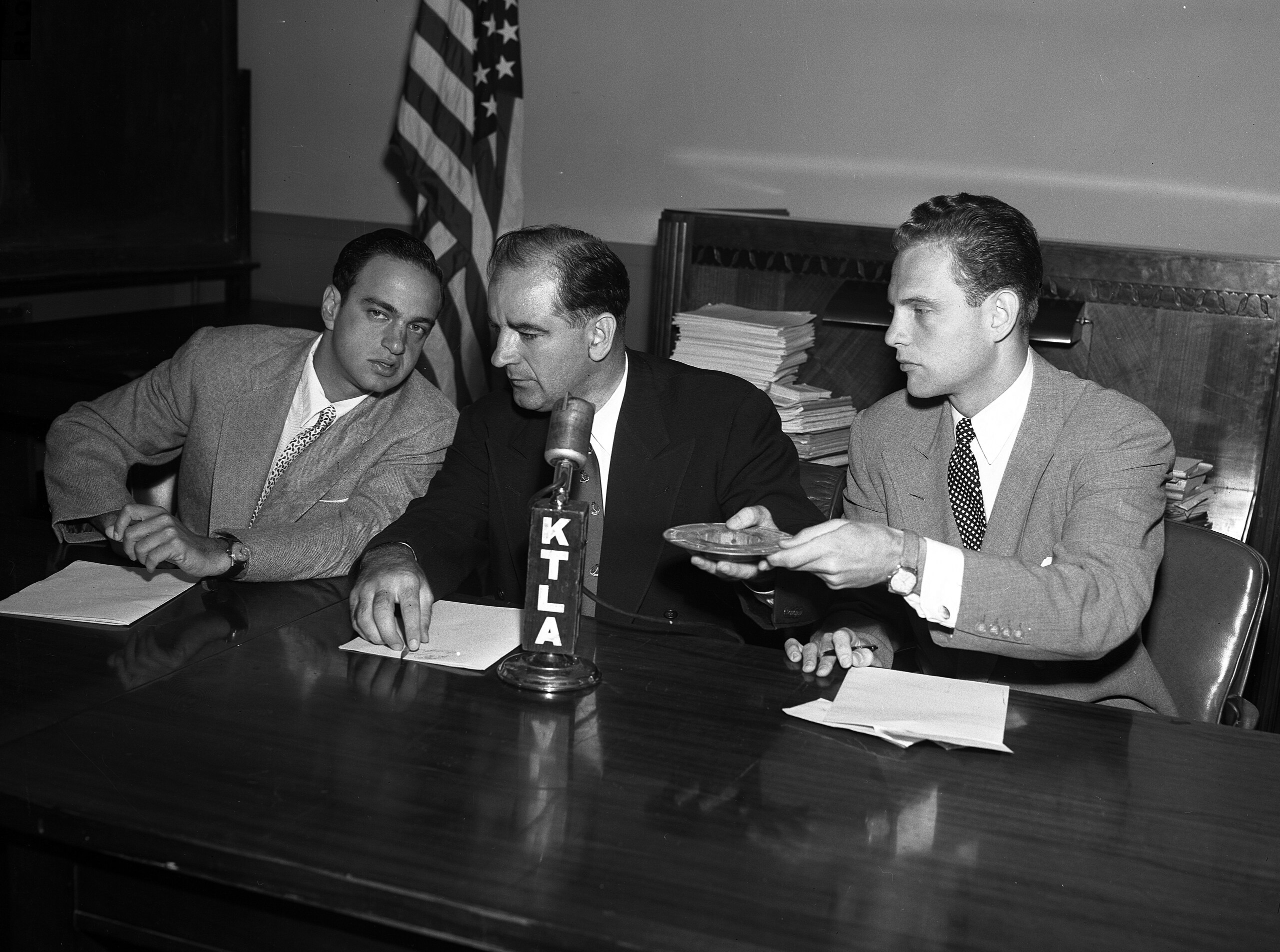
Sen. Joe McCarthy, center, confers with Roy Cohn, chief counsel for House Un-American Activities Committee, Aug. 23, 1953. (Los Angeles Times/Wikimedia Commons)

In particular, Secretary of State and National Security adviser Marco Rubio, who has authored the latest “McCarthy” report to quell opposition to illegal, immoral policies of his department and the Trump administration in general, seems to have lost his grasp on the history of dissent in the U.S.

From his 15 years in the U.S. Senate, he should remember that many of each administration’s domestic and international policies have been lawfully and non-violently protested by U.S. citizens in the U.S. Congress.

Having been a part of many protests since I resigned from the State Department in March 2003 in opposition to a war policy, President George W. Bush’s war on Iraq, I know that these protests are NOT a part of attempts of other governments to “overthrow the government of the United States,” but are legitimate shows of concern about specific policies.

Rubio’s allegations of other countries’ influence in these protests are unfounded and untrue.

I was not paid by a foreign government to resign. I resigned because I felt the war on Iraq was illegal, immoral, and a dangerous action jeopardizing the national security of the United States.

I have not been paid by any country to protest U.S. policies, nor do I know anyone who has been paid. Protest is a legitimate, time-consuming act of outrage about a policy that people use to bring attention to the policy, and hopefully effect change in the policy.

Rubio: Blame the Left, Ignore Right’s Violent Attack

The first attack against legitimate protest came in the U.S. Department of State sponsored conference on “Far-Left Terrorism” held in Washington, D,C,. in July, where Rubio and White House pit bull Stephen Miller harangued the representatives of 66 nations about terrorists from the left wanting to overthrow the U.S. government.

In his opening statement Rubio railed:

“This is a distinctive and unique evil. It has always been driven by a hatred above all else, a hatred for civilization itself. It is a revolt of the worst against the best, a revolt of the weak and the cowardly against the strong and the good.”

White House Deputy Chief of Staff Miller called left-wing extremism a growing threat aimed at “the overthrow of our system and form of government” that officials previously failed to sufficiently address. Miller railed:

“We must stay the course and be completely unflinching in the pursuit of justice against these enemies of civilization. If the left is allowed to use the real or actual threat of violence to destabilize our institutions, then those institutions cannot and will not succeed.”

A White House press release stated,

“Under the leadership of President Donald J. Trump, far-left extremism will be treated with the same seriousness and ferocity the world has long reserved for jihadist terrorism.”

Of course, neither Rubio nor Miller mentioned President Trump’s pardon of the over 1,500 persons who did try to violently overthrow the United States electoral process on Jan. 6, 2021 as they attacked the Capitol police and broke into and destroyed many offices in the U.S. Capitol.

The attempted overthrow of the 2020 election by seeking to nullify the election results through lawsuits in 62 federal and state courts was attempted by Trump’s loyal personal lawyers including the current acting U.S. attorney general and head of the U.S. Department of Justice Todd Blanche, and disgraced and disbarred lawyer and former New York City Mayor Rudy Giuliani.

Their cases of election fraud were stopped by rulings in all 62 federal and state lawsuits that no election fraud had occurred.

Untruthful Report About Cuba & Paid Protesters

Prisoners of the C.I.A,-backed Brigade 2506, after they were captured in the Bay of Pigs invasion, 1961. (Miguel Vinas / Wikimedia Commons / Public Domain)

The most recent and most ludicrous allegations of left-wing violence and protests being funded by other countries is in Secretary of Rubio’s 10- page report on “Cuba: the Capital of 21st Century Communism.”

Rubio accuses the National Network on Cuba, National Lawyers Guild, CODEPINK: Women for Peace, the People’s Forum, IFCO/Pastors for Peace, and the Democratic Socialists of America of being paid by the Cuban government whose goal, the report states, has been for 60 years the overthrow of the U.S. government.

Talk about turning the facts on their heads. As is well-documented, 13 successive U.S. presidential administrations since 1959 — Eisenhower, Kennedy, Nixon, Ford, Carter, Reagan, Bush 1, Clinton, Bush 2, Obama (first term, when C.I.A. policies were still in effect, but changing in Obama’s second term with diplomatic recognition), Trump 1, Biden, and Trump 2 — have attempted to overthrow the Cuban government in the 60-plus years of its existence.

The current attempt of overthrow is centered on the U.S. brutal and total blockade of fuel going to Cuba, which has left Cuban citizens without electricity for operations in hospitals, for food preparation, and for the conduct of normal life.

Making life so miserable for the Cuban citizenry that they overthrow their government would fulfill the longstanding hopes of Cuban-American Rubio.

Rubio Dishonest About Cuban American Background

Marco Rubio has been less than forthright about his heritage as a Cuban American in his quest for the overthrow of the Cuban government.

Rubio, “Mr. Righteous against birthright citizenship,” is a “birthright citizen” born in the U.S. of noncitizen parents who had immigrated in 1956 from Cuba under the Batista dictatorship, not under the 1959 revolutionary government.

Rubio, “Mr. Tough on illegal immigrants,” ignores that his own grandfather entered the U.S. illegally and was ordered to be deported but was saved from deportation by an amnesty during the Cuban missile crisis.

Rubio, “Mr. Kill the Boat Drug Runners of the Caribbean,” disregards that his own brother-in-law was convicted of drug running and his sister implicated but never charged.

Rubio, “Mr. I Know All About Cuba Because I Am Cuban American,” has been to Cuba only once — where in Cuba did he go? A few hours at the U.S. prison on the U.S. Naval base at Guantánamo.

No doubt, more will come in the next two years as Rubio, Miller, and others in the administration seem to think they can get away with outrageous bullying of individuals and organizations that do not agree with them and that challenge them in non-violent ways, in contrast to the Jan. 6 gang.

In particular, there are always protests against the horrific effects of brutal sanctions that the U.S. government uses to make life so difficult for citizens of other countries that they will overthrow their own governments, whether it be Cuba, Venezuela, Iran, or Nicaragua.

Israel’s Paid Influence Seems OK With Rubio

 Rubio and Israeli Prime Minister Benjamin Netanyahu delivering joint statements in Jerusalem on Feb. 16, 2025. (State Department/ Freddie Everett)

However, Rubio must be thinking that since his buddies in the Netanyahu government have paid Trump’s former campaign manager, Brad Parscale, millions of dollars in a specific program to influence U.S. public opinion to stop the massive decline in Israel’s “likability,” that other countries have paid off U.S. persons to work clandestinely on the same scale.

Parscale’s firm was hired by Israel for $6 million in September 2025 and then signed a $15 million contract with Israeli firm Havas to conduct a digital campaign on behalf of the State of Israel, according to the Foreign Agents Registration Act (FARA).

Parscale and his team sent conservative influencers suggested positive language about Israel for posts on social media sites such as X, Instagram, and TikTok. The influencers are then compensated based on how many “likes” each post gets from readers.

Israeli Prime Minister Netanyahu’s government has dramatically increased spending on influence operations. Earlier this year, Israel increased by four times its “public diplomacy” influence budget from $150 million in 2025 to $730 million in 2026.

But even The Times of Israel says it’s too late for a “face lift” as a Pew Research Center poll reported that 60 percent of Americans now view Israel unfavorably, up seven points in a single year, with only 37 percent viewing it favorably after Israel has committed genocide of Palestinians in Gaza; pillaged and plundered homes, farms, animals in the ethnic cleansing of Palestinian West Bank; destroyed southern Lebanon; and got the Trump administration up to its neck in the war on Iran.

Keep Challenging Illegal, Immoral & Criminal Policies

The two recent major attempts of the Trump administration to quell dissent show how serious challenging illegal, immoral, and criminal policies has become and how important it is that we push back hard against these attempts to intimidate citizens to silence their dissent.

Despite these brutal, heavy-handed attempts, dissent is spreading to regular citizens. In a recent letter to the editor of my hometown newspaper Honolulu Star Advertiser, which serves a large U.S. military population, a resident of Hawaii summarized the challenge very well:

“The true domestic enemy includes those who monopolize political and economic power. The real enemy includes individuals who misinform, threaten, and disenfranchise the less powerful. The true enemy are those who are antidemocratic, have little or no concern regarding the welfare of others, and enrich themselves, family, and a few friends at the expense of the general population.”

Ann Wright served in the U.S. Army/Army Reserves for 29 years and retired as a colonel. She was also a U.S. diplomat for 16 years and served in U.S. embassies in Nicaragua, Grenada, Somalia, Uzbekistan, Kyrgyzstan, Sierra Leone, Micronesia, Afghanistan and Mongolia.  She is the co-author of Dissent: Voices of Conscience.  She has been with the Gaza Freedom Flotilla Coalition since 2010, has been put in Israeli prison twice for attempting to break the illegal Israeli naval blockade on Gaza and has been on segments of flotillas in 2011, 2013, 2015, 2016, 2018 and 2024.

Pentagon Drafting New Nuclear Strategy To Expand Options for Tactical Nuclear Weapons Use

August 10, 2026

The strategy is being overseen by Elbridge Colby, the Pentagon’s policy chief, who has long called for the US to prepare to fight a “limited nuclear war”

by Dave DeCamp, Antiwar. com, August 9, 2026

The Pentagon is reportedly drafting a new nuclear strategy that’s expected to emphasize the use of tactical nuclear weapons to give the president more “options” in a potential nuclear conflict.

The strategy, first reported by NBC News, is being drafted by the Pentagon’s policy chief, Elbridge Colby, who has for more than a decade called for the US to develop additional capabilities to fight a “limited nuclear war.”

The idea would be to shift the US nuclear strategy away from the focus on using strategic nuclear weapons to wipe out an adversary’s nuclear capabilities and focus more on the possibility of using smaller, tactical nuclear weapons in a “regional” conflict.

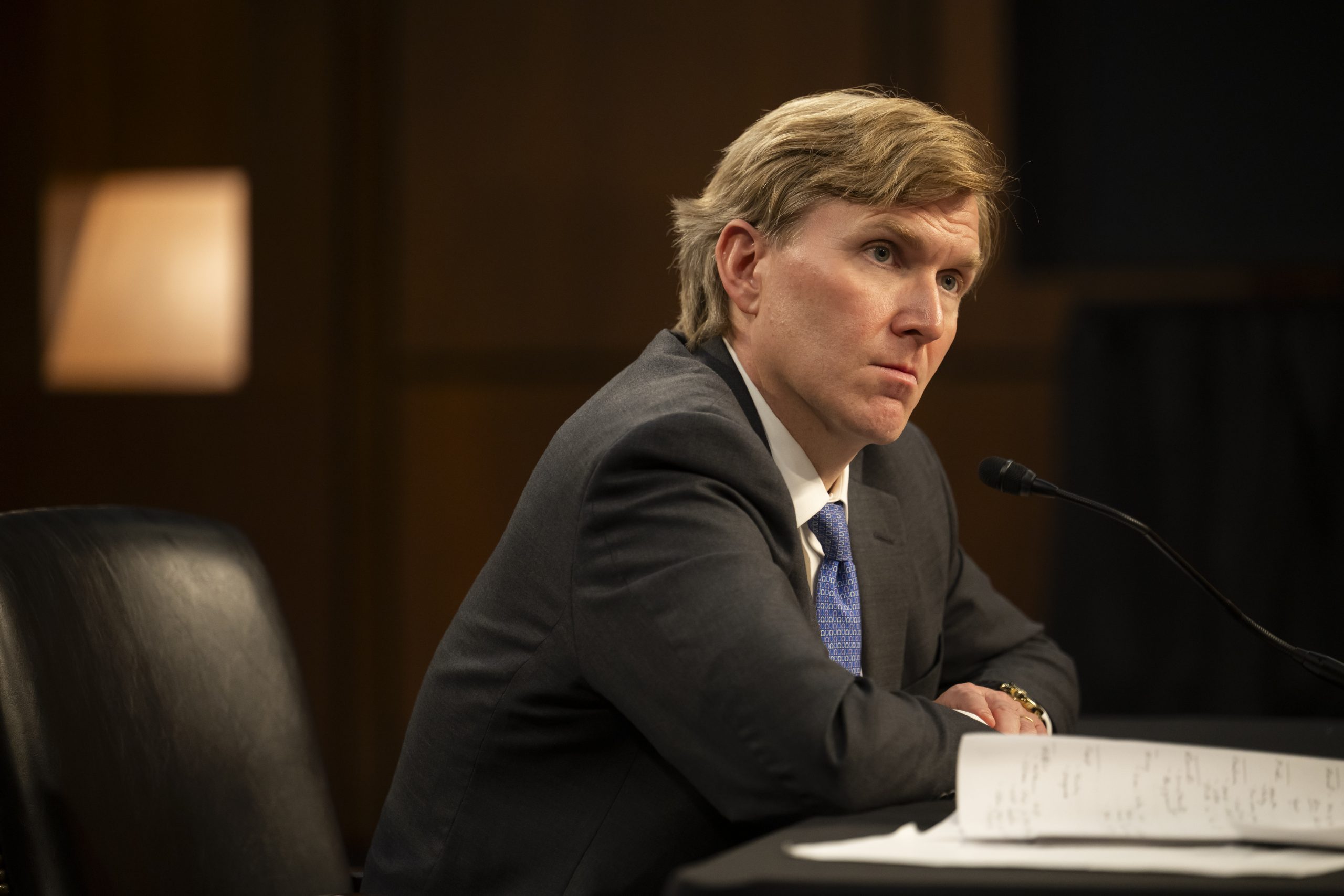
Elbridge Colby, undersecretary of defense for policy, during a Senate Armed Services Committee hearing in Washington, DC, on March 3, 2026. (Photo by Craig Hudson/Sipa USA via Reuters Connect)

“If you actually want extended deterrence to be credible, you have to provide the nation’s political leadership with nuclear capabilities that common sense indicates you could actually use,” a source told NBC. “Otherwise you’re reducing our leadership’s options to extreme choices that the adversary won’t find credible.”

While the potential strategy would be carried out in the name of deterrence and preventing war, arms control advocates have strongly warned against the idea of developing more tactical nuclear weapons to prepare for a potential limited nuclear conflict over concerns that it would make nuclear war much more likely and that any nuclear exchange would likely lead to a global catastrophe.

“Without a firm rejection of the option to use nuclear weapons first in a conflict, by building and fielding more tactical nuclear weapons the administration is signaling its intention to use them against enemy forces and industrial infrastructure in a conflict,” the Arms Control Association said in response to the NBC report.

The ACA said that it “strongly opposes the administration’s decision to build more tactical nuclear weapons to supplement the options that exist” and pointed to the fact that the US already has at least two types of tactical nuclear weapons, including B61-12 gravity bombs, which are deployed in Europe, and the W76-2 low-yield warhead for the Trident II submarine-launched ballistic missile.

The ACA said the US Navy is also “acquiring a new nuclear-capable sea-launched cruise missile (SLCM-N) that may be available at the end of the decade for possible use in conflict with China.”

Breaking Defense reported that Colby announced on August 5 that the Pentagon was reviewing the US nuclear posture and repeatedly emphasized the term “options” in a speech he delivered that has not been made public.

Colby has been one of the leading voices in Washington’s policy circles advocating for the US to prepare for limited nuclear war. In a 2015 paper for the Center for a New American Security (CNAS) titled “A Nuclear Strategy and Posture for 2030,” Colby said the US “should make a special effort to develop the platforms and weapons, doctrine, planning capacity, and other capabilities needed to fight a limited nuclear war more effectively than plausible adversaries.”

He said that the ideal US nuclear force is “one that is not only highly survivable and able to issue a devastating blow against any adversary under any scenario but that is also capable of conducting effective limited nuclear operations in a controlled fashion while maintaining the ability to escalate to full-scale war if necessary.”

Colby made a similar argument in a 2018 piece written in Foreign Affairs titled “If You Want Peace, Prepare for Nuclear War,” published just a few months after he left the first Trump administration, where he led the development of the 2018 National Defense Strategy.

“Washington’s task is clear. It must demonstrate to Moscow and Beijing that any attempt to use force against US friends and allies would likely fail and would certainly result in costs and risks well out of proportion to whatever they might gain,” Colby wrote. “This requires conventional military power, but it also means having the right strategy and weapons to fight a limited nuclear war and come out on top.”

CIA launches Cuba task force amid new sanctions and UN warnings of a “silent Gaza”

August 8, 2026

Andrea Lobo, WSWS, 8 Aug 2026
US Embassy in Havana [Photo: US Department of State]

Announcing a new round of sanctions against Cuba on Thursday, Secretary of State Marco Rubio declared that President Donald Trump’s “resolve is ironclad: the United States will not tolerate a rogue state harboring hostile foreign military, intelligence, and terror operations just 90 miles from the American homeland.”

The threat was issued against a country whose electrical grid collapsed twice within 24 hours this week, whose hospitals operate without reliable power and whose population is being deprived of food, medicine and fuel by a deliberate US energy blockade. 

On Thursday, United Nations human rights rapporteurs condemned the US measures and warned of a “silent Gaza” unfolding on the island, declaring that food “must never be used as an instrument of political pressure,” and that measures knowingly depriving a population of the means to survive strike at the most basic guarantees of the right to life.

What the Trump administration is carrying out is an undeclared war of extermination against nearly 10 million people, criminal under international law and aimed at driving an entire society back a century in order to turn it into a colony.

The sanctions announced Thursday target five Cuban entities and eight individuals, including subsidiaries of the military conglomerate GAESA, Revolutionary Armed Forces Minister Álvaro López Miera, Chief of the General Staff Roberto Legrá Sotolongo and Cuba’s military attachés to Russia and China.

They came one day after the New York Times revealed that the CIA has secretly established a Cuba task force, adding case officers who recruit and manage spies, intelligence analysts, cyber-operations personnel and specialists in covert influence operations. According to the officials speaking anonymously to the Times, the task force seeks to create fissures among the Cuban political elite in the hope of replacing “hard-liners” with leaders more amenable to Trump’s demands.

The Times also revealed that the Trump administration has revised the National Intelligence Priorities Framework to designate Cuba a “Priority 1” target, alongside China, Iran and Russia. This has led the National Security Agency, the National Geospatial-Intelligence Agency and others to dedicate more intelligence collection assets, including satellites, toward the island.

The Times states plainly what this is for: the intelligence “will help the U.S. military update its options for potential military action against Cuba.”

These operations coincide with a sweeping reorganization of the US military across the hemisphere. At midnight on Monday, Southern Command retired Joint Task Force-Southern Spear—responsible for 63 strikes on fishing boats accused of carrying drugs in the Caribbean and Eastern Pacific that have killed 221 people in eleven months—and replaced it with Joint Task Force-Western Hemisphere. 

SOUTHCOM commander Gen. Francis Donovan announced that the new command, “the action arm of US Southern Command,” would “apply total systemic friction on these networks,” operating alongside “our 18 other nations” in the Americas Counter Cartel Coalition. Its purpose is to extend joint strikes from international waters onto the sovereign territory of Latin American states. Cuba will figure among its principal targets, together with the coordination of repression against social opposition throughout the region.

With the debacle in the war against Iran and social anger mounting over ICE raids, healthcare cuts and the cost of living, an operation against Cuba is being contemplated as an “October surprise.” Some of Trump’s advisers believe the Cuban government “could be gone by the time of the midterm election in the United States in November,” according to the Times.  

Such a move would not be aimed at boosting popularity for the Republican Party—only 15 percent of Americans support a war against Cuba. It would provide the pretext to manipulate or even cancel the 2026 elections and criminalize opposition.

The last time the CIA established a Cuba task force was 1960. Its members oversaw the April 1961 Bay of Pigs invasion, in which some 1,400 CIA-organized and financed exile mercenaries landed on the island. The operation was crushed by Cuban forces. When it failed, the Joint Chiefs of Staff drafted Operation Northwoods, a since-declassified proposal to stage false-flag terrorist bombings in American cities and hijackings of US aircraft to manufacture a pretext for invasion.

The Venezuelan precedent shows a more recent example. In October 2025, Trump publicly confirmed he had authorized the CIA to conduct covert and potentially lethal operations inside Venezuela. Three months later, on January 3, US Special Forces seized President Nicolás Maduro and his wife without suffering a single casualty—his location known, his defenses mapped, the political ground prepared for Delcy Rodríguez and her brother to preside over a US protectorate that has handed Washington control over Venezuelan oil, finances and foreign policy.

Who infiltrated whom

On July 20 the State Department published a 100-page report, “Cuba: the capital of 21st century communism,” which it has promoted on social media several times a week since. Its thesis is that Havana has spent six decades infiltrating agents into American social movements and the US state itself—that the civil rights movement, the opposition to the Vietnam War, the protests following the police murder of George Floyd and the present movements against ICE and the Gaza genocide were, in substantial measure, directed from Cuba. 

Rubio told Fox News last week that Cuba is “a true superpower” of espionage and influence, and that of the recent protest movement, “there’s nothing organic about it.”

This week’s revelations establish the real direction of state penetration. American case officers, cyber-operatives and influence specialists are actively being inserted into Cuba, with satellites re-tasked overhead and military options under preparation.

The historical record admits of no ambiguity. Washington imposed its partial embargo in 1960, made comprehensive in 1962. In March 1960 the CIA bombed the La Coubre in Havana harbor, timing the charges in succession so that rescue workers responding to the first blast would be caught by the second; over 100 died. Cuban counterintelligence documented 638 separate schemes to kill Castro. Luis Posada Carriles, trained by the CIA at Fort Benning, organized the 1976 bombing of Cubana Flight 455, killing all 73 aboard, including the national junior fencing team. Researchers place the toll of US-directed and US-linked terrorism against Cuba since 1959 at more than 3,000 killed. Not one perpetrator has been prosecuted.

ince Trump’s declaration of a national emergency over Cuba in January, US aggression has turned genocidal. Washington has imposed an energy embargo threatening punitive tariffs against any country selling the island oil, along with successive sanctions packages freezing the assets of dozens of Cuban entities and officials. 

In May, the US Department of Justice indicted the 94-year-old Raúl Castro on charges arising from the 1996 downing of two aircraft operated by CIA-linked provocateurs. Combined with a military buildup in the Caribbean and now covert operations on the ground, the indictment is a patently fabricated pretext to justify a military attack.

Havana’s answer: a country for sale

Confronted with this onslaught, the Cuban government has appealed not to the working class but to the American ruling elite.

On May 14, it received CIA Director John Ratcliffe in Havana, where he demanded “fundamental changes” in a meeting with senior Cuban officials, including Raúl Guillermo Rodríguez Castro, the former president’s grandson. Havana has since announced the most radical economic restructuring since 1959—privatizations, the stripping of labor protections and open-ended invitations to foreign capital.

The character of these appeals is unmistakable. Deputy Foreign Minister Carlos Fernández de Cossío told the New York Times that Havana would not oppose a Trump-branded resort on Cayo Santa María: “If he wants to do it peacefully, we see no specific reason to exclude him… If it is the Trump administration, in principle, we have no reason to refuse.” 

Deputy Foreign Trade Minister Carlos Luis Jorge Méndez told The National: “We want American businesspeople to know and understand that Cuba is a country open to investment… in sectors ranging from mining and tourism to real estate, banking and finance.”

The regime that survived 66 years of CIA terror campaigns and provocations now negotiates the terms of its own submission with the CIA’s director and offers the island back to the US oligarchy that ran it as a casino and brothel under Batista.

This is the dead end of bourgeois nationalism. Neither Havana nor the “left” governments of Mexico, Brazil and Colombia—complicit throughout in the fuel blockade—will defend the Cuban people.

The only force capable of halting this crime is the international working class. Dockworkers, transport, oil and logistics workers in the United States and internationally must refuse to enforce the blockade and demand its immediate end, along with the delivery of the fuel, food and medicine Cuba requires. The threat of war against Cuba, the buildup of dictatorship at home and the persecution of socialists are a single process and must be answered by the industrial and political mobilization of workers everywhere against war and fascism, on the basis of a socialist program.

81 Years on the Brink of Nuclear Annihilation

August 7, 2026

When we awaken from this trance and understand that these weapons do not make us safer, but rather are our greatest existential threat, we will be able to work together to lead an international effort to abolish them in a time-bound and verifiable manner.

Robert Dodge, Common Dreams, Aug 06, 2026

On August 6, 1945 at 8:15 am local time, our world changed forever when the US dropped the first atomic bomb used in war over the Japanese city of Hiroshima. The immediate death toll was approximately 70,000 with ~140,000 to have died by year’s end. Three days later, the US would drop a plutonium bomb over the city of Nagasaki. The immediate death toll there was ~40,000 with ~70,000 to have died by year’s end with a combined total of ~210,000. Three weeks earlier, following the atomic bombing of New Mexico with the Trinity test, the nuclear age was thrust upon mankind. The nuclear legacies from victims and survivors of the atomic bombings, Hibakusha, and their history lingers to this day. The legacy extends from the mining for the nuclear materials and its impact on local communities to the processing, testing, use, storage, and waste management, as well as the impacts and risks of nuclear power to this day.

Amnesic of past history and events, the United States initiated a new arms race beginning in 2010 with then-President Barack Obama’s “grand bargain” to garner favor with the Republican Congress to ratify the New START Treaty. Following our lead, all of the remaining nine nuclear nations are working to modernize their stockpiles as well.

RECOMMENDED…

Vice President Vance Discusses Administration's Fight Against Fraud In Milwaukee

Trump Admin Argues Even Terminally Ill Patients Shouldn’t Be Exempt From Medicaid Work Requirements

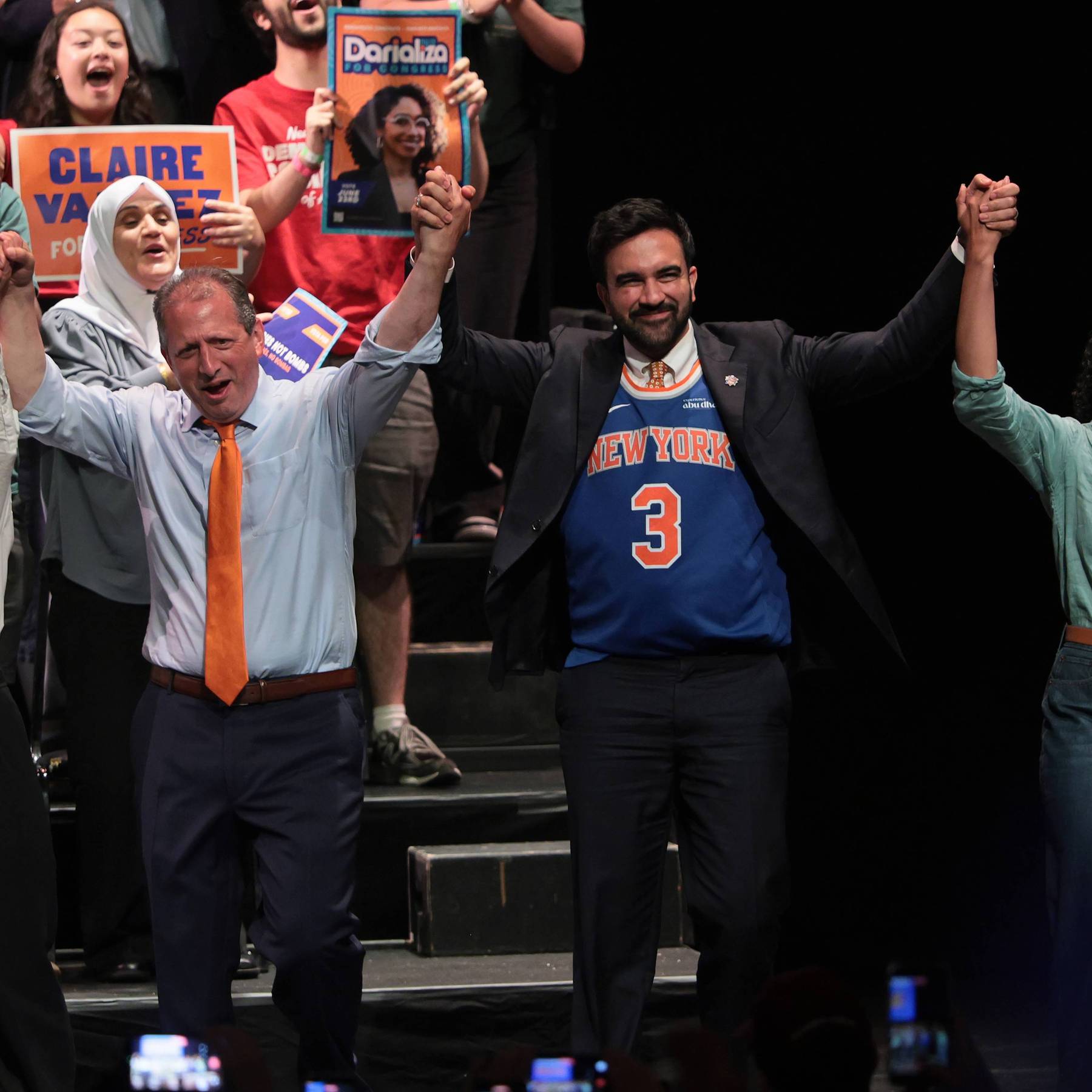
Bernie Sanders And Zohran Mamdani Join Local Candidates For Campaign Rally Ahead Of Primary Election In New York

Democratic Socialism Is the Compromise Position

With the advent of artificial intelligence programs already utilized by President Donald Trump’s Department of War and the race to bring this technology to war, we move ever closer to the brink of nuclear war, either by intent, miscalculation, mistake, or cyber attack using disruptive technologies. This fact was recognized by the Bulletin of Atomic Scientists, moving their Doomsday Clock forward this past January to 85 seconds to midnight.

In order to survive, we must awaken from the myth of deterrence, realizing it for what it is, the greatest driver of the arms race. The unexamined assumptions that these weapons must exist is blatantly false. We know how to build these weapons, and we know how to disassemble them. From a height of roughly 64,000 weapons in 1986 we have reduced global stockpiles to approximately 12,187 currently. We also know that even a “limited nuclear war” in a remote region of the world, for example, between India and Pakistan, using less than one half of 1% of global stockpiles, will result in a global nuclear famine. This could potentially result in up to 2 billion deaths on the planet due to the catastrophic climate change that would follow.

The Hibakusha have a mantra of “never again.” We owe a debt to the Hibakusha, their memory, and future generations to demand the complete abolition of these weapons.

When we awaken from this trance and understand that these weapons do not make us safer, but rather are our greatest existential threat, we will be able to work together to lead an international effort to abolish them in a time-bound and verifiable manner.

What is required in this race to save ourselves is the political courage and will to do so. Thankfully, there is hope both internationally and nationally. The Treaty on the Prohibition of Nuclear Weapons has been ratified by 75 nations and signed by 25 additional nations representing a majority of the global population. Here at home the Back From the Brink grassroots movement currently has endorsing congressional resolutions. There are 70 members of Congress, who have endorsed House Resolution 317 and Senate Resolution 323.

The Hibakusha have a mantra of “never again.” We owe a debt to the Hibakusha, their memory, and future generations to demand the complete abolition of these weapons. We must demand our elected officials endorse this campaign or move out of the way for those who will.

An Urgent Message From Our Co-Founder


Dear Common Dreams reader,

It’s been nearly 30 years since I co-founded Common Dreams with my late wife, Lina Newhouser. We had the radical notion that journalism should serve the public good, not corporate profits.

It was clear to us from the outset what it would take to build such a project. No paid advertisements. No corporate sponsors. No millionaire publisher telling us what to think or do.

Many people said we wouldn’t last a year, but we proved those doubters wrong.

Together with a tremendous team of journalists and dedicated staff, we built an independent media outlet free from the constraints of profits and corporate control. Our mission has always been simple: To inform. To inspire. To ignite change for the common good.

Building Common Dreams was not easy. Our survival was never guaranteed. When you take on the most powerful forces—Wall Street greed, fossil fuel industry destruction, Big Tech lobbyists, and uber-rich oligarchs who have spent billions upon billions rigging the economy and democracy in their favor—the only bulwark you have is supporters who believe in your work.

But here’s the urgent message from me today. It’s never been this bad out there. And it’s never been this hard to keep us going. At the very moment Common Dreams is most needed, the threats we face are intensifying. We need your support now more than ever.

We don’t accept corporate advertising and never will. We don’t have a paywall because we don’t think people should be blocked from critical news based on their ability to pay. Everything we do is funded by the donations of readers like you.

When everyone does the little they can afford, we are strong. But if that support retreats or dries up, so do we.
Will you donate now to make sure Common Dreams not only survives but thrives?

—Craig Brown, Co-founder
about:blank

about:blank

Our work is licensed under Creative Commons (CC BY-NC-ND 3.0). Feel free to republish and share widely.

Robert Dodge

Robert Dodge, MD, is a family physician practicing in Ventura, California. He serves on the board of Physicians for Social Responsibility Los Angeles (www.psr-la.org), and serves as the cochair of the Committee to Abolish Nuclear Weapons of National Physicians for Social Responsibility (www.psr.org). Physicians for Social Responsibility is the US Affiliate of the International Physicians for the Prevention of Nuclear War who received the 1985 Nobel Peace Prize and is a partner organization of ICAN, recipient of the 2017 Nobel Peace Prize. He also serves on the Back from the Brink (www.preventnuclearwar.org) steering committee.

Full Bio >