Iranian Supreme Leader Ayatollah Mojtaba Khamenei said in a written statement on Tuesday that the US will no longer have a “safe haven” in the Middle East for its military bases, remarks that come after the Iranian military struck US bases across the region during the US-Israeli bombing campaign against Iran.
In the statement, released to mark the Hajj season, when Muslim pilgrims travel to Mecca, Saudi Arabia, Khamenei addressed other Muslim nations in comments that appeared to be directed at the Gulf Arab states that host US bases and were struck by Iranian missiles and drones.
Ayatollah Mojtaba Khamenei (PressTV)
“I, with sincerity and purity of intention, invite all Islamic countries and governments to friendship and cooperation in goodness, so that by working together we may take steps toward the advancement of the Islamic Ummah and the resolution of the Islamic world’s problems,” Khamenei said, according to an English translation of the statement posted on his website.
“What is certain in this regard is that the hands of time will not turn back, and the nations and lands of the region will no longer serve as shields for US bases. The United States not only will no longer have a safe haven for its mischief and for establishing military bases in the region but day by day, it is growing more distant from its former status,” he added.
The Iranian leader also referenced Israel, saying that the “shaken Zionist regime and the cancerous tumor of Israel are likewise approaching the final stages of their wretched existence.”
Khamenei has yet to make a public appearance since replacing his father, Ali Khamenei, who was killed by an Israeli strike alongside other members of his family on February 28, the first day of the joint US-Israeli bombing campaign. Western media reports have said that Mojtaba Khamenei was wounded in the strike but that he is still playing a critical role in shaping Iran’s war strategy.
Less than two months after fascist US President Donald Trump launched the criminal US/Israeli war against Iran in the dead of night on February 28, the conflict is having a devastating economic impact on tens of millions of workers around the globe.
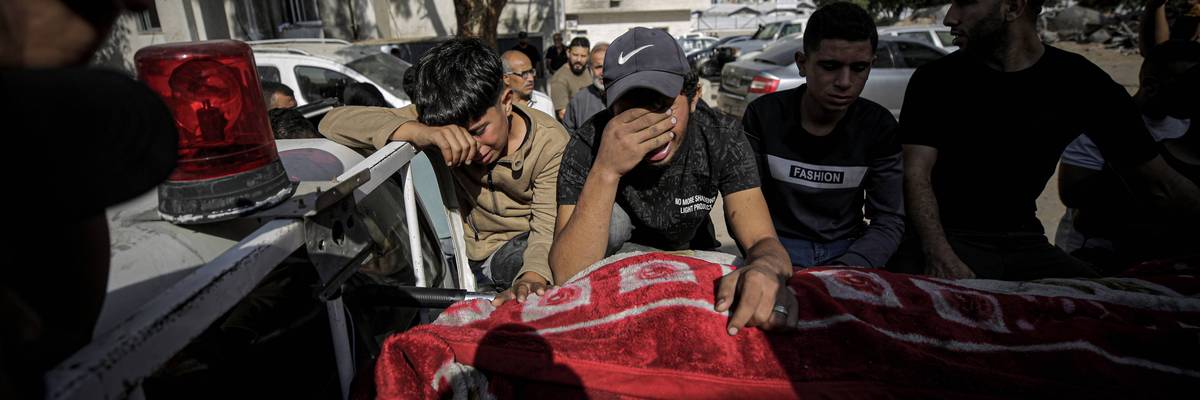
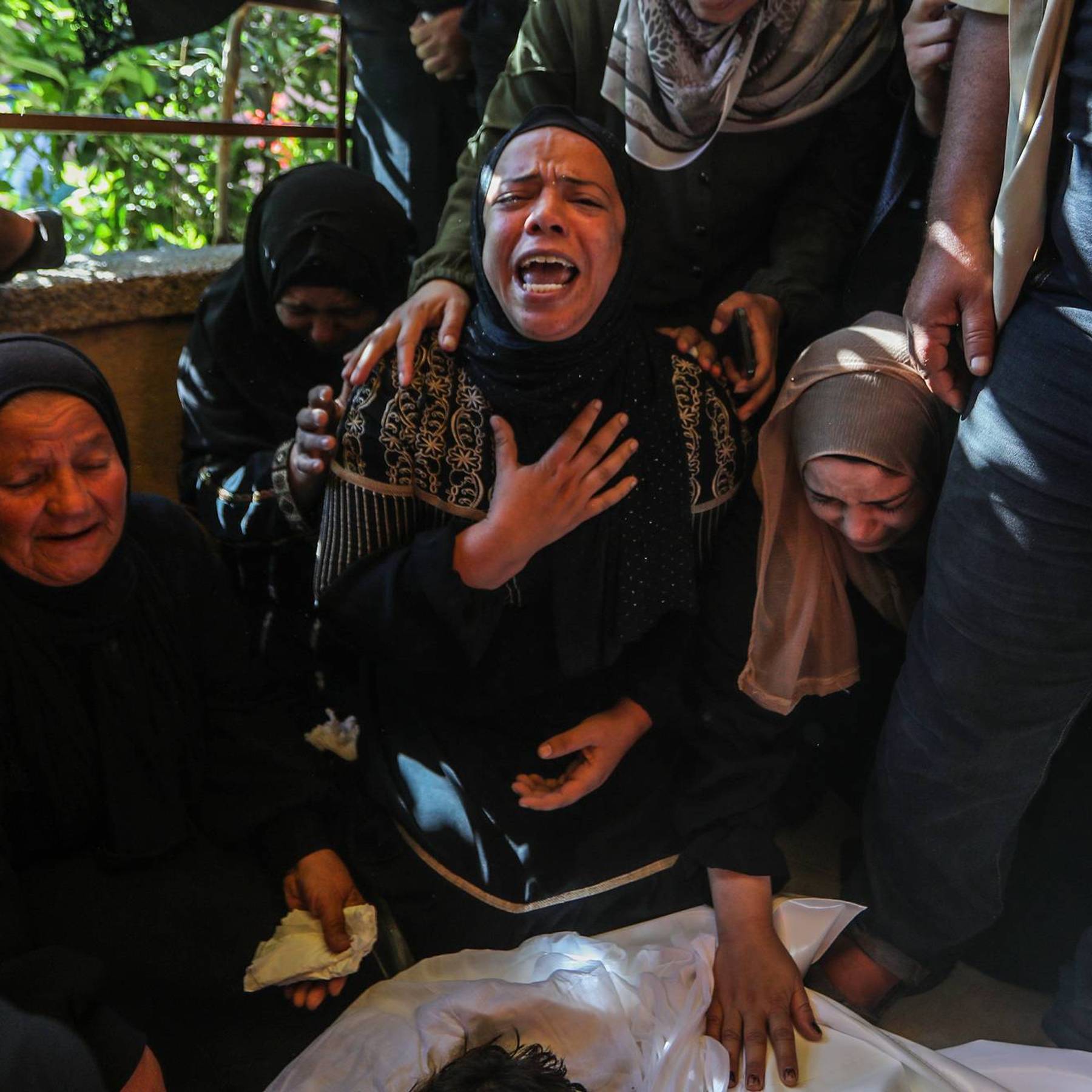
American imperialism’s determination to consolidate its dominance over the Middle East, one of the world’s most critical energy-producing regions, has already claimed the lives of thousands of Iranians in six weeks of brutal and indiscriminate bombardment. But the economic fallout from the US-instigated war and blockade of the Strait of Hormuz could prove even more deadly.
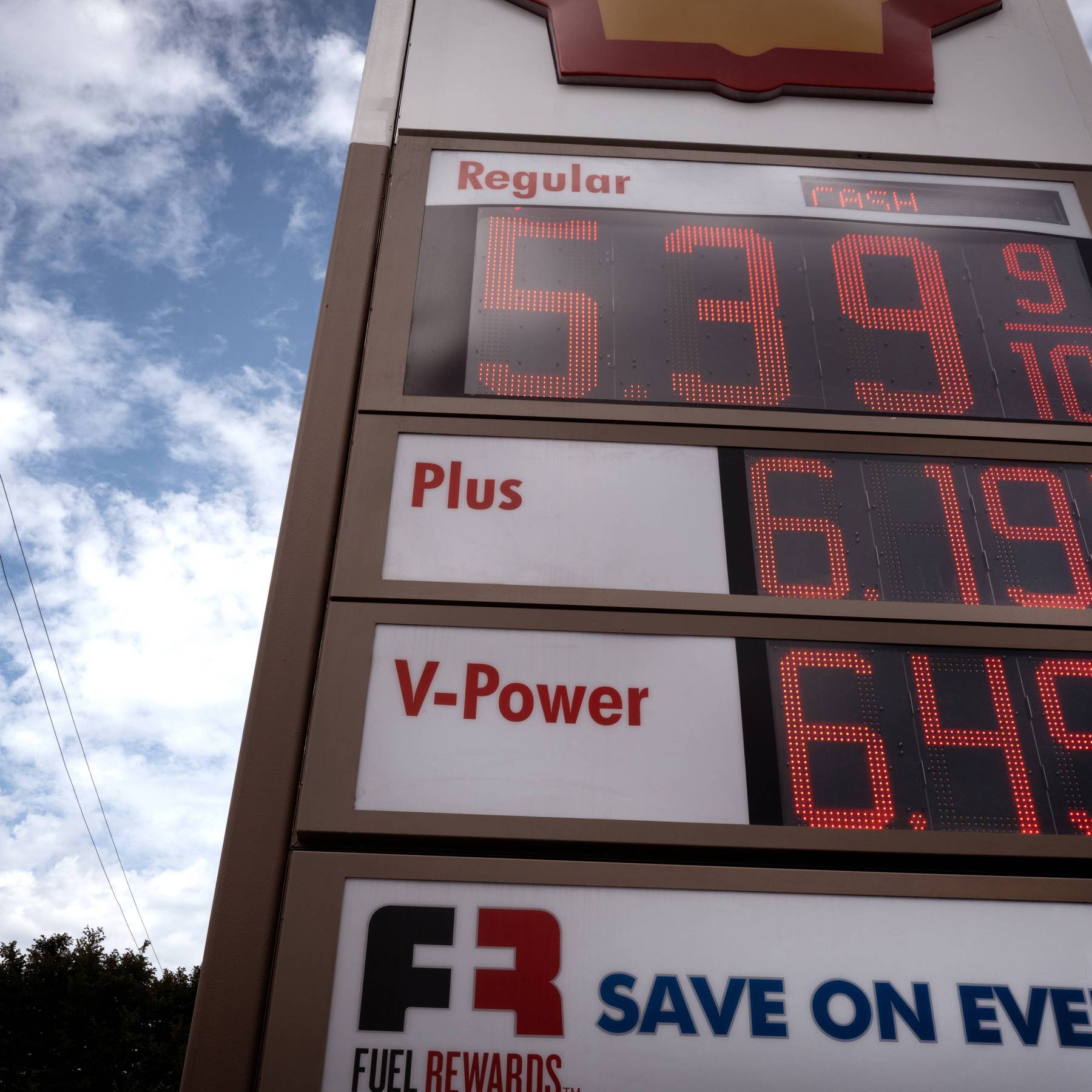
Prior to the war’s outbreak, the Strait of Hormuz accounted for some 20 percent of global oil traffic and a significant portion of natural gas shipments. The consequences produced by the disruption of these energy supplies are already reverberating across the world economy. They include rising fuel costs, higher electricity prices and escalating transportation expenses for billions of people.
The Middle East is also a major producer of fertilisers, so prices have jumped amid the planting season for farmers in the northern hemisphere. The result is both increased production costs for crops and reduced harvests, as farmers plant less to cut costs or use less fertiliser, which will fuel a food-price spiral over the coming months and into 2027.
Shipping disruptions, compounded by heightened insurance premiums and rerouted trade flows, have further increased the price of food imports. The Containerised Freight Index rose 10 percent within a month of the war’s outbreak, underscoring that even traffic not directly impacted by the Strait of Hormuz blockade is affected.
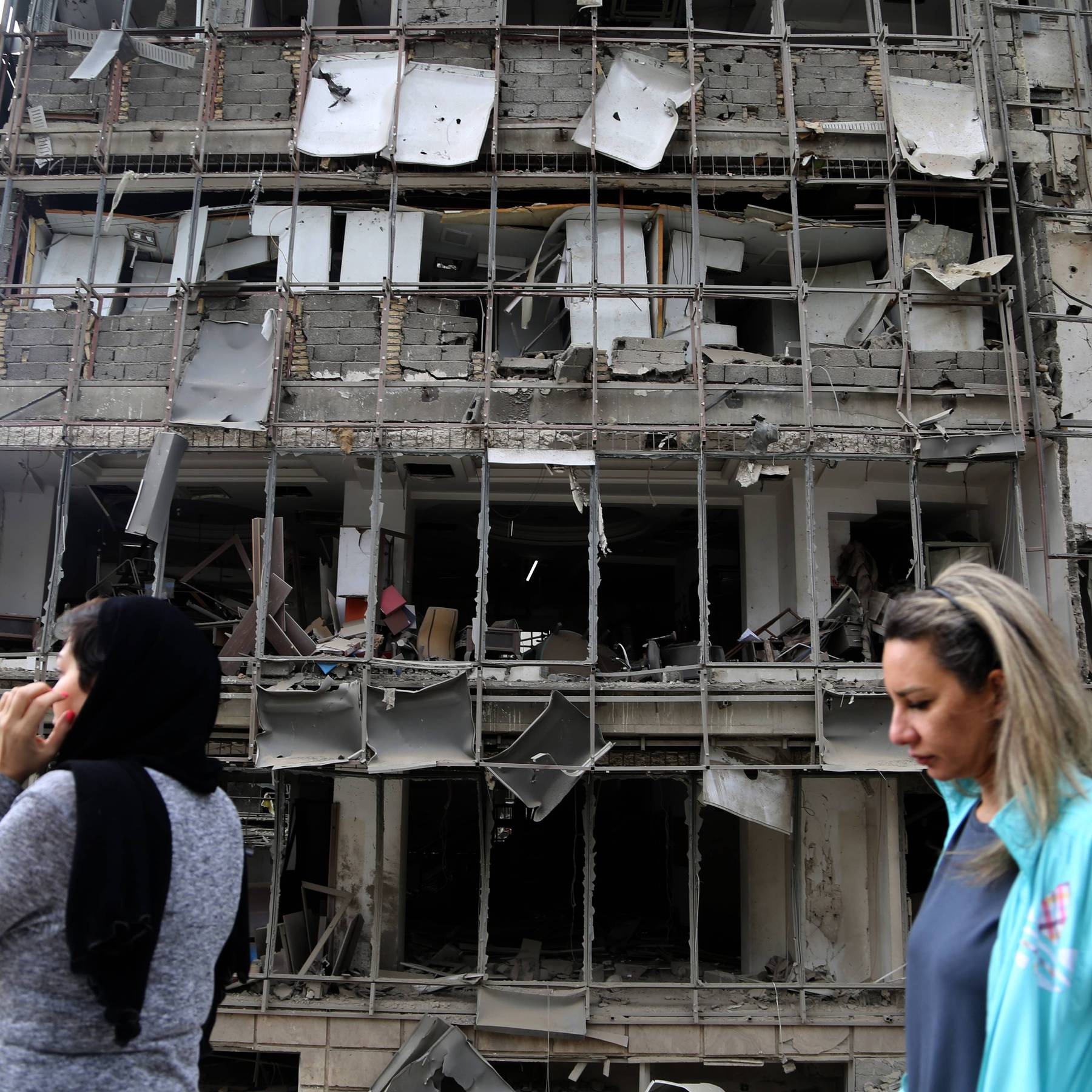
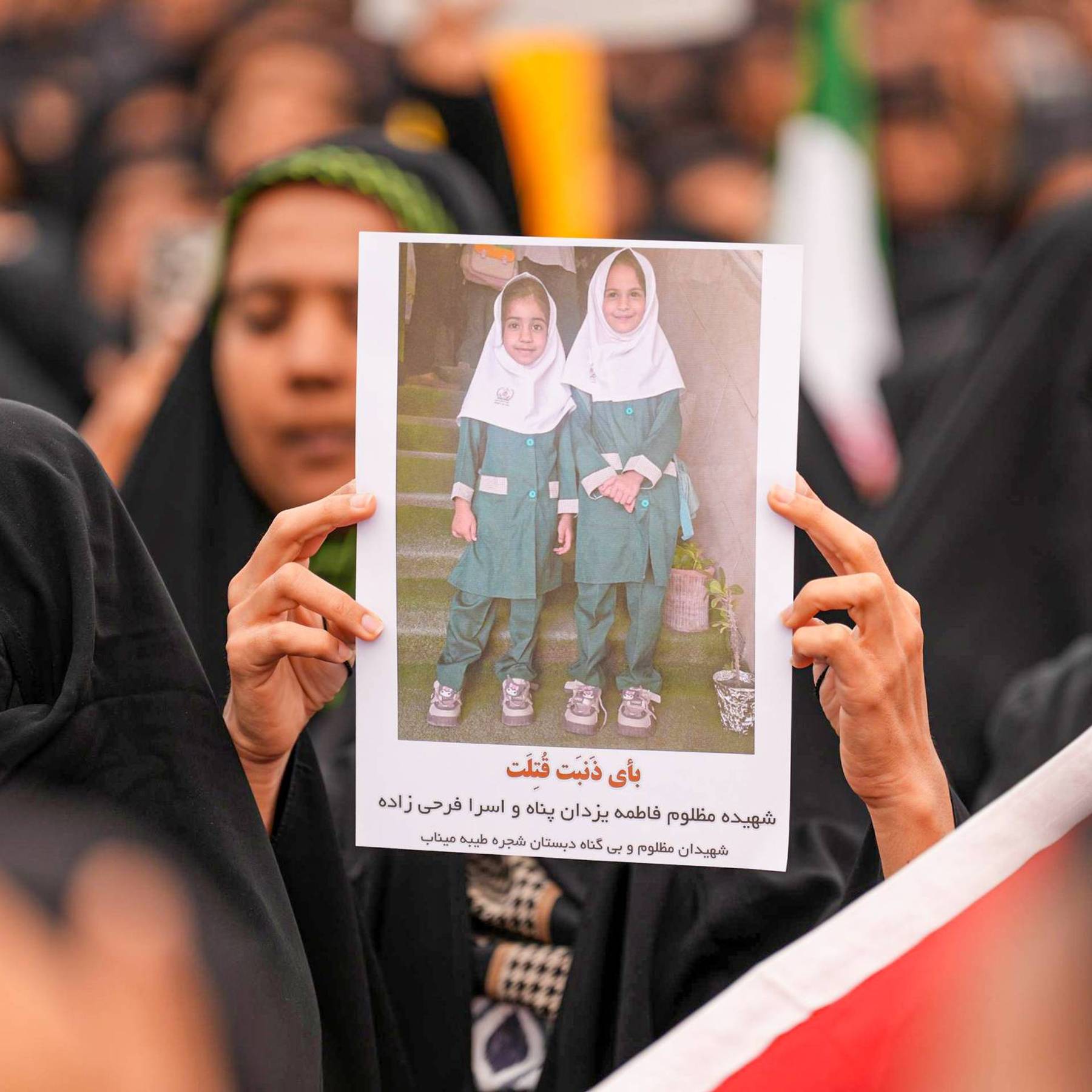
On top of the destruction of schools, hospitals and other civilian infrastructure by US and Israeli missiles, the working class in Iran is bearing the economic brunt of the war. A government spokesman admitted that approximately 2 million workers have lost their jobs as a direct consequence of the conflict.
The impact of the war has been particularly acute across the Asia-Pacific region, due to its heavy reliance on oil imports from the Middle East. Over 80 percent of crude and LNG normally transiting the Strait of Hormuz is destined for countries in the Asia-Pacific, including major industrial economies like China and Japan. Fuel prices have risen sharply in India’s major cities, with petrol and diesel costs increasing by roughly 10-15 percent within weeks.
In Indonesia, nickel producers have cut output by at least 10 percent due to shortages of natural gas and sulphur, which are required to produce the high temperatures necessary for extraction and refining of the metal. Severe disruptions to the garment factories of Bangladesh have also been reported due to a lack of polyester and nylon, fossil fuel byproducts used to make clothing.
Another critical channel of impact is the disruption of remittances. Millions of workers from South Asia and Africa are employed in the Gulf region, sending vital income back to their impoverished families. The war has disrupted these flows, as economic activity slows and employment opportunities shrink.
Motorists queue up to get fuel at a pump, fearing a possible fuel shortage due to the US Iran war, in Ahmedabad, India, Monday, March 23, 2026. [AP Photo/Ajit Solanki]
The United Nations Development Programme estimated in a recent report that the war on Iran could cost 36 countries in the Asia-Pacific nearly $300 billion and plunge up to 8.8 million people into poverty. Five million of these people live in Iran, where the human development index has already lost 1–1.5 years due to the war.
The New York Times worried in a lengthy analysis published April 20 that countries throughout the Asia-Pacific may face “shortages [that] could push several countries into convulsions of unrest, followed by recession,” if the Strait of Hormuz remains blocked for just a few more weeks. Even high-end production, including of semiconductors essential for producing chips built in Taiwan, faces problems. Prior to the war, Qatar produced a third of the world’s helium, a critical component of the semiconductor production process. But it stopped production on March 2 after an Iranian retaliatory attack hit its gas facilities. As the Times put it, cuts to chip production “would roll through everything from electronics to cars.”
In Africa, Nigeria has seen fuel prices rise by over 50 percent, despite the country being a massive oil producer and exporter. Since the country of some 240 million people is heavily dependent on imports of refined oil products, petrol prices have risen significantly, leading to increases in public transport costs and the price of staple foods. In Kenya, the fuel price regulator hiked petrol prices by over 16 percent and diesel prices by over 24 percent in mid April, following a 68 percent increase in the cost of oil imports.
Many African countries depend on imported fertilisers. The surge in natural gas prices has driven up costs for farmers, threatening lower crop yields and outright famine in areas where subsistence farming prevails. At the same time, currency depreciation in several countries is amplifying the impact of global price increases, making imports even more expensive, eroding real wages and pushing up already crippling debt repayment costs for financially strapped governments.
In Europe and North America, fuel prices have also risen sharply, placing yet another burden on working people’s budgets amid stagnant economic growth, mass layoffs and social attacks by the ruling elites in every country to pay for bloated military budgets and the enrichment of the financial oligarchy. In Germany, national airline Lufthansa announced the immediate closure of its CityLine subsidiary amid a strike by thousands of airline workers for job security and pay increases. The continent’s governments are investing trillions of euros in their own war machines to prosecute their predatory imperialist interests at the expense of workers’ livelihoods and social programmes.
Across the Atlantic, the Wall Street Journal has announced the era of the “mega layoff,” with job cuts in finance, technology, entertainment and manufacturing.
By contrast, the war is proving to be a bonanza for the corporations and financial oligarchy. According to one investigation, the world’s major oil conglomerates will pull in additional profits of over $230 billion in 2026 alone.
The World Socialist Web Site has insisted that US imperialism’s war on Iran is one front in the early stages of a third world war, which includes the US/NATO war on Russia in Ukraine and preparations for a military conflagration with China. As the imperialist powers in North America and Europe scramble for the upper hand in the redivision of the world, they are totally indifferent to the impact on billions of workers from the global economic and social disaster produced by crisis-ridden capitalism and their crazed policies. But this very disaster creates the material conditions for the development of a working class movement to end the war and the capitalist profit system which is its root cause.
The parallels to World War I are striking, when food riots across Europe during 1916 and 1917 gave an initial expression to growing popular opposition to the imperialist slaughter. The most consequential of these were protests that erupted demanding bread in Petrograd in early 1917, marking the beginning of Russia’s February Revolution. Eight months later, the Bolsheviks under Lenin and Trotsky led the working class to power on a socialist programme that would bring the world war to an end.
Today, the world economy is integrated to such a degree that initial expressions of social unrest provoked by the war have already erupted in its first weeks. Beginning on April 10, tens of thousands of industrial workers in India’s national capital region launched strikes and protests against price hikes triggered by the war. Workers demanded wage increases to cover higher rents, fuel costs, and food prices. Protests have also erupted in countries as diverse as the Philippines and Ireland.
Now, as in 1917, the decisive tasks are the fight to develop a conscious, unified movement of the international working class and build a mass revolutionary party capable of leading the struggle for workers’ political power.
The global nature of the crisis demands an international response, transcending national divisions and opposing militarism. Workers in Iran, the United States, Europe, Asia and Africa share a common interest in ending the war and the bankrupt capitalist order that gave rise to it. This requires the independent political mobilisation of the working class on a socialist programme to place the commanding heights of the economy under democratic workers’ control, ensuring that production is organised to meet human needs rather than private profit.
Under these conditions, the upcoming International May Day Online Rally 2026 assumes critical importance. It will articulate the revolutionary socialist programme and perspective workers around the world require to fight imperialist war and its barbaric consequences. Register today to participate, and encourage your work colleagues and friends to do the same.
So now the die is cast and the United States has joined Israel in an unprovoked attack on a non-threatening Iran to destroy its military capabilities and to bring about regime change. This is a major mis-step that could easily turn out very badly as it is a pointless war of choice that could easily escalate to neighboring states and become nuclear if a reckless Israel decides it needs to “defend” itself against an Iranian response. US Navy vessels might also find themselves vulnerable to Iranian missiles.
As the attack took place, President Donald Trump announced the latest bit of nation destroying from his Florida home away from the White House, which he is also wrecking as part of a lavish and characteristically tasteless ballroom “reconstruction.” By way of his Truth Social Platform, he declared early Saturday morning that “We are going to destroy their missiles and raze their missile industry to the ground. It will be totally — again — obliterated. We’re going to annihilate their navy.” The destruction of the missiles as a top priority was clearly under orders from Israel, which sees the weapons as the major threat against it. Trump also called on the Iranians to rise- up and overthrow their government.
Trump also conceded that Americans will die against Iran, adding that “the lives of courageous American heroes may be lost” in what the “War Department” has dubbed “Operation Epic Fury… We may have casualties.” He acknowledged that there could be American deaths following Iran strikes, saying “that often happens in war.” There is without doubt a certain irony in having at the helm of state an ignorant and seemingly deranged draft dodger president announcing a war while wearing a baseball cap who wallows in threats and generating conflicts while claiming to be a man of peace. Enabling wars in Ukraine and Gaza while also recently threatening Venezuela and now Cuba is not the way to go to make the world a better place. Sadly, Trump’s entire family has likewise avoided military service, he being once again willing to pay the ultimate price for his warmaking using other American families’ sons and daughters as cannon fodder.
Unfortunately for both the United States and for the sanction-plagued long suffering Iranian people, the grounds for the act of war as elaborated by President Donald Trump are completely fatuous, to include Iranian presumed development of a nuclear weapon and its possession of ballistic missiles that will be able to strike the United States. Both claims are denied by US intelligence and other sources. They are lies plausibly sourced from Israel and clearly improvised to justify the carnage, similar in form to the infamous Secretary of State Condoleezza Rice lying claim in 2002-2003 that Iraq was building “weapons of mass destruction” which might lead to a “mushroom cloud” over America. The Iraq war killed 500,000 Iraqis and 4,431 invading Americans, but who will be counting when you are aiming at something as glorious as regime change in Persia?
Looking beyond what disaster comes out of Iran, the long term danger is that we Americans now have a president who believes that he can act with impunity anywhere in the world, having publicly declared that he believes that he “…can do whatever he wants.” That includes going to war contrary to the US Constitution, though Congress is now feebly attempting to enforce the so-called War Powers Act. As Israel is behind the current fighting, there is no chance that official Washington will be anything but supportive of the conflict as will also the media. Given the carte blanche for military action anywhere and at any time, Cuba is possibly next on the list as the Administration appears set on destroying its economy through sanctions prior to taking control of it, similar to the plan for Venezuela that played out recently and that has been used against Iran.
Beyond that, destroying Iran is being done solely to benefit what Israeli Prime Minister Benjamin Netanyahu sees as his national interest. That the war is taking place at all is due to Israel’s absolute control over America’s political class, a reality that Netanyahu and his predecessors in office have not been exactly shy about admitting. The US is a hapless giant that has been corrupted by Jewish billionaire money from within to be totally committed to the expansion of greater Israel no matter how many have to die in the process. Do the Israelis care what happens to the American people? No. The US is a necessary resource which they will squeezed dry of money and political support before being discarded like a used diaper.
Given that Israel has turned the United States into a war criminal and enabler of crimes against humanity, it is absolutely astonishing how the “official” inquiry into Jeffrey Epstein, for example, manages to completely avoid and totally ignore the obvious story, namely that Epstein and his billionaire buddy Les Wexler and his Mega Group were all parts of a vast and far reaching Israeli intelligence operation intended to penetrate (and I use that word deliberately) and manipulate the elite political and media classes in the United States. Last week we witnessed the Clintons being questioned by Congress. Hillary denied having ever met Jeffrey, and she “had no idea” regarding his illegal or immoral activities. Admittedly Hillary might for once be telling the truth since Bill, following up in Congress on Friday, had plenty to hide from his own wife and others given his own demonstrated definition of illegal and immoral. Former President Clinton said he “did nothing wrong” and had “no idea of the crimes” Jeffrey Epstein was committing as he kicked off a deposition with the House Oversight and Government Reform Committee on Friday. But Bill was equally unhelpful in his private meeting with the congressmen, perhaps suggesting that his frequent trips on the Lolita Express were solely due to the fact that he needed a ride from New York State to Florida. And what about the record of sixteen visits to the White House by Epstein while you were president, Bill?
Neither Clinton, of course, comes even close to the intensity and frequency of the multitude of citations covering the Donald Trump relationship with Epstein, but whether Congress will have the nerve to go after a mentally confused sitting president whose own “morality” extends beyond casual pedophilia to enabling genocide has to be doubted. And be it Clinton or Trump, one can be sure that no one in Congress except Thomas Massie will have the intestinal fortitude that it would require to go after the real culprit, war criminal Benjamin Netanyahu and his band of merry cutthroats leading America’s “best friend and closest ally,” the Jewish State of Israel. It’s a relationship that includes the just starting American war against a non-threatening Iran but who’s counting the body bags coming home when Iran strikes back? It won’t be good old draft dodger Donald Trump, who will lie about it as he usually does!
That Israel gets away with obtaining billions of dollars, weapons and unlimited political protection from Washington while also spying on us would appear to be enough of a gift but the one way relationship is far worse than that, including as it does an option to compel the United States into going to war whenever Israel wants to genocide another neighbor. The politicians that make up the Jewish/Israeli government are the worst scum imaginable, though I guess one would have to include in that number our own trash like Congressman Randy Fine of Florida, Ted Cruz of Texas and Senator Lindsey Graham of South Carolina. Most Israelis believing that they are “chosen” and thereby have the birthright to abuse and kill people at will, including tens of thousands of children lest they “grow up to be terrorists.” And now the United States of America is on the same page. There is a solution however. It’s called kicking Israel and its fan club the hell out of the United States and having Washington begin to treat the nations that make up the rest of the world with respect without the employment of threats or military action. I rather suspect that a majority of the American people would today want us to get out of Iran and would support the option of a country at peace with everyone!
Philip M. Giraldi, Ph.D., is Executive Director of the Council for the National Interest, a 501(c)3 tax deductible educational foundation (Federal ID Number #52-1739023) that seeks a more interests-based U.S. foreign policy in the Middle East. Website is https://councilforthenationalinterest.orgaddress is P.O. Box 2157, Purcellville VA 20134 and its email is inform@cnionline.org
By Linus Höller, Defense News, Feb 23, 2026, 11:54 AM
Four U.S. Air Force Boeing KC-135 Stratotanker air refueling aircraft are parked at Sofia’s Vasil Levski Airport on Feb. 19, 2026. (Nikolay Doychinov/AFP via Getty Images)
BERLIN — Bulgaria’s Sofia International Airport briefly suspended civilian air operations twice over the weekend while a fleet of American military aircraft staged at the facility, fueling speculation that Washington is positioning forces ahead of a potential strike on Iran.
A Notice to Airmen (NOTAM), verified by the Bulgarian investigative outlet Obektivno.BG, showed the airport restricted non-military operations on Feb. 23 from 01:15 to 02:50 local time and again on Feb. 24 from 01:05 to 03:35. Commercial flights are not ordinarily scheduled during this time frame.
Airport authorities attributed the brief closures to routine runway repairs and explicitly denied any link to the American military presence.
Photographs circulating on social media showed at least six KC-135 Stratotanker refueling aircraft from the 6th Air Refueling Wing at MacDill Air Force Base, Florida, along with C-17 and C-130 cargo planes and Boeing 747s typically used for troop transport, parked at the airport’s Terminal 1, according to Obektivno.BG.
Bulgaria’s Ministry of Defense confirmed the U.S. Air Force presence, describing the deployment as support for “training related to NATO’s enhanced vigilance activities,” with American personnel engaged solely in aircraft maintenance. Caretaker Foreign Minister Nadezhda Neynsky acknowledged her ministry had limited information and had ordered officials to collect additional details.
The Sofia staging is a small part of a much larger American military mobilization. The Bulgarian investigative journalists have tracked more than 120 U.S. Air Force aircraft that crossed the Atlantic within days, including four dozen F-16s, three squadrons of F-35A stealth fighters, and 12 F-22 Raptors.
Similar deployments, including F-22s staged at RAF Lakenheath, preceded last June’s Operation Midnight Hammer strikes on Iranian nuclear facilities. The USS Gerald R. Ford carrier strike group is also en route to join the USS Abraham Lincoln, which is already positioned in the Arabian Sea.
U.K. Prime Minister Keir Starmer has refused to grant Washington permission to use two critical British-controlled installations − RAF Fairford in Gloucestershire, the European forward base for U.S. heavy bombers including the B-2 and B-52, and the joint US-UK facility at Diego Garcia in the Indian Ocean − for any potential strike on Iran, The Times of London reported.
The buildup coincides with high-stakes nuclear diplomacy. American President Donald Trump, speaking at the inaugural meeting of his Board of Peace on Feb. 19, said he had given Tehran roughly ten days to reach a nuclear agreement, warning that “bad things will happen” if talks collapse. U.S. envoys Steve Witkoff and Jared Kushner met an Iranian delegation in Geneva last week, with Iran’s Foreign Minister Abbas Araghchi describing agreement on a set of “guiding principles,” though significant gaps remain between the two sides.
Bulgaria, a NATO member since 2004, maintains a Defense Cooperation Agreement with Washington signed in 2006 that permits U.S. forces to use Bulgarian military facilities.
Linus Höller is Defense News’ Europe correspondent and OSINT investigator. He reports on the arms deals, sanctions, and geopolitics shaping Europe and the world. He holds a master’s degrees in WMD nonproliferation, terrorism studies, and international relations, and works in four languages: English, German, Russian, and Spanish.
Supreme Leader Ayatollah Ali Khamenei has entrusted Iran‘s top national security official with the survival of the country in the case of attacks or assassination, a report by The New York Times said.
According to the report published on Sunday, several senior officials and members of the Revolutionary Guard Corps told the daily that Khamenei has issued a series of directives aimed at securing Tehran’s governance.
This includes four layers of succession for military and government posts he appointed, alongside instructions given to senior officials to name up to four replacements.
In the case that communication with him is obstructed or he is killed, Khamenei has also delegated responsibilities to a close-knit group of confidants, based on information shared with the Times by senior officials, diplomats and military commanders.
Ali Larijani is named in the article among the handful of close political and military associates who will ensure the survival of Iran in the event of US-Israel attacks or the assassination of Tehran’s top leadership.
New MEE newsletter: Jerusalem Dispatch
Sign up to get the latest insights and analysis on Israel-Palestine, alongside Turkey Unpacked and other MEE newsletters
The security chief was appointed in August as secretary of the Supreme National Security Council, the body that holds ultimate authority over the country’s security and foreign policy decisions.
During the 12-day war with Israel in June, Khamenei named three candidates who would potentially succeed him.
While Larijani is almost certainly not among the contenders for the title of Supreme Leader, as he is not a senior Shia cleric which is necessary for the role, he is among the top candidates for managing the country if Iran’s upper echelon is wiped out, the report said.
Mohammad-Bagher Ghalibaf, the parliament speaker, and former president Hassan Rouhani are also among those listed by sources as possible leaders.
What Larijani’s return as security tsar reveals about Iran
The report also makes mention of contact between Washington and Tehran amid the unrest in Iran.
According to the Times, American envoy to the region Steve Witkoff sought to reach the country’s foreign minister, Abbas Araghchi, following US President Donald Trump’s threats to strike Iran if it killed protesters.
Araghchi then asked President Masoud Pezeshkian for authorisation to communicate back to Witkoff, but was directed by Pezeshkian to get approval from Larijani instead, underscoring his role.
The report indicates that the president appears resigned to deferring authority to Larijani.
Against this backdrop of US-Iran tensions, speculation on Khamenei’s next moves comes amid growing tensions despite diplomatic talks this week between the two countries.
The talks were a last-ditch attempt to avert threatened military action by the US, with Khamenei warning Trump on Tuesday he would not be able to “destroy” the Islamic Republic.
According to AFP, talks were being held discreetly, with diplomatic police blocking the private access road to Oman’s residence in the municipality of Cologny.
The US ambassador also said that at some point, Iran may experience the ‘second kick of a mule,’ referring to another US attack
by Dave DeCamp, Antiwar. com, February 16, 2026 at 7:08 pm ET | Iran
US Ambassador to Israel Mike Huckabee said on Monday that the US and Israel are “absolutely aligned” on the need to “deal” with Iran as Washington continues building up its forces in the Middle East to prepare for a potential attack on the Islamic Republic.
Huckabee made the comments when addressing the Conference of Presidents of Major American Jewish Organizations in Jerusalem, where he cast doubt on the idea that the US and Iran could reach a diplomatic deal and said that another US attack on the country is likely.
“At some point, the United States has to say, enough is enough,” Huckabee said, according to Haaretz. “Either Iran makes a radical change in direction, or it experiences what we call in the South the second kick of a mule. There is no education in the second kick. If you didn’t learn the first time, you won’t learn the second.”
The US and Iran are set to hold a second round of talks in Geneva on Tuesday. Israel wants any deal to involve restrictions on Iran’s ballistic missiles, a demand designed to collapse diplomacy since Tehran’s missiles are its only form of deterrence.
According to Iranian officials, the US has dropped the demand for an agreement that includes missiles, but President Trump and other Trump administration officials continue to push the issue. Huckabee said that the US and Israel have agreed that Iran cannot “continue building vast surpluses of ballistic missiles.”
President Trump has repeatedly threatened to attack Iran if a deal isn’t reached, echoing threats he made in the lead-up to the 12-day US-Israeli war against Iran that was launched in June 2025, just days before another round of negotiations between Washington and Tehran were scheduled to be held.
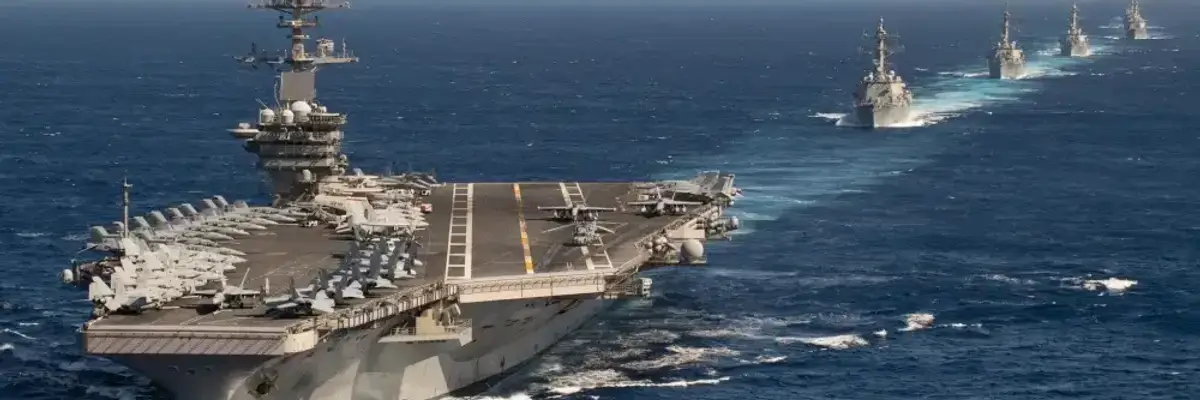
The aircraft carrier USS Gerald R. Ford sails in formation with the guided missile destroyers USS Winston Churchill, USS Mitscher, USS Mahan, USS Bainbridge and USS Forrest Sherman in the Atlantic Ocean, Nov. 12, 2024. [Photo: Navy Petty Officer 2nd Class Jacob Mattingly ]
The US military is preparing for “sustained, weeks-long operations” against Iran if US President Donald Trump orders an attack, Reuters reported Friday, citing US officials. The planned campaign would mark a far larger US assault on Iran than anything previously carried out.
In a sustained campaign, the US military could hit “Iranian state and security facilities, not just nuclear infrastructure,” one of the officials said. The United States “fully expected Iran to retaliate, leading to back-and-forth strikes and reprisals over a period of time.”
Such a war could entail massive loss of life and have incalculable global consequences. It would be illegal under international law and take place in defiance of the popular will, with 85 percent of the American population opposed to a war against Iran, according to a YouGov poll.
Last June, the US launched “Midnight Hammer” in coordination with a 12-day Israeli bombing campaign that together killed over one thousand Iranians. Iran staged a limited retaliatory strike on a US base in Qatar. What is now being planned is qualitatively different—an air and missile campaign targeting the Iranian state itself, with the expectation of extended back-and-forth combat.
The buildup takes place just weeks after the USS Gerald R. Ford, the world’s largest and newest aircraft carrier, took part in the seizure of Venezuelan President Nicolás Maduro on January 3. The Ford, which has been at sea for more than 200 days, has now been ordered from the Caribbean to the Middle East, where it will join the USS Abraham Lincoln strike group already in the region. The same carrier used in the kidnapping of the president of Venezuela is being redeployed to wage war against Iran.
Trump, speaking to troops at Fort Bragg, North Carolina on Friday, said it had “been difficult to make a deal” with Iran. “Sometimes you have to have fear,” he declared. “That’s the only thing that really will get the situation taken care of.” Asked if he wanted regime change, Trump responded: “Seems like that would be the best thing that could happen.”
The Ford strike group includes the guided-missile cruiser Normandy and destroyers Thomas Hudner, Ramage, Carney and Roosevelt. The carrier holds more than 75 military aircraft, including F-18 Super Hornet fighters and E-2 Hawkeye early warning aircraft.
Satellite imagery analyzed by Reuters shows a massive buildup at US bases across the Middle East. At Al-Udeid air base in Qatar, the largest US facility in the region, Patriot missiles have been placed in mobile HEMTT truck launchers, giving them rapid mobility in case of an Iranian attack. The base houses an RC-135 reconnaissance aircraft, 18 KC-135 Stratotanker refueling aircraft, and seven C-17 transport planes.
At Muwaffaq Salti air base in Jordan, images from February 2 show 17 F-15E Strike Eagle fighter-bombers, eight A-10 Thunderbolt close air support aircraft, and four EA-18G Growler electronic warfare jets—where none had been visible weeks earlier. Additional forces have been deployed to Prince Sultan air base in Saudi Arabia, Diego Garcia in the Indian Ocean and Dukhan base in Oman. Approximately 112 C-17 Globemaster cargo planes have reportedly arrived or made their way toward the Gulf region.
Iran’s Revolutionary Guards have warned they could retaliate against any US military base in the region. The US maintains bases in Jordan, Kuwait, Saudi Arabia, Qatar, Bahrain, the United Arab Emirates, Oman, Turkey and on Diego Garcia. Ali Shamkhani, an adviser to Supreme Leader Ali Khamenei, warned: “We will respond decisively to any adventurism—our military readiness is high.”
The military buildup coincides with the Munich Security Conference, whose organizers titled their annual report “Under Destruction.” German Chancellor Friedrich Merz opened the conference by declaring: “This order, as flawed as it has been even in its heyday, no longer exists.” He warned that “a divide has opened up between Europe and the United States.”
But while European leaders condemned Trump’s tariffs and threats against allies, they have fully supported the US posture toward Iran. On January 29, the EU unanimously designated Iran’s Revolutionary Guards a terrorist organization—all 27 member states voting in lockstep with Washington’s escalation.
The Munich conference withdrew its invitation to Iranian Foreign Minister Abbas Araghchi, with Germany’s foreign ministry declaring his participation inappropriate. In his place, exiled Crown Prince Reza Pahlavi, son of the Shah overthrown in 1979, was given a platform. Pahlavi called for “humanitarian intervention” and an “equalizing factor”—that is, US military strikes to “neutralize the regime’s instrument of repression.” He told the conference that “help is on the way” from Trump and positioned himself as the leader of a post-regime transition.Available from Mehring BooksThe struggle against imperialism and for workers’ power in IranA pamphlet by Keith Jones
Democratic Socialists of America Congresswoman Alexandria Ocasio-Cortez spoke at the Munich Security Conference on the subject of “The Rise of Populism.” In her entire appearance at the conference, she did not say a single word about Trump’s preparations for war against Iran—the most significant military escalation of his presidency.
What she did say is revealing. She warned that Trump is “looking to withdraw the United States from the entire world so that we can turn into an age of authoritarianisms, of authoritarians… where Putin can saber rattle around Europe and try to bully around our own allies there.”
This is not opposition to war; rather Ocasio-Cortez condemned Trump as being insufficiently aggressive against “Putin”—i.e., being insufficiently committed to the war in Ukraine.
The Democrats have been silent as the administration amasses approximately 50,000 troops and the largest concentration of military firepower in the Middle East since the 2003 invasion of Iraq. Their earlier statements on Iran amounted to endorsements of regime change in response to the emergence of localized protests against the government last month. Senator Mark Warner declared on January 11, “The Iranian regime is awful, and I stand with the Iranian people.” Ocasio-Cortez tweeted that month, “The Iranian government’s violent crackdown on demonstrators is horrific.”
Far from opposing the war buildup, the Democrats have actively funded it. On January 30, the Senate passed the Consolidated Appropriations Act by a vote of 71 to 29, including $839 billion for the Pentagon—an $8.4 billion increase over the military’s own budget request. Twenty-three Democrats voted for the bill, including Senate Minority Leader Chuck Schumer, Minority Whip Dick Durbin and Vice Chair Mark Warner. In the House, the bill passed 341 to 88, with 149 Democrats voting yes and only 64 voting no. Republicans on the House Appropriations Committee hailed the legislation as “America First, Fully Funded.”
In the space of weeks, the Trump administration has kidnapped the president of Venezuela, threatened to annex Greenland, backed the Israeli genocide in Gaza and is now preparing a sustained bombing campaign against a country of 88 million people. Each of these operations targets nations whose resources Washington seeks to control as part of its escalating confrontation with China—Venezuela’s oil, Iran’s oil and natural gas and the Strait of Hormuz through which 20 percent of the world’s oil passes daily.
The working class cannot entrust the fight against imperialist war to any faction of the political establishment. The same administration threatening to devastate Iran is attacking immigrants, gutting social programs, and constructing a police state at home. Opposition to war must come from the independent mobilization of the international working class against the capitalist system that produces war, inequality and dictatorship.
Tehran’s intervention comes as the Israeli prime minister heads to a hastily arranged White House encounter
The Guardian, Patrick Wintour Diplomatic editor 10 Feb 2026 20.34 CET
Tehran has told the US not to allow Israel to destroy the chance of reaching an agreement over Iran’s nuclear programme amid speculation that Benjamin Netanyahu intends to use a hastily arranged White House meeting with Donald Trump on Wednesday to divert negotiations.
Iran’s intervention came as the Israeli prime minister flew to Washington to plead with Trump not to negotiate a deal with Tehran if it excludes limiting the country’s ballistic missile programme, dropping its support for proxy forces in the region and curtailing human rights abuses at home.
Netanyahu is deeply concerned that Trump’s son-in-law Jared Kushner and his special envoy, Steve Witkoff, are prepared to strike a deal confined to limiting the scope of Iran’s nuclear programme, which in Israel’s view would do nothing to rein in the long-term threat Tehran poses to the region.
Iran’s security chief, Ali Larijani, said Washington ‘must remain vigilant regarding Israel’s destructive role’. Photograph: Louai Beshara/AFP/Getty Images
Speaking before leaving for Washington, Netanyahu said he would “present to the president our approach around our principles on the negotiations”. He is expected to provide Trump with fresh intelligence about Iran’s military capabilities, including new long-range ballistic missiles.
Netanyahu faces a delicate task in setting out his stall because he risks being seen as challenging two of Trump’s most respected aides by mapping out a set of demands that could force the US into prolonged conflict with Iran.
He also risks angering Trump by opening up divisions in the Republican party, especially if he reminds the US president that he made repeated unfulfilled promises to come to the help of Iranian protesters.
Netanyahu’s turbulent relationship with Trump was already entering another rough patch as he continues to stall on his Gaza peace plan by barring a Palestinian technocratic body from entering the strip, and seeking in effect to annex the West Bank.
Benjamin Netanyahu. Photograph: Abir Sultan/EPA
In a sign that he knows he is treading on thin ice, Netanyahu agreed to take the US ambassador to Israel, Mike Huckabee, with him. Before heading to Washington, Huckabee said there was “an extraordinary alignment between US and Israel on Iran”, and that as far as he knew the two sides shared the same red lines.
Iran expressed its anger at Israel’s intervention. Ali Larijani, the the head of the Supreme National Security Council, the body overseeing Tehran’s negotiating strategy, said: “The Americans should think wisely and not allow him, with his posturing, to create the impression before his flight that he is going to the United States to set the framework of nuclear negotiations. They must remain vigilant regarding Israel’s destructive role.”
Larijani met the mediators between Washington and Tehran in Muscat to discuss the agenda for further talks.
Iran’s foreign ministry spokesperson, Esmail Baghaei, said in his weekly press briefing: “Our negotiating party is America. It is up to America to decide to act independently of the pressures and destructive influences that are detrimental to the region.”
The Iranian government also still faces political challenges at home, with more reformist groups and academics issuing statements protesting against the suppression of dissent and, in particular, the arrest of leaders of the Reformist Front.
The front issued a further statement expressing its shock, and warning that the regime’s exclusionary approach and baseless accusations would worsen the political deadlock and “strengthen the violent and war-mongering factions supporting Israel”. It called on Iran’s president, Masoud Pezeshkian, to intervene urgently to secure the release of its leadership.
Even if the planned second round of talks are confined to Iran’s nuclear programme, as Tehran wants, there is no guarantee of success because it insists on maintaining its right to enrich uranium as fuel for nuclear power plants, something the US permitted under the 2015 deal but Trump has appeared to rule out.
Trump has sent the aircraft carrier Abraham Lincoln and three accompanying warships to the region, which are capable of hitting a huge range of Iranian military and economic sties. The US has also buttressed the air defences of US bases across the region.
The head of Iran’s atomic energy authority has said Tehran may be prepared to dilute its stock of highly enriched uranium to 60% purity, a limited concession given the 2015 deal limited it to enriching to 3.75% purity.
Adm. Rob Bauer previously said NATO countries should consider shifting to a ‘war economy‘
by Dave DeCamp, Antiwar. com, November 25, 2024
The head of NATO’s Military Committee has called on European businesses to prepare for a “wartime scenario” amid soaring tensions between the Western military alliance and Russia.
Dutch Adm. Rob Bauer said Western businesses must adjust to become less vulnerable to both Russia and China. “If we can make sure that all crucial services and goods can be delivered no matter what, then that is a key part of our deterrence,” Bauer said at a European Policy Centre event in Brussels, according to Reuters.
Bauer said energy supplies could be targeted or used as weapons of war. “We’re seeing that with the growing number of sabotage acts, and Europe has seen that with energy supply,” he said. “We thought we had a deal with Gazprom, but we actually had a deal with Mr Putin. And the same goes for Chinese-owned infrastructure and goods. We actually have a deal with (Chinese President) Xi (Jinping).”
US and European officials have accused Russia of weaponizing energy, but Moscow began reducing gas shipments to Europe in 2022 in response to Western sanctions meant to destroy the Russian economy.
Bauer also said Western economies were too dependent on China. “We are naive if we think the Communist Party will never use that power. Business leaders in Europe and America need to realize that the commercial decisions they make have strategic consequences for the security of their nation,” he said. “Businesses need to be prepared for a wartime scenario and adjust their production and distribution lines accordingly. Because while it may be the military who wins battles, it’s the economies that win wars.”
Last year, Bauer called for NATO countries to consider shifting to a “war economy” where civilian factories would begin producing military goods, similar to what the US did during World War II. “Those priorities should be discussed about, partially, a war economy in peacetime,” he said in January 2023.
Bauer also said at the time that NATO was “ready” for a direct confrontation with Russia. Today, that confrontation is much more likely following the US authorization of long-range strikes on Russian territory with NATO missiles, a step Moscow has made clear risks a nuclear escalation.
A new report by the Israeli outlet Calcalist reviewed Israeli military spending on wars since October 7, finding that Washington is funding 70% of Tel Aviv’s military costs. In a little over a year, the US has provided Israel with more than $20 billion in military aid.
“The scope of American aid since the beginning of the war is about 85 billion shekels… According to official estimates by the Bank of Israel, the total cost of the war is…approximately NIS 118 billion.” It continues, “Therefore, according to a simple calculation, The Americans financed about 70% of the war effort.”
According to the Cost of War Project, the US has given Israel $22.57 billion in military aid since the Hamas attack. Calcalist concludes without US support, Tel Aviv’s war would simply be unaffordable.
“There is no doubt that without the American aid the government deficit for the years 2024-2025 (which is one of the highest in the country’s history), would have increased by about 4.3 % GDP, which would have made it unfinanceable,” it says. “Therefore, it is doubtful whether this war would have been conducted as it is – neither in intensity nor in scope – without the American assistance.”
The US has sent Israel tens of thousands of bombs, artillery rounds, and tank shells. Those weapons have been used to commit countless war crimes against the Palestinian people of Gaza.
The official death toll in the besieged enclave now exceeds 43,000. However, a group of American healthcare workers who have spent time volunteering in Gaza estimate the actual death count to be over 118,000.
Dr Tammy Abughanim, a pediatric intensive-care surgeon, said, “We cannot do our jobs, because Israel has made our jobs impossible, and Israel has made our jobs impossible with the direct support of the United States.” She added, “We all know the obvious step is to stop supplying Israel with the arms that it is using, the weaponry that it is using to target and kill civilians.”