Posts Tagged ‘trump’

‘We Should Go to Court’: Khanna Says Latest US Bombings of Iran a ‘Blatant Violation’ by Trump

June 29, 2026

Ro Khanna 1/15/26

Rep. Ro Khanna, D-Calif., talks with reporter after the last votes of the week outside the U.S. Capitol on Thursday, January 15, 2026.

(Photo: Tom Williams/CQ-Roll Call, Inc via Getty Images)

“Trump must stop this war now—or we will take him to court to compel him to do so.”

Jon Queally

Jun 28, 2026

Democratic Congressman Ro Khanna on Sunday reiterated his position that new bombings of Iran by the US military over the weekend are a direct violation of a War Powers Resolution passed by Congress earlier this month and said legal action was in the works to challenge the president’s ability to carry on with the unprovoked war he first launched alongside Israel in February.

“These strikes are a blatant violation of the War Powers Resolution that we passed,” Khanna said in a social media post Saturday after Trump acknowledged strikes on numerous Iranian targets. “Trump must stop this war now—or we will take him to court to compel him to do so.”

RECOMMENDED…

President Donald Trump sits for an interview with Lara Trump

Watch: Trump Admits ‘We Shouldn’t Have Been in Iran’

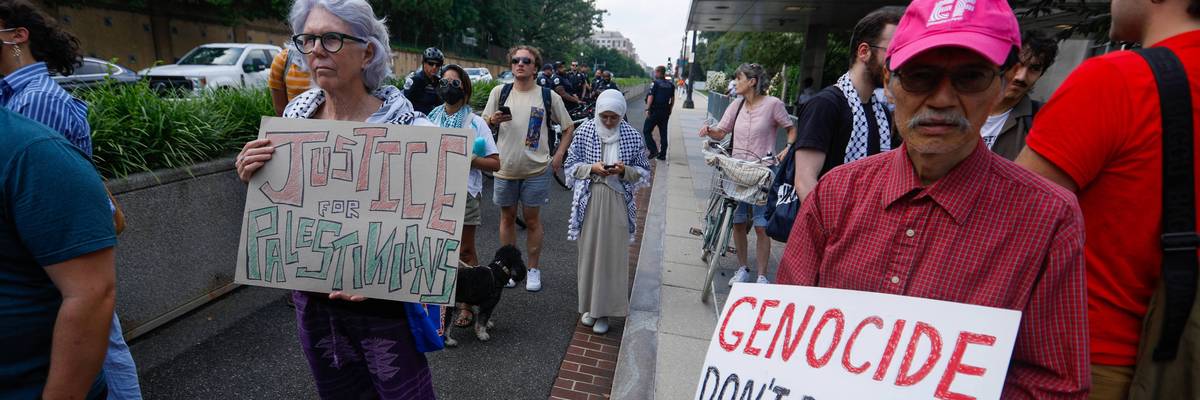
Rally to Protest Trump Bombing of Iran

Trump Bombs Iran for Second Night After Complaining Talks Have ‘Taken Too Long’

In a Saturday statement on his Truth Social platform, Trump said the US had “struck Iranian missile and drone storage locations, and coastal radar sites, for violating the Cease Fire Agreement, AGAIN!”

“It is very possible that they will never learn!” the president exclaimed. “There may come a point when we are no longer able to be reasonable, and will be forced to militarily complete the job that we very successfully started. If that happens, the Islamic Republic of Iran will no longer exist!”

The latest direct exchange of hostilities—that began with US bombings of Iranian targets Friday and included Iran targeting US allies in Bahrain and Kuwait on Sunday—come over lingering disagreements about how vessels will or will not pass through the Strait of Hormuz.

No paywall. No ads. No billionaire owner. Just you.

Common Dreams is funded exclusively by readers tired of news beholden to corporate interests. Our monthly supporters are the backbone of what makes that possible. Help us reach our Mid-Year Campaign goal of 450 new monthly supporters by July 1.

about:blank

“Congress passed the first War Powers Resolution in history, legally compeling an end to war on Iran,” the anti-war group Just Foreign Policy said following Friday’s strikes. “This means Trump’s strikes today are an unprecedented Constitutional violation **Trump must be taken to court** to honor the American people’s demand that we exit this war — NOW.”

Iran Foreign Minister Abbas Araghchi said Sunday that “interference in [the Strait], any attempt to establish new or separate arrangements from those currently being carried out by the Islamic Republic of Iran, will only lead to further complications, delay the reopening of the strait of Hormuz, and increase the level of tension.”

Araghchi called for a regional agreement to settle the issue of passage through the Strait, but indicated the US should have no role in determining the outcome of the settlement. On Saturday, the Islamic Revolution Guard Corps (IRGC) said that the US—“whose very nature is characterized by breaking commitments and violating agreements”—was guilty of firing on coastal targets but that such attacks would not deter the Iranian military from exerting control over the Strait.

“Henceforth,” said the IRGC, “vessels found to be in violation will be dealt with more firmly than before.”

On June 23, a 50-48 vote in the Senate saw a war powers resolution pass the upper chamber after the House also passed a similar resolution on June 3 to bring an end to the war started by the US and Israel on February 28. But as Khanna explained Sunday, speaking with journalist David Sirota, these votes have not been enough to curb the president’s actions.

🚨NEW: Congress just passed resolutions to block Trump from continuing the Iran War. The resolutions carry the force of law under the text of the 1973 War Powers Act. Now, @RoKhanna tells me he is working to organize lawmakers to bring an historic court case to enforce the law. pic.twitter.com/IBH7dbKcxG
— David Sirota (@davidsirota) June 28, 2026

Asked by Sirota what he would be doing to compel Trump to adhere to the congressional opposition to Trump’s ongoing aggression against Iran, Khanna said, “we should go to court.”

Noting that former Republican Congressman Tom Campbell, back in 1999, had taken former President Bill Clinton to court for violating a War Powers Resolution during the US-backed NATO bombing of Yugoslavia, Khanna said he is preparing to follow a similar course.

“This is something that we should try to enforce,” Khanna said. “And I’m working with my colleagues to see how we can get a group to take this case to the courts.”

US violates ceasefire, launches strikes against Iranian sites in the Strait of Hormuz

June 27, 2026

WSWS, Kevin Reed, 27 June 2026

A small motorboat passes anchored vessels in the Strait of Hormuz off Bandar Abbas, Iran, Thursday, June 11, 2026. [AP Photo/Amirhosein Khorgooi]

The US launched a new round of strikes on Iran on Friday in the most explicit indication yet that the recently signed Memorandum of Understanding (MOU) has collapsed into an escalating and open conflict. U.S. Central Command (CENTCOM) said its aircraft struck Iranian missile and drone storage locations and coastal radar sites near the Strait of Hormuz.

A report by Al Jazeera said the US strikes were near the Iranian port of Sirik. Al Jazeera also reported that Iran said it had “succeeded in neutralizing” the attack and pledged to retaliate in a statement shared by the ISNA news agency. The statement said, “We emphasize that this aggression will not go unanswered, and our response will be swift and decisive at a time and place of our choosing.”

An Iranian parliamentary security official, Ebrahim Azizi, accused Washington of attacking “in the middle of negotiations once again” and said the US president had shown no commitment to negotiation or ceasefire principles.

According to other reports, the US strikes were carried out in response to Iran’s launching of at least four one-way attack drones at a commercial vessel on Thursday, with one drone striking the ship’s upper deck and damaging it before the vessel continued its course.

CENTCOM confirmed the targets and presented the strikes as a limited but forceful response meant to punish the Iranian attack and deter further action. The reports indicate that the US strikes were not random but targeted the command-and-control infrastructure surrounding Iran’s maritime reach.

The exact physical damage remained unclear, and both CENTCOM and the New York Times noted that the full extent of the damage had not yet been determined. The news reports said the choice of targets was intended to send a message that Washington could hit the systems enabling drone operations and surveillance in the Gulf without widening the war.  

However, the response by President Trump and Vice President Vance was both threatening. Trump said Iran’s drone launch amounted to a violation of the ceasefire framework. He then portrayed the US strikes as responding to Iranian aggression rather than initiating escalation. JD Vance gave the direct warning, “… violence will be met with violence.”  

Vance added that Iran had signed the ceasefire agreement and that if Tehran had disagreements over implementation, it could “pick up the phone,” but that military retaliation would follow if the agreement was challenged. 

Iran said the drone strike was part of its effort to control passage through the Strait of Hormuz and warned that ships using routes outside Tehran’s approved framework would not be guaranteed safe passage or insurance coverage.

More specifically, the statement quoted by CBS said, “Any passage through routes outside the framework designated by PGSA [Persian Gulf Strait Authority] will not be covered by safe passage guarantees and will not be entitled to insurance coverage or related liabilities.”

Other reporting on the same incident says Iranian officials framed the move as a response to insecurity in the waterway and to what Tehran describes as continued US aggression, with Iran later warning vessels to use only routes authorized by Tehran.

Iran has once again rejected the American claim to maritime authority in the Strait of Hormuz. Reuters reported that Tehran insisted it had the right to control shipping there and warned Gulf states not to side with Washington after the cargo ship incident.

The Iranian line is that the strait lies within a contested security zone and that the US and its allies are using “freedom of navigation” language to mask coercive control over a vital strategic waterway. The dispute over the strait is a key issue over whether the MOU means anything in practice.

The reported drone attack itself centered on a commercial vessel, identified in some reporting as the Ever Lovely, which was struck in the Strait of Hormuz near Oman. Trump said three other drones were intercepted, and the ship, while damaged, remained able to continue. AP and Reuters reported that the event led maritime authorities to pause efforts to move ships out of the area, indicating the immediate consequences for commercial traffic.

The MOU, signed only a week earlier, has now shown itself to be a piece of paper with little meaning in a war that has not ended. The language of the deal, including the phrase that Iran would “make arrangements using its best efforts” to ensure safe passage, was ambiguous from the start and left room for interpretation, and it has now become a mechanism for the collapse of the entire MOU.

Reports over the last week have shown that, far from receding, the conflict is broadening with Israeli attacks continuing in Lebanon, and Gaza remains under near-constant assault despite talk about a ceasefire and peace agreements. Just as it has in Gaza, the ceasefire framework contained in the MOU is emerging as a formal cover for the continuation of the imperialist war by other means.

On Friday, Israeli Defense Forces continued ground and aerial operations in southern Lebanon. Actions included combing operations in the border town of Ain Arab, advancing military vehicles toward Haris, a drone strike near Qabrikha and airstrikes near Nabatieh. Israel also dropped leaflets over the town of Mansouri ordering residents to evacuate. The military described this as a “reminder” to keep out of the area for civilian safety.Available from Mehring BooksThe struggle against imperialism and for workers’ power in IranA pamphlet by Keith Jones

Despite US-led negotiations, Israeli warplanes launched two waves of airstrikes targeting the outskirts of Nabatieh al-Fawqa. Following talks in Washington D.C., Israel, Lebanon and the US signed an initial trilateral framework agreement on Friday for restoring sovereignty and establishing “pilot zones” in which the Lebanese Armed Forces will take control.

Prime Minister Benjamin Netanyahu and Defense Minister Israel Katz said Israel will not withdraw its forces from occupied security zones until Hezbollah is disarmed. Hezbollah leadership rejected prior US-brokered deals and maintained that Israel must fully withdraw unconditionally.

Taken together, Friday’s actions show that the ceasefire is highly fragile, if existing at all, and that Israel continued to use military force to pressure villages near the border. The result was continued civilian deaths, displacement and an ongoing clash between formal diplomacy and battlefield realities.

The situation in Gaza, which has been moved off the front page of the news since the war with Iran began on February 28, is even more catastrophic. Palestinian and UN-linked reports say Israel has killed roughly 1,000 Palestinians since the ceasefire was announced, while Gaza’s Government Media Office says Israel has carried out 3,269 violations, killed 992 Palestinians and wounded 3,144 others.

Aid delivery has remained far below what was promised, with only 52,740 trucks entering Gaza out of the 147,000 required, according to the same reporting. These numbers show that the “agreement” has disguised the sustained Israeli campaign of attrition against Palestinians.

The WSWS has explained that the Gaza arrangement was designed to turn the Mediterranean coast into a site for speculative reconstruction once Israel had reduced Gaza City and other towns to rubble.

In this respect, Trump’s “Board of Peace” has served as political theater intended to legitimize a plan of conquest, displacement and future real estate plunder. The same logic now appears in the US-Iran memorandum, which functions less as peace than as an unstable pause inside a larger war project.

The contradictions at the core of the Middle East conflict remain unresolved. The US and Israel are pursuing a strategy aimed at subjugating the region through siege, bombing and occupation. The events on Friday confirm that the military conflict is moving into another stage, not away from it.

Only the independent mobilization of the working class across the Middle East and within the imperialist centers in a unified struggle against war and for socialism can break the cycles that are leading to a Third World War.

There Is No Bigger Trump Lie Right Now Than Him Saying the Iran War Is Good for You—or the World

June 16, 2026

There is a popular view that this is a pointless war, being fought for nothing. But that is wrong—there is a purpose. Actually, there are several. You’re just never told what they are.

Phyllis Bennis, Common Dreams, Jun 14, 2026

On June 1st, despite a ceasefire ostensibly underway in the US-Israeli war on Iran, Israel’s prime minister launched a major escalation against Lebanon, including threatening airstrikes against the Lebanese capital. The US president called the Israeli leader, furiously demanding an end to Israel’s escalation. Six days later, Israel attacked Beirut’s southern suburbs, long understood to be a red line for Hezbollah. The Lebanese resistance organization launched a limited response, sending 11 rockets towards Israel, almost all of which were intercepted; no one was hurt or killed. Trump called Netanyahu again, telling him in a brief call that now that Iran and Israel had each “had their fun,” that Israel should stand down.

Commentators across the Middle East and beyond debated whether Netanyahu would abide by Trump’s demand. What virtually none of them mentioned was that Trump had refused to even mention his most important pressure point: that if Israel resisted his order to stand down, the US would simply stop sending tons of weapons and tens of billions of dollars to the Israeli military. The close but sometimes divergent interests of the Middle East’s two powers, the global and the regional, was on full display.

RECOMMENDED…

President Donald Trump sits for an interview with Lara Trump

Watch: Trump Admits ‘We Shouldn’t Have Been in Iran’

US President Donald Trump speaks during a Cabinet meeting

‘Sounds a Lot Like a Nuclear Threat’: Trump Floats ‘Ultimate Alternative’ If Iran Talks Collapse

It’s now been 106 days since Trump launched his preemptive and illegal military attack on Iran. On February 28, 2026, the world awoke to the fury of a new war in the Middle East after the United States and Israel had launched their joint assault against Iran, with President Trump and Prime Minister Netanyahu standing shoulder to shoulder against their common foe. Claiming unbridled hegemony was on the agenda for both.

The US-Israeli war on Iran is rooted in longstanding US imperialist strategy and Israel’s national goals.

Today, with yet more fresh promises of a so-called “peace deal” that is nearly ready to be signed by Trump and Iranian leadership, the Israeli military is bombing the suburbs of Beirut despite ongoing claims of a “ceasefire.” Trying to understand the current doom loop, it’s vital we remember how we got here.

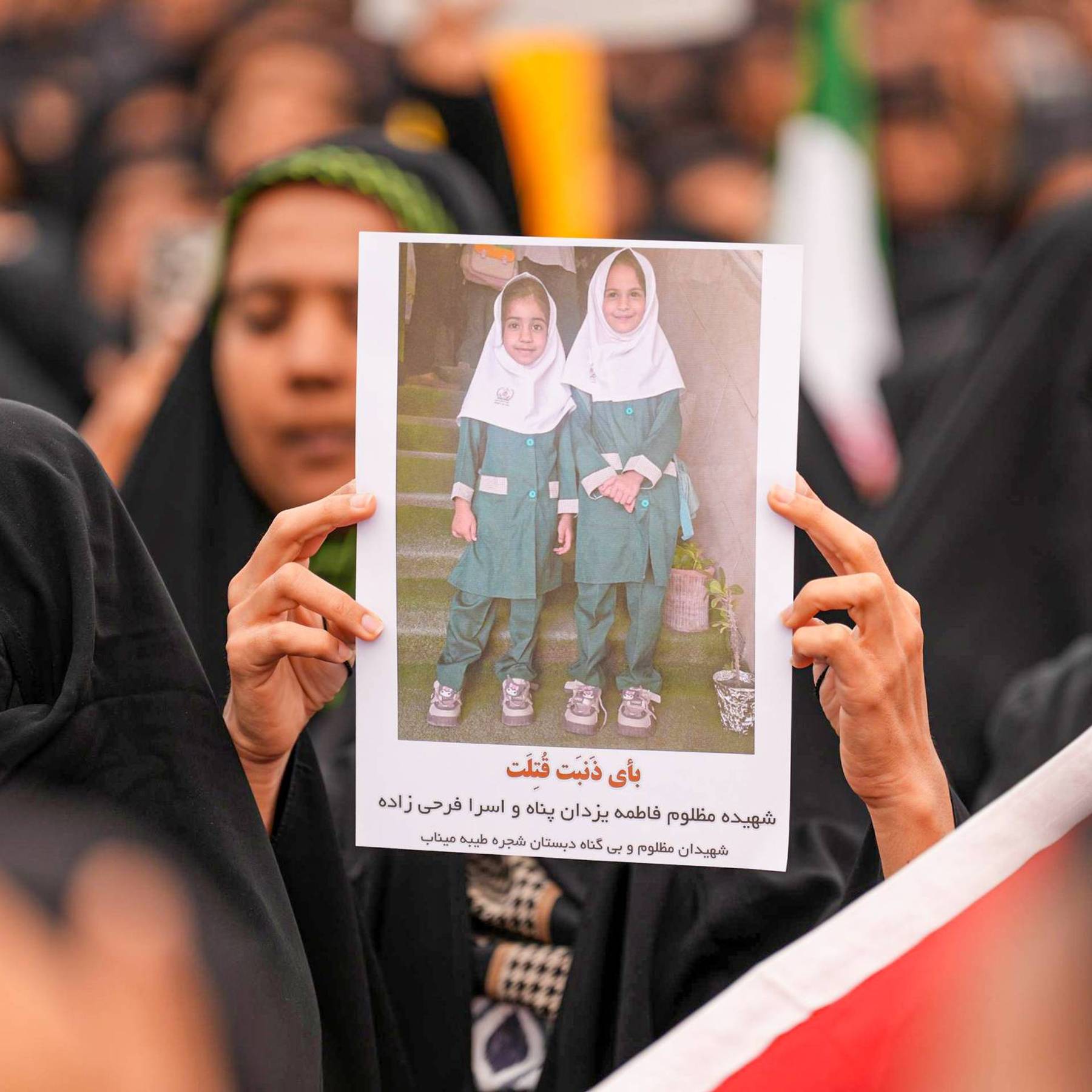
In the opening salvo of the US-Israeli attack, Iran’s supreme leader Ali Khamenei, along with an unknown number of other top military and political leaders, was assassinated with a ballistic missile. Just an hour later, the US fired a Tomahawk missile directly at the Shajareh Tayyebeh Elementary School in the northern Iranian city of Minab—killing 156 people, 120 of them children, and destroying the school. The war’s official reasons, initially, were to eliminate the ostensible threat of Iran creating a nuclear weapon, and to destroy its conventional military capacity. The no-daylight US-Israeli partnership, Trump and Netanyahu as BFFs, the collaboration between the US and Israeli warplanes, bombers, drones, missiles… all seemed seamless and perfect.

Three months later, and half a dozen or so “ceasefires” announced, renounced, ignored and denounced, headlines around the world gleefully recounted a Trump phone call with Netanyahu. Focused on Israel’s escalating bombing of Lebanon threatening to derail the latest US-Iran ceasefire, the June 1 call reportedly started with Trump telling Netanyahu “you’re fucking crazy—you’d be in prison if it weren’t for me.“ The US president then went on to his ”Everybody hates you now“ remark. ”Everybody hates Israel because of this,“ he reportedly said.

Trump acknowledged saying it, and then, as is his usual style, moved on, quickly reclaiming his friendship with the Israeli prime minister. As was true with so many earlier ceasefires, Israel continued its massive bombing and its brutal occupation of south Lebanon, making a US-Iran ceasefire impossible. In the meantime, throughout the months of the war, commentators, politicians of all stripes, journalists and analysts across the globe were struggling to figure out what that war was actually being fought for.

War for What?

Real fear of an actual nuclear bomb was certainly not the answer. After all, US intelligence agencies have agreed for years that “Iran is not building a nuclear weapon and that [Supreme Leader Ali] Khamenei has not reauthorized the nuclear weapons program he suspended in 2003.”

Despite that clear assessment, US B-2 stealth bombers still dropped 14 of their 30,000-pound “bunker-buster” bombs on Iran’s civilian centrifuges at Fordo, Isfahan and Natanz at the end of Israel’s 12-day war in June 2025. Trump and his supporters bragged of having “completely and totally obliterated” Iran’s nuclear facilities. And then, eight months after that, in the early days of the US-Israeli 2026 war, those B-2s were back in the air, dropping more 30,000-pound and some smaller versions of the bunker-busters on Iran. Seems they don’t believe even their own intelligence agents.

They thought they could impose imperialism on the cheap—but it turns out not everyone is playing that game.

Rationales for the sudden war in 2026 (launched in the midst of US negotiations with Iran for a long-term ceasefire) were tossed around like confetti, ranging from stopping a nuclear threat (which of course didn’t exist because Iran didn’t have, wasn’t trying to make, and hadn’t even made a decision to try to build a nuclear weapon), to ending Iran’s support for its regional allies, to destroying Iran’s navy, to crippling its missile capacity, to protecting Iranian civilians or maybe encouraging a popular uprising, or perhaps even full-scale regime change. Later, once Iran had responded to the attacks by closing the Strait of Hormuz, Trump shifted to trying to justify the war as a means of forcing the reopening of the Strait, in effect waging the new war to get back to the situation that had existed until the US and Israel launched the war in the first place.

Not a Senseless War

None were very convincing arguments. The popular view emerged that this was a pointless war, being fought for nothing. But that was wrong—there was a purpose. Actually, there were several. The Israeli prime minister has shaped his political career, for more than 35 years, around the claim that only he could bring down the Iranian regime, falsely claiming it as an “existential threat” to Israel. (In fact, even if Iran changed its internal decisions and decided to try to build a nuclear weapon some day, it would not represent an existential threat to Israelis but only to Israel’s 47-year-old nuclear weapons monopoly in the Middle East.) Netanyahu needed the war to continue—any ceasefire, under any conditions, would weaken him politically.

On the US side, some of the war’s goals had to do with the personal obsessions of the president and his minions. Trump’s fixation on expanding US power around the world, and more importantly being seen as presiding over a return to the glory days of unchallenged US global domination, remain a driving force—as does his determination to “get a better deal” than Obama did with the successful Iran nuclear deal in 2015. For his self-defined “secretary of war” Pete Hegseth, the pageantry of a powerful military—not only “the most lethal” force in the world but more white, more male, and even more slim than any other army—could compensate for Hegseth’s lack of experience. For Secretary of State Marco Rubio, all roads lead to regime change in Cuba—and supporting all of Trump’s military assaults, including attacks on fishing boats in the Caribbean, kidnapping the president and seizing the oil resources of Venezuela, bombing Yemen, Somalia and Nigeria, all help set the stage for his life-long goal of destroying the Cuban revolution.

The Search for Hegemony

All those personal obsessions likely played some roles. But the US-Israeli war on Iran is also rooted in longstanding US imperialist strategy and Israel’s national goals. While Trump has shown himself for years as far more committed to maximizing his own and his family’s wealth and power than he is accountable to any particular faction of US capital or US elite power (except perhaps “the billionaires,” writ large), the trajectory of imperial expansion, especially in an era of greater and rising powers around the world, continues to shape much of US policy.

That is where the search for hegemony comes to the fore. For Israel—and especially for its longstanding prime minister—the attack on Iran both demonstrates and reinforces its role as unchallenged regional hegemon. That means asserting its power—a derivative power, given its strategic dependence on the United States, but power nonetheless—to seize land, dispossess and expel whole populations, and exert permanent control over countries, economies, and people—whenever, wherever, and for however long it chooses. Without being held accountable.

For Israel—and especially for its longstanding prime minister—the attack on Iran both demonstrates and reinforces its role as unchallenged regional hegemon.

To be recognized as the regional hegemonic power in the Middle East, Israel needs to not only “mow the grass” in Lebanon and in Gaza (as well as arming and empowering ideologically driven settlers in the West Bank to escalate their violent seizure of Palestinian land and ethnic cleansing of its population), it needs to continue to weaken, threaten, and when possible (with US backing) go to war against Iran, its sole challenger for regional control.

Mowing the Grass

Israelis—military and government officials, academics, journalists and others—routinely use the term “mowing the grass” to describe Tel Aviv’s consistent attacks against Israel’s neighbors. The phrase was first coined to describe Israel’s brutal 22-day assault on Gaza, Operation Cast Lead, that began the day after Christmas 2008 and killed more than 1400 Palestinians, most of them civilians and including 300 children. Since then, it describes the frequent attacks on Gaza or Lebanon—ostensibly aimed at militant organizations but designed originally to kill massive numbers of civilians, displace hundreds of thousands or millions from their homes, and destroy huge swathes of homes, schools, churches, mosques, businesses—to remind everyone who it is who actually holds power.

Israel is saying that it will not allow Iran to remain an obstacle to Tel Aviv’s claim of full-blown dominance of the region. Netanyahu is making good of the threats he’s issued for the last 30 years.

Iran has historically been the main obstacle preventing Israel from consolidating that regional hegemonic role, and part of Netanyahu’s political power depends on his ability to keep the US-Israeli “special relationship” strong and to deal effectively with Iran. So going to war against Iran in complete and willing partnership with the United States serves to strengthen his still-shaky political position. What’s different now is that Israel is saying that it will not allow Iran to remain an obstacle to Tel Aviv’s claim of full-blown dominance of the region. Netanyahu is making good of the threats he’s issued for the last 30 years.

So Netanyahu remains committed to continuing this war against Iran, opposing ceasefires regardless of their terms—and most recently, escalating attacks against Lebanon precisely because they could prevent or shatter any ceasefire. Following the Israel-Hezbollah ceasefire in 2024, UN peacekeepers on the ground documented more than 10,000 Israeli violations of the agreement in just the first year. When a wobbly US-Iran ceasefire was announced on April 8, 2026, Israel responded with massive force against Beirut, launching more than 100 airstrikes within 10 minutes across the capital and killing 357 people, many of them civilians and at least 101 of them children and women.

Back in the USA….

For the United States, going to war against Iran could strengthen Washington’s longstanding commitment to maintaining global domination—a goal particularly relished by its power-obsessed and erratic president. The war was designed to both demonstrate and bolster the US role as unchallenged global hegemon. And doing so arm in arm with Israel, the regional version.

What a team they thought they would make. What they didn’t reckon with was the reality of Iran—its military, its government, its people. While there is no question US-Israeli military might massively outstrips that of Iran, it turned out that Tehran was able to use its not-insignificant drone and missile capacity in ways that maximized its power.

While there is no question US-Israeli military might massively outstrips that of Iran, it turned out that Tehran was able to use its not-insignificant drone and missile capacity in ways that maximized its power.

For example, Iran’s relatively few strikes on US bases and sometimes domestic facilities in the surrounding US-backed Gulf states had political consequences beyond their comparatively low levels of casualties. They showed how “protection” in the form of US military bases, weapons and troops in those countries did not keep their people safe, but rather laid a target on their backs. Most especially, Iran’s few direct attacks on ships attempting to cross the Strait of Hormuz early in the war, had the much broader effect of shutting down the vital waterway entirely, as shipowners and insurance companies refused to take the risk.

Miscalculations

When Israel carried out its guided missile attack on the first day of the war, killing the supreme leader and a number of other top officials, the cheering in Washington and Tel Aviv reflected the assumption that the decapitation of the government would lead to chaos and its inability to function. The cheerleaders were wrong. As Narges Bajoghli and Vali Nasr noted in Foreign Affairs, the US and Israel “expected a quick victory through targeted assassinations of Iran’s leadership. But decapitation did not produce regime collapse. Instead, it opened the door for a new generation to take over.” Not only did Khamenei’s son take over his father’s position, but younger military, political, and business leaders filled in the gaps across the structures of power.

And while the Iranian leadership had been significantly weakened by public mobilization against both governmental inability to solve the escalating economic crisis and its increasingly repressive attacks against protesters, it appears it was not further weakened by the US-Israeli assault. As Nasr and Bajoghli describe the situation, the public anger of January 2026 in response to escalating repression of the mass uprisings, didn’t disappear with the US-Israeli assault. They wrote:

The war’s destruction has been vast: public infrastructure, factories, schools, hospitals, historic monuments, and even entire neighborhoods lie in ruins. As Israeli and American bombs and missiles pummeled the landscape, Trump threatened to arm separatists, redraw Iran’s borders, crush its economy and annihilate its civilization. Together, these military and rhetorical assaults provoked a nationalist reaction that cut across political divisions. Public anger has not disappeared. The grief, frustration and accumulated resentment of decades of misrule and repression remain. What has changed is the political landscape in which those feelings find expression. Dissent is now refracted through a national struggle against a foreign enemy that Iranians compare to Alexander the Great, who conquered the Persian empire in the 4th century BC; the Arab armies that invaded in the 7th century AD; and the Mongols, who came six centuries after that.

Contrary to American and Israeli expectations, the war has not sparked street demonstrations. The longer it went on, the less the regime appeared threatened by public uprisings. Iranian society mobilized not against the state but alongside it, holding daily rallies across the country, forming human chains and gathering on bridges threatened by Trump. The sharp divide between state and society that had characterized Iran in January blurred—not through persuasion or repression, but through the shared experience of living through the bombing and witnessing its destruction.

Palestine

There was another reason for the US-Israeli war, that explains at least the timing, if not the overall rationale—Palestine. Israel has been committing genocide in Gaza for two years and eight months. There are now more than 73,000 known, identified, named Palestinians in Gaza who have been killed by Israeli bombs, tanks, bullets, drones, missiles, almost all paid for (and to a large degree produced) by US taxpayers. Thousands more lie dead under the rubble of what were once the cities, towns, refugee camps of the decimated Gaza Strip. The statistics belie the lives lost—babies, elders, children. Journalists and health workers in staggering numbers. And Israel’s genocide continues, people are still being killed by Israeli bombs, tanks and drones, as well as deliberately-imposed shortages of water, food, medical supplies, shelter.

The Gaza genocide is not unrelated or incidental to the US-Israeli war in Iran—it is a primary enabler. It is precisely the level of impunity, the absolute lack of accountability for any of the perpetrators of this crime against humanity, that has given Israeli and US leaders the confidence to go ahead with what many have called the “Gazafication of Iran” and the “Gazafication of Lebanon” without fearing there might be a price to be paid.

The Gaza genocide is not unrelated or incidental to the US-Israeli war in Iran—it is a primary enabler.

The international arrest warrants issued by the International Criminal Court against Israeli leaders (Israel assassinated the Hamas leaders who were similarly charged) are ignored in most of the US-allied countries that Netanyahu and his former defense minister might want to visit. South Africa’s unprecedented effort to hold Israel accountable at the International Court of Justice for its violations of the Genocide Convention resulted in a powerful preliminary ruling that Israel’s actions plausibly do constitute genocide. Israel was ordered to carry out specific actions—starting with an end to killing people in Gaza—but it has yet to face any consequences for ignoring those orders. And no one knows when the final ruling might be issued—or if it will lead to some level of enforcement, either in the United Nations, by a coalition of governments, or, most likely by a newly-enraged, newly-engaged global civil society ready to move with ever greater energy, strategic clarity and political power to impose serious consequences on the governments and individuals responsible for the first genocide in history to be carried out openly, proudly, and visible to the world.

War Over War

For now, while the war against Iran continues, it looks like both Israel and the United States are moving into a different phase. They are still looking to claim power, still working to reshape political relations and consolidate regional and global power across the middle east. But rather than simply escalating again, as Israel still is in Lebanon, or continuing a grinding daily assault as it still is in Gaza—both actions armed and paid for by the US—they are facing some changed circumstances. Just maybe Washington and Tel Aviv are finding that it’s harder than they thought to re-order the whole Middle East—and to do that in tandem is harder than ever.

Trump seemed to think he could accomplish something dramatic and “beautiful” in Iran—encourage a popular uprising, maybe seize the oil and replace the leadership’s political orientation as if it were Venezuela—but then found that wasn’t so likely. Turns out Iran is not Venezuela. Netanyahu has massive public support among Jewish Israelis for continuing the war in Iran, though support for the war in Lebanon is not so popular. (It should not be forgotten that after 18 years of occupying South Lebanon, Israeli troops were finally pulled out in 2000 primarily because the government could not survive the mobilization of Israeli mothers angry that their sons in the IDF were occasionally being killed by Hezbollah’s retaliation actions..)

Trump seemed to think he could accomplish something dramatic and “beautiful” in Iran—encourage a popular uprising, maybe seize the oil and replace the leadership’s political orientation as if it were Venezuela—but then found that wasn’t so likely.

At home Netanyahu may be able to get away with claiming victory over Iran even if a ceasefire is imposed, by continuing Israel’s longstanding practice of assassinating Iranian scientists and political/military leaders, and occasional bombing raids. But Israel’s plummeting losses in the war of global legitimacy are certainly not likely to be reversed any time soon. The most recent Pew survey indicates sky-high majorities holding negative views of Israel and Netanyahu around the world—up to 95% in Pakistan, 78% negative in Sweden and Spain.

The global Palestinian rights mobilizations and the even broader movements for ceasefire and an end to genocide of course play a major role. Social movements and civil society activists around the world will continue to hold up the ICJ decisions and the UN General Assembly resolutions requiring governments to impose arms embargoes, boycotts, divestment, and sanctions against Israel.

And as the Strait remains closed and food shortages mount in the poorest countries, as Arab governments fearing public opposition at home reduce their ties with Israel and reject expansion of the Abraham Accords, and as Israel continues to kill Lebanese and Palestinian families, Trump’s claims will be less likely to be believed. With the mid-terms only a few months off, his claims of “We’re the winner, we won” are already ringing increasingly hollow. It doesn’t mean he won’t make the claims, it just means they’re not going to work.

For Trump, given the unexpected level of resilience in Iran, Tehran’s access to a virtually unlimited supply of cheap drones that are doing real damage to Gulf Arab states hosting US bases and troops, and its willingness to close the Strait as a pressure point with global ramifications, it’s going to be difficult to claim this war as a victory.

The search to consolidate regional and global power continues. It’s a big part of the reason the US and Israel are launching new wars and escalating longstanding attacks. People are still losing lands and lives as these hegemons rely on war to consolidate their positions. But neither Israel in the Middle East nor the United States in the world are unchallenged. They thought they could impose imperialism on the cheap—but it turns out not everyone is playing that game. The search for hegemonic power is far from settled.

US military begins construction of ‘huge base’ outside Gaza to oversee Trump’s colonization plan

June 14, 2026

While talks in Cairo center on disarming Hamas, Israel has kept killing hundreds of Palestinians without accountability and is expanding its control over the strip despite an alleged ‘ceasefire’

News Desk, The Cradle, JUN 13, 2026

(Photo credit: REUTERS/AMMAR AWAD)

The US military has begun constructing a “huge base” on the Gaza envelope to implement US President Donald Trump’s plan to “take over” the strip, Israel Hayom reported on 13 June.

The US base, being built near the Israeli military base at Reim settlement, will function as both a military and civilian headquarters for the organizations and forces arriving in the area to implement the Trump plan.

In February 2025, Trump proposed a US “takeover” of the Gaza Strip. 

The plan called for the forced displacement of approximately two million Palestinians to neighboring lands and redeveloping the territory as a high-tech business and tourism hub that Trump said would become the “Riviera of the Middle East.”

The new base will replace the US facility in the Israeli town of Kiryat Gat, established under the direction of Trump’s Board of Peace in the wake of the October 2025 “ceasefire.”

Representatives from more than 24 countries staffed the multinational headquarters and were tasked with overseeing the ceasefire and the entry of humanitarian aid.

The Kiryat Gat base was also meant to direct the operations of an International Stabilization Force (ISF) tasked with providing security in Gaza.

However, Israel has continued to severely restrict the entry of aid into Gaza, recently suspending all shipments, while the ISF has yet to be formed.

After the US and Israel launched a war on Iran on 28 February, the overwhelming majority of personnel left Kiryat Gat.

Israel Hayom noted that plans for the new US base include the construction of a tower intended for the command and control of forces in the field. 

The US military has already begun issuing tenders to private contractors, including for the supply of mobile structures to house personnel and serve as a headquarters until permanent buildings are established at the site.

The new base will also host troops from the ISF if it is formed. 

Five countries previously agreed to send forces to Gaza, namely Indonesia, Morocco, Kazakhstan, Kosovo, and Albania. Bangladesh, Pakistan, and Azerbaijan have expressed a willingness to participate but have made no firm commitment.

Currently, no countries are willing to send troops due to fears that their forces will be tasked with disarming the Palestinian resistance, as well as concerns about the ongoing US-Israeli conflict with Iran.

The construction of the new US base is being fully coordinated with the Israeli Defense Ministry. Military officials expect the base to be constructed and staffed within a few months.

The report comes as talks continue between Hamas and Israel via negotiators in Cairo. 

Israel persists in demanding Hamas disarmament before progressing the ceasefire, while simultaneously continuing to kill Palestinians in Gaza without consequences and expanding its occupation rather than withdrawing from the territory seized during the genocide.

Israel has killed nearly 1,000 Palestinians in Gaza and expanded its control of the strip from 50 percent to at least 60 percent since the ceasefire.

One security source told Israel Hayom that the “chance of renewed fighting in the Gaza Strip is greater than the possibility that Hamas will actually be disarmed through a diplomatic agreement.”

“Demilitarizing Gaza became a bigger aim than stopping Israel’s genocide; such is the absurd truth,” wrote author Ramona Wadi.

While “colonial expansion as the reason behind Israel’s genocide in Gaza, utterly exposed for the entire world to see, [it] is never discussed by the international community. On the contrary, the Board of Peace promotes it and sets the conditions that justify colonialism instead of preventing it, using an extension of the same narrative Israel used to destroy Gaza,” Wadi added.

Hegseth Issues Threat To Cuba While Visiting Troops at Guantanamo Bay

June 11, 2026


by Dave DeCamp | June 10, 2026 at 5:22 pm ET | Cuba

US Secretary of War Pete Hegseth visited US troops at the US base in Guantanamo Bay, Cuba, on Wednesday and issued a threat to the Cuban government.

Hegseth said that it would be “unwise” for the Cuban government to acquire weapons that could reach the US, saying that it would “be inviting the kind of confrontation not only do they not want, but they could not stand.”

.@SECWAR “Then you look at Cuba…
That government has decisions to make about what kind of reforms it wants to pursue—it’s not my job to make that decision for them.
It’s our job at the WAR DEPARTMENT to be prepared for whatever our Commander in Chief asks us to do on behalf of… pic.twitter.com/sYZKYPGQZD
— DOW Rapid Response (@DOWResponse) June 10, 2026

The Pentagon chief also said that the Department of War was ready for anything that President Trump may order, and recent reports have said that the US military has placed enough assets in the region to be ready if the president orders an attack.

“What happens with the future of Cuba is in the hands of the president of the United States and the leadership of Cuba,” he said. “No matter what, the Department of War is going to be prepared and postured for any possible contingency.”

The Trump administration has set up potential pretexts for an attack on Cuba, including the indictment of the country’s 94-year-old former president, Raul Castro, suggesting the US may launch a similar operation to the one to abduct Venezuelan President Nicolas Maduro, which Hegseth referenced.

“[Maduro] thought he could flaunt the United States of America,” Hegseth said. “Then he found out [he could not], in about 45 minutes, in the middle of the night, in the most heavily fortified base inside their capital city.”

If you liked this article, please support Antiwar.com.
We are 100% reader-supported.


Dave DeCamp is the news editor of Antiwar.com, follow him on Twitter @decampdave.

Israeli health authorities reported 77 new casualties in 24 hours as resistance operations continue on multiple fronts.

June 9, 2026
77 Israeli Casualties in 24 Hours as Media Say Iran Changed the Regional Equation

June 9, 2026 News

Ebrahim Azizi, chairman of the Iranian parliament’s National Security and Foreign Policy Committee. (Photo: Iranian Media)

By Palestine Chronicle Staff  

Key Developments

  • Israel’s Health Ministry reported 77 new casualties in the past 24 hours, bringing the total since February to 9,119.
  • Israeli authorities acknowledged 1,219 casualties linked to the Lebanon front since the ceasefire with Iran took effect in April.
  • Iranian officials warned that any future attacks on Iran or the Resistance Axis would trigger a decisive and costly response.

Israeli Casualties

Israel’s Health Ministry announced on Monday that 77 new casualties had been recorded over the previous 24 hours, bringing the total number of casualties since the outbreak of the US-Israeli war against Iran in February to 9,119.

The figures were released as fighting and military operations continue across multiple fronts involving Iran, Lebanon and Yemen, following months of regional escalation.

According to the ministry’s latest update, casualty numbers have continued to rise despite repeated announcements of ceasefire arrangements.

The Lebanon Front

Israeli health authorities reported that 1,219 casualties have been recorded in connection with the Lebanon front alone since the ceasefire with Iran took effect on April 8.

The ministry also acknowledged that 803 casualties have entered Israeli hospitals since the ceasefire agreement with Lebanon was announced on April 17.

The figures come as the Lebanese resistance continues to carry out military operations against Israeli occupation forces in southern Lebanon, citing ongoing Israeli attacks and repeated violations of the ceasefire agreement.

Israeli attacks on Lebanon also continued on Monday.

According to Al Mayadeen correspondents, Israeli warplanes carried out strikes on Nabatieh, Deir Qanoun Ras al-Ain and areas around Tyre, while artillery shelling targeted towns in southern Lebanon.

Why Netanyahu wants to wreck Trump’s Iran deal

June 7, 2026

Sami Al-Arian, MEE, 5 June 2026 08:33 BST

As Washington and Tehran edge towards a ceasefire, the Israeli prime minister is determined to sink it, believing any settlement that leaves Iran standing amounts to defeat

A protester holds a placard depicting Israeli Prime Minister Benjamin Netanyahu during a demonstration in Milan on 21 May 2026 (Piero Cruciatti/AFP)

A protester holds a placard depicting Israeli Prime Minister Benjamin Netanyahu during a demonstration in Milan on 21 May 2026 (Piero Cruciatti/AFP)

Israeli prime minister and indicted war criminal Benjamin Netanyahu does not adapt to imposed realities.

He tries to smash them through brute force, permanent escalation and manufactured crises. Throughout his career, war has been a favoured strategic instrument for preserving Israeli supremacy and his own political survival.

Most recently, his priority is to prevent US President Donald Trump from signing a near-complete memorandum of understanding with the Islamic Republic of Iran. Should diplomacy prevail, he will deploy every political, military, diplomatic, media and lobbying tool to sabotage it.

His obsession with what he calls “absolute victory” reflects a rigid doctrine that rejects compromise. No settlement is acceptable to him unless it disarms Hamas and Islamic Jihad in Gaza, dismantles Hezbollah in Lebanon, and ends in the neutralisation or destruction of the Iranian state itself.

His horizon extends well past temporary ceasefires to the end of all resistance and a region restructured around Israeli dominance under American protection.

New MEE newsletter: Jerusalem Dispatch

Sign up to get the latest insights and analysis on Israel-Palestine, alongside Turkey Unpacked and other MEE newsletters

The wars across Gaza, the West Bank, Lebanon, Syria, Iraq, Yemen and Iran were never isolated confrontations. They are part of a single offensive to establish “Greater Israel” and consolidate Israeli regional hegemony.

Netanyahu knows these goals remain unfulfilled despite vast destruction. Rather than prompting a rethink, that failure has convinced him the problem is an insufficient application of force, not the objectives themselves.

For him, the war is far from over, and what force could not achieve yesterday becomes the target of wider escalation tomorrow.

Having already drawn Trump into earlier confrontations with Iran, Netanyahu appears convinced he can pull the lever again – this time aiming past a limited strike for a decisive, total war that permanently shifts the regional balance of power.

A divided home front

Trump faces a more complicated reality. He may believe earlier confrontations weakened Iran and the axis of resistance, but the political landscape is shifting fast at home and abroad.

Domestically, a growing share of the public openly questions the wisdom of these wars. Recent polling shows support for prolonged Middle Eastern entanglements falling steeply, alongside deep scepticism of “forever wars” seen as serving foreign agendas rather than American interests.

This anti-interventionist sentiment has crossed party lines and is fracturing Trump’s own coalition. Influential voices around the Maga movement, including political commentators Tucker Carlson, Candace Owens, Megyn Kelly and Joe Rogan, have questioned policies that subordinate American blood and treasure to Netanyahu’s agenda.

More Americans are asking why the US should bear the economic, military and political costs of another regional war for a foreign power, with vague aims and doubtful benefits

The campaign to unseat Congressman Thomas Massie and other non-interventionist conservatives who question pro-Israel policies reflects these tensions.

More Americans are asking why the US should bear the economic, military and political costs of another regional war for a foreign power, with vague aims and doubtful benefits.

These questions sharpen amid mounting economic strain. Energy markets remain vulnerable, and inflationary pressures are rising again.

Petrol prices have become a political landmine: reports in early May put the national average near $4.50 a gallon, up sharply from the sub-$3 level before the war. Driven by energy costs and supply chain disruptions, inflation has accelerated, weakening consumer confidence and turning the economic mood toxic for the White House.

Trump knows foreign adventures cannot be detached from domestic realities, and with the midterms approaching, blunders carry immediate consequences. Both the House and the Senate are within reach of Democratic majorities.

If he loses Congress, the rest of his presidency will be paralysed, and the threat of impeachment will return to the centre of Washington politics.

What Hormuz exposed

Internationally, the pressures are even more severe. The closure of the Strait of Hormuz transformed the strategic landscape.

Before the attacks intensified after 28 February, Hormuz was the vital maritime artery of global energy, carrying about a fifth of the world’s oil flows and liquefied natural gas trade, with Qatar‘s LNG exports acutely exposed. Its disruption laid bare the vulnerability of the Arab Gulf states and the wider global economy.

As shipping routes faced chaos, insurance premiums surged, energy markets reacted sharply and supply chains buckled. More than that, it shattered decades of assumptions about American power.

Iran has won the war. Trump and Netanyahu now face a reckoning

Read More »

For generations, Washington had sold itself as the indispensable guarantor of Gulf security and freedom of navigation. Yet the crisis exposed the limits of military superiority in the face of unforgiving geography, asymmetry and political complexity. America could strike, bomb and threaten, but it could not force Hormuz open without triggering a global economic shockwave.

The military record is more revealing still. During the 39-day war, Iranian and allied strikes damaged at least 16 US military bases across eight countries, leaving several nearly unusable.

A Washington Post analysis of satellite imagery found Iranian strikes damaged or destroyed at least 228 structures and pieces of equipment at US bases across the region: hangars, fuel depots, aircraft, radar networks, communications gear and air-defence assets.

This marks a foundational shift. For decades, the US used its network of Gulf bases as instruments of deterrence and intimidation, platforms to punish adversaries and shield allies. The war showed these bases are now exposed targets, calling into question the architecture of American regional dominance.

Strain on US missile defences compounded the crisis. Reports after the 39-day war indicated serious depletion of interceptor stocks, including Patriot, Thaad, Tomahawk and other missiles.

The Pentagon has warned that rebuilding these inventories could take years, with some not likely to be replenished until the decade’s end. That is a dangerous vulnerability for a country that must also plan for confrontations with Russia and China. A war meant to project dominance instead exposed industrial and technological limits.

A strategic deadlock

Washington and Tel Aviv entered with maximalist goals: force Iranian capitulation, dismantle its nuclear infrastructure, end enrichment, seize its enriched uranium, destroy the axis of resistance, and topple or fragment the Iranian state.

None of these goals has been met. Iran did not surrender, its government did not collapse and its regional alliances, though under heavy pressure, were not eliminated. Iran and its allies absorbed painful blows, but damage is not defeat: a state can suffer heavy losses without surrendering its core objectives.

Robert Kagan, an establishment strategist, recently acknowledged this gap between American ambitions and what military force can actually achieve. His warning carries weight because it comes from the heart of the interventionist establishment.

The dilemma is the inability to translate military superiority into a durable political order, however powerful its forces remain.

It recalls the Suez crisis of 1956, when Britain and France discovered that military victory could not stop the collapse of their imperial power. The same limit now confronts the US.

American threats and Trump’s ultimatums failed to produce Iranian submission because they lacked credibility. A threat works only when the adversary believes defiance will cost more than compliance.

For its part, Tehran had no reason to think concessions would buy safety.

It had watched Washington abandon the nuclear agreement in 2018, expand sanctions during talks and carry out assassinations and sabotage alongside the Zionist regime, even as talks continued.

Iran, therefore, chose to expand the battlefield, raise the cost of escalation, threaten global energy flows and deny the US and Israel a clean victory. Its alternative to capitulation was resistance under pain, and that transformed the bargaining structure.

Washington and Tel Aviv wanted a one-sided outcome in which Iran surrenders its nuclear assets, missiles and regional influence for temporary, easily reversible sanctions relief. Tehran knew that reversible relief is not security and refused to give up its deterrence, thereby forcing a deadlock.

Neither side could impose its outcome without paying a price it was unwilling to bear. The US could escalate, but only by threatening the global economy, draining its stockpiles, exposing its bases and widening domestic opposition.

Iran could endure and retaliate, but could not defeat a superpower conventionally. Each constrained the other in an unstable equilibrium.

Within that equilibrium, asymmetry favours the defender. The US needs a visible, triumphant success to justify the war to its public; Iran needs only to avoid defeat, keep its sovereignty and deny the enemy its political aims. For a state facing overwhelming force, survival with its agency intact is itself a victory.

Indeed, Netanyahu understands this threat to his expansionist project – and he fears it. A negotiated ceasefire would confirm a result Israel cannot accept, in which the war would end not in its triumph but in Iran’s endurance.

An imperfect opening

The present negotiations, reportedly mediated by Pakistan and backed by several Arab and Islamic states, have produced a near-final framework.

At its core is the expansion of the current truce into a multi-front suspension of hostilities for at least 60 days, Lebanon included. Driven by economic pressure, energy instability and fear of a wider war disrupting events like the coming World Cup in North America, Washington needs calm. This retreat, therefore, is not a product of victory but of necessity.

Alongside the truce, a package of measures aims to stabilise the region in the interim, including securing navigation through the Strait of Hormuz, easing restrictions on Iranian shipping, granting partial access to frozen Iranian assets, and initiating talks on broader normalisation. Reports on financial compensation vary, with early figures ranging from $12bn to $24bn, though details remain fluid.

The framework signals that the US will concede several Iranian demands for regional stabilisation and the reopening of Hormuz

The nuclear issue has been deferred. Rather than immediate dismantlement, the framework relies on an Iranian commitment not to pursue weapons while talks continue on enrichment levels and verification.

The framework signals that the US will concede several Iranian demands for regional stabilisation and the reopening of Hormuz.

For Netanyahu, this is intolerable, as it gives Iran economic breathing room while leaving its missiles and alliances intact, giving Tehran greater leverage in future talks.

This explains the intensity of his pressure on Trump, and why recent exchanges between the two have been described as tense and uncharacteristically heated. He has opposed the diplomatic drift, pressing instead for renewed escalation across Gaza and Lebanon.

The latest developments around Lebanon reinforce the point.

Trump has personally intervened to restrain Netanyahu from launching a wider invasion of Lebanon, while speaking of an impending ceasefire there – moves that reveal growing tensions beneath the show of strategic unity.

The restraint followed Iran’s suspension of negotiations and warnings that further escalation in Lebanon could ignite northern Israel and widen the confrontation beyond Washington’s control.

Faced with collapsing talks and a prolonged closure of Hormuz, Trump moved to contain Netanyahu and head off a regional war that could drag in the US. The episode offers an early glimpse of the competing calculations now shaping American and Israeli policy.

Israel’s own military record reveals the bind: despite vast destruction, it has failed to secure decisive political outcomes. Gaza lies devastated – more than 76,000 Palestinians killed and over 180,000 wounded – yet the violence has not produced political closure.

In southern Lebanon, Hezbollah has reasserted itself militarily and politically despite heavy blows, contesting Israeli border moves and inflicting casualties over the past two months. No amount of destruction has delivered the absolute victory the Zionist regime craves.

The deeper illusion

Netanyahu is left with limited, dangerous options. If he cannot block diplomacy outright, he will try to sabotage its implementation. Lebanon remains the active arena, where targeted escalation, assassinations or efforts to spark internal instability could derail diplomatic momentum.

Palestine offers another lever.

Netanyahu may calculate that fresh massacres in Gaza, an intensified siege or provocations around holy sites in the occupied West Bank could fracture the ceasefire, placing Trump under renewed pressure to realign with Israeli demands.

Suez was the death knell for the British empire. Hormuz may do the same for the US

Sami Al-Arian

Read More »

Yet Trump’s continued rhetoric about normalisation under the Abraham Accords reveals a persistent disconnect from reality.

No meaningful path to broad Arab normalisation exists while the Palestinian question remains open.

The Arab Peace Initiative of 2002 conditioned normalisation on Palestinian statehood, and after Gaza, the gap between rhetoric and reality has only widened.

The region stands at a perilous crossroads. One path offers an imperfect diplomatic opening, the product of mutual exhaustion and shifting leverage; the other leads to a wider confrontation neither Washington nor Tel Aviv can control.

To assume Netanyahu will quietly accept a deal that contradicts his core convictions is a dangerous illusion. But the deeper illusion is the belief that brute force can indefinitely preserve a regional order whose political, moral and strategic foundations are crumbling.

Trapped between ideological obsession and strategic failure, Netanyahu may yet make one last fatal gamble and continue widening the war until the whole structure collapses with him.

Trump Says a Ceasefire in the Middle East Means “Shooting in a Moderate Manner”

June 5, 2026

Trump’s comments excuse his failure to end the Iran war, and justify Israel’s violations in Gaza and Lebanon.

By Shireen Akram-Boshar , Truthout Published June 4, 2026

US President Donald Trump speaks to the press in the Oval Office of the White House in Washington, DC, on June 3, 2026.

Did you know that Truthout is a nonprofit and independently funded by readers like you? If you value what we do, please support our work with a donation.

In remarks in the Oval Office on Wednesday, President Donald Trump stated that in the Middle East, “a ceasefire is when you’re shooting in a more moderate manner.”

“A ceasefire there is much different than in other parts of the world,” Trump said, in response to a question by a reporter about his definition of a ceasefire.

“In that part of the world, a ceasefire is when you’re shooting in a more moderate manner,” he went on, excusing his own failure to bring an end to his unprovoked war on Iran.

Trump has muddied the waters about the meaning of the term “ceasefire” in the U.S.-Israeli war on Iran, claiming for weeks that the April 8 ceasefire is intact despite blockading Iran and conducting so-called “self defense” strikes on the country. Iran also bombed Kuwait on Wednesday – though Trump was seemingly nonchalant about the attack in his Oval Office comments, saying that it was in retaliation for U.S. strikes over the previous day.

Trump’s comments also serve as justification for Israel’s repeated violations of its so-called ceasefires in Gaza and Lebanon, which have come to be seen as one-sided.

Related Story

News

|

War & Peace

Trump Attacks GOP Lawmakers After House Passes Bipartisan Iran War Resolution

Despite Trump calling the vote “unpatriotic,” nearly 7 in 10 Americans back ending the war in Iran as soon as possible. By Chris Walker , Truthout

June 4, 2026

In the year after Israel’s 2024 ceasefire with Hezbollah, UNIFIL, the UN peacekeeping force in Lebanon, said that Israel violated the ceasefire more than 10,000 times. And Israel repeatedly takes advantage of ceasefires to put pressure on Lebanon and the U.S. through mass strikes – like on April 8, when Israel killed 357 people in Lebanon to make a point that Lebanon could not be part of the agreement with Iran.

Al Jazeera noted on June 1 that Israel violated the October 2025 ceasefire agreement in Gaza over 3,000 times, on a near-daily basis. These attacks have killed at least 932 Palestinians.

In both Lebanon and in Gaza, residents repeatedly ask, “Where is the ceasefire?”

Later, Trump repeated the sentiment, saying, “That’s a very volatile part of the world, probably the most volatile part of the world. The people are volatile, the leadership [as well].” This is an excuse that Israel has also used to justify its brutality across the region.

But the region is largely volatile as a result of imperialist intervention — led by the U.S., and with the help of Israel, which has played the role of the U.S.’s watchdog in the Middle East since 1967.

During his remarks in the Oval Office on Wednesday, Trump stated that the issue of Lebanon should be separate from a deal with Iran – which is what Israel has demanded, and Iran has repeatedly pushed back on.

Trump also said that he spoke with Hezbollah leaders. “We actually spoke with Hezbollah for the first time ever,” he said. “We didn’t know they spoke,” he added, continuing with his racist commentary on the region. Trump reportedly called both Hezbollah leaders and Israeli Prime Minister Benjamin Netanyahu on Tuesday to push for a de-escalation after Israel expanded its occupation of southern Lebanon and threatened to resume bombing Beirut.

Although Lebanon and Israel both agreed to renew their “ceasefire” on Thursday, this was done without the participation of Hezbollah, and is contingent on Hezbollah removing its fighters from the south – which is under Israeli occupation and has faced continuous bombardment since March. The U.S. and Israel have pressured factions of the Lebanese government to turn on Hezbollah over the past year.

But after this announcement on Thursday, Israel’s Defense Minister Israel Katz said that Israel will remain in southern Lebanon. Israel continued its airstrikes on both southern Lebanon and the Bekaa valley region.

Israel has attacked three hospitals in southern Lebanon over the past few days.

Rima Majed, professor of sociology at the American University of Beirut, condemned Israel’s repeated escalations in Lebanon in comments to Truthout earlier this week.

“We now live in a world where ceasefire means that Israel can continue bombing, and that we can keep reaching ceasefire agreements within ceasefire agreements without all of this meaning any real protection for people,” she said.

US is fighting Israel’s war

June 3, 2026

Zahid Hussain, The Dawn, June 3, 2026

‘IT’S the tail that is wagging the dog’ aptly describes the ongoing conflict in the Middle East. The reality is that America is fighting Israel’s war. The Zionist state not only acts as a spoiler but also effectively dictates the terms of war and peace in the region. A recent example of this is Israel’s military escalation in Lebanon, which has not only complicated diplomatic efforts to resolve the US-Iran conflict, but has also broadened the theatre of war.

Despite President Donald Trump’s claims of having halted the conflict, the war continues. Israeli forces have occupied a significant portion of Lebanon, and relentless bombings have devastated Beirut, effectively undermining the US-brokered ceasefire.

Incensed by Israel’s blatant violation of the ceasefire, Iran has suspended its back-channel negotiations with the US and warned that it could “completely block” the Strait of Hormuz, aggravating tensions. Tehran asserts that any peace talks are directly linked to a ceasefire in Lebanon and Israel’s withdrawal from the region. Additionally, Iran has threatened to strike Israel if the war in Lebanon is not halted. Hours later, Trump stated that he had urged Israel to cease its offensive; however, there are no signs of an end to the hostilities.

Last week, Israel captured the 900-year-old Beaufort Castle and its strategic ridge in southern Lebanon. Israeli forces used the castle, also known as Qalaat al-Shaqif, as a base during their two-decade occupation of southern Lebanon that ended in 2000.

Israel’s latest military escalation is not limited to Lebanon; it extends to Gaza.

It marks Israel’s deepest incursion into the country in 26 years, and there appears to be no end to its aggression, which has received Washington’s approval. The conflict with Iran has now effectively been extended to the Levant. Israel entered Lebanon under the pretext of combating Hezbollah, the pro-Iran group based in southern Lebanon. Last year, Israel killed nearly all of the group’s senior leaders, including its head.

While Israel claimed to have completely dismantled Hezbollah’s structure, recent retaliatory attacks by the group indicate that, despite these setbacks, it remains capable of fighting back. Additionally, Israel has incurred significant casualties from its invasion, with reports indicating that 26 soldiers have been killed thus far.

Hezbollah was formed in 1982 in response to the Israeli invasion of Lebanon, which aimed to dismantle the Palestinian Liberation Organisation. The group quickly emerged as a powerful resistance movement and a dominant force in Lebanese politics. Its resistance efforts ultimately led to Israel’s withdrawal from Lebanon, ending Tel Aviv’s occupation of the southern region in 2000.

Although Hezbollah receives backing from Iran, it has maintained its political independence. The ongoing US-Israel conflict with Iran has involved Hezbollah militarily against Israel. A ceasefire in April temporarily halted hostilities, but Israel’s recent aggression has effectively ended this truce. Despite suffering losses among its commanders in recent weeks, Hezbollah remains capable of fighting back without external assistance.

Israel has issued displacement orders and evacuation warnings for approximately 14 to 15 per cent of Lebanon’s territory. Additionally, Israeli forces continue to occupy specific strategic locations in southern Lebanon. As a result of the ongoing conflict, more than one million people have been displaced within the country, including over 300,000 children, further aggravating the humanitarian crisis.

Israel’s latest military escalation is not limited to Lebanon; it extends to Gaza. Israel has not complied with the ceasefire agreement reached last year, nor has it withdrawn its forces to the designated area in the occupied territory. The Israeli military continues to conduct strikes and seize territory despite a ceasefire with Hamas. More than 1,000 people have been killed in ongoing Israeli bombings after the truce.

Last week, Israeli Prime Minister Benjamin Ne­­tanyahu ordered the military to extend its control to 70pc of the Gaza Strip. Under the cea­sefire agreement reached last October, after two years of intense conflict, Israel was left with control over 53pc of the enclave until the time an administration was established under the Board of Peace, with the approval of the Security Council.

Netanyahu recently boasted at a conference that Israel had expanded its grip on Gaza, stating, “We are now in 60pc of the territory”. He said: “My directive is to move to — take it step by step — first of all 70. Let’s start with that.” The audience called for him to take over 100pc of the territory. Many of Netanyahu’s right-wing supporters view the current situation in Gaza as ‘mission incomplete’ or ‘mission failure’. Their preference is for Israel to expand its area of control, even resume military action in Gaza.

Netanyahu’s remarks come at a time when Gaza’s rehabilitation plan has stalled; in fact, it never started. According to media reports, there are no funds available for the Board of Peace’s (BoP) executive board to initiate rebuilding efforts. It is estimated that around $70 billion is needed to rehabilitate the enclave, which has been devastated by Israel’s two-year military campaign. The project was supposed to take 10 years to complete, but Israel’s plan for military occupation makes Gaza’s restoration impossible.

Earlier this year, Trump formally launched the BoP at the World Economic Forum in Davos, describing it as one of the “most consequential” international organisations ever created. Mem­ber states pledged $7 billion for its Gaza “relief package”, and Trump promised an additional $10bn in US funding. However, so far, the fund established by the World Bank has received no contributions. Israel’s recent move to re-establish military control over the war-ravaged enclave has rendered the entire project redundant.

Trump expanded the BoP’s scope beyond the Security Council’s authority, which had limited its jurisdiction to Gaza. Only 25 countries have signed on, while others refused to be a part of the board, suspecting it was an attempt to undermine the UN.

The war in Iran has not only effectively derailed the so-called Gaza rehabilitation plan but has also exposed the BoP as a cover for America’s imperialistic agenda. A critical question now is whether America can extricate itself from this war, which it initiated at Israel’s behest and has since become entangled in.

The writer is an author and journalist.

Congressional report details losses of 42 US aircraft in Iran campaign

May 23, 2026

Anwar Iqbal, Washington, May 23, 2026 Updated about 4 hours

WASHINGTON: A recent report by the Congressional Research Service (CRS) says the United States lost or damaged 42 military aircraft during Operation Epic Fury, the 40-day military campaign against Iran that began on February 28, 2026.

The report, released last week and circulated by several US media outlets on Friday, is believed to be the most detailed public accounting so far of US aircraft losses in the conflict. However, the Pentagon has not yet issued its own comprehensive assessment.

In the report, CRS researchers said they compiled the figures from news reports, official Pentagon statements, and announcements by US Central Command (Centcom).

The report notes that the Department of Defence — now also using the title “Department of War” under an executive order issued in September 2025 — has not publicly provided a full list of losses from the campaign.

During a congressional hearing on May 12, Acting Pentagon Comptroller Jules W. Hurst III said that the estimated cost of US military operations against Iran had risen to $29 billion. He said much of the increase came from “repair or replacement costs for equipment.”

The aircraft losses listed in the CRS report include fighter jets, refuelling aircraft, helicopters, surveillance planes, and drones.

Among the most serious incidents were the loss of four F-15E Strike Eagle fighter aircraft. Centcom said three of the aircraft were accidentally shot down by friendly fire over Kuwait on March 2. All six crew members survived after ejecting safely. A fourth F-15E was reportedly shot down during combat operations over Iran on April 5, although both crew members were later rescued.

The report also cited damage to an F-35A stealth fighter caused by Iranian ground fire during operations over Iran in March.

An A-10 Thunderbolt II attack aircraft was lost after being hit by enemy fire on April 3. According to Chairman of the Joint Chiefs of Staff Gen. Dan Caine, the pilot ejected safely before the aircraft crashed.

The CRS report also described significant losses among support aircraft.

Two KC-135 aerial refueling aircraft were involved in an incident over friendly airspace on March 12. One crashed in Iraq, killing all six crew members on board, while the second made an emergency landing. Five additional KC-135 tankers were damaged in an Iranian missile and drone strike on Prince Sultan Air Base in Saudi Arabia.

One E-3 Sentry airborne warning and control aircraft (AWACS) was also damaged during the same attack. Later reports said the aircraft had been parked on an unprotected taxiway.

Special operations forces also suffered losses. Two MC-130J Commando II aircraft supporting a rescue mission for a downed F-15E were reportedly intentionally destroyed on the ground in Iran after they became unable to leave the area. Their crews were evacuated safely.

An HH-60W Jolly Green II rescue helicopter was damaged by small-arms fire during rescue operations inside Iran.

The largest losses involved unmanned aircraft. According to the report, the US military lost 24 MQ-9 Reaper drones during the campaign. Another MQ-4C Triton surveillance drone crashed in what a US Navy document described as a mishap.

The CRS said the reported losses could raise major questions for Congress about military readiness, replacement costs, and the ability of the US defence industry to replace aircraft quickly during a prolonged conflict.

The report also warned that the losses may reveal growing risks for US aircraft operating in heavily contested airspace and could force the Pentagon to reconsider tactics, deployment strategies, and future procurement plans.