A view of Sde Teiman prison in the Negev desert near the Gaza Strip, in Negev, Israel on January 10, 2025. [ Mostafa Alkharouf – Anadolu Agency]
The Hind Rajab Foundation filed a complaint with the International Criminal Court (ICC) against Israeli medical officials over torture and mistreatment of Palestinian detainees, Israeli media reported Saturday, Anadolu reports.
The complaint targets the Israeli Medical Association, health ministry officials, and medical personnel over abuses at the Sde Teiman military detention facility in southern Israel.
According to the Israeli newspaper Yedioth Ahronoth, the Brussels-based rights group submitted the complaint to the ICC prosecutor under Article 15 of the Rome Statute.
The foundation said that Israeli medical personnel and officials were involved in practices amounting to war crimes and crimes against humanity.
– Allegations of systematic mistreatment
Since October 2023, the Sde Teiman military base in Israel’s southern Negev desert has been used to hold thousands of Palestinians from the Gaza Strip, most of them civilians, including men, women, children, older people, journalists and health and humanitarian workers.
The foundation said that detainees were classified as “unlawful combatants,” a designation it described as a means of denying them basic legal protections and holding them without charge or trial.
The complaint said Israel’s Health Ministry established a medical facility at Sde Teiman shortly after Oct. 7, 2023.
According to the foundation, medical personnel were required to sign documents placing them under military police authority rather than the army’s Medical Corps.
The complaint seeks investigations into officials from Israel’s health and defense ministries, medical personnel, hospital administrators and the Israeli Medical Association.
Those named include former health ministers Moshe Arbel and Uriel Buso, association chairman Zion Hagay, director general Leah Wapner and ethics board chairman Yosef Walfisch.
– Detainees restrained during medical treatment
The foundation said a Health Ministry directive issued on Dec. 19, 2023, required medical personnel to treat detainees while they were handcuffed and blindfolded.
According to the complaint, the directive also permitted forced medical treatment without adequate safeguards.
Medical staff were allegedly instructed not to disclose their names and to sign medical records using only their professional titles.
The foundation argued that these practices obscured individual responsibility and hindered documentation of injuries.
– Amputations, surgeries without adequate pain relief
The foundation cited accounts from Israeli medical workers and former Palestinian detainees describing abuses at Sde Teiman.
According to the complaint, a doctor wrote to Israeli authorities in April 2024 that two detainees had undergone leg amputations within one week because of injuries caused by shackling.
The doctor reportedly described shackling as routine at the facility.
The foundation also cited medical workers who told the Associated Press they had witnessed surgeries performed without adequate pain relief.
One account described an elderly detainee screaming and shaking during leg surgery.
Other workers reported detainees being blindfolded, forced to wear diapers and restrained by all four limbs to hospital beds.
The foundation said at least 29 detainees had died at Sde Teiman by November 2025 because of physical violence, medical neglect or both.
– Medical association accused of complicity
The complaint accused the Israeli Medical Association of helping legitimize torture and mistreatment at the facility.
The foundation said the association responded to allegations of medical complicity with general reminders about professional ethics rather than sufficient investigative action.
It also said findings from an internal Health Ministry ethical assessment following a visit to Sde Teiman were not publicly released.
“Instead of investigating the allegations, leaders of the association publicly defended the medical care provided at Sde Teiman,” the foundation said.
Established in February 2024 and based in Brussels, the Hind Rajab Foundation has pursued legal cases in several countries against Israeli officials and military personnel over alleged violations in Gaza.
Since October 2023, Israel’s war in Gaza has killed more than 74,000 Palestinians and injured over 175,000 others, according to Palestinian figures.
Ecuadorian fishing vessel “Conquista 2” after being bombed by US military [Photo: @MARFORSOUTH]
US federal agents announced Wednesday that they had seized 90 shipments of biodiesel bound for Cuba at Port Everglades, Florida, and the Port of Houston, Texas. It was the second seizure of fuel headed for the island announced in a week.
The roughly 620,000 gallons, valued at $2.8 million, were destined for ENETEC, a state-owned wholesaler in Havana that Washington sanctioned in July. Under the fuel blockade imposed in January, only Cuban private companies may receive fuel from the United States.
“An effort of this magnitude to undermine US sanctions does not occur by accident,” said José Figueroa, the Homeland Security Investigations agent in charge in Miami, warning that others “should be on notice.”
Five days earlier, the Coast Guard disclosed that a tactical team had boarded the Comoros-flagged freighter Grace with guns drawn on September 5, in international waters between Mexico and Cuba. The ship was escorted to the Mexican port of Progreso, where the Mexican Navy reported finding fuel in its ballast tanks.
“The high seas are not a sanctuary for lawlessness,” declared Coast Guard Commandant Adm. Kevin Lunday. When La Jornada asked what legal authority permitted the boarding, it received no answer.
Cuba’s Deputy Foreign Minister Carlos Fernández de Cossío called the seizures “piracy,” writing that it is “illegal, immoral and criminal to subject an entire people to economic asphyxiation as collective punishment for political ends.”
On October 4, US Southern Command (SOUTHCOM) blew up another small boat in the Caribbean, killing four people. It offered no evidence beyond the assertion that “confirmed intelligence revealed the vessel’s active involvement in narcotrafficking.” The attack brings the death toll of the campaign launched in September 2025 to at least 235 in 70 strikes.
The seizure of biodiesel, the boarding of a freighter at gunpoint and renewed boat strikes all advance US imperialism’s efforts to subjugate the entire hemisphere by means of military force, with Washington having long lost its economic competitive edge to Chinese and European interests.
The claim that the boat campaign is fighting drug trafficking has collapsed in the Ecuadorian courts. Between August 28 and September 16, US forces operating jointly with the Ecuadorian government boarded eight Ecuadorian fishing boats in the eastern Pacific, took off 160 crew members and sank the vessels. More than 140 of the men were handed to Ecuadorian authorities, and 90 are being prosecuted for “illicit association.”
SOUTHCOM called the boats “floating refueling stations” for the Los Choneros gang. Human Rights Watch interviewed 27 people, who described beatings, threats and pressure to confess.
On September 5, a judge in the port city of Manta freed 28 of the men. No fuel or drugs had been handed over by US authorities. The only evidence was 48 fishing credentials and one identity card, delivered by foreign personnel with no chain of custody, and the boats had been sunk without the prosecutor’s authorization, destroying the scene. “Twenty-eight fishermen on a boat is not an association, it is a crew,” the judge said.
On October 7, another Manta judge acquitted 32 crew members of the Conquista II and the María Candelaria. They were aged 19 to 64 and none had a criminal record. No drugs, weapons or fuel were found, and forensic searches of their phones turned up only family photographs.
The next day, the trial of 46 more crew members was suspended when the prosecution’s witnesses failed to appear.
No boardings have been reported since September 16. The two operations since then, on September 19 and October 4, were both in the Caribbean and left no one alive to testify. UN Special Rapporteur Ben Saul has called the campaign “serial extrajudicial killings” that “plausibly constitute crimes against humanity.”
In August, SOUTHCOM replaced Operation Southern Spear with a permanent Joint Task Force-Western Hemisphere (JTF-WHEM), commanded by Marine Maj. Gen. Kevin Jarrard. It works with an 18-nation “Americas Counter Cartel Coalition.”
SOUTHCOM commander Gen. Francis Donovan said that “we will locate, close with, and destroy the enemies that threaten our hemisphere.”
The fuel blockade against Cuba operates on the same principle. Executive Order 14380, signed January 29, threatens tariffs on any country that supplies oil to Cuba. Mexico, then the island’s main oil supplier, halted its shipments two days earlier. In February and May, two Russian tankers carrying fuel to Cuba turned back.
“What we’re trying to show them is that there are no escape valves,” Secretary of State Marco Rubio told Axios in August. “Every time they create a new mechanism to try and slip away, we simply close it off.”
European and Canadian investments were among the first casualties. Executive Order 14404, signed May 1, threatened sanctions on any foreign firm operating in Cuba’s energy, mining, financial and defense sectors. Within weeks, Canada’s Sherritt, the largest foreign investor on the island, announced it was ending its nickel and cobalt mining operations in Cuba. Spain’s Meliá and Iberostar stopped running 27 hotels between them, and Iberia suspended its flights from Madrid to Havana.
By May 20, Texas investor Ray Washburne’s Gillon Capital reached a preliminary agreement for 55 percent control of Sherritt, which is attempting to circumvent US sanctions through an American-led arrangement. Other US firms have offered competing bids to Sherritt. What US corporations could not win in economic competition is being secured for them by sanctions and gunboats.
The power grid has collapsed at least six times since January. In June, the UN human rights chief reported that infant mortality had risen to 9.9 per 1,000 births, food production had fallen 60 percent and medicine supplies stood at 30 percent of normal. UN experts warned in August that Cuba risks becoming a “silent Gaza.”
Meanwhile, the Pentagon is preparing an occupation. Last month, CBS News reported an internal Army Reserve message asking whether units could be provided to SOUTHCOM “possibly needed in 90-120 days.” They include logistics and engineering battalions, a medical brigade, a forward surgical detachment to treat casualties near the front, and a military police brigade, whose missions include detentions.
Pentagon planners have also drawn up options for an air assault on Cuba by several thousand troops of the 101st Airborne Division.
On October 5, the Pentagon released images of the 26th Marine Expeditionary Unit rehearsing night helicopter raids similar to the one that seized Venezuelan President Nicolás Maduro on January 3. The unit deploys this fall with the Kearsarge Amphibious Ready Group.
Trump’s advisers have told the New York Times that the Cuban government “could be gone by the time of the midterm election” on November 3.
None of the governments that claim to oppose Washington’s unprovoked war of aggression has defended the Cuban population. The Sheinbaum government in Mexico cut off oil shipments in January, and its navy has now inspected a ship seized by the US on the high seas. Moscow’s tankers turned around. China has offered limited humanitarian aid. The Cuban government itself has courted US companies and Miami investors in search of a deal.
Workers in the United States and internationally must oppose unconditionally and actively the blockade and any military attack on Cuba, uniting against the imperialist war on the basis of an international socialist program.
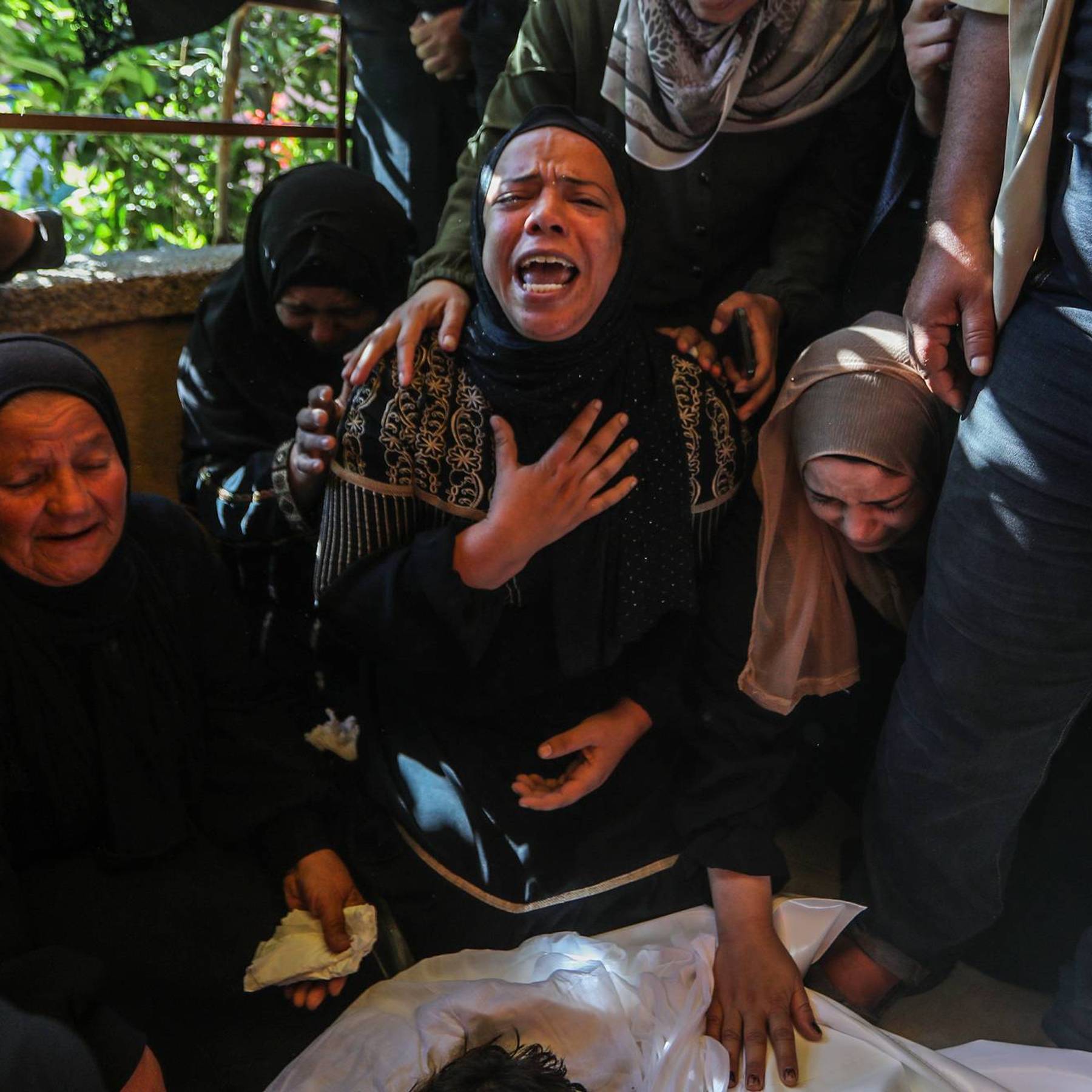
Relatives mourn as the bodies of those killed in an Israeli airstrike targeting the Es-Sabra neighborhood in southern Gaza City are brought to Al-Shifa Hospital in Gaza City, Palestine, on October 9, 2026.
(Photo by Saeed M. M. T. Jaras/Anadolu via Getty Images)
“Accountability cannot be swept under the rubble.”
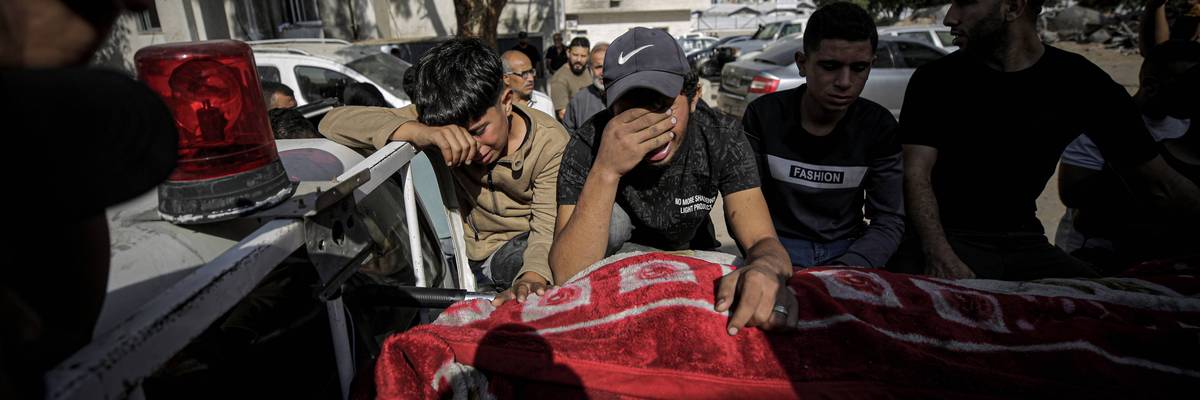
A coalition of more than 100 humanitarian, human rights, and civil society organizations on Friday said that the Gaza ceasefire agreement signed one year ago exists in “name only” amid continued Israeli attacks on the enclave.
The groups noted that Israeli military operations over the last year have killed at least 1,400 Palestinians, including more than 300 children, despite a supposed ceasefire being in effect.
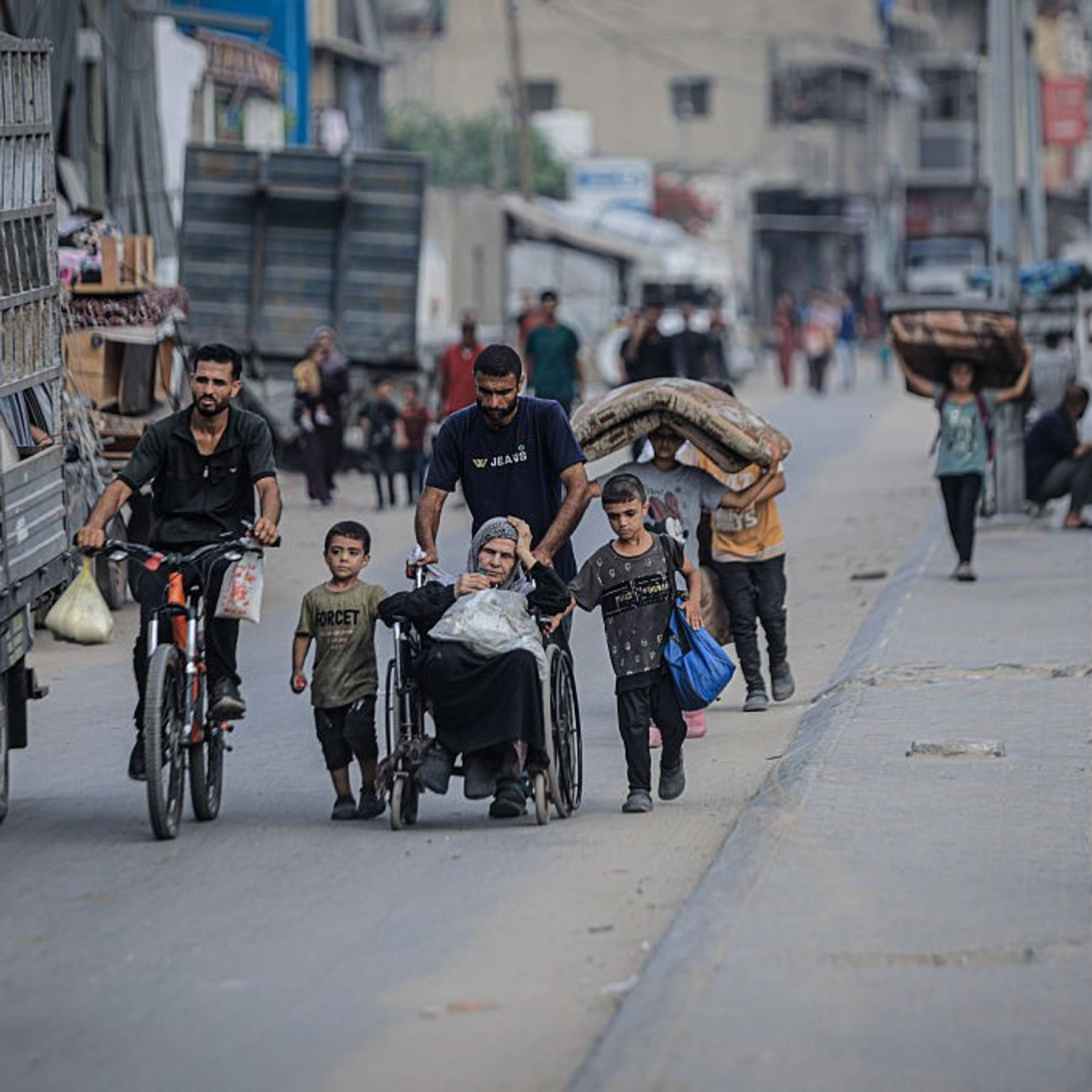
The Israeli military has also pushed Palestinians “into an increasingly small and overcrowded area” by moving forces beyond the withdrawal line agreed to in the ceasefire plan, the groups said.
In addition to outlining the toll on civilian life, the groups also pointed to extensive damage to civilian infrastructure, pointing to recently published satellite images showing “neighborhoods reduced to rubble, homes flattened, and agricultural land razed.”
Jan Egeland, secretary general of the Norwegian Refugee Council, called it “utterly shameful” that so little had improved for Gaza residents since the ceasefire went into effect last year.
“Families are still being forced to make impossible choices,” said Egeland, “between sheltering in damaged and dangerous buildings or living in tents facing unbearable temperatures. Israeli restrictions are still preventing the required equipment or materials, which are the only ways for communities to begin rebuilding their lives.”
Inger Ashing, CEO of Save the Children, said the reality on the ground in Gaza shows that “a ceasefire is meaningless if children are still being killed and families are still unable to rebuild their lives.”
“Governments that backed this agreement must use their influence to stop the killing and ensure children can access food, healthcare, shelter, and education,” Ashing emphasized. “Gaza’s children have a right to safety and a future. Governments have the power to help secure both, and they must use it.”
Agnes Callamard, secretary general of Amnesty International, similarly called upon the international community to take responsibility not only for helping Palestinians, but also punishing Israel for violating the ceasefire plan.
“Accountability cannot be swept under the rubble,” said Callamard. “The recovery and future of Gaza cannot be separated from a framework grounded in international law, justice, and the rights of victims. The persistent failure to hold Israel accountable and press Israel to comply with the International Court of Justice’s binding orders continues to fuel the atrocity crimes on a mass scale against Palestinians.”
The groups’ assessment of the ceasefire deal was echoed by Shayna Lewis, deputy director of Win Without War, who said on Friday that “the genocide continues” one year after the agreement was signed.
Lewis pointed the finger directly at US President Donald Trump for the continued suffering, arguing that the ongoing bloodshed in Gaza is his “peace plan in action.”
“The ceasefire agreement failed to include any real accountability mechanisms that might restrain the Israeli government’s aggression in Gaza,” Lewis said. “Moreover, his administration refuses to hold [Israeli Prime Minister Benjamin] Netanyahu’s government to its word on ending bombings, withdrawing troops, or expanding humanitarian access.”
Trump has wrongly tried to blame the student-led movement on migrants and Islam. In reality, it is propelled by the gradual disappearance of any prospect of a stable future
A placard reads “The youth shouts, the state brings out its weapons” during a student protest in eastern France, on 8 October 2026 (Jean-Christophe Verhaegen/AFP)
Originating in a low-income suburb of Paris, the movement spread like wildfire across France, quickly expanding to encompass university students and union activists.
While the movement is mostly made up of teenagers who have overwhelmingly remained peaceful, state authorities have responded with disproportionate force.
Rather than insisting on moderation, Interior Minister Laurent Nunez called for police to use the full range of intermediate weapons, such as tear gas and rubber bullets, as necessary on protesters. More than 6,000 people, mostly minors, have been arrested in the crackdown.
Predictably, since day one, the mainstream media has worked hand-in-hand with the Macron government to discredit the movement, showing almost exclusively the more sensationalist, scary and spectacular images from the protests.
New MEE newsletter: Jerusalem Dispatch
Sign up to get the latest insights and analysis on Israel-Palestine, alongside Turkey Unpacked and other MEE newsletters
The coverage aims to create the false impression that “France is burning”, presenting the protests as “violent riots”, rather than as a largely peaceful student movement with legitimate and reasonable demands.
Deliberately ignored in such coverage is the fact that the vast majority of the countless protests, blockades, marches and actions in recent days, including the massive nationwide demonstration this week, remained non-violent.
Media coverage has also portrayed the students as being manipulated or instrumentalised by the France Unbowed party and its leader, Jean-Luc Melenchon, who is running in next year’s presidential election. They have presented no evidence for this claim, beyond the party’s support for the youth movement.
Enter Trump
Beating the French media and politicians – from the centre left to the far right – at their own Islamophobic and racist games, US President Donald Trump recently weighed in by publicly blaming the protests on uncontrolled mass migration and Islam.
Such outlandish accusations hardly deserve a response, and in France, they have essentially been ignored as the ravings of a despicable lunatic.
Students complain about severe underfunding of the public education system, even as the state spends billions of dollars in subsidies on private, usually Catholic schools
There are, however, two other explanations. Trump and others in his entourage might genuinely believe in the Great Replacement fantasy that “European civilisation” is being eclipsed by Muslims and Arabs, who want to build some sort of “Islamist caliphate”. Alternatively, he might simply be playing to his largely xenophobic Maga base, ahead of November midterms that his party is poised to lose.
But Trump’s grotesque posturing as a defender of “western civilisation” against invading hordes from the Global South does not seem to have swayed many people, even in the US, likely because few American voters have much interest in the politics of France.
Despite vast disparities across the nation, the primary grievances of students include the often appalling physical conditions of their crumbling schools; severe and systematic shortages of teachers and support staff; and overcrowded classrooms, where the numbers of students sometimes exceed available chairs.
In general, students complain about severe underfunding and governmental neglect of the public education system, even as the state spends billions of dollars in subsidies on private, usually Catholic schools – a cruel irony for a supposedly secular state whose elected officials constantly brag about the strictness of French laicite.
Restless generation
Another reason cited by student protesters is the strong and mounting anxiety they feel about their prospects for the future. This deep-seated fear crystallises around a state-run web portal called “Parcoursup”, which launched in 2018 with a goal of sorting out university applications.
Widely viewed as a failure, the automated selection system pits students against other students for their choice of universities and specialisations, in a process that has been criticised as opaque and discriminatory.
While France legally guarantees postsecondary access for students who have completed high school, 320,000 students were left without a place last year by the Parcoursup platform. In a nation of just 2.26 million high school students, many of whom will not even apply for higher education, the ratio is worrying.
And this is just the tip of the iceberg. History shows that behind concrete, practical and material demands, and beyond massive and spectacular popular demonstrations, larger problems often loom.
What we are hearing in France is an expression of generalised anxiety over the future, both individually and globally, and a rejection of the state of affairs at home after a decade of disastrous Macronism, which has broken the country and greatly aggravated inequalities, deepening the divide between rich and poor, and thrusting most of the population into ever-worsening precarity.
Researchers have suggested that young people in Generation Z will be worse off than their parents, facing a more difficult path to adulthood than any generation in half a century. Such is the future many of these student protesters see in front of them.
Add to this their emerging awareness that AI is killing and replacing many of the jobs that were supposed to be theirs, and there is no need to see the hands of shadowy “Islamists” behind this historic movement.
The views expressed in this article belong to the author and do not necessarily reflect the editorial policy of Middle East Eye.
Dr Alain Gabon is Associate Professor of French Studies and chair of the Department of Foreign Languages & Literatures at Virginia Wesleyan University in Virginia Beach, USA. He has written and lectured widely in the US, Europe and beyond on contemporary French culture, politics, literature and the arts and more recently on Islam and Muslims. His works have been published in several countries in academic journals, think tanks, and mainstream and specialized media such as Saphirnews, Milestones. Commentaries on the Islamic World, and Les Cahiers de l’Islam. His recent essay entitled “The Twin Myths of the Western ‘Jihadist Threat’ and ‘Islamic Radicalisation ‘” is available in French and English on the site of the UK Cordoba Foundation.
In this photograph released by the U.S. Navy, military planes stand on the flight deck of the Nimitz-class aircraft carrier USS Theodore Roosevelt, July 4, 2024, in the South China Sea. [AP Photo/Seaman Ryan Holloway
The Trump administration is preparing a major new bombing campaign against Iran, according to reports published Wednesday and Thursday by The Atlantic, Axios, NBC News, the Wall Street Journal and the New York Times.
While reports published in the last two weeks indicated that Trump was making plans to attack after the November 3 midterm elections, the latest reports indicate Trump could launch the attacks even sooner. “The White House has asked the Pentagon to develop strike options against Iranian targets that could be exercised ahead of the midterms,” The Atlantic magazine reported Wednesday afternoon, citing two administration officials.
Next month’s election takes place amid broad popular opposition to the war. Trump said in his September 22 address to the United Nations that Iran was “waiting to see how I do in the midterm election.” He added: “I gave absolutely no credence and will not give credence to the election when it comes to Iran. It doesn’t even enter my mind.”
Axios reported Wednesday evening that, according to US officials, the Pentagon had instructed the military command in charge of the war “several days ago to conclude preparations for resuming major combat operations in Iran.” If combat resumes, Axios wrote, it is “expected to include massive bombing of Iranian energy, infrastructure and nuclear targets” and would most likely involve the Israeli military.
Trump said of a deal with Iran at a rally in San Antonio, Texas, on Wednesday night: “I think the deal isn’t really something that I want to do, but they’re willing to offer us anything to stop.”
The new bombing would intensify the war of aggression that the United States and Israel opened against Iran on February 28. According to official figures cited by Al Jazeera, the US and Israeli militaries had killed 3,527 people inside Iran by August 28 without bringing down the government in Tehran or forcing it to accept Washington’s terms. Washington has answered each failure by preparing a larger assault.Available from Mehring BooksThe struggle against imperialism and for workers’ power in IranA pamphlet by Keith Jones
The New York Times wrote Thursday that the Pentagon, “on Mr. Trump’s orders,” had developed plans to strike “Iran’s drone and missile arsenal, energy facilities and other military sites.” The plans “center on a short, intense campaign lasting about three days,” the Times reported.
“U.S. military commanders are ready to begin larger operations in the coming days, in case the president shifts again,” according to the Times.
Axios reported Thursday that US officials had briefed the chief of staff of the Israeli military, Lt. Gen. Eyal Zamir, on Tuesday about preparations “for the possibility of resuming major combat operations against Iran within the next three weeks.”
“A fresh aircraft-carrier strike group and Marine expeditionary unit are steaming toward the Middle East, and the Pentagon is weighing sending additional air-defense equipment and munitions to bases in the region,” the Journal reported Thursday, citing officials familiar with the planning. The Associated Press reported October 1 that the United States was “dispatching roughly 9,000 troops aboard a group of ships.”
The assault on Iran is part of a worldwide offensive by American imperialism, aimed above all at Russia and China. Since the 1979 revolution that overthrew the US-backed Shah, Democratic and Republican administrations alike have sought to restore American control over Iran. The war is the latest in more than three decades of US wars, from the 1991 Persian Gulf War through the invasions of Afghanistan in 2001 and Iraq in 2003.
Vice President JD Vance led a discussion of the plans at the Camp David presidential retreat on October 2, the Times reported.
US forces have not struck inside Iran since September 1, but they have kept up the blockade of Iran’s ports. The US military said October 5 that it had turned back 130 commercial ships since reimposing the blockade on July 14, and that it had “destroyed 13 commercial vessels” over the previous 12 weeks.
The war has killed 19 US service members and wounded more than 800, the Associated Press reported Tuesday.
In an AP-NORC poll conducted September 24-28, 69 percent of Americans said the war in Iran “has not been worth fighting.”
All factions of the US political establishment support the aim of subjugating Iran to US domination. The Democratic Party has criticized Trump’s conduct of the war on the grounds that he has failed to secure the interests of American imperialism. Senator Mark Kelly, an Arizona Democrat, declared on ABC’s “This Week” on September 27: “We can’t leave the Strait in the hands of the Iranians.”
Senator Ruben Gallego, another Arizona Democrat, said Defense Secretary Pete Hegseth “is one of the most important reasons why we’re losing this war in Iran,” in a CNN interview his office released October 1.
These criticisms are accompanied by accusations that Trump has been insufficiently aggressive toward Russia and China. House Minority Leader Hakeem Jeffries said on the House floor on September 16, referring to Russian President Vladimir Putin: “Many of us wonder why the President has been so reluctant to aggressively confront the bully of Eastern Europe.” Senate Minority Leader Chuck Schumer and seven other Democratic senators said in a September 22 statement, ahead of a state visit by Chinese President Xi Jinping: “We can’t let President Xi leave stronger than when he arrived. That is not diplomacy, it’s weakness.”
Jeffries and 114 other House Democrats voted for the National Defense Authorization Act on December 10, 2025, and 149 House Democrats voted on January 22, five weeks before the war began, for an $839 billion military appropriations bill. On September 16, 58 House Democrats, including former House Speaker Nancy Pelosi, voted with the Republicans for a bill giving Trump new powers to impose tariffs aimed at Russia and extending sanctions on Iran through 2031.
The Pentagon on Thursday confirmed plans to livestream an execution by firing squad in December—a revelation that came amid fresh calls for the United States to end the death penalty after Tennesseebotched two attempts to kill Christa Pike with injections of pentobarbital.
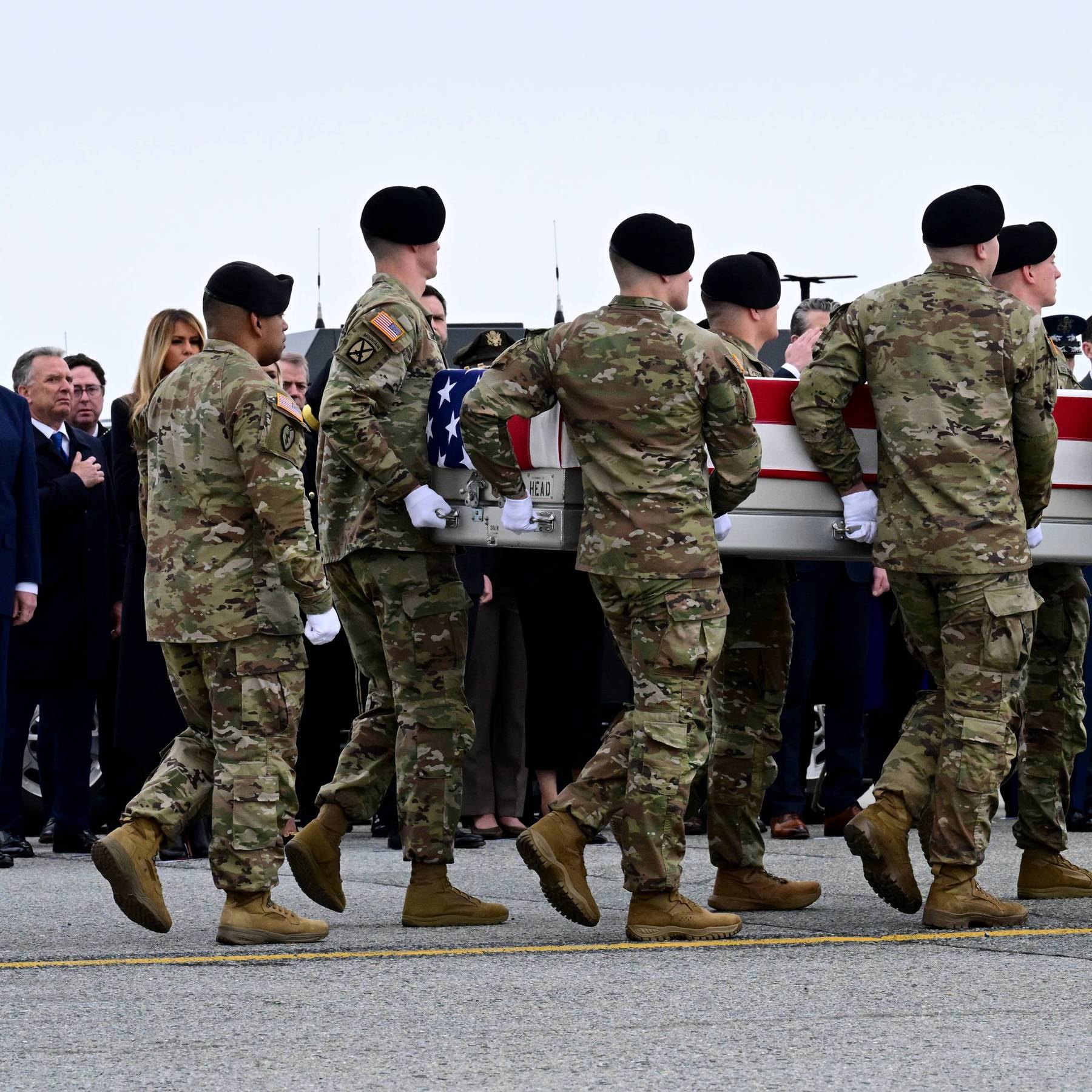
The US Army announced Wednesday that Nidal Hasan—a former military psychiatrist convicted of killing 13 people and injuring 32 more in a 2009 mass shooting at Fort Hood—will be executed at the Texas base at 1:00 pm Central Standard Time on December 3.
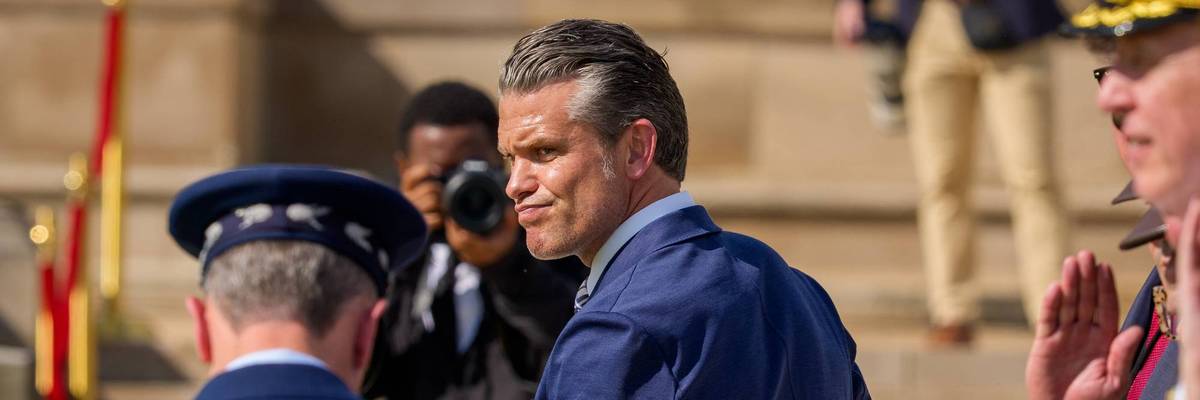
Secretary of Defense Pete Hegseth told the right-wing outlet Real America’s Voice News that “we’ll make sure that people are able to watch it, that it’s public, because people need to understand that… there’s serious consequences for these types of things.”
Then, other outlets, including The Associated Press, reported that “officials in the Pentagon clarified Thursday that the execution would be livestreamed and that more details would follow.”
The Washington Postreported that “if Hasan’s execution is carried out, it would mark the first US military execution since April 13, 1961, when Army Pvt. John A. Bennett was hanged after being convicted of rape and attempted murder, according to the nonprofit Death Penalty Information Center, which monitors capital punishment. The military’s last known firing squad execution was carried out by ‘musketry’ on November 9, 1945.”
Hegseth’s comments and the subsequent confirmation from the US Department of Defense were met with disgust and outrage.
“What a sick man,” former National Nurses United communications director Charles Idelson said of the Pentagon chief on social media. “A. Executions have never been proven to be a deterrent to capital crimes. B. The spectacle of a public execution is morbid, it recalls the public lynchings so common during the Jim Crow era. C. If the shooter was white, I don’t believe this would be public.”
Hasan is a US citizen born to Palestinian immigrant parents. Just before he opened fire on soldiers who were set to deploy to Afghanistan, he shouted “Allahu akbar,” an Arabic phrase commonly used by Muslims that translates to “God is great!”
While some critics called out Hesgeth, Obama administration speechwriter-turned-podcaster Jon Favreau took aim at Vice President JD Vance, who recently published a book about his faith journey, including his conversion to Catholicism. Favreau said that “I would like to hear our Catholic vice president explain why they’re intentionally choosing to broadcast the death of a human being for the entire world to see, including children.”
Producer and journalist Simon Thompson wrote: on social media: “Just when I think this administration couldn’t get any worse. Livestreaming executions by firing squad? This administration, a Christian administration apparently, is making a snuff movie and treating it like a [pay-per-view] event.”
Journalist Séamus Malekafzali similarly said, “Content with having desensitized the American public by broadcasting faceless images of Iranian sailors dying and buildings full of people leveled to the soundtrack to Halo, the government is now moving to live-streaming snuff films, faces and all.”
“I know people hate when people make comparisons to American adversaries, but this is literally what ISIS did, save for the live aspect,” he added. “Those executions were also done on camera under the auspices of nominally government institutions, just a different kind of government.”
Although Trump left office the first time after overseeing a federal execution spree, American Immigration Council senior fellow Aaron Reichlin-Melnick said Thursday, “Jesus Christ, I didn’t think we’d actually get to the ‘public executions’ stage of Trump’s project to roll back the last 100 years of societal development.”
Corbin Trent, co-founder of Justice Democrats, suggested it could backfire for the Republican administration. He wrote: “I’m completely in favor of this. I think more of this would go a long way to ending the death penalty.”
Even Israel’s traditional allies are distancing themselves from Netanyahu, Modi’s India has embraced the country.
Add Al Jazeera on Google
Israeli Prime Minister Benjamin Netanyahu greets his Indian counterpart Narendra Modi during a meeting with the Indian community at the Tel Aviv Convention Center in the Israeli city, on July 5, 2017 [Gil Cohen-Magen/AFP]
New Delhi, India – The United Kingdom, France, Australia, New Zealand, Canada and Norway had already banned the entry of Bezalel Smotrich, Israel’s far-right finance minister, who had advocated the ethnic cleansing of Palestinians in Gaza and the annexation of the occupied West Bank.
But in September 2025, as the European Union was planning bloc-wide sanctions against him and his fellow far-right colleague Itamar Ben-Gvir that it would eventually announce late that month, Smotrich was welcomed with garlands and a multi-city trip to India. In New Delhi, he signed a trade deal; in Mumbai, he visited the stock exchange; and in Gujarat – the home state of Indian Prime Minister Narendra Modi – he travelled to a new investment hub.
As Israel was conducting its genocidal war on Gaza, bombing and killing dozens on the very days he was visiting India, New Delhi was ready to expand business with Israel like never before. For decades, India had been one of the world’s staunchest supporters of Palestine, and Europe one of Israel’s closest backers. India’s position has shifted firmly since 2014, when Modi and his Hindu majoritarian Bharatiya Janata Party came to power. But analysts say the optics of Smotrich’s visit underlined something even more dramatic: At a time when even Europe, traditionally seen as backing Israel, has veered away from Prime Minister Benjamin Netanyahu’s government, the genocidal war on Gaza appears to have escalated India’s embrace of Israel.
In February this year, Modi visited Israel as Netanyahu – who faces an arrest warrant from the International Criminal Court over war crimes carried out in Gaza – faced growing isolation in the international arena.
“You are a great friend of Israel. You are more than a friend. You are a brother,” Netanyahu told Modi when both leaders addressed the Israeli parliament in Jerusalem.
Indian Prime Minister Narendra Modi and Israeli Prime Minister Benjamin Netanyahu attend an innovation conference with Israeli and Indian CEOs in Tel Aviv, Israel, on July 6, 2017 [Oded Balilty/Reuters]
How October 7 attack changed tones
Three years of Israeli attacks have killed at least 74,000 Palestinians, including at least 21,000 children. That is about one in every 30 people, or 3 percent of the pre-war population.
Historically, India has argued that diplomacy and dialogue are the way forward to resolve conflicts – whether between Russia and Ukraine, the US and Iran, or Israel and Palestine. New Delhi has maintained that war doesn’t solve anything.
But investigations by Al Jazeera and other reporting have revealed that New Delhi exported weapons to Israel during the ongoing genocidal war on Gaza. Meanwhile, under Modi, India has become Israel’s largest weapons buyer.
Just hours after the Hamas-led attack on Israel on October 7, 2023, India’s Modi unequivocally condemned the “terrorist attack”, adding that he was “deeply shocked”. When he visited Israel in February this year, Modi referred to the Mumbai attacks in 2008, carried out by Pakistani fighters, which New Delhi has blamed on the Pakistani government. “Like you, we have a consistent and uncompromising policy of zero tolerance for terrorism with no double standards,” Modi said.
Analysts believe that the framing of Israel as a country under attack has helped Modi justify pushing India closer to it. For decades, much of the politics of Modi’s BJP “has hovered around Islamist expansionism or Islamic terrorism”, said Rasheed Kidwai, a political analyst in New Delhi.
Download our app for breaking news, personalized updates, and instant alerts.
“So it helps [in relationship with Israel],” Kidwai said, pointing to the link between Modi’s Israel policy and his domestic politics. “Take this relationship as an extension of the domestic narrative that one sees in India.”
The Indian Hindu right has long supported the ideology of Zionism, analysts note. Modi’s BJP has roots in a philosophy, Hindutva, which ultimately seeks to transform India into a Hindu nation and a natural homeland for Hindus anywhere in the world – similar to Israel’s view of itself as a Jewish homeland.
Since the October 7 attacks on Israel, Kidwai noted, “the anti-Muslim sentiments fill in that block in India.” This feeling is, of course, coupled with “pragmatism in New Delhi because Israel is a potent international player”.
Navdeep Suri, a former Indian diplomat who served as ambassador to Egypt and the United Arab Emirates, told Al Jazeera that people-to-people ties are also a central pillar of the India-Israel relationship, “particularly within a section of Indian society that has strong admiration for the muscular policy that Israel adopts”.
Time and again, there have been calls from within Indian right-wing echelons for Modi to adopt more Israel-like policies, from clampdowns in Indian-administered Kashmir to attacking neighbouring Pakistan.
Suri noted that a shift towards Israel predates the ongoing genocidal war in Gaza. “Under PM Modi, a relationship that was largely covert or under the carpet has become a much more open relationship,” the former Indian diplomat said.
“There has been a recognition in Delhi that Israel has been a very strong defence and intelligence partner,” he told Al Jazeera, referring to another pillar of the bilateral relationship. “There’s a genuine convergence when it comes to the perceptions on security.”
India’s Prime Minister Narendra Modi (C) signs the guestbook after paying respect at the Hall of Remembrance as his Israeli counterpart Benjamin Netanyahu (L) and Dani Dayan, chairman of the Yad Vashem Holocaust Memorial Museum, watch during Modi’s visit to the museum in Jerusalem on February 26, 2026 [Ilia Yefimovich/AFP]
India ‘should take principled positions’
Even several of Israel’s closest European allies have moved from criticism of the genocidal war on Gaza and expansive illegal settlements in the occupied West Bank to concrete measures. At least 11 European countries and Canada have imposed trade measures against products from illegal Israeli settlements. Many have imposed sanctions on settlers and networks accused of conducting pogroms against Palestinians in the occupied West Bank, as well as on ministers like Smotrich and Ben-Gvir.
India, for its part, has avoided anything more than homilies and mild opposition to war and West Bank attacks.
Diplomatically, New Delhi still backs a two-state solution and has called for aid access and peace in the region. Suri, the former Indian diplomat who served in the Middle East, said New Delhi “should be able to take more principled positions on these things”.
However, from his experience in office, Suri added, “there is such a close alignment at the political levels between the governments in Israel and India that there is a reluctance [in India] to criticise Israel.
“That reluctance manifests in various aspects,” Suri explained to Al Jazeera. “The refusal to criticise the settlers’ attacks; refusal to criticise the brutal use of force in Gaza; refusal to criticise the attack on Iran and point out violation of international norms.”
Unlike Western countries, India’s current leaders “lack that kind of dynamic thinking and are rather far more dogmatic”, said Kidwai, the political analyst.
Now Playing01:56 How has Israel’s genocide changed Gaza?
Next00:46 Video said to show Mali army in Kidal after retaking city
Show more videos
India’s shift and Modi’s calculus
Netanyahu’s disruptive and fatal assault on Gaza has drawn ire from even the White House in Washington, where Israel enjoys bipartisan support. United States President Donald Trump has previously threatened to cut off support for Israel’s bombing of Lebanon – even while signing off on huge weapons sales to Israel.
However, nothing has moved Modi’s bonhomie with Israel’s Netanyahu.
In fact, Modi’s February visit on the eve of the joint US-Israel attacks on Iran appeared “as almost a personal favour to Netanyahu by boosting his image as an international statesman just as Israeli election campaigning is getting under way”, Max Rodenbeck, Israel/Palestine programme director at the Washington-based International Crisis Group, had told Al Jazeera.
Such an act would have been unthinkable from an Indian leader in previous decades.
In 1948, India opposed the creation of Israel. A relationship with Israel was once frowned upon in New Delhi – a legacy of India’s anti-colonial past – though the two had clandestine ties since at least the 1970s.
India backed the 1975 United Nations General Assembly resolution calling Zionism a form of racism, was the first non-Arab nation to recognise the Palestine Liberation Organization, and was among the first in the world to recognise Palestinian statehood. It only established diplomatic ties with Israel in 1992, and though governments since then slowly built up relations, Modi, in 2016, was the first Indian PM to visit that country.
The Congress party that’s now in opposition, but ruled India for most of its post-independence period before Modi, also viewed its support for Palestine as helpful with Muslim voters – only Indonesia and Pakistan have more Muslims than India – said Kidwai. Modi’s Hindu-first politics, by contrast, thrives on othering Indian Muslims.
“Modi’s party believes it stands to gain nothing from a pro-Palestine posture,” Kidwai told Al Jazeera. “Instead, Modi has sought to link the attack on Israel with the so-called reign of terror and Islamic extremism and make a case against Muslims – and within those realms lies the justification of everything.”
Israeli politician Moshe Feiglin, the leader of Israel’s Zehut party, who has a clear path to a seat in the Knesset in the upcoming election, has said in a new interview that it would be “moral” to kill babies in Gaza.
Feiglin made headlines last year when he declared that every child and every baby in Gaza is the “enemy,” a viewpoint he doubled down on in an English-language interview that was published by The Jerusalem Post on Monday.
Feiglin said in the interview that he personally doesn’t want to see babies killed even though he thinks it is “morally” the right thing to do, and that he would prefer all Palestinians to be expelled from Gaza instead.
“I’m saying again again because I’m Jewish and I guess I’m a bit a little bit weak morally. I don’t want to see babies killed, okay? Morally, that should have been done, because of everything I explained. So, but because … I’m Jewish with a soft heart, I would open the borders and let them all go, but no one can stay. And it has to be a part of the Jewish land, Jewish state,” he said.
Elsewhere in the interview, Feiglin said it was “100%” a Jewish point of view to “wipe out” Gaza, expel all the Palestinians, and annex Gaza and the West Bank. He labeled all of Gaza as the “enemy,” not just Hamas.
“The baby that would be born — I’ll say something very tough now, excuse me for saying it — the baby that will be born tomorrow in Gaza, the Arab baby. Notice I’m not saying Hamas, I’m not saying Palestinian … the enemy is Gaza, not Hamas. The baby that will be born in Gaza tomorrow will do exactly the same — God forbid — to your baby that would be born in Jerusalem,” he said.
Feiglin served in the Knesset from 2013 to 2015 as a member of Prime Minister Benjamin Netanyahu’s Likud party and founded Zehut in 2015. Zehut is now running on a joint electoral list with Religious Zionism, the party led by Finance Minister Bezalel Smotrich, another outspoken proponent of the ethnic cleansing of Gaza. Feiglin holds the No. 2 spot on the joint list, and recent polling has shown the alliance clearing the electoral threshold needed to win seats in the Knesset.
‘It will take generations to recover from the harm that has already been done over the past three years,’ MSF says
İlayda Çakırtekin, AA.com,
05 October 2026
İSTANBUL
Doctors Without Borders (MSF) said on Monday that Israel was continuing its genocide in Gaza and was “progressively asphyxiating” the region, urging governments to take immediate action.
In a statement, MSF said the conditions for the people’s survival were being “systematically destroyed” through sustained violence, “deliberate” blockade of essential supplies and the destruction of healtcare as well as infrastructure.
“In the past year, the physical trapping of people in Gaza has been made increasingly definitive by the establishment of Israel’s Yellow Line,” the French medical charity said.
Recalling that it was originally presented as temporary, MSF noted that the line is now reinforced by military positions, berms and ongoing demolitions while it has continued to move west, “squeezing people into a smaller and smaller area.”
MSF said people risk being shot by Israeli forces when approaching the area, while its teams continue to treat those wounded by gunfire nearby.
“The Yellow Line cannot be treated simply as a line on a map,” said Amande Bazerolle, MSF head of emergency response in Gaza. “It has become a mechanism of encirclement and ethnic cleansing, while cutting communities off from the infrastructure, healthcare, water and other essentials they need to survive.”
MSF said violence was not only confined to the areas around the “Yellow Line,” reporting having treated over 1,200 cases of violent trauma across Gaza in June and July alone.
It recalled that MSF teams treated more than 200,000 trauma cases over the past three years while Israel’s military offensive killed over 74,000 people.
The organization said overcrowding and limited access to clean water, sanitation, shelter and healthcare are contributing to the spread of disease. Its teams also treated over 11,000 skin disease cases and 1,500 chickenpox cases in June and July.
It also pointed to the dramatic deterioration of access to healthcare over the past three years as hospitals run out of basic supplies and patients unable to access essential medicines and treatment.
“Restrictions on essential supplies, such as engine oil and spare parts, are also crippling the infrastructure needed to keep hospitals, ambulances and water systems running, with generators already breaking down and water-trucking operations reduced,” the statement said.
It added that the crisis is not limited to Gaza as violent occupier attacks, military operation and raids on homes, displacements as well as home demolitions escalated rapidly across the occupied West Bank and East Jerusalem.
“It will take generations to recover from the harm that has already been done over the past three years, and in the preceding decades, while the excruciating consequences of Israel’s ongoing genocide are still being felt every day,” Bazerolle said.
She warned that Israel carried out destruction, displacement and deprivation “with impunity” while such practices became “normalised.”
“Governments must act now to ensure Israel stops the destruction and killing, prevents ethnic cleansing, and stops denying Palestinians the means of survival,” Bazerolle added.
In this photograph released by the U.S. Navy, military planes stand on the flight deck of the Nimitz-class aircraft carrier USS Theodore Roosevelt, July 4, 2024, in the South China Sea. [AP Photo/Seaman Ryan Holloway]
The events of the past week leave no doubt that the Trump administration, w complicity of the entire US political establishment, is preparing a major escalation of the Iran war. Having failed to achieve its objectives through a massive bombardment and then a blockade of the country, the White House is preparing a new and desperate gambit, potentially involving the deployment of ground troops or even the use of nuclear weapons.With the complicity of media and Democrats, Trump prepares major escalation of Iran war
The greatest danger is the chasm between the scale of what is being prepared and the public’s awareness of it. One month before the 2026 midterm elections, Trump’s conspiracy to escalate the war is being greeted with a wall of silence by the US media—which devoted just minutes to the war in this weekend’s Sunday talk shows—and by the Democratic Party, which has done nothing to alert the public to the renewed onslaught against Iran that the administration is preparing.
On September 22, US President Donald Trump threatened in his speech before the United Nations to “annihilate the Islamic Republic, and do it quickly.” His threat followed a secret White House meeting, reported by the journalist Seymour Hersh on June 10, at which Trump spoke “about a nuclear option that could perhaps bring a quicker end to the war.”
These threats cannot be dismissed as bluster. Trump is the president of the United States and has already killed thousands of people in the months-long bombardment of Iran. The forces now converging on the Persian Gulf give him the means to carry out his threats. Nothing would be more dangerous than complacency.
After seven months of war, US imperialism has failed to achieve its aims of dominating the Strait of Hormuz, militarily defeating Iran and overthrowing its government. The administration is improvising, desperately seeking a way out of the political disaster the war has produced. But its improvisation is driven by the logic of events. American imperialism cannot accept defeat in the Persian Gulf, and each failure becomes the basis for an ever-greater escalation.
Last week, the Wall Street Journal and the Associated Press reported that the White House had sent a third aircraft carrier to the Middle East. The USS Theodore Roosevelt left San Diego on September 27, followed the next day by the amphibious assault ship USS Makin Island with about 2,200 Marines. They will join the carrier USS George Washington and more than 50,000 US troops deployed across the region.
Trump “has told aides he expects to resume bombing Iran after the November midterms,” the Journal reported September 25. He was briefed in August on options including “sending in ground forces to seize Iranian islands near Hormuz,” the Journal reported last month.
The deployment of amphibious assault ships along with thousands of Marines is particularly ominous. They are the means of seizing territory, and the next phase of the war may include landings on the islands near Hormuz, at the Kharg Island oil terminal or at Iran’s nuclear sites.
The administration’s top national security officials met Friday at Camp David, the presidential retreat, “to discuss next steps in the Iran war and the Saudi-Houthi conflict in Yemen,” Axios reported that night. The last similar meeting, Axios noted, was in June 2025, just days before Israel and then the United States attacked Iran. The new US military deployments targeting Iran parallels a renewed offensive by Saudi Arabia, supported by the United States, in Yemen.
The Pentagon confirmed Sunday that all US bombers at Britain’s Fairford air base, used for strikes on Iran, had been flown back to the United States. The withdrawal followed British Prime Minister Andy Burnham’s claim on September 30 that Iran “played a part” in an alleged plot against the base. The unproven allegation provides a ready-made pretext for escalation.
The war against Iran is part of a broader global offensive by US imperialism, centrally targeting Russia and China. Significantly, the plans to expand the Iran war accompany a sharp intensification of NATO’s war on Russia in Ukraine, which threatens at any moment to erupt into direct warfare between nuclear-armed states.
Each president since the 1979 Iranian revolution, Democratic and Republican, has worked to bring Iran back under American domination. Trump’s war against Iran is the latest stage of a 35-year offensive to subjugate the Middle East and Central Asia: the Gulf War of 1991, the invasions of Afghanistan and Iraq, the destruction of Libya, the proxy war in Syria and Israel’s genocide in Gaza.
Amid overwhelming popular opposition to the war and the ensuing surge in the cost of living, particularly of energy, the Democratic Party is expected to make significant gains on November 3. It is determined, however, to ensure that any electoral repudiation of Trump does not lead to a let-up in the drive by US imperialism in the Middle East.
![A view of Sde Teiman prison in the Negev desert near the Gaza Strip, in Negev, Israel on January 10, 2025. [ Mostafa Alkharouf - Anadolu Agency]](https://i0.wp.com/www.middleeastmonitor.com/wp-content/uploads/2026/01/image-4-2.png?fit=920%2C613&ssl=1)





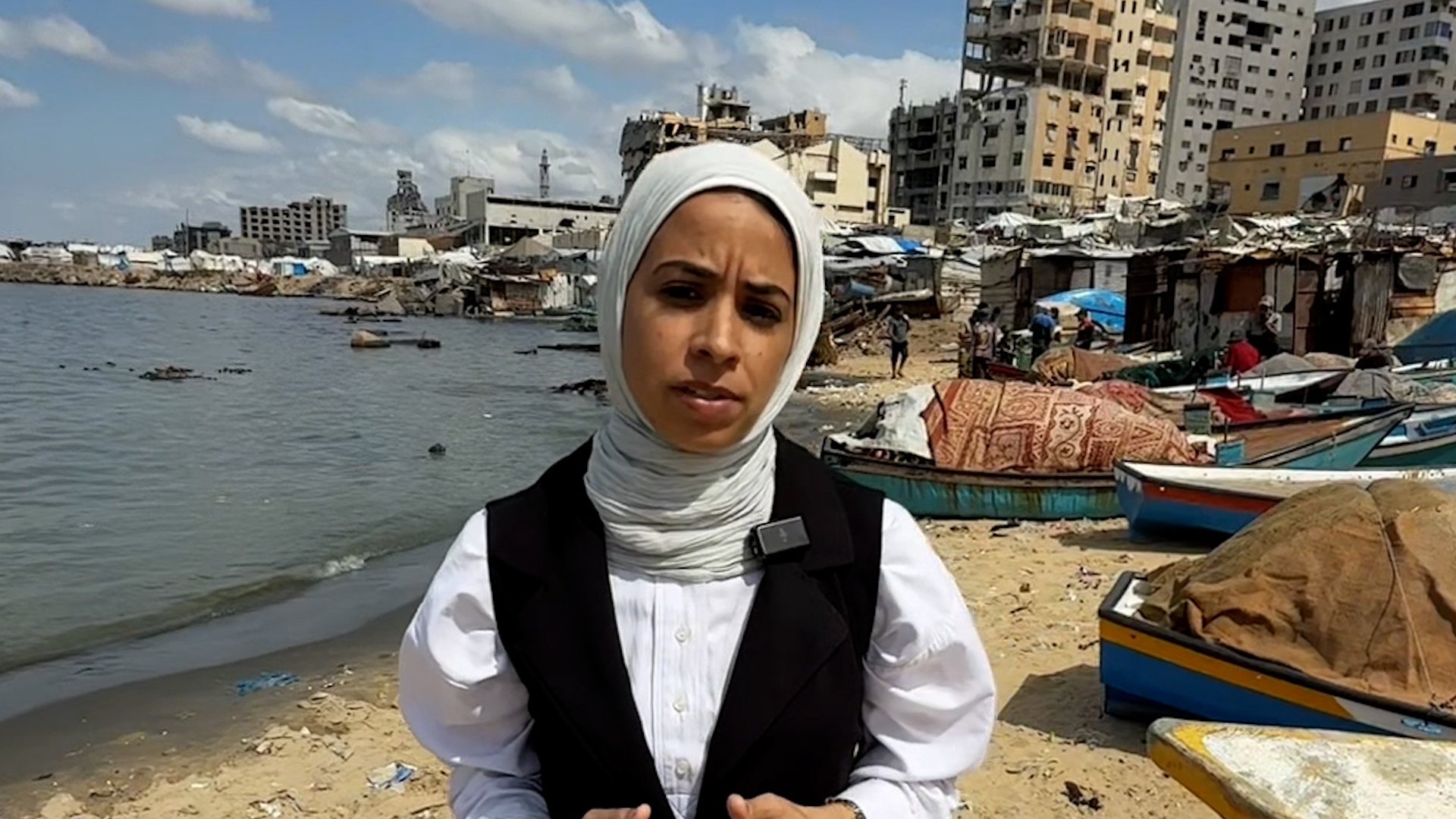
 How has Israel’s genocide changed Gaza?
 Video said to show Mali army in Kidal after retaking city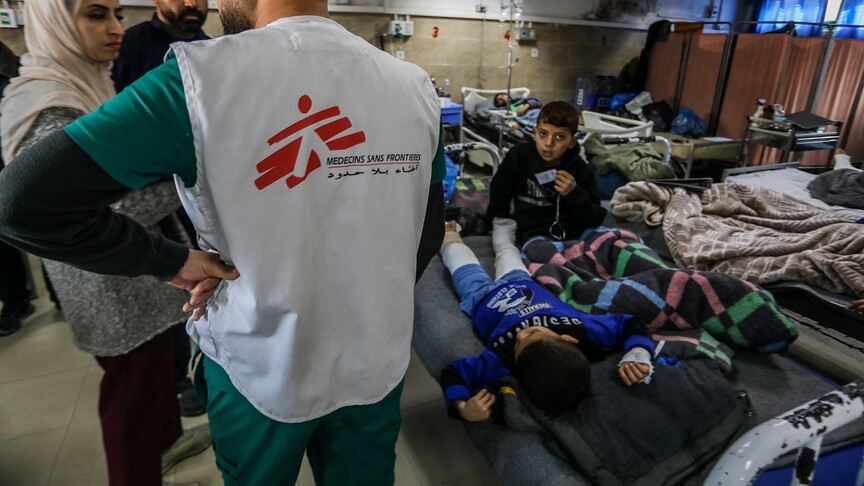


You must be logged in to post a comment.