Trump, Iran announce ceasefire agreement

June 15, 2026

Andre Damon@Andre__Damon, 15 June 2026
Workers clear debris near an apartment building damaged in an Israeli airstrike in Dahiyeh, Beirut’s southern suburbs, Lebanon, Sunday, June 14, 2026. [AP Photo/Bilal Hussein]

The United States and Iran announced a ceasefire agreement Sunday, suspending, for now, a war that the Trump administration began on February 28 and that has killed thousands of people. “The Deal with the Islamic Republic of Iran is now complete,” President Donald Trump wrote on Truth Social, ordering the lifting of the US naval blockade of Iran and the reopening of the Strait of Hormuz. “Ships of the World, start your engines,” he wrote. “Let the oil flow!”

While the terms of the settlement remain undisclosed, this much is already clear: The Trump administration achieved none of the aims for which it went to war. It set out to overthrow the Iranian government, destroy its nuclear program, break its military and seize the Strait of Hormuz. It accomplished none of this.

Trump responded to the failure by denying he had ever sought to overthrow the Iranian government. “As far as regime change, I never cared about regime change,” he told the Wall Street Journal on Sunday.

In reality, his administration had spent the entire year trying to bring the government down. Early on, it funded and armed protesters inside Iran. “We sent guns to the protesters, a lot of them,” Trump said in April.

When this failed, the United States and Israel turned to assassination. The opening strikes on February 28 killed Iranian Supreme Leader Ali Khamenei, Revolutionary Guard commander Mohammad Pakpour and Defense Minister Aziz Nasirzadeh, along with much of the military command. The government did not collapse. Khamenei’s son Mojtaba succeeded him, and it was the younger Khamenei’s national security council that approved Sunday’s deal.

There followed a bombing campaign across Iran that has killed at least 3,468 people, by the Iranian health ministry’s count, and a naval blockade imposed on April 13. American warplanes destroyed water reservoirs in Sirik that supplied more than 20,000 people and fired on oil tankers running through the blockade, killing three Indian sailors aboard the Settebello this week. After two months, the blockade failed to force Iran’s surrender, and the Strait of Hormuz remained shut by Tehran’s decree until Sunday.

No agreement with American imperialism is worth the paper it is written on. In 2015, the Obama administration signed the nuclear accord known as the Joint Comprehensive Plan of Action (JCPOA), under which Iran accepted strict limits on enrichment and intrusive inspections. Iran kept to its terms—the International Atomic Energy Agency certified as much in report after report—but in May 2018 Trump tore the agreement up anyway, calling it a “horrible, one-sided deal.” Obama, who signed that accord, said Sunday it was “doubtful that any agreement that arises is going to be significantly different or a significant improvement from the deal that we had in the first place… before we, the United States, pulled out of it.”

The pattern was repeated last year. Trump announced a “Complete and Total CEASEFIRE” in June 2025 to end the Twelve-Day War between Israel and Iran. That truce held until February 28, when the United States and Israel broke it, launching the war that has now been paused.

Even as he proclaimed peace on Sunday, Trump threatened to resume the war. The New York Times reported that in a phone call he said he would “restart military attacks on Tehran” if Iran failed to reach a final nuclear accord, or else make the United States “the guardian of the Middle East” in exchange for 20 percent of the region’s revenues.

The agreement is a 60-day ceasefire, to be signed Friday in Geneva by Vice President JD Vance and Iranian officials. The future of Iran’s nuclear program and the lifting of US sanctions are left to negotiations over those 60 days, and the text has not been released.Available from Mehring BooksThe struggle against imperialism and for workers’ power in IranA pamphlet by Keith Jones

Trump’s claims about the settlement were as hollow as his account of the war. He boasted that the Strait of Hormuz would be “permanently toll free,” but the memorandum suspends tolls for only 60 days. Iran charged no tolls before the war—the deal restores the prewar status quo. Trump said the inspection of Iran’s nuclear material could wait: “We’ll get the nuclear dust later on when we’re ready to go in and do it… there’s no rush.”

The agreement nominally covers Lebanon, where Israel has waged a parallel war that has killed more than 3,700 people. Hours before the announcement, Israel bombed the southern suburbs of Beirut, killing three, in a strike that nearly wrecked the deal. Trump said Israeli Prime Minister Benjamin Netanyahu had shown “no judgment” and told all sides to “stand down.” Israel, which was not a party to the talks, has not endorsed the agreement, and Israeli politicians across the spectrum denounced it.

The Democrats’ response to Trump’s moves toward an agreement with Iran centered on the accusation that he had failed to secure the interests of US imperialism. Democratic Representative Seth Moulton of Massachusetts called the emerging terms “basically a surrender document from Donald Trump to the supreme leader of Iran.”

House Minority Leader Hakeem Jeffries, on NBC’s “Meet the Press,” complained that the war had left the United States worse off: “Things aren’t better for us. They’re worse. In fact, Iran is stronger right now.”

A warning must be made. Whatever the failures and setbacks of the past four months, American imperialism will only redouble its efforts to dominate the Middle East and the world by military force.

The World Socialist Web Site is the voice of the working class and the leadership of the international socialist movement. We rely entirely on the support of our readers. Please donate today!

With One Strike, Netanyahu Tries To Kill Two Peace Deals

June 15, 2026

Netanyahu knew exactly what he was doing when he defied Trump’s red line and struck Beirut this morning

by Trita Parsi | Jun 15, 2026 | 0 comments

Reprinted with permission from Trita Parsi’s Substack.

It’s important to understand that, contrary to Donald Trump’s quip to Barak Ravid that Netanyahu has “no f***ing judgment,” the Israeli Prime Minister knows exactly what he is doing: With a set of strikes at the Dahiyeh neighborhood in Beirut, he is trying to kill both the pending US-Iran peace deal and the fragile peace between Israel and Lebanon that would come with it.

There is a further strategic dividend. Netanyahu is also seeking to preempt Iran’s attempt to establish a new regional deterrence equation – one in which attacks on Beirut, and potentially on Lebanon more broadly, would trigger a direct Iranian response against Israel. By striking now, he is not merely targeting an adversary; he is challenging the emergence of a regional order that would constrain Israel’s freedom of military action.

Netanyahu even posted a video on his Twitter bragging about the attack:

תקפנו בדאחייה בביירות מטרות טרור של ארגון הטרור חיזבאללה. ישראל לא תסבול ירי לשטחה pic.twitter.com/wVARFCkDQe

— Benjamin Netanyahu – בנימין נתניהו (@netanyahu) June 14, 2026

The exchange of fire between Israel and Iran last week was about far more than retaliation. After Israel defied President Trump and struck Beirut’s Dahiyeh neighborhood, Iran responded by attacking Israel directly – the first time Tehran had launched strikes on Israel in response to an Israeli attack on Lebanon. Israel defied Trump once more and retaliated against Iran, prompting another Iranian response, after which Israel confined its next strike to southern Lebanon rather than Beirut.

The cycle reflected Iran’s attempt to establish a new regional equation: that attacks on Lebanon would no longer be cost-free for Israel, but would carry the risk of direct Iranian retaliation. For the first time in decades, a major regional power was seeking to place hard-power constraints on Israel’s freedom of military action beyond its borders.

Having reestablished its own deterrence, Tehran was now attempting to establish extended deterrence to its partners as part of a broader effort to rebuild its forward-defense posture. Israel, unsurprisingly, viewed this as a direct challenge to its long-standing freedom of maneuver and moved quickly to prevent the new doctrine from taking hold.

Of course, extended deterrence can not be established through a single exchange of fire. At a minimum, it would require several rounds of action and reaction before either side accepted it as a new reality. And even then, it would never be foolproof. Tehran understands that its purpose cannot simply be to eliminate Israeli strikes on Lebanon, but to force Israeli leaders to think twice before authorizing them by attaching a new and significant cost: the likelihood of direct Iranian retaliation.

It was therefore clear that Netanyahu had not abandoned the fight. Yet for several days, even as Hezbollah and Israel continued to exchange fire, he refrained from striking Beirut’s southern suburbs and testing Iran’s new red line.

But today, just hours before President Trump was expecting Iran to sign a memorandum that would end the U.S.-Iran war and reopen the Strait of Hormuz, Netanyahu crossed both Tehran’s and Trump’s red line: keeping Beirut out of the conflict.

Netanyahu clearly timed this for maximum impact. With a single set of strikes, Netanyahu may have advanced two goals at once – torpedoing Trump’s peace deal and preventing the emergence of a new deterrence equation that would impose meaningful constraints on Israel’s military operations in Lebanon.

A diplomat involved in the talks told Fox News that: “This is a clear attempt by Israel to sabotage the President’s deal and drag the United States back into war.”

Trump, meanwhile, is once again reportedly “pissed off” at Netanyahu. In a Truth Social post, the president declared that the strike on Beirut “should not have happened,” while pointedly questioning whether it was a proportionate response to Hezbollah’s latest attack on Israel.

“Israel has the right to defend itself against threats,” Trump wrote, “but the attack it was responding to was very small and meaningless. Nobody was hurt, injured, or killed, and it should not disrupt this important process.”

The statement was notable not merely for its criticism of Netanyahu, but for what it implied: that Israel’s strike was neither militarily necessary nor diplomatically prudent at a moment when a potential breakthrough with Iran appeared within reach.

Washington is frustrated by Tehran’s insistence that Trump rein in Israel, even as American officials believe Iran has failed to similarly restrain Hezbollah. It is equally frustrated that a deal it urgently wants with Iran is now being held hostage by Israel, ironically at the request of the Iranians, since it is Tehran that insists that any ceasefire must be region-wide and prevent Israel from having the ability to restart the war.

That frustration is understandable. But Washington must also recognize a basic reality: the only way to delink a U.S.-Iran agreement from the Israel-Lebanon conflict is to delink the United States itself from Israel’s recurring resort to military escalation.

As long as Israel retains the capacity to drag the United States back into conflict, Tehran will see little reason to separate diplomacy with Washington from the wars Israel chooses to start and pull the US into.

Indeed, the principal reason Tehran insists on a region-wide ceasefire is to deny Israel the ability to draw the United States into yet another war with Iran itself.

If Trump were to clearly establish that the United States would neither participate in nor defend an unjustified Israeli military escalation, Tehran might no longer see the need to link a U.S.-Iran accord to the Israel-Lebanon front.

Such a calculated distancing from Israel would serve American interests in any case. But the need for it has rarely been more apparent than it is today.

Trita Parsi is the Executive VP of the Quincy Institute for Responsible Statecraft and an award-winning author. Washingtonian Magazine has named him one of the 25 most influential voices on foreign policy. Noam Chomsky calls him “one of the most distinguished scholars on Iran”

Visit Trita Paris’s Substack and subscribe.

𝐖𝐡𝐚𝐭 𝐂𝐡𝐞 𝐆𝐮𝐞𝐯𝐚𝐫𝐚 𝐒𝐭𝐨𝐨𝐝 𝐅𝐨𝐫

June 14, 2026

— Nasir Khan

Today is the birthday anniversary of Che Guevara (June 14, 1928)

Che Guevara was and is an inspiration to all those who fight against and oppose imperialists and their lackeys throughout the world. The centre of that power was and still is the United States, the ‘leader’ of the warmongers, war criminals, weapon industries and its allies who further the cause of American hegemony and perpetuate the power of colonial powers like Israel.

Che Guevara and Fidel Castro stood against the gangster policies of the United States and its wars of aggression. For instance, the ethnic cleansing in Palestine that is still going on is because of the power Zionists wield in America and direct the course of US foreign policies.

In Iran, America and Britain toppled the democratic government of Dr Mossadegh in 1953 and reinstated the pliant regime of the Shah. The Washington rulers did the same with the socialist-democratic government of Allende in Chile. America has been the patron of all the right-wing dictatorships in Latin America.

The people who stood up against the American domination in the western hemisphere were Fidel Castro and his comrades like Che. They were the people who liberated Cuba from the Batista dictatorship and heroically upheld the cause of freedom and independence of the island nation despite all the efforts of the US to destroy the Cuban revolution and the CIA’s hundreds of secret plans and attempts to kill Fidel Castro.

—-

“Whenever death may surprise us, let it be welcome if our battle cry has reached even one receptive ear and another hand reaches out to take up our arms.”

—Che Guevara

US military begins construction of ‘huge base’ outside Gaza to oversee Trump’s colonization plan

June 14, 2026

While talks in Cairo center on disarming Hamas, Israel has kept killing hundreds of Palestinians without accountability and is expanding its control over the strip despite an alleged ‘ceasefire’

News Desk, The Cradle, JUN 13, 2026

(Photo credit: REUTERS/AMMAR AWAD)
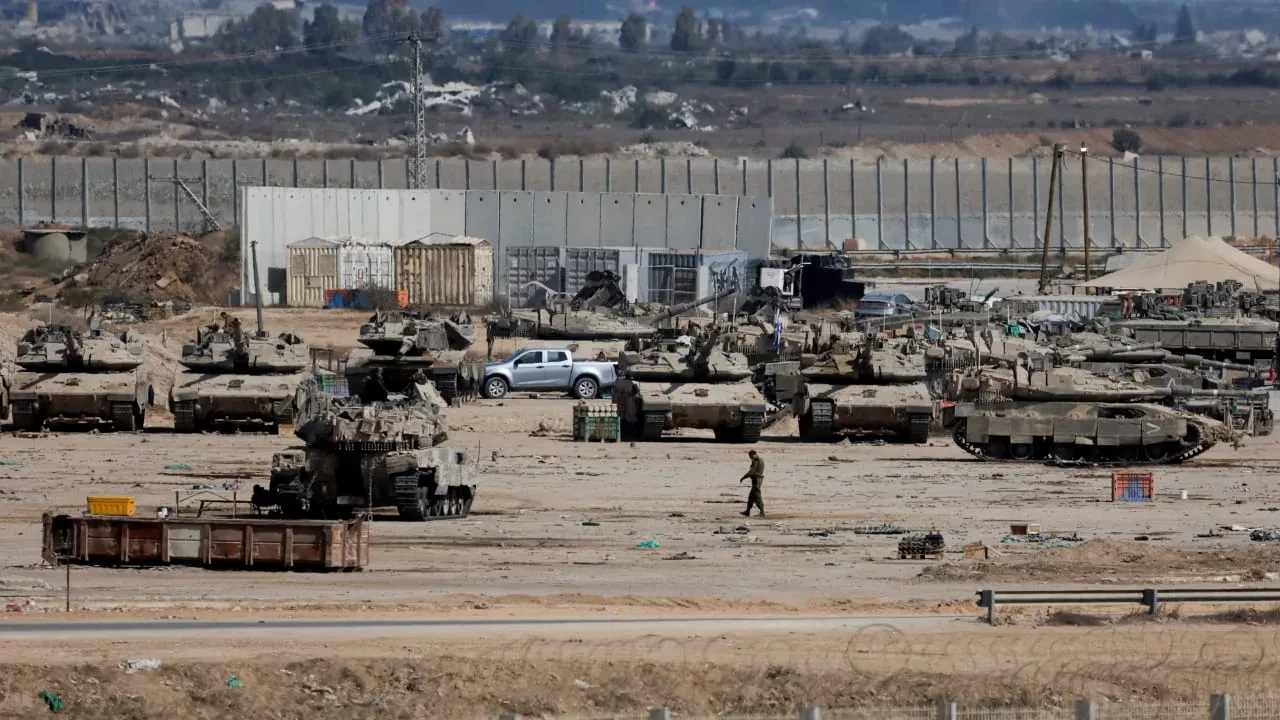
The US military has begun constructing a “huge base” on the Gaza envelope to implement US President Donald Trump’s plan to “take over” the strip, Israel Hayom reported on 13 June.

The US base, being built near the Israeli military base at Reim settlement, will function as both a military and civilian headquarters for the organizations and forces arriving in the area to implement the Trump plan.

In February 2025, Trump proposed a US “takeover” of the Gaza Strip. 

The plan called for the forced displacement of approximately two million Palestinians to neighboring lands and redeveloping the territory as a high-tech business and tourism hub that Trump said would become the “Riviera of the Middle East.”

The new base will replace the US facility in the Israeli town of Kiryat Gat, established under the direction of Trump’s Board of Peace in the wake of the October 2025 “ceasefire.”

Representatives from more than 24 countries staffed the multinational headquarters and were tasked with overseeing the ceasefire and the entry of humanitarian aid.

The Kiryat Gat base was also meant to direct the operations of an International Stabilization Force (ISF) tasked with providing security in Gaza.

However, Israel has continued to severely restrict the entry of aid into Gaza, recently suspending all shipments, while the ISF has yet to be formed.

After the US and Israel launched a war on Iran on 28 February, the overwhelming majority of personnel left Kiryat Gat.

Israel Hayom noted that plans for the new US base include the construction of a tower intended for the command and control of forces in the field. 

The US military has already begun issuing tenders to private contractors, including for the supply of mobile structures to house personnel and serve as a headquarters until permanent buildings are established at the site.

The new base will also host troops from the ISF if it is formed. 

Five countries previously agreed to send forces to Gaza, namely Indonesia, Morocco, Kazakhstan, Kosovo, and Albania. Bangladesh, Pakistan, and Azerbaijan have expressed a willingness to participate but have made no firm commitment.

Currently, no countries are willing to send troops due to fears that their forces will be tasked with disarming the Palestinian resistance, as well as concerns about the ongoing US-Israeli conflict with Iran.

The construction of the new US base is being fully coordinated with the Israeli Defense Ministry. Military officials expect the base to be constructed and staffed within a few months.

The report comes as talks continue between Hamas and Israel via negotiators in Cairo. 

Israel persists in demanding Hamas disarmament before progressing the ceasefire, while simultaneously continuing to kill Palestinians in Gaza without consequences and expanding its occupation rather than withdrawing from the territory seized during the genocide.

Israel has killed nearly 1,000 Palestinians in Gaza and expanded its control of the strip from 50 percent to at least 60 percent since the ceasefire.

One security source told Israel Hayom that the “chance of renewed fighting in the Gaza Strip is greater than the possibility that Hamas will actually be disarmed through a diplomatic agreement.”

“Demilitarizing Gaza became a bigger aim than stopping Israel’s genocide; such is the absurd truth,” wrote author Ramona Wadi.

While “colonial expansion as the reason behind Israel’s genocide in Gaza, utterly exposed for the entire world to see, [it] is never discussed by the international community. On the contrary, the Board of Peace promotes it and sets the conditions that justify colonialism instead of preventing it, using an extension of the same narrative Israel used to destroy Gaza,” Wadi added.

What’s happening in the occupied West Bank?

June 14, 2026

The Israeli military has continued its attacks across the occupied West Bank as its troops have stormed several villages and towns, the Wafa news agency reports.

Aljazeera, 14 June 2026

Here’s a quick look at the latest developments:

  • Israeli forces carried out multiple raids across the West Bank, including home searches and detentions, according to Palestinian security and local sources.
  • In the Bethlehem area, troops raided the village of Husan and the city of Beit Sahour. No arrests were reported in Husan, but in Beit Sahour, a family was told their son, Mohammad Mousa Dar al-Asas, must surrender to Israeli authorities.
  • In the Salfit area, Israeli forces stormed the town of az-Zawiya at dawn, searched several homes and detained a young man identified as Khaled Shukeir.
  • Seven Palestinians, including a father and his four sons, were arrested in the town of Anata, east of Jerusalem.
  • Israeli forces demolished residential and agricultural structures north of Jerusalem. Bulldozers operated by the Israeli military razed property belonging to the al-Zawahra family in the Bedouin community of Khallet al-Sidra in the town of Mikhmas.INTERACTIVE - Demolitions in West Banks refugee camps-west bank - August 3, 2025-1757488525

32m ago

 (08:43 GMT)

Houthi

Palestinian elites have been collaborating against the resistance for a century

June 14, 2026

Joseph Massad

MEE, 12 June 2026

The Palestinian Authority’s war on the resistance is the continuation of a collaboration with colonialism that Palestinian elites have practised for more than a century

A member of the Palestinian Authority security forces fires tear gas towards a protest against their security operation in Jenin in the occupied West Bank on 16 December 2024 (Jaafar Ashtiyeh/AFP)

A member of the Palestinian Authority security forces fires tear gas towards a protest against their security operation in Jenin in the occupied West Bank on 16 December 2024 (Jaafar Ashtiyeh/AFP)

Amid the ongoing Israeli genocide in Gaza and its terror in the West Bank and Lebanon, the Palestinian and Lebanese resistance must confront not only their Israeli enemy, but also their own elites who are collaborating with that enemy.

The historical reaction to colonial conquest and imperial control across much of the world has been threefold.

First, radical resistance by the majority of poor peasants and workers, and by a substantial sector of the urban middle class.

Second, cooperation and compromise by much of the wealthy elite and some sectors of the middle class, justified by the belief that such cooperation would lead to colonial concessions and avert an outright confrontation in which the colonised would surely be the losers.

Third, complete subservience and collaboration by another sector of the wealthy, hoping to receive preferential treatment over rival elite cooperators and compromisers, based on the logic that the persistence of colonial control benefits the elite as local agents of colonialism.

New MEE newsletter: Jerusalem Dispatch

Sign up to get the latest insights and analysis on Israel-Palestine, alongside Turkey Unpacked and other MEE newsletters

These responses have been recorded across the colonised and post-colonial world – from Asia to Africa.

The Arab world – including the Palestinians – has been no exception.

Pre-Nakba Palestinian society responded to British colonialism and Zionist settler-colonialism by following this script exactly

Indeed, pre-Nakba Palestinian society responded to British colonialism and Zionist settler-colonialism by following this script exactly, as it would after the Nakba.

Since the early 1920s, while divided among themselves, wealthy Palestinian elites broadly agreed that resisting Zionist colonialism required cooperation with the British occupiers.

The strategy was led by the Arab Executive and the Supreme Muslim Council, both dominated by major wealthy Jerusalem, Jaffa and other urban Palestinian families.

They were opposed by other elites, mainly a rival Jerusalem family and other families marginalised within these two bodies, who supported full collaboration with the British and the Zionists.

The latter, with Zionist funding and support, established the “Agricultural Party” (al-Hizb al-Zirai), the National Muslim Society and later al-Hizb al-Watani (the National Party).

The majority of peasants and workers chose resistance, with substantial support from the urban middle classes.

The independence movement

Middle-class intellectuals were so dismayed by Palestinian elites – whether the outright smaller group of collaborators or the larger group of “cooperators” – that they formed Hizb al-Istiqlal (the party of “independence”) in 1932.

The party supported peasant and worker resistance and launched a civil rights movement of demonstrations, boycotts and civil disobedience.

A story of a 1930s uprising against British colonialism is key to understanding Gaza today

Read More »

Hamdi al-Husayni of Gaza (unrelated to the elite Jerusalem Husayni family) and other young Istiqlal leaders were inspired by other anti-colonial struggles, especially Gandhi’s activities in India.

Emulating Gandhi, the Istiqlal Party leadership, including Husayni and Akram Zuaytar, a young schoolteacher from Nablus, Izzat Darwazah, a nationalist publicist and teacher, and the lawyer Awni Abd al-Hadi, who was also a secretary of the elite-controlled Arab Executive after 1928, called for non-cooperation with the British rulers of Palestine.

They borrowed tactics, including Gandhi’s March 1930 month-long Salt March across India, as well as boycott and civil disobedience.

Soon after forming the party, Istiqlal leaders openly criticised elite Palestinians for complicity with British rule.

At the party’s first mass meeting in December 1932, its leaders called for independence, denounced Britain and Zionism, and called for cooperation with newly independent Iraq, Saudi Arabia and Egypt.

Accusing the Arab Executive of passivity, they demanded its leaders refuse cooperation with the British Mandatory authorities.

The following year, Istiqlal’s capacity for mobilisation peaked, as British suppression, Zionist apartheid, evictions of Palestinian peasants and Jewish immigration to Palestine reached unprecedented levels.

Resistance and repression

Failing to persuade the Arab Executive to adopt non-cooperation, the Istiqlal Party mobilised demonstrations in October 1933, protesting British policy and Jewish colonisation.

The executive eventually relented and backed calls for demonstrations, despite “opposition” from the collaborationist elite faction.

Thousands marched across Palestine, including 8,000 in Jaffa alone – among them 600 Palestinians from Wadi al-Hawarith whose lands were taken over by Zionist colonists a few months earlier. Rampaging British police killed 26 unarmed demonstrators in Jaffa and Haifa and injured dozens more.

Palestinian elites began to organise political parties that competed for British favour and to curry favour with the Zionists

British authorities, wealthy elite Palestinians of both camps and Zionists all saw a common interest in suppressing the Istiqlal Party.

Their combined efforts succeeded in all but destroying what had become the most popular Palestinian anti-colonial party by 1934-1935.

Still, younger Palestinian activists, including former members of Istiqlal and the Congress for Youth, intensified their calls on Palestinian elites to abandon their futile efforts to win British support against Zionism and adopt non-cooperation instead.

By 1936, Palestinian workers launched multiple strikes that elite leaders opposed, costing them further support among the youth movement, the rump of the Istiqlal Party and its working-class supporters.

As elite politicians continued talks with the High Commissioner about establishing a legislative assembly, new meetings – led by Istiqlalists such as Hamdi al-Husayni and joined by urban workers – culminated in a major general strike declared on 19 April 1936.

Lasting for six months, it remains the world’s longest general strike to date.

Highly mobilised Palestinians, led by Istiqlalists and youth groups, including the Young Muslim Men’s Association, moved to the forefront of political life.

Their momentum compelled elite politicians – among them the Mufti Amin al-Husayni, who had initially opposed the strike – to establish the Arab Higher Committee a week later as a coalition to replace the defunct Arab Executive, which had been dissolved in August 1934 amid elite factionalism.

The Higher Committee sought to moderate demands for civil disobedience, while the British High Commissioner reminded the elite leadership of their role in restraining the masses.

The 1936 Palestine strike: A history of Palestinian revolt

Read More »

The mufti’s reticence to support the general strike and the broader Palestinian revolt lasted well into the summer of 1936.

Meanwhile, Palestinian elites began to organise political parties that competed for British favour and, in the case of the collaborationist National Defence Party, to curry favour with the Zionists.

Amid the commitment to resistance among peasants, workers and middle-class youth and intellectuals, and the elite’s continued cooperation and collaboration, the Palestinians’ Great Revolt erupted and lasted until its final brutal suppression by the British and their Zionist colonial settlers in 1939, with more than 8,000 Palestinians killed.

Palestinian elite collaborators formed a counter-revolutionary militia called the “peace bands” to kill Palestinian revolutionaries.

The defeat of the Revolt led to the 1948 Nakba nine years later.

Oslo’s heirs

These dynamics re-emerged in the post-Nakba period.

The children of expelled Palestinian peasants and workers, alongside some of the middle classes, launched a new political struggle in the late 1950s, which transformed into an armed resistance movement by the late 1960s.

Elite Palestinians would soon co-opt the movement, ostensibly to help it gain “international” legitimacy, first by interceding with Arab regimes to recognise the Palestine Liberation Organization (PLO) in 1974 as “the sole legitimate representative of the Palestinian people”.


Follow Middle East Eye’s live coverage of Israel’s genocide in Gaza


Funding from Arab regimes soon domesticated the PLO.

Replicating the strategy of the pre-Nakba Palestinian elite, the PLO sought to cooperate with the US and Europe by “moderating” its demands for Palestinian liberation from Zionist settler-colonialism to calling instead for a “two-state solution”.

Secret channels with the US and open channels with Europe ultimately diminished the erstwhile PLO agenda from total liberation to demanding a mini-state on a fraction of Palestine’s territory.

But if the PLO after 1974 replicated the role of elite Palestinian cooperators and compromisers between the 1920s and 1940s, the signing of the 1993 Oslo accords transformed the PLO yet again into that other part of the 1920s-1940s elite – including the Agricultural Party and the National Defence Party – who collaborated outright with the Zionists and their colonial sponsors.

The Palestinian Authority (PA) today is a mirror image of these collaborator forces.

Meanwhile, Yasser Arafat’s PLO and the successor PA have tried to extinguish all attempts to reinvigorate the struggle championed by the Istiqlal Party and the peasant revolutionaries, which was initially espoused by the PLO’s “rejectionist front” since the mid-1970s, as well as by Hamas, Islamic Jihad and what remained of the PLO left since the late 1980s and early 1990s.

This culminated in the coup against the elected Hamas government in 2007, organised by the US, Israel and the PA, echoing how a similar coalition ganged up against the Istiqlal Party in the 1930s.

The PA security forces played the role of the 1930s “peace bands”. This is the situation that the Palestinian people have found themselves in since 1993. 

Their struggle today continues to be one between a collaborationist PA and a pro-liberation resistance intent on ending settler-colonialism.

The Gaza genocide is how Israel and its western sponsors have responded to the Palestinian resistance, while their PA proxy has intensified its war and repression against the resistance in the PA-controlled West Bank areas during the genocide.

The PA is aided in its efforts by the Israeli occupation army and armed Jewish colonial settlers.

But just as the collaborating and cooperating Palestinian elites of the 1920s to 1940s were unable to halt the resistance, the current PA collaborators are failing at their assigned task of vanquishing the spirit of resistance among Palestinians.

It is this ongoing resistance to Israel and its western sponsors, and the collaborating PA and the wealthy Palestinian elites who support it, that will ultimately decide the future of the Palestinian people.

After more than a century of collaboration and resistance, and Israel’s refusal to halt its genocide, the scales continue to tip persistently in favour of the resistance.

Who Is the Aggressor? Turning Obstacles into Threats

June 13, 2026

June 10, 2026

Obstacles to the aggressors’ expansion and occupation in the Middle East are Iran, Hamas, Hezbollah, the Houthis and Shia militia in Iraq. They are presented as “threats” rather than defenders of their dignity, sovereignty and land.

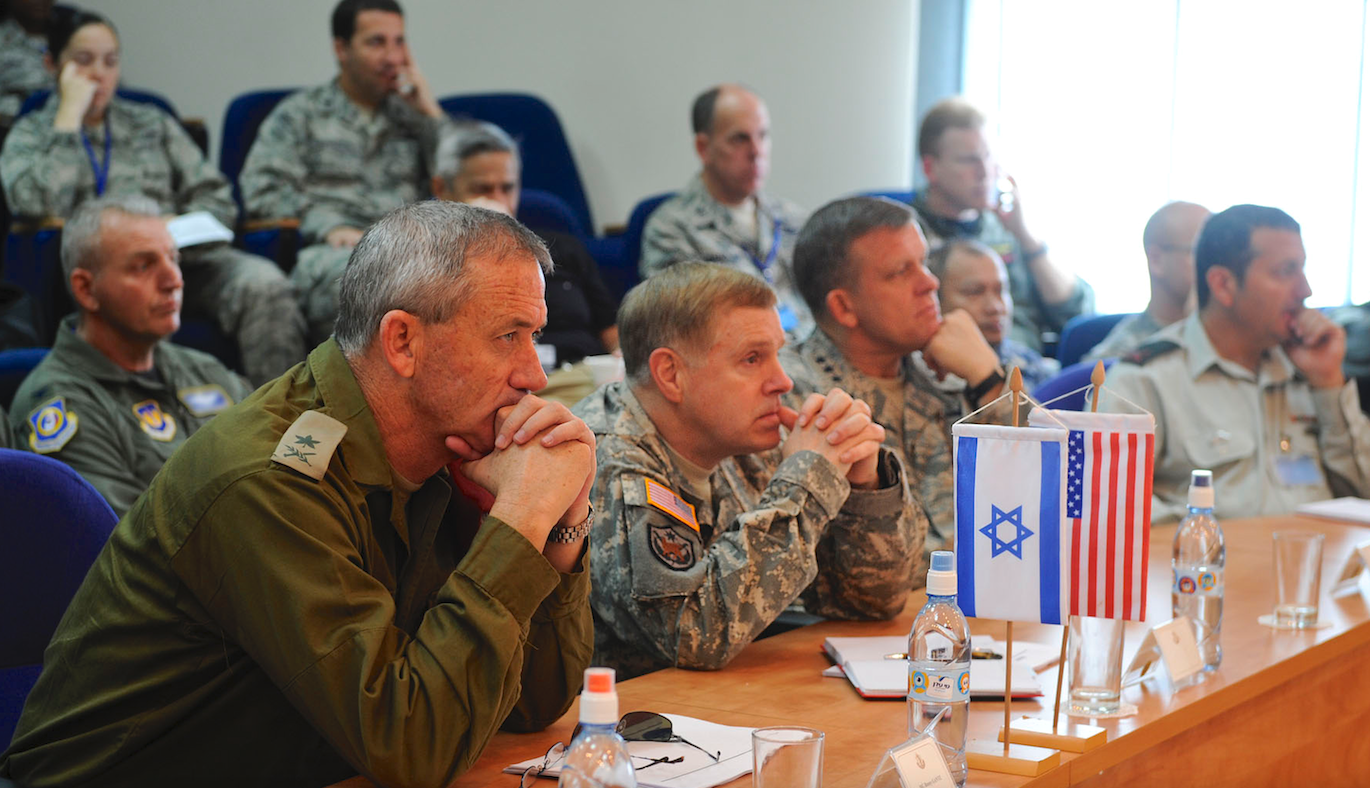
U.S.-Israel biennial command post simulation and training exercise, October 2010. Then IDF Deputy Chief of Staff Lt. Gen. Benny Gantz and Deputy EUCOM Commander U.S. Lt. Gen. John D. Gardner (IDF/Flickr)

By Joe Lauria
Special to Consortium News

If you understand who the aggressor is, you are on your way to understanding the mad and perilous times we live in.

Once you get that, what you’ve been taught all your life starts to lose its hold on you. 

Establishment education and media try to confuse you. Independent media like Consortium News try to clarify.

Establishment education and media portray the aggressor as the defender, and the victim as the threat. Consortium News endeavors to show you the “threat” is really an obstacle. An obstacle to aggression and occupation. An obstacle to expansion. Locally and globally.

Few would agree with aggression, paid for with your taxes in a so-called democracy. So obstacles to aggression become threats you’re supposed to be afraid of. Offensive action is made to appear as “defense” to protect you from the “threat.” 

There’s nothing new in this.  The Romans dressed up their imperial aggression as self-defense against fake threats. Rome provoked tribes, first in Italy and then Gaul and Germania, into forming alliances to protect the tribes’ sovereignty, and then Rome presented these alliances as “threats” that had to be destroyed, justifying war against them.

Rome would also provoke an adversary into invading or launching an attack to obtain the casus belli needed to start a pre-planned war. For instance, Roman ally Masinissa of Numidia repeatedly raided Carthage to provoke it into finally responding militarily in violation of a treaty it had with Rome. The empire used this as a pretext for total destruction and annexation — even though Carthage, an obstacle to Roman expansion, posed no realistic, existential threat.

In the earlier U.S. imperium, Mark Twain explained it this way:

“The statesmen will invent cheap lies, putting the blame upon the nation that is attacked, and every man will be glad of those conscience-soothing falsities, and will diligently study them, and refuse to examine any refutations of them; and thus he will by and by convince himself the war is just, and will thank God for the better sleep he enjoys after this process of grotesque self-deception.”

Today the obstacles to the aggressors’ expansion and occupation in the Middle East are Iran plus the legal, armed resistance to Greater Israel and Greater America: Hamas, Hezbollah, the Houthis and Shia militia in Iraq. They are presented as “threats”rather than defenders of their dignity, sovereignty and land. Nazi Germany portrayed resistance fighters in France, Italy, Greece, Yugoslavia and elsewhere as a “threat,” as “terrorists” and “bandits” to delegitimize legitimate obstacles to total domination.

In Asia the “threat” is China. Beijing protecting its sovereignty in its own region is somehow a threat to U.S. warships near China’s waters and to Taiwan, which the U.S. agrees is part of China.

In Europe years of NATO expansion, refusal to negotiate a mutual security treaty, rehabilitation of fascism, a coup, and civil war in Ukraine against ethnic Russian coup-resistors provoked Russia to intervene, much as the Romans provoked Carthage.

Getting Russia to invade Ukraine allows the portrayal of Moscow as the aggressor and a “threat” to all of Europe and not as an obstacle to the U.S. and Wall Street return to their 1990s dominance of Russia. (Now there is constant talk of direct NATO war with Russia. The fear is another provocation to get Russia to start it.)

All of these obstacles to U.S. global hegemony are presented to you as existential threats that only the mighty United States, NATO and Israel can protect you from. There’s nothing in it for them, of course, except saving your life, we’re expected to believe.  Except you don’t have to believe it. You have alternative media like Consortium News to expose the deceptions on a daily basis.

That’s why pro-establishment social media companies and so-called anti-disinformation services have tried to hurt us. And that’s why we need your help. So …

Senate wants to force US to share sensitive intel with Israel

June 12, 2026

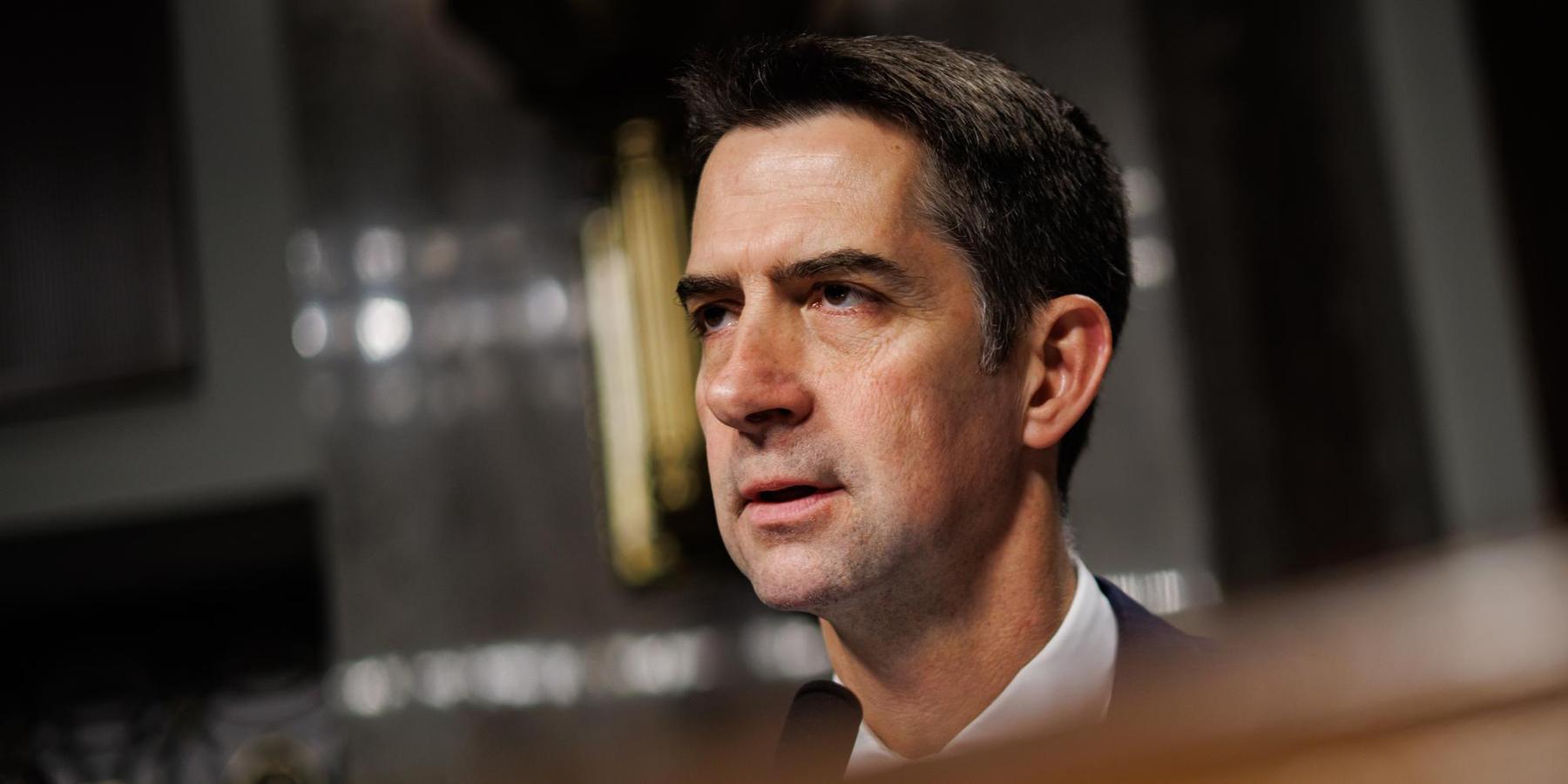
Tom Cotton

A measure in a must-pass bill would dramatically increase Israeli access to American secrets

Responsible Statecraft, Paul R. Pillar, Jun 10, 2026

Buried deep inside a 192-page intelligence authorization bill is Section 622, titled “United States-Israel Intelligence Sharing Enhancement.” It would require the president, acting through the director of national intelligence and as necessary the secretary of defense, to “expand and enhance intelligence sharing with the Government of Israel” on a list of subjects that encompasses almost every topic of intelligence interest in the Middle East.

The bill, put forward by Sen. Tom Cotton (R-Ark.), the chairman of the Senate Intelligence Committee, would prohibit any suspension, reduction, or limitation of such sharing “except on the basis of a specific and identifiable national security concern determined by the President.” Any such exception would require a report to Congress within fifteen days detailing not only the reason for the change but also the categories of information involved. The same report would require an assessment of the anticipated impact on regional security and various other matters.

This proposal is one of several recent moves by those in Washington who carry the Israeli government’s water to keep the United States tied to Israel despite plummeting support for the country among the American public. The most salient form of U.S. support to Israel has been more than $300 billion in economic and especially military assistance. Israeli Prime Minister Benjamin Netanyahu has tried to get ahead of the declining public support and avoid embarrassing losses by suggesting it would be fine with him to phase out the military aid.

Israel’s strategy and that of its U.S. supporters is now to rely on ties with, and support from, the United States that are not as salient as the military aid with its prominent price tag. The strategy includes forms of military integration that are less visible than congressionally appropriated grant aid and therefore less publicly accountable. Section 224 of a defense authorization bill currently in the House of Representatives embodies this form of integration.

The mandating of intelligence sharing carries this strategy further by moving it into the shadowy world of relations between intelligence agencies. That world is even farther removed from public visibility and accountability than the defense integration, and even less likely to stimulate thoughts about American taxpayers’ money going to a foreign country. So far, Section 622 of the intelligence bill has received less attention than Section 224 of the defense bill.

The notion of legislating an intelligence liaison relationship in this way, with any foreign country, is bizarre. Liaison with counterpart foreign services, including exchanges of information, is an important but complex part of the intelligence business. The nature of a liaison relationship depends partly on the temperature of the overall political relationship with the country in question but also on other factors known mostly to intelligence officers. These include the collection requirements levied on them, their ability or inability to meet those requirements with national resources, their assessment of the foreign service’s ability and willingness to fill collection gaps, the role that any trading of information plays as quid pro quos in operational cooperation, and the risks of compromising intelligence sources and methods.

Moreover, no single liaison relationship exists in isolation. The U.S. intelligence services need to consider possible implications for their other foreign relationships. For example, one generally does not share with country A information about country B if the United States has a relationship with B that is about at the same level as it has with A. Intelligence liaison involves a hierarchy of relationships, ranging from extensive cooperation with close allies to carefully limited ad hoc exchanges with adversaries. The intelligence community has a staff with the full-time job of monitoring and managing this set of relationships to prevent crossed wires. A congressional mandate regarding a single relationship increases the chance of crossed wires.

An irony is that the Congress considering this mandate is the same Congress that has in effect surrendered to the president its powers under Article I of the Constitution to set tariff rates and to decide whether to wage war. And yet, Section 622 would involve congressional micromanagement of a matter that by its nature needs to be the business of the executive branch and especially the intelligence agencies.

In intelligence, Israel is more of an adversary than an ally. Being an adversary in intelligence means indulging in the hostile act of espionage. Israel has a long record of conducting that type of hostile act against the United States. The best-known case involves the spy Jonathan Pollard, who stole such an overwhelming volume of U.S. secrets that then-Secretary of Defense Caspar Weinberger stated to the court that sentenced Pollard that it was difficult “ to conceive of a greater harm to national security than that caused by the defendant in view of the breadth, the critical importance to the U.S., and the high sensitivity of the information he sold to Israel.”

Newsletter

Subscribe now to our weekly round-up and don’t miss a beat with your favorite RS contributors and reporters, as well as staff analysis, opinion, and news promoting a positive, non-partisan vision of U.S. foreign policy.

Invalid emailEnter your email

When Pollard completed his prison sentence and parole in 2020, he was given a hero’s welcome, led by Netanyahu himself, on his arrival at Ben Gurion Airport in Israel. There was nothing noble in Pollard’s actions. Although he liked to say he was motivated by concern about Israel’s security, before selling his espionage services to Israel he offered to sell U.S. secrets to three other countries and made the same offer to a fourth country even when spying for Israel.

The Israeli espionage threat to the United States has only intensified. Last week, NBC News reported that the Defense Intelligence Agency raised the threat level for such espionage, evidently a reflection mostly of U.S.-Israeli differences over the Iran war. The New York Times quotes an official saying that Israeli intelligence operations aimed at senior U.S. officials during the second Trump administration have become so aggressive as to be “unhinged.”

Any sensitive information, including intelligence secrets, shared with Israel entails a high risk of Israel passing it to other countries, including U.S. adversaries. Israel has a long record of that, too, and not just because Israel probably passed some of the secrets Pollard purloined to the USSR, in exchange for Moscow allowing Soviet Jews to emigrate. Israel’s sharing of U.S.-origin military technology with China has been an issue. That the partner may be a rogue state has not stopped Israel from military and technical cooperation, as demonstrated by its relationship with apartheid-era South Africa, which extended even to the development of nuclear weapons.

The risk of Israel passing sensitive U.S. information to other states continues partly because Israel is hungry for cordial relationships — and especially establishment of new formal diplomatic relations — with any country willing to have such relations despite Israel’s continued subjugation of the Palestinians. Secrets from U.S. intelligence would be very attractive to some of Israel’s partners or potential partners, and thus attractive to Israel as trading material. Those other countries may include China, with which Israel continues to have extensive technical cooperation, and Russia.

Even without any passing to third countries, Israel’s own use of much U.S. intelligence is apt to be contrary to U.S. interests and the interest of peace and security in the Middle East, and for many of the same reasons underlying the reduced popularity of Israel among the U.S. public. Israel has started more wars and attacked more nations than any other country in the Middle East. In recent years it has inflicted more death and destruction on civilians through military operations than any other Middle Eastern state. It uses violence to seek regional hegemony and destroy Palestinian nationhood in ways that are inconsistent with U.S. interests.

The current ill-advised war with Iran demonstrates the sharp divergence of U.S. and Israeli interests. After being the principal influence on President Donald Trump’s decision to launch the war, Netanyahu’s government has been sabotaging efforts to end it. It currently is doing so mainly with relentless attacks in Lebanon that have killed thousands and displaced over a million people. The divergence of objectives was reflected in an expletive-laden phone call last week between Trump and Netanyahu that was mainly about those attacks.

Attacks that sabotage diplomacy are among the Israeli operations that might use shared U.S. intelligence. The United States also will be blamed for aiding other violent Israeli operations because of the “enhanced” intelligence sharing, even if it were no longer paying for Israeli arms.

The supposed escape clause in Section 622 of the intelligence bill would in practice be so cumbersome as to be useless. The required report to Congress would dump the issue on Capitol Hill, where the Israel lobby would quickly depict it as a question of being for or against the security of Israel. The mandated intelligence sharing in the bill thus would tie the president’s hands and prevent any administration from using management of the intelligence liaison relationship as leverage to deter destructive conduct by Israel.

Paul R. Pillar

Paul R. Pillar is Non-resident Senior Fellow at the Center for Security Studies of Georgetown University and a non-resident fellow at the Quincy Institute for Responsible Statecraft. He is also an Associate Fellow of the Geneva Center for Security Policy.

Israel Is Emptying Lebanon of Its People

June 12, 2026

In Lebanon, Israel is reusing the same strategy as in Gaza and the West Bank. Demanding the “evacuation” of the population and destroying civilian architecture, it wants to make it impossible for residents ever to return.

By Ahlam Chemlali, June 6, 2026

Source: Jacobin

Facebook Twitter Reddit Bluesky Email

People carry their luggage as they cross on foot into Syria through a crater caused by an Israeli air strike to cut the road between the Lebanese and the Syrian checkpoints, at the Masnaa crossing, in the eastern Bekaa Valley, Lebanon, October 4, 2024

In 1895, Theodor Herzl wrote in his diary that the penniless population of Palestine must be “spirited across the border,” discreetly and circumspectly. In 1948, that vision became policy. With the Nakba, approximately 750,000 Palestinians were forcibly displaced, their land absorbed by the newly declared state of Israel. In 1967 came the Naksa. In 1978, 1982, 1993, 1996, 2006, it happened to southern Lebanon. Each time the world called it a “crisis”; each time it was Israeli strategy.

Since Israel’s latest assault on Lebanon began this March 2, more than 1.3 million people — nearly one in four of the entire Lebanese population — have been displaced. More than three hundred thousand of them are children. In the first weeks of the assault alone, UNICEF recorded at least nineteen thousand girls and boys forced from their homes every single day. More than 3,400 Lebanese have been killed and over ten thousand wounded, a toll that surged dramatically when Israel launched Operation Eternal Darkness — over a hundred strikes across the country in a single ten-minute window, killing at least 357 people and wounding over 1,200, with many more believed buried beneath the rubble. At least nine bridges over the Litani River have been struck, seven destroyed, fifty-five primary health care centers and hospitals have been forced to shut down, fuel depots, water stations and schools have been targeted, a systematic severing of the south from the rest of the country, cutting tens of thousands of people off from humanitarian aid.

Israel’s own Defense Minister Israel Katz explicitly described this as the “Beit Hanoun and Rafah model,” invoking the ongoing destruction of Gaza. This is not collateral damage but the same playbook; Israel is not even hiding it. And still it continues: on June 1, Israeli forces struck Tyre — the ancient Mediterranean port city and UNESCO World Heritage Site — triggering a fresh wave of mass displacement as families fled north. A ceasefire, extended for forty-five days and currently being renegotiated in Washington, has stopped nothing.

What is unfolding in Lebanon today is neither new nor an escalation but in continuity with these past offensives. Displacement is not a by-product of this war. It has always been the point. To understand what is happening today in Lebanon, we must understand Gaza. And to understand Gaza, we must go further back.

The Gaza Playbook

Displacement has been a deliberate instrument of Israeli governance since 1948. The historian Patrick Wolfe put it plainly: “Settler colonizers come to stay: invasion is a structure not an event.” Elimination, he argued, is “an organizing principle of settler-colonial society rather than a one-off occurrence,” pursued through the annexation of land, the renaming of places, the demolition of buildings and the erasure of historical heritage, all in service of building an entirely new civilization on expropriated ground. “Settler colonialism,” he wrote, “destroys to replace.”

Following the October 7, 2023, attacks, Israel’s military campaign in Gaza produced near-total displacement. By early 2024, Israel had dropped more than twenty-five thousand tons of explosives on Gaza, the equivalent, the United Nations confirmed, of two nuclear bombs. By April 2024, the total had surpassed seventy thousand tons, exceeding the combined tonnage dropped on Dresden, Hamburg, and London during World War II. By May 2024, more than 90 percent of Gaza’s population, around 1.9 million people, had been displaced at least once. Many had been displaced ten times or more.

Israel boasted of its evacuation orders as evidence of its humanitarian conduct, distributed by leaflet, SMS, QR code, and radio broadcast, and cited repeatedly at the International Court of Justice as proof that it was protecting civilians. In reality, the orders directed entire districts to relocate within impossibly short time frames, often into areas without food, water, or shelter, and often into areas that were then deliberately bombed. Forensic Architecture’s landmark investigation found that the evacuation system had produced not safety but “mass displacement and forced transfer,” with Palestinians “being bombed, shot at, executed, arrested and tortured” along the very corridors Israel designated as safe. The areas Israel told people to flee to were attacked immediately after they arrived. On July 13, 2024, Israel dropped eight two-thousand-pound bombs on the Al-Mawasi humanitarian zone it had itself created, killing at least ninety people, many of them burned alive in their tents.

Human Rights Watch concluded that these evacuations constituted the war crime of forcible transfer. B’Tselem, the Israeli human rights organization, reached the same conclusion in its report “No Place Under Heaven,” documenting that displacement was a central tool of the assault on Gaza. The report’s title comes from Finance Minister Bezalel Smotrich’s own words, spoken at a government security cabinet meeting in April 2024, calling for the “total annihilation” of Gaza’s cities: “You will blot out the remembrance of Amalek from under heaven — there’s no place under heaven.” The reference to Amalek, the nation the Hebrew Bible commands the Israelites to exterminate entirely, man, woman, and child, was not incidental. Benjamin Netanyahu had used the same comparison in the first days of the war, and it was cited by South Africa in its genocide case at the International Court of Justice as evidence of genocidal intent. Smotrich also described Gaza City as a “real estate bonanza,” stating: “The demolition, the first stage in its renewal, we have already done. Now we need to build.” This bluntly posed Israel’s agenda in the language of colonial dispossession.

From the West Bank to Lebanon

The same logic has spread beyond Gaza. Since October 2023, scholars and analysts have described the “Gazafication” of the West Bank: the extension of governance practices long characteristic of Gaza — military siege, aerial bombardment, the systematic targeting of civilian infrastructure — into the occupied territory. Armed drones carry out targeted killings, fighter jets strike densely populated areas, and homes are demolished.

More than forty thousand Palestinians were internally displaced in the West Bank in 2025, the highest annual figure since 1967. Senior Israeli ministers have called openly for annexation and the “voluntary migration” of Palestinians, language that legal scholars identify as a euphemism for ethnic cleansing. Leading Zionist figures explicitly discussed demographic transfer in the 1920s and 1930s, using terms like “transfer,” “relocation,” and “voluntary migration” — the same vocabulary in use today.

Settler violence has risen sharply alongside this rhetoric. According to data recorded jointly by the Israeli army and the Shin Bet, settler attacks increased by 27 percent in 2025, while severe attacks — shootings, arson, violent assault — rose by more than 50 percent. Accountability remains almost nonexistent. Settlement expansion has accelerated to unprecedented levels, with outposts legalized retroactively and construction advancing deep inside Palestinian territory.

In this, Lebanon is not a new front but an old one, today reopened with new ferocity.

The people in southern Lebanon have been displaced before: in 1978, when Israel first invaded; in 1982, when it laid siege to Beirut and its Palestinian refugee camps, a siege that culminated in the Sabra and Shatila massacre; in 1993, during Operation Accountability; in 1996, during Operation Grapes of Wrath, which culminated in the Qana massacre; and in 2006, when nearly one million people fled, most returning within weeks of a ceasefire. Today, those same communities are being uprooted again.

What we are witnessing is the same architecture of control applied more extensively. Evacuation orders are being issued with the same design as in Gaza, and civilian infrastructure targeted to prevent people ever returning. This means deliberately making the population precarious, unable to settle, unable to rebuild, unable to plan. Here, we see that Gaza, the West Bank, and Lebanon are not three separate crises.

European Blind Spot

And what has the international community’s response been? The International Court of Justice, in its landmark advisory opinion of July 19, 2024, concluded that Israel’s occupation of the Palestinian territories — the West Bank, East Jerusalem, and Gaza — is unlawful under international law and must be brought to an end as rapidly as possible. It has separately ruled that there is a plausible risk of genocide in Gaza. The UN General Assembly followed in September 2024, demanding Israel end its unlawful presence within twelve months. Israel has ignored both. The United Nations Security Council has been rendered structurally incapable of acting: the United States has now vetoed ceasefire resolutions seven times, each time casting the sole vote against resolutions supported by fourteen other members of the council.

Meanwhile, the United States has provided at least $21.7 billion in military aid to Israel since October 7, 2023, according to Brown University’s Costs of War project — the highest annual total of military aid to Israel ever recorded. Arms transfers from several European states have continued alongside this. The weapons that have flattened Gaza’s neighborhoods, bombed its hospitals, and burned civilians alive in tent camps have been supplied, in large part, by those same governments now expressing concern about humanitarian conditions in Lebanon.

I have spent years researching migration, borders, and displacement across the Mediterranean region. Since March, journalists across Europe have been asking me some version of the same question: Will we face a new refugee crisis? Should Europe be worried about the flows?

The question reveals everything. For most European publics and their governments, the primary concern is not what is happening to the people of Lebanon. It is how to keep those people away. How to avoid a repeat of the aftermath of the Syrian civil war and the so-called refugee crisis of 2015. During the carpet bombing of Gaza since October 2023, this anxiety was all but absent, for Gazans had nowhere to flee: they were contained inside the Strip. For some European governments, even medically evacuating critically ill children was not on the table. Denmark refused to do so despite a formal World Health Organization appeal to EU member states, and despite evacuating and treating over two hundred Ukrainian patients — citing, in a written reply to Parliament, migration concerns. In Britain, Prime Minister Keir Starmer had to reassure the public that Palestinian refugees wouldn’t be welcome in Britain under a scheme for war refugees. Europe’s fear of displacement only activates when movement becomes possible.

In May 2024, the European Commission pledged €1 billion in support to Lebanon for the period up to 2027. This package included funding for border management and anti-smuggling operations, with the first €500 million explicitly linked to reducing irregular sea departures toward Cyprus and to exploring “voluntary return” frameworks. Lebanon was positioned not only as a host country in crisis but as a frontline partner in Europe’s own strategy to contain migration flows. This is the increasingly common practice of externalization: the outsourcing of displacement management to third countries outside Europe, while the conditions producing displacement go unchallenged.

Lebanon already hosts one of the highest numbers of refugees per capita in the world, with long-standing Palestinian communities and over a million Syrians displaced since 2011. Funding this state to police its own borders in the middle of an Israeli assault that is actively producing new displacement is the same containment logic that operates in Gaza and the West Bank.

What is unfolding across Gaza, the West Bank, and southern Lebanon is not a sequence of emergencies. It is a deliberate and recurring strategy of Israeli governance, rooted in decades of settler-colonial and military control. Evacuation orders, cycles of flight and forced return, and the systematic destruction of civilian infrastructure, are today the instruments of war and Israeli expansionism.

The displacement created in Gaza and in Lebanon has been normalized precisely because the international community has consistently chosen migration management over accountability. What looks like crisis is the effect of deliberate policies, and what looks like a humanitarian response is, too often, the infrastructure of containment dressed in the language of protection.

The question is not whether Europe will face a refugee crisis. The question is whether the world will finally treat the deliberate production of displacement as what it has always been, a strategy of governance, and respond with the recognition, accountability, and rights-based redress it demands.


Madman Theory and its use by Mr Trump

June 11, 2026