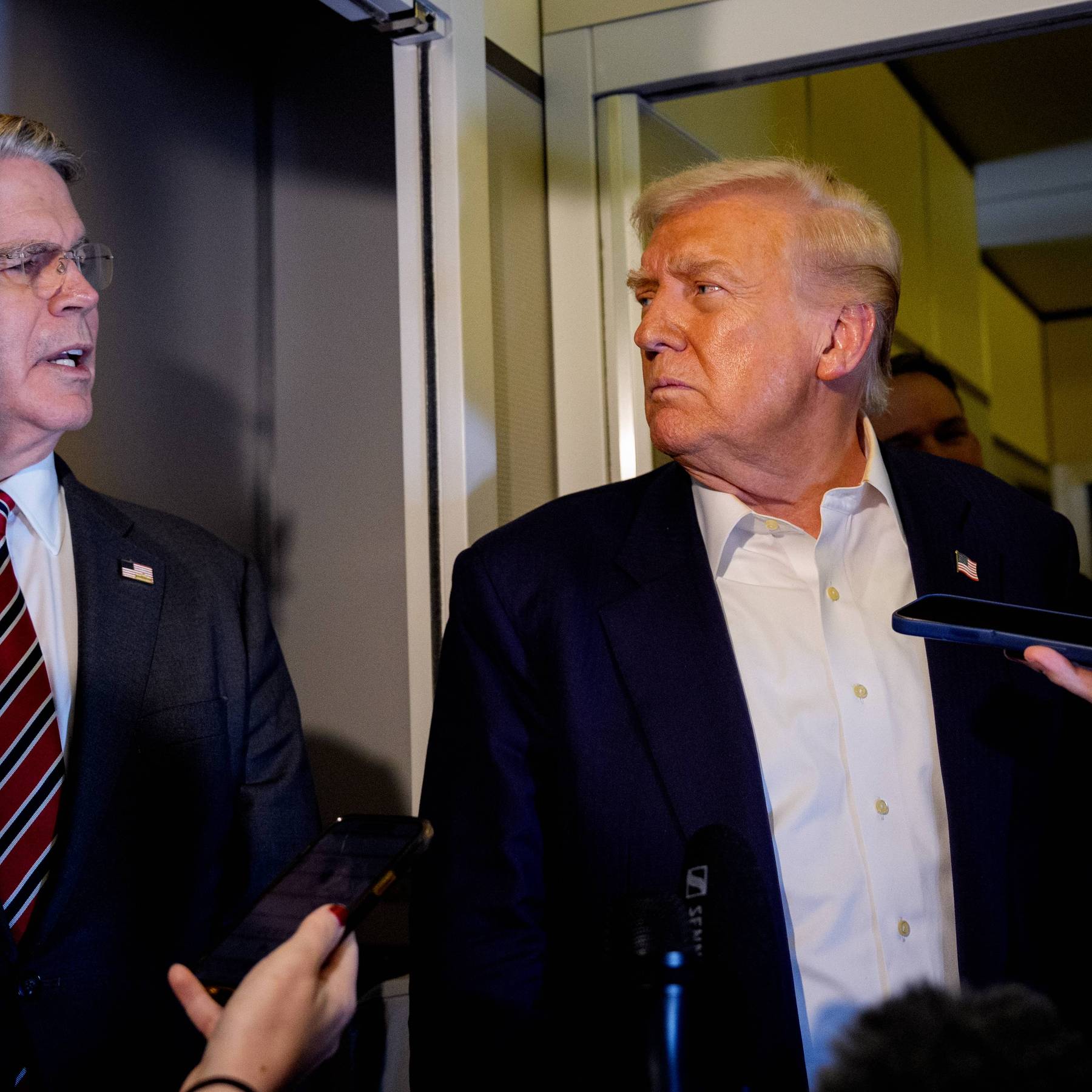
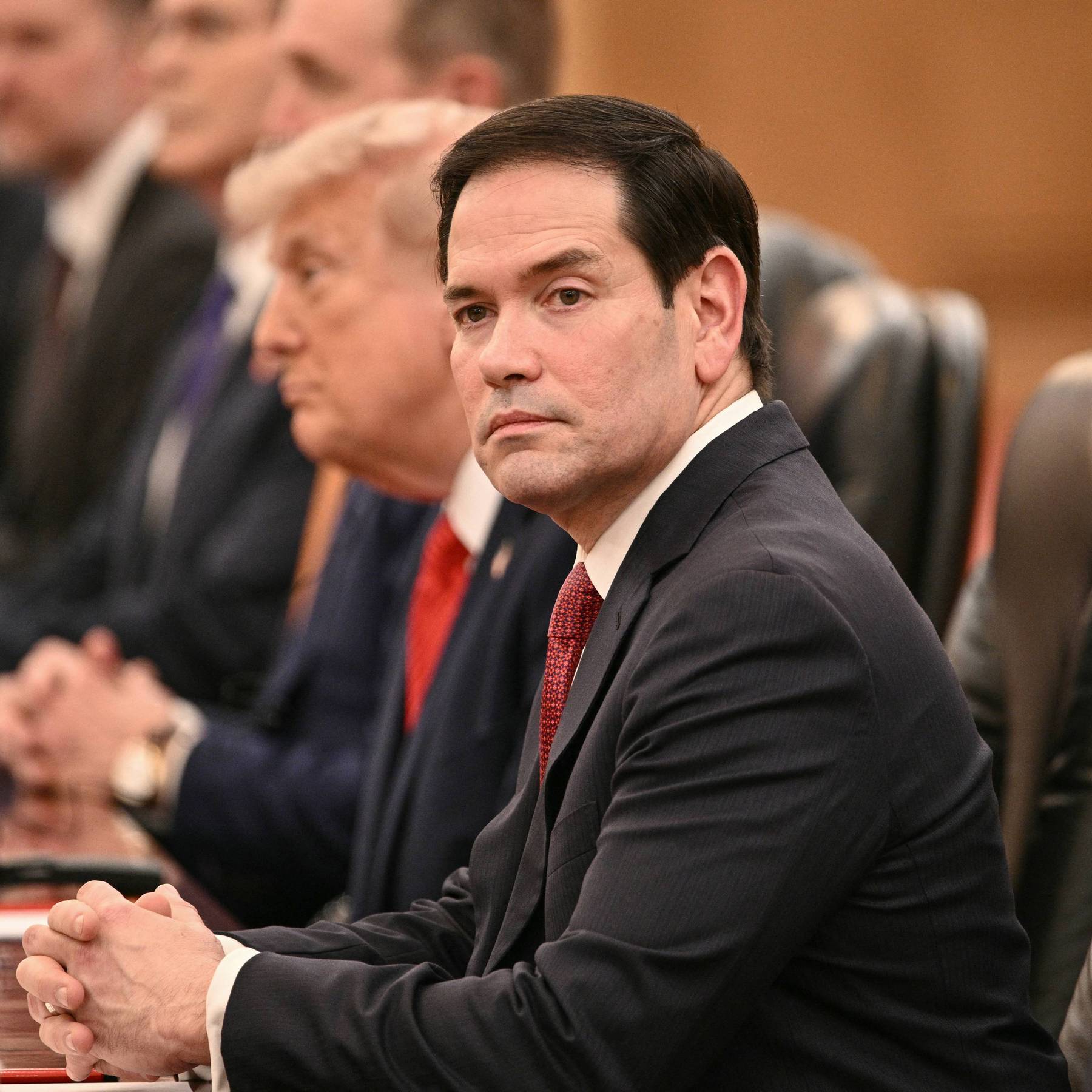
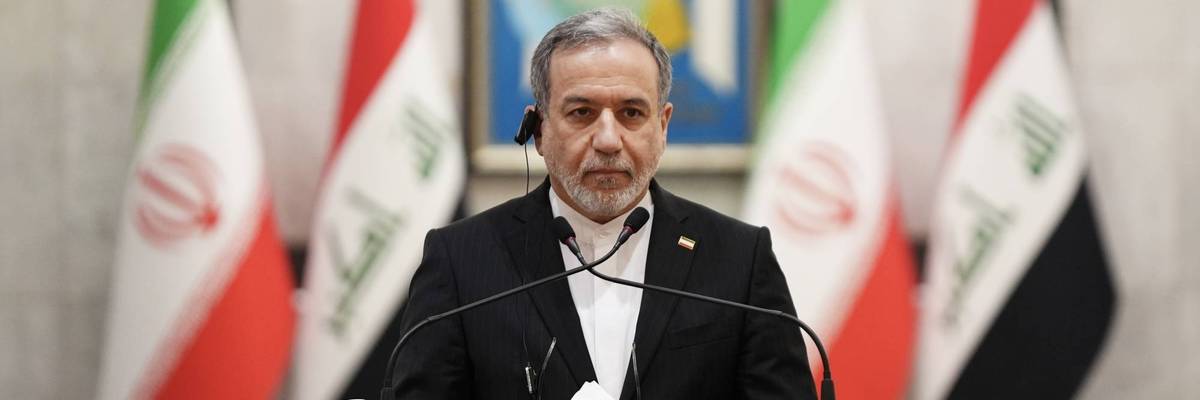
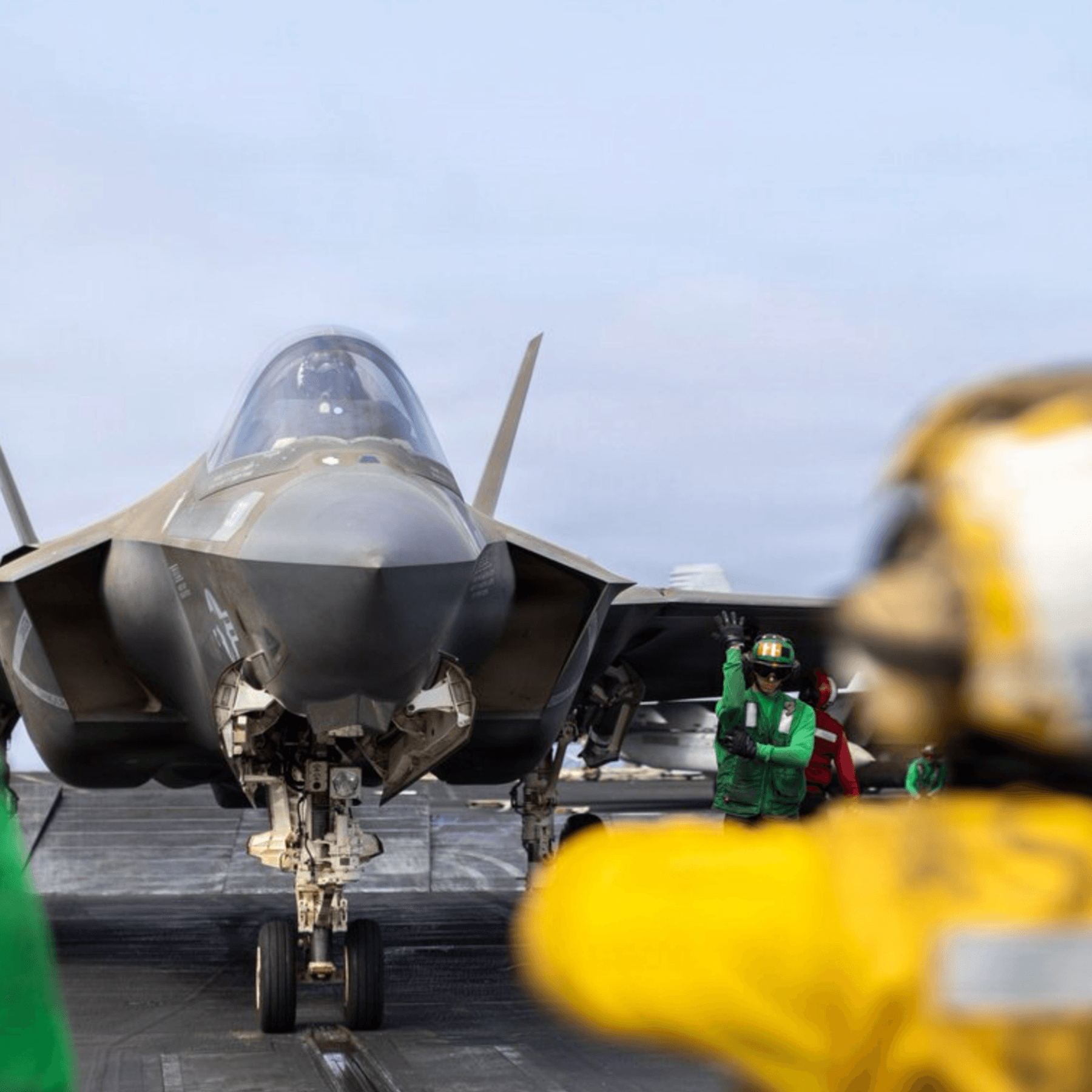
Israel’s outgoing ambassador to the US expects President Trump to supply Israel with a shipment of 2,000-pound bombs that President Biden paused, Axios reported on Monday.
Biden put a hold on a 2,000-pound bomb shipment and a 500-pound bomb shipment back in April as part of a public relations stunt to make it seem like he was putting pressure on Israel over its plans to invade the southern city of Rafah.
Israel ended up invading Rafah, capturing its border crossing with Egypt, and now the city lies in ruin. Other US weapons continued to flow to Israel, and the pause on the 500-pound bombs was lifted in July, but Prime Minister Benjamin Netanyahu used the pause on the 2,000-pound bombs to complain that Biden was restricting military aid.
Republicans in the US also claimed Biden was restricting military aid to Israel even though he supplied more weapons to Israel in a single year than any other president in history.
“We believe that Trump is going to release, at the beginning of his term, the munitions that haven’t been released until now by the Biden administration,” Israeli Ambassador Michael Herzog told Axios.
The release of the bombs is part of a series of agreements the Trump administration reached with Israel to get Netanyahu to agree to the hostage ceasefire deal.
“The Trump team played a major role. They were resolved to get a deal but were very cognizant of our security concerns,” Herzog said. “They got some things from the Israeli side that allowed the deal to go through, and they gave us some things and will give more going forward.”
Netanyahu has said he received assurances from Trump that he could resume military operations in Gaza if he chooses to do so, something Trump’s National Security Advisor Mike Waltz has confirmed. But there are signs the Trump administration will push for the deal to stick.
Herzog also said he expects Trump to take action against the International Criminal Court (ICC) for issuing arrest warrants for Netanyahu and former Israeli Defense Minister Yoav Gallant.
“Donald Trump will have no penalty for criminal wrongdoing, which is an affront to accountability and to a system where no one is above the law, though the judge had little alternative,” said one ethics expert.
After being convicted of 34 felonies in New York last year, U.S. President-elect Donald Trump on Friday received an unconditional discharge during a sentencing hearing that came just over a week before the Republican’s second inauguration.
Just hours after the U.S. Supreme Court—which includes three Trump appointees—allowed the hearing to proceed, New York State Supreme Court Justice Juan Merchan declined to impose fines or sentence Trump to prison for his crimes, which related to hush money payments to cover up sex scandals during the 2016 presidential election cycle.
“Donald Trump will have no penalty for criminal wrongdoing, which is an affront to accountability and to a system where no one is above the law, though the judge had little alternative,” said Noah Bookbinder, president and CEO of the watchdog group Citizens for Responsibility and Ethics in Washington. “But now, formally, the next president of the United States is a felon.”
Published date: 2 January 2025 11:10 GMT | Last update:5 days 3 hours ago
The incoming US president’s transactional approach to politics will see immigrants suffer, while suppport for Israel’s oppression of Palestinians will continue
A man shows support for US president-elect Donald Trump near his Mar-a-Lago resort on 14 December 2024 (Eva Marie Uzcategui/Getty Images/AFP)
Given his mercurial nature, shifting from the politics of revenge to the politics of accommodation without explanation or changed circumstances, it is foolhardy to predict what lies ahead as Donald Trump prepares to be US president for a second time.
His rhetoric and ideology seem untamed and extreme – and this time around, he enters the White House with a strong electoral mandate as Republicans controlling both chambers of Congress, and the support of an ultra-conservative majority on the Supreme Court.
This would seem to ensure the prospect of Trump’s total control over the governing process in the US, but there are some daunting bumps in the road ahead.
Some of the contours of Trump’s presidency have become clear even before he officially returns to the White House. Firstly, it seems certain that he will make millions of undocumented immigrants in the US miserable from day one.It is not a good sign that Trump blamed the New Orleans car incident on weak border security considering it was the work of an American army veteran who recently converted to the Islamic State group.
His obsession with stopping asylum-seekers and immigrants from crossing the border without proper papers is certain to be acted upon. Already, the man Trump has selected as “border czar” has indicated his intention to deport entire families of undocumented persons, including naturalised citizens.
New MEE newsletter: Jerusalem Dispatch
Sign up to get the latest insights and analysis on Israel-Palestine, alongside Turkey Unpacked and other MEE newsletters
Trump could get away with this approach, however cruel in application, for a while – but the economics of the labour market will soon pose a challenge, creating strategic labour shortages in such critical sectors as agriculture in the southwestern US, exacerbating inflationary pressures.
There are also considerations around the growing need for skilled workers in the high-tech sector, which will increasingly shape the country’s economic future. These workers have been given high priority in relation to robust economic development, as Trump’s chief adviser, Elon Musk, keeps reminding him.
These concerns will be magnified if Trump goes ahead with his announced plans to place 25 percent tariffs on imports from Canada and Mexico, along with punitive tariffs on Chinese imports. Such policies are the surest way to start a mutually destructive trade war.
Global dangers
On foreign policy, the outlook for a Trump presidency is more mixed, but uncertain and globally dangerous. In the beginning, Trump will probably seek to portray himself as a peacemaker, particularly in the context of the Russia-Ukraine war.
This conflict is both an example of the type of “forever war” he rejected during his first term in office, and an opportunity to explore whether a cooperative relationship with President Vladimir Putin’s Russia could circumvent the Atlantic alliance that has been a centrepiece of American foreign policy since the end of World War II.
Pushing for a ceasefire and diplomatic compromise was a grossly negligent missed opportunity during Joe Biden’s presidency, which seemed determined to inflict a geopolitical defeat on Russia, even at the cost of causing a disaster for Ukraine and its people.
Where does Donald Trump stand on Israel, Palestine and the Middle East?
If this change of direction occurs, Nato loyalists will have to rethink European security arrangements, and the American deep state will have to swallow defeat, or use its untested leverage to back the primacy of the US in geopolitical realms by keeping Russia out and Nato in.
When it comes to the Middle East, the story is different in terms of policy priority.
Trump has given every indication of wanting to exceed Biden’s unconditional support for Israel, including through the genocidal onslaught on Gaza, land grabbing, ethnic-cleansing operations and settlement expansion in the occupied West Bank, and escalating unlawful violence against regional adversaries.
Trump, by his political appointments and undisciplined commentary, seems determined to “finish the job” in Gaza, which can only be understood as erasing Palestine and Palestinians as obstacles to the rapid establishment of Greater Israel from “the river to the sea”.
Beyond this, he seems determined to confront Iran in a more muscular manner, possibly by destroying its nuclear facilities and taking more overt steps to provoke regime change in Tehran.
These policies, if actualised, would have many risks and adverse consequences, including the possibility of a wider regional war and a surge of anti-US sentiments. They would also cement Israel as the pariah state of our time, which could weaken it to the point of emboldening the peoples of the Arab world to rise up against their western-oriented repressive regimes, and unite behind the cause of liberating Palestine from settler-colonialism.
Contempt for internationalism
Finally, in every way, Trump and his entourage have signalled their opposition to internationalism. Trump has long displayed an unwavering commitment to an ultra-nationalist and transactional world view. He exhibits contempt for addressing global challenges, and for the benefits of cooperative problem-solving, even in the context of climate change.
In this sense, the UN will be valued only to the extent that it fully backs American strategic priorities – and should it dare to censure or oppose these priorities, Trump will surely threaten, and then cut, US funding, or even withdraw US participation.
Given such attitudes, it is not surprising that Trump is dismissive of the regulatory role of international law, especially if directed at restraining the US. Say goodbye to the cynical pretensions of Secretary of State Antony Blinken’s “rules-based world order”, which has seemed more a synonym for US-led geopolitics than a genuine submission to universally applicable principles.
In the end, the Trump presidency may be forced to choose between a form of neo-isolationism and neo-imperialism
Trump may unintentionally provide a service to humanity by stripping away the liberal illusions shielding the reality that the US and its friends habitually avoid the constraints of international law that their rivals are bound to obey. In effect, Trump’s nihilism may be preferable to Biden’s hypocrisy.
In the end, the Trump presidency may be forced to choose between a form of neo-isolationism and neo-imperialism. If the isolationist alternative prevails, then an accelerated transition will likely occur from the post-Cold War world of unipolarity to a new era of complex multipolarity.
If the neo-imperialist model prevails, due to a compromise between the ultra-nationalist Trumpists and the globally ambitious American deep state, tensions will emerge between antagonistic forms of multipolarity and competing alliance networks, resembling in structure the Cold War, yet with differences, including the agenda of geopolitical rivalries.
The de-centring of conflict that includes the partial bypassing of Europe is all but certain. Europe is no longer the chief geopolitical prize, as it was in the three 20th-century global wars (including the Cold War).
Whatever else, the Trump presidency is likely to confound expectations, including these, while keeping busy the world’s most influential media platforms.
The views expressed in this article belong to the author and do not necessarily reflect the editorial policy of Middle East Eye.
Richard Falk is an international law and international relations scholar who taught at Princeton University for forty years. In 2008 he was also appointed by the UN to serve a six-year term as the Special Rapporteur on Palestinian human rights.
On Tuesday, a Hamas official responded to President-elect Donald Trump’s warning that there would be “all hell to pay” if Israeli hostages in Gaza weren’t released by his inauguration on January 20, 2025.
Trump didn’t mention Hamas by name in his warning but appeared to threaten US strikes on the Palestinian group, saying, “Those responsible will be hit harder than anybody has been hit in the long and storied History of the United States of America.”
Basem Naim, a senior member of Hamas’s political bureau, said Trump’s threat should be directed at Israeli Prime Minister Benjamin Netanyahu, citing his efforts to sabotage a hostage and ceasefire deal. Israeli officials and media reports have also blamed Netanyahu for the lack of a deal.
“Hamas understands that Trump’s message is, in fact, directed primarily at Netanyahu and his government,” Naim said, according to The Palestine Chronicle.
Naim said the Netanyahu government had been using negotiations as a cover to advance its own agenda. “Netanyahu’s government must put an end to this deceptive charade,” he said.
Former Defense Minister Yoav Gallant, who was recently fired by Netanyahu, said that the prime minister sabotaged the chances of a hostage deal by demanding Israel maintain control of the Philadelphi Corridor on the Gaza-Egypt border.
“I can tell you what there was not, security considerations. The IDF chief and I said there was no security reason for remaining in the Philadelphi Corridor,” Gallant told hostage families on November 7. “Netanyahu said that it was a diplomatic consideration, I’m telling you there was no diplomatic consideration.”
There are believed to be 97 Israeli hostages remaining in Gaza, and Israeli media reported back in September that Netanyahu told a Knesset committee that only half of the hostages were believed to be alive.
The Israeli newspaper Haaretz reported in October that the Israeli government was done with ceasefire talks and was instead focused on annexing portions of the Gaza Strip. There’s been some recent efforts by mediators to restart talks, but there’s no sign the effort is going anywhere, and there’s no end in sight to the daily slaughter in Gaza.
The election of Donald Trump is a critical event in the protracted crisis of American democracy, whose shattering repercussions will be felt throughout the world. A fascist demagogue—who attempted in January 2021 to violently overthrow the last presidential election—has decisively won the 2024 election with both an electoral and popular vote majority. He will be re-installed in the White House in little more than 70 days.
Republican presidential nominee former President Donald Trump gestures at a campaign rally at the Santander Arena, Wednesday, Oct. 9, 2024, in Reading, Pa. (AP Photo/Alex Brandon)
Trump owes his political triumph to the bankruptcy of the Democratic Party, whose fixation with the identity politics of the affluent middle class, arrogant indifference to the devastating impact of inflation on workers’ living standards, and unrelenting support for war in Ukraine and genocide in Gaza prepared the ground for the election debacle.
The major pillars of the capitalist press are already attempting to downplay the political implications of Trump’s victory. “Mr. Trump’s election poses a grave threat,” writes the New York Times, “but he will not determine the long-term fate of American democracy.” The Times reassures its readers that Trump will be a lame-duck president because he is barred by the Constitution from seeking another term.
This is wishful thinking. Trump openly proclaimed that this would be the last election, and that his supporters would not have to vote again. The political reality is that the election of Trump sets the stage for an unprecedented wave of social counterrevolution, which he plans to enforce with an iron heel.
Trump has pledged to become “dictator” and deploy the military to crush “the enemy within.” He plans to deport 11 million undocumented immigrants, an operation that would require placing major American cities under martial law. He has floated eliminating the income tax and promises to slash taxes for the rich and end corporate regulations. The devastating impact that these policies will have on the working class cannot be overstated.
He is not a political accident. However it was achieved—and this is not to minimize the political complicity of the Democratic Party—the coming to power of a second Trump administration represents the violent realignment of the American political superstructure to correspond with the real social relations that exist in the United States.
Donald Trump speaks not simply as one criminal individual but as the representative of a powerful capitalist oligarchy that has taken shape over the last three to four decades. Mega-millionaires and billionaires—led by the likes of Elon Musk, Jeff Bezos, Peter Thiel and Larry Ellison—are utilizing Trump to effect in their interests a reactionary restructuring of American society. They will use the time leading up to the January 20 inauguration to prepare the barrage of repressive and socially reactionary measures that will be unleashed as soon as Trump is once again ensconced in the White House.
He was able to exploit the absence within the political establishment of any articulation of the interests of the vast majority of the population. The Harris campaign was opposed to making any social appeal to the working class. They pitched their campaign to the most affluent voters, promoting hated warmongers like Liz Cheney and promising to place Republicans in the cabinet.
Harris, Barack Obama and other Democratic surrogates traveled the country haranguing voters that a failure to turn out for Harris would be proof of misogyny or racism. They combined incessant appeals to racial and gender identity with full-throated endorsement of war abroad. The Democrats pledged further support for Israel’s genocidal assault on Gaza and called for an escalation of the US-NATO war against Russia in Ukraine.
The Democrats offered nothing to address the escalating social crisis in the United States, instead presenting the country as “on the right track” to a population which almost unanimously believes the opposite. Figures like Bernie Sanders and Alexandria Ocasio-Cortez presented the absurd lie that the Biden-Harris administration had improved conditions for working people and that Harris would challenge the domination of “the billionaire class.” Mimicking Hillary Clinton’s 2016 claim that the working class consists of “a basket of deplorables,” Biden called Trump’s supporters “garbage” in the final days of the election.
The vote totals show not a surge in support for Trump, who appears to have lost votes compared to his 2020 totals, but a staggering collapse in support for the Democrats, with Harris winning somewhere between 10 and 15 million fewer votes than Joe Biden in 2020.
Harris underperformed Biden in every single region of the country. The Democratic Party’s efforts to cajole various racial and gender groups behind the Harris campaign on the basis of an appeal to identity fell completely flat. Trump saw the largest increase in vote margins in counties where over 50 percent of the population is non-white, and exit poll data shows that Harris lost Latino men nationally by a 54-44 percent margin, a reversal from 2020, when Biden won that demographic by a 59-39 percent margin.
The margin by which the Democrats won young voters also fell substantially from 2020, as countless young people refused to vote for the candidate complicit in the genocide in Gaza. Harris won the youngest voters by only 56-41 percent versus Biden’s 65-31 percent margin. Trump won a majority of votes among first-time voters, a sign that the Democrats were unable to activate voters beyond the affluent upper-middle class.
In fact, Harris improved only among the affluent. Among voters with an income of $200,000 or more, she won 52-44 percent, reversing a narrow Trump win in that income bracket in 2020. Trump won voters with an income between $100,000 and $200,000 in 2020 by a 58-41 percent margin, but Harris won by 53-45 percent. Democrats simultaneously saw a collapse in support from working people, with Harris losing those making between $30,000 and $100,000, a wide swath of the population which Biden won by a roughly 57-43 percent margin in 2020.
The electorate was driven by deep social anger. Among the 43 percent of voters who said they were “dissatisfied” with “the way things are going in the country today,” Trump won 54-44 percent. Among the 29 percent who answered that they were “angry,” Trump won 71-27 percent. Harris won 89-10 percent among the tiny sliver of the population who are “enthusiastic” about economic and social conditions today. The total percentage of the population who said their financial situation is “worse” today versus four years ago more than doubled to 45 percent, with Trump winning those voters by an 80-17 percent margin.
Trump and the Republicans are well aware that they will preside over a social powder keg, and that the right-wing policies they plan to implement will only deepen the social anger. Their strategy is to combine massive police state repression with a fascist campaign to scapegoat immigrants for all social ills. Though exit polling does not suggest that voters were taken in by Trump’s vile attacks on immigrants, and though large majorities say they believe immigrants deserve a pathway to citizenship rather than face mass deportation, the stage is set for a massive and violent attack on immigrant workers on a scale that will make even his first administration appear like child’s play.
And while Trump’s demagogic claims to oppose war might have won votes away from the inveterate warmongers in the Democratic Party, Trump is himself a ruthless imperialist politician who advocates escalatory confrontation with China, Iran and North Korea.
The response of the Democrats to Trump’s electoral victory will be to seek compromise and coalition, already evident in Harris’ capitulatory statement Wednesday afternoon. She made no warnings about the dictatorial character of the incoming Trump regime and pledged to cooperate with the transition to the would-be American Führer. The Democrats will shift even further to the right, while seeking to forge an agreement with the Republicans on their central priority, the escalation of war.
The reactionary character of Trump’s political and social program will become clear enough. As the ruling class seeks to restructure the state, there has to be a restructuring of politics, along class lines. As WSWS International Editorial Board Chairman David North wrote, Trump’s election “is the disastrous outcome of the long-term and very deliberate repudiation by the Democratic Party of any programmatic orientation to the working class…
In the United States, the new anti-Marxism blended with the longstanding tradition of anti-communism. Left-wing politics, of the sort connected to working class militancy, disappeared. The grievances related to identity displaced any serious concern with the massive concentration of wealth in a small segment of society at the expense of the working class.
Those who have promoted this form of right-wing politics, promoted by the Democratic Party, now resort to the most bankrupt of all responses to the election: blaming the population.
In fact, the past year has seen an explosive growth of political and social opposition, from the mass protests against the genocide in Gaza to a steady growth of strike action by workers, who are striving to break free from the control of the corporatist trade union apparatus. Immense social struggles are on the horizon.
These struggles must be politically directed, and they must be guided by an understanding that fascism can only be stopped by the development of an independent movement of the working class against the source of political reaction and oligarchy: the capitalist system. There must be “a new birth” of genuinely socialist politics, based on the working class and animated by an international strategy.
The Socialist Equality Party, through its presidential election campaign of Joseph Kishore and Jerry White, set out to mobilize the working class on an international, socialist program in opposition to war, inequality and the capitalist system that produces them. This program now takes on an even greater urgency. In the period ahead, the Socialist Equality Party and International Committee of the Fourth International will fight to win the leadership of a growing movement of workers and youth against war, dictatorship and inequality and for the socialist transformation of society.