TEL AVIV, February 5, 2026 (WAFA) — Former Israeli prime minister Ehud Olmert said a “violent and criminal attempt at ethnic cleansing” is taking place in the occupied West Bank, accusing Israeli police, the army and the Shin Bet security service of involvement and support for attacks carried out by extremist settlers.
In an article published in the Israeli daily Haaretz, Olmert said that armed and violent settler groups are persecuting, injuring and killing Palestinians living in the area. He said the attacks include burning olive groves, homes and vehicles, breaking into houses, physically assaulting residents, harming livestock, dispersing sheep herds and attempting to steal them.
Olmert stated that “Jewish terrorists” are attacking Palestinians with hatred and violence for a single purpose: forcing them to flee their homes in order to prepare the area for Jewish settlement and advance a dream of annexing all the land.
He said the attacks are taking place in front of the closed eyes of police officers and soldiers, arguing that hundreds of violent youths would not have been able to carry out such acts had they not been equipped with weapons through the initiative and encouragement of far-right National Security Minister Itamar Ben-Gvir.
According to Olmert, militias operating in the West Bank are acting with direct backing and assistance from Israeli government officials, adding that the Israeli police also serve as a source of encouragement for “Jewish terrorism.”
He further argued that the Shin Bet does not employ against Jewish extremists the same tools it uses effectively against Palestinians, and fails to act decisively to prevent attacks, identify rioters, or locate and arrest the leaders of these groups.
Olmert said the issue goes beyond the Israeli army’s failure to prevent unrest in the occupied territories, suggesting that in many cases soldiers cooperate with rioters or remain nearby, watching events unfold without intervention.
He called on the international community to take political measures to compel the Israeli government to activate mechanisms to stop what he described as crimes against humanity committed under its sponsorship, protection and support.
Olmert concluded by saying there may be no option other than expecting the International Criminal Court to become the inevitable address for investigation, exposure of those responsible, and steps that could ultimately lead to their arrest and prosecution.
For all the obsessive coverage of the disgraced financier’s political dealings, mainstream outlets have skimmed past one of the biggest stories
Independent media reporting has highlighted former Israeli Prime Minister Ehud Barak’s past dealings with Jeffrey Epstein (Jack Guez/AFP)
Since the release late last month of millions more files in the Jeffrey Epstein saga, western media outlets have provided nonstop coverage. Yet despite an extensive focus on the disgraced financier’s relationships with powerful figures, his links to Israeli political and intelligence circles have been largely ignored, marking a conspicuous omission.
Searches across online news archives turn up thousands of recent stories on legitimate issues of public concern, highlighting victims of Epstein’s abuse and the alleged involvement of prominent persons and groups in that abuse.
The New York Times, PBS, NBC and CNN, among other notable outlets, have drawn from the files to publish exhaustive accounts of powerful men with ties to Epstein.
In addition to naming business, academic and sports figures, much reporting has focused on political figures, such as US President Donald Trump, former Norwegian Prime Minister Thorbjorn Jagland, and the UK’s Prince Andrew and politician Peter Mandelson.
Media coverage has also emphasised Epstein’s relationships with foreign countries, with Reuters and the Washington Post running stories about his alleged ties to Russia. Other pieces have documented Epstein’s purported links to Norway and Slovakia.
New MEE newsletter: Jerusalem Dispatch
Sign up to get the latest insights and analysis on Israel-Palestine, alongside Turkey Unpacked and other MEE newsletters
But despite Epstein’s ties to Israel having been known for months – an ongoing Drop Site News investigation suggests that Epstein worked closely with former Israeli Prime Minister Ehud Barak and participated in initiatives connected to Israeli intelligence – there has been little mainstream coverage of this aspect.
Even as sites such as Middle East Eye, Al Jazeera, Mondoweiss and TRT World, among others, have devoted significant coverage to the Epstein-Israel connections, there appears to be a glaring gap in western mainstream media.
Strategic omission
There are, of course, exceptions, such as the CNN interview last November with Marjorie Taylor Greene, in which the then-US congresswoman broached Epstein’s alleged ties to Israel. But the response from CNN presenter Dana Bash was telling: she became visibly irritated, and swiftly pivoted to the topic of antisemitism.
Journalism studies scholarship routinely emphasises the importance of omission. The inclusion and exclusion of information are among the primary mechanisms through which members of the media create meaning.
So why does it seem that mainstream western media outlets are bending over backwards to avoid the Israeli elephant in the room? This dovetails with broader questions on why western media tends to sympathise with Israeli narratives.
In the current moment, the biggest danger for journalists is not getting a story wrong – it is appearing unwilling to tell it at all
Some outlets – or at least some powerful editors and producers – might have a direct interest in shielding Israel. It is also possible that news managers are afraid of the consequences of maligning Israel, or of being perceived to be “antisemitic”.
Scholars John Mearsheimer and Stephen Walt famously described the power of pro-Israel lobbying groups, which have long exerted considerable sway over American politics and media, helping to generate favourable coverage. Reporting that is critical of Israel often triggers pressure campaigns from these groups.
In such an environment, omission functions as a type of risk management. News editors know that even the perception of unfairness towards Israel can trigger accusations of antisemitism.
Media institutions operate within the broader sociopolitical climate. Since the start of the Gaza war in October 2023, American and British universities have come under fire for actively suppressing pro-Palestine speech and student protests critical of Israel.
In 2024, an American university took the extraordinary step of firing a tenured professor over speech critical of Zionism, confirming how Israel-related criticism carries an unusually high professional risk – a reality that news outlets know well.
Pivotal moment
Western journalists have long had to be careful about covering Israel. In 2018, contributor Marc Lamont Hill was fired by CNN for speaking in favour of Palestinian liberation. But sensitivities were heightened after 7 October 2023, when Hamas attacked Israeli communities and Israel launched its genocide in Gaza.
Since the start of the violence, media figures have faced intense backlash, including firings, over speech critical of Israel’s actions in Gaza. Journalist Mehdi Hasan’s show on MSNBC was cancelled following his criticisms of Israel.
Direct pressure is often applied by media owners, who are increasingly vocal about the need to protect Israel as it faces unprecedented global disapproval. Businessmen Larry and David Ellison have strategically acquired media assets – including TikTok’s US operations and CBS News – in an apparent bid to influence narratives about Israel.
What were Jeffrey Epstein’s ties to Israeli intelligence? | Murtaza Hussain
Since the acquisitions, TikTok has aggressively censored pro-Palestinian content, and CBS has shifted to a more overt pro-Israel stance. Zvika Klein, editor-in-chief of the Jerusalem Post, recently praised CBS’s new editor, Bari Weiss, for “doing more for Israel than most of us”.
In the meantime, the Epstein files have created a public obsession, with every new detail generating a firestorm of interest, clicks, likes and shares. Serious independent news organisations and popular podcasts have reported extensively on Epstein’s ties to Israel, so the issue is unlikely to fade from the public conversation. Mainstream outlets may ultimately be forced to join in, if for no other reason than to maintain some semblance of credibility.
After all, news audiences will soon wonder – if they do not already – why journalists readily report on Epstein’s alleged ties to Slovakia and Norway, but ignore his connections to a key western ally entangled in major conflicts with far-reaching implications.
This is an important moment for western, and especially American, news organisations. Journalism derives its authority from its willingness to pursue uncomfortable facts that matter to the public. A growing number of observers in North America and Europe already believe that a double standard shapes how Israel is treated across western capitals.
Media outlets should avoid feeding this suspicion, especially now, when public trust in media is at an all-time low. In the current moment, the biggest danger for journalists is not getting a story wrong – it is appearing unwilling to tell it at all.
The views expressed in this article belong to the author and do not necessarily reflect the editorial policy of Middle East Eye.
Mohamad Elmasry is Professor of Media Studies at the Doha Institute for Graduate Studies.
RAMALLAH, West Bank (AP) — A top Israeli official said Tuesday that measures adopted by the government that deepen Israeli control in the occupied West Bank amounted to implementing “de facto sovereignty,” using language that mirrors critics’ warnings about the intent behind the moves.
The steps “actually establish a fact on the ground that there will not be a Palestinian state,” Energy Minister Eli Cohen told Israel’s Army Radio.
Palestinians, Arab countries and human rights groups have called the moves announced Sunday an annexation of the territory, home to roughly 3.4 million Palestinians who seek it for a future state.
Cohen’s comments followed similar remarks by other members of Prime Minister Benjamin Netanyahu’s government, including Finance Minister Bezalel Smotrich and Defense Minister Israel Katz.
The moves — and Israeli officials’ own descriptions of them — put the country at odds with both regional allies and previous statements from U.S. President Donald Trump. Netanyahu has traveled to Washington to meet with him later this week.
Last year, Trump said he wouldn’t allow Israel to annex the West Bank. The U.S.-brokered ceasefire between Israel and Hamas that aimed to stop the war in Gaza also acknowledged Palestinian aspirations for statehood.
Widespread condemnation
The measures further erode the Palestinian Authority’s limited powers, and it’s unclear the extent to which it can oppose them.
In a statement on Tuesday, President Mahmoud Abbas’ cabinet “instructed all public and private Palestinian institutions not to engage with these Israeli measures and to strictly adhere to Palestinian laws and regulations in force.”
A group of eight Arab and Muslim-majority countries expressed their “absolute rejection” of the measures, calling them in a joint statement Monday illegal and warning they would “fuel violence and conflict in the region.”
Israel’s pledge not to annex the West Bank is embedded in its diplomatic agreements with some of those countries and renewed warnings that it was a “red line” for the Emirates led Israel to shelve some high-level discussions on the matter last year.
United Nations Secretary General Antonio Guterres said he was “gravely concerned” by the measures.
“They are driving us further and further away from a two-State solution and from the ability of the Palestinian authority and the Palestinian people to control their own destiny,” his spokesperson, Stephane Dujarric, said on Monday.
What the measures mean
The measures, approved by Netanyahu’s Security Cabinet on Sunday, expand Israel’s enforcement authority over land use and planning in areas run by the Palestinian Authority, making it easier for Jewish settlers to force Palestinians to give up land.
Smotrich and Katz on Sunday said they would lift long-standing restrictions on land sales to Israeli Jews in the West Bank, shift some control over sensitive holy sites — including Hebron’s Ibrahimi Mosque, also known as the Tomb of the Patriarchs — and declassify land registry records to ease property acquisitions.
They also revive a government committee empowered to make what officials described as “proactive” land purchases in the territory, a step intended to reserve land for future settlement expansion.
Taken together, the moves add an official stamp to Israel’s accelerating expansion and would override parts of decades-old agreements that split the West Bank between areas under Israeli control and areas where the Palestinian Authority exercises limited autonomy.
More than 700,000 Israelis live in the occupied West Bank and east Jerusalem, territories captured by Israel in 1967 and sought by the Palestinians for an independent state along with the Gaza Strip.
Palestinians are not permitted to sell land privately to Israelis. Settlers can buy homes on land controlled by Israel’s government.
The international community overwhelmingly considers Israeli settlement construction to be illegal and an obstacle to peace.
“These decisions constitute a direct violation of the international agreements to which Israel is committed and are steps toward the annexation of Areas A and B,” anti-settlement watchdog group Peace Now said on Sunday, referring to parts of the West Bank where the Palestinian Authority exercised some autonomy.
__ Natalie Melzer contributed reporting from Nahariya, Israel.
Analysts say Israeli changes have cornered Palestinian Authority and will pave way for ethnic cleansing
A large Star of David is mounted atop a building near a watchtower in a new Israeli settlement near Beita, close to Nablus, in the occupied West Bank, 9 February 2026 (Reuters/Ammar Awad)
Published date: 9 February 2026 17:29 GMT | Last update:18 hours 4 mins ago
New Israeli measures in the occupied West Bank will cement de facto annexation and bring an end to the Oslo Accords, analysts say, dashing hopes for a Palestinian state.
Announced on Sunday, the sweeping changes expand Israel’s civil control in Areas A and B – where all major Palestinian cities and towns are located – which since the Oslo Accords of 1993 have officially been under Palestinian Authority (PA) jurisdiction.
The measures also make it easier for Jewish Israelis to privately own land in the West Bank, potentially accelerating settlement expansion.
This is achieved by scrapping a law preventing the sale of Palestinian-owned land to Jewish Israelis, easing sales regulations, and lifting the confidentiality of land registration records – a move that could facilitate forgery of land purchase documents, a tactic commonly used by settlers.
“The decision is among the most direct and dangerous steps taken [against Palestinians],” Jamal Juma, a Palestinian coordinator at the Stop the Wall campaign, told Middle East Eye.
New MEE newsletter: Jerusalem Dispatch
Sign up to get the latest insights and analysis on Israel-Palestine, alongside Turkey Unpacked and other MEE newsletters
“In effect, it signals the end of everything introduced by the Oslo Accords and strips the Palestinian Authority of its powers.”
‘The new measures effectively reduce the PA to little more than a security agent for Israel’
– Jamal Juma, coordinator at Stop the Wall campaign
Under the new unilaterally imposed arrangements, building licensing and construction in the southern West Bank city of Hebron will also be transferred from Palestinian authorities to the Israeli military.
The transfer would allow Israeli changes in the Old City of Hebron, including the Ibrahimi Mosque, which violates the 1997 Hebron Protocol agreements between Israel and the PA.
Israeli ministers and settler groups hailed the changes.
Bezalel Smotrich, the far-right minister overseeing civilian affairs in the West Bank, vowed after the changes were announced to “continue to kill the idea of a Palestinian state”.
Regavim, a pro-settler group, said the new measures “mark a clear break from the Oslo framework”.
The PA and nearly all Palestinian factions condemned the measures, calling them illegal steps aimed at deepening annexation and expanding settlements.
Eight Muslim-majority countries – Egypt, Indonesia, Jordan, Pakistan, Qatar, Saudi Arabia, Turkey and the United Arab Emirates – denounced the changes, saying they aim to “impose unlawful Israeli sovereignty” in the West Bank.
De facto annexation
For years, Israel has sought to annex the occupied West Bank, with officials and ministers publicly expressing support for such a move.
In July, Israel’s parliament passed a non-binding resolution calling for the annexation of the territory.
While the proposal carries no legal weight and does not alter the official status of the West Bank, it is widely seen as a symbolic step designed to build momentum towards future unilateral action.
Trump, the West Bank and annexation: Israel in the driver’s seat
However, facing international pressure – especially from its ally, the United States – to avoid official annexation, the current Israeli government has taken several measures that make annexation a de facto reality.
In September, Smotrich unveiled a plan to annex 82 percent of the West Bank and incorporate it into Israel.
He said the plan was prepared by the Settlement Administration within the Ministry of Defence.
The principle behind the plan is to take control of “maximum land with minimum [Palestinian] population,” gradually dismantling the PA, which serves as the internationally recognised governing body in parts of the West Bank.
Juma, a long-time campaigner against settlement expansion, said Israel is advancing annexation on the ground through three parallel and mutually reinforcing tracks: settlement expansion, Palestinian displacement, and legal and administrative restructuring.
Under the current government, which took office in early 2023, settlement expansion has reached its highest level since the UN began tracking such data in 2017.
In 2025 alone, nearly 47,390 housing units were advanced, approved, or tendered, up from around 26,170 in 2024.
By comparison, an average of 12,815 housing units were added annually between 2017 and 2022.
UN Secretary-General Antonio Guterres has described the expansion as “relentless”.
Daniella Weiss, Israel’s ‘settler godmother’, has a hotline to Netanyahu – and plans for Gaza
Juma highlighted that settlement growth is supported by an “enormous” expansion of settler-only infrastructure across the West Bank, including roads, bridges and other projects linking settlements directly to Israel proper.
The West Bank is also experiencing the largest wave of forced displacement in years, driven by military assaults in the north and settler violence.
The changes to legal and administrative frameworks are only part of the broader Israeli policy to create a de facto reality of annexation, according to Juma.
“Settlement expansion, Palestinian displacement, and legal restructuring are advancing in parallel, accelerating the annexation of the West Bank,” he said.
“The latest measures take it further by targeting the future of the Palestinian Authority and governance in the territory.”
PA ‘cornered’
One of the most significant measures introduced on Sunday is the expansion of Israeli civil control into Areas A and B of the West Bank.
Under the stated aims of protecting ancient sites, preventing water-related offences, and addressing environmental hazards, Israeli authorities would now be able to manage civilian affairs directly in major Palestinian cities.
As Israel devours the West Bank, Abbas clings on to a sinking PA
Services such as waste management and sewage are set to be coordinated directly with the Israeli military in some cities, bypassing the PA.
“The new measures effectively reduce the PA to little more than a security agent for Israel, stripping it of virtually all administrative powers,” said Juma.
He warned that the Palestinian Authority now faces an existential crisis, although it remains unclear what steps it will take.
Following the announcement, Hussein al-Sheikh, deputy president of the PA, called on the Arab League, the Organisation of Islamic Cooperation (OIC) and the UN Security Council to hold emergency sessions to “discuss and condemn” the Israeli decision and demand its reversal.
“These decisions have cornered the PA,” Juma said.
“It now has no real options: either it continues as a security agent for the occupation in every sense of the word, or it shifts towards a new Palestinian resistance plan to confront these measures.”
Hebron targeted
The new measures specifically target Hebron, introducing far-reaching changes to the city.
The city is home to approximately 200,000 Palestinians and 700 Israeli settlers.
For decades, it has been a focal point of Israeli settlement activity and is the only Palestinian city outside of East Jerusalem where settlers live within the urban centre.
Most West Bank settlers live in outlying areas, away from major Palestinian towns.
Hebron also contains the Ibrahimi Mosque, an ancient site revered by Muslims, Christians and Jews, and has long been the site of settler raids and takeover attempts.
Following a 1994 massacre at the mosque by an Israeli settler, the city was divided into two areas under the Hebron Protocol agreements: H1, controlled by Palestinians, covering roughly 80 percent of the city; and H2, controlled by the Israeli military, covering 20 percent.
‘For many years, the occupation ‘managed the conflict’ with Palestinians – but today they are moving toward resolving it through outright ethnic cleansing’
– Hisham Sharabati, researcher
The new measures transfer municipal powers in Hebron from the PA to Israeli authorities and place planning and service provision around the Ibrahimi Mosque under Israeli control, effectively dismantling the Hebron Protocol arrangements.
Hisham Sharabati, a Hebron-based researcher with the Jerusalem Legal Aid and Human Rights Centre (JLAC), told MEE that the latest move is part of a decades-long Israeli policy to ethnically cleanse the city.
“The new changes mean the settlement planning council would oversee public spaces, road construction, and services in Hebron,” he said.
“This will inevitably prioritise Israeli settlers over Palestinians, giving them legal control over areas that have long been Palestinian.”
Sharabati warned that around 35,000 Palestinians living in H2, who have long endured heavy military restrictions, are likely to be the first affected.
He also cautioned that similar measures could soon be extended to other Palestinian cities.
“There is a campaign targeting the entire Palestinian presence in the West Bank,” he said.
“This long-standing policy continues, but at an accelerated pace.
“For many years, the occupation ‘managed the conflict’ with Palestinians – but today they are moving toward resolving it through outright ethnic cleansing, paving the way for annexation.”
The Secretary of State has told the president that talks are happening with high-level Cuban officials. No such talks exist. Purported negotiations in Mexico? Actual fake news.
A crisis is rapidly developing in Cuba, as the Trump administration’s efforts to block fuel from reaching the island have become increasingly effective since an executive order threatened tariffs on any country trading with Cuba. Mexican President Claudia Sheinbaum has buckled under the pressure and halted oil deliveries to Cuba. Drop Site’s José Luis Granados Ceja reports on the catastrophic consequences of the energy starvation.
Meanwhile, back in Washington, President Trump claims that negotiations are underway to resolve the standoff. That, it turns out, is simply false—a lie being told to him by Secretary of State Marco Rubio as part of his ambitious play to overthrow the Cuban government.
The story below is written by Noah Kulwin, who reported from Havana; Granados Ceja, who reported from Mexico City; and myself. This kind of reporting isn’t cheap, but is made available to the public for free thanks to readers who fund Drop Site News.
Help us keep pushing by making a tax-deductible donation today.
If you haven’t upgraded your subscription, please consider doing so.
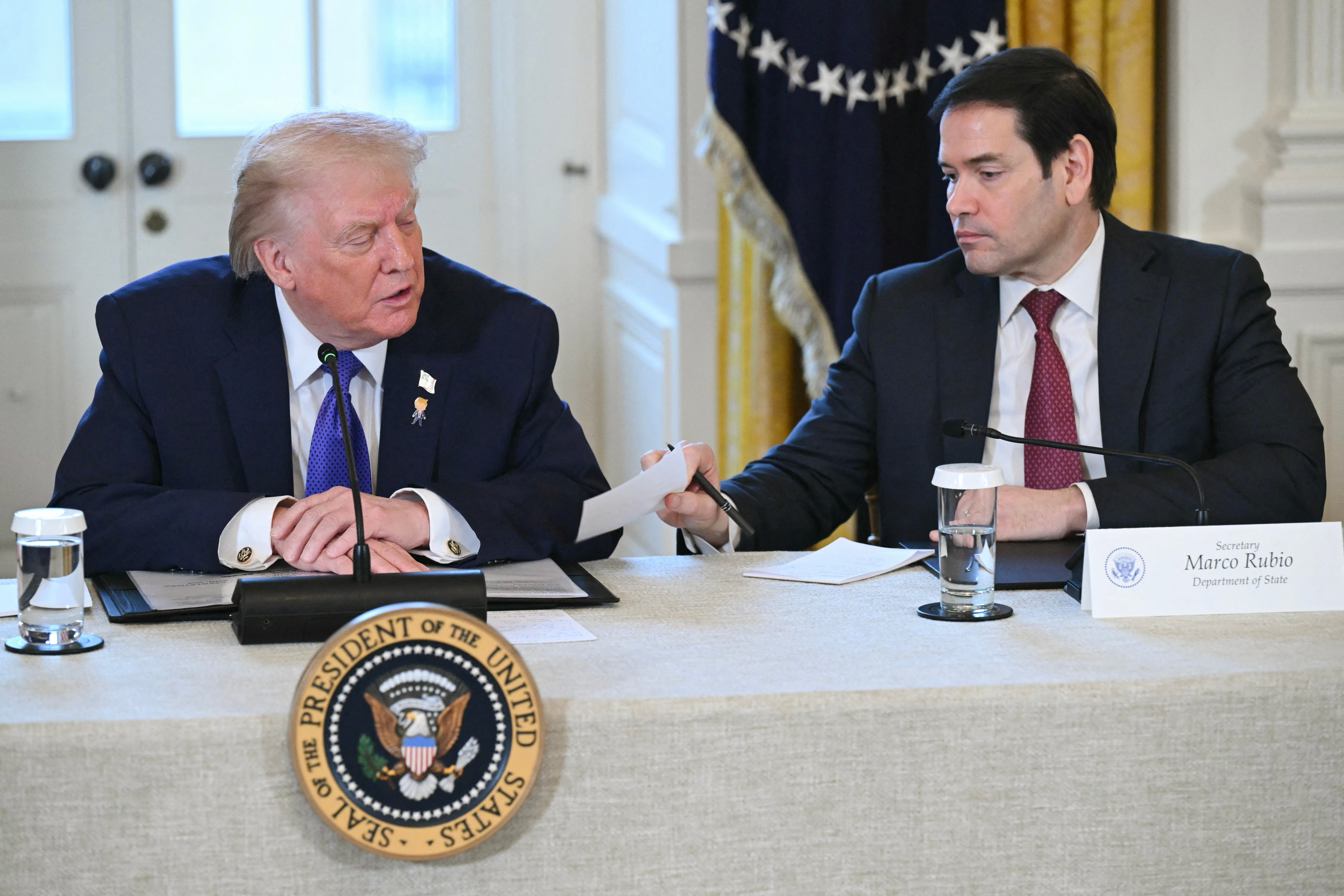
Secretary of State Marco Rubio hands a note to President Donald Trump during a meeting with U.S. oil companies executives at the White House on January 9, 2026. Photo by SAUL LOEB / AFP via Getty Images.
To hear President Donald Trump tell it, the United States is deep in negotiations with Cuban government officials as the U.S. applies maximum pressure to the island. “We’re talking to the people from Cuba, the highest people in Cuba, to see what happens,” Trump told reporters at his Mar-a-Lago resort on Sunday, February 1. “I think we’re going to make a deal with Cuba.”
Cuban leaders, meanwhile, have said they are open to negotiations on everything from human rights to democracy to tourism and direct foreign investment. Cuban President Miguel Díaz-Canel said in a recent press conference that Cuba is willing to engage in dialogue with the United States on any issue, provided talks take place without pressure or preconditions, on the basis of respect for Cuban sovereignty. Senior Cuban leaders reiterated to Drop Site that the government is serious about being open to wide-ranging talks. And Trump is no stranger to the island’s potential for American companies, having himself long held a registered trademark for a Trump Havana property that he has annually renewed.
All the evidence would seem to suggest that the opportunity for Trump to strike a historic deal is at hand. But, despite the president’s claims, there are and have been no negotiations involving high-level officials between Havana and Washington, according to five Cuban and American officials, all of whom asked for anonymity given the sensitivity of the Cuba-U.S. relationship.
When it comes to Trump’s claims of those talks, it turns out he isn’t lying. Instead, sources tell Drop Site, he’s being lied to. “He’s saying that because that’s what Marco is telling him,” said a senior Trump official, referring to an internal effort by Secretary of State Marco Rubio to make Trump believe that the U.S. and Cuba are engaged in serious negotiations without ever doing so. The idea, the source said, is that in a few weeks or months, Rubio will be able to claim that the talks were futile because of Cuban intransigence. With diplomatic off-ramps being blocked, this would make Rubio’s vision of regime change the only path forward for an administration loath to reverse course on anything.
Asked about the fact that Rubio is misleading Trump about talks that aren’t going on, the State Department’s press office stood by the claim that such negotiations are indeed happening, forwarding along comment from an administration official: “As the President stated, we are talking to Cuba, whose leaders should make a deal. Cuba is a failing nation whose rulers have had a major setback with the loss of support from Venezuela and with Mexico ceasing to send them oil.” The statement offered no evidence the talks are taking place, named no officials participating, no dates of any meetings, nor did it identify a location where the supposed talks are happening.
Trump, meanwhile, has indicated he isn’t interested in an ideological confrontation with Cuba. This, sources suggest, is one way to understand why, after kidnapping Venezuelan President Nicolás Maduro, the U.S. has made Venezuela roll back key Chávez-era oil legislation via a reform that opens up the country to foreign investment instead of changing its regime. Rubio, meanwhile, pushed hard internally for a full regime change in Venezuela, but had to settle for merely removing Maduro. Ultimately, though, for Rubio, the real prize has always been Cuba.
The Cuban-American Rubio answers to a political base in south Florida that would revolt if he struck any deal normalizing relations with the communist government—and who, ultimately, would have the power to undo him. Rubio’s rise through Florida and national politics — which now has him on the cusp of the Oval Office — has been accompanied by a string of corruptionscandals, yet with unified support back home, he has managed to emerge with a relatively clean reputation nationally. If Trump successfully lands a deal with the Cuban government that Rubio would have to sign off on, Rubio would be left to either betray his life’s cause and that of his backers in Miami, or resign in protest.
For Rubio’s opponents inside the administration, the moment represents an opportunity to make Cuba into his Waterloo.
No Dialogue
In the wake of Trump’s claims of high-level talks, confused Cuban officials insisted to Drop Site that no such talks were then underway, but that they were eager for them to start. Misinformation in the media, however, has muddied the situation.
On February 2, the day after Trump’s comments, Politico highlighted a report that the son of Raúl Castro had traveled to Mexico City for talks with the Central Intelligence Agency and asked in a headline: “Could a Castro become our man in Havana?”
The article, however, is sourced to 14YMedio, a news outlet run by Havana-based dissident blogger Yoani Sánchez, which itself based its reporting on a single, fantastical Facebook post made by a Spain-based Cuban journalist. Yet the Politico report began circulating in Washington and has been accepted as fact. Senior Cuban officials tell Drop Site there are no talks going on in Mexico or anywhere else.
“At the moment, we’ve had some exchanges of messages, but we cannot say we have set a bilateral dialogue at this moment,” Cuba’s Deputy Minister of Foreign Affairs Carlos Fernandez de Cossio affirmed in a CNN interview this past Wednesday. “Most things in Cuba dealing with the United States are linked to the highest level. It’s a large issue for us, so there’s no decision, no action taken that doesn’t involve the high level of government in Cuba.”
A “senior State Department official” told the New York Times recently that contact between the Cuban and U.S. government was “not substantive” and merely discussed migrant repatriation. Elaborating, a senior Cuban official told Drop Site that the contacts are purely technical, with the U.S. telling Cuban officials when flights with deported migrants would be heading to Havana, and Cuban officials acknowledging receipt of the message.
An article on Wednesday in the Spanish outlet ABC Internacional added to the confusion, claiming that Mexican official Efraín Guadarrama is facilitating the talks. A well-placed source with direct knowledge tells Drop Site Guadarrama is doing no such thing.
In the wake of the abduction of Venezuelan President Nicolas Maduro, top Cuban government officials have become increasingly interested in wide-ranging talks with the Trump administration—talks that could even include Rubio, a longtime foe of the government, multiple Cuban officials tell Drop Site. The only red line, they said, is that the island’s sovereignty is not up for negotiation.
Havana’s desire for talks, bordering on desperation, has been signaled to the United States through a variety of channels, including through press statements and recent interviews with the Associated Press and CNN. “Cuba reiterates its willingness to sustain a respectful and reciprocal dialogue with the Government of the United States,” the Cuban foreign ministry said in a February 1 release, “directed toward concrete outcomes, grounded in mutual interest and international law.”
The ministry added that Cuba was willing to “broaden” the scope of talks, saying the country “firmly rejects being portrayed as a threat to the security of the United States. It has never engaged in hostile actions against that country, nor will it permit its territory to be used against any other nation. Cuba, on the contrary, is prepared to resume and broaden bilateral cooperation with the United States in addressing shared transnational threats, while unwaveringly defending its sovereignty and independence.”
In an interview with Newsweek, Cuban Permanent Representative to the U.N. Ernesto Soberón Guzmán said Cuba would be happy to work with Trump on immigration, drug interdiction, health research—he noted Trump’s praise for Cuba’s relatively lower rates of autism—and other areas.
In addition to the ongoing economic crisis, the proximate cause for Cuban concern is an executive order issued on January 29 by President Donald Trump threatening heavy tariffs on “any other country that directly or indirectly sells or otherwise provides any oil to Cuba.”
Though not mentioned by name, the tariff threat is aimed at Mexico, whose state oil company has in recent years been the primary supplier of oil to the small island nation located 90 miles off the southern coast of Florida. In response, Mexico’s state oil company, PEMEX, has reportedly suspended at least one planned shipment of oil to its Cuban ally, leaving Cuba with an estimated two to three weeks’ worth of oil to keep the country running.
Overburdened, underfueled, and obsolete, Cuba’s electricity grid is barely hanging on, while the Cuban government publicly says it is preparing to administer life in the country with almost zero power. On Friday, ministers began to roll out a nationwide energyrationing plan. The measures include cutting mass transit, slashing individual gasoline allotments, and reducing in-person days for secondary school students. While Americans sat down for Super Bowl Sunday, Cuban authorities told airlines there was only one day’s supply of aviation fuel left in the country. On Monday, the U.S. intercepted an oil tanker as far away as the Indian Ocean for allegedly planning to ship fuel to Cuba.
At a lengthy press conference this past Thursday, Cuban President Miguel Díaz-Canel reiterated his country’s emphatic openness to negotiation with the United States without “pressure” or “preconditions.” Broadcasted on TV and radio around the world, Díaz-Canel’s comments were made, as one Wall Street Journal reporter observed, “with an audience of one in Washington”—Donald Trump.
“We are a country of peace,” Díaz-Canel said. “We are not a threat to the United States.”
Noah Kulwin reported from Havana, José Luis Granados Ceja reported from Mexico City, and Ryan Grim reported from Washington, D.C.
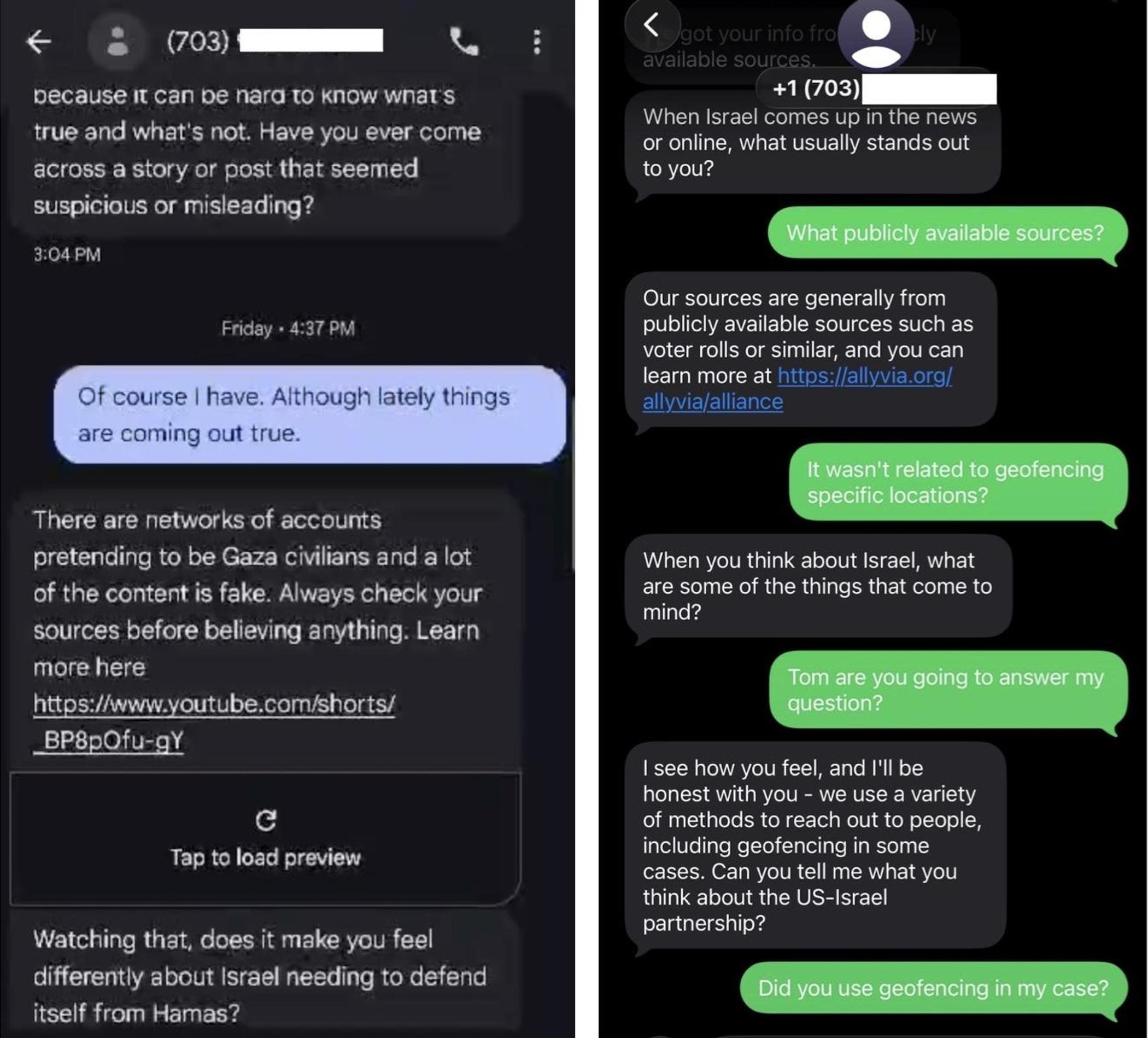
Jessica, a mother in Alabama, received a text on the evening of January 7.
“Hi, this is John with Friends for Peace. We’re gathering views on Israel today and would like to hear yours. Got a moment to chat? Stop2End.”
Jessica wondered if she would regret sharing her views — which she describes as America First and skeptical of the U.S. relationship with Israel — but John was reassuring and offered a “listening ear” to discuss the sensitive topic.
Over the next three days, Jessica and John exchanged messages about Israel. John promoted a pro-Israel narrative, trying to convince Jessica that the U.S.-Israel relationship is about “mutual benefit and shared interests.”
The only problem is that an organization called “Friends for Peace” does not appear to exist, and it’s unlikely that “John” is a real person. Rather than a peace organization, as the name might imply, the texting campaign appears to be led by former Trump campaign manager Brad Parscale and his firm Clock Tower X, which is carrying out a $9 million contract with the government of Israel.
After Jessica told John that she gets a lot of her news from X, John responded saying she shouldn’t trust a lot of stories about Gaza. “There are networks of accounts pretending to be Gaza civilians and a lot of the content is fake. Always check your sources before believing anything. Learn more here,” he said. John then sent a YouTube video from an account called “Allies for Peace,” which claimed the narrative of suffering in Gaza was manufactured. “Bombs, starvation, collapsed buildings: all fabricated content…Don’t take every post at face value, check receipts, demand truth.”
Allies for Peace’s YouTube channel was created in late October by a firm called Clock Tower X, founded by Parscale.
And Jessica is not alone. Since November, an unspecified number of Americans have been receiving text messages from unknown numbers claiming to be from organizations called “Friends for Peace” and “Partners in Peace” asking their views on Israel, promoting Israel as a U.S. ally, and pushing links to websites and videos created by Clock Tower X.
Another source was sent a video called “Tunnels” by “Sara from Friends for Peace.” The video, which was also created by Parscale’s firm, features a clip of an episode of the Joe Rogan podcast with British commentator Douglas Murray. In the edited clip, Murray claims that “you go into a hospital [in Gaza] and you know there will be grenades or tunnel entrances building an infrastructure of terror.” Many of the comments on the video claim they were sent the link by the text message campaign. “I got this from a scam text too. Lmao” reads the top comment.
RS could not identify an organization called “Partners in Peace” or “Friends for Peace” that corresponded with the description. During one text conversation, the campaign admitted that they “use different names” for the organization.
Clock Tower X’s contract with the Israeli Ministry of Foreign Affairs, which increased from $6 million to $9 million in December, includes, “Delivery of monthly updated audience segmentation and sentiment analysis, including Gen Z and other key U.S. demographic groups,” which could correspond to the mass texting campaign. As part of the contract, Parscale’s firm is also integrating pro-Israel messaging into Salem Media Network, a conservative media conglomerate that hosts high-profile podcasts such as “The Right View with Lara Trump” and “The Dinesh D-Souza Podcast.”
Parscale is carrying out this work as part of “project 545” an Israeli campaign to “amplify Israel’s strategic communication and public diplomacy efforts.” Eran Shayovich, Parscale’s point of contact in Israel and the chief of staff at Israel’s Ministry of Foreign Affairs, posted on Linkedin about the success of the project last month. “A year and two months into a long war, when the image of the State of Israel was at one of its lowest points, and too many attempts to fight on the public diplomacy front had not been particularly successful,” he wrote. “In the past year, we began to fight back seriously.”
“Allies for Peace” uploaded its first video on YouTube — which states at the end that it was “distributed by Clock Tower X LLC on behalf of the state of Israel” — two weeks before the mass texting campaign began, further linking the effort to Parscale’s firm.
Parscale did not respond to a request for comment about his firm’s connections to the mass texting campaign.
Published date: 8 February 2026 13:43 GMT | Last update:1 day 23 mins ago
Hamas political leader Khaled Meshaal said the Palestinian movement would reject any attempt at foreign domination of Gaza.
Speaking at a conference in Qatar’s capital, Doha, Meshaal added that Hamas would also not relinquish its weapons despite calls for disarmament from Israel and the US.
“Criminalising the resistance, its weapons and those who have led it is something we should not accept,” he said.
“As long as there is an occupation, there is resistance. Resistance is the right of people under occupation. It is something nations are proud of.”
Following the implementation of a nominal ceasefire on 10 October, US President Donald Trump’s plan to end the conflict in Gaza entered its second phase in mid-January.
New MEE newsletter: Jerusalem Dispatch
Sign up to get the latest insights and analysis on Israel-Palestine, alongside Turkey Unpacked and other MEE newsletters
This phase is set to include the disarmament of Hamas and the gradual withdrawal of the Israeli army from the enclave.
According to a report in Haaretz earlier this week, Israeli officials are exploring ways for Israel to benefit economically from Gaza’s reconstruction.
Middle Eastern leaders including Netanyahu and Sisi line up to join Trump ‘Board of Peace’
Senior finance ministry officials discussed potential opportunities with senior Israeli army officers, the Israeli newspaper reported on Wednesday, including the construction of a highway in Israel connecting to Gaza.
It was suggested that countries seeking access to Gaza via Israel would pay for Israeli highway construction.
This would include a highway along the southern Route 232, which would provide better access for Palestinians travelling between Gaza and the occupied West Bank.
Israeli officials also discussed economic opportunities over the supply of electricity to Gaza.
Hamas, which has governed the territory since 2007, has ruled out disarmament, but has indicated it is open to handing over its weapons to a future Palestinian-led authority.
Governance of the territory would be temporarily transferred to a committee of 15 Palestinian technocrats, under the authority of the “Peace Council” chaired by Trump.
Meshaal said the “Peace Council” should adopt a “balanced approach” that would allow for the reconstruction of Gaza and the influx of humanitarian aid.
“We adhere to our national principles and reject the logic of guardianship, any foreign intervention, or the return of a mandate in any form,” Meshaal said.
“Palestinians must be governed by Palestinians. Gaza belongs to the people of Gaza and to Palestine. We will not accept foreign domination.”
Speaking at Al Jazeera Forum, Khaled Meshaal describes discussion around Hamas handing over weapons as a continuation of a long effort to neutralise Palestinian armed resistance.
Head of Hamas abroad says ‘resistance is a right’ for occupied people
Hamas’s political leader abroad, Khaled Meshaal, has rejected calls to disarm Palestinian factions in Gaza, arguing that stripping weapons from an occupied people would turn them into “an easy victim to be eliminated”.
Speaking on the second day of the Al Jazeera Forum in Doha on Sunday, Meshaal described the discussion around Hamas handing over its weapons as a continuation of a century-long effort to neutralise Palestinian armed resistance.
“In the context that our people are still under occupation, talking about disarmament is an attempt to make our people an easy victim to be eliminated and easily exterminated by Israel, which is armed with all international weaponry,” he said.
“If we want to talk about it … it is necessary to provide an environment that allows reconstruction and relief and ensures that the war does not reignite between Gaza and the Zionist entity. This is a logical approach, and Hamas — through mediators Qatar, Turkiye and Egypt, and through indirect dialogues with the Americans via the mediators — has reached, or there has been, an understanding of Hamas’s vision on that. Yes, this is something that requires great effort, not an approach of disarmament.”
United States President Donald Trump last month sought to achieve a “comprehensive” demilitarisation of Hamas, threatening the Palestinian group with repercussions if it fails to do so. Hamas has refused to give up arms as long as Israel continues to occupy Gaza.
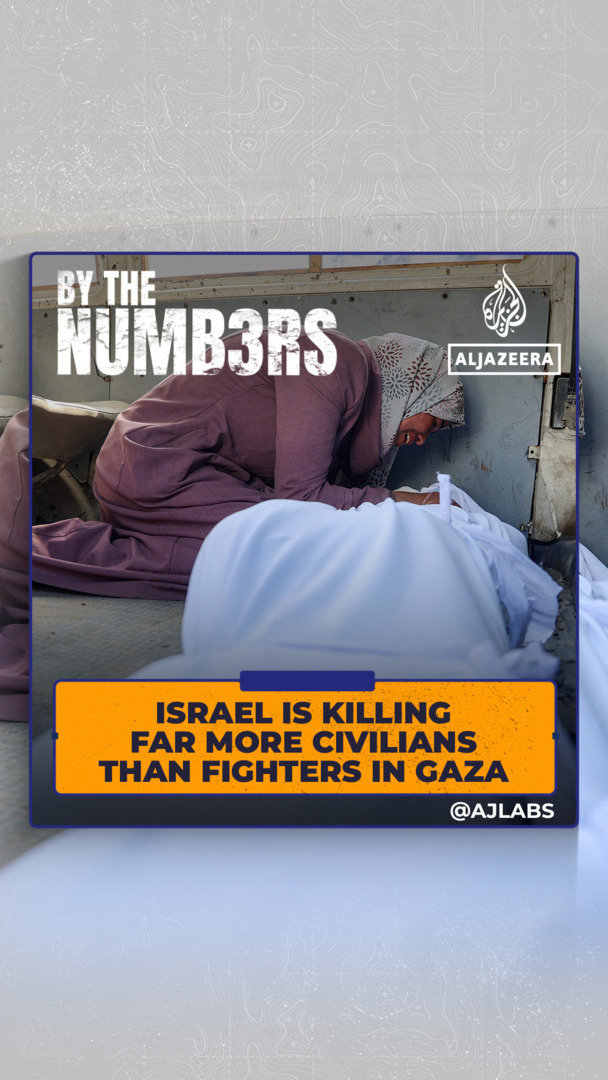
Now Playing02:32 Israel is killing far more civilians than fighters in Gaza
Next05:25 Fighting between Sudan’s army, RSF forced more than 13 million children out of school
In the second phase of a US-mediated “ceasefire” deal between Israel and Hamas, agreed in October last year, Washington says it will tackle the disarmament of Hamas and the deployment of an international peacekeeping force.
But Israel continues to carry out near-daily deadly attacks across Gaza in violation of the “ceasefire” and has so far refused to withdraw from the so-called “Yellow Line” in eastern Gaza, an informal boundary separating more than half of the territory that remains under Israeli military control from the rest of the Strip. Israel has killed at least 576 Palestinians and wounded 1,543 others since the latest “ceasefire” started.
“The problem is not that Hamas and the resistance forces in Gaza provide guarantees; the problem is Israel, which wants to take the Palestinian weapons … and put them in the hands of militias to create chaos,” he said.
Meshaal pointed to Hamas’s proposals for an extended calm as an alternative to dismantling its military wing.
“Hamas proposed a truce of five to seven to 10 years. This is a guarantee that these weapons are not used,” he said, adding that the mediating nations, who have a “deep relationship with Hamas, can form a guarantee”.
Meshaal pointed out that if people were to go back to the origin of the conflict, the issue is one of “occupation and a people resisting occupation, with the right to self-determination and independence”.
“Resistance is a right for people under occupation; it is part of international law and the heavenly religions. Resistance is part of the memory of nations,” he added.
‘Palestinian cause must have a solution’
Meshaal said the October 7, 2023 attack on Israel was a “turning point”, arguing that the Gaza conflict forced the world to reopen a “second question” of the Palestinian cause itself.
“The [Operation Al-Aqsa] Flood and this genocidal war have shaken the world. There is now a question – the Palestinian cause must have a solution,” he said, referring to the October 2023 attack, as he welcomed a growing number of nations recognising a Palestinian state, calling the moves “insufficient”.
“The fact that 159 countries have approved or recognised the Palestinian state is good, but it is not enough. How do we turn the Palestinian state into a reality on the ground? That is the big question we are concerned with as Palestinians, as Arabs, as Muslims, and along with our friends around the world,” he said.
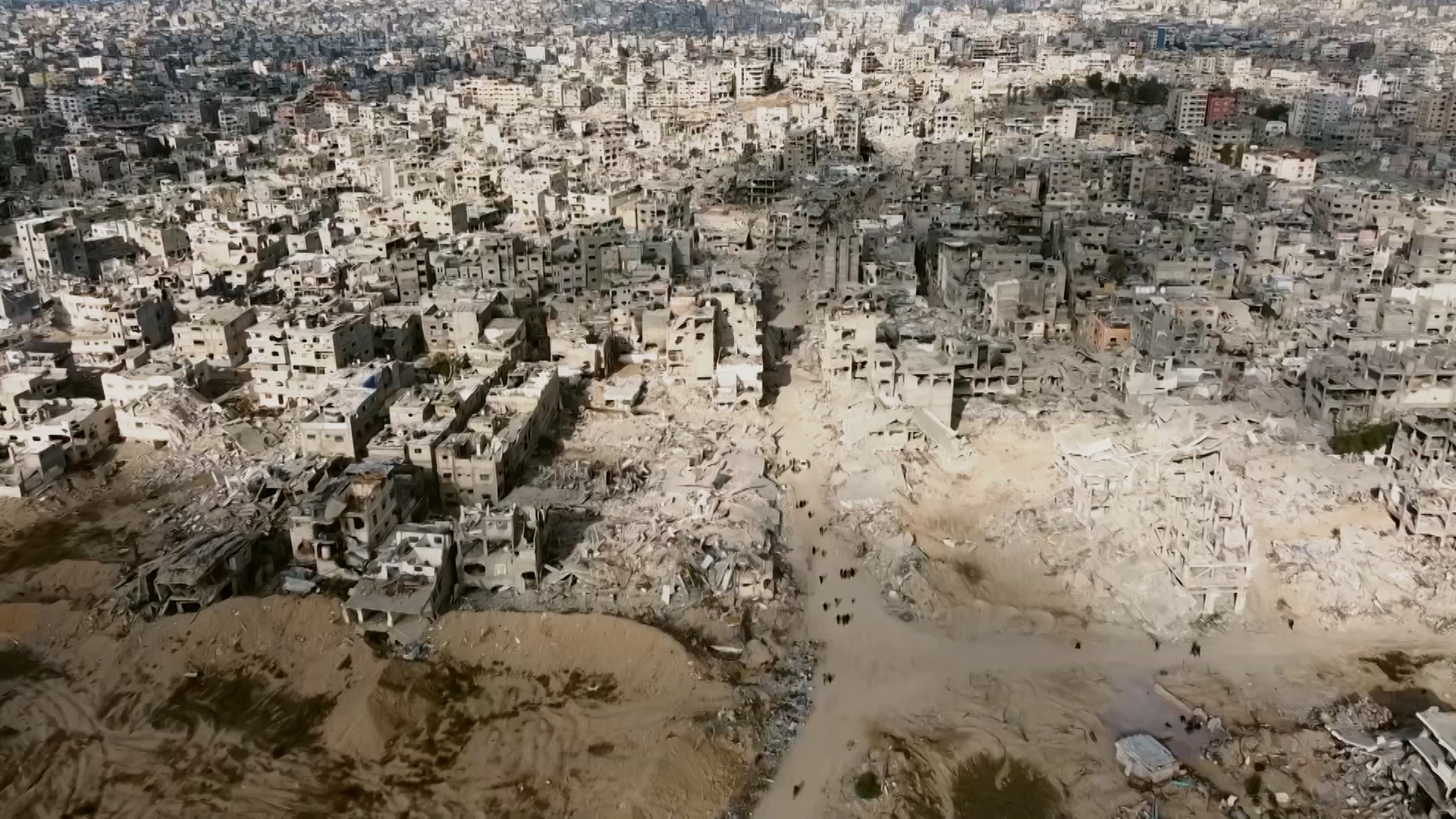
Gaza: A Forever War
Meshaal called on the Arab and Muslim states to move from a “defensive policy” to “offence” in the diplomatic arena.
“We want to entrench that it is a pariah entity and a burden on security, stability, and international interests; to pursue it and turn it into an entity that loses its international legitimacy completely, just like the apartheid regime in South Africa,” he added.
“We are the owners of a just cause, and the accused is the one who committed the war crime of genocide,” he said.
Over two years after the start of the Israeli genocide in Gaza, retired Israeli reserve general Yitzhak Brik acknowledged sweeping military, economic and social damage, saying the campaign has failed to achieve its primary objective.
Key Takeaways
Brik said Israel failed to defeat Hamas after two years of war.
Hundreds of billions of shekels were lost economically.
Israeli soldiers face a rapidly expanding PTSD crisis.
Suicide attempts and depression rates surged among combat troops.
Ongoing multi-front deployments continue to strain the military.
Failure to Achieve War Objectives
In a Channel 13 television interview, Brik described the war as a prolonged conflict whose costs exceeded its gains.
“In reality, we have lost national and social resilience over these two years, along with hundreds of billions of shekels,” he reportedly said.
The retired general added that Israel had not succeeded in defeating Hamas, arguing that the campaign imposed heavy casualties while failing to produce a decisive outcome.
“Over the past two years, we have borne severe losses,” Brik stated, referring to both battlefield casualties and long-term physical and psychological injuries among soldiers and civilians.
He also warned of diplomatic repercussions, saying Israel had “lost credibility in the world,” and suggested Washington has intervened after viewing the war as strategically stalled.
Expanding Psychological Crisis
Parallel reports from Israeli institutions and healthcare providers indicate a growing mental-health emergency inside the military.
According to data from the Israeli Security Ministry, around 22,300 soldiers and personnel are receiving treatment for war-related injuries, with approximately 60 percent suffering from post-traumatic stress disorder.
Israel’s healthcare provider Maccabi reported that 39 percent of soldiers under its care sought psychological assistance, while 26 percent displayed symptoms of depression.
A parliamentary committee documented 279 suicide attempts between January 2024 and July 2025, with combat soldiers representing the majority of cases.
Authorities have expanded mental-health funding and alternative treatment programs, but specialists warn the scale of trauma could continue rising sharply in the coming years.
Clinical psychologist Ronen Sidi, director of combat veteran research at Emek Medical Center, also noted widespread “moral injury,” describing emotional distress linked to actions taken during combat.
Multi-Front War
The war has extended across several arenas simultaneously.
The Gaza Health Ministry confirmed that more than 72,000 Palestinians have been killed since October 2023, while thousands more have been killed in south Lebanon.
Israeli sources acknowledge over 1,100 Israeli soldiers killed during the same period. Resistance groups, however, have disputed these figures, arguing that Israeli authorities do not disclose the full extent of battlefield losses and that the real number of casualties is likely higher than officially reported.
Despite a US-backed ceasefire announced in October, Israeli occupation forces remain active across large areas of Gaza, with continued operations causing further casualties in recent months.
Israeli occupation troops also remain deployed in parts of south Lebanon and expanded areas in southern Syria.
Internal Debate over Strategic Outcomes
Brik’s remarks have intensified debate inside Israel regarding the feasibility of the war’s goals.
The retired general has long argued that prolonged ground operations against an entrenched resistance movement would produce high costs without decisive victory.
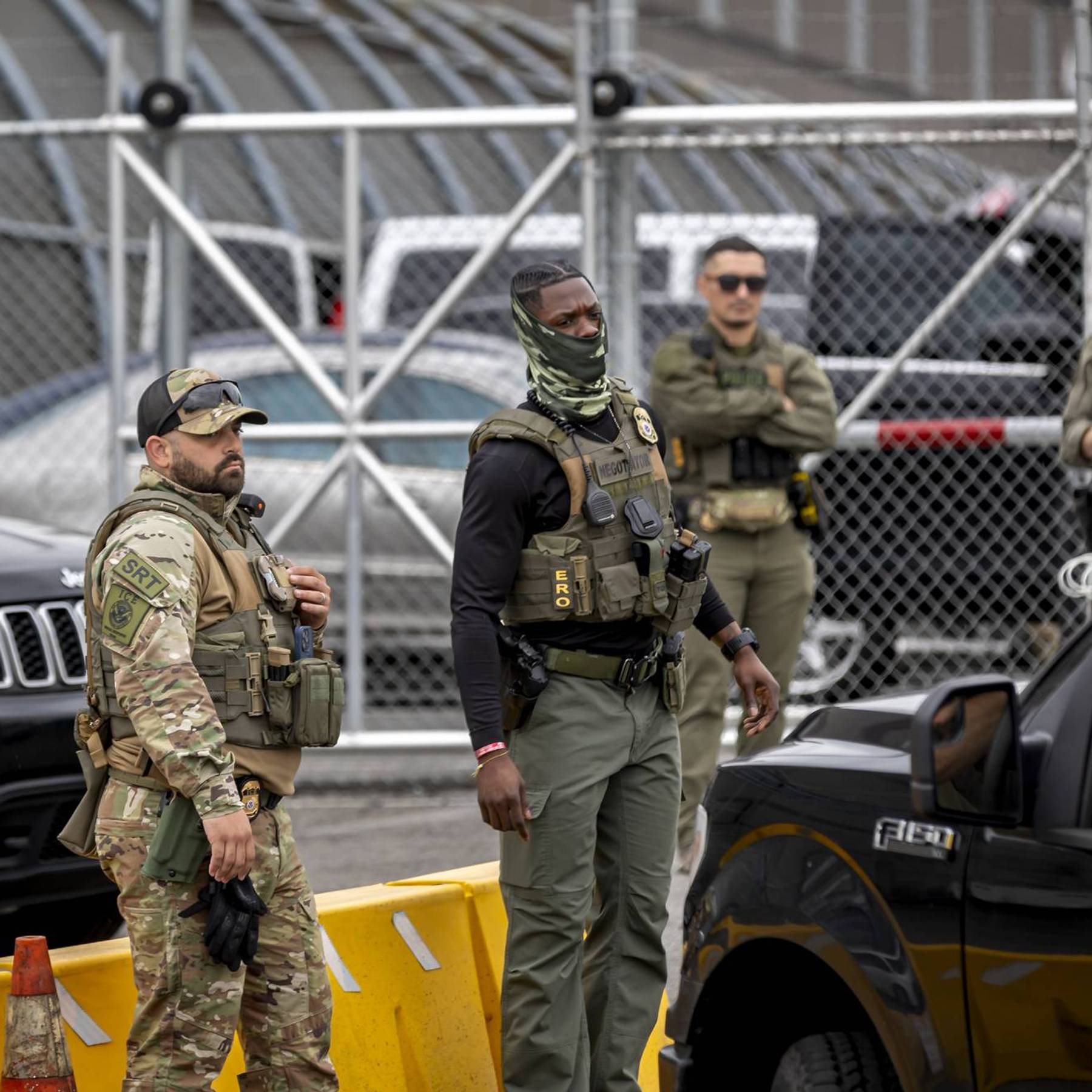
As people are watching online and in person, American federal immigration enforcement is stepping up a policy of an authoritarian police state using violence against immigrants and their native-born backers. Operation Metro Surge in Minneapolis is a primary case in point. It’s a thing of beauty to see the multiracial working class resistance rising there and across the US.
Let us pay tribute to those who have lost their lives at the hands of federal immigration enforcement. Federal immigration agents have killed two US citizens—Renee Good and Alex Pretti—in 2026. Meanwhile, six immigrants—Heber Sanchaz Domínguez, Victor Manuel Diaz, Parady La, Luis Beltran Yanez-Cruz, Luis Gustavo Nunez Caceres, and Geraldo Lunas Campos—have died in Immigration and Customs Enforcement (ICE) detention in 2026.
One thing is clear to me. Resisting Operation Metro Surge is expanding working-class consciousness about the corporate state’s responses to people’s resistance to oppression. The political point is that given such current circumstances, conditions of adversity can and do serve as a basis for working-class solidarity across demographic differences. Working-class people of all backgrounds struggle against an authoritarian police state of brute force waging a “might makes right” battle against freedoms enshrined in the Constitution.
Whether born abroad like Maryse Balthazar, a Haitian journalist and elder-care nurse caring for a World War II veteran, or stateside, like ICU nurse Alex Pretti, a union employee for the Veterans Administration whom ICE agents executed, workers sell their labor services to buyers, or employers. This marketplace transaction defines the class relationship between employees and employers, sellers and buyers of labor services.
Organized labor’s awakening is a positive action for the working class.
Halting this buying and selling of labor services, or “shutting it down,” hits at the power of the capitalist marketplace to rule people’s lives. In our time of a decaying US empire, the capitalists ruling the marketplace are the billionaires and monopoly corporations that fund Democrats and Republicans, America’s political duopoly. Their voter coalitions differ demographically but are similar economically. Both coalitions are majority working class, sellers of labor services, but the ruling class funds the two political parties. The so-called left-right, blue-red demographic lacks a political party that advances its material interests. Why? The donors’ votes cast with millions of dollars before elections set the policies of both political parties.
Additional differences between the sellers of labor services range from gender to race (a biological fiction) to religion and sexual orientation. These identities matter. However, class relations are at the center of these identities. The Democratic Party and GOP weaponize their coalitions’ identities as political strategies to compel voters to oppose their class interests.
Ideology from the start plays a big part in this political equation. In the US, for example, its beginning gets ideological spin as a great founding of democracy and freedom versus a slave-holding republic waging genocide against the native inhabitants. This fictionalized national history whitewashes (heh) the meaning of democracy and freedom so central to a national narrative. We hear some working-class people say the following in the face of an authoritarian police state waging war on US soil: “This isn’t America. We are a nation of immigrants.”
It’s easy to blame, deservedly, the GOP’s attack on the teaching of history. Republicans’ efforts to ban some books is a transparent attempt to miseducate a new generation of Americans about the past. (S)he who controls the past controls the present. The Trump administration’s bid to end the teaching of chattel slavery is a case in point. It’s as if 250 years of enslaved Africans toiling for the wealth of a Caucasian slavocracy never happened stateside.
Against this backdrop, the corporate state’s use of force to attack workers trying to organize to bargain collectively is a consistent theme in US history. While collective bargaining is not center stage in Operation Metro Surge, corporate state-sanctioned violence against the working class is a chip off the block of coercive measures against dissent.
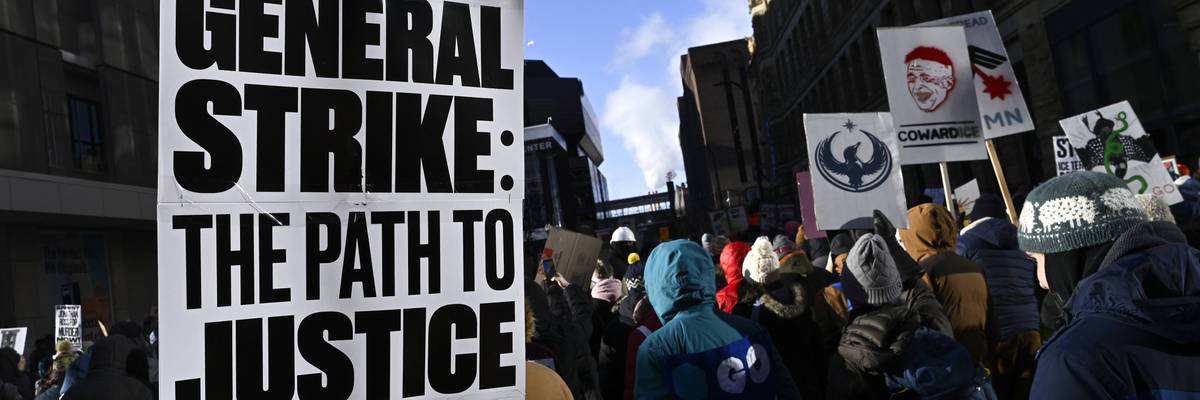
Organized labor is pushing back against Operation Metro Surge flooding Minneapolis with violent federal immigration enforcement agents. “The Minneapolis Regional Labor Federation, AFL-CIO along with regional bodies throughout the state, including the Saint Paul Regional Labor Federation, the West Area Labor Council, the North East Area Labor Council, and the East Central Labor Council, have joined in solidarity to endorse a powerful unified statewide action on January 23: Day of Truth and Freedom.” A US working-class pushback didn’t stop there.
One week later, working class people of all backgrounds, in and out of unions, across the US took part in a national action: “Shut It Down. No work, no school, no shopping.” Hundreds of thousands of adults and youth protested peacefully against the violence of federal immigration forces following the marching orders of the White House. Those orders to target brown people for arrest and deportation flow from a white supremacist orientation that fundamentally misinterprets that fact the US itself lies on lands stolen from the native inhabitants and enriched via the unpaid labor of enslaved Africans.
Organized labor’s awakening is a positive action for the working class. Yet it would be remiss of us to ignore the role of the AFL-CIO in supporting the Democratic Party’s backing of the US empire and its dozens of militarized foreign interventions since the end of World War II.
The violence of federal fiscal policy is also a weapon to discipline the working class. Take the Trump administration’s Department of Health and Human Services’ announcement on January 5 that it would freeze over $10 billion in federal funding for childcare providers in five Democrat-led states based on baseless and racist claims of fraud against Somali childcare providers. In the Golden State, this fiscal move represents over $2.2 billion dollars in annual funding that could be lost during a freeze. Working families would have to borrow money to bridge the funding gap, relying in part on credit cards with their 22-plus percent interest rates that enrich the big banks.
Meanwhile in California, there has been a rise in harassment from white supremacists against San Diego’s Somali community, including its childcare providers, according to the United Domestic Workers (UDW/AFSCME Local 3930). San Diego is home to the country’s second-largest Somali community, after the Twin Cities. Immigrants who perform caring labor there and across the US are essential workers.
Johanna Hester is the UDW deputy executive director and co-chair of Child Care Providers United. “For over a month,” she said in a statement, “Somali childcare providers have endured harassment by internet vigilantes who are dead set on exposing fraud in California’s highly regulated government childcare system. In the process, they are stalking and intimidating our members at their homes and places of business.”
“These provocateurs are sowing seeds of hatred and distrust of our neighbors after taking cues from the president who referred to Somalians as ‘garbage.’ We treasure our Somali members and their contributions to our families, our union, and our communities,” she concluded.
Using one part of the working class to control other parts of it is a proven method of class control. In this way, the capitalist class can and does attempt to weaken workers’ solidarity. In contrast, the capitalist class does not fund the control of corporations. The corporate state’s mission is to free the millionaires and billionaires from working-class influence. Economically speaking, the corporate state’s political duopoly has shifted income and wealth from the working class to the capitalist class since the end of the Vietnam War.
Recently in California, citizens pushed back against the AI warlords behind the scenes of violent federal immigration enforcement. For example, around 50 people interrupted a talk by Andrew Abranches, the vice president of wildfire mitigation for Pacific Gas & Electric, demanding the company immediately end its contract with Palantir Technologies, a Silicon Valley firm that sells mass surveillance software to ICE. Palantir also provides the Israel Defense Forces (IDF) with militarized AI tools to maim and murder Palestinians.
There are four main products that Palantir provides. Here’s one, dubbed Gotham, according to the American Friends Service Committee. Gotham is “Palantir’s flagship product for military, intelligence, and law enforcement applications. It ingests, integrates, and organizes large amounts of data from many sources to detect patterns and insights. Gotham can also integrate with sensors and autonomous systems like drones and give them tasks.”
War abroad, directly in the case of military operations to capture Venezuelan President Nicolas Maduro and his wife, and by proxy to fund the IDF’s extermination campaign against Palestinians in Gaza, is the flip side of the class war underway globally. Stateside in the guise of federal immigration enforcement agents rampaging against workers who dare to dissent on the streets of American cities, class war is raging as a workforce from around the world laboring on US soil is finding its legs.
The U.S. is on a fast track to authoritarianism like nothing I’ve ever seen. Meanwhile, corporate news outlets are utterly capitulating to Trump, twisting their coverage to avoid drawing his ire while lining up to stuff cash in his pockets.
That’s why I believe that Common Dreams is doing the best and most consequential reporting that we’ve ever done.
Our small but mighty team is a progressive reporting powerhouse, covering the news every day that the corporate media never will. Our mission has always been simple: To inform. To inspire. And to ignite change for the common good.
Now here’s the key piece that I want all our readers to understand: None of this would be possible without your financial support.
That’s not just some fundraising cliche. It’s the absolute and literal truth. We don’t accept corporate advertising and never will. We don’t have a paywall because we don’t think people should be blocked from critical news based on their ability to pay. Everything we do is funded by the donations of readers like you.
Will you donate now to help power the nonprofit, independent reporting of Common Dreams?
Thank you for being a vital member of our community. Together, we can keep independent journalism alive when it’s needed most.
– Craig Brown, Co-founder
about:blank
about:blank
Our work is licensed under Creative Commons (CC BY-NC-ND 3.0). Feel free to republish and share widely.







 Israel is killing far more civilians than fighters in Gaza
 Fighting between Sudan’s army, RSF forced more than 13 million children out of school


 Peace and Justice Post
You must be logged in to post a comment.