Posts Tagged ‘Pakistan’

Pakistan’s defence minister calls Israel ‘curse for humanity’ in deleted post

April 10, 2026

Pakistan is set to mediate talks between the US and Iran from Saturday

Pakistani Defence Minister Khawaja Asif speaks during an interview with Reuters in Islamabad on 20 October 2025 (Reuters)

By Daniel Tester

Published date: 10 April 2026 13:35 BST | Last update:39 mins 32 secs ago

Pakistan’s defence minister, Khawaja Asif, called Israel “evil” and a “curse for humanity” in an X post on Thursday, just hours before US and Iranian delegations were due to arrive in Islamabad for peace talks mediated by Pakistan.

In the post, which has since been deleted, Asif wrote: “While peace talks are underway in Islamabad, genocide is being committed in Lebanon. Innocent citizens are being killed by Israel, first Gaza, then Iran and now Lebanon, bloodletting continues unabated. I hope and pray people who created this cancerous state on Palestinians land to get rid of European jews burn in hell.”

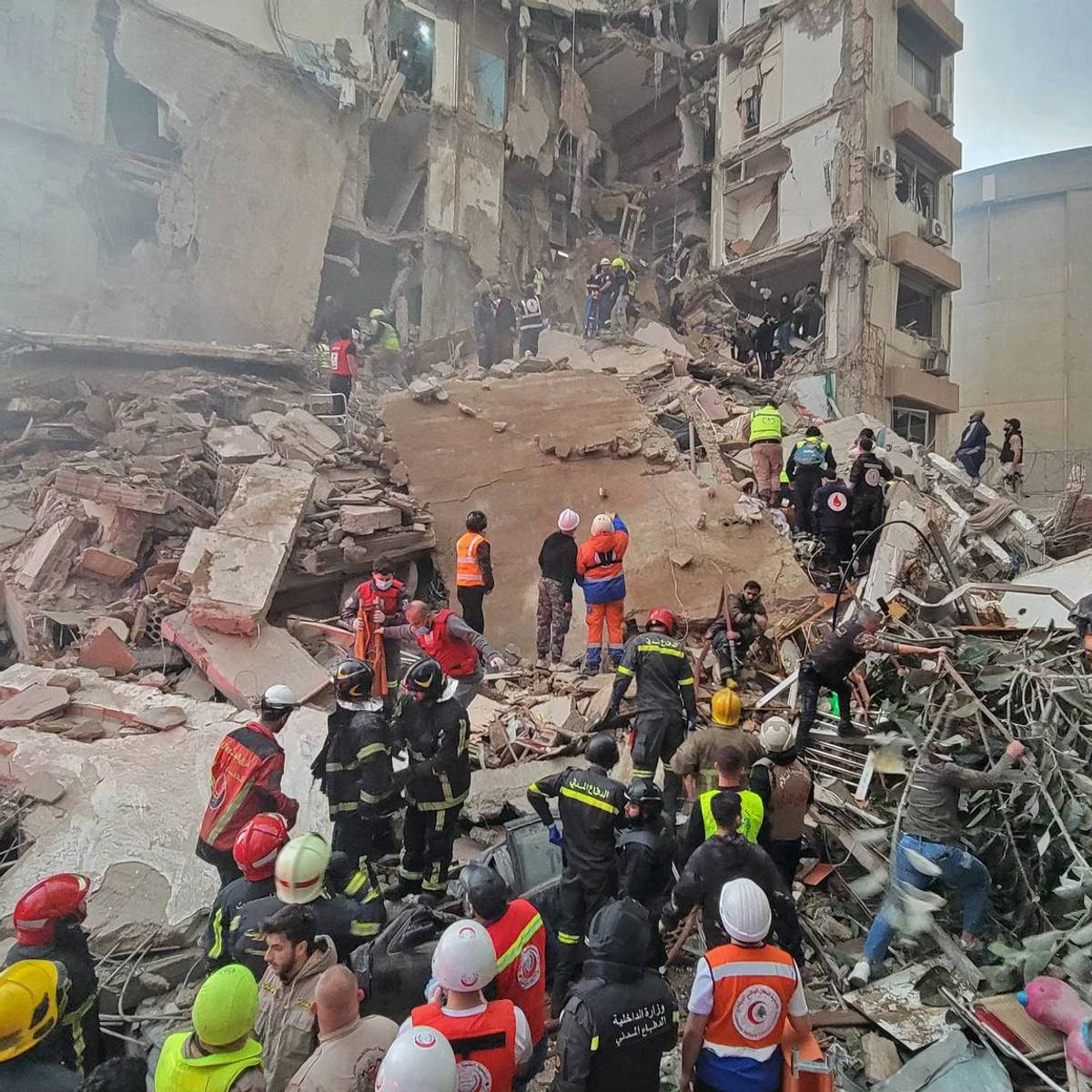
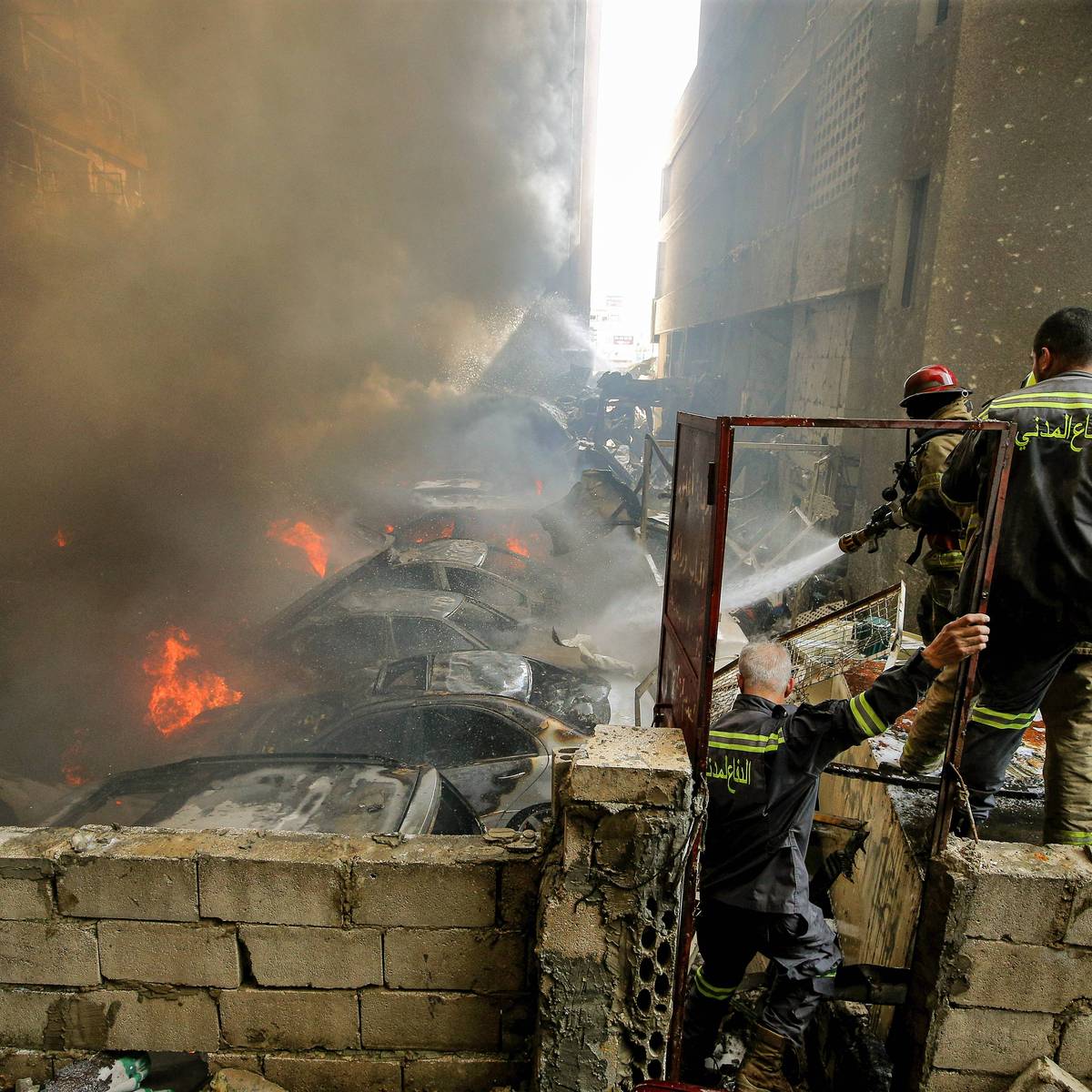
The statement followed a wave of Israeli strikes on Lebanon on Wednesday that killed over 200 people and wounded over 1,000 in the heaviest day of bombing on the Lebanese capital in decades. 

The Israeli attacks were met with widespread condemnation, including from European leaders and the UN human rights chief, Volker Turk

New MEE newsletter: Jerusalem Dispatch

Sign up to get the latest insights and analysis on Israel-Palestine, alongside Turkey Unpacked and other MEE newsletters

The Israeli Prime Minister’s Office called Asif’s comments “outrageous” in a post on X. 

“This is not a statement that can be tolerated from any government, especially not from one that claims to be a neutral arbiter for peace,” it said.

Israeli Foreign Minister Gideon Saar said in a post on X that Israel “views very gravely these blatant antisemitic blood libels from a government claiming to mediate peace”.

“Calling the Jewish state ‘cancerous’ is effectively calling for its annihilation,” he added. 

A screenshot of the deleted tweet on 9 April by Pakistani Minister of Defence Khawaja Asif describing Israel as
A screenshot of the deleted tweet on 9 April by Pakistani Defence Minister Khawaja Asif describing Israel as ‘cancerous’ and ‘evil’

Islamabad is set to host delegations from the US and Iran from Friday, with talks scheduled to begin on Saturday. They are aimed at ending the US-Israeli war on Iran, which reached a tentative ceasefire agreement on Wednesday.  

Iran’s foreign ministry spokesperson, Esmaeil Baghaei, said on Friday that Iranian delegates would not attend peace talks unless the ceasefire agreement is extended to Lebanon.

One Pakistani official involved in the mediation talks told The Guardian on Friday: “Our priority is that the talks go smoothly.” 

“We don’t want to be seen as a spoiler. Our role is as a facilitator and mediator. We will leave it to both parties, Iran and the US, to share any developments with the media if they want.”

Pakistan, which has positioned itself at the centre of global conflict mediation during the war, has also been mired in its own conflict with Afghanistan since declaring “open war” on 27 February.

Hundreds have been killed and nearly 100,000 displaced by cross-border shelling and air strikes during the conflict, which China is simultaneously mediating. 

Asif, a veteran member of the conservative Pakistan Muslim League party that has governed Pakistan since 2024 and during several previous administrations, has long been vocal in his criticism of Israel. 

On 3 March, he described Zionism as “a threat to humanity” in a post on X. 

“From the establishment of Israel on the land of Palestine until today, every catastrophe that has befallen the Islamic world, every war imposed upon it, will show the direct or indirect hand of Zionist ideology and the state,” he wrote.

Pakistan Reiterates That Lebanon Is Still Part of Ceasefire Despite Israel’s Attacks

April 9, 2026

PAKISTAN-IRAN-US-ISRAEL-WAR-PM

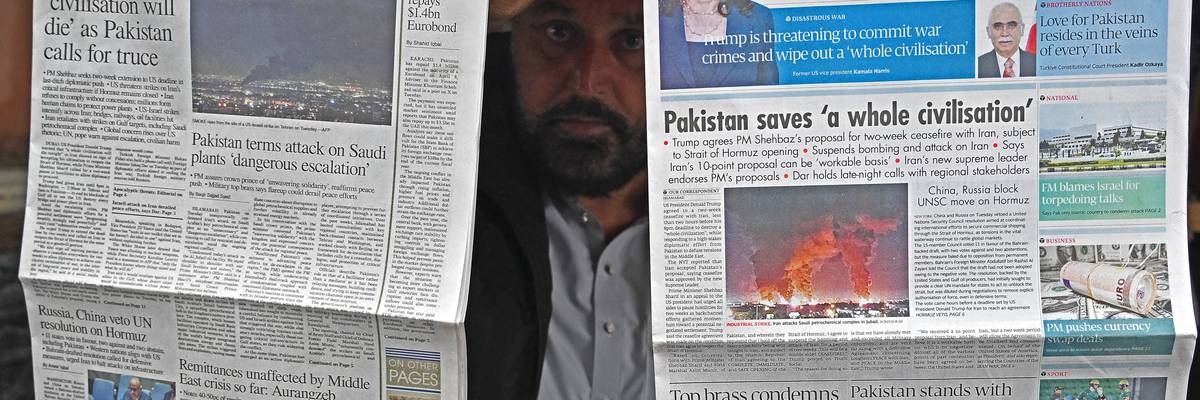
A vendor displays morning newspapers at his roadside stall in Islamabad on April 8, 2026.

(Photo by Aamir Qureshi/AFP via Getty Images)

A foreign policy expert told Common Dreams that Israel’s unprecedented attack on Lebanon, backed by the US, “appeared to be a direct attempt to blow up the ceasefire, and it worked.”

Stephen Prager, Common Dreams, Apr 08, 2026

A Pakistani official said Wednesday that despite Israel’s unprecedented attack on Lebanon, it is still part of the ceasefire agreement that Pakistan’s prime minister helped to mediate the previous day, even as Israel and the US insist otherwise.

Pakistani Prime Minister Shehbaz Sharif, who played a key role in brokering the deal announced on Tuesday, said that “Iran and the United States of America, along with their allies, have agreed to an immediate ceasefire everywhere, including Lebanon and elsewhere, EFFECTIVE IMMEDIATELY.”

RECOMMENDED…

Israeli strikes on Lebanon

Aid Groups Warn Excluding Lebanon From Ceasefire ‘Risks Prolonging the Crisis’

Lebanese-Israeli conflict - Beirut

Despite Ceasefire With Iran, Israel Pummels Lebanon With ‘Apocalyptic’ Strikes

But within hours of the agreement, Israel launched what it said was its largest military operation against Lebanon yet, which killed at least 254 people and wounded 1,165 others, according to the Lebanese Health Ministry. The Israel Defense Forces acknowledged that the assault included attacks on many civilian areas.

Contrary to the mediators, Israeli Prime Minister Benjamin Netanyahu declared that the ceasefire “does not include Lebanon.” White House Press Secretary Karoline Leavitt followed suit, confirming that the US’s position was also that “Lebanon is not part of the ceasefire,” adding that “that has been relayed to all parties involved.”

But Pakistan’s ambassador to the US, Rizwan Saeed Sheikh, said on Wednesday afternoon that this was not the agreement the parties reached on Tuesday.

He told CNN anchor Becky Anderson that the deal announced by his prime minister, which included Lebanon, “could not have been more authentic” to what the two parties agreed to, and that it was still the prime minister’s understanding that Lebanon was included.

He added that this was another instance in which a ceasefire “could be disrupted” by Israel’s actions. He also noted that “there have been instances in the past where ceasefires have been disrupted,” a possible reference to Israel’s routine violations of its previous ceasefire with Lebanon and the current one with Gaza, and its repeated assassinations of Iranian negotiators as they’ve sat down for talks with the US.

The US-Iran ceasefire is less than 24 hours old, but Israel’s attack on Wednesday has already thrown it into peril. Iran responded to the attacks on Wednesday by once again closing the Strait of Hormuz after briefly reopening the critical waterway in accordance with the deal. Iran is also reportedly considering withdrawing from the ceasefire altogether and resuming strikes against Israel.

President Donald Trump has appeared eager to declare victory and move on from the war, which has further tanked his already plummeting support at home and sparked a global economic crisis.

But Janet Abou-Elias, a researcher with the Democratizing Foreign Policy program at the Quincy Institute for Responsible Statecraft, told Common Dreams that Israel’s goals are very different.

She explained that Israel was largely sidelined from the talks that culminated in Tuesday’s ceasefire and that within Israel’s internal politics, the agreement is being portrayed as “catastrophic.”

She noted that Yair Lapid, the leader of the opposition to Netanyahu’s government, has portrayed it as “the worst political failure in our history,” and accused the prime minister of failing to achieve his goals.

“What we’ve seen since looks like Israel acting to undermine a diplomatic process over which it had lost influence,” Abou-Elias said.

She said that Israel’s attack on Lebanon on Wednesday, which it has referred to as Operation Eternal Darkness, “appeared to be a direct attempt to blow up the ceasefire, and it worked.”

According to the Human Rights Activists News Agency, a US-based human rights monitor for Iran, at least 1,701 civilians have been killed in US-Israeli attacks against Iran since the war was launched on February 28.

After Wednesday’s bombardment, Lebanon’s Health Ministry reported that the death toll in the country was now up to at least 1,739 since the war began on March 2.

“At this point, any durable end to this conflict, even a temporary one, requires Washington to rein in Israel,” Abou-Elias said. “Trump has the leverage to do it. What’s unclear is whether he has the political will to use it.”

An Urgent Message From Our Co-Founder


Dear Common Dreams reader,

The U.S. is on a fast track to authoritarianism like nothing I’ve ever seen. Meanwhile, corporate news outlets are utterly capitulating to Trump, twisting their coverage to avoid drawing his ire while lining up to stuff cash in his pockets.

That’s why I believe that Common Dreams is doing the best and most consequential reporting that we’ve ever done.

Our small but mighty team is a progressive reporting powerhouse, covering the news every day that the corporate media never will. Our mission has always been simple: To inform. To inspire. And to ignite change for the common good.

Now here’s the key piece that I want all our readers to understand: None of this would be possible without your financial support.

That’s not just some fundraising cliche. It’s the absolute and literal truth. We don’t accept corporate advertising and never will. We don’t have a paywall because we don’t think people should be blocked from critical news based on their ability to pay. Everything we do is funded by the donations of readers like you.

Will you donate now to help power the nonprofit, independent reporting of Common Dreams?

Thank you for being a vital member of our community. Together, we can keep independent journalism alive when it’s needed most.

– Craig Brown, Co-founder
about:blank

about:blank

Our work is licensed under Creative Commons (CC BY-NC-ND 3.0). Feel free to republish and share widely.

Stephen Prager

Stephen Prager is a staff writer for Common Dreams.

Full Bio >

Iran says US forced to accept its negotiation framework in ‘historic victory’

April 8, 2026

Ten-point proposal for talks accepted by Trump includes commitment to lift sanctions, release of frozen assets and ending war in Lebanon

A municipal worker gestures near a large political banner at Valiasr Square in Tehran on 6 April 2026. ATTA KENARE / AFP

A municipal worker gestures near a large political banner at Valiasr Square in Tehran on 6 April 2026. ATTA KENARE / AFP

By MEE staff

Published date: 8 April 2026 03:03 BST | Last update:37 mins 32 secs ago

Iran‘s Supreme National Security Council said on Wednesday that the country had achieved a “historic” victory and forced the United States to accept the framework of a 10-point proposal ahead of planned negotiations.

In a statement, the council said the proposal includes guarantees of non-aggression, continued Iranian control over the Strait of Hormuz, sanctions relief, the withdrawal of US forces from the region, and reparations.

It added that negotiations, set to begin on Friday in Pakistani capital Islamabad, will focus on finalising details but “do not mean the end of the war”.

The statement came hours after US President Donald Trump said Washington would suspend attacks on Iran for two weeks to allow diplomacy to proceed.

He described the pause as a “double-sided ceasefire” tied to the reopening of the Strait of Hormuz and said a 10-point Iranian proposal provided “a workable basis” for talks.

New MEE newsletter: Jerusalem Dispatch

Sign up to get the latest insights and analysis on Israel-Palestine, alongside Turkey Unpacked and other MEE newsletters

According to Iran’s state broadcaster, the proposal includes the “complete cessation” of the wars in Iran, Iraq, Lebanon and Yemen, the reopening of the Strait of Hormuz with guarantees for safe and secure navigation, compensation for reconstruction, a commitment to lifting sanctions, the release of Iranian funds and frozen assets held by the US, and a full commitment by Iran not to pursue nuclear weapons. 

Full text of Iran’s National Security Council statement on ceasefire

Read More »

Iran’s top security body said Tehran had submitted its plan to the US via Pakistan, and that Washington had accepted its principles as the basis for negotiations.

It said the talks could last up to 15 days and may be extended, adding that any agreement would need to be formally endorsed, including through international mechanisms.

“This does not mean the end of the war,” the statement said, adding that Iran would continue military operations if its demands are not fully met.

It also said Iranian forces and allied groups had inflicted significant losses on their adversaries across the region, forcing them to seek a ceasefire.

Iran’s objectives, it added, include establishing new regional security arrangements based on what it described as its “power and supremacy”, while maintaining pressure until gains are consolidated.

The council called for national unity during the negotiation period and warned that any misstep by its adversaries would be met with force. It said Iran would only accept a formal end to the war once the terms of its proposal are fully agreed.

‘Double-sided ceasefire’  

Early on Wednesday, Trump said he had agreed “to suspend the bombing” of Iran for two weeks, calling it a “double-sided ceasefire” linked to the reopening of the Strait of Hormuz.

Trump said the decision followed talks with Pakistani leaders and cited a 10-point Iranian proposal as “a workable basis” for negotiations, adding that the pause would allow time to finalise an agreement.

“Based on conversations with Prime Minister Shehbaz Sharif and Field Marshal Asim Munir, of Pakistan, and wherein they requested that I hold off the destructive force being sent tonight to Iran, and subject to the Islamic Republic of Iran agreeing to the COMPLETE, IMMEDIATE, and SAFE OPENING of the Strait of Hormuz, I agree to suspend the bombing and attack of Iran for a period of two weeks. This will be a double-sided CEASEFIRE!” Trump said on Truth Social. 

Trump said that almost all of the points of contention between the United States and Iran have been agreed to. 

“The reason for doing so is that we have already met and exceeded all Military objectives, and are very far along with a definitive Agreement concerning Longterm PEACE with Iran, and PEACE in the Middle East. We received a 10 point proposal from Iran, and believe it is a workable basis on which to negotiate,” Trump added.

On Tuesday, Pakistan had issued a last-minute plea for a two-week extension for negotiations to end the US-Israeli war on Iran, ahead of President Donald Trump’s 8pm EST deadline to destroy the country’s “whole civilization”.

“To allow diplomacy to run its course, I earnestly request President Trump to extend the deadline for two weeks,” Pakistani Prime Minister Shehbaz Sharif said on X, as he requested that Iran allow the Strait of Hormuz to reopen to all traffic during that time. 

Sharif had called for a two-week ceasefire as negotiations progressed. 

“We also urge all warring parties to observe a ceasefire everywhere for two weeks to allow diplomacy to achieve conclusive termination of war, in the interest of long-term peace and stability in the region,” Sharif wrote. 

India’s ‘new normal’ of perpetual war will damage its democracy

May 15, 2025

The BJP whipped up war fervour in the aftermath of the Pahalgam attack. Now it cannot ‘disappoint’ with peace.

  • Apoorvanand
  • Apoorvanand teaches Hindi at the University of Delhi. He writes literary and cultural criticism.

Al-Jazeera, Published On 13 May 2025

People wave Indian flags in support of the Indian Armed Forces, following the ceasefire announcement between India and Pakistan, in Delhi, India, May 13, 2025. REUTERS/Priyanshu Singh
People wave Indian flags in support of the Indian Armed Forces, following the ceasefire announcement between India and Pakistan, in Delhi on May 13, 2025 [Priyanshu Singh/Reuters]

On May 12, two days after the announcement of a ceasefire between India and Pakistan, Indian Prime Minister Narendra Modi finally addressed the nation. He stated that the Indian army had only “paused” military action and Operation Sindoor, launched in the aftermath of the April 22 massacre in Pahalgam to target “terrorist hideouts”, had not ended.

“Now, Operation Sindoor is India’s policy against terrorism. Operation Sindoor has carved out a new benchmark in our fight against terrorism and has set up a new parameter and new normal,” he said.

Modi’s speech was clearly not meant to reassure the Indian people that the government can guarantee their safety or security and is seeking peace and stability. Instead, it was meant to warn that the country is now in a permanent warlike situation.

This new state of affairs has been called not to secure the national interest but to satisfy Modi’s nationalist support base, which was bewildered and disappointed with the announcement of the ceasefire by United States President Donald Trump. The detrimental impact that this new militarised normal will have on Indian democracy is clearly a price worth paying, according to the ruling Bharatiya Janata Party (BJP).

The truth is, the political establishment unwittingly put itself in a difficult position when it decided to capitalise politically on the aftermath of the Pahalgam attack in India-administered Kashmir and whip up war fervour.

While victims of the attack like Himanshi Narwal, who survived but lost her husband, navy officer Vinay Narwal, called for peace and warned against the targeting of Muslims and Kashmiris, the BJP called for revenge and embraced anti-Muslim rhetoric.

Sign up for Al Jazeera

Breaking News Alert

Get real-time breaking news alerts and stay up-to-date with the most important headlines from around the globe.

Please check your email to confirm your subscription

By signing up, you agree to our Privacy Policy

protected by reCAPTCHA

As a ruling party, it did not feel the need to take responsibility for failing to prevent the attack or explain the carelessness in securing tourist destinations. It immediately converted this act of killing into an act of war against India.

Actions followed the hate rhetoric swiftly. Muslims and Kashmiris were attacked in several parts of India, and arrests were made of those criticising the Indian government. In Kashmir, nine houses were blasted immediately as punishment of those who had any link with “terrorists”, and thousands were detained or arrested. People with Pakistani passports were deported, and families were broken.

Then, Operation Sindoor was announced. The Indian army’s targeting of Pakistani sites was accompanied by frenzied calls from the mainstream media for the complete obliteration of Pakistan. Major TV platforms – entirely falsely – declared the Karachi port had been destroyed and the Indian army had breached the border.

The war cries and fake news emerging from the TV studios and the frantic messaging from the IT cells of the BJP led its supporters to believe that a decisive battle against Pakistan had been launched and its fall was imminent.

In parallel, critical voices were swiftly silenced. The Indian government requested the blocking of 8,000 accounts from the social media platform X, including those of BBC Urdu, Outlook India, Maktoob Media, veteran journalist Anuradha Bhasin and political content creator Arpit Sharma.

Just when war fever had gripped the BJP’s support base, the sudden announcement of a ceasefire by the US caught them by surprise. The truce was seen as a retreat and an admission of weakness.

Some of the BJP’s online supporters turned on the foreign secretary, Vikram Misri, who had declared the ceasefire as the representative of the government of India. He was viciously attacked, and his timeline was flooded with abusive and violent messages, calling him a traitor and coward. His daughter also faced abuse.

The trolling was so severe that Misri had to lock his social media accounts. Interestingly, but unsurprisingly, we did not hear about the blocking of any social media accounts trolling him or any action by the police against them. There was no action to protect Narwal either after she faced abuse and humiliation by the same crowd for daring to call for peace.

Meanwhile, the Association for Protection of Civil Rights, which focuses on rights violations in marginalised communities, has released a report saying 184 hate crimes against Muslims – including murder, assault, vandalism, hate speech, threats, intimidation and harassment – have been reported from different parts of India since April 22.

On Saturday, Misri claimed that India was a democracy that allowed criticism of the government. But the experience of critics raising questions about the objective and efficacy of Operation Sindoor has been bitter.

Criticism of government requires parliamentary deliberation. But the government has been ignoring calls by opposition parties to convene the parliament, which means stalling democratic dialogue.

Now that the prime minister has announced the operation has not ended, total loyalty from the Indian people will be demanded. Opposition parties would feel compelled to suspend all questions to the government. Muslims would feel a burden to prove their allegiance to the nation. The government will happily blame a dire economic situation that is of its doing on the war. There will be freedom of speech, but only for those who speak in favour of the BJP.

Democracy in India thus remains in suspended animation as the country now faces a permanent enemy and a permanent war.

The views expressed in this article are the author’s own and do not necessarily reflect Al Jazeera’s editorial stance.


  • ApoorvanandApoorvanand teaches Hindi at the University of Delhi. He writes literary and cultural criticism.Apoorvanand teaches Hindi at the University of Delhi. He writes literary and cultural criticism.

Kashmir and the Indus

April 29, 2025

The Causes of Heightened Ethnic, Political and Religious Tension in Kashmir

Craig Murray, Apr 28, 2025

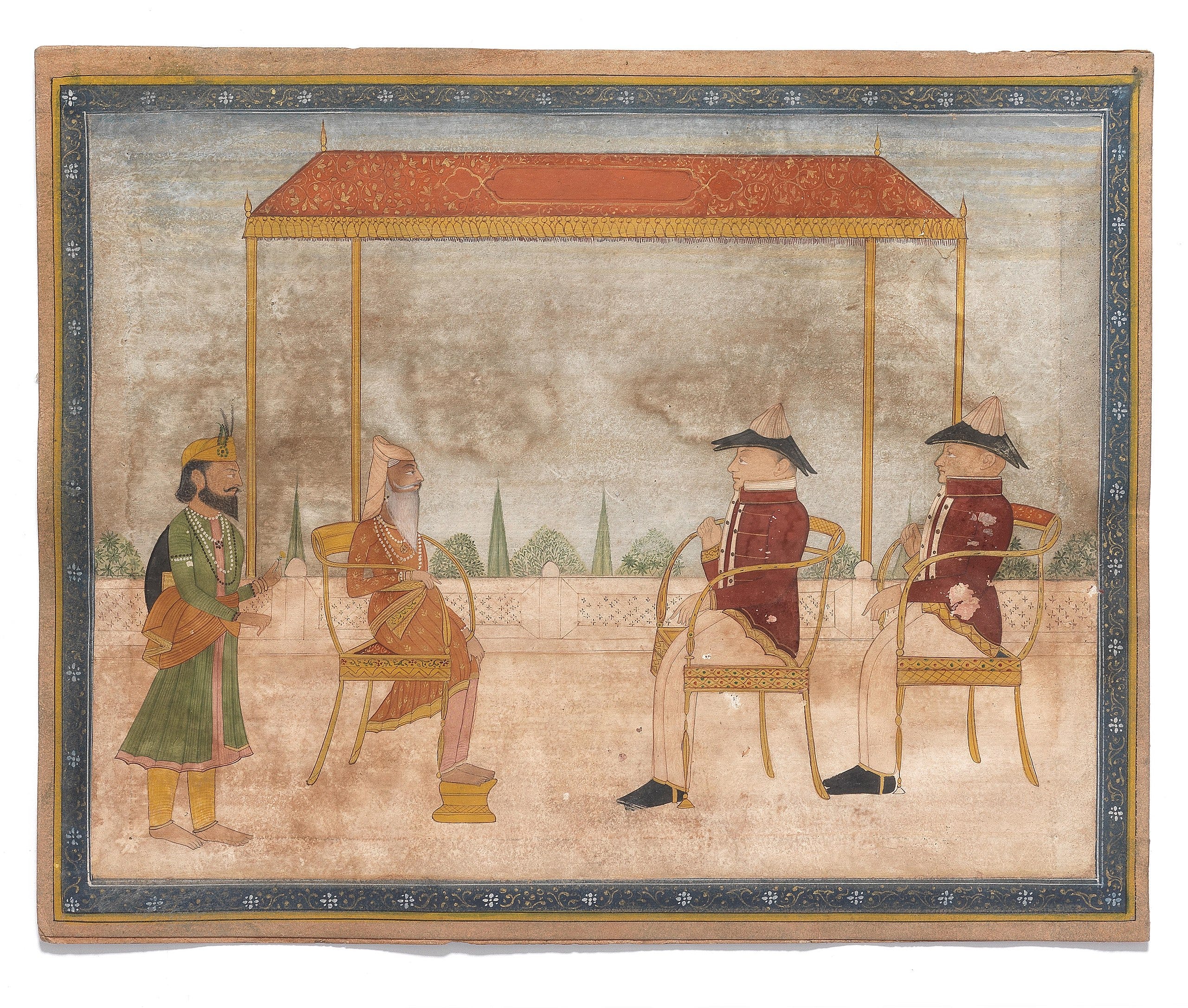
Maharaja Ranjit Singh with two British officers, artist unknown, 19th century, gouache and gold on paper.

India’s Hindutva Prime Minister, Narendra Modi, has used the Kashmir terrorism incident to abrogate the 1960s Indus Waters Treaty—a longstanding goal of Modi. The Indian version of the “terrorist attack,” most of whose victims were Muslim, has largely been accepted by Western governments without evidence.

False flags abound nowadays. You may recall that we were told that the most deadly rocket ever fired by Hamas killed only Palestinians in a hospital compound, while the most deadly rocket ever fired by Hezbollah killed only Druze children. I have at present an open mind about what occurred in Kashmir.

It is however certain that tearing up the Indus Waters Treaty is a long term Modi goal. The Indus supplies 80% of Pakistan’s agricultural water, and the supply is already insufficient, with disastrous salination of the lower reaches of the river as the sea creeps into the areas once occupied by the mighty flow. I visited the area of lower Sind five years ago and witnessed the fields encrused with white salt.

India controls the upstream flow into Pakistan of approximately 70% of the total water of the Indus, about 55% of all of Pakistan’s agricultural water.

In September 2016 in response to earlier violence in Kashmir, Modi initiated his slogan “Blood and water cannot flow together” and threatened to cut the Indus supply. He increased India’s out-take from the Ravi, Beas and Sutlej tributaries and restarted the Tulbul canal project. In both 2019 and 2022 while campaigning in Haryana, Modi made strong speeches threatening to cut off the water “wasted on Pakistan.”

In 2023 Modi issued formal notice to Pakistan of India’s desire to renegotiate the Indus Waters Treaty and repeated this in 2024 when Pakistan did not respond. On both occasions India cited “counter-terrorism” as one of three reasons for review (the others being environmental protection and hydro-electric generation). As counter-terrorism can scarcely be linked to agricultural water allocation, this illustrates Modi’s grandstanding approach.

Modi does not have the physical power to stop the Indus, but does have the ability short term to divert more of the river to Indian irrigation and storage, sufficient to cause some immediate distress in Pakistan. Indian media are already thrilled with the idea. But long term major reblancing of the river water allocation would require substantive new infrastructure in India. Such projects however would be both economically viable and likely wildly popular with Modi’s Hindutva base both for promoting Indian development and for damaging Pakistan.

In 2019, Modi revoked Article 270 of the Indian constitution which gave special autonomous status to Jammu and Kashmir, incorporating them into India proper. He did this despite the Constitution stating it could only be done with the support of the “Constituent Assembly of the State.” That body no longer existed, having been replaced by a “legislative Assembly.” Modi used another Constitutional provision to replace “Constituent Assembly” with “Legislative Assembly,” which seems fair enough. But having suspended the Legislative Assembly, he then claimed that its powers were now vested in the Governor, a Modi appointee.

Modi then agreed with himself to remove the autonomy of Indian Kashmir—a move that had no significant support among its 97% Muslim inhabitants and was accompanied by a ferocious crackdown, indeed lockdown, and the destruction of its once thriving tourism industry. He simultaneously repealed another provision preventing non Kashmiris from buying property in the region. Modi himself is therefore very much the cause of heightened ethnic, political and religious tension in Kashmir.

It is generally recognised that the situation of Kashmir, partly in India and partly in Pakistan with a small portion in China, and the Indian part occupied by deeply dissatisfied Muslims, is a result of the disastrous British partition of India of 1947. But in fact British responsibility for the disaster of modern Kashmir goes back a hundred years further than that, to 1846.

Kashmir was part of the Dourrani Afghan Empire from 1758 until 1819, when it was captured by the Sikh Empire of Maharajah Ranjit Singh. Singh was always careful to place Muslim Governors over Muslim lands, including from the Dourrani family itself. He allied with the British during the First Afghan War, and sent troops, including Kashmiri levies, to aid the British invasion in 1839. However after Ranjit Singh’s death and civil war over the succession, the British attacked the Sikh Empire to “restore stability.” Following the battle of Sobraon, the British annexed the land between the Beas and Ravi rivers, while by the Treaty of Amritsar of 1846 the British sold Jammu and Kashmir to the former Sikh wazir, Gulab Singh, for 50 lakhs of rupees.

Gulab Singh was a particularly murderous character who had played an extraordinarily Machiavellian role in the Sikh court of Ranjit Singh and his immediate successors, and had of course looted from the Sikh treaury the money he paid to the British. So he paid the British with stolen money for land the British had just stolen.

This is how the extraordinary situation arose that the Muslim territories of Kahmir and Jammu had a Hindu ruler (Gulab Singh was a Hindu Dogra). That anomaly was the direct cause of the disastrous division of the territory by the British in the Partition 100 years later.

It is extremely frequent that today’s conflicts are caused by the actions of the British Empire reverberating down and continuing their evil over generations. It is equally frequent that it is very hard to find analyses that explain the truth behind the conflicts.

Religious fanatics in India and Pakistan

January 18, 2017
Nasir Khan, January 18, 2017

(I wrote the following piece in reply to a comment by a Facebook friend.)

Both Hindu and Islamic architecture have influenced each other in many ways. By its appearance, Jejuri Temple seems to be a clear example of this interaction in architecture.

Regarding your views on the division of Hindus and Muslims, my reply is: If these people, Hindus and Muslims, regard one another as human beings first where people’s religious beliefs are left as their personal matters and nothing more, then a common human and humane bond will emerge that will allow cultural diversity but wherein all people will stand for common humanity and common political, social and economic rights and obligations.

But in India and Pakistan things are working in the reverse order. In these countries, the first consideration is towards religious identity while what is obviously common, our common humanity and our oneness as human beings, is pushed out of sight! The result is fanatics and fundamentalists in Hindus and Muslims have made living for ordinary people difficult.

The Hindutva fanatics in India have poisoned the minds of vast numbers of Hindus and have made them anti-Muslim and anti-Pakistan by their continuous propaganda. Many feel that is the only way to make India a purely Hindu state by preaching the mantra of Akhand Bharat. There is so much hatred against Muslims and Islam in Indian right-wing Hindus, which I find hard to believe.

In Pakistan, the right-wing religious and political parties have equally viciously poisoned the minds of millions of people for establishing a theocratic state instead of a modern democratic state.

Consequently, their continuous indoctrination and misleading information against the non-Muslims has relegated religious minorities in Pakistan to a secondary status. The victimisation of some innocent people for having violated the so-called blasphemy laws of Pakistan under concocted charges is a living proof of the cancerous fanaticism and primitive mindset that once flourished in the early middle ages.

ISIS attacks in Brussels

March 23, 2016
Share Link: Share Link: Bookmark Google Yahoo MyWeb Del.icio.us Digg Facebook Myspace Reddit Ma.gnolia Technorati Stumble Upon Newsvine

Terrorist attacks in Brussels in a wider context of US imperial wars

zaventem-airport

by Dr. Nasir Khan

On 22 March 2016, some suicide bombers carried out their indiscriminate attacks on the innocent people in Brussels. Their acts of vicious violence are shocking and despicable.  ISIS has claimed responsibility for these attacks.

ISIS has shown once again that it can strike anywhere it chooses and by such violent actions,  it gains maximum publicity for its ideological stance and objectives. The murders of 22 March are part of the pattern that ISIS had established and since last year has extended its operations to Europe.  As the organisation has many sympathisers in different countries and many of its indoctrinated fanatics are willing to be suicide bombers, it shows its reckless attitude towards all it regards enemies or opponents.

Despite the utterly abominable crime we witnessed, we should also try to see the terrorist attacks in European countries like France and Belgium in a wider context. Iraq, Afghanistan, Libya and to some extent Pakistan also have been in the throes of imperial wars as well as internal conflicts for many decades. What has happened in Paris last year and now in Brussels was an extension of the violence from Iraq and Syria to Europe.

We rightly condemn what happens at the hands of fanatic terrorists in Europe but when it comes to US wars and EU interventions in the Islamic countries,  we, who live in the western hemisphere,  show little concern over the deaths of hundreds of thousands of innocent people there. Apparently, the people of the world are not in total darkness about the recent history of Palestine, Iraq, Libya, Afghanistan, and Syria. Under the slogan ‘War on Terror’, the US rulers with the help of their allies have pursued their geopolitical objectives by wars and terror, killing hundreds of thousands of innocent people.

Unfortunately, political leaders and the media show great reluctance to give the same attention to the vast numbers of innocent victims of genocidal wars. However, when it comes to any terrorist attack anywhere in the west they give a forceful response to any acts of violence and terror. Such attitudes are unhealthy and discriminatory. In fact, religious fanatics take advantage of such debunked standards and successfully show the enmity of the western nations towards Muslims. The aim of propaganda is not to inform and enlighten but to terrify and mislead. In this, US rulers have been the role model for Muslim extremists.

Now let us briefly mention the role of recent US wars. It was no other power than the United States that unleashed the first Gulf War in 1991. The real objective of the United States was not only to evict the Iraqis out of Kuwait but also to diminish the power or potential of Iraq as a regional power.

In fact, President Saddam Hussein had accepted the UN terms for military withdrawal from Kuwait to end his occupation, but US rulers did not allow him to do so. There was a simple reason for this:  A peaceful withdrawal of Iraqi army from Kuwait would have left Saddam’s military power and military hardware intact. That was not acceptable to Washington and the Pentagon hawks. Therefore, they attacked and destroyed brutally the retreating and helpless Iraqi army.

General Colin Powell boasted of having killed so many encircled soldiers and burying many thousands of them alive in the desert. By such bravery, he must have added another medal to his uniform.  Saddam had no options left. The United States initiated and imposed sanctions on Iraq with the formal approval the United Nations. Incidentally, such a formal U.N. approval has the magic to make any major war crime by the US rulers legitimate! The United States has exploited this façade of the U.N. approval routinely.

We rightly condemn what happens at the hands of fanatic terrorists in Europe but when it comes to US wars and EU interventions in the Islamic countries,  we, who live in the western hemisphere,  show little concern over the deaths of hundreds of thousands of innocent people there.

In 2003, America took the second major step to invade and occupy Iraq.  This practically meant finishing off Iraq as a possible regional power if it ever raised its head at some future date. That was in consonance with the neocon strategy to have only one regional big power in the Middle East that was both strategically and politically indispensable part of U.S. hegemonic power and dominance. That regional power was and is Israel.Without an iota of credible ground or reason, President George W. Bush declared war on Iraq and invaded a vast secular Arab country, which did not let any religion or sect to interfere with the affairs of the state. After a massive destruction by the invaders of life, property and infrastructure in Iraq, President Bush became the eventual conqueror and master of Iraq and of its rich oil resources.

As a matter of imperial policy to divide and rule, the Americans started the sectarian favouritism that fuelled sectarian violence and killings. Even after the ‘nominal’ ending of the occupation, the fire of sectarian violence America had ignited to further its objectives is still raging on. Thousands and thousands of innocent Iraqis have died.

The forces of terror, revenge, religious sectarianism and fanaticism that American rulers unleashed in Iraq are out of control; no one is able to control them. Only the ordinary people of Iraq have become the victims of the genocidal war in Iraq. The mayhem and anarchy America created in Iraq has extended beyond the frontiers of Iraq.

Out of the ensuing chaos and instability in Iraq arose ISIS and its Islamist fanatics. ISIL is a direct result of US wars on Iraq. President Bush has said that God asked him to invade Iraq. If the killing of  hundreds of thousands of Iraqis can be  justified because of  listening to the command of God then ISIL can also invoke the support of the  same God for whatever they do or have plans to do! In fact, the US Constitution allowed for a democratic form of government, not a theocracy; ISIL, on the other hand, claims to be a theocracy and its administrative structure is that of a caliphate.  According to its way of interpreting, ISIS has ‘God on its side’.

Another major US imperial adventure was in Afghanistan. It is common knowledge that the United States was instrumental in creating and arming the Mujahidin to fight the Soviet army that had come to help the Afghan revolutionary government. After the Soviet leaders pulled their military from Afghanistan, the American-sponsored Mujahidin of 1980s became the Taliban, the new rulers of Afghanistan.

There is no doubt that the Soviet army suffered heavily in Afghanistan. The US imperialists, with the help of reactionary Saudi and Pakistani rulers and their well-equipped mercenary fighters crushed the Afghan revolution. In this way, they turned the clock of history back by empowering the primitive Mujahidin/Taliban. But that friendship did not last long.

In 2001, America attacked Afghanistan and ended the Taliban rule. The occupiers started a brutal suppression of the Afghans who had no quarrel with America at all. During their long Afghan war, Americans were not able to break the resistance of the Afghan patriots and the Taliban. They finally forced the occupiers to end their occupation. The puppet regime of the former president Karzai and now the present president Ghani have faced the consequences of the imperial invasion. The country suffered enormously and its people reduced to abject poverty and deprivation. At present, the Taliban are still there and fighting the Kabul government.

In short, countless millions of people have suffered in Iraq, Afghanistan, Libya and Syria. Whether we call it a civil war or war by proxy by regional powers, the war in Syria has reduced many cities to rubble. Hundreds of thousands have died.  Millions of Syrians have become homeless. They are trying to escape to any place where they can exist as normal human beings.

Other victims of wars from Iraq, Afghanistan, Libya and numerous other countries also join them in this quest for a safe haven in Europe. These people are in dire difficulties who need all the possible help. However, it is also important to underline the fact that Europe has no solution to the problems of millions of refugees and asylum seekers. Their number will keep on multiplying, not decreasing. Those who think otherwise live in a world of fantasy.

By attacking innocent civilians in France, Belgium and Turkey, ISIS is able to create a sense of insecurity and fear throughout Europe. No state or public authority can provide complete safeguards against any random attacks. There is no shortage of weapons in Europe or anywhere else. Those who want to commit any terrorist attack will be able to acquire any bombs or weapons they need.  It is a false hope that any intelligence agencies in an open society can stop all indoctrinated and ideologically motivated suicide bombers from their criminal behaviour.

Most of the western societies including Australia have become multi-cultural and multi-religious that have ethnic communities of Afro-Asian origin. Among the immigrant communities, strong social bonds exist through their tribal and religious identities. While the western societies have developed a more relaxed attitude towards their religions and deities, most of the immigrants have gone the other way. There is a strong tendency to adhere to the formal religious traditions where their clerics play a vital social role. Any terrorist attack has negative consequences for these people, especially the Muslims.  They become suspect merely because some Muslim terrorist has done something seriously wrong, somewhere. This strengthens cultural and social stereotypes.

– See more at: http://www.mwcnews.net/focus/analysis/57987-isis-attacks-in-brussels.html#sthash.TYCQ5Nod.dpuf

Causing genocide to protect us from terror

April 18, 2015

Neil Clark is a journalist, writer and broadcaster. His award winning blog can be found at www.neilclark66.blogspot.com. Follow him on Twitter

Published time: March 30, 2015 12:52

An Iraqi family watches U.S. soldiers in in Baquba early June 28, 2007.  (Reuters/Goran Tomasevic)

An Iraqi family watches U.S. soldiers in in Baquba early June 28, 2007. (Reuters/Goran Tomasevic)

A report called Body Count has revealed that at least 1.3 million people have lost their lives as a result of the US-led “war on terror” in Iraq, Afghanistan and Pakistan. It’s a report which should have made front page news across the world.

In the comprehensive 101 pagedocument ‘Body Count,’

Physicians for Social Responsibility, Physicians for Global Survival and International Physicians for the Prevention of Nuclear War, have produced figures for the number of people killed from September 11, 2001 until the end of 2013.

The findings are devastating: the in-depth investigation concludes that the ‘war on terror‘ has, directly or indirectly, killed around 1 million people in Iraq, 220,000 in Afghanistan and 80,000 in Pakistan. As awful as that sounds, the total of 1.3 million deaths does not take into account casualties in other war zones, such as Yemen – and the authors stress that the figure is a “conservative estimate”.

“The total number of deaths in the three countries named above could also be in excess of 2 million, whereas a figure below 1 million is extremely unlikely,” the executive summary says.

Continues >>

Pakistani blasphemy laws and minorities

November 6, 2014

Nasir Khan, November 6, 2014


This unthinkable and horrifying news of the breaking of the legs of  a working-class Christian couple and burning them alive by a large mob of Muslims in Pakistan shows the utmost inhuman acts in the name of religion in general and blasphemy laws of Pakistan in particular. (For details, see:
http://www.humanrights.asia/news/urgent-appeals/AHRC-UAC-147-2014) It is also important to see that this was an extreme example of that social and moral degradation that prevails in Pakistan. The morbid disregard shown by some extremist or even some ordinary Muslims for crimes against the members of any religious minority, such as Christians, Ahmadis or Hindus, etc. is not frowned upon by many Muslims but is rather viewed as an act of devotion to God and the Prophet. Such is the lower depth of depravity that prevails in Pakistan and very many indoctrinated ignorant  people  rejoice over such acts of  unspeakable savagery in that  country.

But there is little ground to criticise only the ‘uneducated’ or ‘brainwashed’ people; many ‘educated’ people including many lawyers also support such blasphemy laws. For instance, in 2011 Mr Salman Taseer, governor of the Punjab province, a secular leader and opponent of the unjust blasphemy laws, was killed by his own bodyguard because he had spoken against the ill-treatment of Christians and advocated the repeal of the blasphemy laws. It may come as a somewhat surprise to many people in the world that many people in Pakistan had zealously demonstrated in favour of the murderer and among such demonstrators were the Pakistani lawyers who wanted to stand by the murderer and protect the blasphemy laws!

Pakistani rulers and legislators imposed the blasphemy laws in a country where Muslim populace was religious but never morbidly extremist or intolerant of other faiths or viewpoints. However, the introduction of the blasphemy laws changed things drastically. They strengthened further the hands of the rightist and obscurantist forces in the land. Such laws could easily be used and exploited in matters that had nothing to do with religion as such. For instance, they provided a pretext, a cover-up to those who to settle their private conflicts or disputes could readily accuse their opponent of having said anything derogatory about matters covered by the blasphemy laws. Thus any Christian or the follower of any other minority faith can be falsely accused by anyone; it has been happening regularly. Once charged, their fate was sealed. There was little any such accused people could do to prove their innocence because the charge of blasphemy had already tilted the balance of justice against them. To the outside world such things may seem too primitive and stupid for a country in these times. But that’s how the things are in Pakistan. And the injustices ordinary innocent people suffer especially the religious minorities are getting worse in Pakistan.

What can the international community do to stop this savagery in Pakistan? Let me leave this question for consideration to other writers and activists also. In this context, I appeal to all human human rights organisations, individuals who defend human rights and political activists for their help and solidarity for a common struggle against the most frightening crimes committed in Pakistan against the ordinary people belonging to various religious minorities. As long as the present blasphemy laws are on the statute book such brutal crimes as we saw in the case of the inhuman murder of this Christian couple will not stop. The minorities of Pakistan are extremely vulnerable and they need our help and protection. There are many things that need to be done; to demand the repeal of the blasphemy laws in one of them because these laws are a flagrant violation of human rights and a sickening misuse of Islam, a great and noble religion of compassion and toleration. This matter should also be brought before the organs of the United Nations. All civilised people around the world have a moral responsibility to raise their voice against the violations of basic human rights under the blasphemy laws and the victimisation of religious minorities in Pakistan.

(The server to Humanrights.Asia for the link seems out of order now. But the tragic news can be read on this link: http://www.europe-solidaire.org/spip.php?article33445)

Violence in Pakistan and religion

November 3, 2014

Nasir Khan, November 3, 2014

Yesterday 60 people were killed in Pakistan and many were injured. Such killings of the innocent people have become a matter of routine that are repeated so often. Ordinary people are helpless; they can’t do anything. The government cannot control this pervasive violence because the causes of violence are many. It is obvious that no pious wishes can change the situation because without uprooting the causes of violence, none can stop the violence. There are many causes for this, starting from the manipulative policies of Pakistani rulers and their subservience to US imperialism, to the Saudi role in Pakistan and the exploitation of religion in general for well over six decades.

A tree is known by the fruit it bears. Pakistan is harvesting the fruit now in the shape of senseless killings, violence and religious fanaticism. In this country different political and social forces have done much to banish sanity from the public and private lives of its citizens. Political elite and religious establishment had set the process of making Pakistan a citadel of ‘pure’ Islam. We see how that citadel looks and how the rest of the world sees it. The results of myopic indoctrination and misuse of religion are clear. No realist observer can predict any change for the better in the foreseeable future either because the communal hatred, sectarianism and ignorance [jahilia] have taken deep roots that cannot be uprooted by any emergency measures. Pakistan needs a new direction in politics and in educational system to stop the misuse of religion and new strategies to cope with violence and fanaticism.