Vance says ‘another option on the table’ if no nuclear deal reached with Iran
On The Ground newsletter: Get a weekly dispatch from our international correspondents
Email
*
Iran has accused Israel of sabotaging negotiations with the United States over Tehran’s nuclear programme.
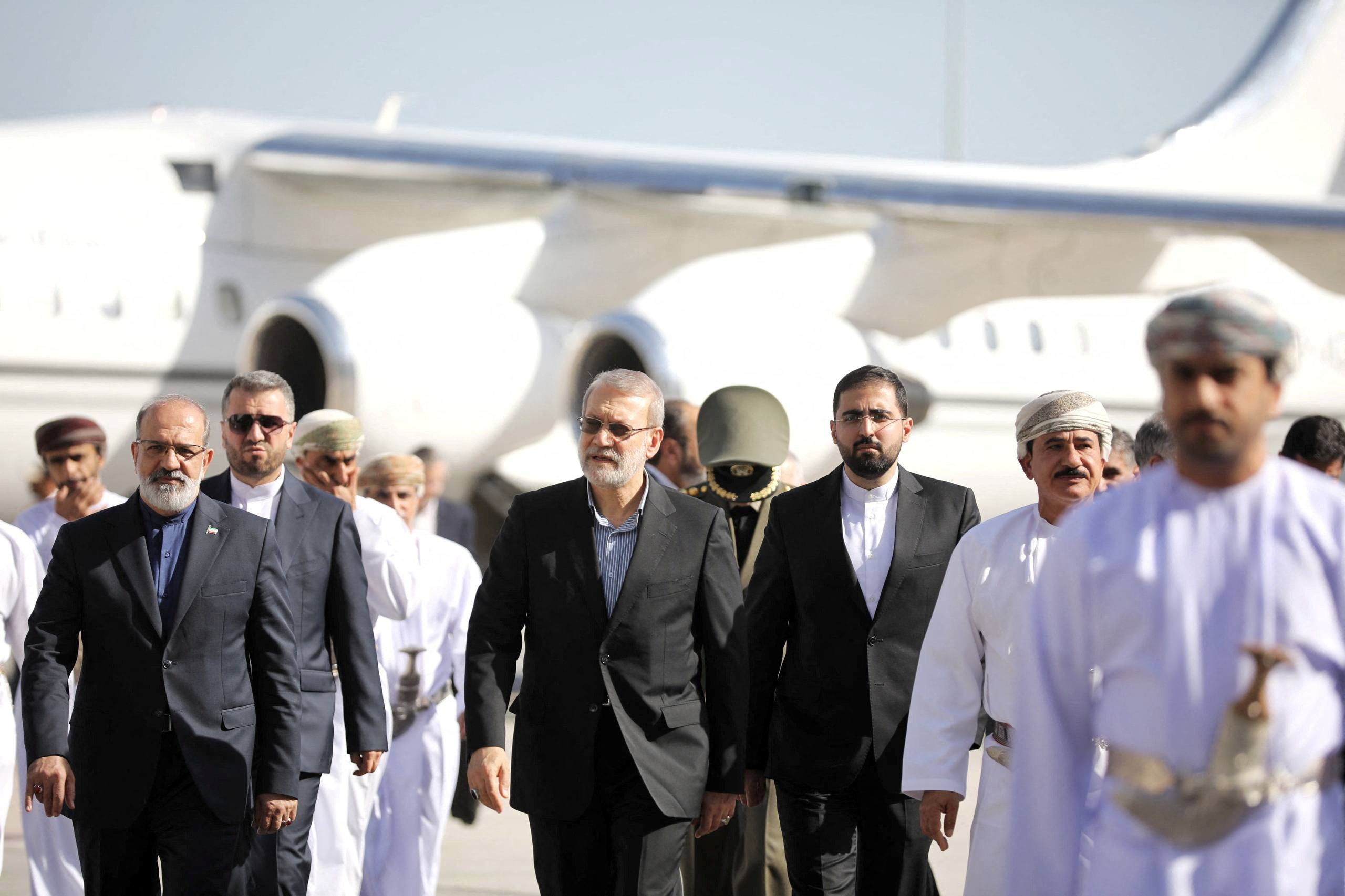
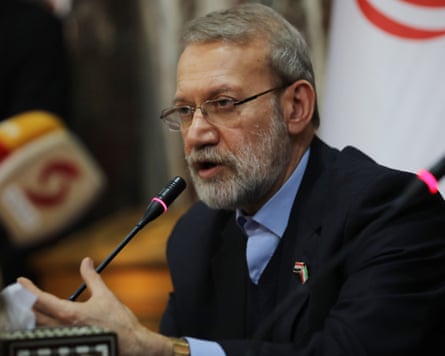
Iran’s security chief Ali Larijani claimed Israel is attempting to “destabilise the region” after prime minister Benjamin Netanyahu met with Donald Trump on Wednesday.
The Israeli leader has reportedly been urging the US president impose the strictest-possible terms in any agreement reached with Tehran in nuclear talks.
Commenting on the nuclear discussions with the US, Larijani told Al Jazeera: “Our negotiations are exclusively with the United States – we are not engaged in any talks with Israel.
Iran’s security chief Ali Larijani (C) has accused Israel of sabotaging negotiations with the United States over Tehran’s nuclear programme. (WANA)
“However, Israel has inserted itself into this process, with their intent on undermining and sabotaging these negotiations.”
He added that he believes Israel’s agenda “extends beyond its alleged concerns about Iran”, and claimed it wanted to “destabilise the region”
“They are gambling not only with Iran, but also Qatar, Saudi Arabia and Turkey,” he added, warning regional leaders to “be aware of this.”
Israel has yet to respond to the security chief’s remarks.
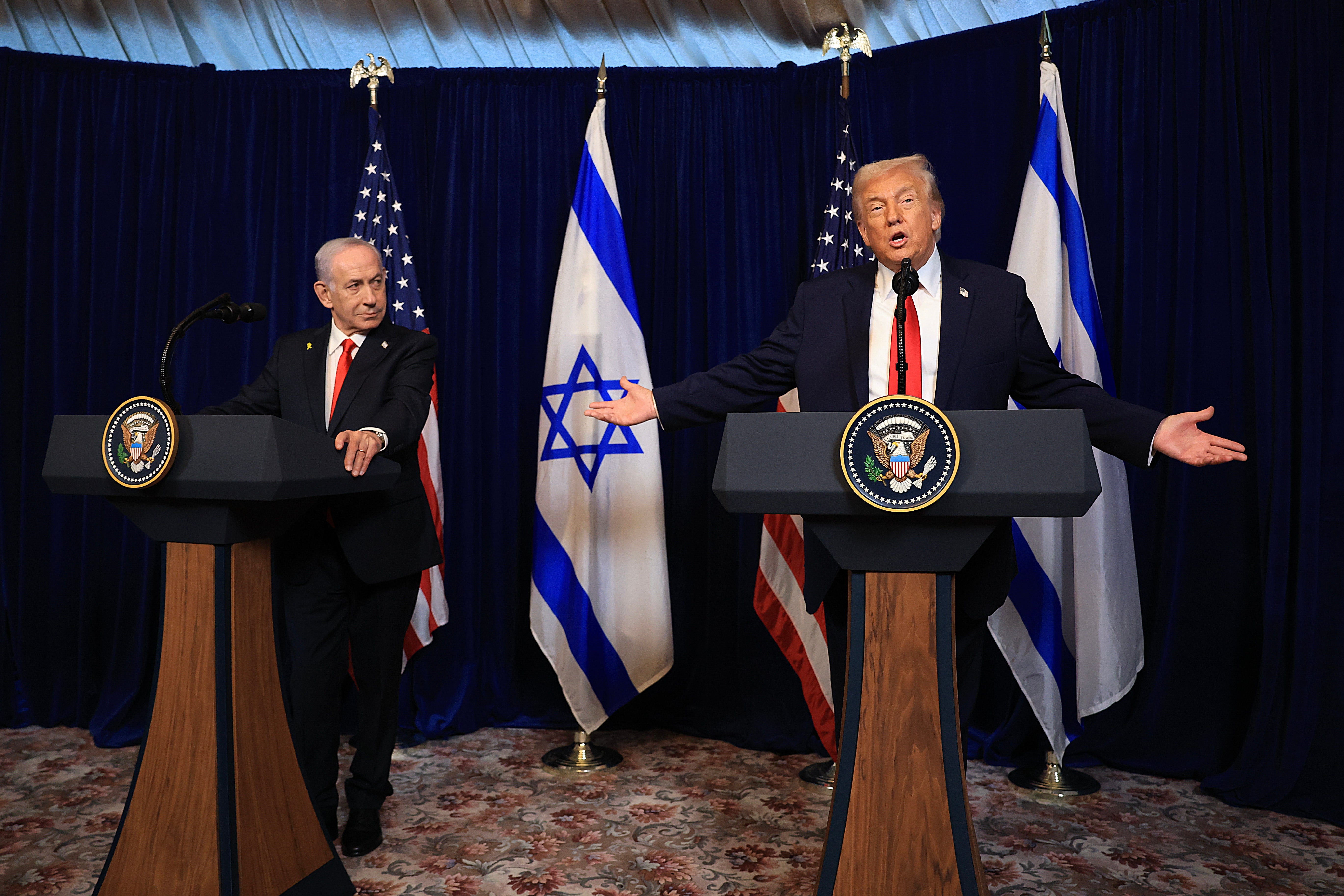
Following the meeting in Washington, Trump said no ‘definitive’ agreement was reached on how to move forward with Iran, but he insisted negotiations with Tehran would continue to see if a deal can be achieved.
Donald Trump met with Benjamin Netanyahu at the White House this week (file photo) (Getty Images)
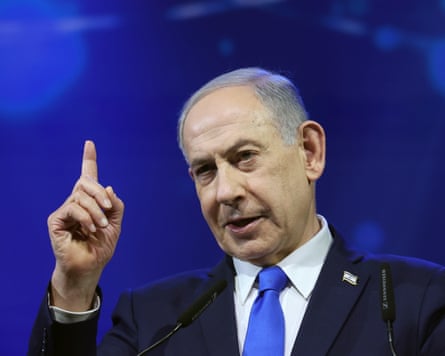
Netanyahu, who had been expected to press Trump to widen diplomacy with Iran beyond its nuclear program to include limits on its missile arsenal, stressed that Israel’s security interests must be taken into account but offered no sign that the president made the commitments he sought.
”The Prime Minister emphasized the security needs of the State of Israel in the context of the negotiations, and the two agreed to continue their close coordination and tight contact,” Netanyahu’s office said in a statement after Wednesday’s talks.
Trump has threatened strikes on Iran if no agreement is reached, while Tehran has vowed to retaliate, stoking fears of a wider war as the US amasses forces in the Middle East.
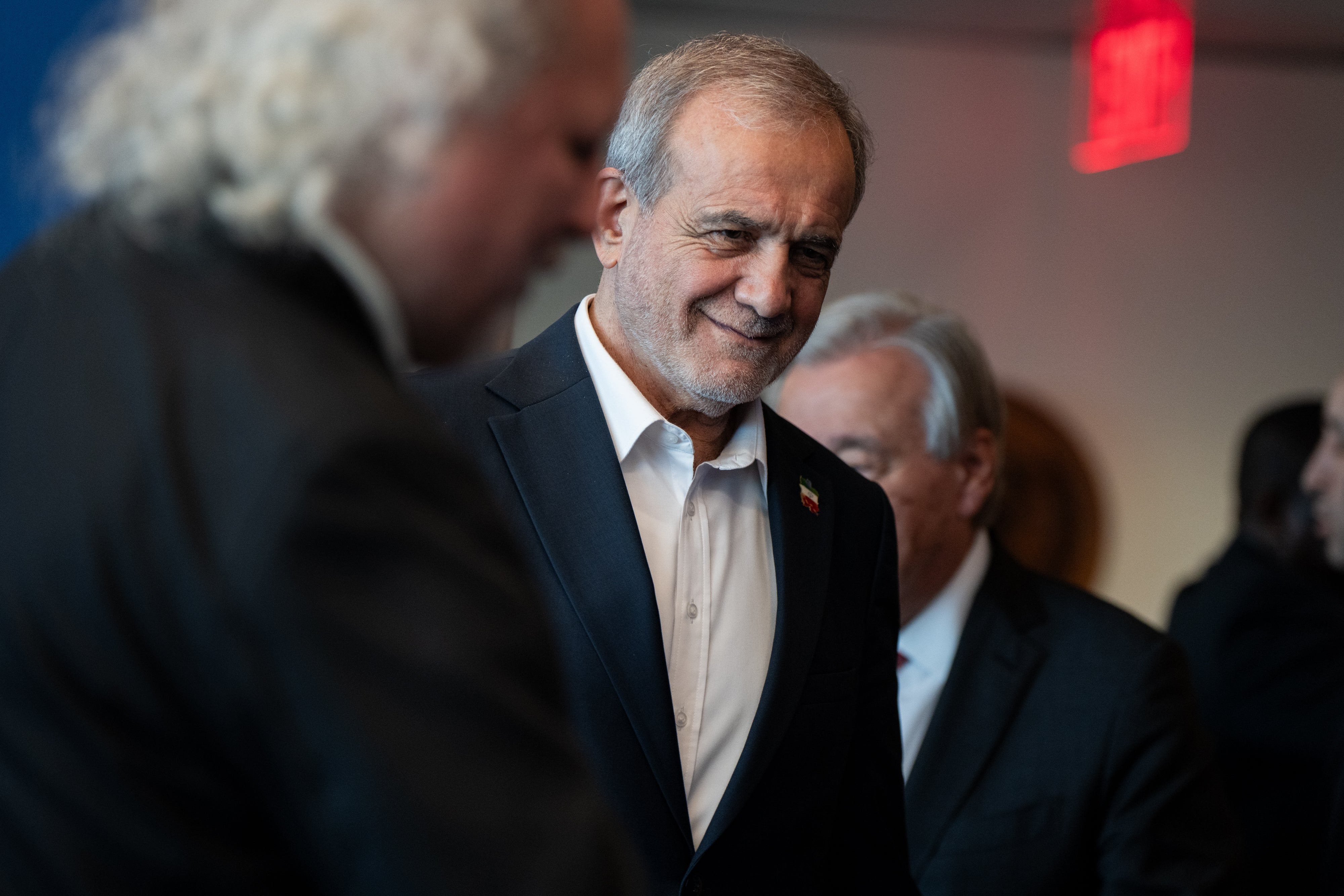
On Wednesday, Iran’s president Masoud Pezeshkian insisted that his nation was “not seeking nuclear weapons … and are ready for any kind of verification”.
Iran’s president Masoud Pezeshkian has insisted that his nation was “’not seeking nuclear weapon’ (Copyright 2025 The Associated Press. All rights reserved.)
In a speech marking the 47th anniversary of the Islamic Republic, Pezeshkian said: “The high wall of mistrust that the United States and Europe have created through their past statements and actions does not allow these talks to reach a conclusion.
”At the same time, we are engaging with full determination in dialogue aimed at peace and stability in the region alongside our neighbouring countries.”
Turkish foreign minister Hakan Fidan – who has been involved in the talks between the US and Iran – also said both sides are showing flexibility.
He told the Financial Times: “It is positive that the Americans appear willing to tolerate Iranian enrichment within clearly set boundaries.
“The Iranians now recognise that they need to reach a deal with the Americans, and the Americans understand that the Iranians have certain limits. It’s pointless to try to force them.”
Tehran’s intervention comes as the Israeli prime minister heads to a hastily arranged White House encounter
The Guardian, Patrick Wintour Diplomatic editor 10 Feb 2026 20.34 CET
Tehran has told the US not to allow Israel to destroy the chance of reaching an agreement over Iran’s nuclear programme amid speculation that Benjamin Netanyahu intends to use a hastily arranged White House meeting with Donald Trump on Wednesday to divert negotiations.
Iran’s intervention came as the Israeli prime minister flew to Washington to plead with Trump not to negotiate a deal with Tehran if it excludes limiting the country’s ballistic missile programme, dropping its support for proxy forces in the region and curtailing human rights abuses at home.
Netanyahu is deeply concerned that Trump’s son-in-law Jared Kushner and his special envoy, Steve Witkoff, are prepared to strike a deal confined to limiting the scope of Iran’s nuclear programme, which in Israel’s view would do nothing to rein in the long-term threat Tehran poses to the region.
Iran’s security chief, Ali Larijani, said Washington ‘must remain vigilant regarding Israel’s destructive role’. Photograph: Louai Beshara/AFP/Getty Images
Speaking before leaving for Washington, Netanyahu said he would “present to the president our approach around our principles on the negotiations”. He is expected to provide Trump with fresh intelligence about Iran’s military capabilities, including new long-range ballistic missiles.
Netanyahu faces a delicate task in setting out his stall because he risks being seen as challenging two of Trump’s most respected aides by mapping out a set of demands that could force the US into prolonged conflict with Iran.
He also risks angering Trump by opening up divisions in the Republican party, especially if he reminds the US president that he made repeated unfulfilled promises to come to the help of Iranian protesters.
Netanyahu’s turbulent relationship with Trump was already entering another rough patch as he continues to stall on his Gaza peace plan by barring a Palestinian technocratic body from entering the strip, and seeking in effect to annex the West Bank.
Benjamin Netanyahu. Photograph: Abir Sultan/EPA
In a sign that he knows he is treading on thin ice, Netanyahu agreed to take the US ambassador to Israel, Mike Huckabee, with him. Before heading to Washington, Huckabee said there was “an extraordinary alignment between US and Israel on Iran”, and that as far as he knew the two sides shared the same red lines.
Iran expressed its anger at Israel’s intervention. Ali Larijani, the the head of the Supreme National Security Council, the body overseeing Tehran’s negotiating strategy, said: “The Americans should think wisely and not allow him, with his posturing, to create the impression before his flight that he is going to the United States to set the framework of nuclear negotiations. They must remain vigilant regarding Israel’s destructive role.”
Larijani met the mediators between Washington and Tehran in Muscat to discuss the agenda for further talks.
Iran’s foreign ministry spokesperson, Esmail Baghaei, said in his weekly press briefing: “Our negotiating party is America. It is up to America to decide to act independently of the pressures and destructive influences that are detrimental to the region.”
The Iranian government also still faces political challenges at home, with more reformist groups and academics issuing statements protesting against the suppression of dissent and, in particular, the arrest of leaders of the Reformist Front.
The front issued a further statement expressing its shock, and warning that the regime’s exclusionary approach and baseless accusations would worsen the political deadlock and “strengthen the violent and war-mongering factions supporting Israel”. It called on Iran’s president, Masoud Pezeshkian, to intervene urgently to secure the release of its leadership.
Even if the planned second round of talks are confined to Iran’s nuclear programme, as Tehran wants, there is no guarantee of success because it insists on maintaining its right to enrich uranium as fuel for nuclear power plants, something the US permitted under the 2015 deal but Trump has appeared to rule out.
Trump has sent the aircraft carrier Abraham Lincoln and three accompanying warships to the region, which are capable of hitting a huge range of Iranian military and economic sties. The US has also buttressed the air defences of US bases across the region.
The head of Iran’s atomic energy authority has said Tehran may be prepared to dilute its stock of highly enriched uranium to 60% purity, a limited concession given the 2015 deal limited it to enriching to 3.75% purity.
For all the obsessive coverage of the disgraced financier’s political dealings, mainstream outlets have skimmed past one of the biggest stories
Independent media reporting has highlighted former Israeli Prime Minister Ehud Barak’s past dealings with Jeffrey Epstein (Jack Guez/AFP)
Since the release late last month of millions more files in the Jeffrey Epstein saga, western media outlets have provided nonstop coverage. Yet despite an extensive focus on the disgraced financier’s relationships with powerful figures, his links to Israeli political and intelligence circles have been largely ignored, marking a conspicuous omission.
Searches across online news archives turn up thousands of recent stories on legitimate issues of public concern, highlighting victims of Epstein’s abuse and the alleged involvement of prominent persons and groups in that abuse.
The New York Times, PBS, NBC and CNN, among other notable outlets, have drawn from the files to publish exhaustive accounts of powerful men with ties to Epstein.
In addition to naming business, academic and sports figures, much reporting has focused on political figures, such as US President Donald Trump, former Norwegian Prime Minister Thorbjorn Jagland, and the UK’s Prince Andrew and politician Peter Mandelson.
Media coverage has also emphasised Epstein’s relationships with foreign countries, with Reuters and the Washington Post running stories about his alleged ties to Russia. Other pieces have documented Epstein’s purported links to Norway and Slovakia.
New MEE newsletter: Jerusalem Dispatch
Sign up to get the latest insights and analysis on Israel-Palestine, alongside Turkey Unpacked and other MEE newsletters
But despite Epstein’s ties to Israel having been known for months – an ongoing Drop Site News investigation suggests that Epstein worked closely with former Israeli Prime Minister Ehud Barak and participated in initiatives connected to Israeli intelligence – there has been little mainstream coverage of this aspect.
Even as sites such as Middle East Eye, Al Jazeera, Mondoweiss and TRT World, among others, have devoted significant coverage to the Epstein-Israel connections, there appears to be a glaring gap in western mainstream media.
Strategic omission
There are, of course, exceptions, such as the CNN interview last November with Marjorie Taylor Greene, in which the then-US congresswoman broached Epstein’s alleged ties to Israel. But the response from CNN presenter Dana Bash was telling: she became visibly irritated, and swiftly pivoted to the topic of antisemitism.
Journalism studies scholarship routinely emphasises the importance of omission. The inclusion and exclusion of information are among the primary mechanisms through which members of the media create meaning.
So why does it seem that mainstream western media outlets are bending over backwards to avoid the Israeli elephant in the room? This dovetails with broader questions on why western media tends to sympathise with Israeli narratives.
In the current moment, the biggest danger for journalists is not getting a story wrong – it is appearing unwilling to tell it at all
Some outlets – or at least some powerful editors and producers – might have a direct interest in shielding Israel. It is also possible that news managers are afraid of the consequences of maligning Israel, or of being perceived to be “antisemitic”.
Scholars John Mearsheimer and Stephen Walt famously described the power of pro-Israel lobbying groups, which have long exerted considerable sway over American politics and media, helping to generate favourable coverage. Reporting that is critical of Israel often triggers pressure campaigns from these groups.
In such an environment, omission functions as a type of risk management. News editors know that even the perception of unfairness towards Israel can trigger accusations of antisemitism.
Media institutions operate within the broader sociopolitical climate. Since the start of the Gaza war in October 2023, American and British universities have come under fire for actively suppressing pro-Palestine speech and student protests critical of Israel.
In 2024, an American university took the extraordinary step of firing a tenured professor over speech critical of Zionism, confirming how Israel-related criticism carries an unusually high professional risk – a reality that news outlets know well.
Pivotal moment
Western journalists have long had to be careful about covering Israel. In 2018, contributor Marc Lamont Hill was fired by CNN for speaking in favour of Palestinian liberation. But sensitivities were heightened after 7 October 2023, when Hamas attacked Israeli communities and Israel launched its genocide in Gaza.
Since the start of the violence, media figures have faced intense backlash, including firings, over speech critical of Israel’s actions in Gaza. Journalist Mehdi Hasan’s show on MSNBC was cancelled following his criticisms of Israel.
Direct pressure is often applied by media owners, who are increasingly vocal about the need to protect Israel as it faces unprecedented global disapproval. Businessmen Larry and David Ellison have strategically acquired media assets – including TikTok’s US operations and CBS News – in an apparent bid to influence narratives about Israel.
What were Jeffrey Epstein’s ties to Israeli intelligence? | Murtaza Hussain
Since the acquisitions, TikTok has aggressively censored pro-Palestinian content, and CBS has shifted to a more overt pro-Israel stance. Zvika Klein, editor-in-chief of the Jerusalem Post, recently praised CBS’s new editor, Bari Weiss, for “doing more for Israel than most of us”.
In the meantime, the Epstein files have created a public obsession, with every new detail generating a firestorm of interest, clicks, likes and shares. Serious independent news organisations and popular podcasts have reported extensively on Epstein’s ties to Israel, so the issue is unlikely to fade from the public conversation. Mainstream outlets may ultimately be forced to join in, if for no other reason than to maintain some semblance of credibility.
After all, news audiences will soon wonder – if they do not already – why journalists readily report on Epstein’s alleged ties to Slovakia and Norway, but ignore his connections to a key western ally entangled in major conflicts with far-reaching implications.
This is an important moment for western, and especially American, news organisations. Journalism derives its authority from its willingness to pursue uncomfortable facts that matter to the public. A growing number of observers in North America and Europe already believe that a double standard shapes how Israel is treated across western capitals.
Media outlets should avoid feeding this suspicion, especially now, when public trust in media is at an all-time low. In the current moment, the biggest danger for journalists is not getting a story wrong – it is appearing unwilling to tell it at all.
The views expressed in this article belong to the author and do not necessarily reflect the editorial policy of Middle East Eye.
Mohamad Elmasry is Professor of Media Studies at the Doha Institute for Graduate Studies.
The Secretary of State has told the president that talks are happening with high-level Cuban officials. No such talks exist. Purported negotiations in Mexico? Actual fake news.
A crisis is rapidly developing in Cuba, as the Trump administration’s efforts to block fuel from reaching the island have become increasingly effective since an executive order threatened tariffs on any country trading with Cuba. Mexican President Claudia Sheinbaum has buckled under the pressure and halted oil deliveries to Cuba. Drop Site’s José Luis Granados Ceja reports on the catastrophic consequences of the energy starvation.
Meanwhile, back in Washington, President Trump claims that negotiations are underway to resolve the standoff. That, it turns out, is simply false—a lie being told to him by Secretary of State Marco Rubio as part of his ambitious play to overthrow the Cuban government.
The story below is written by Noah Kulwin, who reported from Havana; Granados Ceja, who reported from Mexico City; and myself. This kind of reporting isn’t cheap, but is made available to the public for free thanks to readers who fund Drop Site News.
Help us keep pushing by making a tax-deductible donation today.
If you haven’t upgraded your subscription, please consider doing so.
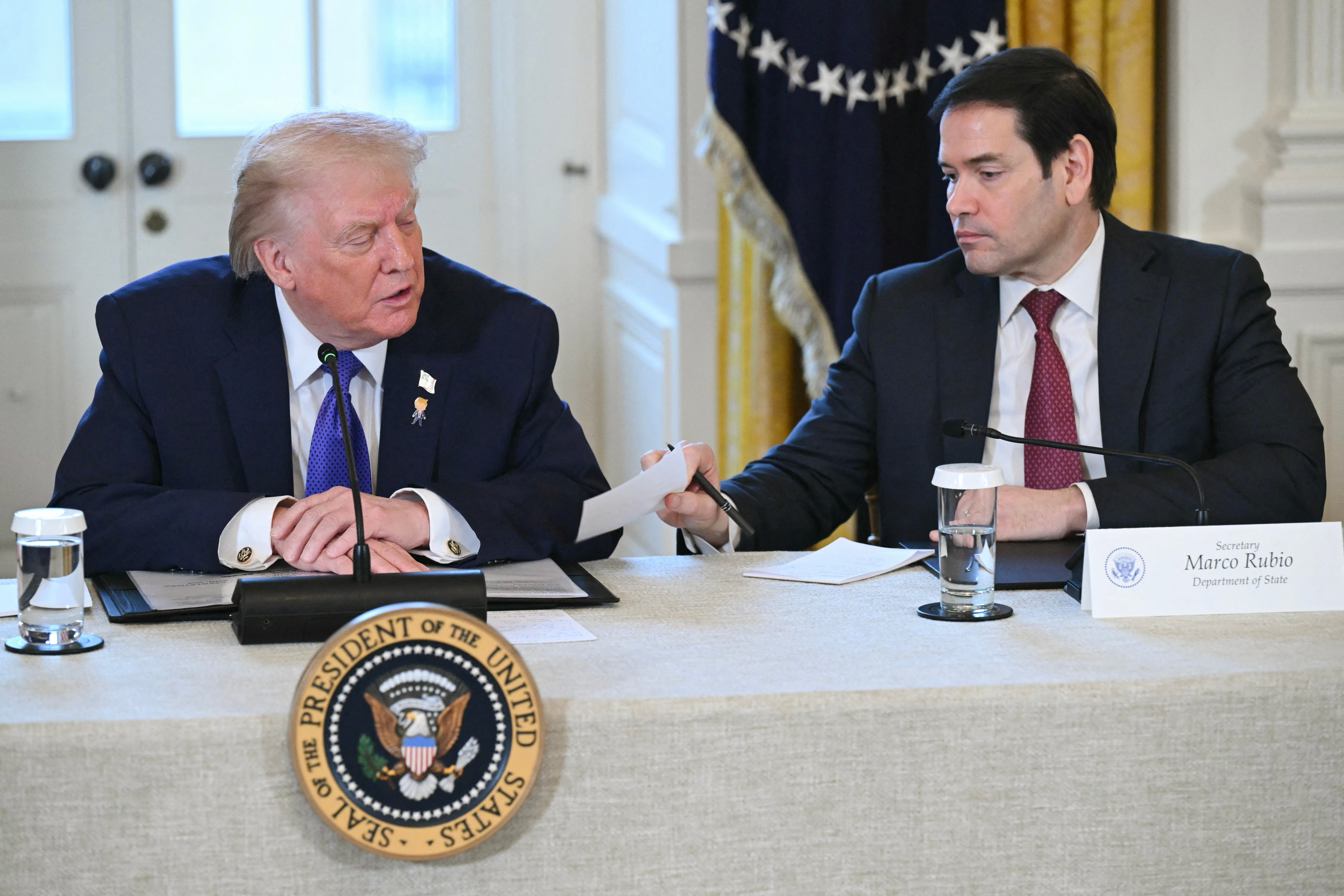
Secretary of State Marco Rubio hands a note to President Donald Trump during a meeting with U.S. oil companies executives at the White House on January 9, 2026. Photo by SAUL LOEB / AFP via Getty Images.
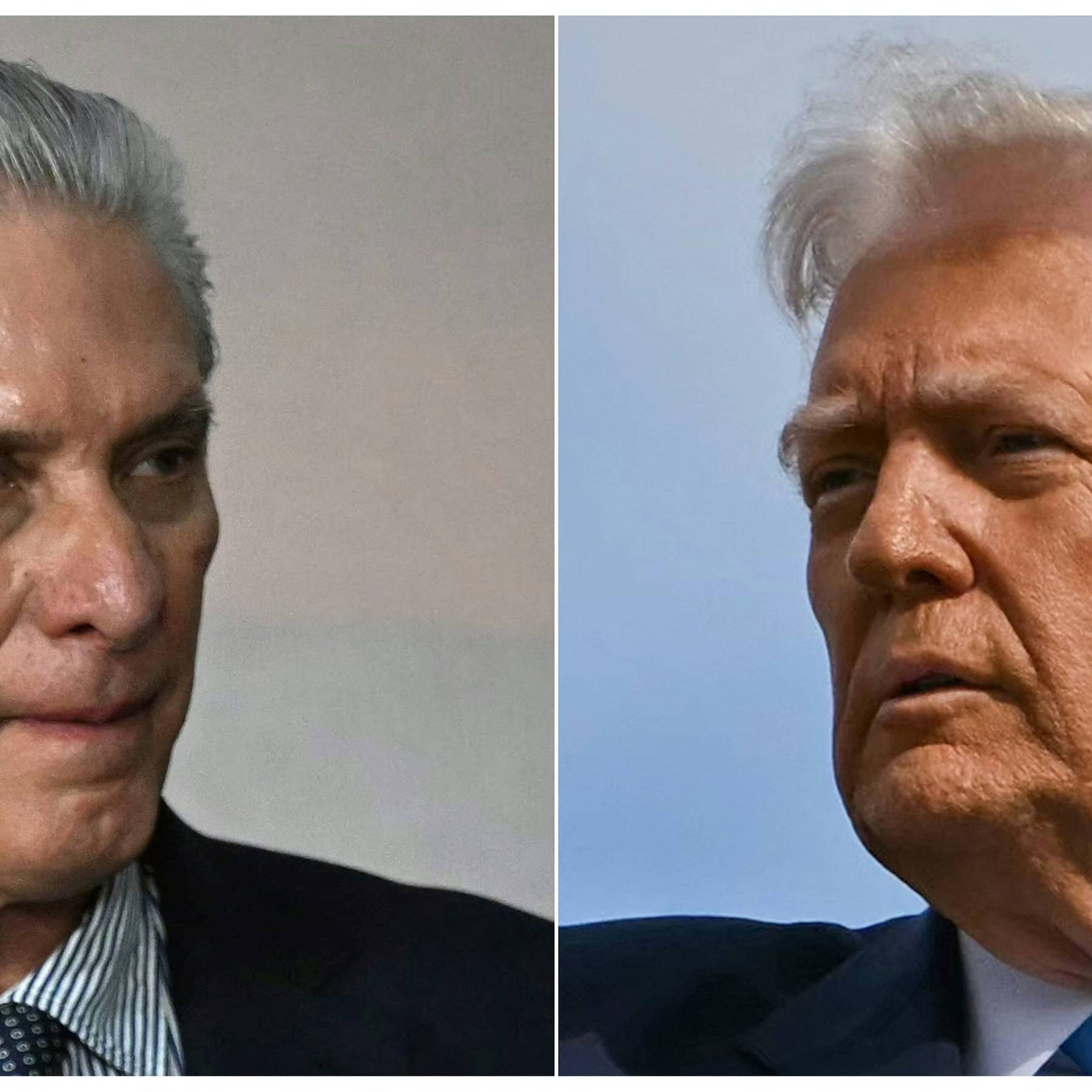
To hear President Donald Trump tell it, the United States is deep in negotiations with Cuban government officials as the U.S. applies maximum pressure to the island. “We’re talking to the people from Cuba, the highest people in Cuba, to see what happens,” Trump told reporters at his Mar-a-Lago resort on Sunday, February 1. “I think we’re going to make a deal with Cuba.”
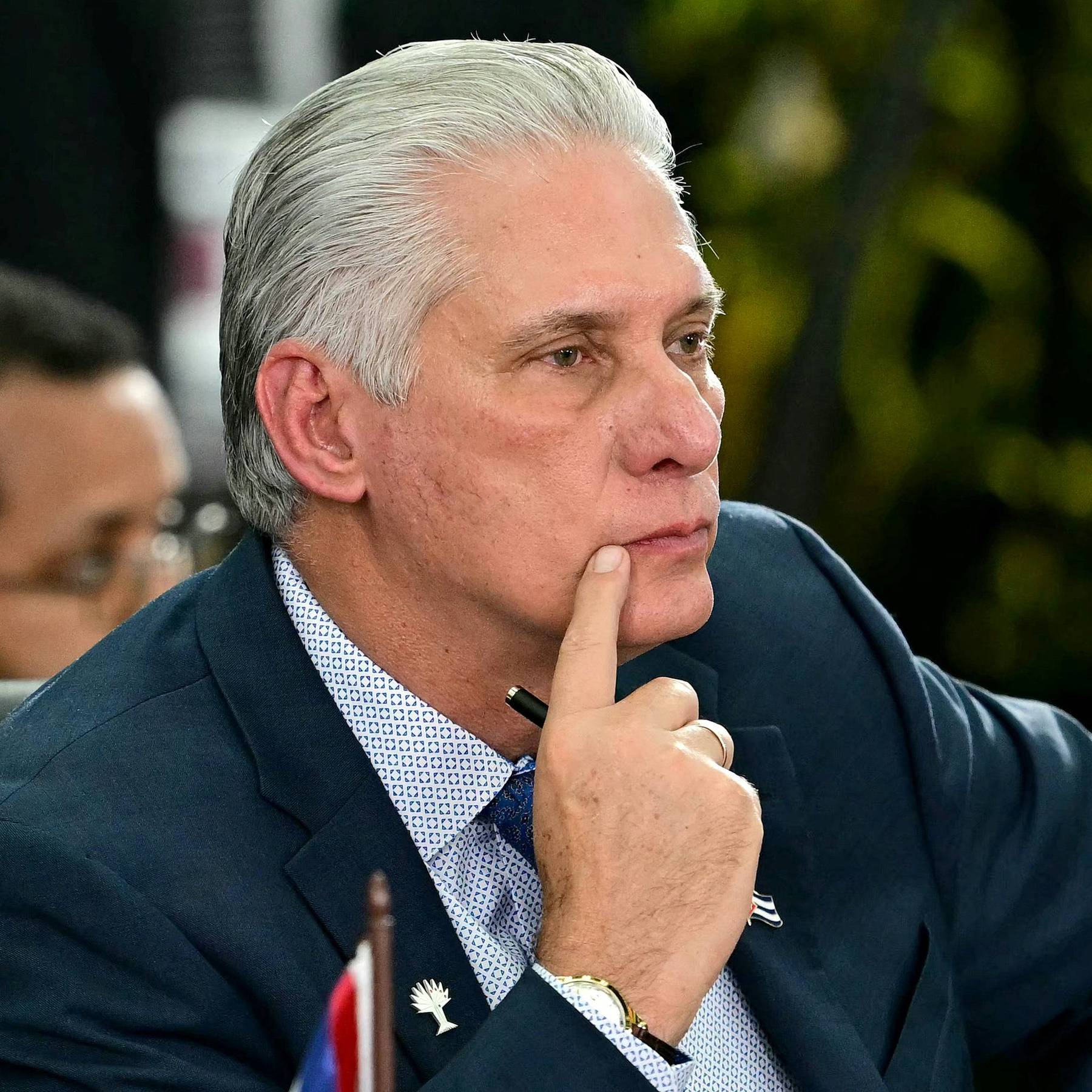
Cuban leaders, meanwhile, have said they are open to negotiations on everything from human rights to democracy to tourism and direct foreign investment. Cuban President Miguel Díaz-Canel said in a recent press conference that Cuba is willing to engage in dialogue with the United States on any issue, provided talks take place without pressure or preconditions, on the basis of respect for Cuban sovereignty. Senior Cuban leaders reiterated to Drop Site that the government is serious about being open to wide-ranging talks. And Trump is no stranger to the island’s potential for American companies, having himself long held a registered trademark for a Trump Havana property that he has annually renewed.
All the evidence would seem to suggest that the opportunity for Trump to strike a historic deal is at hand. But, despite the president’s claims, there are and have been no negotiations involving high-level officials between Havana and Washington, according to five Cuban and American officials, all of whom asked for anonymity given the sensitivity of the Cuba-U.S. relationship.
When it comes to Trump’s claims of those talks, it turns out he isn’t lying. Instead, sources tell Drop Site, he’s being lied to. “He’s saying that because that’s what Marco is telling him,” said a senior Trump official, referring to an internal effort by Secretary of State Marco Rubio to make Trump believe that the U.S. and Cuba are engaged in serious negotiations without ever doing so. The idea, the source said, is that in a few weeks or months, Rubio will be able to claim that the talks were futile because of Cuban intransigence. With diplomatic off-ramps being blocked, this would make Rubio’s vision of regime change the only path forward for an administration loath to reverse course on anything.
Asked about the fact that Rubio is misleading Trump about talks that aren’t going on, the State Department’s press office stood by the claim that such negotiations are indeed happening, forwarding along comment from an administration official: “As the President stated, we are talking to Cuba, whose leaders should make a deal. Cuba is a failing nation whose rulers have had a major setback with the loss of support from Venezuela and with Mexico ceasing to send them oil.” The statement offered no evidence the talks are taking place, named no officials participating, no dates of any meetings, nor did it identify a location where the supposed talks are happening.
Trump, meanwhile, has indicated he isn’t interested in an ideological confrontation with Cuba. This, sources suggest, is one way to understand why, after kidnapping Venezuelan President Nicolás Maduro, the U.S. has made Venezuela roll back key Chávez-era oil legislation via a reform that opens up the country to foreign investment instead of changing its regime. Rubio, meanwhile, pushed hard internally for a full regime change in Venezuela, but had to settle for merely removing Maduro. Ultimately, though, for Rubio, the real prize has always been Cuba.
The Cuban-American Rubio answers to a political base in south Florida that would revolt if he struck any deal normalizing relations with the communist government—and who, ultimately, would have the power to undo him. Rubio’s rise through Florida and national politics — which now has him on the cusp of the Oval Office — has been accompanied by a string of corruptionscandals, yet with unified support back home, he has managed to emerge with a relatively clean reputation nationally. If Trump successfully lands a deal with the Cuban government that Rubio would have to sign off on, Rubio would be left to either betray his life’s cause and that of his backers in Miami, or resign in protest.
For Rubio’s opponents inside the administration, the moment represents an opportunity to make Cuba into his Waterloo.
No Dialogue
In the wake of Trump’s claims of high-level talks, confused Cuban officials insisted to Drop Site that no such talks were then underway, but that they were eager for them to start. Misinformation in the media, however, has muddied the situation.
On February 2, the day after Trump’s comments, Politico highlighted a report that the son of Raúl Castro had traveled to Mexico City for talks with the Central Intelligence Agency and asked in a headline: “Could a Castro become our man in Havana?”
The article, however, is sourced to 14YMedio, a news outlet run by Havana-based dissident blogger Yoani Sánchez, which itself based its reporting on a single, fantastical Facebook post made by a Spain-based Cuban journalist. Yet the Politico report began circulating in Washington and has been accepted as fact. Senior Cuban officials tell Drop Site there are no talks going on in Mexico or anywhere else.
“At the moment, we’ve had some exchanges of messages, but we cannot say we have set a bilateral dialogue at this moment,” Cuba’s Deputy Minister of Foreign Affairs Carlos Fernandez de Cossio affirmed in a CNN interview this past Wednesday. “Most things in Cuba dealing with the United States are linked to the highest level. It’s a large issue for us, so there’s no decision, no action taken that doesn’t involve the high level of government in Cuba.”
A “senior State Department official” told the New York Times recently that contact between the Cuban and U.S. government was “not substantive” and merely discussed migrant repatriation. Elaborating, a senior Cuban official told Drop Site that the contacts are purely technical, with the U.S. telling Cuban officials when flights with deported migrants would be heading to Havana, and Cuban officials acknowledging receipt of the message.
An article on Wednesday in the Spanish outlet ABC Internacional added to the confusion, claiming that Mexican official Efraín Guadarrama is facilitating the talks. A well-placed source with direct knowledge tells Drop Site Guadarrama is doing no such thing.
In the wake of the abduction of Venezuelan President Nicolas Maduro, top Cuban government officials have become increasingly interested in wide-ranging talks with the Trump administration—talks that could even include Rubio, a longtime foe of the government, multiple Cuban officials tell Drop Site. The only red line, they said, is that the island’s sovereignty is not up for negotiation.
Havana’s desire for talks, bordering on desperation, has been signaled to the United States through a variety of channels, including through press statements and recent interviews with the Associated Press and CNN. “Cuba reiterates its willingness to sustain a respectful and reciprocal dialogue with the Government of the United States,” the Cuban foreign ministry said in a February 1 release, “directed toward concrete outcomes, grounded in mutual interest and international law.”
The ministry added that Cuba was willing to “broaden” the scope of talks, saying the country “firmly rejects being portrayed as a threat to the security of the United States. It has never engaged in hostile actions against that country, nor will it permit its territory to be used against any other nation. Cuba, on the contrary, is prepared to resume and broaden bilateral cooperation with the United States in addressing shared transnational threats, while unwaveringly defending its sovereignty and independence.”
In an interview with Newsweek, Cuban Permanent Representative to the U.N. Ernesto Soberón Guzmán said Cuba would be happy to work with Trump on immigration, drug interdiction, health research—he noted Trump’s praise for Cuba’s relatively lower rates of autism—and other areas.
In addition to the ongoing economic crisis, the proximate cause for Cuban concern is an executive order issued on January 29 by President Donald Trump threatening heavy tariffs on “any other country that directly or indirectly sells or otherwise provides any oil to Cuba.”
Though not mentioned by name, the tariff threat is aimed at Mexico, whose state oil company has in recent years been the primary supplier of oil to the small island nation located 90 miles off the southern coast of Florida. In response, Mexico’s state oil company, PEMEX, has reportedly suspended at least one planned shipment of oil to its Cuban ally, leaving Cuba with an estimated two to three weeks’ worth of oil to keep the country running.
Overburdened, underfueled, and obsolete, Cuba’s electricity grid is barely hanging on, while the Cuban government publicly says it is preparing to administer life in the country with almost zero power. On Friday, ministers began to roll out a nationwide energyrationing plan. The measures include cutting mass transit, slashing individual gasoline allotments, and reducing in-person days for secondary school students. While Americans sat down for Super Bowl Sunday, Cuban authorities told airlines there was only one day’s supply of aviation fuel left in the country. On Monday, the U.S. intercepted an oil tanker as far away as the Indian Ocean for allegedly planning to ship fuel to Cuba.
At a lengthy press conference this past Thursday, Cuban President Miguel Díaz-Canel reiterated his country’s emphatic openness to negotiation with the United States without “pressure” or “preconditions.” Broadcasted on TV and radio around the world, Díaz-Canel’s comments were made, as one Wall Street Journal reporter observed, “with an audience of one in Washington”—Donald Trump.
“We are a country of peace,” Díaz-Canel said. “We are not a threat to the United States.”
Noah Kulwin reported from Havana, José Luis Granados Ceja reported from Mexico City, and Ryan Grim reported from Washington, D.C.
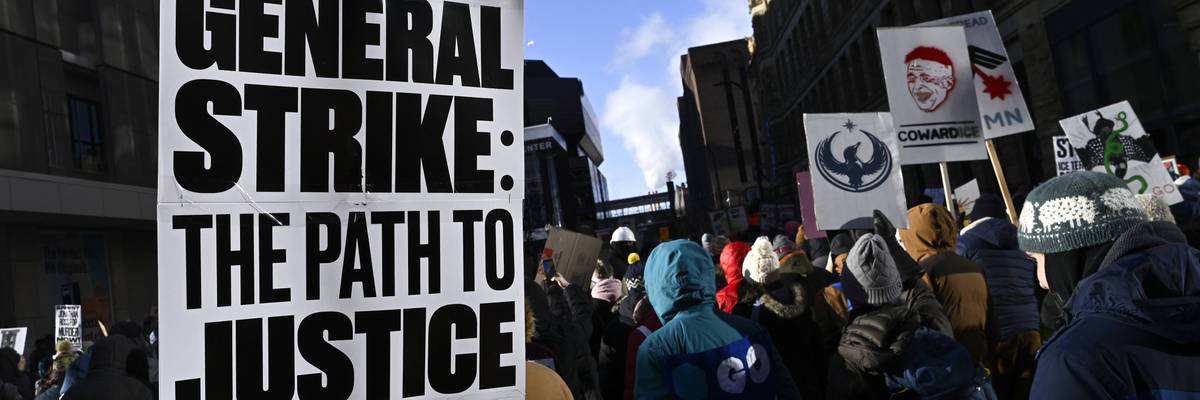
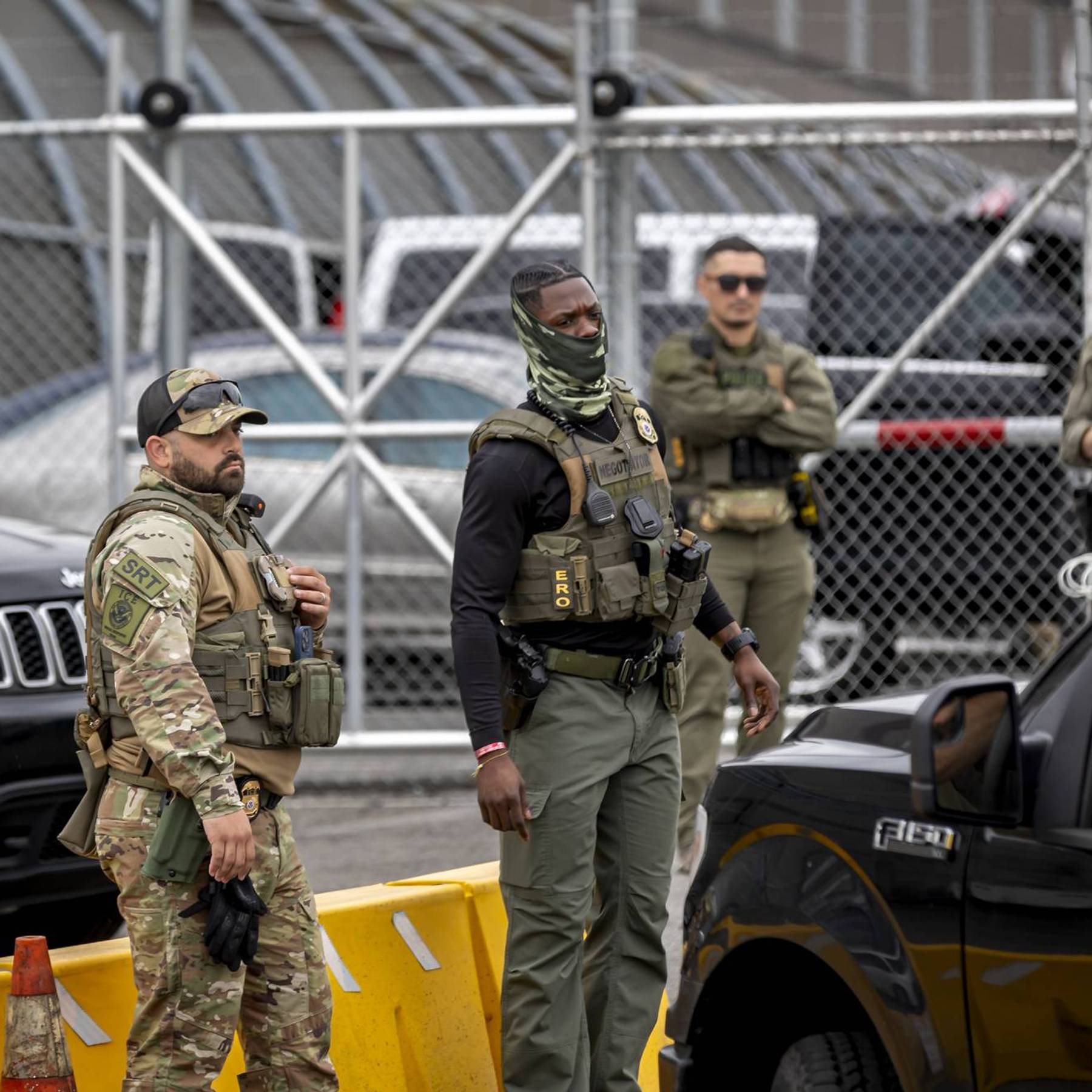
As people are watching online and in person, American federal immigration enforcement is stepping up a policy of an authoritarian police state using violence against immigrants and their native-born backers. Operation Metro Surge in Minneapolis is a primary case in point. It’s a thing of beauty to see the multiracial working class resistance rising there and across the US.
Let us pay tribute to those who have lost their lives at the hands of federal immigration enforcement. Federal immigration agents have killed two US citizens—Renee Good and Alex Pretti—in 2026. Meanwhile, six immigrants—Heber Sanchaz Domínguez, Victor Manuel Diaz, Parady La, Luis Beltran Yanez-Cruz, Luis Gustavo Nunez Caceres, and Geraldo Lunas Campos—have died in Immigration and Customs Enforcement (ICE) detention in 2026.
One thing is clear to me. Resisting Operation Metro Surge is expanding working-class consciousness about the corporate state’s responses to people’s resistance to oppression. The political point is that given such current circumstances, conditions of adversity can and do serve as a basis for working-class solidarity across demographic differences. Working-class people of all backgrounds struggle against an authoritarian police state of brute force waging a “might makes right” battle against freedoms enshrined in the Constitution.
Whether born abroad like Maryse Balthazar, a Haitian journalist and elder-care nurse caring for a World War II veteran, or stateside, like ICU nurse Alex Pretti, a union employee for the Veterans Administration whom ICE agents executed, workers sell their labor services to buyers, or employers. This marketplace transaction defines the class relationship between employees and employers, sellers and buyers of labor services.
Organized labor’s awakening is a positive action for the working class.
Halting this buying and selling of labor services, or “shutting it down,” hits at the power of the capitalist marketplace to rule people’s lives. In our time of a decaying US empire, the capitalists ruling the marketplace are the billionaires and monopoly corporations that fund Democrats and Republicans, America’s political duopoly. Their voter coalitions differ demographically but are similar economically. Both coalitions are majority working class, sellers of labor services, but the ruling class funds the two political parties. The so-called left-right, blue-red demographic lacks a political party that advances its material interests. Why? The donors’ votes cast with millions of dollars before elections set the policies of both political parties.
Additional differences between the sellers of labor services range from gender to race (a biological fiction) to religion and sexual orientation. These identities matter. However, class relations are at the center of these identities. The Democratic Party and GOP weaponize their coalitions’ identities as political strategies to compel voters to oppose their class interests.
Ideology from the start plays a big part in this political equation. In the US, for example, its beginning gets ideological spin as a great founding of democracy and freedom versus a slave-holding republic waging genocide against the native inhabitants. This fictionalized national history whitewashes (heh) the meaning of democracy and freedom so central to a national narrative. We hear some working-class people say the following in the face of an authoritarian police state waging war on US soil: “This isn’t America. We are a nation of immigrants.”
It’s easy to blame, deservedly, the GOP’s attack on the teaching of history. Republicans’ efforts to ban some books is a transparent attempt to miseducate a new generation of Americans about the past. (S)he who controls the past controls the present. The Trump administration’s bid to end the teaching of chattel slavery is a case in point. It’s as if 250 years of enslaved Africans toiling for the wealth of a Caucasian slavocracy never happened stateside.
Against this backdrop, the corporate state’s use of force to attack workers trying to organize to bargain collectively is a consistent theme in US history. While collective bargaining is not center stage in Operation Metro Surge, corporate state-sanctioned violence against the working class is a chip off the block of coercive measures against dissent.
Organized labor is pushing back against Operation Metro Surge flooding Minneapolis with violent federal immigration enforcement agents. “The Minneapolis Regional Labor Federation, AFL-CIO along with regional bodies throughout the state, including the Saint Paul Regional Labor Federation, the West Area Labor Council, the North East Area Labor Council, and the East Central Labor Council, have joined in solidarity to endorse a powerful unified statewide action on January 23: Day of Truth and Freedom.” A US working-class pushback didn’t stop there.
One week later, working class people of all backgrounds, in and out of unions, across the US took part in a national action: “Shut It Down. No work, no school, no shopping.” Hundreds of thousands of adults and youth protested peacefully against the violence of federal immigration forces following the marching orders of the White House. Those orders to target brown people for arrest and deportation flow from a white supremacist orientation that fundamentally misinterprets that fact the US itself lies on lands stolen from the native inhabitants and enriched via the unpaid labor of enslaved Africans.
Organized labor’s awakening is a positive action for the working class. Yet it would be remiss of us to ignore the role of the AFL-CIO in supporting the Democratic Party’s backing of the US empire and its dozens of militarized foreign interventions since the end of World War II.
The violence of federal fiscal policy is also a weapon to discipline the working class. Take the Trump administration’s Department of Health and Human Services’ announcement on January 5 that it would freeze over $10 billion in federal funding for childcare providers in five Democrat-led states based on baseless and racist claims of fraud against Somali childcare providers. In the Golden State, this fiscal move represents over $2.2 billion dollars in annual funding that could be lost during a freeze. Working families would have to borrow money to bridge the funding gap, relying in part on credit cards with their 22-plus percent interest rates that enrich the big banks.
Meanwhile in California, there has been a rise in harassment from white supremacists against San Diego’s Somali community, including its childcare providers, according to the United Domestic Workers (UDW/AFSCME Local 3930). San Diego is home to the country’s second-largest Somali community, after the Twin Cities. Immigrants who perform caring labor there and across the US are essential workers.
Johanna Hester is the UDW deputy executive director and co-chair of Child Care Providers United. “For over a month,” she said in a statement, “Somali childcare providers have endured harassment by internet vigilantes who are dead set on exposing fraud in California’s highly regulated government childcare system. In the process, they are stalking and intimidating our members at their homes and places of business.”
“These provocateurs are sowing seeds of hatred and distrust of our neighbors after taking cues from the president who referred to Somalians as ‘garbage.’ We treasure our Somali members and their contributions to our families, our union, and our communities,” she concluded.
Using one part of the working class to control other parts of it is a proven method of class control. In this way, the capitalist class can and does attempt to weaken workers’ solidarity. In contrast, the capitalist class does not fund the control of corporations. The corporate state’s mission is to free the millionaires and billionaires from working-class influence. Economically speaking, the corporate state’s political duopoly has shifted income and wealth from the working class to the capitalist class since the end of the Vietnam War.
Recently in California, citizens pushed back against the AI warlords behind the scenes of violent federal immigration enforcement. For example, around 50 people interrupted a talk by Andrew Abranches, the vice president of wildfire mitigation for Pacific Gas & Electric, demanding the company immediately end its contract with Palantir Technologies, a Silicon Valley firm that sells mass surveillance software to ICE. Palantir also provides the Israel Defense Forces (IDF) with militarized AI tools to maim and murder Palestinians.
There are four main products that Palantir provides. Here’s one, dubbed Gotham, according to the American Friends Service Committee. Gotham is “Palantir’s flagship product for military, intelligence, and law enforcement applications. It ingests, integrates, and organizes large amounts of data from many sources to detect patterns and insights. Gotham can also integrate with sensors and autonomous systems like drones and give them tasks.”
War abroad, directly in the case of military operations to capture Venezuelan President Nicolas Maduro and his wife, and by proxy to fund the IDF’s extermination campaign against Palestinians in Gaza, is the flip side of the class war underway globally. Stateside in the guise of federal immigration enforcement agents rampaging against workers who dare to dissent on the streets of American cities, class war is raging as a workforce from around the world laboring on US soil is finding its legs.
The U.S. is on a fast track to authoritarianism like nothing I’ve ever seen. Meanwhile, corporate news outlets are utterly capitulating to Trump, twisting their coverage to avoid drawing his ire while lining up to stuff cash in his pockets.
That’s why I believe that Common Dreams is doing the best and most consequential reporting that we’ve ever done.
Our small but mighty team is a progressive reporting powerhouse, covering the news every day that the corporate media never will. Our mission has always been simple: To inform. To inspire. And to ignite change for the common good.
Now here’s the key piece that I want all our readers to understand: None of this would be possible without your financial support.
That’s not just some fundraising cliche. It’s the absolute and literal truth. We don’t accept corporate advertising and never will. We don’t have a paywall because we don’t think people should be blocked from critical news based on their ability to pay. Everything we do is funded by the donations of readers like you.
Will you donate now to help power the nonprofit, independent reporting of Common Dreams?
Thank you for being a vital member of our community. Together, we can keep independent journalism alive when it’s needed most.
– Craig Brown, Co-founder
about:blank
about:blank
Our work is licensed under Creative Commons (CC BY-NC-ND 3.0). Feel free to republish and share widely.
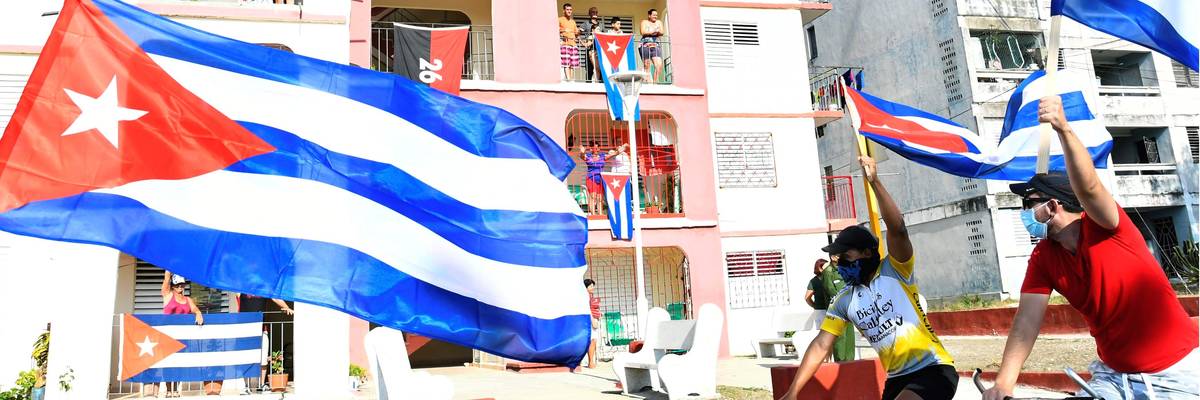
Since the Cuban Revolution overthrew a US-backed dictatorship and asserted national independence, Cuba has remained in the United States’ crosshairs. The country has endured nearly 600 assassination attempts against its leadership, along with countless covert and overt operations aimed at destabilizing its government. For more than six decades, the US has also imposed an economic embargo explicitly designed to bring about regime change.
By any honest measure, this policy has failed. What it has succeeded in doing is fostering deep resentment toward the United States, not only in Cuba, but across much of the world, while inflicting immense suffering on ordinary Cubans.
Basic necessities such as food, paint, printing paper, baby formula, syringes, and other lifesaving supplies, including vaccines and cancer treatment drugs, are either restricted by the embargo or priced far beyond most people’s reach. A simple walk through Havana tells the story: crumbling infrastructure, uncollected trash, and growing numbers of people gathering near tourist areas, hands outstretched in desperation.
Fuel shortages are widespread, inflation is at historic highs, and a sharp decline in tourism, Cuba’s primary economic lifeline, has made daily life nearly unbearable for many.
It is time for the United States to respect Cuba’s sovereignty and lift the embargo and accompanying sanctions.
In response, the Cuban government has expanded the private sector, legalized small- and medium-sized enterprises, decentralized food production, and opened its markets to limited foreign investment, all while attempting to maintain the core socialist principles of the revolution. It has also reduced reliance on fossil fuels, slowly shifting to solar energy. In 2025, renewable energy accounted for more than 10% of Cuba’s energy consumption, an increase from 3% the year before.
Yet these measures alone cannot offset the outsize impact of US policy and the blockade, which has been dramatically tightened in recent months. The latest effort to cut off of nearly all oil shipments to the island has led to daily blackouts and deepened human suffering.
It is time for the United States to respect Cuba’s sovereignty and lift the embargo and accompanying sanctions. They are a cruel and inhumane form of collective punishment that disproportionately harms the most vulnerable. These sanctions, without legitimate justification, have restricted travel for Americans, made remittances far more difficult, and unjustly placed Cuba on the State Sponsor of Terrorism list. That designation effectively cuts the country off from the global banking system, making even basic international transactions nearly impossible. The absurdity is stark: Cuban biotechnology produced five globally used Covid-19 vaccines, while the US embargo restricted Cuba’s ability to purchase syringes to administer them.
Cuba should not be treated as a political chess piece to demonstrate US economic and military might. It is a proud nation of nearly 11 million people who want nothing more than to be good neighbors. It is time for the United States to end its asphyxiation of Cuba and allow the Cuban people to determine their own future, a future free from US interference, coercion, and perpetual threat.
The U.S. is on a fast track to authoritarianism like nothing I’ve ever seen. Meanwhile, corporate news outlets are utterly capitulating to Trump, twisting their coverage to avoid drawing his ire while lining up to stuff cash in his pockets.
That’s why I believe that Common Dreams is doing the best and most consequential reporting that we’ve ever done.
Our small but mighty team is a progressive reporting powerhouse, covering the news every day that the corporate media never will. Our mission has always been simple: To inform. To inspire. And to ignite change for the common good.
Now here’s the key piece that I want all our readers to understand: None of this would be possible without your financial support.
That’s not just some fundraising cliche. It’s the absolute and literal truth. We don’t accept corporate advertising and never will. We don’t have a paywall because we don’t think people should be blocked from critical news based on their ability to pay. Everything we do is funded by the donations of readers like you.
Will you donate now to help power the nonprofit, independent reporting of Common Dreams?
Thank you for being a vital member of our community. Together, we can keep independent journalism alive when it’s needed most.
– Craig Brown, Co-founder
about:blank
about:blank
Our work is licensed under Creative Commons (CC BY-NC-ND 3.0). Feel free to republish and share widely.
A Saudi delegation will also visit the US in an effort to de-escalate tension in the Middle East
by Kyle Anzalone | January 29, 2026 at 2:52 pm ET
Senior Israeli defense officials met with top US officials to discuss a future conflict with Iran. According to Axios, “The Israelis came to DC to share intelligence on possible targets inside Iran.” Israeli military intelligence chief Gen. Shlomi Binder led the Israeli delegation and met with US officials at the Pentagon for two days earlier this week. US officials told the outlet that President Donald Trump is still considering an attack on Iran. One official with knowledge of the meetings said Bidner had brought intelligence that was requested by the President. Late last year, Prime Minister Benjamin Netanyahu pressed Trump to help Israel take out the government of Iran. The President is reported to be considering a range of options to cause regime change in Iran, including high-level strikes and an oil blockage. Trump has ordered a massive military buildup in the Middle East, including fighter jets, an aircraft carrier strike group, and advanced air defense systems. On Wednesday, Trump renewed the threat to attack Iran if Tehran does not agree to a nuclear deal with the US. Iranian officials have stated they are willing to negotiate with the US if Trump stops threatening Iran. Additionally, Tehran has ruled out agreeing to eliminate its uranium enrichment program. While Israel is pushing for Trump to start a war with Iran, other countries in the Middle East are trying to broker a deal. Turkey has offered to host talks with Iran. Saudi Defense Minister Prince Khalid bin Salman will meet with US officials in the Pentagon on Thursday. Axios notes that Ryiahd has been acting as a backchannel between Washington and Tehran. Iran has threatened to retaliate against any attack by striking US bases across the Middle East.
President Donald Trump renewed his threats to attack Iran if the Islamic Republic does not comply with his demands. The President claimed that Iran must agree to a new nuclear deal or would be attacked by the “armada” Trump has assembled in the Middle East.
“A massive Armada is heading to Iran. It is a larger fleet, headed by the great Aircraft Carrier Abraham Lincoln, than that sent to Venezuela. Like with Venezuela, it is ready, willing, and able to rapidly fulfill its mission, with speed and violence, if necessary,” the President wrote on Truth Social Wednesday.
“Hopefully Iran will quickly ‘Come to the Table’ and negotiate a fair and equitable deal – NO NUCLEAR WEAPONS – one that is good for all parties. Time is running out, it is truly of the essence!” He continued, “As I told Iran once before, MAKE A DEAL! They didn’t, and there was ‘Operation Midnight Hammer,’ a major destruction of Iran. The next attack will be far worse! Don’t make that happen again.”
After returning to the White House, Trump tightened sanctions on Iran and threatened to attack the Islamic Republic if it did not agree to a deal that would limit or eliminate its civilian nuclear program.
Tehran has stated that it is willing to agree to limitations and strict inspections of its nuclear program, but it will continue to enrich uranium. The President has asserted that Iran must completely eliminate its enrichment program.
Prior to the unprovoked Israeli attack on Iran in June that ignited a 12-day conflict, Washington and Tehran were in the process of establishing a new nuclear agreement. When Trump ordered US forces to aid Israel and attack Iran, those negotiations failed. Iran has offered to return to the table if Trump stops threatening the Islamic Republic.
Late last year, Trump renewed his threats on Iran, this time asserting that the US would attack the Islamic Republic if the government’s crackdown led to the deaths of protesters. While thousands died during the demonstration in Iran, Trump decided not to launch an attack.
Trump declined to give the order to attack Iran out of concern that the planned strikes would fail to topple the government, and US troops in the Middle East and Israel would be vulnerable to counterattacks.
Trump has ordered an aircraft carrier strike group, fighter jets, and advanced air defense systems to the Middle East. The larger American military presence in the region will give the President additional options for attacking Iran and defeating counterattacks.
Trump is reportedly considering a range of options for bringing about regime change in Iran, including an oil blockade and strikes on high-level targets in Tehran.
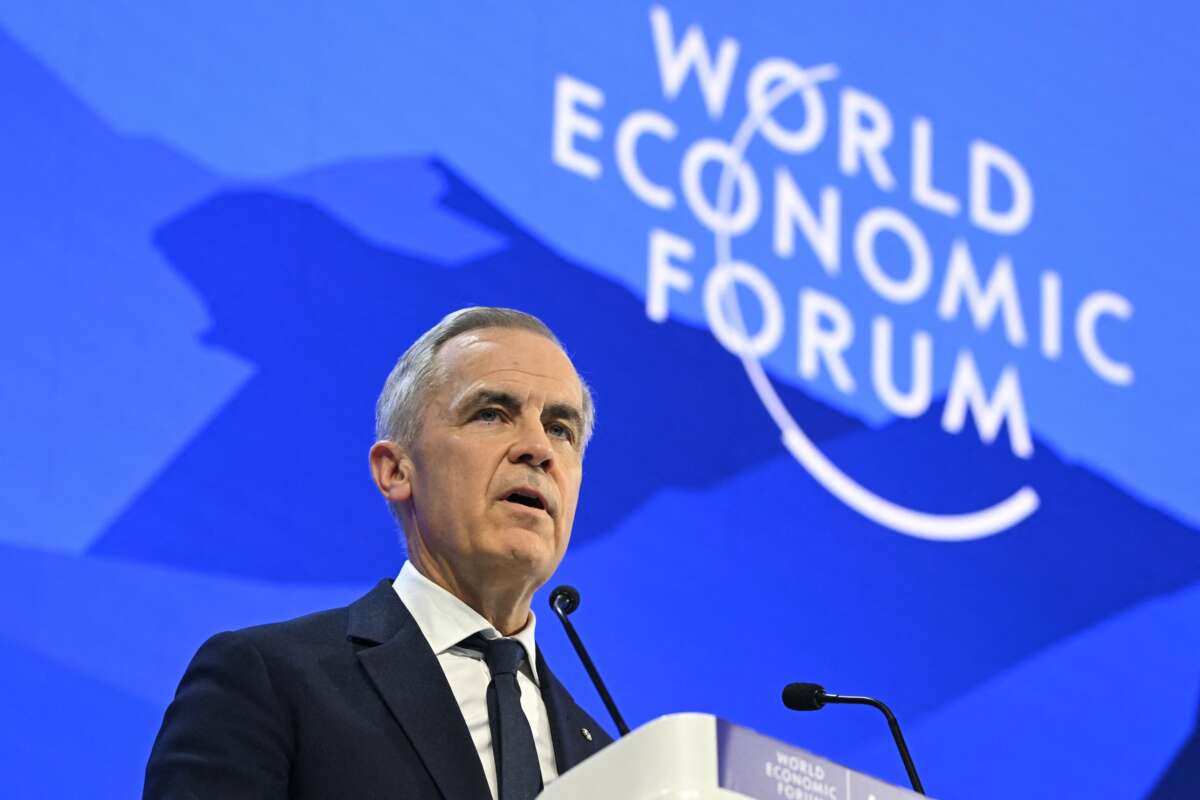
Canada’s Prime Minister Mark Carney delivers a speech during the World Economic Forum annual meeting in Davos on January 20, 2026.
Truthout is a vital news source and a living history of political struggle. If you think our work is valuable, support us with a donation of any size.
In an unusually candid speech in Davos, Switzerland, on Tuesday, Canadian Prime Minister Mark Carney warned that world order is at a “rupture” point due to the U.S.’s longstanding vise-grip on the world and its swiftly expanding authoritarian nature under President Donald Trump.
Skewering “American hegemony,” Carney said that countries like Canada have long known that the idea of the international rules-based order was a “fiction” that states nonetheless signaled their support for in order to be granted access to crucial goods, trade, and other resources like finance.
For decades, states with “middle” amounts of power like Canada “participated in the rituals, and largely avoided calling out the gaps between rhetoric and reality,” Carney said. In return, the U.S. allowed other states access to important systems.
“This bargain no longer works,” Carney told the World Economic Forum. “We are in the midst of a rupture, not a transition.”
But, over the past two decades, great powers like the U.S. are increasingly using “economic integration as weapons,” he said. This is causing countries to retreat into themselves, becoming less reliant on outside sources — which Carney warned will lead to greater fragmentation and volatility.
Organizers protested the Canadian government’s planned investment into militarization at a weapons fair this week. By Nora Loreto , Truthout
May 30, 2025
“Tariffs as leverage, financial infrastructure as coercion, supply chains as vulnerabilities to be exploited. You cannot live within the lie of mutual benefit through integration when integration becomes the source of your subordination,” he said.
Countries like Canada “compete with each other to be the most accommodating,” he said. “This is not sovereignty. It is the performance of sovereignty while accepting subordination.”
He calls for countries to form a third path, one of greater cooperation, in order to push back against the threats by major powers. Doing this would require dispensing with simply signalling support for global order in favor of redoubling efforts to actually enforce principles like those laid out in the UN charter, he said.
“We should not allow the rise of hard power to blind us to the fact that the power of legitimacy, integrity, and rules will remain strong if we choose to wield it together,” he said. Countries must “stop invoking the ‘rules-based international order’ as though it still functions as advertised. Call the system what it is: a period where the most powerful pursue their interests using economic integration as a weapon of coercion.”
The speech comes just weeks after German President Frank-Walter Steinmeier similarly said that the U.S. is ending world order as it’s known, and instead turning the world “into a den of robbers, where the most unscrupulous take whatever they want” and countries are “treated as the property of a few great powers.”
Carney and Steinmeier both, perhaps, ignore their countries’ respective responsibilities for the erosion of the enforcement of international order — in theirsupport for Israel’s genocide in Gaza, their contributions to the global system of imperialism, and their participation in an increasing crackdown on asylum and immigration by wealthy countries, among other actions.
However, many experts have noted the vast erosion of international principles brought on by the U.S. in particular, which is accelerating under Trump.
Amnesty International USA warned in a report on Tuesday, the anniversary of Trump’s inauguration, that Trump’s first year has led to a “human rights emergency” in which the administration is “cracking the pillars of a free society.”
“At stake are the rights that enable people to defend all other rights and live without fear from the arbitrary exercise of power and discrimination, including the rights to freedom of the press, expression, and peaceful protest; a fair trial and due process; equality and non-discrimination; and privacy,” the report said. “When these rights are weakened, the harms do not stay contained — they spread.”
Trump is silencing political dissent. We appeal for your support.
Progressive nonprofits are the latest target caught in Trump’s crosshairs. With the aim of eliminating political opposition, Trump and his sycophants are working to curb government funding, constrain private foundations, and even cut tax-exempt status from organizations he dislikes.
We’re concerned, because Truthout is not immune to such bad-faith attacks.
We can only resist Trump’s attacks by cultivating a strong base of support. The right-wing mediasphere is funded comfortably by billionaire owners and venture capitalist philanthropists. At Truthout, we have you.
Truthout has launched a fundraiser to raise $45,000 in the next 8 days. Please take a meaningful action in the fight against authoritarianism: make a one-time or monthly donation to Truthout. If you have the means, please dig deep.
about:blank This article is licensed under Creative Commons (CC BY-NC-ND 4.0), and you are free to share and republish under the terms of the license.
Sharon Zhang is a news writer at Truthout covering politics, climate and labor. Before coming to Truthout, Sharon had written stories for Pacific Standard, The New Republic, and more. She has a master’s degree in environmental studies. She can be found on Twitter and Bluesky.
The director of Israel’s Mossad spy agency, David Barnea, arrived in the U.S. on Friday morning for talks on the situation in Iran, according to an Israeli source and another source with knowledge of the meeting.
Why it matters: Barnea’s visit is part of the consultations between the U.S. and Israel over the protests in Iran and possible U.S. military action in response to the regime’s crackdown.
Barnea is expected to meet in Miami with White House envoy Steve Witkoff, who is managing the direct channel of communication between the U.S. and Iran. Witkoff has been in touch with Iran’s foreign minister, Abbas Araghchi, during the protests. It’s not yet clear whether Barnea will meet President Trump in Mar-a-Lago over the weekend.
Driving the news: Barnea’s trip follows a phone call on Wednesday between Trump and Israeli Prime Minister Benjamin Netanyahu about the Iran crisis.
During the call, Netanyahu asked Trump to hold off on military action against Iran to give Israel more time to prepare for potential Iranian retaliation. An Israeli source said that in addition to concerns about retaliation, the current U.S. plan includes strikes on security force targets in Iran, but is not seen by Israel as strong enough to meaningfully destabilize the regime. U.S. officials say military action is still on the table if Iran resumes the killing of protesters. Israeli officials think that despite the delay, a U.S. military strike could take place in the coming days.
What to watch: The U.S. military is sending additional defensive and offensive capabilities to the region to be ready in case Trump orders a strike, U.S. sources say.
The Abraham Lincoln aircraft carrier and its strike group are making their way to the Middle East from the South China Sea. More air defense systems, fighter jets and possibly submarines are also expected to arrive in the region.
The intrigue: When he reached out to Witkoff, Araghchi proposed a meeting and the resumption of nuclear negotiations.
The Israeli government is concerned the Iranians will use such negotiations to buy time and relief from the U.S. pressure. On the other hand, some officials think the current crisis could convince the Iranian regime to make concessions it refused to consider in the past, on the nuclear program, missile program, and proxy groups.
At a conference of the Israeli-American Council in Miami on Thursday night, Witkoff said he communicated with the Iranians the day before about the potential mass hangings.
“That has been shut down,” Witkoff said.
Witkoff said he hopes it will be possible to get a diplomatic solution with Iran and noted that any deal will have to address uranium enrichment and Iran’s stockpile of enriched uranium, Iran’s inventory of ballistic missiles, and its network of proxies in the region. Witkoff said Iran’s economy was badly “stumbling” and if Tehran wants to change that and return to the community of nations, it can be accomplished through diplomacy. “The alternative will be a bad one.”







 Peace and Justice Post