Albert Einstein is credited with saying, “the definition of insanity is doing the same thing over and over again and expecting different results.” Whether he actually said it or not, the definition stands.
This definition also very well describes the Trump Administration’s war with Iran. According to media reports, President Trump was cajoled by Israeli Prime Minister Netanyahu that this would be an “easy war,” like Venezuela. Just assassinate the Iranian leadership, he promised, and the regime change would bring in a pro-America regime in Iran.
The CIA disagreed with the assessment, but Trump went with Netanyahu and the rest is history.
The “decapitation strikes” did not change leadership in Iran. As was the case in the US after the 9/11 attacks, the people rallied around the flag. The new leadership was less interested in a compromise than their murdered predecessors.
So the bombing began. Weeks of bombing. But that didn’t work – it only depleted our already-low weapons supplies.
Then “diplomacy” was substituted for bombs and a Memorandum of Understanding was signed by both sides. The US side immediately broke the agreement by attempting to open a new ship corridor by force and the bombs started flying again.
For the past month, the bombs stopped only to start up last weekend, with a US strike on an Iranian island. This was followed again by multiple Iranian strikes on US bases in the region.
Bombs then diplomacy, bombs then diplomacy. President Trump has told us dozens of times that us the war is over, and we have won, but no one believes it any longer. He claims that the US completely controls the Strait of Hormuz while the shipping corridors are empty.
The US military has been stretched to the breaking point. US sailors and Marines endured a record-breaking deployment with terrible conditions aboard the USS Abraham Lincoln and other ships at sea. But this past weekend we saw the most telling sign of a military pushing back against orders that make no sense. Army Secretary Dan Driscoll resigned his position, reportedly due to disagreements with Defense Secretary Pete Hegseth over the toll the war is taking on military readiness. Driscoll follows several high-ranking US Army officials who have resigned. It seems clear that US Military leadership does not believe in the mission.
Maybe President Trump should listen to them instead of his “War” Secretary Pete Hegseth?
Doing the same thing and expecting different results may be the definition of insanity, but another definition might be starting a war halfway across the globe against a country that has neither attacked nor threatened you. Insanity might be starting a war based on the self-serving lies of a foreign leader who just happens to benefit from the fighting. Insanity might be further depleting the US arsenal of missiles and other weapons after years of proxy war against Russia through Ukraine. Insanity might be burdening future generations with a national debt of $40 trillion and climbing.
It is time for some very difficult decisions to be made. This war will not be won with more bombing, and the Iranians no longer trust us as negotiating partners after broken agreements and false claims. The only course of action is to pack up and come home. Let the people of the region solve their own problems.
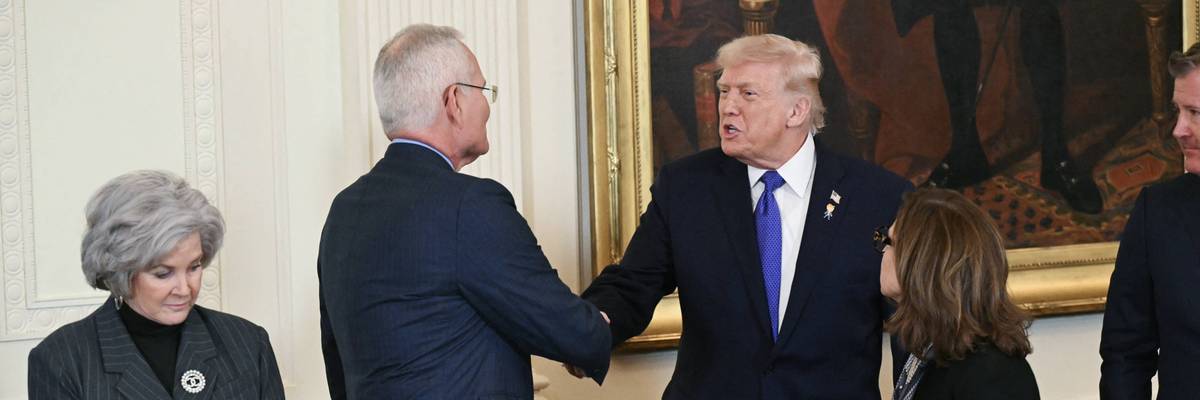
US President Donald Trump shakes hands with ExxonMobil CEO Darren Woods, during a meeting with US oil companies executives in the East Room of the White House in Washington, DC on January 9, 2026.
(Photo by Saul Loeb / AFP via Getty Images)
“This is proof Trump put our service members at risk to get Venezuelan oil for his billionaire buddies,” one Democratic senator said. “Putting our soldiers’ lives on the line for private profit is a gross dereliction of his constitutional duty.”
President Donald Trumpannounced on Truth Social on Friday that his government had “secured majority US control” of Venezuelan oil reserves containing 65 billion barrels of oil.
The announcement followed on reporting from Axios that a deal was in the works, prompting criticisms that such a move would be “colonial” and calls for Congress to reject any such proposal.
“Let’s be clear: This isn’t a win,” Sen. Chris Van Hollen (D-Md.) wrote on social media in response to the announcement. “This is proof Trump put our service members at risk to get Venezuelan oil for his billionaire buddies. Putting our soldiers’ lives on the line for private profit is a gross dereliction of his constitutional duty.”
When US forces invaded Caracas and kidnapped Venezuelan President Nicolás Maduro and his wife First Combatant Cilia Fores on January 3, Trump’s own words following the invasion confirmed suspicions that he acted largely to gain access to the country’s oil.
“These are some of the largest crimes of our lifetimes.”
“We’re going to get the oil flowing the way it should be,” he said in a press conference following the attack.
Friday’s deal, which seems like an attempt to make good on that promise, was also announced by Secretary of State Marco Rubio and acting Venezuelan President Delcy Rodriguez, who provided more details.
Rodríguez stated that the deal will involve private corporations developing 17 “strategic fields” with 65 billion barrels of proven reserves. She echoed Rubio’s $100 billion investment claim and pledged that the projects would yield $209 billion in tax revenues. According to the acting president, the announced agreement “ushers in a new era of growth and prosperity.”
However, economist Francisco Rodríguez, a senior research fellow at the Center for Economic and Policy Research, argued that the agreement was actually a bad deal for Venezuelans.
“President: According to your figures, this agreement will generate tax revenues of just $3.22 per barrel of Venezuelan oil. This represents 4.7% of the current price, and less than half of the royalty rate contemplated in concessions granted by Juan Vicente Gómez,” he wrote on social media, addressing the current Venezuelan leader and referring to a Venezuelan dictator from the early 20th century.
Joseph Bouchard, a journalist and researcher who focuses on Latin America, agreed with Rodriguez’s criticism of the deal, writing on social media that “Trump [was] ‘generously’ buying billions of barrels of Venezuelan oil at less than 5% its market price. He’s stealing their oil for his own family and cronies’ profit. Guessing this may be used as a chip to manipulate the midterms. These are some of the largest crimes of our lifetimes.”
Francisco Rodriguez had earlier pointed out that the deal violated the Venezuelan Constitution, which holds that all minerals and hydrocarbons are “inalienable public domain,” according to Venezuelanalysis. For the deal to go through, therefore, Venezula would have to alter its Constitution.
Former head of Human Rights Watch Kenneth Roth noted on social media that “senior Venezuelan officials, all fearing arrest, are hardly in a position to negotiate vigorously, making the whole thing seems like one big military theft.”
Trump is under pressure to lower gas prices that have spiked due to the fallout of his war on Iran, which entered its sixth month on Friday, and promised in his announcement, “This Historic Transaction MORE THAN DOUBLES American Oil Reserves, greatly increases our Oil Supply, and will substantially lower Gas Prices for all Americans, long into the future.”
However, The Associated Press pointed out: “A significant drop in US gas prices tied to the agreement should not be expected immediately. Experts have repeatedly warned that a substantial boost in Venezuelan oil production will not happen quickly as repairing and expanding infrastructure takes years and requires billions of dollars.”
Exploiting Venezuela’s oil reserves would also exacerbate the climate crisis, which just this summer intensified a deadly heatwave in Europe and is supercharging an El Niño that could contribute to a significant increase in food prices in 2026 and 2027.
It’s been nearly 30 years since I co-founded Common Dreams with my late wife, Lina Newhouser. We had the radical notion that journalism should serve the public good, not corporate profits.
It was clear to us from the outset what it would take to build such a project. No paid advertisements. No corporate sponsors. No millionaire publisher telling us what to think or do.
Many people said we wouldn’t last a year, but we proved those doubters wrong.
Together with a tremendous team of journalists and dedicated staff, we built an independent media outlet free from the constraints of profits and corporate control. Our mission has always been simple: To inform. To inspire. To ignite change for the common good.
Building Common Dreams was not easy. Our survival was never guaranteed. When you take on the most powerful forces—Wall Street greed, fossil fuel industry destruction, Big Tech lobbyists, and uber-rich oligarchs who have spent billions upon billions rigging the economy and democracy in their favor—the only bulwark you have is supporters who believe in your work.
But here’s the urgent message from me today. It’s never been this bad out there. And it’s never been this hard to keep us going. At the very moment Common Dreams is most needed, the threats we face are intensifying. We need your support now more than ever.
We don’t accept corporate advertising and never will. We don’t have a paywall because we don’t think people should be blocked from critical news based on their ability to pay. Everything we do is funded by the donations of readers like you.
When everyone does the little they can afford, we are strong. But if that support retreats or dries up, so do we. Will you donate now to make sure Common Dreams not only survives but thrives?
—Craig Brown, Co-founder
about:blank
about:blank
Our work is licensed under Creative Commons (CC BY-NC-ND 3.0). Feel free to republish and share widely.
Treasury Secretary Scott Bessent speaks to members of the media outside the White House in Washington, Thursday, Aug. 20, 2026. [AP Photo/Jacquelyn Martin]
The Trump administration on Monday launched what Treasury Secretary Scott Bessent called an “economic D-Day” against Iran—a campaign of secondary sanctions aimed at every country, bank and company that trades with Tehran, above all China, which took roughly nine-tenths of Iran’s oil exports before the US blockade choked them off.
Six months of US and Israeli bombardment, which killed at least 3,468 people in Iran by June 10, has not brought down the government in Tehran, and most shipping still avoids the Strait of Hormuz. The administration is now carrying the war into the world economy, on a course that leads to confrontation with China.
The campaign Bessent announced at a Washington press conference Monday adds shipping, gold, digital assets, aviation and technology to the sectors covered by US secondary sanctions, which already reach Iran’s oil and banks.
Among the nearly 60 companies, people and ships sanctioned Monday are trading and logistics firms in China and Hong Kong and entities in Singapore, the United Arab Emirates, Malaysia, Switzerland, Britain, France, Greece, Syria, Ukraine and the Marshall Islands, according to Al Jazeera’s tally of the Treasury list.
“Every country has a defined timeline to shut down activities we have identified,” Bessent said, without naming them. China, India, Turkey, Iraq and the UAE are the most exposed, experts told CNN.
Asked by reporters whether Chinese banks would be hit, Bessent replied that “no one is above the reach of US sanctions” and said to expect “a major announcement of a financial institution being sanctioned by the end of this week.”
Bessent followed on CNBC on Thursday, calling the campaign “a one-two punch” of blockade and sanctions and saying that Washington was telling other governments, “You’re either with us or against us.” He added, “Keep in mind that the Chinese get 50 percent… of their energy from inside the Gulf.”
Three days before the announcement, the Wall Street Journal’s editorial board, in a lead editorial printed Saturday, made clear that the central target is China. “After six months of war with Iran, President Trump has a credibility problem,” it wrote. “No President has yet climbed the Iran sanctions ladder with China, moving from the isolated ‘teapot’ refineries that buy Iran’s oil to the Chinese state-owned enterprises that support them. Nor has any President given Dubai an ultimatum to shut down Iran’s illicit financial network and meant it.”
The editorial’s final paragraph warned that “Iran may lash out militarily in response, targeting Gulf energy again, and the US will have to be ready with a firm response.”
The Washington Post’s editorial board wrote Monday evening that delivering Bessent’s “zero-leakage approach… will require picking a big fight with China, the largest buyer of Iranian oil.” The editorial noted that US sanctions so far have fallen on “independent refiners and intermediaries rather than major Chinese banks or state-owned companies.”
The Post continued: “The Trump team cannot help but describe its recalibrated approach in martial terms… But D-Day evokes a military campaign with a clear objective: the enemy’s unconditional surrender. Economic pressure rarely works that way… That’s why containment is not really about regime change. Its immediate goal is to make an already battered Iran weaker so that it’s less capable of threatening its neighbors and developing nuclear weapons.”
This is a testament to the deepening political crisis triggered by the failure of US imperialism to achieve its strategic objectives in its war against Iran.
The war was conceived as a means of seizing the chokepoint of the world’s oil supply and gaining a decisive advantage over China. Instead, the United States confronts a political debacle, and it is China’s position that has been strengthened.
The sanctions campaign is an attempt to recoup by economic force what could not be won by bombing, and it aims that force at Beijing. Washington has paused the bombing since late July but has not renounced it; Defense Secretary Pete Hegseth said Monday that “by no means are we foreclosing using kinetic strikes anywhere in the Strait of Hormuz or around Iran.”
The war the sanctions are meant to salvage began on February 28, when Washington and Tel Aviv started the bombing. A cease-fire in April and a June 17 memorandum with Tehran lifted the blockade and let Iran export oil until Washington broke the arrangement in early July by sending ships through a route in the strait to which Iran had not agreed. When Iran fired on the ships the US struck back, and on July 8 Trump declared the cease-fire over. The blockade was reimposed. On August 17, the day the memorandum expired, Trump said of Oman, with which Iran is negotiating a shipping corridor, “If Oman gets in the way, we’ll bomb the shit out of them.”
To “sever every economic lifeline” of Iran, as Bessent put it, means to sanction the Chinese refineries, shipping companies and banks that buy and move its oil, and behind them the Chinese state. Behind the refineries stands the largest manufacturing economy in the world, whose trade in raw materials and finished goods a “zero-leakage” sanctions regime would have to police.
Chinese Foreign Ministry spokesman Lin Jian said at a briefing Tuesday that “China will do everything necessary to firmly safeguard its rights and interests.” Asked by Bloomberg whether China would change course, he said its cooperation with Iran “should not be disrupted.” Beijing, the Financial Times reported Tuesday, has told Washington that any broad extension of the sanctions to Chinese companies will bring retaliation.
Asked on Monday why the sanctions were not being imposed at once, Bessent replied: “Well, we are giving everyone the opportunity to remedy bad behavior. Why would I want to blow up the global financial system?”
Bessent’s statements are an admission of the provocative character of US actions. Desperate to shore up its geopolitical position, it is taking a series of increasingly reckless and desperate steps, whose impact is to widen the global scope of the war.
The Financial Times wrote in an editorial Tuesday that the operation “seemed more like a series of warning shots fired from far offshore,” and concluded that it “amounts to another risky gamble on a road that, for both sides, ultimately has to lead back to the negotiating table.”
However, the sequence Washington has followed does not lead to a negotiating table. It leads to a widening global conflagration, centrally targeting Russia and China.
Migrants being loaded into US Air Force C-17s, January 2025 [Photo: White House]
A US deportation flight carrying 20 people landed shortly before 1 p.m. local time Thursday at Roberts International Airport outside Monrovia, Liberia. The reported nationalities of those aboard included Venezuelans, Cubans and Colombians, according to Reuters.
Five men refused to leave the plane. The New York Times reported that American federal agents forced them off, and that all five were eventually returned to the aircraft. A video verified by the Times shows deportees sitting on the tarmac beside the plane, surrounded by roughly 20 agents. The Liberian government has not clarified their status.
This is the first flight under an agreement permitting Washington to transfer up to 1,200 people to Liberia over the next year. Liberia is the 26th country to receive them. Some 23,000 people have already been sent abroad under at least 35 bilateral arrangements, according to Third Country Deportation Watch.
The three nationalities named in Thursday’s flight are not incidental. Venezuela, Colombia and Cuba today face three of the greatest humanitarian catastrophes in the Western Hemisphere that have been greatly worsened by the recolonization drive by US imperialism.
In Venezuela, the confirmed death toll from the June 24 earthquakes stands at 6,438, with 86,358 injured. The site Venezuelareporta.org counts 41,334 still missing. In Colombia, the August 10 earthquake has killed 319, with 4,611 injured and 290 missing. In both countries, thousands of buildings collapsed and thousands more were structurally compromised—revealing that entire cities were built to engineering codes wholly inadequate to meet the known seismic risk.
In Cuba, UN officials have described the effects of the US economic and fuel blockade as a “silent Gaza.” In 2025, registered deaths reached double the births, even as millions have migrated in recent years. Infant mortality rose 148 percent between 2018 and 2025, from 4.0 to 9.9 per thousand.
These are not separate disasters. Venezuela’s economy was strangled by 15 years of US sanctions before Washington invaded outright on January 3, abducted the president and impounded its oil revenues. Colombia absorbed over $10 billion in US military aid across a quarter century of Plan Colombia, financing an ongoing civil war before helping install the President Abelardo de la Espriella, a lawyer associated with fascist paramilitaries. Cuba has been blockaded for six decades, and the Trump administration has cut off its oil supply and sanctioned investors across multiple sectors this year.
US imperialism manufactured the conditions that drove millions from these countries and caused the current devastation. It is now deporting those who escaped to US soil to one of the ten poorest countries in the world.
Liberia: the disposal ground
Liberia is not a random destination. It was founded in 1822 by freed American slaves and became a de facto US colony within decades—rich in minerals and heavily exploited by American capital after the Second World War and throughout the Cold War. When Cold War support ended, the country collapsed into civil war; the 1989–2003 conflicts alone killed some 300,000 people.
Its health system never recovered from the 2014–15 Ebola epidemic, and the US State Department currently maintains a Level 2 travel advisory for Liberia, citing crime, civil unrest and health infrastructure concerns.
The arrangement is completely venal. Following Liberia’s October 2025 agreement to accept Kilmar Abrego Garcia, who continues to fight his deportation in the US, Washington extended Liberian business and tourism visas from 12 to 36 months and signed a $124 million health sector memorandum. Reuters reports $5 million allocated for Liberian “immigration management.”
The conditions awaiting deportees across Africa follow a consistent pattern of indefinite confinement. In Congo, deportees told the Associated Press they were held behind locked gates, forbidden to leave alone, and permitted outside roughly once a week under IOM escort. In Equatorial Guinea, the AP found deportees confined in a hotel owned by the family of President Teodoro Obiang Nguema Mbasogo, barred from leaving, given uneven access to medical care, and subjected to repeated pressure to return to the countries they had fled—of at least 32 people held there, 25 had been sent home by May. An international coalition sued Ghana in June on behalf of 27 deportees, alleging that most were rapidly returned to their home countries in defiance of US protection orders, some having been held under armed guard.
Thousands of miles from any court with jurisdiction over their captivity, this amounts to indefinite imprisonment without charge, trial, or sentence—cruel and unusual punishment by any honest definition, permitted only because US law pretends immigration detention is “civil” rather than punitive.
The apparatus of disappearances
Third-country deportation flights are the end point of a machinery being built across the United States. Politico reports that in the past year, judges have ruled against ICE’s detention tactics more than 16,000 times, roughly two-thirds of those cases stemming from a single two-page memo reinterpreting a 1996 statute to permit the detention of people who had lived in the country for years.
Third-country deportation exists precisely to circumvent the courts. When a judge rules a person cannot be returned home because they face persecution or torture, they are stationed 7,000 kilometers away instead, where no US court has jurisdiction and no one is watching.
The precedent was set much earlier. Beginning February 4, 2025, the administration flew Venezuelan detainees to Guantánamo Bay—the site built expressly to hold prisoners where US constitutional protections were said not to apply. In March 2025, 238 Venezuelans were flown to El Salvador’s CECOT prison, 137 of them under the Alien Enemies Act of 1798, in open defiance of a federal court order to turn the planes around. They were imprisoned without charge, trial or sentence on allegations of Tren de Aragua membership that rested in many cases on nothing more than tattoos. Held incommunicado for four months, they were released only in a July 2025 prisoner exchange.
Asked in April 2025 about sending US citizens to the same prison, Trump told El Salvador’s Bukele that “homegrowns are next,” adding that he would need “five more places.” In other words, what is being tested on migrants—detention without charges, imprisonment abroad, defiance of the courts—is being prepared for citizens and political opponents.
These agreements are being challenged in U.T. v. Bondi, which contests whether the contracted third countries provide the “full and fair” asylum procedures US law requires.
Deportation flights continue to Venezuela, Colombia and Cuba
While Washington opens new routes to third countries, the flights going directly to Venezuela, Cuba and Colombia carry their own lethal consequences. On June 24, a flight carrying 146 Venezuelans deported from the United States landed hours before the earthquakes. Venezuelan authorities locked them inside the Hotel Sanitario Negra Hipólita in La Llanada—as they had thousands of others arriving on more than 160 flights coordinated between Washington and Caracas since 2025. When the building collapsed that evening, 134 of them died.
Oswadeliz Núñez, whose son Daniel died there, told El País: “They were locked in those rooms, under key. The night of the earthquake I wrote to the numbers on the Vuelta a la Patria page and nobody answered me.” Daniel had been stopped while driving in Jacksonville. “I fixed up his room as nicely as I could, but he never arrived. I received the little box with his ashes.”
The deportation flights have since resumed through an airport in eastern Venezuela while Maiquetía remains disabled, with two landing in August.
Colombia’s experience follows the same pattern. The country accepted 475 deportation flights from the United States between 2020 and 2024. When former President Gustavo Petro briefly suspended them last year after migrants arrived in chains, the pause lasted only days before Washington forced their resumption—and there has been no announcement suggesting they will be discontinued after the earthquake.
Whether a deportee is flown to Caracas, Bogotá, Havana or Monrovia, the underlying principle is the same and it is indefensible: workers are being forcibly removed from places where they had built lives and sent to places where their safety cannot be guaranteed. This reality is summed up by the 20 agents surrounding five men who refused to get off the plane, on a tarmac in a country none of them had chosen or to which they had the slightest connection.
The right of workers to live and work where they choose, without fear of persecution or deportation, is not a concession to be granted by any government. It requires the independent political mobilization of the international working class on a socialist program that abolishes the outmoded capitalist nation-state system.
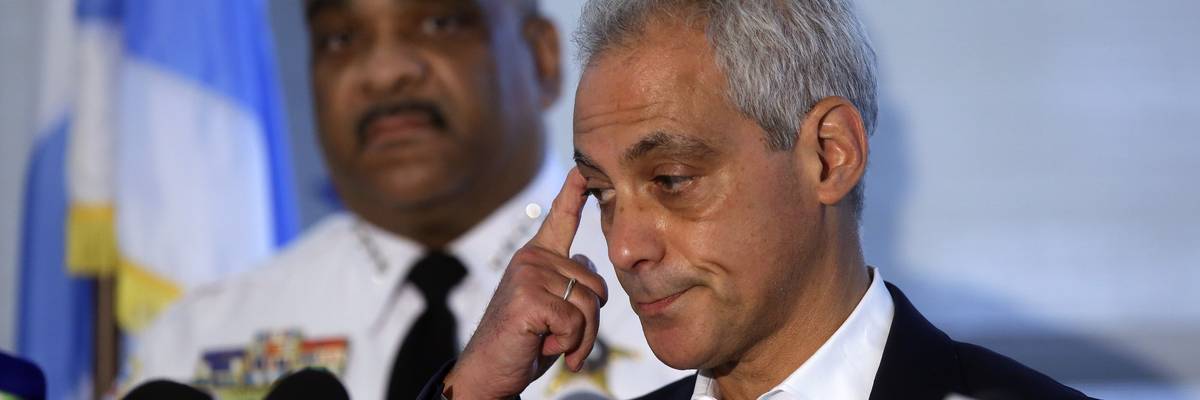
Former Chicago Police Superintendent Eddie Johnson listens as former Chicago Mayor Rahm Emanuel speaks about Chicago’s weekend of gun violence during a news conference at the Chicago Police Department 6th District station August 6, 2018 in Chicago, Illinois.
(Photo by Joshua Lott/Getty Images)
The Democratic base is fed up with a system that gives inordinate power to the wealthy and to large corporations.
We’ve been hearing a lot of panicky warnings lately after Democratic primary voters chose socialists and other leftists instead of “moderates” in several major elections. The alarm bells got louder this month after Michigan’s progressive Senate candidate Abdul El-Sayed defeated Rep. Haley Stevens—who was, the New York Timesreported, “the moderate establishment-backed candidate.”
The soothing “moderate” label routinely goes to candidates like Stevens who’ve supported continual arming of Israel. She “benefited from about $62 million in advertising spending from half a dozen outside groups,” the Times noted. “Over half of that sum came from the super PAC arm of the American Israel Public Affairs Committee, the country’s most influential pro-Israel group.”
The Democratic base is fed up with a system that gives inordinate power to the wealthy and to large corporations. In the real world, the so-called “moderates” are aligned with a status quo that continues to inflict widespread suffering and preventable death at home and abroad.
To hear timeworn party strategists like James Carville and Paul Begala tell it, leftwing candidates are duping the Democratic electorate. As this month began, Carville threatened to leave the party. Begala made headlines by declaring, “I don’t like the socialists. I can’t stand them.”
But last month, a CNN poll found that “about a third of Democrats and Democratic-leaning adults identify as democratic socialists.” At a time when defeating the fascistic Republican Party is imperative, any strategist’s prescription that would denigrate or seek to exclude them amounts to political malpractice.
Treating so many Democratic voters like interlopers to be scolded might play well with corporate donors. But it’s a feeble swim against the political current. Polling shows that the younger Democratic voters are, the more favorable they’re apt to be toward socialism. “Younger adults are more likely to be in groups on the left, while older adults tend to cluster in more conservative groups,” the Pew Research Center noted.
Drawing on the results of its new public opinion survey, Global Strategy Group just reported that “socialist Democrats skew younger, with 57 percent of them being between the ages of 18 and 44.” Another poll, released a month ago by Tufts University’s Center for Information and Research, found that two-thirds of young people “said that their political views have changed in some way in recent years”—and “youth whose views did shift were almost twice as likely to become more liberal/progressive instead of more conservative.”
As socialists and others on the left prevail in many high-profile races, the refrains of condemnation coming from some of the Democratic Party establishment are potshots in a losing battle. By definition, young voters are the future of the party. Its prospects for winning elections are diminished to the extent that younger voters are made to feel unwelcome, or even vilified.
To the ears of many young Democratic voters, derision about how they cast their ballots is coming from out-of-touch party elders who treat crucial problems as abstractions or matters worthy only of lip service. Millions of Americans in early adulthood are facing financial stress with bleak outlooks for jobs and careers. College tuitions are often prohibitive, and college debt can be debilitating. Rents and mortgages are high. Everyday expenses are worse than a challenge. The climate crisis is real.
Such realities cast a shadow over the future. The last thing those voters want is arrogant leadership that refuses to grasp the urgency of this political moment.
When Graham, who served in the Air Force, unexpectedly died last month, critics remembered the South Carolina Republican as someone who “never met a war he didn’t want to send your kids to,” as well as “a bloodthirsty bastard who cheered the killing of Muslims and sold his soul to the fascists.”
On Monday, Hegseth—who deployed to Afghanistan and Iraq—fondly recalled meeting with Graham while part of the group Vets for Freedom. Joined at the base by the senator’s replacement, his sister Darline Graham, and Treasury Secretary Scott Bessent, who is from South Carolina, the Pentagon chief declared that “it falls to us to complete the work that Lindsey Graham began and advocated for for decades.”
“As we gather here today, the War Department is seeking a historic, generational investment of $1.5 trillion for America’s warriors, and Lindsey himself said to me, in his office, ‘This is the best military budget I’ve seen since I’ve been in Congress,’” Hegseth claimed, using President Donald Trump’s preferred name for the Department of Defense.
“This department pays tribute to Lindsey Graham in the naming of this base, but there could be no greater tribute than for Congress to give and invest in our warriors for the full $1.5 trillion,” he added.
The GOP narrowly controls both chambers of Congress, but as Politico reported just hours before the event, “Hegseth hasn’t persuaded Republicans to steamroll Democrats and advance the record-breaking plan, despite regularly trekking to the Hill in recent weeks and hobnobbing with lawmakers. Instead, an increasingly vocal group of GOP lawmakers argue the administration hasn’t explained why Republicans should burn valuable political capital in pursuit of Trump’s vision—especially with the midterms just months away.”
“Several top Republicans are skeptical about the Trump administration’s two-track approach to clinching $1.5 trillion. This relies on the GOP using the partisan reconciliation process—which allows the majority to bypass Democrats entirely—to provide $350 billion, the bulk of the increase,” the outlet detailed. The Republican majority “has—mostly—had Hegseth’s back” since the battle to confirm him, despite widely condemned bombings of boats allegedly trafficking drugs on the high seas and the ongoing war on Iran.
Hegseth on Monday shared some supposed details from his last meeting with Graham, who chaired the Senate Budget Committee.
“Mr. Secretary, what do you need for a reconciliation?” Graham said, according to Hegseth. “I said: ‘Well, in total, sir, we’re going to need $350 billion for our military. That’s what we believe gets us to $1.5 trillion—$115 [billion] in the base budget, $350 [billion] in reconciliation, and we’ll be ready.’”
“He looked at me and said, ‘How’s $355 [billion] sound to you?’ He wanted to give even more than $350 [billion],” Hegseth continued. “I saw firsthand as a young first lieutenant, as a captain in a combat zone, and as a secretary, the unwavering commitment of Lindsey Graham.”
Hegseth’s recounting of their meeting isn’t the first time Graham’s pro-war ideology has been highlighted since he died. As Common Dreams reported late last month, footage filmed for a documentary that was in the works shows the then-senator joyfully reacting to Trump’s Iran War. He said: “I almost cried. I mean, like, how long have we been pushing this?”
Responding to the release of that footage, Brian Finucane, senior adviser to the US Program at the International Crisis Group, said that “the warmonger got his wish and the result has been a catastrophe.”
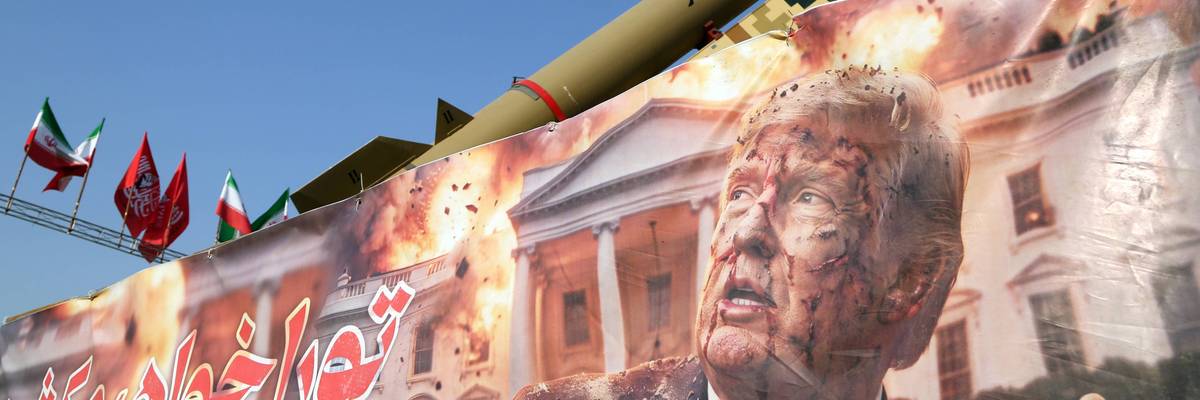
A banner depicting US President Donald Trump and bearing messages was displayed in front of the Zolfaghar and Zolghadr ballistic missiles exhibited at Azadi Square in Tehran, Iran’s capital, on August 2, 2026.
(Photo by Fatemeh Bahrami/Anadolu via Getty Images)
As it becomes clear that there is “no escalatory military path out of this war,” Iran is demanding an even steeper toll for Trump to pull out.
President Donald Trump is now quietly conceding that he’s willing to walk away from his Iran war without meeting all of his demands if they agree to reopen the Strait of Hormuz. But Iran won’t let him back out of the quagmire without a steep price.
Iran is in the process of negotiating a limited reopening of the critical waterway with Oman. But Mohammad Bagher Zolghadr, the secretary of Iran’s Supreme National Security Council, said on Saturday that “until America corrects its behavior, the Strait of Hormuz will not open.”
He outlined a list of demands on Saturday, even harsher than those Trump walked away from when he abandoned the “memorandum of understanding” negotiated in June.
Zolghadr said the US must permanently end its war and naval blockade against Iran, and withdraw military forces from the region. He also said the US must fully compensate Iran for damages from the war, lift sanctions, and unfreeze assets abroad.
This demand for an end to US “aggression” applies not just to Iran, but to its allies in the region: Zolghadr also demanded an end to Israel’s attacks on Palestinians and a withdrawal of Israeli forces from southern Lebanon, as well as an end to US and Israeli attacks against the Houthis in Yemen.
The Trump administration, which is not known to be in direct talks with Iran, has not yet responded to the demands. Trump told Axios on Sunday that “We are low-keying it” and “only semi-negotiating with Iran,” claiming that it was “in very bad shape” economically.
It’s clear, however, that the Iranians believe they have enough of an upper hand to make Trump grovel, especially as news emerges that the US has burned through nearly all its available stocks of long-range precision weapons, making the war increasingly costly, though the administration has denied this.
Domestic concerns are also weighing on Trump. Over the past month, as the war heated up again, average gas prices in the US have shot back up above $4 a gallon, a major liability for Republicans heading into a midterm election cycle in which many voters say the cost of living is a top concern.
Approval of Trump among Americans has fallen to a new all-time low of 34% according to a YouGov poll late last month. And just 28% of Americans say they approve of his handling of the war, according to an Associated Press/NORC poll.
As the Wall Street Journal reported, Trump has privately signaled a willingness to declare victory if Iran opens the strait, even without getting any sort of nuclear agreement, which was purportedly the reason he launched the war in the first place.
Kenneth Roth, the former executive director of Human Rights Watch, said Trump was “showing his desperation for a deal before it is completed, so Iran predictably demand[ed] major new concessions,” adding that it was a “masterclass in how not to negotiate.”
“As time passes, Tehran appears increasingly confident that the pressure is shifting onto Washington,” said the Israeli national security analyst Danny Citrinowicz. “Iranian leaders seem to believe that the United States is now more eager than Iran to bring the confrontation in the Strait of Hormuz to an end, and, crucially, that Washington has few attractive military options for changing that equation.”
Trita Parsi, the executive vice president of the Quincy Institute for Responsible Statecraft, told CNN, “At this point, it is absolutely clear that there is no escalatory military path out of this war.”
“It’s been tried in several different variations, and it has not ended up particularly well,” Parsi said. “In fact, the US’s position has been weakened, in my view, by additional military action. And as a result, I think there needs to be a full dedication to the diplomatic pathway.”
He added that for the Iranians, “the promise and the credibility of sanctions relief will carry far more weight than threats of further bombings.”
The strategy is being overseen by Elbridge Colby, the Pentagon’s policy chief, who has long called for the US to prepare to fight a “limited nuclear war”
The Pentagon is reportedly drafting a new nuclear strategy that’s expected to emphasize the use of tactical nuclear weapons to give the president more “options” in a potential nuclear conflict.
The strategy, first reported by NBC News, is being drafted by the Pentagon’s policy chief, Elbridge Colby, who has for more than a decade called for the US to develop additional capabilities to fight a “limited nuclear war.”
The idea would be to shift the US nuclear strategy away from the focus on using strategic nuclear weapons to wipe out an adversary’s nuclear capabilities and focus more on the possibility of using smaller, tactical nuclear weapons in a “regional” conflict.
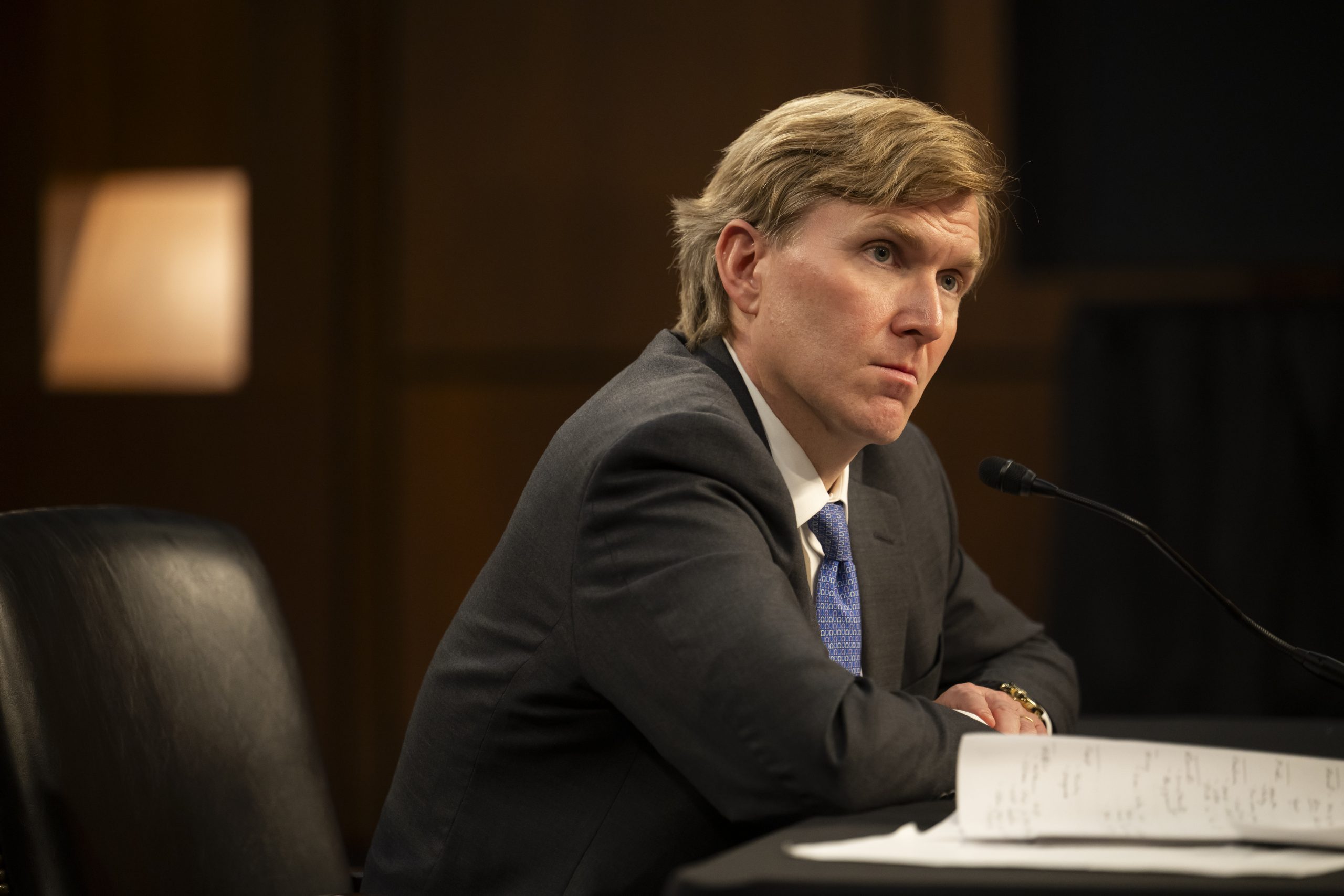
Elbridge Colby, undersecretary of defense for policy, during a Senate Armed Services Committee hearing in Washington, DC, on March 3, 2026. (Photo by Craig Hudson/Sipa USA via Reuters Connect)
“If you actually want extended deterrence to be credible, you have to provide the nation’s political leadership with nuclear capabilities that common sense indicates you could actually use,” a source told NBC. “Otherwise you’re reducing our leadership’s options to extreme choices that the adversary won’t find credible.”
While the potential strategy would be carried out in the name of deterrence and preventing war, arms control advocates have strongly warned against the idea of developing more tactical nuclear weapons to prepare for a potential limited nuclear conflict over concerns that it would make nuclear war much more likely and that any nuclear exchange would likely lead to a global catastrophe.
“Without a firm rejection of the option to use nuclear weapons first in a conflict, by building and fielding more tactical nuclear weapons the administration is signaling its intention to use them against enemy forces and industrial infrastructure in a conflict,” the Arms Control Association said in response to the NBC report.
The ACA said that it “strongly opposes the administration’s decision to build more tactical nuclear weapons to supplement the options that exist” and pointed to the fact that the US already has at least two types of tactical nuclear weapons, including B61-12 gravity bombs, which are deployed in Europe, and the W76-2 low-yield warhead for the Trident II submarine-launched ballistic missile.
The ACA said the US Navy is also “acquiring a new nuclear-capable sea-launched cruise missile (SLCM-N) that may be available at the end of the decade for possible use in conflict with China.”
Breaking Defensereported that Colby announced on August 5 that the Pentagon was reviewing the US nuclear posture and repeatedly emphasized the term “options” in a speech he delivered that has not been made public.
Colby has been one of the leading voices in Washington’s policy circles advocating for the US to prepare for limited nuclear war. In a 2015 paper for the Center for a New American Security (CNAS) titled “A Nuclear Strategy and Posture for 2030,” Colby said the US “should make a special effort to develop the platforms and weapons, doctrine, planning capacity, and other capabilities needed to fight a limited nuclear war more effectively than plausible adversaries.”
He said that the ideal US nuclear force is “one that is not only highly survivable and able to issue a devastating blow against any adversary under any scenario but that is also capable of conducting effective limited nuclear operations in a controlled fashion while maintaining the ability to escalate to full-scale war if necessary.”
Colby made a similar argument in a 2018 piece written in Foreign Affairs titled “If You Want Peace, Prepare for Nuclear War,” published just a few months after he left the first Trump administration, where he led the development of the 2018 National Defense Strategy.
“Washington’s task is clear. It must demonstrate to Moscow and Beijing that any attempt to use force against US friends and allies would likely fail and would certainly result in costs and risks well out of proportion to whatever they might gain,” Colby wrote. “This requires conventional military power, but it also means having the right strategy and weapons to fight a limited nuclear war and come out on top.”
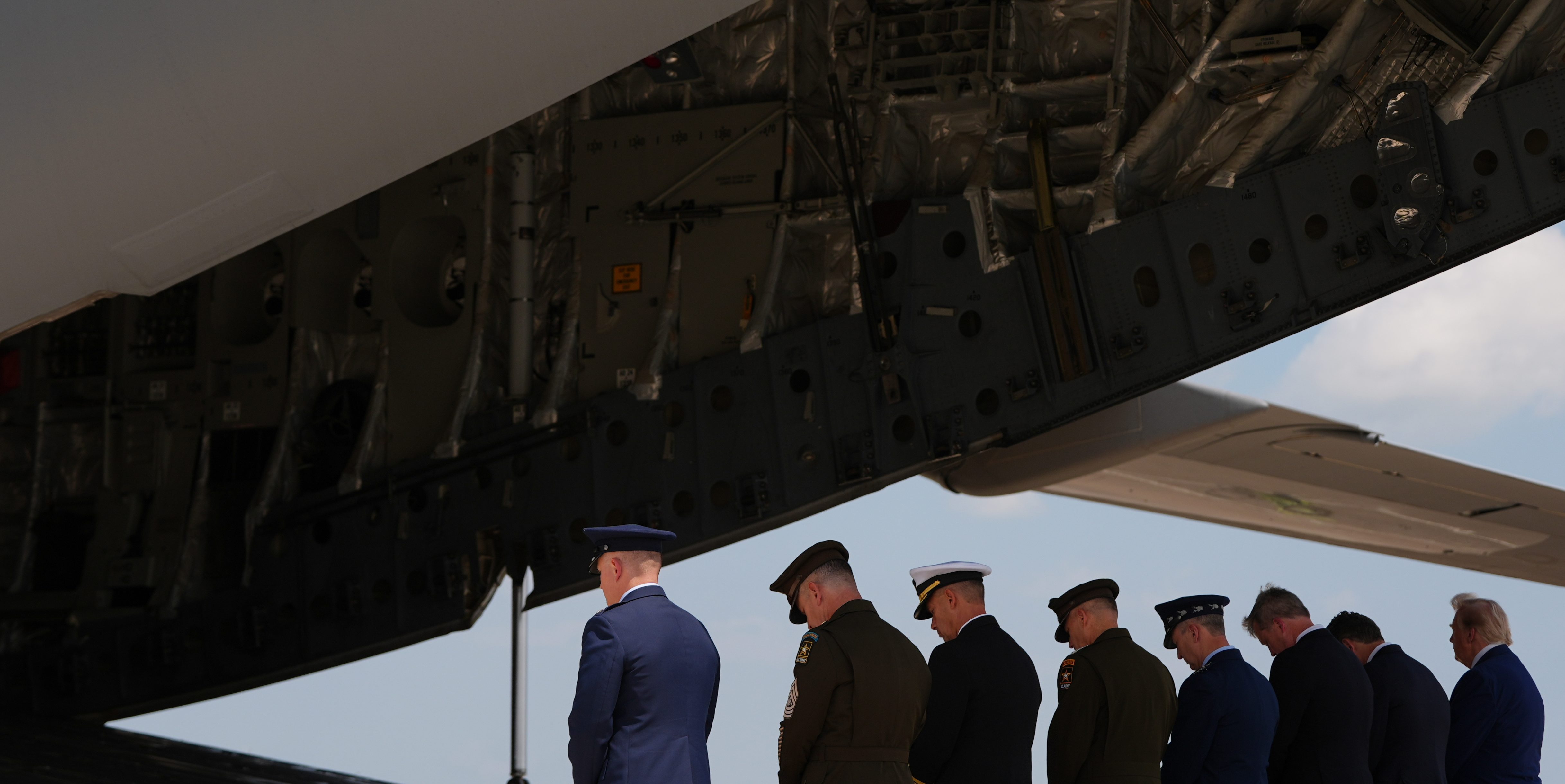
Donald Trump, far right, and Pete Hegseth, second from right, attend the dignified transfer of four U.S. service members recently killed in the Middle East, on July 22, 2026, at Dover Air Force Base, Del. Photo: Julia Demaree Nikhinson/AP
The Pentagon is using a new method of tallying the number of U.S. soldiers killed and wounded in the Iran war that a U.S. government official said was “designed to obscure the count.”
Since the start of the conflict, the Department of War has posted the official count of casualties on the website of the Defense Casualty Analysis System, or DCAS, which tracks “deceased, wounded, ill or injured” service members for Congress and the president. This official total of dead and wounded personnel, as documented over months of reporting by The Intercept, has been a gross undercount, stemming from what that same official previously called a “casualty cover-up.”
But after a series of Iranian strikes on U.S. facilities in the Middle East in July, the Pentagon last week rolled out a new approach. Casualties since July 7 are now counted separately on a new webpage with a generic designation: “Overseas Operations.”
Two hundred and seventy-three U.S. troops were killed or wounded since July 7, according to the Monday total on the new Overseas Operations page.
When combined with the existing DCAS page for the Iran war, the official count stands at 704, an 83 percent increase in casualties since April 8, the day the first ceasefire deal was struck between the Trump administration and Iran. When counting known casualties overlooked by the DCAS page, the total exceeds 900 personnel.
For months, the Pentagon has failed to comment on DCAS anomalies reported by The Intercept nor the reason for the change in the way it now counts casualties, which was first reported by the New York Times. Last week, the Pentagon told the newspaper that “since Operation Epic Fury has concluded, the department classifies casualties as overseas operations in the CENTCOM area of responsibility.” Central Command oversees U.S. military operations in the Middle East.
“This is certainly designed to conceal the count of the wounded,” the official said, while noting that “incompetence” has also caused confusion in the casualty count.
The change comes after a July 20 rant by Pentagon spokesperson Sean Parnell who claimed reports of a Pentagon effort to withhold news of dozens of U.S. casualties were “baseless and malicious” and a U.S. official’s disclosure to The Intercept that same day that recent attacks on U.S. bases by Iran had wounded “far more” personnel than the Pentagon had acknowledged.
The casualty spike resulted from Iranian attacks on at least nine U.S. outposts across the Middle East since July 9, according to a second U.S. official who spoke to The Intercept on the condition of anonymity because they were not authorized to speak with the press.
Iran’s military managed to overwhelm U.S. air defense systems using a mix of attack drones and advanced ballistic missiles, despite months of claims by President Donald Trump and self-styled War Secretary Pete Hegseth that Iran’s military was annihilated.
Last month, the tally of wounded personnel fluctuated by the day in the wake of increased Iranian attacks. On July 21, the casualty count on DCAS for Operation Epic Fury, the military’s official designation for the Iran war, stood at 500. Now, it has shrunk to 431.
For months, The Intercept found anomalies with the counts offered on the DCAS website. On April 21, for example, the number of wounded-in-action troops declined by 15 without public acknowledgment by the War Department. Despite repeated questions for months, the Pentagon has not commented on the disparities in its casualty count.
Prior reporting by The Intercept also found DCAS is missing hundreds of dead and wounded personnel from Epic Fury. The Pentagon list of the names of the dead is still missing Maj. Sorffly Davius, a signals and communication officer with the New York Army National Guard who was assigned to the headquarters of the 42nd Infantry Division and reportedly died of sudden illness while on duty in Camp Buehring, Kuwait, on March 6. Davius’s death was widely acknowledged even as it was excluded from the the official count: Rep. Mike Lawler, R-N.Y., spoke about him during a memorial service that month, and Gen. Dan Caine, the chair of the Joint Chiefs of Staff, recognized Davius while “honoring our fallen.”
While DCAS provides a running tally of “non-hostile” deaths — meaning those who died from accidents or by illness — it doesn’t include “non-hostile” injuries. The DCAS figures for Epic Fury show that 65 Navy personnel were wounded in action. Missing, however, are the more than 200 sailors treated for smoke inhalation or lacerations due to a March 12 fire that raged aboard the USS Gerald R. Ford. The aircraft carrier had been conducting round-the-clock flight operations to, Caine said, “project combat power” in the Middle East.
Recent reporting by the War Horse, using Pentagon records obtained via the Freedom of Information Act, found more than 400 casualties were recorded between February 28 and April 8. Seventy occurred on March 18 alone, but this huge single-day toll was never reported by the Pentagon.
The records provide more granular detail than DCAS, revealing that at least 17 troops sustained life-threatening injuries. They show that U.S. troops suffered shrapnel wounds, broken bones, smoke inhalation, and other injuries. The most common injury recorded, however, was head trauma — which affected at least 170 troops, according to the data.
President Donald Trump has long dismissed brain injuries as “headaches” and “not serious.”
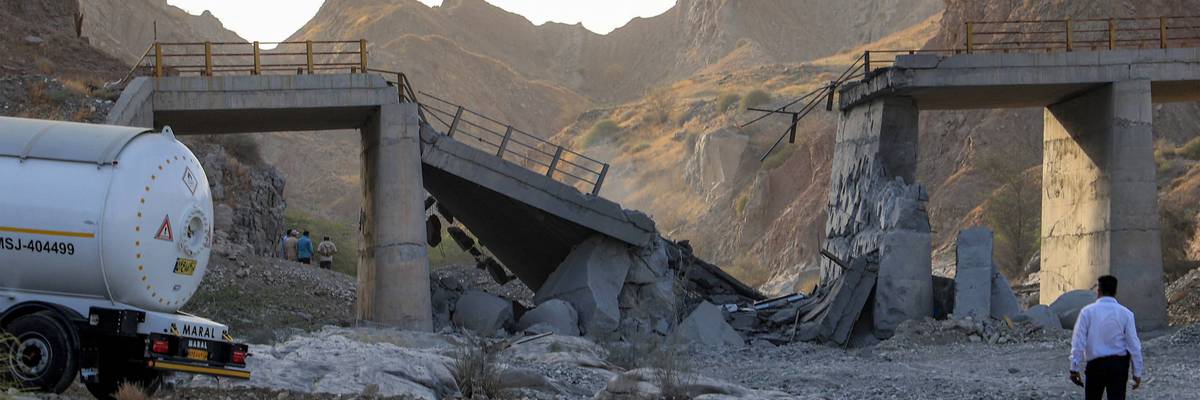
A bridge that was hit and heavily damaged by a US strike is pictured along the road connecting Roudan and Bandar Abbas in southern Iran on July 18, 2026.
(Photo by Amir Hossein KHORGOOEI/ISNA/AFP via Getty Images)
“It’s a narrative designed to give the impression that Trump is in the driving seat in this conflict. It’s been clear for some time now: He isn’t.”
Trita Parsi, an expert on US-Iranian relations, cast doubt on President Donald Trump’s Saturday claims that he halted planned strikes on Iran due to progress in negotiations to end the illegal conflict, launched by the Republican and Israel in February.
“The U.S.A. is locked and loaded and ready to go against the Islamic Republic of Iran, at levels of Military Terror, Strength, and Power not seen since World War II. Despite this, we have just been asked by Iran, and other Middle Eastern Countries, to hold off any attack in that the perimeters of a deal has been agreed to,” Trump wrote on his Truth Social platform at 10:05 pm Eastern time.
“This would include the Immediate, Complete, and Total OPENING OF THE HORMUZ STRAIT, and an end to Iran’s nuclear threat,” Trump declared—despite repeated conclusions from US intelligence agencies that the Iranian government was not aiming to build a nuclear weapon when the United States and Israel began bombing Iran five months ago.
“Based on this request, I have agreed, for the future benefit of the WORLD and, likewise, the survival of a successful and prosperous Iran, to cancel the attack, subject to being able to rapidly make a DEAL,” Trump added. “The Country of Israel joins me in this commitment. Get to work, everybody, and get it DONE.”
Sharing the post on the platform X, Parsi said, “Trump ‘cancels’ ‘planned’ ‘attack’ on Iran…” The expert struck a similarly skeptical tone during a Saturday on-air interview with CNN about the president’s announcement.
Parsi, co-founder and executive vice president of the Quincy Institute for Responsible Statecraft, said that “I don’t believe there was an imminent attack. We’ve gone through this several times, in which Trump issues these threats, and then he backs off because the other side calls his bluff.”
“Trump does not have an escalatory way out of this conflict, but what he is trying to do is to give the impression that he is in control—that he is in the driving seat,” Parsi suggested. “And I think it’s been quite clear for quite some time now he is not.”
During Trump’s first term, he tore up the Obama administration’s Iran nuclear deal, and so far, he has been unable to negotiate a replacement. Since launching this war, without authorization from Congress and in violation of the United Nations Charter, the ceasefire agreement reached in April and a June memorandum of understanding ultimately have not stopped the bloodshed.
Earlier this week, most US SenateRepublicans and Democratic Sen. John Fetterman (Pa.) blocked yet another war powers resolution intended to prevent the Trump administration from launching further attacks on Iran without congressional approval—a vote that came as polling showed 64% of Americans disapprove of continuing the war, including 37% of Republicans.
The Iran War has killed thousands of Iranians and Lebanese civilians—the latter mostly from Israeli attacks purportedly targeting Hezbollah—as well as hundreds of people in other nations across the Middle East and at least 18 US service members.
In the hours before Trump’s Saturday Truth Social post, Axios revealed that “Saudi Crown Prince Mohammed bin Salman and Trump spoke on Saturday, with MBS expressing concern over the strike plans,” and “other regional powers, including Qatar, the United Arab Emirates, Turkey and Pakistan, have also pressed the US and Iran to de-escalate.”
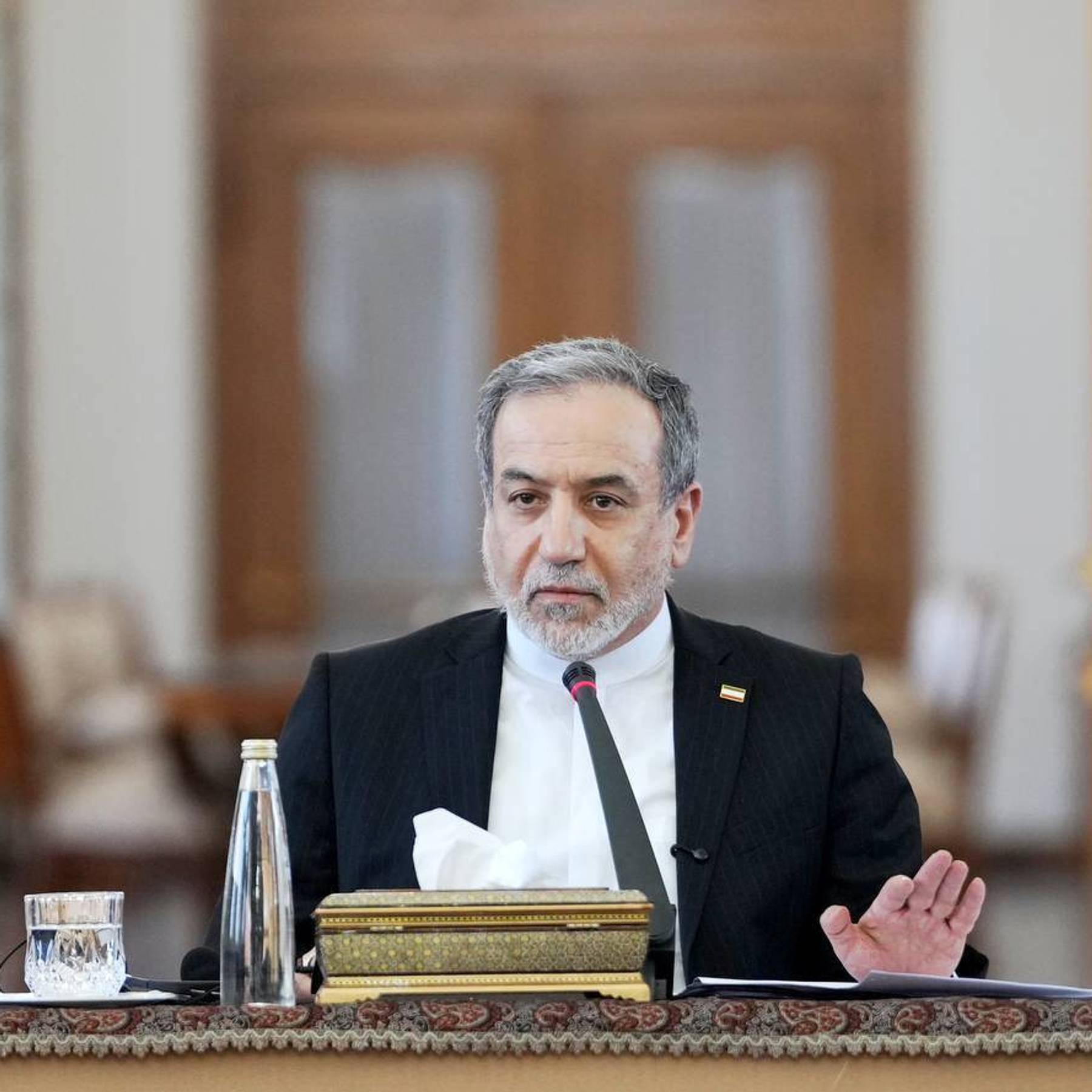
CBS chief foreign affairs correspondent Margaret Brennan reported on social media about Saturday’s “flurry of phone calls by Iran’s top diplomat Abbas Araghchi to regional leaders, which suggests an effort underway to avoid military strikes.”
“Earlier today, the State Department advised Americans throughout the Mideast to leave the region,” Brennan noted.
Araghchi said Saturday that “any hostile action by the US or Israel—or participation or cooperation by regional countries in such actions—would be met with a decisive and proportionate response from Iran’s powerful armed forces.”











You must be logged in to post a comment.