In the wake of the US and Iran announcing a Memorandum of Understanding to end the conflict between the two nations that includes a ceasefire in Lebanon, Israeli ministers have said Israel isn’t bound by the agreement.
Israeli Defense Minister Israel Katz vowed that the IDF will not withdraw from its so-called “security zones” in southern Lebanon, which include a major swathe of Lebanese territory, and will also continue the occupation in southwest Syria and Gaza.
“Prime Minister Benjamin Netanyahu and I are leading a clear policy that determines that the IDF will remain in the security zones in Lebanon, Syria, and Gaza, without any time limit, to protect, from there, the border and Israeli communities against jihadist elements,” Katz said.
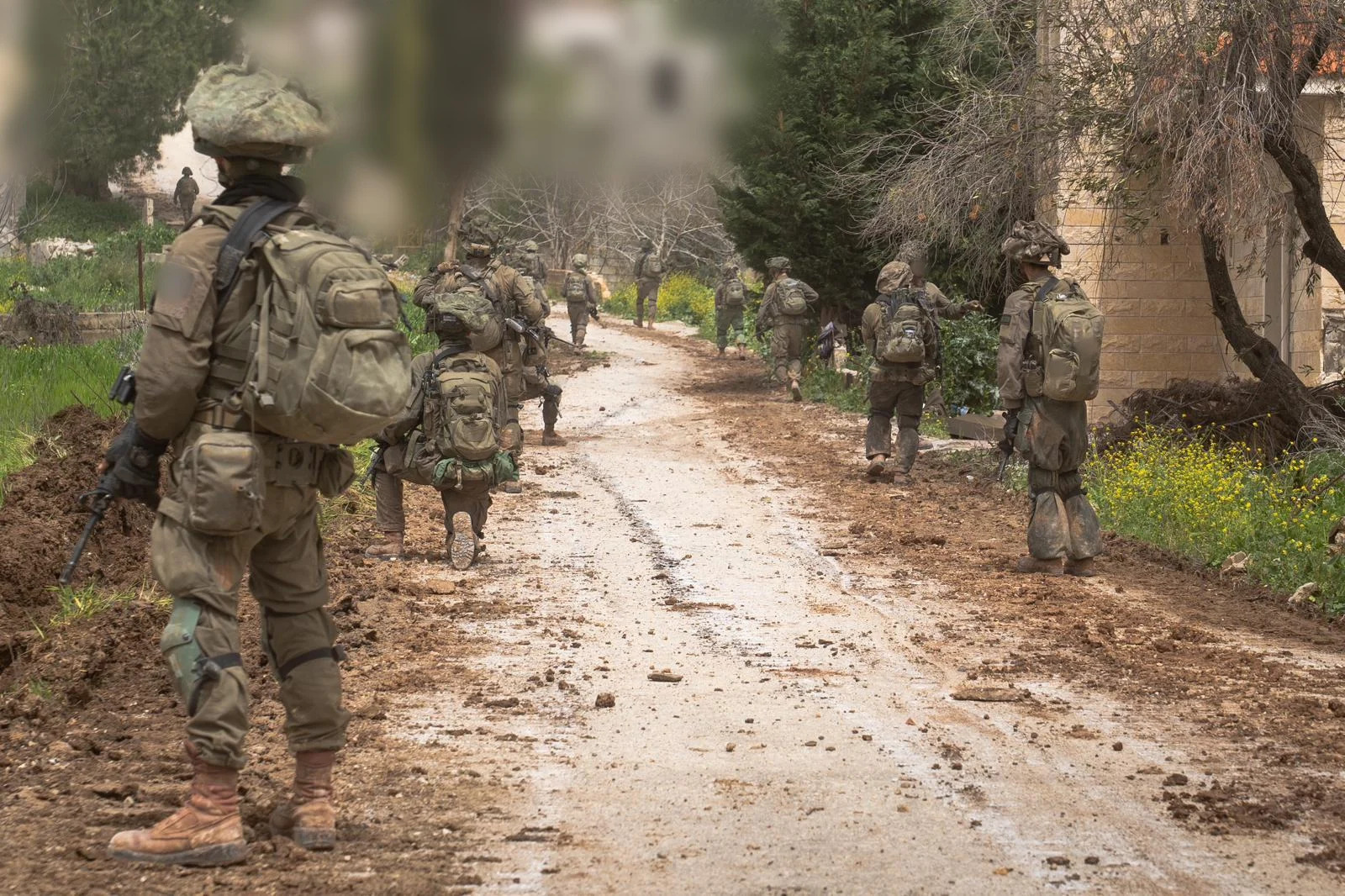
Israeli soldiers in southern Lebanon in April 2026 (IDF photo)
The Israeli defense minister said that the IDF will continue its destruction campaign in southern Lebanon and its forced displacement of Lebanese civilians. “We oppose an IDF withdrawal from Lebanon, despite all the existing pressures and those that will still come,” he said.
Katz added that Netanyahu “made these points clear to US President Trump and to other senior American officials,” which aligns with a report from Ynet that said Netanyahu told Trump that Israel is not bound by the Lebanon clause of the US-Iran MOU. Katz also said that if Iran strikes Israel over its continued war in Lebanon, Israel will hit Iran “with full force.”
Israeli Finance Minister Bezalel Smotrich slammed the agreement Trump reached with Iran, saying it is “bad for Israel and for the entire free world. Period.” Israeli opposition leaders also attacked Netanyahu, with former Prime Minister Yair Lapid saying there has “never, ever, been a more absolute failure than Netanyahu’s diplomatic failure on the Iranian front.”
Iranian officials on Monday reaffirmed that an end to Israel’s war in Lebanon was key to a lasting deal with the US. “Lebanon and the termination of the war in Lebanon are an inseparable part of the understanding on ending the [US-Israeli] war [on Iran]. We have shown that we are determined in this regard and have proven in practice that we are serious, and we will continue to monitor developments carefully in the future,” said Iranian Foreign Ministry spokesman Esmaeil Baghaei.
“The word Lebanon is used three times in the understanding. It is mentioned that ending the war includes Lebanon and respecting the country’s sovereignty and territorial integrity … The United States must honor its commitments and ensure that the Zionist regime fulfills its obligation not to attack Lebanon,” he added.
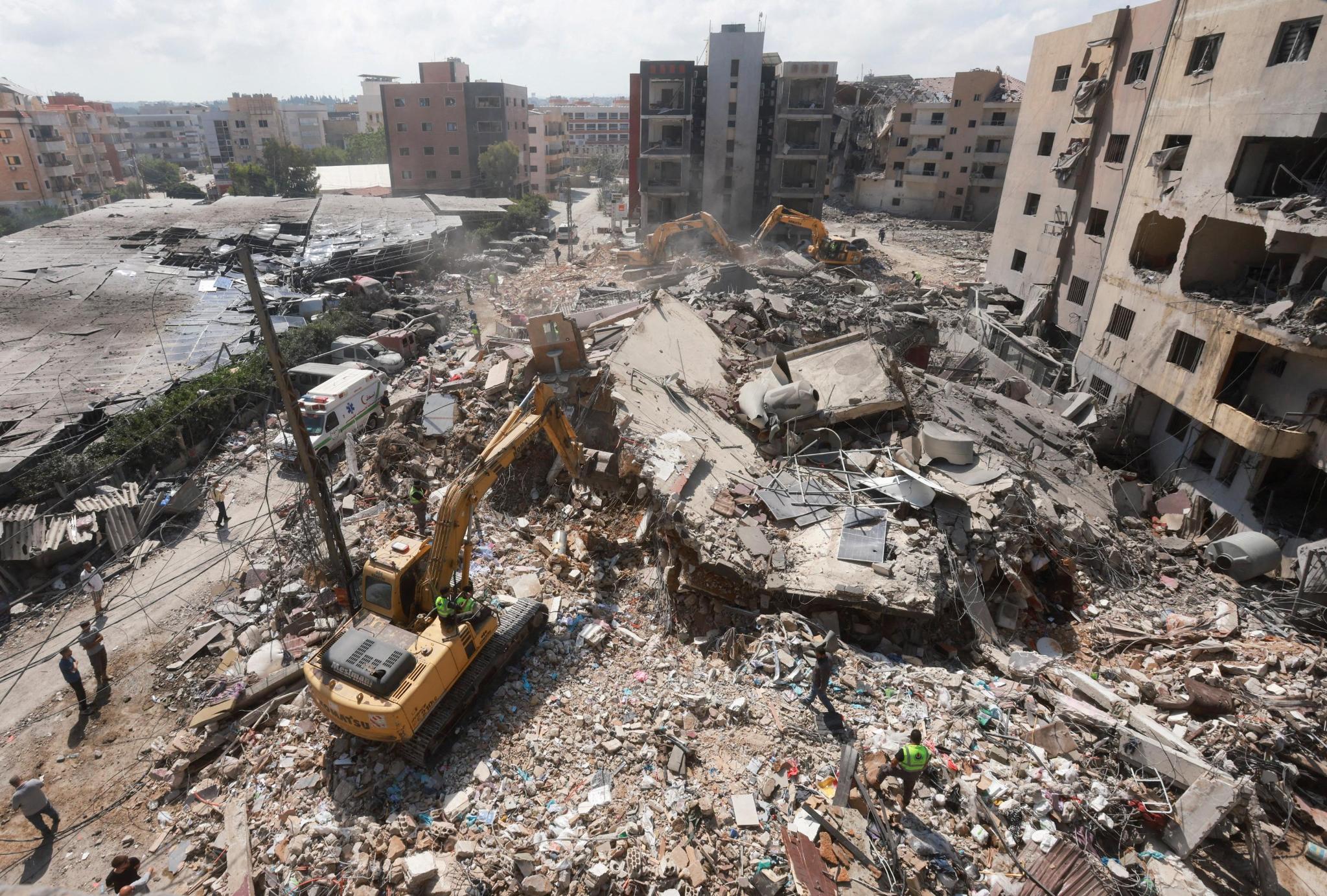
Workers clear debris near an apartment building damaged in an Israeli airstrike in Dahiyeh, Beirut’s southern suburbs, Lebanon, Sunday, June 14, 2026. [AP Photo/Bilal Hussein]
The United States and Iran announced a ceasefire agreement Sunday, suspending, for now, a war that the Trump administration began on February 28 and that has killed thousands of people. “The Deal with the Islamic Republic of Iran is now complete,” President Donald Trump wrote on Truth Social, ordering the lifting of the US naval blockade of Iran and the reopening of the Strait of Hormuz. “Ships of the World, start your engines,” he wrote. “Let the oil flow!”
While the terms of the settlement remain undisclosed, this much is already clear: The Trump administration achieved none of the aims for which it went to war. It set out to overthrow the Iranian government, destroy its nuclear program, break its military and seize the Strait of Hormuz. It accomplished none of this.
Trump responded to the failure by denying he had ever sought to overthrow the Iranian government. “As far as regime change, I never cared about regime change,” he told the Wall Street Journal on Sunday.
In reality, his administration had spent the entire year trying to bring the government down. Early on, it funded and armed protesters inside Iran. “We sent guns to the protesters, a lot of them,” Trump said in April.
When this failed, the United States and Israel turned to assassination. The opening strikes on February 28 killed Iranian Supreme Leader Ali Khamenei, Revolutionary Guard commander Mohammad Pakpour and Defense Minister Aziz Nasirzadeh, along with much of the military command. The government did not collapse. Khamenei’s son Mojtaba succeeded him, and it was the younger Khamenei’s national security council that approved Sunday’s deal.
There followed a bombing campaign across Iran that has killed at least 3,468 people, by the Iranian health ministry’s count, and a naval blockade imposed on April 13. American warplanes destroyed water reservoirs in Sirik that supplied more than 20,000 people and fired on oil tankers running through the blockade, killing three Indian sailors aboard the Settebello this week. After two months, the blockade failed to force Iran’s surrender, and the Strait of Hormuz remained shut by Tehran’s decree until Sunday.
No agreement with American imperialism is worth the paper it is written on. In 2015, the Obama administration signed the nuclear accord known as the Joint Comprehensive Plan of Action (JCPOA), under which Iran accepted strict limits on enrichment and intrusive inspections. Iran kept to its terms—the International Atomic Energy Agency certified as much in report after report—but in May 2018 Trump tore the agreement up anyway, calling it a “horrible, one-sided deal.” Obama, who signed that accord, said Sunday it was “doubtful that any agreement that arises is going to be significantly different or a significant improvement from the deal that we had in the first place… before we, the United States, pulled out of it.”
The pattern was repeated last year. Trump announced a “Complete and Total CEASEFIRE” in June 2025 to end the Twelve-Day War between Israel and Iran. That truce held until February 28, when the United States and Israel broke it, launching the war that has now been paused.
Even as he proclaimed peace on Sunday, Trump threatened to resume the war. The New York Times reported that in a phone call he said he would “restart military attacks on Tehran” if Iran failed to reach a final nuclear accord, or else make the United States “the guardian of the Middle East” in exchange for 20 percent of the region’s revenues.
Trump’s claims about the settlement were as hollow as his account of the war. He boasted that the Strait of Hormuz would be “permanently toll free,” but the memorandum suspends tolls for only 60 days. Iran charged no tolls before the war—the deal restores the prewar status quo. Trump said the inspection of Iran’s nuclear material could wait: “We’ll get the nuclear dust later on when we’re ready to go in and do it… there’s no rush.”
The agreement nominally covers Lebanon, where Israel has waged a parallel war that has killed more than 3,700 people. Hours before the announcement, Israel bombed the southern suburbs of Beirut, killing three, in a strike that nearly wrecked the deal. Trump said Israeli Prime Minister Benjamin Netanyahu had shown “no judgment” and told all sides to “stand down.” Israel, which was not a party to the talks, has not endorsed the agreement, and Israeli politicians across the spectrum denounced it.
The Democrats’ response to Trump’s moves toward an agreement with Iran centered on the accusation that he had failed to secure the interests of US imperialism. Democratic Representative Seth Moulton of Massachusetts called the emerging terms “basically a surrender document from Donald Trump to the supreme leader of Iran.”
House Minority Leader Hakeem Jeffries, on NBC’s “Meet the Press,” complained that the war had left the United States worse off: “Things aren’t better for us. They’re worse. In fact, Iran is stronger right now.”
A warning must be made. Whatever the failures and setbacks of the past four months, American imperialism will only redouble its efforts to dominate the Middle East and the world by military force.
The World Socialist Web Site is the voice of the working class and the leadership of the international socialist movement. We rely entirely on the support of our readers. Please donate today!
It’s important to understand that, contrary to Donald Trump’s quip to Barak Ravid that Netanyahu has “no f***ing judgment,” the Israeli Prime Minister knows exactly what he is doing: With a set of strikes at the Dahiyeh neighborhood in Beirut, he is trying to kill both the pending US-Iran peace deal and the fragile peace between Israel and Lebanon that would come with it.
There is a further strategic dividend. Netanyahu is also seeking to preempt Iran’s attempt to establish a new regional deterrence equation – one in which attacks on Beirut, and potentially on Lebanon more broadly, would trigger a direct Iranian response against Israel. By striking now, he is not merely targeting an adversary; he is challenging the emergence of a regional order that would constrain Israel’s freedom of military action.
Netanyahu even posted a video on his Twitter bragging about the attack:
תקפנו בדאחייה בביירות מטרות טרור של ארגון הטרור חיזבאללה. ישראל לא תסבול ירי לשטחה pic.twitter.com/wVARFCkDQe
— Benjamin Netanyahu – בנימין נתניהו (@netanyahu) June 14, 2026
The exchange of fire between Israel and Iran last week was about far more than retaliation. After Israel defied President Trump and struck Beirut’s Dahiyeh neighborhood, Iran responded by attacking Israel directly – the first time Tehran had launched strikes on Israel in response to an Israeli attack on Lebanon. Israel defied Trump once more and retaliated against Iran, prompting another Iranian response, after which Israel confined its next strike to southern Lebanon rather than Beirut.
The cycle reflected Iran’s attempt to establish a new regional equation: that attacks on Lebanon would no longer be cost-free for Israel, but would carry the risk of direct Iranian retaliation. For the first time in decades, a major regional power was seeking to place hard-power constraints on Israel’s freedom of military action beyond its borders.
Having reestablished its own deterrence, Tehran was now attempting to establish extended deterrence to its partners as part of a broader effort to rebuild its forward-defense posture. Israel, unsurprisingly, viewed this as a direct challenge to its long-standing freedom of maneuver and moved quickly to prevent the new doctrine from taking hold.
Of course, extended deterrence can not be established through a single exchange of fire. At a minimum, it would require several rounds of action and reaction before either side accepted it as a new reality. And even then, it would never be foolproof. Tehran understands that its purpose cannot simply be to eliminate Israeli strikes on Lebanon, but to force Israeli leaders to think twice before authorizing them by attaching a new and significant cost: the likelihood of direct Iranian retaliation.
It was therefore clear that Netanyahu had not abandoned the fight. Yet for several days, even as Hezbollah and Israel continued to exchange fire, he refrained from striking Beirut’s southern suburbs and testing Iran’s new red line.
But today, just hours before President Trump was expecting Iran to sign a memorandum that would end the U.S.-Iran war and reopen the Strait of Hormuz, Netanyahu crossed both Tehran’s and Trump’s red line: keeping Beirut out of the conflict.
Netanyahu clearly timed this for maximum impact. With a single set of strikes, Netanyahu may have advanced two goals at once – torpedoing Trump’s peace deal and preventing the emergence of a new deterrence equation that would impose meaningful constraints on Israel’s military operations in Lebanon.
A diplomat involved in the talks told Fox News that: “This is a clear attempt by Israel to sabotage the President’s deal and drag the United States back into war.”
Trump, meanwhile, is once again reportedly “pissed off” at Netanyahu. In a Truth Social post, the president declared that the strike on Beirut “should not have happened,” while pointedly questioning whether it was a proportionate response to Hezbollah’s latest attack on Israel.
“Israel has the right to defend itself against threats,” Trump wrote, “but the attack it was responding to was very small and meaningless. Nobody was hurt, injured, or killed, and it should not disrupt this important process.”
The statement was notable not merely for its criticism of Netanyahu, but for what it implied: that Israel’s strike was neither militarily necessary nor diplomatically prudent at a moment when a potential breakthrough with Iran appeared within reach.
Washington is frustrated by Tehran’s insistence that Trump rein in Israel, even as American officials believe Iran has failed to similarly restrain Hezbollah. It is equally frustrated that a deal it urgently wants with Iran is now being held hostage by Israel, ironically at the request of the Iranians, since it is Tehran that insists that any ceasefire must be region-wide and prevent Israel from having the ability to restart the war.
That frustration is understandable. But Washington must also recognize a basic reality: the only way to delink a U.S.-Iran agreement from the Israel-Lebanon conflict is to delink the United States itself from Israel’s recurring resort to military escalation.
As long as Israel retains the capacity to drag the United States back into conflict, Tehran will see little reason to separate diplomacy with Washington from the wars Israel chooses to start and pull the US into.
Indeed, the principal reason Tehran insists on a region-wide ceasefire is to deny Israel the ability to draw the United States into yet another war with Iran itself.
If Trump were to clearly establish that the United States would neither participate in nor defend an unjustified Israeli military escalation, Tehran might no longer see the need to link a U.S.-Iran accord to the Israel-Lebanon front.
Such a calculated distancing from Israel would serve American interests in any case. But the need for it has rarely been more apparent than it is today.
Trita Parsi is the Executive VP of the Quincy Institute for Responsible Statecraft and an award-winning author. Washingtonian Magazine has named him one of the 25 most influential voices on foreign policy. Noam Chomsky calls him “one of the most distinguished scholars on Iran”
Obstacles to the aggressors’ expansion and occupation in the Middle East are Iran, Hamas, Hezbollah, the Houthis and Shia militia in Iraq. They are presented as “threats” rather than defenders of their dignity, sovereignty and land.
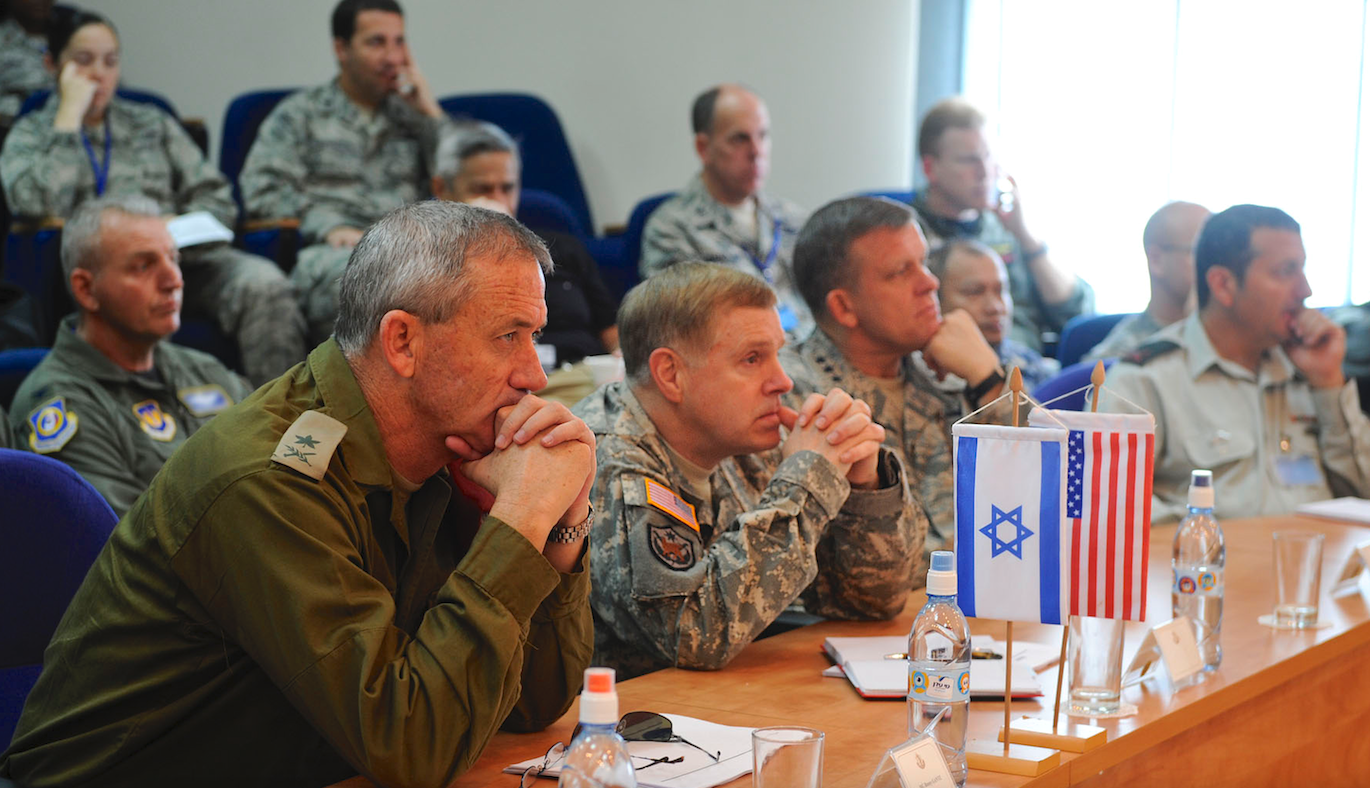
U.S.-Israel biennial command post simulation and training exercise, October 2010. Then IDF Deputy Chief of Staff Lt. Gen. Benny Gantz and Deputy EUCOM Commander U.S. Lt. Gen. John D. Gardner (IDF/Flickr)
If you understand who the aggressor is, you are on your way to understanding the mad and perilous times we live in.
Once you get that, what you’ve been taught all your life starts to lose its hold on you.
Establishment education and media try to confuse you. Independent media like Consortium News try to clarify.
Establishment education and media portray the aggressor as the defender, and the victim as the threat. Consortium News endeavors to show you the “threat” is really an obstacle. An obstacle to aggression and occupation. An obstacle to expansion. Locally and globally.
Few would agree with aggression, paid for with your taxes in a so-called democracy. So obstacles to aggression become threats you’re supposed to be afraid of. Offensive action is made to appear as “defense” to protect you from the “threat.”
There’s nothing new in this. The Romans dressed up their imperial aggression as self-defense against fake threats. Rome provoked tribes, first in Italy and then Gaul and Germania, into forming alliances to protect the tribes’ sovereignty, and then Rome presented these alliances as “threats” that had to be destroyed, justifying war against them.
Rome would also provoke an adversary into invading or launching an attack to obtain the casus belli needed to start a pre-planned war. For instance, Roman ally Masinissa of Numidia repeatedly raided Carthage to provoke it into finally responding militarily in violation of a treaty it had with Rome. The empire used this as a pretext for total destruction and annexation — even though Carthage, an obstacle to Roman expansion, posed no realistic, existential threat.
In the earlier U.S. imperium, Mark Twain explained it this way:
“The statesmen will invent cheap lies, putting the blame upon the nation that is attacked, and every man will be glad of those conscience-soothing falsities, and will diligently study them, and refuse to examine any refutations of them; and thus he will by and by convince himself the war is just, and will thank God for the better sleep he enjoys after this process of grotesque self-deception.”
Today the obstacles to the aggressors’ expansion and occupation in the Middle East are Iran plus the legal, armed resistance to Greater Israel and Greater America: Hamas, Hezbollah, the Houthis and Shia militia in Iraq. They are presented as “threats”rather than defenders of their dignity, sovereignty and land. Nazi Germany portrayed resistance fighters in France, Italy, Greece, Yugoslavia and elsewhere as a “threat,” as “terrorists” and “bandits” to delegitimize legitimate obstacles to total domination.
In Asia the “threat” is China. Beijing protecting its sovereignty in its own region is somehow a threat to U.S. warships near China’s waters and to Taiwan, which the U.S. agrees is part of China.
In Europe years of NATO expansion, refusal to negotiate a mutual security treaty, rehabilitation of fascism, a coup, and civil war in Ukraine against ethnic Russian coup-resistors provoked Russia to intervene, much as the Romans provoked Carthage.
Getting Russia to invade Ukraine allows the portrayal of Moscow as the aggressor and a “threat” to all of Europe and not as an obstacle to the U.S. and Wall Street return to their 1990s dominance of Russia. (Now there is constant talk of direct NATO war with Russia. The fear is another provocation to get Russia to start it.)
All of these obstacles to U.S. global hegemony are presented to you as existential threats that only the mighty United States, NATO and Israel can protect you from. There’s nothing in it for them, of course, except saving your life, we’re expected to believe. Except you don’t have to believe it. You have alternative media like Consortium Newsto expose the deceptions on a daily basis.
That’s why pro-establishment social media companies and so-called anti-disinformation services have tried to hurt us. And that’s why we need your help. So …
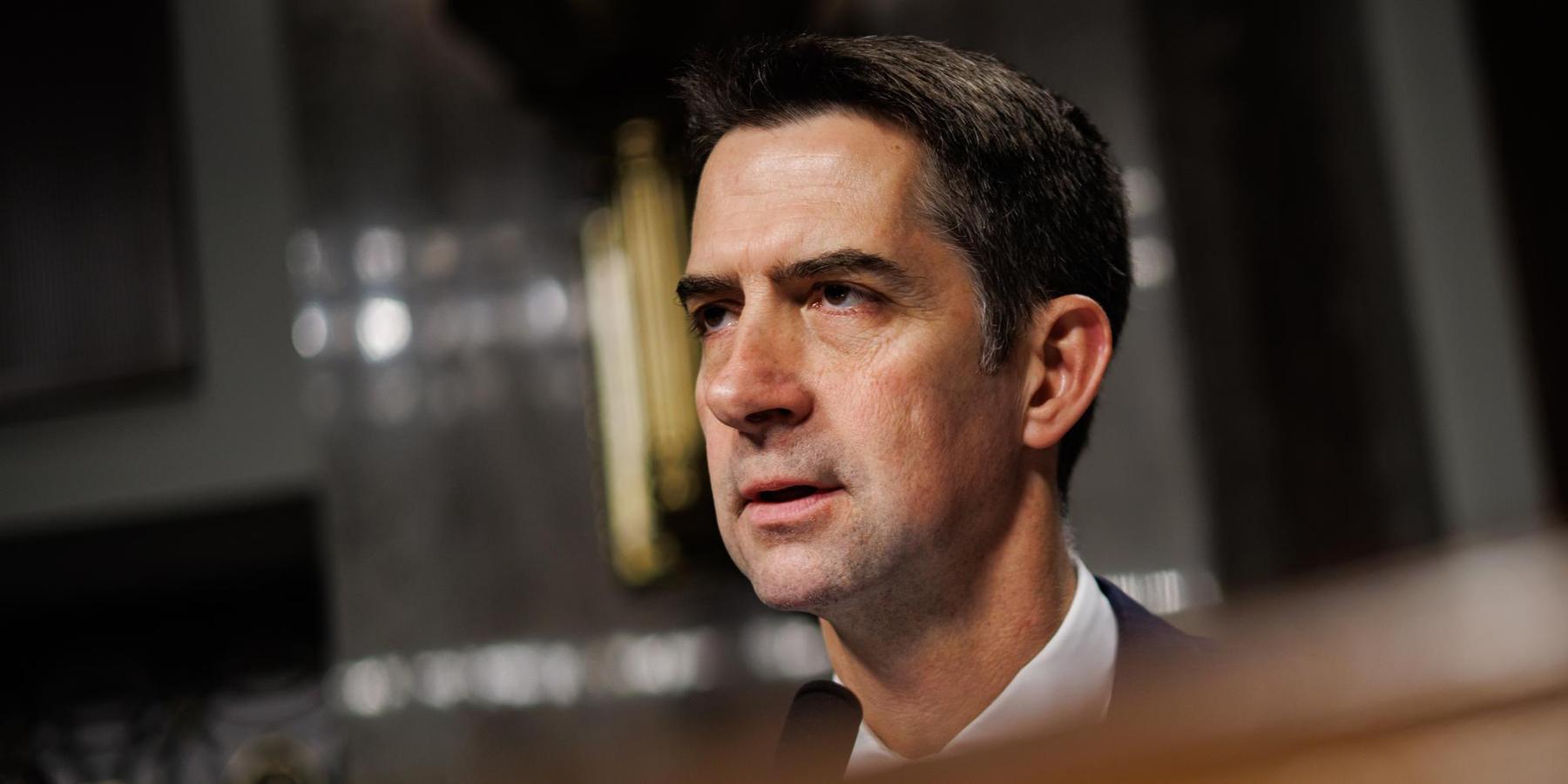
Buried deep inside a 192-page intelligence authorization bill is Section 622, titled “United States-Israel Intelligence Sharing Enhancement.” It would require the president, acting through the director of national intelligence and as necessary the secretary of defense, to “expand and enhance intelligence sharing with the Government of Israel” on a list of subjects that encompasses almost every topic of intelligence interest in the Middle East.
The bill, put forward by Sen. Tom Cotton (R-Ark.), the chairman of the Senate Intelligence Committee, would prohibit any suspension, reduction, or limitation of such sharing “except on the basis of a specific and identifiable national security concern determined by the President.” Any such exception would require a report to Congress within fifteen days detailing not only the reason for the change but also the categories of information involved. The same report would require an assessment of the anticipated impact on regional security and various other matters.
This proposal is one of several recent moves by those in Washington who carry the Israeli government’s water to keep the United States tied to Israel despite plummeting support for the country among the American public. The most salient form of U.S. support to Israel has been more than $300 billion in economic and especially military assistance. Israeli Prime Minister Benjamin Netanyahu has tried to get ahead of the declining public support and avoid embarrassing losses by suggesting it would be fine with him to phase out the military aid.
Israel’s strategy and that of its U.S. supporters is now to rely on ties with, and support from, the United States that are not as salient as the military aid with its prominent price tag. The strategy includes forms of military integration that are less visible than congressionally appropriated grant aid and therefore less publicly accountable. Section 224 of a defense authorization bill currently in the House of Representatives embodies this form of integration.
The mandating of intelligence sharing carries this strategy further by moving it into the shadowy world of relations between intelligence agencies. That world is even farther removed from public visibility and accountability than the defense integration, and even less likely to stimulate thoughts about American taxpayers’ money going to a foreign country. So far, Section 622 of the intelligence bill has received less attention than Section 224 of the defense bill.
The notion of legislating an intelligence liaison relationship in this way, with any foreign country, is bizarre. Liaison with counterpart foreign services, including exchanges of information, is an important but complex part of the intelligence business. The nature of a liaison relationship depends partly on the temperature of the overall political relationship with the country in question but also on other factors known mostly to intelligence officers. These include the collection requirements levied on them, their ability or inability to meet those requirements with national resources, their assessment of the foreign service’s ability and willingness to fill collection gaps, the role that any trading of information plays as quid pro quos in operational cooperation, and the risks of compromising intelligence sources and methods.
Moreover, no single liaison relationship exists in isolation. The U.S. intelligence services need to consider possible implications for their other foreign relationships. For example, one generally does not share with country A information about country B if the United States has a relationship with B that is about at the same level as it has with A. Intelligence liaison involves a hierarchy of relationships, ranging from extensive cooperation with close allies to carefully limited ad hoc exchanges with adversaries. The intelligence community has a staff with the full-time job of monitoring and managing this set of relationships to prevent crossed wires. A congressional mandate regarding a single relationship increases the chance of crossed wires.
An irony is that the Congress considering this mandate is the same Congress that has in effect surrendered to the president its powers under Article I of the Constitution to set tariff rates and to decide whether to wage war. And yet, Section 622 would involve congressional micromanagement of a matter that by its nature needs to be the business of the executive branch and especially the intelligence agencies.
In intelligence, Israel is more of an adversary than an ally. Being an adversary in intelligence means indulging in the hostile act of espionage. Israel has a long record of conducting that type of hostile act against the United States. The best-known case involves the spy Jonathan Pollard, who stole such an overwhelming volume of U.S. secrets that then-Secretary of Defense Caspar Weinberger stated to the court that sentenced Pollard that it was difficult “ to conceive of a greater harm to national security than that caused by the defendant in view of the breadth, the critical importance to the U.S., and the high sensitivity of the information he sold to Israel.”
Subscribe now to our weekly round-up and don’t miss a beat with your favorite RS contributors and reporters, as well as staff analysis, opinion, and news promoting a positive, non-partisan vision of U.S. foreign policy.
Invalid emailEnter your email
When Pollard completed his prison sentence and parole in 2020, he was given a hero’s welcome, led by Netanyahu himself, on his arrival at Ben Gurion Airport in Israel. There was nothing noble in Pollard’s actions. Although he liked to say he was motivated by concern about Israel’s security, before selling his espionage services to Israel he offered to sell U.S. secrets to three other countries and made the same offer to a fourth country even when spying for Israel.
The Israeli espionage threat to the United States has only intensified. Last week, NBC News reported that the Defense Intelligence Agency raised the threat level for such espionage, evidently a reflection mostly of U.S.-Israeli differences over the Iran war. The New York Times quotes an official saying that Israeli intelligence operations aimed at senior U.S. officials during the second Trump administration have become so aggressive as to be “unhinged.”
Any sensitive information, including intelligence secrets, shared with Israel entails a high risk of Israel passing it to other countries, including U.S. adversaries. Israel has a long record of that, too, and not just because Israel probably passed some of the secrets Pollard purloined to the USSR, in exchange for Moscow allowing Soviet Jews to emigrate. Israel’s sharing of U.S.-origin military technology with China has been an issue. That the partner may be a rogue state has not stopped Israel from military and technical cooperation, as demonstrated by its relationship with apartheid-era South Africa, which extended even to the development of nuclear weapons.
The risk of Israel passing sensitive U.S. information to other states continues partly because Israel is hungry for cordial relationships — and especially establishment of new formal diplomatic relations — with any country willing to have such relations despite Israel’s continued subjugation of the Palestinians. Secrets from U.S. intelligence would be very attractive to some of Israel’s partners or potential partners, and thus attractive to Israel as trading material. Those other countries may include China, with which Israel continues to have extensive technical cooperation, and Russia.
Even without any passing to third countries, Israel’s own use of much U.S. intelligence is apt to be contrary to U.S. interests and the interest of peace and security in the Middle East, and for many of the same reasons underlying the reduced popularity of Israel among the U.S. public. Israel has started more wars and attacked more nations than any other country in the Middle East. In recent years it has inflicted more death and destruction on civilians through military operations than any other Middle Eastern state. It uses violence to seek regional hegemony and destroy Palestinian nationhood in ways that are inconsistent with U.S. interests.
The current ill-advised war with Iran demonstrates the sharp divergence of U.S. and Israeli interests. After being the principal influence on President Donald Trump’s decision to launch the war, Netanyahu’s government has been sabotaging efforts to end it. It currently is doing so mainly with relentless attacks in Lebanon that have killed thousands and displaced over a million people. The divergence of objectives was reflected in an expletive-laden phone call last week between Trump and Netanyahu that was mainly about those attacks.
Attacks that sabotage diplomacy are among the Israeli operations that might use shared U.S. intelligence. The United States also will be blamed for aiding other violent Israeli operations because of the “enhanced” intelligence sharing, even if it were no longer paying for Israeli arms.
The supposed escape clause in Section 622 of the intelligence bill would in practice be so cumbersome as to be useless. The required report to Congress would dump the issue on Capitol Hill, where the Israel lobby would quickly depict it as a question of being for or against the security of Israel. The mandated intelligence sharing in the bill thus would tie the president’s hands and prevent any administration from using management of the intelligence liaison relationship as leverage to deter destructive conduct by Israel.
Paul R. Pillar is Non-resident Senior Fellow at the Center for Security Studies of Georgetown University and a non-resident fellow at the Quincy Institute for Responsible Statecraft. He is also an Associate Fellow of the Geneva Center for Security Policy.
What followed was an attempt by the remaining Christian population to flee northward, an effort that would’ve been a lot easier if Israel hadn’t destroyed the bridge over the Litani River that is directly north of the city over a month ago. The locals are trying to reach Sidon and in some cases Beirut.
Meanwhile, attacks on Tyre continued apace, killing at least 9 and wounded dozens of others. At least 15 strikes were reported against Tyre on Tuesday morning alone, with no signs that the attacks are slowing, and no signs that any of the people hit in the airstrikes are actually anything to do with Hezbollah.
People inspect the damage in the aftermath of an Israeli strike that hit near Jabal Amel Hospital on Monday, in Tyre, Lebanon, June 2, 2026. REUTERS/Aziz Taher
Christian leaders further disputed the claim that Hezbollah was operating in the Christian neighborhood in the first place, saying it was a fabricated Israeli pretext to justify attacking that part of the city, which had previously been largely left alone.
Jason Ditz is Senior Editor for Antiwar.com. He has 20 years of experience in foreign policy research and his work has appeared in The American Conservative, Responsible Statecraft, Forbes, Toronto Star, Minneapolis Star-Tribune, Providence Journal, Washington Times, and the Detroit Free Press.
Israel’s Health Ministry reported 77 new casualties in the past 24 hours, bringing the total since February to 9,119.
Israeli authorities acknowledged 1,219 casualties linked to the Lebanon front since the ceasefire with Iran took effect in April.
Iranian officials warned that any future attacks on Iran or the Resistance Axis would trigger a decisive and costly response.
Israeli Casualties
Israel’s Health Ministry announced on Monday that 77 new casualties had been recorded over the previous 24 hours, bringing the total number of casualties since the outbreak of the US-Israeli war against Iran in February to 9,119.
The figures were released as fighting and military operations continue across multiple fronts involving Iran, Lebanon and Yemen, following months of regional escalation.
According to the ministry’s latest update, casualty numbers have continued to rise despite repeated announcements of ceasefire arrangements.
The Lebanon Front
Israeli health authorities reported that 1,219 casualties have been recorded in connection with the Lebanon front alone since the ceasefire with Iran took effect on April 8.
The ministry also acknowledged that 803 casualties have entered Israeli hospitals since the ceasefire agreement with Lebanon was announced on April 17.
The figures come as the Lebanese resistance continues to carry out military operations against Israeli occupation forces in southern Lebanon, citing ongoing Israeli attacks and repeated violations of the ceasefire agreement.
Israeli attacks on Lebanon also continued on Monday.
According to Al Mayadeen correspondents, Israeli warplanes carried out strikes on Nabatieh, Deir Qanoun Ras al-Ain and areas around Tyre, while artillery shelling targeted towns in southern Lebanon.
Lebanese security officers gather at the site where an Israeli airstrike hit a building in Dahiyeh, Beirut’s southern suburb, Lebanon, Sunday, June 7, 2026. [AP Photo/Hassan Ammar]
One hundred days ago, on February 28, the United States and Israel launched an illegal war of aggression against Iran. The war is being waged by the world’s most powerful imperialist powers against a historically oppressed nation.
The resistance of the Iranian people, notwithstanding the reactionary character of the clerical regime, is politically legitimate and of a heroic character. The working class internationally must defend Iran unconditionally against imperialist subjugation.
The “negotiations” currently being carried out by the Trump administration at gunpoint are a fraud. In an interview this weekend, Trump declared that if Iran does not accept his demands, “I’m going to blow the hell out of them.” Even if the Trump administration agrees to a “ceasefire,” any agreement with the gangsters in the White House will just be as meaningful as the “peace” deal in 2025 that set the stage for this year’s war.
On Sunday night, Israel attacked Tehran. In Lebanon, the Israeli bombardment, escalating even amid the supposed negotiations, has killed at least 3,593 people and driven over a million from their homes—a toll that exceeds the 3,468 Iranians killed, among them seven infants and 376 children, with more than 26,500 wounded.
In the course of the war, imperialism plumbed new depths of barbarism. Trump’s threats to extinguish “a whole civilization” and Hegseth’s vow to wage war with “no quarter, no mercy” will go down in history as expressions of an oligarchy that has abandoned all pretense to legality. The imperialist powers now wage wars of oppression and subjugation in the open, with methods pioneered by the Nazis.
Despite the brutal and murderous character of the US-Israeli onslaught, however, imperialism has failed to achieve a single one of its aims. It has not overthrown the Iranian government, broken Iran’s military or seized control of the Strait of Hormuz.
The war has had two major effects: a deepening of the global crisis of the capitalist system and an enormous escalation of the global class struggle, not least within the United States.
The US debacle in Iran has accelerated the crisis of the US-led economic order. The European Central Bank reported in June that central banks are fleeing US Treasury bonds for gold, which has overtaken the euro to become the second-largest reserve asset—27 percent of global reserves, up from 20 percent a year earlier. The US national debt has passed $39 trillion.
It is the working class—in the United States and internationally—that is bearing the cost of the war. The closure of the Strait of Hormuz has driven gas at the pump up by more than 50 percent, the price of staples like tomatoes by nearly 40 percent and inflation to 3.8 percent, its highest since 2023.
Trump has seized on the war to intensify his assault on social programs, declaring in April that “we’re fighting wars” and that it is therefore “not possible for us to take care of day care, Medicaid, Medicare, all these individual things.” The World Food Programme warned that the war could push an additional 45 million people into acute hunger, a record level, with the poorest, import-dependent countries of Africa and Asia hit hardest.
In response to the surge in prices and the escalating cost-of-living crisis, the working class has begun to fight back. The past three months have seen a significant growth of working-class struggle in the United States: the first strike on the Long Island Rail Road in more than three decades; a three-week walkout by 3,800 meatpacking workers at JBS in Greeley, Colorado, the first in the industry in more than 40 years; strikes by teachers in California and a statewide walkout in North Carolina; strikes by nurses in New Orleans and California against unsafe staffing; a strike by graduate students at Harvard University; and the rebellion now sweeping the auto parts industry.
The class struggle is erupting internationally—in the mass anti-government protests in Kenya, the rebellion of tens of thousands of workers in the industrial suburbs of Delhi and the hunger strike of coal miners in Turkey. In the first quarter of 2026, eight European countries recorded 458 strikes, among them national general strikes in Belgium and Italy, and regional general strikes in Spain’s Andalusia and Basque Country. Argentina mounted a national general strike against the Milei government in February, and 1.7 million government employees walked out across the Indian state of Maharashtra.
The contradictions that are driving imperialism to war are also driving the working class into struggle. The growth of the class struggle springs from the same crisis that produces the war. Out of that crisis emerges the only social force capable of putting an end to it. War and social revolution are two sides of the same historical process.
Enormous and growing opposition is developing in the United States and throughout the world to the US–Israeli war of aggression against Iran and to the broader drive toward war, austerity and dictatorship. But opposition, left to itself, is dissipated and diverted. It must be armed with a program, perspective and leadership.
The fight against war cannot be waged through appeals to the governments and parties that are waging it. In the US, the Democratic Party greeted the murder of Iran’s leaders with cheers and financed Trump’s military budget. The European imperialist powers have backed the war and politically justified it, while pouring €800 billion into rearmament as they escalate the proxy war against Russia, which they arm and direct.
Opposition to imperialism requires developing struggles of workers in the United States, Europe and across the world—against war, austerity and dictatorship—into a conscious political movement armed with a socialist program. To put an end to war and barbarism, the capitalist system must be abolished.
This is the perspective of the Socialist Equality Party and the International Committee of the Fourth International. We call on every worker and young person who opposes this war to take it up and to build the revolutionary leadership the working class needs.
Published date: 6 June 2026 19:49 BST | Last update:21 hours 49 mins ago
The Pentagon has raised Israel’s counterintelligence threat level to its highest category, amid growing alarm that Washington’s supposed closest Middle East ally is intensifying efforts to spy on senior US officials.
The warning, reported by NBC News and The New York Times on Saturday, exposes behind the scenes tensions in a relationship Washington often treats as untouchable.
The Pentagon’s Defense Intelligence Agency recently issued the new assessment as tensions grow between the Trump administration and Israel over the Israeli-US war on Iran.
US officials told NBC that the DIA posted an internal message raising Israel’s threat level to “critical”.
The designation signals alarm inside the Pentagon that Israel is working to monitor top US officials and obtain information about internal Trump administration deliberations on wars across the Middle East.
New MEE newsletter: Jerusalem Dispatch
Sign up to get the latest insights and analysis on Israel-Palestine, alongside Turkey Unpacked and other MEE newsletters
The New York Times reported that US intelligence has focused on Israeli efforts to eavesdrop on senior officials, including Steve Witkoff, Trump’s top negotiator, Elbridge A Colby, the Pentagon’s top policy official, and Michael P DiMino IV, one of Colby’s main deputies.
Colby has in the past called for a “reset” on the US relationship with Israel.
Israel’s counterintelligence threat level now stands higher than that of any other US ally and even higher than some adversarial states, the Times reported.
One senior official described Israel’s intelligence collection against top US officials during the second Trump administration as “unhinged”.
‘Critical threat’
The DIA assessment includes a seven-page document and a chart, one US official told NBC. The document says Israel’s ability to conduct human espionage and technical collection has reached a “critical level” and lists specific incidents that sharpened US concern.
Current and former US officials told NBC that Israel’s recent activity has moved far beyond routine espionage between allies.
Israeli spy Jonathan Pollard suggests Egypt and Turkey are next targets for war
The warning comes as Israel pushes for deeper military integration with the United States. A provision before Congress would bind the US and Israeli militaries more closely on weapons research, production and technology – a move expected to benefit Israel heavily.
The Pentagon’s assessment could now complicate efforts to expand war planning between US Central Command and Israel, especially if officials restrict the information shared with Israeli officers.
Since a ceasefire took effect in early April, Trump has pursued diplomacy with Iran to end the war the US and Israel launched on 28 February. Israel has openly pushed for Washington to restart the war.
Prime Minister Benjamin Netanyahu has pressed for renewed bombing of Iran and clashed with Trump, who has urged him to scale back attacks on Lebanon.
The episode revives a long-running concern in Washington. In the 1980s, US Navy intelligence analyst Jonathan Pollard spent 30 years in prison after selling suitcases of top-secret documents to Israel.
As Washington and Tehran edge towards a ceasefire, the Israeli prime minister is determined to sink it, believing any settlement that leaves Iran standing amounts to defeat
A protester holds a placard depicting Israeli Prime Minister Benjamin Netanyahu during a demonstration in Milan on 21 May 2026 (Piero Cruciatti/AFP)
Israeli prime minister and indicted war criminal Benjamin Netanyahu does not adapt to imposed realities.
He tries to smash them through brute force, permanent escalation and manufactured crises. Throughout his career, war has been a favoured strategic instrument for preserving Israeli supremacy and his own political survival.
Most recently, his priority is to prevent US President Donald Trump from signing a near-complete memorandum of understanding with the Islamic Republic of Iran. Should diplomacy prevail, he will deploy every political, military, diplomatic, media and lobbying tool to sabotage it.
His obsession with what he calls “absolute victory” reflects a rigid doctrine that rejects compromise. No settlement is acceptable to him unless it disarms Hamas and Islamic Jihad in Gaza, dismantles Hezbollah in Lebanon, and ends in the neutralisation or destruction of the Iranian state itself.
His horizon extends well past temporary ceasefires to the end of all resistance and a region restructured around Israeli dominance under American protection.
New MEE newsletter: Jerusalem Dispatch
Sign up to get the latest insights and analysis on Israel-Palestine, alongside Turkey Unpacked and other MEE newsletters
The wars across Gaza, the West Bank, Lebanon, Syria, Iraq, Yemen and Iran were never isolated confrontations. They are part of a single offensive to establish “Greater Israel” and consolidate Israeli regional hegemony.
Netanyahu knows these goals remain unfulfilled despite vast destruction. Rather than prompting a rethink, that failure has convinced him the problem is an insufficient application of force, not the objectives themselves.
For him, the war is far from over, and what force could not achieve yesterday becomes the target of wider escalation tomorrow.
Having already drawn Trump into earlier confrontations with Iran, Netanyahu appears convinced he can pull the lever again – this time aiming past a limited strike for a decisive, total war that permanently shifts the regional balance of power.
A divided home front
Trump faces a more complicated reality. He may believe earlier confrontations weakened Iran and the axis of resistance, but the political landscape is shifting fast at home and abroad.
Domestically, a growing share of the public openly questions the wisdom of these wars. Recent polling shows support for prolonged Middle Eastern entanglements falling steeply, alongside deep scepticism of “forever wars” seen as serving foreign agendas rather than American interests.
This anti-interventionist sentiment has crossed party lines and is fracturing Trump’s own coalition. Influential voices around the Maga movement, including political commentators Tucker Carlson, Candace Owens, Megyn Kelly and Joe Rogan, have questioned policies that subordinate American blood and treasure to Netanyahu’s agenda.
More Americans are asking why the US should bear the economic, military and political costs of another regional war for a foreign power, with vague aims and doubtful benefits
The campaign to unseat Congressman Thomas Massie and other non-interventionist conservatives who question pro-Israel policies reflects these tensions.
More Americans are asking why the US should bear the economic, military and political costs of another regional war for a foreign power, with vague aims and doubtful benefits.
These questions sharpen amid mounting economic strain. Energy markets remain vulnerable, and inflationary pressures are rising again.
Petrol prices have become a political landmine: reports in early May put the national average near $4.50 a gallon, up sharply from the sub-$3 level before the war. Driven by energy costs and supply chain disruptions, inflation has accelerated, weakening consumer confidence and turning the economic mood toxic for the White House.
Trump knows foreign adventures cannot be detached from domestic realities, and with the midterms approaching, blunders carry immediate consequences. Both the House and the Senate are within reach of Democratic majorities.
If he loses Congress, the rest of his presidency will be paralysed, and the threat of impeachment will return to the centre of Washington politics.
What Hormuz exposed
Internationally, the pressures are even more severe. The closure of the Strait of Hormuz transformed the strategic landscape.
Before the attacks intensified after 28 February, Hormuz was the vital maritime artery of global energy, carrying about a fifth of the world’s oil flows and liquefied natural gas trade, with Qatar‘s LNG exports acutely exposed. Its disruption laid bare the vulnerability of the Arab Gulf states and the wider global economy.
As shipping routes faced chaos, insurance premiums surged, energy markets reacted sharply and supply chains buckled. More than that, it shattered decades of assumptions about American power.
Iran has won the war. Trump and Netanyahu now face a reckoning
For generations, Washington had sold itself as the indispensable guarantor of Gulf security and freedom of navigation. Yet the crisis exposed the limits of military superiority in the face of unforgiving geography, asymmetry and political complexity. America could strike, bomb and threaten, but it could not force Hormuz open without triggering a global economic shockwave.
The military record is more revealing still. During the 39-day war, Iranian and allied strikes damaged at least 16 US military bases across eight countries, leaving several nearly unusable.
A Washington Post analysis of satellite imagery found Iranian strikes damaged or destroyed at least 228 structures and pieces of equipment at US bases across the region: hangars, fuel depots, aircraft, radar networks, communications gear and air-defence assets.
This marks a foundational shift. For decades, the US used its network of Gulf bases as instruments of deterrence and intimidation, platforms to punish adversaries and shield allies. The war showed these bases are now exposed targets, calling into question the architecture of American regional dominance.
Strain on US missile defences compounded the crisis. Reports after the 39-day war indicated serious depletion of interceptor stocks, including Patriot, Thaad, Tomahawk and other missiles.
The Pentagon has warned that rebuilding these inventories could take years, with some not likely to be replenished until the decade’s end. That is a dangerous vulnerability for a country that must also plan for confrontations with Russia and China. A war meant to project dominance instead exposed industrial and technological limits.
A strategic deadlock
Washington and Tel Aviv entered with maximalist goals: force Iranian capitulation, dismantle its nuclear infrastructure, end enrichment, seize its enriched uranium, destroy the axis of resistance, and topple or fragment the Iranian state.
None of these goals has been met. Iran did not surrender, its government did not collapse and its regional alliances, though under heavy pressure, were not eliminated. Iran and its allies absorbed painful blows, but damage is not defeat: a state can suffer heavy losses without surrendering its core objectives.
Robert Kagan, an establishment strategist, recently acknowledged this gap between American ambitions and what military force can actually achieve. His warning carries weight because it comes from the heart of the interventionist establishment.
The dilemma is the inability to translate military superiority into a durable political order, however powerful its forces remain.
It recalls the Suez crisis of 1956, when Britain and France discovered that military victory could not stop the collapse of their imperial power. The same limit now confronts the US.
American threats and Trump’s ultimatums failed to produce Iranian submission because they lacked credibility. A threat works only when the adversary believes defiance will cost more than compliance.
For its part, Tehran had no reason to think concessions would buy safety.
It had watched Washington abandon the nuclear agreement in 2018, expand sanctions during talks and carry out assassinations and sabotage alongside the Zionist regime, even as talks continued.
Iran, therefore, chose to expand the battlefield, raise the cost of escalation, threaten global energy flows and deny the US and Israel a clean victory. Its alternative to capitulation was resistance under pain, and that transformed the bargaining structure.
Washington and Tel Aviv wanted a one-sided outcome in which Iran surrenders its nuclear assets, missiles and regional influence for temporary, easily reversible sanctions relief. Tehran knew that reversible relief is not security and refused to give up its deterrence, thereby forcing a deadlock.
Neither side could impose its outcome without paying a price it was unwilling to bear. The US could escalate, but only by threatening the global economy, draining its stockpiles, exposing its bases and widening domestic opposition.
Iran could endure and retaliate, but could not defeat a superpower conventionally. Each constrained the other in an unstable equilibrium.
Within that equilibrium, asymmetry favours the defender. The US needs a visible, triumphant success to justify the war to its public; Iran needs only to avoid defeat, keep its sovereignty and deny the enemy its political aims. For a state facing overwhelming force, survival with its agency intact is itself a victory.
Indeed, Netanyahu understands this threat to his expansionist project – and he fears it. A negotiated ceasefire would confirm a result Israel cannot accept, in which the war would end not in its triumph but in Iran’s endurance.
An imperfect opening
The present negotiations, reportedly mediated by Pakistan and backed by several Arab and Islamic states, have produced a near-final framework.
At its core is the expansion of the current truce into a multi-front suspension of hostilities for at least 60 days, Lebanon included. Driven by economic pressure, energy instability and fear of a wider war disrupting events like the coming World Cup in North America, Washington needs calm. This retreat, therefore, is not a product of victory but of necessity.
Alongside the truce, a package of measures aims to stabilise the region in the interim, including securing navigation through the Strait of Hormuz, easing restrictions on Iranian shipping, granting partial access to frozen Iranian assets, and initiating talks on broader normalisation. Reports on financial compensation vary, with early figures ranging from $12bn to $24bn, though details remain fluid.
The framework signals that the US will concede several Iranian demands for regional stabilisation and the reopening of Hormuz
The nuclear issue has been deferred. Rather than immediate dismantlement, the framework relies on an Iranian commitment not to pursue weapons while talks continue on enrichment levels and verification.
The framework signals that the US will concede several Iranian demands for regional stabilisation and the reopening of Hormuz.
For Netanyahu, this is intolerable, as it gives Iran economic breathing room while leaving its missiles and alliances intact, giving Tehran greater leverage in future talks.
This explains the intensity of his pressure on Trump, and why recent exchanges between the two have been described as tense and uncharacteristically heated. He has opposed the diplomatic drift, pressing instead for renewed escalation across Gaza and Lebanon.
The latest developments around Lebanon reinforce the point.
Trump has personally intervened to restrain Netanyahu from launching a wider invasion of Lebanon, while speaking of an impending ceasefire there – moves that reveal growing tensions beneath the show of strategic unity.
The restraint followed Iran’s suspension of negotiations and warnings that further escalation in Lebanon could ignite northern Israel and widen the confrontation beyond Washington’s control.
Faced with collapsing talks and a prolonged closure of Hormuz, Trump moved to contain Netanyahu and head off a regional war that could drag in the US. The episode offers an early glimpse of the competing calculations now shaping American and Israeli policy.
Israel’s own military record reveals the bind: despite vast destruction, it has failed to secure decisive political outcomes. Gaza lies devastated – more than 76,000 Palestinians killed and over 180,000 wounded – yet the violence has not produced political closure.
In southern Lebanon, Hezbollah has reasserted itself militarily and politically despite heavy blows, contesting Israeli border moves and inflicting casualties over the past two months. No amount of destruction has delivered the absolute victory the Zionist regime craves.
The deeper illusion
Netanyahu is left with limited, dangerous options. If he cannot block diplomacy outright, he will try to sabotage its implementation. Lebanon remains the active arena, where targeted escalation, assassinations or efforts to spark internal instability could derail diplomatic momentum.
Netanyahu may calculate that fresh massacres in Gaza, an intensified siege or provocations around holy sites in the occupied West Bank could fracture the ceasefire, placing Trump under renewed pressure to realign with Israeli demands.
Suez was the death knell for the British empire. Hormuz may do the same for the US
Yet Trump’s continued rhetoric about normalisation under the Abraham Accords reveals a persistent disconnect from reality.
No meaningful path to broad Arab normalisation exists while the Palestinian question remains open.
The Arab Peace Initiative of 2002 conditioned normalisation on Palestinian statehood, and after Gaza, the gap between rhetoric and reality has only widened.
The region stands at a perilous crossroads. One path offers an imperfect diplomatic opening, the product of mutual exhaustion and shifting leverage; the other leads to a wider confrontation neither Washington nor Tel Aviv can control.
To assume Netanyahu will quietly accept a deal that contradicts his core convictions is a dangerous illusion. But the deeper illusion is the belief that brute force can indefinitely preserve a regional order whose political, moral and strategic foundations are crumbling.
Trapped between ideological obsession and strategic failure, Netanyahu may yet make one last fatal gamble and continue widening the war until the whole structure collapses with him.



 Peace and Justice Post
You must be logged in to post a comment.