US President Donald Trump’s government is pressuring African states to leave the International Criminal Court (ICC), according to sources close to the Hague cited in an exclusive report released by Le Monde on 4 August.
The US “is using two forms of leverage in its campaign. First, disinformation. They claim that authorities in targeted countries are themselves at risk of prosecution by the Court,” the sources said.
“Recently criticized by NGOs for its support to [Sudan’s RSF] … Chad reportedly felt vulnerable. However, the opening of such prosecutions is deemed ‘unlikely,’” they added.
The report goes on to say that the second method being used by Washington is to threaten states with the cancellation of security deals with the US.
According to Le Monde, multiple African member states of the ICC are being targeted by Washington.
“At the end of July, other African member states of the ICC received phone calls, visits and letters from the US. Uganda, for instance, received a letter on 24 July with an ultimatum telling [it] to leave [the Court] or face consequences,” one of the sources said.
Le Monde says Uganda has so far refused to capitulate.
The sources went on to tell the outlet that the west African state of Benin was approached in the same manner.
“Beninese authorities have shown their determination to resist pressure: ICC Judge Reine Alapini-Gansou, from Benin, is one of three magistrates who dared to file a complaint in New York in June against [US Secretary of State Marco] Rubio and Donald Trump to challenge the sanctions imposed on them by Washington,” Le Monde’s anonymous sources revealed.
The outlet writes that Trump and his government have been “waging war” against the ICC since it issued arrest warrants against Israeli Prime Minister Benjamin Netanyahu and his former war chief Yoav Gallant – both responsible for genocide against Palestinians.
In July, heavy US-Israeli diplomatic pressure resulted in Colombia withdrawing its participation in South Africa’s genocide case against Tel Aviv at the International Court of Justice (ICJ).
Nicaragua had already withdrawn from the ICJ genocide case against Israel in April last year.
The new report describes US pressure on African states as being a part of Trump’s campaign to dismantle the ICC and the international rules-based order, as it is referred to.
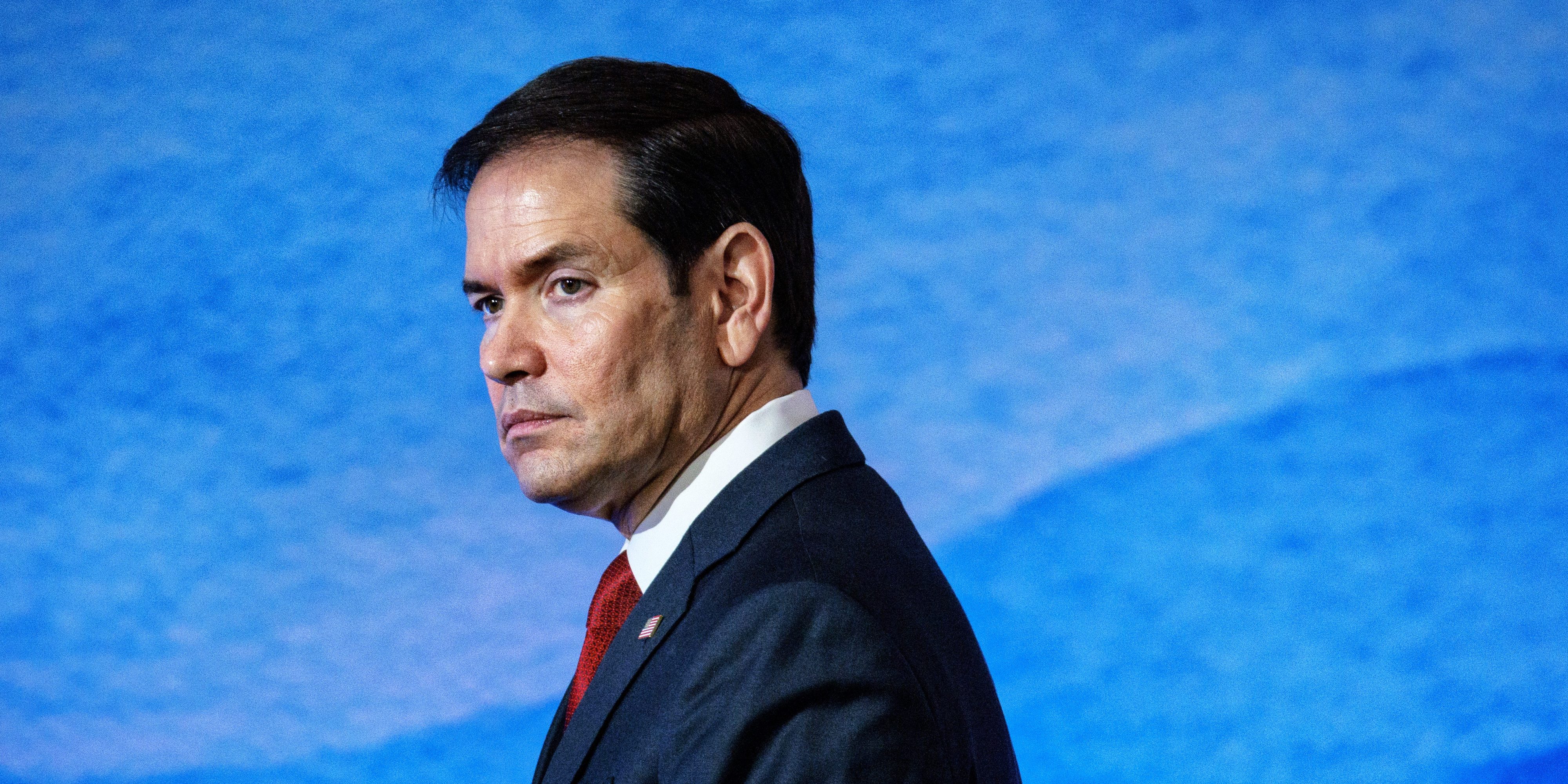
“We will dismantle the ICC – brick by brick, if necessary,” US Secretary of State Marco Rubio said last month.
The US and Israel are not parties to the Rome Statute and are therefore not members of the ICC, whose jurisdiction extends to genocide, crimes against humanity, war crimes, and the crime of aggression.
The American Servicemembers’ Protection Act of 2002, nicknamed the “Hague Invasion Act,” authorizes a US president to use “all means necessary and appropriate” to free any US or allied personnel detained by the ICC.
Several ICC officials have been targeted by US sanctions.
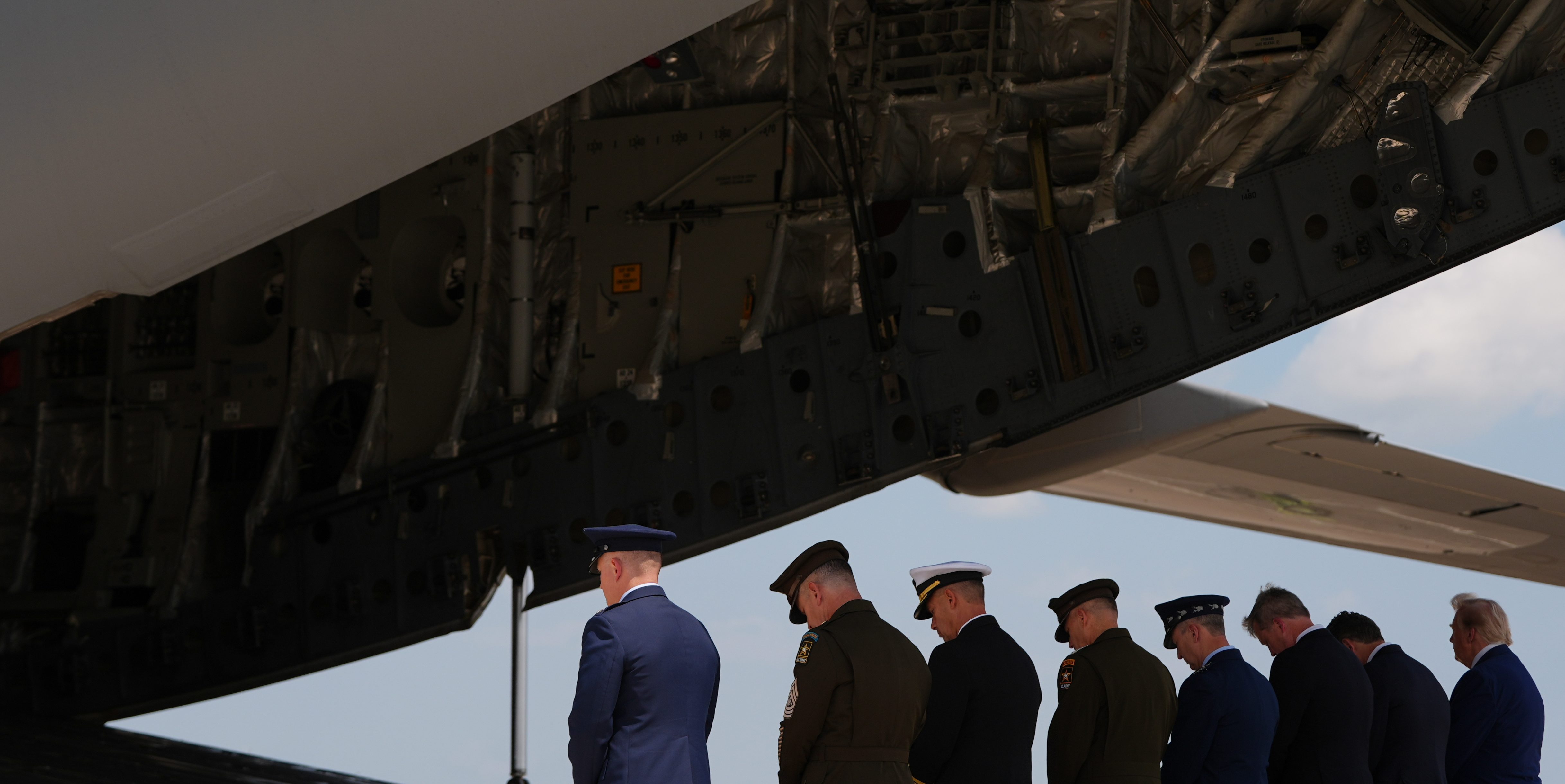
Donald Trump, far right, and Pete Hegseth, second from right, attend the dignified transfer of four U.S. service members recently killed in the Middle East, on July 22, 2026, at Dover Air Force Base, Del. Photo: Julia Demaree Nikhinson/AP
The Pentagon is using a new method of tallying the number of U.S. soldiers killed and wounded in the Iran war that a U.S. government official said was “designed to obscure the count.”
Since the start of the conflict, the Department of War has posted the official count of casualties on the website of the Defense Casualty Analysis System, or DCAS, which tracks “deceased, wounded, ill or injured” service members for Congress and the president. This official total of dead and wounded personnel, as documented over months of reporting by The Intercept, has been a gross undercount, stemming from what that same official previously called a “casualty cover-up.”
But after a series of Iranian strikes on U.S. facilities in the Middle East in July, the Pentagon last week rolled out a new approach. Casualties since July 7 are now counted separately on a new webpage with a generic designation: “Overseas Operations.”
Two hundred and seventy-three U.S. troops were killed or wounded since July 7, according to the Monday total on the new Overseas Operations page.
When combined with the existing DCAS page for the Iran war, the official count stands at 704, an 83 percent increase in casualties since April 8, the day the first ceasefire deal was struck between the Trump administration and Iran. When counting known casualties overlooked by the DCAS page, the total exceeds 900 personnel.
For months, the Pentagon has failed to comment on DCAS anomalies reported by The Intercept nor the reason for the change in the way it now counts casualties, which was first reported by the New York Times. Last week, the Pentagon told the newspaper that “since Operation Epic Fury has concluded, the department classifies casualties as overseas operations in the CENTCOM area of responsibility.” Central Command oversees U.S. military operations in the Middle East.
“This is certainly designed to conceal the count of the wounded,” the official said, while noting that “incompetence” has also caused confusion in the casualty count.
The change comes after a July 20 rant by Pentagon spokesperson Sean Parnell who claimed reports of a Pentagon effort to withhold news of dozens of U.S. casualties were “baseless and malicious” and a U.S. official’s disclosure to The Intercept that same day that recent attacks on U.S. bases by Iran had wounded “far more” personnel than the Pentagon had acknowledged.
The casualty spike resulted from Iranian attacks on at least nine U.S. outposts across the Middle East since July 9, according to a second U.S. official who spoke to The Intercept on the condition of anonymity because they were not authorized to speak with the press.
Iran’s military managed to overwhelm U.S. air defense systems using a mix of attack drones and advanced ballistic missiles, despite months of claims by President Donald Trump and self-styled War Secretary Pete Hegseth that Iran’s military was annihilated.
Last month, the tally of wounded personnel fluctuated by the day in the wake of increased Iranian attacks. On July 21, the casualty count on DCAS for Operation Epic Fury, the military’s official designation for the Iran war, stood at 500. Now, it has shrunk to 431.
For months, The Intercept found anomalies with the counts offered on the DCAS website. On April 21, for example, the number of wounded-in-action troops declined by 15 without public acknowledgment by the War Department. Despite repeated questions for months, the Pentagon has not commented on the disparities in its casualty count.
Prior reporting by The Intercept also found DCAS is missing hundreds of dead and wounded personnel from Epic Fury. The Pentagon list of the names of the dead is still missing Maj. Sorffly Davius, a signals and communication officer with the New York Army National Guard who was assigned to the headquarters of the 42nd Infantry Division and reportedly died of sudden illness while on duty in Camp Buehring, Kuwait, on March 6. Davius’s death was widely acknowledged even as it was excluded from the the official count: Rep. Mike Lawler, R-N.Y., spoke about him during a memorial service that month, and Gen. Dan Caine, the chair of the Joint Chiefs of Staff, recognized Davius while “honoring our fallen.”
While DCAS provides a running tally of “non-hostile” deaths — meaning those who died from accidents or by illness — it doesn’t include “non-hostile” injuries. The DCAS figures for Epic Fury show that 65 Navy personnel were wounded in action. Missing, however, are the more than 200 sailors treated for smoke inhalation or lacerations due to a March 12 fire that raged aboard the USS Gerald R. Ford. The aircraft carrier had been conducting round-the-clock flight operations to, Caine said, “project combat power” in the Middle East.
Recent reporting by the War Horse, using Pentagon records obtained via the Freedom of Information Act, found more than 400 casualties were recorded between February 28 and April 8. Seventy occurred on March 18 alone, but this huge single-day toll was never reported by the Pentagon.
The records provide more granular detail than DCAS, revealing that at least 17 troops sustained life-threatening injuries. They show that U.S. troops suffered shrapnel wounds, broken bones, smoke inhalation, and other injuries. The most common injury recorded, however, was head trauma — which affected at least 170 troops, according to the data.
President Donald Trump has long dismissed brain injuries as “headaches” and “not serious.”
The U.S. government continues to demonstrate its knack for pursuing remarkably foolish foreign policies that have terrible consequences.
Many thought that President Trump was going to rectify this problem, at least somewhat. After all, he promised to shut down the Ukraine War as soon as he moved into the White House, if not before he did! Moreover, he said no more forever wars, no more wars in pursuit of regime change.
But Trump has failed. Not only did he fail to end the fighting in Ukraine, but he has also twice gone to war against Iran – the 12-Day War in June 2025 and the disastrous war that he and Benjamin Netanyahu started on February 28, 2026, which could be the greatest strategic blunder In U.S. history. Furthermore, he kidnapped Venezuela’s president and, by his own account, is running that country as if it is an American colony, not a sovereign state. And like his predecessor in the White House, President Joe Biden, he is complicit in Israel’s genocide in Gaza and its endless pogroms in the West Bank.
How did we end up in this dreadful situation? And how can we rectify it?
There is no guaranteed way to avoid foreign policy errors. But one way to minimize the chance of getting into serious trouble is to debate the issues of the day openly, so that critics of conventional wisdom or particular government policies can have their say. Media institutions are hugely important in fostering this kind of debate, which is why freedom of the press is protected in the United States. It allows critics to make their views known to large numbers of people and it provides legitimacy. Critics of existing policy are not always right, but sometimes they speak truth to power and help us avoid or correct big mistakes.
As almost every reader of Antiwar.com knows, the mainstream media in the United States have become much less willing to provide dissenters with a platform since the Cold War ended. Mainstream media outlets often seem to speak with one voice on the big foreign policy issues of the day and that voice usually backs U.S. government policy. This situation is not healthy, and it helps explains why America’s standing in the world has declined in recent decades.
Antiwar.com plays an enormously important role in filling this dangerous void in our public discourse. It provides an indispensable platform for critics to challenge the reigning views of the foreign policy establishment. This is essential for increasing the likelihood that the United States will pursue wiser policies. For this reason, I urge readers to generously support Antiwar.com. In these troubled times, a flourishing Antiwar.com is very much in the U.S. national interest.
If you liked this article, please support Antiwar.com. We are 100% reader-supported.
John J. Mearsheimer, PhD, is an American professor of Political Science at the University of Chicago. More recently Mearsheimer has attracted attention for co-authoring and publishing the article The Israel Lobby and U.S. Foreign Policy, which was subsequently published as a book.
Israeli forces killed at least 26 people in Gaza over the weekend, striking apartment blocks, tent camps and the medicine warehouses of a hospital, in the territory’s deadliest days in weeks. The killings came as US President Donald Trump threatened Iran with “decapitation” after a week of American strikes across the regio
Israel killed at least seven people on Saturday and destroyed two of the four medicine warehouses of Al-Aqsa Martyrs Hospital in Deir al-Balah, Al Jazeera reported. Gaza Health Ministry Director-General Munir al-Bursh said the destruction “turns medicine and illness itself into a tool of war.”
Palestinians try to extinguish a burning car after an Israeli military strike in Gaza City, Sunday, Aug. 2, 2026. [AP Photo/Jehad Alshrafi]
The Associated Press reported that the Israeli military killed at least 17 more people, children among them, from Saturday night through Sunday, according to local hospitals. Al Jazeera counted 19 dead Sunday and put the weekend toll at 26. Among the dead were Abdullah Abu al-Teif, 33, his pregnant wife Abeer Anan, 29, and their five-year-old son Azzam, killed at the Al-Sousi Tower in western Gaza City. The Israeli military said the strikes had targeted militant operatives.
The bloodshed unfolded behind an official propaganda barrage of peace. On Thursday Trump announced a “HISTORIC agreement for the COMPLETE DISARMAMENT of Hamas”; on Saturday he claimed the “perimeters of a deal” to reopen the Strait of Hormuz had been agreed. As he spoke, Israeli bombs fell on Gaza City, Deir al-Balah and Khan Younis, and US bombers massed for what Trump said Sunday “would have been the biggest attack since World War II.”
Israel has attacked Gaza on 270 of the 297 days since the ceasefire took effect on October 10, 2025, an Al Jazeera analysis reported as of Monday. Gaza’s Health Ministry counts at least 1,250 Palestinians killed since the truce began; five Israeli soldiers have died in the same period, per the Associated Press.
The “ceasefires” are merely the framework for the permanent annexation of Gaza and the expansion of the war. Israeli Defense Minister Israel Katz said Sunday that the Israeli-held zone had reached 60 to 70 percent of Gaza, and Israeli Prime Minister Benjamin Netanyahu’s spokesman Doron Spielman told the AP: “Disarming means physically giving up the weapons. Nothing less.”
The AP reported that Israel’s demands, according to a person with knowledge of the deal, include the freedom to keep conducting military operations in Gaza. National Security Minister Itamar Ben-Gvir wrote in the Telegram on July 31 that “assassinations in Gaza must continue.”
The Israeli army is meanwhile in the second week of a “wide-scale military operation” Netanyahu ordered across the West Bank after settlers from the Havat Gilad outpost attacked the village of Tal on July 24. Four Palestinians of the Ramadan family and two Israelis died.
The army deployed 26 battalions and raided towns from Jenin to Hebron, Al Jazeera reported on July 28; Army Radio counted 30 settler attacks the following weekend, including two mosques set on fire and a family home in Urif that more than 150 settlers set alight—an infant survived because her grandfather pulled her from her crib.
Finance Minister Bezalel Smotrich said on July 24 that Palestinian villages should “look like the refugee camps in Nablus and Tulkarem.” According to UN figures, 1,122 Palestinians have been killed in the West Bank and East Jerusalem since October 2023, at least 246 of them children.
The assault on Gaza comes as Trump threatens to destroy the Iranian government. “Iranian Leadership is unbelievably duplicitous!” he wrote Monday on Truth Social. In the Oval Office later that day he said, “This is the last chance for them to sign a good document,” adding that he wanted to give “every last chance before decapitation.”
The threats followed a week of American bombardment. After Trump said July 27 that US strikes were paused for mediation, Iran’s Revolutionary Guard fired ballistic missiles on July 28 at a base housing US troops in Jordan, and the next day the US military announced a “heavy wave of strikes” on dozens of sites across Iran—command centers, missile and drone facilities and coastal defense sites.
Iranian state media reported that a missile struck a house on Qeshm Island, killing Qeisar Jafari, a taxi driver, his wife Zahra and their two-year-old son Sina. The same day, US and Saudi warplanes struck militia sites across seven Iraqi provinces; the Popular Mobilization Forces said 20 of its fighters were killed, and two Iraqi militia officials told the AP that six Iranian advisers died.
CBS News reported Friday that the US and Israel were preparing a bombing campaign against Iranian power plants and refineries. In a Truth Social post late Saturday, Trump announced he had canceled the attack, writing that “Iran, and other Middle Eastern Countries” had asked him to hold off.
Secretary of War Pete Hegseth wrote Sunday on X: “The @DeptofWar was ready to go—and remains ready—at levels not seen since World War 2. Locked and loaded.”
These realities render all the talk of “ceasefire” by Trump and Netanyahu moot: There is an ongoing regional war throughout the Middle East, in which people are being killed every day.
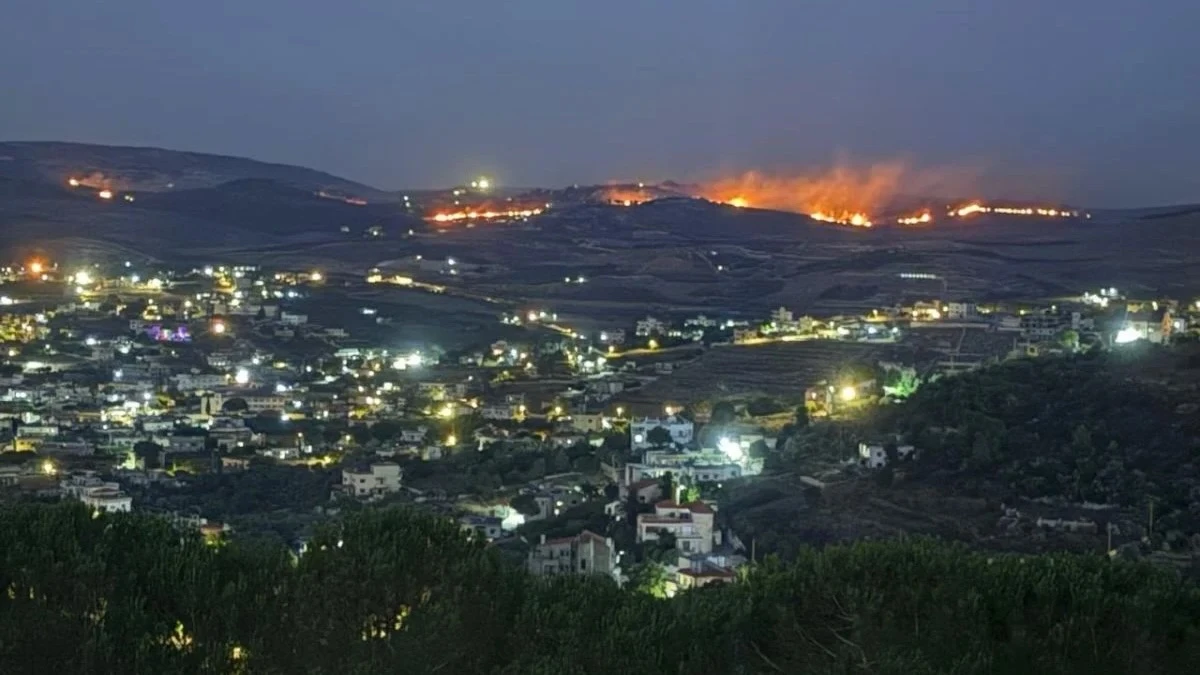
Houthi missiles and drones have struck Saudi tankers and Aramco facilities since the group declared an embargo on Saudi shipping July 20; a drone set two gas vessels ablaze at Egypt’s port of Damietta July 29. Kuwait said Saturday it destroyed hostile drones over its territory and blamed Iran; Israel killed Hezbollah fighters in southern Lebanon Saturday and shelled southern Syria on July 30.
Trump’s claims of peace negotiations met a flat denial from Tehran. “We are not negotiating with the United States at this time,” Iranian Foreign Ministry spokesman Esmaeil Baghaei said Monday; Iran says its only talks are with Oman, over a temporary shipping corridor through the Strait of Hormuz.
No ceasefire is in effect with Iran—the June memorandum collapsed in early July, and TheGuardian wrote Monday that the weekend reversal was thought to be Trump’s 12th cancellation of threatened strikes.
On CBS’s Face the Nation Sunday, Democratic Senator Mark Kelly of Arizona attacked the war as mismanaged: “Here’s a guy who got us into this without a strategic goal, without a plan, without a timeline.” His remedy was to win it: “put some people in here that know how to do this, how to talk to the Iranians.” He did not call for an end to the war and said nothing about Gaza.
At a Senate hearing on July 21, Democratic Senator Gary Peters of Michigan demanded that the administration win the war, telling Hegseth: “You don’t have a long-term plan to actually win this war. Win the war.”
The war is deeply unpopular: 64 percent of Americans told an AP-NORC poll published July 30 that it has not been worth fighting, and 60 percent told Quinnipiac July 29 they oppose US military action against Iran. But in Washington, the argument is over how the war should be fought, not how to end it.
As first light reaches the scattered tents and animal pens of Ras al-Ahmar in the northern Jordan Valley, the silence is broken only by the cries of thirsty livestock waiting for water that no longer comes.
Days after Israeli forces destroyed three of the Palestinian community’s main water wells, residents are scrambling to secure enough water for their families, crops and animals in one of the occupied West Bank’s driest regions.
For 60-year-old Ali Bani Odeh, the destruction of the wells was more than merely the loss of infrastructure. A father of four and grandfather of 14, he has spent decades farming and raising livestock to support his family in Ras al-Ahmar.
Now, like dozens of other families, he is uncertain how long they can continue living on the land without a reliable water supply.
“Water is everything for us,” Ali told Middle East Eye.
New MEE newsletter: Jerusalem Dispatch
Sign up to get the latest insights and analysis on Israel-Palestine, alongside Turkey Unpacked and other MEE newsletters
“Without water, we cannot live. We need it for our families, our sheep and our crops. Since the wells were destroyed, we have been forced to bring water from town at a much higher cost, and even then, we’re not always allowed to pass.”
Families must now haul water from distant towns at far greater expense, while military checkpoints and movement restrictions frequently delay or prevent tankers from reaching the village.
‘The wells were the lifeline of this community’
– Abdullah Bisharat, head of the village council
According to Ras al-Ahmar village council head Abdullah Bisharat, the three destroyed wells supplied more than 47 Palestinian families, serving over 600 people and irrigating around 7,500 dunams of farmland.
The wells also sustained thousands of sheep and goats, the main source of income for many families.
“The wells were the lifeline of this community,” Bisharat said.
“Their destruction has affected every aspect of daily life, from drinking water and agriculture to livestock, leaving dozens of families struggling to meet their most basic needs.”
Settler attacks
Residents say the destruction marked the worst escalation in a months-long water crisis caused by Israeli settler attacks.
They say settlers repeatedly cut the pipelines supplying the community, forcing families to rely on costly water tankers. This time, however, the wells themselves were destroyed, eliminating the community’s main source of water.
Ali’s son, Obeida Bani Odeh, fears the loss of the wells threatens not only his family’s livelihood but also their future in Ras al-Ahmar.
How Israeli settler terrorism threatens the basics of Palestinian survival
“We cannot survive here without water,” Obeida said.
“For months, the pipelines supplying our community were repeatedly cut, and we had to bring water from nearby towns, often at three times the usual cost.
“Now the wells have been destroyed, and there is no reliable source of water left for our families or our livestock.”
He said the challenges extend beyond water shortages. Settler attacks and movement restrictions have made it increasingly difficult to bring in water, animal feed and other essential supplies.
“The settlers attack everyone, from the young to the old,” Obeida said.
“They want to make people afraid and force them to leave. But we have been living on this land for generations.”
The three destroyed wells supplied more than 47 Palestinian families, around 600 people (Mojahid Nawahda/MEE)
Around 700,000 Israeli settlers live in the occupied West Bank and East Jerusalem across roughly 300 settlements and outposts. The settlements are regarded as illegal under international law, according to the International Court of Justice.
Settler attacks on Palestinian herding communities have increased sharply in recent years. Between January 2023 and April 2026, at least 5,910 Palestinians were internally displaced due to settler violence in the West Bank, according to UN data.
‘A silent war’
Aref Daraghmeh, a human rights activist, says the destruction of water infrastructure in Ras al-Ahmar reflects a broader struggle over control of natural resources in the Jordan Valley.
“Water has become a silent war against Palestinians in the Jordan Valley,” Daraghmeh told MEE.
“The occupation has taken control of many Palestinian water sources, while the water available to Palestinian communities is insufficient for agriculture and sustaining life on the land.”
‘Policy to displace us’: How settler attacks are drying up the West Bank
Daraghmeh said restrictions on water access have contributed to the decline of Palestinian agriculture, making it increasingly difficult for farmers and herders to sustain their livelihoods. As water becomes harder to access, he argues, communities face growing pressure to leave their land while settlement agriculture continues to expand across the Jordan Valley.
He added that movement restrictions have compounded those challenges.
“The Jordan Valley is effectively under closure,” Daraghmeh said. “Military checkpoints control movement, roads are restricted, and residents often have to wait for hours before they can enter or leave their communities.”
For farmers and herders, those restrictions make it harder to reach grazing land and transport livestock, produce and agricultural supplies, adding to the pressures already created by limited access to water.
But for Ali Bani Odeh, leaving Ras al-Ahmar is not an option. Displaced from his home as a child, he says he will not leave again.
“I have left before, but I will not leave this place,” Ali said.
“If we leave, they will take over the land. We are staying because this is where our lives and our history are.”
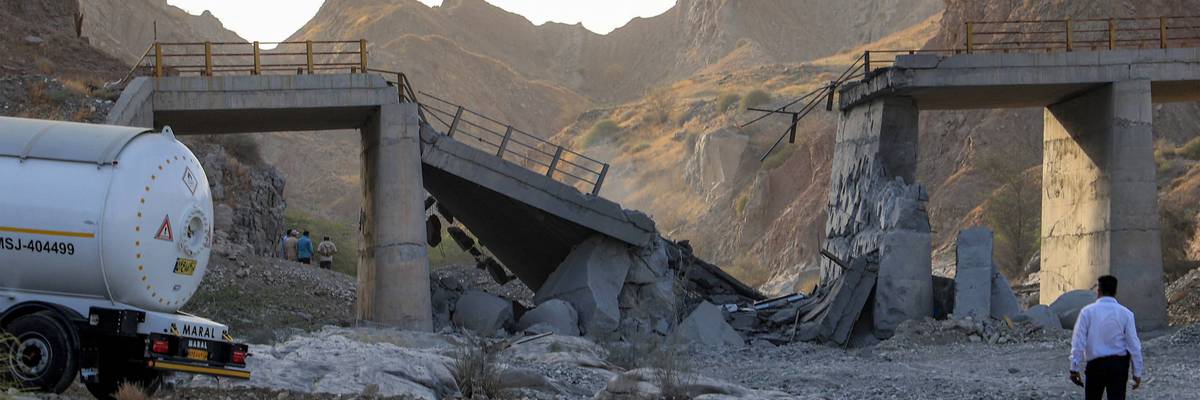
A bridge that was hit and heavily damaged by a US strike is pictured along the road connecting Roudan and Bandar Abbas in southern Iran on July 18, 2026.
(Photo by Amir Hossein KHORGOOEI/ISNA/AFP via Getty Images)
“It’s a narrative designed to give the impression that Trump is in the driving seat in this conflict. It’s been clear for some time now: He isn’t.”
Trita Parsi, an expert on US-Iranian relations, cast doubt on President Donald Trump’s Saturday claims that he halted planned strikes on Iran due to progress in negotiations to end the illegal conflict, launched by the Republican and Israel in February.
“The U.S.A. is locked and loaded and ready to go against the Islamic Republic of Iran, at levels of Military Terror, Strength, and Power not seen since World War II. Despite this, we have just been asked by Iran, and other Middle Eastern Countries, to hold off any attack in that the perimeters of a deal has been agreed to,” Trump wrote on his Truth Social platform at 10:05 pm Eastern time.
“This would include the Immediate, Complete, and Total OPENING OF THE HORMUZ STRAIT, and an end to Iran’s nuclear threat,” Trump declared—despite repeated conclusions from US intelligence agencies that the Iranian government was not aiming to build a nuclear weapon when the United States and Israel began bombing Iran five months ago.
“Based on this request, I have agreed, for the future benefit of the WORLD and, likewise, the survival of a successful and prosperous Iran, to cancel the attack, subject to being able to rapidly make a DEAL,” Trump added. “The Country of Israel joins me in this commitment. Get to work, everybody, and get it DONE.”
Sharing the post on the platform X, Parsi said, “Trump ‘cancels’ ‘planned’ ‘attack’ on Iran…” The expert struck a similarly skeptical tone during a Saturday on-air interview with CNN about the president’s announcement.
Parsi, co-founder and executive vice president of the Quincy Institute for Responsible Statecraft, said that “I don’t believe there was an imminent attack. We’ve gone through this several times, in which Trump issues these threats, and then he backs off because the other side calls his bluff.”
“Trump does not have an escalatory way out of this conflict, but what he is trying to do is to give the impression that he is in control—that he is in the driving seat,” Parsi suggested. “And I think it’s been quite clear for quite some time now he is not.”
During Trump’s first term, he tore up the Obama administration’s Iran nuclear deal, and so far, he has been unable to negotiate a replacement. Since launching this war, without authorization from Congress and in violation of the United Nations Charter, the ceasefire agreement reached in April and a June memorandum of understanding ultimately have not stopped the bloodshed.
Earlier this week, most US SenateRepublicans and Democratic Sen. John Fetterman (Pa.) blocked yet another war powers resolution intended to prevent the Trump administration from launching further attacks on Iran without congressional approval—a vote that came as polling showed 64% of Americans disapprove of continuing the war, including 37% of Republicans.
The Iran War has killed thousands of Iranians and Lebanese civilians—the latter mostly from Israeli attacks purportedly targeting Hezbollah—as well as hundreds of people in other nations across the Middle East and at least 18 US service members.
In the hours before Trump’s Saturday Truth Social post, Axios revealed that “Saudi Crown Prince Mohammed bin Salman and Trump spoke on Saturday, with MBS expressing concern over the strike plans,” and “other regional powers, including Qatar, the United Arab Emirates, Turkey and Pakistan, have also pressed the US and Iran to de-escalate.”
CBS chief foreign affairs correspondent Margaret Brennan reported on social media about Saturday’s “flurry of phone calls by Iran’s top diplomat Abbas Araghchi to regional leaders, which suggests an effort underway to avoid military strikes.”
“Earlier today, the State Department advised Americans throughout the Mideast to leave the region,” Brennan noted.
Araghchi said Saturday that “any hostile action by the US or Israel—or participation or cooperation by regional countries in such actions—would be met with a decisive and proportionate response from Iran’s powerful armed forces.”
As global public opinion turns against Tel Aviv, the Netanyahu regime is ramping up its electoral meddling, from Europe to South America
Presidential hopeful Flavio Bolsonaro appears with his wife, Fernanda, during the launch of his candidacy in Sao Paulo, Brazil, on 25 July 2026 (Nelson Almeida/AFP)
I have spent more than a decade investigating the Israeli arms and surveillance industries, and have always understood that the Israeli state is far more involved than it publicly admits.
The revolving door between the public and private sector is well-known, but how exactly did some of the biggest Israeli companies achieve such incredible access to governments around the world, from Saudi Arabia to Ethiopia?
Beyond Israeli Prime Minister Benjamin Netanyahu’s spyware diplomacy – a highly effective way to make friends, by offering sophisticated tools to spy on perceived enemies, journalists, human rights workers and even friends – there were always gaps in our knowledge.
But a recent revelation provides a window into how it happened. In 2013, Shalev Hulio – one of the founders of NSO Group, which developed the phone spyware Pegasus – travelled to Panama on an Israeli diplomatic passport and stayed at the Israeli embassy.
The vital reporting by the Organized Crime and Corruption Reporting Project and two other media outlets found that Hulio was central to NSO Group’s sale of Pegasus to Panama in 2012, and that he signed the contract with the Panamanian government.
New MEE newsletter: Jerusalem Dispatch
Sign up to get the latest insights and analysis on Israel-Palestine, alongside Turkey Unpacked and other MEE newsletters
“Panamanian migration records obtained by reporters show Hulio arrived at Tocumen airport in Panama City from the U.S. on a Copa Airlines flight on December 3, 2013, and used a diplomatic passport to enter the country. The records state Hulio’s visit was for ‘recreation’ and list his profession as ‘diplomat,’” the report notes.
This piece of the puzzle confirms part of a story that has been hard to pin down with documents, and not just conjecture: NSO Group and many other Israeli arms and surveillance firms operate as an arm of the Israeli state, advancing its interests, biases and agendas – and operating with its full protection.
Political leverage
The vast treasure trove of information that has been gathered by NSO Group and other like-minded firms is incalculable, as they are the ones extracting data from mobile phones (as opposed to the paying clients).
It’s thus inevitable that NSO Group, and by extension the Israeli government, have gathered information and secrets that could be used for political leverage on any number of countries. This is one way that Israel maintains such significant diplomatic leverage.
The story about spyware and hacking battles over the last decade, and Israel’s central place within them, has not gone away. Israeli spying tools continue to be used against unsuspecting politicians, journalists and activists.
A rampaging Israeli government wants to make friends in the international community, as public opinion turns against it in an unprecedented way
From the European Parliament to Russia, the lack of regulation in the industry has allowed it to metastasize without restraint. But the threat of cyber-tools like Pegasus seems relatively minor when compared with the explosion of Israeli election interference around the globe.
From Scotland to France, and Colombia to Honduras, Israeli companies are deploying the dark arts to push for pro-Israel candidates to win. This includes massive bot farms, spreading disinformation about pro-Palestinian candidates, and manipulating social media. As with the spyware industry, the world responds with paralysis and fear.
This is an issue that goes to the heart of democracy and the viability of its existence. Israeli electoral manipulation services are for sale to the highest bidder, and they’re already twisting what we know and understand about the very essence of free and fair elections.
Destabilisation campaigns
Take Latin America, a region that’s experiencing a wave of Israeli-led disruption campaigns. Earlier this year, a story surfaced about alleged collaboration among the Trump administration, the Netanyahu regime, and former Honduran President Juan Orlando Hernandez, who was sentenced in the US in 2024 on massive drug-related charges – and pardoned the following year.
The plan? Destabilise “unfriendly” governments and aim to install pro-Israel and pro-US elements to undermine left-wingers, from Colombia to Mexico (the former campaign has already been successful, with the recent win of president-elect Abelardo de la Espriella).
Brazil may be next, with presidential candidate Flavio Bolsonaro – son of the previous president, Jair Bolsonaro – launching his campaign with an endorsement from Netanyahu.
It’s fair to presume that Israeli electoral hackers will be working night and day to assist the Bolsonaro campaign and sabotage Brazilian President Luiz Inacio Lula da Silva in the run-up to the October general election.
Honduras once again appears to be a central point around which Israeli and American far-right pressures are being applied; the country is reportedly willing to give control of military bases and special economic zones to Israel and the US.
All of this is occurring while Israel is experiencing its biggest collapse in support in its history. This is a historic change – one that could well impact western politics in the coming years. But right now, Palestine is being trampled and erased, from Gaza to the occupied West Bank.
It’s hard to convey the scale of the displacement, violence and fear among Palestinians. This is the Israeli state on steroids, sensing a once-in-a-generation opportunity to remove as many Palestinians from their land as possible, making way for a truly Jewish supremacist and rabbinical state.
In this context, it makes sense that a rampaging Israeli government wants to make friends in the international community, as public opinion turns against it in an unprecedented way. Electoral manipulation might seem like a desperate move from a nation on the edge, but in reality it represents an acceleration of Israel as a reliable, autocratic ally – one that proudly discriminates against minorities and Palestinians, and inspires the surging far right in the process.
The views expressed in this article belong to the author and do not necessarily reflect the editorial policy of Middle East Eye.
Antony Loewenstein is an independent journalist, best–selling author, filmmaker and co–founder of Declassified Australia. He’s written for the Guardian, the New York Times, the New York Review of Books and many others. His latest book is The Palestine Laboratory: How Israel Exports the Technology of Occupation Around the World. His other books include Pills, Powder and Smoke, Disaster Capitalism and My Israel Question. His documentary films include Disaster Capitalism and the Al Jazeera English films West Africa’s Opioid Crisis and Under the Cover of Covid. He was based in East Jerusalem from 2016 to 2020.
Some 60,000 people crossed into Ceuta from Morocco this week, including around 8,000 children
A Spanish soldier escorts a group of migrants on their way back towards the Moroccan border, following their illegal crossing into the Spanish enclave of Ceuta, on 1 August 2026 (AFP)
A Spanish minister has suggested Israel was stirring problems over 60,000 migrants crossing from Morocco into Spain’s North African enclave of Ceuta.
Israel’s ambassador to the United Nations, Danny Danon, posted on X on Friday: “Spain, which never misses an opportunity to lecture Israel, has declared a state of emergency in Ceuta following the crisis over its immigration policy.
“Maybe before it continues lecturing us, it’s time it explained to the world why it still maintains colonial enclaves in Africa,” he added.
Sharing Danon’s post, Spanish Transport Minister Oscar Puente remarked: “Well, it all seems to be becoming quite clear.”
This comes as numerous Spanish politicians and commentators have alleged that Israel and the United States have sought to cause trouble for Spain in retaliation for the Spanish government’s opposition to the US-Israeli war on Iran and Israel’s war on Gaza.
New MEE newsletter: Jerusalem Dispatch
Sign up to get the latest insights and analysis on Israel-Palestine, alongside Turkey Unpacked and other MEE newsletters
Gabriel Rufian, the parliamentary spokesperson for the Republican Left of Catalonia, a left-wing party, argued that the crisis served American and Israeli interests.
Spanish journalist Jose Vizner, meanwhile, shared a 2019 social media post by Yair Netanyahu, the son of Israel’s prime minister, discussing alleged Israeli support for separatism in Ceuta.
Prominent Spanish actor Javier Bardem shared a video accusing Israel of being behind the crossings.
Former Portuguese minister and commentator Bruno Macaes said that “whether or not the US and Israel were involved before the fact, they were deeply involved and intensely active after the fact, especially trying to use it against the current Spanish government”.
Ceuta, a Spanish territory on Morocco’s Mediterranean coast, and Melilla, another Spanish autonomous city on the country’s northern coast, share the only land borders between the European Union and Africa.
Some 60,000 people crossed into Ceuta from Morocco this week, including around 8,000 children, according to the Spanish government.
Footage posted online showed people swimming into the enclave around the border barrier, with some wearing swimsuits and using flotation rings to make the dangerous journey.
Diplomatic spats over migrant crossings
France said it was increasing checks along its border with Spain, while Italy threatened to suspend Spain from the EU’s internal open-border scheme.
But on Saturday, Spain said most migrants, around 48,000, had already returned to Morocco, ushered by Spanish soldiers.
Videos online showed migrants hiding in tunnels and walking around on the streets of Ceuta.
At least 67 people are believed to have died while attempting to reach the enclave.
It is unclear what prompted the wave of attempted crossings, but there have previously been similar incidents.
In May 2021, 8,000 Moroccans entered the enclave amid a diplomatic dispute between Spain and Morocco over Western Sahara. At the time, Spain accused Morocco of using migrants as leverage, and a Moroccan minister said Morocco was justified in relaxing its border control as a response to the diplomatic dispute.
Thousands make dramatic sea crossing into Ceuta from Morocco
Some commentators have accused Morocco of facilitating this week’s crossings, pointing to the Moroccan government’s anger at Spanish Prime Minister Pedro Sanchez’s recent visit to Algeria, Spain’s biggest gas supplier.
Lorenzo Gabrielli, a senior researcher at Pompeu Fabra University in Barcelona who researches migration in Ceuta, told the New York Times: “It is impossible for nearly 50,000 people to cross the border between Morocco and Spain in a single day without Morocco having a hand in it.”
Ceuta President Juan Jesus Vivas condemned the migration as a “violation of Spain’s territorial integrity”.
Morocco’s ambassador to Spain, Karima Benyaich, said: “We have always prioritised legal, orderly and safe migration for all.”
She insisted the crossings had been against the wishes of the Moroccan government.
Meanwhile, US President Donald Trump called the situation a “catastrophe” and added that “if we’re not in office our country will be invaded at levels that will make Spain look small time”.
Middle East Eye delivers independent and unrivalled coverage and analysis of the Middle East, North Africa and beyond. To learn more about republishing this content and the associated fees, please fill out this form. More about MEE can be found here.
Israel is pursuing a long-term strategy to enmesh itself within the US military, intelligence, and defense establishment, fearing that a collapse in US public support for Israel could otherwise jeopardize billions in future US aid, Capital & Empirereported on 30 July.
According to a new US intelligence assessment, “Israeli officials believe the political fight over Israel in the United States is becoming harder to win, and that the era of indefinitely securing billions of dollars in annual military aid is coming to an end.”
Israeli officials are therefore seeking ways to embed the Israeli military within the US military in “ways future administrations would struggle to unwind,” according to an assessment described to Capital & Empire by US officials.
Currently, Israel receives military aid from the US that must be approved annually through transparent votes by lawmakers in Congress and the Senate.
But the collapse in public support in the US for Israel following the genocide of Palestinians in Gaza that started in October 2023 has put such future US military aid to Israel in jeopardy.
The assessment, written primarily by the CIA, discusses expanding intelligence cooperation with Israel and hosting a permanent US military base on Israeli territory.
It says Israeli officials have been grooming prominent US tech executives to build long-term political and financial support for the effort.
Israel has been advancing this agenda since earlier this year, lobbying lawmakers to pass the $1.1-trillion National Defense Authorization Act (NDAA).
The NDAA includes Section 219, which integrates US military intelligence and the defense industrial base with the Israeli military.
The House of Representatives passed a version of the bill on 22 July. The bill now heads to the Senate, where it must be approved before it is sent to US President Donald Trump for his signature.
The vast majority of Democratic lawmakers in the House voted against the bill, as public shows of support for Israel are becoming a political liability.
However, six House Democrats, Henry Cuellar, Don Davis, Jared Golden, Vicente Gonzalez, Adam Gray, and Marie Gluesenkamp Perez joined Republicans to vote for the bill, just enough to allow it to pass.
Congressman Thomas Massie of Kentucky, who lost in a Republican primary for re-election in May in part due to the Israel lobby, called Section 219 of the NDAA “a betrayal of our sovereignty.”
Earlier this year, Israeli Prime Minister Benjamin Netanyahu claimed he wanted to end Israel’s reliance on US military aid.
However, the assessment states that the CIA believes that Netanyahu made such statements as part of a plan to replace highly unpopular “foreign aid with deeper, longer-lasting forms of military and industrial integration.”
“From Israel’s perspective, embedding the alliance more deeply within the US national security apparatus would make it far more difficult for future administrations to pressure Israel by slowing or withholding arms transfers,” Capital & Empire wrote.
During former US president Joe Biden’s term, Secretary of State Antony Blinken needed to take several emergency measures to ensure that US bombs kept flowing to Israel as it perpetrated the genocide of Palestinians.
Providing US military aid to Israel as it committed war crimes in Gaza was not only unpopular among Biden’s Democratic base, it was also illegal under US law.
Blinken moved ahead with the bomb shipments, which helped Israel’s Air Force kill tens of thousands of children, despite public backlash.
About 60 percent of US adults now hold an unfavorable view of Israel, according to an April Pew Research Center survey.
An Economist/YouGov poll published on 28 July found that 49 percent of US citizens said Netanyahu should be taken into custody if he sets foot on US soil while subject to an International Criminal Court (ICC) arrest warrant, whereas only 27 percent said he should not be. Netanyahu visited the White House earlier this week.
If the NDAA is passed with section 2019 included, Israel will not risk future US politicians buckling to public pressure to end the arms flows it needs to continue the genocide in Gaza and bombing and ethnic cleansing of southern Lebanon.
According to the intelligence assessment, Israeli officials also want Israeli technology, intelligence, and weapons systems to be embedded within the US military itself, making the US increasingly reliant on Israel.
The assessment says Israeli officials want to convince US officials and lawmakers that Israel is a “model ally” whose relationship with the US is mutually beneficial, rather than a liability.
According to some reports, Israel played a key role in dragging the US into its current war with Iran. Israel is no longer participating directly in the war, which is highly unpopular in the US and costing taxpayers some $2 billion a day.
Secretary of State Marco Rubio attends the ASEAN Regional Forum in Manila on July 23, 2026Photo by Ezra Acayan/AFP via Getty Images
A report published this week by the State Department is the latest weapon employed by the Trump administration in its campaign for aggressive intervention in Cuba, according to members of Congress and experts on the beleaguered Caribbean island nation.
Despite Cuba being severely hobbled by in the throes of a humanitarian crisis engineered by U.S. sanctions and fuel blockades, the new report paints the country as a major threat.
The report appears to be the brainchild of Secretary of State Marco Rubio, a first-generation Cuban American who has made the overthrow of the Cuban government a top priority under the second Trump administration.
Published Monday without a listed author, the report says Cuba is the “capital of 21st century communism,” ideologically immovable, and a permanent enemy committed to the destruction not just of the U.S. but also of “Western civilization” through the spread of “Third Worldism.”
If that sounds like a throwback to the long-settled Cold War, that’s because it is — something critics of the report in Congress seized upon.
Whatever truths the report contains, they’re largely overshadowed by a feverish paranoia about the alleged reach of Cuban intelligence into American civil society, according to Rep. Mark Pocan, D-Wis., days after returning from a fact-finding trip to Cuba.
“It may be the stupidest, most fantastical, most biased thing I’ve ever read from a governmental agency,” Pocan said in a statement Tuesday. “This report focuses on the 1960s & 70s with no clear connection to today. Yet somehow, the State Department uses this report to say that this impoverished nation is responsible for everything from Black Lives Matter to Antifa, the anti-ICE protests and more.”
Rep. Delia Ramirez, D-Ill., who went on the fact-finding mission with Pocan, said the report was aimed at manufacturing consent for an invasion of the island — and to crack down on dissent at home.
“While criticizing the regime in Cuba, it instead attacks Americans’ constitutional rights to free speech and free assembly.”
“This report was intentionally designed to instill fear of the Cuban people and to justify a military attack on Cuba,” Ramirez told The Intercept. “It’s hypocrisy at its finest, because while criticizing the regime in Cuba, it instead attacks Americans’ constitutional rights to free speech and free assembly.”
In sketching a broad, anti-American conspiracy in nearly dozens of left-wing social movements, organizations, and educational institutions, the report also functions as a broadside on civil society in the U.S — and hardly for the first time.
“Cuba is not a new cudgel,” said Miriam Pensack, a historian at Princeton University specializing in Latin America and the Caribbean. “The Cuban revolution was a galvanizing event for the way that the United States thought about its national security, really until the end of the Cold War. And it still has an ideological utility, even as the country is limping along.”
Center of Global Conspiracy
Running 100 pages, the report lays out what its authors describe as a decadeslong effort by Cuba to foment revolutionary movements throughout the world and to build a latter-day “axis of evil” by allying with other governments opposed to U.S. interests, including the current-day governments of Iran, Russia, China, and North Korea.
“Even as it expands and revitalizes its network within the next generation of American left-wing activists, it has also forged new partnerships — or deepened and repurposed old ones — with other foreign governments and movements around the world,” the report warns. “The regime continues to act as a force multiplier for a much broader anti-American coalition, positioning itself as a staging ground for a wide range of foreign adversaries to conduct operations against the United States.”
Cuba, the authors allege, is “less a nation-state than an all-encompassing intelligence and subversion operation, focused around its existential revolution against the United States.”
The report goes on to list a slew of left-wing groups and individuals as accomplices, both witting and unwitting, of this intelligence operation, including the Democratic Socialists of America, Code Pink, Los Angeles Mayor Karen Bass, and leftwing streamer Hasan Piker.
In a section stretching nearly five full pages on the National Lawyers Guild, a long-standing right-wing bugaboo, the report’s authors describe the venerable progressive law association as “one of the most persistently relevant — and insidious — organizations in Cuba’s U.S. network.”
Posting to X for the first time since March, the organization quipped, “We have been called much worse, by much better.”
Academic Freedom at Home
The report took aim at universities in the U.S. for maintaining exchange programs and partnerships with Cuban universities, implying that such programs functioned as a feeding ground for Cuban agents looking to recruit spies and fellow travelers.
The report singled out Harvard University, pointing to trips by faculty to Cuba as recently as 2017.
The Cuban government “would probably argue that it was U.S. universities that were trying to penetrate Cuban institutions and to foment subversion there!”
If anything, however, the Cuban government has been wary of exchange programs with American schools, according to Alejandro de la Fuente, a professor of Latin American history and economics at Harvard who chairs the university’s Cuba Studies Program and took part in a trip to Cuba in 2017 that is mentioned in the report.
“They did their best to delimit those exchanges as much as possible because they understood that knowledge production requires freedom and a plurality of viewpoints — precisely what they do not allow,” de la Fuente told The Intercept in an email Wednesday. “Indeed, they would probably argue that it was U.S. universities that were trying to penetrate Cuban institutions and to foment subversion there!”
Born in Cuba, De la Fuente is hardly an apologist for the Cuban government, at whose feet he laid the blame for the country’s collapse. He acknowledged that Cuban intelligence may have targeted American students and academics in the past, but scoffed at the underlying thesis of the report that Cuba continues to pose a grave threat to the U.S.
“The ineptitude and corruption of the regime have destroyed the country’s economy and society, to the point that the very existence of the nation is in danger,” de la Fuente said. “Can a country like this pose a threat to the national security of the United States today? The answer, any reasonable observer would agree, is emphatically no.”
“War on the Cuban People”
Cuba has made no secret of its support for revolutionary movements throughout the 20th century. And it was a vital partner to left-wing governments in Latin America in the 21st century.
With Cuba today crippled by sanctions and fuel shortages, however, Ramirez, the member of Congress, said the report’s notion of the country as a central node in some threatening conspiracy was a “fiction.”
Accusations about Cuba’s extensive reach into protests against U.S. Immigration and Customs Enforcement, antifascist organizing, and Black Lives Matter don’t square with the reality of the severe crisis that has gripped Cuba. In early January, the Trump administration tightened its embargo of the country into a virtual blockade on all fuel arriving in Cuba.
Already weakened by internal tensions and by decades of economic sanctions imposed by the U.S., the island nation has in recent months been plunged into repeated, extended blackouts; its tourism-dependent economy has effectively collapsed; and its citizens face a daily question of where to find their next meal.
Her voice on the verge of tears as she described the humanitarian crisis she witnessed on the island, Ramirez forcefully rejected the notion that the U.S. has anything to fear from Cuba.
“Under no circumstances, at any moment during my trip, did I see anything to make me believe that Cuba poses an existential threat to the United States,” Ramirez said. “On the contrary, what I witnessed was a war on the Cuban people by the United States, and specifically by Donald Trump and Marco Rubio.”
 (Photo credit: AP)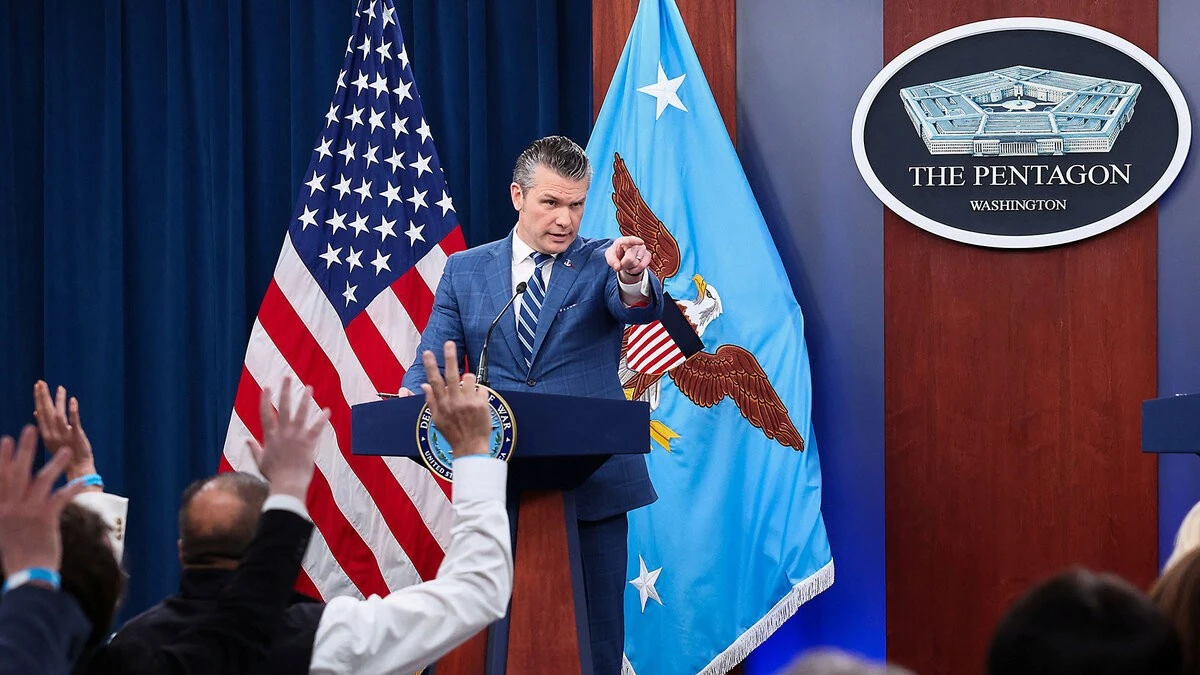








 (Photo credit: Israel Defense Forces)