Posts Tagged ‘Iran’

Trump launches new phase of US imperialism’s criminal war on Iran

July 9, 2026
Keith Jones, WSWS, 9 July 2026

President Donald Trump, right, speaks with Turkish President Recep Tayyip Erdogan at the Bestepe Presidential Palace during a formal welcome for the NATO summit in Ankara, Turkey, Tuesday, July 7, 2026. [AP Photo/Francisco Seco]

US President Donald Trump has relaunched American imperialism’s illegal war of aggression against Iran, after repeatedly making Hitlerite threats in recent days to destroy the country’s basic infrastructure and rain death and destruction on its people.

Speaking Wednesday on the sidelines of the NATO summit in Ankara, Trump effectively repudiated the 60-day truce reached between Washington and Tehran last month. “As far as I’m concerned, it’s over,” he declared. He went on to vow that the US will continue the campaign of air strikes launched on Iran in the early hours of Wednesday morning. “We’re going to hit them ‌hard tonight,” boasted the fascist would-be dictator president. 

This was coupled with a flurry of other threats, including the possible resumption of the US blockade of Iranian ports and the “takeover” of Kharg Island, Iran’s principal Persian Gulf oil export hub.

On Tuesday, Washington canceled the oil export sanctions “waiver” that it had granted Tehran as part of the Memorandum of Understanding (MoU) that underpins the truce. Hours later, the US mounted air strikes on more than 80 targets in southern Iran, killing, according to Iranian authorities, eight military personnel.

In his characteristic gangster-style fashion, Trump denounced Iran’s leaders in his Wednesday remarks, reveling in his capacity as the head of the US imperialist war machine to order execution air strikes like that which killed Iran’s Supreme Leader Ayatollah Khamenei at the war’s outset. “I do not want to deal with them any more, they are scum. They are sick people,” he snorted.

Tehran, for its part, has warned that the US is in breach of the MoU. An Iranian Foreign Ministry statement issued Wednesday said America’s “repeated illegal attacks against Iran,” the re-imposition of sanctions on Iranian oil and Israel’s continuing aggression against Lebanon “have rendered important and fundamental parts” of the truce agreement “ineffective.”

Iran has responded to the Pentagon’s Tuesday night attack with counter-strikes on US military bases in Kuwait and Bahrain and by warning the region’s other oil sheikdoms that they will be similarly targeted if they continue to facilitate US aggression.  

The truce has been hanging by a thread since it was formally signed by Trump and Iranian President Masoud Pezeshkian on June 17.   

Trump has repeatedly threatened to renew hostilities even as more information has emerged about the depletion of US missile stocks and the damage Iran has inflicted on US bases across the region.

The truce, coming after a long stream of proclamations from Trump, his Secretary of War Pete Hegseth and other minions about an overwhelming US “victory,” represented a debacle and humiliation for Washington. While unleashing massive wanton violence and suffering, the Trump administration manifestly failed to achieve any of its stated objectives—regime change, the elimination of Iran’s nuclear program and ballistic missile arsenal, and the cessation of its support for Hezbollah and other regional allies.  Moreover, Iran was quickly able to establish effective control over the Strait of Hormuz, choking off energy and other exports from and to US allies. Trump himself made reference to the devastating impact US imperialism’s illegal, unprovoked war has had on the world economy, when in justifying the truce he invoked the threat of an economic catastrophe akin to the Great Depression.

Yet some three weeks later Trump and the US oligarchy on whose behalf he rules have recklessly reopened hostilities, threatening to plunge the region and world into an even larger conflagration and economic morass.

They do so in the face of a massive show of popular opposition to US imperialism on the part of ordinary Iranians. Since July 4, millions of Iranians have joined what are to be six days of funeral observances for Ayatollah Khamenei and family members, including his 14-month-old granddaughter, who were killed in the February 28 decapitation strike with which the US and Israel launched their criminal war.

Even sections of the Western media have been forced to concede the popular character of the funeral observances and the palpable mass anger and mood of defiance, as well as genuine anguish, that have characterized them. They have mobilized what remains of the Islamic Republic’s traditional base among the urban and rural poor but also broad sections of working people with deep-rooted grievances against Iran’s bourgeois nationalist regime. They recognize that imperialism represents the greatest obstacle to realizing the social and democratic aspirations of Iran’s workers and toilers and are implacably opposed to the bipartisan drive of the US political establishment to reduce Iran to the type of neo-colonial bondage that existed under the bloody rule of the US-installed Shah prior to the 1979 revolution.

On Wednesday, the funeral possession passed over into Iraq, which like Iran has been the victim of decades of US imperialist aggression, including the invasion and occupation launched in 2003 under a web of lies about “weapons of mass destruction.” There it was similarly greeted with mass outpourings of popular anger against US imperialism and its Israeli attack dog  

The Trump administration’s belligerence is born of crisis—a crisis that is itself rooted in the ever-accelerating decline in the world position of US imperialism and the basic contradictions of the capitalist social order. It faces mounting opposition and growing political radicalization at home as manifested in the mass participation in the “No Kings” protests and a wave of strikes involving broad sections of the working class across the country, from auto parts workers, to educators, healthcare workers and transit workers. Terrified of this growing threat from below, Trump rails against the danger of “communism” and accelerates his drive to impose a presidential dictatorship.

As for the ostensible opposition party, the Democrats, they work with the trade union bureaucracy to contain and suppress working class opposition. Their objections to Trump’s policies largely revolve around questions of US imperialist foreign policy and strategy. This has been exemplified in their response to the Iran war. The entire Democratic Party leadership, including Democratic Socialists of America (DSA) Congresswoman Ocasio-Cortez, supported the narrative used to justify their war—that Iran, a historically oppressed country, is an aggressor and a threat. Insofar as they have made criticisms, it has been over procedural issues (such as the administration’s failure to give Congress a role in planning and overseeing the war) and Trump’s maladroit conduct of it.

The Democrats joined with powerful sections of the military-security establishments and financial oligarchy in attacking Trump for agreeing to a truce with Iran that failed to achieve any of Washington’s war objectives. California Senator Adam Schiff called it “a thorough capitulation,” while his Connecticut colleague, Chris Murphy, termed it “essentially a surrender to Iran.”

Trump’s relaunching of the war on Iran unfolded against the background of a NATO summit dominated by the imperialist powers’ competing agendas in what is a developing global war for the control of resources, markets, production networks and strategic territories akin to the imperialist world wars of the last century—only on a far greater and more lethal scale.

The European powers, joined by Canada, used the summit to escalate the war on Russia, boasting of their accelerating rearmament drive and role in providing their Ukrainian proxy with the capabilities of striking deep inside nuclear-armed Russia. Trump, meanwhile, denounced them for not being more supportive of the US-Israeli war on Iran, demanded Greenland be ceded by Denmark to the US, reiterated his support for a US-Russia deal to end the Ukraine war at the expense of America’s NATO “allies” and threatened to cut off all US trade with Spain.

The imperialist powers and the capitalist system they lead are dragging humanity to the abyss. The only progressive answer to their rival predatory agendas for rearmament and war, austerity, and the evisceration of democratic rights is the revolutionary mobilization of the international working class. The World Socialist Web Site has long insisted that the same crisis of global capitalism that is fueling global war is intensifying class conflict, creating the objective conditions for the emergence of a mass movement of the working class for socialism.

The critical question is to politically arm the growing working class counter-offensive with a revolutionary socialist program, strategy and leadership. It is to this task that the International Committee of the Fourth International and its respective national Socialist Equality Parties are dedicated.

On its 250th birthday, America must leave behind the illusion of primacy

July 8, 2026

Jeffrey D. Sachs and Sybil Fares

MEE, 7 July 2026

The failed Iran war presents costly proof that global dominance was always beyond Washington’s grasp

People wait to re-enter the event site after being evacuated due to storms during Independence Day celebrations in Washington, DC, on 4 July 2026 (Amid Farahi/AFP)

People wait to re-enter the event site after being evacuated due to storms during Independence Day celebrations in Washington, DC, on 4 July 2026 (Amid Farahi/AFP)

On the fourth of July, the United States turned 250 – an event that summoned the founders who spoke of a republic seeking “a decent respect to the opinions of mankind”, rather than dominion over them. 

Yet the story that matters most for our own moment does not begin in 1776. It begins 35 years ago, with the collapse of the Soviet Union – the moment the US mistook the disappearance of its main rival for a mandate to remake the world in its own image.

What followed was an overdrive of hubris. Washington read the unipolar moment of 1991 as a global manifest destiny, and set about entrenching its primacy in every region of the globe. 

The mood was captured with startling candour by political scientist and former American national security adviser Zbigniew Brzezinski in The Grand Chessboard (1997), a meditation on how the US might dominate the Eurasian landmass and forestall the rise of any power capable of challenging it. 

Primacy ceased to be a momentary fact and hardened into a doctrine – and, for a generation of US policymakers, an obsession that no defeat seemed able to shake.

New MEE newsletter: Jerusalem Dispatch

Sign up to get the latest insights and analysis on Israel-Palestine, alongside Turkey Unpacked and other MEE newsletters

Strangely, much of the Arab world embraced it too. Time and again, Arab governments acceded to American designs on the premise that only the US could supply what they wanted: security above all, but also advanced weaponry, technology and finance. 

The bargain seemed prudent, since the Arab world would accept US leadership and enjoy American protection. Nowhere was this clearer than in the network of US bases strung across the Gulf, from the Fifth Fleet in Bahrain and Al Udeid in Qatar, to Prince Sultan in Saudi Arabia, Al Dhafra in the UAE and Ali Al Salem in Kuwait.  

All those bases, and yet the question remained: who were these bases really serving? 

Myth demolished

Some governments went further, entering what became, in effect, a strategic alliance with the US and Israel, on the old assumption that one should always back the strongest side. The myth of the indispensable protector became the organising principle of the Arab region’s diplomacy.

The Iran war has demolished that myth. On 28 February, the US and Israel attacked Iran, assassinating the supreme leader and many senior officials, all in brazen defiance of the United Nations Charter and with the declared aim of regime change. 

And then the mightiest military on earth ran headlong into the limits of its power, military and political alike. Iran did not collapse. It named a successor to the supreme leader, struck back across the region, and closed the Strait of Hormuz, triggering a fuel crisis and wrecking the global economy. 

After months of US and Israeli bombardment, billions of dollars wasted, thousands of lives squandered, and a region set aflame – from Lebanon to the Gulf – Washington settled not for the regime change that it had promised, but for a fragile and repeatedly broken truce. 

The only choice left for the US is whether to accommodate a world it can still help to shape but no longer command, or to spend its remaining strength resisting the irreversible

The American-Israeli war failed, conclusively. It neither toppled the Iranian state nor subdued it; it enriched the arms industries but no one else; and it left every Gulf capital that had sheltered under the American umbrella more exposed, not less.

In failing, it taught two lessons at once about the limits of American power, and the folly of the Arab states staking their national security upon it. Every government that built its strategy on the permanence of American dominance now has reason to think again.

On this national birthday, two awakenings are overdue: one in Washington, and one in the Arab capitals that trusted it.

For the US, the lesson is that the age of forcing American and Israeli solutions on the region is over. No arsenal can any longer impose the outcomes that American power once asserted. 

The honest course for the US would be to pursue, at last, what international law and justice have always required, which is a genuine solution for Palestine. This can be a two-state solution, with Israel and Palestine living in peace side by side, or a single bi-national democratic state. 

In either case, it must be the end of the Greater Israel project, which aims for Israel’s permanent occupation of Palestinian lands and territories in neighbouring countries. The Greater Israel project has been the main source of the region’s perpetual wars.  

The path forward

For the Arab world, the subservience to US power should end as well. There is no rational reason for the Arab world to outsource its security to a distant, unreliable and biased patron. 

The path forward is Arab unity, rather than competition for Washington’s favour; to make peace with Iran, recognising that Arabs and Iranians are permanent neighbours and not proxies in someone else’s contest; and to build genuine strategic autonomy in a multipolar world, dealing with the US, China, Russia, and every power on equal terms and according to the region’s own interests. 

How a regional defence pact could deal the final blow to Israel’s violent expansionism

Read More »

A security architecture designed in the region, rather than in Washington, is now both possible and necessary. The Gulf states in particular command the capital, the energy, and the human talent to shape their own future – and, in the coming age of clean power, to help lead it. 

We live in the age of multipolarity, and that is the Arab world’s surest road to dignity, security and peace.

Two hundred and fifty years ago, the American republic announced itself to the world as a member of the human family, not as its master. The Iran war is the costly proof that global primacy was always beyond its grasp. 

The unipolar moment that Washington mistook for a permanent world order has ended. The only choice left for the US is whether to accommodate a world it can still help to shape but no longer command, or to spend its remaining strength resisting the irreversible. 

The wisest gift the US could give itself at 250 is to recognise multipolarity at last, and to rejoin the community of nations as one cooperative power among many.  

The wisest gift the Arab world could give itself is to stop waiting for a patron – and to stand, at last, in unison, on its own feet. 

Happy birthday to the United States, and for all of us, may this be a new birth of realism and peace.

The views expressed in this article belong to the author and do not necessarily reflect the editorial policy of Middle East Eye.

Jeffrey D. Sachs is University Professor and Director of the Center for Sustainable Development at Columbia University. He is President of the UN Sustainable Development Solutions Network, Co-Chair of the Council of Engineers for the Energy Transition, and Commissioner of the UN Broadband Commission for Development. He has been Special Advisor to three United Nations Secretaries-General, and currently serves as an SDG Advocate under Secretary General António Guterres. He spent over twenty years as a professor at Harvard University, where he received his B.A., M.A., and Ph.D. degrees

Washington is subsidizing Israel’s booming global arms trade

July 5, 2026

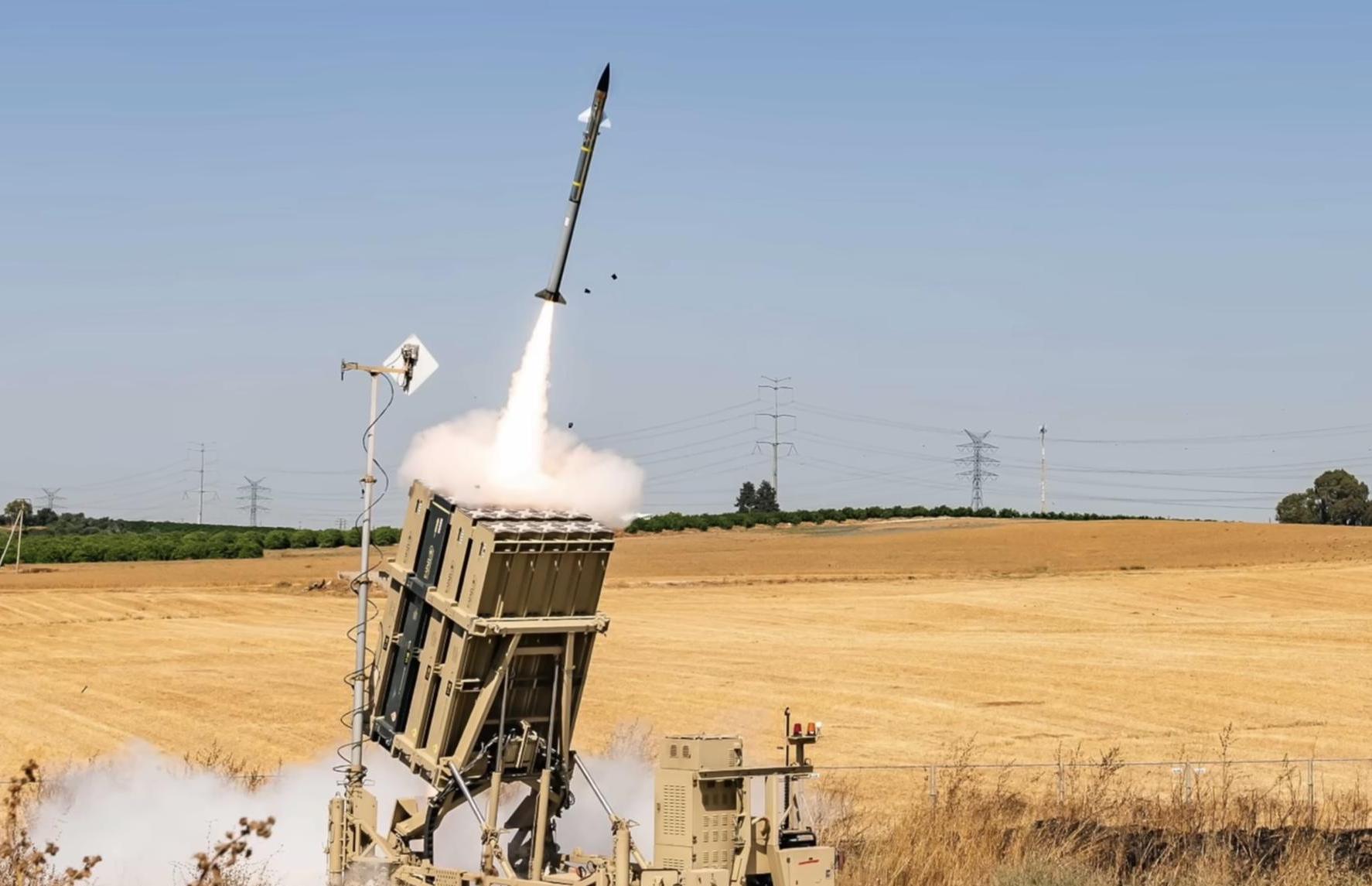
Iron Dome

Despite the world’s frustration over its conduct, Tel Aviv is increasing market share and locking states into strategic relationships

Reporting | Military Industrial Complex

Stavroula Pabst

Jul 01, 2026

Even as frustrations mount over Israeli military campaigns across the Middle East, governments keep buying weapons from Israel — making it one of the world’s largest arms exporters.

As experts tell Responsible Statecraft, Tel Aviv uses these weapons sales to lock countries into long-term, strategic relationships that make recipients less likely to hold Israel accountable for their behavior in Gaza and Lebanon or in its West Bank policies. They stress that sustained U.S. support, including billions in military grant aid each year and the co-development of many Israeli weapons systems, helps make this all possible.

A weapons exports boom

Following October 7, Israel’s defense industry has exploded: the number of startups there nearly doubled, from 160 in July 2024 to 312 in April 2025. Its arms exports, which account for 75% to 80% of all Israeli weapons production, have grown in tandem. According to Stockholm International Peace Research Institute (SIPRI) data published in March, Israel was the world’s seventh-largest arms exporter between 2021 and 2025, surpassing the United Kingdom.

Tel Aviv raked in a record $19.2 billion from arms exports in 2025, a jump up from the $14.8 billion it made the previous year.

Newsletter

Subscribe now to our weekly round-up and don’t miss a beat with your favorite RS contributors and reporters, as well as staff analysis, opinion, and news promoting a positive, non-partisan vision of U.S. foreign policy.

Invalid emailEnter your email

Arms sales as political leverage

As Seth Binder of the American Committee for Middle East Rights (ACMER) told RS, “arms deals are expensive and often create a long tail to negotiate, complete, and fulfill over the life of [a given] contract.”

Over time, these contracts provide Israel a way to build relationships that other governments have strong incentives to preserve. Exports can “entrench relationships that constrain others’ ability to hold [Israel] accountable,” Daniel Levy, the president of the U.S./Middle East Project (USMEP), said.

A growing global demand for weapons is playing to Israel’s advantage. A case in point is Europe. Spurred by fears of Russia and U.S. pressure to increase defense spending, some European countries are buying Israeli weapons to supplement their fraught rearmament efforts. The purchases continue despite disquiet across the continent over Israel’s actions in the Middle East, which have led some European Union countries to pursue arms embargoes or suspend export licenses to Israel.

Germany signed multi-billion euro deals for the Israeli-made Arrow-3 missile defense system, Heron drones, and Spike anti-tank missiles last year. Greece spent about $740 million on 36 Precise & Universal Launching System (PULS) rocket artillery systems in December. Romania signed a deal worth about $2.3 billion for Spyder air defense systems earlier this week and is now set to acquire its own version of Israel’s Iron Dome air defense system.

Outside the EU, the value of U.K. arms- and ammunition-related imports from Israel skyrocketed from just $508,343 in 2020 to nearly $7.97 million in 2025 — a nearly 1,500% increase. A senior Israeli defense official told Reuters in early June that European countries are expected to order more air and missile defense systems soon.

But depending on Israel for critical defense needs may prove risky. “A government that might otherwise respond to public demands for sanctions or arms embargoes [against Israel] now faces the prospect of degrading its own air defense…if it does so,” Levy told RS.

Similar dynamics are playing out among Abraham Accords nations; Israeli exports to those countries jumped fivefold between 2023 and 2025.

“No one has any illusions that Israel is popular right now in [the Abraham Accords] countries,” an Israeli diplomat told The Economist last fall. “But their governments have made long-term investments in their defense ties with Israel, and they’re not about to change course.”

More broadly, continued prospects for arms sales turn Israel’s controversial military actions — in which Israeli defense technologies are being used against civilians — into a commercial selling point. As Omar Shakir, the executive director of DAWN, told AP last month, Israeli defense and technology companies have been “able to parlay the use of their products in Gaza to attract more business.”

Israel’s arms exports blitz: fueled by Washington

Israel’s weapons industry is booming in part because “the U.S. has long subsidized it,” Binder told RS.

Israel receives Foreign Military Financing from Washington, which provides funds for acquiring American weapons equipment, training, and adjacent services. The support is even more direct through what is called Off-Shore Procurement (OSP), which Binder said allows Israel to “use a portion of its Foreign Military Financing provided by the United States to pay for [its own] arms.”

Although OSP is set to phase out by 2028, Binder told RS that “Israel’s arms industry has arguably established itself as a competitor” to America’s weapons sector through the program.

Meanwhile, Israeli firms have gained a competitive edge, thanks to what former State Department official Josh Paul calls a “larcenous” approach toward U.S. intellectual property. “Many technologies developed by U.S. industry are [simply] re-developed and re-packaged by Israeli companies,” he told RS.

American support is often evident in the export deals themselves, where, for example, the Arrow-3 system Germany bought from Israel was co-developed with the U.S., which helped fund its development. Because of Washington’s role in the program, U.S. approval was required before the initial sale could proceed.

Altogether, the International Trade Administration observed that U.S. assistance has “turned the Israeli military industry and technology sector into one of the largest exporters of military capabilities worldwide.”

Currently, a series of congressional proposals under consideration — including one that Israeli Prime Minister Benjamin Netanyahu has endorsed as his “personal plan” — stands to give Israel’s defense sector a deeper foothold in the U.S. market.

Indeed, section 219 (previously section 224) of the National Defense Authorization Act (NDAA) for FY 2027 would move to more closely integrate the U.S. and Israeli militaries. The provision would further incorporate Israeli technologies and companies into U.S. supply chains, likely creating more opportunities to sell its weapons.

As Paul told RS, Israel being positioned “to become a supplier to the U.S. military is just a further example of [it] using [its arms] sector as a tool of influence.”

Stavroula Pabst

Stavroula Pabst is a reporter for Responsible Statecraft.

The views expressed by authors on Responsible Statecraft do not necessarily reflect those of the Quincy Institute or its associates.

Israeli jets entered Iran to attack negotiator plane after Islamabad talks, NYT reports

July 3, 2026

Washington warned Tehran that Israel could target Araghchi as Ghalibaf’s plane made emergency landing

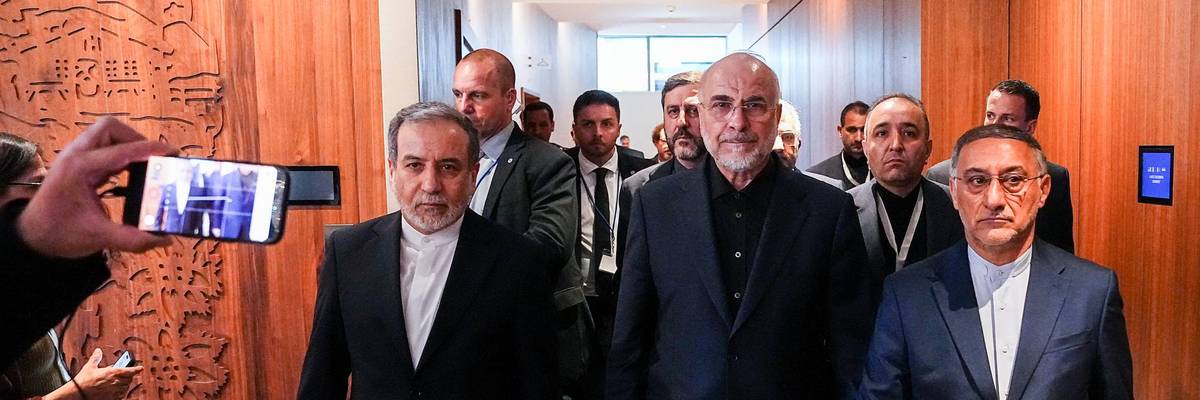
Iranian Parliament Speaker Mohammad Bagher Ghalibaf and Foreign Minister Abbas Araghchi aboard a flight to Zurich ahead of negotiations on 21 June 2026 (AFP)

MEE staff

Published date: 3 July 2026

Israeli fighter jets entered Iranian airspace as Tehran’s top negotiators were engaged in diplomatic efforts with the United States, according to a New York Times report that says American officials feared Israel was plotting to kill two senior Iranian officials involved in peace negotiations.

US officials became increasingly concerned that Israel could target Iranian foreign minister Abbas Araghchi and parliament speaker Mohammad Bagher Ghalibaf, on their return to Iran after peace negotiations between Washington and Tehran in Pakistan, the report published on Wednesday said. 

According to the New York Times, Washington was concerned that an Israeli assassination attempt could derail the talks and it asked regional countries to warn Iran about the potential threat.

“Any attempt to kill the Iranian leaders would end the talks and reignite the fighting,” American officials told the newspaper.

While Washington increasingly focused on securing a ceasefire and a diplomatic framework, Israel remained sceptical of negotiations that fell short of its broader war aims. 

New MEE newsletter: Jerusalem Dispatch

Sign up to get the latest insights and analysis on Israel-Palestine, alongside Turkey Unpacked and other MEE newsletters

The New York Times reported that concerns peaked during negotiations that began in earnest in April, when Araghchi and Ghalibaf emerged as key interlocutors in talks aimed at securing a ceasefire and laying the groundwork for a longer-term agreement.

A US official and a Middle East official told the newspaper that the Trump administration learned that Ghalibaf was on an Israeli targeting list and asked Israel to refrain from any action against him.

Iranian officials quoted by the newspaper said Tehran also sought assurances from Washington, through Pakistani and Qatari intermediaries, that Israel would not target members of the Iranian negotiating team.

The concerns were deepened during an April trip to Islamabad, where Ghalibaf was scheduled to meet US Vice President JD Vance.

According to the report, Pakistani fighter jets escorted the Iranian delegation’s aircraft to and from Islamabad because of fears that Israel could attempt to assassinate senior Iranian officials. 

On the return journey, Iranian security services informed the aircraft carrying Ghalibaf that intelligence indicated Israel was preparing an attack and that two Israeli fighter jets had entered Iranian airspace from the western border near Iraq, the newspaper reported, citing Iranian officials.

Mahdi Mohammadi, a senior adviser to Ghalibaf who accompanied the delegation, confirmed the account on social media.  

Iran turns to Pakistan land corridor as US naval pressure disrupts Gulf trade

Read More »

The aircraft subsequently made an emergency landing in Mashhad, and members of the delegation completed the journey to Tehran by land, travelling for approximately eight hours, the newspaper said.

“Today Mr. Ghalibaf and Mr. Araghchi, and other members of the negotiating team, have put their lives on the line knowing the grave security risks and this is called a real sacrifice, not political manoeuvring,” Iranian lawmaker Mohsen Zanganeh told local media in April. 

The newspaper reported that while the United States pursued negotiations that ultimately led to a framework agreement in June, Israeli officials viewed the emerging deal as insufficient because it did not achieve objectives such as regime change in Iran, dismantling Tehran’s regional allies and significantly degrading its missile capabilities.

A spokeswoman for the Israeli Embassy in Washington declined to comment to the newspaper on the allegations.

Asked about the reported warnings to Iran, a US official told the New York Times that President Donald Trump wanted the peace process “to play out” and noted that talks between American and Iranian delegations were continuing.

Despite the reported threats, Araghchi and Ghalibaf continued travelling for negotiations, including meetings in Qatar and a subsequent round of talks in Switzerland in June with Vance and other members of the US delegation, according to the report.

‘We Should Go to Court’: Khanna Says Latest US Bombings of Iran a ‘Blatant Violation’ by Trump

June 29, 2026

Ro Khanna 1/15/26

Rep. Ro Khanna, D-Calif., talks with reporter after the last votes of the week outside the U.S. Capitol on Thursday, January 15, 2026.

(Photo: Tom Williams/CQ-Roll Call, Inc via Getty Images)

“Trump must stop this war now—or we will take him to court to compel him to do so.”

Jon Queally

Jun 28, 2026

Democratic Congressman Ro Khanna on Sunday reiterated his position that new bombings of Iran by the US military over the weekend are a direct violation of a War Powers Resolution passed by Congress earlier this month and said legal action was in the works to challenge the president’s ability to carry on with the unprovoked war he first launched alongside Israel in February.

“These strikes are a blatant violation of the War Powers Resolution that we passed,” Khanna said in a social media post Saturday after Trump acknowledged strikes on numerous Iranian targets. “Trump must stop this war now—or we will take him to court to compel him to do so.”

RECOMMENDED…

President Donald Trump sits for an interview with Lara Trump

Watch: Trump Admits ‘We Shouldn’t Have Been in Iran’

Rally to Protest Trump Bombing of Iran

Trump Bombs Iran for Second Night After Complaining Talks Have ‘Taken Too Long’

In a Saturday statement on his Truth Social platform, Trump said the US had “struck Iranian missile and drone storage locations, and coastal radar sites, for violating the Cease Fire Agreement, AGAIN!”

“It is very possible that they will never learn!” the president exclaimed. “There may come a point when we are no longer able to be reasonable, and will be forced to militarily complete the job that we very successfully started. If that happens, the Islamic Republic of Iran will no longer exist!”

The latest direct exchange of hostilities—that began with US bombings of Iranian targets Friday and included Iran targeting US allies in Bahrain and Kuwait on Sunday—come over lingering disagreements about how vessels will or will not pass through the Strait of Hormuz.

No paywall. No ads. No billionaire owner. Just you.

Common Dreams is funded exclusively by readers tired of news beholden to corporate interests. Our monthly supporters are the backbone of what makes that possible. Help us reach our Mid-Year Campaign goal of 450 new monthly supporters by July 1.

about:blank

“Congress passed the first War Powers Resolution in history, legally compeling an end to war on Iran,” the anti-war group Just Foreign Policy said following Friday’s strikes. “This means Trump’s strikes today are an unprecedented Constitutional violation **Trump must be taken to court** to honor the American people’s demand that we exit this war — NOW.”

Iran Foreign Minister Abbas Araghchi said Sunday that “interference in [the Strait], any attempt to establish new or separate arrangements from those currently being carried out by the Islamic Republic of Iran, will only lead to further complications, delay the reopening of the strait of Hormuz, and increase the level of tension.”

Araghchi called for a regional agreement to settle the issue of passage through the Strait, but indicated the US should have no role in determining the outcome of the settlement. On Saturday, the Islamic Revolution Guard Corps (IRGC) said that the US—“whose very nature is characterized by breaking commitments and violating agreements”—was guilty of firing on coastal targets but that such attacks would not deter the Iranian military from exerting control over the Strait.

“Henceforth,” said the IRGC, “vessels found to be in violation will be dealt with more firmly than before.”

On June 23, a 50-48 vote in the Senate saw a war powers resolution pass the upper chamber after the House also passed a similar resolution on June 3 to bring an end to the war started by the US and Israel on February 28. But as Khanna explained Sunday, speaking with journalist David Sirota, these votes have not been enough to curb the president’s actions.

🚨NEW: Congress just passed resolutions to block Trump from continuing the Iran War. The resolutions carry the force of law under the text of the 1973 War Powers Act. Now, @RoKhanna tells me he is working to organize lawmakers to bring an historic court case to enforce the law. pic.twitter.com/IBH7dbKcxG
— David Sirota (@davidsirota) June 28, 2026

Asked by Sirota what he would be doing to compel Trump to adhere to the congressional opposition to Trump’s ongoing aggression against Iran, Khanna said, “we should go to court.”

Noting that former Republican Congressman Tom Campbell, back in 1999, had taken former President Bill Clinton to court for violating a War Powers Resolution during the US-backed NATO bombing of Yugoslavia, Khanna said he is preparing to follow a similar course.

“This is something that we should try to enforce,” Khanna said. “And I’m working with my colleagues to see how we can get a group to take this case to the courts.”

No ‘Total Victory’: Hezbollah, Iran are Defeating ‘Greater Israel’ Project Once and for All

June 28, 2026

The Palestine Chronicle, June 26, 2026

Hezbollah’s Secretary-General Naim Qassem and Israeli Prime Minister Benjamin Netanyahu. (Design: Palestine Chronicle)

By Robert Inlakesh

The Iranian-led Axis of Resistance has used its joint power in order to successfully confront all the challenges before it.

The goal of the war on Iran was to pave the way towards “Greater Israel” and total US-Israeli dominance through achieving regime change, yet the outcome of the war may have just buried this project forever.

Hezbollah’s unprecedented comeback, combined with Iran’s impressive performance, has shifted the balance of power so dramatically that the Israelis are being cut back to size.

From the outset of the attack on Iran, it was clear that the goal was to overthrow the Islamic Republic and, by default, achieve the “total victory” across “seven fronts” that Israeli Prime Minister Benjamin Netanyahu has been pledging to reach for over two years. Very quickly, Iran’s military response, followed by its carefully calibrated strategy involving its regional allies, threw the goal of regime change into the meat grinder.

In a recent opinion poll conducted by the Israeli public, roughly 92% of the population said they believe that Iran has emerged as the winner of the war. When we compare this to the various opinion polls conducted following Israel’s initial 12-day war in June of 2025, the outcome couldn’t be more stark. The majority of Israelis not only supported the war on Iran last year, but were also satisfied with the way it was managed.

This time around, Iran is using the threat of continued hostilities and the closure of the Strait of Hormuz as its weapons to secure a victory that has become a political nightmare for the Israelis.

Under the current Memorandum of Understanding (MoU), the US has ceded to Iran on countless points– Tehran will rake in billions in fees collected from those transiting the Strait of Hormuz, it will get its frozen assets, have all the sanctions lifted, and even get access to a $300 billion reconstruction fund.

If these pledges were to be met by the United States, then Iran would be able to thrive economically for the first time since its Islamic Revolution in 1979. However, the economic benefits are not even the biggest achievement.

While the Israelis managed to ride on the wave of delusion, in using their blows dealt to Hezbollah back in 2024 as evidence of a historic victory against the Iranian-led Axis of Resistance, this narrative has now collapsed. Iran’s Islamic Revolutionary Guard Corps (IRGC) has managed over the past months to effectively deter Israeli actions inside Lebanon through the threat of force. Even if the Israelis seek to challenge this, it has for now successfully achieved a deterrence equation whereby Tel Aviv fears bombing the Lebanese Capital.

On the ground, Hezbollah has managed to deal devastating blows to the Israeli military, dragging it deep into southern Lebanon and using asymmetric warfare tactics that have left the Israeli public disgusted with its leadership and led to a loss of confidence in the army’s ability to defend the northern settlements.

A reality that has now started to set in, as Israel repeatedly fails to capture areas such as the Ali Al-Taher Hills, instead resorting to figuring out a method that will allow them to extract the charred remains of their soldiers, trapped inside destroyed tanks that still remain inside Hezbollah-controlled territory.

The Iranian-led Axis of Resistance has used its joint power in order to successfully confront all the challenges before it. This includes the coordination with Yemen’s Ansarallah to close the Bab al-Mandab Strait to Israeli shipping, even threatening to blockade it completely in the event of the war escalating once again.

Arab Gulf States have also taken notice of the changes in regional power dynamics, with the neighboring nations attempting to repair their relations with Tehran. This even appears to be including the UAE, which was actively bombing Iran only months ago. Now the model of Oman, which remained somewhat neutral – some may say they leaned towards Iran – during the conflict, appears to be the most favorable one amongst the GCC States.

Israel had hoped that the war would collapse, or at the very least severely weaken the Iranian State, which would lead to all of the Arab States lining up to normalize and build closer relations with it. Instead, this war appears to be deterring future normalisation efforts.

The Greater Israel Project, of expanding the borders of the Israeli regime, depended upon the collapse of the Iranian-led Axis of Resistance, or at the very least its weakening. The only real option that could help Israel survive today is securing a Two-State Solution, but even that could lead to internal chaos because of how radicalized Israeli society has become.

The Two-State Solution is the pro-Israel outcome. The only other option is that they continue to fight endless wars they cannot win, until they reach the point of total collapse, whether that be at the hands of resistance forces or their own public. Any sane nation would see the writing on the wall and embrace diplomacy, but we are not dealing with a sane nation.

– Robert Inlakesh is a journalist, writer, and documentary filmmaker. He focuses on the Middle East, specializing in Palestine. He contributed this article to The Palestine Chronicle.

US violates ceasefire, launches strikes against Iranian sites in the Strait of Hormuz

June 27, 2026

WSWS, Kevin Reed, 27 June 2026

A small motorboat passes anchored vessels in the Strait of Hormuz off Bandar Abbas, Iran, Thursday, June 11, 2026. [AP Photo/Amirhosein Khorgooi]

The US launched a new round of strikes on Iran on Friday in the most explicit indication yet that the recently signed Memorandum of Understanding (MOU) has collapsed into an escalating and open conflict. U.S. Central Command (CENTCOM) said its aircraft struck Iranian missile and drone storage locations and coastal radar sites near the Strait of Hormuz.

A report by Al Jazeera said the US strikes were near the Iranian port of Sirik. Al Jazeera also reported that Iran said it had “succeeded in neutralizing” the attack and pledged to retaliate in a statement shared by the ISNA news agency. The statement said, “We emphasize that this aggression will not go unanswered, and our response will be swift and decisive at a time and place of our choosing.”

An Iranian parliamentary security official, Ebrahim Azizi, accused Washington of attacking “in the middle of negotiations once again” and said the US president had shown no commitment to negotiation or ceasefire principles.

According to other reports, the US strikes were carried out in response to Iran’s launching of at least four one-way attack drones at a commercial vessel on Thursday, with one drone striking the ship’s upper deck and damaging it before the vessel continued its course.

CENTCOM confirmed the targets and presented the strikes as a limited but forceful response meant to punish the Iranian attack and deter further action. The reports indicate that the US strikes were not random but targeted the command-and-control infrastructure surrounding Iran’s maritime reach.

The exact physical damage remained unclear, and both CENTCOM and the New York Times noted that the full extent of the damage had not yet been determined. The news reports said the choice of targets was intended to send a message that Washington could hit the systems enabling drone operations and surveillance in the Gulf without widening the war.  

However, the response by President Trump and Vice President Vance was both threatening. Trump said Iran’s drone launch amounted to a violation of the ceasefire framework. He then portrayed the US strikes as responding to Iranian aggression rather than initiating escalation. JD Vance gave the direct warning, “… violence will be met with violence.”  

Vance added that Iran had signed the ceasefire agreement and that if Tehran had disagreements over implementation, it could “pick up the phone,” but that military retaliation would follow if the agreement was challenged. 

Iran said the drone strike was part of its effort to control passage through the Strait of Hormuz and warned that ships using routes outside Tehran’s approved framework would not be guaranteed safe passage or insurance coverage.

More specifically, the statement quoted by CBS said, “Any passage through routes outside the framework designated by PGSA [Persian Gulf Strait Authority] will not be covered by safe passage guarantees and will not be entitled to insurance coverage or related liabilities.”

Other reporting on the same incident says Iranian officials framed the move as a response to insecurity in the waterway and to what Tehran describes as continued US aggression, with Iran later warning vessels to use only routes authorized by Tehran.

Iran has once again rejected the American claim to maritime authority in the Strait of Hormuz. Reuters reported that Tehran insisted it had the right to control shipping there and warned Gulf states not to side with Washington after the cargo ship incident.

The Iranian line is that the strait lies within a contested security zone and that the US and its allies are using “freedom of navigation” language to mask coercive control over a vital strategic waterway. The dispute over the strait is a key issue over whether the MOU means anything in practice.

The reported drone attack itself centered on a commercial vessel, identified in some reporting as the Ever Lovely, which was struck in the Strait of Hormuz near Oman. Trump said three other drones were intercepted, and the ship, while damaged, remained able to continue. AP and Reuters reported that the event led maritime authorities to pause efforts to move ships out of the area, indicating the immediate consequences for commercial traffic.

The MOU, signed only a week earlier, has now shown itself to be a piece of paper with little meaning in a war that has not ended. The language of the deal, including the phrase that Iran would “make arrangements using its best efforts” to ensure safe passage, was ambiguous from the start and left room for interpretation, and it has now become a mechanism for the collapse of the entire MOU.

Reports over the last week have shown that, far from receding, the conflict is broadening with Israeli attacks continuing in Lebanon, and Gaza remains under near-constant assault despite talk about a ceasefire and peace agreements. Just as it has in Gaza, the ceasefire framework contained in the MOU is emerging as a formal cover for the continuation of the imperialist war by other means.

On Friday, Israeli Defense Forces continued ground and aerial operations in southern Lebanon. Actions included combing operations in the border town of Ain Arab, advancing military vehicles toward Haris, a drone strike near Qabrikha and airstrikes near Nabatieh. Israel also dropped leaflets over the town of Mansouri ordering residents to evacuate. The military described this as a “reminder” to keep out of the area for civilian safety.Available from Mehring BooksThe struggle against imperialism and for workers’ power in IranA pamphlet by Keith Jones

Despite US-led negotiations, Israeli warplanes launched two waves of airstrikes targeting the outskirts of Nabatieh al-Fawqa. Following talks in Washington D.C., Israel, Lebanon and the US signed an initial trilateral framework agreement on Friday for restoring sovereignty and establishing “pilot zones” in which the Lebanese Armed Forces will take control.

Prime Minister Benjamin Netanyahu and Defense Minister Israel Katz said Israel will not withdraw its forces from occupied security zones until Hezbollah is disarmed. Hezbollah leadership rejected prior US-brokered deals and maintained that Israel must fully withdraw unconditionally.

Taken together, Friday’s actions show that the ceasefire is highly fragile, if existing at all, and that Israel continued to use military force to pressure villages near the border. The result was continued civilian deaths, displacement and an ongoing clash between formal diplomacy and battlefield realities.

The situation in Gaza, which has been moved off the front page of the news since the war with Iran began on February 28, is even more catastrophic. Palestinian and UN-linked reports say Israel has killed roughly 1,000 Palestinians since the ceasefire was announced, while Gaza’s Government Media Office says Israel has carried out 3,269 violations, killed 992 Palestinians and wounded 3,144 others.

Aid delivery has remained far below what was promised, with only 52,740 trucks entering Gaza out of the 147,000 required, according to the same reporting. These numbers show that the “agreement” has disguised the sustained Israeli campaign of attrition against Palestinians.

The WSWS has explained that the Gaza arrangement was designed to turn the Mediterranean coast into a site for speculative reconstruction once Israel had reduced Gaza City and other towns to rubble.

In this respect, Trump’s “Board of Peace” has served as political theater intended to legitimize a plan of conquest, displacement and future real estate plunder. The same logic now appears in the US-Iran memorandum, which functions less as peace than as an unstable pause inside a larger war project.

The contradictions at the core of the Middle East conflict remain unresolved. The US and Israel are pursuing a strategy aimed at subjugating the region through siege, bombing and occupation. The events on Friday confirm that the military conflict is moving into another stage, not away from it.

Only the independent mobilization of the working class across the Middle East and within the imperialist centers in a unified struggle against war and for socialism can break the cycles that are leading to a Third World War.

Despite Trump Threats, Iranian Foreign Minister Declares ‘Major Progress’ in Peace Talks

June 22, 2026

Iranian delegation to peace talks with US

The Iranian delegation led by Mohammad Baqer Ghalibaf, speaker of the Iranian Parliament, arrives to meet with the Pakistani delegation led by Prime Minister Shehbaz Sharif on June 21, 2026 in Obbuergen, Switzerland.

(Photo by Hamed Malekpour/Getty Images)

Abbas Araghchi, Iran’s top diplomat, specifically welcomed the announcement of a “deconfliction cell” aimed at “ensuring the termination of military operations in Lebanon.”

Jake Johnson, Common Dreams, Jun 22, 2026

Iran’s top diplomat said late Sunday that peace negotiations in Switzerland have produced “major progress” despite US President Donald Trump’s belligerent military threats and Israel’s continued assault on Lebanon, both of which have risked derailing the high-stakes talks.

Abbas Araghchi, Iran’s foreign minister, credited “tireless Pakistani and Qatari mediation” with securing commitments to establish a “deconfliction cell” to ensure “the termination of military operations in Lebanon,” as required under the recently signed memorandum of understanding (MOU).

RECOMMENDED…

Iranian Foreign Ministry Spokesperson Esmail Baghaei speaks at a press conference.

Warning of US Unreliability and Israeli ‘Sabotage,’ Iran Refutes Trump Claim of Peace Deal

IRAN-US-ISRAEL-WAR

‘Welcome News’: Despite Netanyahu Sabotage Efforts, US and Iran Reach Interim Deal to End War

Araghchi added that negotiators agreed to an end to the US blockade on Iran, the release of some of Iran’s frozen assets, and a “major reconstruction and development plan” for Iran, whose delegation reportedly left the Swiss negotiating venue on Sunday in response to Trump’s threat to assassinate Iranian diplomats and “take over” the Middle East country. The threats violated the terms of the MOU, which requires parties to “refrain from the threat or use of force against each other.”

In a joint statement late Sunday, the governments of Pakistan and Qatar said that negotiators agreed on “a roadmap towards reaching a final deal within 60 days, laying the foundation for the immediate commencement of further technical talks.

“In addition, a communication line between the parties has been formed… to avoid incidents and miscommunication with the aim of safe passage for commercial vessels through the Strait of Hormuz,” the statement continued. “The mediating parties will continue to do their utmost to ensure that the negotiations continue to be conducted in a constructive atmosphere with the aim of reaching a final deal.”

No paywall. No ads. No billionaire owner. Just you.

Common Dreams is funded exclusively by readers tired of news beholden to corporate interests. Our monthly supporters are the backbone of what makes that possible. Help us reach our Mid-Year Campaign goal of 450 new monthly supporters by July 1.

about:blank

🔊PR No: 1️⃣5️⃣1️⃣/2️⃣0️⃣2️⃣6️⃣

Joint Statement by the State of Qatar and the Islamic Republic of Pakistan Regarding the Conclusion of Lake Lucerne Summit, First High-Level Committee Meeting with Participation of the United States of America and the Islamic Republic of Iran pic.twitter.com/2G3PAf7LVY
— Ministry of Foreign Affairs – Pakistan (@ForeignOfficePk) June 22, 2026

The optimistic comments from Iran’s foreign minister and mediators came after the first round of formal talks in Switzerland got off to a shaky start, with Iran’s delegation postponing its arrival due to a deadly barrage of Israeli airstrikes in southern Lebanon late last week.

Israel’s leadership, which is not a party to the peace negotiations, has refused to end its occupation of Lebanon, a major obstacle in the way of a final deal to end the war on Iran that the US and Israel launched in late February. Iran has said the Trump administration must force the Israeli government to end its assault on Lebanon.

In a social media post on Sunday amid the negotiations in Switzerland, Israeli Defense Minister Israel Katz declared that “Israel has no intention of withdrawing from the Beaufort, which is an integral part of the security zone in Lebanon and essential for the defense of the Galilee settlements and IDF forces.”

“As Prime Minister [Benjamin] Netanyahu and I have clarified—Israel will not withdraw from the security zone in Lebanon,” Katz added.

𝐄𝐝𝐢𝐭𝐨𝐫𝐢𝐚𝐥: 𝐈𝐬𝐫𝐚𝐞𝐥 𝐦𝐮𝐬𝐭 𝐛𝐞 𝐬𝐭𝐨𝐩𝐩𝐞𝐝 𝐛𝐞𝐟𝐨𝐫𝐞 𝐢𝐭 𝐝𝐞𝐬𝐭𝐫𝐨𝐲𝐬 𝐚 𝐡𝐚𝐫𝐝-𝐰𝐨𝐧 𝐜𝐡𝐚𝐧𝐜𝐞 𝐚𝐭 𝐌𝐢𝐝𝐝𝐥𝐞 𝐄𝐚𝐬𝐭 𝐩𝐞𝐚𝐜𝐞

June 21, 2026

Dawn, 21 June 2026

THE fate of Lebanon could determine whether the recently signed MoU between the US and Iran survives.

True to form, Israel is doing all possible to ensure the nascent peace deal is destroyed before the proverbial ink dries, as it continues to mercilessly pound Lebanon. While a supposed ceasefire was announced on Friday, Israeli attacks in Lebanon continued yesterday, with a large number of casualties reported, as the Zionist state hit both the southern and eastern parts of the Arab state in apparent pursuit of its arch-foe Hezbollah.

Tragically, a large number of non-combatants have also been killed in Tel Aviv’s murderous forays, with even steadfast supporters like US President Donald Trump expressing displeasure over its bloodstained tactics.

But the Israeli leadership seems very clear on what it wants to do. For example, the Israeli prime minister has refused to end the occupation of southern Lebanon, while the extremist national security minister has said that “Lebanon must burn”. If this happens, the Iran-US MoU — and the entire region including Israel— may also burn.

At one end of the spectrum, the signatories of the MoU, as well as nations such as Pakistan, which have played key roles in finding a diplomatic off-ramp, are again actively trying to take the negotiation process forward. At the other end, Israel is hell-bent on sabotaging the process.

The international community, principally the US and Europe, must be firm with their friends in Tel Aviv and tell them that their destabilising behaviour must end. The past few months have proven that the biggest threat to Middle East peace is not Iran, but Israel, which has attacked one sovereign state after the other, along with carrying out the Gaza genocide. It must be stopped before it destroys a hard-won chance at peace.

While nearly all US administrations in the past — as well as European states — have mollycoddled Israel and ignored its atrocious behaviour, this time the tone in Washington seems to be hardening. For example, US Vice President J.D. Vance has told Israel to “wake up and smell the reality of the situation”, with reference to Tel Aviv’s displeasure with the Iran deal.

But tough words will not be enough. If the US wants Israel to change its bad behaviour, it must withhold the funds and weapons that are needed by the Zionist war machine to keep functioning. Israel has hardly any friends left in the world, and if the US starts asserting itself, Tel Aviv should listen.

The MoU is unambiguous: the ceasefire must apply to all fronts, including Lebanon. Either Israel must silence its guns and withdraw from all of Lebanon, or face isolation and boycott from the international community until it mends its ways.

US intelligence warns Israel could undermine Iran peace deal: Report

June 20, 2026

MEM, June 19, 2026 at 7:22 pm

Benjamin Netanyahu, Israel's prime minister in Washington, DC, US, on Monday, Sept. 29, 2025. [Will Oliver/EPA/Bloomberg via Getty Images]

Benjamin Netanyahu, Israel’s prime minister in Washington, DC, US, on Monday, Sept. 29, 2025. [Will Oliver/EPA/Bloomberg via Getty Images]

  • US intelligence agencies have warned the Trump administration that Israeli Prime Minister Benjamin Netanyahu is likely to take actions that could undermine President Donald Trump’s efforts to secure a lasting peace agreement with Iran, according to a report on Friday.

Citing current and former US officials familiar with intelligence assessments, The Washington Post reported that Israel appears determined to continue military operations against Hezbollah in Lebanon despite provisions in the recently signed US-Iran memorandum of understanding calling for an end to military operations on all fronts, including Lebanon.

Even short of escalation, Israel’s refusal to withdraw troops from southern Lebanon is likely to doom the fragile accord, a US official told the Post.

“Continuing to occupy part of Lebanon is a recipe for disaster,” the official said. “Without a full Israeli withdrawal, the likelihood of resumed hostilities between the (Israeli military) and Hezbollah is all but certain.”

READ: Israel, Hezbollah agree to ceasefire starting Friday, US official says

Vice President JD Vance on Thursday warned Israel against alienating its “only powerful ally,” saying Trump “is the only head of state in the entire world who is sympathetic to the nation of Israel at this moment in time.”

Separately, a US official confirmed to Anadolu Agency that Israel and Hezbollah agreed to a ceasefire to take effect at 4 pm local time (1300GMT) Friday.

Earlier Friday, at least 31 people were killed and several others injured in a series of Israeli attacks on southern and eastern Lebanon, according to Lebanon’s official National News Agency.

According to the latest official figures, Israel’s military offensive in Lebanon, which began on March 2, has killed 3,912 people, injured 11,873 others, and displaced more than one million residents.