Posts Tagged ‘Iran’

Iran’s Supreme Leader Says Region Will No Longer Be a ‘Safe Haven’ for US Military Bases

May 27, 2026

Ayatollah Mojtaba Khamenei released a message marking the Hajj season

by Dave DeCamp | May 26, 2026 at 8:41 pm ET | Iran

Iranian Supreme Leader Ayatollah Mojtaba Khamenei said in a written statement on Tuesday that the US will no longer have a “safe haven” in the Middle East for its military bases, remarks that come after the Iranian military struck US bases across the region during the US-Israeli bombing campaign against Iran.

In the statement, released to mark the Hajj season, when Muslim pilgrims travel to Mecca, Saudi Arabia, Khamenei addressed other Muslim nations in comments that appeared to be directed at the Gulf Arab states that host US bases and were struck by Iranian missiles and drones.

Ayatollah Mojtaba Khamenei (PressTV)

“I, with sincerity and purity of intention, invite all Islamic countries and governments to friendship and cooperation in goodness, so that by working together we may take steps toward the advancement of the Islamic Ummah and the resolution of the Islamic world’s problems,” Khamenei said, according to an English translation of the statement posted on his website.

“What is certain in this regard is that the hands of time will not turn back, and the nations and lands of the region will no longer serve as shields for US bases. The United States not only will no longer have a safe haven for its mischief and for establishing military bases in the region but day by day, it is growing more distant from its former status,” he added.

The Iranian leader also referenced Israel, saying that the “shaken Zionist regime and the cancerous tumor of Israel are likewise approaching the final stages of their wretched existence.”

Khamenei has yet to make a public appearance since replacing his father, Ali Khamenei, who was killed by an Israeli strike alongside other members of his family on February 28, the first day of the joint US-Israeli bombing campaign. Western media reports have said that Mojtaba Khamenei was wounded in the strike but that he is still playing a critical role in shaping Iran’s war strategy.

Congressional report details losses of 42 US aircraft in Iran campaign

May 23, 2026

Anwar Iqbal, Washington, May 23, 2026 Updated about 4 hours

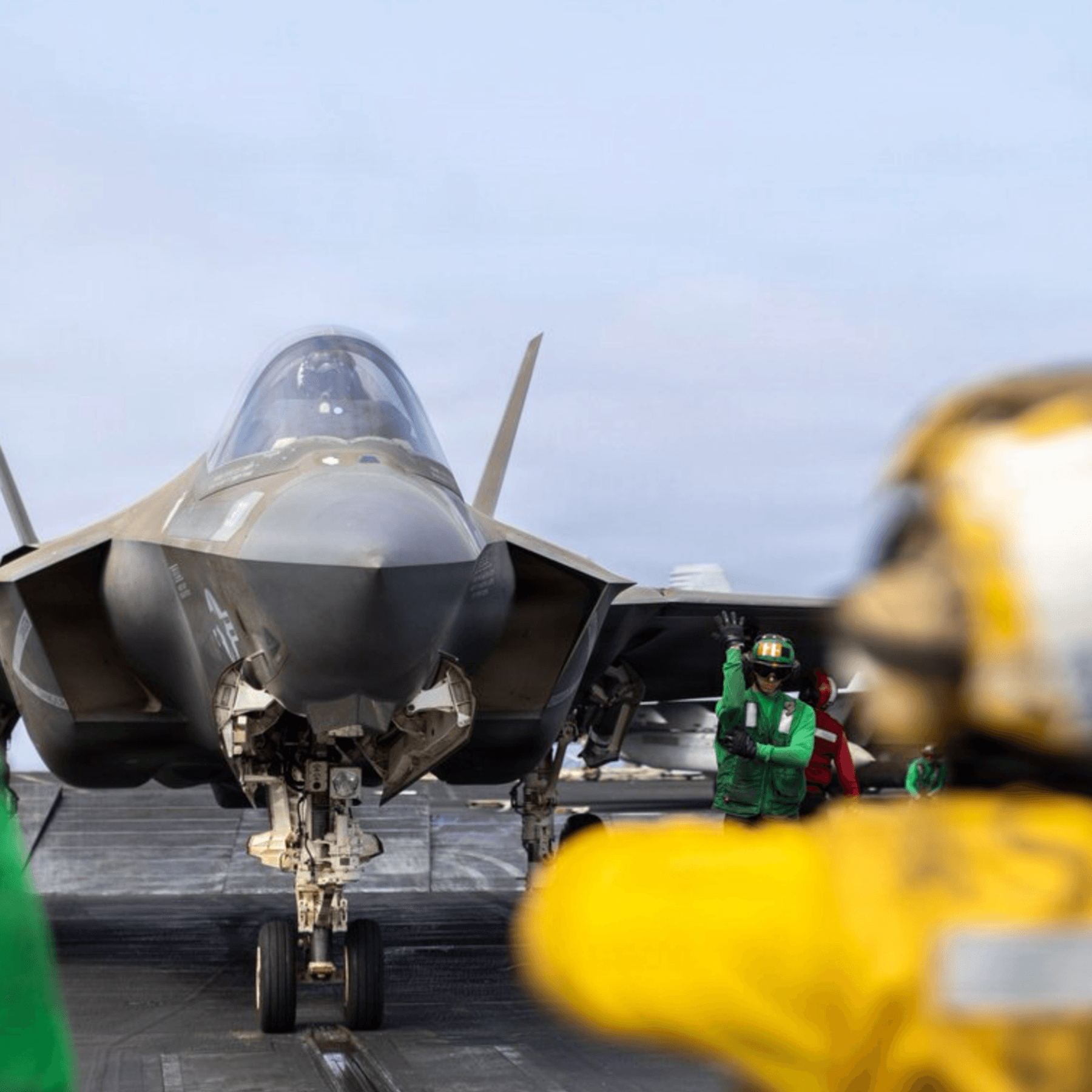
WASHINGTON: A recent report by the Congressional Research Service (CRS) says the United States lost or damaged 42 military aircraft during Operation Epic Fury, the 40-day military campaign against Iran that began on February 28, 2026.

The report, released last week and circulated by several US media outlets on Friday, is believed to be the most detailed public accounting so far of US aircraft losses in the conflict. However, the Pentagon has not yet issued its own comprehensive assessment.

In the report, CRS researchers said they compiled the figures from news reports, official Pentagon statements, and announcements by US Central Command (Centcom).

The report notes that the Department of Defence — now also using the title “Department of War” under an executive order issued in September 2025 — has not publicly provided a full list of losses from the campaign.

During a congressional hearing on May 12, Acting Pentagon Comptroller Jules W. Hurst III said that the estimated cost of US military operations against Iran had risen to $29 billion. He said much of the increase came from “repair or replacement costs for equipment.”

The aircraft losses listed in the CRS report include fighter jets, refuelling aircraft, helicopters, surveillance planes, and drones.

Among the most serious incidents were the loss of four F-15E Strike Eagle fighter aircraft. Centcom said three of the aircraft were accidentally shot down by friendly fire over Kuwait on March 2. All six crew members survived after ejecting safely. A fourth F-15E was reportedly shot down during combat operations over Iran on April 5, although both crew members were later rescued.

The report also cited damage to an F-35A stealth fighter caused by Iranian ground fire during operations over Iran in March.

An A-10 Thunderbolt II attack aircraft was lost after being hit by enemy fire on April 3. According to Chairman of the Joint Chiefs of Staff Gen. Dan Caine, the pilot ejected safely before the aircraft crashed.

The CRS report also described significant losses among support aircraft.

Two KC-135 aerial refueling aircraft were involved in an incident over friendly airspace on March 12. One crashed in Iraq, killing all six crew members on board, while the second made an emergency landing. Five additional KC-135 tankers were damaged in an Iranian missile and drone strike on Prince Sultan Air Base in Saudi Arabia.

One E-3 Sentry airborne warning and control aircraft (AWACS) was also damaged during the same attack. Later reports said the aircraft had been parked on an unprotected taxiway.

Special operations forces also suffered losses. Two MC-130J Commando II aircraft supporting a rescue mission for a downed F-15E were reportedly intentionally destroyed on the ground in Iran after they became unable to leave the area. Their crews were evacuated safely.

An HH-60W Jolly Green II rescue helicopter was damaged by small-arms fire during rescue operations inside Iran.

The largest losses involved unmanned aircraft. According to the report, the US military lost 24 MQ-9 Reaper drones during the campaign. Another MQ-4C Triton surveillance drone crashed in what a US Navy document described as a mishap.

The CRS said the reported losses could raise major questions for Congress about military readiness, replacement costs, and the ability of the US defence industry to replace aircraft quickly during a prolonged conflict.

The report also warned that the losses may reveal growing risks for US aircraft operating in heavily contested airspace and could force the Pentagon to reconsider tactics, deployment strategies, and future procurement plans.

G7 imperialist governments line up behind Trump’s threats against Iran as global war escalates

May 20, 2026
Jordan Shilton, WSWS.org, May 20, 2026

From left, President of the Eurogroup Kyriakos Pierrakakis, German Vice-Chancellor and Federal Minister of Finance Lars Klingbeil, U.S. Treasury Secretary Scott Bessent, French Finance Minister Roland Lescure, Britain’s Chancellor of the Exchequer Rachel Reeves, Canada’s Finance and National Revenue Minister Francois-Philippe Champagne, Japan’s Finance Minister Satsuki Katayama, Italian Finance Minister Giancarlo Giorgetti, European Commissioner for Economy and Productivity, Implementation and Simplification Valdis Dombrovskis pose for a family photo at the G7 finance meeting in Paris, Monday, May 18, 2026. [AP Photo/Thibault Camus]

US President Donald Trump menaced Iran with another military onslaught on Tuesday, declaring, “We may have to hit them one more time.” Just hours after claiming to have “paused” an imminent resumption of the bombardment of Iran, Trump asserted that the US military was “locked and loaded,” and that he could make a decision on whether to attack by early next week.

Trump’s gangster-like threats are the authentic voice of world imperialism, which is determined to impose colonial chains on Iran and the entire region as part of the new redivision of the world among the major powers that is already well underway. The communique released by the G7 finance ministers yesterday after two days of consultations in Paris underscored this fact, with all members signing on to a statement that blamed the victim of the criminal US/Israeli war of aggression for the economic disaster it has produced.

The finance ministers and central bankers from Britain, Canada, France, Germany, Italy, Japan and the US insisted that “a swift return to free and safe transit through the Strait of Hormuz and a lasting resolution to the conflict are imperative.” While not uttering a word about the unprovoked onslaught on Iran launched as negotiations were still ongoing on 28 February or the thousands of Iranian civilians slaughtered by indiscriminate American and Israeli bombing, the G7 finance ministers, displaying typical imperialist double-standards, hypocritically began their main communique with the statement, “We are united in our condemnation of Russia’s continued brutal war against Ukraine and escalatory actions aimed at undermining collective efforts to broker peace.”

The glaring inconsistency of the imperialists’ moral outrage manages to consistently coincide with the global predatory interests they are pursuing. American imperialism is determined to regain the domination over Iran it lost following the 1979 revolution as part of a drive to consolidate its hegemony over the energy-rich Middle East by sidelining its rivals, above all China. The European imperialists have endorsed the war because they hope to secure their own share of the spoils with a revival of the barbaric methods associated with colonialism and because they require continued US support for their war against Russia.

The governments supposedly engaged in “collective efforts” to “broker peace” are in fact the chief protagonists in a rapidly escalating third world war. Trump travelled to Beijing last week to meet with Chinese President Xi Jinping in what was billed as a summit to stabilise relations between the world’s two largest economies. But behind the diplomatic niceties, the American financial oligarchy for which Trump speaks has no intention of permitting China’s steady economic rise at the expense of the US and is openly preparing for war with China.

Trump’s failure to reach any substantive agreement in Beijing is now being followed just days later with another round of threats on the part of Trump to exterminate Iran, which not coincidentally is one of China’s most important oil suppliers.

The erratic outbursts by Trump and frequent explosions of militarist violence are indications of US imperialism’s weakness, not its strength. For the past 35 years, Washington has sought under successive administrations to offset its precipitous economic decline by deploying brutal military force. This uninterrupted series of wars has only deepened American imperialism’s crisis, both by aggravating social tensions to the breaking point and exacerbating the rivalries between the imperialist powers as they compete to secure markets, raw materials, cheap labour and strategic influence under conditions of a worsening world capitalist breakdown.

Imperialism—whether of the American or European variety—can offer no way out of this crisis other than by further escalating wars. 

Trump’s threats to resume the war on Iran have been punctuated with discussions on whether he will order an invasion of Cuba, which the White House is now absurdly accusing of playing host to Iranian military advisers and possessing 300 drones supplied by Russia and Iran. Military operations on the Caribbean island aimed at toppling the Castroite regime would mark the second US-led “regime change” operation in Latin America in less than six months, following January’s invasion of Venezuela to abduct President Nicolas Maduro and try him as a common criminal in a New York courtroom. Trump may be plotting a parallel scenario to seize the 94-year-old Raul Castro, who will reportedly soon be indicted in a US court.

In Europe, the continent’s imperialist powers are fuelling the war on Russia—a nuclear-armed power—with reckless abandon. Germany in particular has taken the lead in assisting Ukraine to develop drone technology and supplying it with long-range weaponry capable of hitting targets deep inside Russia. Kiev has felt emboldened over recent weeks to strike high-rise residential buildings in Moscow and energy infrastructure. These provocative acts of aggression, which have only increased after the Kremlin’s threat earlier this year to bomb manufacturing facilities in NATO countries, are designed to produce a retaliatory strike by Russia that can be exploited as justification to expand the war.

The European imperialist powers are subordinating all of society’s resources to waging war, with Germany approving €1 trillion for war spending and all NATO members committing to allocating 5 percent of their GDP for the military. The destruction of public services and worker rights needed to fund this mad rearmament drive is being justified with hysterical anti-Russian propaganda. 

Carsten Breuer, the top commander of the German Armed Forces, declared in a joint interview with his British counterpart in the Süddeutsche Zeitung that Russia—which has proven incapable after four years of war to conquer even half of Ukraine’s territory—could attack a NATO country by 2029. Europe’s rearmament drive is not only aimed at Russia, but is motivated at the most fundamental level by the ruling class’ recognition that US imperialism—long an ally—is now a rival in the struggle to carve up the world among the major powers.

The sharpening of inter-imperialist antagonisms and acceleration of a third world war confirm that the same basic features of capitalism identified by Lenin in his analysis of imperialism apply today with full force. Lenin wrote at the height of the bloody slaughter of World War I, “Monopolies, oligarchy, the striving for domination and not for freedom, the exploitation of an increasing number of small or weak nations by a handful of the richest or most powerful nations—all these have given birth to those distinctive characteristics of imperialism which compel us to define it as parasitic or decaying capitalism.”

This understanding was central to Lenin’s conception of the epoch as one of wars and revolutions, i.e., not only a period of imperialist reaction, but one in which crisis-ridden capitalism had created the objective conditions for the working class to offer a socialist road out of the impasse.

The same capitalist contradictions propelling all of the imperialist powers to engage in world war are driving the only social force that can stop this catastrophe into struggle: the international working class. The US-instigated war on Iran has already, within less than three months, triggered sharp spikes in energy, fuel and food prices. Strikes and protests have involved workers across continents, from the ongoing national strikes against price rises in Kenya and Bolivia, to Monday’s one-day national strike that hit wide swathes of the Italian economy against war and the Gaza genocide.

The intensification of the class struggle demonstrates the urgency of the fight to build an international anti-war movement on the basis of a revolutionary socialist programme. The initial anger among workers expressed in the strikes must be developed into conscious opposition to imperialist war, linking the fight to defend jobs and living standards with the struggle against imperialist barbarism and the capitalist system that is its root cause. This movement must end the domination of society by the financial oligarchy and its relentless quest for profit and plunder by setting as its goals the conquest of political power by the working class and the socialist transformation of society.

Netanyahu Made Secret Visit to the UAE During Iran War; UAE Denies the Claim

May 14, 2026

by Dave DeCamp, Antiwar. com, May 13, 2026 at 4:32 pm ET | Iran, Israel, UAE

Updated on May 13, 2026, at 8:47 pm EST

The office of Israeli Prime Minister Benjamin Netanyahu said on Wednesday that the Israeli leader made a secret visit to the United Arab Emirates during the US-Israeli bombing campaign against Iran, though Abu Dhabi later denied the claim.

“In the midst of Operation Roaring Lion, Prime Minister Netanyahu secretly visited the United Arab Emirates, where he met with UAE President Sheikh Mohamed bin Zayed,” his office said in a statement. “This visit has led to a historic breakthrough in relations between Israel and the UAE.”

In response, the UAE’s Foreign Ministry said that it “denies reports circulating regarding an alleged visit by Israeli Prime Minister Benjamin Netanyahu to the UAE, or receiving any Israeli military delegation in the country.”

President Trump, Bahrain Foreign Minister Dr. Abdullatif bin Rashid Al-Zayani, Israeli Prime Minister Benjamin Netanyahu, and UAE Foreign Minister Abdullah bin Zayed Al Nahyan sign the Abraham Accords on September 15, 2020 (White House photo)

“The UAE reaffirms that its relations with Israel are public and conducted within the framework of the well-known and officially declared Abraham Accords, and are not based on non-transparent or unofficial arrangements. Accordingly, any claims regarding unannounced visits or undisclosed arrangements are entirely unfounded unless officially announced by the relevant authorities in the UAE,” the statement added.

In response to the Israeli statement, Iranian Foreign Minister Abbas Araghchi suggested that Iran was aware of a visit by Netanyahu to the UAE. “Netanyahu has now publicly revealed what Iran’s security services long ago conveyed to our leadership,” he wrote on X.

“Enmity with the Great People of Iran is a foolish gamble. Collusion with Israel in doing so: unforgivable. Those colluding with Israel to sow division will be held to account,” Araghchi added.

The claim from Netanyahu’s office comes amid a series of revelations about the UAE’s ties with Israel and its involvement in the war on Iran.

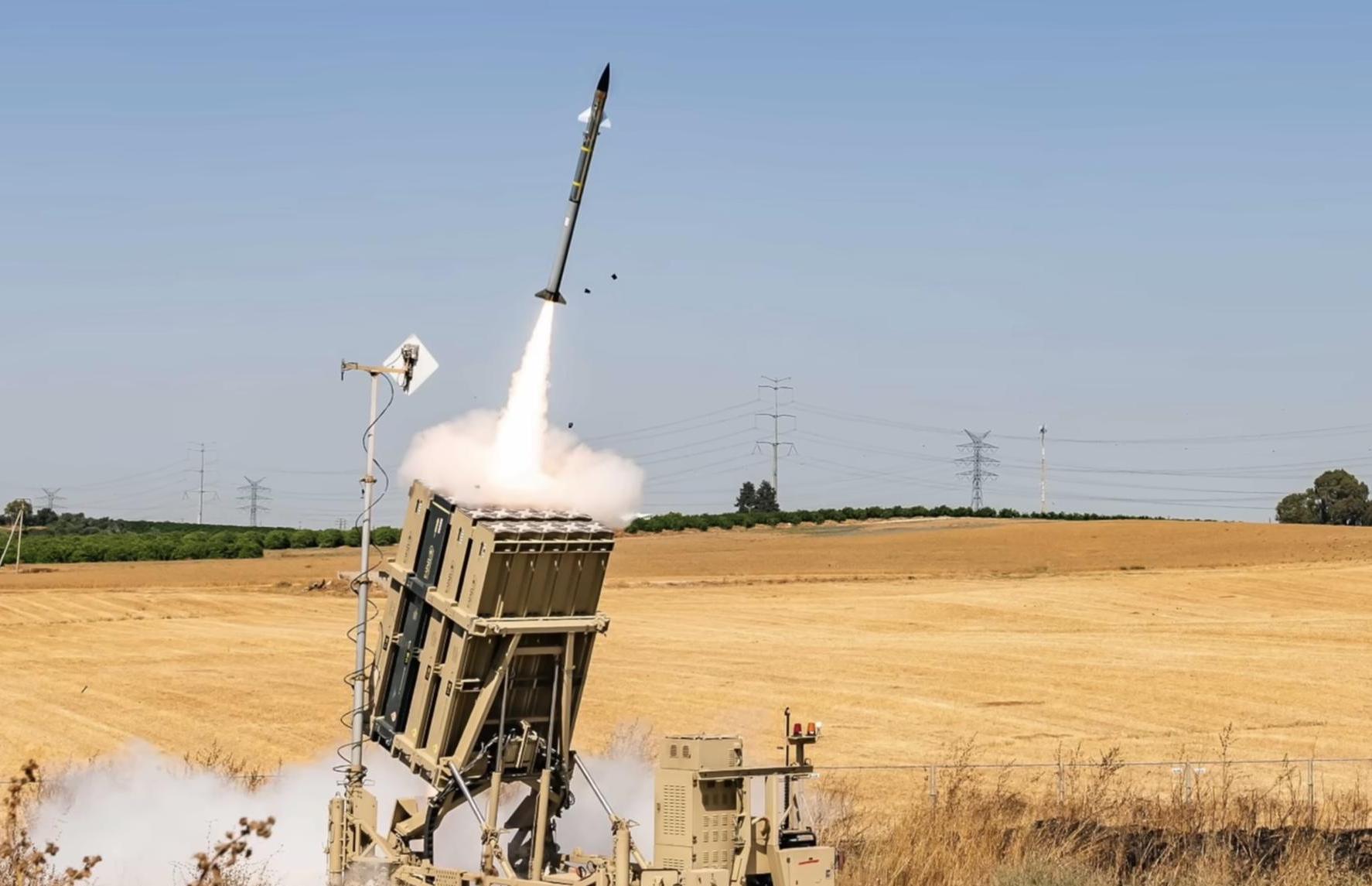
Earlier this week, US Ambassador to Israel Mike Huckabee said that Israel had deployed an Iron Dome air defense battery to the UAE, along with troops to operate it, appearing to confirm reports that said the same thing.

“They were the first Abraham Accord member,” Huckabee said, referring to the UAE. “But look at the benefits that they have had as a result: Israel just sent them Iron Dome batteries and personnel to help operate them. How come? Because there’s an extraordinary relationship between the UAE and Israel.”

At the time of the signing of the Abraham Accords in 2020, which also included a normalization deal between Israel and Bahrain, US and Israeli officials were clear that one goal of the accords was to create a regional alliance against Iran.

The UAE has also launched direct strikes against Iran, including an attack on Iranian oil infrastructure that came after the ceasefire between Washington and Tehran came into effect.

Trump threatens Iran will be “decimated” if it does not accept US dictated deal

May 13, 2026
Kevin Reed, WSWS.org, 13 May 2026

With the US ceasefire announced on April 8 all but over, the conflict with Iran is intensifying with President Trump escalating threats of renewed military attacks against Tehran.

On Monday, Trump dismissed Iran’s latest reply to the US proposal as “totally unacceptable,” called it a “piece of garbage,” and said he “didn’t even finish reading it.” He said the ceasefire—which effectively ended last week when the US fired on Iranian military targets—was on “massive life support.”

On Tuesday, before departing for China, the president continued with the posture that the US is dictating terms to Iran. When asked if he was going to discuss the war with Beijing, Trump said he would talk to President Xi about the war but mostly about trade and added that Iran was not really one of the topics because the US had it “very much under control.”

He told reporters, “We’re only going to make a good deal,” and then said, “We’re either going to make a deal or they’re going to be decimated. One way or the other, we win.”

Trump continued to insist that the US has already “won” and that a deal with Iran has little significance. Along with the threat to “decimate” Iran, Trump warned on May 7 that the US would soon have to “look at one big glow coming out of Iran”—a comment widely understood as a threat to use nuclear weapons.

Iran’s latest confirmed position, as reported by state broadcaster and other outlets, is that any settlement must include war reparations, sanctions relief, release of frozen assets and recognition of Iranian sovereignty over the Strait of Hormuz. Iranian Foreign Ministry spokesman Esmail Baghaei said Tehran was “not asking for anything unusual” and that the country was demanding only its “legitimate rights.”

The Iranian proposal also reportedly included a willingness to dilute part of its enriched uranium and transfer the rest abroad, but not under terms that would amount to a complete capitulation to Washington.

The key political point is that Iran is refusing to accept the framework dictated by US imperialism which, with the support of Israel, has carried out the illegal war including targeting 13,000 sites with missiles strikes and murdering the entire political leadership of the country.

While the White House has portrayed Iran’s position as obstructive, Tehran has consistently and explicitly linked any peace agreement to compensation for damage done and an acknowledgment of its sovereign rights over the strategic waterway.

Over the past 48 hours, there has been no publicly confirmed report of an Iranian or US strike sinking boats in the Strait of Hormuz itself, but the waterway remains the central strategic flashpoint of the war. The US has maintained naval pressure and claimed it is working to reopen the strait, while Tehran has insisted it retains sovereign rights there.

In practical terms, the strait is not under “absolute control” by Washington despite the claim by US Treasury Secretary Scott Bessent on May 4. The ongoing disruption, militarized patrols and negotiations show the strait to be a contested chokepoint which is not under US control.

The fact that Washington is publicly appealing to China to help “open” the strait is an open admission that the US cannot simply command passage through the strait by fiat. Reports on Tuesday that the UAE carried out a covert strike on Iran’s Lavan Island refinery demonstrates that the conflict over the strait involves multiple regional actors operating as proxies for US imperialism.

Although Abu Dhabi has not publicly acknowledged involvement, the reported strike caused a major fire and is expected to disrupt refinery production for months. A report by Reuters also stated, based on accounts from anonymous sources, that Saudi Arabia has been involved in covert anti-Iran operations. These reports confirm that the war is being conducted by a network of state actors, proxies and covert actions across the Gulf, all managed by the US government.

On Tuesday, Jules “Jay” Hurst, the Pentagon’s top budget official, told lawmakers that the cost of the war had increased to approximately $29 billion due to “updated repair and replacement of equipment costs and also just general operational costs.”Available from Mehring BooksThe struggle against imperialism and for workers’ power in IranA pamphlet by Keith Jones

Hurst’s testimony exposed Secretary of War Pete Hegseth’s effort to cover up the escalating cost of the war in testimony before both House and Senate appropriations committees by refusing to answer any questions about the total cost of the ten-week war. Hegseth’s appearance before Congress came amid a White House request for a 2027 military budget of roughly $1.5 trillion.

The Iranian Ministry of Health has reported 3,468 people killed in Iran, including more than 1,700 civilians, and over 26,500 injured. US casualties include roughly 200 wounded service members and 13 dead.

In a Truth Social post on Tuesday, Trump denounced media criticism of the war writing, “When the Fake News says that the Iranian enemy is doing well, Militarily, against us, it’s virtual TREASON in that it is such a false, and even preposterous, statement.” The administration’s attacks on public criticism are being paired with Pentagon restrictions that limit press access including credentials being revoked on “security” grounds.

Department of War policies have also targeted Pentagon reporters and, in the case of military publications, imposed tighter control over content and access. The aim is to silence criticism while expanding censorship and threats of legal action under wartime conditions.

Trump’s insistence that the US does not need any help from China clashes sharply with the fact that top US officials have been publicly urging Beijing to use its influence on Iran to help reopen the Strait of Hormuz. Secretary Bessent called on China to “step up” diplomatically, making clear that Washington is seeking Chinese assistance even while pretending otherwise.

In Lebanon, Israeli strikes continued, resulting in the killing of two paramedics in southern Lebanon on Sunday in strikes on health committee sites. The killing of medical workers—a strategic aim by the Zionist regime throughout the Gaza genocide—exposes the criminal character of the Lebanon campaign.

Defending Iran against US and Israeli aggression will be a prolonged struggle

May 9, 2026

It is too early to assume a US defeat in Iran — we must prepare for a long anti-war struggle, argues JOHN ROSS

A woman carries an Iranian flag during a pro-government gathering at Enqelab-e-Eslami, or Islamic Revolution, square in Tehran, Iran, May 4, 2026

John Ross, Morning Star, 8 May 2026

THE entire peace movement opposed the US/Israeli war against Iran. Opposition went well beyond those normally opposing US actions. It is widely understood that resistance by the peoples of Iran, Lebanon and Yemen, together with the war’s unpopularity in the US, led to Trump losing the first rounds of the conflict.

Even the Wall Street Journal, a fervent supporter of the war, admitted this: “Trump screamed at aides for hours. The Europeans aren’t helping, he said repeatedly. Gas prices averaged $4.09. Images of the 1979 Iranian hostage crisis… had been looming large in his mind, people who have spoken to him said.  ‘If you look at what happened with Jimmy Carter…with the helicopters and the hostages, it cost them the election,’ Trump had said in March. ‘What a mess.’”

But it is a misjudgement to believe that because the US and Israel lost the first battle, therefore they have lost the war and are resigned to this. Instead, the peace movement must prepare for a prolonged struggle to defeat US and Israeli attacks on Iran.  

Some genuinely taking the right side in this war have written that the US has already suffered its biggest defeat since Vietnam, or even that this is a bigger defeat.

Unfortunately, this is a misanalysis. To prepare for the prolonged anti-war tasks to come, the situation must be seen accurately.

Precisely because if the US loses the war against Iran it would be its biggest defeat since Vietnam, it has no intention of giving up because it lost the first battle.

US ruling circles understand perfectly that US loss of the war would mean significant erosion of the credibility of its international threats, significantly weakening its global position.

They therefore simply conclude that the wrong tactic was chosen, and the US must change this to win the struggle. Even some forces in the US who believe launching the war was a tactical mistake believe that now it has started it must be won.

The Institute for the Study of War put it specifically: “Any US settlement or resolution of the conflict that enables Iran to control traffic through the Strait of Hormuz would represent a major US defeat.” As the Wall Street Journal summarised: “As the president said in his first term, the US shouldn’t start a war it doesn’t intend to win. His challenge now is to prove to Iran’s regime he meant what he said.”

The new US tactics to attempt to win the war can be clearly grasped if it is understood why it lost the first battle. Prior to the first military attack on Iran in June 2025, and the widespread assault launched in February, US policy under Trump had been to force Iran to capitulate to US demands by prolonged economic sanctions.

The US has now intensified this attack, after its defeat in the first round of the war, via its blockade of Iranian ships, with Trump claiming: “Iran is collapsing financially! They want the Strait of Hormuz opened immediately… Starving for cash!”

Such sanctions genuinely damaged Iran’s economy, creating a priority for Iran to attempt to break out of them, while the US can return to bombing anytime it chooses.

Israel, and some in the US, considered sanctions strategically inadequate. Iran is a huge country, 80 times Israel’s size geographically, larger than the EU’s four largest countries put together. Iran’s population is 90 million, compared to Israel’s 10 million. In real economic terms, parity purchasing powers (PPPs), Iran’s GDP is three times Israel’s.

Faced with larger states, Israel’s policy has been, where it is unable to help create governments favourable to itself, to attempt to disintegrate and weaken them — as shown in Iraq and Syria.   
Israel, judging it unlikely there will be a compliant Iranian government, has long sought to disintegrate that country. Therefore, Iran faces an existential threat from Israel.

The US itself turned to a military assault on Iran, as opposed to sanctions, because of its and Israel’s victories in its genocidal attack on Gaza and also in Syria — where reactionary forces, which Israel and the US supported, came to power.  

Israel and the US miscalculated that they could now achieve the same in Iran. The US supplied thousands of Starlink systems and, as Trump publicly admitted, guns to demonstrators in Iran in December and January.

But not only did this fail to overthrow Iran’s government but when the US and Israel launched their full-scale military attack on Iran in February, as even Western media admitted, there was a “rallying around the flag” in Iran — in political terms, the great majority of Iran’s population, whatever their differences on other issues, or their attitude to Iran’s government, united in opposition to the US attack. This was the basis of the US defeat in the first round of the war.

But the US cannot retreat from this conflict due to the role west Asia plays in its strategy. A mistaken analysis was put forward a few years ago that because, due to fracking, the US has become self-sufficient in oil, it would be less interested in controlling west Asia.

The facts show the opposite. The US has waged more wars in the region — against Iraq, Syria, Yemen, Lebanon and Iran.

The US is no longer being itself dependent on West Asia, but constantly waging wars there, has led some to claim that this is because Israel controls US foreign policy — that the tail wags the dog. Any analysis of the relation of forces between the two makes clear this is untrue. Israel cannot produce the weapons it relies on to carry out military terror; the US merely has to threaten to cut off arms and Israel would immediately be brought to heel.

This reality was made clear for all to see when Trump, for short-term tactical reasons, openly  enforced an end to Israel’s bombing of Beirut, declaring: “Israel will not be bombing Lebanon any longer. They are PROHIBITED from doing so by the US.” The US does not support Israel because it is controlled by it but because the US finds Israel useful for its own strategy.

Although the US does not need west Asia’s oil for itself, its strategy is to be able to deny it to others, particularly China.

Because this is key for the US, it will not give up its attack on Iran, only the forms will change. Therefore, the peace movement must prepare for a prolonged struggle against US aggression against Iran.

John Ross is senior fellow at the Chongyang Institute for Financial Studies, Renmin University of China, and a member of No Cold War Britain.

‘An Almost Unthinkable Threat’: Trump Warning That Iran Will ‘Glow’ Sparks Latest Fears of Nuclear Attack

May 8, 2026

US-POLITICS-TRUMP

US President Donald Trump, flanked by US Secretary of Homeland Security Markwayne Mullin, speaks with workers painting the Lincoln Memorial Reflecting Pool in Washington, DC, on May 7, 2026.

(Photo by Kent Nishimura/AFP via Getty Images)

“It again raises urgent questions: Is this president fit to lead and make consequential decisions that impact countless lives?” said the National Iranian-American Council.

Stephen Prager

Common Dreams, May 08, 2026

As he struggles to force Iran’s capitulation, US President Donald Trump issued what seemed to be yet another threat to commit an act of mass destruction against the country through nuclear warfare.

When negotiations have faltered in recent weeks, Trump has on multiple occasions defaulted to genocidal threats—including that the “whole civilization” of Iran would “die,” and that the whole country would be “blown up“—which have only seemed to anger and galvanize his Iranian adversaries rather than make them quake with fear.

RECOMMENDED…

US-POLITICS-TRUMP

‘The Whole Country’s Going to Get Blown Up’: Trump Renews Genocidal Threats to Iran as Ceasefire Collapses

Trump points his finger while speaking sitting in the Oval Office

‘Threats of War Crimes Cannot Be Normalized’: Trump Ripped for Renewed Iran Genocide Threats

While the Trump administration has continued to insist that the ceasefire with Iran was still in effect, the two countries have exchanged significant fire this week.

On Thursday, the US launched what it said were “self-defense” strikes on military facilities it claimed were responsible for attempting to attack three US Navy ships in the Strait of Hormuz. Iran called the attacks a violation of the ceasefire and said its attacks on US ships were in response to American bombings of Iranian oil tankers the previous day.

Trump told reporters on Thursday that if the ceasefire were truly over, everyone would know. “If there’s no ceasefire, you’re just going to have to look at one big glow coming out of Iran,” he said. “They’d better sign the agreement fast… If they don’t sign, they’re going to have a lot of pain.”

To many observers, this sounded like a threat from Trump to carry out a nuclear holocaust, though it could also be a redux of Trump’s threats to attack civilian energy infrastructure, which would still be a war crime.

Kelley Beaucar Vlahos, the editor-in-chief of Responsible Statecraft, noted that if it were indeed a nuclear threat, it would be “ironic since the war today supposedly is to prevent Iran from getting… a nuclear weapon.”

The National Iranian-American Council (NIAC) said that “threatening to make Iran glow—with nuclear weapons or otherwise—is an almost unthinkable threat to commit a mass war crime against 92 million people. It must never be normalized.”

“It again raises urgent questions: Is this president fit to lead and make consequential decisions that impact countless lives?” the group said. “Would the chain of command refuse unlawful orders to make Iran ‘glow,’ killing millions of people?”

Trump’s pledge to wipe out Iranian civilization last month drew widespread condemnation and led dozens of Democratic members of Congress to call for his Cabinet to remove him from office using the powers of the 25th Amendment.

“Our leaders need to interrogate these questions seriously, and not write them off as the ramblings of a madman,” NIAC said. “Trump is the president, and may seek to act on these horrible, contemptible threats. This war needs to end, and so [does] Trump’s horrific threatening of war crimes.”

Saudi Arabia forced Trump to pause Project Freedom after suspending US access to bases and airspace: report

May 7, 2026

The scheme is said to have angered Saudi leadership, who were not consulted in advance

Maira Butt, The Independent, Thursday 07 May 2026 15:09 BST

Trump says Iran strike ‘would’ve been worth it’ even if oil hit $200
On The Ground

President Donald Trump dramatically backtracked on Project Freedom after just two days because its Gulf ally, Saudi Arabia, blocked access to its military bases and airspace, according to reports.

Just 48 hours after announcing the operation to escort ships through the Strait of Hormuz, the US leader paused the initiative to enable negotiations between Washington and Tehran. Iran had attacked ships across the Gulf and struck a port in the UAE on Tuesday.

It has now emerged that Trump’s decision to pause the operation was driven by complaints by Saudi Arabia, two US officials told NBC News.

Saudi Arabia’s leaders had been angered by the announcement and the government told the US it would not allow American military forces to fly aircraft through Prince Sultan Airbase, located southeast of its capital, Riyadh.

Officials said the Kingdom denied access for any US aircraft to fly through Saudi airspace as part of Project Freedom.

Recommended

A call is reported to have taken place between Trump and Saudi Crown Prince Mohammed bin Salman, but the pair were unable to reach a resolution – forcing the US president to axe the operation.

Trump has ruffled feathers across the Gulf with seemingly unilateral decisions
Trump has ruffled feathers across the Gulf with seemingly unilateral decisions (Reuters)

The leaders “have been in touch regularly” and officials are also in touch with vice president JD Vance, secretary of state Marco Rubio, a Saudi source told NBC News.

“The problem with that premise is that things are happening quickly in real time,” the source said about the announcement, adding that the country was “very supportive of the diplomatic efforts” by Pakistan to guide the countries towards an agreement.

A White House official told NBC News that “regional allies were notified in advance.”

The Independent has contacted the White House for comment.

A diplomat in the region said that the operation was not coordinated with Oman either. “The US made an announcement and then coordinated with us,” they said, adding, “We were not upset or angry.”

Trump's project is said to have angered the Saudi leadership
Trump’s project is said to have angered the Saudi leadership (Getty)

“Because of geography, you need cooperation from regional partners to utilise their airspace along their borders,” one US official explained about the success of the scheme.

The Strait of Hormuz is a vital shipping route for global supplies of oil, fertiliser and other commodities that has been virtually closed since the US and Israel attacked Iran on 28 February, causing global price rises.

Recommended

Trump said the operation was a “humanitarian effort to rescue ships running low on essentials after more than two months trapped in the Persian Gulf”.

He said the mission would begin on Monday morning and warned that any interference would “have to be dealt with forcefully”.

Hegseth details White House plan to surge military spending by 50 percent

April 30, 2026
Andre Damon@Andre__Damon6 hours ago
    Secretary of Defense Pete Hegseth appears before a House Committee on Armed Services business meeting on the Department of Defense Fiscal Year 2027, on Capitol Hill, Wednesday, April 29, 2026, in Washington. [AP Photo/Rod Lamkey Jr.]

    Defense Secretary Pete Hegseth testified before the House Armed Services Committee on Wednesday on the Trump administration’s plan to increase military spending by 50 percent, from $1 trillion this year to $1.5 trillion in Fiscal Year 2027.

    Hegseth, who has rebranded the Pentagon as “the Department of War,” told the committee the budget would put the defense industrial base “back on a wartime footing.”

    The request is the sharpest single-year jump in US military spending in the postwar era. It would lift outlays to 4.5 percent of gross domestic product, with House Republican leaders calling for 5 percent as the eventual target.

    The buildup is preparation for war with nuclear-armed China and Russia, the two states Trump’s National Defense Strategy names as principal adversaries.

    In the face of a broadly unpopular administration openly stating its intent to commit war crimes in pursuit of global domination, the Democrats on the committee made it their highest priority to emphasize—despite tactical disagreements—their solidarity with the Trump administration’s megalomaniacal program of world conquest.

    Democratic ranking member Adam Smith of Washington opened by expressing his sympathy with the Iran war and with the 50 percent surge in military spending. “I think we should all recognize that our troops deserve nothing but our praise for the incredible job that they have done,” Smith told Hegseth. “We have demonstrated to the world that we have a highly capable military, and I hear the chairman on the need for an increased” budget.

    Smith then condemned the mass popular opposition to the war. “I strongly disagree with the folks on the far left who say that we don’t really face any threats, that the US is a malign influence in the world and always has been. I don’t agree with that,” Smith said. “China, Russia, Iran, North Korea, Hezbollah, Hamas, the Houthis,” he continued, “They want to push us aside.”

    Republican Don Bacon of Nebraska summed up the bipartisan consensus for global war. “We are the most bipartisan committee out of 20 in Congress. We have a tradition of voting on NDAAs with large, large majorities year after year,” Bacon said. “And it’s important not to be a Republican first in here or a Democrat first. We’re Americans trying to ensure that our country is well defended. And in that spirit, I compliment the operations in Iran.”

    Bacon is correct about the bipartisanship of the war drive. The Democrats funded the buildup before the Iran war began and refused to halt it once it was under way. The House passed the FY26 National Defense Authorization Act on December 10, 2025, by 312 to 112, with the entire Democratic House leadership voting yes; the Senate followed 77 to 20. On January 22, 2026, the House cleared an $839 billion defense appropriations bill 341 to 88. On February 2, 21 House Democrats supplied the margin for a continuing resolution to keep the government funded; the same day, a US F-35 from the USS Abraham Lincoln shot down an Iranian drone over the Arabian Sea. Twenty-six days later, the US-Israeli assault on Iran began. Once it had, both chambers voted down War Powers Act resolutions to stop it.

    The plan’s largest line item, $71 billion, would massively expand the US nuclear arsenal—new ballistic-missile submarines, long-range bombers and intercontinental missiles aimed at China and Russia. Shipbuilding receives $65 billion. Bombs and conventional missiles get $25 billion. The “Golden Dome” missile-defense program is funded at $22 billion. The Space Force budget doubles. Procurement rises 76 percent and research and development 64 percent. Another $54.6 billion is earmarked for a Defense Autonomous Warfare Group to wage drone war, most of it contingent on a future reconciliation bill.

    Hegseth said the budget would put 14 munitions production lines on a sustained wartime tempo—Patriot, PAC-3, THAAD, Tomahawk, AMRAAM and JASSM missiles among them—with companies offered multi-year demand signals to expand their factories. The active-duty force grows by 44,000 troops. The Pentagon claims to have triggered more than $50 billion in private investment, 280 new factories and 18 million square feet of American manufacturing floorspace. Joint Chiefs Chairman Gen. Dan Caine called the budget “a historic down payment on future security.”

    Republican Mike Rogers of Alabama, chair of the House committee, framed the request around preparation for war with China. “China builds 47% of the world’s ships. The US builds one-tenth of 1%. We build fewer ships than Croatia or the Netherlands,” Rogers said. The Chinese military, he added, has become “a modernized military force capable of projecting power well into the Pacific.”

    Caine said the Pentagon was reviewing “all three legs of the nuclear triad”—submarines, missiles and bombers—to make sure they were “reliable, redundant, and workable” for, in his words, “our nation’s most important day.” Hegseth warned the committee that “the country that dominates in quantum will dominate the future in C2, in comms, in every way that we fight.” Bacon called for a nuclear buildup expressly aimed at Beijing: “Russia, China needs to know no matter what they do, we can launch those 400 ICBMs.”

    The defense secretary spoke the vocabulary of a crime boss. He said the spending would build a military that “instills nothing less than unrelenting fear in our adversaries.” He cited the year’s operations as proof. “That matters when you go 37 hours around the world for Midnight Hammer,” he said, referring to the June 2025 B-2 bombing of Iranian nuclear sites. “That matters when you go downtown in Venezuela and grab the indicted dictator of a country in the middle of the night.” Russian air defenses sent to protect Venezuelan President Nicolás Maduro before his January 3 abduction, Hegseth said, “were defeated in 15 minutes.”

    Democratic Representative Seth Moulton of Massachusetts questioned Hegseth over his March 13 press conference order to give boats in the Caribbean “no quarter, no mercy.” Moulton, a former Marine Corps officer with four combat tours in Iraq from 2003 to 2008, said, “An order for no quarter or no survivors is a war crime under the Geneva Conventions.” Hegseth did not retract the order. “The Department of War fights to win,” he replied.

    Wednesday’s hearing made clear that the war on Iran is one phase of a global war the American ruling class is preparing for control of the world.

    From the 1953 Coup to Today: Jeffrey Sachs Explains America’s Endless War on Iran

    April 28, 2026

    Sheer Post, April 25, 2026

    Share this:

    In one of the scariest moments in modern history, we're doing our best at ScheerPost to pierce the fog of lies that conceal it but we need some help to pay our writers and staff. Please consider a tax-deductible donation.

    Joshua Scheer

    Jeffrey Sachs doesn’t raise his voice — he doesn’t have to. In this wide‑ranging conversation with Tucker Carlson, Sachs lays out a devastating, historically grounded indictment of U.S. foreign policy, the manufactured “Iran threat,” and the decades‑long fusion of American empire with Israel’s regional ambitions. What emerges is not a hot take but a cold, clinical autopsy of a war machine that has slipped beyond democratic control.

    From the 1953 coup to the present blockade of the Strait of Hormuz, Sachs traces how Washington’s obsession with dominance — and Israel’s pursuit of permanent military supremacy — has pushed the world to the brink of a conflict that could collapse the global economy in weeks. He dismantles the nuclear‑weapons narrative, exposes the bipartisan addiction to sanctions and covert warfare, and warns that the U.S. is now trapped in a crisis of its own making.

    This is one of Sachs’ clearest, most unflinching interviews to date — a map of how we got here, and a warning about what comes next if the “grown‑ups” don’t seize the wheel.

    Jeffrey Sachs Warns: The U.S.–Israel War Path Toward Iran Is Leading the World Into Economic and Political Collapse

    Jeffrey Sachs has spent decades advising governments, studying development, and watching empires rise and fall. In his latest interview, he delivers a stark message: the United States and Israel are steering the world toward a catastrophic confrontation with Iran — and the window for avoiding disaster is closing fast.

    A Global Crisis Triggered by a Manufactured One

    Sachs argues that the current crisis is not an accident but the predictable outcome of decades of U.S. interference in Iran, beginning with the 1953 CIA‑MI6 coup that toppled Iran’s elected prime minister. That single act — the theft of Iran’s sovereignty and its oil — set the stage for 70 years of hostility, sanctions, proxy wars, and regime‑change fantasies.

    According to Sachs, the present escalation is driven less by Iranian behavior than by Washington’s refusal to accept that Iran slipped out of U.S. control in 1979. The “Iran menace,” he says, is a propaganda construct — a way to justify endless pressure on a country that has not invaded another nation in more than a century.

    The Strait of Hormuz: A Choke Point for the World Economy

    Sachs warns that the closure of the Strait of Hormuz — a direct consequence of the spiraling conflict — has already triggered a global economic emergency. Oil, gas, fertilizers, petrochemicals, and metals flow through this narrow waterway. With it blocked, the world economy is “reeling,” and the clock is ticking.

    The off‑ramp exists, Sachs insists: de‑escalation, diplomacy, and reopening the strait. But it requires political maturity — something he argues is in short supply in both Washington and Jerusalem.

    Israel’s Parallel Agenda: Regional Dominance at Any Cost

    Sachs draws a sharp distinction between U.S. and Israeli motives. For Washington, Iran represents a rebellion against American empire. For Israel, Iran is the last major obstacle to full military dominance across the Middle East and North Africa.

    He argues that Israel’s political leadership — backed by a powerful U.S. lobby — has long sought to neutralize Iran not because of nuclear fears, but because Iran resists Israeli hegemony. This, Sachs says, is the real engine behind the push for confrontation.

    The Nuclear Lie

    One of Sachs’ most forceful points is his dismantling of the nuclear narrative. U.S. intelligence agencies have repeatedly stated that Iran is not pursuing a nuclear weapon. Iran has sought international monitoring and compliance frameworks — including the JCPOA — only to see the U.S. sabotage its own agreements under pressure from domestic political forces aligned with Israel.

    Calling the nuclear rhetoric “Orwellian,” Sachs argues that the real goal is regime change, not nonproliferation.

    A War That Would Reshape the World in Weeks

    Sachs warns that a U.S.–Israel attack on Iran would not be a limited strike. It would trigger a regional war, destroy infrastructure across the Gulf, and plunge the global economy into chaos. Within weeks, he says, the world would look “profoundly damaged,” with the risk of escalation into a global conflict.

    This is not hyperbole, Sachs insists — it is the logical outcome of the current trajectory.

    The Real Question: Who Is Steering U.S. Policy?

    Throughout the interview, Sachs returns to a central theme: the absence of democratic control over U.S. foreign policy. Decisions of war and peace are being shaped by lobbies, political vanity, and imperial reflexes — not by the interests of the American public.

    The result is a government that no longer serves its citizens, a political class insulated from consequences, and a foreign policy apparatus that treats global stability as collateral damage.

    A Final Warning

    Sachs’ message is clear: the U.S. and Israel are playing with forces they cannot control. The world is at a fork in the road — diplomacy or disaster — and the people making the decisions are the least equipped to choose wisely.

    For Americans, the stakes are not abstract. Sachs argues that the economic, political, and moral costs of this conflict will fall squarely on the public, not on the leaders who helped create it.