The Iranian-led Axis of Resistance has used its joint power in order to successfully confront all the challenges before it.
The goal of the war on Iran was to pave the way towards “Greater Israel” and total US-Israeli dominance through achieving regime change, yet the outcome of the war may have just buried this project forever.
Hezbollah’s unprecedented comeback, combined with Iran’s impressive performance, has shifted the balance of power so dramatically that the Israelis are being cut back to size.
From the outset of the attack on Iran, it was clear that the goal was to overthrow the Islamic Republic and, by default, achieve the “total victory” across “seven fronts” that Israeli Prime Minister Benjamin Netanyahu has been pledging to reach for over two years. Very quickly, Iran’s military response, followed by its carefully calibrated strategy involving its regional allies, threw the goal of regime change into the meat grinder.
In a recent opinion poll conducted by the Israeli public, roughly 92% of the population said they believe that Iran has emerged as the winner of the war. When we compare this to the various opinion polls conducted following Israel’s initial 12-day war in June of 2025, the outcome couldn’t be more stark. The majority of Israelis not only supported the war on Iran last year, but were also satisfied with the way it was managed.
This time around, Iran is using the threat of continued hostilities and the closure of the Strait of Hormuz as its weapons to secure a victory that has become a political nightmare for the Israelis.
Under the current Memorandum of Understanding (MoU), the US has ceded to Iran on countless points– Tehran will rake in billions in fees collected from those transiting the Strait of Hormuz, it will get its frozen assets, have all the sanctions lifted, and even get access to a $300 billion reconstruction fund.
If these pledges were to be met by the United States, then Iran would be able to thrive economically for the first time since its Islamic Revolution in 1979. However, the economic benefits are not even the biggest achievement.
While the Israelis managed to ride on the wave of delusion, in using their blows dealt to Hezbollah back in 2024 as evidence of a historic victory against the Iranian-led Axis of Resistance, this narrative has now collapsed. Iran’s Islamic Revolutionary Guard Corps (IRGC) has managed over the past months to effectively deter Israeli actions inside Lebanon through the threat of force. Even if the Israelis seek to challenge this, it has for now successfully achieved a deterrence equation whereby Tel Aviv fears bombing the Lebanese Capital.
On the ground, Hezbollah has managed to deal devastating blows to the Israeli military, dragging it deep into southern Lebanon and using asymmetric warfare tactics that have left the Israeli public disgusted with its leadership and led to a loss of confidence in the army’s ability to defend the northern settlements.
A reality that has now started to set in, as Israel repeatedly fails to capture areas such as the Ali Al-Taher Hills, instead resorting to figuring out a method that will allow them to extract the charred remains of their soldiers, trapped inside destroyed tanks that still remain inside Hezbollah-controlled territory.
The Iranian-led Axis of Resistance has used its joint power in order to successfully confront all the challenges before it. This includes the coordination with Yemen’s Ansarallah to close the Bab al-Mandab Strait to Israeli shipping, even threatening to blockade it completely in the event of the war escalating once again.
Arab Gulf States have also taken notice of the changes in regional power dynamics, with the neighboring nations attempting to repair their relations with Tehran. This even appears to be including the UAE, which was actively bombing Iran only months ago. Now the model of Oman, which remained somewhat neutral – some may say they leaned towards Iran – during the conflict, appears to be the most favorable one amongst the GCC States.
Israel had hoped that the war would collapse, or at the very least severely weaken the Iranian State, which would lead to all of the Arab States lining up to normalize and build closer relations with it. Instead, this war appears to be deterring future normalisation efforts.
The Greater Israel Project, of expanding the borders of the Israeli regime, depended upon the collapse of the Iranian-led Axis of Resistance, or at the very least its weakening. The only real option that could help Israel survive today is securing a Two-State Solution, but even that could lead to internal chaos because of how radicalized Israeli society has become.
The Two-State Solution is the pro-Israel outcome. The only other option is that they continue to fight endless wars they cannot win, until they reach the point of total collapse, whether that be at the hands of resistance forces or their own public. Any sane nation would see the writing on the wall and embrace diplomacy, but we are not dealing with a sane nation.
– Robert Inlakesh is a journalist, writer, and documentary filmmaker. He focuses on the Middle East, specializing in Palestine. He contributed this article to The Palestine Chronicle.
GENEVA – Israeli authorities and security forces have deliberately targeted Palestinian children resulting in genocide, crimes against humanity and war crimes in the Gaza Strip and war crimes in the West Bank, the UN Independent International Commission of Inquiry on the Occupied Palestinian Territory, including East Jerusalem, and Israel said in a new report today.
The Commission, which concluded last year that Israel had committed genocide against the Palestinian group in the Gaza Strip, found that the intense scale and systematic nature of the Israeli military operations have continued – resulting in unprecedented death, injury and trauma of Palestinian children.
The Commission reiterates that the deliberate targeting of children is one of the key elements establishing genocidal intent of the Israeli authorities and security forces to destroy the Palestinian group, in whole or in part, in Gaza.
“The evidence shows that Palestinian children have been deliberately targeted and killed by the Israeli security forces,” said Srinivasan Muralidhar, Chair of the Commission. “Even after the October 2025 ceasefire, children continue to be killed and seriously injured, with continued disregard by Israel for the ceasefire and for the protection owed to Palestinian children under international law.”
Severe physical and mental injuries, mass trauma, orphanhood, separation, disability, repeated displacements, starvation, and the collapse of education and healthcare have erased childhood and will continue to affect children in Gaza throughout their lives.
Palestinian children have been arrested and subjected to torture and other severe forms of mistreatment in Israeli prisons and detention facilities, with no information on their whereabouts. Israeli security forces have also used sexual violence against children as part of the collective shaming and oppression, entrenched within a prolonged, ethnic, gendered, and intergenerational pattern of Israeli occupation and hostilities.
Israel’s targeting of neonatal and maternity care centers in Gaza have directly harmed the survival of newborns and Palestinians’ reproductive future, including rises in miscarriages, birth defects and lasting vulnerabilities among newborns, resulting in the destruction of Palestinian newborn life and the population’s continuity. Starvation imposed by Israel through blockade and siege have further caused the death of Palestinian children and severely impacted the health of many others, depriving them of essential nutrition and increasing disease risks amid reduced immunization, food insecurity and destroyed health services.
In parallel, the dismantling and destruction of orphanages and education facilities in Gaza and the West Bank, including East Jerusalem, have obstructed children’s cognitive, social and emotional care and development and disrupted the foundations of Palestinian society.
“Even if the bombs and guns fall silent in Gaza and West Bank, Palestinian children will not simply recover overnight,” said Muralidhar. “The destruction of their health, education and development is irreversible.”
Palestinian children have suffered immense psychological harm, having been stripped of any sense of safety and future. Mental harm is an intergenerational condition, producing a distinctive “occupied psyche” in which the freedom to play, imagine, hope, and develop an identity has been eroded.
By targeting children, Israel is eroding the foundational structure of Palestinian society, weakening the demographic vitality, and overall capacity of the Palestinian people to sustain and exercise its right to determine its future as a people.
“The protection, care and survival of Palestinian children are inseparable from the Palestinian people’s right to self-determination,” said Muralidhar. “By targeting children, Israel is attacking the very capacity of the Palestinian people to exist and to determine their future.”
The Commission calls for Israel to cease committing violations and crimes against and affecting Palestinian children. The Commission further calls for the end of Israel’s continuing presence in the occupied West Bank, including East Jerusalem, in compliance with the advisory opinion of the International Court of Justice.
The Commission has identified military units within the Israeli security forces responsible for killing and injuring of Palestinian children and makes recommendations to Israel and to all Member States to ensure accountability for such crimes.
The international community as a whole must uphold their international legal obligations and call for an end to the hostilities, for Israel to end its occupation and to prioritize accountability and access to justice for victims as an integral component of any political process, grounded in the meaningful participation of Palestinians, including children.
Background:The UN Independent International Commission of Inquiry on the Occupied Palestinian Territory, including East Jerusalem, and Israel was established by the UN Human Rights Council on 27 May 2021 to “investigate, in the Occupied Palestinian Territory, including East Jerusalem, and in Israel, all alleged violations of international humanitarian law and all alleged violations and abuses of international human rights law leading up to and since 13 April 2021.” Resolution A/HRC/RES/S-30/1 further requested the commission of inquiry to “investigate all underlying root causes of recurrent tensions, instability and protraction of conflict, including systematic discrimination and repression based on national, ethnic, racial or religious identity.”
For media queries, please contact: Todd Pitman, Media Adviser for the UN Human Rights Council’s Investigative Bodies: todd.pitman@un.org / +41766911761; or Pascal sim, Human Rights Council Media Officer: simp@un.org.
Rajiv Menon, a leading British civil rights barrister, again faces contempt proceedings over his closing speech in trial of pro-Palestine activists, reports Dania Akkad.
“The Right of Juries” plaque outside of Old Bailey, UK, 2016. (Paul Clarke, Flickr, Wikipedia, CC BY-SA 2.0)
A leading British civil rights barrister faces contempt proceedings once again after a judge decided to refer allegations against him for a second time.
The original proceedings brought against Rajiv Menon KC were thrown out last month for procedural reasons.
But on June 22, Justice Jeremy Johnson ruled that Menon’s case met the necessary “threshold conditions” to proceed and that it was in the public interest to do so.
He said the case should be referred to a judge who can “deal with the matter expeditiously.”
“I stress that nothing in this judgement decides that Mr. Menon has acted in contempt of court,” Johnson wrote.
“My findings do not bind the presiding judge. The presiding judge will only institute contempt proceedings if they consider that it is the appropriate and justified step.”
Garden Court Chambers, where Menon has practised for three decades, said on Monday that the proceedings brought against Rajiv were unprecedented and have “sent shock waves through the legal profession.”
“The impact of these proceedings is already being felt by the criminal defence community, especially juniors, with concerns that public confidence in the independence of the Bar and the integrity of our system of justice will be damaged.”
Menon has more than 30 years’ experience spanning high-profile cases such as Stephen Lawrence, Hillsborough and Grenfell.
The Defend Our Juries protest against the proscription of Palestine Action in London on Sept. 6, 2025. (indigonolan /Flickr/ Wikimedia Commons/CC BY 4.0)
How We Got Here
Menon is accused of violating Johnson’s orders in his closing statement in the trial of six Palestinian Action activists who broke into an Israeli-owned arms factory near Bristol in 2024.
The judge had warned defence barristers not to tell the jury that they could reach a verdict according to their conscience, a principle known as jury equity.
In his closing speech, Menon, who represented one of the activists, told the jury about the Bushell case, a landmark ruling from 1670 which established the independence of juries.
He read from a plaque at the Old Bailey commemorating the jury in that case, saying,
“it established the right of juries to give their verdict according to their convictions.”
In February, the jury acquitted all of the activists of aggravated burglary but failed to reach a verdict on several other charges.
The Crown Prosecution Service sought a retrial while Johnson filed the original contempt of court complaint against Menon.
In May, four of the defendants – Charlotte Head, Samuel Corner, Leona Kamio and Fatema Rajwani – were found guilty of criminal damage. Corner was also convicted of grievous bodily harm without intent.
Two others, Zoe Rogers and Jordan Devlin, were found not guilty of criminal damage.
It then emerged, as reporting restrictions were lifted, that the four activists faced being sentenced as terrorists even though the jury had not been informed of that possibility.
?? ?? Four Palestine Action Activists Sentenced as ‘Terrorists’ in UK Legal First
Four activists who raided an Elbit Systems arms factory near Bristol in 2024 were sentenced as “terrorists” Friday at Woolwich Crown Court, in what supporters said is the first time UK protesters… pic.twitter.com/gC4MvAXfz4
In a marathon court hearing on June 12, Johnson ruled first that the four would indeed be sentenced as terrorists and then handed down a combined total of more than 25 years in prison.
Meanwhile, three court of appeal judges had ruled that the contempt proceedings levelled against Menon were unlawful.
They said that Johnson could decide whether to refer the complaint to another High Court judge, the Attorney General, to the Bar Standards Board or take no further step.
Now Johnson has made his ruling, it will be up to the new judge to decide whether contempt proceedings continue.
Garden Chambers said it was awaiting the outcome of “this already protracted process” and would continue to support Menon “through this difficult time.”
Kirsty Brimelow KC, Chair of the Bar Council which represents barristers in England and Wales, has previously said the contempt proceedings against Menon “risk a chilling effect on the profession” and called it a “troubling episode.”
Dania Akkad is an investigative journalist. She has won awards for her reporting on women’s rights in the Middle East, Saudi Arabian dissidents and California’s lettuce industry. She served most recently as senior investigations editor at Middle East Eye.
A small motorboat passes anchored vessels in the Strait of Hormuz off Bandar Abbas, Iran, Thursday, June 11, 2026. [AP Photo/Amirhosein Khorgooi]
The US launched a new round of strikes on Iran on Friday in the most explicit indication yet that the recently signed Memorandum of Understanding (MOU) has collapsed into an escalating and open conflict. U.S. Central Command (CENTCOM) said its aircraft struck Iranian missile and drone storage locations and coastal radar sites near the Strait of Hormuz.
A report by Al Jazeera said the US strikes were near the Iranian port of Sirik. Al Jazeera also reported that Iran said it had “succeeded in neutralizing” the attack and pledged to retaliate in a statement shared by the ISNA news agency. The statement said, “We emphasize that this aggression will not go unanswered, and our response will be swift and decisive at a time and place of our choosing.”
An Iranian parliamentary security official, Ebrahim Azizi, accused Washington of attacking “in the middle of negotiations once again” and said the US president had shown no commitment to negotiation or ceasefire principles.
According to other reports, the US strikes were carried out in response to Iran’s launching of at least four one-way attack drones at a commercial vessel on Thursday, with one drone striking the ship’s upper deck and damaging it before the vessel continued its course.
CENTCOM confirmed the targets and presented the strikes as a limited but forceful response meant to punish the Iranian attack and deter further action. The reports indicate that the US strikes were not random but targeted the command-and-control infrastructure surrounding Iran’s maritime reach.
The exact physical damage remained unclear, and both CENTCOM and the New York Times noted that the full extent of the damage had not yet been determined. The news reports said the choice of targets was intended to send a message that Washington could hit the systems enabling drone operations and surveillance in the Gulf without widening the war.
However, the response by President Trump and Vice President Vance was both threatening. Trump said Iran’s drone launch amounted to a violation of the ceasefire framework. He then portrayed the US strikes as responding to Iranian aggression rather than initiating escalation. JD Vance gave the direct warning, “… violence will be met with violence.”
Vance added that Iran had signed the ceasefire agreement and that if Tehran had disagreements over implementation, it could “pick up the phone,” but that military retaliation would follow if the agreement was challenged.
Iran said the drone strike was part of its effort to control passage through the Strait of Hormuz and warned that ships using routes outside Tehran’s approved framework would not be guaranteed safe passage or insurance coverage.
More specifically, the statement quoted by CBS said, “Any passage through routes outside the framework designated by PGSA [Persian Gulf Strait Authority] will not be covered by safe passage guarantees and will not be entitled to insurance coverage or related liabilities.”
Other reporting on the same incident says Iranian officials framed the move as a response to insecurity in the waterway and to what Tehran describes as continued US aggression, with Iran later warning vessels to use only routes authorized by Tehran.
Iran has once again rejected the American claim to maritime authority in the Strait of Hormuz. Reuters reported that Tehran insisted it had the right to control shipping there and warned Gulf states not to side with Washington after the cargo ship incident.
The Iranian line is that the strait lies within a contested security zone and that the US and its allies are using “freedom of navigation” language to mask coercive control over a vital strategic waterway. The dispute over the strait is a key issue over whether the MOU means anything in practice.
The reported drone attack itself centered on a commercial vessel, identified in some reporting as the Ever Lovely, which was struck in the Strait of Hormuz near Oman. Trump said three other drones were intercepted, and the ship, while damaged, remained able to continue. AP and Reuters reported that the event led maritime authorities to pause efforts to move ships out of the area, indicating the immediate consequences for commercial traffic.
The MOU, signed only a week earlier, has now shown itself to be a piece of paper with little meaning in a war that has not ended. The language of the deal, including the phrase that Iran would “make arrangements using its best efforts” to ensure safe passage, was ambiguous from the start and left room for interpretation, and it has now become a mechanism for the collapse of the entire MOU.
Reports over the last week have shown that, far from receding, the conflict is broadening with Israeli attacks continuing in Lebanon, and Gaza remains under near-constant assault despite talk about a ceasefire and peace agreements. Just as it has in Gaza, the ceasefire framework contained in the MOU is emerging as a formal cover for the continuation of the imperialist war by other means.
On Friday, Israeli Defense Forces continued ground and aerial operations in southern Lebanon. Actions included combing operations in the border town of Ain Arab, advancing military vehicles toward Haris, a drone strike near Qabrikha and airstrikes near Nabatieh. Israel also dropped leaflets over the town of Mansouri ordering residents to evacuate. The military described this as a “reminder” to keep out of the area for civilian safety.Available from Mehring BooksThe struggle against imperialism and for workers’ power in IranA pamphlet by Keith Jones
Despite US-led negotiations, Israeli warplanes launched two waves of airstrikes targeting the outskirts of Nabatieh al-Fawqa. Following talks in Washington D.C., Israel, Lebanon and the US signed an initial trilateral framework agreement on Friday for restoring sovereignty and establishing “pilot zones” in which the Lebanese Armed Forces will take control.
Prime Minister Benjamin Netanyahu and Defense Minister Israel Katz said Israel will not withdraw its forces from occupied security zones until Hezbollah is disarmed. Hezbollah leadership rejected prior US-brokered deals and maintained that Israel must fully withdraw unconditionally.
Taken together, Friday’s actions show that the ceasefire is highly fragile, if existing at all, and that Israel continued to use military force to pressure villages near the border. The result was continued civilian deaths, displacement and an ongoing clash between formal diplomacy and battlefield realities.
The situation in Gaza, which has been moved off the front page of the news since the war with Iran began on February 28, is even more catastrophic. Palestinian and UN-linked reports say Israel has killed roughly 1,000 Palestinians since the ceasefire was announced, while Gaza’s Government Media Office says Israel has carried out 3,269 violations, killed 992 Palestinians and wounded 3,144 others.
Aid delivery has remained far below what was promised, with only 52,740 trucks entering Gaza out of the 147,000 required, according to the same reporting. These numbers show that the “agreement” has disguised the sustained Israeli campaign of attrition against Palestinians.
The WSWS has explained that the Gaza arrangement was designed to turn the Mediterranean coast into a site for speculative reconstruction once Israel had reduced Gaza City and other towns to rubble.
In this respect, Trump’s “Board of Peace” has served as political theater intended to legitimize a plan of conquest, displacement and future real estate plunder. The same logic now appears in the US-Iran memorandum, which functions less as peace than as an unstable pause inside a larger war project.
The contradictions at the core of the Middle East conflict remain unresolved. The US and Israel are pursuing a strategy aimed at subjugating the region through siege, bombing and occupation. The events on Friday confirm that the military conflict is moving into another stage, not away from it.
Only the independent mobilization of the working class across the Middle East and within the imperialist centers in a unified struggle against war and for socialism can break the cycles that are leading to a Third World War.
Israel has killed over 20,000 Palestinian children since 7 October 2023. The UN has detailed instances of torture, rape and murder in a landmark report
Wounded children wait for medical care at Nasser Medical Complex in Khan Younis in the southern Gaza Strip on 25 May 2026 (AFP)
Published date: 25 June 2026 13:23 BST | Last update:19 hours 50 mins ago
Israeli forces deliberately targeted Palestinian children as a central element of their genocide in Gaza, the UN’s top investigative body on Palestine and Israel concluded this week.
The finding comes in an 88-page report examining the full scope of harm inflicted on children since 7 October 2023, from precision shootings by snipers and drones to torture in detention, reproductive violence and the destruction of schools and hospitals.
“The evidence shows that Palestinian children have been deliberately targeted and killed by the Israeli security forces,” said Srinivasan Muralidhar, chair of the Independent International Commission of Inquiry on the Occupied Palestinian Territory, including East Jerusalem and Israel.
“Even after the October 2025 ceasefire, children continue to be killed and seriously injured, with continued disregard by Israel for the ceasefire and for the protection owed to Palestinian children under international law,” the Indian lawyer and judge said.
The commission, which previously concluded that Israel bore responsibility for genocide in Gaza, found that children were targeted in two ways: directly, through precision weapons including quadcopters and sniper rifles, and indirectly, through the systematic destruction of the conditions necessary for their survival.
New MEE newsletter: Jerusalem Dispatch
Sign up to get the latest insights and analysis on Israel-Palestine, alongside Turkey Unpacked and other MEE newsletters
It named specific Israeli military units responsible for killings and urged the International Criminal Court (ICC) to prioritise crimes against children in its ongoing investigation.
Below, we highlight the report’s key findings.
At least 20,179 children killed
Between the Hamas-led attack of 7 October 2023 and 7 October 2025, Israeli military operations killed at least 20,179 children and wounded 44,143 others in Gaza, representing 30 percent of those killed and 26 percent of those injured.
Children under five accounted for at least 5,031 of the deaths, including 1,029 under the age of one and around 420 newborns.
A further 5,160 children are estimated to be buried under rubble.
The commission noted that the true figure is certainly higher, as many deaths went unrecorded.
Children shot in a deliberate pattern
The commission investigated and documented a consistent pattern of Israeli forces deliberately targeting children using precision weapons.
Seventeen medical practitioners who worked across different hospitals in Gaza described treating large numbers of children with single gunshot wounds to the head and upper body, fired by Israeli snipers or quadcopters.
One doctor said the pattern suggested Israeli soldiers were “deliberately shooting teenage boys in a game of target practice”.
The commission forensically analysed 15 out of 17 cases brought by doctors. In 12 of those cases, the wounds were consistent with a single gunshot.
Among the specific cases documented:
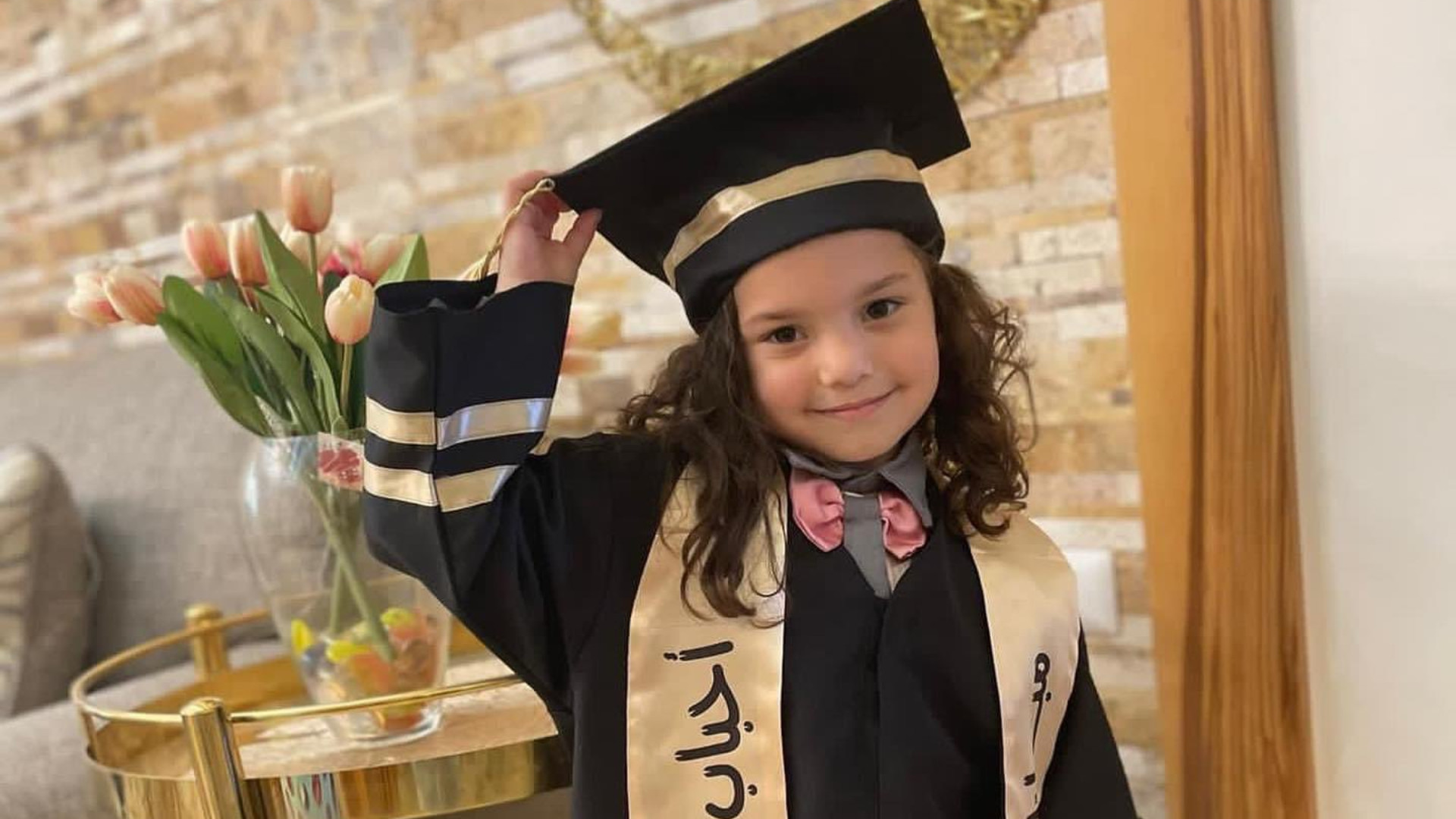
On 29 January 2024, Israeli forces shot and killed five-year-old girl Hind Rajab in Tal al-Hawa, Gaza City, along with six of her family members.
Five-year-old Palestinian girl Hind Rajab was shot and killed by Israeli forces (Supplied)
When two Palestinian Red Crescent paramedics drove to rescue her, Israeli forces shelled their ambulance and killed them too. The commission concluded the 401st Brigade of the 162nd Division deliberately shot the family and obstructed the medical rescue.
On 24 January 2024, Israeli soldiers shot dead a 15-year-old boy in Khan Younis while he held a white flag, stepping out of his family home following an Israeli evacuation order. When his 20-year-old brother ran to help him, Israeli soldiers shot him too. The commission found the 98th Division was operating in the area and concluded the shooting was deliberate.
An Israeli quadcopter operator shot a 10-day-old baby boy in the head while his mother was breastfeeding
On 12 April 2024, an Israeli quadcopter operator shot a 10-day-old baby boy in the head while his mother was breastfeeding him inside a tent in Nuseirat camp. The baby survived but now suffers from seizures. The commission concluded the operator had a clear view inside the tent before firing.
On 24 August 2024, an Israeli quadcopter operator shot a four-year-old girl in the head while she was eating with her family in their tent in Khan Younis. She survived but her left side was paralysed. The commission concluded she was deliberately targeted.
On 10 December 2024, an Israeli sniper shot an eight-year-old boy in the buttock while he was playing outside in the Bureij refugee camp. The bullet lodged in his abdomen wall. Surgeons removed a 3cm bullet. The commission found the 99th Division was operating in the area and assessed the boy was hit by an Israeli sniper rifle.
Several doctors told the commission they treated children with gunshot wounds sustained there.
A GHF truck driver who spent seven weeks in Gaza told investigators he witnessed two teenagers shot in the head by Israeli soldiers while sprinting away. One soldier was overheard remarking that “fingers are light on the trigger”.
Children killed after ceasefire
The October 2025 ceasefire did not stop Israeli forces from killing children. The commission documented more than 100 children killed and hundreds more wounded in the weeks that followed.
Israeli forces redeployed to a newly established demarcation line inside Gaza known as the yellow line, shooting civilians including children who crossed it while trying to return to their homes or collect firewood.
Death toll in Gaza surpasses 73,000 as Israel continues post-ceasefire killings
On 29 November 2025, Israeli forces from the Kfir Brigade fired a drone strike that killed two brothers aged nine and ten near Bani Suheila in southern Gaza while they were gathering firewood for their wheelchair-bound father.
Israeli forces claimed the boys were suspects crossing the yellow line. The commission found the claim baseless: the boys were more than 300 metres from Israeli soldiers, were visibly children collecting wood, and the drone operator had an unobstructed view of them before firing.
On 10 December 2025, Israeli soldiers shot a 16-year-old boy from Jabalia camp and an Israeli tank then ran over his body.
213 children killed in West Bank
Israeli forces killed 213 Palestinian children in the West Bank, including East Jerusalem, between 7 October 2023 and 20 October 2025. The commission found that Israeli forces systematically targeted boys there as a distinct group, labelling them as “terrorists” or “future terrorists”.
On 25 January 2025, soldiers from the Israeli Menashe Brigade shot a two-year-old girl in the back of the head while she was having dinner with her family in south Jenin. She died immediately and is the youngest child killed by Israeli forces in the West Bank since 7 October 2023.
Palestinian children near Ramallah in the occupied West Bank, 22 April 2026 (Mohammed Torokman/Reuters)
On 28 January 2025, soldiers from the Israeli Ephraim Brigade shot a 10-year-old boy at his father’s house during a military incursion in Tulkarm.
CCTV footage showed the boy was unarmed. Israeli soldiers delayed the ambulance taking him to hospital for 30 minutes. One soldier told the boy’s father: “I am the one who shot your son. God willing, he will die.” The boy died of his wounds on 7 February 2025.
‘I am the one who shot your son. God willing, he will die’
– Israeli Ephraim Brigade soldier
On 16 November 2025, soldiers from the Israeli Paratrooper Battalion, operating under the Menashe Brigade, shot a 14-year-old boy during a military raid on the Al-Faraa refugee camp in Tubas.
Israeli soldiers then left him bleeding on the ground for 45 minutes while standing around him. One soldier filmed him on his phone while another placed a stone next to him, in what the commission assessed was an attempt to frame the shooting as a response to stone throwing. Israeli soldiers also pointed gun laser sights at the heads of paramedics to prevent them from reaching the boy, who died.
Israeli authorities withheld his body.
Settlers attacked and abducted children
In the first half of 2025, Israeli settlers carried out more than 1,000 attacks across 230 Palestinian communities.
In April 2025, two settlers abducted two siblings under five years old at knifepoint while they were playing outside their home, dragged them to an olive grove and tied them to a tree.
In August 2024, armed settlers abducted two 15-year-old boys herding cattle, beat them, blindfolded them, stripped them, and sexually assaulted them. A settler urinated on one of the boys and fractured his leg.
Children tortured and sexually abused
Israeli forces have detained over 1,655 children in the West Bank since 7 October 2023, 600 of them in 2025 alone.
As of 31 December 2025, 51 percent of child detainees were held under administrative detention, meaning imprisonment without charge, a record number.
Israeli soldiers subjected the detained children to beatings, blindfolding, handcuffing, stress positions on gravel, and terror by dogs from the moment of arrest. Israeli prison authorities denied children food, water and medical care.
‘I wished for death’: Sexual violence in Israel’s prisons is an ‘organised state policy’
One 15-year-old boy held at the Sde Teiman facility told the commission he was the only child among 70 adults in his cell. Israeli soldiers entered the cell with dogs and ordered detainees to lie on their stomachs before releasing the animals on them. He described his 23 days there as “the worst days of my life”.
Another 15-year-old, detained during mass arrests in Gaza in December 2023, told the commission that Israeli interrogators electrocuted him through a needle inserted into his shoulder, denied him food and water, and forced him into painful positions for up to 12 hours at a time over 54 days before releasing him at the Kerem Shalom crossing with no medical care and no means of reaching his family.
The commission also received testimony that Israeli prison guards raped boys in detention and subjected them to other forms of sexual violence as a systematic component of the detention regime.
On 22 March 2025, a 17-year-old boy from Ramallah died in Megiddo Prison, the commission said. Israeli prison authorities had been aware since December 2024 that he was suffering from head trauma, inadequate food and severe weight loss, but failed to provide proper care.
A post-mortem found he died from severe prolonged malnutrition. Israeli authorities withheld his body from his family for months. The commission found that Israeli prison authorities caused his death and that it amounted to the war crimes of torture, inhuman treatment and wilful killing.
Hospitals and neonatal units destroyed
Israeli forces attacked and forced the closure of all three major paediatric hospitals in Gaza within the first two months of hostilities.
Before October 2023, Gaza had 178 incubators across eight neonatal intensive care units. Israeli attacks and the siege reduced that number to 54 by November 2024. Medical staff described placing three or four infants in a single incubator.
At Al-Nasr Paediatric Hospital, Israeli forces cut electricity and prevented staff from evacuating patients, giving them only 30 minutes to leave. When a ceasefire allowed access weeks later, investigators found four babies decomposing in the neonatal unit, still attached to defunct life-support machines.
The grandmother of baby Idres Al-Dbari, who was killed in an Israeli strike, holds his body at Abu Yousef al-Najjar hospital, Rafah, on 12 December 2023 (Reuters/Mohammed Salem)
At least 15 newborns died of preventable hypothermia between December 2024 and February 2025 as a direct result of conditions imposed by the Israeli siege.
Israel’s blockade and attacks on reproductive healthcare caused miscarriage rates to increase by up to 300 percent after October 2023.
By October 2024, women in Gaza were three times more likely to die in childbirth than before the war.
By March 2026, 70 percent of newborns were classified as premature or underweight.
Schools bombed, demolished and occupied
Israeli forces directly hit 459 of Gaza’s 564 school buildings between 7 October 2023 and October 2025.
Over 97 percent of schools were damaged or destroyed.
‘In my childhood, I’ve always dreamed of blowing up my school. Today I’m blowing up a school. Wow’
– Israeli soldier
Children in Gaza have missed three full school years, and more than 668,000 school-age children were denied access to formal education.
Israeli soldiers filmed themselves demolishing schools and posted the videos online. In one video, a soldier says before blowing up a school: “In my childhood, I’ve always dreamed of blowing up my school. Today I’m blowing up a school. Wow.”
In another, a soldier mocks Palestinian students, saying they will “not be engineers any more”.
The commission found that Israeli forces from the 252nd Division carried out controlled demolitions of at least two UN schools in Beit Hanoun in November 2023.
Israeli forces also seized schools and used them as military bases, weapons stores and barracks.
In the West Bank, Israeli authorities issued demolition orders against 85 schools. Israeli forces raided and expelled more than 550 children from three UN schools in Shu’fat Camp in May 2025.
Siege starved children and brought back polio
By October 2025, Unicef reported 151 child deaths from malnutrition caused by Israel’s siege and blockade. July 2025 was the deadliest month, with 24 children under five dying from malnutrition.
Israel’s blockade also halted a fourth round of polio vaccinations for 600,000 children planned for April 2025. Polio returned to Gaza in August 2024 after 25 years of eradication. It was confirmed in a 10-month-old baby who, a year later, was still unable to stand or move his legs.
Soldiers destroyed children’s belongings
The commission documented at least 35 instances of Israeli soldiers filming themselves in Palestinian homes, schools and public spaces destroying or mocking children’s toys, trophies and belongings, and posting the footage online.
In one video, an Israeli soldier rides a child’s wooden toy horse in a wrecked apartment. In another, Israeli soldiers hang a teddy bear by its neck from a tank barrel.
The commission concluded these acts were not isolated but reflected a deliberate culture of dehumanisation across different units and time periods, with no disciplinary action taken by Israeli military commanders.
The legal findings
The commission concluded on reasonable grounds that Israeli authorities and security forces have continued to commit genocide, crimes against humanity and war crimes in Gaza, and war crimes in the West Bank.
On genocide, the commission found that Israeli forces’ deliberate targeting of children is one of the key elements establishing genocidal intent. Children embody the biological and social continuity of the Palestinian group. The commission found that Israeli forces killed children, caused them serious bodily and mental harm, and deliberately imposed conditions of life calculated to destroy them as part of the broader Palestinian group in Gaza.
She survived an Israeli raid that left babies decomposing. Now she awaits treatment
On crimes against humanity, the commission found that Israeli forces’ killings and maiming of children amount to extermination and murder. Their mistreatment of children in detention amounts to torture and other inhumane acts.
On war crimes, the commission found wilful killing, torture and inhuman treatment, sexual violence, intentional attacks on civilian objects including hospitals, schools and orphanages, and the use of starvation as a method of warfare.
The commission named specific Israeli military units responsible for killings in individual cases and called for accountability for those with command responsibility. Israel did not respond to any of the commission’s 13 requests for information or access.
Editorial Published June 25, 2026 Updated about 5 hours ago
GOVERNMENTS in the US have rarely reflected on follies they have committed beyond their borders. Failed nation-building experiments and military misadventures by both Republican and Democrat administrations have not led to internal reflection on these misguided policies.
But the Iran debacle should lead to some sort of reckoning, considering that America has been unable to achieve any of its objectives in the war, and may have actually helped give Iran the upper hand in the region — just as it did with the removal of Saddam Hussein in Iraq.
Of course, the current US president is not known for soul-searching and deep contemplation over foreign policy choices. Donald Trump prefers to think aloud, especially on social media. This has disastrous implications. For instance, at the recent negotiations in Switzerland, the Iranians boycotted the session after Mr Trump tweeted fresh threats. If talks are to succeed, the American leader must desist from issuing expletive-laden threats on social media, and let diplomacy take its course.
Within America, the Iran war is deeply unpopular. The US Senate on Tuesday passed a largely symbolic resolution calling for an end to the war, which was supported by at least four Republicans. Chuck Schumer, the top Democrat in the Senate, has called the Iran war “Trump’s historic blunder”, while numerous opinion polls show that most Americans want the war to end.
Some Iran hawks in Washington are also of the view that the MoU currently under discussion is a ‘victory’ for Iran. Certainly, as compared to past American misadventures, such as the Iraq war where the US put boots on the ground to occupy a sovereign country, the Iran campaign has failed on nearly all fronts. In fact, where the MoU is concerned, Tehran has managed to secure most of its demands in the document, while also exercising greater control over the Strait of Hormuz.
There needs to be greater discussion within the US establishment about the mistakes Washington has made with regard to Iran. There should be a realisation that American militarism is a failed policy, achieving little while costing much in innocent lives and taxpayer dollars. Secondly, the Israeli stranglehold over US foreign policy also needs greater scrutiny.
America’s lawmakers need to decide if they want to put their country’s interests first, or pour more blood and treasure into protecting Israel, and sustaining the Zionist state’s violent expansionism.
Israel is the biggest source of instability in the Middle East, and it is high time the US ended its blind support to Tel Aviv, if it genuinely wants peace in the region. The Trump administration needs to calmly study the lessons of the Iran war, and stop making the same foreign policy mistakes the US has been doing for the past many decades.
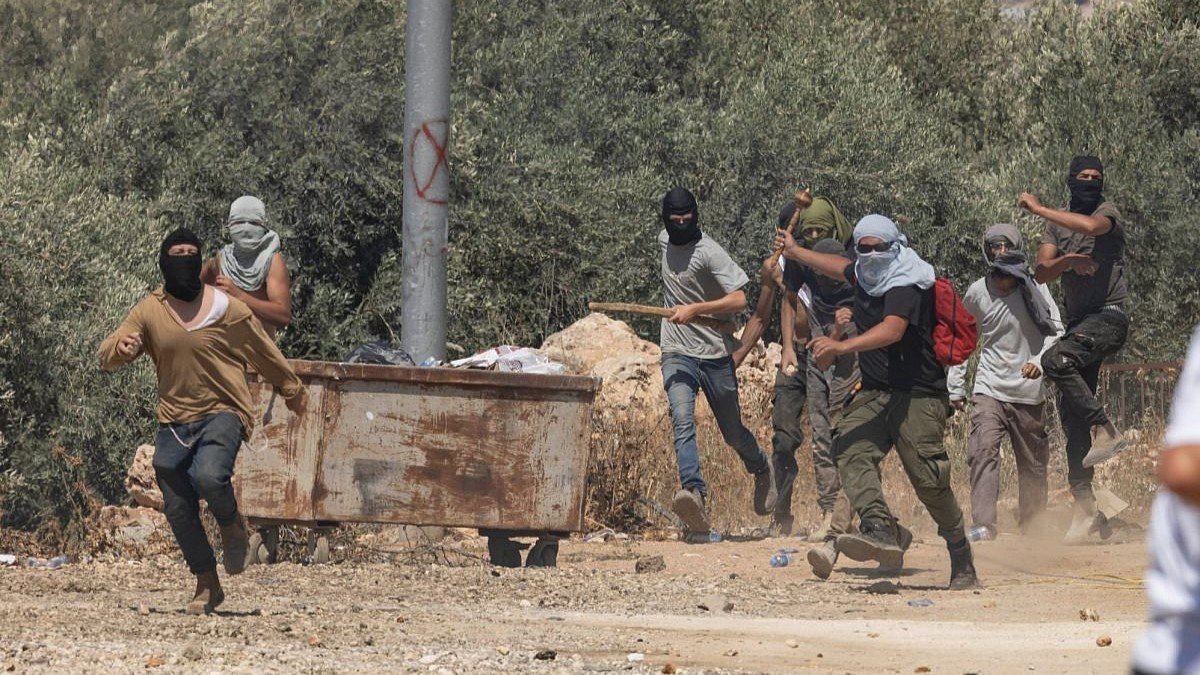
Illegal Israeli settlers launched a coordinated assault against Palestinians and their property in multiple areas of the occupied West Bank over the past 24 hours.
The assault began on 18 June and continued into the early hours of 19 June, with settler attacks persisting on Friday.
Settlers attacked homes in Khirbet al-Himsa, south of occupied Hebron, while also storming the town of Awarta, southeast of Nablus.
The illegal settlers also assaulted shepherds in the Anata plains east of occupied Jerusalem and targeted farmers near Jamala, east of Ramallah.
During the widespread attack, two new illegal settler outposts were established – one on the outskirts of the village of Burqa and one on the outskirts of Deir Abu Mashaal, near Ramallah.
Palestinian media reports said severe damage was inflicted on civilian infrastructure and economic assets in an effort to force Palestinians off their land.
In Al-Taybeh, a Palestinian family was assaulted inside their home before settlers severed their water and electricity lines.
Multiple vehicles were set ablaze or stolen. Later on Friday, settlers destroyed an electricity pole in Beita, south of Nablus.
Several cars and a house were also smashed by settlers in Kifl Haris, north of Salfit.
These massive attacks and pogroms take place on a regular basis.
Perpetrators are rarely prosecuted, and most of the pogroms take place with direct backing from or in coordination with Israeli military forces.
Former Israeli Prime Minister Ehud Olmert wrote in an opinion piece for Haaretz on 19 June that the settler attacks in the occupied West Bank “can no longer be tolerated,” while referring to it as a “systematic campaign of ethnic cleansing and crimes against humanity.”
In his Haaretz piece, the former premier wrote that the settler attacks are “managed, directed, encouraged and supported by the Israeli government.”
“The fight against Jewish terrorism in the West Bank must advance to the next stage and be waged with greater determination,” he added.
Olmert himself was responsible for war crimes during the 2006 Israeli war against Lebanon.
Since Israeli Prime Minister Benjamin Netanyahu’s most recent government took office in late 2022, authorities have accelerated plans for the de facto annexation of the West Bank and East Jerusalem.
In February, the Israeli government approved a land registration process allowing Israel to claim territory in the occupied West Bank as “state property” if Palestinians cannot prove ownership
Since then, scores of new illegal settlements have been approved.
The Iranian delegation led by Mohammad Baqer Ghalibaf, speaker of the Iranian Parliament, arrives to meet with the Pakistani delegation led by Prime Minister Shehbaz Sharif on June 21, 2026 in Obbuergen, Switzerland.
(Photo by Hamed Malekpour/Getty Images)
Abbas Araghchi, Iran’s top diplomat, specifically welcomed the announcement of a “deconfliction cell” aimed at “ensuring the termination of military operations in Lebanon.”
Iran’s top diplomat said late Sunday that peace negotiations in Switzerland have produced “major progress” despite US President Donald Trump’s belligerent military threats and Israel’s continued assault on Lebanon, both of which have risked derailing the high-stakes talks.
Abbas Araghchi, Iran’s foreign minister, credited “tireless Pakistani and Qatari mediation” with securing commitments to establish a “deconfliction cell” to ensure “the termination of military operations in Lebanon,” as required under the recently signed memorandum of understanding (MOU).
Araghchi added that negotiators agreed to an end to the US blockade on Iran, the release of some of Iran’s frozen assets, and a “major reconstruction and development plan” for Iran, whose delegation reportedly left the Swiss negotiating venue on Sunday in response to Trump’s threat to assassinate Iranian diplomats and “take over” the Middle East country. The threats violated the terms of the MOU, which requires parties to “refrain from the threat or use of force against each other.”
In a joint statement late Sunday, the governments of Pakistan and Qatar said that negotiators agreed on “a roadmap towards reaching a final deal within 60 days, laying the foundation for the immediate commencement of further technical talks.
“In addition, a communication line between the parties has been formed… to avoid incidents and miscommunication with the aim of safe passage for commercial vessels through the Strait of Hormuz,” the statement continued. “The mediating parties will continue to do their utmost to ensure that the negotiations continue to be conducted in a constructive atmosphere with the aim of reaching a final deal.”
No paywall. No ads. No billionaire owner. Just you.
Common Dreams is funded exclusively by readers tired of news beholden to corporate interests. Our monthly supporters are the backbone of what makes that possible. Help us reach our Mid-Year Campaign goal of 450 new monthly supporters by July 1.
about:blank
🔊PR No: 1️⃣5️⃣1️⃣/2️⃣0️⃣2️⃣6️⃣
Joint Statement by the State of Qatar and the Islamic Republic of Pakistan Regarding the Conclusion of Lake Lucerne Summit, First High-Level Committee Meeting with Participation of the United States of America and the Islamic Republic of Iran pic.twitter.com/2G3PAf7LVY — Ministry of Foreign Affairs – Pakistan (@ForeignOfficePk) June 22, 2026
The optimistic comments from Iran’s foreign minister and mediators came after the first round of formal talks in Switzerland got off to a shaky start, with Iran’s delegation postponing its arrival due to a deadly barrage of Israeli airstrikes in southern Lebanon late last week.
Israel’s leadership, which is not a party to the peace negotiations, has refused to end its occupation of Lebanon, a major obstacle in the way of a final deal to end the war on Iran that the US and Israel launched in late February. Iran has said the Trump administration must force the Israeli government to end its assault on Lebanon.
In a social media post on Sunday amid the negotiations in Switzerland, Israeli Defense Minister Israel Katz declared that “Israel has no intention of withdrawing from the Beaufort, which is an integral part of the security zone in Lebanon and essential for the defense of the Galilee settlements and IDF forces.”
“As Prime Minister [Benjamin] Netanyahu and I have clarified—Israel will not withdraw from the security zone in Lebanon,” Katz added.
THE fate of Lebanon could determine whether the recently signed MoU between the US and Iran survives.
True to form, Israel is doing all possible to ensure the nascent peace deal is destroyed before the proverbial ink dries, as it continues to mercilessly pound Lebanon. While a supposed ceasefire was announced on Friday, Israeli attacks in Lebanon continued yesterday, with a large number of casualties reported, as the Zionist state hit both the southern and eastern parts of the Arab state in apparent pursuit of its arch-foe Hezbollah.
Tragically, a large number of non-combatants have also been killed in Tel Aviv’s murderous forays, with even steadfast supporters like US President Donald Trump expressing displeasure over its bloodstained tactics.
But the Israeli leadership seems very clear on what it wants to do. For example, the Israeli prime minister has refused to end the occupation of southern Lebanon, while the extremist national security minister has said that “Lebanon must burn”. If this happens, the Iran-US MoU — and the entire region including Israel— may also burn.
At one end of the spectrum, the signatories of the MoU, as well as nations such as Pakistan, which have played key roles in finding a diplomatic off-ramp, are again actively trying to take the negotiation process forward. At the other end, Israel is hell-bent on sabotaging the process.
The international community, principally the US and Europe, must be firm with their friends in Tel Aviv and tell them that their destabilising behaviour must end. The past few months have proven that the biggest threat to Middle East peace is not Iran, but Israel, which has attacked one sovereign state after the other, along with carrying out the Gaza genocide. It must be stopped before it destroys a hard-won chance at peace.
While nearly all US administrations in the past — as well as European states — have mollycoddled Israel and ignored its atrocious behaviour, this time the tone in Washington seems to be hardening. For example, US Vice President J.D. Vance has told Israel to “wake up and smell the reality of the situation”, with reference to Tel Aviv’s displeasure with the Iran deal.
But tough words will not be enough. If the US wants Israel to change its bad behaviour, it must withhold the funds and weapons that are needed by the Zionist war machine to keep functioning. Israel has hardly any friends left in the world, and if the US starts asserting itself, Tel Aviv should listen.
The MoU is unambiguous: the ceasefire must apply to all fronts, including Lebanon. Either Israel must silence its guns and withdraw from all of Lebanon, or face isolation and boycott from the international community until it mends its ways.
On 19 June 2026, I was on “Judging Freedom” talking with the Judge about the central issue of the day — the Memorandum of Understanding that Iran and the United States worked out to put an end to the war between them.
There is no question that Iran won the war and forced the US to concede to almost every one of its demands. The reason is simple: if the war continued, the international economy was destined to go off the precipice in the next couple months. Iran’s control of the Strait of Hormuz gave it a stranglehold on the world economy. President Trump explicitly said we were looking at an “economic catastrophe” and that he did not want to be remembered as the second coming of Herbert Hoover, who will be forever identified with the Great Depression of the 1930s.
Israeli leaders and the Israel lobby were outraged that Trump ended the war on terms so markedly favorable to Iran. Of course, they had no alternative strategy for rescuing the situation and they seem oblivious to the grave damage that would be done to the international economy if the status quo remained in place or especially if the bombing started up again. Unsurprisingly, Trump and Vice President Vance made it clear to the Israelis and their supporters in the US that the war had to end and that they could not stand in the way of that outcome. Once again, we see manifest evidence that Israel, which was principally responsible for convincing Trump to launch this disastrous war and now wants to prevent a settlement, is an albatross around America’s neck.






 (Photo credit: X)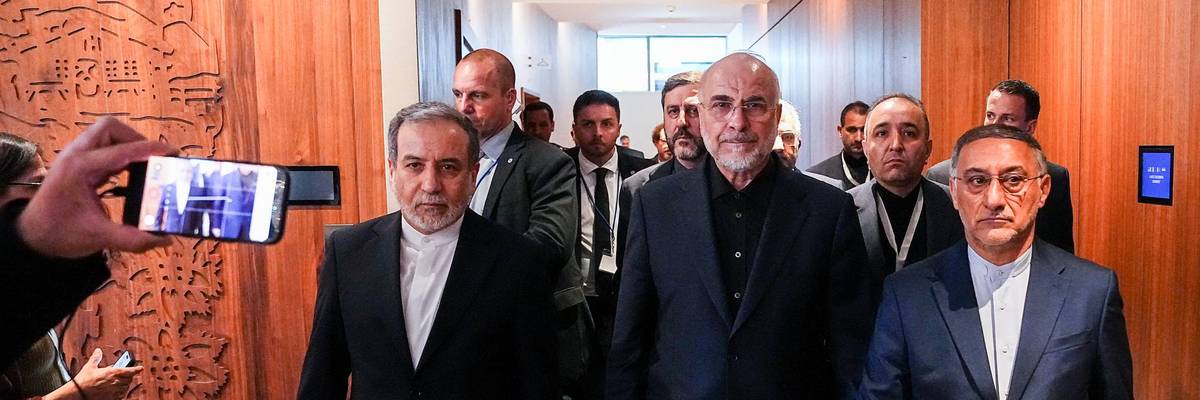

 Peace and Justice Post
You must be logged in to post a comment.