Archive for the ‘Uncategorized’ Category

EXCLUSIVE: Marco Rubio Is Deliberately Blocking Trump From Cuba Talks

February 10, 2026

The Secretary of State has told the president that talks are happening with high-level Cuban officials. No such talks exist. Purported negotiations in Mexico? Actual fake news.

Ryan Grim, Noah Kulwin, and José Luis Granados Ceja

Feb 09, 2026

A crisis is rapidly developing in Cuba, as the Trump administration’s efforts to block fuel from reaching the island have become increasingly effective since an executive order threatened tariffs on any country trading with Cuba. Mexican President Claudia Sheinbaum has buckled under the pressure and halted oil deliveries to Cuba. Drop Site’s José Luis Granados Ceja reports on the catastrophic consequences of the energy starvation.

Read his dispatch here.

Meanwhile, back in Washington, President Trump claims that negotiations are underway to resolve the standoff. That, it turns out, is simply false—a lie being told to him by Secretary of State Marco Rubio as part of his ambitious play to overthrow the Cuban government.

The story below is written by Noah Kulwin, who reported from Havana; Granados Ceja, who reported from Mexico City; and myself. This kind of reporting isn’t cheap, but is made available to the public for free thanks to readers who fund Drop Site News.

Help us keep pushing by making a tax-deductible donation today.

Support Drop Site News

If you haven’t upgraded your subscription, please consider doing so.

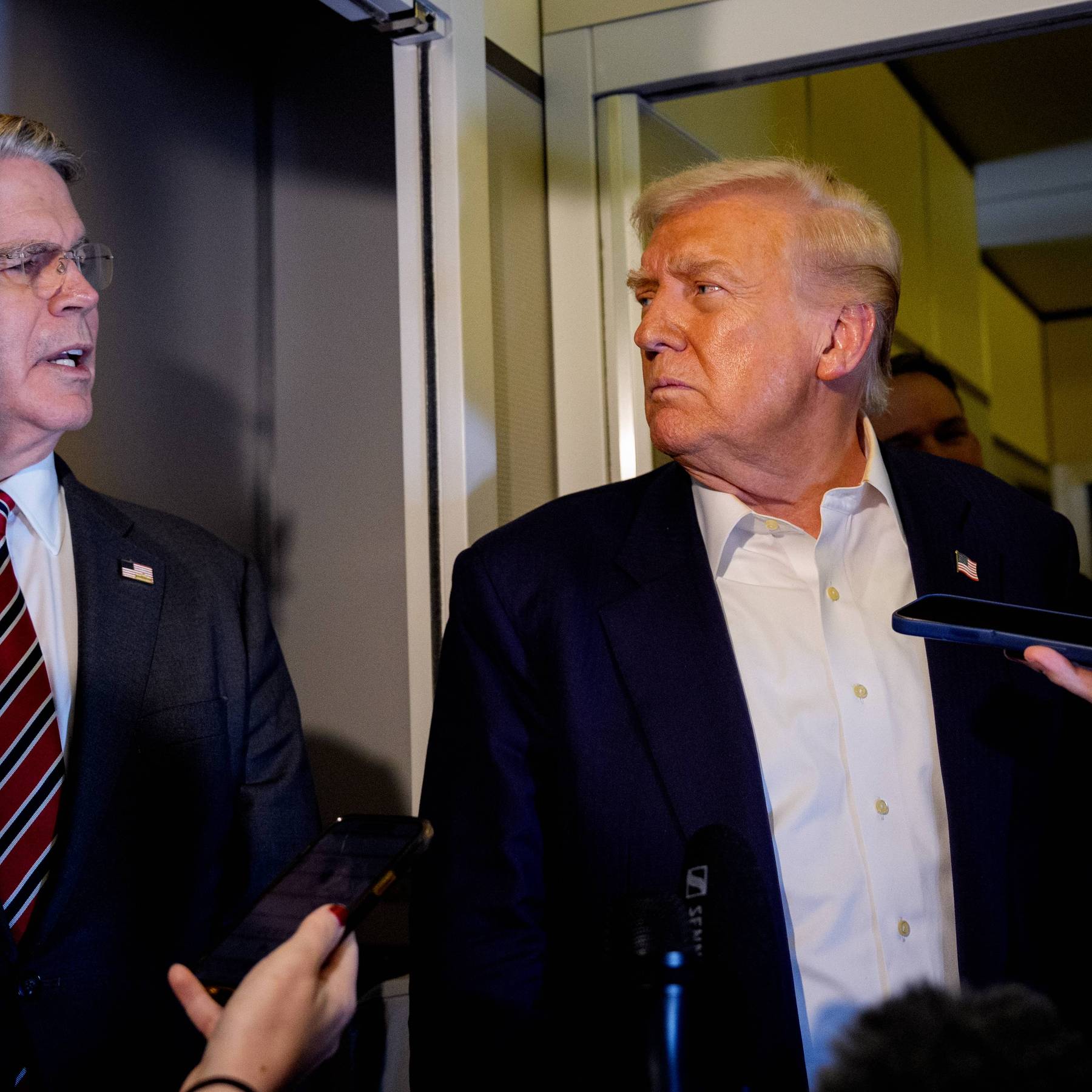
Secretary of State Marco Rubio hands a note to President Donald Trump during a meeting with U.S. oil companies executives at the White House on January 9, 2026. Photo by SAUL LOEB / AFP via Getty Images.

To hear President Donald Trump tell it, the United States is deep in negotiations with Cuban government officials as the U.S. applies maximum pressure to the island. “We’re talking to the people from Cuba, the highest people in Cuba, to see what happens,” Trump told reporters at his Mar-a-Lago resort on Sunday, February 1. “I think we’re going to make a deal with Cuba.”

Cuban leaders, meanwhile, have said they are open to negotiations on everything from human rights to democracy to tourism and direct foreign investment. Cuban President Miguel Díaz-Canel said in a recent press conference that Cuba is willing to engage in dialogue with the United States on any issue, provided talks take place without pressure or preconditions, on the basis of respect for Cuban sovereignty. Senior Cuban leaders reiterated to Drop Site that the government is serious about being open to wide-ranging talks. And Trump is no stranger to the island’s potential for American companies, having himself long held a registered trademark for a Trump Havana property that he has annually renewed.

All the evidence would seem to suggest that the opportunity for Trump to strike a historic deal is at hand. But, despite the president’s claims, there are and have been no negotiations involving high-level officials between Havana and Washington, according to five Cuban and American officials, all of whom asked for anonymity given the sensitivity of the Cuba-U.S. relationship.

When it comes to Trump’s claims of those talks, it turns out he isn’t lying. Instead, sources tell Drop Site, he’s being lied to. “He’s saying that because that’s what Marco is telling him,” said a senior Trump official, referring to an internal effort by Secretary of State Marco Rubio to make Trump believe that the U.S. and Cuba are engaged in serious negotiations without ever doing so. The idea, the source said, is that in a few weeks or months, Rubio will be able to claim that the talks were futile because of Cuban intransigence. With diplomatic off-ramps being blocked, this would make Rubio’s vision of regime change the only path forward for an administration loath to reverse course on anything.

Asked about the fact that Rubio is misleading Trump about talks that aren’t going on, the State Department’s press office stood by the claim that such negotiations are indeed happening, forwarding along comment from an administration official: “As the President stated, we are talking to Cuba, whose leaders should make a deal. Cuba is a failing nation whose rulers have had a major setback with the loss of support from Venezuela and with Mexico ceasing to send them oil.” The statement offered no evidence the talks are taking place, named no officials participating, no dates of any meetings, nor did it identify a location where the supposed talks are happening.

Trump, meanwhile, has indicated he isn’t interested in an ideological confrontation with Cuba. This, sources suggest, is one way to understand why, after kidnapping Venezuelan President Nicolás Maduro, the U.S. has made Venezuela roll back key Chávez-era oil legislation via a reform that opens up the country to foreign investment instead of changing its regime. Rubio, meanwhile, pushed hard internally for a full regime change in Venezuela, but had to settle for merely removing Maduro. Ultimately, though, for Rubio, the real prize has always been Cuba.

The Cuban-American Rubio answers to a political base in south Florida that would revolt if he struck any deal normalizing relations with the communist government—and who, ultimately, would have the power to undo him. Rubio’s rise through Florida and national politics — which now has him on the cusp of the Oval Office — has been accompanied by a string of corruption scandals, yet with unified support back home, he has managed to emerge with a relatively clean reputation nationally. If Trump successfully lands a deal with the Cuban government that Rubio would have to sign off on, Rubio would be left to either betray his life’s cause and that of his backers in Miami, or resign in protest.

For Rubio’s opponents inside the administration, the moment represents an opportunity to make Cuba into his Waterloo.

No Dialogue

In the wake of Trump’s claims of high-level talks, confused Cuban officials insisted to Drop Site that no such talks were then underway, but that they were eager for them to start. Misinformation in the media, however, has muddied the situation.

On February 2, the day after Trump’s comments, Politico highlighted a report that the son of Raúl Castro had traveled to Mexico City for talks with the Central Intelligence Agency and asked in a headline: “Could a Castro become our man in Havana?”

The article, however, is sourced to 14YMedio, a news outlet run by Havana-based dissident blogger Yoani Sánchez, which itself based its reporting on a single, fantastical Facebook post made by a Spain-based Cuban journalist. Yet the Politico report began circulating in Washington and has been accepted as fact. Senior Cuban officials tell Drop Site there are no talks going on in Mexico or anywhere else.

“At the moment, we’ve had some exchanges of messages, but we cannot say we have set a bilateral dialogue at this moment,” Cuba’s Deputy Minister of Foreign Affairs Carlos Fernandez de Cossio affirmed in a CNN interview this past Wednesday. “Most things in Cuba dealing with the United States are linked to the highest level. It’s a large issue for us, so there’s no decision, no action taken that doesn’t involve the high level of government in Cuba.”

A “senior State Department official” told the New York Times recently that contact between the Cuban and U.S. government was “not substantive” and merely discussed migrant repatriation. Elaborating, a senior Cuban official told Drop Site that the contacts are purely technical, with the U.S. telling Cuban officials when flights with deported migrants would be heading to Havana, and Cuban officials acknowledging receipt of the message.

An article on Wednesday in the Spanish outlet ABC Internacional added to the confusion, claiming that Mexican official Efraín Guadarrama is facilitating the talks. A well-placed source with direct knowledge tells Drop Site Guadarrama is doing no such thing.

In the wake of the abduction of Venezuelan President Nicolas Maduro, top Cuban government officials have become increasingly interested in wide-ranging talks with the Trump administration—talks that could even include Rubio, a longtime foe of the government, multiple Cuban officials tell Drop Site. The only red line, they said, is that the island’s sovereignty is not up for negotiation.

Havana’s desire for talks, bordering on desperation, has been signaled to the United States through a variety of channels, including through press statements and recent interviews with the Associated Press and CNN. “Cuba reiterates its willingness to sustain a respectful and reciprocal dialogue with the Government of the United States,” the Cuban foreign ministry said in a February 1 release, “directed toward concrete outcomes, grounded in mutual interest and international law.”

The ministry added that Cuba was willing to “broaden” the scope of talks, saying the country “firmly rejects being portrayed as a threat to the security of the United States. It has never engaged in hostile actions against that country, nor will it permit its territory to be used against any other nation. Cuba, on the contrary, is prepared to resume and broaden bilateral cooperation with the United States in addressing shared transnational threats, while unwaveringly defending its sovereignty and independence.”

In an interview with Newsweek, Cuban Permanent Representative to the U.N. Ernesto Soberón Guzmán said Cuba would be happy to work with Trump on immigration, drug interdiction, health research—he noted Trump’s praise for Cuba’s relatively lower rates of autism—and other areas.

In addition to the ongoing economic crisis, the proximate cause for Cuban concern is an executive order issued on January 29 by President Donald Trump threatening heavy tariffs on “any other country that directly or indirectly sells or otherwise provides any oil to Cuba.”

Though not mentioned by name, the tariff threat is aimed at Mexico, whose state oil company has in recent years been the primary supplier of oil to the small island nation located 90 miles off the southern coast of Florida. In response, Mexico’s state oil company, PEMEX, has reportedly suspended at least one planned shipment of oil to its Cuban ally, leaving Cuba with an estimated two to three weeks’ worth of oil to keep the country running.

Overburdened, underfueled, and obsolete, Cuba’s electricity grid is barely hanging on, while the Cuban government publicly says it is preparing to administer life in the country with almost zero power. On Friday, ministers began to roll out a nationwide energy rationing plan. The measures include cutting mass transit, slashing individual gasoline allotments, and reducing in-person days for secondary school students. While Americans sat down for Super Bowl Sunday, Cuban authorities told airlines there was only one day’s supply of aviation fuel left in the country. On Monday, the U.S. intercepted an oil tanker as far away as the Indian Ocean for allegedly planning to ship fuel to Cuba.

Read more from Drop Site on Cuba’s oil crisis here.

At a lengthy press conference this past Thursday, Cuban President Miguel Díaz-Canel reiterated his country’s emphatic openness to negotiation with the United States without “pressure” or “preconditions.” Broadcasted on TV and radio around the world, Díaz-Canel’s comments were made, as one Wall Street Journal reporter observed, “with an audience of one in Washington”—Donald Trump.

“We are a country of peace,” Díaz-Canel said. “We are not a threat to the United States.”

Noah Kulwin reported from Havana, José Luis Granados Ceja reported from Mexico City, and Ryan Grim reported from Washington, D.C.

Meta/Facebook and the suppression of voices for the national rights of Palestinians

February 9, 2026

 AI-oversight

Reports from human rights organizations, digital rights defenders, and media outlets have documented that Meta—the parent company of Facebook and Instagram—has engaged in what has been described as systematic censorship of Palestinian voices and content opposing Israeli military actions. While Meta has denied intentional, systemic suppression, citing errors in automated systems, multiple investigations indicate that the suppression is a result of a combination of policy, technology, and, in some cases, direct government influence.

Mysterious ‘peace’ groups are sending Americans pro-Israel texts

February 9, 2026

The orgs don’t appear to exist, but they trace back to a former Trump aide’s PR firm and an Israeli gov’t contract

Nick Cleveland-Stout, Responsible Statecraft,

    Feb 09, 2026

    google cta

    Jessica, a mother in Alabama, received a text on the evening of January 7.

    “Hi, this is John with Friends for Peace. We’re gathering views on Israel today and would like to hear yours. Got a moment to chat? Stop2End.”

    Jessica wondered if she would regret sharing her views — which she describes as America First and skeptical of the U.S. relationship with Israel — but John was reassuring and offered a “listening ear” to discuss the sensitive topic.

    Over the next three days, Jessica and John exchanged messages about Israel. John promoted a pro-Israel narrative, trying to convince Jessica that the U.S.-Israel relationship is about “mutual benefit and shared interests.”

    The only problem is that an organization called “Friends for Peace” does not appear to exist, and it’s unlikely that “John” is a real person. Rather than a peace organization, as the name might imply, the texting campaign appears to be led by former Trump campaign manager Brad Parscale and his firm Clock Tower X, which is carrying out a $9 million contract with the government of Israel.

    After Jessica told John that she gets a lot of her news from X, John responded saying she shouldn’t trust a lot of stories about Gaza. “There are networks of accounts pretending to be Gaza civilians and a lot of the content is fake. Always check your sources before believing anything. Learn more here,” he said. John then sent a YouTube video from an account called “Allies for Peace,” which claimed the narrative of suffering in Gaza was manufactured. “Bombs, starvation, collapsed buildings: all fabricated content…Don’t take every post at face value, check receipts, demand truth.”

    Allies for Peace’s YouTube channel was created in late October by a firm called Clock Tower X, founded by Parscale.

    And Jessica is not alone. Since November, an unspecified number of Americans have been receiving text messages from unknown numbers claiming to be from organizations called “Friends for Peace” and “Partners in Peace” asking their views on Israel, promoting Israel as a U.S. ally, and pushing links to websites and videos created by Clock Tower X.

    Another source was sent a video called “Tunnels” by “Sara from Friends for Peace.” The video, which was also created by Parscale’s firm, features a clip of an episode of the Joe Rogan podcast with British commentator Douglas Murray. In the edited clip, Murray claims that “you go into a hospital [in Gaza] and you know there will be grenades or tunnel entrances building an infrastructure of terror.” Many of the comments on the video claim they were sent the link by the text message campaign. “I got this from a scam text too. Lmao” reads the top comment.

    RS could not identify an organization called “Partners in Peace” or “Friends for Peace” that corresponded with the description. During one text conversation, the campaign admitted that they “use different names” for the organization.

    Clock Tower X’s contract with the Israeli Ministry of Foreign Affairs, which increased from $6 million to $9 million in December, includes, “Delivery of monthly updated audience segmentation and sentiment analysis, including Gen Z and other key U.S. demographic groups,” which could correspond to the mass texting campaign. As part of the contract, Parscale’s firm is also integrating pro-Israel messaging into Salem Media Network, a conservative media conglomerate that hosts high-profile podcasts such as “The Right View with Lara Trump” and “The Dinesh D-Souza Podcast.”

    Parscale is carrying out this work as part of “project 545” an Israeli campaign to “amplify Israel’s strategic communication and public diplomacy efforts.” Eran Shayovich, Parscale’s point of contact in Israel and the chief of staff at Israel’s Ministry of Foreign Affairs, posted on Linkedin about the success of the project last month. “A year and two months into a long war, when the image of the State of Israel was at one of its lowest points, and too many attempts to fight on the public diplomacy front had not been particularly successful,” he wrote. “In the past year, we began to fight back seriously.”

    “Allies for Peace” uploaded its first video on YouTube — which states at the end that it was “distributed by Clock Tower X LLC on behalf of the state of Israel” — two weeks before the mass texting campaign began, further linking the effort to Parscale’s firm.

    Parscale did not respond to a request for comment about his firm’s connections to the mass texting campaign.

    responsiblestatecraft.org

    Hamas leader Khaled Meshaal rejects foreign rule in Gaza

    February 9, 2026

    Political chief says group will not accept disarmament calls from Israel and US

    Hamas political leader Khaled Meshaal (left) speaks at a conference in the Qatari capital, Doha, on 1 May 2017 (Karim Jaafar/AFP)

    By MEE staff

    Published date: 8 February 2026 13:43 GMT | Last update:1 day 23 mins ago

    Hamas political leader Khaled Meshaal said the Palestinian movement would reject any attempt at foreign domination of Gaza.

    Speaking at a conference in Qatar’s capital, Doha, Meshaal added that Hamas would also not relinquish its weapons despite calls for disarmament from Israel and the US.

    “Criminalising the resistance, its weapons and those who have led it is something we should not accept,” he said.

    “As long as there is an occupation, there is resistance. Resistance is the right of people under occupation. It is something nations are proud of.”

    Following the implementation of a nominal ceasefire on 10 October, US President Donald Trump’s plan to end the conflict in Gaza entered its second phase in mid-January.

    New MEE newsletter: Jerusalem Dispatch

    Sign up to get the latest insights and analysis on Israel-Palestine, alongside Turkey Unpacked and other MEE newsletters

    This phase is set to include the disarmament of Hamas and the gradual withdrawal of the Israeli army from the enclave.

    According to a report in Haaretz earlier this week, Israeli officials are exploring ways for Israel to benefit economically from Gaza’s reconstruction.

    Middle Eastern leaders including Netanyahu and Sisi line up to join Trump ‘Board of Peace’

    Read More »

    Senior finance ministry officials discussed potential opportunities with senior Israeli army officers, the Israeli newspaper reported on Wednesday, including the construction of a highway in Israel connecting to Gaza.

    It was suggested that countries seeking access to Gaza via Israel would pay for Israeli highway construction.

    This would include a highway along the southern Route 232, which would provide better access for Palestinians travelling between Gaza and the occupied West Bank. 

    Israeli officials also discussed economic opportunities over the supply of electricity to Gaza. 

    Hamas, which has governed the territory since 2007, has ruled out disarmament, but has indicated it is open to handing over its weapons to a future Palestinian-led authority.

    Governance of the territory would be temporarily transferred to a committee of 15 Palestinian technocrats, under the authority of the “Peace Council” chaired by Trump.

    Meshaal said the “Peace Council” should adopt a “balanced approach” that would allow for the reconstruction of Gaza and the influx of humanitarian aid.

    “We adhere to our national principles and reject the logic of guardianship, any foreign intervention, or the return of a mandate in any form,” Meshaal said. 

    “Palestinians must be governed by Palestinians. Gaza belongs to the people of Gaza and to Palestine. We will not accept foreign domination.”

    Witkoff and Kushner Visit US Aircraft Carrier in Arabian Sea After Iran Talks in Oman

    February 9, 2026

    Trump deployed the aircraft carrier USS Abraham Lincoln to the region to prepare for a potential attack on Iran

    by Dave DeCamp, Antiwar. com, February 8, 2026 at 4:50 pm ET

    US special envoy Steve Witkoff and Jared Kushner, President Trump’s son-in-law, visited the US aircraft carrier Abraham Lincoln as it was operating in the Arabian Sea on Saturday after meeting with Iranian officials in Oman the day before.

    Trump deployed the US aircraft carrier and its strike group to prepare for a potential attack on Iran, and Witkoff and Kushner’s visit to the US warship signals to Iran that the threat of a US bombing campaign is still very real despite the diplomatic engagement.

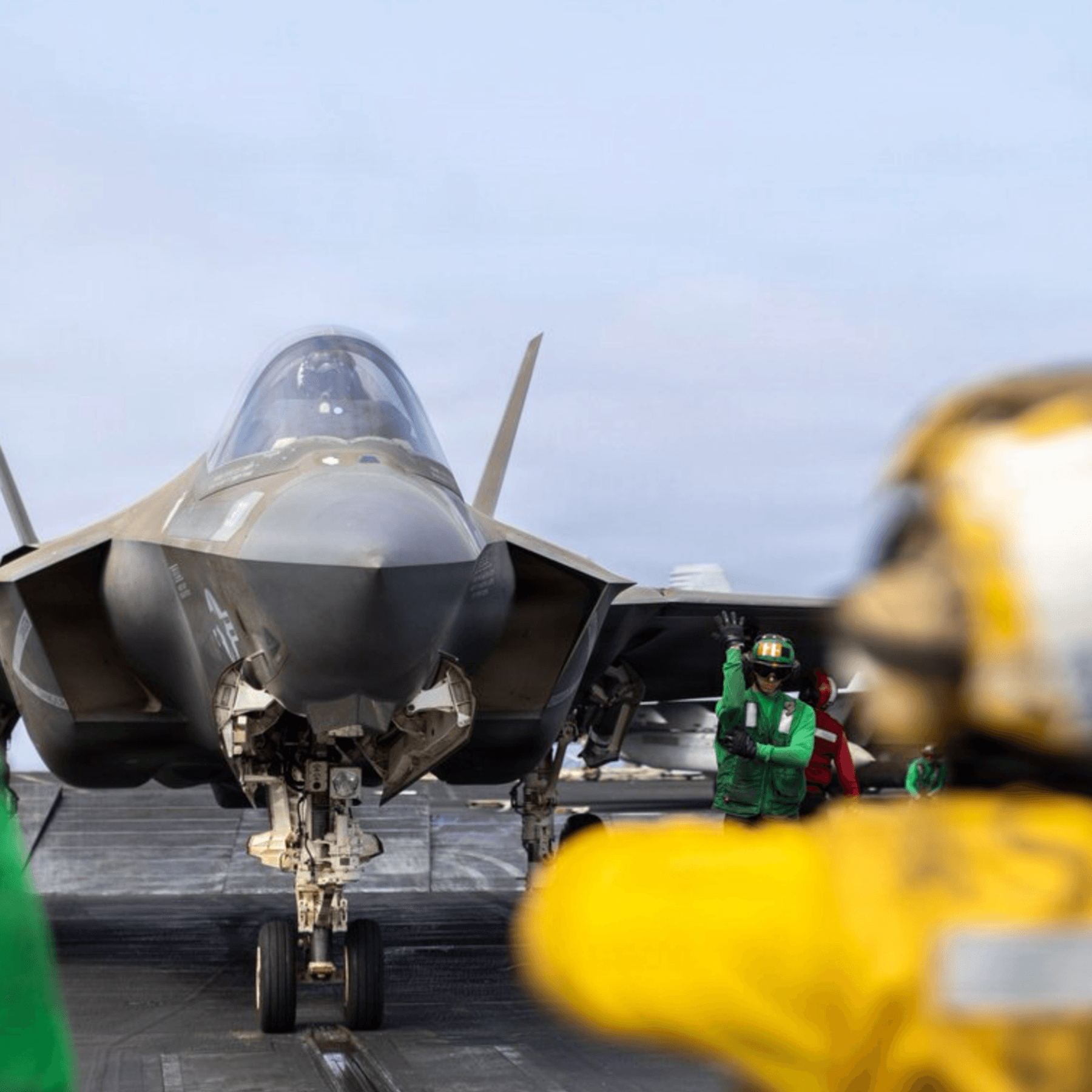
    Video released by US Central Command shows Witkoff and Kushner standing on the flight deck of the Lincoln next to Adm. Brad Cooper, the commander of CENTCOM, as aircraft take off. An F-35 fighter jet from the Lincoln shot down an Iranian drone in the Arabian Sea on February 3.

    Steve Witkoff, left, Jared Kushner, center, and Adm. Brad Cooper, right, observe flight operations aboard Nimitz-class aircraft carrier USS Abraham Lincoln in the Arabian Sea, February 7, 2026 (US Navy photo)

    While maintaining its threat to bomb Iran, the US has also ramped up the economic pressure by imposing new Iran-related sanctions, the same day Witkoff and Kushner met with Iranian Foreign Minister Abbas Araghchi. The sanctions targeted ships and companies the US accused of transporting Iranian oil.

    Ahead of the talks in Oman, US Treasury Secretary Scott Bessent boasted that the Trump administration’s “maximum pressure campaign” against Iran collapsed the country’s economy and sparkedthe protest and unrest that began at the end of December.

    Any diplomatic deal with Iran would need to include sanctions relief, but it’s unclear if an agreement will be reached, as Israel is pushing for the maximalist position, which is designed to sabotage the talks and ensure war.

    Across the West, speaking for Palestine is now a crime

    February 9, 2026

    Ali Abunimah Rights and Accountability 25 January 2026

    BERLIN, GERMANY - DECEMBER 27: Police detains a demonstrator as protesters march in support of Palestinians after gathering in front of Neukolln City Hall (Rathaus Neukolln) in Berlin, Germany on December 27, 2025.
    Police detain a demonstrator, as protesters march in support of Palestinian rights in front of Neukolln City Hall, Berlin, Germany, 27 December 2025. İlkin Eskipehlivan Anadolu Images

    Exactly a year ago today, I was abducted from a Zurich street by plainclothes police, bundled into an unmarked car and taken to prison.

    I was walking with one of my hosts toward a venue where I was scheduled to speak at an event organized by Swiss activists about Israel’s genocide in Gaza.

    During my detention, Swiss intelligence officers tried to question me without my lawyer present – an apparent attempt, I told Swiss academic Pascal Lottaz in a recent interview, to manufacture grounds for my arrest retroactively.

    After three days in detention, I was handcuffed, caged in a police van, taken to the airport and expelled.

    The operation achieved its purpose: preventing me from participating in public events about Israel’s crimes. But it failed to intimidate or silence me.

    In December, Zurich’s Administrative Court ruled that my detention violated both the Swiss constitution and the European Convention on Human Rights.

    I have filed additional cases, including a criminal complaint against Nicoletta della Valle, the Israel-linked police official later identified by a parliamentary investigation as having ordered the action against me.

    As I told Lottaz, what happened to me is not exceptional. It is part of a widening campaign across the so-called West to silence journalists, students and activists who expose Israel’s crimes or advocate for Palestinian rights.

    You can watch our conversation on his Neutrality Studies channel in this video:

    “One of the lucky ones”

    Among the most shocking cases is that of Leqaa Kordia, a Palestinian woman and the last person still held in US federal detention in connection with protests at Columbia University.

    On 13 March last year, Kordia attended what she believed was a routine, voluntary check-in at ICE headquarters in New Jersey.

    Instead, she was transported to a detention facility in Texas, 1,500 miles away from her home, her mother and her brother with special needs who relied on her support. “Inside the ICE facility where I’m being held, conditions are filthy, overcrowded and inhumane,” Kordia wrote recently for USA Today.

    “For months, I slept in a plastic shell, known as a ‘boat,’ surrounded by cockroaches and only a thin blanket.”

    The food is inedible and with no halal meals available, she has lost significant weight.

    “Still, I consider myself one of the lucky ones. Many women come and go through this hall of sorrows, and I try my best to help them where I can,” Kordia writes. “There are others with me who cannot afford legal representation. Some have diabetes or terminal cancer, or are wheelchair bound.”

    An immigration judge has twice ordered her release. The Trump administration has blocked it using an obscure procedural loophole – a practice now being challenged in federal courts, many of which have already ruled it unconstitutional. In September, US federal judge William G. Young ruled that the Trump administration’s campaign of arresting and deporting noncitizen students and faculty over Palestine advocacy violates the First Amendment.

    Last week, Young went further, finding that officials engaged in an “unconstitutional conspiracy” to suppress free speech.

    The ruling focused on five prominent targets: Mahmoud Khalil, Yunseo Chung, Mohsen Mahdawi, Rumeysa Ozturk and Badar Khan Suri.

    Khalil, who spent over three months in ICE custody, recently suffered a setback when a federal appeals court overturned an earlier ruling that found his detention and the effort to deport him likely unconstitutional.

    Although the government cannot lawfully re-detain him while appeals continue, it continues to display contempt for due process.

    “It looks like he’ll go to Algeria,” a Department of Homeland Security spokesperson said publicly.

    Khalil has vowed to continue fighting through every legal avenue.

    French woman imprisoned for exposing Israeli soldier

    Repression is no less severe in Europe.

    Last week, a court in the French city of Nice sentenced Amira Zaiter, founder of activist group Nice to Gaza, to 15 months in prison for “anti-Semitic” social media posts.

    Zaiter admitted to calling Illan Choukroune, a French citizen who served in the Israeli army, a “genocidaire.”

    “I will continue saying it,” Zaiter told the judge.

    This is not her first conviction.

    In June, a court sentenced Zaiter to six months in prison and a $7,000 fine – reduced from an original sentence of three years.

    She was first arrested in November 2024 for her posts on Twitter/X and for exposing an Israeli soldier who had returned to Nice after being in Gaza, according to Civic Space Watch, an EU-funded group that monitors rights violations.

    Widespread repression

    In October, UN experts called on Germany to stop criminalizing, punishing and suppressing Palestine-related speech.

    “We are alarmed by the persistent pattern of police violence and apparent suppression of Palestine solidarity activism by Germany,” the independent special rapporteurs said. I have had a taste of German authoritarianism myself: In 2024, German authorities threatened me with up to one year in prison and a fine if I addressed a conference in Germany from abroad via the internet.

    I did it anyway.

    In Australia, the government exploited the aftermath of December’s Bondi Beach attack to rush through “hate speech” laws that target Palestine solidarity.

    “These laws dramatically expand state power to police speech, association and protest,” according to APAN, the Australia Palestine Solidarity Network.

    “Their vague definitions and broad enforcement mechanisms create a chilling environment in which political advocacy – particularly pro-Palestinian organizing and opposition to Israel’s genocide and apartheid – is criminalized.”

    British repression

    Australia appears to be following Britain’s lead, where people are routinely arrested for holding signs opposing genocide and supporting Palestine Action – the protest group arbitrarily banned by the government as “terrorist.”

    Meanwhile, anyone is free to hold a sign in British streets stating “I support genocide,” without fear of arrest.

    Activists associated with Palestine Action continue to suffer severe persecution, including prolonged imprisonment, even though they have not been convicted of a crime.

    That prompted several detainees to go on life-threatening hunger strikes in an effort to force the government to ease their conditions and cancel arms contracts with Israel.

    One detainee, Umer Khalid, announced in recent days that he will stop taking fluids, after already refusing food for two weeks. Last week, Momodou Taal – a Cornell University doctoral student previously forced to leave the US over his Palestine advocacy – was detained at London’s Heathrow airport.

    A British citizen, he was interrogated for hours about his political views under the repressive Terrorism Act. Police also confiscated his laptop and phone.

    Taal – who has never been charged with any crime – called the interrogation, “a racist fishing expedition designed to intimidate and punish someone for advocating freedom and opposing mass slaughter.”

    Expanding censorship

    This repression coincides with expanding systems of censorship.

    Last week saw the finalization of the forced break-up and sale of TikTok to a group controlled by Larry Ellison, a pro-Israel billionaire whose family also recently took over CBS News. Meanwhile, Jonathan Greenblatt, the head of the Anti-Defamation League – the Israel lobby group that spied for apartheid South Africa during the 1980s – was caught on camera discussing efforts to “monitor and disrupt” left-wing and Palestine solidarity groups and report them to the FBI under the pretext of combating extremism. All of this is being carried out under governments that claim democracy, free speech and human rights as their highest values – yet readily sacrifice those rights to protect a genocidal apartheid settler-colony whose leader is wanted for crimes against humanity.

    Ali Abunimah’s blog

    Hamas leader rejects disarmament while Israeli occupation of Gaza continues

    February 8, 2026

    Speaking at Al Jazeera Forum, Khaled Meshaal describes discussion around Hamas handing over weapons as a continuation of a long effort to neutralise Palestinian armed resistance.

    Khaled Meshaal

    Head of Hamas abroad says ‘resistance is a right’ for occupied people

    By Al Jazeera Staff

    Published On 8 Feb 2026

    Share

    Hamas’s political leader abroad, Khaled Meshaal, has rejected calls to disarm Palestinian factions in Gaza, arguing that stripping weapons from an occupied people would turn them into “an easy victim to be eliminated”.

    Speaking on the second day of the Al Jazeera Forum in Doha on Sunday, Meshaal described the discussion around Hamas handing over its weapons as a continuation of a century-long effort to neutralise Palestinian armed resistance.

    Recommended Stories

    list of 4 items

    end of list

    “In the context that our people are still under occupation, talking about disarmament is an attempt to make our people an easy victim to be eliminated and easily exterminated by Israel, which is armed with all international weaponry,” he said.

    “If we want to talk about it … it is necessary to provide an environment that allows reconstruction and relief and ensures that the war does not reignite between Gaza and the Zionist entity. This is a logical approach, and Hamas — through mediators Qatar, Turkiye and Egypt, and through indirect dialogues with the Americans via the mediators — has reached, or there has been, an understanding of Hamas’s vision on that. Yes, this is something that requires great effort, not an approach of disarmament.”

    United States President Donald Trump last month sought to achieve a “comprehensive” demilitarisation of Hamas, threatening the Palestinian group with repercussions if it fails to do so. Hamas has refused to give up arms as long as Israel continues to occupy Gaza.

    • Now Playing02:32Israel is killing far more civilians than fighters in Gaza Israel is killing far more civilians than fighters in Gaza
    • Next05:25Fighting between Sudan's army, RSF forced more than 13 million children out of school Fighting between Sudan’s army, RSF forced more than 13 million children out of school

    In the second phase of a US-mediated “ceasefire” deal between Israel and Hamas, agreed in October last year, Washington says it will tackle the disarmament of Hamas and the deployment of an international peacekeeping force.

    But Israel continues to carry out near-daily deadly attacks across Gaza in violation of the “ceasefire” and has so far refused to withdraw from the so-called “Yellow Line” in eastern Gaza, an informal boundary separating more than half of the territory that remains under Israeli military control from the rest of the Strip. Israel has killed at least 576 Palestinians and wounded 1,543 others since the latest “ceasefire” started.

    “The problem is not that Hamas and the resistance forces in Gaza provide guarantees; the problem is Israel, which wants to take the Palestinian weapons … and put them in the hands of militias to create chaos,” he said.

    INTERACTIVE-GAZA CEASEFIRE-Feb 4, 2026_Death toll tracker-1765554400

    Meshaal pointed to Hamas’s proposals for an extended calm as an alternative to dismantling its military wing.

    “Hamas proposed a truce of five to seven to 10 years. This is a guarantee that these weapons are not used,” he said, adding that the mediating nations, who have a “deep relationship with Hamas, can form a guarantee”.

    Meshaal pointed out that if people were to go back to the origin of the conflict, the issue is one of “occupation and a people resisting occupation, with the right to self-determination and independence”.

    “Resistance is a right for people under occupation; it is part of international law and the heavenly religions. Resistance is part of the memory of nations,” he added.

    ‘Palestinian cause must have a solution’

    Meshaal said the October 7, 2023 attack on Israel was a “turning point”, arguing that the Gaza conflict forced the world to reopen a “second question” of the Palestinian cause itself.

    “The [Operation Al-Aqsa] Flood and this genocidal war have shaken the world. There is now a question – the Palestinian cause must have a solution,” he said, referring to the October 2023 attack, as he welcomed a growing number of nations recognising a Palestinian state, calling the moves “insufficient”.

    “The fact that 159 countries have approved or recognised the Palestinian state is good, but it is not enough. How do we turn the Palestinian state into a reality on the ground? That is the big question we are concerned with as Palestinians, as Arabs, as Muslims, and along with our friends around the world,” he said.

    Gaza: A Forever War

    Meshaal called on the Arab and Muslim states to move from a “defensive policy” to “offence” in the diplomatic arena.

    “We want to entrench that it is a pariah entity and a burden on security, stability, and international interests; to pursue it and turn it into an entity that loses its international legitimacy completely, just like the apartheid regime in South Africa,” he added.

    “We are the owners of a just cause, and the accused is the one who committed the war crime of genocide,” he said.

    War Failed, Losses Mount – Israeli General Says after Two Years of Genocide

    February 8, 2026

    The Palestine Chronicle, February 8, 2026

    Retired Israeli General Yitzhak Brik questioned the war’s outcome and sustainability. (Photos: video grab. Anadolu. Design: Palestine Chronicle)

    By Palestine Chronicle Staff  

    Over two years after the start of the Israeli genocide in Gaza, retired Israeli reserve general Yitzhak Brik acknowledged sweeping military, economic and social damage, saying the campaign has failed to achieve its primary objective.

    Key Takeaways

    • Brik said Israel failed to defeat Hamas after two years of war.
    • Hundreds of billions of shekels were lost economically.
    • Israeli soldiers face a rapidly expanding PTSD crisis.
    • Suicide attempts and depression rates surged among combat troops.
    • Ongoing multi-front deployments continue to strain the military.

    Failure to Achieve War Objectives

    In a Channel 13 television interview, Brik described the war as a prolonged conflict whose costs exceeded its gains.

    “In reality, we have lost national and social resilience over these two years, along with hundreds of billions of shekels,” he reportedly said.

    The retired general added that Israel had not succeeded in defeating Hamas, arguing that the campaign imposed heavy casualties while failing to produce a decisive outcome.

    “Over the past two years, we have borne severe losses,” Brik stated, referring to both battlefield casualties and long-term physical and psychological injuries among soldiers and civilians.

    He also warned of diplomatic repercussions, saying Israel had “lost credibility in the world,” and suggested Washington has intervened after viewing the war as strategically stalled.

    Expanding Psychological Crisis

    Parallel reports from Israeli institutions and healthcare providers indicate a growing mental-health emergency inside the military.

    According to data from the Israeli Security Ministry, around 22,300 soldiers and personnel are receiving treatment for war-related injuries, with approximately 60 percent suffering from post-traumatic stress disorder.

    Israel’s healthcare provider Maccabi reported that 39 percent of soldiers under its care sought psychological assistance, while 26 percent displayed symptoms of depression.

    A parliamentary committee documented 279 suicide attempts between January 2024 and July 2025, with combat soldiers representing the majority of cases.

    Authorities have expanded mental-health funding and alternative treatment programs, but specialists warn the scale of trauma could continue rising sharply in the coming years.

    Clinical psychologist Ronen Sidi, director of combat veteran research at Emek Medical Center, also noted widespread “moral injury,” describing emotional distress linked to actions taken during combat.

    Multi-Front War

    The war has extended across several arenas simultaneously.

    The Gaza Health Ministry confirmed that more than 72,000 Palestinians have been killed since October 2023, while thousands more have been killed in south Lebanon. 

    Israeli sources acknowledge over 1,100 Israeli soldiers killed during the same period. Resistance groups, however, have disputed these figures, arguing that Israeli authorities do not disclose the full extent of battlefield losses and that the real number of casualties is likely higher than officially reported.

    Despite a US-backed ceasefire announced in October, Israeli occupation forces remain active across large areas of Gaza, with continued operations causing further casualties in recent months.

    Israeli occupation troops also remain deployed in parts of south Lebanon and expanded areas in southern Syria.

    Internal Debate over Strategic Outcomes

    Brik’s remarks have intensified debate inside Israel regarding the feasibility of the war’s goals.

    The retired general has long argued that prolonged ground operations against an entrenched resistance movement would produce high costs without decisive victory.

    (PC, Al Mayadeen Israeli Media, Arab Weekly)

    The Working Class versus an Authoritarian Police State

    February 8, 2026
    1. working-class
    Federal Agents Descend On Minneapolis For Immigration Enforcement Operations

    Demonstrators participate in a rally and march during an “ICE Out” day of protest on January 23, 2026 in Minneapolis, Minnesota.

    (Photo by Stephen Maturen/Getty Images)

    Resisting Operation Metro Surge is expanding working-class consciousness about the corporate state’s responses to people’s resistance to oppression.

    Seth Sandronsky

    Feb 07, 2026 Common Dreams

    As people are watching online and in person, American federal immigration enforcement is stepping up a policy of an authoritarian police state using violence against immigrants and their native-born backers. Operation Metro Surge in Minneapolis is a primary case in point. It’s a thing of beauty to see the multiracial working class resistance rising there and across the US.

    Let us pay tribute to those who have lost their lives at the hands of federal immigration enforcement. Federal immigration agents have killed two US citizens—Renee Good and Alex Pretti—in 2026. Meanwhile, six immigrants—Heber Sanchaz Domínguez, Victor Manuel Diaz, Parady La, Luis Beltran Yanez-Cruz, Luis Gustavo Nunez Caceres, and Geraldo Lunas Campos—have died in Immigration and Customs Enforcement (ICE) detention in 2026.

    RECOMMENDED…

    Police stand guard as faith groups continue to protest at...

    Why Isn’t News of Trump Building Vast Concentration Camps Being Treated as a National Emergency?

    US-POLITICS-TRUMP

    Five-Alarm Fire Warning After Trump Says ‘Republicans Ought to Nationalize the Voting’

    One thing is clear to me. Resisting Operation Metro Surge is expanding working-class consciousness about the corporate state’s responses to people’s resistance to oppression. The political point is that given such current circumstances, conditions of adversity can and do serve as a basis for working-class solidarity across demographic differences. Working-class people of all backgrounds struggle against an authoritarian police state of brute force waging a “might makes right” battle against freedoms enshrined in the Constitution.

    Whether born abroad like Maryse Balthazar, a Haitian journalist and elder-care nurse caring for a World War II veteran, or stateside, like ICU nurse Alex Pretti, a union employee for the Veterans Administration whom ICE agents executed, workers sell their labor services to buyers, or employers. This marketplace transaction defines the class relationship between employees and employers, sellers and buyers of labor services.

    Organized labor’s awakening is a positive action for the working class.

    Halting this buying and selling of labor services, or “shutting it down,” hits at the power of the capitalist marketplace to rule people’s lives. In our time of a decaying US empire, the capitalists ruling the marketplace are the billionaires and monopoly corporations that fund Democrats and Republicans, America’s political duopoly. Their voter coalitions differ demographically but are similar economically. Both coalitions are majority working class, sellers of labor services, but the ruling class funds the two political parties. The so-called left-right, blue-red demographic lacks a political party that advances its material interests. Why? The donors’ votes cast with millions of dollars before elections set the policies of both political parties.

    Additional differences between the sellers of labor services range from gender to race (a biological fiction) to religion and sexual orientation. These identities matter. However, class relations are at the center of these identities. The Democratic Party and GOP weaponize their coalitions’ identities as political strategies to compel voters to oppose their class interests.

    Ideology from the start plays a big part in this political equation. In the US, for example, its beginning gets ideological spin as a great founding of democracy and freedom versus a slave-holding republic waging genocide against the native inhabitants. This fictionalized national history whitewashes (heh) the meaning of democracy and freedom so central to a national narrative. We hear some working-class people say the following in the face of an authoritarian police state waging war on US soil: “This isn’t America. We are a nation of immigrants.”

    It’s easy to blame, deservedly, the GOP’s attack on the teaching of history. Republicans’ efforts to ban some books is a transparent attempt to miseducate a new generation of Americans about the past. (S)he who controls the past controls the present. The Trump administration’s bid to end the teaching of chattel slavery is a case in point. It’s as if 250 years of enslaved Africans toiling for the wealth of a Caucasian slavocracy never happened stateside.

    Against this backdrop, the corporate state’s use of force to attack workers trying to organize to bargain collectively is a consistent theme in US history. While collective bargaining is not center stage in Operation Metro Surge, corporate state-sanctioned violence against the working class is a chip off the block of coercive measures against dissent.

    Organized labor is pushing back against Operation Metro Surge flooding Minneapolis with violent federal immigration enforcement agents. “The Minneapolis Regional Labor Federation, AFL-CIO along with regional bodies throughout the state, including the Saint Paul Regional Labor Federation, the West Area Labor Council, the North East Area Labor Council, and the East Central Labor Council, have joined in solidarity to endorse a powerful unified statewide action on January 23: Day of Truth and Freedom.” A US working-class pushback didn’t stop there.

    One week later, working class people of all backgrounds, in and out of unions, across the US took part in a national action: “Shut It Down. No work, no school, no shopping.” Hundreds of thousands of adults and youth protested peacefully against the violence of federal immigration forces following the marching orders of the White House. Those orders to target brown people for arrest and deportation flow from a white supremacist orientation that fundamentally misinterprets that fact the US itself lies on lands stolen from the native inhabitants and enriched via the unpaid labor of enslaved Africans.

    Organized labor’s awakening is a positive action for the working class. Yet it would be remiss of us to ignore the role of the AFL-CIO in supporting the Democratic Party’s backing of the US empire and its dozens of militarized foreign interventions since the end of World War II.

    The violence of federal fiscal policy is also a weapon to discipline the working class. Take the Trump administration’s Department of Health and Human Services’ announcement on January 5 that it would freeze over $10 billion in federal funding for childcare providers in five Democrat-led states based on baseless and racist claims of fraud against Somali childcare providers. In the Golden State, this fiscal move represents over $2.2 billion dollars in annual funding that could be lost during a freeze. Working families would have to borrow money to bridge the funding gap, relying in part on credit cards with their 22-plus percent interest rates that enrich the big banks.

    Meanwhile in California, there has been a rise in harassment from white supremacists against San Diego’s Somali community, including its childcare providers, according to the United Domestic Workers (UDW/AFSCME Local 3930). San Diego is home to the country’s second-largest Somali community, after the Twin Cities. Immigrants who perform caring labor there and across the US are essential workers.

    Johanna Hester is the UDW deputy executive director and co-chair of Child Care Providers United. “For over a month,” she said in a statement, “Somali childcare providers have endured harassment by internet vigilantes who are dead set on exposing fraud in California’s highly regulated government childcare system. In the process, they are stalking and intimidating our members at their homes and places of business.”

    “These provocateurs are sowing seeds of hatred and distrust of our neighbors after taking cues from the president who referred to Somalians as ‘garbage.’ We treasure our Somali members and their contributions to our families, our union, and our communities,” she concluded.

    Using one part of the working class to control other parts of it is a proven method of class control. In this way, the capitalist class can and does attempt to weaken workers’ solidarity. In contrast, the capitalist class does not fund the control of corporations. The corporate state’s mission is to free the millionaires and billionaires from working-class influence. Economically speaking, the corporate state’s political duopoly has shifted income and wealth from the working class to the capitalist class since the end of the Vietnam War.

    Recently in California, citizens pushed back against the AI warlords behind the scenes of violent federal immigration enforcement.
    For example, around 50 people interrupted a talk by Andrew Abranches, the vice president of wildfire mitigation for Pacific Gas & Electric, demanding the company immediately end its contract with Palantir Technologies, a Silicon Valley firm that sells mass surveillance software to ICE. Palantir also provides the Israel Defense Forces (IDF) with militarized AI tools to maim and murder Palestinians.

    There are four main products that Palantir provides. Here’s one, dubbed Gotham, according to the American Friends Service Committee. Gotham is “Palantir’s flagship product for military, intelligence, and law enforcement applications. It ingests, integrates, and organizes large amounts of data from many sources to detect patterns and insights. Gotham can also integrate with sensors and autonomous systems like drones and give them tasks.”

    War abroad, directly in the case of military operations to capture Venezuelan President Nicolas Maduro and his wife, and by proxy to fund the IDF’s extermination campaign against Palestinians in Gaza, is the flip side of the class war underway globally. Stateside in the guise of federal immigration enforcement agents rampaging against workers who dare to dissent on the streets of American cities, class war is raging as a workforce from around the world laboring on US soil is finding its legs.

    An Urgent Message From Our Co-Founder


    Dear Common Dreams reader,

    The U.S. is on a fast track to authoritarianism like nothing I’ve ever seen. Meanwhile, corporate news outlets are utterly capitulating to Trump, twisting their coverage to avoid drawing his ire while lining up to stuff cash in his pockets.

    That’s why I believe that Common Dreams is doing the best and most consequential reporting that we’ve ever done.

    Our small but mighty team is a progressive reporting powerhouse, covering the news every day that the corporate media never will. Our mission has always been simple: To inform. To inspire. And to ignite change for the common good.

    Now here’s the key piece that I want all our readers to understand: None of this would be possible without your financial support.

    That’s not just some fundraising cliche. It’s the absolute and literal truth. We don’t accept corporate advertising and never will. We don’t have a paywall because we don’t think people should be blocked from critical news based on their ability to pay. Everything we do is funded by the donations of readers like you.

    Will you donate now to help power the nonprofit, independent reporting of Common Dreams?

    Thank you for being a vital member of our community. Together, we can keep independent journalism alive when it’s needed most.

    – Craig Brown, Co-founder
    about:blank

    about:blank

    Our work is licensed under Creative Commons (CC BY-NC-ND 3.0). Feel free to republish and share widely.

    Seth Sandronsky

    Seth Sandronsky is a Sacramento journalist and member of the freelancers unit of the Pacific Media Workers Guild.

    Full Bio >

    Nuke treaty loss a ‘colossal’ failure that could lead to nuclear arms race

    February 7, 2026

    Vermont Senator says work needs to be done now to reinvigorate discussions with Russia, as well as with China, which now has an estimated 600 nukes

    Analysis | Global Crises

    1. global crises
    2. nuclear weapons

    Senator Peter Welch, Responsible Statecraft, Feb 05, 2026

    On February 13th, 2025, President Trump said something few expected to hear. He said, “There’s no reason for us to be building brand-new nuclear weapons. We already have so many. . . You could destroy the world 50 times over, 100 times over. And here we are building new nuclear weapons . . . We’re all spending a lot of money that we could be spending on other things that are actually, hopefully, much more productive.”

    I could not agree more with that statement. But with today’s expiration of the New START Treaty, we face the very real possibility of a new nuclear arms race — something that, to my knowledge, neither the President, Vice President, nor any other senior U.S. official has meaningfully discussed.

    The decision to start a nuclear war can be made by a single individual—the President of the United States—with no requirement that he first consult with anyone. A nuclear war could also be started at any moment by Vladimir Putin, Xi Jinping, or any other leader of a nuclear weapon state. Or, it could be triggered by mistake.

    A single use of a tactical nuclear weapon, either by accident or design, could trigger a flurry of escalating responses with far more powerful strategic weapons that would cause incalculable loss of life, widespread radiation poisoning, and destruction on a scale unlike anything seen in human history. We all — regardless of political affiliation — must reaffirm what Presidents Reagan and Gorbachev said 40 years ago: A nuclear war cannot be won and must never be fought.”

    For the past eighty years, the probability of mutually assured destruction has deterred the use of nuclear weapons. But in today’s increasingly dangerous and unpredictable world, with mercurial leaders like Vladimir Putin and Kim Jong Un, we cannot rely on deterrence alone. Existing nuclear arms control treaties are either no longer adhered to by Russia or the United States, or, as in the case of New START, have expired.

    That represents a colossal failure of leadership by both the United States and Russia. There is no greater threat to humanity than a nuclear war, yet there are no negotiations underway to replace the treaty, nor are there discussions to consider a new generation of limits on nuclear weapons.

    My colleague from Massachusetts, Senator Ed Markey, and several others in Congress, as well as the arms control community, have sought to counter this complacency. But the danger of a new nuclear arms race has received far too little attention from Congress and the Administration, and with today’s expiration of the New START Treaty, it is staring us in the face.

    The United States, and our allies, must urgently seek to reinvigorate negotiations on a verifiable replacement for New START, with more effective mechanisms to prevent the development, proliferation, and use of nuclear weapons. Until then, we and the Russians should agree to continue abiding by the limits under New START. Despite our stark differences with the Russians, they have as much interest in preventing an unwinnable nuclear war as we do.

    Newsletter

    Subscribe now to our weekly round-up and don’t miss a beat with your favorite RS contributors and reporters, as well as staff analysis, opinion, and news promoting a positive, non-partisan vision of U.S. foreign policy.

    Invalid emailEnter your email

    We must also invigorate discussions with China, which has some 600 nuclear weapons. That number is expected to more than double in fewer than ten years.

    If the U.S. and Russia fail to replace New START despite it being in both countries’ national security interest, there are other steps that we, Russia, and China should take—short of negotiating a new treaty—to help reduce the risk of a nuclear war, whether due to a false alarm, error, or other misperception.

    For example:

    • Creating joint early warning centers to monitor missile launches;
    • De-targeting, so any accidental launch of a nuclear armed missile lands in the ocean;
    • Removing all nuclear weapons from high-alert status;
    • Reducing incentives to respond quickly to an unconfirmed nuclear attack;
    • Reducing the number of deployed nuclear weapons; and
    • Renouncing first use of nuclear weapons and eliminating the President’s authority to launch nuclear weapons without congressional approval.

    Since the 1980s, thanks to negotiators in both countries, the United States and Russia curtailed an unrestrained nuclear arms race that had led to the deployment of staggering numbers of increasingly destructive weapons that could not rationally be justified for deterrence or any other purpose. The START Treaty and New START were historic achievements.

    Twelve months ago, President Trump spoke of the need for the U.S., Russia, and China to stop building more nuclear weapons. Yet while his National Security Strategy calls for “the world’s most robust, credible, and modern nuclear deterrent,” it says nothing about preventing another nuclear arms race. With respect to New START, he reportedly said, “If it expires, it expires.”

    As the New START Treaty fades into history, one commentator has suggested that “one likely successor to nuclear weapons’ sole dominance on the strategic value ladder could be AI technology. . . Either AI technology itself will become the primary strategic weapon—or it will enable the rapid creation of alternatives that render nuclear arsenals increasingly irrelevant to real-world outcomes.”

    It is only a matter of time—and probably far less time than we think—before the application of AI technology to warfare creates a whole new impetus for global instability. But even as AI becomes more versatile as a disruptive and destructive force, nuclear weapons and the threat of nuclear war are not going to disappear.

    So, I urge President Trump to elevate nuclear arms control to the top of his national security agenda. Even the modest steps I’ve outlined to reduce the chance of a catastrophic mistake or miscalculation resulting in the use of nuclear weapons should be among our highest national security priorities.

    Senator Peter Welch

    U.S. Senator Peter Welch represents the State of Vermont.