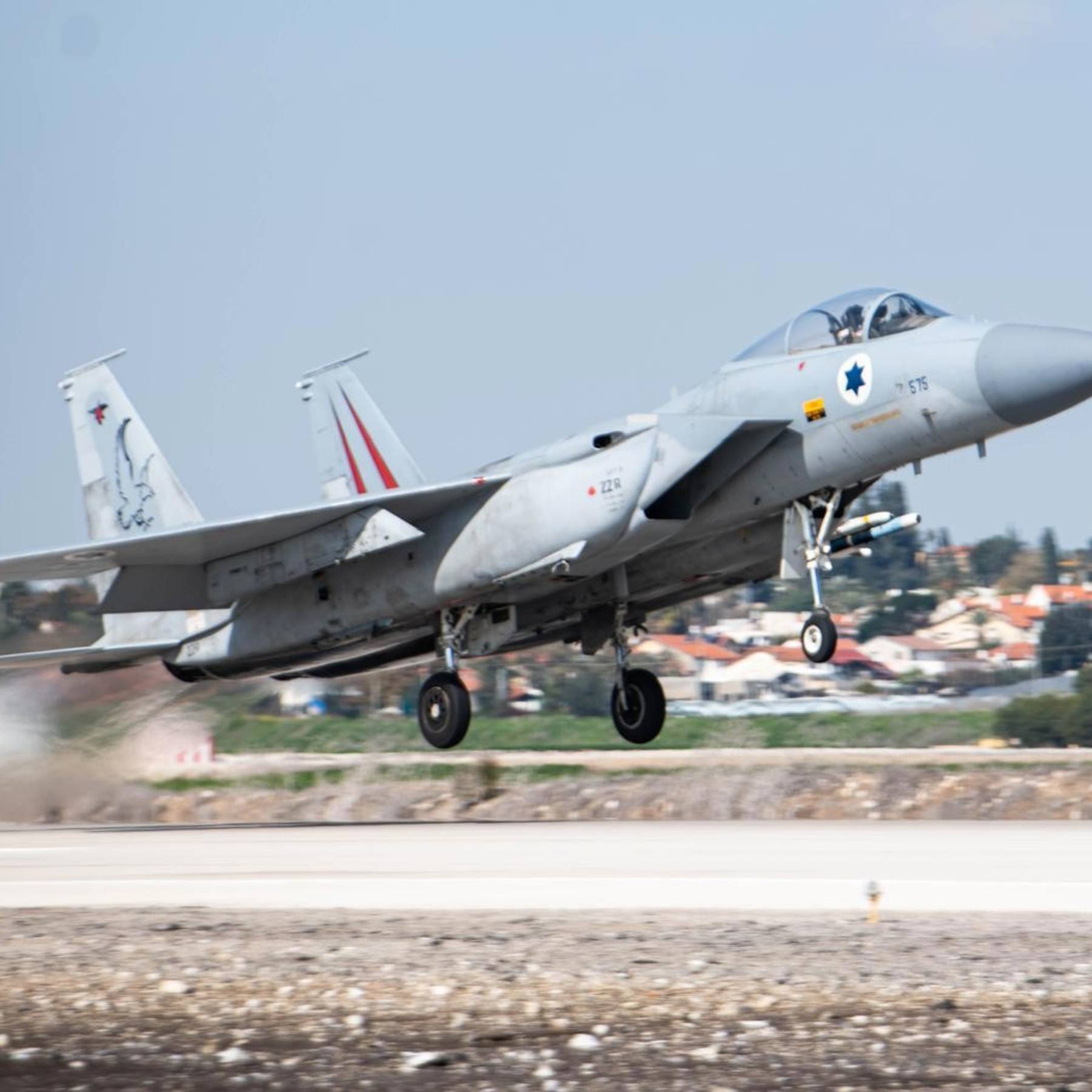
Israel is pressing the US to restart heavy airstrikes on Iran that would involve the targeted killing of Iranian Parliament Speaker Mohammad Bagher Ghalibaf, one of Tehran’s lead negotiators, and attacks on the country’s oil infrastructure, Capital & Empire reported on Thursday.
The report, which cited US sources familiar with a classified report circulating within the US intelligence community, said Israel is aggressively pushing for the US to abandon talks with Iran and insisting that destroying oil infrastructure in the country could bring about regime change while also downplaying the impact the renewed full-scale war will have on the global economy.
Iranian Parliament Speaker Mohammad Bagher Ghalibaf hosts Pakistani Interior Minister Mohsin Naqvi in Tehran on May 17, 2026 (Office of the Iranian Parliament Speaker)
The New York Timespreviously reported that Israeli Prime Minister Benjamin Netanyahu had pitched President Trump on launching the war back in early February by making a series of predictions that proved to be wrong, including the idea that Iran was ripe for regime change, that its ballistic missile program could be destroyed within weeks, and that it would be too weak to close the Strait of Hormuz.
Israeli officials have been clear that they want to restart the US-Israeli bombing campaign and have threatened to kill Iranian Supreme Leader Ayatollah Mojtaba Khamenei, who replaced his father, Ali Khamenei, after he was killed by an Israeli strike on February 28, the first day of the war.
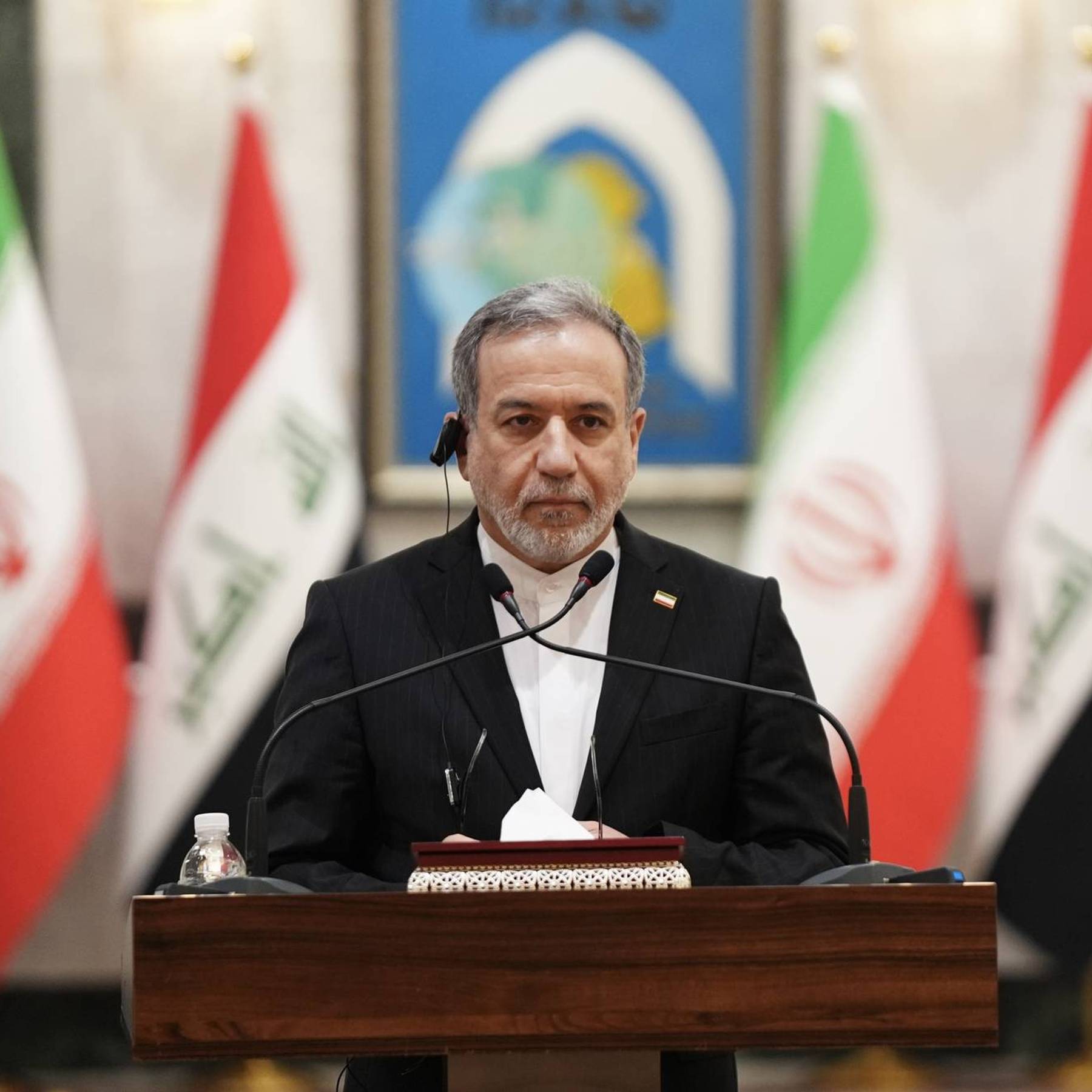
The Capital & Empire report said that Israel has made the case to kill Ghalibaf directly to the US Department of War, and has focused on him since Khamenei’s whereabouts are unknown. The US intelligence report also determined that Israel wouldn’t target Iranian Foreign Minister Abbas Araghchi.
Israel has a history of targeting officials involved in negotiations. In September 2025, Israel attempted to kill Hamas leader Khalil al-Hayya in Qatar as he was involved in negotiations on a Gaza ceasefire deal. The attack killed al-Hayya’s son, and an Israeli airstrike in Gaza recently killed another son of al-Hayya as he was involved in talks with the US-led so-called “Board of Peace.”
The Kentucky congressman’s stand against US aid to Israel and the Iran war triggered a pro-Israel donor backlash that reveals how firmly the lobby still shapes Republican politics
US Congressman Thomas Massie speaks with supporters after his concession speech in Hebron, Kentucky, United States, 19 May 2026 (Jon Cherry/Getty Images/AFP)
In American politics, certain transgressions are tolerated. Challenging Israel is not among them. US Congressman Thomas Massie crossed that line – and on Tuesday, paid the price.
His defeat in Kentucky’s 4th Congressional District was widely portrayed as another demonstration of President Donald Trump‘s continued dominance over the Republican Party. That explanation is politically convenient but analytically incomplete.
What happened to Massie was not merely a clash of personalities or a dispute over loyalty to Trump. It was the enforcement of a political boundary deeply embedded within the structure of American power. Massie had violated one of the deepest taboos in American politics: alienating the Israel lobby.
Unlike many politicians accused of dissent, Massie’s divergence was not rhetorical or symbolic. It was documented through votes, public statements and a sustained critique of unconditional American support for Israel.
As the only member of Congress to vote against House Resolution 888 in November 2023, Massie committed a cardinal sin – rejecting the congressional resolution that affirms Israel’s “right to exist” and opposes calls for the dismantling of the Israeli state.
New MEE newsletter: Jerusalem Dispatch
Sign up to get the latest insights and analysis on Israel-Palestine, alongside Turkey Unpacked and other MEE newsletters
The resolution passed 412-1, with even progressive “Squad” members including Alexandria Ocasio-Cortez, Ilhan Omar and Ayanna Pressley voting in favour.
Massie was also among a small number of members of Congress who opposed emergency military aid packages and several pro-Israel resolutions after 7 October 2023.
He also consistently argued that all foreign aid – particularly aid to Israel – violated both constitutional principles and fiscal conservatism. At a moment when Israel was carrying out what numerous human rights organisations, UN experts, genocide scholars and even former Israeli officials described as genocidal acts in Gaza, Massie openly opposed using American taxpayer money to finance the war.
In Washington, such positions are treated as dangerous deviations from the consensus on Israel – defiance that must be politically punished.
Massie did not simply challenge a policy, but confronted an entrenched power structure that has shaped American foreign policy in the Middle East for decades
Support for Israel has been one of the most entrenched bipartisan pillars of American foreign policy. Since October 2023, the United States has poured tens of billions of dollars in military aid to Israel while shielding it at the United Nations.
The Costs of War Project at Brown University puts the direct figure at well over $22bn.
In Gaza, the health ministry and international observers documented more than 75,000 Palestinians killed and over 180,000 injured – countless left maimed – as entire neighbourhoods, hospitals, universities, schools, water facilities, electric grids and refugee camps have been systematically destroyed.
Massie did not simply challenge a policy, but confronted an entrenched power structure that has shaped American foreign policy in the Middle East for decades.
A familiar pattern
Washington has witnessed similar episodes before. Former Republican Congressman Paul Findley of Illinois lost his seat in 1982 after criticising Israeli policy and the growing influence of Aipac. Likewise, Republican Senator Charles Percy of Illinois suffered a similar fate in 1984 after tensions with pro-Israel lobbying networks.
In the past two decades, many Democratic members of Congress encountered the same fate. Cynthia McKinney in Georgia, Earl Hilliard in Alabama, Jamaal Bowman in New York and Cori Bush in Missouri all faced massive financial interventions after criticising Israeli policy or supporting Palestinian rights.
These cases are too numerous and too targeted to remain anecdotal. The system enforcing them is structural. Aipac’s super PAC, which labelled Massie “the most anti-Israel Republican in the House”, contributed $9m to the race alone. When the result came in, Aipac declared: “Pro-Israel Americans are proud to help defeat anti-Israel candidates.”
US: Anti-Aipac congressman Massie unseated in most expensive House primary ever
During the Cold War, questioning anti-communist orthodoxy carried political consequences. Today, questioning unconditional support for Israel carries the same weight of orthodoxy in Washington.
The Kentucky race became the most expensive House primary in modern American history, with spending exceeding $34m. Yet the significance lies as much in how the money was mobilised and coordinated as in the sheer amount spent.
Press reports indicate that millions in outside expenditures came from networks aligned with pro-Israel advocacy organisations and donor ecosystems that have increasingly intervened in congressional races nationwide.
The campaign against Massie followed a now-familiar model: massive independent expenditures, relentless advertising blitzes, coordinated media narratives and efforts to portray dissenting candidates as extremists or unreliable actors outside the accepted boundaries of Washington politics.
Massie was not merely outspent but politically marked and strategically targeted.
These campaigns are not simply about defeating one candidate. They are designed to create fear and send a message to every member of Congress that opposition to Israeli policy, especially during wartime, carries severe political costs regardless of seniority, popularity or ideological credentials.
A shifting public
American public opinion has shifted dramatically against Israel. Multiple polls conducted over the past two years show a stark erosion of support, particularly among younger Americans. A February Gallup poll showed that sympathy for Palestinians had surpassed sympathy for Israelis for the first time.
Pre-election polling found that older Republican voters in the district broke decisively for Ed Gallrein, while younger and middle-aged voters leaned towards Massie – a generational divide visible far beyond Kentucky.
Even among Republicans, support for unconditional military involvement abroad has weakened considerably, especially after the escalation towards the war on Iran. A growing number of Americans, above all young people, view Israel not as a strategic asset but as a source of regional instability capable of dragging the United States into wider wars that serve no American national interest.
Massie reflected this sentiment openly. During debates surrounding the possibility of direct military confrontation with Iran, he warned that Washington was being pushed towards another catastrophic Middle Eastern war driven primarily by Israeli regional interests rather than core American ones.
In one widely circulated statement, Massie argued that Congress should not authorise military escalation without direct constitutional approval and questioned why American taxpayers and soldiers should bear the burden of wars initiated by foreign policy priorities disconnected from domestic needs.
After decades of war, debt and the decline of basic services, those arguments now resonate with far more Americans than Washington elites care to admit.
Israel’s growing public relations crisis has intensified these tensions. Images from Gaza – where entire families have been erased, children buried beneath rubble and famine conditions imposed on a trapped civilian population – have transformed global public opinion.
South Africa’s genocide case before the International Court of Justice further amplified international scrutiny, while major human rights organisations accused Israel of committing war crimes and crimes against humanity. For millions around the world, Gaza destroyed the myth that western human rights discourse applies equally to all people.
Facing this crisis of legitimacy, Israel and its supporters have invested heavily in narrative control across media platforms, digital spaces, universities and political institutions. Israeli Prime Minister Benjamin Netanyahu, himself an indicted war criminal, has repeatedly boasted about Israel’s influence within western media networks and social media platforms. The struggle is increasingly one over information and perception.
In his concession speech, Massie remarked: “It took a while to find Ed Gallrein in Tel Aviv.”
Massie was not simply conceding defeat to his opponent. He was identifying the terrain on which the battle had been fought. This was not merely a Kentucky primary race. It was an election shaped by national donor networks, foreign policy alignments and political enforcement mechanisms extending far beyond the district itself.
The wider message
Some commentators tied to the Israeli lobby attribute Massie’s defeat solely to Donald Trump. But this narrative is both factually flawed and analytically superficial. Trump certainly played an important role – he endorsed former Navy SEAL Ed Gallrein and repeatedly attacked Massie as disloyal, transforming the primary into a referendum on allegiance to the Maga movement.
Yet Trump alone does not generate more than $30m in congressional primaries, nor does he independently mobilise a vast donor infrastructure against a single congressman among dozens who have disagreed with him over the years.
A more accurate reading is that Trump’s machinery converged with well-established Zionist donor networks and enforcement structures – what some critics now describe as the “Epstein Class”: a nexus of billionaire financiers, political operatives, media influence networks and intelligence-linked figures whose loyalties often appear more connected to preserving Israeli regional supremacy than defending coherent American national interests.
Trump did not create the target on Massie’s back – he just helped pull the trigger.
What happened to Massie exposes a structural reality long understood but rarely discussed openly: there are policy red lines within the American system, and Israel sits among the brightest. Crossing those lines carries consequences – coordinated funding flows, nationalised opposition campaigns, coordinated messaging portraying dissent as extremism, and political isolation.
Trump’s machinery converged with well-established Zionist donor networks and enforcement structures – what some critics now describe as the ‘Epstein Class’
But the implications extend far beyond Kentucky.
To Maga Republicans, it signals that “America First” has limits. One may challenge trade agreements, immigration policy, global institutions or even party leadership. But challenging Washington’s alignment with Israel remains extraordinarily dangerous.
To libertarian conservatives, the answer is equally stark: fiscal conservatism and scepticism towards foreign intervention remain acceptable only until they intersect with Israel.
And to the broader Republican Party, the lesson could not be clearer: party discipline increasingly requires adherence to Trumpism and to a foreign policy consensus in which Israeli priorities remain deeply embedded within the permanent foundations of American power.
Massie was defeated for one main reason: he challenged one of the most protected structures within American political life. Once that occurred, the Zionist machinery activated with remarkable speed: enormous funds mobilised, opposition networks unified overnight, media narratives deployed and political deterrence established.
These are not passing phenomena. They discipline political behaviour. And as public anger over Gaza deepens and younger Americans continue breaking with old political orthodoxies, it is no longer clear that these instruments of political discipline can hold indefinitely in a society already entering a deeper crisis of legitimacy.
Yet despite Massie’s defeat, the results of recent primary races suggest that Aipac’s long-standing dominance over American politics may be waning. On the same evening, Chris Rabb – a democratic socialist, vocal Palestine advocate and open Aipac critic – won the Democratic primary in Pennsylvania’s 3rd Congressional District against two Aipac-backed opponents.
Earlier this year, Aipac’s campaign against moderate Democrat Tom Malinowski in New Jersey backfired spectacularly, inadvertently propelling Analilia Mejia – the race’s most vocal Palestine advocate – to victory.
The ground is shifting and the lobby knows it.
The views expressed in this article belong to the author and do not necessarily reflect the editorial policy of Middle East Eye.
Anti-war demonstrators gather outside Downing Street on 26 June, 2019 in London, England, to call on the government to publicly oppose the escalation of conflict between Donald Trump’s administration and Iran and demand that military action is ruled out.
(Photo: Wiktor Szymanowicz / Barcroft Media via Getty Images)
The supposedly unlimited freedom of action attained by disdaining and trampling international law and institutions has proved to be a double-edged sword.
On May 24, Iran rejected President Trump’s latest fake peace deal, confirming that he had misrepresented what Iran had agreed to and that the two sides are still very far apart, on nuclear enrichment, on control of the Strait of Hormuz, on peace in Palestine and Lebanon, and on lifting US sanctions, paying war reparations, and Iran’s $100 billion in frozen assets.
Iran’s conditions for a peace agreement are necessarily uncompromising, in response to the US record of using negotiations as cover for sneak attacks, and the charade of one-sided “ceasefires with Israeli characteristics,” in which the US and Israel routinely ignore and violate every ceasefire they agree to, including the present ones in Gaza, Lebanon, and Iran.
Since no agreement with the United States or Israel is worth the paper it’s written on, it’s hard to imagine an agreement that would really protect Iran from future attacks. Without a more radical change in US policy, the United States and Israel will keep attacking Iran, in open violation of the UN Charter, no matter what they all agree to.
The only effective ways Iran has found to protect its land and its people are to build strong military defenses, including the capacity for devastating retaliation, and to retain control of the Strait of Hormuz, regardless of the impact on the world’s oil and gas supply and the global economy. By attacking Iran, the United States and Israel forced it to defend itself and triggered a war that is reshaping the Middle East and possibly the world.
The final sinking of the neocon dream in the troubled waters of the Persian Gulf provides the US and the world with a historic chance to recommit to a more peaceful and democratic international order.
Losing this war is forcing the United States to finally start reevaluating the neoconservative tactics it has blindly substituted for a rational US foreign and military policy since the 1990s: sanction; threaten; bomb; kill; destroy; occupy; escalate; leave countries mired in violence and chaos—in Afghanistan, Iraq, Haiti, Somalia, Libya, Syria, Yemen, Ukraine, Palestine and Lebanon—never admit defeat; never question American exceptionalism or superiority.
The systematic US disdain for the rule of international law that undergirds this policy appears to make peace impossible in today’s world. But the final sinking of the neocon dream in the troubled waters of the Persian Gulf provides the US and the world with a historic chance to recommit to a more peaceful and democratic international order.
Since the end of the Cold War, the United States has effectively exempted itself from the entire system of treaties, international laws and agreements that are supposed to govern international affairs, starting with the UN Charter, which prohibits the threat or use of force between countries, and the Geneva Conventions, which protect civilians, prisoners-of-war and wounded soldiers and sailors from the impacts of war.
These treaties were drawn up and universally adopted in the wake of the Second World War, to “save succeeding generations from the scourge of war,” as the UN Charter says in its preamble. President Roosevelt returned from his Yalta conference with Churchill and Stalin in 1945 to tell a joint session of Congress that they were designing the United Nations as a “permanent structure of peace.”
“It ought to spell the end of the system of unilateral action, the exclusive alliances, the spheres of influence, the balances of power, and all the other expedients that have been tried for centuries—and have always failed,” FDR told Congress. “We propose to substitute for all these, a universal organization in which all peace-loving Nations will finally have a chance to join.”
The UN Charter codified and strengthened the age-old common law prohibition against international aggression, and the renunciation of war as an instrument of national policy in the 1928 Kellogg Briand Pact, which German leaders tried at Nuremberg were sentenced to death forviolating.
However, amid overblown Western triumphalism after the end of the Cold War, a new generation of US leaders, like Madeleine Albright andDick Cheney, came to see the UN Charter and Geneva Conventions as obstacles to their ambitions to further expand US global power by more widespread and unrestricted use of military force.
Believing that the new imbalance in military power freed them from compliance with post-1945 treaties and conventions based on the hard-earned wisdom of past leaders in two world wars, the US and its allies unleashed their armed forces toattack andinvade other countries, torture, rape and kill prisoners, andmassacre civilians.
US officials assumed that the new military imbalance so greatly favored the United States that neither the UN, international courts, other powerful countries, nor even the entire people of the world could enforce the rules of international law and the laws of armed conflict on the United States if it chose to ignore them.
It is ironic, and deeply frustrating and confusing to US officials, to find out that what they hailed as a position of overwhelming power and impunity has led them to squander America’s day in the sun and waste the chance that its great good fortune provided to improve the quality of life for Americans and their neighbors.
The supposedly unlimited freedom of action attained by disdaining and trampling international law and institutions has proved to be a double-edged sword. There is no such thing as unlimited military power, short of the mass suicide of nuclear war. The idea that America’s virtually unlimited investment in weapons and war would give it the final word in every dispute was a mirage, as even Trump is now finding out.
As Americans reexamine the state of the world and the conflicts by which warmongering US leaders have tried to define it, it is obvious that war and military power do not lead to peace or prosperity, for Americans or anyone else. The more countries the Pentagon and the CIA take aim at, the more people they kill, and the more resources our leaders throw at them, the more other people all over the world rightly come to see the United States as a threat to their own lives and futures.
Governments around the world face difficult choices between meeting the needs and aspirations of their own people or complying with the hegemonic and undemocratic demands of the United States.
After holding itself up as the champion of democracy and freedom for 250 years, the United States is only accelerating its own decline by wasting trillions of dollars, and what little is left of the world’s good will, on this failed, ill-fated bid for global imperial power.
When the United States rose to great power in the first half of the 20th century, its leaders were wise enough to recognize that exercising naked imperial power would not succeed in a world still fighting to free itself from the ravages of European colonialism. So FDR and his colleagues based the UN system on sovereign equality between nations, and created a framework for international relations that the whole world could agree to.
While the United States and Israel commit systematic and barbaric war crimes, presuming themselves immune from accountability, the world is slowly—too slowly—coming to grips with the international cooperation needed to enforce the “permanent structure of peace” that all countries have agreed to live by.
Like all legal and political systems, the success or failure of the UN system rests on whether the most powerful countries will agree to live by the same rules as the others. The veto is a poison pill that corrupts the system, as Albert Camus predicted when it was unveiled in 1945.
“If this report is accurate, … it would effectively put an end to any idea of international democracy,” Camus wrote in Combat, the underground French Resistance newspaper he edited. “The world would be ruled by a directorate of five powers… The Five would thus retain forever the freedom of maneuver that would be forever denied the others.”
However, the UN has developed the “Uniting For Peace”process, which allows the General Assembly to hold Emergency Special Sessions (ESS) on international problems when a veto prevents the Security Council from acting to resolve them.The General Assembly used that process to resolve the Suez Crisis in 1956, and it has been using it, albeit intermittently and inadequately, to address the crisis inPalestine since 1997.
In response to a request from the General Assembly in its Emergency Special Session on Palestine, the International Court of Justiceruled that the Israeli occupation is illegal and must end without delay. And so, the General Assembly passed a resolution demanding that Israel must bring “to an end without delay its unlawful presence in the Occupied Palestinian Territories… and do so no later than” September 2025.
Israel did not comply, so the General Assembly must take further steps, such as an arms embargo and an economic boycott. But it does have the means to do so and just needs to muster the political will.
While the United States and Israel commit systematic and barbaric war crimes, presuming themselves immune from accountability, the world is slowly—too slowly—coming to grips with the international cooperation needed to enforce the “permanent structure of peace” that all countries have agreed to live by, and on which the lives of millions of vulnerable people and the future of humanity depend.
While US leaders are finally realizing that they do not have the power to intimidate and conquer the whole world, the American people are gradually understanding that we have an even greater power, the power to refuse to fight their criminal wars, and to insist on making peace and cooperating with all our neighbors on this small planet that we all share.
Iranian Supreme Leader Ayatollah Mojtaba Khamenei said in a written statement on Tuesday that the US will no longer have a “safe haven” in the Middle East for its military bases, remarks that come after the Iranian military struck US bases across the region during the US-Israeli bombing campaign against Iran.
In the statement, released to mark the Hajj season, when Muslim pilgrims travel to Mecca, Saudi Arabia, Khamenei addressed other Muslim nations in comments that appeared to be directed at the Gulf Arab states that host US bases and were struck by Iranian missiles and drones.
Ayatollah Mojtaba Khamenei (PressTV)
“I, with sincerity and purity of intention, invite all Islamic countries and governments to friendship and cooperation in goodness, so that by working together we may take steps toward the advancement of the Islamic Ummah and the resolution of the Islamic world’s problems,” Khamenei said, according to an English translation of the statement posted on his website.
“What is certain in this regard is that the hands of time will not turn back, and the nations and lands of the region will no longer serve as shields for US bases. The United States not only will no longer have a safe haven for its mischief and for establishing military bases in the region but day by day, it is growing more distant from its former status,” he added.
The Iranian leader also referenced Israel, saying that the “shaken Zionist regime and the cancerous tumor of Israel are likewise approaching the final stages of their wretched existence.”
Khamenei has yet to make a public appearance since replacing his father, Ali Khamenei, who was killed by an Israeli strike alongside other members of his family on February 28, the first day of the joint US-Israeli bombing campaign. Western media reports have said that Mojtaba Khamenei was wounded in the strike but that he is still playing a critical role in shaping Iran’s war strategy.
Dozens of countries that ratified the Genocide Convention still supplied arms to Israel even after the ICJ issued a provisional ruling that Israel was likely committing genocide in Gaza
(Photo credit: Palestinian Center for Human Rights)
An Al-Jazeerainvestigation published on 23 May revealed that military-grade products from at least 51 countries and self-governing territories kept entering Israel even after the International Court of Justice (ICJ) issued a provisional ruling over the genocide of Palestinians in Gaza.
In January 2024, the UN’s top court ordered Israel to take all measures to prevent genocidal acts in Gaza. By then, Israel’s brutal bombing of Gaza had killed more than 26,000 Palestinians, most of them women and children.
However, countries across the globe continued to provide weapons and military assistance to the Israeli military, the Al-Jazeera report found.
Using Israeli Tax Authority (ITA) import data, customs records, and freedom of information requests, the Al-Jazeera investigation found the military-related goods were shipped to Israel from countries across Europe, Asia, North America, and South America, including from many that have signed the genocide convention.
In some cases, the military supplies originated from countries that had publicly imposed arms embargoes on Israel or had at least partially suspended arms supplies to the country.
According to the ITA data, Israeli arms imports increased after the ICJ ruling, in particular munitions imports.
The five biggest military suppliers to Israel—namely the US, India, Romania, Taiwan, and the Czech Republic—all boosted their shipments of military equipment to Tel Aviv following the ruling.
ITA data showed that 2,603 consignments of military-related goods valued at $885 million were sent to Israel between October 2023 and October 2025. Of those, $805 million worth came after the January 2024 ruling.
The consignments included ammunition, explosive munitions, weapons parts, and armored vehicle components.
According to Stephen Humphreys, professor of international law at the London School of Economics, there was “ample evidence that countries arming Israel may be complicit in international crimes, including war crimes and crimes against humanity.”
“The most recent ‘ceasefire’ did not change this,” stated Gerhard Kemp, a professor of criminal law at the University of the West of England.
Since the ceasefire reached in October 2025, Israel has continued killing Palestinian civilians in Gaza and creating conditions of life that could destroy the group in whole or in part, Kemp said.
This indicates that states still have an obligation to stop supporting Israel’s war on Palestinians in Gaza, which has now killed at least 72,000 people. Tens of thousands more remain buried under the rubble of buildings Israel has bombed.
“Some states have a very narrow understanding of the duty to prevent genocide and are waiting for a judicial determination that there is a genocide in Gaza,” Kemp said. “But the ICJ will likely take several years to make such a determination. The better view is to look at domestic legal obligations … and international legal obligations and legal tools triggered by available evidence.”
Though the ICJ has not issued its final ruling, the UN Independent International Commission of Inquiry on the Occupied Palestinian Territory published a report in September 2025 concluding that Israel “committed a genocide against the Palestinians in Gaza.”
The UN report asserts that “states are obliged to take steps to ensure the prevention of conduct that may amount to an act of genocide … including the transfer of weapons that are used or likely to be used by Israel to commit genocidal acts.”
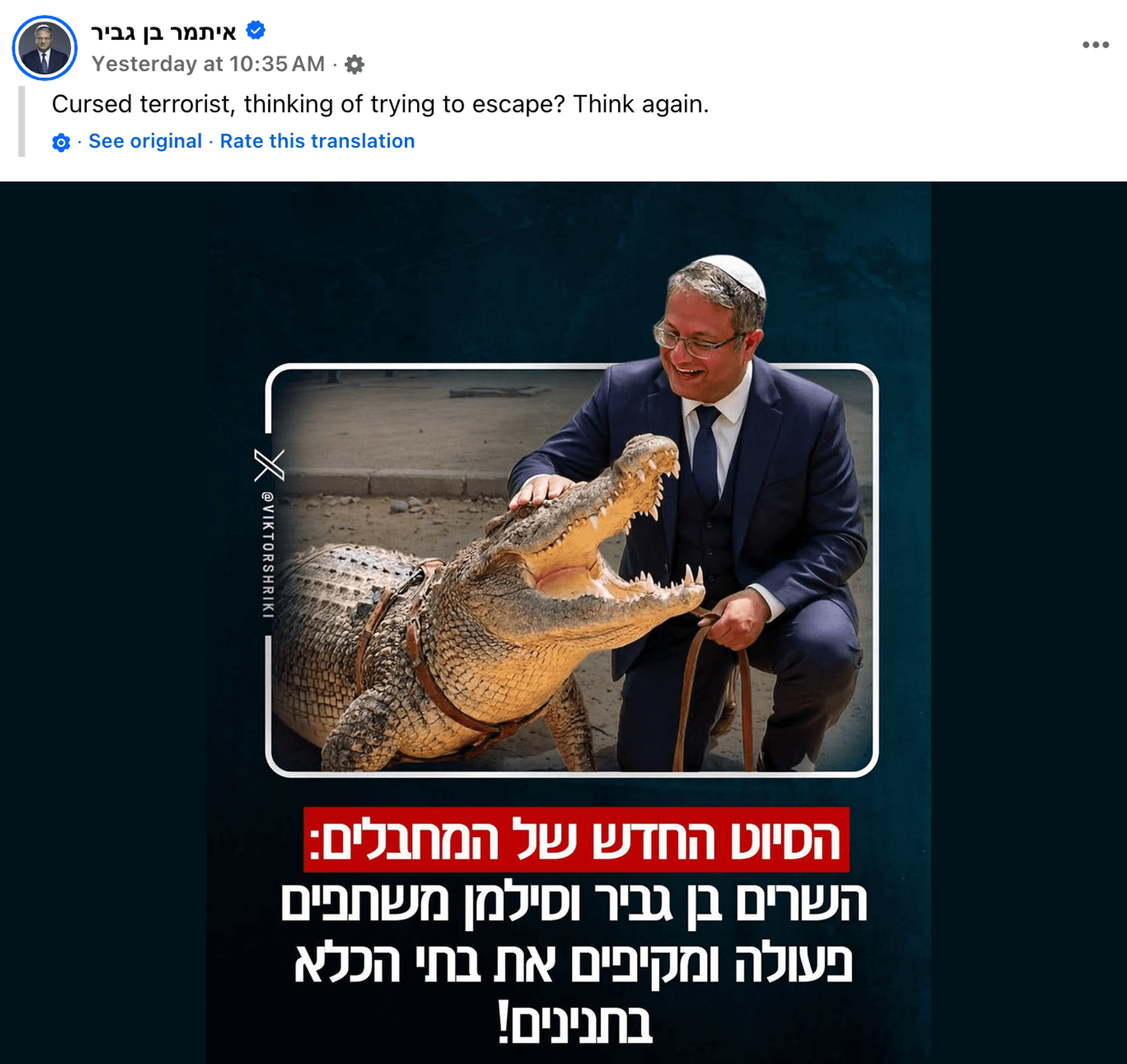
Itamar Ben-Gvir has been attacked across Israeli politics for a cruel video showing him mocking flotilla activists as they were being abused by officers. His offense was not his fascist celebration, but rather showing the true face of Israel.
This week, Israel’s Minister of National Security Itamar Ben-Gvir became an unlikely target of derision across the Israeli political spectrum, including the right-wing. His offense? Revealing the true face of Israel to the world.
The story begins with the latest Gaza freedom flotilla, which again was sending boats and activists to try to break Israel’s illegal and inhumane siege on Gaza. Similar to past flotillas, Israel hijacked the boats at sea, and detained the activists. 430 activists were kidnapped in Israel’s recent act of piracy, coming from over 40 countries.
This time, all of the activists were to be taken to Israel. Ben-Gvir was waiting for them and made a video mocking the activists for social media. “This is how we welcome the terror supporters”, he wrote in Hebrew, where his English title was “Welcome to Israel”.
At the beginning of the video, an activist who is standing up, chanting “free free Palestine” is seen being pushed violently to the floor by security who shout “quiet, quiet,” Ben-Gvir continues to march in, waving an Israeli flag, and a mass of kidnapped activists is seen being forced into stress positions with their heads down to the floor. “Good work”, Ben-Gvir says to the guards, and shouts to everyone: “Welcome to Israel! We are the masters of the house!”
It is important to note that this is a common scenario in these arrests, and there is nothing really new about it. It is a light variation of what is being done to Palestinians every day, and various snuff videos showing such systemic torture have been aired on mainstream Israeli television channels. These videos have also commonly included Ben-Gvir’s mantra “We are the masters of the house”, which was his election slogan.
The Israeli Prison Service even went as far as issuing a statement to Ha’aretz, saying that the detention was “carried out in accordance with procedure and professional considerations.” Times of Israel notes that this was done “as media outlets suggested the prison officials present in the clip were acting against political and military policies”. These are, in fact, their procedures, these are their policies.1
Yet, despite this, and perhaps in a sign of how Israel’s international standing has fallen, Ben-Gvir’s video set off an international firestorm, and has become a PR problem of its own. Both Poland and France have issued entry bans against Ben-Gvir with French Foreign Affairs Minister Jean-Noël Barrot saying, “we cannot tolerate French nationals being threatened, intimidated, or brutalized in this way, especially by a public official” and calling for other EU countries to issue sanctions against him. Italy’s Giorgia Meloni said it was “unacceptable” that “these demonstrators, including many Italian citizens, are subject to this treatment.” British Foreign Minister Yvette Cooper was “truly appalled” by the video, which “violates the most basic standards of respect and dignity in the way people should be treated.”
Of course, no such outrage is to be found when it’s Palestinians, but that’s always another story. Now it’s a problem that internationals, including Europeans, are being jeered at by Ben-Gvir as they were paraded through detention like animals.
Given the response, Israel’s hasbara central turned to damage control mode, and Ben-Gvir was thrown under the bus as a bad apple.
Prime Minister Netanyahu claimed that Ben-Gvir’s video was “not in line with Israel’s values.” It wasn’t the what, it was the how: “Israel has every right to prevent provocative flotillas of Hamas terrorist supporters from entering our territorial waters and reaching Gaza. However, the way that Minister Ben-Gvir dealt with the flotilla activists is not in line with Israel’s values and norms,” he added.
Foreign Minister Gideon Sa’ar, who thus heads the hasbara office, shared Netanyahu’s message, but had a message of his own, even more condemnatory of Ben-Gvir, claiming Ben-Gvir wasn’t the face of Israel: “You knowingly caused harm to our State in this disgraceful display – and not for the first time. You have undone tremendous, professional, and successful efforts made by so many people – from IDF soldiers to Foreign Ministry staff and many others. No, you are not the face of Israel”, he wrote in his sharing of Ben Gvir’s tweet.
And then the Foreign Ministry posted a tweet with one video and three photos:
A video of a guard giving water to a hostage; A photo of another offering water to a hostage; a hostage being questioned at a table; a woman smiling (presumably a hostage).
“These are our values,” says the caption.
All we’re missing is candy being handed around, and maybe a choral performance to top it off.
The reality of the situation was that the activists had been held in these stress positions for many hours, and the human rights organization Adalah reported that activists were sent to the hospital, suspected of having broken ribs due to breathing difficulty, having been subject to electric shock, and shot with rubber bullets. Activists also reported sexual assault, including rape. On one particular Israeli ship, at least 12 sexual assaults were documented, “including anal rape and forcible penetration by a handgun.” This is, of course, standard procedure when it comes to Palestinians, including the systematic use of rape, which was effectively legitimized when the Sde Teiman gang rape case was recently closed.
So this moral panic over Ben-Gvir’s crude behavior is really an attempt to draw attention away from this abuse, and it appears to be working. He is being made out to be an obnoxious fascist outlier, when in fact Ben-Gvir represents the true face of Israel.
This is all about Israel, as a whole. It’s Israel’s siege, it’s Israel’s genocide, and the world needs to awaken to this understanding. It’s not just about a few rotten apples, a particularly vile minister, or a few bad cops.
Jonathan Ofir Jonathan Ofir is an Israeli musician, conductor and writer based in Denmark.
Raúl Castro is certainly not a criminal, regardless of how desperately the Trump administration attempts to portray him as one. He is a revolutionary who dedicated his life to the struggle against dictatorship, foreign domination and capitalist exploitation in Cuba. The renewed threats surrounding a possible U.S. arrest warrant against him are nothing more than another act of imperial arrogance by a state that has spent more than sixty years trying to suffocate the Cuban Revolution through blockade, sabotage, economic warfare and permanent political aggression.
Washington’s hypocrisy is difficult to overstate. The same United States that invaded countries, organized coups, armed reactionary forces and destroyed entire societies in defense of its geopolitical interests now attempts to present itself as a defender of “justice” and “democracy.” The same political establishment that finances wars, supports collective punishment and openly backs criminal regimes across the world suddenly claims moral authority when it comes to revolutionary Cuba.
The United States also has a long history of protecting and legitimizing violent anti-Castro extremists operating out of Miami–individuals and networks tied to sabotage, bombings and decades of terrorist aggression against Cuba. That same political establishment now attempts to lecture the world about “justice” and “democracy.”
Raúl Castro belongs to the historic generation that overthrew the Batista dictatorship–a regime of repression, corruption and total subordination to U.S. economic interests. Together with Fidel Castro, Che Guevara and thousands of Cuban revolutionaries, that generation transformed Cuba from a playground of American corporations and mafia interests into an independent country that guaranteed healthcare, education, literacy and dignity to millions of ordinary people.
This is the real reason Cuba has been targeted for decades. As Fidel Castro once famously said,
They can never forgive us for having made a socialist revolution under the very nose of the United States.
For more than sixty years, the United States has attempted to break the Cuban Revolution by every possible means. Economic strangulation, diplomatic isolation, assassination plots, destabilization campaigns and endless sanctions were all meant to force Cuba back into dependency and submission. Yet Cuba endured. Despite enormous difficulties, socialist Cuba achieved social gains that remain out of reach for large sections of the population even inside the wealthiest capitalist countries.
Donald Trump and the increasingly reactionary forces surrounding him represent the most aggressive face of contemporary American imperialism. Their obsession with Cuba has nothing to do with “human rights.” Cuba remains a target because it represents a historic act of defiance–a small country that resisted the power of the United States and survived. That reality continues to infuriate the imperial establishment in Washington.
The campaign against Raúl Castro is therefore not simply directed against one individual. It is an attack against the entire historical legitimacy of the Cuban Revolution. It seeks to criminalize anti-imperialist struggle itself while erasing the long record of violence, intervention and domination carried out by the United States across Latin America and the wider world.
But there is a historical memory that imperialism cannot erase so easily.
Millions of people across the world still view the Cuban Revolution as a symbol of sovereignty, resistance and international solidarity. Whatever debates may exist around Cuba’s path, one fact remains undeniable: the Revolution broke the chains of foreign domination and proved that even a small nation could stand against imperial power without surrendering.
No matter what happens, Raúl Castro will remain part of that glorious history. On the other hand, the architects of sanctions, aggression and imperial domination will remain part of the long historical record of imperialism, oppression and violence.
Nikos Mottas is the Editor-in-Chief of In Defense of Communism.
Anwar Iqbal, Washington, May 23, 2026 Updated about 4 hours
WASHINGTON: A recent report by the Congressional Research Service (CRS) says the United States lost or damaged 42 military aircraft during Operation Epic Fury, the 40-day military campaign against Iran that began on February 28, 2026.
The report, released last week and circulated by several US media outlets on Friday, is believed to be the most detailed public accounting so far of US aircraft losses in the conflict. However, the Pentagon has not yet issued its own comprehensive assessment.
In the report, CRS researchers said they compiled the figures from news reports, official Pentagon statements, and announcements by US Central Command (Centcom).
The report notes that the Department of Defence — now also using the title “Department of War” under an executive order issued in September 2025 — has not publicly provided a full list of losses from the campaign.
During a congressional hearing on May 12, Acting Pentagon Comptroller Jules W. Hurst III said that the estimated cost of US military operations against Iran had risen to $29 billion. He said much of the increase came from “repair or replacement costs for equipment.”
The aircraft losses listed in the CRS report include fighter jets, refuelling aircraft, helicopters, surveillance planes, and drones.
Among the most serious incidents were the loss of four F-15E Strike Eagle fighter aircraft. Centcom said three of the aircraft were accidentally shot down by friendly fire over Kuwait on March 2. All six crew members survived after ejecting safely. A fourth F-15E was reportedly shot down during combat operations over Iran on April 5, although both crew members were later rescued.
The report also cited damage to an F-35A stealth fighter caused by Iranian ground fire during operations over Iran in March.
An A-10 Thunderbolt II attack aircraft was lost after being hit by enemy fire on April 3. According to Chairman of the Joint Chiefs of Staff Gen. Dan Caine, the pilot ejected safely before the aircraft crashed.
The CRS report also described significant losses among support aircraft.
Two KC-135 aerial refueling aircraft were involved in an incident over friendly airspace on March 12. One crashed in Iraq, killing all six crew members on board, while the second made an emergency landing. Five additional KC-135 tankers were damaged in an Iranian missile and drone strike on Prince Sultan Air Base in Saudi Arabia.
One E-3 Sentry airborne warning and control aircraft (AWACS) was also damaged during the same attack. Later reports said the aircraft had been parked on an unprotected taxiway.
Special operations forces also suffered losses. Two MC-130J Commando II aircraft supporting a rescue mission for a downed F-15E were reportedly intentionally destroyed on the ground in Iran after they became unable to leave the area. Their crews were evacuated safely.
An HH-60W Jolly Green II rescue helicopter was damaged by small-arms fire during rescue operations inside Iran.
The largest losses involved unmanned aircraft. According to the report, the US military lost 24 MQ-9 Reaper drones during the campaign. Another MQ-4C Triton surveillance drone crashed in what a US Navy document described as a mishap.
The CRS said the reported losses could raise major questions for Congress about military readiness, replacement costs, and the ability of the US defence industry to replace aircraft quickly during a prolonged conflict.
The report also warned that the losses may reveal growing risks for US aircraft operating in heavily contested airspace and could force the Pentagon to reconsider tactics, deployment strategies, and future procurement plans.
Prefabricated houses installed by illegal Israeli settlers are seen under the protection of the Israeli army in the village of Umm al-Khair, located in the Masafer Yatta region south of Hebron in West Bank, Palestine on May 20, 2026. [Wisam Hashlamoun – Anadolu Agency]
Israel is clearing Palestinians from the illegally occupied West Bank village by village, using state-backed settler violence to drive communities from their land and prepare the ground for mass expulsion, a veteran Israeli columnist has warned.
Writing in Israeli outlet Yedioth Ahronoth, Nahum Barnea said the violence of the so-called “hilltop youth” is not random lawlessness, but part of a state-backed project to remove Palestinians from their land. He described them as “an armed militia that is working for the government, with its authorisation and funding.”
The aim, wrote Barnea, is to empty outlying Palestinian areas, force the rural population into cities, trigger economic collapse and lawlessness and then present expulsion as the final outcome.
“The current plan aims to achieve a solution in stages: to empty the outlying areas of residents in the first stage and then, in the second stage, to force the entire rural population into the cities, where they will live as displaced persons” Barnea said. “The economy will collapse, followed by the collapse of law and order, and then, when chaos peaks, the solution will arrive: expulsion”.
Barnea’s article, translated and shared online, described what he called a “scorched earth” policy in the occupied Palestinian territories. He said the Netanyahu government is violating Israel’s international commitments across multiple fronts, including the West Bank, Gaza, Lebanon, Syria and the Oslo framework.
“The government isn’t merely running roughshod; it has a vision,” said Barnea. “The pogroms are the cover story that decent-minded folks tell themselves so they can sleep at night.
Israeli soldiers are divided between those who take part in attacks, Barnea explained and those who watch from the side and those who fear acting against settlers.
He also accused police of failing to intervene or investigate. “Ben Gvir’s spirit hovers over them,” he wrote, referring to far-right National Security Minister Itamar Ben-Gvir, whose ministry oversees the police.
Barnea linked this campaign to a broader political project. He argued that the old plan of dividing the West Bank through settlement blocs has been replaced by a more direct strategy: emptying Palestinian rural areas, concentrating Palestinians in cities, allowing conditions to collapse and then moving towards transfer.
His warning echoes findings by Israeli rights groups. Yesh Din and Physicians for Human Rights Israel said last year that the Israeli government was sponsoring settler violence in order to displace Palestinians in the occupied West Bank. The groups said the state was responsible for the war crime of forcible transfer, committed with the support of state agents or citizens.
UN experts and human rights bodies have also warned that settlement expansion and settler attacks are driving mass displacement. In March the UN warned of “ethnic cleansing” in the occupied West Bank after 36,000 Palestinians were displaced, amid a sharp rise in settler violence and Israeli military operations.
The West Bank warning comes as Israel is accused of pursuing the same objective in Gaza through even more extreme means: genocide, mass destruction, starvation and forced displacement. While settlers and state-backed militias drive Palestinians from rural land in the West Bank, Israel has destroyed much of Gaza’s civilian infrastructure, forced Palestinians into shrinking zones and promoted plans for their “voluntary migration” abroad.
That policy was reportedly been given an official channel through Caroline Glick, Netanyahu’s international affairs adviser. Netanyahu tasked Glick with advancing plans to relocate Palestinians from Gaza, including reported contacts with Somaliland and the Democratic Republic of Congo.
“The plan was supposed to bring relief. Instead, Palestinians in Gaza are still hungry, still cannot reach medical care, and civilians are still being killed.”
Six months in, US President Donald Trump’s so-called “Board of Peace” has failed to deliver on its promise of a “secure and prosperous future” for Palestinians in Gaza, who are still being killed, maimed, and deprived of food and other crucial supplies by Israel’s ongoing genocide.
“The humanitarian infrastructure sustaining life in Gaza remains in peril over six months after the ceasefire agreement in October 2025,” Human Rights Watch said on Tuesday.
“As the Board of Peace prepares to brief the United Nations Security Council on May 21 on its newly-issued six-month progress report, Israeli authorities are undermining humanitarian lifelines,” HRW continued.
“Continuing Israeli attacks have killed at least 856 Palestinians and wounded 2,463 others, according to Gaza Health Ministry,” the group said.
“Aid volumes remain far below required levels and critical humanitarian access routes have been repeatedly obstructed, according to the UN Office for the Coordination of Humanitarian Affairs (OCHA),” HRW noted.
HRW continued:
In its May 15 report, the Board of Peace said that aid distributed by UN agencies and partners increased by over 70% during the reporting period compared to pre-ceasefire levels, and that “basic food needs have been stabilized for the first time since 2023.” The Board’s headline figures leave out that aid volumes have fallen since early 2026, have not recovered to where they were before the US and Israel-Iran war began in late February, and have never reached the minimum the UN says is needed. Four UN agencies warned in December 2025 that famine, pushed back only weeks earlier through the ceasefire, could rapidly return without sustained access and supplies.
“The plan was supposed to bring relief. Instead, Palestinians in Gaza are still hungry, still cannot reach medical care, and civilians are still being killed,” HRW Middle East deputy director Adam Coogle said in a statement. “Whatever the Board of Peace tells the Security Council, that is what life looks like six months in.”
HRW said that while “commercial trucks have started entering Gaza again in larger numbers,” total aid deliveries – which were dramatically curtailed following the launch of the illegal US-Israeli war of choice on Iran – are “far short of what Gaza’s population needs.”
Furthermore, “none of Gaza’s 37 hospitals were fully operational, and only 19 were even partially functioning, according to OCHA.”
“Over 43,000 people have suffered life-changing injuries, 1 in 4 of them children, and more than 50,000 need long-term rehabilitation care, the World Health Organization (WHO) estimates,” HRW said. “No rehabilitation facility is fully running. Israeli delays in approving specialized surgical equipment are limiting complex care, and at least 46% of essential medicines are out of stock, according to WHO.”
“According to the Gaza Health Ministry, more than 1,400 patients have died waiting for medical evacuation since the Rafah crossing was seized in May 2024, and over 18,500 patients, including 4,000 children, still await evacuation,“ the publication reported.
“Israeli restrictions on bringing in generators, engine oil, and spare parts are causing breakdowns across healthcare, sanitation, debris removal, and humanitarian work,” HRW said.
“Rodents and insects are spreading across displacement camps, and skin infections and other diseases are on the rise, OCHA reported,” the publication noted. “UN agencies and aid groups working on water and sanitation warn that severe shortages of lubricant oil and spare parts are causing generators to fail.”
Israeli forces are still killing and wounding humanitarian workers in Gaza.
“As of late April, OCHA had recorded the killing of at least 593 aid workers in Gaza since October 2023, including 8 since the ceasefire,” HRW said.
Funding pledges have also fallen far short of what’s needed.
“At the Board of Peace’s inaugural meeting in February, 10 Board member states and observers pledged a total of $17 billion for reconstruction against UN estimates of $70 billion needed,” HRW said. “As of April, the Board had received less than $1 billion of the pledged amount, with only three contributors having delivered funds, according to Reuters.”
“When the Board of Peace briefs the Security Council, members should weigh what they hear against what UN agencies are reporting from the ground,” Coogle said. “No spin can hide the fact that aid is not entering at the needed scale, patients do not have access to adequate medical care, and crossings to Gaza remain limited.”
The HRW report came a day after the UN Human Rights Office urged Israel to prevent further “acts of genocide” in Gaza, while raising concerns about escalating “ethnic cleansing” in the illegally occupied West Bank of Palestine.
A panel of UN human rights experts found last year that Israel was committing genocide in Gaza. South Africafiled a genocide case against Israel at the International Court of Justice that’s now backed by nearly 20 nations.
Israeli Prime Minister Benjamin Netanyahu and former Defense Minister Yoav Gallant are wanted by the International Criminal Court for war crimes and crimes against humanity, including murder and forced starvation. The ICC is also reportedly seeking to arrest Israeli National Security Minister Itamar Ben-Gvir and Finance Minister Bezalel Smotrich over the illegal settler colonization and ethnic cleansing of the West Bank.
More than 250,000 Palestinians have been killed or wounded in Gaza since the Hamas-led attack of October 2023. Nearly all of the coastal strip’s approximately 2.1 million people have also been forcibly displaced, starved, or sickened during that period. Through it all, the Biden and Trump administrations have provided Israel with more than $20 billion in armed aid and diplomatic cover, including vetoes of several UN Security Council ceasefire resolutions.
You must be logged in to post a comment.