While talks in Cairo center on disarming Hamas, Israel has kept killing hundreds of Palestinians without accountability and is expanding its control over the strip despite an alleged ‘ceasefire’
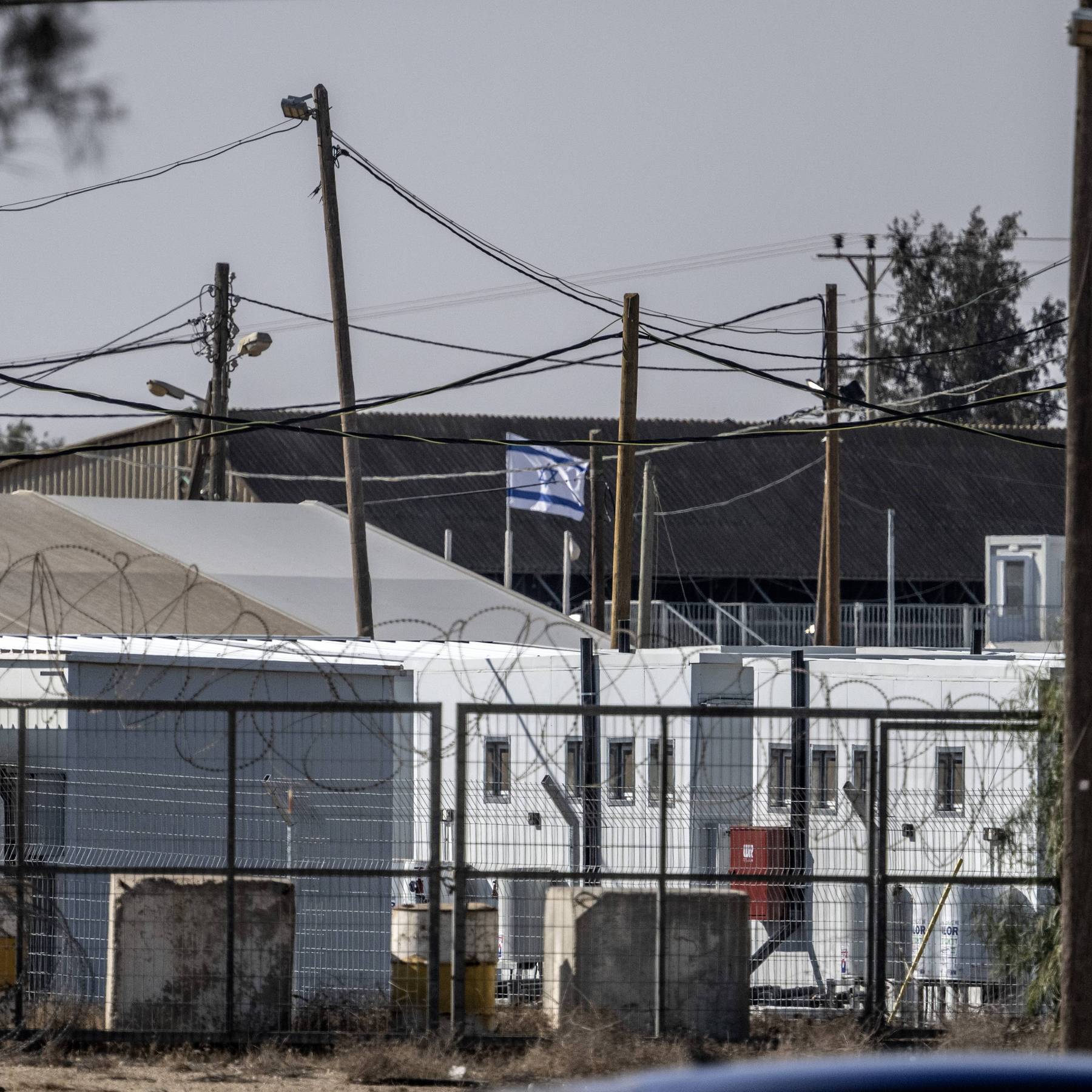
The US military has begun constructing a “huge base” on the Gaza envelope to implement US President Donald Trump’s plan to “take over” the strip, Israel Hayom reported on 13 June.
The US base, being built near the Israeli military base at Reim settlement, will function as both a military and civilian headquarters for the organizations and forces arriving in the area to implement the Trump plan.
In February 2025, Trump proposed a US “takeover” of the Gaza Strip.
The plan called for the forced displacement of approximately two million Palestinians to neighboring lands and redeveloping the territory as a high-tech business and tourism hub that Trump said would become the “Riviera of the Middle East.”
The new base will replace the US facility in the Israeli town of Kiryat Gat, established under the direction of Trump’s Board of Peace in the wake of the October 2025 “ceasefire.”
Representatives from more than 24 countries staffed the multinational headquarters and were tasked with overseeing the ceasefire and the entry of humanitarian aid.
The Kiryat Gat base was also meant to direct the operations of an International Stabilization Force (ISF) tasked with providing security in Gaza.
However, Israel has continued to severely restrict the entry of aid into Gaza, recently suspending all shipments, while the ISF has yet to be formed.
After the US and Israel launched a war on Iran on 28 February, the overwhelming majority of personnel left Kiryat Gat.
Israel Hayom noted that plans for the new US base include the construction of a tower intended for the command and control of forces in the field.
The US military has already begun issuing tenders to private contractors, including for the supply of mobile structures to house personnel and serve as a headquarters until permanent buildings are established at the site.
The new base will also host troops from the ISF if it is formed.
Five countries previously agreed to send forces to Gaza, namely Indonesia, Morocco, Kazakhstan, Kosovo, and Albania. Bangladesh, Pakistan, and Azerbaijan have expressed a willingness to participate but have made no firm commitment.
Currently, no countries are willing to send troops due to fears that their forces will be tasked with disarming the Palestinian resistance, as well as concerns about the ongoing US-Israeli conflict with Iran.
The construction of the new US base is being fully coordinated with the Israeli Defense Ministry. Military officials expect the base to be constructed and staffed within a few months.
The report comes as talks continue between Hamas and Israel via negotiators in Cairo.
Israel persists in demanding Hamas disarmament before progressing the ceasefire, while simultaneously continuing to kill Palestinians in Gaza without consequences and expanding its occupation rather than withdrawing from the territory seized during the genocide.
Israel has killed nearly 1,000 Palestinians in Gaza and expanded its control of the strip from 50 percent to at least 60 percent since the ceasefire.
One security source told Israel Hayom that the “chance of renewed fighting in the Gaza Strip is greater than the possibility that Hamas will actually be disarmed through a diplomatic agreement.”
“Demilitarizing Gaza became a bigger aim than stopping Israel’s genocide; such is the absurd truth,” wrote author Ramona Wadi.
While “colonial expansion as the reason behind Israel’s genocide in Gaza, utterly exposed for the entire world to see, [it] is never discussed by the international community. On the contrary, the Board of Peace promotes it and sets the conditions that justify colonialism instead of preventing it, using an extension of the same narrative Israel used to destroy Gaza,” Wadi added.
The Palestinian Authority’s war on the resistance is the continuation of a collaboration with colonialism that Palestinian elites have practised for more than a century
A member of the Palestinian Authority security forces fires tear gas towards a protest against their security operation in Jenin in the occupied West Bank on 16 December 2024 (Jaafar Ashtiyeh/AFP)
Amid the ongoing Israeligenocide in Gaza and its terror in the West Bank and Lebanon, the Palestinian and Lebanese resistance must confront not only their Israeli enemy, but also their own elites who are collaborating with that enemy.
The historical reaction to colonial conquest and imperial control across much of the world has been threefold.
First, radical resistance by the majority of poor peasants and workers, and by a substantial sector of the urban middle class.
Second, cooperation and compromise by much of the wealthy elite and some sectors of the middle class, justified by the belief that such cooperation would lead to colonial concessions and avert an outright confrontation in which the colonised would surely be the losers.
Third, complete subservience and collaboration by another sector of the wealthy, hoping to receive preferential treatment over rival elite cooperators and compromisers, based on the logic that the persistence of colonial control benefits the elite as local agents of colonialism.
New MEE newsletter: Jerusalem Dispatch
Sign up to get the latest insights and analysis on Israel-Palestine, alongside Turkey Unpacked and other MEE newsletters
These responses have been recorded across the colonised and post-colonial world – from Asia to Africa.
The Arab world – including the Palestinians – has been no exception.
Pre-Nakba Palestinian society responded to British colonialism and Zionist settler-colonialism by following this script exactly
Indeed, pre-Nakba Palestinian society responded to British colonialism and Zionist settler-colonialism by following this script exactly, as it would after the Nakba.
Since the early 1920s, while divided among themselves, wealthy Palestinian elites broadly agreed that resisting Zionist colonialism required cooperation with the British occupiers.
The strategy was led by the Arab Executive and the Supreme Muslim Council, both dominated by major wealthy Jerusalem, Jaffa and other urban Palestinian families.
They were opposed by other elites, mainly a rival Jerusalem family and other families marginalised within these two bodies, who supported full collaboration with the British and the Zionists.
The latter, with Zionist funding and support, established the “Agricultural Party” (al-Hizb al-Zirai), the National Muslim Society and later al-Hizb al-Watani (the National Party).
The majority of peasants and workers chose resistance, with substantial support from the urban middle classes.
The independence movement
Middle-class intellectuals were so dismayed by Palestinian elites – whether the outright smaller group of collaborators or the larger group of “cooperators” – that they formed Hizb al-Istiqlal (the party of “independence”) in 1932.
The party supported peasant and worker resistance and launched a civil rights movement of demonstrations, boycotts and civil disobedience.
A story of a 1930s uprising against British colonialism is key to understanding Gaza today
Hamdi al-Husayni of Gaza (unrelated to the elite Jerusalem Husayni family) and other young Istiqlal leaders were inspired by other anti-colonial struggles, especially Gandhi’s activities in India.
Emulating Gandhi, the Istiqlal Party leadership, including Husayni and Akram Zuaytar, a young schoolteacher from Nablus, Izzat Darwazah, a nationalist publicist and teacher, and the lawyer Awni Abd al-Hadi, who was also a secretary of the elite-controlled Arab Executive after 1928, called for non-cooperation with the British rulers of Palestine.
They borrowed tactics, including Gandhi’s March 1930 month-long Salt March across India, as well as boycott and civil disobedience.
Soon after forming the party, Istiqlal leaders openly criticised elite Palestinians for complicity with British rule.
At the party’s first mass meeting in December 1932, its leaders called for independence, denounced Britain and Zionism, and called for cooperation with newly independent Iraq, Saudi Arabia and Egypt.
Accusing the Arab Executive of passivity, they demanded its leaders refuse cooperation with the British Mandatory authorities.
The following year, Istiqlal’s capacity for mobilisation peaked, as British suppression, Zionist apartheid, evictions of Palestinian peasants and Jewish immigration to Palestine reached unprecedented levels.
Resistance and repression
Failing to persuade the Arab Executive to adopt non-cooperation, the Istiqlal Party mobilised demonstrations in October 1933, protesting British policy and Jewish colonisation.
The executive eventually relented and backed calls for demonstrations, despite “opposition” from the collaborationist elite faction.
Thousands marched across Palestine, including 8,000 in Jaffa alone – among them 600 Palestinians from Wadi al-Hawarith whose lands were taken over by Zionist colonists a few months earlier. Rampaging British police killed 26 unarmed demonstrators in Jaffa and Haifa and injured dozens more.
Palestinian elites began to organise political parties that competed for British favour and to curry favour with the Zionists
British authorities, wealthy elite Palestinians of both camps and Zionists all saw a common interest in suppressing the Istiqlal Party.
Their combined efforts succeeded in all but destroying what had become the most popular Palestinian anti-colonial party by 1934-1935.
Still, younger Palestinian activists, including former members of Istiqlal and the Congress for Youth, intensified their calls on Palestinian elites to abandon their futile efforts to win British support against Zionism and adopt non-cooperation instead.
By 1936, Palestinian workers launched multiple strikes that elite leaders opposed, costing them further support among the youth movement, the rump of the Istiqlal Party and its working-class supporters.
As elite politicians continued talks with the High Commissioner about establishing a legislative assembly, new meetings – led by Istiqlalists such as Hamdi al-Husayni and joined by urban workers – culminated in a major general strike declared on 19 April 1936.
Lasting for six months, it remains the world’s longest general strike to date.
Highly mobilised Palestinians, led by Istiqlalists and youth groups, including the Young Muslim Men’s Association, moved to the forefront of political life.
Their momentum compelled elite politicians – among them the Mufti Amin al-Husayni, who had initially opposed the strike – to establish the Arab Higher Committee a week later as a coalition to replace the defunct Arab Executive, which had been dissolved in August 1934 amid elite factionalism.
The Higher Committee sought to moderate demands for civil disobedience, while the British High Commissioner reminded the elite leadership of their role in restraining the masses.
The 1936 Palestine strike: A history of Palestinian revolt
The mufti’s reticence to support the general strike and the broader Palestinian revolt lasted well into the summer of 1936.
Meanwhile, Palestinian elites began to organise political parties that competed for British favour and, in the case of the collaborationist National Defence Party, to curry favour with the Zionists.
Amid the commitment to resistance among peasants, workers and middle-class youth and intellectuals, and the elite’s continued cooperation and collaboration, the Palestinians’ Great Revolt erupted and lasted until its final brutal suppression by the British and their Zionist colonial settlers in 1939, with more than 8,000 Palestinians killed.
Palestinian elite collaborators formed a counter-revolutionary militia called the “peace bands” to kill Palestinian revolutionaries.
The defeat of the Revolt led to the 1948 Nakba nine years later.
Oslo’s heirs
These dynamics re-emerged in the post-Nakba period.
The children of expelled Palestinian peasants and workers, alongside some of the middle classes, launched a new political struggle in the late 1950s, which transformed into an armed resistance movement by the late 1960s.
Elite Palestinians would soon co-opt the movement, ostensibly to help it gain “international” legitimacy, first by interceding with Arab regimes to recognise the Palestine Liberation Organization (PLO) in 1974 as “the sole legitimate representative of the Palestinian people”.
Funding from Arab regimes soon domesticated the PLO.
Replicating the strategy of the pre-Nakba Palestinian elite, the PLO sought to cooperate with the US and Europe by “moderating” its demands for Palestinian liberation from Zionist settler-colonialism to calling instead for a “two-state solution”.
Secret channels with the US and open channels with Europe ultimately diminished the erstwhile PLO agenda from total liberation to demanding a mini-state on a fraction of Palestine’s territory.
But if the PLO after 1974 replicated the role of elite Palestinian cooperators and compromisers between the 1920s and 1940s, the signing of the 1993 Oslo accords transformed the PLO yet again into that other part of the 1920s-1940s elite – including the Agricultural Party and the National Defence Party – who collaborated outright with the Zionists and their colonial sponsors.
The Palestinian Authority (PA) today is a mirror image of these collaborator forces.
Meanwhile, Yasser Arafat’s PLO and the successor PA have tried to extinguish all attempts to reinvigorate the struggle championed by the Istiqlal Party and the peasant revolutionaries, which was initially espoused by the PLO’s “rejectionist front” since the mid-1970s, as well as by Hamas, Islamic Jihad and what remained of the PLO left since the late 1980s and early 1990s.
This culminated in the coup against the elected Hamas government in 2007, organised by the US, Israel and the PA, echoing how a similar coalition ganged up against the Istiqlal Party in the 1930s.
The PA security forces played the role of the 1930s “peace bands”. This is the situation that the Palestinian people have found themselves in since 1993.
Their struggle today continues to be one between a collaborationist PA and a pro-liberation resistance intent on ending settler-colonialism.
The Gaza genocide is how Israel and its western sponsors have responded to the Palestinian resistance, while their PA proxy has intensified its war and repression against the resistance in the PA-controlled West Bank areas during the genocide.
The PA is aided in its efforts by the Israeli occupation army and armed Jewish colonial settlers.
But just as the collaborating and cooperating Palestinian elites of the 1920s to 1940s were unable to halt the resistance, the current PA collaborators are failing at their assigned task of vanquishing the spirit of resistance among Palestinians.
It is this ongoing resistance to Israel and its western sponsors, and the collaborating PA and the wealthy Palestinian elites who support it, that will ultimately decide the future of the Palestinian people.
After more than a century of collaboration and resistance, and Israel’s refusal to halt its genocide, the scales continue to tip persistently in favour of the resistance.
In Lebanon, Israel is reusing the same strategy as in Gaza and the West Bank. Demanding the “evacuation” of the population and destroying civilian architecture, it wants to make it impossible for residents ever to return.
People carry their luggage as they cross on foot into Syria through a crater caused by an Israeli air strike to cut the road between the Lebanese and the Syrian checkpoints, at the Masnaa crossing, in the eastern Bekaa Valley, Lebanon, October 4, 2024
In 1895, Theodor Herzl wrote in his diary that the penniless population of Palestine must be “spirited across the border,” discreetly and circumspectly. In 1948, that vision became policy. With the Nakba, approximately 750,000 Palestinians were forcibly displaced, their land absorbed by the newly declared state of Israel. In 1967 came the Naksa. In 1978, 1982, 1993, 1996, 2006, it happened to southern Lebanon. Each time the world called it a “crisis”; each time it was Israeli strategy.
Since Israel’s latest assault on Lebanon began this March 2, more than 1.3 million people — nearly one in four of the entire Lebanese population — have been displaced. More than three hundred thousand of them are children. In the first weeks of the assault alone, UNICEF recorded at least nineteen thousand girls and boys forced from their homes every single day. More than 3,400 Lebanese have been killed and over ten thousand wounded, a toll that surged dramatically when Israel launched Operation Eternal Darkness — over a hundred strikes across the country in a single ten-minute window, killing at least 357 people and wounding over 1,200, with many more believed buried beneath the rubble. At least nine bridges over the Litani River have been struck, seven destroyed, fifty-five primary health care centers and hospitals have been forced to shut down, fuel depots, water stations and schools have been targeted, a systematic severing of the south from the rest of the country, cutting tens of thousands of people off from humanitarian aid.
Israel’s own Defense Minister Israel Katz explicitly described this as the “Beit Hanoun and Rafah model,” invoking the ongoing destruction of Gaza. This is not collateral damage but the same playbook; Israel is not even hiding it. And still it continues: on June 1, Israeli forces struck Tyre — the ancient Mediterranean port city and UNESCO World Heritage Site — triggering a fresh wave of mass displacement as families fled north. A ceasefire, extended for forty-five days and currently being renegotiated in Washington, has stopped nothing.
What is unfolding in Lebanon today is neither new nor an escalation but in continuity with these past offensives. Displacement is not a by-product of this war. It has always been the point. To understand what is happening today in Lebanon, we must understand Gaza. And to understand Gaza, we must go further back.
The Gaza Playbook
Displacement has been a deliberate instrument of Israeli governance since 1948. The historian Patrick Wolfe put it plainly: “Settler colonizers come to stay: invasion is a structure not an event.” Elimination, he argued, is “an organizing principle of settler-colonial society rather than a one-off occurrence,” pursued through the annexation of land, the renaming of places, the demolition of buildings and the erasure of historical heritage, all in service of building an entirely new civilization on expropriated ground. “Settler colonialism,” he wrote, “destroys to replace.”
Following the October 7, 2023, attacks, Israel’s military campaign in Gaza produced near-total displacement. By early 2024, Israel had dropped more than twenty-five thousand tons of explosives on Gaza, the equivalent, the United Nations confirmed, of two nuclear bombs. By April 2024, the total had surpassed seventy thousand tons, exceeding the combined tonnage dropped on Dresden, Hamburg, and London during World War II. By May 2024, more than 90 percent of Gaza’s population, around 1.9 million people, had been displaced at least once. Many had been displaced ten times or more.
Israel boasted of its evacuation orders as evidence of its humanitarian conduct, distributed by leaflet, SMS, QR code, and radio broadcast, and cited repeatedly at the International Court of Justice as proof that it was protecting civilians. In reality, the orders directed entire districts to relocate within impossibly short time frames, often into areas without food, water, or shelter, and often into areas that were then deliberately bombed. Forensic Architecture’s landmark investigation found that the evacuation system had produced not safety but “mass displacement and forced transfer,” with Palestinians “being bombed, shot at, executed, arrested and tortured” along the very corridors Israel designated as safe. The areas Israel told people to flee to were attacked immediately after they arrived. On July 13, 2024, Israel dropped eight two-thousand-pound bombs on the Al-Mawasi humanitarian zone it had itself created, killing at least ninety people, many of them burned alive in their tents.
Human Rights Watch concluded that these evacuations constituted the war crime of forcible transfer. B’Tselem, the Israeli human rights organization, reached the same conclusion in its report “No Place Under Heaven,” documenting that displacement was a central tool of the assault on Gaza. The report’s title comes from Finance Minister Bezalel Smotrich’s own words, spoken at a government security cabinet meeting in April 2024, calling for the “total annihilation” of Gaza’s cities: “You will blot out the remembrance of Amalek from under heaven — there’s no place under heaven.” The reference to Amalek, the nation the Hebrew Bible commands the Israelites to exterminate entirely, man, woman, and child, was not incidental. Benjamin Netanyahu had used the same comparison in the first days of the war, and it was cited by South Africa in its genocide case at the International Court of Justice as evidence of genocidal intent. Smotrich also described Gaza City as a “real estate bonanza,” stating: “The demolition, the first stage in its renewal, we have already done. Now we need to build.” This bluntly posed Israel’s agenda in the language of colonial dispossession.
From the West Bank to Lebanon
The same logic has spread beyond Gaza. Since October 2023, scholars and analysts have described the “Gazafication” of the West Bank: the extension of governance practices long characteristic of Gaza — military siege, aerial bombardment, the systematic targeting of civilian infrastructure — into the occupied territory. Armed drones carry out targeted killings, fighter jets strike densely populated areas, and homes are demolished.
More than forty thousand Palestinians were internally displaced in the West Bank in 2025, the highest annual figure since 1967. Senior Israeli ministers have called openly for annexation and the “voluntary migration” of Palestinians, language that legal scholars identify as a euphemism for ethnic cleansing. Leading Zionist figures explicitly discussed demographic transfer in the 1920s and 1930s, using terms like “transfer,” “relocation,” and “voluntary migration” — the same vocabulary in use today.
Settler violence has risen sharply alongside this rhetoric. According to data recorded jointly by the Israeli army and the Shin Bet, settler attacks increased by 27 percent in 2025, while severe attacks — shootings, arson, violent assault — rose by more than 50 percent. Accountability remains almost nonexistent. Settlement expansion has accelerated to unprecedented levels, with outposts legalized retroactively and construction advancing deep inside Palestinian territory.
In this, Lebanon is not a new front but an old one, today reopened with new ferocity.
The people in southern Lebanon have been displaced before: in 1978, when Israel first invaded; in 1982, when it laid siege to Beirut and its Palestinian refugee camps, a siege that culminated in the Sabra and Shatila massacre; in 1993, during Operation Accountability; in 1996, during Operation Grapes of Wrath, which culminated in the Qana massacre; and in 2006, when nearly one million people fled, most returning within weeks of a ceasefire. Today, those same communities are being uprooted again.
What we are witnessing is the same architecture of control applied more extensively. Evacuation orders are being issued with the same design as in Gaza, and civilian infrastructure targeted to prevent people ever returning. This means deliberately making the population precarious, unable to settle, unable to rebuild, unable to plan. Here, we see that Gaza, the West Bank, and Lebanon are not three separate crises.
European Blind Spot
And what has the international community’s response been? The International Court of Justice, in its landmark advisory opinion of July 19, 2024, concluded that Israel’s occupation of the Palestinian territories — the West Bank, East Jerusalem, and Gaza — is unlawful under international law and must be brought to an end as rapidly as possible. It has separately ruled that there is a plausible risk of genocide in Gaza. The UN General Assembly followed in September 2024, demanding Israel end its unlawful presence within twelve months. Israel has ignored both. The United Nations Security Council has been rendered structurally incapable of acting: the United States has now vetoed ceasefire resolutions seven times, each time casting the sole vote against resolutions supported by fourteen other members of the council.
Meanwhile, the United States has provided at least $21.7 billion in military aid to Israel since October 7, 2023, according to Brown University’s Costs of War project — the highest annual total of military aid to Israel ever recorded. Arms transfers from several European states have continued alongside this. The weapons that have flattened Gaza’s neighborhoods, bombed its hospitals, and burned civilians alive in tent camps have been supplied, in large part, by those same governments now expressing concern about humanitarian conditions in Lebanon.
I have spent years researching migration, borders, and displacement across the Mediterranean region. Since March, journalists across Europe have been asking me some version of the same question: Will we face a new refugee crisis? Should Europe be worried about the flows?
The question reveals everything. For most European publics and their governments, the primary concern is not what is happening to the people of Lebanon. It is how to keep those people away. How to avoid a repeat of the aftermath of the Syrian civil war and the so-called refugee crisis of 2015. During the carpet bombing of Gaza since October 2023, this anxiety was all but absent, for Gazans had nowhere to flee: they were contained inside the Strip. For some European governments, even medically evacuating critically ill children was not on the table. Denmark refused to do so despite a formal World Health Organization appeal to EU member states, and despite evacuating and treating over two hundred Ukrainian patients — citing, in a written reply to Parliament, migration concerns. In Britain, Prime Minister Keir Starmer had to reassure the public that Palestinian refugees wouldn’t be welcome in Britain under a scheme for war refugees. Europe’s fear of displacement only activates when movement becomes possible.
In May 2024, the European Commission pledged €1 billion in support to Lebanon for the period up to 2027. This package included funding for border management and anti-smuggling operations, with the first €500 million explicitly linked to reducing irregular sea departures toward Cyprus and to exploring “voluntary return” frameworks. Lebanon was positioned not only as a host country in crisis but as a frontline partner in Europe’s own strategy to contain migration flows. This is the increasingly common practice of externalization: the outsourcing of displacement management to third countries outside Europe, while the conditions producing displacement go unchallenged.
Lebanon already hosts one of the highest numbers of refugees per capita in the world, with long-standing Palestinian communities and over a million Syrians displaced since 2011. Funding this state to police its own borders in the middle of an Israeli assault that is actively producing new displacement is the same containment logic that operates in Gaza and the West Bank.
What is unfolding across Gaza, the West Bank, and southern Lebanon is not a sequence of emergencies. It is a deliberate and recurring strategy of Israeli governance, rooted in decades of settler-colonial and military control. Evacuation orders, cycles of flight and forced return, and the systematic destruction of civilian infrastructure, are today the instruments of war and Israeli expansionism.
The displacement created in Gaza and in Lebanon has been normalized precisely because the international community has consistently chosen migration management over accountability. What looks like crisis is the effect of deliberate policies, and what looks like a humanitarian response is, too often, the infrastructure of containment dressed in the language of protection.
The question is not whether Europe will face a refugee crisis. The question is whether the world will finally treat the deliberate production of displacement as what it has always been, a strategy of governance, and respond with the recognition, accountability, and rights-based redress it demands.
An aerial view of destruction in Sheikh Ridwan neighborhood following the Israeli forces’ withdrawal with the ceasefire agreement in Gaza City, Gaza on October 17, 2025. [Mohammed Abu Samra – Anadolu Agency]
Since the launch of Israel’s devastating war on Gaza, Tel Aviv—heavily shielded by Western political pressure and strategic intimidation against any state rejecting its actions—has faced widespread regional rhetorical backlash. Almost all Arab states, including those with formal ties to Israel, have issued varying forms of public condemnation. Yet behind the theatre of diplomatic outrage, a far more cynical reality has solidified: the core normalizers—including the Abraham Accords signatories, alongside Jordan and Egypt—have fiercely protected their foundational ties to Tel Aviv, ensuring that the machinery of state relations remains fundamentally uninterrupted.
In other words, business continued as usual, albeit with varying degrees of public caution. Shockingly, not a single normaliser country took concrete diplomatic or legal steps that could amount to the actions taken by non-Arab European nations.
While European governments like Spain and Norway formally recognised the State of Palestine, and Madrid officially intervened in the genocide case against Israel at the International Court of Justice, Arab capitals remained entirely absent from these legal mechanisms.
Even the United Kingdom, a staunch Western ally of Tel Aviv, moved to partially suspend arms export licenses over international humanitarian law concerns. By contrast, the Arab normalizers refrained from any punitive measures—whether legal, economic, or diplomatic—that could fundamentally disrupt their bilateral frameworks with Israel.
The profound irony lies in the stark divergence between rhetoric and responsibility. From the constituent members of the League of Arab States (LAS), the regional public naturally expected serious, immediate, and material reactions to the catastrophe in Gaza. After all, the Palestinian struggle is explicitly enshrined in almost every single LAS document as the supreme, ‘central cause’ of the Arab world—a boilerplate phrase mechanically inserted into nearly every summit declaration, including those ostensibly dedicated to economic reform or environmental cooperation. Yet, despite the immense, unyielding public rage boiling across the Arab streets, these governments stood their ground.
Instead of translating their institutional mandates into punitive diplomatic, legal and economic actions against Israel, they chose to hide behind empty rhetoric and meaningless communiqués, weaponising the Palestinian cause as a convenient distraction to pacify local populations while ensuring that their actual state policies remained entirely unchanged.
Even the official media apparatuses of the LAS countries actively collude in disillusioning the Arab audience. They tirelessly repeat empty government slogans and safe debates on Israeli aggression—though even this minimal coverage is heavily sanitized or absent in the UAE and Bahrain, and strictly curtailed in Morocco. Crucially, these networks enforce an absolute embargo on debating their own governments’ shameful positions. As a frequent guest on these regional talk shows, I have witnessed this systemic paralysis firsthand. I repeatedly pleaded with a Libyan TV station to dedicate a few episodes of its flagship program to analysing these regional diplomatic failures. They never did. The explanation they gave me was chillingly simple: ‘We are based in Jordan, and doing anything like that is highly likely to generate severe problems for us with the host authorities. The same happened with another one based in Istanbul.
Nowhere is the disconnect between moral posturing and material reality more visible than in the ledger of regional trade. As I have previously argued in these pages, Arab capitals possess immense economic and financial levers—ranging from sovereign wealth divestments to the suspension of market access—that could exert genuine pressure on Tel Aviv. Yet, they have deliberately chosen not to leverage them. Instead, the economic machinery has hummingly defied all expectations.
The UAE-Israel Comprehensive Economic Partnership Agreement (CEPA), which systematically removed tariffs on 96 percent of goods and was signed just months before October 2023, went into full force implementation within months as if nothing was happening, and it remains so today.
According to the UN Comtrade Israel-UAE Registry Israel-UAE Registry, bilateral commerce did not freeze nor even slow; it thrived. The UAE alone exported over $1.6 billion worth of goods to Israel. Most damningly, this transactional pipeline included hundreds of millions of dollars in refined petroleum—highly needed to keep Israel’s killing machine turning—beside vital industrial metals. While the streets of Amman, Cairo, and Casablanca burned with indignation, the normalisers ensured that the fuel, funds, and supply lines keeping the Israeli economy resilient were never compromised.
This absolute insulation of state policy from popular will exposes the grim effectiveness of the modern Arab security state. Historically, authoritarian regimes across the region approached the Palestinian cause very cautiously, fearing that a failure to project nominal solidarity had the potential to become a lightning rod for domestic uprisings. Today, that calculus has fundamentally shifted. Through sophisticated digital surveillance networks—frequently utilising Israel’s own advanced cyber-intelligence and surveillance products—intense policing, and a strategic pivoting toward hyper-nationalistic or purely transactional domestic development projects, such as the UAE’s tech-driven economic models, these ruling elites have effectively decoupled public sentiment from executive state actions. In countries like Egypt and Jordan, security apparatuses are highly adept at acting as pressure valves. They systematically permit tightly controlled, heavily policed street protests within designated perimeters, allowing the public to exhaust its emotional fury and chant anti-normalisation slogans for the cameras. Yet, the moment that popular outrage attempts to cross the line from performative condemnation to demanding actual structural policy changes—such as the blockage of transit corridors or the total severance of treaties—the state security fist clamps down instantly. The message written into this enforcement strategy is as clear as it is cynical: public rage is tolerated as an emotional outlet, but it will never be permitted to interfere with the permanent geostrategic and economic architecture of the state. Even a country like Libya, despite its long history of unyielding ideological, financial, and military support for Palestine under the late Muammar Gaddafi, has been neutralised by internal division; today, its fragmented authorities are no more active or effective in confronting Tel Aviv than, say, Egypt.
Ultimately, the ongoing tragedy in Gaza has pulled back the curtain on a profound structural mutation in Middle Eastern geopolitics.
The era in which the Palestinian struggle served as the ultimate litmus test for Arab state legitimacy is effectively over, replaced by cold, hyper-transactional policies.
Even the LAS’ usually empty statements now hardly criticise Israel more openly than some of its individual members do, showcasing a total institutional breakdown. By protecting the underlying architecture of normalization, keeping the trade pipelines operational, and managing domestic anger as a security threat rather than a political mandate, the region’s leaders have sent an unmistakable signal to the global community: business as usual is outlasting a genocide. While the modern security apparatus can successfully suppress the rage of the Arab street today, building a regional order on such a cavernous moral vacuum is a dangerous gamble. In their desperate bid to secure immediate geostrategic alignments, the Arab normalisers may have preserved their treaties, but they have undeniably sown the seeds of deep, systemic instability for generations to come.
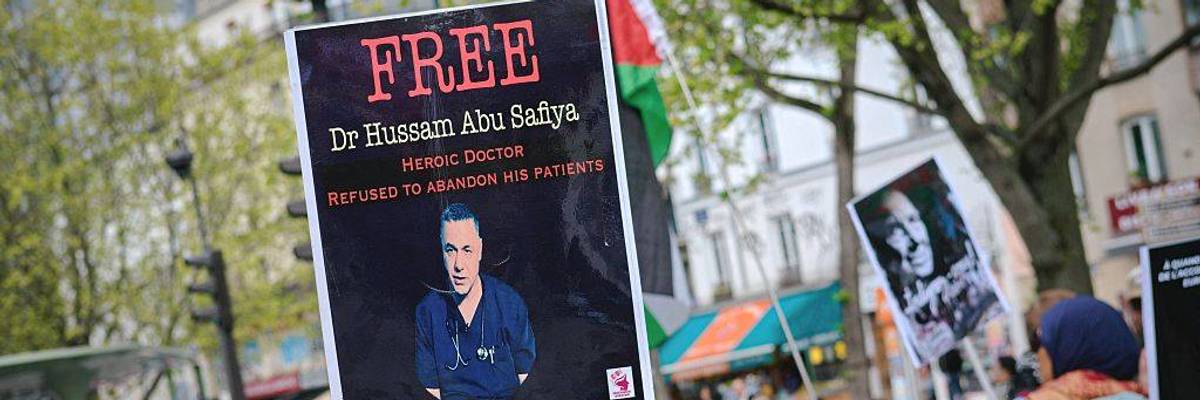
Wide view of a large crowd holding a banner reading Free Hussam Abu Safiya during a pro Palestine demonstration in Paris Ile de France France on April 18, 2026.
(Photo by Djoudi Hamani/Hans Lucas/AFP via Getty Images)
“The international community cannot remain silent while a respected physician is reportedly subjected to harsh conditions, denied adequate medical care, and isolated from the outside world.”
A prominent human rights group on Friday sounded alarms upon learning that Dr. Hussam Abu Safiya, director of the Kamal Adwan Hospital in Gaza, has been sent to solitary confinement.
As reported by Haaretz, Physicians for Human Rights Israel (PHRI) said it learned on Thursday that Abu Safiya was moved to solitary confinement this week without any explanation.
According to a report from The Palestine Chronicle, an attorney representing Abu Safiya claimed that his client was placed into solitary confinement in retaliation for appealing his continued detention.
Abu Safiya was first taken into custody by Israeli forces in December 2024 and has been held since then without being charged with any criminal offenses.
In a Friday statement, the Council of American-Islamic Relations said news of Abu Safiya’s solitary confinement was “deeply disturbing” and raised “even more urgent concerns about his welfare and basic human rights.”
“Congress must demand his immediate release and insist that Israel end the arbitrary detention, abuse, and mistreatment of Palestinian medical professionals and civilians,” CAIR added. “The international community cannot remain silent while a respected physician is reportedly subjected to harsh conditions, denied adequate medical care, and isolated from the outside world without any legal justification. Dr. Abu Safiya must be released immediately.”
PHRI has for months been raising concerns about Abu Safiya’s detention, long before he was transferred to solitary confinement.
While demanding the physician’s release in April, for instance, PHRI said Abu Safiya was being held “in harsh conditions, without access to medication or medical care, as his health continues to deteriorate.”
A 2025 report from Amnesty International, which has also called for Abu Safiya’s release, said that the Gaza-based physician “was detained in the course of caring for his patients and carrying out his medical duties.”
Amnesty also noted that, prior to his detention, Abu Safiya and other colleagues at the Kamal Adwan Hospital had “provided human rights and humanitarian organizations with reliable information about the health situation” in Gaza, which has been left devastated by years of Israeli attacks that have killed at least 72,000 Palestinians.
Israel’s genocidal finance minister holds significant authority over the West Bank Civil Administration, allowing him to expand illegal settlements freely
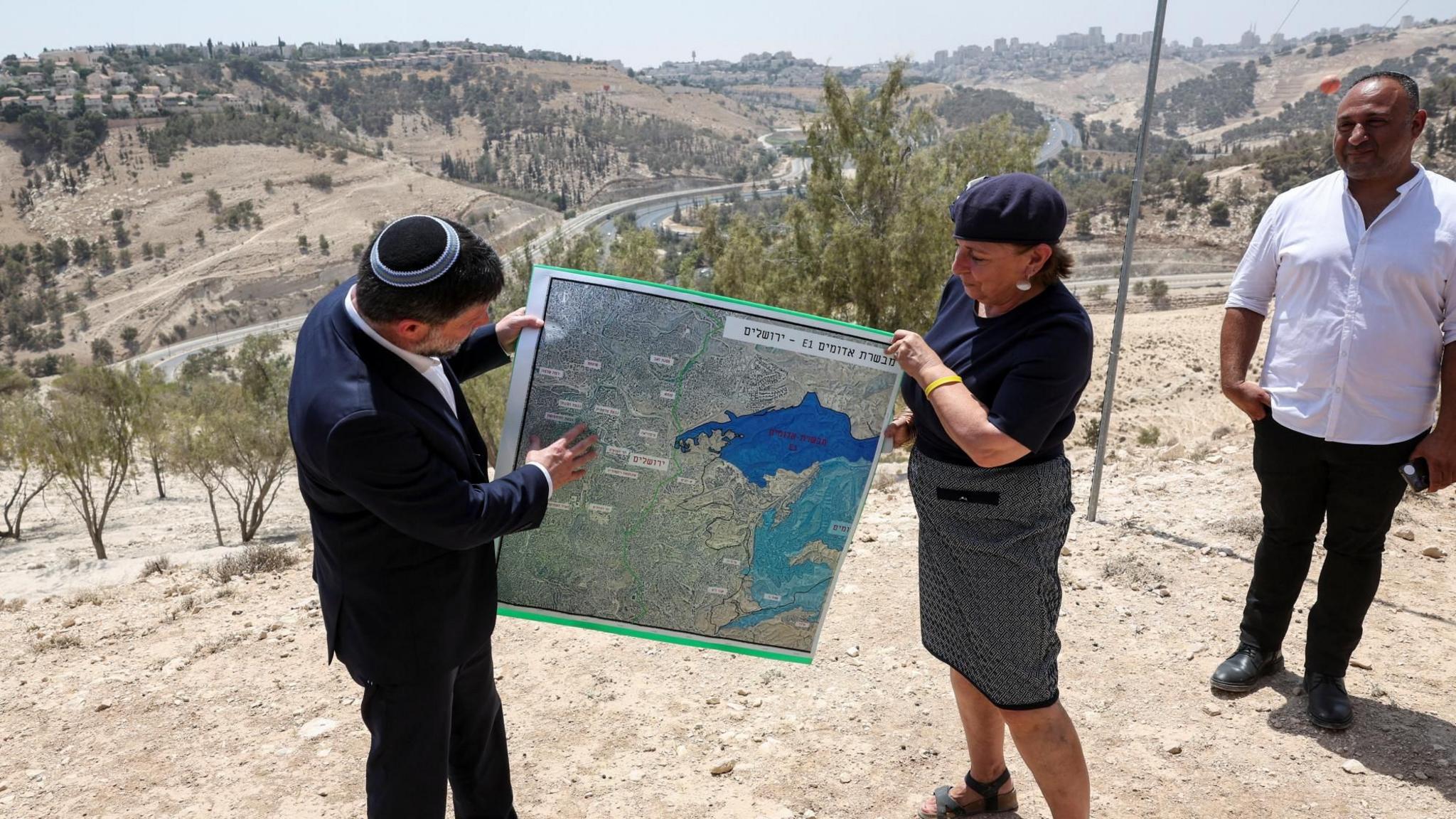
Israeli Finance Minister Bezalel Smotrich announced a new and major illegal settlement project in the occupied West Bank on 3 June, which aims to see the construction of around 2,000 houses on Palestinian land.
According to the minister, 1,006 housing units will be in a new settlement near the occupied holy city of Jerusalem.
Over 920 are planned near occupied Nablus and another 234 near the city of Hebron. “We are continuing to build the Land of Israel in practice,” Smotrich said.
The settlements will “strengthen our hold on the land, reinforce Israel’s security, and establish clear facts on the ground that prevent the creation of an Arab terror state in the heart of the country.”
Smotrich holds significant authority over Israel’s Civil Administration in the occupied territory.
In the summer of 2023, around six months after Israeli Prime Minister Benjamin Netanyahu’s government came to power, significant portions of the Civil Administration in the West Bank – an Israeli military body – were placed under Smotrich’s authority.
This gave the minister free rein to swiftly expand illegal settlements.
Smotrich’s announcement on Wednesday comes as Tel Aviv is also moving to seize private Palestinian land around an archeological site in the occupied West Bank.
The Civil Administration announced on 2 June that it has started to expropriate 320 dunams (about 80 acres) of land for the “preservation and development” of the Herodium – a massive fortress complex built between 23 and 15 BC.
“[The expropriation] is being advanced in accordance with the law, following comprehensive professional assessments conducted by the Civil Administration’s Staff Officer for Archaeology and Staff Officer for Nature Reserves,” the administration said in a statement.
“Their findings pointed to an urgent need to regulate the area and promote preservation efforts at the site in order to prevent damage to archaeological remains of unique historical and cultural significance,” it added.
Since Netanyahu’s government took office in late 2022, Israeli authorities have accelerated plans for the de facto annexation of the occupied West Bank and occupied East Jerusalem.
In February, the Israeli government approved a land registration process allowing Israel to claim territory in the occupied West Bank as “state property” if Palestinians cannot prove ownership.
A few weeks later, dozens of new illegal settlements were approved.
Middle East Eye (MEE) released an investigation in May detailing the “New Nakba” that has escalated against the Palestinian communities of occupied East Jerusalem since 7 October 2023.
According to the investigation, 20,000 Palestinian-owned homes are currently under Israeli demolition orders across occupied East Jerusalem.
Israel is also moving forward with plans to steal large amounts of Palestinian-owned property near Al-Aqsa Mosque.
Tel Aviv is openly working to establish continuity between illegal settlements in order to solidify its control over the West Bank and the city of Jerusalem, and block any prospect of Palestinian statehood.
Israel was supposed to fully withdraw its troops from Gaza as part of the ceasefire signed in October. Instead of pulling back, Israeli forces are quietly cementing permanent, heavily fortified military posts across the besieged enclave, according to satellite imagery analysed by Al Jazeera.
An investigation by Al Jazeera’s Open Source Unit, analysing satellite data up to May 2026, has identified 40 distinct Israeli military outposts entrenched within Gaza. Crucially, the analysis proves that eight of these bases were constructed entirely from scratch after the October 2025 truce went into effect, with one site still undergoing active construction.
(Al Jazeera)
This physical entrenchment mirrors the increasingly overt territorial ambitions of Israel’s leadership. Speaking at a recent conference, Prime Minister Benjamin Netanyahu confirmed directives to permanently seize the vast majority of the Strip.
Israeli forces have pulled back to the “Yellow Line”, which refers to the buffer and military zones comprising some 60 percent of the enclave’s territory.
“We are currently squeezing Hamas; we now control 60 percent of the territory,” Netanyahu stated, before addressing a crowd member who shouted for complete annexation: “Let’s go step by step. First of all, 70. Let’s start with that.”
Desecration and new constructions
The satellite analysis exposes a systematic effort to build a sustainable, long-term military infrastructure rather than temporary observation posts.
The newly established installations are strategically dispersed: Two in northern Gaza, two in the central region, one east of the Netzarim Corridor, and three in the southern city of Khan Younis.
In one of the most glaring examples of this spatial takeover, Israeli forces established a new military base directly atop the ruins of the Eastern Cemetery in Khan Younis.
This content is unavailable due to your cookie settings.
To continue, please allow functional cookies from third-party platforms.
Satellite images show that engineering works on the bulldozed burial ground began in November 2025. By May 18, 2026, the site was fully equipped with vehicle staging areas and repetitive structures, likely used for troop housing and operational meetings.
A similar pattern of rapid militarisation is visible in northern Gaza. In Beit Lahiya, an area that appeared completely clear in October 2025 photos, satellite imagery captured the sudden onset of engineering works by mid-November.
European governments are finally being forced to condemn Israel as its crimes have become impossible to ignore. But they are scapegoating National Security Minister Itamar Ben-Gvir rather than confronting the system he represents.
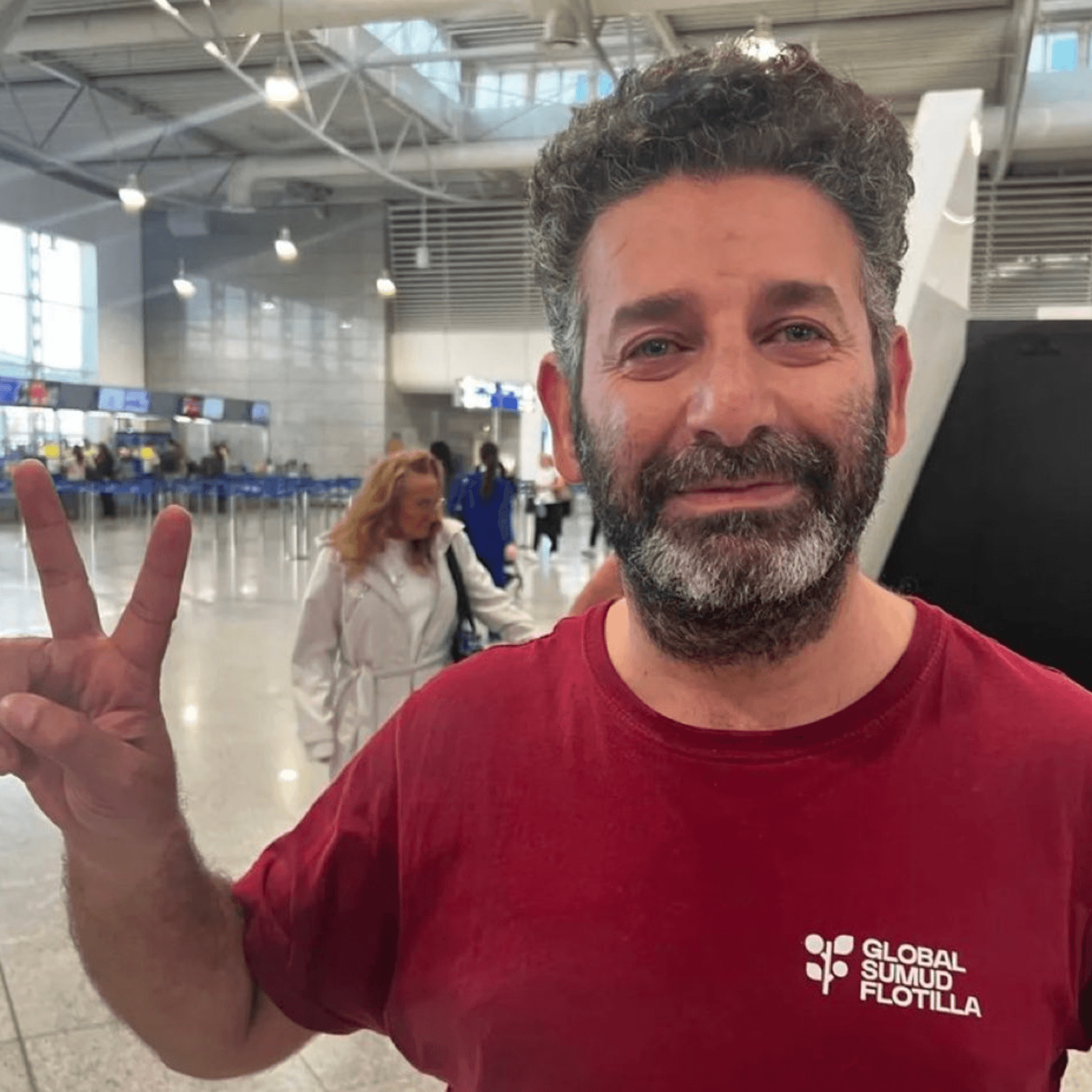
The brutal treatment of activists aboard the Global Sumud Flotilla for Gaza by Israeli forces during their detention in international waters last week triggered a wave of international condemnation, including from many European and other Western countries.
Italy, France, the Netherlands, Belgium, Spain, Poland, and Greece summoned Israeli ambassadors or envoys to condemn the treatment of activists detained during the interception of the Global Sumud Flotilla. The UK said it was “appalled” by the images of the activists’ detentions. These reactions, however, centered around one figure: Israel’s National Security Minister, Itamar Ben-Gvir, who had posted a video of himself overseeing and encouraging the mistreatment of the activists.
The focus on Ben-Gvir was so singular that France’s foreign minister, Jean-Noël Barrot, included in his condemnation post on X a claim that other Israeli officials had rejected Ben-Gvir’s actions.
That much is true: across the Israeli political spectrum, Ben-Gvir became the convenient scapegoat to draw attention away from the entirety of Israeli politics, which differs very little from Ben-Gvir when it comes to the treatment of Palestinians. But the outrage in Israel wasn’t at the treatment itself, but rather the fact that Ben-Gvir revealed it to the world, causing an international embarrassment. The difference is that Ben-Gvir doesn’t care about the PR problem he’s created, while other Israeli officials do.
So do European politicians. That is why EU governments, in being forced to condemn Israeli conduct, have taken great pains to direct their opprobrium at a specific part of the Israeli system, rather than the system itself. They have repeatedly deployed this tactic in recent weeks, which appears to have become a common doctrine for responding to Israeli violations when they become impossible to ignore.
Two weeks ago, the European Union greenlit the sanctioning of Israeli groups and individuals implicated in settler violence against Palestinians in the West Bank. The decision, which followed years of failed attempts, sanctioned only five groups and four individuals, despite the fact that the settler movement in the West Bank, including its most violent factions, is part of official state policy, openly sponsored by ministers with public budgets.
Another example is when several European countries issued a joint statement last week condemning the ongoing expansion of Israeli settlements in the West Bank. The statement, signed by France, the UK, Italy, Germany, Canada, Australia, New Zealand, Norway, and the Netherlands, characterized settlement expansion as “illegal” and called on Israel to halt it. It then added that the signatories “opposed” those who call for the annexation of the West Bank, including members of the Israeli government. The statement stressed the signatories’ commitment to the two-state solution.
The statement made no mention of the fact that in the past two years, the Israeli Knesset passed two bills with an overwhelming majority, one in 2024 rejecting a Palestinian state, and one in 2025 allowing the government to annex the West Bank.
A new-old pattern
This increasingly repeated pattern of individualizing Israeli policies when condemning them contrasts with the older pattern of either ignoring Israeli practices or outright justifying them as “self-defense.” But is this a new paradigm in Western politics, and will it lead to a larger change of policy toward Israel?
According to Roula Shadid, co-director of the Palestinian Institute for Public Diplomacy (PIPD), “part of the change in Western discourse towards Israel is the global mobilization in solidarity with Palestinians since October 2023.” Shadid points to a gap between the official discourse of Western governments and the awareness expressed by solidarity movements, noting that “when we talk with diplomats and political actors, they admit that Israeli policies are more structural than they admit publicly, but they have political reasons to maintain their criticism of Israel under a certain ceiling.”
For Shadid, the fragmenting of Israeli policies, pinning them on individual ministers or settler actors, is a reflection of how Israel has fragmented Palestinian reality on the ground. “Israel has imposed a different set of conditions for Palestinians in Gaza from those in Jerusalem or in the West Bank, and Palestinian leadership is also fragmented, which makes room for Western actors to treat different issues separately,” Shadid told Mondoweiss, adding that this forecloses any treatment of Israeli policies as one coherent whole.
In Europe, particularly, governments have for many years invested in the political paradigm created by the Middle East peace process, according to Shadid. “Countries invested politically and financially in the two-state solution project, which in essence is the administration of occupation, and this makes them insist on clinging to the narrative that there is a peace process underway that needs to be saved from a few extremists,” she explained.
Shadid considers that limited condemnations of parts of the Israeli system give Western countries “the ability to continue business as usual with Israel, while containing the increasing demands and legal obligations to dissociate from violations of Palestinian rights.” She also thinks this policy is short-lived.
“Western governments might hope this moment passes, and then recycle their image and go back to business as usual,” she said. “There will be obstacles, because Israel will increase its aggression, its regional wars will continue to expose its colonial project further, and awareness will continue to rise globally about this reality, and so will pressure coming from citizens.”
Violations by Israeli guards consisted of rape, including with objects, gang rape, shooting genitals, touching breasts and genitals, strip and cavity searches, and forced nudity
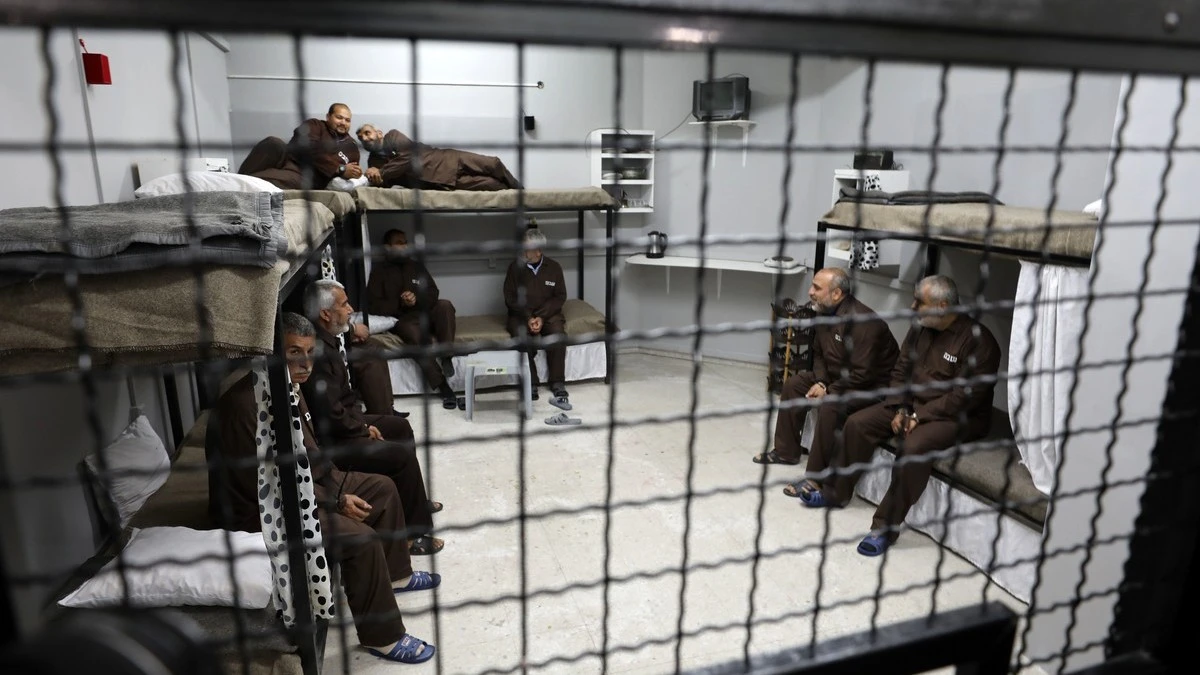
The UN has documented dozens of cases of torture, rape, and sexual violence against Palestinian detainees by Israeli prison guards and interrogators, Haaretz reported on 29 May, citing a new report issued by the office of UN Secretary-General Antonio Guterres.
“Violations consisted of rape, including with objects, gang rape, attempted rape, physical violence to the genitals, instances of targeted shooting of the genitals, touching of breasts and genitals, strip and cavity searches conducted without apparent security justification, forced nudity and threats of rape,” the report said.
The UN identified 31 victims from the Gaza Strip and the occupied West Bank, including 14 men, seven women, nine children, and one girl.
According to the report viewed by Haaretz and other western media outlets, Israeli prison personnel subjected nine victims to rape and gang rape, in some cases repeatedly.
In most cases, the torture and sexual violence were carried out during the interrogation of Palestinians at military camps and detention centers, such as the Sde Teiman base and the Etzion detention center, as well as in Israeli prisons, including Megiddo, Ofer, Ramla, HaSharon, Shatta, Nafha, and Damon, and the Gush Etzion police station.
At other times, Israeli security forces tortured Palestinians at checkpoints and during military operations in the occupied West Bank.
The report says that some instances of abuse were filmed or photographed by the Israeli perpetrators, including when one victim was raped.
Female detainees were subjected to threats of rape, forced nudity, unwanted physical contact, and humiliating strip searches carried out without apparent security justification.
Men and boys were subjected to rape or attempted rape, including five male victims who suffered “severe rectal bleeding or swelling for multiple days or weeks and, in some cases, without receiving medical treatment.”
Secretary-General Guterres urged the Israeli government to “immediately cease all acts of sexual violence” and implement reforms to prevent abuse moving forward.
Israel has claimed – without evidence – that members of Hamas participating in the 7 October 2023 attack on Israeli military bases and settlements carried out mass rapes against Israeli women. However, the new UN report said it had not received information from Israel on any indictments involving sexual violence against Palestinians detained over their alleged role in the attack.
Meanwhile, an hour-long documentary aired on Israeli television this week, revealing that Israelis living in the Gush Etzion settlement south of Jerusalem admitted their Jewish religious leaders have for decades gang-raped local children and filmed the acts to create child pornography.
The television report, “No longer in denial: Gush Etzion admits to ritual abuse,” revealed that the rapes were carried out as part of a religious ritual.
The Kentucky congressman’s stand against US aid to Israel and the Iran war triggered a pro-Israel donor backlash that reveals how firmly the lobby still shapes Republican politics
US Congressman Thomas Massie speaks with supporters after his concession speech in Hebron, Kentucky, United States, 19 May 2026 (Jon Cherry/Getty Images/AFP)
In American politics, certain transgressions are tolerated. Challenging Israel is not among them. US Congressman Thomas Massie crossed that line – and on Tuesday, paid the price.
His defeat in Kentucky’s 4th Congressional District was widely portrayed as another demonstration of President Donald Trump‘s continued dominance over the Republican Party. That explanation is politically convenient but analytically incomplete.
What happened to Massie was not merely a clash of personalities or a dispute over loyalty to Trump. It was the enforcement of a political boundary deeply embedded within the structure of American power. Massie had violated one of the deepest taboos in American politics: alienating the Israel lobby.
Unlike many politicians accused of dissent, Massie’s divergence was not rhetorical or symbolic. It was documented through votes, public statements and a sustained critique of unconditional American support for Israel.
As the only member of Congress to vote against House Resolution 888 in November 2023, Massie committed a cardinal sin – rejecting the congressional resolution that affirms Israel’s “right to exist” and opposes calls for the dismantling of the Israeli state.
New MEE newsletter: Jerusalem Dispatch
Sign up to get the latest insights and analysis on Israel-Palestine, alongside Turkey Unpacked and other MEE newsletters
The resolution passed 412-1, with even progressive “Squad” members including Alexandria Ocasio-Cortez, Ilhan Omar and Ayanna Pressley voting in favour.
Massie was also among a small number of members of Congress who opposed emergency military aid packages and several pro-Israel resolutions after 7 October 2023.
He also consistently argued that all foreign aid – particularly aid to Israel – violated both constitutional principles and fiscal conservatism. At a moment when Israel was carrying out what numerous human rights organisations, UN experts, genocide scholars and even former Israeli officials described as genocidal acts in Gaza, Massie openly opposed using American taxpayer money to finance the war.
In Washington, such positions are treated as dangerous deviations from the consensus on Israel – defiance that must be politically punished.
Massie did not simply challenge a policy, but confronted an entrenched power structure that has shaped American foreign policy in the Middle East for decades
Support for Israel has been one of the most entrenched bipartisan pillars of American foreign policy. Since October 2023, the United States has poured tens of billions of dollars in military aid to Israel while shielding it at the United Nations.
The Costs of War Project at Brown University puts the direct figure at well over $22bn.
In Gaza, the health ministry and international observers documented more than 75,000 Palestinians killed and over 180,000 injured – countless left maimed – as entire neighbourhoods, hospitals, universities, schools, water facilities, electric grids and refugee camps have been systematically destroyed.
Massie did not simply challenge a policy, but confronted an entrenched power structure that has shaped American foreign policy in the Middle East for decades.
A familiar pattern
Washington has witnessed similar episodes before. Former Republican Congressman Paul Findley of Illinois lost his seat in 1982 after criticising Israeli policy and the growing influence of Aipac. Likewise, Republican Senator Charles Percy of Illinois suffered a similar fate in 1984 after tensions with pro-Israel lobbying networks.
In the past two decades, many Democratic members of Congress encountered the same fate. Cynthia McKinney in Georgia, Earl Hilliard in Alabama, Jamaal Bowman in New York and Cori Bush in Missouri all faced massive financial interventions after criticising Israeli policy or supporting Palestinian rights.
These cases are too numerous and too targeted to remain anecdotal. The system enforcing them is structural. Aipac’s super PAC, which labelled Massie “the most anti-Israel Republican in the House”, contributed $9m to the race alone. When the result came in, Aipac declared: “Pro-Israel Americans are proud to help defeat anti-Israel candidates.”
US: Anti-Aipac congressman Massie unseated in most expensive House primary ever
During the Cold War, questioning anti-communist orthodoxy carried political consequences. Today, questioning unconditional support for Israel carries the same weight of orthodoxy in Washington.
The Kentucky race became the most expensive House primary in modern American history, with spending exceeding $34m. Yet the significance lies as much in how the money was mobilised and coordinated as in the sheer amount spent.
Press reports indicate that millions in outside expenditures came from networks aligned with pro-Israel advocacy organisations and donor ecosystems that have increasingly intervened in congressional races nationwide.
The campaign against Massie followed a now-familiar model: massive independent expenditures, relentless advertising blitzes, coordinated media narratives and efforts to portray dissenting candidates as extremists or unreliable actors outside the accepted boundaries of Washington politics.
Massie was not merely outspent but politically marked and strategically targeted.
These campaigns are not simply about defeating one candidate. They are designed to create fear and send a message to every member of Congress that opposition to Israeli policy, especially during wartime, carries severe political costs regardless of seniority, popularity or ideological credentials.
A shifting public
American public opinion has shifted dramatically against Israel. Multiple polls conducted over the past two years show a stark erosion of support, particularly among younger Americans. A February Gallup poll showed that sympathy for Palestinians had surpassed sympathy for Israelis for the first time.
Pre-election polling found that older Republican voters in the district broke decisively for Ed Gallrein, while younger and middle-aged voters leaned towards Massie – a generational divide visible far beyond Kentucky.
Even among Republicans, support for unconditional military involvement abroad has weakened considerably, especially after the escalation towards the war on Iran. A growing number of Americans, above all young people, view Israel not as a strategic asset but as a source of regional instability capable of dragging the United States into wider wars that serve no American national interest.
Massie reflected this sentiment openly. During debates surrounding the possibility of direct military confrontation with Iran, he warned that Washington was being pushed towards another catastrophic Middle Eastern war driven primarily by Israeli regional interests rather than core American ones.
In one widely circulated statement, Massie argued that Congress should not authorise military escalation without direct constitutional approval and questioned why American taxpayers and soldiers should bear the burden of wars initiated by foreign policy priorities disconnected from domestic needs.
After decades of war, debt and the decline of basic services, those arguments now resonate with far more Americans than Washington elites care to admit.
Israel’s growing public relations crisis has intensified these tensions. Images from Gaza – where entire families have been erased, children buried beneath rubble and famine conditions imposed on a trapped civilian population – have transformed global public opinion.
South Africa’s genocide case before the International Court of Justice further amplified international scrutiny, while major human rights organisations accused Israel of committing war crimes and crimes against humanity. For millions around the world, Gaza destroyed the myth that western human rights discourse applies equally to all people.
Facing this crisis of legitimacy, Israel and its supporters have invested heavily in narrative control across media platforms, digital spaces, universities and political institutions. Israeli Prime Minister Benjamin Netanyahu, himself an indicted war criminal, has repeatedly boasted about Israel’s influence within western media networks and social media platforms. The struggle is increasingly one over information and perception.
In his concession speech, Massie remarked: “It took a while to find Ed Gallrein in Tel Aviv.”
Massie was not simply conceding defeat to his opponent. He was identifying the terrain on which the battle had been fought. This was not merely a Kentucky primary race. It was an election shaped by national donor networks, foreign policy alignments and political enforcement mechanisms extending far beyond the district itself.
The wider message
Some commentators tied to the Israeli lobby attribute Massie’s defeat solely to Donald Trump. But this narrative is both factually flawed and analytically superficial. Trump certainly played an important role – he endorsed former Navy SEAL Ed Gallrein and repeatedly attacked Massie as disloyal, transforming the primary into a referendum on allegiance to the Maga movement.
Yet Trump alone does not generate more than $30m in congressional primaries, nor does he independently mobilise a vast donor infrastructure against a single congressman among dozens who have disagreed with him over the years.
A more accurate reading is that Trump’s machinery converged with well-established Zionist donor networks and enforcement structures – what some critics now describe as the “Epstein Class”: a nexus of billionaire financiers, political operatives, media influence networks and intelligence-linked figures whose loyalties often appear more connected to preserving Israeli regional supremacy than defending coherent American national interests.
Trump did not create the target on Massie’s back – he just helped pull the trigger.
What happened to Massie exposes a structural reality long understood but rarely discussed openly: there are policy red lines within the American system, and Israel sits among the brightest. Crossing those lines carries consequences – coordinated funding flows, nationalised opposition campaigns, coordinated messaging portraying dissent as extremism, and political isolation.
Trump’s machinery converged with well-established Zionist donor networks and enforcement structures – what some critics now describe as the ‘Epstein Class’
But the implications extend far beyond Kentucky.
To Maga Republicans, it signals that “America First” has limits. One may challenge trade agreements, immigration policy, global institutions or even party leadership. But challenging Washington’s alignment with Israel remains extraordinarily dangerous.
To libertarian conservatives, the answer is equally stark: fiscal conservatism and scepticism towards foreign intervention remain acceptable only until they intersect with Israel.
And to the broader Republican Party, the lesson could not be clearer: party discipline increasingly requires adherence to Trumpism and to a foreign policy consensus in which Israeli priorities remain deeply embedded within the permanent foundations of American power.
Massie was defeated for one main reason: he challenged one of the most protected structures within American political life. Once that occurred, the Zionist machinery activated with remarkable speed: enormous funds mobilised, opposition networks unified overnight, media narratives deployed and political deterrence established.
These are not passing phenomena. They discipline political behaviour. And as public anger over Gaza deepens and younger Americans continue breaking with old political orthodoxies, it is no longer clear that these instruments of political discipline can hold indefinitely in a society already entering a deeper crisis of legitimacy.
Yet despite Massie’s defeat, the results of recent primary races suggest that Aipac’s long-standing dominance over American politics may be waning. On the same evening, Chris Rabb – a democratic socialist, vocal Palestine advocate and open Aipac critic – won the Democratic primary in Pennsylvania’s 3rd Congressional District against two Aipac-backed opponents.
Earlier this year, Aipac’s campaign against moderate Democrat Tom Malinowski in New Jersey backfired spectacularly, inadvertently propelling Analilia Mejia – the race’s most vocal Palestine advocate – to victory.
The ground is shifting and the lobby knows it.
The views expressed in this article belong to the author and do not necessarily reflect the editorial policy of Middle East Eye.
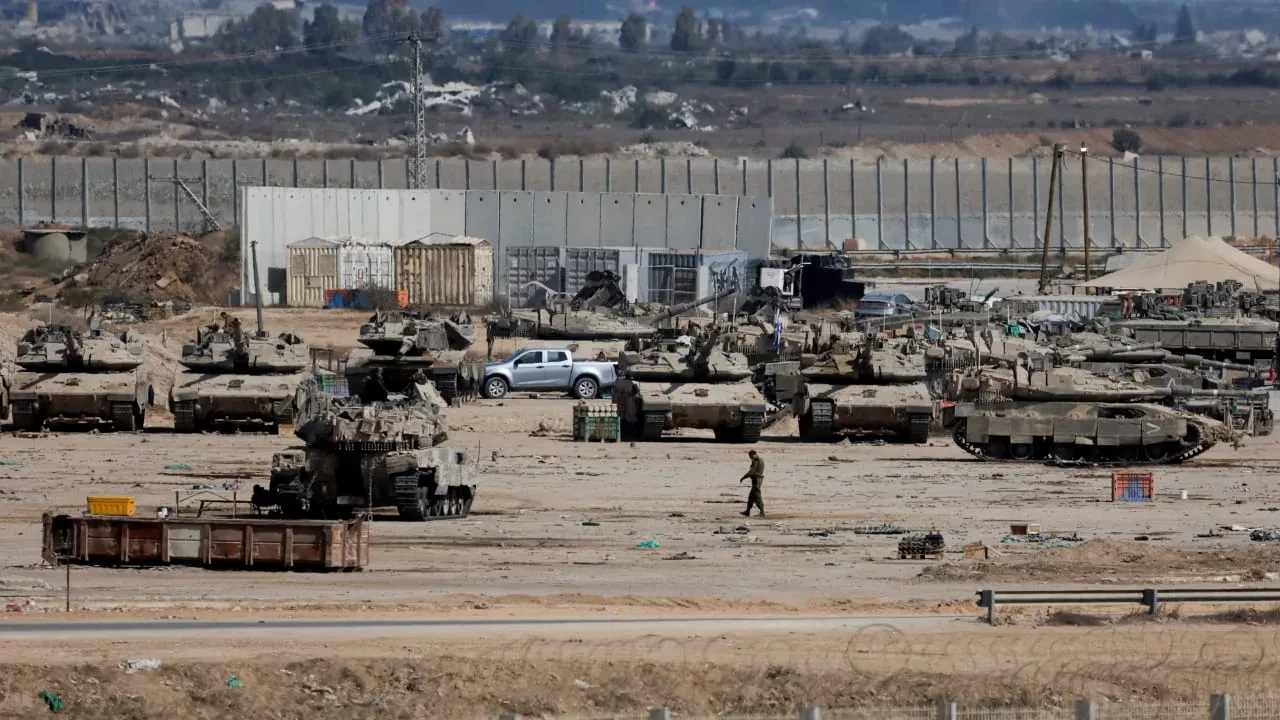 (Photo credit: REUTERS/AMMAR AWAD)


![An aerial view of destruction in Sheikh Ridwan neighborhood following the Israeli forces' withdrawal with the ceasefire agreement in Gaza City, Gaza on October 17, 2025. [Mohammed Abu Samra - Anadolu Agency]](https://i0.wp.com/www.middleeastmonitor.com/wp-content/uploads/2025/10/AA-20251017-39440420-39440381-SHEIKH_RIDWAN_NEIGHBORHOOD_SUFFERS_EXTENSIVE_DAMAGE_FOLLOWING_ISRAELI_FORCES_WITHDRAWAL.jpg?fit=920%2C613&ssl=1)
 (Photo credit: Reuters)


 Gathering in support of Israel in front of theAC European Parliament in Brussels in the wake of the October 7 attacks, October 11, 2023. (Photo: European Parliament Flickr Account. Creative Commons License CC-BY-4.0: © European Union 2023 – Source: EP)
 (Photo credit: WAFA)


You must be logged in to post a comment.