Posts Tagged ‘Palestine’

Amnesty: India sent 2,596 arms shipments to Israel during genocide in Gaza

July 30, 2026

Amnesty said its ‘conservative’ methodology meant it was likely underestimating the true extent of India’s contribution to Israel

Israeli Prime Minister Benjamin Netanyahu and his Indian counterpart, Narendra Modi, attend a press conference in Jerusalem, on 26 February 2026 (Gil Cohen-Magen/AFP)

Azad Essa

Published date: 30 July 2026 00:01 BST | Last update:14 mins 57 secs ago

Indian state-owned and private companies shipped at least 2,596 consignments comprising hundreds of thousands of arms, ammunition and military components to Israel during the genocide in Gaza, a new Amnesty International report has revealed. 

The shipments, sent between 7 October 2023 and 30 November 2025, included machine-gun components, 155 mm high-explosive artillery shells supplied to Elbit Systems, explosive warheads for the SkyStriker “kamikaze” drones – similar to those discovered amid the ruins in Khan Younis – and armoured vehicle components destined for major suppliers to the Israeli military.

According to Amnesty, these amounted to 564,970 parts of explosive ordnance (drone warheads, artillery shell casings and others), 390,516 small arms parts for military-grade weapons, and 298 components of military vehicles to large Israeli companies that supplied the Israeli armed forces.

As of 29 July 2026, at least 247,387 Palestinians have been either killed or injured since Israel launched its military campaign in Gaza, following the Hamas-led attacks on southern Israel on 7 October 2023.

The report, “Made in India: The Supply of Weapons and Ammunition to Israel”, published on Thursday, said its findings were “based on a deliberately conservative methodology”, and were likely to underestimate the “true extent of India’s contribution to Israel’s military supply chain”.

Rising Indian complicity 

The report is the latest in a series alleging that India has materially supported Israel’s genocide in Gaza, following earlier allegations that New Delhi supplied combat drones, bombs and weapons components to Israel after October 2023.

In May, the Palestinian-led Boycott, Divestment and Sanctions (BDS) movement and No Harbour for Genocide warned of a “flood” of military supplies from India to Israel. 

New MEE newsletter: Jerusalem Dispatch

Sign up to get the latest insights and analysis on Israel-Palestine, alongside Turkey Unpacked and other MEE newsletters

“Israel has a huge domestic production, but they rely on specific components, whether it’s like high-end technology material for aerospace or bulk materials such as military steel,” a spokesperson for No Harbour for Genocide told Middle East Eye at the time. 

Likewise, an Al Jazeera investigation based on Israeli Tax Authority import data found that India was the second-largest exporter of military-related goods to Israel between October 2023 and October 2025. 

Israeli army reservist ‘flees’ India after war crimes allegation filed

Read More »

Al Jazeera noted the data likely represented only a partial picture of total arms transfers to Israel and did not establish the end use of the shipments in Gaza.

Likewise, Amnesty’s investigators based their analysis on shipments classified under specific Harmonized System (HS) codes, the internationally used customs classification system for traded goods.

These included HS codes 9301–9307, which cover weapons, ammunition and their parts and accessories; and HS code 8710, which covers armoured and fighting vehicles and their components. 

Researchers excluded shipments labelled only with internal product or part numbers, where it was not possible to determine whether the items were military or civilian.

It also excluded hundreds of shipments of dual-use small-arms components, as well as weapons, parts and ammunition likely intended for anti-missile defence systems.

Amnesty said its deliberately conservative methodology meant its findings were likely to underestimate the true extent of India’s contribution to Israel’s military supply chain.

Nonetheless, its findings revealed there were several companies, including state-owned ventures, involved in supplying military aid to Israel.

It said it wrote to nine companies as well as the Indian state but did not receive a reply by the time of publication. 

“In light of the International Court of Justice’s provisional measures orders recognizing a plausible risk of genocide against Palestinians in Gaza, the Indian authorities cannot credibly argue that they did not know that continuing to authorize and facilitate arms transfers to Israel carries a substantial risk of contributing to serious violations of international law,” Agnes Callamard, Amnesty’s secretary general, said in a statement. 

Callamard added that while the Israeli military continued to inflict death and suffering in Gaza, “Indian companies continued to profit by supplying components and munitions destined for Israel’s defence sector.”

India-Israel defence ties

India-Israel ties have accelerated over the past decade under the leadership of Prime Ministers Narendra Modi and Benjamin Netanyahu. 

India is the world’s largest purchaser of Israeli weapons, and several Israeli arms manufacturers have established production facilities in the country through joint ventures with Indian companies.

Earlier this year, during Modi’s visit to Israel, the two countries upgraded ties to a Special Strategic Partnership for Peace, Innovation and Prosperity.

The relationship has since expanded further, with a series of new memorandums of understanding and reports of potential defence partnerships, including discussions over India manufacturing Iron Dome interceptor missiles for Israel. 

Israel to install statue of Indian Maratha king as gesture of friendship

Read More »

Diplomatically, the Indian government has been one of Israel’s staunchest supporters.

New Delhi has refused to join South Africa’s case against Israel at the International Court of Justice, which alleges violations of the Genocide Convention, and has rejected calls to impose an arms embargo on Israel. 

It has also cracked down on pro-Palestine protests and activism within India.

When Indian civil society groups petitioned the Supreme Court in September 2024 to halt arms exports, the court dismissed the case, ruling that decisions on foreign policy fall within the government’s domain, not the judiciary.

External Affairs Minister Subrahmanyam Jaishankar has also maintained that India’s arms exports are guided by the country’s “national interest”.

“The issue of India’s exports, including India’s exports of anything which directly or indirectly has any military implications, is guided by our national interest and by our commitments to various regimes,” Jaishankar said in December 2024.

“Where Israel is concerned, it is a country with which we have a strong record of cooperation in national security. It is also a country that has stood by us at different moments when our national security was under threat,” he added.

UN expert Albanese says Khan’s removal ‘lines up neatly with fight to neutralise Netanyahu’s warrant’

July 27, 2026

UN special rapporteur on Palestine Francesca Albanese says the ICC’s vote on Karim Khan ‘proves that justice does threaten apartheid Israel’

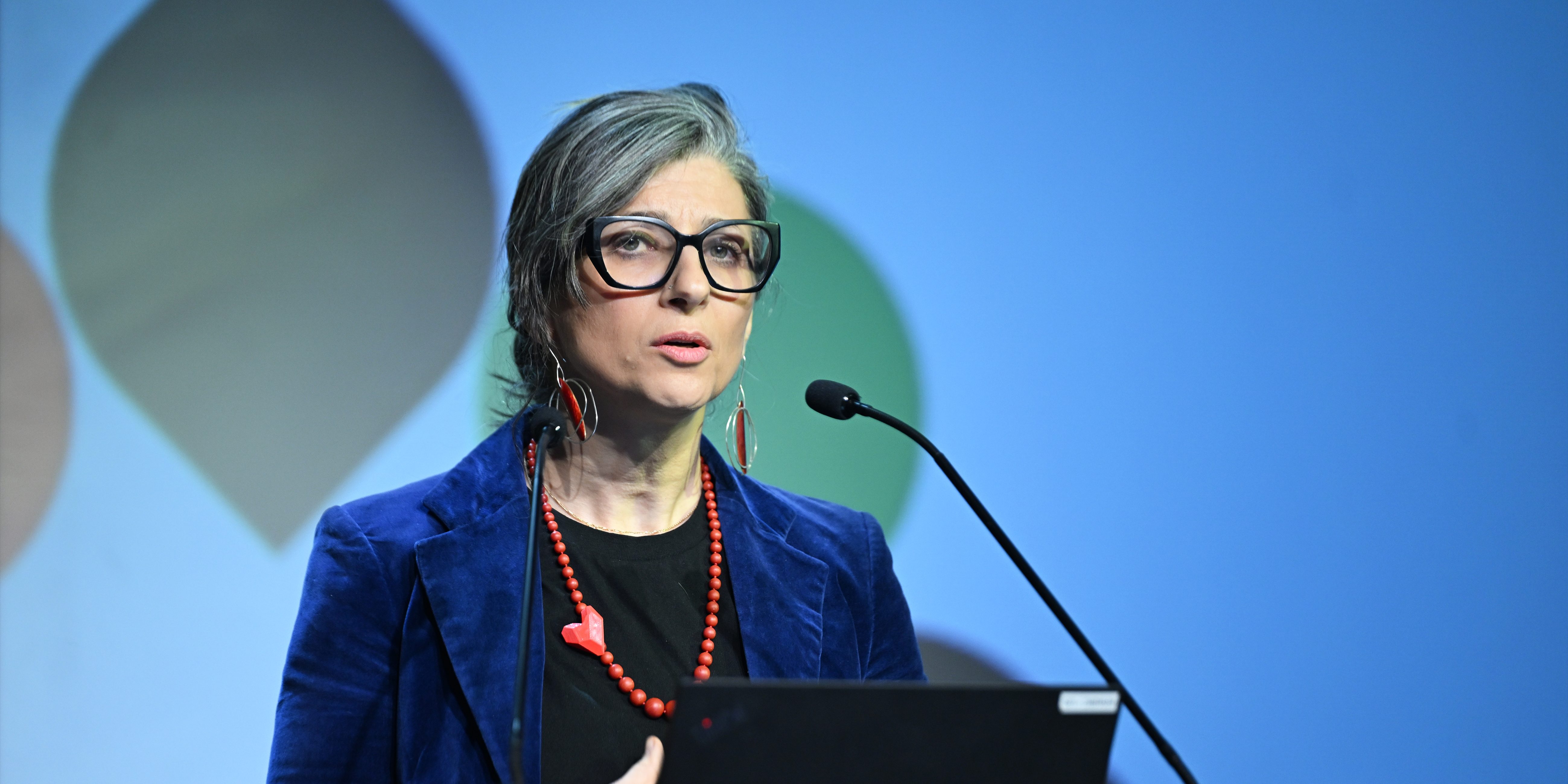
UN Special Rapporteur for the Palestinian Territories occupied since 1967, Francesca Albanese gestures as she speaks during a public event hosted by the Olof Palme International Center in Belgrade on March 17, 2026.

Francesca Albanese speaks during a public event hosted by the Olof Palme International Centre in Belgrade on 17 March 2026 (AFP)

MEE staff

Published date: 26 July 2026 10:43 BST | Last update:23 hours 56 mins ago

The UN’s special rapporteur on the occupied Palestinian territories on Saturday said the removal of International Criminal Court (ICC) chief prosecutor Karim Khan cannot be read in isolation from the campaign to overturn the arrest warrant against Israeli Prime Minister Benjamin Netanyahu.

“Khan’s removal lines up neatly with the fight to neutralise Netanyahu’s arrest warrant. Coincidence is a luxury intl law can no longer afford,” Francesca Albanese wrote on X. 

“This proves that justice DOES threaten Apartheid Israel & Co. So if the ICC is paralysed, lawyers and judges worldwide must do more.”

Albanese’s statement was in response to an Israeli media report that said Israel’s foreign minister, Gideon Saar, “played an active role” in efforts to remove Khan.

The report cited a senior Israeli official as saying that “Saar oversaw a dedicated task force and employed intensive diplomatic efforts aimed at securing Khan’s removal from office”.

New MEE newsletter: Jerusalem Dispatch

Sign up to get the latest insights and analysis on Israel-Palestine, alongside Turkey Unpacked and other MEE newsletters

Khan’s decision to seek arrest warrants for Netanyahu and former defence minister Yoav Gallant in May 2024 over alleged war crimes in Gaza has unleashed a ferocious campaign of threats and sanctions on him and those supporting the court’s work on Palestine.

Albanese, an Italian human rights lawyer who has held the UN mandate since 2022, was reacting to the vote by ICC member states at a special session in New York to dismiss Khan over misconduct claims. 

Eighty-two of the court’s 125 states parties backed removal in a secret ballot, exceeding the 63 needed. Thirteen voted against and 15 abstained. It is the first time a sitting ICC prosecutor has been removed. 

‘Pro-apartheid camp’

Albanese has previously accused a “pro-apartheid camp” of seeking to overthrow Khan.

In March, after Middle East Eye revealed that a panel of three judicial experts appointed by the court’s own oversight body had unanimously cleared Khan, Albanese wrote that “the pro-Apartheid camp is already working to remove him ANYWAY: those who stand for justice must ensure this attempt fails”.

The panel found that the findings of UN investigators “do not establish misconduct or breach of duty under the relevant framework”. 

The Bureau of the Assembly of States Parties, an executive body of 21 diplomats, voted weeks later to set that conclusion aside. 

MEE revealed this month that the bureau had also changed the voting rules, collapsing a planned two-stage vote into a single motion and lowering the effective threshold for dismissal.

What next for the ICC and the Palestine investigation after Karim Khan’s removal?

Read More »

Albanese was sanctioned by the Donald Trump administration in July 2025, days after publishing a report naming more than 60 companies she said were profiting from Israel’s occupation. 

Khan was the first ICC official designated under the same executive order, in February 2025, over the warrants sought for Netanyahu and Gallant.

Eleven ICC officials had been sanctioned by the end of last year, including both deputy prosecutors and several judges who ruled against Israel.

The warrants for Netanyahu and Gallant remain in force and can only be withdrawn by judges.

Israel has been calling for the warrants to be dropped.

Commenting before the prosecutor’s dismissal had been officially confirmed, Saar called on the court to drop the arrest warrants against Israeli officials, reiterating Israel’s debunked claim that it was rushed to distract from sexual misconduct allegations.  

“These warrants, issued against a country that is not even a member of the ICC, should never have been sought in the first place and should be revoked immediately,” he wrote on X.   

Ever since the warrants were issued by pre-trial judges in November 2024, Israel has mounted a series of legal challenges aimed at invalidating them.

Two are still pending, including Israel’s argument that the court has no jurisdiction over its nationals at all, since Israel isn’t a state party to the Rome Statute.

The office of the prosecutor is now headed by deputy prosecutors Nazhat Shameem Khan and Mame Mandiaye Niang, both sanctioned by the US in August under the same executive order that targeted Albanese and Khan.

Following the removal vote, the ICC’s office of the prosecutor released a statement saying that its work would continue without interruption. 

Elections for a new prosecutor should follow, but a timeline has yet to be announced by the court’s governing body.

The Subsidized Occupation: Palestine and the Arabs

July 22, 2026

By M. Reza Behnam, Z Net, July 20, 2026, 7 Mins Read

Source: Originally published by Z. Feel free to share widely.

Facebook Twitter Reddit Bluesky Email

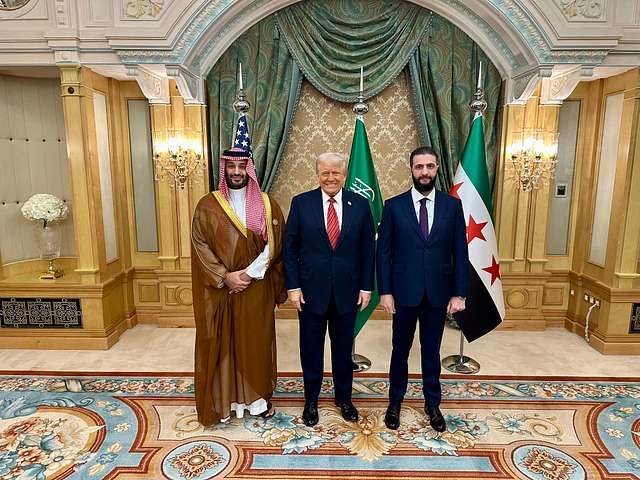
President of the United States Donald Trump with Saudi Crown Prince Mohammed Bin Salman and President of Syria Ahmed al-Sharaa during Donald Trump’s state visit to Saudi Arabia. US State Department.

The modern Middle East suffers from a consequentially glaring paradox: oil-rich Arab states undoubtedly possess some of the most concentrated geopolitical and economic leverage on the planet.  Yet, they have, since the 1970s, declined to use their economic indispensability in defense of Palestinian statehood and to uphold their own sovereignty.  

The pivot of Arab Gulf states away from historical Arab nationalism to Western alignment reflects a fundamental shift in regional priorities. Arab monarchs have traded their independence and vast regional clout for Western economic integration, advanced defense technology and foreign security assurances.  

The global community has, for decades, been led to believe that the path to Palestinian self-determination is a knot too complex to untangle. The reality, however, is far more transactional.  

The wealthy Gulf capitals and the wider Arab oil-producing bloc possess four critical pressure points that could be acted on to force a diplomatic breakthrough or affect meaningful regional change.  None, however, have been employed: 1) oil power; 2) sovereignty over waterways; 3) petrodollars; and 4) power of the umma.     

Oil Power

In 1973, Arab oil-producers demonstrated the efficacy of wielding oil as an economic weapon. It was one of those rare moments when Arab regimes exploited their leverage to challenge Western imperialism.   

After the start of the October 1973 Arab-Israel War between Egypt, Syria and Israel, the Organization of Arab Petroleum Exporting Countries (OAPEC) imposed a total oil embargo in response to U.S. support for Israel during the war. They demanded that Israel withdraw from Palestinian lands they occupied in the 1967 War.  

OAPEC’s collective action caused shortages, triggered a massive recession and led to a realignment of the global economy.  The embargo generated massive revenue windfalls for producing states.  The sudden influx of capital accelerated the nationalization of their oil industries, allowing them to gain control of assets previously held by U.S. and British stakeholders.   

Despite the unprecedented wealth gained by Arab producers, the geopolitical landscape remained unchanged when OAPEC lifted the embargo in March 1974.  Israeli forces remained entrenched in occupied Palestine.  

The weaponization of oil has, since 1973, been unilaterally retired by Gulf elites.  During successive crises, including the catastrophic destruction and genocide in occupied Gaza and the West Bank, as well as the current war on non-Arab Iran, they have explicitly ruled out oil embargoes or production cuts to pressure Israel’s western enablers.  

Rather than utilizing energy as a tool of opposition to U.S.-Israeli hegemony, Arab regimes have aligned with and normalized relations with the perpetrators of occupation, apartheid and genocide. 

They have, for example, prioritized maintaining market predictability and maximizing revenues to fund domestic mega-ventures and “eco-normalization” energy projects, integrating Israeli infrastructure (in a dominant position) into Arab utility grids and gas imports.  

Sovereignty Over Waterways

Some of the most critical maritime corridors and strategic chokepoints, indispensable to global commerce, are situated in the Middle East; most notably the Suez Canal, connecting the Mediterranean Sea to the Red Sea, Strait of Hormuz in the Persian Gulf and the Bab al-Mandab in the Red Sea.

The ongoing U.S. Israel war on Iran has underscored the critical importance of the region’s waterways to global commerce and how military disruptions can send shockwaves through energy and financial markets.

In the current asymmetrical war, Iran has demonstrated how to effectively use a vital waterway as a strategic tool.  It has leveraged the closure and disruption of the Strait of Hormuz to establish control over the waterway and force major strategic concessions.  Like Iran, Yemen’s Ansar Allah has threatened to close the Bab al-Mandab—the only entry point to the Red Sea from the Indian Ocean, which facilitates trade between Asia and Europe.  

Major Arab states have not advantaged their geography to challenge U.S.-Israel regional supremacy.  Instead, they have acted as guardians of the imperial status quo, securing these indispensable passages to ensure the uninterrupted flow of global commerce to the very nations underwriting the occupation of Palestine and genocide in Gaza.   

Petrodollars

The structural foundation of America’s financial dominance has been the “petrodollar”—a decades-old system in which oil is priced in dollars, with resulting surplus recycled back into U.S. Treasury bonds and Western financial assets.  

In addition to holding the “petrodollar card,” vast critical energy supplies and pivotal energy chokepoints, Arab states, particularly the Gulf Cooperation Council monarchies (Bahrain, Kuwait, Oman, Qatar, Saudi Arabia and the United Arab Emirates) control approximately six trillion dollars in sovereign wealth funds in Western markets.

Any coordinated effort to price energy in alternative currencies, diversify reserve holdings away from the dollar, or liquidate U.S. Treasuries would pose an existential threat to Western financial hegemony.

Instead of harnessing their immense economic and financial wealth to advance regional and Palestinian interests, Arab regimes continue to park petrodollars in Western institutions; effectively subsidizing the very financial systems of countries that have used their United Nations Security Council vetoes to block Palestinian statehood.

Power of the Umma

The force of the umma—the global community of Muslims—stems from the powerful concept of unity that transcends borders. It is sustained by spiritual solidarity rather than military might or economic dominance.  The collective consciousness of the faith is reflected in the Prophet’s teaching that the umma is one body—when any limb aches, the whole body feels the pain.  

The global Muslim community maintains a deep solidarity with Palestine, which is intrinsically woven into Islamic history and spirituality.  The conscience of the community has been awakened by the ongoing atrocities and the suffering inflicted on the Palestinians and on the destruction of Palestine, revered as sacred land.  

Across the artificial boundaries of the Middle East, the umma is an ocean of untapped revolutionary power willing to confront imperialism and the colonial Zionist occupation of Palestine.  

Arab political classes should pay heed that geopolitical strength stems from regional integration and solidarity with the umma, not the West. Instead of understanding Palestine as a unifying force and security imperative, they have used it as a card to be traded for Washington’s favor.  In so doing, they have sacrificed the moral authority of a righteous cause and converted their vast geopolitical clout into an instrument of passive complicity and regime survival, at the expense of liberation, integrity and dignity. 

The liberation of Palestine will not be won by the ink of compromised treaties and flawed diplomacy.  Instead it will be driven by the unified strength, outrage and heartbeat of millions across the Arab world, who refuse to let artificial borders or foreign forces dictate the limits of their solidarity.

Following months of deadly U.S. airstrikes on Iran, Arab states that have hosted American military bases and provided airspace for the war, are facing retaliatory strikes and severe economic disruptions.  

Caught in the crossfire, they face a critical choice: submit to continued foreign subjugation or utilize the collective power and resources they possess to rectify the historical and ongoing injustice inflicted on Palestinians, rid the region of destructive foreign meddling and restore dignity to the region.  

The Palestinian quest for statehood is not solely over external occupation; rather, it is about regional abandonment masked by rhetorical solidarity. By prioritizing regime survival, lucrative global trade networks and authoritarian stability over pan-Arab alignment and the Palestinian cause, Arab states have allowed themselves to become structurally subservient to the geopolitical dictates of Washington and the strategic ambitions of Tel Aviv.  

The ruling elite across the Arab world have been blind to the reality that the U.S. and Israel are wedded to subjugation, not cooperation.

In the final analysis, the black gold that once promised regional self-determination has instead financed a status quo of complicity and servitude, leaving the Palestinian cause marooned on an altar of transactional diplomacy and dynastic preservation.  

Dr. Behnam is a political scientist who specializes in comparative politics with a focus on West Asia.  His “Cultural Foundations of Iranian Politics,” published by University of Utah Press, and still in print, was recognized by Choice as Outstanding Academic Book for 1987-1988.

Official Reports ‘Unprecedented’ Rise in Gaza Miscarriages Amid Israeli Genocide

July 22, 2026

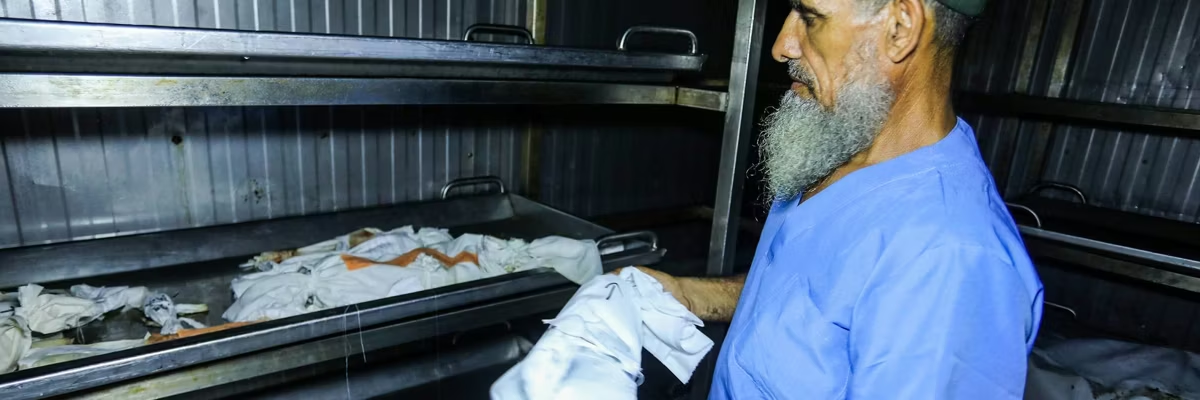
A worker at Nasser Hospital's morgue adds the wrapped body of a dead newborn to a tray containing 19 others

A worker at Nasser Hospital’s morgue adds the wrapped body of a dead newborn baby to a tray containing 19 other miscarriage victims, on July 13, 2026 in Khan Younis, Gaza, Palestine.

(Photo by Abed Rahim Khatib/Anadolu via Getty Images)

One US author called the staggering surge a “reproductive genocide that Western feminists can’t be allowed to ignore.”

Brett Wilkins, Common Dreams, Jul 21, 2026

A senior medical official in the Gaza Strip sounded the alarm on Tuesday over a dramatic rise in miscarriages in the Palestinian exclave, with nearly 4,000 cases reported during the first half of 2026 amid Israel’s ongoing genocide.

Gaza Medical Relief Director Bassam Zaqout said that 3,958 miscarriages were recorded in Gaza during the first half of this year—an increase the doctor called “unprecedented,” and a serious risk to the health of pregnant women and their unborn fetuses.

RECOMMENDED…

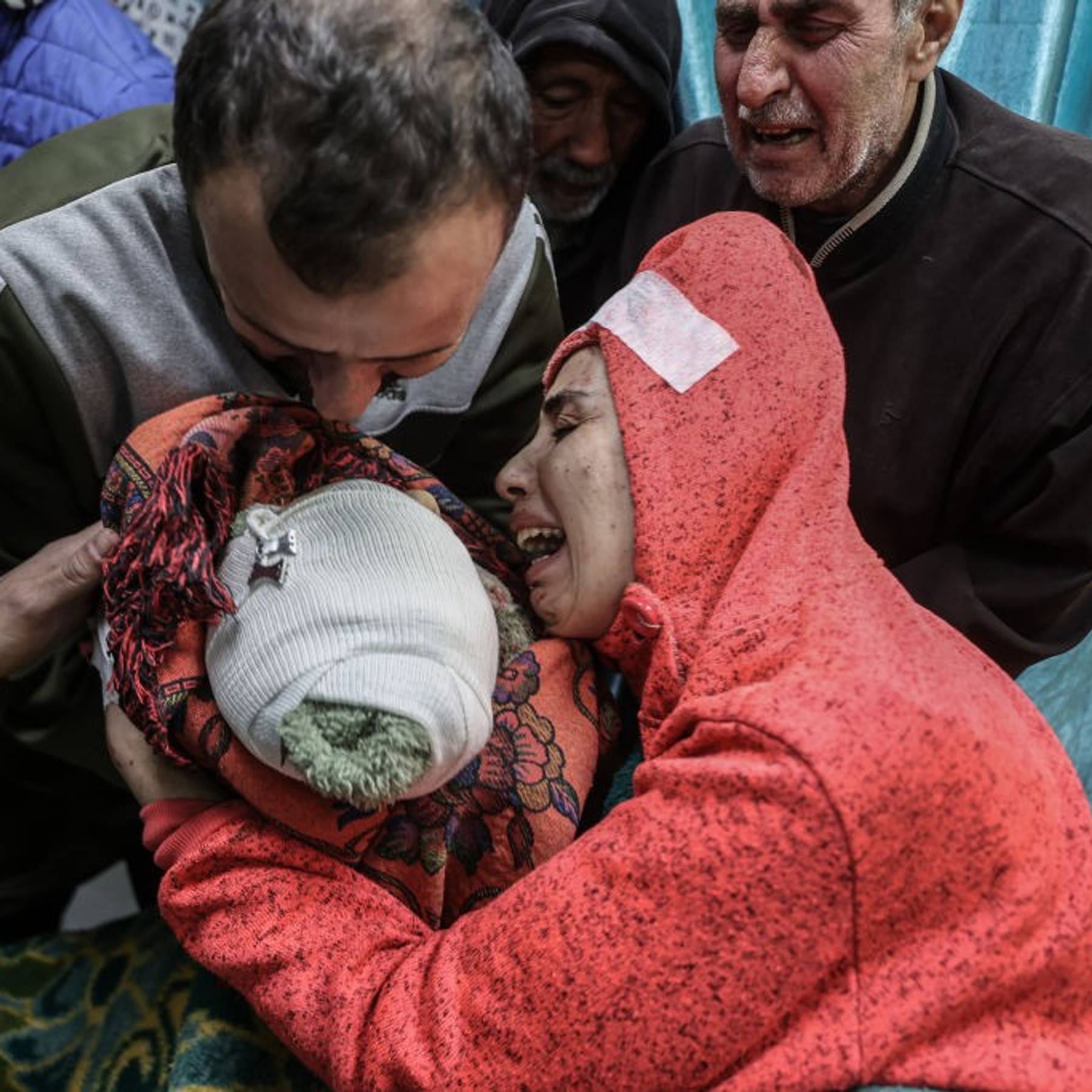
A mother mourns for her baby killed by an Israeli airtstrike

1,022 Babies Among 21,500+ Children Killed by Israel in 1,000 Days of Gaza Genocide

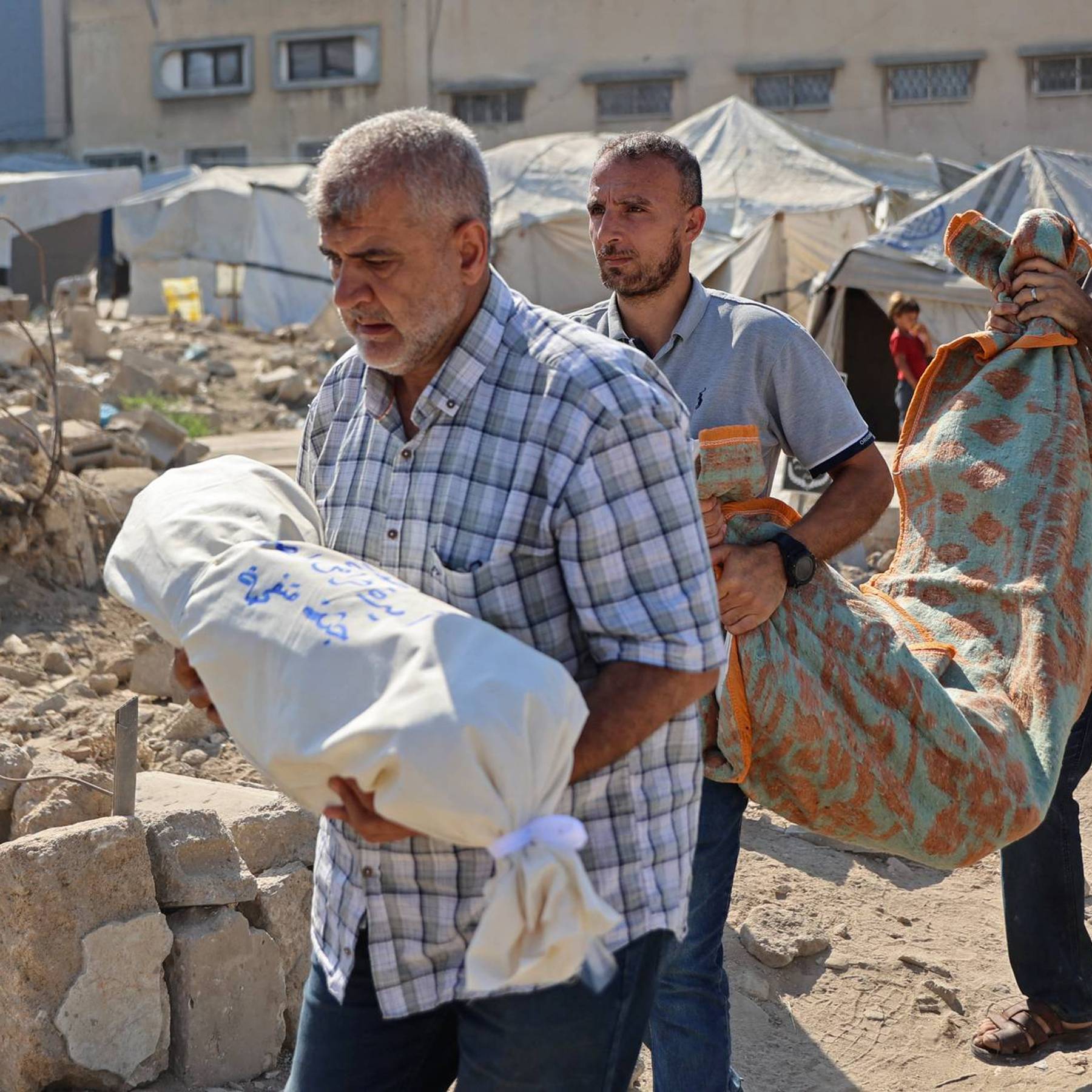
Relative of people killed in an Israeli airstrike on the home of a family carry victims' shrouded bodies

‘Nowhere Is Safe’: Israel Kills Gaza Families and Bombs Hospital Despite Ceasefire

Zaqout cited the soaring miscarriage rate to factors in Israel’s genocidal assault on Gaza, including the destruction of the strip’s infrastructure, unsanitary living conditions in camps for forcibly displaced Palestinians—where numerous babies have died of hypothermia—lack of hot water and hygiene supplies, and relentless terror caused by Israel Defense Forces bombing.

The Gaza Health Ministry documented 921 miscarriages and 2,004 live births in April. This staggering ratio—460 miscarriages for every 1,000 live births—is more than double that in neighboring nations Israel and Egypt.

Live births have also dropped dramatically in Gaza this year, from 5,210 in January, to 3,433 in February, 3,233 in March, 2,004 in April, and just 1,701 in May 2026, according to the ministry.

Last month, the Gaza Center for Human Rights said that the alarming rise in miscarriages is due to the systematic destruction of Gaza’s healthcare system, repeated attacks on hospitals, and widespread deprivation of food, medicine, and essential medical services amid 33 months of what United Nations experts and others have described as a genocide.

The Gaza Center for Human Rights said the following factors are the most significant drivers of the miscarriage crisis:

  • The widespread destruction of hospitals, primary healthcare centers, maternity wards, and fertility clinics;
  • Repeated attacks on medical personnel, including the killing, detention, and targeting of healthcare workers;
  • Mass malnutrition caused by Israel’s siege;
  • The collapse of maternal and child healthcare services; and
  • Restrictions on the entry of essential medicines and medical supplies needed by pregnant women and newborns.

The center also noted that Article II of the Genocide Convention—the legal basis for the South Africa-led genocide case against Israel currently before the International Court of Justice—includes “imposing measures intended to prevent births within the group” in its definition of the crime.

United Nations officials and other experts have accused Israel of “systematically” using reproductive, sexual, and other forms of gender-based violence against Palestinians in Gaza and committing “genocidal acts” by deliberately destroying reproductive and healthcare facilities in the strip.

There has also been a documented surge in birth defects among Gaza newborns. According to the Gaza Health Ministry, congenital anomalies doubled in 2025 compared with 2022.

Experts attribute the increase to many of the same factors driving miscarriages, pointing to contaminated water and widespread malnutrition, including the former famine that killed at least hundreds of Palestinians in Gaza, many of them children and infants.

Zaqout warned that Gaza’s health crisis is worsening as severe shortages of medicines, equipment, diagnostic tools, and laboratory supplies persist amid the strip’s heavily damaged healthcare infrastructure and ongoing siege. He also noted the epidemics of diseases such as chickenpox, waterborne illnesses, and respiratory infections.

Numerous Palestinian women have lost their pregnancies due to direct acute trauma inflicted by Israeli bombs and bullets, which have often also killed would-be mothers. Israeli invaders have also ordered the evacuation of Gaza’s hospitals, forcing staff to leave prematurely born babies to die and decompose in incubators.

A United Nations commission of inquiry reported last month that approximately 30% of the more than 73,000 Palestinians killed during Israel’s 33-month war on Gaza were children—many of whom were deliberately targeted. Israeli forces have killed more than 21,500 Gazan children, including 1,022 babies, since the October 7, 2023 Hamas-led attack, according to the Gaza Government Media Office.

The United Nations Children’s Fund has called Gaza “the most dangerous place in the world to be a child.”

Inspired by Trump, Israel Advances Plan for Crocodile-Ringed Prison for Palestinians

July 18, 2026

Senior Israeli police officials take a fact-finding tour of a crocodile farm in Hamat Gader

Senior Israeli police officials take a fact-finding tour of a crocodile farm in Hamat Gader on January 1, 2026.

(Photo by Israel Police)

“This is some Bond villain-level lunacy,” said one Reddit user.

Brett Wilkins., Common Dreams, Jul 17, 2026

The Israeli government this week stripped Nile crocodiles of their protected status in order to advance a proposal that National Security Minister Itamar Ben-Gvir said was inspired by the Trump administration’s now-shuttered Alligator Alcatraz to build a prison for Palestinians surrounded by a moat full of the ravenous reptiles.

“You read that right,” the liberal US Jewish group J Street said in response to the news. “When cruelty becomes a governing principle instead of an aberration within the Israeli government, something has gone deeply wrong.”

RECOMMENDED…

An IDF warplane takes off

How Section 219, the US-Israel Military Merger, Would Thwart American Democracy

CHINA-US-DIPLOMACY

‘Unconscionable and Impeachable’: Experts Appalled at Report of Marco Rubio Acting as Venezuela ‘Viceroy’

Israeli Environmental Minister Idit Silman signed a directive Wednesday reclassifying Nile crocodiles as “specially managed wild animals,” a novel legal category enabling the government to keep them for security purposes.

Ben-Gvir, who heads the Israel Prison Service (IPS), said he was inspired by the Trump administration’s recently closed Alligator Alcatraz immigrant detention center in Florida. He is seeking to first introduce crocodiles into a moat around Ketziot Prison in southern Israel.

While it is not certain that the plan will come to fruition, Ben-Gvir celebrated Silman’s decree in a social media post showing him petting a crocodile, with the caption: “Cursed terrorist, thinking of trying to escape? Think again.”

Palestinians have occasionally escaped from Israeli lockups, such as in September 2021, when six men used improvised tools, including spoons, to tunnel out of the high-security Gilboa Prison. All six escapees were caught within weeks.

(Photo by Itamar Ben-Gvir/Facebook)

The move by Silman—who gained international notoriety by calling for the ethnic cleansing of all Palestinians from the Gaza Strip—came despite objections from her own ministry’s legal adviser and the Nature and Parks Authority.

IPS, which sent a fact-finding mission to the Hamat Gader crocodile farm in January, argued that its employees could handle the animals, citing the agency’s experience working with the attack dogs that Palestinian prisoners and human rights groups have claimed were used to maul and even sexually abuse detainees.

Silman’s approval is contingent upon IPS meeting animal welfare requirements and appropriate holding conditions.

Meanwhile, Ben-Gvir has openly boasted about the dramatic deterioration in conditions endured by Palestinian prisoners since the Hamas-led attack of October 7, 2023 and Israel’s retaliatory obliteration of Gaza, which United Nations and other experts describe as a genocide.

“We go into the prisons, and they wet themselves,” Ben-Gvir said of Palestinian prisoners during a speech on Friday. “I’m not joking. They’re afraid. Fear rules them, and that’s how it should be.”

Trump’s Sanctions Against the ICC Are Unconstitutional, Rights Groups Say

July 17, 2026

The human rights groups’ suit came as the Trump administration vowed to destroy the International Criminal Court entirely.

Noah Hurowitz, The Intercept, July 15 2026, 6:00 a.m. ET

    BRUSSELS, BELGIUM - APRIL 22: Special Rapporteur on the situation of human rights in the Palestinian Territory, Francesca Albanese delivers a speech during the Global Sumud Parliamentary Congress in Brussels, Belgium on April 22, 2026. Bringing together lawmakers, representatives of political parties and public institutions, UN rapporteurs and prominent figures from around the world, the congress has begun as the Global Sumud Flotilla that set off for Gaza on April 12 continues its journey. (Photo by Dursun Aydemir/Anadolu via Getty Images)

    Human rights groups sued the Trump administration and cited U.S. sanctions against U.N. special rapporteur Francesca Albanese, seen speaking at a summit in Brussels on April 22, 2026. Photo: Dursun Aydemir/Anadolu via Getty Images

    Two pro-Palestine groups filed a lawsuit Wednesday that takes aim at U.S. sanctions against international human rights groups linked to efforts to hold Israel accountable for war crimes.

    The lawsuit, filed in a New York federal court by Democracy for the Arab World Now, or DAWN, and Taxpayer Alliance Against Genocide, seeks to reverse sanctions brought under Executive Order 14203.

    The order, which President Donald Trump made in February 2025, grants the administration power to issue penalties against any person or group seeking to bring a case against the U.S. or its allies — namely Israel — before the International Criminal Court.

    The plaintiffs, both of whom coordinate with international NGOs in an effort to hold the U.S. and Israel accountable for war crimes, are seeking a declaration that the ICC sanctions are in violation of their First Amendment rights because they create obstacles to free association. The lawsuit also asks for an injunction barring the Trump administration from using sanctions to stymie free speech.

    Trump’s assault on the ICC — most recently including a vow to “dismantle” the court — has focused mostly on efforts to hold Israel accountable for war crimes. In November 2024, the court issued arrest warrants for Israeli Prime Minister Benjamin Netanyahu, another Israeli official, and an official with the armed Palestinian group Hamas for activities during the time period of Israel’s genocide in Gaza.

    The White House executive order came down shortly after the arrest warrants were issued.

    Most Read

    An Army carry team salutes after moving the flag-draped transfer case containing the remains of U.S. Army soldier Maj. Sorffly Davius, of Cambria Heights, N.Y., who died in Kuwait, during a casualty return, Monday, March 9, 2026, at Dover Air Force Base, Del. (AP Photo/Julia Demaree Nikhinson)

    Iran Claims to Kill 3 U.S. Service Members in Kuwait Nick Turse

    Sen. John Fetterman, D-Pa., is seen during votes in the U.S. Capitol on Wednesday, June 17, 2026.

    Harlan Crow Maxed Out Campaign Donations to John Fetterman Akela Lacy

    Jay Clayton, nominee for Director of National Intelligence, testifies during his confirmation hearing before the Senate Intelligence Committee on Capitol Hill in Washington, on July 15, 2026. (Francis Chung/POLITICO via AP Images)

    Intel Pick Jay Clayton Won’t Tell Congress Whether Trump Ordered Subpoenas of NYT Journalists Matt Sledge

    The rights groups’ lawsuit specifically highlights sanctions against Francesca Albanese, the U.N. official tasked with probing human rights violations in the occupied Palestinian territories, and three Palestinian nongovernmental organizations. According to the plaintiffs, the sanctions impinge on their First Amendment rights by preventing them from engaging in protected speech activities with Albanese and the NGOs.

    “The Trump administration is using the blunt instrument of economic sanctions not only to punish human rights defenders but to police the political expression of millions of Americans,” said Omar Shakir, the executive director of DAWN, which was founded by journalist Jamal Khashoggi before his assassination by the Saudi government. “The government is violating the constitutional rights of American citizens in order to shield officials of a foreign government who have committed a genocide.”

    Related

    How the U.S. Derailed an Effort to Prosecute Its Crimes in Afghanistan

    The defendants named in the suit are Trump, Secretary of State Marco Rubio, Treasury Secretary Scott Bessent, Acting Attorney General Todd Blanche, and Brad Smith, the director of the Treasury Department’s Office of Foreign Assets Control. (None of the American government officials immediately responded to requests for comment.)

    Trump and his allies’ war on the international human rights community goes back years: In 2020, Trump issued sanctions against an ICC prosecutor after she called for an investigation into U.S. human rights abuses in Afghanistan.

    Shortly after retaking the White House, Trump lifted Biden-era sanctions on Israeli settlers involved in violence against Palestinians and destruction of their property. Trump then issued Executive Order 14203, “Imposing Sanctions on the International Criminal Court,” which placed visa restrictions and financial penalties on individuals and groups seeking to help the ICC in any potential case against the U.S., Israel, or other allies.

    Months later, the administration issued sanctions against Albanese, the U.N. special rapporteur. Albanese was briefly removed from the sanctions list in May after a federal judge ruled that the sanctions violated her rights, but the Office of Foreign Assets Control, which administers U.S. sanctions, added her to the list again days later, according to Al Jazeera.

    The Albanese sanctions were followed in September 2025 with an edict sanctioning three NGOs: Al Haq, Al Mezan Center for Human Rights, and the Palestinian Centre for Human Rights.

    Related

    YouTube Quietly Erased More Than 700 Videos Documenting Israeli Human Rights Violations

    In addition to penalizing Albanese and the NGOs, the sanctions bar any U.S. people or groups from engaging with them and make it a federal offense to receive or provide any “service” related to designated groups and people — an action the plaintiffs argue is in violation of their First Amendment rights.

    The lawsuit comes at a moment of heightened attention to the sanctions against the ICC. Days before the lawsuit was filed, Rubio launched a broadside against the ICC in a Wall Street Journal opinion piece laying out a case for “dismantling” the court. Rubio specifically cited calls by DAWN for an investigation into potential war crimes in the U.S. bombing campaign against Iran.

    “The ICC is backed and run by a powerful network of leftist nongovernment organizations, smug globalists, and hostile Third World governments united by their enmity toward the U.S.,” Rubio wrote. “Using all the tools at our government’s disposal, working beside every ally with whom we can make common cause, we will dismantle the ICC—brick by brick, if necessary.”

    The timing of Rubio’s renewed attack on the ICC alongside the lawsuit appears to be a coincidence, but only serves to further underscore the stakes, according to Michael Schaeffer Omer-Man, a spokesperson for DAWN.

    “The fact that he mentioned DAWN in his Wall Street Journal op-ed shows that the risk [of prosecution] to Americans is real,” Schaeffer Omer-Man told The Intercept. “But our primary goal is to get legal clarity that we can continue to have a working relationship with Francesca Albanese, and, equally if not more importantly, that we can resume working shoulder to shoulder with Palestinian civil society and human rights groups.”

    Katz Says Israel Won’t Withdraw From Gaza Even If Hamas Disarms and Will Establish ‘Nahal’ Settlements

    July 15, 2026

    The Israeli defense minister also said the destruction of Gaza gives him a ‘good feeling’

    by Dave DeCamp | July 14, 2026 at 12:59 pm ET | Gaza, Israel

    Israeli Defense Minister Israel Katz has said that the Israeli military won’t withdraw from Gaza even if Hamas disarms and that he plans to establish three settlements in the area of northern Gaza that the IDF has destroyed.

    “We are not retreating from the Yellow Line,” Katz said on Monday during a visit to northern Gaza with reporters from Israel’s Channel 14. “Unequivocally, as long as Hamas does not truly disarm, and even after that, we remain inside of Gaza to bring up three Nahal outposts (military settlements).”

    Nahal settlements are a type of Jewish settlement in Israeli-occupied territory that are established by Israeli soldiers with the goal of transitioning them to permanent civilian communities. Katz first vowed in December 2025 that Israel would “never leave” Gaza and would establish Nahala settlements, though he has remained quiet about the plan since then, likely due to international backlash.

    Israeli Defence Minister Israel Katz said in a report aired on Monday that the destruction in Gaza, which he described as “the result of a deliberate policy”, “feels good”. pic.twitter.com/4bfytEmzYN— Middle East Eye (@MiddleEastEye) July 14, 2026

    In his remarks on Monday, Katz said that a permanent Israeli presence was needed in Gaza to “improve the hold and defense of the communities,” referring to Israeli towns near the Gaza border.

    Israeli Finance Minister Bezalel Smotrich has also recently said that plans have been drawn up for the establishment of three Jewish settlements inside Gaza and that he is just waiting on approval from Israeli Prime Minister Benjamin Netanyahu.

    Katz also boasted of the destruction of Gaza cities during his visit to the northern part of the Strip. When asked how the view of the destruction made him feel, the Israeli minister said, “I feel good. Thank God. This is all the result of a deliberate policy aimed at removing threats. Instead of the raid method—going in and out—the IDF is inside, the terrorists are outside, and the houses are destroyed.”

    Katz’s plans for Gaza go against the US-backed outline for a peace plan for Gaza that was approved by the UN Security Council, and the US has remained silent as Israel continues to constantly violate the ceasefire deal signed in October 2025, which was meant to lead to the implementation of the full peace plan.

    Now that Hamas has released all Israeli captives and recovered the bodies of the deceased, Israeli officials try to justify the continued occupation and attacks in Gaza by demanding that Hamas disarm, but the comments from Katz and other Israeli officials reveal that the real goal is permanent occupation.

    Rubio Threatens to ‘Teach the ICC’—Which Prosecutes War Crimes—the ‘Full Meaning of American Resolve’

    July 14, 2026

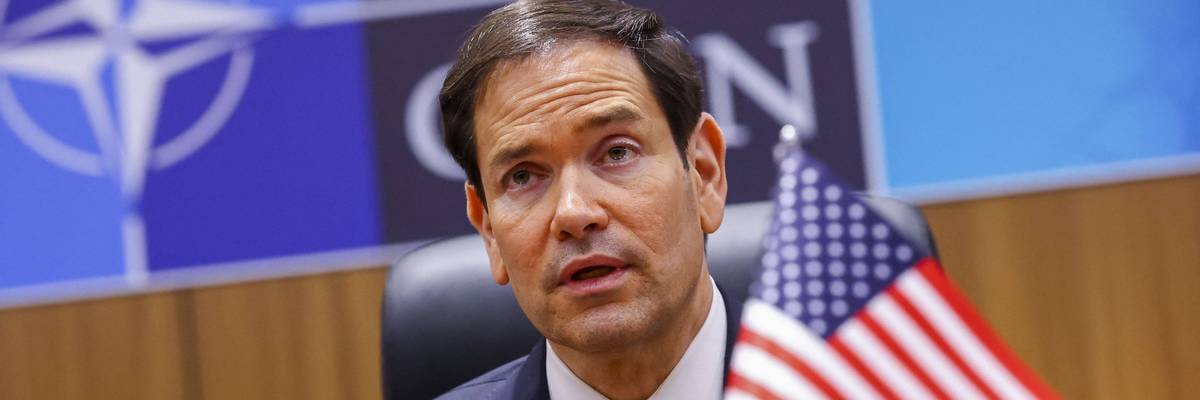
    US Secretary of State Marco Rubio

    US Secretary of State Marco Rubio attends a meeting in Ankara, Türkiye on July 7, 2026.

    (Photo by Yves Herman/Pool/AFP via Getty Images)

    “Is the secretary of state worried because he knows US personnel committed war crimes in Iran?”

    Jake Johnson, Common Dreams, Jul 13, 2026

    US Secretary of State Marco Rubio on Monday announced what he characterized as a “campaign to dismantle” the International Criminal Court, the Hague-based tribunal tasked with investigating and charging individuals with war crimes and other violations.

    In a video posted to social media, Rubio accused the international court of “waging a war against our country—not with bullets or missiles, but with statutes, compacts, and the force of so-called international law.” The top American diplomat threatened that the US “will teach the ICC the full meaning of American resolve.”

    RECOMMENDED…

    U.S. President Trump Departs Malaysia En Route To Japan

    ‘Antithesis of the Rule of Law’: ICC Judges Sue Trump Over Sanctions

    CHINA-US-DIPLOMACY

    ‘Unconscionable and Impeachable’: Experts Appalled at Report of Marco Rubio Acting as Venezuela ‘Viceroy’

    The US State Department said in a statement that Rubio’s new campaign against the ICC would “feature a whole-of-government response to systematically disable” the court’s “ability to operate, target American servicemen or officials, or otherwise threaten American sovereignty.” The US is not party to the Rome Statute, the 1998 treaty that established the ICC.

    US President Donald Trump and his subordinates, who have been accused of myriad violations of international law, have adopted an increasingly aggressive posture toward the ICC since taking power last January.

    In a February 6, 2025 executive order, Trump declared “a national emergency to address” the purported “threat” posed by the ICC and announced sanctions against court officials, including its judges. The president’s order cited the ICC’s “investigations concerning personnel of the United States and certain of its allies, including Israel,” which is also not party to the Rome Statute.

    In November 2024, the ICC issued arrest warrants against Israeli Prime Minister Benjamin Netanyahu and his former defense minister, Yoav Gallant, for alleged war crimes committed in the Gaza Strip.

    Rubio warned in an op-ed in The Wall Street Journal on Monday that US officials accused of international crimes could be next to face ICC action.

    “Border Patrol agents working to remove violent criminals from our country, US Marines risking their lives to restore order in the Western Hemisphere, federal prosecutors working to dismantle terror networks plotting attacks on the American homeland—all would face the constant risk of persecution for the ‘crime’ of defending our country,” Rubio wrote. “Using all the tools at our government’s disposal, working beside every ally with whom we can make common cause, we will dismantle the ICC—brick by brick, if necessary.”

    Raed Jarrar, advocacy director of the human rights group Democracy for the Arab World Now (DAWN), said in response to Rubio’s op-ed that “when the world’s most powerful country aims to dismantle the world’s only permanent international court, it sends the message that the powerful are above the law.”

    “It is not the ICC that Rubio is dismantling brick by brick, but the rules-based international order that grew out of the ashes of World War II,” said Jarrar. “Rubio’s attack doesn’t just underscore US hypocrisy, but undermines access to justice across the globe, from Ukraine to Sudan and could amount to obstruction of justice, a crime under the Rome Statute in and of itself.”

    In his op-ed, Rubio pointed to DAWN’s call earlier this year for Iran and other Middle East nations to grant the ICC jurisdiction to investigate apparent war crimes committed during the conflict launched in late February by Trump and Netanyahu.

    Omar Shakir, DAWN’s executive director, said Monday that Rubio mischaracterized the group’s call as focusing solely on actions by US personnel. That move, said Shakir, “begs the question: Is the secretary of state worried because he knows US personnel committed war crimes in Iran?”

    Under Rubio’s plan, the State Department is threatening to impose “increased sanctions against the ICC and affiliated organizations,” hit court personnel with “visa revocations and travel bans,” and pressure other nations that aren’t party to the Rome Statute to “leverage their diplomatic networks to take similar actions alongside” the Trump administration.

    Kenneth Roth, the former executive director of Human Rights Watch who has demanded international accountability for the Trump administration over its illegal assault on Iran, wrote Monday that Rubio “can’t even make an honest case for attacking the International Criminal Court.”

    “He makes it sound like the ICC acts out of the blue anywhere it wants when in fact it acts only against crimes committed on the territory of states that have invited it,” Roth wrote. “He never explains why the United States should be able to commit crimes on the territory of those states with impunity, contrary to the desire of their sovereign governments for an international backstop to reinforce justice for such crimes.”

    US lawmaker harassed, held at gunpoint by Israeli settlers in occupied West Bank

    July 11, 2026

    The Jewish settlers reportedly wielded US-made rifles to intimidate the US lawmaker and his delegation

    News Desk

    JUL 11, 2026

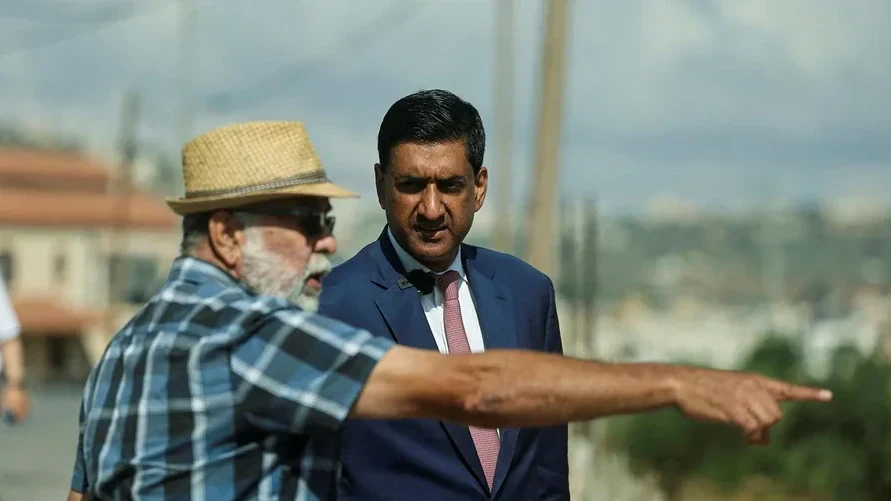
    (Photo credit: Ammar Awad /Reuters)

    A group of extremist Jewish settlers equipped with US-made M4 rifles detained US lawmaker Ro Khanna and his group during their visit this week to the southern occupied West Bank, the Democratic representative disclosed on 9 July.

    “We were at a village that Israeli settlers had destroyed; they had destroyed the school, they had destroyed that village, and we were just looking at it,” Khanna told Reuters on Thursday. 

    “And these hoodlums come in with machine guns – M4, an American-made machine gun – and they detain us. They block off the road.” Khanna said, adding, “And then they call the IDF and ​the IDF is on their side, not on the side of the Americans.”

    Khanna’s aide, Cameron Kasky, said the delegation was held for over an hour near Khirbet Zanuta, a Palestinian hamlet ethnically cleansed by Israeli settlers in 2023, before appealing to the US Embassy in Jerusalem to free them. 

    Khanna’s visit to the occupied West Bank comes as support for Israel splits Democrats ahead of the US midterm elections in November, with the issue contributing to primary defeats for incumbent lawmakers financed by the American Israel Public Affairs Committee (AIPAC).

    Israel’s favorability rating among Democratic voters has fallen from 59 percent in 2018 to 22 percent in May 2026, according to recent polls. 

    The US lawmaker’s confrontation with extremist settler groups occurs amid a broader campaign of state-supported settler violence that, by mid-2026, has escalated into systematic ethnic cleansing and land theft in the occupied West Bank. 

    As of July 2026, illegal settler outposts effectively control 18 percent of the occupied West Bank, following an “unprecedented” expansion directly backed by the Israeli government.

    Former Israeli officials have characterized the current escalation as a “systematic campaign” of “Jewish terrorism” intended to facilitate de facto annexation of the Palestinian territories.

    An Oxfam analysis based on UN data revealed that since 2023, Israeli forces and settlers have killed at least 1,244 Palestinians, exceeding the total from the previous 17 years combined, and forcibly displaced nearly 46,000 people.

    Over 540 settler attacks were reported in the first quarter of 2026 alone, alongside a record 925 movement obstacles that restrict Palestinian life. 

    Amnesty International concluded, based on independent investigations, that the Israeli government is implementing a policy of ethnic cleansing, supported by digital evidence, satellite imagery, and field investigations. 

    On its 250th birthday, America must leave behind the illusion of primacy

    July 8, 2026

    Jeffrey D. Sachs and Sybil Fares

    MEE, 7 July 2026

    The failed Iran war presents costly proof that global dominance was always beyond Washington’s grasp

    People wait to re-enter the event site after being evacuated due to storms during Independence Day celebrations in Washington, DC, on 4 July 2026 (Amid Farahi/AFP)

    People wait to re-enter the event site after being evacuated due to storms during Independence Day celebrations in Washington, DC, on 4 July 2026 (Amid Farahi/AFP)

    On the fourth of July, the United States turned 250 – an event that summoned the founders who spoke of a republic seeking “a decent respect to the opinions of mankind”, rather than dominion over them. 

    Yet the story that matters most for our own moment does not begin in 1776. It begins 35 years ago, with the collapse of the Soviet Union – the moment the US mistook the disappearance of its main rival for a mandate to remake the world in its own image.

    What followed was an overdrive of hubris. Washington read the unipolar moment of 1991 as a global manifest destiny, and set about entrenching its primacy in every region of the globe. 

    The mood was captured with startling candour by political scientist and former American national security adviser Zbigniew Brzezinski in The Grand Chessboard (1997), a meditation on how the US might dominate the Eurasian landmass and forestall the rise of any power capable of challenging it. 

    Primacy ceased to be a momentary fact and hardened into a doctrine – and, for a generation of US policymakers, an obsession that no defeat seemed able to shake.

    New MEE newsletter: Jerusalem Dispatch

    Sign up to get the latest insights and analysis on Israel-Palestine, alongside Turkey Unpacked and other MEE newsletters

    Strangely, much of the Arab world embraced it too. Time and again, Arab governments acceded to American designs on the premise that only the US could supply what they wanted: security above all, but also advanced weaponry, technology and finance. 

    The bargain seemed prudent, since the Arab world would accept US leadership and enjoy American protection. Nowhere was this clearer than in the network of US bases strung across the Gulf, from the Fifth Fleet in Bahrain and Al Udeid in Qatar, to Prince Sultan in Saudi Arabia, Al Dhafra in the UAE and Ali Al Salem in Kuwait.  

    All those bases, and yet the question remained: who were these bases really serving? 

    Myth demolished

    Some governments went further, entering what became, in effect, a strategic alliance with the US and Israel, on the old assumption that one should always back the strongest side. The myth of the indispensable protector became the organising principle of the Arab region’s diplomacy.

    The Iran war has demolished that myth. On 28 February, the US and Israel attacked Iran, assassinating the supreme leader and many senior officials, all in brazen defiance of the United Nations Charter and with the declared aim of regime change. 

    And then the mightiest military on earth ran headlong into the limits of its power, military and political alike. Iran did not collapse. It named a successor to the supreme leader, struck back across the region, and closed the Strait of Hormuz, triggering a fuel crisis and wrecking the global economy. 

    After months of US and Israeli bombardment, billions of dollars wasted, thousands of lives squandered, and a region set aflame – from Lebanon to the Gulf – Washington settled not for the regime change that it had promised, but for a fragile and repeatedly broken truce. 

    The only choice left for the US is whether to accommodate a world it can still help to shape but no longer command, or to spend its remaining strength resisting the irreversible

    The American-Israeli war failed, conclusively. It neither toppled the Iranian state nor subdued it; it enriched the arms industries but no one else; and it left every Gulf capital that had sheltered under the American umbrella more exposed, not less.

    In failing, it taught two lessons at once about the limits of American power, and the folly of the Arab states staking their national security upon it. Every government that built its strategy on the permanence of American dominance now has reason to think again.

    On this national birthday, two awakenings are overdue: one in Washington, and one in the Arab capitals that trusted it.

    For the US, the lesson is that the age of forcing American and Israeli solutions on the region is over. No arsenal can any longer impose the outcomes that American power once asserted. 

    The honest course for the US would be to pursue, at last, what international law and justice have always required, which is a genuine solution for Palestine. This can be a two-state solution, with Israel and Palestine living in peace side by side, or a single bi-national democratic state. 

    In either case, it must be the end of the Greater Israel project, which aims for Israel’s permanent occupation of Palestinian lands and territories in neighbouring countries. The Greater Israel project has been the main source of the region’s perpetual wars.  

    The path forward

    For the Arab world, the subservience to US power should end as well. There is no rational reason for the Arab world to outsource its security to a distant, unreliable and biased patron. 

    The path forward is Arab unity, rather than competition for Washington’s favour; to make peace with Iran, recognising that Arabs and Iranians are permanent neighbours and not proxies in someone else’s contest; and to build genuine strategic autonomy in a multipolar world, dealing with the US, China, Russia, and every power on equal terms and according to the region’s own interests. 

    How a regional defence pact could deal the final blow to Israel’s violent expansionism

    Read More »

    A security architecture designed in the region, rather than in Washington, is now both possible and necessary. The Gulf states in particular command the capital, the energy, and the human talent to shape their own future – and, in the coming age of clean power, to help lead it. 

    We live in the age of multipolarity, and that is the Arab world’s surest road to dignity, security and peace.

    Two hundred and fifty years ago, the American republic announced itself to the world as a member of the human family, not as its master. The Iran war is the costly proof that global primacy was always beyond its grasp. 

    The unipolar moment that Washington mistook for a permanent world order has ended. The only choice left for the US is whether to accommodate a world it can still help to shape but no longer command, or to spend its remaining strength resisting the irreversible. 

    The wisest gift the US could give itself at 250 is to recognise multipolarity at last, and to rejoin the community of nations as one cooperative power among many.  

    The wisest gift the Arab world could give itself is to stop waiting for a patron – and to stand, at last, in unison, on its own feet. 

    Happy birthday to the United States, and for all of us, may this be a new birth of realism and peace.

    The views expressed in this article belong to the author and do not necessarily reflect the editorial policy of Middle East Eye.

    Jeffrey D. Sachs is University Professor and Director of the Center for Sustainable Development at Columbia University. He is President of the UN Sustainable Development Solutions Network, Co-Chair of the Council of Engineers for the Energy Transition, and Commissioner of the UN Broadband Commission for Development. He has been Special Advisor to three United Nations Secretaries-General, and currently serves as an SDG Advocate under Secretary General António Guterres. He spent over twenty years as a professor at Harvard University, where he received his B.A., M.A., and Ph.D. degrees