Posts Tagged ‘Middle East’

๐“๐ซ๐ฎ๐ฆ๐ฉ ๐’๐š๐ฒ๐ฌ ๐‡๐žโ€™๐ฅ๐ฅ ๐’๐ฎ๐ฉ๐ฉ๐จ๐ซ๐ญ ๐š๐ง ๐ˆ๐ฌ๐ซ๐š๐ž๐ฅ๐ข ๐€๐ญ๐ญ๐š๐œ๐ค ๐จ๐ง ๐ˆ๐ซ๐š๐ง ๐ˆ๐Ÿ ๐“๐ž๐ก๐ซ๐š๐ง โ€˜๐‚๐จ๐ง๐ญ๐ข๐ง๐ฎ๐ž๐ฌโ€™ ๐ˆ๐ญ๐ฌ ๐Œ๐ข๐ฌ๐ฌ๐ข๐ฅ๐ž ๐๐ซ๐จ๐ ๐ซ๐š๐ฆ

December 30, 2025

The president made the comments while meeting with Netanyahu in Florida

by Dave DeCamp, Antiwar. com, December 29, 2025 at 4:36 pm ET | Gaza, Israel

President Trump said on Monday that he would support an Israeli attack on Iran if Tehran โ€œcontinuesโ€ its conventional missile program or if it works to rebuild its civilian nuclear program that was damaged by US airstrikes during the US-Israeli war on the Islamic Republic in June.
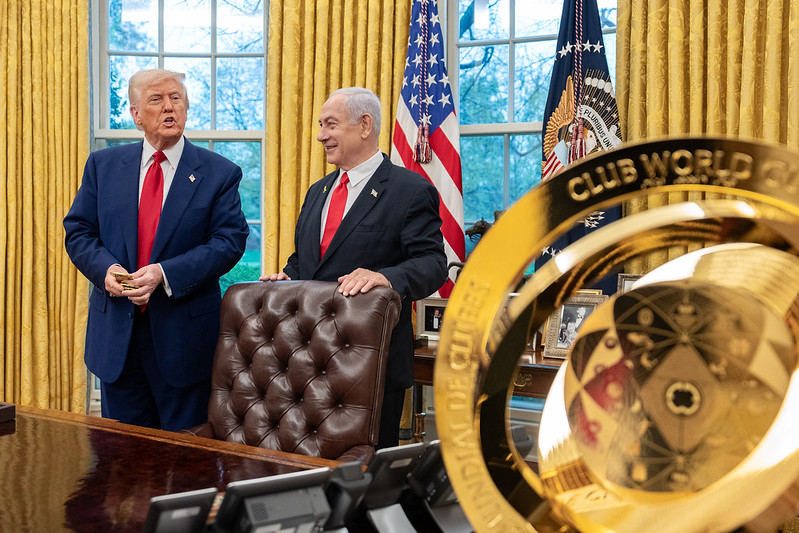
The president made the comments at his Mar-a-Lago resort in Florida before a meeting with Israeli Prime Minister Benjamin Netanyahu, when asked if he would back more Israeli attacks on Iran. โ€œIf they continue with the missiles, yes. The nuclear, fast,โ€ he said.
โ€œOne will be yes, absolutely,โ€ he added, appearing to reference Iranโ€™s missiles. โ€œThe other was weโ€™ll do it immediately,โ€ he said, referencing the possibility of Iran rebuilding its nuclear program. The president also threatened to โ€œknock the hellโ€ out of Iran if it โ€œbuilds up again.โ€
President Donald Trump reacts as he shakes hands with Israeli Prime Minister Benjamin Netanyahu upon arrival for meetings at Trumpโ€™s Mar-a-Lago club in Palm Beach, Florida, US, December 29, 2025. REUTERS/Jonathan Ernst
According to media reports, Netanyahu was expected to ask Trump to support a new war against Iran over concerns related to its ballistic missiles. Iranian officials have been clear that they wonโ€™t agree to a deal to curb Tehranโ€™s missile program since itโ€™s the only deterrent the country has against the US and Israel.
After the meeting, Trump and Netanyahu held a joint press conference where the US president again expressed support for the idea of another attack on Iran, though he suggested it wasnโ€™t โ€œconfirmedโ€ that Tehran was โ€œbuilding upโ€ again.
Any Israeli strikes on Iran would require US support since the US military played a major role in intercepting Iranian missiles fired at Israel, though they made it through US and Israeli air defenses, which is ultimately what led Netanyahu to agree to a ceasefire after 12 days. The US also supported Israelโ€™s attacks by refueling Israeli aircraft and then launched its own airstrikes against Iranโ€™s nuclear facilities.
Amid the threats of another US and Israeli attack, Iran has warned that itโ€™s ready to respond. According to Iranโ€™s PressTV, the General Staff of the Iranian Armed Forces warned in a statement on Monday that โ€œany renewed hostile act against the country will be met with a far harsher, more crushing, and more damaging response than in the past.โ€

๐‘๐ž๐ฉ๐จ๐ซ๐ญ: ๐๐ž๐ญ๐š๐ง๐ฒ๐š๐ก๐ฎ ๐“๐จ ๐€๐ฌ๐ค ๐“๐ซ๐ฎ๐ฆ๐ฉ ๐“๐จ ๐’๐ฎ๐ฉ๐ฉ๐จ๐ซ๐ญ ๐€๐ง๐จ๐ญ๐ก๐ž๐ซ ๐€๐ญ๐ญ๐š๐œ๐ค ๐จ๐ง ๐ˆ๐ซ๐š๐ง

December 22, 2025

 The Israeli PM is expected to make the case during a December 29 meeting at Mar-a-Lago

by Dave DeCamp, Antiwar. com, December 21, 2025 at 4:15 pm ET

Israeli Prime Minister Benjamin Netanyahu is expected to ask President Trump to support another US-Israeli war on Iran, according to an NBC News report from Saturday.

The report said that Netanyahu will stress Israelโ€™s concern over Iranโ€™s production of ballistic missiles and will present Trump with options for the US to join or assist Israel with an attack on Iran. Israeli officials are also warning that Iran is reconstituting its nuclear sites that were bombed by the US during the war in June, but that was not their immediate concern.

According to a report from Israel Hayom, Israeli officials are preparing an โ€œintelligence dossierโ€ on Iran to present to Trump. Netanyahuโ€™s office has said the meeting will take place at Mar-a-Lago on December 29, though President Trump suggested last week that it wasnโ€™t finalized, saying, โ€œWe havenโ€™t set it up formally, but heโ€™d like to see me.โ€
Trita Parsi, Executive Vice President of the Quincy Institute for Responsible Statecraft, has been warning that another war with Iran was likely since Israel didnโ€™t achieve all of its goals during its previous attack on the country, pointing to the fact that Iranโ€™s missile strikes forced Israel to agree to a ceasefire quickly.

โ€œThe June war resulted in mutual deterrence, a situation Iran can accept, but one that is intolerable for Netanyahu and his legacy. Ultimately, the conflict was neither a victory for Israel nor for Iran,โ€ Parsi wrote in Responsible Statecraft on Sunday, responding to the NBC report.

โ€œIt is precisely this balance of terror that prompts Israel to seek a new round โ€“ Israelโ€™s military doctrine does not allow for any of its regional foes to deter it or challenge its military dominance. Iranโ€™s missile program currently does exactly that,โ€ Parsi added. โ€œAnd this is precisely why Trump must say no to Netanyahu. Because Israelโ€™s objective is not security in the conventional sense, but rather absolute dominance.โ€

Earlier this month, Trump suggested the US could destroy Iranโ€™s ballistic missiles when a reporter said Iran was โ€œreconstitutingโ€ its missile program. โ€œWell, they can try, but itโ€™s going to take them a long time to come back,โ€ Trump said.

โ€œBut if they do want to come back and they want to come back without a deal, then weโ€™re going to obliterate that one too. We can knock out their missiles very quickly. We have great power. And we helped Israel a lot. We were shooting down the drones. We were doing a lot of things for Israel. We did a good job for Israel. But Israel did a good job, they fought, they all fought bravely,โ€ the president added.

๐‘๐ž๐ฉ๐จ๐ซ๐ญ: ๐“๐ซ๐ฎ๐ฆ๐ฉ ๐’๐ฉ๐จ๐ค๐ž ๐–๐ข๐ญ๐ก ๐๐ž๐ญ๐š๐ง๐ฒ๐š๐ก๐ฎ ๐๐ž๐Ÿ๐จ๐ซ๐ž ๐ˆ๐ฌ๐ซ๐š๐ž๐ฅ ๐๐จ๐ฆ๐›๐ž๐ ๐๐š๐ญ๐š๐ซ ๐š๐ง๐ ๐ƒ๐ข๐๐งโ€™๐ญ ๐Ž๐ฉ๐ฉ๐จ๐ฌ๐ž ๐ญ๐ก๐ž ๐’๐ญ๐ซ๐ข๐ค๐ž๐ฌ

September 16, 2025

Israeli officials tell Axios that the White House was notified early enough that the strikes could have been called off

by Dave DeCamp, Antiwar. com,| September 15, 2025 at 2:26 pm ET

Israeli Prime Minister Benjamin Netanyahu informed President Trump that Israel planned to launch airstrikes against Hamas officials in Qatar shortly before the attack took place, and Trump didnโ€™t oppose the plan, Axios reported on Monday, citing several Israeli officials.

In the wake of the Israeli bombing of Qatar, a major non-NATO ally of the US, the White House claimed that by the time it learned about Israelโ€™s plans to strike Doha, it was too late to stop it. Trump himself also claimed that he was not notified about Israelโ€™s plans and that he was โ€œvery unhappyโ€ about the attack.

The Israeli officials speaking to Axios said that while Netanyahu informed Trump of his plans to bomb Doha relatively late in the game, there was still time for the strikes to be called off. Three Israeli officials said Netanyahu notified Trump at about 8:00 am Washington, DC time and that the strikes hit Doha at 8:51.

Trump and Netanyahu at the White House on April 7, 2025 (White House photo)

โ€œTrump knew about the strike before the missiles were launched. First there was a discussion on the political level between Netanyahu and Trump, and afterwards through military channels. Trump didnโ€™t say no,โ€ a senior Israeli official told Axios.

A second senior Israeli official said that if Trump โ€œhad wanted to stop it, he could have. In practice, he didnโ€™t.โ€ Both officials claimed that if the US opposed the attack, Israel would have called it off.

The claims from Israeli officials align with Israeli media reports on the day of the strikes that said the US had given Israel a green light to go ahead with the bombing, which killed five lower-level Hamas officials and one Qatari security officer. A report from Middle East Eye, which cited US and regional officials, said that Trump had โ€œblessedโ€ Israelโ€™s attack on Doha.

Israeli officials speaking to Axios said that Israel had decided to go along with the US claims that it wasnโ€™t informed about the plan to strike Doha. โ€œOn our side, it was decided to help them with that for the sake of the US-Israel relationship,โ€ one official said.

Following the bombing, Netanyahu released a statement claiming that the airstrikes were โ€œa wholly independent Israeli operation. Israel initiated it, Israel conducted it, and Israel takes full responsibility.โ€

Israel is not isolated: A global web of oil and complicity

August 31, 2025

Across continents, the occupation state’s energy lifelines are sustained by a network of enabling powers, feeding its war machine across West Asia

Erman ร‡ete, the Cradle, AUG 28, 2025

Photo Credit: The Cradle

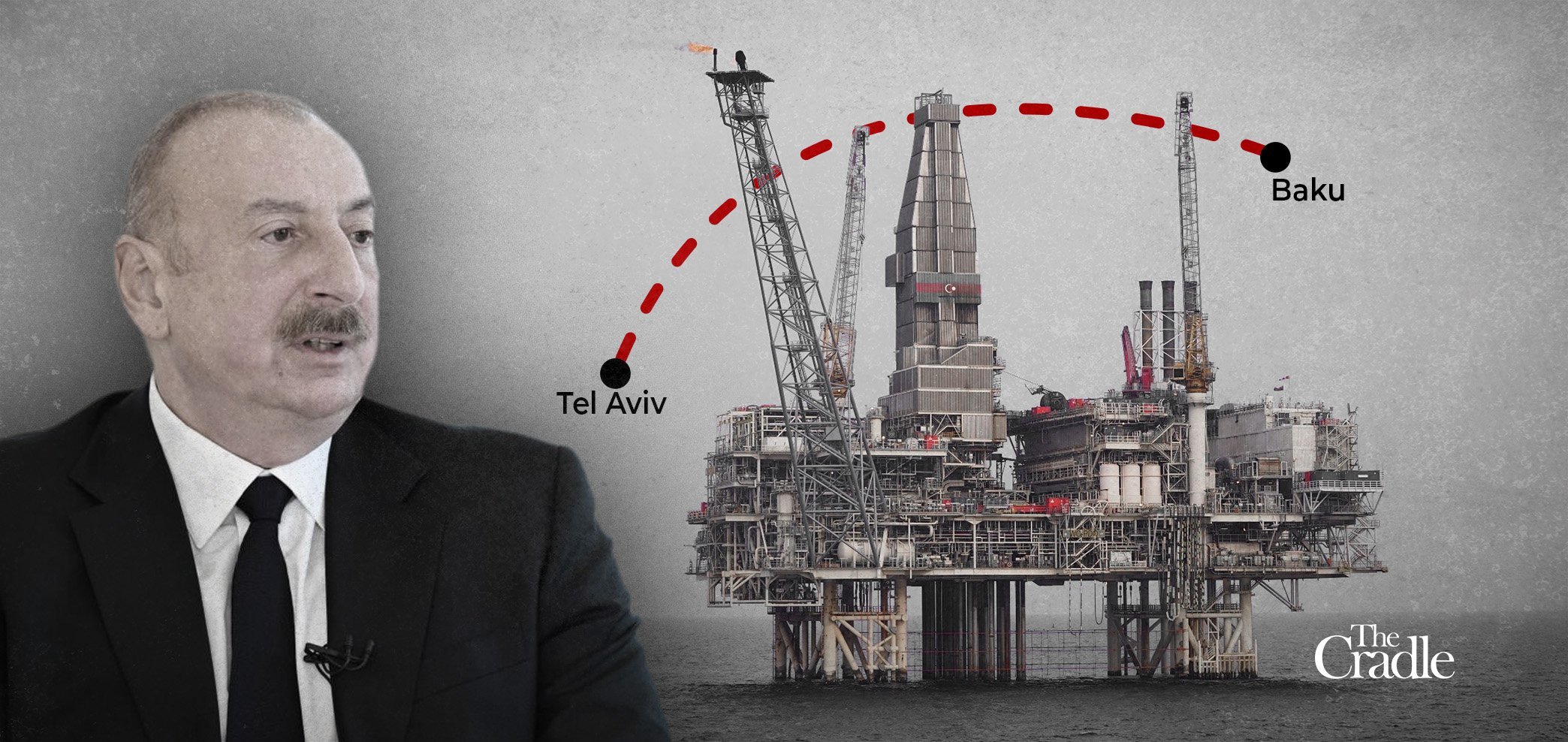
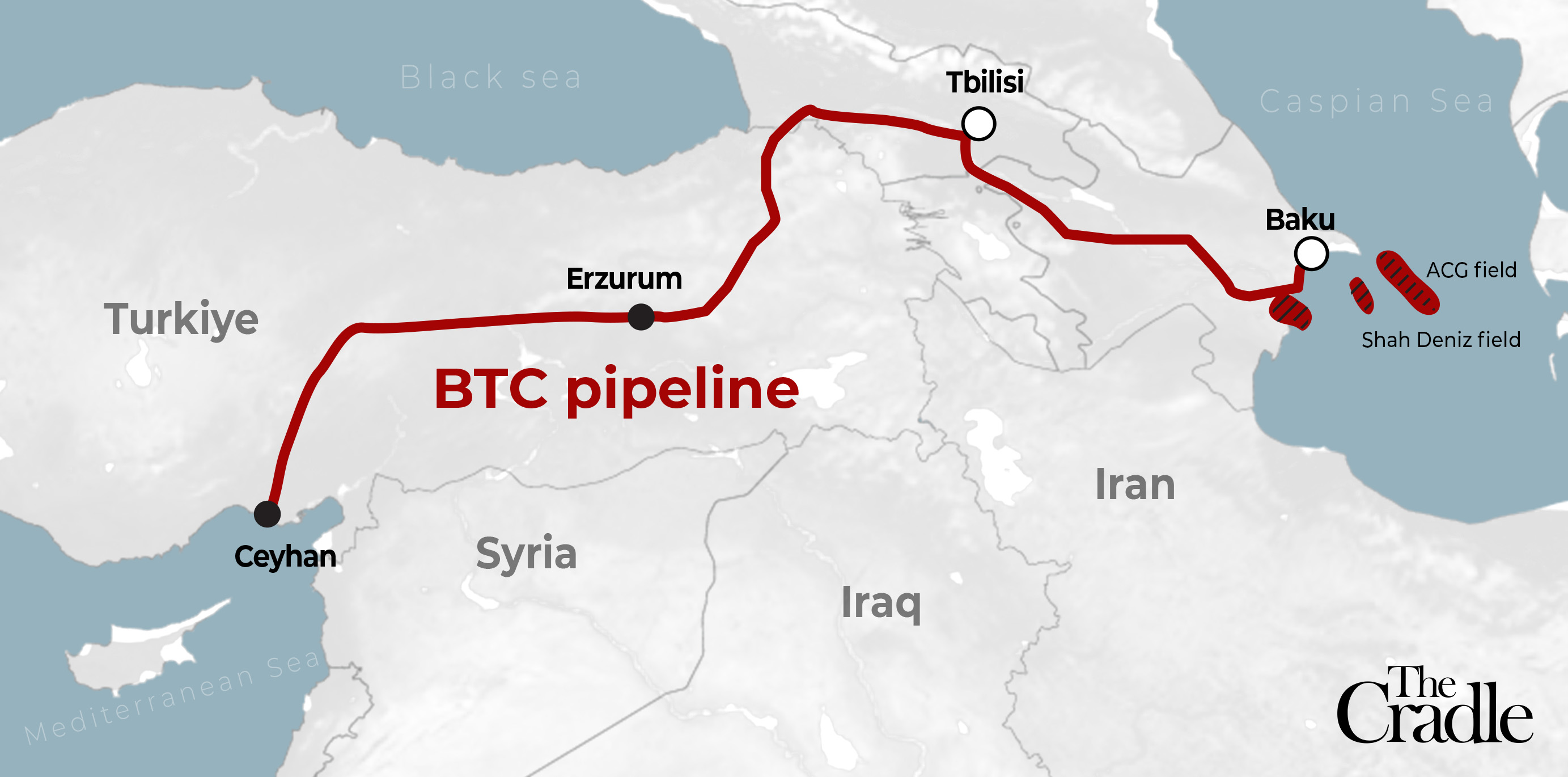
About 100 kilometers east of Baku, the capital of Azerbaijan, lies the Azeriโ€“Chiragโ€“Deepwater Gunashli (ACG) oilfield, the largest in the Caspian basin’s Azerbaijani sector. Operated by BP Exploration Limited, it feeds directly into the infamous Bakuโ€“Tiflisโ€“Ceyhan (BTC) Pipeline. 

South of Baku, at the Sangachal terminal, oil and gas are stored before being exported. According to BP, around 106 million barrels of oil and condensate passed through Sangachal in the first half of this year, primarily via the BTC Pipeline.

From there, oil crosses Azerbaijan and Georgia, enters Turkiye, and finally reaches the Turkish port of Ceyhan on the Mediterranean. As authors James Marriott and Mika Minio-Paluello explain in โ€˜The Oil Road: Journeys from the Caspian Sea to the City of Londonโ€™ (2012), the oil takes two primary paths from Ceyhan: one to the Italian port of Miggia via the Greek Islands, the other south along the Levantine coast to the Suez Canal.

Pipeline to genocide

After that, oil and gas inexplicably find their way to fund the Israeli occupation stateโ€™s genocidal war on Gaza. The profits enrich bankers in the City of London and British Petroleum shareholders. Everyone wins โ€“ except the Palestinians.

The BTC Pipeline, stretching nearly 1,800 miles, is a main energy artery for the occupation state. It supplies an estimated 40 percent of Tel Aviv’s crude oil needs, while Israel ranks sixth among importers of Azerbaijani oil. Azerbaijanโ€™s state-owned energy giant SOCAR, one of Israelโ€™s key energy partners, is also Turkiyeโ€™s largest foreign investor, as confirmed by SOCAR Turkiye CEO Elchin Ibadov.

The BTC Pipelineโ€™s legal foundation is anchored in two key agreements. The more consequential of the two comprises Host Government Agreements signed between BP’s BTC Consortium and each transit country. These contracts essentially override national sovereignty.

Article 2 of the Intergovernmental Agreement illustrates this starkly: 

โ€œEach State declares and guarantees that it is not a party to, or is not legally bound to apply or comply with, any internal law or regulation, or any international agreement or treaty, that is inconsistent with, undermines, or impedes this Agreement, or that adversely affects or restricts the Stateโ€™s ability to enter into or implement this Agreement or other relevant Project Agreements.โ€

Even after the devastating earthquakes that shook south-eastern Turkey in 2023, it was BP who declared force majeure for the Ceyhan Terminal in Adana, where Azerbaijani oil is shipped.

This effectively prioritized oil exports over local disaster relief. A BP spokesperson in Baku confirmed the declaration, which allowed the company to bypass contractual obligations.

A map showing the Bakuโ€“Tiflisโ€“Ceyhan (BTC)Pipeline route. 

Beyond Baku: The global complicity network

Yet focusing solely on Azerbaijan and the BTC Pipeline obscures the bigger picture: The occupation state is deeply embedded in the global energy trade, both as importer and exporter.

Investor-owned and private oil companies are complicit. According to last yearโ€™s report by Oil Change International, these firms collectively supply 66 percent of Israelโ€™s oil, with 35 percent of that share coming from six major international oil companies โ€“ BP, Chevron, Eni, ExxonMobil, Shell, and TotalEnergies โ€“ between October 2023 and July 2024.

Over the same period, Kazakhstan supplied 22 percent of Israeli crude. African nations โ€“ notably Gabon, Nigeria, and Congo โ€“ contributed 37 percent. Even Brazil, under President Luiz Inacio Lula da Silva (a vocal critic of Tel Aviv) continued shipments throughout 2024. In May 2025, Brazilian oil workers’ unions revealed in a joint letter to the president that 2.7 million barrels of crude had been exported to Israel that year.

Israel also imports refined petroleum products critical for its military occupation across Palestine, Lebanon, and Syria. Mediterranean states like Cyprus, Italy, Greece, and Albania have all shipped fuel, diesel, and naphtha. 

Cyprus has additionally provided transshipment services. Meanwhile, Russian vacuum gas oil (VGO) continues to flow into Haifaโ€™s refineries. One major source remains Kazakhstan’s CPC Blend crude, exported via Russiaโ€™s Black Sea port of Novorossiysk.

Despite its shift toward natural gas, coal still comprised 12.7 percent of Tel Aviv’s energy supply in 2023, according to the International Energy Agency (IEA), with the top suppliers being BRICS nations. Colombia provides 50โ€“60 percent of the coal. Russia and South Africa follow closely despite their condemnations of Israel and South Africaโ€™s International Court of Justice (ICJ) genocide case. The US and China round out the top five.

Arab and Muslim countries are no exception. Following 7 October 2023, the Saudi-led OPEC bloc rejected Iran’s calls for an oil embargo. Tel Aviv continues to receive modest but steady crude flows through the Sumed (Suez-Mediterranean) Pipeline, transporting oil from Saudi Arabia, the UAE, Iraq, and Egypt. In 2020, Israelโ€™s Europeโ€“Asia Pipeline Co. signed a transport agreement with UAE firm RED Land Bridge Ltd., deepening the ties between Gulf states and Tel Aviv. 

Leviathan’s bounty and Arab betrayal

Perhaps the most scandalous development is that Israel itself has become an energy source.

In August 2025, Egypt signed a record-breaking $35-billion gas deal with Tel Aviv, nearly tripling its gas imports from the Leviathan offshore fields โ€“ the largest export agreement in Israeli โ€˜history.โ€™ NewMed Energy, an Israeli company, anticipates transporting 130 billion cubic meters (bcm) of gas to Egypt by 2040.

Natural gas exports to Egypt and Jordan rose 13.4 percent in 2024, despite rhetorical condemnations from Arab leaders. Energy Minister Eli Cohen lauded the figures, claiming they prove Israelโ€™s energy sector is a โ€œstrategic assetโ€ and key to โ€œregional stability.โ€

Reuters also noted that โ€œIsrael is positioning itself as a regional energy hub and has committed to supplying natural gas to Europe, which has been diversifying away from Russia since its invasion of Ukraine.โ€

Last year, the Leviathan field produced 11.33 bcm of gas, generating $282 million in revenue. The nearby Tamar field earned $232 million from 10.09 bcm. Total gas production rose 8.3 percent, with royalties climbing nearly 11 percent to $704.5 million. State revenues from gas are projected to hit $1.4 billion this year, doubling within a few years.

The masquerade of embargoes

On 21 August, Reuters reported that Turkiye informed its port authorities that ships linked to Israel would be barred from docking. The new requirement insists that guarantee letters confirm no Israeli ties or military cargo on board.

Ankara claims to have halted trade with Israel post-7 October. But the reality suggests otherwise. Tankers frequently disable their tracking systems in the eastern Mediterranean, feign destinations in Egypt or elsewhere, and arrange deliveries through third-country traders.

Russian Telegram channel Dva Mayora exposed Greek tankers Seavigour and Kimolos for involvement in these covert routes in 2025. As of 22 August, the Marshall Islands-flagged Nissos Antimilos was seen 190 kilometers west of Haifa, fresh from Ceyhan and awaiting an Israeli tanker for offshore transfer.

Arab and Muslim-majority states, it seems, prefer performative outrage over substantive action. Their duplicity ensures that, while Tel Aviv drops bombs on Gaza, the oil fueling its war machine flows uninterrupted.

๐“๐ก๐ž ๐ฌ๐ข๐ฅ๐ž๐ง๐œ๐ž ๐จ๐Ÿ ๐ญ๐ก๐ž ๐€๐ซ๐š๐› ๐ฐ๐จ๐ซ๐ฅ๐

August 29, 2025
ย by Akram Belkaรฏd, Le Monde diplomatique, September 2025

The Arab states will not come to Gazaโ€™s aid. None of them has launched any significant diplomatic initiative to prevent the reoccupation of the enclave or to end the Israeli bombardment it has endured for nearly two years. Despite the dreadful human toll โ€” 70,000 dead, 70% of them women and children, according to some estimates โ€” and a famine reminiscent of the worst medieval sieges, not a single capital across the Arab world is demanding sanctions against Tel Aviv or threatening its Western partners with retaliation for their unwavering support of Binyamin Netanyahu and his government (1).

Unlike in the October 1973 Arab-Israeli war, the Organisation of Arab Petroleum Exporting Countries (OAPEC) is not trying to persuade other oil producers to restrict deliveries so that Washington will put pressure on Israel. As an example of how things have changed, in May, as American weapons continued to flow into Israel and Congress approved credit after credit for Tel Aviv, the USS Forrest Sherman, a US Navy destroyer, made a routine port call at Algiers (2).

The communist activist Georges Ibrahim Abdallah, recently released after 41 years in a French prison, was just as critical of ordinary Arab people as of their leaders, if not more so: โ€˜Palestinian children are dying of hunger,โ€™ he said when he arrived in Beirut. โ€˜Itโ€™s a source of shame for history. A source of shame for the Arab people, more than for their governments. The regimes, we know. [But] how many martyrs have died in demonstrations or attempting to cross Gazaโ€™s borders? None. No one has fallen. Everything depends on the Egyptian people, more than on anyone else.โ€™

Egyptโ€™s leaders disagree. Far from breaking off diplomatic relations, they are strengthening their economic cooperation with Tel Aviv, even as dozens of Gazans die every day. True, 40,000 Egyptian soldiers are deployed in northern Sinai, but their mission is not to open a corridor for humanitarian aid, itโ€™s to prevent an influx of refugees. Reasons arenโ€™t hard to findโ€ฆ

In early August the Israeli company NewMed announced the signing of a โ€˜historicโ€™ โ‚ฌ35bn contract to supply Egypt with natural gas from the offshore Leviathan field starting in 2026. The deal โ€” for 135 billion cubic metres over 15 years โ€” will supply 20% of Egyptโ€™s annual needs. Since 2019, when it concluded a first contract for 60 billion cubic metres, Cairo has accepted that itโ€™s dependent on Israel for its energy security. This may explain why its security services prevented participants in the World March to Gaza from converging on Sinai in June, often by force.

The United Arab Emirates (UAE), for its part, normalised relations with Israel in 2020 under the Abraham accords. In January, Edge Group, a leading Emirati defence contractor, announced a $10m deal that will give it a 30% stake in the Israeli company Thirdeye Systems, which specialises in drone detection using AI. In Egypt, the UAE and Morocco โ€” another signatory of the Abraham accords โ€” normalisation with Israel goes hand in hand with business opportunities. Itโ€™s enough to inspire Syria and Saudi Arabia, which are stepping up their contacts with Israel too.

Akram Belkaรฏd is deputy director of Le Monde diplomatique.

Translated by George Miller

The IAEA’s MOSAIC weapon: Predictive espionage and the war on Iran

July 7, 2025

Backed by US funding and Palantirโ€™s AI tools, the IAEA turned its Iran inspections into a surveillance regime that blurred the line between monitoring and military targeting.

Kit Klarenberg, The Cradle, July 2, 2025

Photo Credit: The Cradle

Ever since Israel launched its illegal war of aggression against Iran on 13 June, speculation has swirled around the role played by MOSAIC โ€“ a tool created by shadowy spy-tech firm Palantir. 

This software has been deeply embedded within the International Atomic Energy Agency’s (IAEA) operations, particularly its โ€œsafeguardingโ€ mission: inspections and monitoring state compliance with non-proliferation agreements. 

MOSAIC has been central to this work for a decade and was quietly integrated by former US president Barack Obama’s administration into the July 2015 Joint Comprehensive Plan of Action (JCPOA) nuclear deal with Iran.

Espionage disguised as oversight

The deal granted IAEA inspectors unfettered access to Iran’s nuclear facilities to confirm the absence of a nuclear weapons program. In the process, the agency accumulated an immense trove of data: surveillance imagery, sensor measurements, facility documents โ€“ all of which were fed into MOSAIC’s predictive system.

Yet the software’s pivotal role in the deal remained concealed until a Bloomberg exposรฉ in May 2018, just days before US President Donald Trump, during his first term, unilaterally tore up the agreement and launched Washington’s so-called โ€œmaximum pressureโ€ campaign against Tehran.

Despite Trump tearing up the deal, inspections of Iranian nuclear facilities continued, as did MOSAIC’s monitoring of Tehranโ€™s nuclear program. As Bloomberg noted, Palantirโ€™s technology helped the IAEA scrutinize vast swaths of information from disparate sources, including 400 million โ€œdigital objectsโ€ globally, such as โ€œsocial media feeds and satellite photographs inside Iranโ€ โ€“ a capability that โ€œraised concern the IAEA may overstep the boundary between nuclear monitoring and intelligence-gathering.” 

The Bloomberg piece also provided fodder for an oft-stated Iranian concern that Mosaic was helping Israelis track Iranian scientists for assassination:

“The tool is at the analytical core of the agencyโ€™s new $50 million MOSAIC platform, turning databases of classified information into maps that help inspectors visualize ties between the people, places and material involved in nuclear activities, IAEA documents show.”

Bloomberg quoted the head of a British company that โ€œadvises governments on verification issuesโ€ on the hazards of false data being fed into MOSAIC, โ€œeither by accident or designโ€:

โ€œYou will generate a false return if you add a false assumption into the system without making the appropriate qualifier โ€ฆYouโ€™ll end up convincing yourself that shadows are real.โ€

The underlying and ongoing concern for Tehran is that MOSAIC is heavily influenced by Palantirโ€™s โ€œpredictive-policing software.โ€ Employed by many law enforcement agencies across the western world at enormous expense, this technology is highly controversial and has been found to exhibit dangerous, misleading biases, leading to erroneous โ€œpre-crimeโ€ interventions. 

Indeed, MIT Technology Review has flat-out called for the dismantlement of predictive tech in a report that looks at how dangerous the technology has been in analyzing even domestic criminal data: 

โ€œLack of transparency and biased training data mean these tools are not fit for purpose. If we canโ€™t fix them, we should ditch them.โ€

Given the inclusion of dubious intelligence โ€“ such as the Mossad-stolen Iranian nuclear archive, openly celebrated by the Israeli agency for its deception โ€“ it is highly probable that such corrupted data triggered unjustified inspections. Bloomberg quoted a negotiator who helped craft the 2015 deal, expressing concern over how โ€œdirty or unstructured dataโ€ could lead to โ€œa flurry of unnecessary snap inspections.โ€ 

Palantirโ€™s software specifically helped the IAEA โ€œplan and justify unscheduled probesโ€ โ€“ at least 60 of these conducted until US-Israeli strikes put an end to inspections. 

Data as a weapon 

On 31 May, the IAEA released a report suggesting Iran may still be developing nuclear weapons. Although it presented no new evidence, its dubious charges related โ€œto activities dating back decadesโ€ at three sites where, purportedly, until the early 2000s, โ€œundeclared nuclear materialโ€ was handled. 

Its findings prompted the UN nuclear watchdog’s Board of Governors to charge Iran as โ€œin breach of its non-proliferation obligationsโ€ on 12 June, providing Tel Aviv with a propaganda pretext for its illegal attack the next day.

On 17 June, IAEA chief Rafael Grossi conceded that the agency had โ€œno proof of a systematic effort to move into a nuclear weaponโ€ by Tehran. Still, the damage was done. Iranian lawmakers, citing the IAEA’s secret sharing of sensitive data with Tel Aviv and Grossi’s covert collusion with Israeli officials, suspended all cooperation with the agency.

This may be the wisest course for other states under IAEA scrutiny. MOSAIC is now so entwined with the agency’s daily function that any country targeted for regime change could find itself accused of nuclear ambitions based on manufactured evidence. 

A 2017 IAEA document reveals MOSAIC is comprised of โ€œover 20 different software development projects.โ€ Launched in May 2015, it was hoped to revolutionize โ€œsafeguardingโ€ the world over.

The report described MOSAIC as providing inspectors with โ€œa suite of tools with which to face the challenges of tomorrow.โ€ For instance, the Electronic Verification Package (EVP) enables field data โ€“ including planning, reporting, and review โ€“ to be automatically collected and processed. When inspectors visit a facility, they record vast amounts of information โ€“ instantly analyzed at headquarters via EVP.

Elsewhere, the Collaborative Analysis Platform (CAP) enables deep cross-referencing of internal and open-source data, including overhead imagery. It supports the IAEA’s core safeguarding processes: โ€œplanning, information collection and analysis, verification, and evaluation.โ€

CAP gives the IAEA โ€œthe capability to search, collect, and integrate multiple data and information sources to enable comprehensive analysis.โ€ An IAEA official quoted in the document declared the platform represented โ€œa major leap forward in analyticsโ€ and โ€œa game changerโ€, allowing the IAEA to collect โ€œa much greater amount of information, and also analyze that information in greater depth than before.โ€

Such analytical capacity grants inspectors โ€œthe ability to establish relationships between information from multiple sources, across time,โ€ and โ€œmake sense out of huge amounts of data.โ€

CAP also assists in the collection and evaluation of open-source information. The document noted the platform could โ€œprocess much more open-source information than the Department currently has capacity for,โ€ and lets staff โ€œsearch information across the entire repository; carefully cross-check different types of information; and utilize information in visual formats,โ€ such as โ€œoverhead imagery.โ€

โ€˜Extra-budgetary contributionsโ€™ from the US government

All of this intelligence is highly sensitive and would be a treasure trove for states intent on military action against nations in the IAEA’s crosshairs. According to the 2017 report, inspectors spent 13,248 days in the field in 2015 and inspected 709 nuclear facilities. Those figures have since grown. All the while, MOSAIC โ€“ a little-known tool for the โ€œearly detection of the misuse of nuclear material or technologyโ€ โ€“ has remained operational.

The report noted that MOSAIC was financed through the IAEA’s regular budget, the Major Capital Investment Fund, and โ€œextra-budgetary contributions.โ€ Its cost at the time was around โ‚ฌ41 million (approximately $44.15 million) โ€“ almost 10 percent of the agency’s total annual budget. The source and size of those extra-budgetary contributions remain vague, perhaps deliberately, but a Congressional Research Service briefing note indicates Washington formally funds the IAEA to the tune of over $100 million annually.

Moreover, the US consistently provides in excess of $90 million in extra-budgetary contributions every year. In other words, almost half of the IAEAโ€™s budget flows from Stateside, suggesting MOSAIC was created wholly on Washingtonโ€™s dime. 

The timing of its rollout โ€“ two months prior to the Obama administrationโ€™s nuclear deal being agreed โ€“ could further indicate it was explicitly funded with Iran in mind. As then-IAEA director general Yukiya Amano revealed in March 2018, the associationโ€™s penetration of Tehran was unprecedented.

At a press conference, Amano referred to the IAEAโ€™s nuclear โ€œverification regimeโ€ in Iran as โ€œthe worldโ€™s most robust.โ€ The organizationโ€™s inspectors spent โ€œ3,000 calendar days per year on the groundโ€ in the country, capturing โ€œhundreds of thousands of images captured daily by our sophisticated surveillance cameras,โ€ which was โ€œabout half of the total number of such images that we collect throughout the world.โ€ 

In all, โ€œover one million pieces of open source informationโ€ were collected by the IAEA monthly.

The IAEAโ€™s fixation on Iran, coupled with suspicions that it provided the names of nuclear scientists โ€“ later assassinated by Israel โ€“ raises the question: Was the 2015 deal always an industrial-scale espionage operation designed to prepare for war?

A wave of assassinations of nuclear scientists and IRGC commanders in the early stages of Tel Aviv’s failed war on Iran appears to support that conclusion.

Iranian officials not only suspended cooperation with the IAEA and ordered the dismantlement of inspection cameras, but also rejected Grossiโ€™s request to visit bombed nuclear sites. Foreign Minister Abbas Araghchi branded the IAEA chief’s insistence on visiting under the pretext of safeguards “meaningless and possibly even malign in intent.”

What is clear is that any state still cooperating with the IAEA must now reckon with the possibility that it is not being monitored โ€“ it is being mapped for war.

President Trump Told Netanyahu To โ€˜Keep Goingโ€™ in Iran

June 19, 2025

ย Trump said Netanyahu is a ‘good man’ who has been treated ‘unfairly’

by Dave DeCamp, Antiwar.com  | Jun 18, 2025

President Trump said on Wednesday that he told Israeli Prime Minister Benjamin Netanyahu in a phone call a day earlier to โ€œkeep goingโ€ with his attacks on Iran.

The president told reporters that Netanyahu, who is wanted by the International Criminal Court for his role in war crimes in Gaza, is a โ€œgood manโ€ who has been treated โ€œvery unfairlyโ€ by his own country. โ€œHeโ€™s a wartime president. Going through this nonsense โ€” ridiculous,โ€ Trump said.

Trumpโ€™s comments about Netanyahu come amid anticipation over whether or not the US will enter Israelโ€™s war with Iran directly by launching airstrikes. The US has supported the assault by providing weapons and intelligence and intercepting Iranian missiles and drones, but so far hasnโ€™t launched direct strikes of its own.

Trump and Netanyahu at the White House on April 7, 2025 (White House photo)

The president also said on Wednesday that โ€œnobody knowsโ€ whether heโ€™ll enter the war or not. When asked if he was moving closer on a decision to bomb Iranian nuclear facilities, Trump said, โ€œYou donโ€™t know that Iโ€™m going to even do it. You donโ€™t know. I may do it. I may not do it. I mean, nobody knows what Iโ€™m going to do. I can tell you this, that Iranโ€™s got a lot of trouble.โ€

In other comments to the press, Trump said he wasnโ€™t interested in an Israel-Iran ceasefire. โ€œWeโ€™re not looking for a ceasefire. Weโ€™re looking for a total and complete victory. Again, you know what the victory is: no nuclear weapon,โ€ he said.

Netanyahu launched his war of aggression against Iran under the pretext of preventing Iran from obtaining a nuclear weapon, but US intelligence assessed before the attacks that Tehran was not pursuing a nuclear bomb.

๐ˆ๐ซ๐š๐งโ€™๐ฌ ๐Š๐ก๐š๐ฆ๐ž๐ง๐ž๐ข ๐‘๐ž๐ฃ๐ž๐œ๐ญ๐ฌ ๐“๐ซ๐ฎ๐ฆ๐ฉโ€™๐ฌ ๐ƒ๐ž๐ฆ๐š๐ง๐ ๐Ÿ๐จ๐ซ ๐’๐ฎ๐ซ๐ซ๐ž๐ง๐๐ž๐ซ, ๐–๐š๐ซ๐ง๐ฌ ๐”๐’ ๐€๐ ๐š๐ข๐ง๐ฌ๐ญ ๐„๐ง๐ญ๐ž๐ซ๐ข๐ง๐  ๐–๐š๐ซ

June 18, 2025

๐‘‡โ„Ž๐‘’ ๐ผ๐‘Ÿ๐‘Ž๐‘›๐‘–๐‘Ž๐‘› ๐‘™๐‘’๐‘Ž๐‘‘๐‘’๐‘Ÿ ๐‘ ๐‘Ž๐‘–๐‘‘ ๐‘–๐‘“ ๐‘กโ„Ž๐‘’ ๐‘ˆ๐‘† ๐‘Ž๐‘ก๐‘ก๐‘Ž๐‘๐‘˜๐‘  ๐ผ๐‘Ÿ๐‘Ž๐‘› ๐‘–๐‘ก ๐‘ค๐‘œ๐‘ข๐‘™๐‘‘ ๐‘ ๐‘ข๐‘“๐‘“๐‘’๐‘Ÿ ‘๐‘–๐‘Ÿ๐‘Ÿ๐‘’๐‘๐‘Ž๐‘Ÿ๐‘Ž๐‘๐‘™๐‘’ โ„Ž๐‘Ž๐‘Ÿ๐‘š’

by Dave DeCamp, Antiwar. com | Jun 18, 2025

Iranian Supreme Leader Ayatollah Ali Khamenei on Wednesday rejected President Trumpโ€™s demand for an โ€œunconditional surrenderโ€ and warned the US against entering the war by launching strikes on Iran, saying the US would suffer โ€œirreparable harm.โ€

Trump has also threatened Khamenei, claiming the US was aware of his location but wasnโ€™t going to kill him for the time being. โ€œ[Trump] has threatened us. Not only does he make threats, but he also uses absurd, unacceptable rhetoric to openly demand that the Iranian people surrender to him. When a person hears such things, itโ€™s truly surprising,โ€ Khamenei said in a televised address.

โ€œIt isnโ€™t wise to tell the Iranian nation to surrender. Wise people who know Iran, the Iranian people, and Iranโ€™s history would never utter such words. What should the Iranian nation surrender to? The Iranian nation isnโ€™t a nation that surrenders. We havenโ€™t attacked anyone, and we definitely wonโ€™t tolerate anyone attacking us, and we will never surrender in response to the attacks of anyone,โ€ Khamenei said.

Khamenei during his televised address (photo via his website)

The US has supported Israelโ€™s war on Iran by providing weapons and intelligence and by intercepting Iranian missiles and drones. So far, the US hasnโ€™t launched direct airstrikes on Iran, but Trump is considering doing so, especially against the Fordow nuclear plant, which is buried deep underground.

โ€œOf course, the Americans who are familiar with the policies of this region know that the US entering in this matter [war] is 100% to its own detriment,โ€ Khamenei said. โ€œThe damage it will suffer will be far greater than any harm that Iran may encounter. The harm the US will suffer will definitely be irreparable if they enter this conflict militarily.โ€

Iranian ballistic missiles are believed to be able to do significant damage to US bases in the region. Trump was asked on Wednesday if he would launch strikes on Iranโ€™s nuclear program, but wouldnโ€™t say. โ€œI may do it. I may not do it. Nobody knows what Iโ€™m going to do,โ€ he said.

Israeli Prime Minister Benjamin Netanyahu launched the war under the pretext of stopping Iran from advancing toward a nuclear bomb, but US intelligence agencies had assessed there was no evidence Tehran was working to make a nuclear weapon, and the US was unconvinced by new Israeli intelligence.

Israelโ€™s attack also disrupted negotiations between the US and Iran. Trump said on Wednesday that Iran had asked for a meeting at the White House, but the claim was rejected by Tehran, as Iranian officials have said they wonโ€™t negotiate while Israel continues its attacks.

โ€œNo Iranian official has ever asked to grovel at the gates of the White House. The only thing more despicable than his lies is his cowardly threat to โ€˜take outโ€™ Iranโ€™s Supreme Leader,โ€ Iranโ€™s mission to the UN said. โ€œIran does NOT negotiate under duress, shall NOT accept peace under duress, and certainly NOT with a has-been warmonger clinging to relevance.โ€

Pure Orwell: Europe condemns Iran for attacks on its own territory

June 16, 2025

Europe Emmanuel Macron Ursula Von der Leyen Iran attacks

In their hypocrisy over Israel, EU elites once again expose the rotting corpse of the so-called ‘rules based order’

Europe

  1. regions europe
  2. israel-iran

Eldar Mamedov, Responsible Statecraft, Jun 14, 2025

When Israeli warplanes struck Iran this week โ€” violating Iranian sovereignty in a brazen act of aggression, killing scores of civilians alongside top military commanders and nuclear scientists and inviting Iranโ€™s equally indiscriminate retaliatory strikes โ€” Europeโ€™s leaders didnโ€™t condemn the attack.

They perversely endorsed it and condemned Iran for the attacks on its own territory.

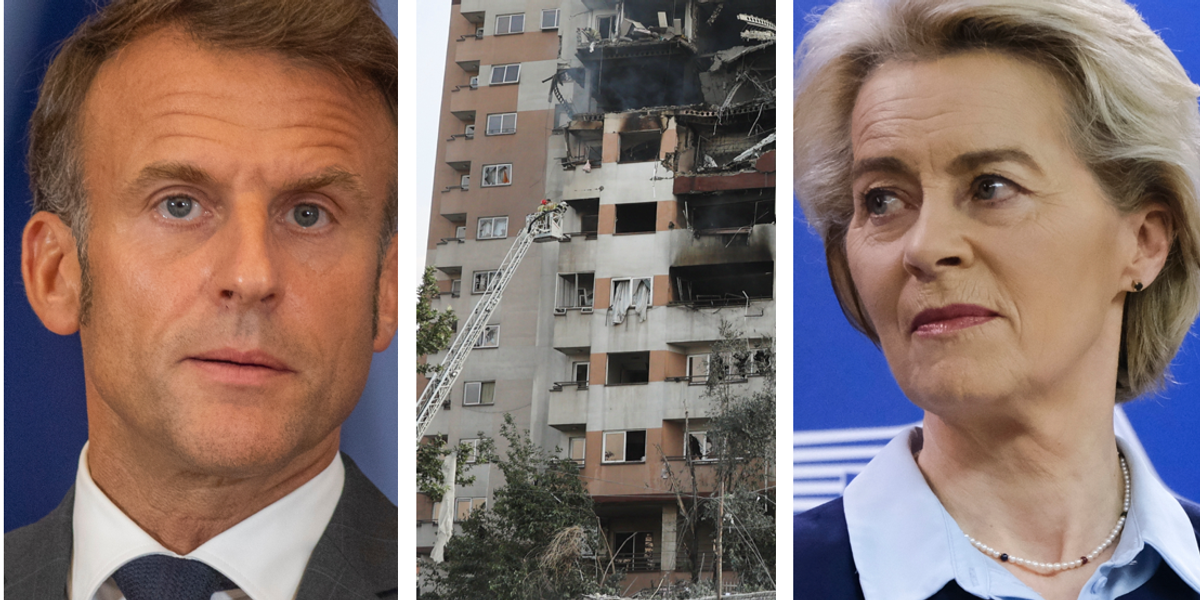
The president of France Emmanuel Macron set the tone by condemning Iranโ€™s โ€œongoing nuclear programโ€ and reaffirming โ€œIsraelโ€™s right to defend itself and secure its security.โ€ President of the European Commission Ursula von der Leyen seemed to have spoken from the same script โ€œreiterating Israelโ€™s right to defend itself,โ€ embellished by some generic platitudes about the need for restraint and de-escalation.

The German foreign ministry went a step further and actually โ€œstrongly condemnedโ€ Iran for โ€œan indiscriminate attack on Israeli territoryโ€ โ€” even before Tehran launched its missiles in response for Israelโ€™s attack on its territory โ€” while fully endorsing Israelโ€™s actions.

This Orwellian rhetoric isnโ€™t just incompetence or ignorance. Itโ€™s the culmination of years of European diplomatic malpractice that helped to manufacture this crisis โ€” and exposed the “rules-based order” as a corpse. Europeโ€™s double standards killed its credibility.

Europeโ€™s stance on Ukraine invoked Article 2(4) of the U.N. Charter with political clarity: “All members shall refrain from the threat or use of force against the territorial integrity of any state.” Yet when Israel attacked Iran โ€” with no legal basis for self-defense โ€” Europe de-facto reframed aggression as virtue, and condoned it.

Europeโ€™s moral and diplomatic collapse hasnโ€™t gone unnoticed. Two globally respected voices delivered particularly damning verdicts. Mohamed ElBaradei, Nobel Laureate and former head of the U.N.โ€™s atomic energy watchdog, offered a humiliating crash course in international law to the German foreign ministry.

Reacting to Berlinโ€™s endorsement of Israelโ€™s โ€œtargeted strikes against Iranian nuclear facilitiesโ€ (never mind the hundreds of civilians killed in these strikes), El Baradei reminded it that such strikes are prohibited under the Geneva Conventions to which Germany is a party, and that the use of force in international relations โ€œis generally prohibited in the UN Charter with the exception of the right of self-defense in the case of armed attack or upon authorization by the Security Council in the case of collective security action.โ€

For her part, Francesca Albanese, U.N. special rapporteur on the occupied Palestinian territories, reacting to Macronโ€™s statement, commented that โ€œon the day Israel, unprovoked, has attacked Iran, the president of a major European power, finally admits that in the Middle East, Israel, and only Israel, has the right to defend itself.โ€

Newsletter

Subscribe now to our weekly round-up and don’t miss a beat with your favorite RS contributors and reporters, as well as staff analysis, opinion, and news promoting a positive, non-partisan vision of U.S. foreign policy.

Invalid emailEnter your email

The message of the likes of El Baradei and Albanese is unequivocal: when Europe applauds Israelโ€™s strike while condemning Russiaโ€™s invasion, it doesnโ€™t uphold universal rules โ€” it enforces its tribalist identity: โ€œrulesโ€ only apply to adversaries, not friends. This is fatal to Europeโ€™s pretense of moral authority โ€” it has been well noticed in the Global South, but also among many European citizens too.

This pretense looks even more detached from reality given that the crisis in the Middle East erupted on fertile ground prepared by serial European failure. First it was the E3 (Britain, France, Germany) failure to uphold the JCPOA following the U.S. withdrawal under Donald Trumpโ€™s presidency in 2018. While the EU offered rhetorical support for the nuclear deal, it buckled to U.S. sanctions and refused to shield EU firms willing to engage with Iran. It let the JCPOA die, de-facto creating a vacuum for escalation.

Further, while mediators like Oman and Qatar brokered talks on a new nuclear deal between the U.S. and Iran, the EU pushed for an IAEA resolution censoring Iran days before Israelโ€™s strike, torpedoing de-escalation and contributing to creating a more menacing, dangerous security environment, with the U.N. Security Council sanctions snapback and potential Iranโ€™s withdrawal from the Non-Proliferation Treaty (NPT) lurking in the background.

Each of these failures validated Tehranโ€™s view that it is futile to negotiate with Europe. The E3/EU are now seen not just as a weak party unable to fulfil its commitments under the nuclear agreement, but also an actively destructive player undermining Iranโ€™s security and regional stability.

European powersโ€™ staggering descent into diplomatic irrelevance was starkly illustrated by Iranian foreign minister Abbas Araghchiโ€™s categorical rejection of his British counterpart David Lammyโ€™s pleas to de-escalate. Indeed, it is difficult to imagine why Tehran should heed these calls when they come from parties it sees as actively colluding with the aggressors.

The likely fallout from Europeโ€™s diplomatic self-sabotage is that it incinerated whatever residual trust it still had in Iran and the broader Global South. It all but guaranteed proliferation by giving Iranians โ€” now not just the hardliners โ€” a powerful incentive to seek nuclear weaponization, an outcome that could have been avoided had Europe engaged in serious, good faith talks with Iran on reviving the nuclear deal. Iranโ€™s withdrawal from the NPT is no longer a merely theoretical possibility.

All of these developments dramatically increase the likelihood of blowback against European interests: a regional war in the Middle East means more uncontrolled migration, heightened risks of terrorism on European soil or against European interests in the region, and energy shocks if Iran delivers on its threats to block the Hormuz Straight, the worldโ€™s principal oil trade artery.

Absent an urgent but unlikely course correction, such as holding Israel accountable for its regional aggression, Europeโ€™s decay will accelerate. When Brussels exempts allies from rules imposed on rivals, it doesnโ€™t preserve peace โ€” it signs its own geopolitical suicide note.

Eldar Mamedov

Eldar Mamedov is a Brussels-based foreign policy expert and Non-resident Fellow at the Quincy Institute.

๐’๐จ๐ฎ๐ซ๐œ๐ž๐ฌ: ๐”๐’ ๐–๐ข๐ฅ๐ฅ ๐„๐ง๐ญ๐ž๐ซ ๐ˆ๐ฌ๐ซ๐š๐ž๐ฅโ€™๐ฌ ๐–๐š๐ซ ๐–๐ข๐ญ๐ก ๐ˆ๐ซ๐š๐ง

June 15, 2025


Call the White House and tell them you do not want any part of this disastrous war

by Dave DeCamp, Antiwar.com, Jun 15, 2025

Sources familiar with the matter have told Antiwar.com Editorial Director Scott Horton that the Trump administration is poised to enter Israelโ€™s aggressive war against Iran directly. US airstrikes on Iran could begin as soon as Monday. Please contact the White House by calling (202-456-7041) or sending an email. Tell them that you do not want the US to enter this disastrous war, which could lead to heavy American casualties at US bases across the Middle East. The US has supported the war by reportedly providing Israel with intelligence and helping intercept Iranian missiles and drones, but so far, there have been no direct US attacks on Iran. Iranian officials have warned that Tehran would hit US bases in the region in response to any US strikes. Axios reported on Saturday that Israel is urging the US to join the war since Israel lacks the bunker-busting bombs necessary to do serious damage to Iranโ€™s Fordow plant, which is buried deep underground. An Israeli official told Axios that President Trump had previously suggested the US could strike Fordow. Trump himself said on Sunday that it was โ€œpossibleโ€ that the US would get directly involved in the war, which Israel launched early Friday morning with airstrikes across Iran. Israeli Prime Minister Benjamin Netanyahu started the war under the pretext of preventing Iran from building a nuclear weapon. But it was the consensus of the US intelligence community that there was no evidence Iran was working toward a nuclear weapon, and Tehran made clear they were ready to make a deal with the US that would significantly lower uranium enrichment levels and increase oversight of its nuclear program in exchange for US sanctions relief. Ali Larijani, an aide to Iranian Supreme Leader Ayatollah Ali Khamenei, has previously said that the one thing that would make Tehran reconsider its prohibition on the development of nuclear weapons would be a US or Israeli attack. โ€œWe are not moving towards (nuclear) weapons, but if you do something wrong in the Iranian nuclear issue, you will force Iran to move towards that because it has to defend itself,โ€ Larijani said on April 1. โ€œIran does not want to do this, but โ€ฆ (it) will have no choice,โ€ he added. โ€œIf at some point you (the US) move towards bombing by yourself or through Israel, you will force Iran to make a different decision.โ€