Posts Tagged ‘Israel’

Defending Iran against US and Israeli aggression will be a prolonged struggle

May 9, 2026

It is too early to assume a US defeat in Iran — we must prepare for a long anti-war struggle, argues JOHN ROSS
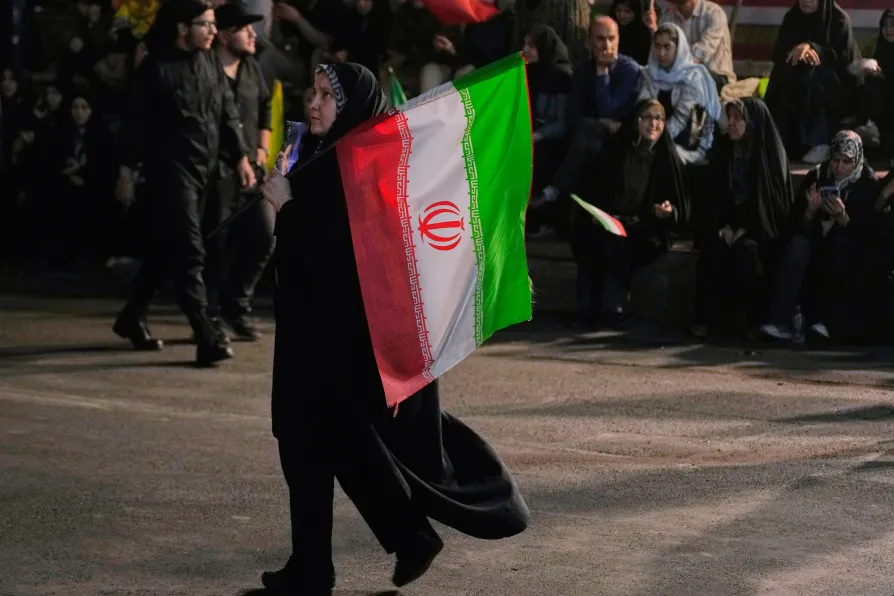
A woman carries an Iranian flag during a pro-government gathering at Enqelab-e-Eslami, or Islamic Revolution, square in Tehran, Iran, May 4, 2026

John Ross, Morning Star, 8 May 2026

THE entire peace movement opposed the US/Israeli war against Iran. Opposition went well beyond those normally opposing US actions. It is widely understood that resistance by the peoples of Iran, Lebanon and Yemen, together with the war’s unpopularity in the US, led to Trump losing the first rounds of the conflict.

Even the Wall Street Journal, a fervent supporter of the war, admitted this: “Trump screamed at aides for hours. The Europeans aren’t helping, he said repeatedly. Gas prices averaged $4.09. Images of the 1979 Iranian hostage crisis… had been looming large in his mind, people who have spoken to him said.  ‘If you look at what happened with Jimmy Carter…with the helicopters and the hostages, it cost them the election,’ Trump had said in March. ‘What a mess.’”

But it is a misjudgement to believe that because the US and Israel lost the first battle, therefore they have lost the war and are resigned to this. Instead, the peace movement must prepare for a prolonged struggle to defeat US and Israeli attacks on Iran.  

Some genuinely taking the right side in this war have written that the US has already suffered its biggest defeat since Vietnam, or even that this is a bigger defeat.

Unfortunately, this is a misanalysis. To prepare for the prolonged anti-war tasks to come, the situation must be seen accurately.

Precisely because if the US loses the war against Iran it would be its biggest defeat since Vietnam, it has no intention of giving up because it lost the first battle.

US ruling circles understand perfectly that US loss of the war would mean significant erosion of the credibility of its international threats, significantly weakening its global position.

They therefore simply conclude that the wrong tactic was chosen, and the US must change this to win the struggle. Even some forces in the US who believe launching the war was a tactical mistake believe that now it has started it must be won.

The Institute for the Study of War put it specifically: “Any US settlement or resolution of the conflict that enables Iran to control traffic through the Strait of Hormuz would represent a major US defeat.” As the Wall Street Journal summarised: “As the president said in his first term, the US shouldn’t start a war it doesn’t intend to win. His challenge now is to prove to Iran’s regime he meant what he said.”

The new US tactics to attempt to win the war can be clearly grasped if it is understood why it lost the first battle. Prior to the first military attack on Iran in June 2025, and the widespread assault launched in February, US policy under Trump had been to force Iran to capitulate to US demands by prolonged economic sanctions.

The US has now intensified this attack, after its defeat in the first round of the war, via its blockade of Iranian ships, with Trump claiming: “Iran is collapsing financially! They want the Strait of Hormuz opened immediately… Starving for cash!”

Such sanctions genuinely damaged Iran’s economy, creating a priority for Iran to attempt to break out of them, while the US can return to bombing anytime it chooses.

Israel, and some in the US, considered sanctions strategically inadequate. Iran is a huge country, 80 times Israel’s size geographically, larger than the EU’s four largest countries put together. Iran’s population is 90 million, compared to Israel’s 10 million. In real economic terms, parity purchasing powers (PPPs), Iran’s GDP is three times Israel’s.

Faced with larger states, Israel’s policy has been, where it is unable to help create governments favourable to itself, to attempt to disintegrate and weaken them — as shown in Iraq and Syria.   
Israel, judging it unlikely there will be a compliant Iranian government, has long sought to disintegrate that country. Therefore, Iran faces an existential threat from Israel.

The US itself turned to a military assault on Iran, as opposed to sanctions, because of its and Israel’s victories in its genocidal attack on Gaza and also in Syria — where reactionary forces, which Israel and the US supported, came to power.  

Israel and the US miscalculated that they could now achieve the same in Iran. The US supplied thousands of Starlink systems and, as Trump publicly admitted, guns to demonstrators in Iran in December and January.

But not only did this fail to overthrow Iran’s government but when the US and Israel launched their full-scale military attack on Iran in February, as even Western media admitted, there was a “rallying around the flag” in Iran — in political terms, the great majority of Iran’s population, whatever their differences on other issues, or their attitude to Iran’s government, united in opposition to the US attack. This was the basis of the US defeat in the first round of the war.

But the US cannot retreat from this conflict due to the role west Asia plays in its strategy. A mistaken analysis was put forward a few years ago that because, due to fracking, the US has become self-sufficient in oil, it would be less interested in controlling west Asia.

The facts show the opposite. The US has waged more wars in the region — against Iraq, Syria, Yemen, Lebanon and Iran.

The US is no longer being itself dependent on West Asia, but constantly waging wars there, has led some to claim that this is because Israel controls US foreign policy — that the tail wags the dog. Any analysis of the relation of forces between the two makes clear this is untrue. Israel cannot produce the weapons it relies on to carry out military terror; the US merely has to threaten to cut off arms and Israel would immediately be brought to heel.

This reality was made clear for all to see when Trump, for short-term tactical reasons, openly  enforced an end to Israel’s bombing of Beirut, declaring: “Israel will not be bombing Lebanon any longer. They are PROHIBITED from doing so by the US.” The US does not support Israel because it is controlled by it but because the US finds Israel useful for its own strategy.

Although the US does not need west Asia’s oil for itself, its strategy is to be able to deny it to others, particularly China.

Because this is key for the US, it will not give up its attack on Iran, only the forms will change. Therefore, the peace movement must prepare for a prolonged struggle against US aggression against Iran.

John Ross is senior fellow at the Chongyang Institute for Financial Studies, Renmin University of China, and a member of No Cold War Britain.

‘An Almost Unthinkable Threat’: Trump Warning That Iran Will ‘Glow’ Sparks Latest Fears of Nuclear Attack

May 8, 2026

US-POLITICS-TRUMP

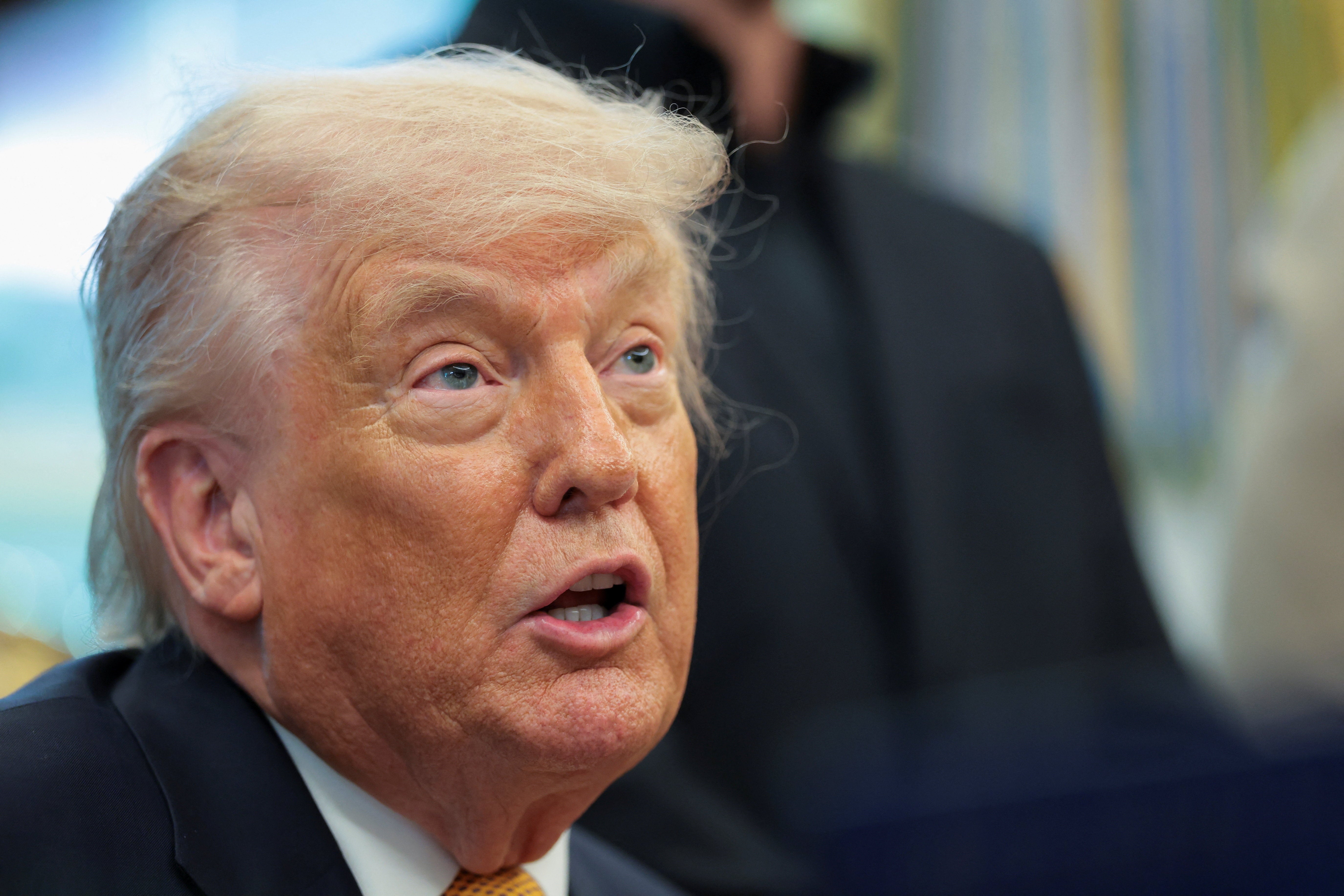
US President Donald Trump, flanked by US Secretary of Homeland Security Markwayne Mullin, speaks with workers painting the Lincoln Memorial Reflecting Pool in Washington, DC, on May 7, 2026.

(Photo by Kent Nishimura/AFP via Getty Images)

“It again raises urgent questions: Is this president fit to lead and make consequential decisions that impact countless lives?” said the National Iranian-American Council.

Stephen Prager

Common Dreams, May 08, 2026

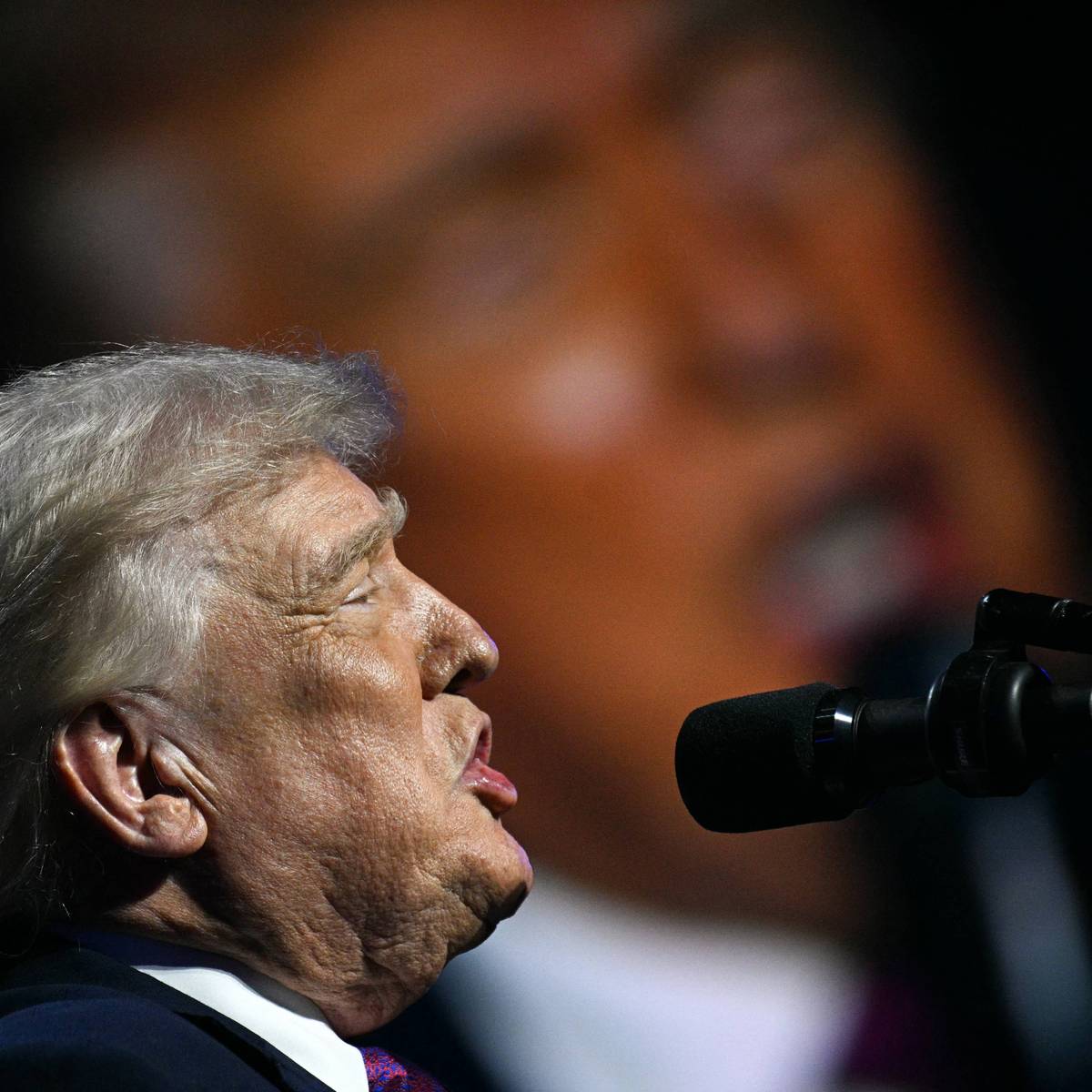
As he struggles to force Iran’s capitulation, US President Donald Trump issued what seemed to be yet another threat to commit an act of mass destruction against the country through nuclear warfare.

When negotiations have faltered in recent weeks, Trump has on multiple occasions defaulted to genocidal threats—including that the “whole civilization” of Iran would “die,” and that the whole country would be “blown up“—which have only seemed to anger and galvanize his Iranian adversaries rather than make them quake with fear.

RECOMMENDED…

US-POLITICS-TRUMP

‘The Whole Country’s Going to Get Blown Up’: Trump Renews Genocidal Threats to Iran as Ceasefire Collapses

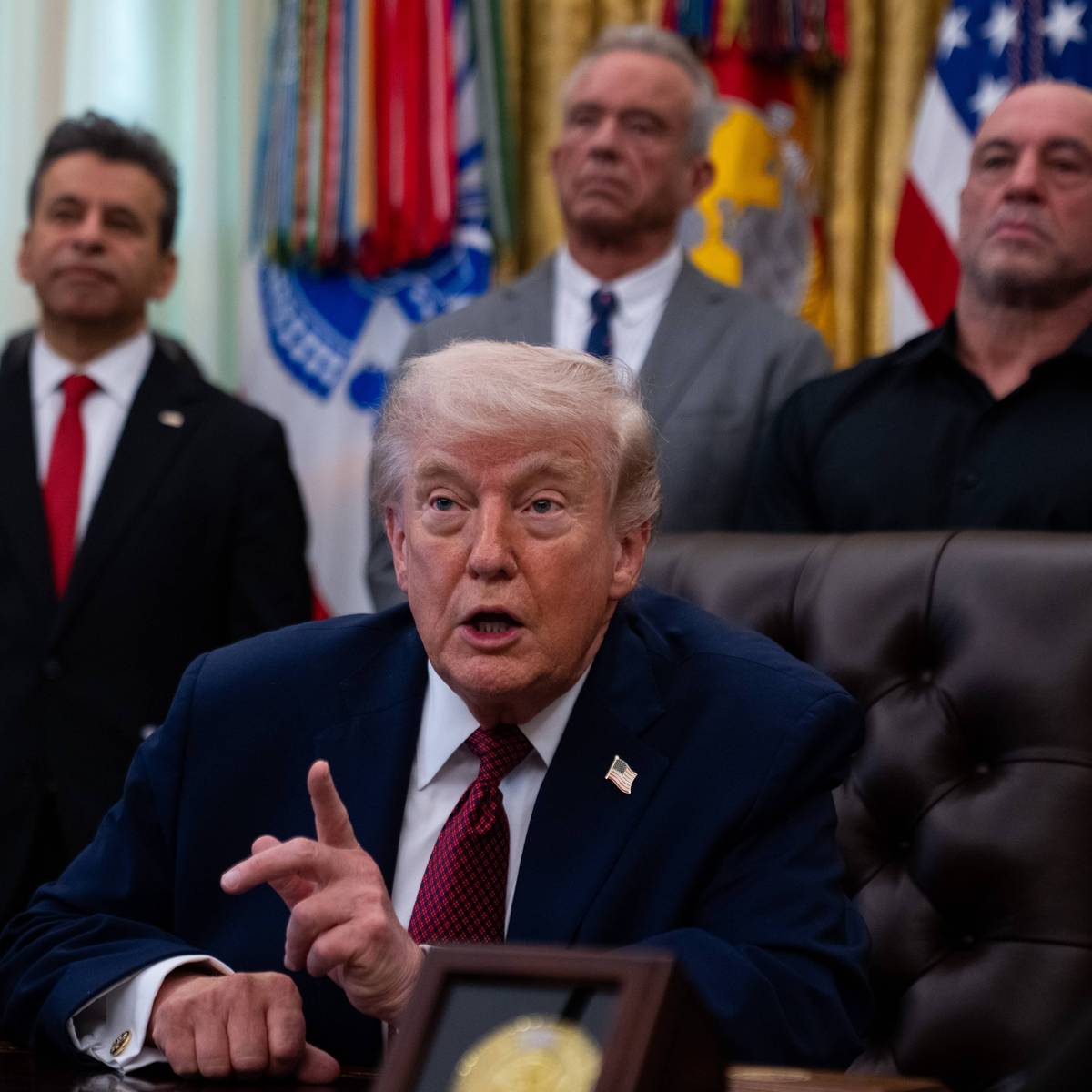
Trump points his finger while speaking sitting in the Oval Office

‘Threats of War Crimes Cannot Be Normalized’: Trump Ripped for Renewed Iran Genocide Threats

While the Trump administration has continued to insist that the ceasefire with Iran was still in effect, the two countries have exchanged significant fire this week.

On Thursday, the US launched what it said were “self-defense” strikes on military facilities it claimed were responsible for attempting to attack three US Navy ships in the Strait of Hormuz. Iran called the attacks a violation of the ceasefire and said its attacks on US ships were in response to American bombings of Iranian oil tankers the previous day.

Trump told reporters on Thursday that if the ceasefire were truly over, everyone would know. “If there’s no ceasefire, you’re just going to have to look at one big glow coming out of Iran,” he said. “They’d better sign the agreement fast… If they don’t sign, they’re going to have a lot of pain.”

To many observers, this sounded like a threat from Trump to carry out a nuclear holocaust, though it could also be a redux of Trump’s threats to attack civilian energy infrastructure, which would still be a war crime.

Kelley Beaucar Vlahos, the editor-in-chief of Responsible Statecraft, noted that if it were indeed a nuclear threat, it would be “ironic since the war today supposedly is to prevent Iran from getting… a nuclear weapon.”

The National Iranian-American Council (NIAC) said that “threatening to make Iran glow—with nuclear weapons or otherwise—is an almost unthinkable threat to commit a mass war crime against 92 million people. It must never be normalized.”

“It again raises urgent questions: Is this president fit to lead and make consequential decisions that impact countless lives?” the group said. “Would the chain of command refuse unlawful orders to make Iran ‘glow,’ killing millions of people?”

Trump’s pledge to wipe out Iranian civilization last month drew widespread condemnation and led dozens of Democratic members of Congress to call for his Cabinet to remove him from office using the powers of the 25th Amendment.

“Our leaders need to interrogate these questions seriously, and not write them off as the ramblings of a madman,” NIAC said. “Trump is the president, and may seek to act on these horrible, contemptible threats. This war needs to end, and so [does] Trump’s horrific threatening of war crimes.”

Spain awards civil merit honor to UN rapporteur for documenting crimes in Gaza

May 8, 2026

MEM, May 7, 2026 at 2:55 pm

Spanish Prime Minister Pedro Sanchez awards  the Order of Civil Merit to UN Special Rapporteur Francesca Albanese, on 7 May 2026 [sanchezcastejon/X]

Spanish Prime Minister Pedro Sanchez awards the Order of Civil Merit to UN Special Rapporteur Francesca Albanese, on 7 May 2026 [sanchezcastejon/X]

Spanish Prime Minister Pedro Sanchez awarded on Thursday the Order of Civil Merit to UN Special Rapporteur Francesca Albanese, recognizing her work documenting violations of international law in the Gaza Strip, Anadolu reports.

Sanchez received Francesca Albanese in Madrid, where they discussed the situation in Palestine, the importance of international law and “the need for an immediate end to the violence and the building of a lasting peace based on dignity and humanity,” according to a government statement.

“Public responsibility also implies the moral obligation of not looking away,” Sanchez wrote on social media, praising Albanese as “a voice that upholds the conscience of the world.”

The Order of Civil Merit is one of Spain’s highest civilian honors and is awarded to Spanish and foreign citizens for extraordinary services benefiting the state or society.

Albanese, an Italian legal scholar, has served since 2022 as the UN special rapporteur on the situation of human rights in the occupied Palestinian territories. She has become one of the most prominent international voices criticizing Israel’s military operations in Gaza.

On Tuesday, Sanchez also sent a letter to the European Commission calling for the activation of the EU’s Blocking Statute to counter US sanctions imposed on Albanese as well as judges and prosecutors from the International Criminal Court.

READ: Spain urges EU to take steps to protect independence of ICC, UN, their actions to end Gaza genocide

“It’s like an international mafia — they want to silence everyone who demands an end to genocide, an end to the crimes,” Albanese told Spanish broadcaster RTVE, referring to the sanctions against her.

Also on Thursday, Spanish Foreign Minister Jose Manuel Albares criticized Israel’s continued detention of Spanish-Palestinian activist Saif Abukeshek, calling it “inadmissible and unacceptable.”

Jose Manuel Albares told the Spanish parliament that he summoned Israel’s top envoy in Spain on Wednesday to discuss the situation and had also spoken with Israeli Foreign Minister Gideon Saar.

Albares said Abukeshek was “illegally” detained in international waters where Israel had “no jurisdiction” while traveling with a Gaza-bound humanitarian aid flotilla.

“Spain reacted without hesitation, with complete clarity and firmness, in response to violations of international law,” Albares said.​​​​​​​

Saudi Arabia forced Trump to pause Project Freedom after suspending US access to bases and airspace: report

May 7, 2026

The scheme is said to have angered Saudi leadership, who were not consulted in advance

Maira Butt, The Independent, Thursday 07 May 2026 15:09 BST

Trump says Iran strike ‘would’ve been worth it’ even if oil hit $200
On The Ground

President Donald Trump dramatically backtracked on Project Freedom after just two days because its Gulf ally, Saudi Arabia, blocked access to its military bases and airspace, according to reports.

Just 48 hours after announcing the operation to escort ships through the Strait of Hormuz, the US leader paused the initiative to enable negotiations between Washington and Tehran. Iran had attacked ships across the Gulf and struck a port in the UAE on Tuesday.

It has now emerged that Trump’s decision to pause the operation was driven by complaints by Saudi Arabia, two US officials told NBC News.

Saudi Arabia’s leaders had been angered by the announcement and the government told the US it would not allow American military forces to fly aircraft through Prince Sultan Airbase, located southeast of its capital, Riyadh.

Officials said the Kingdom denied access for any US aircraft to fly through Saudi airspace as part of Project Freedom.

Recommended

A call is reported to have taken place between Trump and Saudi Crown Prince Mohammed bin Salman, but the pair were unable to reach a resolution – forcing the US president to axe the operation.

Trump has ruffled feathers across the Gulf with seemingly unilateral decisions
Trump has ruffled feathers across the Gulf with seemingly unilateral decisions (Reuters)

The leaders “have been in touch regularly” and officials are also in touch with vice president JD Vance, secretary of state Marco Rubio, a Saudi source told NBC News.

“The problem with that premise is that things are happening quickly in real time,” the source said about the announcement, adding that the country was “very supportive of the diplomatic efforts” by Pakistan to guide the countries towards an agreement.

A White House official told NBC News that “regional allies were notified in advance.”

The Independent has contacted the White House for comment.

A diplomat in the region said that the operation was not coordinated with Oman either. “The US made an announcement and then coordinated with us,” they said, adding, “We were not upset or angry.”

Trump's project is said to have angered the Saudi leadership
Trump’s project is said to have angered the Saudi leadership (Getty)

“Because of geography, you need cooperation from regional partners to utilise their airspace along their borders,” one US official explained about the success of the scheme.

The Strait of Hormuz is a vital shipping route for global supplies of oil, fertiliser and other commodities that has been virtually closed since the US and Israel attacked Iran on 28 February, causing global price rises.

Recommended

Trump said the operation was a “humanitarian effort to rescue ships running low on essentials after more than two months trapped in the Persian Gulf”.

He said the mission would begin on Monday morning and warned that any interference would “have to be dealt with forcefully”.

Israel killing Palestinians ‘like we haven’t since 1967’, top commander says

May 7, 2026

West Bank commander boasts about high death toll and defends looser rules of engagement, including firing at unarmed Palestinians

An Israeli soldier stands on guard during an army raid at a cafe in the Rafidia neighbourhood of Nablus in the occupied West Bank on 23 April 2026 (Nasser Ishtayeh / SOPA Images via Reuters)

An Israeli soldier stands on guard during an army raid at a cafe in the Rafidia neighbourhood of Nablus in the occupied West Bank on 23 April 2026 (Nasser Ishtayeh / SOPA Images via Reuters)

By Nadav Rapaport in Tel Aviv, Israel

Published date: 4 May 2026 14:13 BST | Last update:2 days 20 hours ago

Israel’s top commander in the occupied West Bank has said the army is killing Palestinians at levels “not seen since 1967”, according to Haaretz.

Avi Bluth, head of the Israeli army’s Central Command, made the remarks in a closed forum, where he also defended looser rules of engagement allowing troops to fire at unarmed Palestinians.

He acknowledged a discriminatory approach whereby Jewish Israeli stone-throwers are not targeted while Palestinians carrying out similar acts are fired at. 

“In three years, we have killed 1,500 terrorists,” he said, referring to Palestinians. 

“So how is there no intifada? Why aren’t they taking to the streets? Why is the Palestinian public indifferent? Why are there no disturbances?” Bluth, a settler who has been the Israeli army commander in the West Bank since 2024, added. 

New MEE newsletter: Jerusalem Dispatch

Sign up to get the latest insights and analysis on Israel-Palestine, alongside Turkey Unpacked and other MEE newsletters

“The Arabs understand that ‘if someone rises to kill you, kill him first’ is part of the rules of the Middle East, and therefore we are killing like we have not killed since 1967.”

According to the United Nations Office for the Coordination of Humanitarian Affairs (Ocha), since 7 October 2023, Israel has killed 1,081 Palestinians in the West Bank and the occupied East Jerusalem, including at least 235 children.

Bluth attributed the high number of Palestinian deaths to orders he gave, which made it easier for Israeli soldiers to open fire at civilians.

He said troops are permitted to shoot, from the knee down, at Palestinians attempting to cross the West Bank separation barrier.

“Today, there are many ‘limping memorials’ in Palestinian villages of those who tried to infiltrate and got hit, so there is a price that is paid,” Bluth said, according to Haaretz.

Preferential treatment for settlers 

Bluth admitted that his subordinates do not shoot Israelis who throw stones at army forces because of “sociological implications,” while they kill Palestinians who do the same.

He added that in 2025, Israeli forces killed 42 Palestinians accused of stone-throwing, which he described as terrorism.

When shown footage of settlers throwing stones at troops, he cited an incident in which two masked Israelis were shot, noting it caused a public outcry.

Bluth’s remarks come amid growing discontent about his actions among hilltop youth, the settler militias who terrorise Palestinians communities in the West Bank, who view him as yielding to left-wing and international pressure. 

Ex-Mossad chief says Israeli settler violence reminds him of the Holocaust

Read More »

Last week, Haaretz reported that Bluth labelled the growing numbers of settler attacks as “terror,” and criticised hilltop youth who establish outposts without coordinating it first with the army’s command.

Bluth added that the army, with the coordination of the settlers, established some 150 outposts in Area C in the West Bank in recent years, which he alleged helped prevent Palestinian “terror” and building expansion.

Last week, Knesset Member Limor Son Har-Melech, a vocal supporter of the settler militias, called Israel Defence Minister Israel Katz to immediately fire Bluth from his post over his remarks.

Meanwhile, the Israeli NGO Peace Now reported on Sunday that the Israeli government assigned some 130 million shekels to those same settler groups under the guise of curbing settler violence.

The funds were allocated towards “reducing risk situations and expanding positive responses for youth in the Judea and Samaria area,” using the Israeli name for the West Bank. 

Peace Now said the funds will, in practice, be used to strengthen the settlements and “channel millions” to their regional councils. 

“The government uses every excuse to justify pouring more and more millions into settlements. This is a programme to expand settlements under the guise of combating violence,” Peace Now statement said.

“The government is directing a significant portion of the funds to the same actors and activities that currently serve as the main supporters of the outposts and farms from which the violence originates,” the NGO added, calling on the government to stop the funds and the army and police to stop the violent acts.

Israeli officers ‘threaten Gaza flotilla activists with death’ during interrogations

May 6, 2026

Lawyers says two activists are being subjected to ‘psychological torture’ as their detention is extended for another week

Activist Thiago Avila, a member of the Global Sumud Flotilla detained by Israel, sits at a magistrate's court hearing in Ashkelon, southern Israel, 3 May, 2026 (Amir Cohen/Reuters)

Activist Thiago Avila, a member of the Global Sumud Flotilla seized by Israel in international waters, sits at a magistrate’s court hearing in Ashkelon, Israel, 3 May 2026 (Amir Cohen/Reuters)

By Mera Aladam

Published date: 5 May 2026 12:08 BST | Last update:21 hours 34 mins ago

Two activists seized by Israeli forces in international waters while en route to deliver humanitarian aid to Gaza have been threatened with death or lengthy imprisonment, their lawyers said on Monday.

The legal centre Adalah, which represents Thiago Avila and Saif Abu Keshek, said the pair have been subjected to psychological abuse and held in solitary confinement since their capture last week.

On Tuesday, a court in the southern Israeli city of Ashkelon extended their detention until Sunday.

Abu Keshek, a Spanish-Swedish national of Palestinian origin, and Avila, a Brazilian national, were detained late on Wednesday when Israeli naval forces raided a Gaza-bound aid flotilla in international waters off Greece.

They were taken to Israel and accused of assisting the enemy during wartime, contact with a foreign agent, membership of and providing services to a terrorist organisation, and transferring funds to such a group. Both deny the charges.

New MEE newsletter: Jerusalem Dispatch

Sign up to get the latest insights and analysis on Israel-Palestine, alongside Turkey Unpacked and other MEE newsletters

Since their detention, the men have been held in cells under constant bright light, a practice intended to cause sleep deprivation and disorientation, according to Adalah. They are also blindfolded whenever taken out of their cells, including during medical examinations, which it described as a serious breach of medical ethics.

Global Sumud Flotilla: When states fail, humanity sets sail

Read More »

Avila reported being subjected to repeated interrogations lasting up to eight hours, during which he was allegedly threatened that they would be “killed” or “imprisoned for 100 years”.

He is also being held in very low temperatures, the group said. 

The two men, now in solitary confinement, have entered their sixth day of a hunger strike in protest at what legal experts have described as an unlawful seizure outside Israel’s territorial waters.

Lawyers Hadeel Abu Salih and Lubna Tuma of Adalah told the court the case was “flawed and unlawful”, arguing there is no legal basis for applying Israeli law to foreign nationals in international waters.

During Friday’s raid, Israeli forces intercepted at least 21 Gaza-bound vessels and detained 175 activists, in what organisers from the Global Sumud Flotilla described as an act of “piracy”.

The boats were seized about 600 nautical miles from Gaza’s coast, near the Greek island of Crete.

Spain and Brazil issued a joint statement on Friday describing the detention of Avila and Abu Keshek as illegal.

Israel seizes nearly 60 percent of Gaza as it plans to resume war, report says

May 5, 2026

Israeli Army Radio says plans to resume attacks are complete, pending political approval

Israeli army soldiers gather near the Israel-Gaza boundary on 10 October, 2025 (Jack Guez/AFP)

Israeli army soldiers gather near the Israel-Gaza boundary on 10 October 2025 (Jack Guez/AFP)

By Mera Aladam

Published date: 4 May 2026 12:14 BST | Last update:19 hours 42 mins ago

Israel has expanded its control of the Gaza Strip to nearly 60 percent of the territory despite the ceasefire, as it prepares for a possible resumption of the war, Army Radio reported on Sunday.

Senior military officials, cited by the broadcaster, said they are pressing to restart fighting, arguing that now is the optimal moment to defeat Hamas.

Operational plans for renewed attacks have been completed, the report said, with a final decision pending approval from Israel’s political leadership.

The military has also reduced forces in southern Lebanon while redeploying brigades to Gaza and the occupied West Bank.

The Army Radio also reported there has been an increase in attacks lately. 

New MEE newsletter: Jerusalem Dispatch

Sign up to get the latest insights and analysis on Israel-Palestine, alongside Turkey Unpacked and other MEE newsletters

Meanwhile, Israeli forces have expanded the so-called “Yellow Line” to absorb more of Gaza, pushing the population into roughly 40 percent of the enclave while troops remain stationed across the remaining 60 percent in the south, north and east.

Gaza cannot be rebuilt until Palestinians control their own political future

Read More »

The US brokered a ceasefire in the Gaza Strip in October, intended to end Israel’s two-year genocide by halting attacks and allowing humanitarian aid to flow into the territory.

However, Israel has repeatedly violated the ceasefire, killing at least 832 Palestinians in near-daily shelling, according to the Palestinian health ministry. 

Overall, Israeli forces killed more than 72,000 Palestinians since October 2023. Thousands more remain missing and beneath rubble. 

Under the agreement, Israel was required to lift restrictions and allow up to 600 aid trucks a day carrying food, fuel, medical supplies, shelter materials and commercial goods. However, Gaza authorities say Israeli limits have kept the average at just over 200 trucks daily.

Additionally, the Israeli military controlled nearly half of Gaza when the ceasefire began, establishing a unilateral demarcation known as the “Yellow Line”. The agreement’s later phases envisaged a gradual Israeli withdrawal from all of Gaza. 

However, Israeli forces have since steadly expanded the “Yellow Line” and now control 59 percent of the territory, according to Army Radio.

Genocide—and Complicity: Washington Insider Says the Word They Avoid

May 2, 2026

April 29, 2026 benjamin netanyahu, civilian casualties, gaza, genocide, international law, Israel-Palestine, middle east, u.s. complicity, U.S. foreign policy, war crimes, wendy sherman

Share this:

In one of the scariest moments in modern history, we're doing our best at ScheerPost to pierce the fog of lies that conceal it but we need some help to pay our writers and staff. Please consider a tax-deductible donation.

Joshua Scheer

Former U.S. Deputy Secretary of State Wendy Sherman has delivered a rare rupture in official Washington’s script: accusing Israel of carrying out a genocide in Gaza—and acknowledging that the United States is not a bystander, but a participant in its outcome.

Speaking to Bloomberg, Sherman pointed directly to the policies of Israeli Prime Minister Benjamin Netanyahu, arguing they have driven the devastation in Gaza while fueling wider instability across the Middle East. This is not the language of ambiguity or “both sides”—it is an indictment from within the establishment itself.

More damning still, Sherman underscored the uncomfortable truth at the heart of U.S. foreign policy: Washington’s actions are inseparable from its alliance with Israel. That relationship, she suggested, is no longer politically or morally sustainable without serious reassessment.

Her comments carry unusual weight. Sherman is not an outsider—she helped shape U.S. diplomacy at the highest levels. And her warning comes as global outrage grows over the scale of destruction in Gaza and the mounting civilian toll.

According to Gaza health authorities, at least 817 Palestinians have been killed and 2,296 wounded in reported Israeli violations of a ceasefire agreement since it took effect—figures that continue to climb as the violence grinds on.

International pressure is now building to force a reckoning: calls are intensifying to condition U.S. support for Israel on adherence to international law. The question is no longer whether the world is watching—it’s whether Washington will finally be forced to see what it has helped make possible.

In the full interview, former U.S. Deputy Secretary of State Wendy Sherman—no outsider, but a career diplomat and reliable mouthpiece of empire—did not arrive at the word lightly. She is not a campus protester, not an antiwar dissident, not someone who has challenged the foundations of U.S. power. She is a lifelong architect and defender of it. That is precisely what makes her admission so jarring: Israel, she said, has “in essence created a genocide in Gaza,” and the United States helped pave the road that made it possible.

Let’s be clear—this is not an endorsement of Sherman’s worldview. She has spent decades advancing the very system now producing this devastation. But when even a figure so deeply embedded in that machinery begins to name what is happening, it signals something deeper than dissent—it signals rupture.

This is the moral collapse Washington keeps trying to launder as strategy. Gaza has been demolished, civilians slaughtered, hospitals and homes reduced to rubble, and still the political class hides behind euphemism while the dead pile up faster than the truth can be spoken. Sherman’s words matter not because she stands outside power, but because she doesn’t. They expose what official Washington already knows and refuses to confront: this is not an accident, not collateral damage, not a tragic excess of war. It is the destruction of a people—enabled, armed, and excused by the United States.

When a figure like that uses the word “genocide,” it punctures the careful language Washington relies on to avoid accountability. But it also reveals the limits of insider critique: naming the crime without challenging the structure that enables it. Her words expose a truth the political class already understands—that U.S. power is deeply entangled in this devastation—yet still stops short of confronting what that means. And that is the real indictment: not just what has been done, but how fully it has been absorbed into the logic of empire itself.

More from the interview

“Genocide” from inside the system
Sherman—no outsider—says Israel has “in essence created a genocide in Gaza,” and admits the U.S. helped create the conditions for it. U.S. power ≠ strategy
She warns Trump’s approach is “tactical” and impulsive, lacking any real long-term strategy—despite massive military escalation. Iran cannot be forced to surrender
The idea that Iran will simply capitulate is fantasy—its nuclear knowledge, regional ties, and strategic posture cannot be bombed away. War is weakening U.S. global dominance
Allies are drifting, trust is collapsing, and countries are turning toward China—accelerating a shift away from U.S. power. China and Russia are the real winners
The war strengthens China economically and geopolitically, while also giving it justification for its own future military actions. Strait of Hormuz = permanent leverage
Even after military strikes, Iran retains the ability to disrupt global trade—meaning the U.S. cannot fully control the situation. Negotiations are not about trust—only power
Sherman bluntly states diplomacy isn’t about trust but managing competing interests between adversaries. U.S. foreign policy built this crisis
She acknowledges decades of American decisions—from coups to wars—helped create today’s instability. Both parties share blame
Republicans and Democrats alike failed to create stability in the Middle East, with Iraq and failed diplomacy fueling long-term chaos. Even insiders are “angrier” now
Sherman admits growing anger and fear over the global cost—economic, political, and human—of current U.S. policy.

How UK Media Shields the Israel Lobby

April 30, 2026

Consortium News, April 29, 2026

Leading U.K. media don’t mention the Israel Lobby because they’re part of it, writes Mark Curtis. But its influence over U.K. politics is likely to be greater than any other state, except perhaps the U.S.

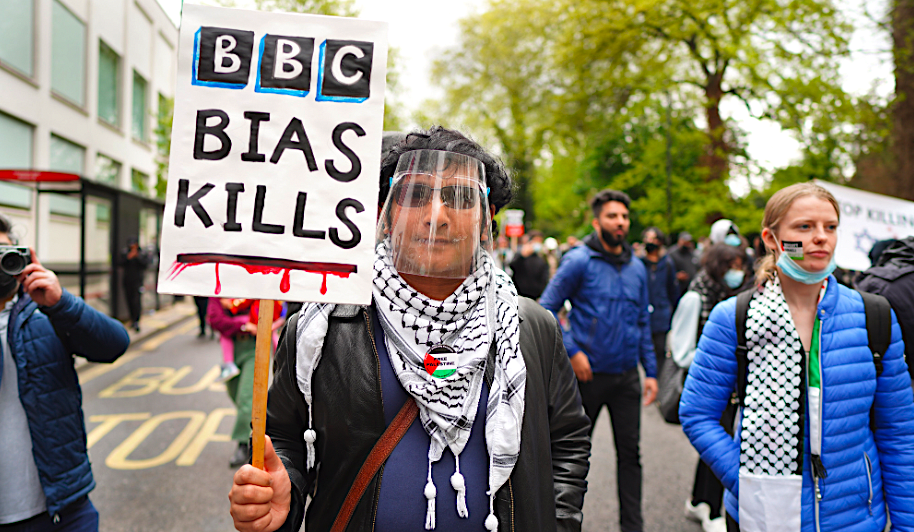
BBC Bias Kills – London protest against Israel’s assault on Gaza, May 15, 2021. (Alisdaire Hickson, Flickr, CC BY-SA 2.0)

By Mark Curtis
Declassified UK

Britain’s national media fails to recognise the influence – and even the existence – of an Israel lobby, our new media analysis shows.

Declassified researched two years of reporting by seven British media outlets and found only 16 mentions of the phrase Israel lobby without speech marks.

Nearly all those mentions are in comment articles rather than news pieces and none we found expound on what influence such an Israel lobby might have.

The phrase “Israel lobby” – used with speech marks – is slightly more common in these outlets, with 26 mentions in two years, and tends to be used to quote others in a disparaging way or to suggest such a lobby does not exist.

For example, one Guardian article refers to “the trope of the ‘Israel lobby’.” The Daily Mail reported in May 2024 of hecklers at a speech by then foreign secretary secretary David Lammy “accusing the MP of having taken ‘shady money’ from the ‘pro-Israel lobby’ on the grounds that he once lawfully accepted £30,000 from a Zionist lobbyist named Trevor Chinn.”

In fact, British businessman Trevor Chinn has funded Keir Starmer and several senior Labour ministers and was awarded the Israeli medal of honour for his “dedication” to and “love” for Israel.

Of seven media outlets analysed — BBC, Express, Guardian, Independent, Mail, Telegraph and Times — the BBC and the Express are the most extreme. No mentions of the phrase Israel lobby, used without speech marks, could be found at all in their publications.

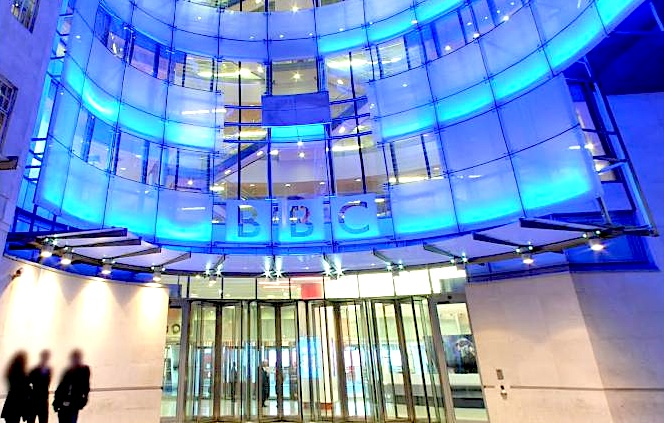
BBC Broadcasting Building entrance at night, 2013. (Zizzu02/Wikimedia Commons/CC BY-SA 3.0)

The BBC is failing to mention the Israel lobby while having regular meetings with it. As Declassified recently revealed, the BBC held nine meetings with Jewish groups strongly sympathetic to Israel in the first year of the Gaza genocide.

The Guardian was found to have made only five mentions of an Israel lobby without speech marks, three of which are in comment pieces by columnist Owen Jones.

By contrast, independent Scottish newspaper The National, which has consistently criticised U.K. policy towards Israel, has mentioned the Israel lobby twenty-three times in the two-year sample period, never in speech marks.

Israel Lobby

The Israel lobby in Britain is extensive. Declassified has revealed that a quarter of MPs have been funded by pro-Israel individuals and groups, as have one half of Keir Starmer’s Cabinet.

Neither of these findings have been reported in the mainstream media, as far as Declassified is aware.

British ministers and officials are known to hold off-the-books meetings with pro-Israel lobbyists, and under Starmer’s government, the Foreign Office has held numerous meetings with pro-Israel advocacy groups such as Board of Deputies of British Jews and the European Leadership Network (ELNET).

The U.K. government’s total proscription of the Lebanese movement Hezbollah in 2019 was the work of pro-Israel lobbyists while the lobby group, We Believe in Israel, has taken credit for the U.K. government’s proscription of Palestine Action last year.

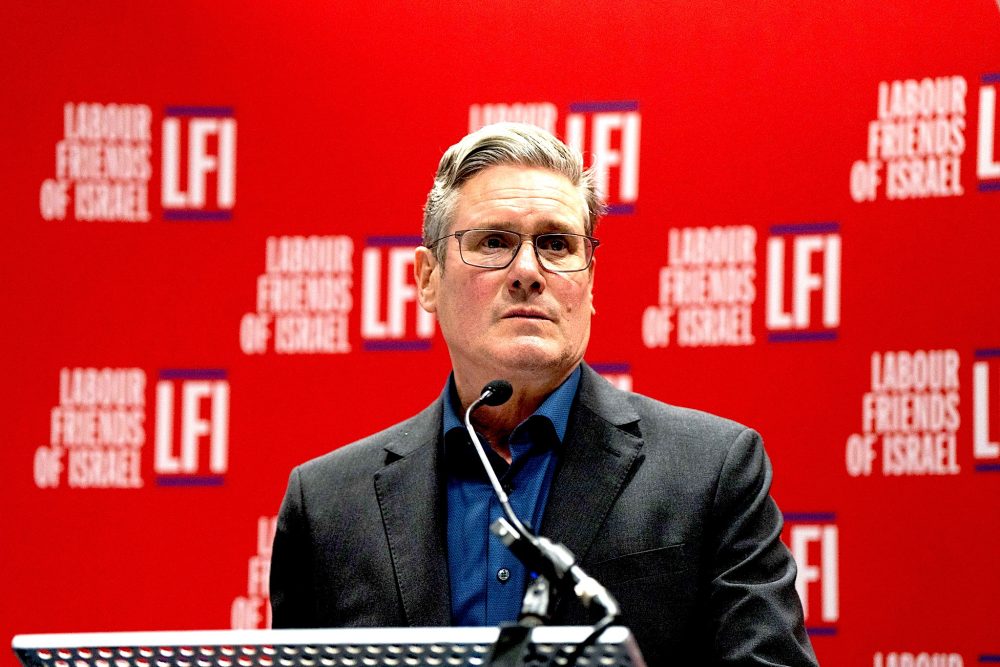
Keir Starmer, as Labour Party leader, attending the Labour Friends of Israel vigil on Oct. 10, 2023, at Labour Party conference in Liverpool following the Hamas attacks on Gaza on Oct. 7, 2023. (Keir Starmer, Flickr, CC BY-NC-ND 2.0)

As long ago as 2009, a landmark Channel Four documentary, Inside Britain’s Israel Lobby, which was presented by journalist Peter Oborne, revealed the close relationship between the Israel lobby and the Conservative and Labour parties, and its attempts to curb criticism of Israel in the media.

The Israel lobby’s influence over U.K. politics is likely to be greater than any other state except perhaps the U.S., and certainly far more than Russia which has received decidedly more media attention.

Friends of Israel

The British media’s failure to explicitly acknowledge an Israel lobby comes alongside nearly 300 articles in these seven outlets during the two years mentioning either Labour Friends of Israel (LFI) or Conservative Friends of Israel (CFI), of which dozens of MPs are supporters.

These lobby groups are invariably mentioned in the media without any analysis of their influence or even that they are explicitly part of a lobby that advocates for goals which benefit a foreign country, such as opposing an arms embargo on Israel.

The Independent has mentioned the phrase “influential Labour Friends of Israel” group three times, and The Times once, without mentioning how it is influential.

Yet CFI has been the largest donor of free overseas trips for MPs in recent years, and both CFI and LFI refuse to provide a list of their funders. LFI says its work is funded by “the generosity of members of the Jewish community and those who share our commitment to the State of Israel.” It adds that it “does not receive any money from the Israeli government or the Israeli Embassy.”

The Times has mentioned the phrase Israel lobby, without speech marks, on only four occasions in the two years, but has mentioned Labour Friends of Israel in over 50 articles. That LFI might be a part of a broader Israel lobby has apparently not been spelled out by The Times to its readers.

Part of the Lobby

These omissions might be because the seven media outlets we analysed often function as part of the Israel lobby that they refuse to sufficiently recognise.

The most extreme is The Telegraph, which routinely publishes articles supportive of Israel during its genocide in Gaza, illegal war on Iran and brutal attacks on Lebanon.

The paper has recently called to restore U.K. military ties to Israel, headlined with “Israel condemns ‘hateful and racist’ Greens,” and published an article by pro-Israel writer Jake Wallis Simons headlined “The case for Trump attacking Iran,” among many similar articles.

Some articles in these outlets suggest that recognition of an Israel lobby is anti-semitic. One opinion piece in The Telegraph runs:

“Anti-Semitism is a conspiracy theory about how the world works. You think you live in a democracy, it runs, but actually there is this secret invisible system of Jewish power that rules the world through the banking system, the media and the Israel lobby.”

Similarly, The Guardian reported on Labour MP Diane Abbott in May 2024, stating:

“She apologised for liking tweets about the influence of the Israel lobby, which she admitted could be interpreted as an anti-semitic trope.”  

The Guardian has been found to cave in to pro-Israel pressure, to amplify Israeli propaganda, and to be responsible for the same “systemic bias, deliberate distortion and deceptive underreporting” on Israeli crimes as the rest of the British media.

When the vice chair of LFI, Damian Egan, was forced to pull out of a school visit in January this year due to pressure from a pro-Palestinian group, both The Independent and The Times chose to focus on Egan simply being Jewish, headlining: “Jewish MP’s visit to local school cancelled after pro-Palestine campaign.”

Over 100,000 people have recently signed a petition calling for a public inquiry into pro-Israel influence on politics and democracy.

Note – our media analysis covered the period Apr. 7, 2024 to Apr. 7,  2026, using the Nexis media database and conducting website searches of the seven media outlets.

Mark Curtis is the co-director of Declassified UK and the author of five books and many articles on U.K. foreign policy.

One fourth of Lebanon’s population faces acute hunger due to US-backed Israeli war

April 30, 2026

Indiscriminate Israeli attacks and mass displacement have pushed nearly 25 percent of the population to critical levels of food insecurity

News Desk, The Cradle, APR 29, 2026

(Photo credit: Emilio Morenatti/AP Photo/picture alliance)

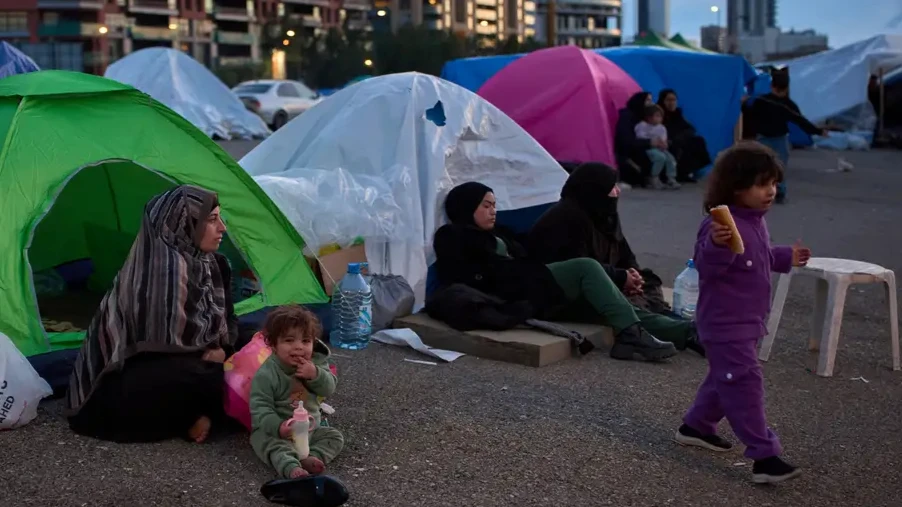
An aggregated food security report released on 29 April warns that more than 1.2 million people in Lebanon will face acute hunger from April to August 2026 due to worsening living conditions from the US-sponsored Israeli war.

Joint findings by the World Food Programme (WFP), the Food and Agriculture Organization (FAO), and Lebanon’s Agriculture Ministry have concluded that around one in four people will fall into the “crisis” phase of food insecurity or worse. 

This marks a steep increase from November to March, when 874,000 people – around 17 percent of the country’s population – were already in that category, as more than one million people were displaced by Israel’s campaign of ethnic cleansing and deliberate destruction of civilian infrastructure.

Israeli forces continue their attacks in south Lebanon, where residents have been warned not to return, with both sides continuing to exchange fire despite a ceasefire announced on 17 April.

The instability has compounded existing vulnerabilities in agriculture and rural livelihoods, particularly in the south and the Bekaa Valley, where some of the heaviest Israeli attacks have taken place.

WFP official Allison Oman Lawi said earlier gains had been reversed, warning that “families who were just managing to cope are now being pushed back into crisis.”

The Integrated Food Security Phase Classification (IPC) analysis indicates that households are increasingly unable to meet basic food needs, with many reducing meal sizes, skipping meals, or turning to debt and asset sales to survive.

FAO representative Nora Ourabah Haddad said the findings confirm “continued and deepening fragility,” calling for urgent agricultural support to prevent further collapse.

The report warns that without sustained humanitarian assistance, acute food insecurity is likely to deepen further in the coming months.

Israeli forces intensified attacks across Lebanon on 27 April, expanding strikes to the Bekaa region for the first time in weeks while continuing heavy bombardment across southern towns, causing injuries and widespread destruction. 

The escalation came alongside Hebrew media claims that Israeli occupation forces had begun scaling back parts of their ground presence, redeploying units while maintaining “limited operations” that include raids and the demolition of buildings under claims of Hezbollah affiliation. 

Despite these reports of partial withdrawal, airstrikes and artillery fire persisted, with jets flying low over areas such as Bint Jbeil, where Lebanese resistance fighters continue to operate.