Posts Tagged ‘Iran’

US military prepares “sustained, weeks-long” war against Iran

February 15, 2026
Andre Damon@Andre__Damona, WSWS, feb 14 2026

The aircraft carrier USS Gerald R. Ford sails in formation with the guided missile destroyers USS Winston Churchill, USS Mitscher, USS Mahan, USS Bainbridge and USS Forrest Sherman in the Atlantic Ocean, Nov. 12, 2024. [Photo: Navy Petty Officer 2nd Class Jacob Mattingly ]

The US military is preparing for “sustained, weeks-long operations” against Iran if US President Donald Trump orders an attack, Reuters reported Friday, citing US officials. The planned campaign would mark a far larger US assault on Iran than anything previously carried out.

In a sustained campaign, the US military could hit “Iranian state and security facilities, not just nuclear infrastructure,” one of the officials said. The United States “fully expected Iran to retaliate, leading to back-and-forth strikes and reprisals over a period of time.”

Such a war could entail massive loss of life and have incalculable global consequences. It would be illegal under international law and take place in defiance of the popular will, with 85 percent of the American population opposed to a war against Iran, according to a YouGov poll.

Last June, the US launched “Midnight Hammer” in coordination with a 12-day Israeli bombing campaign that together killed over one thousand Iranians. Iran staged a limited retaliatory strike on a US base in Qatar. What is now being planned is qualitatively different—an air and missile campaign targeting the Iranian state itself, with the expectation of extended back-and-forth combat.

The buildup takes place just weeks after the USS Gerald R. Ford, the world’s largest and newest aircraft carrier, took part in the seizure of Venezuelan President Nicolás Maduro on January 3. The Ford, which has been at sea for more than 200 days, has now been ordered from the Caribbean to the Middle East, where it will join the USS Abraham Lincoln strike group already in the region. The same carrier used in the kidnapping of the president of Venezuela is being redeployed to wage war against Iran.

Trump, speaking to troops at Fort Bragg, North Carolina on Friday, said it had “been difficult to make a deal” with Iran. “Sometimes you have to have fear,” he declared. “That’s the only thing that really will get the situation taken care of.” Asked if he wanted regime change, Trump responded: “Seems like that would be the best thing that could happen.”

The Ford strike group includes the guided-missile cruiser Normandy and destroyers Thomas Hudner, Ramage, Carney and Roosevelt. The carrier holds more than 75 military aircraft, including F-18 Super Hornet fighters and E-2 Hawkeye early warning aircraft.

Satellite imagery analyzed by Reuters shows a massive buildup at US bases across the Middle East. At Al-Udeid air base in Qatar, the largest US facility in the region, Patriot missiles have been placed in mobile HEMTT truck launchers, giving them rapid mobility in case of an Iranian attack. The base houses an RC-135 reconnaissance aircraft, 18 KC-135 Stratotanker refueling aircraft, and seven C-17 transport planes.

At Muwaffaq Salti air base in Jordan, images from February 2 show 17 F-15E Strike Eagle fighter-bombers, eight A-10 Thunderbolt close air support aircraft, and four EA-18G Growler electronic warfare jets—where none had been visible weeks earlier. Additional forces have been deployed to Prince Sultan air base in Saudi Arabia, Diego Garcia in the Indian Ocean and Dukhan base in Oman. Approximately 112 C-17 Globemaster cargo planes have reportedly arrived or made their way toward the Gulf region.

Iran’s Revolutionary Guards have warned they could retaliate against any US military base in the region. The US maintains bases in Jordan, Kuwait, Saudi Arabia, Qatar, Bahrain, the United Arab Emirates, Oman, Turkey and on Diego Garcia. Ali Shamkhani, an adviser to Supreme Leader Ali Khamenei, warned: “We will respond decisively to any adventurism—our military readiness is high.”

The military buildup coincides with the Munich Security Conference, whose organizers titled their annual report “Under Destruction.” German Chancellor Friedrich Merz opened the conference by declaring: “This order, as flawed as it has been even in its heyday, no longer exists.” He warned that “a divide has opened up between Europe and the United States.”

But while European leaders condemned Trump’s tariffs and threats against allies, they have fully supported the US posture toward Iran. On January 29, the EU unanimously designated Iran’s Revolutionary Guards a terrorist organization—all 27 member states voting in lockstep with Washington’s escalation.

The Munich conference withdrew its invitation to Iranian Foreign Minister Abbas Araghchi, with Germany’s foreign ministry declaring his participation inappropriate. In his place, exiled Crown Prince Reza Pahlavi, son of the Shah overthrown in 1979, was given a platform. Pahlavi called for “humanitarian intervention” and an “equalizing factor”—that is, US military strikes to “neutralize the regime’s instrument of repression.” He told the conference that “help is on the way” from Trump and positioned himself as the leader of a post-regime transition.Available from Mehring BooksThe struggle against imperialism and for workers’ power in IranA pamphlet by Keith Jones

Democratic Socialists of America Congresswoman Alexandria Ocasio-Cortez spoke at the Munich Security Conference on the subject of “The Rise of Populism.” In her entire appearance at the conference, she did not say a single word about Trump’s preparations for war against Iran—the most significant military escalation of his presidency.

What she did say is revealing. She warned that Trump is “looking to withdraw the United States from the entire world so that we can turn into an age of authoritarianisms, of authoritarians… where Putin can saber rattle around Europe and try to bully around our own allies there.”

This is not opposition to war; rather Ocasio-Cortez condemned Trump as being insufficiently aggressive against “Putin”—i.e., being insufficiently committed to the war in Ukraine.

The Democrats have been silent as the administration amasses approximately 50,000 troops and the largest concentration of military firepower in the Middle East since the 2003 invasion of Iraq. Their earlier statements on Iran amounted to endorsements of regime change in response to the emergence of localized protests against the government last month. Senator Mark Warner declared on January 11, “The Iranian regime is awful, and I stand with the Iranian people.” Ocasio-Cortez tweeted that month, “The Iranian government’s violent crackdown on demonstrators is horrific.”

Far from opposing the war buildup, the Democrats have actively funded it. On January 30, the Senate passed the Consolidated Appropriations Act by a vote of 71 to 29, including $839 billion for the Pentagon—an $8.4 billion increase over the military’s own budget request. Twenty-three Democrats voted for the bill, including Senate Minority Leader Chuck Schumer, Minority Whip Dick Durbin and Vice Chair Mark Warner. In the House, the bill passed 341 to 88, with 149 Democrats voting yes and only 64 voting no. Republicans on the House Appropriations Committee hailed the legislation as “America First, Fully Funded.”

In the space of weeks, the Trump administration has kidnapped the president of Venezuela, threatened to annex Greenland, backed the Israeli genocide in Gaza and is now preparing a sustained bombing campaign against a country of 88 million people. Each of these operations targets nations whose resources Washington seeks to control as part of its escalating confrontation with China—Venezuela’s oil, Iran’s oil and natural gas and the Strait of Hormuz through which 20 percent of the world’s oil passes daily.

The working class cannot entrust the fight against imperialist war to any faction of the political establishment. The same administration threatening to devastate Iran is attacking immigrants, gutting social programs, and constructing a police state at home. Opposition to war must come from the independent mobilization of the international working class against the capitalist system that produces war, inequality and dictatorship.


Trump and Netanyahu hold Iran war conclave

February 13, 2026
wsws, Keith Jones, Feb 12, 2026

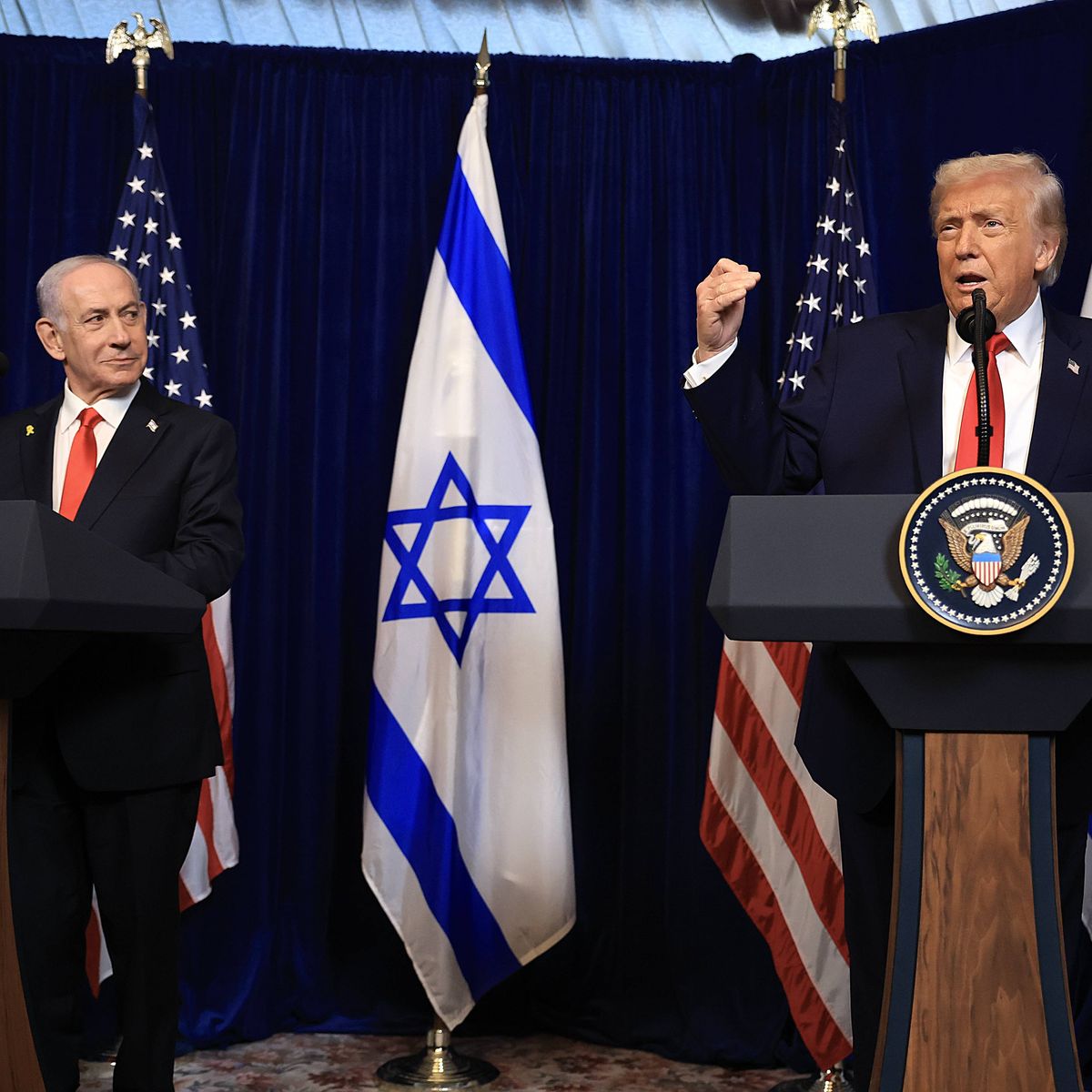
President Donald Trump listens as Israel’s Prime Minister Benjamin Netanyahu speaks during an arrival at his Mar-a-Lago club, Monday, Dec. 29, 2025, in Palm Beach, Florida. [AP Photo/Alex Brandon]

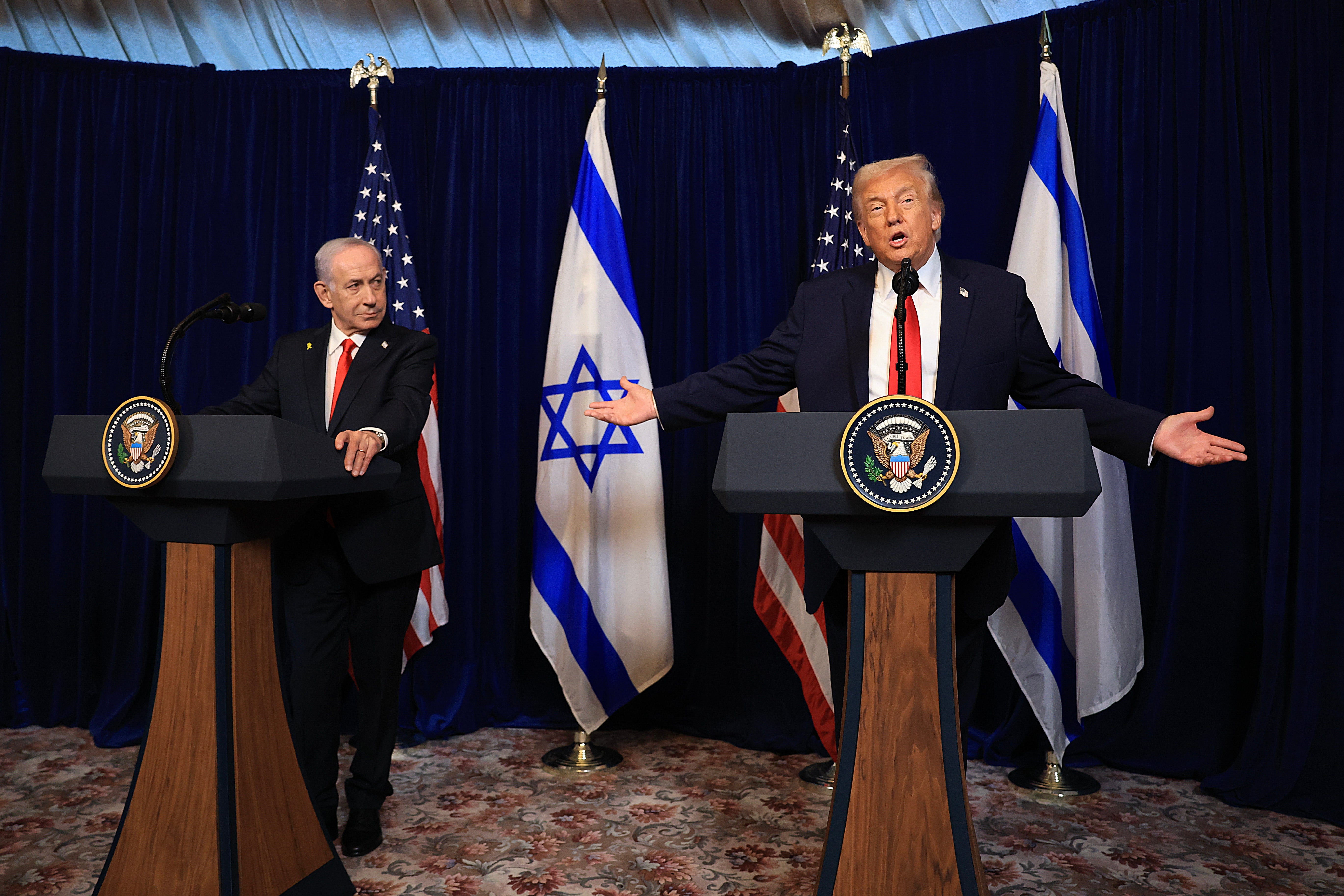
US President Donald Trump held a three-hour war council at the White House Wednesday with Israeli Prime Minister Benjamin Netanyahu to discuss plans for a massive military assault on Iran. America’s would-be dictator has repeatedly vowed that a new war would dwarf last June’s 12-day US-Israeli aerial bombardment of Iran, which killed more than a thousand Iranians, the vast majority of them civilians.

The US has surged vast amounts of military personnel and firepower to the region since the beginning of the year, while Trump and his aides have issued a steady drumbeat of bellicose threats.

Led by the USS Lincoln aircraft carrier, an American armada now surrounds Iran’s shores. Warships bristling with Tomahawk cruise missiles and F-35 and F-18 fighter jets are deployed in the Arabian Sea, at the Strait of Hormuz and further north in the Persian Gulf off Qatar. Tracking data also indicates a massive influx of Globemaster C-17 US military cargo planes arriving at US military bases across the region, bearing no doubt all manner of weapon systems, missiles and other munitions.

On Tuesday, Trump said he may soon dispatch a second “armada,” that is, a second aircraft carrier battle group to the region. According to reports, the US Navy is now poised to start seizing tankers transporting Iranian oil, ratcheting up Washington’s decades-long campaign to strangle the Iranian economy through sweeping sanctions that are themselves tantamount to an act of war.

The US started seizing tankers off Venezuela shortly before last month’s illegal attack on the South American country, the kidnapping of its president and Trump’s announcement that Washington has seized its vast oil reserves.

The pathological liar Trump claims that he is pursuing “negotiations” with Iran in the hopes of avoiding a military clash. What a monstrous fraud! The talks are a mafia-style “shakedown,” with Tehran being given the choice between capitulation and war.

Following Wednesday’s meeting with Netanyahu, Trump said his “preference” would be for a “deal,” then menacingly added, “Last time Iran decided that they were better off not making a Deal, they were hit with Midnight Hammer (the US military’s name for its June 21-22 attack on Iranian nuclear facilities). That did not work well for them.”

Earlier Wednesday, Vice President JD Vance similarly threatened Iran. At the end of a trip to Iran’s northern neighbours, Armenia andAzerbaijan, Vance told reporters that Trump has “a lot of options” to attack Iran “because we have the most powerful military in the world.”

Driven by predatory imperialist aims, this policy is not just aggressive. It is reckless and could rapidly culminate in a catastrophic war.

The massive deployment of US military power to the region has its own political and military logic. With ships carrying thousands of military personnel and billions of dollars in weaponry deployed to the region, pressure to use them will grow. The most aggressive sections of the financial elite and military-security establishment will argue that failure to act carries its own risks, from a potential preemptive Iranian attack to appearing “weak.”

In the event of Iranian counterstrikes from any action, the resort of a rattled Trump administration to the use of tactical nuclear weapons is entirely possible.

Washington is demanding Iran forsake its sovereign right under the Nuclear Non-Proliferation Treaty to a civil nuclear program; cease all support to Hamas, Hezbollah and the other members of its “Axis of Resistance”; and accept sweeping limits on its ballistic missile program. Acceptance of these demands would leave Iran defenceless and powerless in the face of US and Israeli aggression and reduce it effectively to the status of a semi-colony.

Iran is a historically oppressed country whose development has been indelibly misshaped and thwarted over the past century and a half by its encounter with first British and then US imperialism. It must be defended against imperialist aggression irrespective of the anti-working class character of its Shia clergy-led, bourgeois nationalist regime.

With the support of the Democratic Party and the pliant corporate media, Trump has advanced various pretexts to justify the escalating military aggression against Iran. From stopping nuclear proliferation to “defending” the Iranian people from state repression, each is more grotesque than the last.

Ten years ago, under the UN-backed Iran nuclear accord, Tehran agreed to dismantle most of its civil nuclear program and to subject the remainder to the most intrusive regime of International Atomic Energy Agency (IAEA) surveillance ever devised. Yet in 2018, Trump torpedoed the accord and unilaterally imposed a punishing regime of sanctions, enforced through Washington and Wall Street’s control of the world financial system, with the express aim of crashing Iran’s economy and triggering regime change.

The US ruling class and its political representatives, Democratic and Republican alike, have no more interest in the democratic rights of the workers and rural toilers of Iran than they do those of the Palestinians, or those who live under the Gulf state absolutist monarchies and the blood-soaked dictatorship of Egypt’s General el-Sisi.

Washington has never reconciled itself to its “loss of Iran” as the result of the 1979 anti-imperialist upsurge that toppled the tyrannical regime of the US-installed Shah. For decades it has relentlessly pursued regime-change through sanctions, threats, sabotage and military aggression.

The impending attack on Iran arises directly out of the bipartisan project—initiated under Biden and continued seamlessly under the second Trump administration—to violently fashion a “New Middle East,” using Israel as American imperialism’s attack dog. Since October 2023, Washington and Israel have gone on a rampage across the region, using aggression, war and, in Gaza, outright genocide to establish a Greater Israel within a Middle East under unbridled US domination.

By seizing control of the Middle East, which in addition to being the world’s most important oil-exporting region lies at the juncture of three continents containing more than 90 percent of the world’s population, American imperialism hopes to gain a stranglehold over all its great power rivals, beginning with China.

Terrified of the working class, Iran’s beleaguered bourgeois regime is incapable of making any progressive appeal to the masses of the region, let alone the workers of the world, for a joint struggle against imperialism. When Trump boasts that Tehran is desperate for a deal, he no doubt for once speaks the truth. On Wednesday, Iranian President Masoud Pezeshkian stated that the country would open up its nuclear sites for “any verification,” in an apparent attempt to reach some sort of accommodation. Available from Mehring BooksThe struggle against imperialism and for workers’ power in IranA pamphlet by Keith Jones

But the Islamic Republic’s repeated attempts to negotiate a rapprochement with Washington stretching back to the early 1990s have been rebuffed time and again.

American imperialism, meanwhile, has suffered a massive erosion of its global economic power making it only the more desperate and predatory. The gangster Trump is the personification of its harebrained ambition to rule the world.

Based on its publicly stated positions, Tehran views acceptance of Trump’s demands as regime suicide. In the event of an attack, it has vowed to strike back at US bases across the region and at Israel. On Wednesday, the 47th anniversary of the Shah’s overthrow, millions, including many who no doubt have profound grievances with the current regime, took to the streets across Iran to voice their opposition to US imperialist aggression.

The course of events in the next days and weeks remains uncertain. But Trump and US imperialism could at any time set the Middle East ablaze, recklessly initiating a regime-change war against a country of 93 million people that could rapidly engulf the entire region and draw in other great powers.

The Trump administration, moreover, is beset by crisis. It confronts mass opposition to its ICE-led terror campaign against immigrants and, more broadly, its drive to establish a presidential dictatorship, and a growing strike movement involving teachers, health sector and other industrial workers. The Epstein scandal has implicated the entire political and financial elite—and Trump, members of his cabinet and key billionaire supporters directly—in a network of venality and criminality, where obscene wealth provides impunity.

Trump could well see a foreign war against an enemy long vilified by the American media as a means of extricating himself and his administration from its myriad crises. Undoubtedly, he would seize on a war with Iran to intensify his operation dictatorship, including by labeling antiwar protesters treasonous.

War is a well-trodden path for governments and ruling classes facing intractable problems and mounting social opposition. That was the gamble many of Europe’s leaders took in 1914, most famously Nicholas II, the Russian Czar toppled in the first stage of the revolution that brought the working class to power under the Bolsheviks in October 1917.       

A jackal is never more vicious and dangerous than when it is wounded. American imperialism and the global capitalist system that it has politically and economically backstopped for most of the past century are visibly rotting on their feet. The same objective processes that are impelling imperialism, led by the United States, to aggression and world war, are fueling a global upsurge of the working class that can and must be infused with a socialist perspective.    

Workers in the United States and around the world must come to the defence of the Iranian people, demand the immediate withdrawal of all US military forces from the Middle East and the rescinding of all sanctions on Iran as part of the development of a global movement against war.

The fight against war is a fight against capitalism. It must be based on the revolutionary mobilization of the international working class. Opposition to rearmament and war must be linked to the struggle to defend workers’ living standards and social and democratic rights, oppose oligarchy and dictatorship and for social equality.     

Iran’s security chief sends urgent warning to leaders of Qatar, Saudi Arabia and Turkey after Benjamin Netanyahu met with Donald Trump

February 12, 2026

The Independent, Maryam Zakir-Hussain Thursday 12 February 2026 13:07 GMT

  • Copy link
  • Bookmark
  • CommentsGo to comments

Vance says ‘another option on the table’ if no nuclear deal reached with Iran
On The Ground

On The Ground newsletter: Get a weekly dispatch from our international correspondents

Email

*

Iran has accused Israel of sabotaging negotiations with the United States over Tehran’s nuclear programme.

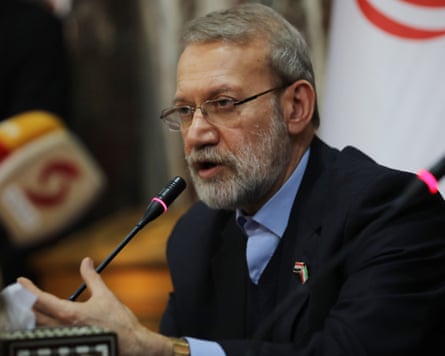
Iran’s security chief Ali Larijani claimed Israel is attempting to “destabilise the region” after prime minister Benjamin Netanyahu met with Donald Trump on Wednesday.

The Israeli leader has reportedly been urging the US president impose the strictest-possible terms in any agreement reached with Tehran in nuclear talks.

Commenting on the nuclear discussions with the US, Larijani told Al Jazeera: “Our negotiations are exclusively with the United States – we are not engaged in any talks with Israel.

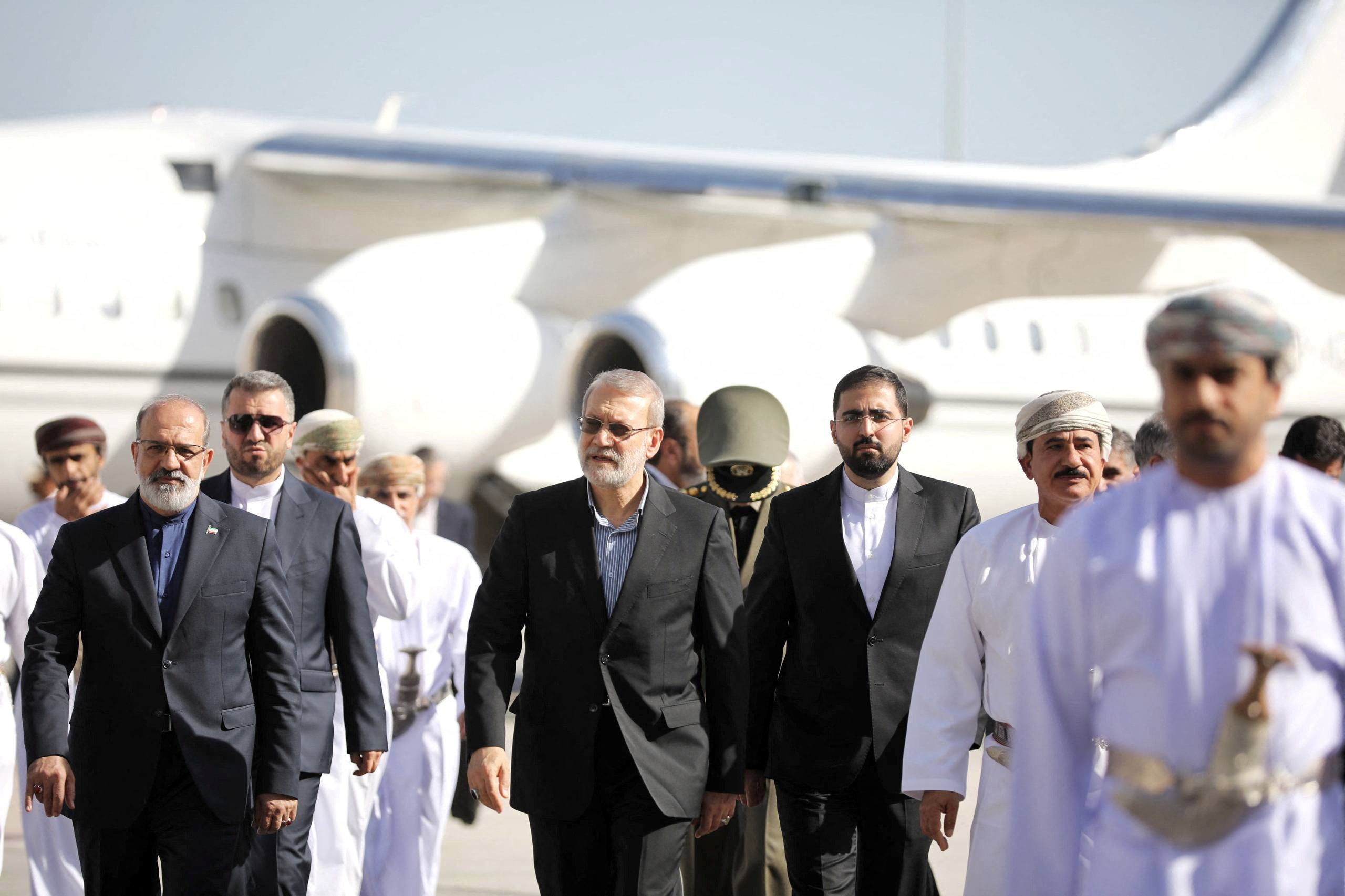
Iran’s security chief Ali Larijani (C) has accused Israel of sabotaging negotiations with the United States over Tehran’s nuclear programme.
Iran’s security chief Ali Larijani (C) has accused Israel of sabotaging negotiations with the United States over Tehran’s nuclear programme. (WANA)

“However, Israel has inserted itself into this process, with their intent on undermining and sabotaging these negotiations.”

He added that he believes Israel’s agenda “extends beyond its alleged concerns about Iran”, and claimed it wanted to “destabilise the region”

“They are gambling not only with Iran, but also Qatar, Saudi Arabia and Turkey,” he added, warning regional leaders to “be aware of this.”

Israel has yet to respond to the security chief’s remarks.

Following the meeting in Washington, Trump said no ‘definitive’ agreement was reached on how to move forward with Iran, but he insisted negotiations with Tehran would continue to see if a deal can be achieved.

Donald Trump met with Benjamin Netanyahu at the White House this week (file photo)
Donald Trump met with Benjamin Netanyahu at the White House this week (file photo) (Getty Images)

Netanyahu, who had been expected to press Trump to widen diplomacy with Iran beyond its nuclear program to include limits on its missile arsenal, stressed that Israel’s security interests must be taken into account but offered no sign that the president made the commitments he sought.

”The Prime Minister emphasized the security needs of the State of Israel in the context of the negotiations, and the two agreed to continue their close coordination and tight contact,” Netanyahu’s office said in a statement after Wednesday’s talks.

Trump has threatened strikes on Iran if no agreement is reached, while Tehran has vowed to retaliate, stoking fears of a wider war as the US amasses forces in the Middle East.

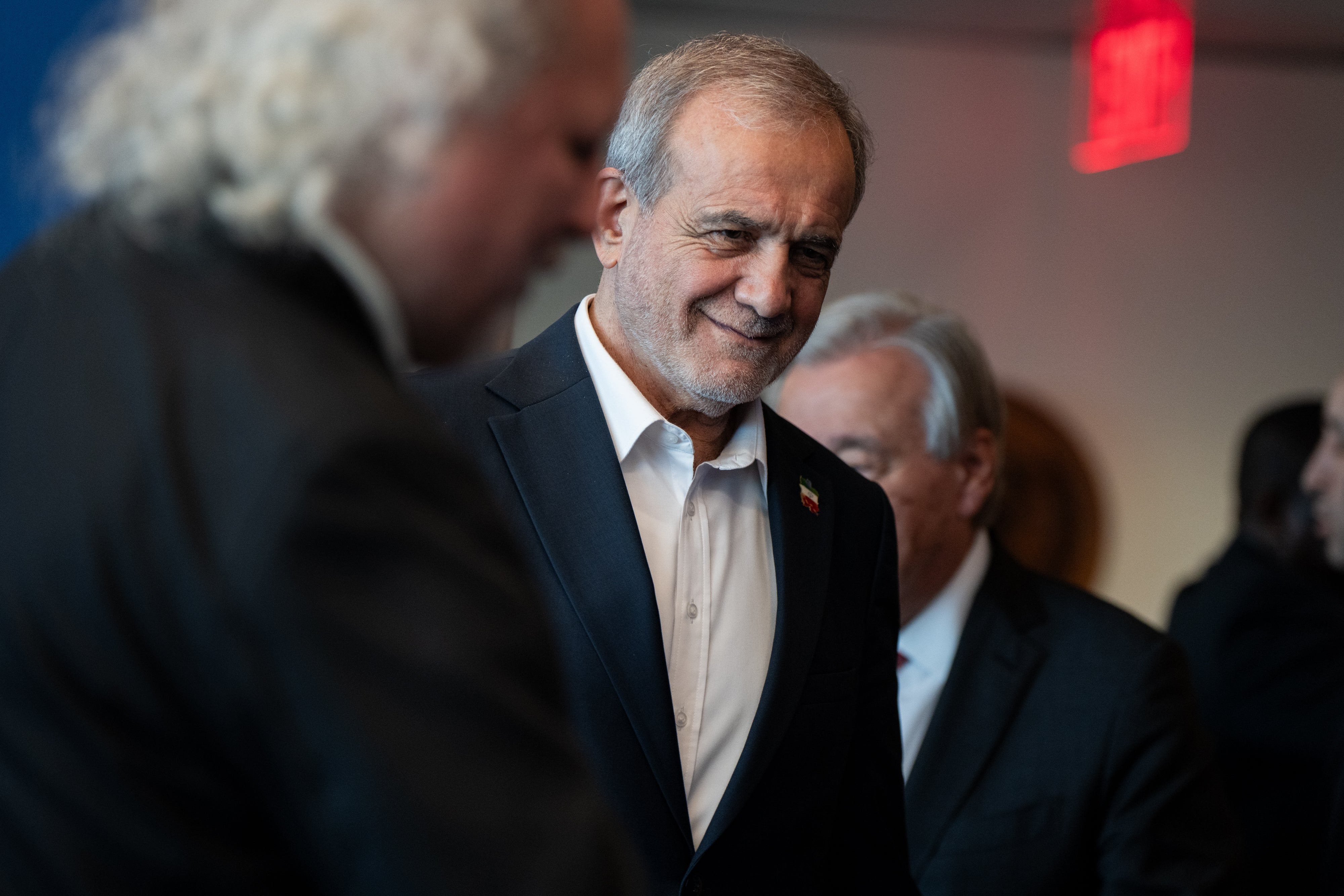
On Wednesday, Iran’s president Masoud Pezeshkian insisted that his nation was “not seeking nuclear weapons … and are ready for any kind of verification”.

Iran’s president Masoud Pezeshkian has insisted that his nation was "’not seeking nuclear weapon’
Iran’s president Masoud Pezeshkian has insisted that his nation was “’not seeking nuclear weapon’ (Copyright 2025 The Associated Press. All rights reserved.)

In a speech marking the 47th anniversary of the Islamic Republic, Pezeshkian said: “The high wall of mistrust that the United States and Europe have created through their past statements and actions does not allow these talks to reach a conclusion.

”At the same time, we are engaging with full determination in dialogue aimed at peace and stability in the region alongside our neighbouring countries.”

Turkish foreign minister Hakan Fidan – who has been involved in the talks between the US and Iran – also said both sides are showing flexibility.

He told the Financial Times: “It is positive that the Americans appear willing to tolerate Iranian enrichment within clearly set boundaries.

“The Iranians now recognise that they need to reach a deal with the Americans, and the Americans understand that the Iranians have certain limits. It’s pointless to try to force them.”

Iran tells US not to let Netanyahu thwart nuclear talks before Trump meeting

February 11, 2026

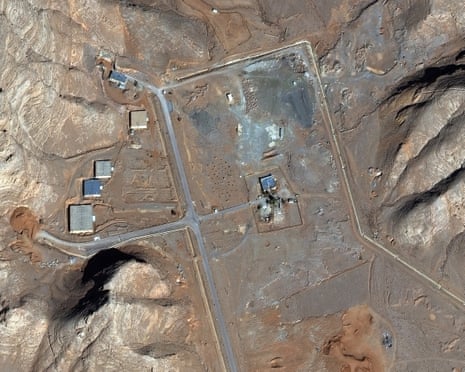
Satellite image courtesy shows Iran's Isfahan nuclear facility site.

Iran nuclear programme

Tehran’s intervention comes as the Israeli prime minister heads to a hastily arranged White House encounter

The Guardian, Patrick Wintour Diplomatic editor 10 Feb 2026 20.34 CET

Tehran has told the US not to allow Israel to destroy the chance of reaching an agreement over Iran’s nuclear programme amid speculation that Benjamin Netanyahu intends to use a hastily arranged White House meeting with Donald Trump on Wednesday to divert negotiations.

Iran’s intervention came as the Israeli prime minister flew to Washington to plead with Trump not to negotiate a deal with Tehran if it excludes limiting the country’s ballistic missile programme, dropping its support for proxy forces in the region and curtailing human rights abuses at home.

Netanyahu is deeply concerned that Trump’s son-in-law Jared Kushner and his special envoy, Steve Witkoff, are prepared to strike a deal confined to limiting the scope of Iran’s nuclear programme, which in Israel’s view would do nothing to rein in the long-term threat Tehran poses to the region.

Iran’s security chief, Ali Larijani, said Washington ‘must remain vigilant regarding Israel’s destructive role’.
Iran’s security chief, Ali Larijani, said Washington ‘must remain vigilant regarding Israel’s destructive role’. Photograph: Louai Beshara/AFP/Getty Images

Speaking before leaving for Washington, Netanyahu said he would “present to the president our approach around our principles on the negotiations”. He is expected to provide Trump with fresh intelligence about Iran’s military capabilities, including new long-range ballistic missiles.

Netanyahu faces a delicate task in setting out his stall because he risks being seen as challenging two of Trump’s most respected aides by mapping out a set of demands that could force the US into prolonged conflict with Iran.

He also risks angering Trump by opening up divisions in the Republican party, especially if he reminds the US president that he made repeated unfulfilled promises to come to the help of Iranian protesters.

Netanyahu’s turbulent relationship with Trump was already entering another rough patch as he continues to stall on his Gaza peace plan by barring a Palestinian technocratic body from entering the strip, and seeking in effect to annex the West Bank.

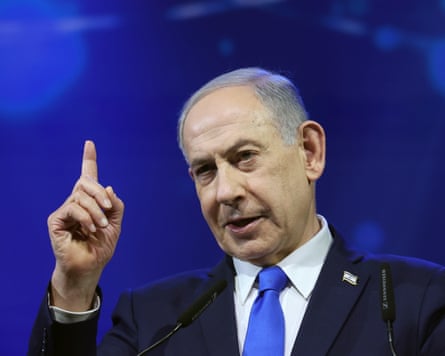
Benjamin Netanyahu
Benjamin Netanyahu. Photograph: Abir Sultan/EPA

In a sign that he knows he is treading on thin ice, Netanyahu agreed to take the US ambassador to Israel, Mike Huckabee, with him. Before heading to Washington, Huckabee said there was “an extraordinary alignment between US and Israel on Iran”, and that as far as he knew the two sides shared the same red lines.

Iran expressed its anger at Israel’s intervention. Ali Larijani, the the head of the Supreme National Security Council, the body overseeing Tehran’s negotiating strategy, said: “The Americans should think wisely and not allow him, with his posturing, to create the impression before his flight that he is going to the United States to set the framework of nuclear negotiations. They must remain vigilant regarding Israel’s destructive role.”

Larijani met the mediators between Washington and Tehran in Muscat to discuss the agenda for further talks.

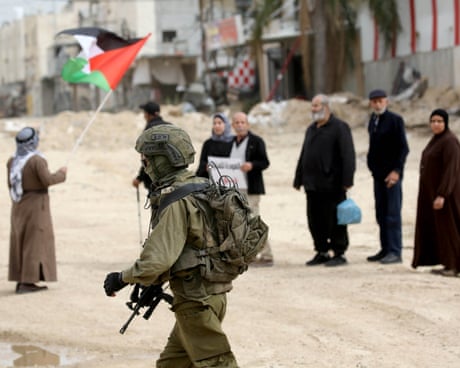
An Israeli soldier walks past displaced Palestinians protesting to demand the right to return to their homes, in the Nur Shams refugee camp in Tulkarm, West Bank.

Iran’s foreign ministry spokesperson, Esmail Baghaei, said in his weekly press briefing: “Our negotiating party is America. It is up to America to decide to act independently of the pressures and destructive influences that are detrimental to the region.”

Israel’s alarm about a potential deal that undercuts its ambitions for regime change in Tehran has grown ever since the US agreed to reopen indirect talks with Iran, which started in Oman on Friday.

The Iranian government also still faces political challenges at home, with more reformist groups and academics issuing statements protesting against the suppression of dissent and, in particular, the arrest of leaders of the Reformist Front.

The front issued a further statement expressing its shock, and warning that the regime’s exclusionary approach and baseless accusations would worsen the political deadlock and “strengthen the violent and war-mongering factions supporting Israel”. It called on Iran’s president, Masoud Pezeshkian, to intervene urgently to secure the release of its leadership.

Even if the planned second round of talks are confined to Iran’s nuclear programme, as Tehran wants, there is no guarantee of success because it insists on maintaining its right to enrich uranium as fuel for nuclear power plants, something the US permitted under the 2015 deal but Trump has appeared to rule out.

Trump has sent the aircraft carrier Abraham Lincoln and three accompanying warships to the region, which are capable of hitting a huge range of Iranian military and economic sties. The US has also buttressed the air defences of US bases across the region.

The head of Iran’s atomic energy authority has said Tehran may be prepared to dilute its stock of highly enriched uranium to 60% purity, a limited concession given the 2015 deal limited it to enriching to 3.75% purity.

𝐒𝐞𝐧𝐢𝐨𝐫 𝐈𝐬𝐫𝐚𝐞𝐥𝐢 𝐎𝐟𝐟𝐢𝐜𝐢𝐚𝐥𝐬 𝐆𝐢𝐯𝐞 𝐓𝐫𝐮𝐦𝐩 𝐀𝐝𝐦𝐢𝐧 𝐈𝐧𝐭𝐞𝐥𝐥𝐢𝐠𝐞𝐧𝐜𝐞 𝐨𝐧 𝐓𝐚𝐫𝐠𝐞𝐭𝐬 𝐢𝐧 𝐈𝐫𝐚𝐧

January 30, 2026

A Saudi delegation will also visit the US in an effort to de-escalate tension in the Middle East

by Kyle Anzalone | January 29, 2026 at 2:52 pm ET

Senior Israeli defense officials met with top US officials to discuss a future conflict with Iran.
According to Axios, “The Israelis came to DC to share intelligence on possible targets inside Iran.” Israeli military intelligence chief Gen. Shlomi Binder led the Israeli delegation and met with US officials at the Pentagon for two days earlier this week.
US officials told the outlet that President Donald Trump is still considering an attack on Iran. One official with knowledge of the meetings said Bidner had brought intelligence that was requested by the President.
Late last year, Prime Minister Benjamin Netanyahu pressed Trump to help Israel take out the government of Iran. The President is reported to be considering a range of options to cause regime change in Iran, including high-level strikes and an oil blockage.
Trump has ordered a massive military buildup in the Middle East, including fighter jets, an aircraft carrier strike group, and advanced air defense systems. On Wednesday, Trump renewed the threat to attack Iran if Tehran does not agree to a nuclear deal with the US.
Iranian officials have stated they are willing to negotiate with the US if Trump stops threatening Iran. Additionally, Tehran has ruled out agreeing to eliminate its uranium enrichment program.
While Israel is pushing for Trump to start a war with Iran, other countries in the Middle East are trying to broker a deal. Turkey has offered to host talks with Iran. Saudi Defense Minister Prince Khalid bin Salman will meet with US officials in the Pentagon on Thursday. Axios notes that Ryiahd has been acting as a backchannel between Washington and Tehran.
Iran has threatened to retaliate against any attack by striking US bases across the Middle East.

Trump to Iran: Agree to Nuclear Deal Or the US Will Attack

January 28, 2026

The President said there is now a large “armada” in the Middle East

by Kyle Anzalone | January 28, 2026 at 1:43 pm ET

President Donald Trump renewed his threats to attack Iran if the Islamic Republic does not comply with his demands. The President claimed that Iran must agree to a new nuclear deal or would be attacked by the “armada” Trump has assembled in the Middle East. 

“A massive Armada is heading to Iran. It is a larger fleet, headed by the great Aircraft Carrier Abraham Lincoln, than that sent to Venezuela. Like with Venezuela, it is ready, willing, and able to rapidly fulfill its mission, with speed and violence, if necessary,” the President wrote on Truth Social Wednesday.  

“Hopefully Iran will quickly ‘Come to the Table’ and negotiate a fair and equitable deal – NO NUCLEAR WEAPONS – one that is good for all parties. Time is running out, it is truly of the essence!” He continued, “As I told Iran once before, MAKE A DEAL! They didn’t, and there was ‘Operation Midnight Hammer,’ a major destruction of Iran. The next attack will be far worse! Don’t make that happen again.”

After returning to the White House, Trump tightened sanctions on Iran and threatened to attack the Islamic Republic if it did not agree to a deal that would limit or eliminate its civilian nuclear program. 

Tehran has stated that it is willing to agree to limitations and strict inspections of its nuclear program, but it will continue to enrich uranium. The President has asserted that Iran must completely eliminate its enrichment program. 

Prior to the unprovoked Israeli attack on Iran in June that ignited a 12-day conflict, Washington and Tehran were in the process of establishing a new nuclear agreement. When Trump ordered US forces to aid Israel and attack Iran, those negotiations failed. Iran has offered to return to the table if Trump stops threatening the Islamic Republic. 

Late last year, Trump renewed his threats on Iran, this time asserting that the US would attack the Islamic Republic if the government’s crackdown led to the deaths of protesters. While thousands died during the demonstration in Iran, Trump decided not to launch an attack. 

Trump declined to give the order to attack Iran out of concern that the planned strikes would fail to topple the government, and US troops in the Middle East and Israel would be vulnerable to counterattacks. 

Trump has ordered an aircraft carrier strike group, fighter jets, and advanced air defense systems to the Middle East. The larger American military presence in the region will give the President additional options for attacking Iran and defeating counterattacks. 

Trump is reportedly considering a range of options for bringing about regime change in Iran, including an oil blockade and strikes on high-level targets in Tehran. 

𝐒𝐜𝐨𝐨𝐩: 𝐌𝐨𝐬𝐬𝐚𝐝 𝐝𝐢𝐫𝐞𝐜𝐭𝐨𝐫 𝐯𝐢𝐬𝐢𝐭𝐬 𝐔.𝐒. 𝐟𝐨𝐫 𝐈𝐫𝐚𝐧 𝐜𝐨𝐧𝐬𝐮𝐥𝐭𝐚𝐭𝐢𝐨𝐧𝐬

January 16, 2026

Barak Ravid, Axios, January 16, 2026

The director of Israel’s Mossad spy agency, David Barnea, arrived in the U.S. on Friday morning for talks on the situation in Iran, according to an Israeli source and another source with knowledge of the meeting.

Why it matters: Barnea’s visit is part of the consultations between the U.S. and Israel over the protests in Iran and possible U.S. military action in response to the regime’s crackdown.

Barnea is expected to meet in Miami with White House envoy Steve Witkoff, who is managing the direct channel of communication between the U.S. and Iran.
Witkoff has been in touch with Iran’s foreign minister, Abbas Araghchi, during the protests.
It’s not yet clear whether Barnea will meet President Trump in Mar-a-Lago over the weekend.

Driving the news: Barnea’s trip follows a phone call on Wednesday between Trump and Israeli Prime Minister Benjamin Netanyahu about the Iran crisis.

During the call, Netanyahu asked Trump to hold off on military action against Iran to give Israel more time to prepare for potential Iranian retaliation.
An Israeli source said that in addition to concerns about retaliation, the current U.S. plan includes strikes on security force targets in Iran, but is not seen by Israel as strong enough to meaningfully destabilize the regime.
U.S. officials say military action is still on the table if Iran resumes the killing of protesters. Israeli officials think that despite the delay, a U.S. military strike could take place in the coming days.

What to watch: The U.S. military is sending additional defensive and offensive capabilities to the region to be ready in case Trump orders a strike, U.S. sources say.

The Abraham Lincoln aircraft carrier and its strike group are making their way to the Middle East from the South China Sea.
More air defense systems, fighter jets and possibly submarines are also expected to arrive in the region.

The intrigue: When he reached out to Witkoff, Araghchi proposed a meeting and the resumption of nuclear negotiations.

The Israeli government is concerned the Iranians will use such negotiations to buy time and relief from the U.S. pressure.
On the other hand, some officials think the current crisis could convince the Iranian regime to make concessions it refused to consider in the past, on the nuclear program, missile program, and proxy groups.

At a conference of the Israeli-American Council in Miami on Thursday night, Witkoff said he communicated with the Iranians the day before about the potential mass hangings.

“That has been shut down,” Witkoff said.

Witkoff said he hopes it will be possible to get a diplomatic solution with Iran and noted that any deal will have to address uranium enrichment and Iran’s stockpile of enriched uranium, Iran’s inventory of ballistic missiles, and its network of proxies in the region.
Witkoff said Iran’s economy was badly “stumbling” and if Tehran wants to change that and return to the community of nations, it can be accomplished through diplomacy. “The alternative will be a bad one.”

Only the Iranian People Should Determine Their Nation’s Future

January 15, 2026
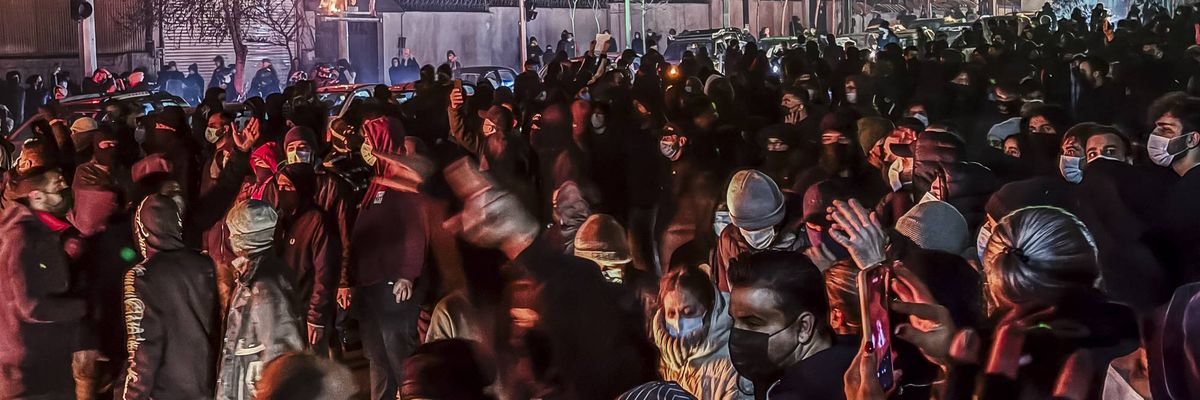
Protests in Iran January 2026

Iranians gather while blocking a street during a protest in Tehran, Iran on January 9, 2026.

(Photo by MAHSA / Middle East Images / AFP via Getty Images)

It’s virtually impossible to predict what lies ahead for Iran and its people. But if President Donald Trump decides to take military action against Iran’s current regime, nothing good will come out of it.

C.J. Polychroniou

Jan 14, 2026 Common Dreams

Iran’s Islamic regime is under incredible pressure as the protests that begun in late December over the collapse of the currency have morphed into a mass popular uprising that has spread across the entire country and shows no sign of slowing despite a brutal crackdown that has resulted so far in the killing of thousands of protesters.

Make no mistake about it. Iran’s current leadership is murdering its own citizens in order to remain in power and thus block the growing support for secularism, freedom, and democracy. It’s as simple as that. This is a regime that has been facing unprecedented hostility by the United States and some of its closest allies since coming to power in 1979 but has been far more interested in exporting the Islamic revolution than looking after the well-being of its own citizens. It is a reactionary regime that has suppressed the fundamental rights of women, banned independent trade unions, and engaged in a systematic crackdown of communists and other leftists, all the while catering to powerful national capitalist interests.

RECOMMENDED…

Trump speaks about Iran attacks

Trump Again Threatens to Bomb Iran as Protest Deaths Near 600

President Trump Meets With Israeli PM Netanyahu At His Palm Beach Estate

Trump Says US ‘Locked and Loaded’ in Latest Threat of War With Iran

Iranians have a long history of rebellion against authoritarianism and repression. Under the Shah, Iran had one of the world’s most brutal and repressive regimes, strongly supported by the United States. Indeed, while the Shah sought to modernize the country and even gave women the right to vote, and the Family Protection Law of 1968 granted women certain rights in divorce and custody, he and his generals ran the country with an iron first. Tens of thousands of Iranians were killed during the Shah’s reign, and Iran’s dreaded secret police, SAVAK, employed torture and execution to stifle political opposition.

Yet, Ayatollah Khomeini’s 1979 revolution, aided by Marxists, intellectuals, various secular groups, and the middle class, did not represent a transition from monarchy to democracy. Instead, it replaced a brutal, pro-Western monarchy with a theocratic regime that rolled back much of the social progress that had occurred up to that point. Repression came back, this time with an Islamic face, though the regime enjoyed at first considerable support among merchants, students, clerics, and the poor. Khomeini’s regime massacred and exiled all communists and embarked on a campaign of purification of policies. Women’s rights were drastically curtailed, and this included the removal of professional women from the public sector as well as the adoption of various means and methods aimed at discouraging women in general from entering the labor force.

The US is an imperialist power with a long history of undermining democracy throughout the world. The Iranian people will not accept US interference into their own political affairs.

Iranian women took to the streets by the thousands just a few weeks after the revolution to oppose Khomeini’s decree mandating the hijab. This decree was followed by a ban on alcohol, the separation of men and women in schools and beaches, and the criminalization of music. Iran was converted in no time from a Westernized society with a brutal political regime to an Islamic state sustained by an equally brutal political regime. Under the new social order, religion and state mixed as thoroughly as they did in Saudi Arabia. The only difference is that the two countries followed different branches of Islam–Iran’s political system is based on Shiism, while Saudi Arabia’s rests on Wahhabism.

More recently, in 2022, the death of the 22-year-old Kurdish-Iranian woman Jina Mahsa Amini while under morality police custody sparked the nationwide “Woman, Life, Freedom” protests, which people from all walks of life joined to call for an end to the four-decade rule of Iran by the religious fanatics. The Iranian authorities responded by detaining thousands of people while killing more than 560 protesters. It was reported that the average age of those arrested was 15.

The key reasons behind the current anti-government protests are economic hardships and political grievances. Iran’s economy has been under severe strains for a long time due to the international sanctions but also because of mismanagement, corruption, and a host of deep structural problems (chronic inflation, widespread poverty, and high youth unemployment, among others) which the regime has failed to address.

Protests broke out on December 28 after the Iranian currency, the rial, crumbled against the US dollar, leading to soaring food prices and to an even higher inflation rate, which had already risen to nearly 50%. It all started with demonstrations by shopkeepers in Tehran’s Grand Bazaar, but they quickly spread to numerous cities across the country, reflecting deep and widespread discontent among the general citizenry with the current regime. This means that the protests, which have been very large in size and joined by people from across Iranian society, are not simply driven by economic worries. They are political protests against a corrupt and oppressive regime.

According to some sources, more than 2,500 people have been killed by the Iranian authorities since the protests begun, but there are unverified reports, suggesting that the number of protesters killed could be at least 12,000 and possibly as high as 20,000. Leading Iranian officials have labeled protesters as “enemies of God,” a charge that is punishable by death under the laws of the Islamic Republic of Iran. They also insist that the protests are foreign driven.

Israel and the United States would like nothing more than to see regime change in Tehran and turn Iran into a US-Israeli vassal state. But the claim that the Iranian people are protesting against a dictatorship by being a pawn in the hands of foreign powers deserves nothing but scorn. Nonetheless, it speaks volumes of how alienated the regime’s rulers must feel from the nation’s citizenry. I suspect that deep down they are cognizant of the fact that their regime lacks political legitimacy in the eyes of the vast majority of the Iranian people.

The people of Iran have not forgotten the involvement of the CIA in the 1953 coup that ousted the democratically elected Prime Minister Muhammad Mossadegh. Their desire to get rid of Iran’s current regime is not an invitation for foreign interference. Indeed, who is to say that perhaps none of the courageous protesters would be paying with their lives for Iran to be free from an oppressive theocracy if the 1953 coup hadn’t happened?

It’s virtually impossible to predict what lies ahead for Iran and its people. But if President Donald Trump decides to take military action against Iran’s current regime, nothing good will come out of it. The US is an imperialist power with a long history of undermining democracy throughout the world. The Iranian people will not accept US interference into their own political affairs. In fact, such action may cause many Iranians to unite, at least temporarily, behind the regime. In sum, only the Iranian people themselves should be able decide their nation’s future.

An Urgent Message From Our Co-Founder


Dear Common Dreams reader,

The U.S. is on a fast track to authoritarianism like nothing I’ve ever seen. Meanwhile, corporate news outlets are utterly capitulating to Trump, twisting their coverage to avoid drawing his ire while lining up to stuff cash in his pockets.

That’s why I believe that Common Dreams is doing the best and most consequential reporting that we’ve ever done.

Our small but mighty team is a progressive reporting powerhouse, covering the news every day that the corporate media never will. Our mission has always been simple: To inform. To inspire. And to ignite change for the common good.

Now here’s the key piece that I want all our readers to understand: None of this would be possible without your financial support.

That’s not just some fundraising cliche. It’s the absolute and literal truth. We don’t accept corporate advertising and never will. We don’t have a paywall because we don’t think people should be blocked from critical news based on their ability to pay. Everything we do is funded by the donations of readers like you.

Will you donate now to help power the nonprofit, independent reporting of Common Dreams?

Thank you for being a vital member of our community. Together, we can keep independent journalism alive when it’s needed most.

– Craig Brown, Co-founder
about:blank

about:blank

Our work is licensed under Creative Commons (CC BY-NC-ND 3.0). Feel free to republish and share widely.

C.J. Polychroniou

C.J. Polychroniou is a political economist/political scientist who has taught and worked in numerous universities and research centers in Europe and the United States. His latest books are The Precipice: Neoliberalism, the Pandemic and the Urgent Need for Social Change (A collection of interviews with Noam Chomsky; Haymarket Books, 2021), and Economics and the Left: Interviews with Progressive Economists (Verso, 2021).

Full Bio >

After Venezuela, Trump targets Iran—the imperialist rampage escalates

January 14, 2026

 Keith Jone, WSWS, 14 Jan 2026

A B-2 stealth bomber conducts a flyover on the South Lawn of the White House, Saturday, July 4, 2020, in Washington. [AP Photo/Alex Brandon]

The Trump administration is preparing an imminent military attack on Iran, in the next stage of a regime-change operation aimed at returning the Middle Eastern country of 93 million people to neocolonial subjugation and placing its vast oil reserves under US imperialist control and domination.

For days, Trump, America’s fascist would-be dictator president, and his henchmen have been threatening to strike Iran with bombs and missiles under the cynical pretext of “defending” anti-government protestors.

On Tuesday morning, in a social media post framed as a message to the Iranian protesters, Trump declared, “TAKE OVER YOUR INSTITUTIONS… Help is on its way.” This was just hours before he was to confer with top Pentagon generals and his national security staff on “options” for attacking Iran.

Open-source intelligence and flight-tracking data reveal that since December there has been a surge of US war materials to the Persian Gulf region, a necessary prerequisite for waging war on Iran.

Trump’s attempt to depict himself as the “liberator” of the Iranian people is a monstrous fraud, based on the Hitlerian concept of the “Big Lie.”

US imperialism never reconciled itself to the mass uprising that overthrew the tyrannical regime of the Shah in 1979. It has mounted a decades-long campaign of threats, military aggression and economic warfare against Iran and its people. In 2018, Trump torpedoed the UN-backed Iran nuclear accord and unilaterally imposed crippling sanctions—subsequently reinforced under the Democrat Biden—with the avowed aim of crashing Iran’s economy and bringing about regime change.

Washington’s desired outcome has always been driving the Iranian people into deprivation and misery. The sanction-enforced cut-off of access to drugs and advanced medical devices has alone caused tens, if not hundreds, of thousands of premature deaths.

As always, the US corporate media are all reading from the same script dictated from the White House. They question nothing, investigate nothing.

Less than two weeks ago, Washington illegally attacked Venezuela, killing more than 80 people, kidnapped its president and seized what are the world’s largest oil resources. In the weeks preceding, the media repeated the administration’s transparent lies that President Nicolás Maduro headed a narco-terrorist regime, just as they breathlessly repeated the claims of George W. Bush and Dick Cheney regarding Saddam Hussein’s “weapons of mass destruction” in the run up to American imperialism’s 2003 invasion of Iraq.  

Now Trump, his Democratic Party enablers and the media would have us believe that Iran is in the grip of a “popular uprising” that is being “brutally” crushed by the Iranian authorities. This is the new manufactured casus belli. It replaces that used to justify last June’s 12-day US-Israeli war on Iran that killed more than 1,000 people and which Trump and Israeli Prime Minister Benjamin Netanyahu invoked when they held a war conclave at Mar-a-Lago on December 29—the threat supposedly posed by Iran’s civilian nuclear program.

No doubt there is widespread anger and dissatisfaction with Iran’s clerical-led bourgeois nationalist regime, which represses any form of working-class political self-expression and has systematically dismantled the social concessions made to the working people in the immediate aftermath of the 1979 revolution that overthrew the tyrannical monarchical-dictatorship of the Shah.

But the protests now unfolding in the streets of Iran are not a movement of and for the working class. This is attested by their social composition, absence of any demands to address the pressing socio-economic problems facing Iran’s workers and rural toilers, and the lack of any organized working-class intervention in the form of mass strikes.

The protests were initiated by the bazaari—that is a section of the bourgeoisie and petty bourgeoisie comprised of money-lenders, merchants and shopkeepers—and have taken on an ever more explicit right-wing, pro-imperialist character akin to the “color revolutions” instigated by American imperialism and it agents in Ukraine, Georgia and elsewhere.

The operatives of the CIA and other imperialist intelligence agencies are manifestly present and playing a major role in inciting violence, alongside such foreign-based imperialist operatives as the Shah’s son, the Crown Prince Reza Pahlavi, who late last week urged protesters to press for the government’s overthrow by “seizing and holding city centers.” On Thursday, Israel’s far-right Heritage Minister Amichai Eliyahu boasted that Israeli agents are operating on the ground in Iran.

As in 1953, when the CIA and Britain’s MI5 organized the coup that overthrew Iran’s elected president, the nationalist Mossadegh, imperialism works through sections of the Iranian bourgeoisie and petty bourgeoisie, including no doubt disaffected sections of the Islamic Republic’s establishment, eager to secure their wealth and privileges by functioning as direct imperialist agents.

These elements are viciously hostile to the plight of the oppressed masses as exemplified in the prominent protest slogan, “My heart beats only for Iran—not for Gaza, not for Lebanon!,” the protesters’ targeting of Afghan refugees and increasing embrace of the Pahlavi dynasty.

Due to the misrule of the Islamic Republic and the political confusion spread by the pseudo-left in and outside Iran, who call for unity with far-right forces in the name of “democracy,” tragically some workers and students have no doubt been caught up in the ongoing protests and state repression. But as the World Socialist Web Site previously explained, “any progressive tendency in Iran would have to immediately repudiate Trump’s ‘support’, denounce the threat of imminent US military action and call for the immediate lifting of the punitive sanctions that are strangling Iran’s economy.”Available from Mehring BooksThe struggle against imperialism and for workers’ power in IranA pamphlet by Keith Jones

From all indications, as the pro-imperialist character of the protests has become clearer, they have become restricted to more privileged sections of Iranian society. Within the working class the memory of the Shah’s regime, its subservience to US imperialism, monopolization of the country’s wealth and the brutal repression upon which it rested, endures.    

Those now expressing their “horror” and “revulsion” at the “brutality” of the Iranian regime have not been moved by the ongoing slaughter of tens of thousands of Palestinian men, women, and children in Gaza—to say nothing of the Nazi-style starvation of the entire enclave’s population—perpetrated by Israel with the full support and military assistance of Washington, first under Biden and now Trump.

As in Venezuela at the beginning of the year, the Trump administration is acting with utter criminality and recklessness.    

However, more than criminality connects the attack on Venezuela and the regime-change operation, and an impending military attack targeting Iran. They are part of a developing world war.

The US is seeking to seize hold of the world’s oil resources in preparation for military confrontation with China. China imports more than 70 percent of its daily oil consumption, with Iran accounting, according to various estimates, for 11 percent or more of all Chinese imports in 2025 and Venezuela’s 3-4 percent. Losing access to Iranian oil would be a significant economic and strategic shock to China’s independent industrial base.

Workers must be warned: US imperialism is on the verge of launching a new war against Iran whose consequences are incalculable. In threatening Iran, Secretary of State Marco Rubio has stated “When [Trump] says he’ll do something, he means it.” Trump has repeatedly vowed to unleash military fury against Iran, just as he has pledged to rule like a dictator.

 “I don’t need international law,” Trump told the New York Times last week. “The only thing that can stop me,” he continued is my own will.

In reality, there is something that can stop him: the international working class. Even as Trump prepares for war on Iran, 15,000 nurses are on strike in New York City—the largest nurses’ strike in the city’s history. In France, hundreds of thousands have struck against austerity. Italy saw a general strike in November. Belgium’s workers walked out against the country’s coalition government. From Germany to the UK to Latin America, the objective conditions for a global movement against capitalism and war are emerging.

As the WSWS wrote in its New Year statement: “The ruling class has made clear what they want 2026 to be: a year of unrestrained military violence. The answer must be to make 2026 a year of class struggle and the development of a mass movement for socialism.” This depends on the building of a new leadership in the working class, rooted in the principles of Marxism and armed with the strategy of permanent revolution to forge its political independence and unify its struggles across state boundaries and continents.

White House: US Airstrikes Against Iran Are ‘On the Table’

January 13, 2026

According to media reports, Trump is ‘leaning towards’ bombing Iran while considering diplomacy, though it’s unclear what sort of deal he would accept

by Dave DeCamp | January 12, 2026 at 7:17 pm ET | Iran

The White House said on Monday that US airstrikes against Iran are “on the table” as President Trump has continued his threats to bomb the Islamic Republic amid protests in the country.

“One thing President Trump is very good at is always keeping all of his options on the table,” White House Press Secretary Karoline Leavitt told reporters. “And airstrikes would be one of the many, many options that are on the table for the commander-in-chief.”

Leavitt added that “diplomacy is always the first option for the president,” though Trump backed an Israeli attack on Iran during the last round of nuclear negotiations back in June. “The president has shown he’s unafraid to use military options if and when he deems necessary, and nobody knows that better than Iran,” Leavitt said.

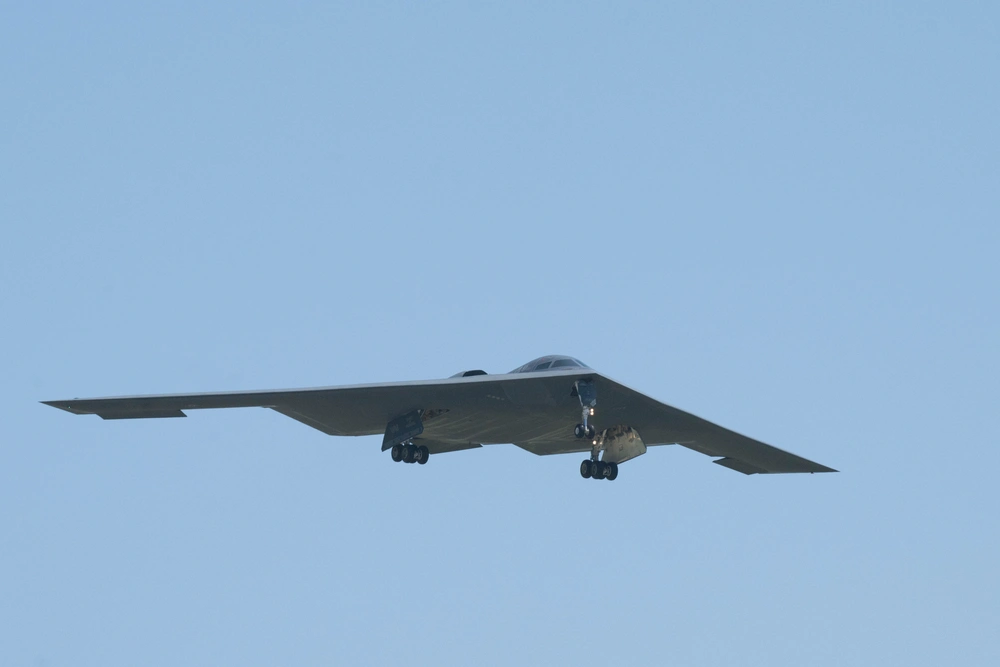
A US Air Force B-2 Spirit bomber at Whiteman Air Force Base, Missouri, June 2025, after supporting the US attack on Iran

On Sunday night, Trump suggested Iran had reached out to discuss the possibility of holding negotiations and suggested he was open to diplomacy, but also said he was considering “very strong” options. Iran’s Foreign Ministry said that the “communication channel” between Trump’s envoy, Steve Witkoff, and the Iranian Foreign Minister Abbas Araghchi remains open.

Axios and The Wall Street Journal both reported on Monday that Trump was leaning toward bombing Iran but was still exploring the possibility of negotiations. However, it’s unclear what sort of diplomatic deal would satisfy Trump as he continues to shift the pretext for potentially launching another war.

In recent weeks, Trump has threatened to bomb or support an Israeli attack on Iran if it rebuilds its civilian nuclear program or “continues” its conventional missile program, and has repeatedly threatened to attack the country if Iranian authorities kill protesters. The Axios report said that if Trump decides to bomb Iran, the strikes would likely target elements of Iran’s government responsible for internal security.

Iran’s position is that it doesn’t seek war with the US, but it’s warning that it will strike back if Trump follows through on his threat. “If Washington wants to test the military option it has tested before, we are ready for it,” Araghchi told Al Jazeera.

The Telegraph reported over the weekend that amid the threats of US airstrikes on Iran, the US military has conveyed to President Trump that it needs time to position assets in the region to prepare for Iranian counterattacks, which would likely involve missile strikes on US bases.

According to the Human Rights Activists News Agency (HRANA), a US-based and US-funded NGO, at least 646 people have been killed in the ongoing protests in Iran, including 133 military and law enforcement personnel, suggesting there have been significant attacks against Iran’s security forces. Iranian government sources have also said more than 100 security personnel have been killed, but have not released an overall death toll.