Posts Tagged ‘China’

With “economic D-Day” against Iran, Washington escalates conflict with China

August 26, 2026

Andre Damon@Andre__Damon, 26 Aug 2026

Treasury Secretary Scott Bessent speaks to members of the media outside the White House in Washington, Thursday, Aug. 20, 2026. [AP Photo/Jacquelyn Martin]

The Trump administration on Monday launched what Treasury Secretary Scott Bessent called an “economic D-Day” against Iran—a campaign of secondary sanctions aimed at every country, bank and company that trades with Tehran, above all China, which took roughly nine-tenths of Iran’s oil exports before the US blockade choked them off.

Six months of US and Israeli bombardment, which killed at least 3,468 people in Iran by June 10, has not brought down the government in Tehran, and most shipping still avoids the Strait of Hormuz. The administration is now carrying the war into the world economy, on a course that leads to confrontation with China.

The campaign Bessent announced at a Washington press conference Monday adds shipping, gold, digital assets, aviation and technology to the sectors covered by US secondary sanctions, which already reach Iran’s oil and banks.

Among the nearly 60 companies, people and ships sanctioned Monday are trading and logistics firms in China and Hong Kong and entities in Singapore, the United Arab Emirates, Malaysia, Switzerland, Britain, France, Greece, Syria, Ukraine and the Marshall Islands, according to Al Jazeera’s tally of the Treasury list.

“Every country has a defined timeline to shut down activities we have identified,” Bessent said, without naming them. China, India, Turkey, Iraq and the UAE are the most exposed, experts told CNN.

Asked by reporters whether Chinese banks would be hit, Bessent replied that “no one is above the reach of US sanctions” and said to expect “a major announcement of a financial institution being sanctioned by the end of this week.”

President Donald Trump set the campaign in motion with a Truth Social post last Wednesday. “ANY country that allows its financial institutions, businesses, airports, or government entities to provide any type of lifeline to Iran will itself face TREMENDOUS Economic Consequences,” he wrote.Available from Mehring BooksThe struggle against imperialism and for workers’ power in IranA pamphlet by Keith Jones

Bessent followed on CNBC on Thursday, calling the campaign “a one-two punch” of blockade and sanctions and saying that Washington was telling other governments, “You’re either with us or against us.” He added, “Keep in mind that the Chinese get 50 percent… of their energy from inside the Gulf.”

Three days before the announcement, the Wall Street Journal’s editorial board, in a lead editorial printed Saturday, made clear that the central target is China. “After six months of war with Iran, President Trump has a credibility problem,” it wrote. “No President has yet climbed the Iran sanctions ladder with China, moving from the isolated ‘teapot’ refineries that buy Iran’s oil to the Chinese state-owned enterprises that support them. Nor has any President given Dubai an ultimatum to shut down Iran’s illicit financial network and meant it.”

The editorial’s final paragraph warned that “Iran may lash out militarily in response, targeting Gulf energy again, and the US will have to be ready with a firm response.”

The Washington Post’s editorial board wrote Monday evening that delivering Bessent’s “zero-leakage approach… will require picking a big fight with China, the largest buyer of Iranian oil.” The editorial noted that US sanctions so far have fallen on “independent refiners and intermediaries rather than major Chinese banks or state-owned companies.”

The Post continued: “The Trump team cannot help but describe its recalibrated approach in martial terms… But D-Day evokes a military campaign with a clear objective: the enemy’s unconditional surrender. Economic pressure rarely works that way… That’s why containment is not really about regime change. Its immediate goal is to make an already battered Iran weaker so that it’s less capable of threatening its neighbors and developing nuclear weapons.”

This is a testament to the deepening political crisis triggered by the failure of US imperialism to achieve its strategic objectives in its war against Iran.

The war was conceived as a means of seizing the chokepoint of the world’s oil supply and gaining a decisive advantage over China. Instead, the United States confronts a political debacle, and it is China’s position that has been strengthened.

The sanctions campaign is an attempt to recoup by economic force what could not be won by bombing, and it aims that force at Beijing. Washington has paused the bombing since late July but has not renounced it; Defense Secretary Pete Hegseth said Monday that “by no means are we foreclosing using kinetic strikes anywhere in the Strait of Hormuz or around Iran.”

Socialism AI Logo

Socialism AI

by the WSWSSocialismAI.com

Questions about this article? Ask Socialism AI

What exactly are ‘secondary sanctions’ and how have they been used historically as a tool of US economic warfare against other countries?What is the longer history of US oil embargoes and financial blockades—like those against Cuba or Russia—and how effective have they actually been at forcing political change?How does this escalation against China over Iranian oil connect to the broader US “pivot to Asia” strategy that’s been building for years?

Ask more questions at SocialismAI.com

The war the sanctions are meant to salvage began on February 28, when Washington and Tel Aviv started the bombing. A cease-fire in April and a June 17 memorandum with Tehran lifted the blockade and let Iran export oil until Washington broke the arrangement in early July by sending ships through a route in the strait to which Iran had not agreed. When Iran fired on the ships the US struck back, and on July 8 Trump declared the cease-fire over. The blockade was reimposed. On August 17, the day the memorandum expired, Trump said of Oman, with which Iran is negotiating a shipping corridor, “If Oman gets in the way, we’ll bomb the shit out of them.”

To “sever every economic lifeline” of Iran, as Bessent put it, means to sanction the Chinese refineries, shipping companies and banks that buy and move its oil, and behind them the Chinese state. Behind the refineries stands the largest manufacturing economy in the world, whose trade in raw materials and finished goods a “zero-leakage” sanctions regime would have to police.

Chinese Foreign Ministry spokesman Lin Jian said at a briefing Tuesday that “China will do everything necessary to firmly safeguard its rights and interests.” Asked by Bloomberg whether China would change course, he said its cooperation with Iran “should not be disrupted.” Beijing, the Financial Times reported Tuesday, has told Washington that any broad extension of the sanctions to Chinese companies will bring retaliation.

Asked on Monday why the sanctions were not being imposed at once, Bessent replied: “Well, we are giving everyone the opportunity to remedy bad behavior. Why would I want to blow up the global financial system?”

Bessent’s statements are an admission of the provocative character of US actions. Desperate to shore up its geopolitical position, it is taking a series of increasingly reckless and desperate steps, whose impact is to widen the global scope of the war.

The Financial Times wrote in an editorial Tuesday that the operation “seemed more like a series of warning shots fired from far offshore,” and concluded that it “amounts to another risky gamble on a road that, for both sides, ultimately has to lead back to the negotiating table.”

However, the sequence Washington has followed does not lead to a negotiating table. It leads to a widening global conflagration, centrally targeting Russia and China.

Thucydides’ Trap: Peace and rivalry between the United States and China

May 15, 2026

  • Professor Graham Allison’s concept has influenced the way scholars and leaders think about competition between global powers.

By Nora Delaney

Fall 2025

HOW SHOULD LEADERS AND POLICYMAKERS THINK about relative shifts in power between countries? Are there principles from history that countries can look back to that help understand geopolitical tensions when countries increase their political and economic power? These are the questions that help us navigate conflicts and understand prospects for peace.   

Graham AllisonGraham Allison, the Douglas Dillon Professor of Government and former Kennedy School dean, has argued that we can take a lesson from the ancient Greek historian Thucydides. Thucydides chronicled the Peloponnesian War in the 5th century BCE when the rising city-state of Athens challenged the dominant existing power of Sparta. Thucydides wrote, “It was the rise of Athens and the fear that this instilled in Sparta that made war inevitable.” 

Allison has looked to Thucydides and his exploration of the tensions between a rising and established world power to understand the relationship between China and the United States. In his 2017 book “Destined for War: Can America and China Escape Thucydides’ Trap?,” Allison argues that history shows many instances where rising powers challenge established ones, and often these situations end in war—though not always. Allison’s Thucydides’ Trap has since become an influential metaphor in international relations as experts think about the friction between China and the United States—and ways that they might avoid devastating conflict. The Institute for National Strategic Studies and the National Defense University Press, for example, published analyses interpreting the Thucydides Trap in the context of U.S.–China dynamics. Allison’s analysis has also generated attention in China. President Xi Jinping frequently uses it to identify the challenge today’s two great powers face; for example, in his meeting with Senate majority leader Chuck Schumer in October 2023, he said “The ‘Thucydides Trap’ is not inevitable, and Planet Earth is vast enough to accommodate the respective development and common prosperity of China and the United States.” Indeed, during Allison’s quarterly visits to China, Xi and key members of his team have engaged him directly to explore opportunities for escaping the Thucydides Trap.

Allison chairs the Harvard China Working Group that includes faculty from across the university and is pursuing ongoing work at the Kennedy School that grapples with the nature and future of U.S.-China competition. The rivalry between the United States and China, Allison has argued, encompasses four key areas that he and his colleagues at the Kennedy School’s Belfer Center for Science and International Affairs have researched and reported on: rivalry in economics, technology, military power, and diplomacy. These reports were originally prepared as part of a package of transition memos for the Trump-Biden transition after the November 2020 election. 

Allison and others at the Belfer Center and the Kennedy School continue to lead in our understanding of the ways the United States and China compete and cooperate as world powers.

China’s Charter 08 for human rights and democracy

October 9, 2010

Council on Foreign Relations, December 10, 2008

Over 2000 Chinese citizens, including government officials and prominent intellectuals, signed this statement calling for political and human rights reforms and an end to one-party rule. The statement was released on December 10, 2008, the anniversary of the Universal Declaration of Human Rights. It was translated by Perry Link and published in the New York Review of Books.

I. FOREWORD

A hundred years have passed since the writing of China’s first constitution. 2008 also marks the sixtieth anniversary of the promulgation of the Universal Declaration of Human Rights, the thirtieth anniversary of the appearance of the Democracy Wall in Beijing, and the tenth of China’s signing of the International Covenant on Civil and Political Rights. We are approaching the twentieth anniversary of the 1989 Tiananmen massacre of pro-democracy student protesters. The Chinese people, who have endured human rights disasters and uncountable struggles across these same years, now include many who see clearly that freedom, equality, and human rights are universal values of humankind and that democracy and constitutional government are the fundamental framework for protecting these values.

By departing from these values, the Chinese government’s approach to “modernization” has proven disastrous. It has stripped people of their rights, destroyed their dignity, and corrupted normal human intercourse. So we ask: Where is China headed in the twenty-first century? Will it continue with “modernization” under authoritarian rule, or will it embrace universal human values, join the mainstream of civilized nations, and build a democratic system? There can be no avoiding these questions.

The shock of the Western impact upon China in the nineteenth century laid bare a decadent authoritarian system and marked the beginning of what is often called “the greatest changes in thousands of years” for China. A “self-strengthening movement” followed, but this aimed simply at appropriating the technology to build gunboats and other Western material objects. China’s humiliating naval defeat at the hands of Japan in 1895 only confirmed the obsolescence of China’s system of government. The first attempts at modern political change came with the ill-fated summer of reforms in 1898, but these were cruelly crushed by ultraconservatives at China’s imperial court. With the revolution of 1911, which inaugurated Asia’s first republic, the authoritarian imperial system that had lasted for centuries was finally supposed to have been laid to rest. But social conflict inside our country and external pressures were to prevent it; China fell into a patchwork of warlord fiefdoms and the new republic became a fleeting dream.

The failure of both “self- strengthening” and political renovation caused many of our forebears to reflect deeply on whether a “cultural illness” was afflicting our country. This mood gave rise, during the May Fourth Movement of the late 1910s, to the championing of “science and democracy.” Yet that effort, too, foundered as warlord chaos persisted and the Japanese invasion [beginning in Manchuria in 1931] brought national crisis.

Victory over Japan in 1945 offered one more chance for China to move toward modern government, but the Communist defeat of the Nationalists in the civil war thrust the nation into the abyss of totalitarianism. The “new China” that emerged in 1949 proclaimed that “the people are sovereign” but in fact set up a system in which “the Party is all-powerful.” The Communist Party of China seized control of all organs of the state and all political, economic, and social resources, and, using these, has produced a long trail of human rights disasters, including, among many others, the Anti-Rightist Campaign (1957), the Great Leap Forward (1958–1960), the Cultural Revolution (1966–1969), the June Fourth [Tiananmen Square] Massacre (1989), and the current repression of all unauthorized religions and the suppression of the weiquan rights movement [a movement that aims to defend citizens’ rights promulgated in the Chinese Constitution and to fight for human rights recognized by international conventions that the Chinese government has signed]. During all this, the Chinese people have paid a gargantuan price. Tens of millions have lost their lives, and several generations have seen their freedom, their happiness, and their human dignity cruelly trampled.

Continues >>

Roberts: US Treasury Running on Fumes

July 27, 2010

down to the last trillion in red ink

By Paul Craig Roberts, VDARE.com, July 26, 2010

The White House is screaming like a stuck pig. WikiLeaks’ release of the Afghan War Documents “puts the lives of our soldiers and our coalition partners at risk.”

What nonsense. Obama’s war puts the lives of American soldiers at risk, and the craven puppet state behavior of “our partners” in serving as US mercenaries is what puts their troops at risk.

Keep in mind that it was someone in the US military that leaked the documents to WikiLeaks.  This means that there is a spark of rebellion within the Empire itself.

And rightly so.  The leaked documents show that the US has committed numerous war crimes and that the US government and military have lied through their teeth in order to cover up the failure of their policies. These are the revelations that Washington wants to keep secret.

Continues >>

China: Scholars, Writers Press for Liu Xiaobo’s Release

March 10, 2010

As NPC Gathers, So Do Calls for Release of Peaceful Critic

Human Rights Watch, March 9, 2010
2008121008431641.jpg

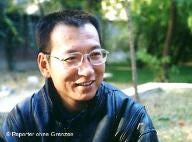
Liu Xiaobo is a human rights activist in China who has been repeatedly arrested for his political activities.

Imprisoning Liu Xiaobo for his criticism of the government is a stain on China’s reputation and standing in the world. Instead of punishing and making an example of Liu, the Chinese government should address the concerns expressed in Charter 08.

Sophie Richardson, Asia advocacy director at Human Rights Watch

(New York) – More than one hundred leading China scholars, writers, and human rights advocates from around the world are today releasing a letter to China’s National People’s Congress that calls for the immediate and unconditional release of imprisoned dissident Liu Xiaobo.

Liu, a long-time critic of the government, was sentenced in December 2009 to 11 years in prison for his publication of six political essays and for his role in the drafting of Charter 08, a petition calling for the rule of law and respect for human rights in China.

“Imprisoning Liu Xiaobo for his criticism of the government is a stain on China’s reputation and standing in the world,” said Sophie Richardson, Asia advocacy director at Human Rights Watch. “Instead of punishing and making an example of Liu, the Chinese government should address the concerns expressed in Charter 08.”

Continues >>

Chinese activist Liu Xiabao’s appeal rejected

February 11, 2010
Al Jazeera, Feb 11, 2010
Liu Xiabao, left, had co-authored a political paper calling for sweeping reforms [AFP]

A Chinese court has rejected a prominent dissident’s appeal against his 11-year jail term for subversion.

The appeal by Liu Xiaobo, a writer and a former university professor, was turned down after a brief legal hearing in Beijing.

Liu, 54, was first detained in December 2008 after co-authoring a bold manifesto known as Charter 08, which called for sweeping political reform in China and an end to Communist Party dominance.

He was sentenced on December 25 last year on a charge of incitement to subvert state power.

Liu previously spent 20 months in jail for joining the 1989 Tiananmen Sqaure protests, which ended when the government called in the military, killing an unconfirmed number of demonstrators.

Continues >>


Human rights lawyer Gao Zhisheng goes missing after being detained

January 25, 2010

Policeman said Gao Zhisheng, a fierce critic of the government, had ‘lost his way’

Jonathan Watts in Beijing, The Guardian/UK, January 15, 2010

Chinese human rights lawyer Gao ZhishengGao Zhisheng had testified that he was tortured and threatened with death during a previous detention. Photograph: Verna Yu/AFP
Fears are growing for the Chinese human rights lawyer Gao Zhisheng after his brother said police admitted he “went missing” in September, seven months after being taken into detention.

The firebrand critic of the Communist party has been repeatedly detained by public security agents and has testified that he was tortured and threatened with death. Gao disappeared from his hometown in Shaanxi province on 4 February last year. His family told reporters and human rights groups at the time that he was whisked away by local police and security agents from Beijing.

Since then, his whereabouts have been a mystery, but this week his brother told Associated Press that he had received new and disturbing information from one of the policemen who took Gao away.

Gao Zhyi said the policeman told him that Gao Zhisheng “lost his way and went missing” on 25 September.

The authorities refuse to comment on the case. The ministry of justice asked for faxed questions but did not reply to them. Similar requests for information from Beijing’s Public Security Bureau have been met with silence.

Human rights groups said they were alarmed and called on foreign governments and journalists to press for an explanation of how Gao went missing during his captivity.

Roseann Rife of Amnesty International said everybody should be asking the Chinese authorities where Gao Zhisheng was. “We have been very concerned since last February because there are reports in his own hand about how he was treated in custody last time, when it seemed he was near death.”

Mo Shaoping, a lawyer who was prevented from representing Gao during an earlier trial, said the situation was abnormal.

“If he ran away from a detention centre or died there, the legal responsibility of the authorities is unavoidable. If police told Gao’s relative that he is missing, they have an obligation to find him.”

China‘s security apparatus often detains rights activists and lawyers without explanation or public comment, but the duration of Gao’s disappearance and his testimonies about past treatment have raised concerns.

After a detention in 2007 he wrote an open letter – made public last year – that claimed guards used electric batons on his genitals, burned his eyes with cigarettes and shouted “kill the bastard”. He said they threatened to kill him if he told anyone about his treatment.

Despite constant surveillance and death threats, Gao was arguably fiercer and more confrontational in his criticism of the Communist party than any other activist.

In a previous interview with the Guardian, the former soldier and coal miner said he felt protected because there would be an international outcry if anything happened to him.

“They threaten to arrest me and I say, ‘Go ahead’. I am a warrior who does not care whether I live or die. Such a sacrifice will be nothing to me if it speeds the death of this dictatorship,” he said.

That was two years before the Olympics, when several other prominent activists said they felt protected by international exposure. Since then at least two of them have been imprisoned. Hu Jia was sentenced to three and half years in 2008 and Liu Xiaobo was given 11 years by a court last month.

Chinese censors block information about such cases. Local media are forbidden to report on Gao Zhisheng and a Wikipedia entry about him is blocked.

The crackdown on critical voices continues. This week police detained Zhao Shiying, who signed up to the Charter 08 call for political reform.

Two human rights lawyers revealed that their email accounts had been targeted soon after Google announced that it was reconsidering its presence in China because its database was hacked for information about activists.

How to Think About China

January 16, 2010

Immanuel Wallerstein, Agence Global,   January 15, 2010

If one asks throughout the world the question, what do you think of the United States as a country and a world power, you will get very clear answers. Everyone has an opinion – North and South, rich and poor, men and women, politically on the right or the left, young and old. The opinions vary enormously from extremely favorable to extremely hostile. But people do feel they know how to think about the United States.

Thirty years ago, the same was probably true about China. But it is no longer true. Many people, perhaps even most people, around the world are no longer sure what they think about China as a country or as a world power. Indeed, it is a subject not only of uncertainty but of sharp debate. It is useful perhaps to review which issues people outside of China tend to debate when they discuss China. There are three principal ones.

Continues >>

China: Drug ‘Rehabilitation’ Centers Deny Treatment, Allow Forced Labor

January 8, 2010
Anti-Drug Law Perpetuates Rights Abuses
Human Rights Watch, January 6, 2010
2010_china_rehab.jpg

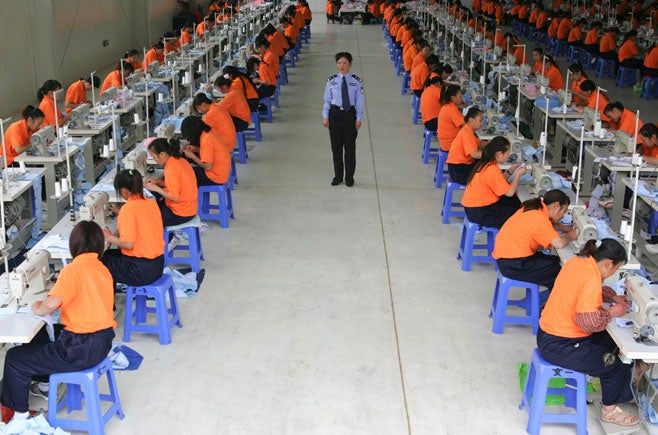
Inmates sew at a compulsory drug detention center in Yunnan province.

Instead of putting in place effective drug dependency treatment, the new Chinese law subjects suspected drug users to arbitrary detention and inhumane treatment. The Chinese government has explained the law as a progressive step towards recognizing drug users as ‘patients,’ but they’re not even being provided the rights of ordinary prisoners.

Joe Amon, Health and Human Rights Division director at Human Rights Watch

(New York) – Chinese authorities are incarcerating drug users in compulsory drug detention centers that deny them access to treatment for drug dependency and put them at risk of physical abuse and unpaid forced labor, Human Rights Watch said in a new report released today. Half a million people are confined within compulsory drug detention centers in China at any given time, according to the Joint United Nations Programme on HIV/AIDS (UNAIDS).

Continues >>

Liu Xiabao Chinese dissident goes on trial

December 23, 2009
Al Jazeera, Dec 23, 2009
Liu Xiabao had repeatedly called for political reform and the protection of human rights in China [Reuters]


The trial of a leading Chinese dissident accused of trying to subvert the power of the state has ended after lasting just two hours.

Liu Xiaobo, a 53-year-old academic, who was previously jailed over the 1989 Tiananmen Square protests, has been charged with “inciting subversion of state power” for co-authoring a report appealing for political liberalisation.

Liu’s brother told reporters after the trial that a verdict was expected on Friday.

The highly-sensitive case has been criticised by human rights groups and Western governments who have urged China to drop the charges and immediately release Liu.

Western diplomats in Beijing had requests to attend the trial rejected, while other key Chinese dissidents were also reportedly warned to stay away.

Dozens of police ringed the courthouse on Wednesday as Liu’s trial was set to get underway.

If convicted, Liu faces a maximum of 15 years in prison. He has already been jailed for 21 months for participating in the Tiananmen protests.

The case against Liu centres on his co-authoring of a petition called Charter 08, which calls for the protection of human rights in China and reform of the country’s one-party communist system.

Petition circulated

Who is Liu Xiabao?
Liu Xiabao is a literary critic, a former professor of literature and human rights activist.

He has called for the reform of China’s one-party Communist system, and was jailed for 21 months for taking part in the Tiananmen Square protests of 1989.

In 1996, he served another three years in a “re-education” camp for seeking the release of prisoners jailed in the Tiananmen demonstrations.

Last year, he was arrested for co-authoring Charter 08 – a petition calling for freedom of assembly, expression, and religion in China.

In June, Liu was charged with the “incitement of subversion of state power” and could face up to 15 years in prison if convicted.

According to China Human Rights Defenders, a network of activists, the petition had been widely circulated online, and was signed by more than 10,000 people, including other dissidents and intellectuals.It specifically calls for the abolition of subversion in China’s criminal code – the very crime with which Liu has been charged.

Bao Tong, a former aide to ex-Chinese leader Zhao Ziyang, who was jailed for sympathising with the Tiananmen protests, also signed the petition.

“I insisted that I am a part of this case. If Liu Xiaobo is to be tried, then I should be tried as well,” he told AFP news agency.

“If he is found guilty, this will be a problem because it will mean that the freedom of speech and freedom of expression guaranteed by the constitution are fake.”

Liu is fighting the charges but has no plans to appeal if the verdict goes against him, his wife, Liu Xia, said ahead of Wednesday’s trial opening.

“With a government like this, a government without principles, there is nothing you can say,” she said.

Access barred

Gregory May, a political officer with the US embassy in Beijing, said he and other diplomats had been refused access to the trial.

“We were told all the passes were given out. We understand no one can get
in,” he told reporters.

“Liu Xiaobo’s detention and trial show that the Chinese government will not tolerate Chinese citizens participating in discussions about their own form of government”

Sam Zarifi,
Amnesty International’

“We call on the government of China to release him immediately. We urge that any judicial proceedings be conducted in a fair and transparent manner.”Nicholas Weeks, the first secretary of the Swedish Embassy, said diplomats from at least 15 countries were outside the court.

Human rights groups say the sensitive trial has been deliberately timed by Chinese authorities to coincide with the Christmas holiday period, in the hope that international media and foreign governments will overlook the case.

The subversion charge faced by Liu is often brought against those who voice opposition to China’s ruling Communist Party, and rights groups have accused the government of abusing such charges to silence its critics.

“Liu Xiaobo’s detention and trial show that the Chinese government will not tolerate Chinese citizens participating in discussions about their own form of government,” Sam Zarifi, the director of Amnesty International’s Asia-Pacific Programme, said in a statement.

“After Liu Xiaobo, more than 300 Chinese scholars, lawyers and officials who proposed a blueprint for improving their political system may be at risk, as well as nearly 10,000 signatories.”