Professor Graham Allison’s concept has influenced the way scholars and leaders think about competition between global powers.
By Nora Delaney
Fall 2025
HOW SHOULD LEADERS AND POLICYMAKERS THINK about relative shifts in power between countries? Are there principles from history that countries can look back to that help understand geopolitical tensions when countries increase their political and economic power? These are the questions that help us navigate conflicts and understand prospects for peace.
Graham Allison, the Douglas Dillon Professor of Government and former Kennedy School dean, has argued that we can take a lesson from the ancient Greek historian Thucydides. Thucydides chronicled the Peloponnesian War in the 5th century BCE when the rising city-state of Athens challenged the dominant existing power of Sparta. Thucydides wrote, “It was the rise of Athens and the fear that this instilled in Sparta that made war inevitable.”
Allison has looked to Thucydides and his exploration of the tensions between a rising and established world power to understand the relationship between China and the United States. In his 2017 book “Destined for War: Can America and China Escape Thucydides’ Trap?,” Allison argues that history shows many instances where rising powers challenge established ones, and often these situations end in war—though not always. Allison’s Thucydides’ Trap has since become an influential metaphor in international relations as experts think about the friction between China and the United States—and ways that they might avoid devastating conflict. The Institute for National Strategic Studies and the National Defense University Press, for example, published analyses interpreting the Thucydides Trap in the context of U.S.–China dynamics. Allison’s analysis has also generated attention in China. President Xi Jinping frequently uses it to identify the challenge today’s two great powers face; for example, in his meeting with Senate majority leader Chuck Schumer in October 2023, he said “The ‘Thucydides Trap’ is not inevitable, and Planet Earth is vast enough to accommodate the respective development and common prosperity of China and the United States.” Indeed, during Allison’s quarterly visits to China, Xi and key members of his team have engaged him directly to explore opportunities for escaping the Thucydides Trap.
Allison chairs the Harvard China Working Group that includes faculty from across the university and is pursuing ongoing work at the Kennedy School that grapples with the nature and future of U.S.-China competition. The rivalry between the United States and China, Allison has argued, encompasses four key areas that he and his colleagues at the Kennedy School’s Belfer Center for Science and International Affairs have researched and reported on: rivalry in economics, technology, military power, and diplomacy. These reports were originally prepared as part of a package of transition memos for the Trump-Biden transition after the November 2020 election.
Allison and others at the Belfer Center and the Kennedy School continue to lead in our understanding of the ways the United States and China compete and cooperate as world powers.
As workers around the world are hit with the ever-worsening consequences of the US war on Iran—crippling rises in petrol and gas prices, food price hikes and the growing threat of food shortages in poorer countries—major corporations and banks are raking in increased profits to the tune of hundreds of billions of dollars.
First in line to benefit from the profit bonanza, as could be expected, are the oil companies. But the flow of increased money extends across the board.
The price of diesel is advertised at a gas station Thursday, March 19, 2026, in Hyattsville, Md. [AP Photo/Stephanie Scarbrough]
According to an investigation by the Guardian, the results of which were published on Wednesday, with oil at around $100 per barrel the major oil conglomerates in Saudi Arabia, Russia, the United States, Britain and Europe will collect an additional $234 billion in profit for 2026, an extra inflow of $30 million an hour for the rest of the year.
The biggest winner is Saudi Arabia’s Aramco, which is expected to make a war profit of $25.5 billion, with the Russian petro-giants set to make an additional $23.9 billion.
The US firm ExxonMobil will take in an additional $11 billion. Shell’s revenue will rise by $6.8 billion, and Chevron stands to make an additional $9.2 billion.
The additional profits are on top of the $1 trillion the oil industry takes in every year while receiving explicit subsidies which totalled $1.3 trillion in 2022, according to calculations by the International Monetary Fund.
There are other benefits as well flowing from the rise in share prices. The market value of ExxonMobil has increased by $118 billion, while that of Shell is up $34 billion.
Apart from the oil producers, trading firms which deal in oil, food, metals and other necessary commodities, largely dominating global markets, are already cashing in. The Wall Street Journal reported that the Swiss commodities trader Gunvor said it had already made as much money in the first quarter of this year as it did in all of 2025 when it made a profit of $1.6 billion. Others will be experiencing a similar boost.
Also not surprisingly, US arms manufacturers have been cashing in. On the first day of the US attack on Iran major firms recorded a rise in their total market value of up to $30 billion.
The profit and price gouging extends across the US economy under conditions where, according to a recent article in the New York Times, corporate profits “have reached a record share of the US economy.” Corporate America intends to keep it that way.
Sonu Varghese, the global macro strategist at the Carson group, a financial firm, told the Times that many companies viewed inflation from “outside shocks,” such as war, “as an opportunity to raise prices and boost margins” and that there was going to be some “margin expansion.”
This points to a repeat of the experience of the inflation surge of 2022 when, as the Times reported, data from the US Producer Price Index “showed that wholesalers and retailers generally expanded the margin between their sales prices and their cost of acquiring goods.”
Major US banks have also been cashing in on the opportunities generated by the war. The six major US banks reported collective profits of $47.6 billion for the first quarter, much of it generated because market volatility provided conditions for significantly profitable trading.
Reporting on the profit hike, the Financial Times noted that the first quarter was marked by geopolitical shocks—the military operation in Venezuela and the Iran war—triggering volatility, which is “good for investment banks which make money from financing and facilitating client trades.”
JPMorgan led the way in absolute terms with a 13 percent increase in profits, over the same period last year, to $16.5 billion, with market jitters being characterised as a “gift to trading desks.” Goldman Sachs reported a 19 percent increase in profits to $5.6 billion. Citigroup reported a 42 percent profit surge and Morgan Stanley’s profits rose 29 percent.
The combined increase in the profits from the trading desks of the major banks is estimated to be the highest in 12 years.
Much of this money is being used to finance share buybacks to boost the portfolios of the banks’ senior executives and big investors. The largest US banks spent a record $33 billion on buybacks in the first quarter, with JPMorgan, Goldman Sachs and Citigroup making their largest ever repurchases.
The banks have benefited from the relaxation of regulations under Trump. Bank of America chief financial officer Alastair Borthwick said the bank was “encouraged by the work the administration is doing,” as it bought back $7.2 billion of its own stock in the quarter, the highest level in four years. The Trump regime is moving to reduce the amount of capital the banks must hold as a reserve, freeing up money for trading and buybacks.
The overall sentiment on Wall Street is that the profit bonanza will continue, at least for now, with the S&P 500 passing the 7,000 mark for the first time on Wednesday. Inflation profiteering fuelled by the war is one factor. Another is the wave of mass layoffs, hitting tens of thousands of workers in many cases, especially in the high-tech industries.
Commenting on what it called a new era of mega-layoffs, the Wall Street Journal noted that “employers are seizing on the potential financial upsides of severing swaths of their workforces at once.”
In the past, mass layoffs by a company may have signalled troubles or mismanagement. “Now, such a company is more likely to get a big stock bump and praise from investors for acting boldly.”
Giant corporations and banks are feeding on death, destruction and the impoverishment of the working class the world over. This makes it urgently necessary for workers and youth to draw the sharpest political conclusions.
The war on Iran itself is not the product of the individual Donald Trump, but is driven by the historic crisis of imperialism, of which he is the most grotesque personification.
Likewise, the obscenity expressed in the present day economic and financial system is not the product of the individual greed of the ruling oligarchs, though that exists in abundance. It is a product of the capitalist system itself, the objective logic of which, as Marx explained 150 years ago, is the creation of fabulous wealth at one pole of society and poverty, misery and degradation at the other.
Today the necessity for its overthrow and the establishment of socialism is not confined to the pages of Das Kapital but is being written large in the language of daily life.
Protesters with hands painted red to symbolize blood stand outside the Turkish Embassy in Croatia on Nov. 11, 2024, holding signs in English and Croatian that read, “Erdoğan stop fueling genocide in Gaza.” The demonstration is part of a global campaign urging Turkey to cease its alleged role in oil shipments benefiting Israel.
A new report by the Stop Fueling Genocide campaign, supported by Progressive International, has revealed that 10 crude oil shipments were made from Turkey to Israel over the past year, eight of which violated Ankara’s embargo announced in May, according to the Gazete Duvar news website.
The report is the second from the group, which uses satellite imagery and shipping data to track the movement of tankers from Turkey’s Ceyhan port to Israel, providing evidence that Ankara’s crude oil shipments to Israel continued despite the trade ban.
In the first report researchers confirmed that a tanker, the Seavigour, loaded Azeri crude oil in Ceyhan on October 28, turned off its tracking signal in the eastern Mediterranean on October 30 and reappeared near Sicily a week later, having reportedly offloaded its cargo. Satellite imagery later showed the Seavigour docking at the EAPC terminal near Ashkelon, Israel, on November 5.
Ceyhan serves as the endpoint of the Baku-Tbilisi-Ceyhan (BTC) pipeline, which transports crude oil from Azerbaijan. This oil accounts for nearly 30 percent of Israel’s crude imports. Reports indicate that Azerbaijan’s oil exports to Israel have quadrupled this year, rising from 523,554 tons in January to 2,372,248 tons in September.
Researchers identified 10 journeys made since December 2023 by another crude oil tanker, the Kimolos, between Ceyhan and the EAPC Terminal in the second report, with eight occurring after Turkey’s trade blockade on Israel was announced.
The report said the Kimolos, similar to other vessels trading with Israel, was turning off its tracking signal in the middle of the eastern Mediterranean for several days to mask the trade between Turkey and Israel.
The two ships identified in the reports are Suezmax-size vessels, which are chartered specifically for the transfer of high volumes of crude oil.
The report said researchers “have reasonably concluded” from this evidence that the Kimolos has routinely shipped Azeri crude oil from Turkey to Israel throughout the past year.
The findings contradict statements by Turkey’s energy minister, who had denied any oil shipments to Israel since the embargo began.
The ongoing trade with Israel has drawn criticism from activists, who argue that crude oil from the BTC pipeline is refined and used to fuel Israeli military equipment. Advocacy groups have called on Turkey to enforce the embargo and align its policies with its stated support for Palestine.
Experts warn that if the International Court of Justice determines Israel is committing genocide in Gaza, those involved in supplying fuel could be found complicit in failing to prevent genocide.
Earlier this month nine activists, who had interrupted President Recep Tayyip Erdoğan’s November 29 speech at the TRT World Forum in İstanbul, accusing the president of hypocrisy for allegedly facilitating crude oil shipments to Israel despite Turkey’s public stance against Israeli military actions in Gaza, were detained and subsequently arrested by a court on December 2. They were released on December 6 after their lawyers filed an appeal contesting the arrests.
The arrests have sparked outrage among human rights groups and activists. Critics argue that Erdoğan’s government is suppressing dissent while enabling trade that contradicts its pro-Palestinian rhetoric.
By Bill Moyers, Bill Moyers & Co, Truthout, April 1, 2012.
Most discussion about the “costs of war” focuses on two numbers: dollars spent and American troops who gave their lives. A decade into the war on terror, those official costs are over a trillion dollars and more than 6,000 dead. But as overwhelming as those numbers are, they don’t tell the full story.
In one of the most comprehensive studies available, researchers in the Eisenhower Study Group at Brown University’s Watson Institute for International Studies looked at the human, economic, social and political costs of the wars in Afghanistan and Iraq, as well as our military actions in Pakistan. Their complete findings are available at costofwar.org. The numbers below are all from their report, which is dated June 2011. When the study sites both conservative and moderate estimates, we’ve chosen the conservative numbers. It is difficult to find more recent tallies for most of these numbers, but up-to-date totals of U.S. military deaths, along with photos and biographical information, can be found in The Washington Post’s Faces of the Fallen collection.
What nonsense. Obama’s war puts the lives of American soldiers at risk, and the craven puppet state behavior of “our partners” in serving as US mercenaries is what puts their troops at risk.
Keep in mind that it was someone in the US military that leaked the documents to WikiLeaks. This means that there is a spark of rebellion within the Empire itself.
And rightly so. The leaked documents show that the US has committed numerous war crimes and that the US government and military have lied through their teeth in order to cover up the failure of their policies. These are the revelations that Washington wants to keep secret.
TOMORROW will be a very important day. World opinion will be following what happens with the elections in the United States. It is the most powerful nation on the planet. With less than five percent of the world’s population, it annually sucks up enormous quantities of oil and gas, minerals, raw materials, consumer goods and sophisticated products from other countries; many of these, especially fuel and products that are mined, are not renewable.
It is the largest producer and exporter of weapons. The military industrial complex also has an insatiable market within the same country. Its air and naval forces are concentrated on dozens of military bases in other countries. The strategic missiles of the United States, which carry nuclear warheads, can reach any point in the world with total precision.
Many of the most intelligent minds in the world are plucked out of their native countries and placed at the service of this system. It is a parasitical and rapacious empire.
As everybody knows, the black population that was brought into the United States through slavery for centuries is victim of intense racial discrimination.
Obama, the Democratic candidate, is part African, and the color black and other physical traits of that race predominate in him. He was able to study at an institution of higher learning from which he graduated with brilliant grades. He is no doubt more intelligent, educated and level-headed than his Republican rival.
I am analyzing tomorrow’s elections as the world is experiencing a serious financial crisis, the worst since the 1930s, among many others that have seriously affected the economies of many countries for more than three-quarters of a century.
The international media, analysts and political commentators are spending some of their time on the issue. Obama is considered as the best political orator in the United States in recent decades. His compatriot Toni Morrison, winner of the Nobel Literature Prize in 1993 —the first of her ethnicity born in the United States to win that award and an excellent writer — describes him as the future president and poet of that nation.
I have observed the struggle between the two rivals. The black candidate, who surprised everyone so much when he won the nomination against strong adversaries, has articulated his ideas well, and strikes with them over and over in the minds of voters. He does not hesitate to affirm that above all, more than Republicans and Democrats, they are the people of the United States, citizens that he describes as the most productive in the world; that he will cut taxes for the middle class, in which he includes almost everybody; he will eliminate them for the poorest and raise them for the richest. Income will not be allocated to saving banks.
He reiterates over and over that the ruinous spending on Bush’s war in Iraq should not be paid for by U.S. taxpayers. He would put an end to that and bring back the U.S. soldiers. Perhaps he took into account the fact that that country had nothing to do with the terrorist attacks of September 11, 2001. It has cost the blood of thousands of U.S. soldiers, dead or injured in combat, and more than one million lives in that Muslim nation. It was a war of conquest imposed by the empire in its search for oil.
Given the financial crisis that has broken out and its consequences, U.S. citizens are more concerned at this time about the economy than the war in Iraq. They are tormented by their worries over jobs; the security of their savings deposited in banks; their retirements funds; the fear of losing the purchasing power of their money and the homes in which they live with their families. They wish for the security of receiving, in any circumstances, adequate medical services, and the guarantee of their children’s right to higher education.
Obama is defiant; I think that he has run and will run increasing risks in the country in which an extremist can legally acquire a sophisticated modern weapon on any street corner, just like in the early 18th century in the West of the United States. He supports his system and will base himself on it. Concerns over the world’s pressing problems really do not occupy an important place in Obama’s mind, and even less so in the mind of the candidate who, as a war pilot, dropped dozens of tons of bombs on the city of Hanoi, more than 15,000 kilometers from Washington, without any remorse in his conscience.
Last Thursday the 30th, when I wrote to Lula, along with what I described in my reflections of October 31, I literally said to him in my letter, “Racism and discrimination have existed in U.S. society since it was born more than two centuries ago. Blacks and Latin Americans have always been discriminated against there. Its citizens were educated in consumerism. Humanity is objectively threatened by its weapons of mass destruction.
“The people of the United States are more concerned about the economy than the war in Iraq. McCain is old, bellicose, uncultured, not very intelligent and not in good health.”
Finally, I added, “If my estimates should be erroneous, all kinds of racism prevail and the Republican candidate obtains the presidency, the danger of war would grow and the opportunities of the peoples to advance would be reduced. Despite everything, we must fight and raise awareness about this, no matter who wins these elections.”
When this opinion of mine is published tomorrow, nobody will have any time to say that I wrote something that could be utilized by one of the candidates for their campaign. I had to be, and have been, neutral in the electoral battle. It is not “interference in the internal affairs of the United States,” as the State Department would say, with all that respect it has for the sovereignty of other countries.
For past seven years, Israeli companies have been helping Gerogian army to preparer for war against Russia through arms deals, training of infantry units and security advice
Arie Egozi | YNet News, August 10, 2008var
The fighting which broke out over the weekend between Russia and Georgia has brought Israel’s intensive involvement in the region into the limelight. This involvement includes the sale of advanced weapons to Georgia and the training of the Georgian army’s infantry forces.
The Defense Ministry held a special meeting Sunday to discuss the various arms deals held by Israelis in Georgia, but no change in policy has been announced as of yet.
Advice
Foreign Ministry warns Israelis against traveling to Georgia / Roee Nahmias
Ministry ups travel warning due to ongoing military conflict with Russia, asks Israelis already in Georgia to contact embassy in Tbilsi or ministry’s situation room in Israel
“The subject is closely monitored,” said sources in the Defense Ministry. “We are not operating in any way which may counter Israeli interests. We have turned down many requests involving arms sales to Georgia; and the ones which have been approves have been duly scrutinized. So far, we have placed no limitations on the sale of protective measures.”
According to Israeli sources, Gal Hirsch gave the Georgian army advice on the establishment of elite units such as Sayeret Matkal and on rearmament, and gave various courses in the fields of combat intelligence and fighting in built-up areas.
Israel began selling arms to Georgia about seven years ago following an initiative by Georgian citizens who immigrated to Israel and became businesspeople.
“They contacted defense industry officials and arms dealers and told them that Georgia had relatively large budgets and could be interested in purchasing Israeli weapons,” says a source involved in arms exports.
The military cooperation between the countries developed swiftly. The fact that Georgia’s defense minister, Davit Kezerashvili, is a former Israeli who is fluent in Hebrew contributed to this cooperation.
“His door was always open to the Israelis who came and offered his country arms systems made in Israel,” the source said. “Compared to countries in Eastern Europe, the deals in this country were conducted fast, mainly due to the defense minister’s personal involvement.”
Among the Israelis who took advantage of the opportunity and began doing business in Georgia were former Minister Roni Milo and his brother Shlomo, former director-general of the Military Industries, Brigadier-General (Res.) Gal Hirsch and Major-General (Res.) Yisrael Ziv.
Roni Milo conducted business in Georgia for Elbit Systems and the Military Industries, and with his help Israel’s defense industries managed to sell to Georgia remote-piloted vehicles (RPVs), automatic turrets for armored vehicles, antiaircraft systems, communication systems, shells and rockets.
 Graham Allison, the Douglas Dillon Professor of Government and former Kennedy School dean, has argued that we can take a lesson from the ancient Greek historian Thucydides. Thucydides chronicled the Peloponnesian War in the 5th century BCE when the rising city-state of Athens challenged the dominant existing power of Sparta. Thucydides wrote, “It was the rise of Athens and the fear that this instilled in Sparta that made war inevitable.”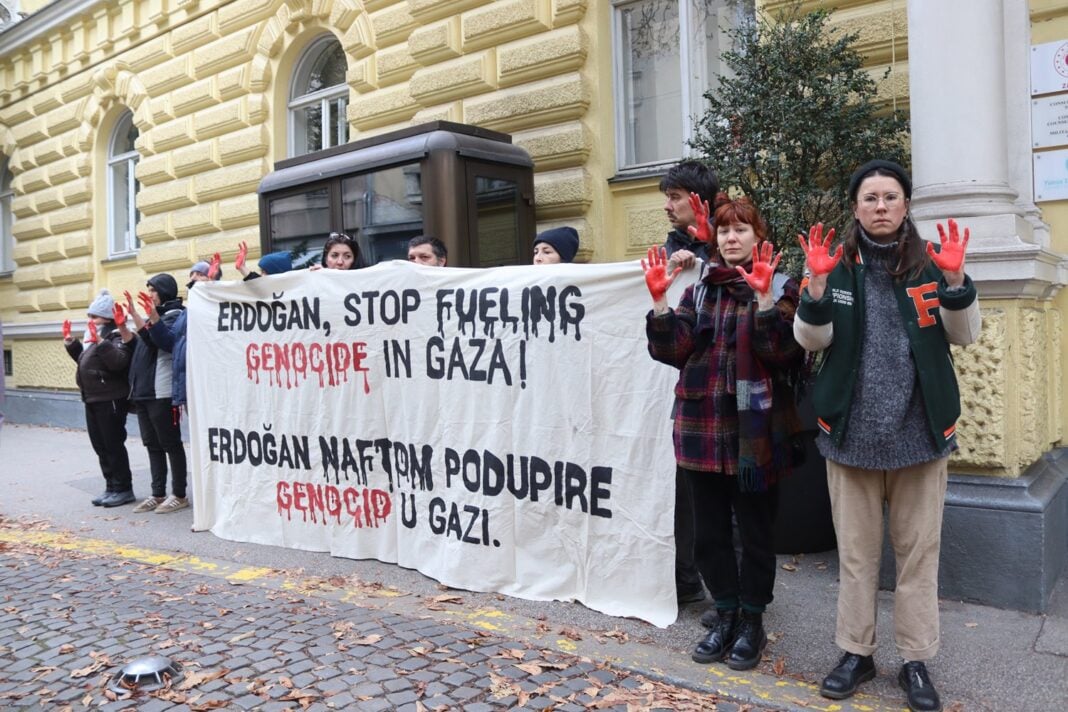


 Peace and Justice Post

Roberts: US Treasury Running on Fumes
July 27, 2010down to the last trillion in red ink
By Paul Craig Roberts, VDARE.com, July 26, 2010
The White House is screaming like a stuck pig. WikiLeaks’ release of the Afghan War Documents “puts the lives of our soldiers and our coalition partners at risk.”
What nonsense. Obama’s war puts the lives of American soldiers at risk, and the craven puppet state behavior of “our partners” in serving as US mercenaries is what puts their troops at risk.
Keep in mind that it was someone in the US military that leaked the documents to WikiLeaks. This means that there is a spark of rebellion within the Empire itself.
And rightly so. The leaked documents show that the US has committed numerous war crimes and that the US government and military have lied through their teeth in order to cover up the failure of their policies. These are the revelations that Washington wants to keep secret.
Continues >>
Share this:
Tags:Afghanistan, Barack Obama, China, economy, Iran, Obama administration, Susan Rice, U.S. foreign policy, United States, Wikileaks
Posted in Afghanistan, Commentary, President Barack Obama, Uncategorized, US policy, war | Leave a Comment »