Posts Tagged ‘Israel’

Israel launches massacre in Gaza, as Trump threatens Iran with “decapitation”

August 4, 2026

Andre Damon@Andre__Damon, WSWS, 3 Aug 2026

Israeli forces killed at least 26 people in Gaza over the weekend, striking apartment blocks, tent camps and the medicine warehouses of a hospital, in the territory’s deadliest days in weeks. The killings came as US President Donald Trump threatened Iran with “decapitation” after a week of American strikes across the regio

Israel killed at least seven people on Saturday and destroyed two of the four medicine warehouses of Al-Aqsa Martyrs Hospital in Deir al-Balah, Al Jazeera reported. Gaza Health Ministry Director-General Munir al-Bursh said the destruction “turns medicine and illness itself into a tool of war.”

Palestinians try to extinguish a burning car after an Israeli military strike in Gaza City, Sunday, Aug. 2, 2026. [AP Photo/Jehad Alshrafi]

The Associated Press reported that the Israeli military killed at least 17 more people, children among them, from Saturday night through Sunday, according to local hospitals. Al Jazeera counted 19 dead Sunday and put the weekend toll at 26. Among the dead were Abdullah Abu al-Teif, 33, his pregnant wife Abeer Anan, 29, and their five-year-old son Azzam, killed at the Al-Sousi Tower in western Gaza City. The Israeli military said the strikes had targeted militant operatives.

The bloodshed unfolded behind an official propaganda barrage of peace. On Thursday Trump announced a “HISTORIC agreement for the COMPLETE DISARMAMENT of Hamas”; on Saturday he claimed the “perimeters of a deal” to reopen the Strait of Hormuz had been agreed. As he spoke, Israeli bombs fell on Gaza City, Deir al-Balah and Khan Younis, and US bombers massed for what Trump said Sunday “would have been the biggest attack since World War II.”

Israel has attacked Gaza on 270 of the 297 days since the ceasefire took effect on October 10, 2025, an Al Jazeera analysis reported as of Monday. Gaza’s Health Ministry counts at least 1,250 Palestinians killed since the truce began; five Israeli soldiers have died in the same period, per the Associated Press.

The “ceasefires” are merely the framework for the permanent annexation of Gaza and the expansion of the war. Israeli Defense Minister Israel Katz said Sunday that the Israeli-held zone had reached 60 to 70 percent of Gaza, and Israeli Prime Minister Benjamin Netanyahu’s spokesman Doron Spielman told the AP: “Disarming means physically giving up the weapons. Nothing less.”

The AP reported that Israel’s demands, according to a person with knowledge of the deal, include the freedom to keep conducting military operations in Gaza. National Security Minister Itamar Ben-Gvir wrote in the Telegram on July 31 that “assassinations in Gaza must continue.”

The Israeli army is meanwhile in the second week of a “wide-scale military operation” Netanyahu ordered across the West Bank after settlers from the Havat Gilad outpost attacked the village of Tal on July 24. Four Palestinians of the Ramadan family and two Israelis died.

The army deployed 26 battalions and raided towns from Jenin to Hebron, Al Jazeera reported on July 28; Army Radio counted 30 settler attacks the following weekend, including two mosques set on fire and a family home in Urif that more than 150 settlers set alight—an infant survived because her grandfather pulled her from her crib.

Finance Minister Bezalel Smotrich said on July 24 that Palestinian villages should “look like the refugee camps in Nablus and Tulkarem.” According to UN figures, 1,122 Palestinians have been killed in the West Bank and East Jerusalem since October 2023, at least 246 of them children.

The assault on Gaza comes as Trump threatens to destroy the Iranian government. “Iranian Leadership is unbelievably duplicitous!” he wrote Monday on Truth Social. In the Oval Office later that day he said, “This is the last chance for them to sign a good document,” adding that he wanted to give “every last chance before decapitation.”

The threats followed a week of American bombardment. After Trump said July 27 that US strikes were paused for mediation, Iran’s Revolutionary Guard fired ballistic missiles on July 28 at a base housing US troops in Jordan, and the next day the US military announced a “heavy wave of strikes” on dozens of sites across Iran—command centers, missile and drone facilities and coastal defense sites.

Iranian state media reported that a missile struck a house on Qeshm Island, killing Qeisar Jafari, a taxi driver, his wife Zahra and their two-year-old son Sina. The same day, US and Saudi warplanes struck militia sites across seven Iraqi provinces; the Popular Mobilization Forces said 20 of its fighters were killed, and two Iraqi militia officials told the AP that six Iranian advisers died.

CBS News reported Friday that the US and Israel were preparing a bombing campaign against Iranian power plants and refineries. In a Truth Social post late Saturday, Trump announced he had canceled the attack, writing that “Iran, and other Middle Eastern Countries” had asked him to hold off.

Secretary of War Pete Hegseth wrote Sunday on X: “The @DeptofWar was ready to go—and remains ready—at levels not seen since World War 2. Locked and loaded.”

These realities render all the talk of “ceasefire” by Trump and Netanyahu moot: There is an ongoing regional war throughout the Middle East, in which people are being killed every day.

Houthi missiles and drones have struck Saudi tankers and Aramco facilities since the group declared an embargo on Saudi shipping July 20; a drone set two gas vessels ablaze at Egypt’s port of Damietta July 29. Kuwait said Saturday it destroyed hostile drones over its territory and blamed Iran; Israel killed Hezbollah fighters in southern Lebanon Saturday and shelled southern Syria on July 30.

Trump’s claims of peace negotiations met a flat denial from Tehran. “We are not negotiating with the United States at this time,” Iranian Foreign Ministry spokesman Esmaeil Baghaei said Monday; Iran says its only talks are with Oman, over a temporary shipping corridor through the Strait of Hormuz.

No ceasefire is in effect with Iran—the June memorandum collapsed in early July, and The Guardian wrote Monday that the weekend reversal was thought to be Trump’s 12th cancellation of threatened strikes.

On CBS’s Face the Nation Sunday, Democratic Senator Mark Kelly of Arizona attacked the war as mismanaged: “Here’s a guy who got us into this without a strategic goal, without a plan, without a timeline.” His remedy was to win it: “put some people in here that know how to do this, how to talk to the Iranians.” He did not call for an end to the war and said nothing about Gaza.

At a Senate hearing on July 21, Democratic Senator Gary Peters of Michigan demanded that the administration win the war, telling Hegseth: “You don’t have a long-term plan to actually win this war. Win the war.”

The war is deeply unpopular: 64 percent of Americans told an AP-NORC poll published July 30 that it has not been worth fighting, and 60 percent told Quinnipiac July 29 they oppose US military action against Iran. But in Washington, the argument is over how the war should be fought, not how to end it.

‘They want to make us leave’: Israel destroys West Bank wells serving Palestinian herders

August 4, 2026

Residents of Ras al-Ahmar say the destruction of their main water source follows months of settler attacks

Families haul water after wells in Ras al-Ahmar were destroyed (Mojahid Nawahda/MEE)

Mojahid Nawahda and Teebah Assi in Ras al-Ahmar, occupied Palestine

MEE, 3 August 2026

As first light reaches the scattered tents and animal pens of Ras al-Ahmar in the northern Jordan Valley, the silence is broken only by the cries of thirsty livestock waiting for water that no longer comes.

Days after Israeli forces destroyed three of the Palestinian community’s main water wells, residents are scrambling to secure enough water for their families, crops and animals in one of the occupied West Bank’s driest regions.

For 60-year-old Ali Bani Odeh, the destruction of the wells was more than merely the loss of infrastructure. A father of four and grandfather of 14, he has spent decades farming and raising livestock to support his family in Ras al-Ahmar.

Now, like dozens of other families, he is uncertain how long they can continue living on the land without a reliable water supply.

“Water is everything for us,” Ali told Middle East Eye.

New MEE newsletter: Jerusalem Dispatch

Sign up to get the latest insights and analysis on Israel-Palestine, alongside Turkey Unpacked and other MEE newsletters

“Without water, we cannot live. We need it for our families, our sheep and our crops. Since the wells were destroyed, we have been forced to bring water from town at a much higher cost, and even then, we’re not always allowed to pass.”

Families must now haul water from distant towns at far greater expense, while military checkpoints and movement restrictions frequently delay or prevent tankers from reaching the village.

‘The wells were the lifeline of this community’

– Abdullah Bisharat, head of the village council

According to Ras al-Ahmar village council head Abdullah Bisharat, the three destroyed wells supplied more than 47 Palestinian families, serving over 600 people and irrigating around 7,500 dunams of farmland.

The wells also sustained thousands of sheep and goats, the main source of income for many families.

“The wells were the lifeline of this community,” Bisharat said.

“Their destruction has affected every aspect of daily life, from drinking water and agriculture to livestock, leaving dozens of families struggling to meet their most basic needs.”

Settler attacks

Residents say the destruction marked the worst escalation in a months-long water crisis caused by Israeli settler attacks.

They say settlers repeatedly cut the pipelines supplying the community, forcing families to rely on costly water tankers. This time, however, the wells themselves were destroyed, eliminating the community’s main source of water.

Ali’s son, Obeida Bani Odeh, fears the loss of the wells threatens not only his family’s livelihood but also their future in Ras al-Ahmar. 

How Israeli settler terrorism threatens the basics of Palestinian survival

Read More »

“We cannot survive here without water,” Obeida said.

“For months, the pipelines supplying our community were repeatedly cut, and we had to bring water from nearby towns, often at three times the usual cost.

“Now the wells have been destroyed, and there is no reliable source of water left for our families or our livestock.”

He said the challenges extend beyond water shortages. Settler attacks and movement restrictions have made it increasingly difficult to bring in water, animal feed and other essential supplies.

“The settlers attack everyone, from the young to the old,” Obeida said. 

“They want to make people afraid and force them to leave. But we have been living on this land for generations.”

(MEE)
The three destroyed wells supplied more than 47 Palestinian families, around 600 people (Mojahid Nawahda/MEE)

Around 700,000 Israeli settlers live in the occupied West Bank and East Jerusalem across roughly 300 settlements and outposts. The settlements are regarded as illegal under international law, according to the International Court of Justice.

Settler attacks on Palestinian herding communities have increased sharply in recent years. Between January 2023 and April 2026, at least 5,910 Palestinians were internally displaced due to settler violence in the West Bank, according to UN data.

‘A silent war’

Aref Daraghmeh, a human rights activist, says the destruction of water infrastructure in Ras al-Ahmar reflects a broader struggle over control of natural resources in the Jordan Valley.

“Water has become a silent war against Palestinians in the Jordan Valley,” Daraghmeh told MEE.

“The occupation has taken control of many Palestinian water sources, while the water available to Palestinian communities is insufficient for agriculture and sustaining life on the land.”

‘Policy to displace us’: How settler attacks are drying up the West Bank 

Read More »

Daraghmeh said restrictions on water access have contributed to the decline of Palestinian agriculture, making it increasingly difficult for farmers and herders to sustain their livelihoods. As water becomes harder to access, he argues, communities face growing pressure to leave their land while settlement agriculture continues to expand across the Jordan Valley. 

He added that movement restrictions have compounded those challenges. 

“The Jordan Valley is effectively under closure,” Daraghmeh said. “Military checkpoints control movement, roads are restricted, and residents often have to wait for hours before they can enter or leave their communities.”

For farmers and herders, those restrictions make it harder to reach grazing land and transport livestock, produce and agricultural supplies, adding to the pressures already created by limited access to water.

But for Ali Bani Odeh, leaving Ras al-Ahmar is not an option. Displaced from his home as a child, he says he will not leave again.

“I have left before, but I will not leave this place,” Ali said. 

“If we leave, they will take over the land. We are staying because this is where our lives and our history are.”

Expert: Trump’s Trying to Exert Control With Claim He Canceled Iran Strikes Over Progress on Deal

August 3, 2026

IRAN-US-ISRAEL-WAR

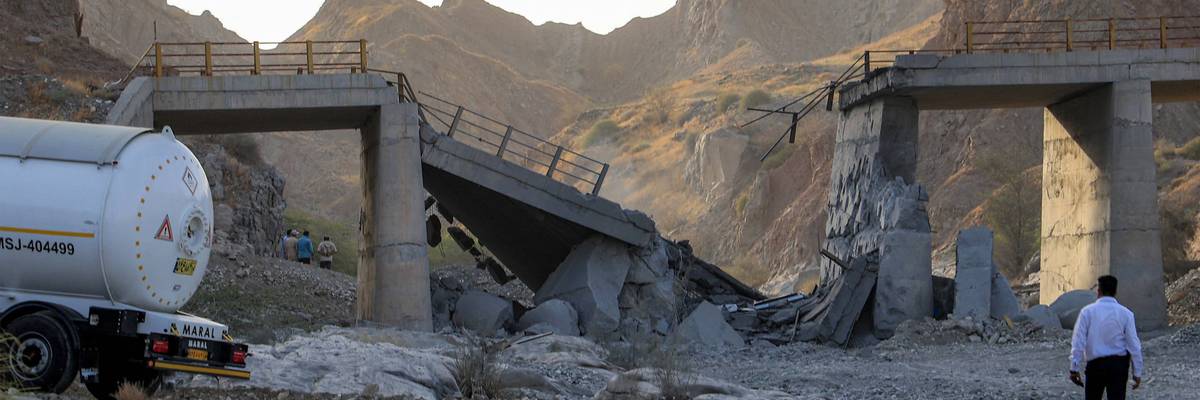
A bridge that was hit and heavily damaged by a US strike is pictured along the road connecting Roudan and Bandar Abbas in southern Iran on July 18, 2026.

(Photo by Amir Hossein KHORGOOEI/ISNA/AFP via Getty Images)

“It’s a narrative designed to give the impression that Trump is in the driving seat in this conflict. It’s been clear for some time now: He isn’t.”

Jessica Corbett, Common Dreams, Aug 01, 2026

Trita Parsi, an expert on US-Iranian relations, cast doubt on President Donald Trump’s Saturday claims that he halted planned strikes on Iran due to progress in negotiations to end the illegal conflict, launched by the Republican and Israel in February.

“The U.S.A. is locked and loaded and ready to go against the Islamic Republic of Iran, at levels of Military Terror, Strength, and Power not seen since World War II. Despite this, we have just been asked by Iran, and other Middle Eastern Countries, to hold off any attack in that the perimeters of a deal has been agreed to,” Trump wrote on his Truth Social platform at 10:05 pm Eastern time.

RECOMMENDED…

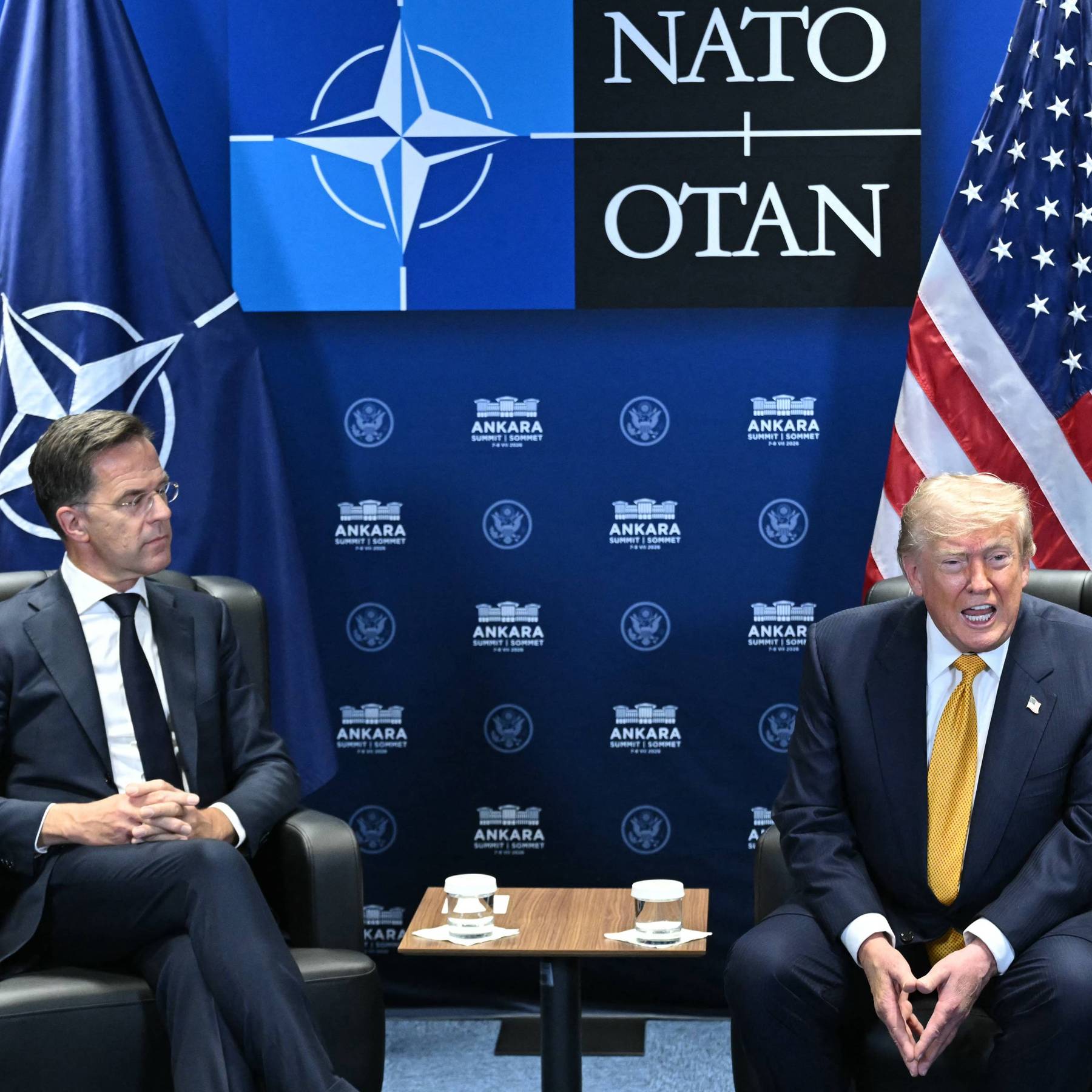
Donald Trump and Mark Rutte

‘I Don’t Want to Deal With Them’: Trump Declares Iran Truce Over as US Resumes Bombing

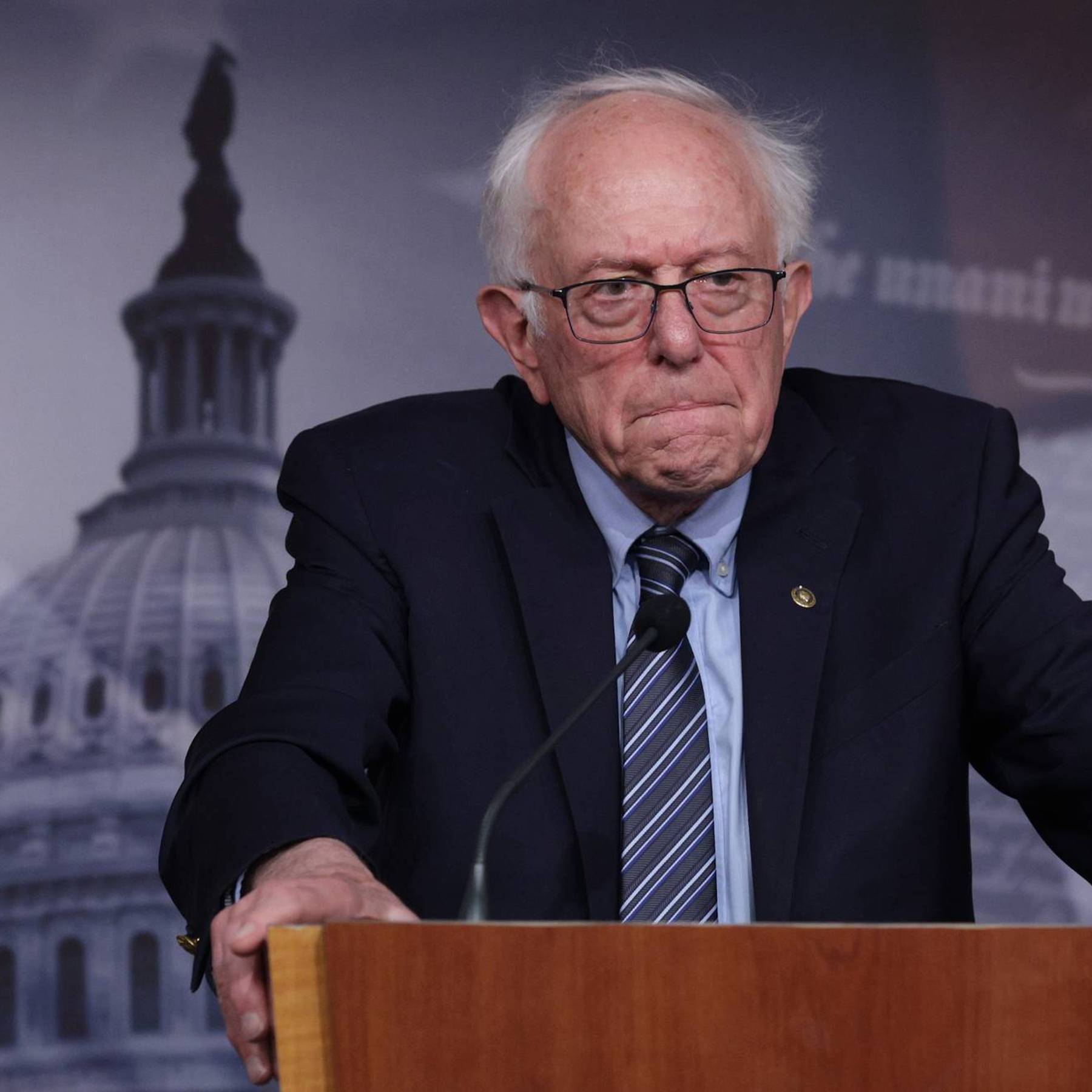
Senators Sanders And Lee Discuss Bill To Abolish Super PAC's

‘End This War’: Progressives in Congress Blast Trump’s Return to Bombing Iran

“This would include the Immediate, Complete, and Total OPENING OF THE HORMUZ STRAIT, and an end to Iran’s nuclear threat,” Trump declared—despite repeated conclusions from US intelligence agencies that the Iranian government was not aiming to build a nuclear weapon when the United States and Israel began bombing Iran five months ago.

“Based on this request, I have agreed, for the future benefit of the WORLD and, likewise, the survival of a successful and prosperous Iran, to cancel the attack, subject to being able to rapidly make a DEAL,” Trump added. “The Country of Israel joins me in this commitment. Get to work, everybody, and get it DONE.”

Sharing the post on the platform X, Parsi said, “Trump ‘cancels’ ‘planned’ ‘attack’ on Iran…” The expert struck a similarly skeptical tone during a Saturday on-air interview with CNN about the president’s announcement.

Parsi, co-founder and executive vice president of the Quincy Institute for Responsible Statecraft, said that “I don’t believe there was an imminent attack. We’ve gone through this several times, in which Trump issues these threats, and then he backs off because the other side calls his bluff.”

“Trump does not have an escalatory way out of this conflict, but what he is trying to do is to give the impression that he is in control—that he is in the driving seat,” Parsi suggested. “And I think it’s been quite clear for quite some time now he is not.”

During Trump’s first term, he tore up the Obama administration’s Iran nuclear deal, and so far, he has been unable to negotiate a replacement. Since launching this war, without authorization from Congress and in violation of the United Nations Charter, the ceasefire agreement reached in April and a June memorandum of understanding ultimately have not stopped the bloodshed.

Earlier this week, most US Senate Republicans and Democratic Sen. John Fetterman (Pa.) blocked yet another war powers resolution intended to prevent the Trump administration from launching further attacks on Iran without congressional approval—a vote that came as polling showed 64% of Americans disapprove of continuing the war, including 37% of Republicans.

The Iran War has killed thousands of Iranians and Lebanese civilians—the latter mostly from Israeli attacks purportedly targeting Hezbollah—as well as hundreds of people in other nations across the Middle East and at least 18 US service members.

In the hours before Trump’s Saturday Truth Social post, Axios revealed that “Saudi Crown Prince Mohammed bin Salman and Trump spoke on Saturday, with MBS expressing concern over the strike plans,” and “other regional powers, including Qatar, the United Arab Emirates, Turkey and Pakistan, have also pressed the US and Iran to de-escalate.”

CBS chief foreign affairs correspondent Margaret Brennan reported on social media about Saturday’s “flurry of phone calls by Iran’s top diplomat Abbas Araghchi to regional leaders, which suggests an effort underway to avoid military strikes.”

“Earlier today, the State Department advised Americans throughout the Mideast to leave the region,” Brennan noted.

Araghchi said Saturday that “any hostile action by the US or Israel—or participation or cooperation by regional countries in such actions—would be met with a decisive and proportionate response from Iran’s powerful armed forces.”

Why Israel is a friend of budding autocrats around the world

August 3, 2026

Antony Loewenstein

MEE, 3 August 2026

As global public opinion turns against Tel Aviv, the Netanyahu regime is ramping up its electoral meddling, from Europe to South America

Presidential hopeful Flavio Bolsonaro appears with his wife, Fernanda, during the launch of his candidacy in Sao Paulo, Brazil, on 25 July 2026 (Nelson Almeida/AFP)

Presidential hopeful Flavio Bolsonaro appears with his wife, Fernanda, during the launch of his candidacy in Sao Paulo, Brazil, on 25 July 2026 (Nelson Almeida/AFP)

I have spent more than a decade investigating the Israeli arms and surveillance industries, and have always understood that the Israeli state is far more involved than it publicly admits. 

The revolving door between the public and private sector is well-known, but how exactly did some of the biggest Israeli companies achieve such incredible access to governments around the world, from Saudi Arabia to Ethiopia?

Beyond Israeli Prime Minister Benjamin Netanyahu’s spyware diplomacy – a highly effective way to make friends, by offering sophisticated tools to spy on perceived enemies, journalists, human rights workers and even friends – there were always gaps in our knowledge. 

But a recent revelation provides a window into how it happened. In 2013, Shalev Hulio – one of the founders of NSO Group, which developed the phone spyware Pegasus – travelled to Panama on an Israeli diplomatic passport and stayed at the Israeli embassy. 

The vital reporting by the Organized Crime and Corruption Reporting Project and two other media outlets found that Hulio was central to NSO Group’s sale of Pegasus to Panama in 2012, and that he signed the contract with the Panamanian government. 

New MEE newsletter: Jerusalem Dispatch

Sign up to get the latest insights and analysis on Israel-Palestine, alongside Turkey Unpacked and other MEE newsletters

“Panamanian migration records obtained by reporters show Hulio arrived at Tocumen airport in Panama City from the U.S. on a Copa Airlines flight on December 3, 2013, and used a diplomatic passport to enter the country. The records state Hulio’s visit was for ‘recreation’ and list his profession as ‘diplomat,’” the report notes.

This piece of the puzzle confirms part of a story that has been hard to pin down with documents, and not just conjecture: NSO Group and many other Israeli arms and surveillance firms operate as an arm of the Israeli state, advancing its interests, biases and agendas – and operating with its full protection.

Political leverage

The vast treasure trove of information that has been gathered by NSO Group and other like-minded firms is incalculable, as they are the ones extracting data from mobile phones (as opposed to the paying clients). 

It’s thus inevitable that NSO Group, and by extension the Israeli government, have gathered information and secrets that could be used for political leverage on any number of countries. This is one way that Israel maintains such significant diplomatic leverage. 

The story about spyware and hacking battles over the last decade, and Israel’s central place within them, has not gone away. Israeli spying tools continue to be used against unsuspecting politicians, journalists and activists.

A rampaging Israeli government wants to make friends in the international community, as public opinion turns against it in an unprecedented way

From the European Parliament to Russia, the lack of regulation in the industry has allowed it to metastasize without restraint. But the threat of cyber-tools like Pegasus seems relatively minor when compared with the explosion of Israeli election interference around the globe. 

From Scotland to France, and Colombia to Honduras, Israeli companies are deploying the dark arts to push for pro-Israel candidates to win. This includes massive bot farms, spreading disinformation about pro-Palestinian candidates, and manipulating social media. As with the spyware industry, the world responds with paralysis and fear.

This is an issue that goes to the heart of democracy and the viability of its existence. Israeli electoral manipulation services are for sale to the highest bidder, and they’re already twisting what we know and understand about the very essence of free and fair elections. 

Destabilisation campaigns

Take Latin America, a region that’s experiencing a wave of Israeli-led disruption campaigns. Earlier this year, a story surfaced about alleged collaboration among the Trump administration, the Netanyahu regime, and former Honduran President Juan Orlando Hernandez, who was sentenced in the US in 2024 on massive drug-related charges – and pardoned the following year. 

The plan? Destabilise “unfriendly” governments and aim to install pro-Israel and pro-US elements to undermine left-wingers, from Colombia to Mexico (the former campaign has already been successful, with the recent win of president-elect Abelardo de la Espriella). 

Brazil may be next, with presidential candidate Flavio Bolsonaro – son of the previous president, Jair Bolsonaro – launching his campaign with an endorsement from Netanyahu. 

How Israel sabotages democracy in the Middle East

Read More »

It’s fair to presume that Israeli electoral hackers will be working night and day to assist the Bolsonaro campaign and sabotage Brazilian President Luiz ‌Inacio Lula da Silva in the run-up to the October general election.

Honduras once again appears to be a central point around which Israeli and American far-right pressures are being applied; the country is reportedly willing to give control of military bases and special economic zones to Israel and the US. 

All of this is occurring while Israel is experiencing its biggest collapse in support in its history. This is a historic change – one that could well impact western politics in the coming years. But right now, Palestine is being trampled and erased, from Gaza to the occupied West Bank. 

It’s hard to convey the scale of the displacement, violence and fear among Palestinians. This is the Israeli state on steroids, sensing a once-in-a-generation opportunity to remove as many Palestinians from their land as possible, making way for a truly Jewish supremacist and rabbinical state. 

In this context, it makes sense that a rampaging Israeli government wants to make friends in the international community, as public opinion turns against it in an unprecedented way. Electoral manipulation might seem like a desperate move from a nation on the edge, but in reality it represents an acceleration of Israel as a reliable, autocratic ally – one that proudly discriminates against minorities and Palestinians, and inspires the surging far right in the process.

The views expressed in this article belong to the author and do not necessarily reflect the editorial policy of Middle East Eye.

Antony Loewenstein is an independent journalist, best–selling author, filmmaker and co–founder of Declassified Australia. He’s written for the Guardian, the New York Times, the New York Review of Books and many others. His latest book is The Palestine Laboratory: How Israel Exports the Technology of Occupation Around the World. His other books include Pills, Powder and Smoke, Disaster Capitalism and My Israel Question. His documentary films include Disaster Capitalism and the Al Jazeera English films West Africa’s Opioid Crisis and Under the Cover of Covid. He was based in East Jerusalem from 2016 to 2020.

Spanish commentators accuse Israel and US of involvement in Ceuta crisis

August 1, 2026

Some 60,000 people crossed into Ceuta from Morocco this week, including around 8,000 children

A Spanish soldier escorts a group of migrants on their way back towards the Moroccan border, following their illegal crossing into the Spanish enclave of Ceuta, on August 1, 2026.

A Spanish soldier escorts a group of migrants on their way back towards the Moroccan border, following their illegal crossing into the Spanish enclave of Ceuta, on 1 August 2026 (AFP)

Imran Mulla

MEE, 1 August 2026

A Spanish minister has suggested Israel was stirring problems over 60,000 migrants crossing from Morocco into Spain’s North African enclave of Ceuta. 

Israel’s ambassador to the United Nations, Danny Danon, posted on X on Friday: “Spain, which never misses an opportunity to lecture Israel, has declared a state of emergency in Ceuta following the crisis over its immigration policy.

“Maybe before it continues lecturing us, it’s time it explained to the world why it still maintains colonial enclaves in Africa,” he added.

Sharing Danon’s post, Spanish Transport Minister Oscar Puente remarked: “Well, it all seems to be becoming quite clear.”

This comes as numerous Spanish politicians and commentators have alleged that Israel and the United States have sought to cause trouble for Spain in retaliation for the Spanish government’s opposition to the US-Israeli war on Iran and Israel’s war on Gaza. 

New MEE newsletter: Jerusalem Dispatch

Sign up to get the latest insights and analysis on Israel-Palestine, alongside Turkey Unpacked and other MEE newsletters

Gabriel Rufian, the parliamentary spokesperson for the Republican Left of Catalonia, a left-wing party, argued that the crisis served American and Israeli interests.

Spanish journalist Jose Vizner, meanwhile, shared a 2019 social media post by Yair Netanyahu, the son of Israel’s prime minister, discussing alleged Israeli support for separatism in Ceuta.

Prominent Spanish actor Javier Bardem shared a video accusing Israel of being behind the crossings.

Former Portuguese minister and commentator Bruno Macaes said that “whether or not the US and Israel were involved before the fact, they were deeply involved and intensely active after the fact, especially trying to use it against the current Spanish government”.

Ceuta, a Spanish territory on Morocco’s Mediterranean coast, and Melilla, another Spanish autonomous city on the country’s northern coast, share the only land borders between the European Union and Africa.

Some 60,000 people crossed into Ceuta from Morocco this week, including around 8,000 children, according to the Spanish government.

Footage posted online showed people swimming into the enclave around the border barrier, with some wearing swimsuits and using flotation rings to make the dangerous journey.

Diplomatic spats over migrant crossings

France said it was increasing checks along its border with Spain, while Italy threatened to suspend Spain from the EU’s internal open-border scheme.

But on Saturday, Spain said most migrants, around 48,000, had already returned to Morocco, ushered by Spanish soldiers.

Videos online showed migrants hiding in tunnels and walking around on the streets of Ceuta.

At least 67 people are believed to have died while attempting to reach the enclave.

It is unclear what prompted the wave of attempted crossings, but there have previously been similar incidents.

In May 2021, 8,000 Moroccans entered the enclave amid a diplomatic dispute between Spain and Morocco over Western Sahara. At the time, Spain accused Morocco of using migrants as leverage, and a Moroccan minister said Morocco was justified in relaxing its border control as a response to the diplomatic dispute.

Thousands make dramatic sea crossing into Ceuta from Morocco

Read More »

Some commentators have accused Morocco of facilitating this week’s crossings, pointing to the Moroccan government’s anger at Spanish Prime Minister Pedro Sanchez’s recent visit to Algeria, Spain’s biggest gas supplier.

Lorenzo Gabrielli, a senior researcher at Pompeu Fabra University in Barcelona who researches migration in Ceuta, told the New York Times: “It is impossible for nearly 50,000 people to cross the border between Morocco and Spain in a single day without Morocco having a hand in it.”

Ceuta President Juan Jesus Vivas condemned the migration as a “violation of Spain’s territorial integrity”.

Morocco’s ambassador to Spain, Karima Benyaich, said: “We have always prioritised legal, orderly and safe migration for all.”

She insisted the crossings had been against the wishes of the Moroccan government.

Meanwhile, US President Donald Trump called the situation a “catastrophe” and added that “if we’re not in office our country will be invaded at levels that will make Spain look small time”.

Middle East Eye delivers independent and unrivalled coverage and analysis of the Middle East, North Africa and beyond. To learn more about republishing this content and the associated fees, please fill out this form. More about MEE can be found here.

Israel ‘racing’ to deepen US integration amid collapsing public support: Report

July 31, 2026

Congressman Thomas Massie says Israel’s merger with the US military constitutes a loss of US sovereignty

News Desk, The Cradle, JUL 30, 2026

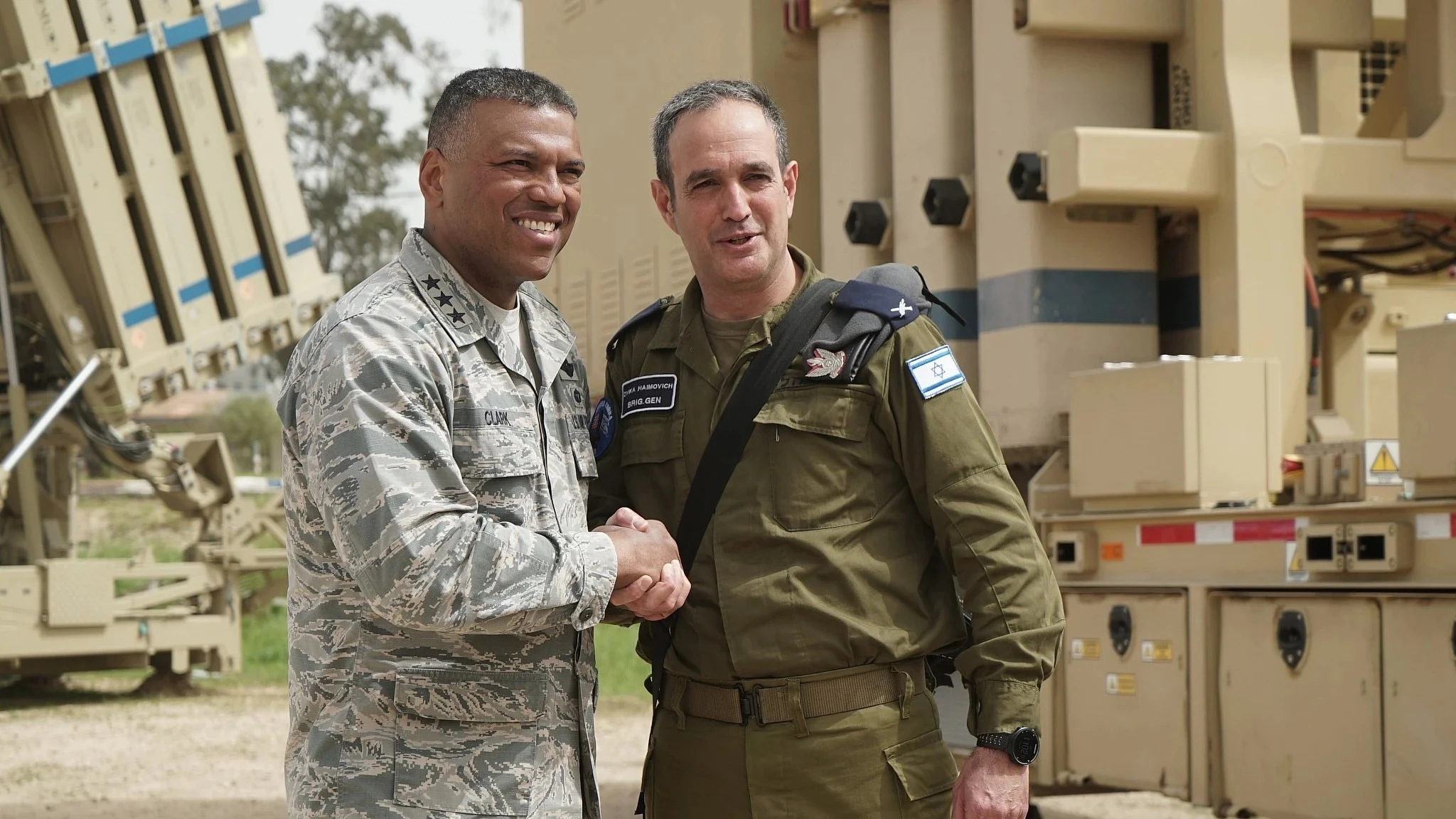
(Photo credit: Israel Defense Forces)

Israel is pursuing a long-term strategy to enmesh itself within the US military, intelligence, and defense establishment, fearing that a collapse in US public support for Israel could otherwise jeopardize billions in future US aid, Capital & Empire reported on 30 July.

According to a new US intelligence assessment, “Israeli officials believe the political fight over Israel in the United States is becoming harder to win, and that the era of indefinitely securing billions of dollars in annual military aid is coming to an end.”

Israeli officials are therefore seeking ways to embed the Israeli military within the US military in “ways future administrations would struggle to unwind,” according to an assessment described to Capital & Empire by US officials.

Currently, Israel receives military aid from the US that must be approved annually through transparent votes by lawmakers in Congress and the Senate.

But the collapse in public support in the US for Israel following the genocide of Palestinians in Gaza that started in October 2023 has put such future US military aid to Israel in jeopardy.

The assessment, written primarily by the CIA, discusses expanding intelligence cooperation with Israel and hosting a permanent US military base on Israeli territory.

It says Israeli officials have been grooming prominent US tech executives to build long-term political and financial support for the effort.

Israel has been advancing this agenda since earlier this year, lobbying lawmakers to pass the $1.1-trillion National Defense Authorization Act (NDAA).

The NDAA includes Section 219, which integrates US military intelligence and the defense industrial base with the Israeli military.

The House of Representatives passed a version of the bill on 22 July. The bill now heads to the Senate, where it must be approved before it is sent to US President Donald Trump for his signature.

The vast majority of Democratic lawmakers in the House voted against the bill, as public shows of support for Israel are becoming a political liability.

However, six House Democrats, Henry Cuellar, Don Davis, Jared Golden, Vicente Gonzalez, Adam Gray, and Marie Gluesenkamp Perez joined Republicans to vote for the bill, just enough to allow it to pass.  

Congressman Thomas Massie of Kentucky, who lost in a Republican primary for re-election in May in part due to the Israel lobby, called Section 219 of the NDAA “a betrayal of our sovereignty.”

Earlier this year, Israeli Prime Minister Benjamin Netanyahu claimed he wanted to end Israel’s reliance on US military aid.

However, the assessment states that the CIA believes that Netanyahu made such statements as part of a plan to replace highly unpopular “foreign aid with deeper, longer-lasting forms of military and industrial integration.”

“From Israel’s perspective, embedding the alliance more deeply within the US national security apparatus would make it far more difficult for future administrations to pressure Israel by slowing or withholding arms transfers,” Capital & Empire wrote.

During former US president Joe Biden’s term, Secretary of State Antony Blinken needed to take several emergency measures to ensure that US bombs kept flowing to Israel as it perpetrated the genocide of Palestinians. 

Providing US military aid to Israel as it committed war crimes in Gaza was not only unpopular among Biden’s Democratic base, it was also illegal under US law.

Blinken moved ahead with the bomb shipments, which helped Israel’s Air Force kill tens of thousands of children, despite public backlash.

About 60 percent of US adults now hold an unfavorable view of Israel, according to an April Pew Research Center survey. 

An Economist/YouGov poll published on 28 July found that 49 percent of US citizens said Netanyahu should be taken into custody if he sets foot on US soil while subject to an International Criminal Court (ICC) arrest warrant, whereas only 27 percent said he should not be. Netanyahu visited the White House earlier this week. 

If the NDAA is passed with section 2019 included, Israel will not risk future US politicians buckling to public pressure to end the arms flows it needs to continue the genocide in Gaza and bombing and ethnic cleansing of southern Lebanon.

According to the intelligence assessment, Israeli officials also want Israeli technology, intelligence, and weapons systems to be embedded within the US military itself, making the US increasingly reliant on Israel.

The assessment says Israeli officials want to convince US officials and lawmakers that Israel is a “model ally” whose relationship with the US is mutually beneficial, rather than a liability.

According to some reports, Israel played a key role in dragging the US into its current war with Iran. Israel is no longer participating directly in the war, which is highly unpopular in the US and costing taxpayers some $2 billion a day.

Amnesty: India sent 2,596 arms shipments to Israel during genocide in Gaza

July 30, 2026

Amnesty said its ‘conservative’ methodology meant it was likely underestimating the true extent of India’s contribution to Israel

Israeli Prime Minister Benjamin Netanyahu and his Indian counterpart, Narendra Modi, attend a press conference in Jerusalem, on 26 February 2026 (Gil Cohen-Magen/AFP)

Azad Essa

Published date: 30 July 2026 00:01 BST | Last update:14 mins 57 secs ago

Indian state-owned and private companies shipped at least 2,596 consignments comprising hundreds of thousands of arms, ammunition and military components to Israel during the genocide in Gaza, a new Amnesty International report has revealed. 

The shipments, sent between 7 October 2023 and 30 November 2025, included machine-gun components, 155 mm high-explosive artillery shells supplied to Elbit Systems, explosive warheads for the SkyStriker “kamikaze” drones – similar to those discovered amid the ruins in Khan Younis – and armoured vehicle components destined for major suppliers to the Israeli military.

According to Amnesty, these amounted to 564,970 parts of explosive ordnance (drone warheads, artillery shell casings and others), 390,516 small arms parts for military-grade weapons, and 298 components of military vehicles to large Israeli companies that supplied the Israeli armed forces.

As of 29 July 2026, at least 247,387 Palestinians have been either killed or injured since Israel launched its military campaign in Gaza, following the Hamas-led attacks on southern Israel on 7 October 2023.

The report, “Made in India: The Supply of Weapons and Ammunition to Israel”, published on Thursday, said its findings were “based on a deliberately conservative methodology”, and were likely to underestimate the “true extent of India’s contribution to Israel’s military supply chain”.

Rising Indian complicity 

The report is the latest in a series alleging that India has materially supported Israel’s genocide in Gaza, following earlier allegations that New Delhi supplied combat drones, bombs and weapons components to Israel after October 2023.

In May, the Palestinian-led Boycott, Divestment and Sanctions (BDS) movement and No Harbour for Genocide warned of a “flood” of military supplies from India to Israel. 

New MEE newsletter: Jerusalem Dispatch

Sign up to get the latest insights and analysis on Israel-Palestine, alongside Turkey Unpacked and other MEE newsletters

“Israel has a huge domestic production, but they rely on specific components, whether it’s like high-end technology material for aerospace or bulk materials such as military steel,” a spokesperson for No Harbour for Genocide told Middle East Eye at the time. 

Likewise, an Al Jazeera investigation based on Israeli Tax Authority import data found that India was the second-largest exporter of military-related goods to Israel between October 2023 and October 2025. 

Israeli army reservist ‘flees’ India after war crimes allegation filed

Read More »

Al Jazeera noted the data likely represented only a partial picture of total arms transfers to Israel and did not establish the end use of the shipments in Gaza.

Likewise, Amnesty’s investigators based their analysis on shipments classified under specific Harmonized System (HS) codes, the internationally used customs classification system for traded goods.

These included HS codes 9301–9307, which cover weapons, ammunition and their parts and accessories; and HS code 8710, which covers armoured and fighting vehicles and their components. 

Researchers excluded shipments labelled only with internal product or part numbers, where it was not possible to determine whether the items were military or civilian.

It also excluded hundreds of shipments of dual-use small-arms components, as well as weapons, parts and ammunition likely intended for anti-missile defence systems.

Amnesty said its deliberately conservative methodology meant its findings were likely to underestimate the true extent of India’s contribution to Israel’s military supply chain.

Nonetheless, its findings revealed there were several companies, including state-owned ventures, involved in supplying military aid to Israel.

It said it wrote to nine companies as well as the Indian state but did not receive a reply by the time of publication. 

“In light of the International Court of Justice’s provisional measures orders recognizing a plausible risk of genocide against Palestinians in Gaza, the Indian authorities cannot credibly argue that they did not know that continuing to authorize and facilitate arms transfers to Israel carries a substantial risk of contributing to serious violations of international law,” Agnes Callamard, Amnesty’s secretary general, said in a statement. 

Callamard added that while the Israeli military continued to inflict death and suffering in Gaza, “Indian companies continued to profit by supplying components and munitions destined for Israel’s defence sector.”

India-Israel defence ties

India-Israel ties have accelerated over the past decade under the leadership of Prime Ministers Narendra Modi and Benjamin Netanyahu. 

India is the world’s largest purchaser of Israeli weapons, and several Israeli arms manufacturers have established production facilities in the country through joint ventures with Indian companies.

Earlier this year, during Modi’s visit to Israel, the two countries upgraded ties to a Special Strategic Partnership for Peace, Innovation and Prosperity.

The relationship has since expanded further, with a series of new memorandums of understanding and reports of potential defence partnerships, including discussions over India manufacturing Iron Dome interceptor missiles for Israel. 

Israel to install statue of Indian Maratha king as gesture of friendship

Read More »

Diplomatically, the Indian government has been one of Israel’s staunchest supporters.

New Delhi has refused to join South Africa’s case against Israel at the International Court of Justice, which alleges violations of the Genocide Convention, and has rejected calls to impose an arms embargo on Israel. 

It has also cracked down on pro-Palestine protests and activism within India.

When Indian civil society groups petitioned the Supreme Court in September 2024 to halt arms exports, the court dismissed the case, ruling that decisions on foreign policy fall within the government’s domain, not the judiciary.

External Affairs Minister Subrahmanyam Jaishankar has also maintained that India’s arms exports are guided by the country’s “national interest”.

“The issue of India’s exports, including India’s exports of anything which directly or indirectly has any military implications, is guided by our national interest and by our commitments to various regimes,” Jaishankar said in December 2024.

“Where Israel is concerned, it is a country with which we have a strong record of cooperation in national security. It is also a country that has stood by us at different moments when our national security was under threat,” he added.

UN expert Albanese says Khan’s removal ‘lines up neatly with fight to neutralise Netanyahu’s warrant’

July 27, 2026

UN special rapporteur on Palestine Francesca Albanese says the ICC’s vote on Karim Khan ‘proves that justice does threaten apartheid Israel’

UN Special Rapporteur for the Palestinian Territories occupied since 1967, Francesca Albanese gestures as she speaks during a public event hosted by the Olof Palme International Center in Belgrade on March 17, 2026.

Francesca Albanese speaks during a public event hosted by the Olof Palme International Centre in Belgrade on 17 March 2026 (AFP)

MEE staff

Published date: 26 July 2026 10:43 BST | Last update:23 hours 56 mins ago

The UN’s special rapporteur on the occupied Palestinian territories on Saturday said the removal of International Criminal Court (ICC) chief prosecutor Karim Khan cannot be read in isolation from the campaign to overturn the arrest warrant against Israeli Prime Minister Benjamin Netanyahu.

“Khan’s removal lines up neatly with the fight to neutralise Netanyahu’s arrest warrant. Coincidence is a luxury intl law can no longer afford,” Francesca Albanese wrote on X. 

“This proves that justice DOES threaten Apartheid Israel & Co. So if the ICC is paralysed, lawyers and judges worldwide must do more.”

Albanese’s statement was in response to an Israeli media report that said Israel’s foreign minister, Gideon Saar, “played an active role” in efforts to remove Khan.

The report cited a senior Israeli official as saying that “Saar oversaw a dedicated task force and employed intensive diplomatic efforts aimed at securing Khan’s removal from office”.

New MEE newsletter: Jerusalem Dispatch

Sign up to get the latest insights and analysis on Israel-Palestine, alongside Turkey Unpacked and other MEE newsletters

Khan’s decision to seek arrest warrants for Netanyahu and former defence minister Yoav Gallant in May 2024 over alleged war crimes in Gaza has unleashed a ferocious campaign of threats and sanctions on him and those supporting the court’s work on Palestine.

Albanese, an Italian human rights lawyer who has held the UN mandate since 2022, was reacting to the vote by ICC member states at a special session in New York to dismiss Khan over misconduct claims. 

Eighty-two of the court’s 125 states parties backed removal in a secret ballot, exceeding the 63 needed. Thirteen voted against and 15 abstained. It is the first time a sitting ICC prosecutor has been removed. 

‘Pro-apartheid camp’

Albanese has previously accused a “pro-apartheid camp” of seeking to overthrow Khan.

In March, after Middle East Eye revealed that a panel of three judicial experts appointed by the court’s own oversight body had unanimously cleared Khan, Albanese wrote that “the pro-Apartheid camp is already working to remove him ANYWAY: those who stand for justice must ensure this attempt fails”.

The panel found that the findings of UN investigators “do not establish misconduct or breach of duty under the relevant framework”. 

The Bureau of the Assembly of States Parties, an executive body of 21 diplomats, voted weeks later to set that conclusion aside. 

MEE revealed this month that the bureau had also changed the voting rules, collapsing a planned two-stage vote into a single motion and lowering the effective threshold for dismissal.

What next for the ICC and the Palestine investigation after Karim Khan’s removal?

Read More »

Albanese was sanctioned by the Donald Trump administration in July 2025, days after publishing a report naming more than 60 companies she said were profiting from Israel’s occupation. 

Khan was the first ICC official designated under the same executive order, in February 2025, over the warrants sought for Netanyahu and Gallant.

Eleven ICC officials had been sanctioned by the end of last year, including both deputy prosecutors and several judges who ruled against Israel.

The warrants for Netanyahu and Gallant remain in force and can only be withdrawn by judges.

Israel has been calling for the warrants to be dropped.

Commenting before the prosecutor’s dismissal had been officially confirmed, Saar called on the court to drop the arrest warrants against Israeli officials, reiterating Israel’s debunked claim that it was rushed to distract from sexual misconduct allegations.  

“These warrants, issued against a country that is not even a member of the ICC, should never have been sought in the first place and should be revoked immediately,” he wrote on X.   

Ever since the warrants were issued by pre-trial judges in November 2024, Israel has mounted a series of legal challenges aimed at invalidating them.

Two are still pending, including Israel’s argument that the court has no jurisdiction over its nationals at all, since Israel isn’t a state party to the Rome Statute.

The office of the prosecutor is now headed by deputy prosecutors Nazhat Shameem Khan and Mame Mandiaye Niang, both sanctioned by the US in August under the same executive order that targeted Albanese and Khan.

Following the removal vote, the ICC’s office of the prosecutor released a statement saying that its work would continue without interruption. 

Elections for a new prosecutor should follow, but a timeline has yet to be announced by the court’s governing body.

Nearly All US Infrastructure in Iraq’s Erbil Has Been Destroyed – Iranian Army

July 26, 2026

The Palestine Chronicle, July 26, 2026

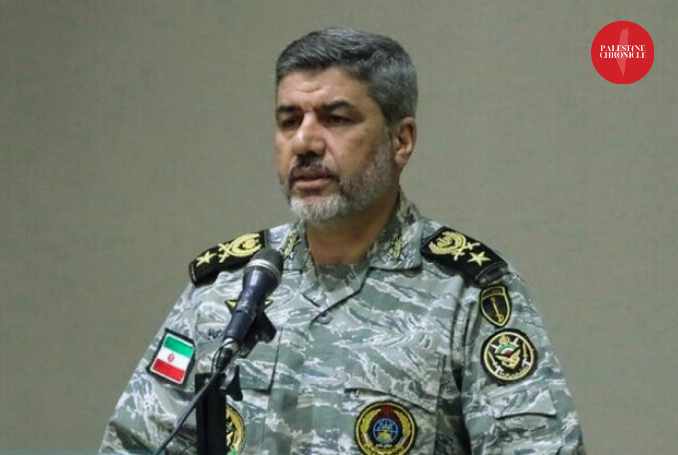
Brig. Gen. Mohammad Reza Akraminia, spokesman for the Iranian army. (Photo: Mehr News)

By Palestine Chronicle Staff  

The Iranian army said nearly all US infrastructure in Erbil was destroyed and anti-Iran groups there have lost operational capability.

Key DevelopmentsThe Iranian army announced on Saturday that nearly all US military infrastructure in the Iraqi city of Erbil has been destroyed, saying anti-Iran groups operating there no longer possess the capability to carry out operations against the Islamic Republic.

Brig. Gen. Mohammad Reza Akraminia, spokesman for the Iranian army, said the damage inflicted during the recent fighting had effectively neutralized US infrastructure in Erbil and significantly reduced the operational capabilities of hostile groups based in the city.

‘No Longer Operational’

Speaking to Iranian state television, Akraminia said “almost all” US infrastructure in Erbil had been destroyed.

He added that anti-Iran groups previously operating from the Iraqi Kurdistan Region had been stripped of their ability to conduct operations against Iran.

According to Akraminia, the United States maintains extensive military capabilities throughout the region, southern Europe, and the Mediterranean, and is now attempting to replace equipment and assets lost during the recent conflict.

He stressed that Iran remains prepared to resume military operations should hostilities restart, saying the country’s armed forces would continue fighting until Washington realizes it cannot impose its will on Iran through military aggression.

America is destroying our moral credibility with threatening war crimes in Iran and having provided aid for war crimes in Gaza.

IRGC Details US Losses

Earlier on Saturday, IRGC spokesman Hossein Mohebi provided additional details regarding US military losses during the recent 15-day confrontation.

He said Iranian forces destroyed 11 US aircraft and helicopters while they were on the ground inside American military bases.

Mohebi also said Iranian forces destroyed 17 reconnaissance and operational drones, including eight newly introduced unmanned aircraft that had not previously been used.

According to the IRGC, destroyed US aircraft included an F-15 fighter jet, a P-8 maritime patrol aircraft, a C-17 military transport aircraft, and eight aerial refueling aircraft.

The figures form part of a series of updates released by Iranian military officials detailing the results of Iran’s operations against US military installations across the region.

New Generation of Drones

Akraminia also said Iran has begun deploying attack drones more advanced than the Arash-2.

He explained that while the Arash-2 drone was used during the recent 40-day war, the Iranian armed forces are now operating a newer generation of drones with greater destructive power, longer range, improved accuracy, and enhanced operational capabilities.

He added that technical details about the new drones have not yet been made public.

The latest statements come amid continued tensions following the recent US military campaign against Iran, which centered largely on the country’s southern regions.

Iran responded with a series of military operations targeting US bases across the Gulf region, as well as installations in Syria and Jordan, while Iranian military officials continue to release assessments of the damage inflicted during the confrontation.

(Iranian Media, Al Mayadeen, Anadolu, PC)

House Passes 2027 NDAA With Section to Integrate US and Israeli Militaries

July 23, 2026

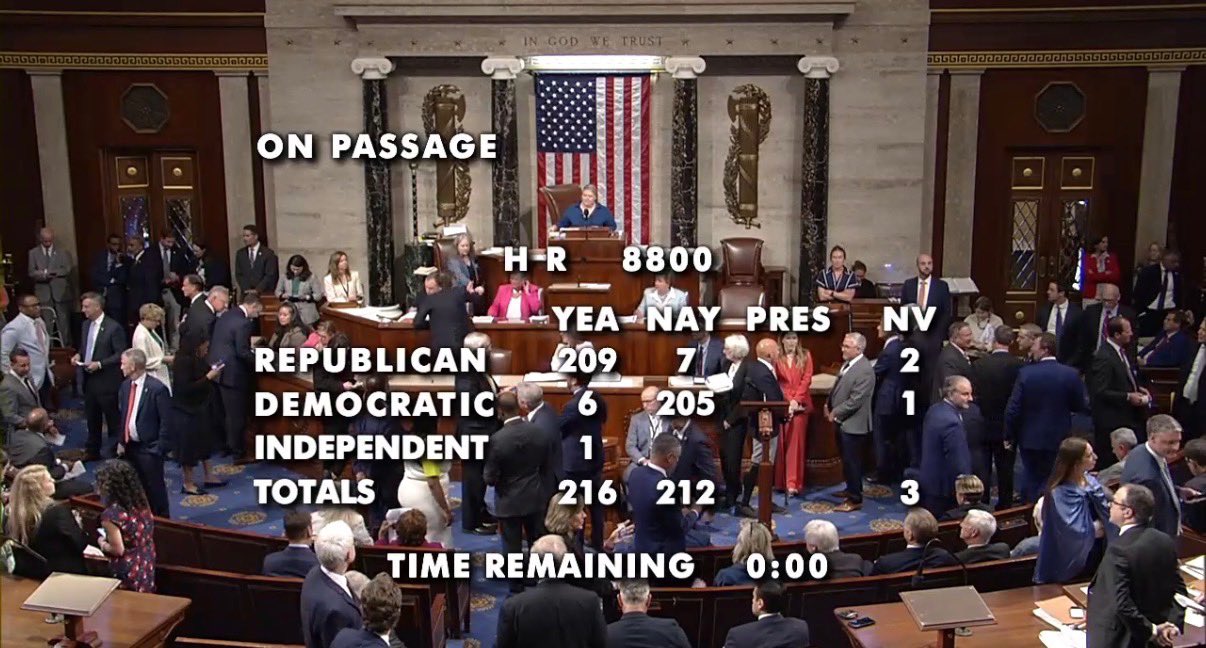
The bill passed in a 216-212 vote, with six Democrats supporting it and seven Republicans voting no

by Dave DeCamp, Antiwar. com, | July 22, 2026 at 5:51 pm ET | Israel, ndaa

The House on Wednesday passed its version of the massive $1.15 trillion 2027 National Defense Authorization Act (NDAA), which includes Section 219 (formerly Section 224), a provision to further integrate the US and Israeli militaries, a scheme Israeli Prime Minister Benjamin Netanyahu has described as “my plan.”

The NDAA passed largely along party lines in a 216-212 vote. Seven Republicans voted against it, and two didn’t vote, meaning that the Democrats could have blocked the legislation, but six Democrats voted yes on the sweeping military spending bill despite President Trump’s continued war against Iran, which was launched without congressional authorization.

Screenshot from C-SPAN showing the vote tally

The Democrats who voted for the bill include Reps. Henry Cuellar (TX), Donald G. Davis (NC), Jared F. Golden (ME), Vicente Gonzalez (TX), Adam Gray (CA), and Marie Gluesenkamp Perez (WA).

The Republicans who voted against the legislation include Reps. Thomas Massie (KY), Chip Roy (TX), Anna Paulina Luna (FL), Harriet M. Hageman (WY), Elijah Crane (AZ), Tim Burchett (TN), and Josh Brecheen (OK).

The vote came after the House Rules Committee didn’t allow a vote on an amendment introduced by Rep. Thomas Massie (R-KY) to strip Section 219 from the NDAA. Rep. Ro Khanna (D-CA), who supported Massie’s effort, has said he would “fight to strip this amendment in the conference between the House and the Senate,” when the two chambers negotiate the final NDAA.

The Senate’s version of the NDAA also includes a provision to integrate the two militaries, but the legislation was blocked by Senate Democrats last week over President Trump’s war with Iran, which hasn’t been authorized by Congress and has continued despite both chambers passing a concurrent War Powers Resolution directing the president to end the conflict.