Oil, Empire, and the Price of War: How Energy Became the Ultimate Weapon

May 4, 2026

ScheerPost, May 2, 2026, big oil profits, economic warfare, global energy crisis, inflation crisis, iran war, oil geopolitics, opec, petrodollar system, Strait of Hormuz, us foreign policy

In one of the scariest moments in modern history, we're doing our best at ScheerPost to pierce the fog of lies that conceal it but we need some help to pay our writers and staff. Please consider a tax-deductible donation.

Joshua Scheer

This war isn’t just being fought with missiles—it’s being waged through oil markets, currencies, and corporate balance sheets. And while the world watches bombs fall, something quieter—and far more consequential—is happening: a global energy system is being weaponized in real time.

This on The Geopolitical Economy Report with Ben Norton. Ben digs into the role oil plays at the center of the war on Iran—and how the United States turned itself into the world’s top oil producer to weaponize that power globally. He breaks down the push to sideline OPEC, the UAE’s dramatic exit, and the political fiction of American “energy independence.”

Oil Was Never Just Fuel — It Was Always the Weapon

One of the clearest lessons of the war on Iran isn’t merely military. It’s structural. Oil is not just a commodity. It is power. It is leverage. It is the bloodstream of the global economy—and increasingly, the preferred instrument of empire.

For decades, the global system has revolved around the petrodollar, a quiet but foundational arrangement ensuring that most of the world’s oil is bought and sold in U.S. dollars. Even today, an estimated 80% of global oil transactions still run through that system. But the architecture is showing cracks. Sanctioned nations such as Russia, Iran, and Venezuela have begun trading outside the dollar, challenging the financial scaffolding that has long underpinned U.S. dominance.

Yet the story is not simply one of decline. Because while the dollar faces pressure, the United States has quietly secured something arguably more consequential: control over production itself.

In just over a decade, the U.S. transformed from a major importer into the largest oil producer on Earth, responsible for roughly 14–15% of global output. The shale boom didn’t just reshape domestic energy markets—it rewired the geopolitical landscape. Washington no longer merely polices the system; it helps shape it directly. And in wartime, that shift becomes decisive.

Crisis for the World, Windfall for Big Oil

As the conflict with Iran escalated, global oil prices surged—nearly doubling in 2026. For billions of people, that spike translates into inflation, food insecurity, and economic instability. For poorer nations, it is nothing short of devastating.

But for U.S. and Western oil corporations, the crisis has been a windfall. Profits have soared, with some companies reporting earnings double those of the previous year. As supply chains fracture and traditional exporters are destabilized or cut off, American firms have stepped in—expanding exports to Europe and Asia and filling the void left by war.

The pattern is unmistakable: global pain, concentrated gain.

The Strait That Can Shake the World

At the center of this crisis sits one of the most strategically vital chokepoints on Earth: the Strait of Hormuz. Before the war, roughly 20% of the world’s traded oil passed through this narrow corridor each day. When Iran moved to disrupt it, the message was not subtle—it was existential.

Shut the strait, and the global economy trembles.

This is what modern warfare looks like: not just territory and airspace, but shipping lanes, pipelines, and market flows. Control the flow of oil, and you control the tempo of the world economy.

Breaking OPEC, Rewriting Power

Another quiet earthquake has reshaped the landscape: the United Arab Emirates’ withdrawal from OPEC. On paper, it looks bureaucratic. But historically, OPEC represented something radical—a collective attempt by Global South nations to control their own resources and wrest power from Western oil giants.

Weakening OPEC weakens that collective leverage. And it strengthens something else.

Washington has never opposed cartels in principle—it has opposed cartels it doesn’t control. The long‑term objective has been consistent: ensure that corporations aligned with U.S. power, not sovereign states, set the terms of the global energy market.

The Myth of “Energy Independence”

The familiar talking point insists that the U.S. is “energy independent,” insulated from global chaos. It isn’t.

Oil is priced globally. When prices spike, everyone pays—regardless of where the oil originates. The U.S. still imports millions of barrels per day, and its infrastructure depends on specific grades of crude it does not produce in sufficient quantities. “Independence” is political messaging, not economic reality.

From Oil Shock to Food Crisis

And here is where the crisis becomes catastrophic. Oil is not just fuel—it is fertilizer, transport, and the backbone of modern agriculture. As energy prices surge and supply chains fracture, farmers worldwide are already facing shortages.

The likely result is grimly predictable: rising food prices, shrinking harvests, and widespread hunger. This is not speculation. It is the logical downstream effect of an energy shock of this scale.

The Real Takeaway

This war is not contained. It is not regional. It is not temporary. It is systemic.

It is reshaping how power works—who controls energy, who sets prices, and who pays the cost. And as always, the burden falls downward: onto workers, onto poorer nations, onto the global majority.

Meanwhile, at the top, the machinery hums. Profits rise. Influence expands. The line between state policy and corporate interest blurs even further.

Oil was never just fuel. It was always the weapon. And now, it is being used exactly as intended.

𝐉𝐨𝐡𝐧 𝐉. 𝐌𝐞𝐚𝐫𝐬𝐡𝐞𝐢𝐦𝐞𝐫: 𝐓𝐡𝐞 𝐅𝐚𝐥𝐥𝐨𝐮𝐭 𝐟𝐫𝐨𝐦 𝐭𝐡𝐞 𝐈𝐫𝐚𝐧 𝐃𝐞𝐛𝐚𝐜𝐥𝐞

May 3, 2026

John’s Substack, May 01, 2026 (YouTube)

On 30 April 2026, I was on “Deep Dive” with Lt. Col. (ret.) Danny Davis talking about what President Trump is likely to do in Iran over the next few weeks and the consequences of that war on the global order.

It is very difficult to know for sure what Trump will do in Iran, as he is desperate and he was foolish enough to start this disastrous war in the first place. My guess is that he will continue the naval blockade until he is forced to accept defeat and cut a deal because the world economy is about to go over the precipice. There is no way, however, that he wins this war.

It is stunning how unsuccessful the US and Israel have been in this war. Not only have they failed to achieve any of the four major goals laid out before the war, but Iran now has a stranglehold on the Strait of Hormuz, and — as Danny and I talked about at some length — the US has wrecked the security architecture that it built up with the Gulf states before 28 February 2026. And don’t forget that the US, which has been committed to pivoting to East Asia to contain China since the early days of President Trump’s first term (2017), is now pivoting away from Asia to the vortex in the Middle East. What a disaster!

‘I Refuse to Be Complicit’: Man Scales 168-Foot Bridge in DC Demanding End to Iran War

May 3, 2026

    Guido Reichstadter in "No War" shirt

    Guido Reichstadter scaled the Frederick Douglass Memorial Bridge in Washington, DC on Friday, May 1, 2026 in order to protest the Iran War started by the President Donald Trump just over two months ago.

    (Photo: bystander video/screenshot/via Al-Jazeera)

    “I’m at the top of this bridge,” says Guido Reichstadter, “because the government of the United States is engaged in acts of mass murder in my name.”

    Jon Queally, Common Dreams, May 02, 2026

    Forty-five-year-old social justice activist named Guido Reichstadter, on Saturday morning, was still perched atop the Frederick Douglass Memorial Bridge in Washington, DC, after first scaling the structure Friday afternoon in protest against President Donald Trump’s disastrous war against Iran, now in its third month, and the rapid and unregulated spread of artificial intelligence technology.

    As Reichstadter, who described himself as the father of two children with master’s degrees in both math and physics, said in a video posted to social media on Friday: “Hi, my name is Guido Reichstadter, and I’m currently occupying the top of the Frederick Douglass memorial bridge in Washington, DC.”

    RECOMMENDED…

    Lego video honoring Guido Reichstatder

    ‘The World Is Proud of You, Guido’: American Peace Activist Honored in Iranian Lego Video

    Western Media Called Out for 'Misleading' Portrayal of Iranians Defending Infrastructure as 'Human Shields'

    Western Media Called Out for ‘Misleading’ Portrayal of Iranians Defending Infrastructure as ‘Human Shields’

    “I’m calling on the people of the United States,” he continued, “to bring an immediate end to the Trump regime’s illegal war on Iran and the removal of the regime’s power through mass nonviolent direct action and non-cooperation.”

    “I woke up on February 28th, and I found that hundreds of school children had been blown apart. I think there are many millions of Americans who reject the war in principle, but whose actions have not yet been sufficient to bring it to an end.”

    In a separate video, he explained he was at the top of the bridge, which rises approximately 168 feet above the Anacostia River at its highest point, “because the government of the United States is engaged in acts of mass murder in my name. And I refuse to be complicit in that.”

    While bridge traffic in both directions was closed at times on Friday and overnight, the bridge is reportedly open to traffic Saturday morning, though with some lane restrictions, as law enforcement said a “barricade situation” with the protester continued.

    Reichstadter, who has staged high-profile protests in the past, spoke to Al-Jazeera via video stream on Friday to explain his actions and call for an end to the war that he says—and tens of millions of other Americans agree, according to polling—is a colossal failure by the Trump administration.

    “I mean, it’s an atrocity, right?” he said when asked what motivated him. “I woke up on February 28th, and I found that hundreds of school children had been blown apart. I think there are many millions of Americans who reject the war in principle, but whose actions have not yet been sufficient to bring it to an end.”

    Democratic members of Congress, both in the US House and Senate, have now brought several War Powers Resolutions to the floor in an effort to end the US attack on Iran, which now includes a naval blockade of the country, but Republican majorities in both chambers, backing Trump, have thwarted those efforts.

    Poll after poll, meanwhile, shows that Reichstadter is completely correct in stating that millions of people “reject the war,” but still the war continues even after a 60-day deadline, according to the War Powers Act of 1973, which says the president must either end military operations or get the explicit approval of Congress, which came and went on Friday.

    On Friday, a video showed Reichstadter wearing a t-shirt that read “NO WAR” and unfurling a large black banner along the side of the bridge’s central arch as part of the protest.

    Before scaling the bridge, Reichstadter also spoke with journalist Ford Fisher to explain his motivations and what he hoped to accomplish with his one-person direct action:

    https://www.youtube.com/embed/Vo03J1qP6CM?rel=0 – YouTube www.youtube.com

    Reichstatder stayed on the bridge overnight, even as fireworks exploded overhead from a nearby Major League Baseball game.

    In his statement concerning AI, Reichstadter said he wanted to “urgently warn the people of the US and the world of the imminent danger we are in of crossing a point of no return towards the development of artificial intelligence, which poses the risk of catastrophic harm to humanity, including human extinction.”

    “I call on the governments of the world to take immediate action to end this danger by permanently banning the development of artificial general intelligence and machine super intelligence,” he said. “I also call on the people of the world to exert all possible influence through nonviolent action to compel their governments to end this danger with all possible speed.”

    𝐔𝐒 𝐩𝐮𝐛𝐥𝐢𝐜 𝐬𝐡𝐨𝐮𝐥𝐝 𝐡𝐨𝐥𝐝 𝐠𝐨𝐯𝐞𝐫𝐧𝐦𝐞𝐧𝐭 𝐭𝐨 𝐚𝐜𝐜𝐨𝐮𝐧𝐭 𝐨𝐯𝐞𝐫 𝐰𝐚𝐫, 𝐈𝐫𝐚𝐧 𝐬𝐚𝐲𝐬

    May 2, 2026

    Dawn, 2 May 2026

    Americans have the “undeniable right and the solemn duty” to demand accountability from the Trump administration over the US-Israeli “war of choice” on Iran, Foreign Ministry spokesman Esmaeil Baqaei has said.

    “It is beyond dispute that the US administration’s ‘war of choice’ against Iran was a clear, unprovoked act of aggression,” Baqaei said on X.

    He posted footage of US Senator Kirsten Gillibrand at a recent Senate hearing amid mounting criticism of the war, saying, “We did not have any evidence that Iran intended to imminently attack this country in any way, shape or form.”

    Genocide—and Complicity: Washington Insider Says the Word They Avoid

    May 2, 2026

    April 29, 2026 benjamin netanyahu, civilian casualties, gaza, genocide, international law, Israel-Palestine, middle east, u.s. complicity, U.S. foreign policy, war crimes, wendy sherman

    Share this:

    In one of the scariest moments in modern history, we're doing our best at ScheerPost to pierce the fog of lies that conceal it but we need some help to pay our writers and staff. Please consider a tax-deductible donation.

    Joshua Scheer

    Former U.S. Deputy Secretary of State Wendy Sherman has delivered a rare rupture in official Washington’s script: accusing Israel of carrying out a genocide in Gaza—and acknowledging that the United States is not a bystander, but a participant in its outcome.

    Speaking to Bloomberg, Sherman pointed directly to the policies of Israeli Prime Minister Benjamin Netanyahu, arguing they have driven the devastation in Gaza while fueling wider instability across the Middle East. This is not the language of ambiguity or “both sides”—it is an indictment from within the establishment itself.

    More damning still, Sherman underscored the uncomfortable truth at the heart of U.S. foreign policy: Washington’s actions are inseparable from its alliance with Israel. That relationship, she suggested, is no longer politically or morally sustainable without serious reassessment.

    Her comments carry unusual weight. Sherman is not an outsider—she helped shape U.S. diplomacy at the highest levels. And her warning comes as global outrage grows over the scale of destruction in Gaza and the mounting civilian toll.

    According to Gaza health authorities, at least 817 Palestinians have been killed and 2,296 wounded in reported Israeli violations of a ceasefire agreement since it took effect—figures that continue to climb as the violence grinds on.

    International pressure is now building to force a reckoning: calls are intensifying to condition U.S. support for Israel on adherence to international law. The question is no longer whether the world is watching—it’s whether Washington will finally be forced to see what it has helped make possible.

    In the full interview, former U.S. Deputy Secretary of State Wendy Sherman—no outsider, but a career diplomat and reliable mouthpiece of empire—did not arrive at the word lightly. She is not a campus protester, not an antiwar dissident, not someone who has challenged the foundations of U.S. power. She is a lifelong architect and defender of it. That is precisely what makes her admission so jarring: Israel, she said, has “in essence created a genocide in Gaza,” and the United States helped pave the road that made it possible.

    Let’s be clear—this is not an endorsement of Sherman’s worldview. She has spent decades advancing the very system now producing this devastation. But when even a figure so deeply embedded in that machinery begins to name what is happening, it signals something deeper than dissent—it signals rupture.

    This is the moral collapse Washington keeps trying to launder as strategy. Gaza has been demolished, civilians slaughtered, hospitals and homes reduced to rubble, and still the political class hides behind euphemism while the dead pile up faster than the truth can be spoken. Sherman’s words matter not because she stands outside power, but because she doesn’t. They expose what official Washington already knows and refuses to confront: this is not an accident, not collateral damage, not a tragic excess of war. It is the destruction of a people—enabled, armed, and excused by the United States.

    When a figure like that uses the word “genocide,” it punctures the careful language Washington relies on to avoid accountability. But it also reveals the limits of insider critique: naming the crime without challenging the structure that enables it. Her words expose a truth the political class already understands—that U.S. power is deeply entangled in this devastation—yet still stops short of confronting what that means. And that is the real indictment: not just what has been done, but how fully it has been absorbed into the logic of empire itself.

    More from the interview

    “Genocide” from inside the system
    Sherman—no outsider—says Israel has “in essence created a genocide in Gaza,” and admits the U.S. helped create the conditions for it. U.S. power ≠ strategy
    She warns Trump’s approach is “tactical” and impulsive, lacking any real long-term strategy—despite massive military escalation. Iran cannot be forced to surrender
    The idea that Iran will simply capitulate is fantasy—its nuclear knowledge, regional ties, and strategic posture cannot be bombed away. War is weakening U.S. global dominance
    Allies are drifting, trust is collapsing, and countries are turning toward China—accelerating a shift away from U.S. power. China and Russia are the real winners
    The war strengthens China economically and geopolitically, while also giving it justification for its own future military actions. Strait of Hormuz = permanent leverage
    Even after military strikes, Iran retains the ability to disrupt global trade—meaning the U.S. cannot fully control the situation. Negotiations are not about trust—only power
    Sherman bluntly states diplomacy isn’t about trust but managing competing interests between adversaries. U.S. foreign policy built this crisis
    She acknowledges decades of American decisions—from coups to wars—helped create today’s instability. Both parties share blame
    Republicans and Democrats alike failed to create stability in the Middle East, with Iraq and failed diplomacy fueling long-term chaos. Even insiders are “angrier” now
    Sherman admits growing anger and fear over the global cost—economic, political, and human—of current U.S. policy.

    UN experts say sexual violence against Palestinians ‘tool of Israeli occupation’

    May 1, 2026

    Experts warn abuses may amount to war crimes, urge international action to end impunity

    Beyza Binnur Donmez, AA.com, 30 April 2026

    Content media

    GENEVA

    UN experts said Thursday that sexual and gender-based violence is being used as a “systematic tool” of control and oppression against Palestinians under Israeli occupation, warning that the acts may amount to war crimes and crimes against humanity.

    “Israeli sexual violence has become embedded in Palestinians’ daily lives under occupation,” the experts said in a statement. “It is intersecting, structural and systematic, and operates as a tool of control, subjugation and dispossession.”

    The experts said abuses occur in multiple contexts, including detention, checkpoints and house raids, and involve Israeli forces and settlers.

    They expressed concern about widespread impunity, saying investigations remain rare and accountability largely absent.

    “Political convenience, strategic, military and economic interests are placed above Palestinian lives,” they said, warning that inaction “strikes the very basis of international law.”

    Citing previous UN findings, the experts said the violence is used “to terrorise” Palestinians and contribute to forced displacement by creating a coercive environment.

    “Sexualised violence is deployed as a method of domination — to instil fear, punish, and fracture communities,” they said.

    The experts urged Israel to end the practices and urged the international community to take concrete steps to ensure accountability and end the “climate of impunity extending across both (Israel) state and illegal settlers.”

    May Day 2026

    May 1, 2026

    𝐌𝐚𝐲 𝐃𝐚𝐲 𝐠𝐫𝐞𝐞𝐭𝐢𝐧𝐠𝐬 𝐭𝐨 𝐚𝐥𝐥 𝐭𝐡𝐨𝐬𝐞 𝐰𝐡𝐨 𝐬𝐭𝐚𝐧𝐝 𝐟𝐨𝐫 𝐰𝐨𝐫𝐤𝐞𝐫𝐬’ 𝐫𝐢𝐠𝐡𝐭𝐬, 𝐧𝐚𝐭𝐢𝐨𝐧𝐚𝐥 𝐥𝐢𝐛𝐞𝐫𝐚𝐭𝐢𝐨𝐧 𝐬𝐭𝐫𝐮𝐠𝐠𝐥𝐞𝐬, 𝐚𝐧𝐝 𝐭𝐡𝐨𝐬𝐞 𝐰𝐡𝐨 𝐟𝐢𝐠𝐡𝐭 𝐚𝐠𝐚𝐢𝐧𝐬𝐭 𝐢𝐦𝐩𝐞𝐫𝐢𝐚𝐥 𝐰𝐚𝐫𝐦𝐨𝐧𝐠𝐞𝐫𝐬 𝐚𝐧𝐝 𝐰𝐚𝐫 𝐜𝐫𝐢𝐦𝐢𝐧𝐚𝐥𝐬.

    𝐔𝐒 𝐌𝐚𝐲 𝐃𝐞𝐩𝐥𝐨𝐲 𝐍𝐞𝐰 𝐇𝐲𝐩𝐞𝐫𝐬𝐨𝐧𝐢𝐜 𝐌𝐢𝐬𝐬𝐢𝐥𝐞 𝐀𝐠𝐚𝐢𝐧𝐬𝐭 𝐈𝐫𝐚𝐧 𝐚𝐬 𝐓𝐫𝐮𝐦𝐩 𝐂𝐨𝐧𝐬𝐢𝐝𝐞𝐫𝐬 𝐑𝐞𝐬𝐭𝐚𝐫𝐭𝐢𝐧𝐠 𝐭𝐡𝐞 𝐁𝐨𝐦𝐛𝐢𝐧𝐠 𝐂𝐚𝐦𝐩𝐚𝐢𝐠𝐧

    May 1, 2026

    A source told Bloomberg that the US only has eight of the missiles, known as the Dark Eagle

    by Dave DeCamp, Antiwar. com, April 30, 2026 at 2:20 pm ET | Iran

    US Central Command has requested the deployment of the US’s hypersonic missile, known as the Dark Eagle, for potential use against Iran, as President Trump is considering restarting the bombing campaign, Bloomberg has reported.

    The US has already used a missile for the first time against Iran, a short-range ballistic missile called the Precision Strike Missile, or PrSM, which, according to an investigation from The New York Times, was used in a February 28 strike that hit a sports hall in the Iranian city of Lamerd, killing at least 21 people in the area, including boys and girls practicing sports.

    Launch of a Dark Eagle missile on April 20, 2026 (US Army Contracting Command)

    The Bloomberg report said that CENTCOM wants to use the Dark Eagle, also known as the Long-Range Hypersonic Missile (LRHW), because Iran’s missile launchers are now out of range of the PrSM, which can hit targets more than 300 miles away. The Dark Eagle reportedly has a range of 1,725 miles, though its capabilities are not public.

    Another reason the US wants to use the Dark Eagle in Iran is to demonstrate to Russia and China that it has hypersonic capabilities, as both Moscow and Beijing have already deployed hypersonic missiles, and the US’s LRHW project is very far behind schedule.

    If the US does deploy the Dark Eagle to the Middle East, it won’t have many to use. A source told Bloomberg that each missile, developed by Lockheed Martin, costs about $15 million and that there are no more than eight. The batteries to fire the Dark Eagle also cost about $3.6 billion.

    According to Axios, President Trump was scheduled to receive a briefing on Thursday on the possibility of launching strikes against Iran from CENTCOM Commander Adm. Brad Cooper. The idea would be to launch a limited bombing campaign to break a deadlock in negotiations, though any US strikes would almost certainly plunge the region into a full-blown war.

    The report also said another option being presented to Trump would be to use military force to open the Strait of Hormuz, which could involve ground forces.

    How UK Media Shields the Israel Lobby

    April 30, 2026

    Consortium News, April 29, 2026

    Leading U.K. media don’t mention the Israel Lobby because they’re part of it, writes Mark Curtis. But its influence over U.K. politics is likely to be greater than any other state, except perhaps the U.S.

    BBC Bias Kills – London protest against Israel’s assault on Gaza, May 15, 2021. (Alisdaire Hickson, Flickr, CC BY-SA 2.0)

    By Mark Curtis
    Declassified UK

    Britain’s national media fails to recognise the influence – and even the existence – of an Israel lobby, our new media analysis shows.

    Declassified researched two years of reporting by seven British media outlets and found only 16 mentions of the phrase Israel lobby without speech marks.

    Nearly all those mentions are in comment articles rather than news pieces and none we found expound on what influence such an Israel lobby might have.

    The phrase “Israel lobby” – used with speech marks – is slightly more common in these outlets, with 26 mentions in two years, and tends to be used to quote others in a disparaging way or to suggest such a lobby does not exist.

    For example, one Guardian article refers to “the trope of the ‘Israel lobby’.” The Daily Mail reported in May 2024 of hecklers at a speech by then foreign secretary secretary David Lammy “accusing the MP of having taken ‘shady money’ from the ‘pro-Israel lobby’ on the grounds that he once lawfully accepted £30,000 from a Zionist lobbyist named Trevor Chinn.”

    In fact, British businessman Trevor Chinn has funded Keir Starmer and several senior Labour ministers and was awarded the Israeli medal of honour for his “dedication” to and “love” for Israel.

    Of seven media outlets analysed — BBC, ExpressGuardianIndependentMailTelegraph and Times — the BBC and the Express are the most extreme. No mentions of the phrase Israel lobby, used without speech marks, could be found at all in their publications.

    BBC Broadcasting Building entrance at night, 2013. (Zizzu02/Wikimedia Commons/CC BY-SA 3.0)

    The BBC is failing to mention the Israel lobby while having regular meetings with it. As Declassified recently revealed, the BBC held nine meetings with Jewish groups strongly sympathetic to Israel in the first year of the Gaza genocide.

    The Guardian was found to have made only five mentions of an Israel lobby without speech marks, three of which are in comment pieces by columnist Owen Jones.

    By contrast, independent Scottish newspaper The National, which has consistently criticised U.K. policy towards Israel, has mentioned the Israel lobby twenty-three times in the two-year sample period, never in speech marks.

    Israel Lobby

    The Israel lobby in Britain is extensive. Declassified has revealed that a quarter of MPs have been funded by pro-Israel individuals and groups, as have one half of Keir Starmer’s Cabinet.

    Neither of these findings have been reported in the mainstream media, as far as Declassified is aware.

    British ministers and officials are known to hold off-the-books meetings with pro-Israel lobbyists, and under Starmer’s government, the Foreign Office has held numerous meetings with pro-Israel advocacy groups such as Board of Deputies of British Jews and the European Leadership Network (ELNET).

    The U.K. government’s total proscription of the Lebanese movement Hezbollah in 2019 was the work of pro-Israel lobbyists while the lobby group, We Believe in Israel, has taken credit for the U.K. government’s proscription of Palestine Action last year.

    Keir Starmer, as Labour Party leader, attending the Labour Friends of Israel vigil on Oct. 10, 2023, at Labour Party conference in Liverpool following the Hamas attacks on Gaza on Oct. 7, 2023. (Keir Starmer, Flickr, CC BY-NC-ND 2.0)

    As long ago as 2009, a landmark Channel Four documentary, Inside Britain’s Israel Lobby, which was presented by journalist Peter Oborne, revealed the close relationship between the Israel lobby and the Conservative and Labour parties, and its attempts to curb criticism of Israel in the media.

    The Israel lobby’s influence over U.K. politics is likely to be greater than any other state except perhaps the U.S., and certainly far more than Russia which has received decidedly more media attention.

    Friends of Israel

    The British media’s failure to explicitly acknowledge an Israel lobby comes alongside nearly 300 articles in these seven outlets during the two years mentioning either Labour Friends of Israel (LFI) or Conservative Friends of Israel (CFI), of which dozens of MPs are supporters.

    These lobby groups are invariably mentioned in the media without any analysis of their influence or even that they are explicitly part of a lobby that advocates for goals which benefit a foreign country, such as opposing an arms embargo on Israel.

    The Independent has mentioned the phrase “influential Labour Friends of Israel” group three times, and The Times once, without mentioning how it is influential.

    Yet CFI has been the largest donor of free overseas trips for MPs in recent years, and both CFI and LFI refuse to provide a list of their funders. LFI says its work is funded by “the generosity of members of the Jewish community and those who share our commitment to the State of Israel.” It adds that it “does not receive any money from the Israeli government or the Israeli Embassy.”

    The Times has mentioned the phrase Israel lobby, without speech marks, on only four occasions in the two years, but has mentioned Labour Friends of Israel in over 50 articles. That LFI might be a part of a broader Israel lobby has apparently not been spelled out by The Times to its readers.

    Part of the Lobby

    These omissions might be because the seven media outlets we analysed often function as part of the Israel lobby that they refuse to sufficiently recognise.

    The most extreme is The Telegraph, which routinely publishes articles supportive of Israel during its genocide in Gaza, illegal war on Iran and brutal attacks on Lebanon.

    The paper has recently called to restore U.K. military ties to Israel, headlined with “Israel condemns ‘hateful and racist’ Greens,” and published an article by pro-Israel writer Jake Wallis Simons headlined “The case for Trump attacking Iran,” among many similar articles.

    Some articles in these outlets suggest that recognition of an Israel lobby is anti-semitic. One opinion piece in The Telegraph runs:

    “Anti-Semitism is a conspiracy theory about how the world works. You think you live in a democracy, it runs, but actually there is this secret invisible system of Jewish power that rules the world through the banking system, the media and the Israel lobby.”

    Similarly, The Guardian reported on Labour MP Diane Abbott in May 2024, stating:

    “She apologised for liking tweets about the influence of the Israel lobby, which she admitted could be interpreted as an anti-semitic trope.”  

    The Guardian has been found to cave in to pro-Israel pressure, to amplify Israeli propaganda, and to be responsible for the same “systemic bias, deliberate distortion and deceptive underreporting” on Israeli crimes as the rest of the British media.

    When the vice chair of LFI, Damian Egan, was forced to pull out of a school visit in January this year due to pressure from a pro-Palestinian group, both The Independent and The Times chose to focus on Egan simply being Jewish, headlining: “Jewish MP’s visit to local school cancelled after pro-Palestine campaign.”

    Over 100,000 people have recently signed a petition calling for a public inquiry into pro-Israel influence on politics and democracy.

    Note – our media analysis covered the period Apr. 7, 2024 to Apr. 7,  2026, using the Nexis media database and conducting website searches of the seven media outlets.

    Mark Curtis is the co-director of Declassified UK and the author of five books and many articles on U.K. foreign policy.

    Hegseth details White House plan to surge military spending by 50 percent

    April 30, 2026
    Andre Damon@Andre__Damon6 hours ago
      Secretary of Defense Pete Hegseth appears before a House Committee on Armed Services business meeting on the Department of Defense Fiscal Year 2027, on Capitol Hill, Wednesday, April 29, 2026, in Washington. [AP Photo/Rod Lamkey Jr.]

      Defense Secretary Pete Hegseth testified before the House Armed Services Committee on Wednesday on the Trump administration’s plan to increase military spending by 50 percent, from $1 trillion this year to $1.5 trillion in Fiscal Year 2027.

      Hegseth, who has rebranded the Pentagon as “the Department of War,” told the committee the budget would put the defense industrial base “back on a wartime footing.”

      The request is the sharpest single-year jump in US military spending in the postwar era. It would lift outlays to 4.5 percent of gross domestic product, with House Republican leaders calling for 5 percent as the eventual target.

      The buildup is preparation for war with nuclear-armed China and Russia, the two states Trump’s National Defense Strategy names as principal adversaries.

      In the face of a broadly unpopular administration openly stating its intent to commit war crimes in pursuit of global domination, the Democrats on the committee made it their highest priority to emphasize—despite tactical disagreements—their solidarity with the Trump administration’s megalomaniacal program of world conquest.

      Democratic ranking member Adam Smith of Washington opened by expressing his sympathy with the Iran war and with the 50 percent surge in military spending. “I think we should all recognize that our troops deserve nothing but our praise for the incredible job that they have done,” Smith told Hegseth. “We have demonstrated to the world that we have a highly capable military, and I hear the chairman on the need for an increased” budget.

      Smith then condemned the mass popular opposition to the war. “I strongly disagree with the folks on the far left who say that we don’t really face any threats, that the US is a malign influence in the world and always has been. I don’t agree with that,” Smith said. “China, Russia, Iran, North Korea, Hezbollah, Hamas, the Houthis,” he continued, “They want to push us aside.”

      Republican Don Bacon of Nebraska summed up the bipartisan consensus for global war. “We are the most bipartisan committee out of 20 in Congress. We have a tradition of voting on NDAAs with large, large majorities year after year,” Bacon said. “And it’s important not to be a Republican first in here or a Democrat first. We’re Americans trying to ensure that our country is well defended. And in that spirit, I compliment the operations in Iran.”

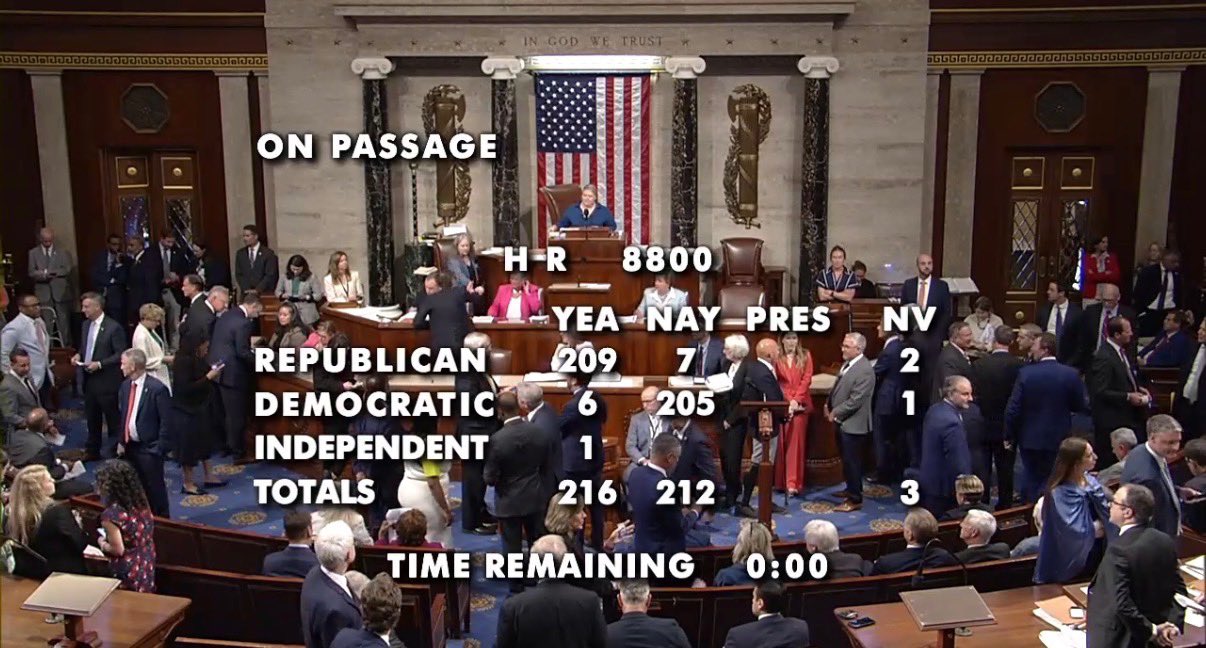
      Bacon is correct about the bipartisanship of the war drive. The Democrats funded the buildup before the Iran war began and refused to halt it once it was under way. The House passed the FY26 National Defense Authorization Act on December 10, 2025, by 312 to 112, with the entire Democratic House leadership voting yes; the Senate followed 77 to 20. On January 22, 2026, the House cleared an $839 billion defense appropriations bill 341 to 88. On February 2, 21 House Democrats supplied the margin for a continuing resolution to keep the government funded; the same day, a US F-35 from the USS Abraham Lincoln shot down an Iranian drone over the Arabian Sea. Twenty-six days later, the US-Israeli assault on Iran began. Once it had, both chambers voted down War Powers Act resolutions to stop it.

      The plan’s largest line item, $71 billion, would massively expand the US nuclear arsenal—new ballistic-missile submarines, long-range bombers and intercontinental missiles aimed at China and Russia. Shipbuilding receives $65 billion. Bombs and conventional missiles get $25 billion. The “Golden Dome” missile-defense program is funded at $22 billion. The Space Force budget doubles. Procurement rises 76 percent and research and development 64 percent. Another $54.6 billion is earmarked for a Defense Autonomous Warfare Group to wage drone war, most of it contingent on a future reconciliation bill.

      Hegseth said the budget would put 14 munitions production lines on a sustained wartime tempo—Patriot, PAC-3, THAAD, Tomahawk, AMRAAM and JASSM missiles among them—with companies offered multi-year demand signals to expand their factories. The active-duty force grows by 44,000 troops. The Pentagon claims to have triggered more than $50 billion in private investment, 280 new factories and 18 million square feet of American manufacturing floorspace. Joint Chiefs Chairman Gen. Dan Caine called the budget “a historic down payment on future security.”

      Republican Mike Rogers of Alabama, chair of the House committee, framed the request around preparation for war with China. “China builds 47% of the world’s ships. The US builds one-tenth of 1%. We build fewer ships than Croatia or the Netherlands,” Rogers said. The Chinese military, he added, has become “a modernized military force capable of projecting power well into the Pacific.”

      Caine said the Pentagon was reviewing “all three legs of the nuclear triad”—submarines, missiles and bombers—to make sure they were “reliable, redundant, and workable” for, in his words, “our nation’s most important day.” Hegseth warned the committee that “the country that dominates in quantum will dominate the future in C2, in comms, in every way that we fight.” Bacon called for a nuclear buildup expressly aimed at Beijing: “Russia, China needs to know no matter what they do, we can launch those 400 ICBMs.”

      The defense secretary spoke the vocabulary of a crime boss. He said the spending would build a military that “instills nothing less than unrelenting fear in our adversaries.” He cited the year’s operations as proof. “That matters when you go 37 hours around the world for Midnight Hammer,” he said, referring to the June 2025 B-2 bombing of Iranian nuclear sites. “That matters when you go downtown in Venezuela and grab the indicted dictator of a country in the middle of the night.” Russian air defenses sent to protect Venezuelan President Nicolás Maduro before his January 3 abduction, Hegseth said, “were defeated in 15 minutes.”

      Democratic Representative Seth Moulton of Massachusetts questioned Hegseth over his March 13 press conference order to give boats in the Caribbean “no quarter, no mercy.” Moulton, a former Marine Corps officer with four combat tours in Iraq from 2003 to 2008, said, “An order for no quarter or no survivors is a war crime under the Geneva Conventions.” Hegseth did not retract the order. “The Department of War fights to win,” he replied.

      Wednesday’s hearing made clear that the war on Iran is one phase of a global war the American ruling class is preparing for control of the world.