Archive for the ‘Uncategorized’ Category

Why Russia remains stubbornly insignificant to the Middle East

October 2, 2026

Joseph Massad

MEM, 2 October 2026

Moscow’s call for Palestinian statehood is empty rhetoric from a state that chose Israel in 1948 and stands by it today through genocide in Gaza and war on Iran

Russian Foreign Minister Sergei Lavrov addresses the 81st session of the UN General Assembly in New York on 26 September 2026 (Charly Triballeau/AFP)

Russian Foreign Minister Sergei Lavrov addresses the 81st session of the UN General Assembly in New York on 26 September 2026 (Charly Triballeau/AFP)

In his address to the 81st session of the UN General Assembly last week, Russian Foreign Minister Sergei Lavrov emphasised: “The time has also come to address the main issue in the Middle East – ensuring the Palestinian statehood on the basis of countless United Nations decisions.”

Support for Palestinian statehood has been Moscow’s position since the Soviet Union backed partition in 1947, and it has remained so since the Russian Federation’s establishment in December 1991.

Rather than providing the Palestinians with substantial support against their Israeli colonisers, the Russian Federation has, since 1991, at best offered nothing more than empty diplomatic rhetoric in support of a defunct two-state solution while maintaining cordial relations with Israel.

Even after Israel openly aligned itself with the all-out western war against Russia through the war in Ukraine, the Russians have not abandoned their alliance with Israel. In that alliance, and in its pretence of “both-sidesism” through continued support for the defunct two-state solution, the Russian Federation has fared much worse than the USSR.

Aside from meaningless diplomatic declarations like Lavrov’s last week, Russia’s lukewarm support for Iran in the current war is hardly a major deviation from the Soviets’ careful balancing act in the post-war period. The Soviet and subsequent Russian commitment to alienating the Arab public continues apace.

New MEE newsletter: Jerusalem Dispatch

Sign up to get the latest insights and analysis on Israel-Palestine, alongside Turkey Unpacked and other MEE newsletters

Far from forging a new path, the Russian Federation has refused to change its policies towards the Palestinians and Zionism, except by increasing trade and security coordination with Israel over the past three and a half decades. Its support for the Palestinian Authority (PA), which collaborates with Israel and the West, hardly counts as support for the Palestinians.

Given these realities, it is curious that no one in Russia’s ruling circles has thought of radically changing its failed Middle East policy.

Soviet alternatives

The Russian Bolsheviks, both Christians and Jews, had all along vehemently opposed not only Zionism but even the anti-Zionist Jewish nationalism of the General Jewish Labour Bund in Lithuania, Poland and Russia (known as the Bund), which called for non-territorial Jewish cultural autonomy.

It was after the Russian Revolution and the establishment of the Soviet Union that Bolshevik opposition to Zionism became state policy, while their earlier opposition to Bundist Jewish nationalism wavered. The Bund soon dissolved itself, and most of its members joined the Communist Party of the Soviet Union (CPSU).

Indeed, many former Bundists became officials in the party’s Jewish Section (Yevsektsia), implementing Soviet cultural and linguistic (Yiddish) policies towards the union’s Jewish population.

It was after the Russian Revolution and the establishment of the Soviet Union that Bolshevik opposition to Zionism became state policy

It was the Jewish Section of the CPSU that led the charge against Zionism in the country. Zionist organising became illegal in the USSR, and prominent Soviet Jewish and Christian figures railed against the settler-colonial movement in speeches and publications, describing Zionists as colonialists who aimed to subordinate indigenous Palestinian workers to British capital.

At the same time, the Soviets embarked on a policy that continued the tsars’ sponsorship of Jewish agricultural colonisation inside the country, which dated back to the late 18th century.

Under the tsars, Russian Jews were dispatched to Siberia, southern Russia, the Caucasus and Crimea to establish agricultural settlements, a number of which were still prospering at the time of the Russian Revolution.

The onslaught of the tsarist White armies and their western European sponsors against the revolution devastated the Pale of Settlement, where most Jews had lived under the tsars, killing upwards of 100,000 Jews and destroying the livelihoods of the survivors.

It was in that context that the nascent Soviet government co-sponsored and co-financed a new project with the American Jewish Joint Distribution Committee to establish more agricultural colonies for Jews in southern Ukraine, the North Caucasus, the Volga region and Crimea. The project ran from 1924 until 1938, when the joint committee ran out of the funding to continue.

Soviet Zion

In 1934, the Soviets, who refused to create a “Jewish” province in Crimea because of opposition from the indigenous Crimean Tatars, created one in sparsely populated Birobidzhan. This was intended to satisfy anti-Zionist Jewish nationalists who saw the principled Soviet policies of fighting antisemitism and integrating Soviet Jews as the best riposte to settler-colonial Zionism.

While many Jewish officials opposed the project, a pro-Birobidzhan article in the Communist International’s (Comintern) International Press Correspondence (Inprecor) declared:

Now proof has been furnished that the Jews, like all the other peoples, are able like pioneers, under the hardest physical conditions, to convert an undeveloped country into a country of socialist culture. There is no “Arab question”, no conflict of imperialist interests, no flight from one anti-Semitism to another. That is the solution to the Jewish question by the Soviet Power.

The article, by an author identified only as MZ, was titled “Socialist Construction in the Soviet Union: Biro Bijan, an Autonomous Jewish Province” and appeared in Inprecor, volume 14, number 32, on 1 June 1934.

Indeed, it was the soft Zionist and hard anti-communist Hannah Arendt who admitted as much: “The Russian Revolution has dealt a blow to the first [Zionist] contention that the Jewish Question can be solved only in Palestine and that antisemitism is only to be eradicated by the building up of Palestine, in other words by the exodus of Jews from their former homelands.”

Still, the majority of Soviet Jews remained anti-nationalist and supported assimilation into Soviet society. Only a small percentage moved to Birobidzhan or to the agricultural colonies, while the majority moved to large Soviet cities in Russia, Belorussia and Ukraine, spurning Jewish nationalism in all its guises – Zionist, Bundist and Soviet-sponsored alike.

By the Second World War, Jews were so integrated into Soviet society that more than 100 Jewish generals served during the war in the Red Army, which the Jewish Bolshevik Leon Trotsky had founded and led.

The Soviets and their Communist International defended the Palestinians’ right to revolt against the British and the Zionists in both the 1920s and the 1930s, condemning the Zionists outright. In the wake of the 1929 Palestinian Buraq Wall uprising, Georgy Safarov, deputy director of the Comintern’s Eastern Department, strongly condemned the “Zionist colonies in Palestine”, describing “the Jewish community in Palestine [as] a British imperialist avant-garde”.

By the end of the war and after the Holocaust, however, Stalin had made an about-face.

Zionist reversal

Zionist lobbying of Soviet embassies in Britain and Turkey helped, but was not the main reason. At the beginning of the Cold War, the reactionary Arab monarchies and the conservative Palestinian leadership were allied with the imperialist West. Their post-war alliances and hostility to communism did not endear them to the Soviets.

Zionist pretensions to being committed socialists and non-partisan in the Cold War helped convince the Soviets to support a one-state solution for Palestinians and Jewish settlers or, failing that, the partition of Palestine into two states – one for the settlers and the other for the indigenous population.

The Soviet ambassador to the UN, Andrei Gromyko, received new instructions from Moscow in April 1947 that upended the previous Soviet anti-Zionist position. Gromyko gave impassioned speeches in May and November 1947, defending the Jewish settlers’ alleged right to establish a state in Palestine while blaming western European countries for failing to help Jews during the war.

Zionism was built as a bulwark against socialism

Read More »

When Israel was proclaimed, the Soviets rushed to recognise it, earning the hostility of the majority of the Arab world and permanently alienating all Arab communist parties, which toed the Soviet line, from the Arab public. If the Soviets thought they had gained an ally in the Middle East by supporting the Zionists, they soon realised their miscalculation.

Still, under Nikita Khrushchev, who had succeeded Stalin as party leader the previous year, the Soviet legation in Israel was upgraded to an embassy in June 1954.

It was the Arab republics, however, that would prove the friendliest Arab regimes to the Soviets: Egypt from the mid-1950s, Iraq after 1958 and Algeria after 1962, followed by others.

The Soviets continued their diplomatic relations with Israel, while their support for the Arab republics remained lukewarm compared with western imperialism’s support for Israel and the reactionary Arab regimes.

Israel’s alliance with imperialism and hostility to the Soviets were such that it launched a campaign branding the Soviets, the first regime in the world committed to fighting antisemitism in word and deed, as “antisemites”.

As Jews in western countries refused to move to Israel and immigration dried up, the Israelis sought to bring Soviet Jews to populate their settler-colony. That was the context in which they charged the Soviets with antisemitism for refusing to allow Soviet Jews to leave for Israel.

Diplomatic limits

The Soviets cut off relations with the Jewish settler-colony after the Israeli invasion of three Arab countries in 1967. Israel then intensified its campaign against Soviet “antisemitism” until the Soviets finally succumbed and allowed large-scale Jewish emigration from 1971 onwards. Half of those who left chose the US rather than Israel.

The relaxation was part of the Soviet attempt to maintain detente with the US, which led the anti-Soviet campaign on Israel’s behalf. It was Soviet leader Mikhail Gorbachev who relaxed emigration restrictions between 1987 and 1989, allowing a million Soviet Jews to leave the collapsing USSR for Israel, the only country that would readily take them.

Gorbachev re-established diplomatic relations with Israel in October 1991, and on 16 December that year, under US pressure, the Soviet Union voted to repeal the UN’s “Zionism is racism” resolution, which the Soviets had supported in 1975.

Unless it radically changes its Middle East strategy, Russia will remain an insignificant factor in the ongoing struggle to end Zionist settler-colonialism and Israeli regional imperialism

If Stalin’s about-face on Zionism was motivated by the Holocaust, the Cold War and the dearth of pro-Soviet Arab rulers, would the current western war against Russia, the genocide of the Palestinians and the anti-imperialism of Iran and the Lebanese and Palestinian resistance not be sufficient to prompt another reversal?

It is true that all the Arab regimes, including the collaborationist PA, are in the West’s back pocket today, as they were in 1948. They are not, however, the only players in the political field.

Western support for the Zionist project was aimed, as the antisemitic Winston Churchill put it in his 1920 article “Zionism versus Bolshevism”, at striking a blow against the Russian Revolution and “international communism”, which he identified as a Jewish “world-wide conspiracy”.

Britain’s Balfour Declaration, issued in 1917 in support of what Churchill called the “National Jews”, five days before the triumph of the Russian Revolution, was engineered to prevent Russian Jewish support for the revolution. The plan failed.

Under Gorbachev, however, the Soviet Union aptly cast one of its last votes at the UN to rehabilitate Zionism. By supporting the repeal of the “Zionism is racism” resolution days before the curtain dropped on the USSR, it erased the Soviet era’s anti-Zionism once and for all.

In view of this history, the Russian Federation should expect little change in its standing in the Middle East. Unless it radically changes its Middle East strategy, it will remain an insignificant factor in the ongoing struggle to end Zionist settler-colonialism and Israeli regional imperialism.

The views expressed in this article belong to the author and do not necessarily reflect the editorial policy of Middle East Eye.

Joseph Massad is professor of modern Arab politics and intellectual history at Columbia University, New York. He is the author of many books and academic and journalistic articles. His books include Colonial Effects: The Making of National Identity in Jordan; Desiring Arabs; The Persistence of the Palestinian Question: Essays on Zionism and the Palestinians, and most recently Islam in Liberalism. His books and articles have been translated into a dozen languages.


Inside the Business of Trump’s Third-Country Deportations

October 1, 2026

As the Trump administration fights to keep deporting immigrants to countries where they have no connections, we studied the system that profits from these grave abuses.

Tyler McBrien

The Intercept, September 29, 2026, 11:00 a.m. ET Share

FILE - A U.S. Immigration and Customs Enforcement flight operates out of King County International Airport-Boeing Field, Aug. 23, 2025, in Seattle. (AP Photo/Lindsey Wasson, File)
An ICE flight operates out of King County International Airport, also known as Boeing Field, on Aug. 23, 2025, in Seattle. Photo: Lindsey Wasson/AP

Tyler McBrien is the managing editor of Lawfare.

More than 25,000 people have had their lives upended and been forced into unfamiliar cultures, governments, and legal systems when the Department of Homeland Security deported them to so-called “third countries,” places where immigrants previously living in the United States have no connections and few rights — and where a deportation business booming under the second Trump administration finds its murky endpoints.

“The point is to scare people,” said one Trump administration official, according to a Senate Foreign Relations Committee minority report. “With countries like Palau or Eswatini, the point is that the Administration can threaten people that they will literally be dropped in the middle of nowhere.”

As is the case for many tools of its cruelty, the Trump administration did not invent third-country removals — it refashioned them to serve its own excesses. In the past, the U.S. used the obscure administrative compromise for people who could prove they would face persecution or harm if returned to their home country yet did not meet other requirements for asylum. The U.S. had to meet humanitarian and legal obligations, such as ensuring third countries would not turn around and deport migrants right back to their home countries. It was a last-resort tool that still left people displaced from their homes and communities in service of the country’s arcane immigration laws. But the current Trump administration’s policy, premised on agreements with at least 35 countries, has been anything but humane.

Most Read

Christa Pike in an undated photo provided by her legal team.

The “Satanic Panic” Made Her a True-Crime Obsession. The Truth Is More Haunting. Liliana Segura

UNITED STATES - JULY 16: Sen. John Fetterman, D-Pa., speaks to reporters as he arrives in the U.S. Capitol for a vote on Thursday, July 16, 2026. (Bill Clark/CQ-Roll Call, Inc via Getty Images)

Israeli Settlers Killed His Constituent. Fetterman Is Sole Democrat Against Investigating Them. Matt Sledge

New York City Mayor Zohran Mamdani speaks during a news conference to announce a lawsuit challenging the federal government's new public charge rule, which could make it harder for immigrants to obtain green cards if they rely on public benefits, at City Hall in New York City on September 14, 2026. (Photo by ANGELA WEISS / AFP via Getty Images)

DoorDash Spent $1.4 Million Trying to Stop Mamdani From Becoming Mayor. Now We Know Why. Meghnad Bose, Macy Hanzlik-Barend

Nor has it been particularly legal. After the 1st U.S. Circuit Court of Appeals struck down the third-country deportation scheme, DHS scheduled a flight to deport migrants involved in a class-action lawsuit challenging the policy to Burundi, Rwanda, and the Central African Republic. Despite a successful emergency motion their lawyers filed last week, an Immigration and Customs Enforcement jet flew to two African countries that hold third-country removal agreements, according to the American Prospect. It is not yet clear who was on the plane or whether ICE carried out third-country removals in violation of a federal court order, and the Trump administration is now aiming to take the legal fight to the Supreme Court.

The saga illustrates the Trump administration’s proclivity for obfuscation, secret contracts, nondisclosure, and dealmaking of the backroom variety. Whether digitally disappearing people from ICE’s online detainee locator tool last week, or inking multimillion-dollar sole-source contracts with inexperienced companies of questionable provenance, the Trump administration has pursued its immigration goals under the cover of darkness, often justifying the secrecy with invocations of national security, all while attempting to shield itself from public scrutiny and accountability in the process.

“Deportation, Inc.: The Rise of the Immigration Enforcement Economy,” an ongoing investigative video series from Lawfare and SITU Research, in partnership with The Intercept, examines how U.S. immigration enforcement has evolved into a multibillion-dollar industry shaped by private profit and political power — where contracts, capital flows, and institutional incentives increasingly govern detention, deportation, and surveillance. The project joins other efforts to shed light on the often invisible economy of immigration enforcement, including the Berkeley Human Rights Center, Human Rights First, Third Country Deportation Watch, and others.

The first installment, released last December, focuses on the business of migrant detention and profit motive underpinning the brutality of privately run ICE detention facilities. The second chapter, out today, looks at the network of flights shuffling migrants between those facilities, as well as the shady deals brokered with the governments of deportation destinations.

Related

ICE Said They Were Being Flown to Louisiana. Their Flight Landed in Africa.

Many details of these bilateral third-country removal agreements are not public, but the logic is transactional: Countries accept asylum-seekers and other immigrants from the United States in exchange for aid or other forms of financial compensation. Many of the countries involved in what The Intercept’s Nick Turse has called Trump’s “global gulag” are so dangerous that the State Department includes them on its “Level 4 Do Not Travel” list, “the highest advisory level due to life-threatening risks. And the very fact that these people are sent to a third country, rather than repatriated, means they have at least a viable asylum case.

Some but not all of the underlying texts of these agreements have come to light, often popping up in far-flung corners of the internet. This is not only a bad practice in government transparency, but a potentially illegal one as well. Lawfare, where I serve as managing editor, has argued as much in a federal district court in Washington, D.C., where the publication has sued the State Department over its failure to disclose international agreements into which the Trump administration has entered — in violation of the Case-Zablocki Act.

Though accelerated by the Trump administration, the secrecy that has enabled the growth of the vast, invisible economy of immigration enforcement traces back to at least 2001 with the creation of the Department of Homeland Security. Following the September 11 attacks, the new Cabinet-level department, along with other federal reforms, for the first time linked immigration with national security, which resulted in massive budget increases, new abilities to shield immigration information from the public, and general judicial deference to the executive branch that accompanies matters of foreign policy and national security.

Even the current Trump administration’s third-country deportation apparatus is beginning to build up its own record of cruel precedent. In the same class-action case last year, the Department of Homeland Security attempted to deport class members to Libya and South Sudan, in apparent violation of a temporary restraining order granted by a federal judge only weeks prior. During a hastily arranged hearing, a federal judge asked a Justice Department lawyer about the plane’s whereabouts, to which the government attorney responded, “I’m told that that information is classified, and I am told that the final destination is also classified.” Asked under what authority the government had classified the location, the Justice Department lawyer did not have an answer.

Related

Trump Administration Deports Five Men to Eswatini, Expanding Global Gulag in Africa

Contact the author:

Tyler McBrien tyler.mcbrien@gmail.com @TylerMcBrien on X

Israeli Bombing of Van in Gaza City Kills Six Palestinians

October 1, 2026

Two other Palestinians were killed in separate attacks, bringing Wednesday’s death toll to at least eight

by Dave DeCamp | September 30, 2026 at 11:34 am ET | Gaza, Israel

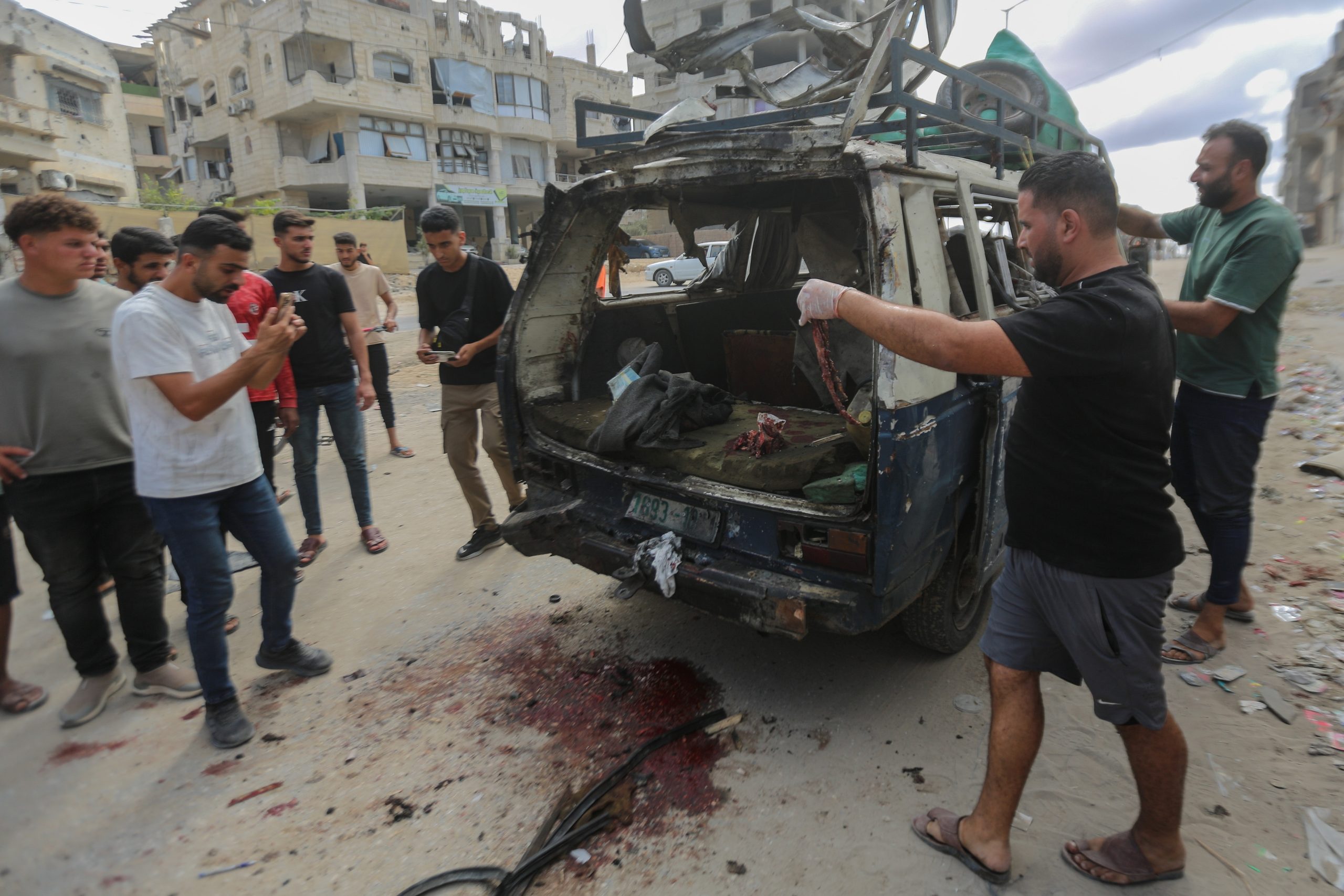
An Israeli strike hit a vehicle in Gaza City’s Tal al-Hawa neighborhood, killing at least six Palestinians, as the IDF continues its constant violations of the US-backed ceasefire deal.

According to the Palestinian news agency WAFA, 10 others were wounded in the strike. Photos of the aftermath show the strike destroyed a large van, which Gaza’s Health Ministry described as a “civilian vehicle” that was carrying a “group of citizens.”

WAFA also reported that a woman was killed by a separate Israeli strike on an apartment building in Gaza City and another person was killed by an Israeli drone attack in Khan Younis, southern Gaza, bringing Wednesday’s death toll to at least eight.

A civilian vehicle towing a trailer is seen after it was hit by an Israeli strike in the Tel al-Hawa neighborhood of western Gaza City on September 30, 2026 (ZUMA Press Wire via Reuters Connect)

The Health Ministry said in its daily update, released about midday Gaza time, before the bombing of the van, that over the past 24 hours, at least eight Palestinians were killed, and 31 were injured over the past 24 hours, as the IDF appears to have escalated its attacks in recent days. The ministry said that another person, a woman, died of wounds sustained in a previous Israeli attack.

Since the so-called ceasefire deal was signed in October 2025, the IDF has killed at least 1,431 Palestinians and wounded 5,026. According to Gaza’s Government Media Office, Israel has violated the ceasefire more than 5,000 times.

The US continues to back Israel’s attacks in Gaza despite President Trump and the so-called Board of Peace recently announcing that Hamas had agreed to a US-proposed disarmament deal.

Israeli Prime Minister Benjamin Netanyahu has rejected the potential agreement, and other senior Israeli ministers continue to make clear that their ultimate goal for Gaza is the ethnic cleansing of the Palestinian population.

If you liked this article, please support Antiwar.com.
We are 100% reader-supported.

Dave DeCamp is the news editor of Antiwar.com, follow him on Twitter @decampdave.

Join the Discussion!

We welcome thoughtful and respectful comments. Hateful language, illegal content, or attacks against Antiwar.com will be removed.

For more details, please see our Comment Policy.

When War Crimes Become Normal: The Price of Impunity

September 30, 2026

A child in a hospital bed in Iran after being injured in a bombing.

In this picture obtained by AFP from the Iranian news agency Tasnim on September 2, 2026 a child lies on a hospital bed receiving treatment following injuries from an overnight strike in Kuhestak, Sirik County, in Iran’s southern Hormozgan province on September 2, 2026.

(Photo by Morteza Akhondi/Tasnim News/AFP via Getty Images)

If we truly believe that all human life has equal value, then we must demand that those who order and carry out attacks on civilians face the same scrutiny and consequences, whoever they are.

Barzin Jafartash Amiri

Sep 29, 2026, Common Dreams

On Tuesday, September 1, 2026, the United States military struck a home in the town of Kuhestak, in Sirik County, southern Iran, where a wedding was underway, killing four people and wounding more than 50. The youngest victim was 4-year-old Amir Ali Karimi. Asked about the strike, US Vice President JD Vance told reporters: “What I can say with 100% confidence is that, unlike the IRGC, the United States never targets civilians in combat. We never will do that. We never have done that.” However, he added, “Sometimes, things happen.”

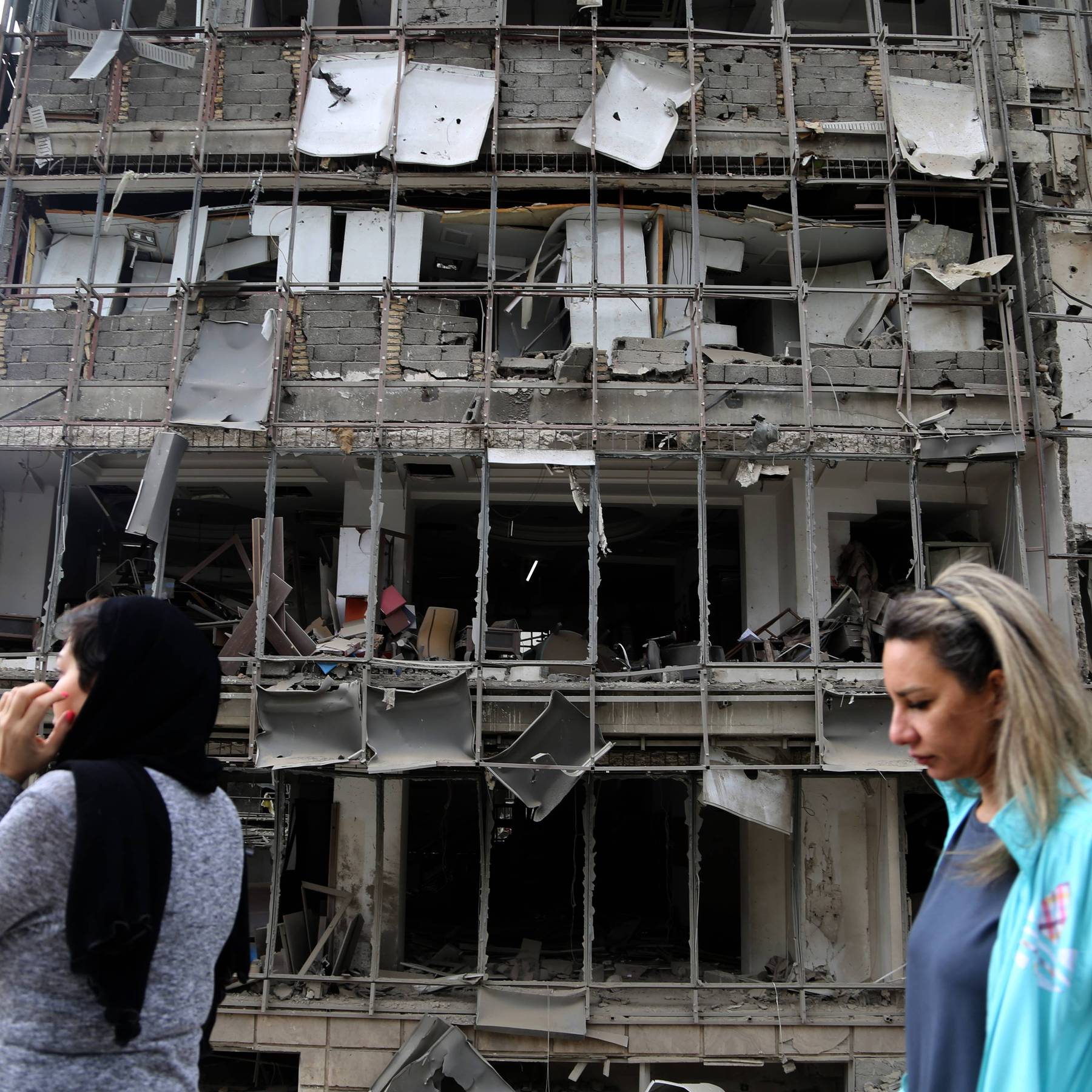
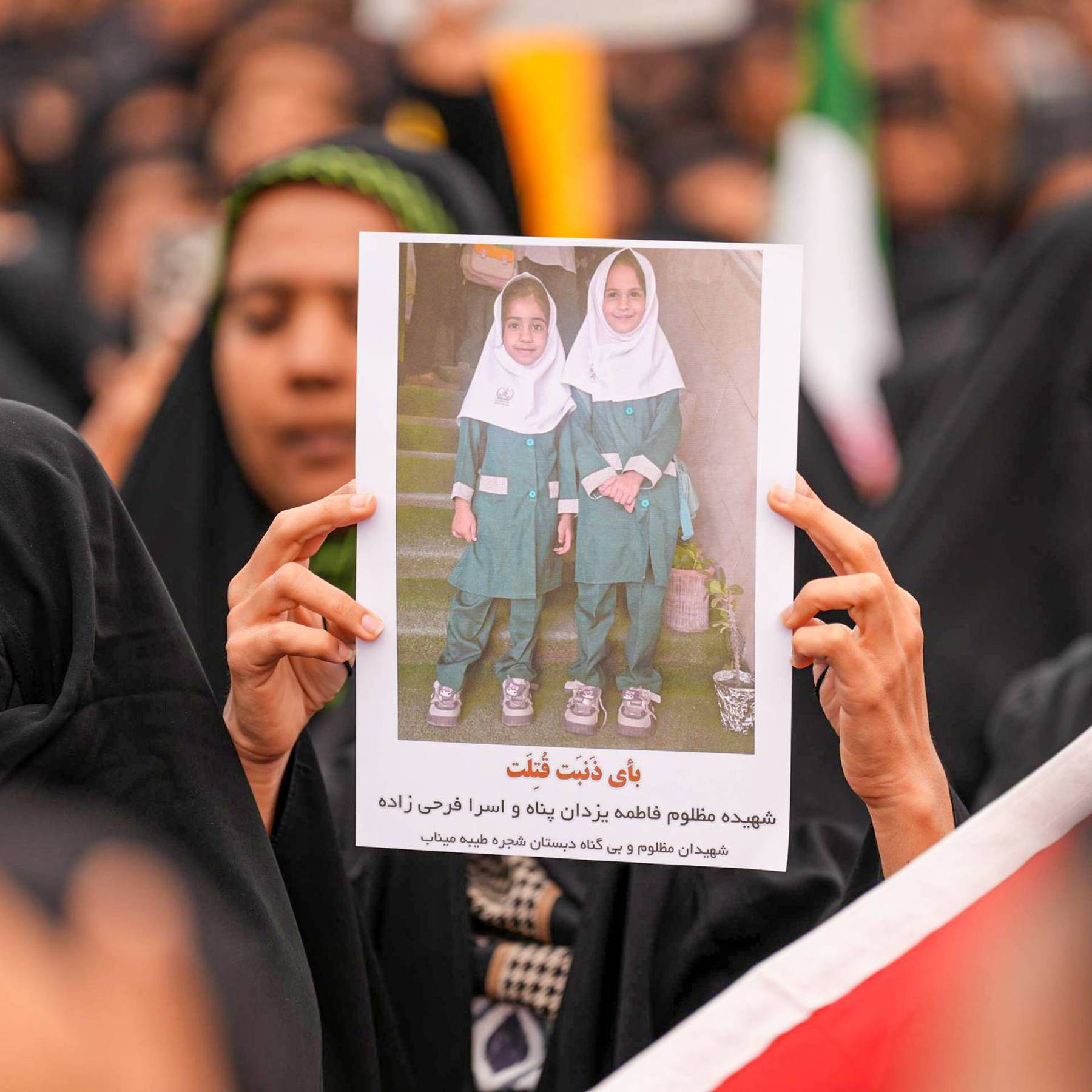
It’s worth remembering that the campaign the United States and Israel waged against Iran—launched without United Nations Security Council authorization—opened with a strike on the office of Iran’s Supreme Leader that killed him along with his daughter, son-in-law, daughter-in-law, and his 14-month-old granddaughter. Roughly an hour or two later, the US struck the Shajareh Tayyebeh elementary school in Minab with Tomahawk cruise missiles, killing 156 people, including 120 schoolchildren between the ages of six and 13. That same day, an attack on the small town of Lamerd used Precision Strike Missiles (PrSM)—munitions that burst in midair and scatter thousands of tungsten fragments—killing at least 21 people, including four children, among them 2-year-old Avina Barzegar, and wounding 100 more. In the months since, the US and Israel have struck not only military sites but universities, bridges, power plants, police stations, and even desalination plants serving remote islands in southern Iran. Whatever assurances Vance offers, the record is clear that the United States has a long history of striking civilians.

RECOMMENDED…

Joint US-Israeli attacks damage Gandi Hospital in Tehran

Amnesty Says US-Israeli Attacks With Indiscriminate Weapons in Tehran May Have Been War Crimes

Funeral held for children who lost their lives in US-Israeli attack on Iranian Primary School

UN Experts Say US War Crimes Likely in Iran School, Sports Complex Massacres

Of course none of this is new. More than two years have now passed since Israel launched its full-scale assault on Gaza, backed fully by the United States and most Western governments. Over those two years the world has watched strikes on hospitals, schools, and universities, the shooting of civilians, even an assault captured on camera—and despite an International Criminal Court arrest warrant for Israel’s prime minister, no action has been taken either to enforce that warrant or to halt the war. It was hardly surprising that a year-plus of unanswered war crimes in Gaza—what many now call a genocide—normalized the same conduct elsewhere. Israel applied much the same pattern in Lebanon, violating that country’s sovereignty to bomb schools, apartment buildings, universities, and villages. The absence of any serious response to crimes broadcast live to the world sent every power on Earth a clear message: If you are strong enough, you can commit any crime—including the crime of crimes.

Isn’t it time that those responsible for striking a bridge, a wedding, a power plant, a desalination plant, be held to account?

President Donald Trump himself has, through his own public statements, documented attacks that could easily amount to war crimes. In one Truth Social post, he wrote, “A whole civilization will die tonight, never to be brought back again.” In another, he shared footage of the strike that brought down Karaj’s unfinished B1 bridge—a civilian structure, not yet even complete, hit on Sizdah Bedar, the 13th day of Nowruz, when most Iranians are out picnicking in nature and many families were gathered under and around the bridge. The strike was a so-called double tap: A second missile hit after rescue workers arrived to help the wounded, killing two more and injuring several others. In all, 13 people were killed and 95 wounded.

This scale of targeting civilians, met with so little response from the media or the international community, is itself a troubling kind of normalization—one we cannot afford to treat with indifference. Imagine, for a moment, that Iran had bombed the White House on a holiday morning, killing the American president along with members of his family, and then struck an elementary school in Texas, killing more than 120 American students along with their teachers. How would American society, and the West more broadly, have responded? Would the dead children be called a “necessary action” or “mistake”? Or would the entire West have mobilized to respond to such an atrocity?

This same Western indifference to the deaths of people in the Global South—particularly at American hands—is visible in the words of Afghanistan’s former president, Hamid Karzai. Asked recently why he, perhaps alone among Afghan leaders, had wept in public, Karzai spoke of “our national helplessness before powers that had come in the name of helping Afghanistan,” and recalled asking American officials a simple question: If their bombs killed Afghan children, was that terrorism? They told him no—terrorism, he said they told him, is when American interests are put at risk.

This becomes painfully concrete when you consider that the Sirik wedding was only the latest entry in a long, grim record of American strikes on wedding celebrations across Afghanistan, Iraq, and Yemen going back more than two decades—a pattern trackers have documented since at least December 2001.

Isn’t it time that those responsible for striking a bridge, a wedding, a power plant, a desalination plant, be held to account? Don’t the citizens of a country whose president launched a war on another nation without UN authorization, and whose forces have committed numerous documented war crimes in the process, bear some responsibility for holding their own leaders accountable? Would the West have stayed this indifferent if a wedding, or a school, had been hit at home—or would it have moved heaven and Earth to bring the perpetrators to justice? These are the questions that demand an answer. The world cannot continue to condemn violence selectively while treating the deaths of civilians in the Global South as an unfortunate but acceptable consequence of geopolitics.

Every time a war crime is ignored, the threshold for the next one becomes lower. Every time accountability is abandoned, impunity becomes stronger. If we truly believe that all human life has equal value, then we must demand that those who order and carry out attacks on civilians face the same scrutiny and consequences, whoever they are. The first step toward ending war-crime normalization is refusing to look away.

Bombing to Lose

September 29, 2026

JOHN J. MEARSHEIMER
SEP 28

On 27 September 2026, I was on “Switzerland” with the host, Tom Switzer, and the distinguished author and columnist, Patrick Cockburn. We talked mainly about Iran, focusing special attention on President Trump’s promise to employ massive military force against Iran after the mid-term elections and win the war once and for all. Since we have no ground option, this can only mean restarting the strategic bombing campaign that Trump began (with Israel) on 28 February 2026 and ended on 8 April 2026. Of course, that initial bombing campaign failed as will the next one, if the president is foolish enough to start it. The sad truth is that the president can’t face the fact that the Israelis — mainly Prime Minister Netanyahu — bamboozled him into starting a war the US cannot win, and therefore it makes sense to cut a deal with Iran sooner rather than later.

Click on the link to see the video:


https://www.youtube.com/watch?v=QNTq2I_jVVA&t=615s

Former German vice chancellor accuses Israel of war crimes in Gaza

September 29, 2026

‘I think there is plenty of evidence that war crimes were committed in Gaza,’ says Robert Habeck

Oliver Towfigh Nia

28 September 2026

Content media

BERLIN

Former German Vice Chancellor Robert Habeck accused Israel of war crimes in Gaza, media reports said Monday.

“I think there is plenty of evidence that war crimes were committed in Gaza,” Habeck told public broadcaster ARD.

While “every form of antisemitism must be named and fought, this should not lead to a ban on speaking out or to an unspoken rule that one must not criticize Israel and the Netanyahu government,” he added.

Habeck, who was Germany’s vice chancellor from 2021 until 2025, linked the rise in antisemitism to Israel’s war crimes in Gaza.

“The reason antisemitism is so prevalent on the left right now is because of Israel’s actions and the war crimes it has committed in Gaza!”

The Green politician stressed that Israel was “not” a peaceful country.

“People think that because the Jews were victims after World War II and all the pogroms that followed, the state of Israel is a peaceful one. But it isn’t! Israel is a well-armed, combative, and—in that sense—also aggressive state toward the outside world,” said Habeck.

Furthermore, there is a step that goes even further. “And this step has gone much too far in many places in Gaza.” Many people in Israel would like “the German government to articulate the crimes or the criticism of Israel’s government more clearly and explicitly,” he added.

The Israeli offensive has killed more than 73,000 people, wounded over 174,000 and caused massive destruction affecting about 90% of the civilian infrastructure in Gaza since October 2023.

As Trump rejects Iranian cease-fire proposal, Wall Street Journal reports plans to resume bombing after midterms

September 28, 2026

Andre Damon@Andre__Damon. WSWS, 28 Sep, 2026

US President Donald Trump on Saturday publicly rejected an Iranian proposal for a seven-day cease-fire, after the Wall Street Journal reported Friday night that he “has told aides he expects to resume bombing Iran after the November midterms.”

Iranian Foreign Minister Abbas Araghchi presented Iran’s position to reporters Friday outside the UN Security Council in New York. Within seven days of US acceptance, Iran would reopen the Strait of Hormuz and begin nuclear talks, in exchange for the lifting of the US naval blockade, the release of part of Iran’s frozen assets, the waiving of oil sanctions and a cease-fire extending to Lebanon, as the Associated Press and Al Jazeera reported.

Trump told reporters Saturday: “I’m rejecting their deal. They want to make a deal where they open the strait immediately because they are losing so badly.”

The United States “has told Iran and the mediators that Trump has no intention of lifting the maritime embargo,” according to the Journal. Washington, the Journal wrote, “believes economic pressure will eventually force Tehran to sign an agreement with terms that are favorable to Washington and the Arab states along the Persian Gulf.”

Citing US officials, the Journal reported that Trump “has told his staff that he sees a renewed bombing campaign as likely.” The Journal wrote that “the level of strikes Trump is contemplating couldn’t be determined” and that his views “could be affected by the results of the midterms.”

Asked by Fox News on Sunday whether strikes in the coming weeks remained an option, Trump said they were “possible.”

The Journal’s report gives concrete content to Trump’s threat, in his speech to the United Nations General Assembly on Tuesday, to “annihilate the Islamic Republic and do it quickly” and to “drive them into hell with no chance of survival and no hope of future greatness or generations.”

The journalist Seymour Hersh wrote on June 10 he had been told that in “a recent secret meeting in the White House,” Trump “began speculating, albeit vaguely, about a nuclear option that could perhaps bring a quicker end to the war.”

On April 7, Trump wrote on Truth Social: “A whole civilization will die tonight, never to be brought back again.” Asked that day whether Trump would use nuclear weapons, then-White House Press Secretary Karoline Leavitt did not rule it out. “Only the President knows where things stand and what he will do,” she said.Available from Mehring BooksThe struggle against imperialism and for workers’ power in IranA pamphlet by Keith Jones

Despite unleashing a full-scale aerial bombardment of Iran, the United States has failed to achieve its objectives. Announcing the war on February 28, Trump vowed to “raze their missile industry to the ground” and told Iranians to “take over your government” once the bombing was finished. Nearly seven months later, the government in Tehran remains in power, and Iranian forces have kept firing missiles at US bases.

The United States and Israel assassinated Iran’s supreme leader, Ali Khamenei, on February 28, and in March Iran’s Assembly of Experts named his son, Mojtaba Khamenei, to succeed him. On July 17, Iranian forces killed three US soldiers in a missile attack on the Muwaffaq Salti base in Jordan.

Al Jazeera reported August 28 that US and Israeli forces had attacked Iran at least 3,580 times, according to the Armed Conflict Location and Event Data project, and had killed no fewer than 3,527 people there, according to official figures.

On September 17, the UN Human Rights Council’s fact-finding mission on Iran reported “reasonable grounds to believe” that the United States had carried out the February 28 attack on a primary school in the southern city of Minab, killing 157 people, among them 123 children, and that the attack was a war crime.

What will be the next stage of escalation? Will Trump deploy ground troops or use nuclear weapons?

On June 11, Trump wrote on Truth Social that “we will be taking Kharg Island,” Iran’s chief oil terminal, “and other oil infrastructure points, and assume total control of their Oil and Gas Markets, much like we have with Venezuela….” Trump met his top aides in the White House Situation Room on July 14 to discuss sending ground troops to seize the island, the Journal reported the next day.

More than 50,000 American troops were deployed in the region, the military news site Task & Purpose reported August 30, and units of the 82nd Airborne Division have had their deployment extended to 12 months. On Sunday morning, Trump shared on Truth Social a video in which Fox News host Mark Levin said “there is no reason [Kharg] Island is off the table….”

The cease-fire that began in April collapsed in July. On July 7, after three commercial ships were attacked in the Strait of Hormuz, US forces bombed more than 80 sites in Iran, and the next day Trump pronounced the cease-fire “over.” Since July 14, the US Navy has enforced a blockade of Iran’s entire coastline, which under international law is an act of war.

US forces have attacked Iran repeatedly since, including on September 1, when they killed at least five people at a wedding in Kuhestak on Iran’s southern coast, among them a child, according to Iranian media.

Socialism AI Logo

Socialism AI

by the WSWSSocialismAI.com

Questions about this article? Ask Socialism AI

What is the strategic reason the US ruling class wants to dominate Iran and control the Strait of Hormuz, beyond just Iran’s own oil?How does this war on Iran connect to the broader US confrontation with China and Russia that the article mentions?Can you explain what it means historically when both Democrats and Republicans support the same war, and what this shows about the two-party system?

Ask more questions at SocialismAI.com

Iran is a strategic battlefield in a developing global war against Russia and China. CNN reported Friday, citing unnamed sources, that satellite imagery from Chinese groups helped Iran carry out the July 17 attack in Jordan. According to the Journal, Trump “is reluctant to resume major combat operations” partly because the United States “wants to reserve dwindling munitions for other contingencies.”

French President Emmanuel Macron said Thursday that France would send “soldiers, radar systems and defense systems” to protect Saudi Arabia’s Yanbu oil terminal on the Red Sea, which Yemen’s Iran-allied Houthis have attacked with missiles.

In a CNN poll published September 22, 78 percent of respondents said Trump was not doing enough to end the war, and 76 percent said it had not been worth the cost.

Trump’s approval rating was 34.6 percent on Thursday, according to the FiftyPlusOne average compiled by the analyst G. Elliott Morris, the lowest for any president this close to a midterm election since scientific polling began in the 1930s.

The Democrats’ criticisms of the administration center on its failure to secure US imperialism’s aims in Iran. On ABC’s “This Week” on Sunday, Democratic Senator Mark Kelly of Arizona said Trump had gone to war “without a plan.” He added: “We can’t leave the Strait in the hands of the Iranians. They can’t be allowed to get a nuclear weapon.”

On Thursday, 21 Democratic senators, Senate Minority Leader Charles Schumer among them, wrote in a statement on Trump’s Washington summit that day with Chinese President Xi Jinping that the United States “should never have launched the reckless and illegal war against Iran.” In the same statement they complained that “Beijing has exploited the conflict to purchase discounted Iranian oil, while U.S. munitions and strategic stockpiles have been expended at alarming rates.” Schumer told the Senate that day that Trump had acted “sort of as a supplicant” toward Xi and “needs to finally show some backbone.”

On September 16, 58 Democrats helped the House pass a bill that lets Trump impose tariffs as steep as 100 percent on the countries that buy the most Russian oil and gas, chiefly China and India. The bill also extends US sanctions on Iran.

Previously, on September 1, House Democrats voted 176 to 29 for a stopgap bill that keeps the government, the Pentagon included, funded through December 11. In January, 149 House Democrats had voted for the $839 billion military budget that has paid for the war since February 28.

Whatever the result on November 3, the Democratic and Republican parties alike support the war on Iran and the aim of subordinating the country to US domination.

Democrat Files 26 Impeachment Articles Against Trump Over War, ICE, Corruption

September 28, 2026

“Trump is clearly the most impeachable President our country has ever endured,” Rep. Steve Cohen said.

By Sharon Zhang , Truthout Published September 25, 2026

President Donald Trump and First Lady Melania Trump before welcoming China’s President Xi Jinping and his wife Peng Liyuan for tea at the White House, in Washington, DC, on September 25, 2026.

Truthout is a vital news source and a living history of political struggle. If you think our work is valuable, support us with a donation of any size.

A House Democrat has filed articles of impeachment against President Donald Trump, calling him the “most impeachable president” in U.S. history and accusing him of high crimes and misdemeanors ranging from his war on Iran to his schemes to enrich himself and his allies while in office.

House Judiciary Committee member Rep. Steve Cohen, of Tennessee, introduced 26 impeachment articles on Thursday, covering a broad range of actions from the president since his return to office last year.

Two of the articles focus on Trump’s military aggression, in Iran and in his “extrajudicial killings in the international waters of Venezuela.” Numerous articles are focused on the administration’s actions relating to his mass deportation and anti-immigration agenda, including the administration’s defiance of court orders, imprisonment of immigrants in a notorious torture camp in El Salvador, and deployment of the National Guard to U.S. cities.

Other articles focus on Trump’s attempts to punish his political enemies; his attacks on the press; his alleged misappropriations of federal funds; and his various corruption schemes, including his “profiting personally and directly from the presidency.”

“Trump is clearly the most impeachable President our country has ever endured. His continued presence in office is a danger to our democracy. That the sycophantic Republican majority in Congress is derelict in its duty does not mean that I must abandon my responsibilities,” said Cohen in a statement on the articles. “When historians write about this period, and our constituents ask who stood up to President Trump’s lawlessness, this resolution is the answer.”

Related Story

Sen. Tammy Baldwin questions Director of the National Institutes of Health Jayanta Bhattacharya during a Senate Appropriations Subcommittee on Departments of Labor, Health and Human Services, and Education, and Related Agencies, in the Dirksen Senate Office Building, on June 10, 2025, in Washington, D.C.

Op-Ed

|

Politics & Elections

Don’t Be Fooled: GOP Scuffle Over NIH Grants Doesn’t Mean Science Has Prevailed

Trump has backed down for now in his new bid to control research grants, but his tune could change after the midterms. By Sasha Abramsky , Truthout

September 24, 2026

Like previous attempts to impeach Trump, the articles are doomed to fail under the Republican-controlled Congress.

The latest attempt, by Rep. Al Green (D-Texas), garnered 147 votes to advance the measure, all from Democrats, in a vote earlier this month.

Eighteen Democrats joined Republicans in voting to table the articles, including some of the most conservative Democrats in the caucus like Representatives Jared Golden (D-Maine) and Marie Gluesenkamp Perez — who have also twice broken with their caucus to help buoy Republican priorities in recent weeks. Another 46 Democrats voted “present,” including House Minority Leader Hakeem Jeffries (D-New York).

Rep. Thomas Massie (R-Kentucky) also recently introduced articles of impeachment against Secretary of Defense Pete Hegseth. The eight articles focused on the U.S.’s military campaigns in Iran, Venezuela, Yemen, and in the Caribbean Sea and Pacific Ocean, while also accusing Hegseth of disregarding civilian safeguards and suppressing the speech of critics. Massie moved to force a House vote on the articles, but was blocked by GOP leaders.

A majority of Americans say that Hegseth should face impeachment, however. Recent polling found that a slim majority, 51 percent, of U.S. voters say that Hegseth should be impeached, The Economist/YouGov found.

25 Years of Truthout: An important fundraising appeal

This September, Truthout is celebrating 25 years of publication. For over two decades, we have been a trusted source for fiercely independent journalism thanks to readers like you.

Looking to the next 25 years, we launched a special fundraising campaign. We still need to raise $16,000.

We are asking for your support at this juncture because we face greater threats than ever before in our organizational history. Trump and his MAGA allies are determined to control the information ecosystem, and movement-based organizations are subject to dangerous censorship and scrutiny.

If you can support Truthout with a one-time or monthly donation, you will make a significant impact on our work and our legacy. Anything you can do makes a difference!

about:blank This article is licensed under Creative Commons (CC BY-NC-ND 4.0), and you are free to share and republish under the terms of the license.

Sharon Zhang

Sharon Zhang is a news writer at Truthout covering international affairs, politics, and labor. She has a master’s degree in environmental studies. She can be found on Twitter and Bluesky.

‘Do there what we did in Gaza’: Smotrich calls for full-scale war in occupied West Bank

September 28, 2026

Finance minister says Israel should dismantle the Palestinian Authority and expand Israeli territorial control of occupied territory

Israel’s Finance Minister Bezalel Smotrich is surrounded by Israeli settlers during a settlement ceremony of Sa-Nur, in the occupied West Bank, 19 April 2026 (Marco Longari/AFP)

Israel’s Finance Minister Bezalel Smotrich is surrounded by Israeli settlers during a settlement ceremony of Sa-Nur, in the occupied West Bank, on 19 April 2026 (Marco Longari/AFP)

MEE staff

Published date: 27 September 2026

Israeli Finance Minister Bezalel Smotrich has called for Israel to “go to war” in the occupied West Bank and “do there what we did in Gaza”, as the country heads towards general elections next month.

Smotrich, the leader of the far-right Religious Zionism party, in an interview with Ynet’s 120 and One political podcast, also reasserted his demand for dismantling the Palestinian Authority, which exercises limited self-rule in parts of the occupied West Bank.

The call for a full-scale Israeli war comes amid relentless settler violence and movement restrictions across the West Bank. 

On Sunday, Israeli authorities ordered a “comprehensive closure” of the crossings into the occupied territory for the Jewish holiday of Sukkot. 

Israeli forces tightened restrictions around the West Bank city of Ramallah, closing roads and entrances to several towns and villages, the Palestinian news agency Wafa reported.

New MEE newsletter: Jerusalem Dispatch

Sign up to get the latest insights and analysis on Israel-Palestine, alongside Turkey Unpacked and other MEE newsletters

Local sources told Wafa that the entrance gate to Turmus Ayya, north of Ramallah, was closed and residents were “harassed”.

Wafa also reported that entrances to Aboud, Nabi Saleh, Atara and Taybeh were closed, while military checkpoints were set up at the entrances to Yabroud and Ein Sinyah. 

Smotrich, who is a leading advocate of expanding illegal Israeli settlements and extending Israeli sovereignty over the occupied West Bank, also defended his wider political agenda ahead of the 27 October elections.

“I don’t turn my back on my partners,” he said, rejecting the possibility of joining a unity government between rival political blocs.

Smotrich announces plan to judaise Negev and Galilee

Read More »

“I am part of the national camp, which shares a broad common denominator of Jewish identity, Zionism, love of the land, settlement and a distinct security doctrine.”

When asked about former Israeli military officer Ofer Winter, who is running a new political party, Smotrich accused him of taking an “irresponsible gamble” that could compromise Israel’s security.

“There is a 99.9 percent chance he won’t cross the threshold,” Smotrich said. “Anyone voting for him is throwing their vote in the trash, and that is what will bring the left to power, establish a Palestinian state and erode Israel’s Jewish identity.”

Amcha Yisrael, the group for which Winter is a spokesperson, rejected Smotrich’s assessment, accusing Israel’s political leadership of failing to win what it called a decisive victory in Gaza.

“Three years after October 7, there is no decisive victory in Gaza and no voluntary migration,” said the party. “The failed mindset persists.”

Smotrich also rejected the idea of working with Raam, an Arab-led party that has been part of Israeli coalition politics, saying in the interview that its leadership ultimately sought Israel’s destruction. 

Pressure in the West Bank 

Smotrich’s comments come as conditions deteriorate in the occupied West Bank. In an August report, the UN Office for the Coordination of Humanitarian Affairs (Ocha) said Israeli settlement outposts had increasingly encroached on areas of the West Bank over which the Palestinian Authority exercises limited administrative control.

Israeli settlement outposts, previously concentrated in Area C, were increasingly extending into Area B, the agency said, adding that violence and threats have been used to restrict Palestinian access to land. 

Israel displaces hundreds of Palestinians amid wave of demolitions in West Bank

Read More »

According to the Israeli organisation Peace Now, settlers have taken over more than 100,000 dunams (10,000 hectares) of land in Areas A and B of the West Bank.

As of July, the UN agency said some 850 Palestinians had been injured in settler attacks in the occupied West Bank since the start of 2026, with an average of more than three injuries a day attributed to settler attacks.

The UN says the West Bank is already criss-crossed by a vast array of Israeli checkpoints, gates, barriers and permit restrictions.

In December 2025, Ocha recorded 925 obstacles to movement, saying the system, along with the separation barrier, severely restricts Palestinian movement.

In July 2024, the International Court of Justice ruled that Israel’s continued presence in the occupied Palestinian territory is unlawful and that new settlement activity must cease. 

The court also found that measures almost entirely separating Israeli settlers from Palestinians in the West Bank and East Jerusalem violated the Convention on the Elimination of Racial Discrimination.

The UN has repeatedly stated that Israeli settlements in occupied Palestinian territory have no legal validity under international law. It has also warned that expansion of settlements and related measures risk further dispossession and displacement of Palestinians.

Israeli forces use phosphorus shells in southern Lebanon attacks

September 27, 2026

MEM, September 26, 2026

Smoke rises after Israeli forces carried out air and artillery attacks on towns in Nabatieh, southern Lebanon, despite a ceasefire, on September 21, 2026. [Ramiz Dallah - Anadolu Agency]

Smoke rises after Israeli forces carried out air and artillery attacks on towns in Nabatieh, southern Lebanon, despite a ceasefire, on September 21, 2026. [Ramiz Dallah – Anadolu Agency]

Israeli forces used phosphorus munitions while shelling several towns in southern Lebanon on Friday, state news agency NNA reported.

Artillery struck the outskirts of Zawtar al-Sharqiyah, Mayfadoun and Nabatieh al-Fawqa in the Nabatieh district.

Phosphorus shells were used in Nabatieh al-Fawqa, while Israel later renewed attacks on Zawtar al-Sharqiyah with similar munitions.

In the Tyre district, artillery fire also targeted Wadi Zibqin and the outskirts of Haris and Haddatha.

READ: Israeli army sets fire to government hospital in southern Lebanon

Lebanese army specialists dismantled two unexploded Israeli aerial bombs in Majdal Selm and Al-Ghandouriyah in the Marjayoun and Bint Jbeil districts and moved them to a safe location.

The Israeli offensive in Lebanon has killed at least 4,386 victims, wounded 12,407 and displaced more than 1 million others since early March, according to Lebanese authorities.

The attacks continue despite a June framework deal that provides for a gradual Israeli withdrawal from occupied Lebanese territory in exchange for the deployment of the Lebanese army there and the disarmament of Hezbollah.