Archive for April, 2026

Dennis Kucinich: How to Stop the War

April 3, 2026

Consortium News, April 2, 2026

The power of the purse is the surest way Congress can stop the Iran war, or any war. If Congress funds war, Congress authorizes it. If Congress cuts off funds, a war will end.
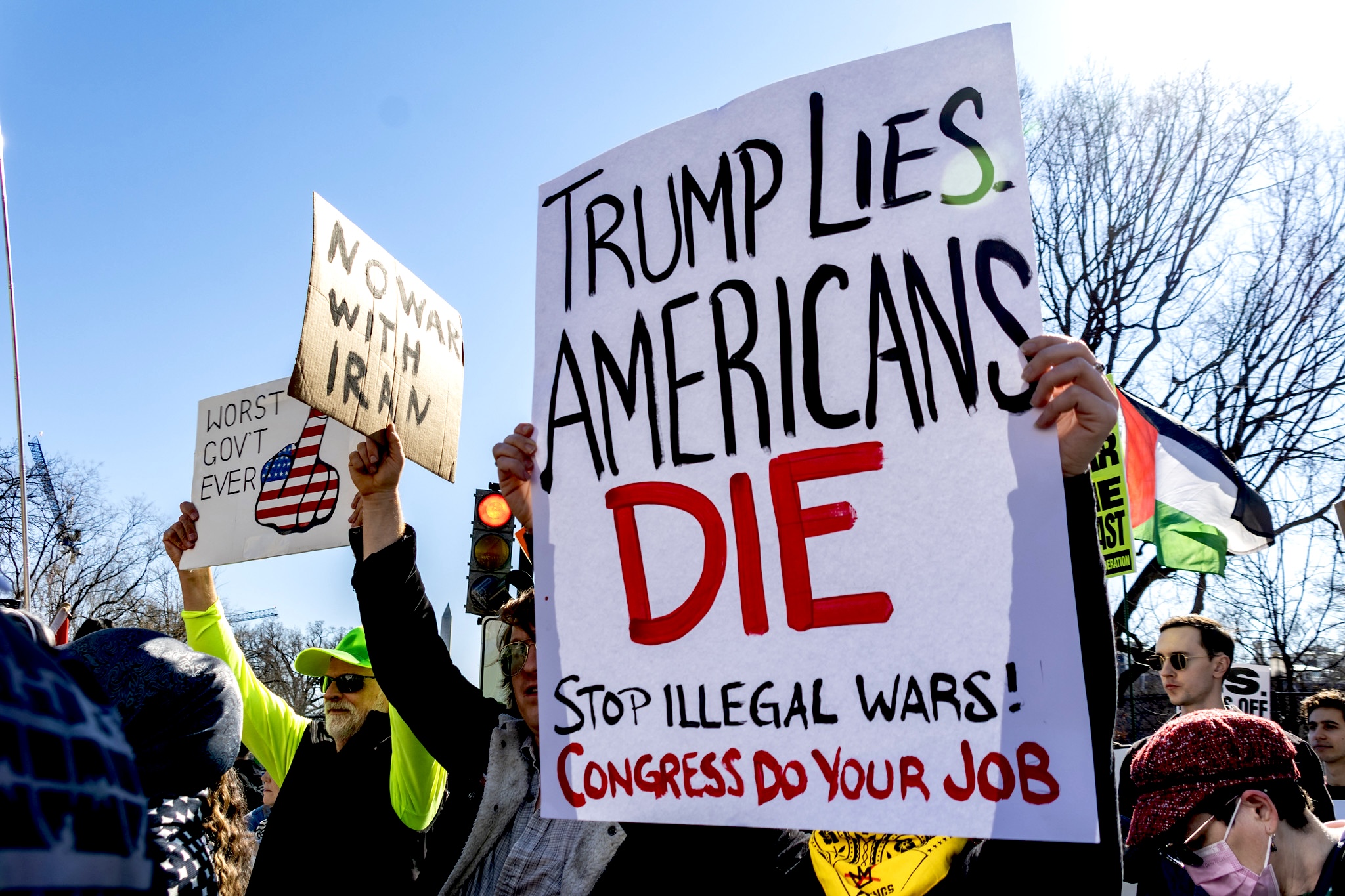
No War On Iran protest at the White House, Washington, D.C., Feb. 28. (Diane Krauthamer, Flickr, CC BY-NC-SA 2.0)

By Dennis Kucinich
Substack

Up to 15,000 of the 50,000 American troops in the Middle East region are being positioned to participate in an assault on Kharg Island, Iran’s critical oil export hub, with the aspiration that America, once in control of Kharg, will turn the tables and assume dominance, opening the Strait of Hormuz for the U.S. and allies, while cutting off Iran from its major source of oil revenue.

Marines and paratroopers, with air and naval support, are poised to invade Kharg’s heavily defended 25-mile coast which features rocky terrain, cliffs and in some places, flat limestone surfaces, each presenting its own strategic calculus and hazards. Special Operations may be tasked with the mission of capturing Iran’s enriched uranium, an equally perilous task.

The U.S. cannot invade and/or hold Kharg Island without taking heavy casualties. Iran has been preparing more than 20 years for an assault on the island and U.S. troops could face potential annihilation with counter-attack coming from all directions, air, land and sea, giving new meaning to Kharg Island’s nickname, ‘The Forbidden Island.’

Our political leaders and their military advisors, unless they have been so infected with the virus of war that they have gone mad, must know our troops are facing slaughter.

We could be witnessing the tragic unfolding of a 21st century version of Custer’s Last Stand, where, at the Battle of Little Big Horn in June of 1876, General George Custer and 215 troops in his command were killed, thoroughly routed by the spiritual and strategic wisdom of native Indian leaders, Sitting Bull and Crazy Horse and their followers.

Custer’s troops had been sent by the U.S. government to reclaim Dakota Sioux land in the Black Hills after the discovery of gold in 1874.

Hubris is not limited to time and space. Underestimation of the strength of the opposition, an aggressive battle doctrine which ignored risk to life, overconfidence and cultural bias were operative at Little Big Horn and are abundantly present today among the Trump Administration’s advisors.

There should be no ground invasion of Kharg or other Iranian islands. There should be no further bombing runs or missile attacks on Iran. It is time to de-escalate, and quickly, to avoid further loss of life, and the world-wide collapse of food, fertilizer, fuel and other basic necessities.
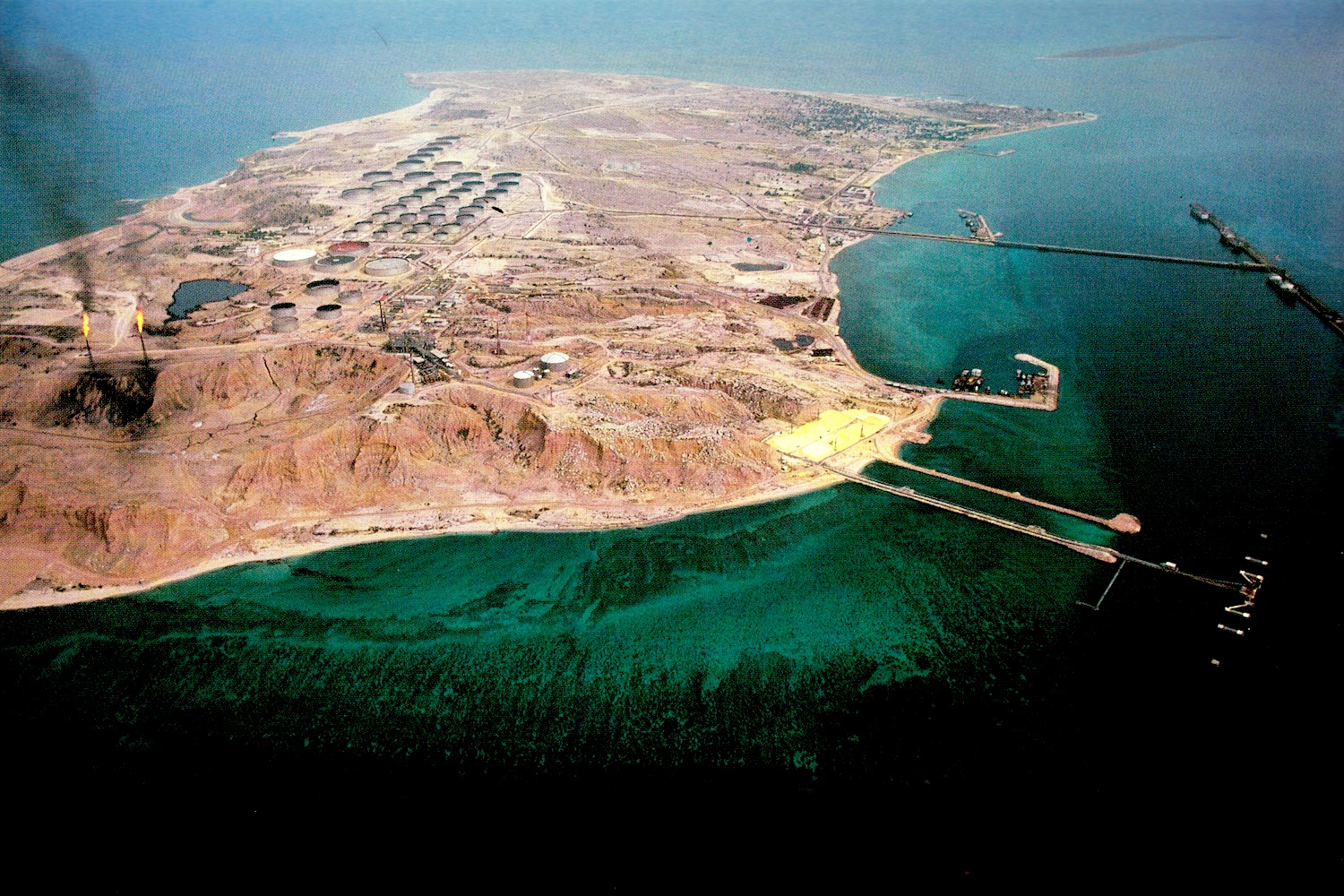
Iran’s Kharg Island, 1973. (Wikimedia Commons/Public Domain)

I am not new to the hazards of malignant U.S. foreign policy. As a member of Congress, I led the effort against the Iraq. War. Over several years, I made 155 speeches in the House of Representatives, specifically cautioning against an attack on Iran, and urging diplomacy.

President Trump has fumbled for explanations for this war. It was for Israel, for regime change, to get rid of enriched uranium, to get rid of Iran’s missiles, and yesterday, according to the Financial Times, the naked reason is blood for oil.

Quoting the president:

“to be honest with you, my favorite thing is to take the oil in Iran, but some stupid people back in the U.S. say: ‘Why are you doing that?’ But they’re stupid people.”

Donald Trump meet Forrest Gump: “Stupid is as stupid does.” (Like cancelling the JCPOA nuclear agreement with Iran in 2018 and then complaining the Iranians are not abiding by it, or killing Iran’s chief negotiator, Ali Larijani , and then grousing there is no one with whom to negotiate.)

In the alternative, perhaps the president and his cronies having recently seized control of $150 billion of oil in Venezuela, are criminal masterminds, using the U.S. military as enforcers for private gain.

The president explained his ‘Rule of (liquid) Gold to The New York Times: “We’re going to be using oil, and we’re going to be taking (Venezuela’s) oil.”

Favored administration insiders make billions through stock manipulations, with advance knowledge of president’s market-pacing blurbs, underscoring war as a gigantic grift.

Bipartisan Knavery & Duplicity

During my service as a member of Congress, I challenged bipartisan knavery and duplicity.

I sued three presidents for violating the Constitution’s war powers, Democrat and Republican alike: Bill Clinton over Serbia, George W. Bush over Iraq, and Barack Obama over Libya.

I presented Articles of Impeachment charging both President George W. Bush and Vice President Dick Cheney with violations of the Constitution. I did so as both parties repeatedly enabled war, not only through the vainglorious, corrupt actions of the Executive branch, but through Congressional nonfeasance.

Congress has failed to exercise its fundamental constitutional responsibilities relating to the War Power, as well as abandoned its preeminent role to curtail war through using the appropriations process.

Here is what I have witnessed as a member of Congress: The Democratic Party, aware of the public’s fatigue over the war in Iraq, ran its 2006 campaign on a promise to end that war.

The second the Democrats returned to power, leaders pledged to continue to fund the war, the very war they promised to end.

The bait and switch of the Democratic Party in the 2006 campaign, promising peace and delivering war, led me to run for president a second time, on a platform of Strength through Peace.

In 2024, Donald Trump promised peace. It was the cornerstone of his campaign. He excited a crossover vote, won the election and he, too, gave us the opposite, under the slogan “Peace through Strength,” followed by heavy military spending and imperial policies which either provoke or initiate war.

A Vote for War 

The U.S. Capitol at night from the Library of Congress, 2021. (Diane Krauthamer, Flickr, CC BY-NC-SA 2.0)

If you want to see this war brought to an end, remember this: An appropriations vote is a vote for war. If your congressional representative votes for the National Defense Authorization Act (NDAA), they vote for war.

This is not about disarming. It is about Congress deciding, on our behalf, limitations on aggression. If Congress votes for a supplemental appropriation to replenish missile stocks, and other armaments, they vote for war.

A congressperson cannot truthfully say they oppose war if they have voted to fund war.

The power of the purse is the surest means by which Congress can stop the Iran war, or any war. If Congress funds war, Congress authorizes it. If Congress cuts off funds, this war will be brought to an end.

The Democratic leader of the House, Hakeem Jeffries, has kept open the possibility of support for an additional $200 billion for the Iran War. This in advance of the 2027 annual war appropriation which the president has doubled, requesting $1.5 trillion, (about 80 percent of current discretionary spending).

The use of the power of the purse is the only means by which Congress can stop this war.

Members of Congress supporting a ground attack on Iran have failed to fulfill one of the most important constitutional responsibilities: Only Congress can legally take the American people from peace to a state of war and put America’s sons and daughters in harm’s way. Since Congress will not formally vote on a declaration of war, it enables war to be pursued through appropriations.

The economic costs of war against Iran, already approaching $40 billion, pale in consideration to the moral costs. The murder of 168 girls by a U.S. Tomahawk missile which struck the Shajareh Tayyebeh elementary school, in Minab, Iran on Feb. 28, will forever be a blot on our nation’s conscience.

The assassination of the Ayatollah Ali Khamenei, Iran’s chief of state and religious leader as horrifying as it was illegal. The ongoing loss of thousands of Iranian civilian lives due to U.S. and Israeli bombing similarly violates international law, as well as the U.S.’ own laws and cries out for justice.

And we must never forget the price which American military families have already paid in loss of life or injury to their loved ones.

The wanton devastation our own government inflicts upon others in distant lands, our detachment from the carnage visited upon innocent people abroad, will return home in more coffins, more fractured families and pile misery upon misery in other, incalculable ways.

We cannot escape the consequences of the wrongful decisions of our leaders who disregard the U.S. Constitution, violate international and humanitarian law and capriciously kill civilians in other nations, ultimately placing American lives, both military and civilian, at risk.

Another Crime Against Humanity
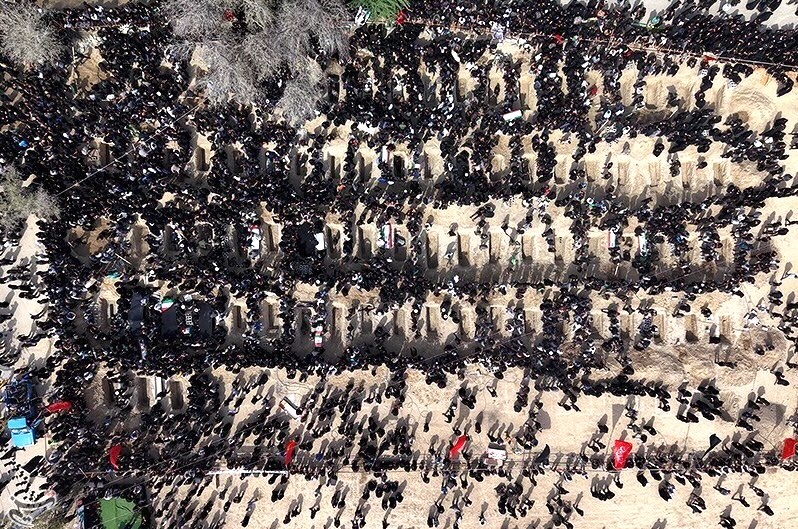
Funeral of the children of the primary girls’ school in Minab, Iran, who were killed in the U.S.-Israeli bombing on Feb. 28. (Tasnim News Agency/ Wikimedia Commons/ CC BY 4.0)

The Iran war is, much like the attacks against the people of Gaza, the West Bank, Lebanon, Syria, Iraq and Yemen, a crime against humanity, compounded by every bomb and missile strike paid for with our tax dollars. President Trump’s repeated threats to obliterate civilian Iranian energy and water infrastructure are textbook war crimes.

Throughout my career I had no hesitation to challenge the unconstitutional abuse of the war power. Federal courts have consistently declined to intervene in disputes between Congress and the president over war powers.

An appropriations vote is the prime political mechanism to start, continue, or to end a war. A “Yes” vote for a Pentagon appropriation is a vote for war. Period.

Exercising the power of the purse, voting “No” on appropriations which enable war, is the only means by which Congress can stop this war and any other war. If Congress funds war, Congress authorizes war.

Congress also has the War Powers Resolution, which can set a deadline for ending hostilities. Recently, Democratic leadership declined to force a War Powers vote, even as there was bipartisan support.

Ultimately, the financial support for war is not about Democrat versus Republican. Both parties have been captured by foreign and domestic interests that profit from endless war.

Our present leaders will continue to search for false justification was the Iran war, seeking to justify the unjustifiable profligate arms spending.

The cost of the Iran War will felt across the country, at the gas pump, and at the supermarket, while our government quibbles over feeding Americans through the SNAP program, as our farmers are go bankrupt. Is there any clearer demonstration that America has lost its way when its way is war?

A nation weakens itself, not through a single decision, but through a pattern of choices that place wars of choice above the well-being of its own people.

We the People Face a Choice
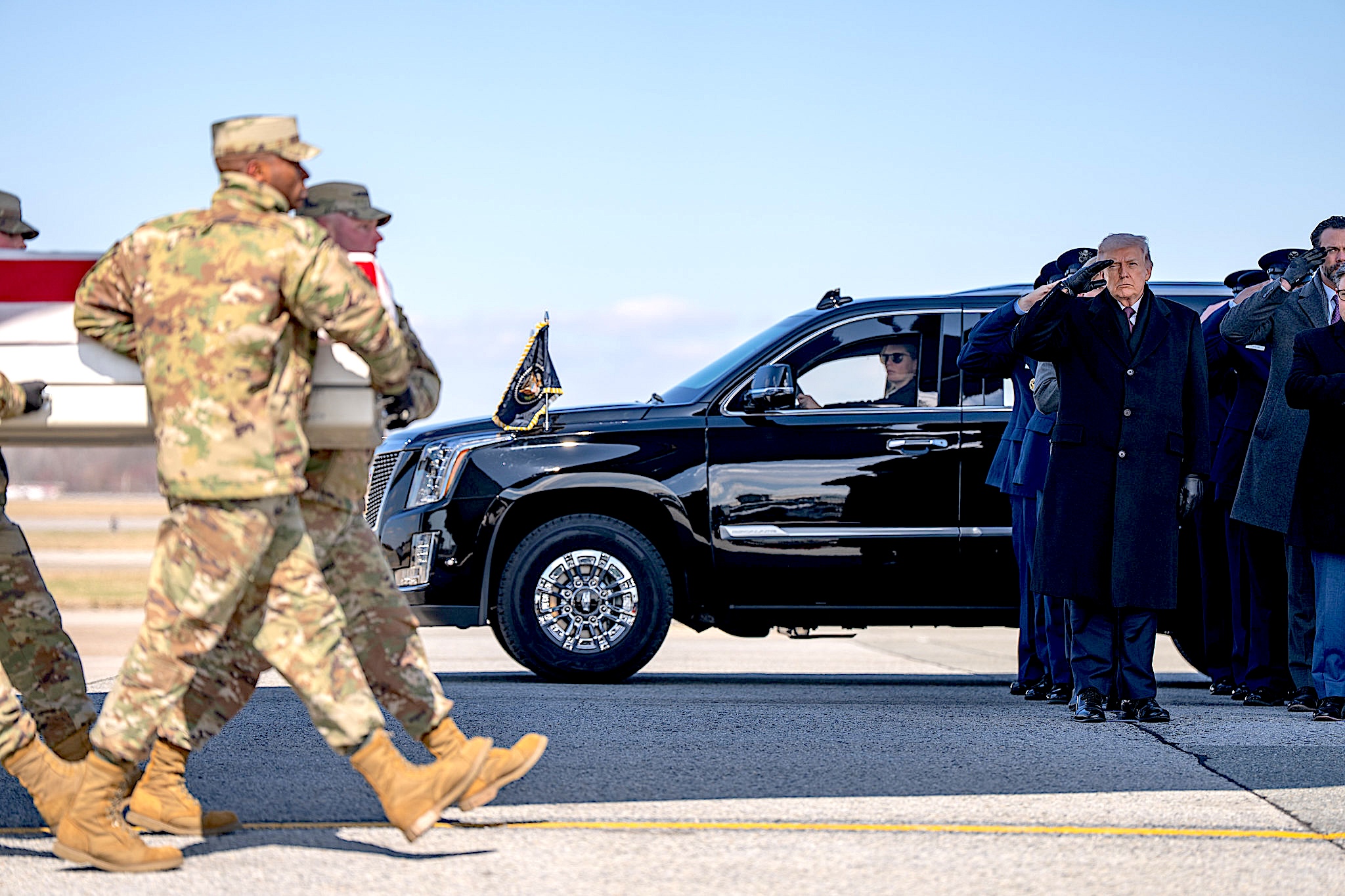
Trump saluting the transfer of six U.S. servicemembers killed in the Middle East on March 18 at Dover Air Force Base, Delaware. (White House / Abe McNatt)

We the People also face a choice. Continued militarization of the budget brings militarization of thought, word and deed, precipitating more conflict, more wars and fewer resources for the needs of the American people, for jobs, wages, health care, education, and retirement security.

It is time for America to come home from the wars.

The midterm elections are approaching. Democrats and Republicans alike must be held accountable.

You, dear reader, have a voice, and it must be heard. Tell your member of Congress, clearly and without ambiguity, that spending more money for war is not acceptable.

It is time for a new path, and that path begins with you.

Get involved in the elections. Show up. Organize. Support candidates who respect the Constitution, who understand the cost of war, and who will not vote to fund war.

Help ensure that those candidates who stand up for the Constitution and who believe in diplomacy and peace are the ones who prevail.

Only an active citizenry can change the outcome. A constitutional republic endures only when its citizens remain vigilant.

That responsibility now rests with you. With us. With We the People.

A Guide to Lobbying:

Find your member of Congress and both your senators:

Call their office directly (websites are linked from the directory above) or phone the Capitol Switchboard and politely ask to be transferred: 1 (202) 224-3121

Ask for your representative’s office. Politely speak to staff. They are usually very young so be nice to them. They are likely as intimidated as you may feel if this is your first time to lobby like this.

Say something like, “My name is XXX. I am a constituent and a primary voter. Please ensure that our representative votes NO on any WAR APPROPRIATIONS BILL.

Please also write to your representatives. Contact makes a difference. You can also go to their District or D.C. offices in person. Schedule ahead of time if you want to have an official meeting. Bring your friends, family and community with you! Your engagement makes a difference.

Be respectful, polite and confident in what you are asking for.

Kucinich statement after Trump’s Wednesday night address to the nation on Iran:

“The President’s address to the nation was a tone-deaf sale pitch for more war, delivered on the first night of Passover.

Civilian and military casualties are mounting across the region. Lives are being extinguished while triumphalist and violent rhetoric is offered as justification. War is being escalated in the name of peace, a contradiction that demands moral clarity, not political acceptance.

Each life lost carries equal value. No nation’s suffering is expendable. No people exist as collateral.

Iran is not an abstraction, nor just a target on a map. It is one of the great cradles of civilization, a society whose cultural and intellectual contributions long predate the rise of the modern West.

To speak casually of bombing such a nation ‘back to the Stone Age’ reveals a colonial mindset that dehumanizes others and diminishes our own humanity in the process.

The extensive bombing of Iran by the United States and Israel, along with Iran’s counterstrikes, is already taking innocent lives. The global economy is destabilizing as a result.

Energy markets are being disrupted. Oil and gas production is constrained. Fertilizer supply chains are impaired. Critical materials are being cut off.

These consequences will be felt worldwide. Yet the deeper crisis is not economic, it is moral.

We have seen this before. The repeated invocation of a nuclear threat echoes the false claims of ‘Weapons of Mass Destruction’ used to justify the invasion of Iraq.

That war cost thousands of American lives, the lives of hundreds of thousands of Iraqis, and trillions of dollars, while leaving a legacy of instability and grief that endures to this day.

If the President truly sought to prevent a nuclear Iran, he would not have abandoned the JCPOA, an agreement that placed verifiable limits on Iran’s nuclear program. Instead, we are presented with a cycle of escalation that defies logic and invites catastrophe.

Political rhetoric is becoming increasingly radical and dangerous. This is not a question of partisan politics. It is a question of conscience with very real global and domestic consequences.

The American people are not called to accept this. They are called to stand against it.

Members of Congress must have the courage to exercise their constitutional authority and rein this in.

War framed as strength is destruction. Violence presented as necessity is gratuitous violence, with consequences already accelerating destabilizing shifts in the global order.

Congress must act. The Constitution vests in Congress the authority to bring this, and any war, to an end through the power of the purse.

The American people must immediately contact their representatives and demand a NO vote on any supplemental funding that would continue this war. Congress must VOTE NO.”

Dennis Kucinich is a former U.S. Congressman from Cleveland, Ohio, two-time presidential candidate, and founder of The Kucinich Report. Known for his unwavering commitment to peace, justice, and common sense, he has spent decades challenging war, corporate power, and political orthodoxy. Throughout his career, Kucinich led efforts to end U.S. military interventions abroad, championed domestic priorities like healthcare, workers’ rights and environmental protection, and promoted the creation of a Department of Peace. Today, through The Kucinich Report, he offers independent, insightful analysis of politics, foreign policy, and economic power — urging diplomacy, cooperation, and thoughtful leadership as a path toward a safer, more just world.

“Casualty Cover-Up”: The Pentagon Is Hiding U.S. Losses Under Trump in the Middle East

April 3, 2026

The Pentagon has sent outdated statements on the number of U.S. troops killed or wounded during the Iran war, resulting in undercounts.

Nick Turse, April 1 2026, 2:51 p.m

WASHINGTON, DC - MARCH 24:  U.S. Secretary of War Pete Hegseth (R) answers questions as U.S. President Donald Trump looks on during a ceremony for newly sworn in U.S. Secretary of the Department of Homeland Security Markwayne Mullin in the Oval Office at the White House on March 24, 2026 in Washington, DC. Mullin takes the helm of DHS during a challenging time as it has been partially shut down since February 14 while lawmakers negotiate reforms for Immigration and Customs Enforcement. (Photo by Chip Somodevilla/Getty Images)

Secretary of War Pete Hegseth answers questions as President Donald Trump looks on at the White House on March 24, 2026.Photo: Chip Somodevilla/Getty Images

Almost 750 U.S. troops have been wounded or killed in the Middle East since October 2023, an analysis by The Intercept has found. But the Pentagon won’t acknowledge it.

U.S. Central Command, or CENTCOM, which oversees military operations in the Middle East, appears to be engaged in what a defense official called a “casualty cover-up,” offering The Intercept low-ball and outdated figures and failing to provide clarifications on military deaths and injuries.

At least 15 U.S. troops were wounded Friday in an Iranian attack on a Saudi air base that hosts American troops, according to two government officials who spoke with The Intercept. Hundreds of U.S. personnel have been killed or injured in the region since the U.S. launched a war on Iran just over a month ago.

President Donald Trump — who wore a blue suit, red tie, and a ball cap to the dignified transfer of the first Americans killed in the war — said casualties were inevitable. “When you have conflicts like this, you always have death,” he said afterward. “I met the parents and they were unbelievable people. They were unbelievable people, but they all had one thing in common. They said to me, one thing, every single one: Finish the job, sir. Please finish the job.”

Most Read

How to Keep ICE Agents Out of Your Phone at the Airport Nikita Mazurov

US Senator Bernie Sanders, Independent from Vermont, gestures as he speaks during a "Tax the Rich" rally at Lehman College in the Bronx borough of New York City on March 29, 2026. (Photo by CHARLY TRIBALLEAU / AFP via Getty Images)

Bernie Sanders Backs Claire Valdez in NYC House Race Dividing Left and Progressives Akela Lacy

President Donald Trump exits Air Force One on March 29, 2026 at Joint air Base Andrews, Maryland. The president was returning to Washington following a weekend trip to Florida. (Photo by Nathan Howard/Getty Images)

Trump’s Secret Wars on the World Keep Expanding Nick Turse

On Tuesday, Trump teased that he would wind down the war with Iran in as little as two weeks despite not achieving many of his stated aims, such as “freedom for the people” of Iran, “tak[ing] the oil in Iran,” and forcing Iran’s “unconditional surrender.” At one point, the president even declared that the war would last “as long as necessary to achieve our objective of PEACE THROUGHOUT THE MIDDLE EAST AND, INDEED, THE WORLD!”

“When you have conflicts like this, you always have death.”

CENTCOM has sent outdated statements on casualty numbers, meanwhile, resulting in undercounts, including a statement sent Monday from spokesperson Capt. Tim Hawkins noting that “Since the start of Operation Epic Fury, approximately 303 U.S. service members have been wounded.” The comment was three days old and excluded at least 15 wounded in the Friday attack on Prince Sultan Air Base in Saudi Arabia. The command did not reply to repeated requests for updated figures.

CENTCOM also would not provide a count of troops who have died in the region since the start of the war. An Intercept analysis puts the number at no less than 15.

“This is, quite obviously, a subject that [War Secretary Pete] Hegseth and the White House want to keep under major wraps,” said the defense official who spoke on the condition of anonymity in order to speak frankly.

Related

Trump’s Secret Wars on the World Keep Expanding

In 2024, during the Biden administration, the Pentagon provided The Intercept with detailed chronologies of attacks on U.S. bases in the Middle East that listed the specific outpost that was attacked, the type of strike, and whether — or how many — casualties resulted, along with an aggregate count of attacks by country.

The Trump administration’s numbers, by comparison, lack detail and clarity. The current CENTCOM casualty figures do not appear to include more than 200 sailors treated for smoke inhalation or otherwise injured due to a fire that raged aboard the USS Gerald R. Ford before it limped off to Souda Bay, Greece, for repairs. CENTCOM did not reply to close to a dozen requests for clarification on the casualty count and related information sent this week.

“CENTCOM and the White House should be providing accurate and timely information on the costs and casualties involved in this war. After all, it is American taxpayers who are funding it and U.S. economic prosperity and economic wellbeing that is being undermined by it,” Jennifer Kavanagh, the director of military analysis at Defense Priorities, a think tank that advocates for measured U.S. foreign policy, told The Intercept.

“CENTCOM and the White House should be providing accurate and timely information on the costs and casualties involved in this war.”

As the U.S. has relentlessly bombed Iran, that country has responded with attacks on U.S. bases across the Middle East using ballistic missiles and drones. CENTCOM refuses to even offer a simple count of U.S. bases that have been attacked during the war. “We have nothing for you,” a spokesperson told The Intercept. An analysis by The Intercept, however, finds that bases in Bahrain, Iraq, Jordan, Kuwait, Qatar, Saudi Arabia, Syria, and the United Arab Emirates have been targeted.  

On Tuesday, Hegseth said that Iran retained the ability to retaliate for U.S. strikes but that their attacks would be ineffectual. “Yes, they will still shoot some missiles,” he said, “but we will shoot them down.” On Wednesday morning, officials in Bahrain, Kuwait, and Qatar all reported missile or drone attacks from Iran.

Iranian strikes have forced U.S. troops to retreat from their bases to hotels and office buildings across the region, according to the two government officials. The defense official was livid about the Pentagon’s failure to adequately harden the bases and ridiculed Hegseth’s Tuesday prayer at a Pentagon press conference. “May god watch over all of them, each day and each night. May his almighty and eternal arms of providence stretch over them and protect them,” said Hegseth.

“Why didn’t Hegseth protect them?” the defense official asked. “Anyone with a brain knew these attacks were coming.”

Pentagon spokesperson Kingsley Wilson did not respond to multiple requests for comment.

Retired Gen. Joseph Votel, a former head of Central Command, recalled that U.S. troops in the region have faced drone attacks for at least a decade. “At that time we identified a need to protect against this threat, and it has taken far too long for the DoD to respond and provide adequate protection for our deployed troops,” he told The Intercept, referencing drone attacks during the campaign against ISIS in the spring of 2016. “It was a known expectation that, if attacked, Iran would retaliate against our bases, installations, and forces, and I agree that we should have anticipated and been prepared for this inevitability.”

Kavanagh, who previously called attention to the vulnerability of U.S. outposts in the Middle East, echoed Votel. “It has been clear for years that the rapid proliferation of drones and cheap missiles would put U.S. bases and U.S. early detection radars in the region at risk, yet the Pentagon did little to protect them,” she said. “The failure to invest in hardened infrastructure was a choice. Congress should see this failure as evidence that simply giving the Pentagon more money is not a path to national security.”  

“We would be better off if bases across the region were closed for good,” she added.

“We would be better off if bases across the region were closed for good.”

In public statements, Iran’s foreign minister Seyed Abbas Araghchi called out the U.S. for using civilians in nearby Arab monarchies of the Gulf Cooperative Council states as human shields. “U.S. soldiers fled military bases in GCC to hide in hotels and offices,” he wrote on X last week. “Hotels in U.S. deny bookings to officers who may endanger customers. GCC hotels should do same.”

Votel also expressed concern about troops using hotels and offices, noting it “could turn normal civilian infrastructure into military targets for the regime.”

Last month, an Iranian drone strike on a hotel in Bahrain wounded two War Department employees, according to a State Department cable reviewed by the Washington Post. CENTCOM did not respond to a request to confirm to The Intercept that those injuries stem from a March 2 attack on the Crowne Plaza hotel, a luxury property in Manama, Bahrain’s capital, but one official indicated this was likely. Read Our Complete Coverage Targeting Iran

Votel said that a failure to provide troops with adequate protection may handcuff U.S. operations. “I think this really complicates command and control and could affect unit cohesion and effectiveness,” he told The Intercept, referring to the transfer of troops to hotels and office buildings. “That said, we may not have many options if we cannot protect the military bases where they would normally be bedded down.” 

At least 15 U.S. troops in the Middle East have died since the beginning of the Iran War, including six personnel who were killed in a drone strike on Port Shuaiba, Kuwait, and a soldier who died due to an “enemy attack on March 1, 2026, at Prince Sultan Air Base, Saudi Arabia.” More than 520 U.S. personnel have also been injured, including those who suffered smoke inhalation on the Ford.

Prior to the current war with Iran, U.S. bases in the Middle East were increasingly targeted by a mix of one-way attack drones, rockets, mortars, and close-range ballistic missiles after Israel’s war in Gaza began in October 2023, most of the attacks occurring in the year following the outset of the conflict. At least 175 troops were killed or wounded in those attacks, including three service members who died in a January 2024 strike on Tower 22, a facility in Jordan. Other attacks targeted al-Asad Air Base, the Baghdad Diplomatic Support Center, Camp Victory, Union III, Erbil Air Base, and Bashur Air Base in Iraq and Al-Tanf garrison, Deir ez-Zor Air Base, Mission Support Site Euphrates, Mission Support Site Green Village, Patrol Base Shaddadi, Rumalyn Landing Zone, Tell Baydar, and Tal Tamir in Syria.

The casualty statistics do not include contractors, most of them foreigners who suffered non-combat injuries. Official U.S. statistics show that there were almost 12,900 cases of injuries to contractors in the CENTCOM area of operations during 2024 alone. More than 3,700 were the most serious non-fatal injuries, including traumatic brain injuries, requiring more than seven days away from work. Eighteen contractors were also killed, all of them in Iraq. The numbers are likely significant undercounts, but if even the fractional number of known contractor injuries is added to the tally, the casualty count for Americans and those on U.S. bases may top 13,600.

‘Vile, Horrifying, Evil’: Trump Threatens to Bomb Nation of 90 Million People ‘Back to the Stone Ages’

April 2, 2026

US President Donald Trump

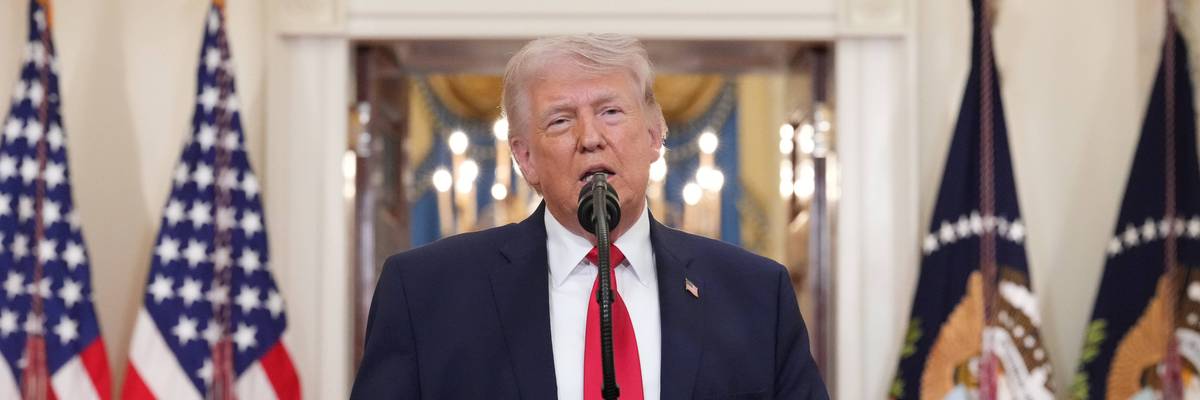
US President Donald Trump speaks from the Cross Hall of the White House on April 1, 2026 in Washington, DC.

(Photo by Alex Brandon-Pool/Getty Images)

In a primetime address, President Donald Trump reiterated his threat to destroy Iranian energy infrastructure and provided no timeline for an end to his illegal war.

Jake Johnson, Common Dreams, Apr 02, 2026

US President Donald Trump on Wednesday delivered an incoherent primetime address in which he threatened to bomb Iran “back to the Stone Ages” while also claiming negotiations to end the conflict were ongoing, remarks that provided no clear indication of when or how the illegal war of choice would end.

Trump’s speech marked his first major address on the war since the US, in partnership with Israel, started bombing Iran more than a month ago, without congressional approval and in violation of international law. A day after declaring that Iran “doesn’t have to make a deal” to end the war, Trump said during his Wednesday speech, “If there is no deal, we are going to hit each and every one of their electric generating plants very hard and probably simultaneously”—a grave war crime.

RECOMMENDED…

US-IRAN-ISRAEL-WAR-DEMONSTRATION

‘People Are Loving What’s Happening,’ Trump Claims While Massacring Iranian Children as US Oil Prices and Unemployment Spike

Demonstrators in Baghdad, Iraq

‘Deranged and Dangerous’: Trump Says ‘I Guess’ Americans Should Expect a Deadly Attack on US

In the face of polls showing the Iran War is deeply unpopular with the American public, Trump sought to justify continuing the assault by comparing its duration to that of the two World Wars, the Korean War, the Vietnam War, and the Iraq War. At the president’s direction, thousands of troops are currently heading to the Middle East to join the tens of thousands already there, fueling fears of a ground invasion and a devastating quagmire.

After baselessly claiming Iran was pursuing nuclear weapons, Trump insisted Wednesday night that the country’s leadership was “rapidly building a vast stockpile of conventional ballistic missiles” that could soon “reach the American homeland”—an assertion contradicted by US intelligence.

The president also waved away concerns about rising gas prices, which have already cost American drivers billions of dollars collectively. The Strait of Hormuz, a critical route through which roughly 25% of global seaborne oil trade passes each year, will “just open up naturally” once the conflict is over, Trump asserted, adding that “the gas prices will rapidly come back down.”

Collin Rees, US campaign manager at the advocacy group Oil Change International, said in a statement that “Trump’s rambling lies can’t conceal how his reckless, illegal war of aggression is sending energy prices for working families through the roof.”

“Trump claims this conflict is different from past wars for oil, but it’s playing out with exactly the same deadly patterns,” said Rees. “War and volatility push prices higher and fossil fuel companies cash in on windfall profits, while every day people face rising costs for gas, food, and basic necessities. Instead of investing in what people actually need—like childcare, healthcare, and resilient communities—Trump is doubling down on senseless military escalation that serves the interest of his billionaire allies and fossil fuel CEOs.”

“More and more people are seeing through this charade,” Rees added. “This war isn’t about energy security or safety, it’s about protecting a system where fossil fuel profits come before people’s lives and livelihoods. The way to escape this cycle of death is to end this war and advance a swift and just transition to renewable energy sources that can break our dependence on volatile, unreliable fossil fuels.”

“The human cost of this war is unconscionable. The economic cost is dangerous and growing.”

Democratic members of Congress viewed Trump’s speech as further confirmation that the president never had a clear objective for the unlawful war—which has killed nearly 2,000 Iranians and displaced millions—and has no serious exit plan, just a vow to bomb Iran “extremely hard over the next two to three weeks.”

“Anyone watching that speech has no idea whether Trump is escalating or deescalating the war with Iran,” said Sen. Chris Murphy (D-Conn.). “But to be fair, neither does he.”

Sen. Elizabeth Warren (D-Mass.) wrote on social media that Trump “campaigned for the presidency on avoiding foreign wars and lowering costs ‘on day one.’”

“His promises are now in tatters,” wrote Warren. “The human cost of this war is unconscionable. The economic cost is dangerous and growing. The president should end this war today.”

The lone Iranian American in Congress, Rep. Yassamin Ansari (D-Ariz.), condemned Trump’s threat to bomb Iran “back to the Stone Ages, where they belong.”

“He’s talking about a country of 90 million people,” said Ansari. “Vile, horrifying, evil.”

Trump Says ‘New’ Iranian President Requested Ceasefire, Tehran Denies Claim

April 1, 2026

The Iranian Foreign Minister said there were no ongoing negotiations between Washington and Tehran

by Kyle Anzalone | April 1, 2026 at 12:59 pm ET

President Donald Trump said that the “new” President of Iran had accepted a ceasefire with the US. Tehran quickly denied Trump’s statement. 

“Iran’s New Regime President, much less Radicalized and far more intelligent than his predecessors, has just asked the United States of America for a CEASEFIRE!” the President posted on his Trump Social account on Wednesday. “We will consider when Hormuz Strait is open, free, and clear. Until then, we are blasting Iran into oblivion or, as they say, back to the Stone Ages!!!”

The post is confusing as Iran does not have a new president, and Tehran says there are no ongoing talks with the US. Masoud Pezeshkian has served as President of Iran since his election in 2024. 

The Iranian Foreign Ministry said Trump’s claim that Tehran agreed to a ceasefire is false. Additionally, Supreme Leader Mojtaba Khamenei issued a statement explaining that Iran would continue to use its leverage over the Strait of Hormuz and was seeking new domains to expand the war. 

Throughout the month-long conflict, Trump and other top US officials have repeatedly claimed that Tehran was attempting to broker an end to the conflict. Iranian officials have rebuked those statements and said that Tehran is uninterested in a truce or negotiations with Washington. 

While the White House and Pentagon have told the American people that Iran’s military capabilities have been significantly degraded, Iranian forces continue to fire missiles and drones at US bases, Israel, and other US allies in the region. 

According to data compiled by Anadolu, Iran has fired missiles and drones at a consistent rate since the war was started by a US and Israeli surprise attack on February 28. On Wednesday, Fox News chief foreign correspondent Trey Yingst said that Tel Aviv was experiencing a constant bombardment from Iranian missiles. 

US begins B-52 bombing flights over Iran after Trump threatens to “completely obliterate” civilian infrastructure

April 1, 2026

Andre Damon@Andre__Damon, April 1, 2026

The United States has begun bombing Iran with B-52 bombers, setting the stage for a massive increase in the saturation bombing of the country of 90 million as the US-Israeli war of aggression against Iran intensifies. “We’ve successfully started to conduct the first overland B-52 missions,” Chairman of the Joint Chiefs of Staff General Dan Caine announced Tuesday at a Pentagon briefing.

An Air Force B-52 Stratofortress aircraft deploys its rear chute after touching down at Al Udeid Air Base, Qatar, April 9, 2016. [Photo: Tech. Sgt. Nathan Lipscomb]

The B-52 is capable of carrying 70,000 pounds of gravity bombs and nuclear weapons. It is the aircraft at the center of a US bombing campaign that dropped more tonnage on Indochina than was used by all sides in World War II combined, that carpet-bombed Cambodia in a secret campaign that killed an estimated 100,000 civilians, and that leveled entire cities in North Vietnam—where US bombing destroyed 85 percent of all buildings and killed roughly 20 percent of the population.

The United States, having failed to achieve its war aims through a month of airstrikes, is massively escalating the war. The administration is now turning to the methods it used in Gaza: mass murder and the deliberate destruction of civilian infrastructure.

The B-52 flights follow one day after President Donald Trump threatened to “blow up and completely obliterate” Iran’s power plants, oil wells and “possibly all desalinization plants.” The Trump administration declared from the start that the war would be waged without restraint. On March 2, War Secretary Pete Hegseth announced there would be “no stupid rules of engagement, no nation-building quagmire, no politically correct wars.” He has since vowed “no quarter, no mercy for our enemies” and prayed at a Pentagon Christian service on March 26 for “overwhelming violence of action against those who deserve no mercy.”

On Monday, Trump shared a 31-second video on Truth Social showing the bombing of Isfahan, Iran’s third-largest city and one of the supreme cultural monuments of human civilization. The footage showed 2,000-pound bunker-buster bombs striking targets south of the city, producing chains of secondary detonations and fireballs detected by weather satellites. Trump offered no caption—just the footage of a great city burning, posted for consumption like any other content on the scroll.

Isfahan is home to the Naqsh-e Jahan Square—one of the largest public squares ever constructed—Imam Mosque, Ali Qapu Palace, Chehel Sotoun Palace and Masjed-e Jameh, the oldest Friday mosque in Iran, a structure in continuous use for nearly a thousand years. All are UNESCO World Heritage Sites.

The city was the capital of the Safavid Empire, a center of Persian science, where Omar Khayyam reformed the calendar and Ibn Sina—Avicenna—worked and wrote. Earlier strikes had already cracked a 17th century Safavid fresco in Chehel Sotoun, sent turquoise tiles from the Friday Mosque crashing to the ground, and shattered calligraphic panels. UNESCO had transmitted the exact coordinates of every protected site to both the United States and Israel. Both governments confirmed receipt. The bombing continued. Iranian officials report that at least 120 cultural and historic sites across the country have been damaged.

The Pentagon said the target was an ammunition depot. But Isfahan also houses the Isfahan Nuclear Technology Centre, Iran’s primary nuclear research facility, and the Isfahan Missile Complex, described as the country’s largest missile assembly and production site. The enriched uranium Washington claims to be destroying now lies beneath the rubble of repeated bombardments in a city of 2.3 million, under conditions that no international inspector can evaluate. Russia’s Foreign Ministry warned of “a real risk of catastrophic disaster throughout the Middle East.”

At Monday’s briefing, Hegseth raised the question of ground troops directly. “You can’t fight and win a war if you tell your adversary what you are willing to do or what you are not willing to do, to include boots on the ground,” he said. “Our adversary right now thinks there are 15 different ways we could come at them with boots on the ground. And guess what? There are. So if we needed to, we could execute those options on behalf of the president of the United States and this department.”

Troops are arriving. Reuters reported Monday that thousands of paratroopers from the 82nd Airborne Division—including a brigade combat team and the division headquarters—have begun deploying to the Middle East. The 31st Marine Expeditionary Unit (MEU), carrying roughly 2,200 Marines, arrived in the Persian Gulf over the weekend. The 11th MEU is en route aboard the USS Boxer. The USS George H.W. Bush, a nuclear powered aircraft carrier, departed Norfolk on Tuesday with Carrier Air Wing 7 and more than 5,000 sailors—the third carrier strike group committed to the war, making this the largest US naval concentration in the Middle East since 2003.

According to the Washington Post Friday, the Pentagon has drawn up plans for ground operations lasting “weeks” and is preparing to deploy 10,000 additional troops. The Wall Street Journal reported Sunday that the administration is actively planning a special operations mission to extract nearly 1,000 pounds of enriched uranium from deep underground in Iran.Available from Mehring BooksThe struggle against imperialism and for workers’ power in IranA pamphlet by Keith Jones

Despite the overwhelming support within the US political establishment for the Iran war, there is growing recognition among sections of the US media that Trump’s war is creating a rapidly spiraling disaster for US imperialism. On Sunday, the New York Times published a column by Thomas Friedman, its main foreign policy columnist, who wrote:

If it wasn’t clear before, it is undeniable now. President Trump and Prime Minister Benjamin Netanyahu of Israel started a war with Iran assuming that they would trigger quick and easy regime change. They vastly underestimated the staying power of Iran’s surviving leadership and its military capacity not only to inflict damage on Israel and America’s Arab allies but also to close off the most important oil and gas shipping lane in the world.

While Friedman makes this critique as a defender of US imperialism, it captures the recklessness and desperation of the Trump administration, which sees no way out of the deepening crisis triggered by the war except further escalation.

One month of war has produced a catastrophe. The human rights group Hengaw reported at least 6,900 killed in Iran through Day 29, including 720 civilians and 150 children. Iran’s Red Crescent reported more than 85,000 civilian structures damaged, including 64,000 homes and 600 schools.

Between 3.2 and 4 million Iranians have been internally displaced. In Lebanon, according to the Health Ministry, more than 1,247 have been killed and 3,600 wounded since Israel launched its assault on March 2. The Pentagon reports that 15 American service members have been killed and more than 300 wounded.

US Deploying Another Aircraft Carrier to the Middle East for Iran War

April 1, 2026

by Dave DeCamp | March 31, 2026

The US is deploying a third aircraft carrier to the Middle East for operations against Iran, US officials told media outlets on Tuesday, a sign that the war will continue to escalate despite President Trump’s claims that he is looking to end the conflict.

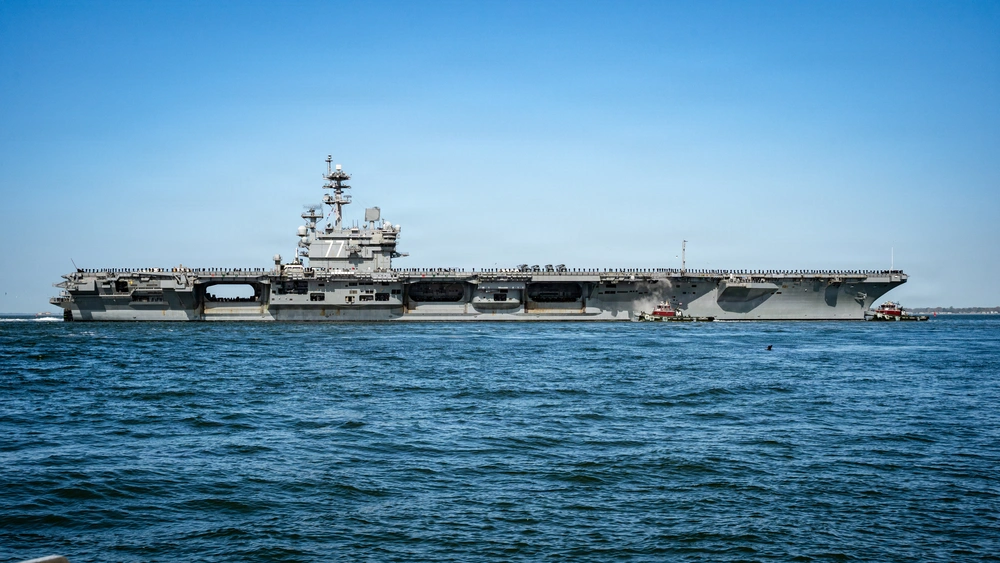
The aircraft carrier USS George H.W. Bush and other warships that are part of its strike group departed Naval Station Norfolk in Virginia on Tuesday and are expected to arrive in the Middle East in a few weeks. The US Navy said the strike group’s departure is part of a regularly scheduled deployment.

USS George H.W. Bush departs Naval Station Norfolk on March 31, 2026 (US Navy photo)

According to The Wall Street Journal, once the Bush arrives in the region, the US could have three carriers deployed for the Iran war for the foreseeable future, though Al Arabiya reported that the warship could replace one of the two carriers that have been involved in the conflict: the USS Abraham Lincoln, which has been operating in the Arabian Sea, or the USS Gerald Ford, which is currently in Croatia after being in Crete for reparis.

The Ford, which was operating in the Eastern Mediterranean near Israel, went to port after a major fire on the ship destroyed the beds of 100 crewmembers. The US military has insisted that the blaze was caused by a fire in the ship’s laundry room, though there are suspicions that an attack or sabotage was the real cause. The Ford has also been on an extended deployment and is set to break the record for the longest deployment since the Vietnam War.

In addition to sending a third aircraft carrier to the Middle East, the US has deployed thousands of Marines and US Army Airborne troops to the region as the Pentagon prepares for potential ground operations. Trump is insisting the war could be over in a few weeks, but escalating to a ground war would likely lead to a much longer conflict.

‘A War Crime’: UN Rights Chief Urges Immediate Repeal of Israel’s New Death Penalty

April 1, 2026

SWITZERLAND-ISRAEL-PALESTINIAN-UN-CONFLICT-DIPLOMACY

United Nations High Commissioner for Human Rights Volker Türk is seen at the UN Office in Geneva on September 16, 2025.

(Photo by Fabrice Coffrini/AFP via Getty Images)

UN High Commissioner for Human Rights Volker Türk said the new law “raises serious concerns about due process violations, is deeply discriminatory, and must be promptly repealed.”

Brett Wilkins, Common Dreams, Mar 31, 2026

The top United Nations human rights official was among those who on Tuesday urged Israel to repeal legislation it passed the previous day legalizing the hanging of Palestinians convicted of terrorism-related killing of Israelis—a law critics contend will not apply to Israelis who commit similar crimes.

The law passed by the Israeli Knesset states that Palestinians must be hanged within 90 days if convicted of nationalistic killings in a military court. While the legislation does not allow pardons, it gives judges discretionary power when it comes to sentencing Israeli citizens convicted of similar crimes, and observers say it’s highly unlikely that any jIsraeli would ever be hanged under the law.

RECOMMENDED…

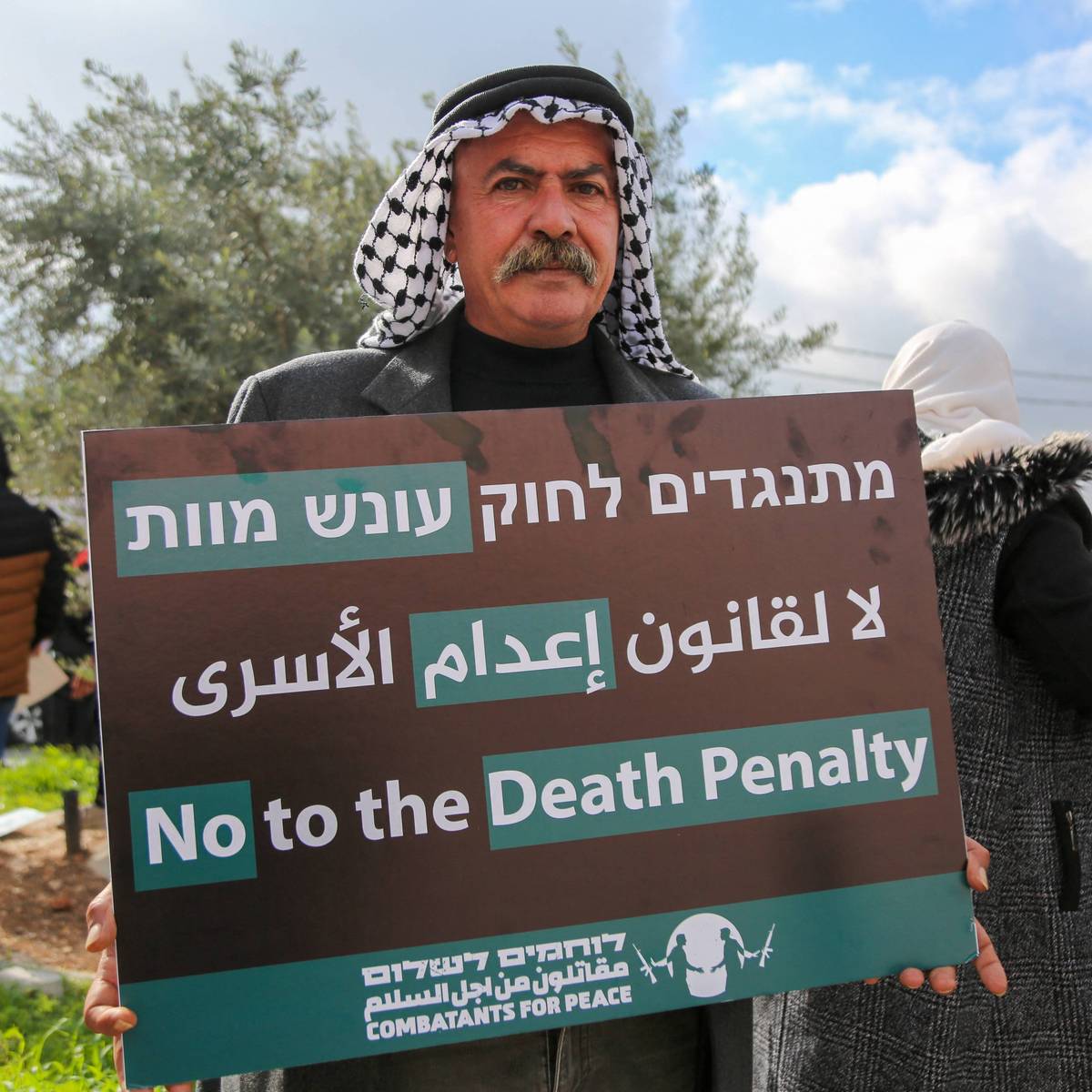
A protester holds a placard reading "No to the Death Penalty"

Advocates Demand Repeal of Israeli Death Penalty Law Explicitly Targeting Palestinians

Israelis, Palestinians, and other people march in Bethlehem against the proposed Israeli death penalty bill

Critics Warn of Mass Executions as Israel Advances Death Penalty Bill for Palestinians

Experts argue the 90-day provision and lack of appellate process are violations of international humanitarian law.

“It is deeply disappointing that this bill has been approved by the Knesset,” UN High Commissioner for Human Rights Volker Türk said Tuesday. “It is patently inconsistent with Israel’s international law obligations, including in relation to the right to life. It raises serious concerns about due process violations, is deeply discriminatory, and must be promptly repealed.”

“The death penalty is profoundly difficult to reconcile with human dignity, and it raises the unacceptable risk of executing innocent people,” he added. “Its application in a discriminatory manner would constitute an additional, particularly egregious violation of international law. Its application to residents of the occupied Palestinian territory would constitute a war crime.”

While proponents of the law—some of whom, like Israeli National Security Minister Itamar Ben-Gvir, celebrated its passage—say they believe it will deter Palestinians from killing Israelis, studies in the United States, the only Western democracy that actively executes people, have repeatedly shown that the death penalty is not a deterrent to crime.

Palestinians and their defenders have also warned that the law could open the door to mass executions, including of anyone found to have killed Israelis during the October 7, 2023 Hamas-led attack, for which Israel retaliated with an ongoing assault and siege that has left more than 250,000 Palestinians dead, maimed, or missing.

“Trials for crimes related to October 7 are supremely important, but they must not be anchored in discrimination,” said Türk. “All victims are entitled to equal protection of the law, and all perpetrators must be held accountable without discrimination.”

Other human rights defenders also condemned the new Israeli law and called for its repeal.

https://www.instagram.com/p/DWhZyVAFI_F/embed/captioned/?cr=1&v=4&wp=1403&rd=https%3A%2F%2Fwww.commondreams.org&rp=%2Fnews%2Fun-israel-death-penalty#%7B%22ci%22%3A0%2C%22os%22%3A171967%7D

“The Israeli parliament’s adoption of a racist law authorizing the hanging of Palestinian prisoners is the very definition of apartheid,” the Washington, DC-based Council on American-Islamic Relations (CAIR) said in a statement Tuesday. “Even the South African apartheid government never adopted a death penalty law so explicitly racist.”

Taking aim at Israeli Prime Minister Benjamin Netanyahu—who is wanted by the International Criminal Court for alleged crimes against humanity and war crimes in Gaza—CAIR continued, “The Netanyahu regime is completely out of control because our nation continues to bankroll its crimes, from the de facto annexation of the West Bank to the genocide in Gaza, to the ethnic cleansing of southern Lebanon, to the occupation of Syria, to the illegal war with Iran that it triggered, to the closure of Christian and Muslim holy sites in Jerusalem.”

“Congress is not just failing to act, it is actively advancing more military support while treating that US taxpayer funding as automatic, even as these abuses escalate,” the group added. “Every member of Congress—especially Democratic leaders of the House and Senate—must condemn these crimes, including the racist execution law, and announce their opposition to any further military funding for the Israeli apartheid regime.”

A 2024 ruling by the International Court of Justice in The Hague—where Israel is also facing a genocide case brought by South Africa in response to the US-backed war on Gaza—affirmed that the Israeli occupation of Palestine is an illegal form of apartheid that must be ended.

More than 9,500 Palestinians are currently locked up in Israeli prisons, including 350 children and 73 women, according to advocacy groups. Palestinian and Israeli human rights defenders say detainees face torture, starvation, and medical neglect behind bars, causing many deaths.

Former prisoners as well as Israeli staff and medical personnel say they have witnessed torture at prisons including Sde Teiman, the most infamous of Israel’s lockups, with victims ranging from children to the elderly.

Israeli physicians who worked at Sde Teiman described widespread serious injuries caused by 24-hour shackling of hands and feet that sometimes required amputations. Palestinians taken by Israeli forces recounted rapes and sexually assaults by male and female soldiers, electrocution, maulings by dogs, denial of food and water, sleep deprivation, and other torture.