Posts Tagged ‘Palestine’
𝐈𝐬𝐫𝐚𝐞𝐥𝐢 𝐒𝐭𝐫𝐢𝐤𝐞𝐬 𝐚𝐧𝐝 𝐆𝐮𝐧𝐟𝐢𝐫𝐞 𝐊𝐢𝐥𝐥 𝟖𝟒 𝐌𝐨𝐫𝐞 𝐏𝐚𝐥𝐞𝐬𝐭𝐢𝐧𝐢𝐚𝐧𝐬 𝐢𝐧 𝐭𝐡𝐞 𝐆𝐚𝐳𝐚 𝐒𝐭𝐫𝐢𝐩
September 25, 2025Israel continues heavy attacks on central and southern Gaza despite telling Palestinians in Gaza City to flee there
Italian workers show the way with massive strikes in support of Gaza – demand TUC makes a stand and organises a general strike in the UK
September 24, 2025News Line,
HUNDREDS of thousands of workers and youth took action throughout Italy on Monday after Italian trade unions called a nationwide strike in support of Palestinians in Gaza and against the support given by the right-wing government of Giorgia Meloni to the genocidal Israeli regime.
While the governments of the UK, France, Australia, Canada and Portugal gave formal recognition to the Palestinian State, the Italian government has, along with Germany, resisted the overwhelming pressure from workers and youth to make even this token gesture.
While the US is the biggest provider of weapons to Israel, Germany is the second biggest supplier of arms and military equipment to the genocidal state, followed by Italy.
The staunch support of the Meloni government to Israel and its murderous drive to ethnically cleanse Palestinians from Gaza – for a war that has been massively stepped up with the bombing and ground invasion of Gaza City – has produced a mass movement by workers and youth across Italy.
On Monday, this mass opposition erupted following a call by Italian trade unions and pro-Palestinian groups for a one-day strike to force the Italian government to ‘choose whose side it is on’.
The strike demand was issued by the Autonomous Dockworkers Collective (CALP) and the Basic Union (USB) national grassroots trade union confederation.
Protests and strikes struck 81 towns and cities across Italy under the slogan ‘Let’s Block Everything’, the same slogan of the massive demonstrations in France recently, over government plans to slash workers’ pensions in order to cut 44 billion euros from the French national debt.
In Venice, thousands marched with banners reading ‘Gaza is burning, we will block everything’. Trains and buses were cancelled, schools and universities closed as transport workers, teachers and students came out on strike.
Italian dockworkers have been in the forefront of action against Zionist genocide. Last week, two container ships carrying explosives to Israel were blocked at the port of Ravenna after dockworkers reported their cargo to the authorities and refused to load them. In early August, dockworkers in Genoa prevented a Saudi-owned vessel from being loaded with Italian-made weapons destined for Israel.
Members of the dockworkers union (CALP) from Genoa are on board a boat that set off from the port on 30 August to join the Sumud Flotilla of over 70 ships loaded with medical supplies and humanitarian aid headed for Gaza to break the Israeli siege of the Strip.
50,000 workers and youth took to the streets of Genoa in a massive demonstration of support, while the dockworkers issued a warning that if the flotilla is attacked, as Israel has previously attempted, then the dockers will block all goods headed for Israel and halt all trade across Europe.
One dockworker told the rally held as the boat departed: ‘If we lose contact with our boats, with our comrades, even for just 20 minutes, we will shut down all of Europe.’
This is no idle threat. The port of Genoa is the key Mediterranean shipping hub for Italy and the EU with 2.74 million containers passing through in 2023, closing the port would indeed shut down Europe. The dockworkers and trade unions in Italy have demonstrated the enormous power of the working class.
Their actions stand in stark contrast to the complete refusal of the TUC in Britain to organise anything other than lunchtime meetings to ‘discuss’ Palestine or pass harmless motions condemning the mass murder of Palestinians. The time for simply condemning genocide in Gaza is over.
The UK, EU and US working class have the power to end Zionist genocide by forcing their trade unions to immediately call indefinite general strikes to bring down the governments that are enablers of all the war crimes and genocide being committed in Gaza, going forward to workers’ governments and socialism.
Workers’ governments will break with the Israeli regime, and not only recognise the State of Palestine but provide it with all the material support required for the victory of the Palestinian Revolution. This is the way forward!
Recognition of Palestine Is Not Enough
September 23, 2025Israeli Knesset member Aida Touma-Suleiman argues that in order for the growing recognition of the state of Palestine to be meaningful, it must be accompanied by sanctions for Israel’s permanent illegal occupation.
By Aida Touma-SlimanSeptember 22, 2025Z ArticleNo Comments7 Mins Read
Source: Jacobin
Facebook Twitter Reddit Bluesky Email
A resistance mural in a rural Palestinian village. Credit: Credit: ISM (palsolidarity.org)
In recent months, as the genocidal killing of Gazans continues, an increasing number of countries have announced their intention to recognize a Palestinian state, joining the 147 that already have. Most of these come from among Israel’s Western allies, with the formalization of recognition due to take place at a United Nations (UN) summit to revive the two-state solution, cochaired by Saudi Arabia and France. As part of this effort, the UN General Assembly endorsed this initiative, in a resounding show of support with a supermajority of 142 countries in favor and only ten opposed. (Even one of Israel’s strongest allies, Germany, voted in favor of this initiative, although it said it would not recognize a Palestinian state at this stage.) The initiative could provide strong leverage for the basic demands of the Palestinian people to live free of Israeli occupation in their own independent state.
This recognition would have been a momentous occasion had it not come amid a war of annihilation waged against Gaza, and in tandem with a military-settler offensive against the Palestinian people in occupied East Jerusalem and the West Bank. Right now, the most urgent demand is to mount as much international pressure as possible to immediately stop the assault on Gaza, save its remaining residents from killing or ethnic cleansing, and prevent the permanent reoccupation of the entire territory for years to come.
Two Tracks
The world is moving on two parallel tracks: on one side, a wave of popular solidarity with the Palestinian cause and against the genocide, including increased discussion of real sanctions against Israel. On the other side, Israel’s unprecedented brutality against the Palestinian people, supported unconditionally by the United States.
The most recent example entailed a US violation of the terms of conditions for hosting the UN in its own country, when Secretary of State Marco Rubio’s announced a visa ban of eighty Palestinian Authority officials, including President Mahmoud Abbas, ahead of the UN conference.The very countries now declaring their intention to recognize Palestine in the coming days have been, and continue to be, enablers of the genocide against the same people whose right to self-determination they are belatedly acknowledging.
One of the problems with these two tracks is that they move at different paces: the translation of public pressure into actual policies that could curb Israel’s ability to wreak havoc has moved far slower than the terrifying pace of Israel’s war crimes. Israel’s Western allies seem to be caught between these two tracks, which has resulted in a schizophrenic policy toward Palestinians. The very countries now declaring their intention to recognize Palestine in the coming days have been, and continue to be, enablers of the genocide against the same people whose right to self-determination they are belatedly acknowledging.
Some countries have continued to profit through continued trade, whereas others have taken a more direct and active role in abetting Israel’s crimes in Gaza: from UK aircraft carrying out reconnaissance flights over Gaza to gather intelligence for Israel’s war machine, to German tank engines that have also been used to flatten the cities of Rafah and Khan Yunis.
These details help place the forthcoming recognition of Palestine into context. Anyone who believes this marks the peak of diplomatic efforts is mistaken. Recognition is not the end of the road but its beginning. It must be accompanied by concrete actions that guarantee the survival of the Palestinian people as well as their right to self-determination.
A Diversion?
Recognition of a Palestinian state may offer Western governments a way to absolve themselves in the face of mounting public pressure from Palestine solidarity movements. Polls, protests, and mountains of anecdotal evidence suggest that the public is disgusted by what Israel is doing to the Palestinians, and by the indifference and complicity of their own governments and very often of their own media. They are mobilized to pressure their governments, and it is to them we look to ensure that recognition, while important, does not replace the urgent need to end the war, prevent ethnic cleansing, and stop settler violence in the West Bank.
Without immediate interventions, the creeping process of annexation will proceed unchecked, and the already slim prospect of establishing a Palestinian state will further fade. Recognition of Palestine must be a platform to turn the tide on the two-state solution rather than serving as an atonement certificate for states complicit in its very death.Recognition of Palestine must be a platform to turn the tide on the two-state solution rather than serving as an atonement certificate for states complicit in its very death.
Palestinians have a legitimate fear that those states that are recognizing their right to self-determination will end up not only making of it a symbolic gesture, but that this gesture will be accompanied by greater demands on the Palestinians under occupation than on their Israeli occupier — that recognition will become yet another cudgel with which to undermine Palestinian rights and well-being rather than challenge Israeli criminality.
This is not a baseless fear: in statements made by Western leaders when announcing recognition, several conditions were attached (some in the UN Resolution itself), including limiting participation in Palestinian elections to those factions endorsing the Palestine Liberation Organization (PLO) platform and for Palestinians to agree that their state would be demilitarized, when Palestinians are unable to defend themselves against genocide.
Palestinians must get their political house in order, but such demands cannot be a distraction while Palestinians are enduring extermination, ethnic cleansing, and settlement expansion.
Recognition Is an Important First Step
In spite of these concerns, recognition of Palestine must be supported — it is something that my party, Hadash, has long called for. It is one way of consolidating a global consensus against the Israeli-American “Greater Israel” project and in favor of Palestinian self-determination, and is a necessary political task in these terrible times.
But to be meaningful, recognition must be accompanied by sanctions for the permanent illegal occupation of the state that is being recognized. The International Court of Justice, in its opinion last year, set out the illegality of the occupation itself and some of the measures states must take to not be complicit, ranging from restrictions in trade to military cooperation.To be meaningful, recognition must be accompanied by sanctions for the permanent illegal occupation of the state that is being recognized.
States such as Spain, Ireland, and Slovenia have already moved to position themselves in compliance with international law. And there is a sense that these states are only the first: even Germany has recently announced an apparent weapons embargo, which would be significant if properly implemented. The European Union as a whole, however, continues to fail Palestinians in its inability to pass an arms embargo.
The reason this is so important is not to reaffirm a unipolar order in its twilight, but because the West remains Israel’s hinterland: where Israel conducts the majority of its trade, parks many of its financial assets in Western banks, participates in international sports, and travels to frequently and visa-free. The West also claims to adhere to a rules-based and values-based system, and it is therefore the West that will determine how quickly the gap is closed between the two tracks of the destruction of Palestinians and holding Israel accountable.
Solidarity in the streets must translate into action in the halls of power, even if this is happening too late for so many Palestinians. Recognition is an important step, but it too must be translated into action.
11 Questions the Western Media Should Be Investigating About the Gaza Genocide
September 22, 2025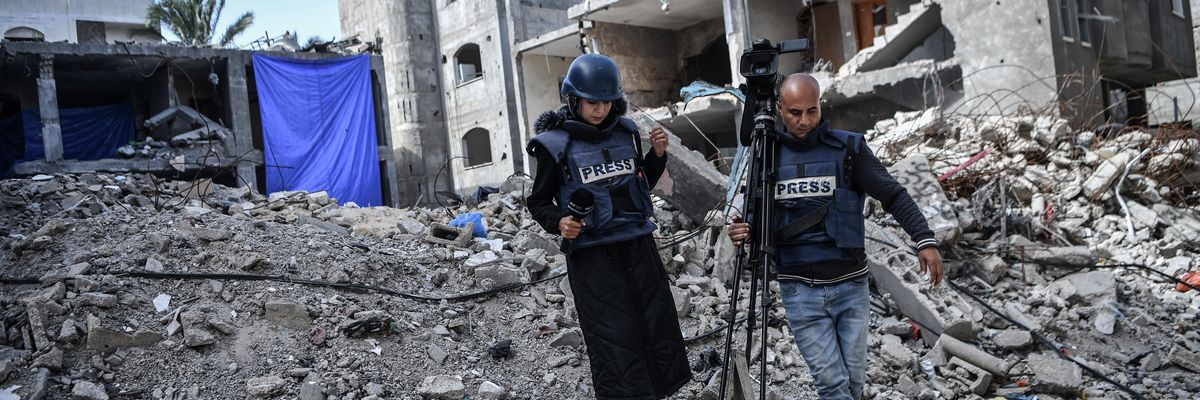
TRT Arabi Reporter, Reba Khalid al-Ajami, reports from Gaza amid ongoing Israeli attacks in Rafah, Gaza on February 29, 2024.
(Photo by Abed Zagout/Anadolu via Getty Images)
Genocide thrives in darkness, so won’t some committed journalists shine a light?
Sep 21, 2025, Common Dreams
Some serious readers would like to see mainstream media and independent media cover several events and matters involving the Israeli war in tiny Gaza and the mass slaughter of its defenseless citizens.
- Israel keeps exaggerating the status and threat of the Hamas government, which is ridiculous. What about an article on what is left of Hamas, never a threat with a few thousand fighters with small arms and limited ammunition, hiding in tunnels, until the mysterious collapse on October 7, 2023 of the super-modern, multi-tiered border security system, all at the same time? What are the Israeli casualty figures in the past year in Gaza besides accidents and friendly fire? WHAT ABOUT THE VAST DEATH AND SERIOUS INJURY UNDERCOUNT? (See, “65 Doctors, Nurses, and Paramedics: What We Saw in Gaza” by Feroze Sidhwa, New York Times, Sunday, October 13, 2024; The Lancet, “Counting the dead in Gaza: Difficult but essential,” my column of March 28, 2025, “The Vast Gaza Death Undercount–Undermines Civic, Diplomatic and Political Pressures,” and my article in the August-September 2024 Capitol Hill Citizen).
- What is the situation in the Israeli prisons housing many thousands of Palestinians without charges (they are hostages too), and their mistreatment, including torture, documented by some Israeli prison doctors and domestic Israeli reports? Most of the media attention has been on the Israeli hostages in Gaza.
- What is the nature and scope of the Israeli resistance groups, dissenting reservists, and retired officials, the human rights groups, and others? It takes a lot of courage on their part to stand up to Israeli Prime Minister Benjamin Netanyahu. In May of this year, Yair Golan, former Israeli deputy minister of economy, said, “A sane country does not wage war against civilians, does not kill babies as a pastime, and does not engage in mass population displacement.”
- When Netanyahu rarely admits a “mistake” in hitting, for example, the medic team, the World Food Program vehicles, the ancient Catholic Church, and just recently Nasser hospital with a “double tap,” is there any demand for payment of damages to next of kin and property? The US Army in Afghanistan paid families $20,000 when they admitted to a civilian homicide.
- Why isn’t there a follow-up every time the Israeli government promises an investigation? What are the findings and sanctions of these many official inquiries that are announced to get the media off the Israeli government’s back on the day of the atrocity?
- What about a story on the sadistic snipers, who operate without rules of engagement, in this Palestinian Holocaust, and savagely kill infants, children, people desperately digging into the rubble to rescue loved ones, etc.? How are they chosen? They compete with one another with the most brutal, touted examples of their executions, their favorite prey being pregnant women, according to Israeli reporters.
- Why isn’t more made of what is being denied the American public (aka taxpayers) when no US journalists are allowed into Gaza, along with other foreign and Israeli journalists similarly barred? Genocides thrive in darkness.
- What about some reporting on claims that some Israeli opponents of the Netanyahu regime believe it has a devastating dossier on US President Donald Trump, which accounts for the 100% backing by toady Trump, even more than by toady Joe Biden?
- Why is so little written about Israel enforcing an illegal embargo on Gaza that became far more savage after October 7—“no food, water, medicine, healthcare, fuel, electricity,” etc.? How come there seems to be an ample supply of shrouds? Some observers in Israel believe there is an underground trade in this product. There is no capacity to produce them in the tens of thousands or more inside Gaza, which is almost totally destroyed.
- What about long-overdue features on the American Israel Public Affairs Committee’s power or a feature on Veterans for Peace blacked out by the major newspapers? Go to veteransforpeace.org and see for yourself if they are newsworthy. More coverage of the 50 Flotilla ships, which have passengers from 43 countries, and their safety is in order.
- Why is the “other antisemitism” totally ignored by the media? This “other antisemitism” is far more violent, with F-16s and other American-built weaponry daily and genocidally mass slaughtering starving civilian Palestinian semites.
Scholar Dr. Jim Zogby delivered an address years ago at an Israeli University titled “The Other Antisemitism,” and also engaged two Jewish Americans on this topic in a civil exchange seen on the website DebatingTaboos.org.
RECOMMENDED…
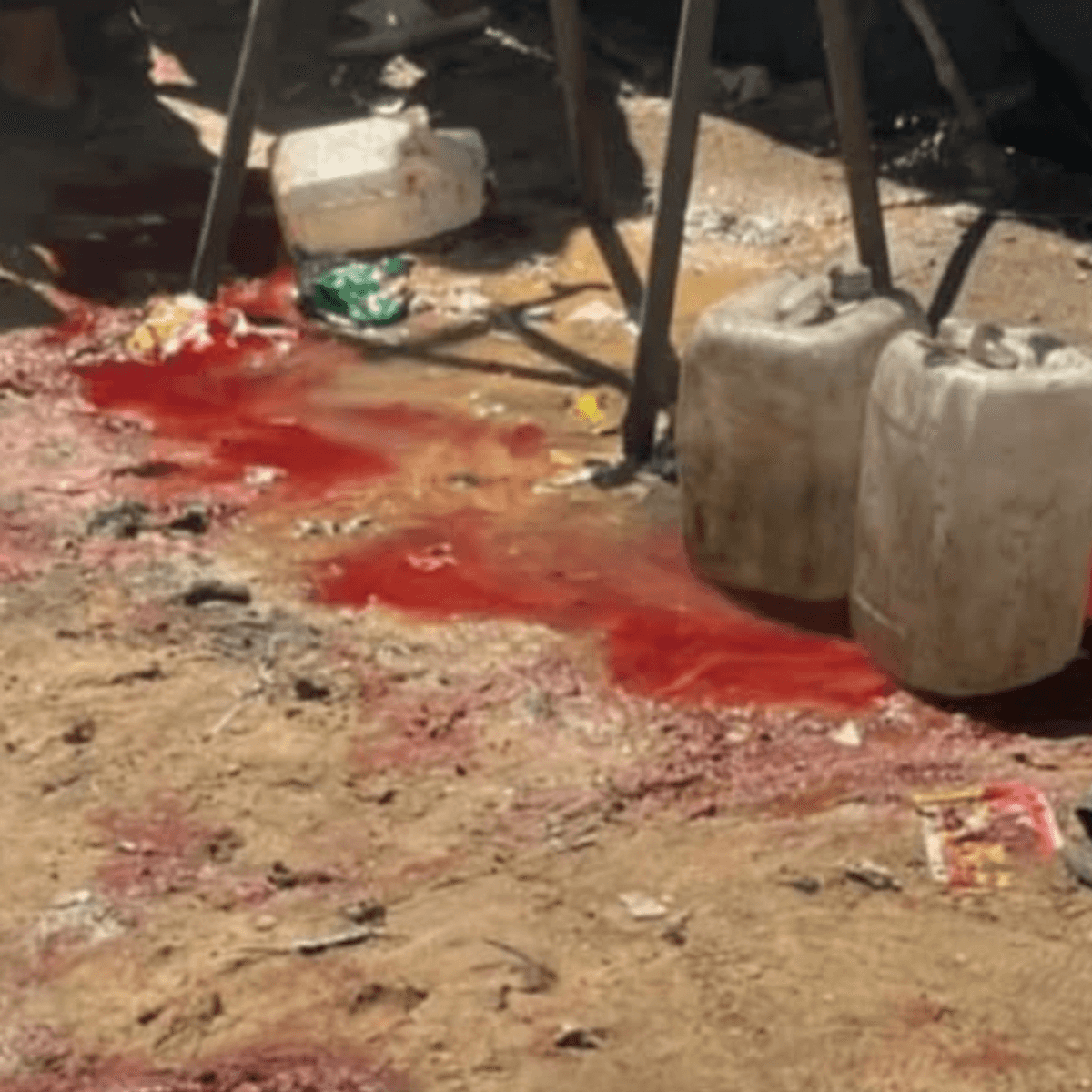
Israel Massacres Gaza Children Fetching Water, Starves 13 More Palestinians to Death
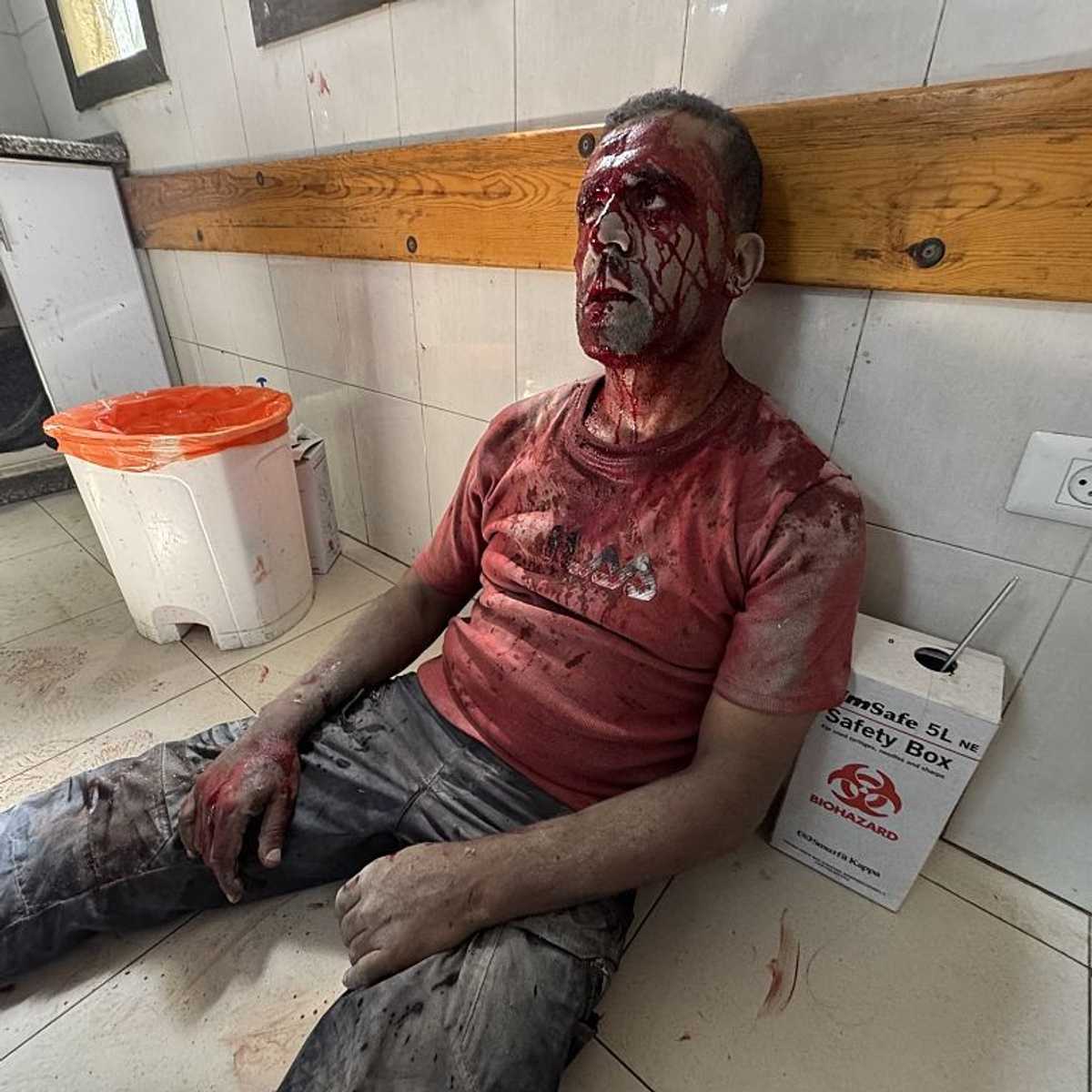
‘What a Live-Streamed Genocide Looks Like’: 5 Journalists, 4 Health Workers Among 21 Killed by Israel Hospital Bombing
Thank you for your professional curiosity.
An Urgent Message From Our Co-Founder
Dear Common Dreams reader, The U.S. is on a fast track to authoritarianism like nothing I’ve ever seen. Meanwhile, corporate news outlets are utterly capitulating to Trump, twisting their coverage to avoid drawing his ire while lining up to stuff cash in his pockets. That’s why I believe that Common Dreams is doing the best and most consequential reporting that we’ve ever done. Our small but mighty team is a progressive reporting powerhouse, covering the news every day that the corporate media never will. Our mission has always been simple: To inform. To inspire. And to ignite change for the common good. Now here’s the key piece that I want all our readers to understand: None of this would be possible without your financial support. That’s not just some fundraising cliche. It’s the absolute and literal truth. We don’t accept corporate advertising and never will. We don’t have a paywall because we don’t think people should be blocked from critical news based on their ability to pay. Everything we do is funded by the donations of readers like you. Will you donate now to help power the nonprofit, independent reporting of Common Dreams? Thank you for being a vital member of our community. Together, we can keep independent journalism alive when it’s needed most. – Craig Brown, Co-founder | about:blank |
about:blank
Our work is licensed under Creative Commons (CC BY-NC-ND 3.0). Feel free to republish and share widely.
Ralph Nader is a consumer advocate and the author of “The Seventeen Solutions: Bold Ideas for Our American Future” (2012). His new book is, “Wrecking America: How Trump’s Lies and Lawbreaking Betray All” (2020, co-authored with Mark Green).
From Your Site Articles
- Gaza Doctor Corrects CNN Anchor: ‘This Is Not a Humanitarian Crisis… This Is Genocide’ ›
- Even Once Reluctant Scholars Now Agree on Israel’s Gaza Assault: It’s a Genocide ›
- An Indifferent Media Is Failing to Report the 400,000 Dead in Gaza ›
- In Too Much of the US, Israel’s Gaza Genocide Has Been Made Invisible ›
- US Corporate Media Complicit in Demonizing Pro-Palestinian Protesters ›
- The Task of Freeing Palestine Is the Task of Freeing Ourselves ›
SUBSCRIBE TO OUR FREE NEWSLETTER
Daily news & progressive opinion—funded by the people, not the corporations—delivered straight to your inbox.
Follow Us
LATEST NEWS
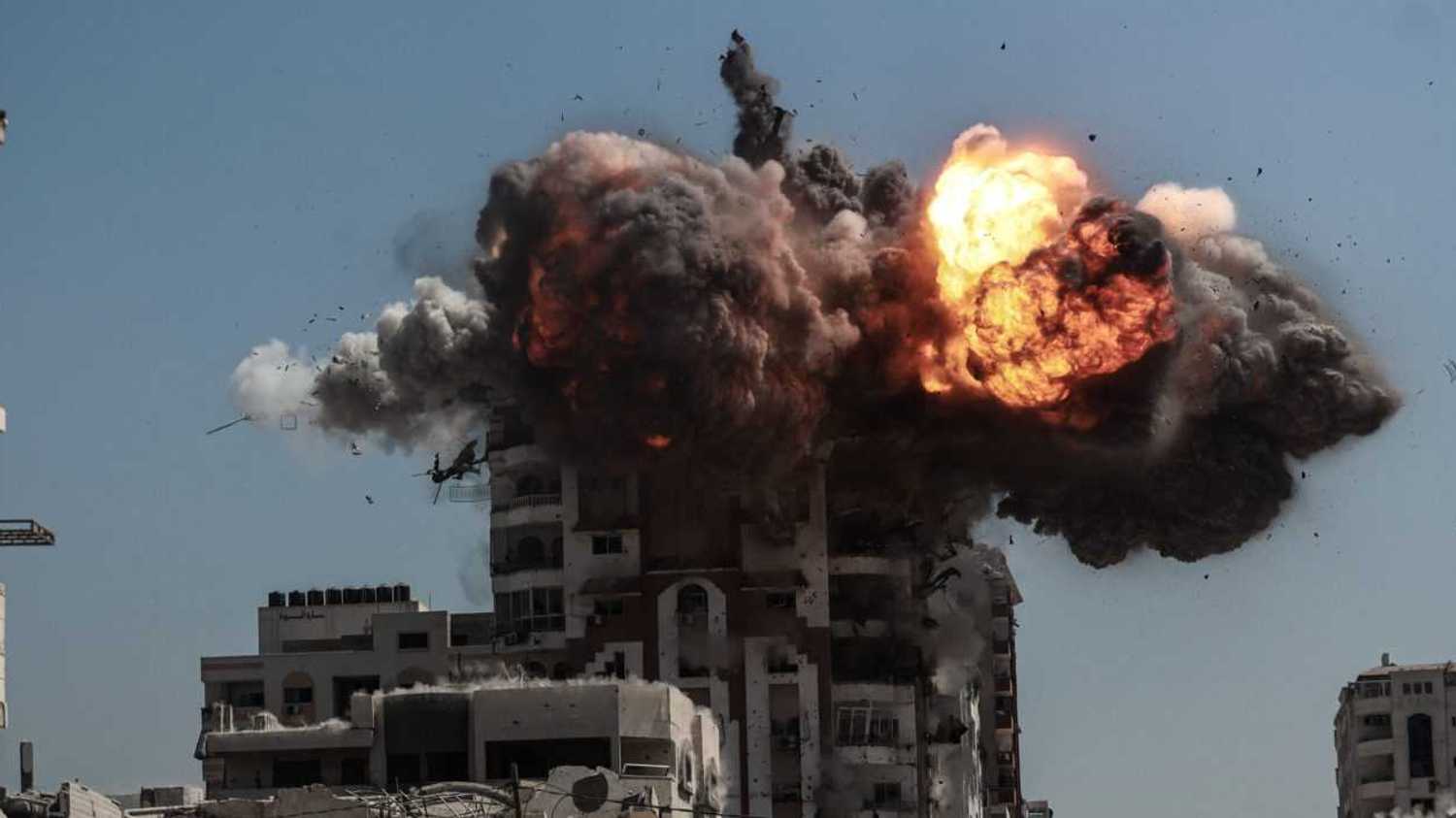
Largest Caucus in House Endorses Bill to Block US Bombs to Israel
“The United States cannot continue to send bombs we know will be used to commit terrible atrocities in Gaza.”
Sep 21, 2025
‘Release the Tapes’: Lawmakers Demand Answers Over Alleged $50,000 Bribe of Trump Border Czar Tom Homan
“Seriously though, has anyone ever been handed $50,000 cash in a paper bag for something legit?”
Sep 21, 2025
‘Celebratory and Uplifting’: Sun Day Events Champion Promise of Wind and Solar
Despite Trump’s shadow, organizers behind the day of action say the “clean energy revolution is here.”
Sep 21, 2025
Recognizing a Palestinian State Is Not a Policy on Its Own
September 17, 2025As more Western states recognize Palestine, will they also take the action necessary to make this diplomatic step impactful in bringing a Palestinian state to life?
August 11, 2025
Anas Iqtait
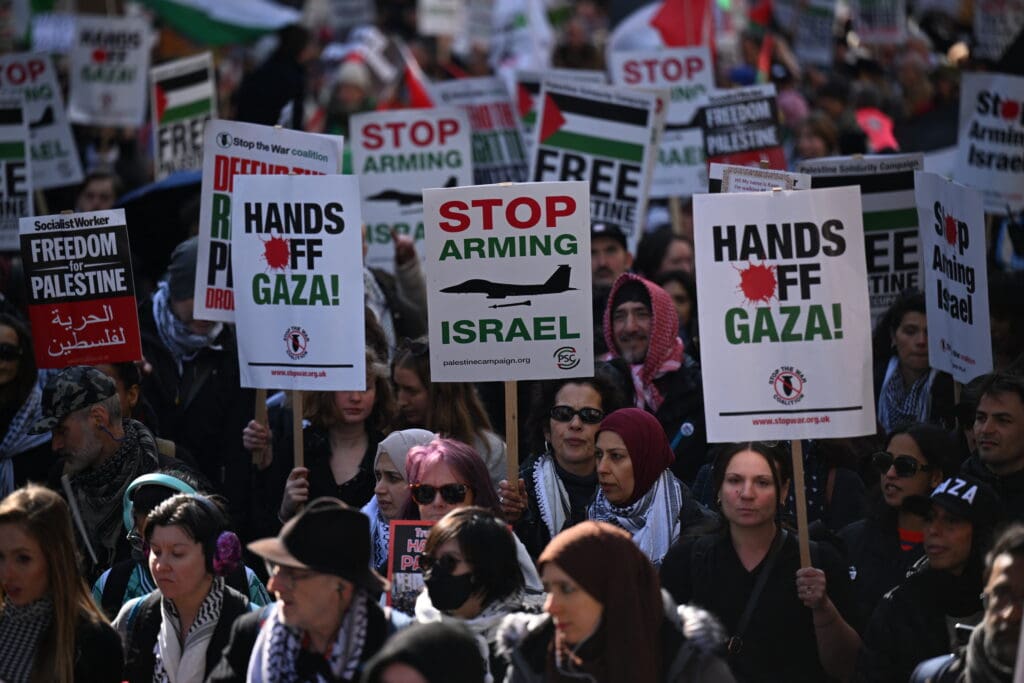
Tens of thousands of pro-Palestinian demonstrators march with banners through Whitehall towards 10 Downing Street, the official residence and office of the UK Prime Minister, to protest against Israel’s attacks on Gaza in London, United Kingdom on March 15, 2025. (Photo by Rasid Necati Aslim / ANADOLU / Anadolu via AFP)
Against the backdrop of the daily horrors taking place in Gaza, a wave of Western countries have decided to recognize the State of Palestine. After Ireland, Spain and Norway took the step in 2024, France and Australia have pledged to follow suit at the United Nations General Assembly in September. The United Kingdom and Canada have also expressed their intention to do so, albeit with a litany of conditions. In short, the diplomatic map is shifting. But recognition is not a policy, it is an opening. The real work begins the day after.
Two persistent misconceptions cloud the debate. One is to mistake recognition for a peace plan rather than a tool to spur further action. The other is to imagine that it can revive a two-state formula rendered inoperable by the facts on the ground Israel has established over decades of military occupation and colonization. More than 700,000 Israeli settlers now live across the West Bank, including East Jerusalem. Separation walls, settlements, checkpoints and a dense web of military orders fragment both physical space and jurisdiction. In the past year, the Israeli Knesset has voted to reject the establishment of a Palestinian state and to annex the West Bank. If diplomatic recognition is to have a meaningful role in reversing these developments, recognizing governments must align the leverage they possess with the outcome they say they support.
What does that require?
The only way to move the needle on the two-state solution is to take steps that force Israel’s government to reconsider its intransigent path toward annexation and the fulfillment of a “Greater Israel.” First, governments supporting two states must move from symbolic action to enforcing international law. Recognition should be anchored in the judgements of international courts and treaty bodies, not in open-ended “confidence-building” exercises that absorb pressure and deliver little. Governments that recognize Palestine should operationalize that commitment by barring economic support for the settlement enterprise, adopting import restrictions on settlement goods, and applying targeted measures to entities and individuals who enable annexation, settler violence and war crimes against the Palestinians. If recognition is to be followed by more than applause, it must change the incentive structure that keeps the status quo in place.
Secondly, recognizing states must pair recognition with steps that rebalance the vast asymmetry in power between Israel and Palestine, not just revive a deeply flawed peace process. For the past three decades, that process rested on the assumption that negotiations would furnish Palestinians with the bargaining power they otherwise lacked relative to Israel. In practice, the agreed framework made Palestinian rights conditional on successive rounds of talks, while imposing no costs on Israeli expansion. If recognition is to carry any substantive force, it must invert that dynamic.
Thirdly, these states need to support a credible roadmap for Palestinian governance . Many capitals are balancing their decision to recognize Palestine with demands to reform Palestinian governance institutions. However, without a clear policy, they are reaching for familiar but misguided prescriptions: empowering the Palestinian Authority; holding elections; reviving old reform packages. While reform is certainly needed, it cannot be a proxy for creating deeper dependency. A better approach would be to prioritize three elements: (1) Protect the institutional core of Palestinian representation, including, but not limited to, a reformed PLO, and the independent ecosystem of Palestinian civil society, so any transition is political rather than merely administrative; (2) support an accountable financial architecture insulated from donor micromanagement and Israeli control; (3) and back credible tracks for transitional justice, such as documentation, restitution and mechanisms addressing displacement and dispossession. These steps should affirm the rights to Palestinian freedom and self-determination, including the right to choose and renew their political representation, as all free peoples do.
Finally, these states need to be clear and candid about what achieving a Palestinian state means in practice. The current basis for diplomacy is that recognition will somehow “revive” the two-state solution without saying plainly what it entails. This could include reversing settlement expansion and Israeli annexation of East Jerusalem, creating a contiguous Palestinian territory, and establishing enforceable timelines for achieving outcomes. If these conditions cannot be met, the international community should abandon the empty rhetoric in support of two states, which only serves to provide cover for the existing colonial reality. Although a single, democratic state grounded in equal rights is not most capitals’ preference, it is the logical and moral alternative if equality rather than ethnoreligious privilege and apartheid is the organizing principle. Either way, clarity is better than evasion.
These steps do not require a reinvention of diplomacy. Governments need only do in Palestine what they claim to do elsewhere: defend the rights of vulnerable people; enforce protections from collective punishment and genocide; protect Palestinian society and its economy from settler-colonial predation; and refuse to bankroll a transnational system of oppression.
The UK, Canada and, increasingly, Australia are hedging their recognition of Palestine to demands for Palestinian Authority reform and elastic security benchmarks. But hedging is politics, not a plan. The quickest way to empty recognition of meaning is to announce it while leaving the fundamental obstacles to realizing a Palestinian state untouched. Recognition that does not change the behaviors of the occupier, the settlers, or Western supporters of Israel is an epitaph, not a breakthrough. It preserves the status quo, which, despite the name, shifts daily in a negative direction.
Given the trajectory of Western policy over the past three decades, it is reasonable to view recognition as a hollow gesture designed to deflect mounting pressure to halt the bloodshed and starvation in Gaza. Little thought is being given to the day after recognition. Put plainly, if state recognition of Palestine is followed by inaction, it is less a genuine diplomatic effort than a certificate of acquiescence to prevailing realities. At best, it registers formal objection to Israeli conduct. At worst, it becomes empty rhetoric that bears complicity in Israel’s immoral and illegal agenda.
𝐑𝐞𝐩𝐨𝐫𝐭: 𝐓𝐫𝐮𝐦𝐩 𝐒𝐩𝐨𝐤𝐞 𝐖𝐢𝐭𝐡 𝐍𝐞𝐭𝐚𝐧𝐲𝐚𝐡𝐮 𝐁𝐞𝐟𝐨𝐫𝐞 𝐈𝐬𝐫𝐚𝐞𝐥 𝐁𝐨𝐦𝐛𝐞𝐝 𝐐𝐚𝐭𝐚𝐫 𝐚𝐧𝐝 𝐃𝐢𝐝𝐧’𝐭 𝐎𝐩𝐩𝐨𝐬𝐞 𝐭𝐡𝐞 𝐒𝐭𝐫𝐢𝐤𝐞𝐬
September 16, 2025Israeli officials tell Axios that the White House was notified early enough that the strikes could have been called off
by Dave DeCamp, Antiwar. com,| September 15, 2025 at 2:26 pm ET
Israeli Prime Minister Benjamin Netanyahu informed President Trump that Israel planned to launch airstrikes against Hamas officials in Qatar shortly before the attack took place, and Trump didn’t oppose the plan, Axios reported on Monday, citing several Israeli officials.
In the wake of the Israeli bombing of Qatar, a major non-NATO ally of the US, the White House claimed that by the time it learned about Israel’s plans to strike Doha, it was too late to stop it. Trump himself also claimed that he was not notified about Israel’s plans and that he was “very unhappy” about the attack.
The Israeli officials speaking to Axios said that while Netanyahu informed Trump of his plans to bomb Doha relatively late in the game, there was still time for the strikes to be called off. Three Israeli officials said Netanyahu notified Trump at about 8:00 am Washington, DC time and that the strikes hit Doha at 8:51.
Trump and Netanyahu at the White House on April 7, 2025 (White House photo)
“Trump knew about the strike before the missiles were launched. First there was a discussion on the political level between Netanyahu and Trump, and afterwards through military channels. Trump didn’t say no,” a senior Israeli official told Axios.
A second senior Israeli official said that if Trump “had wanted to stop it, he could have. In practice, he didn’t.” Both officials claimed that if the US opposed the attack, Israel would have called it off.
The claims from Israeli officials align with Israeli media reports on the day of the strikes that said the US had given Israel a green light to go ahead with the bombing, which killed five lower-level Hamas officials and one Qatari security officer. A report from Middle East Eye, which cited US and regional officials, said that Trump had “blessed” Israel’s attack on Doha.
Israeli officials speaking to Axios said that Israel had decided to go along with the US claims that it wasn’t informed about the plan to strike Doha. “On our side, it was decided to help them with that for the sake of the US-Israel relationship,” one official said.
Following the bombing, Netanyahu released a statement claiming that the airstrikes were “a wholly independent Israeli operation. Israel initiated it, Israel conducted it, and Israel takes full responsibility.”
Huckabee Says the US Won’t Tell Israel Not To Annex the Occupied West Bank
September 10, 2025The US ambassador has previously made clear that the Trump administration won’t oppose major expansions of illegal Jewish settlements
by Dave DeCamp | September 9, 2025 at 6:41 pm ET | Israel, Palestine
US Ambassador to Israel Mike Huckabee said in an interview last week that the US has never asked Israel to “not apply sovereignty,” referring to the possibility of Israel annexing parts of the Israeli-occupied West Bank.
“The US has never asked Israel to not apply sovereignty,” Huckabee said, according to a September 5 post from a journalist for Israel’s Channel 14. “I have repeatedly stated that the US respects Israel as a sovereign nation and will not tell Israel what to do. This is also what Secretary Rubio has said as recently as this week.”
Israeli officials said last week that Secretary of State Marco Rubio had signaled to them that the US wouldn’t oppose Israel if it moved to annex the West Bank. He has also said publicly that annexation could be Israel’s response to Western states taking steps toward recognizing a Palestinian state.
Israeli Finance Minister Bezalel Smotrich recently outlined a proposal for annexing 82% of the West Bank and leaving six Palestinian population centers isolated as islands. He said that his plan aims for “maximum territory and minimum Arab population.”
Huckabee has also made clear that the Trump administration doesn’t oppose the recent major expansion of illegal Jewish settlements in the West Bank, which Smotrich said would “erase” the idea of a Palestinian state. Huckabee has claimed that the settlements are not illegal under international law despite their clear prohibition under the Geneva Convention of 1949, which both the US and Israel have signed and ratified.
Huckabee is a Christian Zionist, and his approach to Israel and Palestine is based on his view that God gave historic Palestine to the modern state of Israel, a theology that is rejected by the Catholic Church and most other Christian denominations. When asked in a recent interview with The Jerusalem Post about the growing skepticism of Israel among Americans, Huckabee suggested Christian pastors who didn’t teach his viewpoint were to blame.
“There are pastors in the evangelical world who have not explained to their congregations where the support for Israel comes from biblically,” he said.
Israel’s Defense Minister Again Threatens to Unleash Biblical Plagues on Yemen
September 7, 2025Israel Katz made the comments as the Houthis have continued their attacks on Israel following the assassination of the Yemeni PM
by Dave DeCamp | September 4, 2025 at 2:17 pm ET | Israel, Yemen
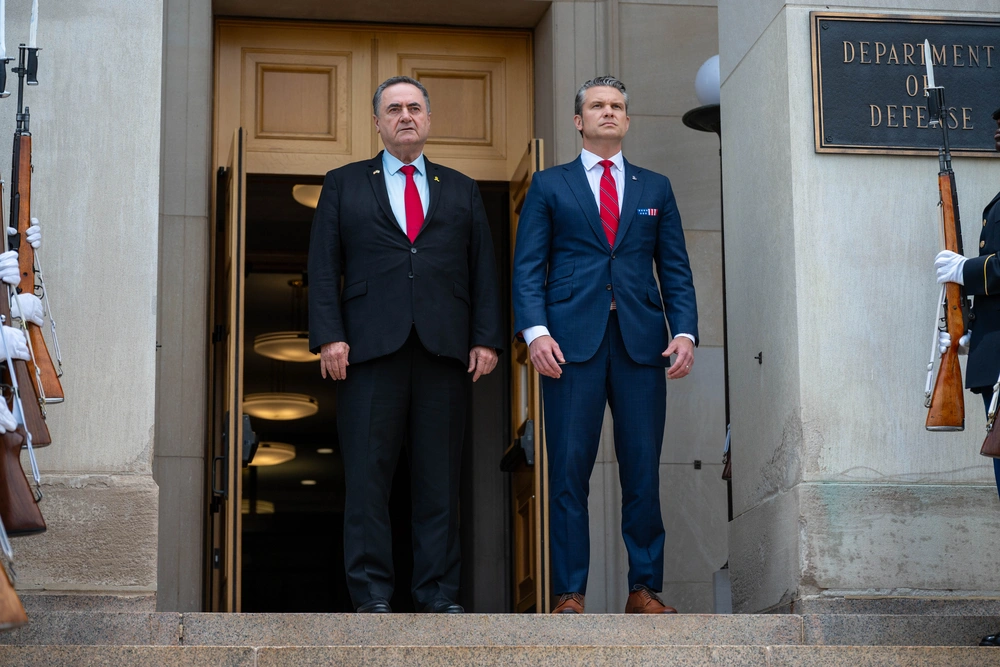
Israeli Defense Minister Israel Katz on Thursday repeated a threat to unleash biblical plagues on Yemen in response to Houthi attacks on Israel, which have continued following the Israeli assassination of the prime minister of the Sanaa-based government.
“The Houthis are firing missiles at Israel again. A plague of darkness, a plague of the firstborn – we will complete all ten plagues,” Katz wrote on X, referring to plagues brought upon Egypt in the book of Exodus.
Katz has previously used the “plague of darkness” in apparent reference to Israel’s strikes on Yemeni power plants and other energy infrastructure. He also referenced the “plague of the firstborn,” which resulted in the deaths of all firstborn males in Egypt in Exodus, when announcing the Israeli strikes that targeted Yemeni civilian leadership and killed Prime Minister Ahmed al-Rahawi.
Yemen’s Houthis, officially known as Ansar Allah, announced another missile attack on Israel on Thursday and repeated their vow that the operations in support of the Palestinians in Gaza will continue until there’s a ceasefire and an end to the blockade on the Palestinian territory.
“The suffering of our oppressed Palestinian people in Gaza makes it imperative for all peoples to take action and break all restrictions in fulfillment of their religious, moral, and humanitarian duty to end this unprecedented crime in our contemporary history. Everyone bears responsibility, and their duty will not be done until it is fulfilled,” said Houthi military spokesman Yahya Saree. “Yemenis will continue to support Gaza until the aggression against it stops and the siege is lifted.”
Saree also said the missile targeted Israel’s Ben Gurion airport and claimed that it reached its target and that US and Israeli air defenses failed to intercept it. Much earlier in the day, the Israeli military said a missile fired from Yemen landed in an open area outside of Israeli territory, but it’s unclear if it was the same one announced by Saree. The IDF claimed later in the day that its forces intercepted two drones fired from Yemen.
The Houthis are known for their resilience and did not back down in the face of a very heavy US bombing campaign that the Trump administration conducted from March 15 to May 6, which killed more than 250 civilians. The US gave up on trying to get the Houthis to stop their attacks on Israel and their blockade of Israeli shipping and agreed to a ceasefire with the group.
𝐏𝐫𝐞𝐬𝐢𝐝𝐞𝐧𝐭 𝐓𝐫𝐮𝐦𝐩 𝐒𝐚𝐲𝐬 𝐇𝐞’𝐬 𝐃𝐨𝐧𝐞 𝐚 𝐋𝐨𝐭 𝐟𝐨𝐫 𝐈𝐬𝐫𝐚𝐞𝐥, 𝐈𝐧𝐜𝐥𝐮𝐝𝐢𝐧𝐠 𝐁𝐨𝐦𝐛𝐢𝐧𝐠 𝐈𝐫𝐚𝐧
September 3, 2025The president also noted the Israel lobby’s strong influence on Congress and said it has waned in recent years
by Dave DeCamp, Antiwar. com, | September 2, 2025
President Trump said in an interview published on Tuesday that no one has done more for the state of Israel than himself and cited his recent airstrikes on Iranian nuclear facilities as an example.
“So, Israel is amazing, because, you know, I have good support from Israel,” the president told the Daily Caller. “Look, nobody has done more for Israel than I have, including the recent attacks with Iran, wiping that thing out. We, that plane, wiped them out like nobody ever saw before.”
Trump made the comments when asked if he was worried about the growing skepticism among young Republicans when it comes to the US relationship with Israel, and he noted the Israel lobby’s control over Congress, saying it has waned in recent years.
“But when, if you go back 20 years. I mean, I will tell you, Israel had the strongest lobby in Congress of anything or body, or of any company or corporation or state that I’ve ever seen. Israel was the strongest. Today, it doesn’t have that strong a lobby. It’s amazing,” Trump said.
President Donald Trump and Israeli Prime Minister Benjamin Netanyahu speak privately in the Vermeil Room before a dinner, Monday, July 7, 2025, at the White House. (Official White House Photo by Daniel Torok)
“There was a time where you couldn’t speak bad, if you wanted to be a politician, you couldn’t speak badly. But today, you have, you know, AOC plus three, and you have all these lunatics, and they’ve really, they’ve changed it,” he added.
The criticism of Israel among a small number of members of Congress is no longer limited to Democrats, as Rep. Marjorie Taylor Greene (R-GA), who is considered a strong supporter of President Trump, has recently come out strongly against Israel’s campaign in Gaza and became the first Republican in Congress to label it a genocide. Rep. Thomas Massie (R-KY) is also known for his opposition to US aid to Israel and the pro-Israel lobby group AIPAC.
“Israel, you would understand this very much, Israel was the strongest lobby I’ve ever seen. They had total control over Congress, and now they don’t, you know, I’m a little surprised to see that,” Trump said.
The president, who is strongly backing Israel’s genocidal assault in Gaza, said the military campaign is not good for Israel’s public image. “They may be winning the war, but they’re not winning the world of public relations, you know, and it is hurting them. But Israel was the strongest lobby 15 years ago that there has ever been, and now it’s, it’s been hurt, especially in Congress,” he said.
Trump made similar comments while on the campaign trail last year, both about the Israel lobby and Israel’s public image being damaged by the destruction of Gaza. “Some 15 years ago, Israel had the strongest lobby. If you were a politician, you couldn’t say anything bad about Israel, that would be like the end of your political career. Today, it’s almost the opposite,” he told Israel Hayom in March 2024.
How to Stop Israel from Starving Gaza
September 3, 2025By Jeffrey Sachs* and Sybil Fares* – Article sent to Other News by the authors
Israel has crossed the clear line into the darkest crimes.
Israel, with US complicity, is committing genocide in Gaza through the mass starvation of the population as well as direct mass murders and the physical destruction of Gaza’s infrastructure. Israel does the dirty work. The US Government funds it and provides diplomatic cover through its UN veto. Palantir, through “Lavendar,” provides the AI for efficient mass murder. Microsoft, through Azure cloud services, and Google and Amazon through the “Nimbus” initiative, supply core tech infrastructure for the Israeli army.
This marks 21st-century war crimes as an Israel-US public-private partnership. Israel’s mass starvation of the people of Gaza has been confirmed by the United Nations, Amnesty International, Red Cross, Save the Children and many others. The Norwegian Refugee Council, along with 100 organizations, have been calling for an end to Israel’s weaponization of food relief. This is the first time that mass starvation has been officially confirmed in the Middle East.
The scale of the starvation is staggering. Israel is systematically depriving food to more than 2 million people. Over half a million Palestinians face catastrophic hunger and at least 132,000 children aged under five are at risk of death from acute malnutrition. The scale of the horror is thoroughly documented by Haaretz in a recent article entitled “Starvation is Everywhere.” Those who are able to somehow access food distribution sites are routinely fired on by the Israeli army.
As a former US ambassador to Israel has recently explained, the intention to starve the population has been present from the start. Israel’s Heritage Minister Amichai Eliyahu recently declared, “there is no nation that feeds its enemies.” Minister Bezalel Smotrich recently stated, “whoever doesn’t evacuate, don’t let them. No water, no electricity; they can die of hunger or surrender. This is what we want.”
Yet despite these glaring declarations of genocide, US representatives at the UN repeatedly deny the facts and cover for Israel’s war crimes. The US alone vetoed Palestine’s admission to the UN in 2024. The US now denies visas to Palestinian leaders to come to the UN in September, yet another violation of international law.
The US has used its power and especially its veto in the UN Security Council to abet Israel’s genocide of the Palestinians and to block even the most basic humanitarian responses. The world is aghast but seems paralyzed before the the Israel-US murder machine. Yet the world can act, even in the face of US intransigence. The US will stand naked and alone in its criminal complicity with Israel.
Let’s be clear. The overwhelming voice of humanity is on the side of the people of Palestine. Last December, 172 countries, with more than 90 percent of the world population, voted to support Palestine’s right to self-determination. Israel and the US were essentially isolated in their opposition. Similar overwhelming majorities are repeatedly expressed on behalf of Palestine and against the actions of Israel.
Israel’s thuggish government now counts solely on US support, but even that may not be there for long. Despite Trump’s intransigence and US government attempts to stifle pro-Palestinian voices, 58% of Americans want the UN to recognize the State of Palestine, compared to only 33% who do not. Moreover, 60% of Americans oppose Israel’s actions in Gaza.
Here are practical steps that the world can take.
First, Türkiye has set the correct course by ending all economic, trade, shipping, and air links with Israel. Israel is currently a rogue state, and Türkiye is right to treat it as such until Israeli-created mass starvation ends, and a State of Palestine is admitted to the UN as the 194th member, with the borders of June 4, 1967. Other states should immediately follow Türkiye’s lead.
Second, all UN member states that have not yet done so should recognize the State of Palestine. So far, 147 countries recognize Palestine. Dozens more should do so at the UN Summit on Palestine on September 22, even over the vociferous objections of the US.
Third, the Arab signatories to the Abraham Accords, Bahrain, Morocco, Sudan, and the UAE, should suspend their diplomatic relations with Israel until the Gaza siege ends and the State of Palestine is admitted to the UN.
Fourth, the UN General Assembly, by a vote of two-thirds present and voting, should suspend Israel from the UN General Assembly until it lifts its murderous siege on Gaza, based on the precedent of suspending South Africa during its Apartheid regime. The US has no veto in the UN General Assembly.
Fifth, UN member states should stop the export of all technology services that support the war, until the siege of Gaza ends and Palestine’s membership in the UN is adopted by the UN Security Council. Consumer companies such as Amazon and Microsoft that persist in aiding the Israel Defence Forces in the context of a genocide should face the wrath of consumers worldwide.
Seventh, the UN General Assembly should dispatch a UN Protection Force to Gaza and the West Bank. Typically, it would be the UN Security Council that mandates a protection force, but in this case, the US will block the Security Council with its veto. There is another way.
Under the “Uniting for Peace” mechanism, when the Security Council is deadlocked, the authority to act passes to the General Assembly. After a Security Council session and the almost inevitable US veto, the issue would be brought before the UNGA in a resumed 10th emergency special session on the Israel-Palestine conflict. There, the General Assembly can, by a two-thirds majority not subject to US veto, authorize a protection force in response to an urgent request from the State of Palestine. There is a precedent: in 1956, the General Assembly authorized the UN Emergency Force (UNEF) to enter Egypt and protect it from the ongoing invasion by Israel, France, and the United Kingdom.
At the invitation of Palestine, the protection force would enter Gaza to secure emergency humanitarian aid for the starving population. If Israel were to attack the UN protection force, the force would be authorized to defend itself and the Gazans. Whether Israel and the US would dare to fight a UNGA-mandated force protecting the starving Gazans remains to be seen.
Israel has crossed the clear line into the darkest crimes — starving civilians to death and shooting them as they line up, emaciated, for food. There is no further line to cross, nor time to lose. The family of nations is being tested and summoned to action as it has not been in decades.
*Jeffrey D. Sachs, Professor and Director of the Center for Sustainable Development at Columbia University.
*Sybil Fares, Senior Advisor on the Middle East and Africa for UN Sustainable Development Solutions Network.

 Peace and Justice Post

You must be logged in to post a comment.