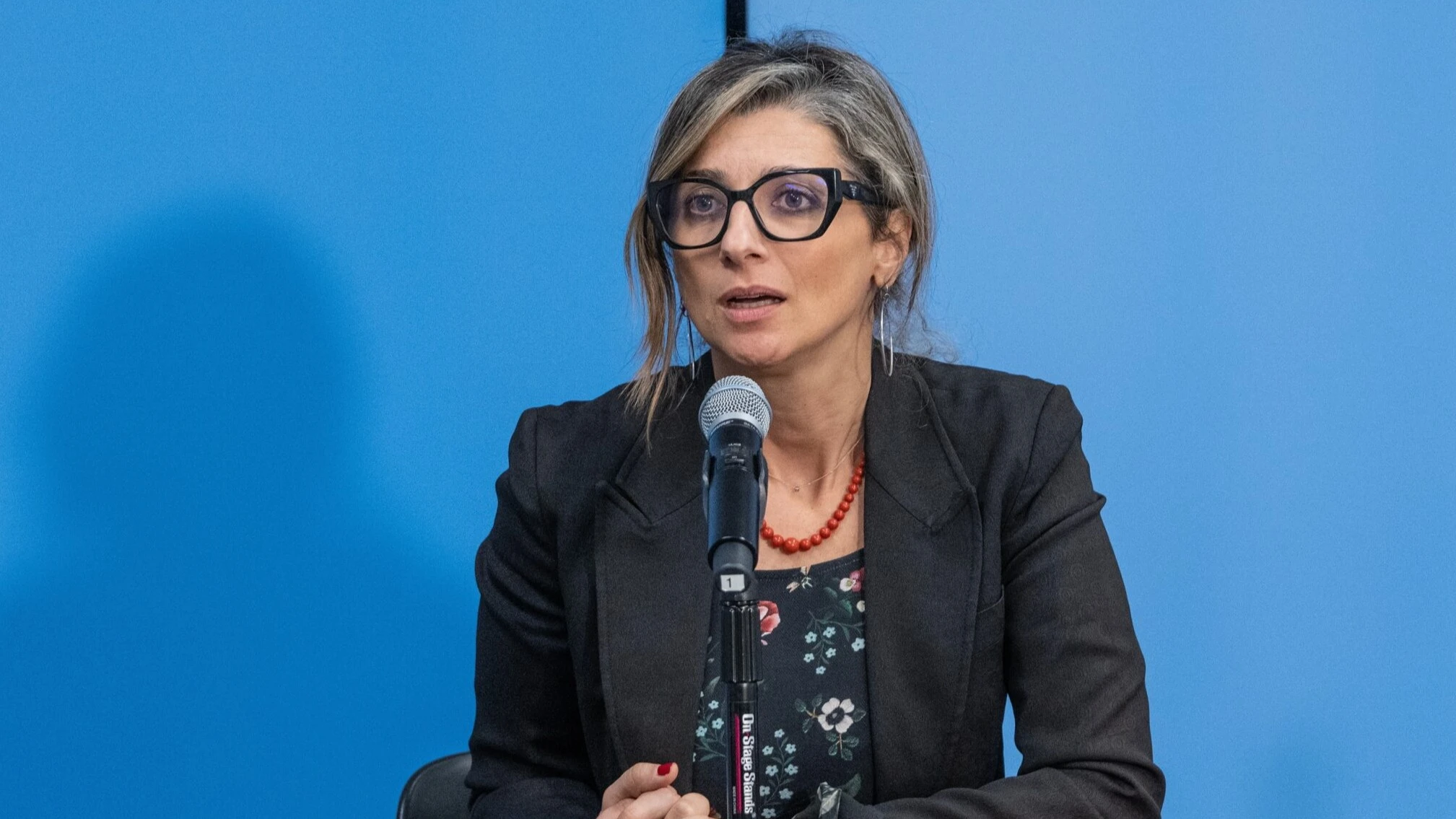
The UN special rapporteur for the occupied Palestinian territories, Francesca Albanese, told the General Assembly on 28 October that 63 countries, including key western and Arab states, have fueled or were complicit in “Israel’s genocidal machinery” in Gaza.
Speaking remotely from the Desmond and Leah Tutu Legacy Foundation in Cape Town, Albanese presented her 24-page report, ‘Gaza Genocide: A Collective Crime,’ which she said documents how states armed, financed, and politically protected Tel Aviv as Gaza’s population was “bombed, starved, and erased” for over two years.
Her findings place the US at the center of Israel’s war economy, accounting for two-thirds of its weapons imports and providing diplomatic cover through seven UN Security Council vetoes.
The report cited Germany, Britain, and a number of other European powers for continuing arms transfers “even as evidence of genocide mounted,” and condemned the EU for sanctioning Russia over the war in Ukraine while remaining Israel’s top trading partner.
Albanese accused global powers of having “harmed, founded, and shielded Israel’s militarized apartheid,” allowing its settler-colonial project “to metastasize into genocide – the ultimate crime against the indigenous people of Palestine.”
She said the genocide was enabled through “diplomatic protection in international fora meant to preserve peace,” military cooperation that “fed the genocidal machinery,” and the “unchallenged weaponization of aid.”
The report also identified complicity among Arab states, including the UAE, Egypt, Bahrain, and Morocco, which normalized ties with Tel Aviv.
Egypt, she noted, maintained “significant security and economic relations with Israel, including energy cooperation and the closing of the Rafah crossing,” tightening the siege on Gaza’s last humanitarian route.
Albanese warned that the international system now stands “on a knife-edge between the collapse of the rule of law and hope for renewal,” urging states to suspend all military and trade agreements with Tel Aviv and build “a living framework of rights and dignity, not for the few, but for the many.”
Her presentation provoked an outburst from Israel’s envoy Danny Danon, who called her a “wicked witch.”
Frascnesca fired back, saying, “If the worst thing you can accuse me of is witchcraft, I’ll take it. But if I had the power to make spells, I would use it to stop your crimes once and for all and to ensure those responsible end up behind bars.”
Human rights experts described the report as the UN’s most damning indictment yet of Israel’s ongoing genocide in Gaza.
Albanese had previously been sanctioned by the US in July, after releasing a report that exposed western corporations profiting from Israel’s genocide in Gaza.
The 27-page report, ‘From Economy of Occupation to Economy of Genocide,’ named over 60 companies, including Lockheed Martin, Caterpillar, Microsoft, Palantir, and Hyundai, for aiding and profiting from Israel’s settlements and military operations, and called for their prosecution at the International Criminal Court (ICC).
US Secretary of State Marco Rubio accused Albanese of waging a “campaign of political and economic warfare against the United States and Israel,” announcing the sanctions as part of Washington’s effort to counter what he called “lawfare.”
The move drew sharp condemnation from UN officials and rights groups, who warned that it threatened global accountability mechanisms.
On October 4th, 2025, in an interview with Axios, President Trump stressed that one of the main goals behind his Gaza plan was to restore Israel’s international standing. “Bibi took it very far and Israel lost a lot of support in the world,” Trump said. “Now I am gonna get all that support back.”
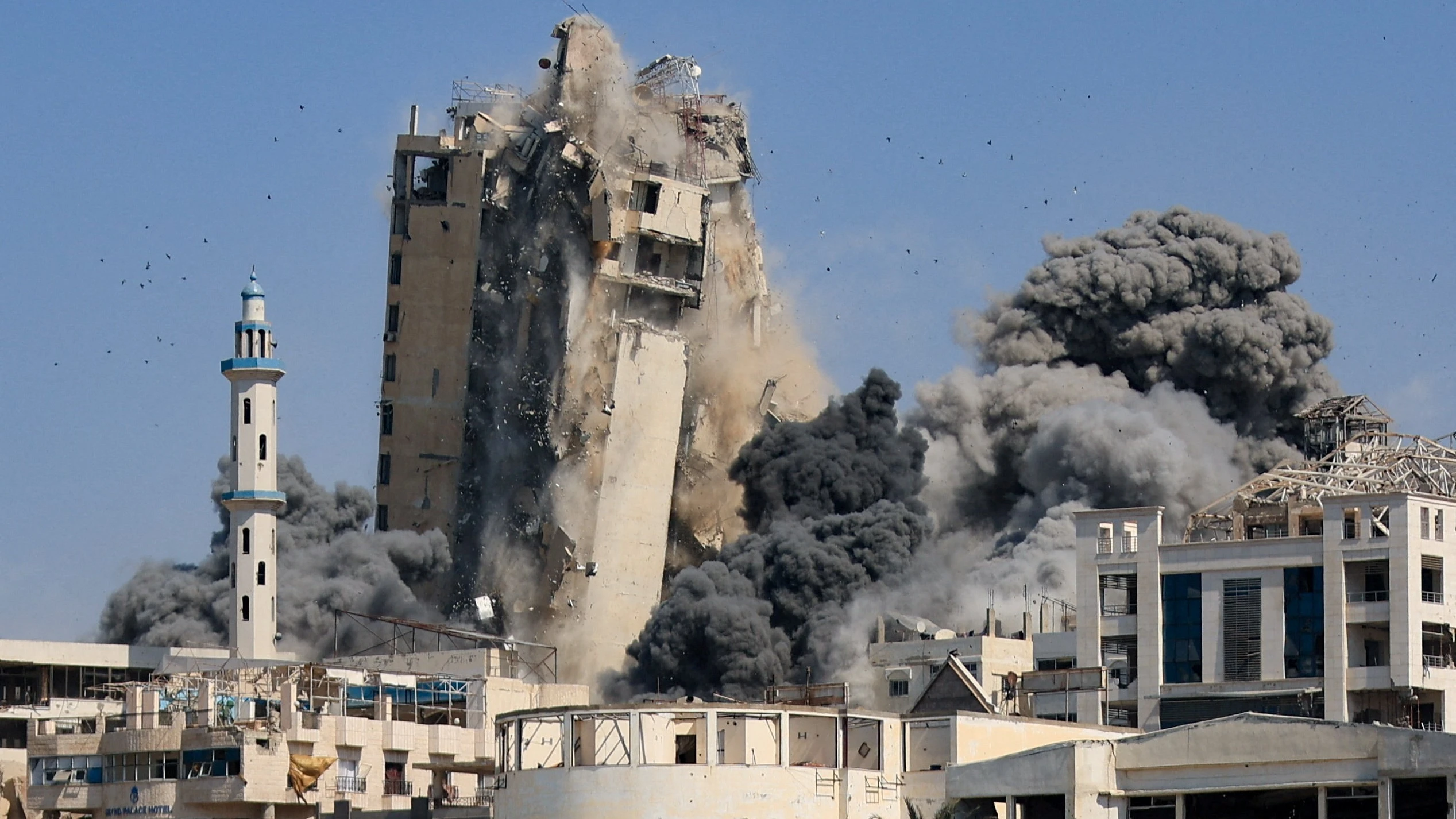
Under Trump’s plan, a supposed ceasefire took effect on October 10th. But Israel only withdrew from less than half of the Gaza strip, and killed at least 93 people in the next two weeks, after killing at least that many per day for the previous two years. Israel has only allowed 15% of the humanitarian aid called for in the plan to enter Gaza, and has kept the critical Rafah crossing from Egypt into Gaza closed. The daily life-and-death struggle to find food, water and shelter carries on unabated for two million people in Gaza.
While the reduction in the daily scale of Israel’s mass murder is obviously welcome, this is not a real ceasefire. Like previous Israeli ceasefires in Gaza, as in Lebanon, this is a one-sided ceasefire that Israel violates at will, on a daily basis, with no accountability.
This is only the first part of Trump’s plan for Gaza, and there is still no agreement on the other parts, such as the disarmament of Hamas, who provide the only government and police force in Gaza. They now have the added job of protecting their people from Israel-backed criminal gangs and death squads, some with links to ISIS, who prey on them from the Israeli-occupied areas, stealing aid supplies, assassinating local leaders and terrorizing the population.
Hamas is obviously not going to disarm under these conditions, and previously said it would only surrender its weapons once Palestine has an internationally recognized government with its own armed forces. On the other side, Israel has not agreed to other parts of Trump’s plan, such as its withdrawal from the rest of Gaza, nor to any plan for the future of Palestine.
In the United States, where corrupt politicians and corporate media take U.S. and Israeli lies at face value or even repeat them as statements of fact, some may believe that Trump’s plan has resolved the crisis in Palestine. The rest of the world is not so naive or easy to manipulate, but many other governments are also beholden to oligarchies that profit from trade, investment and arms deals with Israel, even as the public in those same countries reels in shock at Israel’s mass murder of Palestinians and U.S.-backed impunity for its crimes.
Trump’s Gaza plan, like much of his foreign policy, cynically exploits the greed and fear of political leaders and their oligarch patrons. Admitting that Israel has “lost a lot of support in the world,” he offers a shortcut back to “business as usual” for governments eager to protect – and even expand – profitable ties despite Israel’s ongoing atrocities and open contempt for international law.
In his first term, Trump brokered the “Abraham Accords,” normalization deals between Israel and Bahrain, the UAE, Morocco, and Sudan that included mutual recognition and expanded trade. He now has his eye on the big prize: Saudi Arabia.
But Arab-Israeli relations have long been contested. In the 1949 UN General Assembly vote on Israel’s admission, all Arab and Muslim countries except Turkiye (which abstained) voted against recognizing the state of Israel. Thirty-two mostly Arab and Muslim countries, including some of its closest neighbors, still either don’t recognize Israel or have no diplomatic relations with it.
Despite decades of hostility, Trump persuaded Israel and some of these countries to support his Gaza plan with the promise of future benefits from normalization and trade. But there is still a gaping chasm between Israel and these Arab and Muslim countries over Palestine. They say they will not recognize Israel unless Israel recognizes Palestine, with full sovereignty over East Jerusalem, the West Bank and the Gaza Strip.
But the foundational basis of Netanyahu’s Likud Party is its plan for a Greater Israel, to be formed by annexing all of occupied Palestine “between the sea and the Jordan.” And on October 22, during Vice President Vance’s visit to Israel, the Knesset voted in favor of annexing the West Bank.
Trump unveiled his Gaza plan at the very end of the UN General Assembly’s annual high-level meeting in New York, where many world leaders spoke out for much stronger international action against Israel. The New York Declaration, which 142 countries voted for, was the result of a conference in July led by France and Saudi Arabia that promised “concrete, timebound, coordinated action” to enforce a ruling by the international Court of Justice (ICJ) in 2024 that the Israeli occupation of Palestine is illegal and must be ended “as quickly as possible.”
Trump’s initiative temporarily upstaged and marginalized calls for further action at the UN. But on October 22nd, the ICJ issued a new ruling strongly condemning Israel’s use of starvation as a weapon of war in Gaza, and ruling that, as an occupying power, Israel must ensure that the “basic needs” of the population are met, including food, water, fuel, shelter and medicine. The court also ruled that Israel must permit UN staff working for UNRWA to do their work in Gaza, after Israel provided no evidence to the court for its claim that UN staff were members of Hamas or took part in its October 2023 incursion into Israel.
In the wake of the ICJ decision, Norway said it would introduce a resolution in the UN General Assembly to enforce the Court’s directives, including ensuring the full amount of aid reaches Gaza. Humanitarian advocates hope that this resolution will be introduced in an Emergency Special Session under the “Uniting For Peace” option, enabling the UN to deliver the “concrete, timebound, coordinated action” it promised in July – potentially including sanctions such as an arms embargo and targeted trade and investment measures that should take effect within days if Israel continues to block aid.
Trump plainly intended his plan to close the book on Israel’s crimes – and on U.S. complicity – and to inaugurate a new phase: normalization of the occupation and Israel’s diplomatic rehabilitation. Yet even before the ICJ condemned Israel’s starvation policy, people worldwide were already mobilizing, urging their governments not to let Israel off the hook.
In Europe, momentum for accountability continues to build. As the British parliament debates a new pensions law, an amendment has been submitted to divest local government pension funds from companies that are complicit in the illegal Israeli occupation of Palestine. Many local councils in the U.K. have already passed individual ordinances to do this, but the amendment to the pensions law would force all of them to divest the $16 billion that their pension funds still have invested in those firms.
In September, the European Union (EU) announced plans to suspend its 25-year-old free trade agreement with Israel and impose sanctions on extremist Israeli cabinet members and settler leaders. On October 20th, it “paused” these steps in response to Trump’s plan, but EU leaders immediately faced strong push-back on that decision.
Over 400 former senior diplomats and officials signed a statement that the EU must take robust action “against spoilers and extremists” who would jeopardize “the establishment of a future Palestinian state,” noting that Trump’s plan only vaguely addressed that goal. International lawyers advised EU leaders that EU policy must comply with the 2024 ICJ ruling that the Israeli occupation is illegal and must be ended as quickly as possible.
Individual European countries, including Belgium, the Netherlands, Slovenia and Spain, already ban imports from illegal Israeli settlements in Palestine, and Ireland is currently debating a similar trade ban in its Occupied Territories Bill, which should get a final vote by January. The original bill would only affect trade in goods, but activists want trade in services included in the ban, while powerful business interests, including U.S. tech firms with European headquarters in Ireland, are lobbying to kill the bill altogether. It should help that Ireland’s newly elected president, Catherine Connolly, is a strong supporter of Palestine.
In stark contrast to much of the world, which is still grappling with the contradictions of Trump’s Gaza plan and Israel’s ongoing unlawful occupation, U.S. officials are already trying to turn the page – moving to fortify and expand Washington’s military alliance with Israel.
This alliance is renewed and updated every ten years in a Memorandum of Understanding (MOU) between the two governments, which would normally be negotiated in 2026, before the previous MOU expires in 2028.
There’s already a bipartisan bill in the Senate Foreign Relations Committee (S.554) to initiate this process, titled “United States-Israel Defense Partnership Act of 2025,” authorizing joint projects with Israel under categories like “countering unmanned systems… anti-tunnel cooperation… (and) war reserves stockpile authority.”
Conspicuously absent from this policy review is any debate over U.S. complicity in Gaza’s destruction—a debate that should come first and set the terms for any serious re-examination of the U.S.-Israel alliance.
On October 20th, Francesca Albanese, the UN Special Rapporteur on Palestinian human rights, released a new report titled “Gaza Genocide: a Collective Crime.” Here is the summary of her report:
“The ongoing genocide in Gaza is a collective crime, sustained by the complicity of influential Third States that have enabled longstanding systemic violations of international law by Israel. Framed by colonial narratives that dehumanize the Palestinians, this live-streamed atrocity has been facilitated through Third States’ direct support, material aid, diplomatic protection and, in some cases, active participation. It has exposed an unprecedented chasm between peoples and their governments, betraying the trust on which global peace and security rest. The world now stands on a knife-edge between the collapse of the international rule of law and hope for renewal. Renewal is only possible if complicity is confronted, responsibilities are met and justice is upheld.”
We urge all members of the Senate and House Foreign Relations Committees to read the UN report and to invite UN experts to testify at hearings on U.S. complicity and participation in war crimes, crimes against humanity, and genocide in Palestine.
To move ahead with consideration of a new MOU or any arms transfers with Israel without first conducting such a serious and objective policy review would only serve to perpetuate the endless wars that all our leaders, including President Trump, keep telling us they want to end.
According to Haaretz, the US expects to be notified before Israel launches any major airstrikes in Gaza
by Dave DeCamp, Antiwar. com, October 23, 2025 at 8:47 pm ET
Secretary of State Marco Rubio arrived in Israel on Thursday, making him the fourth Trump administration official to meet with Israeli Prime Minister Benjamin Netanyahu this week and push for Israel to comply with the Gaza ceasefire deal, which Israeli media is referring to as “Bibi-sitting.”
“[T]he President has made this a top priority, I think as evidenced by the fact that both Steve Witkoff and Jared Kushner were here for much of the week … and the Vice President just left,” Rubio told reporters after meeting with Netanyahu.
“I’m here now today because this is a priority. It’s a very important achievement, but there’s more work to be done and bigger achievements that lie ahead. And so we’re here to work on that, and we feel very positive and confident that we’re going to get there despite substantial obstacles,” he added. Secretary of State Marco Rubio shakes hands with Israeli Prime Minister Benjamin Netanyahu following their meeting at the Prime Minister’s office in Jerusalem, October 23, 2025. Fadel Senna/Pool via REUTERS
The New York Times reported on Wednesday that, according to several Trump officials, there is concern within the administration that Netanyahu may quit the ceasefire deal and that the strategy is for senior US officials to prevent him from restarting the full-scale bombing campaign in Gaza.
Israel has been violating the deal by not allowing a sufficient number of aid trucks to enter Gaza, and it has continued attacks on Palestinians, killing at least 89 since the ceasefire went into effect, including one over the past day, according to Gaza’s Health Ministry. The US appears to be tolerating the current situation but wants to prevent Israel from launching major airstrikes on Gaza, like the attacks that were seen this past Sunday.
The Israeli newspaper Haaretz reported on Thursday that the US expects to be notified in advance before the IDF “conducts any exceptional military strikes in the Gaza Strip, including airstrikes.”
The report said: “Israeli defense sources say that the Americans are not yet presenting this as a demand for a green light from them before any military action. But, in practice, they are making it very clear that they will not tolerate any more Israeli surprises that would jeopardize the cease-fire.”
Report shows how 63 states, largely European, sustained the genocide against Palestinians while Arab states failed to take ‘decisive action’
Special rapporteur on the occupied Palestinian territories Francesca Albanese speaks during a press conference at the Nelson Mandela Foundation in Johannesburg, South Africa, on 22 October (Wikus de Wet/AFP)
Published date: 22 October 2025 22:01 BST | Last update:18 hours 3 mins ago
A new United Nations report reveals that more than 60 countries are complicit in the “collective crime” of enabling Israel’s genocide against the Palestinians in Gaza.
An advanced version of the report by UN special rapporteur on the occupied Palestinian territories, Francesca Albanese, was made available on Monday.
In her second report this year, Albanese called the genocide a “collective crime, sustained by the complicity of influential Third States that have enabled longstanding systemic violations of international law by Israel”.
“Framed by colonial narratives that dehumanize the Palestinians, this livestreamed atrocity has been facilitated through Third States’ direct support, material aid, diplomatic protection and, in some cases, active participation.”
The report shows that without the support of mostly European countries, Israel would not have been able to sustain its full-pronged assault on Gaza.
New MEE newsletter: Jerusalem Dispatch
Sign up to get the latest insights and analysis on Israel-Palestine, alongside Turkey Unpacked and other MEE newsletters
She categorised the support into four main categories: diplomatic, military, economic and humanitarian.
No ‘decisive action’ from Arab states
Albanese argues that diplomatic immunity for Israel and failure to hold it to account for violating international laws, particularly in the West, has allowed it to continue its genocide with impunity.
The report says this took place through western media and political discourse, which “parroted Israeli narratives” and failed to distinguish between Hamas and Palestinian civilians, and drew on colonial tropes of Israel’s right to defend itself as a “civilised” nation against “savages”.
Albanese highlighted that the US used its UN Security Council veto power seven times to control ceasefire negotiations and provide diplomatic cover for the genocide. But she notes that the US did not act alone. It was helped by abstentions and delays, as well as watered-down draft resolutions from the UK, Australia, New Zealand, Canada, Germany, and the Netherlands.
All of these actions helped stymy concrete actions while creating “an illusion of progress”.
Jewish and Israeli figures urge world leaders to act over ‘unconscionable’ Israeli acts in Gaza
While she noted that Arab and Muslim states support the Palestinian cause, they failed to take “decisive action” and some regional players “facilitated land routes to Israel, bypassing the Red Sea”. Egypt continued to maintain relations with Israel, including energy cooperation and closing the Rafah crossing.
She highlighted notable failures with regard to international courts, including the fact that most western countries failed to support South Africa or Nicaragua before the ICJ and continue to deny that Israel has committed genocide, as well as uphold the ICJ’s ruling on the illegality of Israel’s occupation of Palestine.
In addition, her report says that most western countries have undermined the arrest warrants the ICC issued against Israeli Prime Minister Benjamin Netanyahu and other members of the government. Instead, the US has imposed sanctions on the ICC, and the UK has threatened to pull its funding.
Unfettered military support
Despite UN resolutions calling for arms embargoes on Israel since 1976, the report notes that many countries supplied it with military support and arms transfers throughout its genocide, and described the US, Germany, and Italy as “among the largest suppliers”.
The US currently guarantees $3.3bn per year in Foreign Military Financing (FMF) and, until 2028, an additional $500m per year for missile defence.
She highlighted the key role that the UK has played in military cooperation with Israel and reported on more than 600 surveillance flights over Israel and intelligence-sharing with its government, which she said suggests “cooperation in the destruction of Gaza”.
Albanese said 26 states sent at least 10 consignments of “arms and ammunition” – the most frequent being China (including Taiwan), India, Italy, Austria, Spain, Czechia, Romania, and France.
Cambridge University to consider divesting from arms industry amid Gaza protests
She said 19 countries, 17 of which have ratified the Arms Trade Treaty, were complicit in supplying components and parts for the “F-35 stealth strike fighter programme” that was key to the military assault in Gaza. These include Australia; Belgium; Canada; the Czech Republic; Denmark; Finland; Germany; Greece; Italy; Japan; the Netherlands; Norway; Poland; South Korea; Romania; Singapore; Switzerland; the UK; and the US. Some of these countries continue to supply parts.
While the Arms Trade Treaty does not recognise a distinction between “defensive” or “non-lethal” arms sales, some countries used these terms to justify arms trade to Israel.
Some countries, such as Italy, the Netherlands, Ireland, France, and Morocco, permitted the transfer of weapons through their ports and airports.
She noted that Spain and Slovenia had cancelled contracts and imposed embargoes.
Other states continued to buy weapons and military technology produced by Israel, which the report says has been tested on Palestinians under occupation. Exports to the EU more than doubled during Israel’s war on Gaza and accounted for 54 percent of Israeli military exports in 2024. Exports to Asia and the Pacific and Arab countries under the Abraham Accords made up 23 and 12 percent of exports, respectively.
In addition, the report states that thousands of US, Russian, French, Ukrainian, and British citizens who have served in the Israeli military have enjoyed immunity and have failed to be investigated or prosecuted for war crimes in Gaza.
Economic ties and aid
The report says that states’ maintenance of normal trade relations with Israel “legitimizes and sustains the Israeli apartheid regime”.
While Israel’s international trade in goods and services decreased from 61 percent of its GDP in 2022 to 54 percent in 2024, Albanese noted the European Union (Israel’s largest trading partner) continued to provide almost a third of total trade to Israel for the last two years.
Some European countries increased their trade with Israel during the genocide against the Palestinians, such as Germany, Poland, Greece, Italy, Denmark, France, and Serbia.
Gulf states won’t reconstruct Gaza without political settlement, former Jordanian foreign minister says
Arab countries, such as the UAE, Egypt, Jordan and Morocco, also increased their trade.
Only Turkey suspended trade with Israel in May 2024, although Albanese reported some trade continued indirectly.
Albanese said that before the 7 October 2023 Hamas-led attacks on southern Israel, most Palestinians were dependent on aid, with the United Nations relief and works agency for Palestine refugees (Unrwa) providing the bedrock of that aid.
Albanese pointed out that when Israel alleged Unrwa staff were involved in the Hamas-led attacks without citing evidence, 18 states immediately suspended funding without investigating Israel’s claims.
Despite inconclusive investigations, most donors took months to resume contributions to Unwra. The US, its largest donor, passed a law prohibiting US funding to Unwra. When the Israeli Knesset outlawed Unrwa, only a few states took action by seeking an ICJ Advisory Opinion.
The report accuses countries like Canada, the UK, Belgium, Denmark, and Jordan of being distracted from the key issue by parachuting aid in, a move she says was both dangerous and ineffective.
Albanese, who has been one of the most vocal and forceful critics of Israel’s conduct in Gaza throughout its two-year genocide, said that complicit states perpetuate “colonial and racial-capitalist practices that should have long been consigned to history”.
“Even as the genocidal violence became visible, States, mostly Western ones, have provided, and continue to provide, Israel with military, diplomatic, economic and ideological support, even as it weaponized famine and humanitarian aid,” she said.
“The horrors of the past two years are not an aberration, but the culmination of a long history of complicity.”
According to a report from The New York Times, the opposite is true, as regional countries are hesitant to send a peacekeeping force into Gaza
by Dave DeCamp, Antiwar. com, October 21, 2025 at 6:22 pm ET
President Trump claimed on Tuesday that many of the US’s allies in the Middle East are willing to send a force into Gaza to fight Hamas, a claim that came as The New York Times reported that regional countries are hesitant to be part of a peacekeeping force in Gaza over fears of potential clashes with Hamas.
“Numerous of our NOW GREAT ALLIES in the Middle East, and areas surrounding the Middle East, have explicitly and strongly, with great enthusiasm, informed me that they would welcome the opportunity, at my request, to go into GAZA with a heavy force and “straighten our Hamas” if Hamas continues to act badly, in violation of their agreement with us,” the president wrote on Truth Social.
While Trump claims Hamas has been violating the ceasefire, he has been silent on Israeli violations, which include continued attacks in Gaza and restrictions on aid entering the Strip. President Donald Trump poses with the signed agreement at a world leaders’ summit on ending the Gaza war in Sharm el-Sheikh, Egypt, October 13, 2025. Yoan Valat/Pool via REUTERS
“The love and spirit for the Middle East has not been seen like this in a thousand years! It is a beautiful thing to behold! I told these countries, and Israel, “NOT YET!” There is still hope that Hamas will do what is right. If they do not, an end to Hamas will be FAST, FURIOUS, & BRUTAL!” Trump said in his post.
The president didn’t mention any countries that were willing to send troops to fight Hamas, but thanked Indonesia in his post for its willingness to be involved in the ceasefire process. “Also, I would like to thank the great and powerful country of Indonesia, and its wonderful leader, for all of the help they have shown and given to the Middle East, and to the U.S.A. TO EVERYONE, thank you for your attention to this matter!” he said.
The New York Times report said that representatives of countries that are expected to be a part of a future peacekeeping force in Gaza have said privately that they will not commit troops until there is more clarity on what they’re expected to do. Their main concern is that they don’t want their troops to be expected to fight Hamas on Israel’s behalf.
The Times report said that recent discussions on the potential for deploying troops to Gaza have included Egypt, Indonesia, Turkey, and Azerbaijan. Israel has expressed opposition to the idea of a Turkish presence. Vice President JD Vance was asked about Israel’s position on the potential of Turkish troops being sent to Gaza and said the US wouldn’t “force” anything on Israel.
President Trump said he may soon travel to the region
by Dave DeCamp, Antiwar. com, October 8, 2025 at 6:44 pm ET
Updated on October 8, 2025, at 10:18 pm EST
President Trump has announced that Israel and Hamas have both “signed off” on the first phase of a Gaza ceasefire deal.
“I am very proud to announce that Israel and Hamas have both signed off on the first Phase of our Peace Plan. This means that ALL of the Hostages will be released very soon, and Israel will withdraw their Troops to an agreed upon line as the first steps toward a Strong, Durable, and Everlasting Peace. All Parties will be treated fairly!” the president wrote on Truth Social on Wednesday night.
“This is a GREAT Day for the Arab and Muslim World, Israel, all surrounding Nations, and the United States of America, and we thank the mediators from Qatar, Egypt, and Turkey, who worked with us to make this Historic and Unprecedented Event happen. BLESSED ARE THE PEACEMAKERS!” Trump added.
Drop Site News reported earlier that Hamas and other Palestinian factions had agreed to a framework for a Gaza ceasefire deal. Before his announcement, President Trump said that a deal was “very close” and that he could be traveling to the region this weekend.
According to the Drop Site report, Hamas agreed to a deal that will involve Israeli troops remaining in Gaza after they release all of the Israeli captives. Hamas was initially opposed to a deal that didn’t include a full Israeli withdrawal along with the release of the hostages.
A source told Drop Site that Hamas was now trusting President Trump to guarantee that Israel won’t restart its genocidal war. “Trusting [Trump’s] word is the gamble they are taking. If it works, they will be considered geniuses. If it fails, they will be considered fools. It’s as simple as that,” the source said.
Israel previously broke a Gaza ceasefire deal that was signed in January and has constantly violated a Lebanon ceasefire deal that it signed in November 2024. After Trump’s announcement, Israeli Prime Minister Benjamin Netanyahu said that he will convene his government on Thursday to “approve the agreement and bring all our dear hostages home.”
Al Jazeera reported that Israeli airstrikes hit Gaza City as Palestinians were celebrating Trump’s ceasefire announcement. Since President Trump called on Israel to “immediately” stop the bombing in Gaza on October 3, Israel has killed more than 100 Palestinians in Gaza. Israeli attacks have been less intense over the past two days, but they haven’t stopped.
The Palestinian group accused Netanyahu of attempting to “obstruct and thwart” a deal
by Kyle Anzalone, Antiwar. com, October 7, 2025
Hamas issued its demands for reaching an agreement with Israel to release the remaining hostages and end the war. Israel and Hamas are engaged in indirect negotiations to attempt to reach an agreement under a framework proposed by President Donald Trump.
On Tuesday, Hamas gave its demands for reaching a deal. The Palestinian group’s positions include a permanent and comprehensive ceasefire, the complete withdrawal of Israeli forces from all of Gaza, the unrestricted entry of humanitarian and relief aid, and the immediate rebuilding of the Strip overseen by Palestinians.
Demanding the full Israeli withdrawal from Gaza may create a barrier to reaching a deal. Under Trump’s 20-point peace plan, Israel would engage in a phased withdrawal from Gaza but retain a large buffer zone around the Strip.
Additionally, the President’s proposal called for the rebuilding of Gaza to be completed by a trust that includes Trump as the chair and former UK Prime Minister Tony Blair on the board.
Trump unveiled the peace plan in a presser with Israeli Prime Minister Benjamin Netanyahu last week. However, after Hamas agreed to release the Israeli hostages on Friday and Trump called for an immediate ceasefire, Netanyahu has continued military operations in Gaza.
Tuesday’s negotiations between Hamas and Israel, mediated by Egypt and Qatar, were the second day of talks. On Monday, Egyptian and Qatari officials reported the negotiations were “positive,” and Trump said the deal had a “good chance.”
Netanyahu has remained pessimistic that a deal will be completed, reportedly leading to friction with Trump. On Friday, Axios reports, Trump lashed out at Netanyahu on a call when he expressed skepticism about Hamas agreeing to release the hostages.
Hamas and Trump have said that a ceasefire is critical to facilitating the release of the remaining 48 Israeli hostages in Gaza. Israeli strikes in Gaza continued on Tuesday. Netanyahu says he will not order the IDF to halt operations until all the hostages are returned to Israel.
Hamas’s spokesman, Fawzi Barhoum, said that the group was working to “overcome all obstacles” to reach an agreement, but Netanyahu was attempting to “obstruct and thwart” a deal as he had “deliberately thwarted all previous rounds.”
Israel has assassinated multiple Hamas negotiators over the past two years. Last month, Netanyahu ordered the assassination of the Palestinian group’s leadership in Qatar as they were meeting to discuss a ceasefire and hostage exchange proposed by Trump. The Israeli strikes failed to kill the targeted Hamas official.
On Tuesday, Trump said he had dispatched American negotiators to join the ongoing talks in Egypt.
Kyle Anzalone is the opinion editor of Anitwar.com and news editor of the Libertarian Institute. He hosts The Kyle Anzalone Show and is co-host of Conflicts of Interest with Connor Freeman.
The Gaza ceasefire proposal released by the White House on Monday included significant changes that were requested by Israeli Prime Minister Benjamin Netanyahu, Axios reported on Tuesday.
The Times of Israelalso reported that Netanyahu was able to secure key changes to the proposal during a meeting on Sunday with US envoy Steve Witkoff and his top advisor, Jared Kushner. According to Axios, the release of the deal with the changes infuriated Arab officials involved in the negotiations.
At a press conference with Netanyahu, President Trump presented his proposal as something that has been widely accepted by the Arab world, though the deal was significantly different than what the US and a group of Arab and Muslim countries had previously agreed to due to the changes.
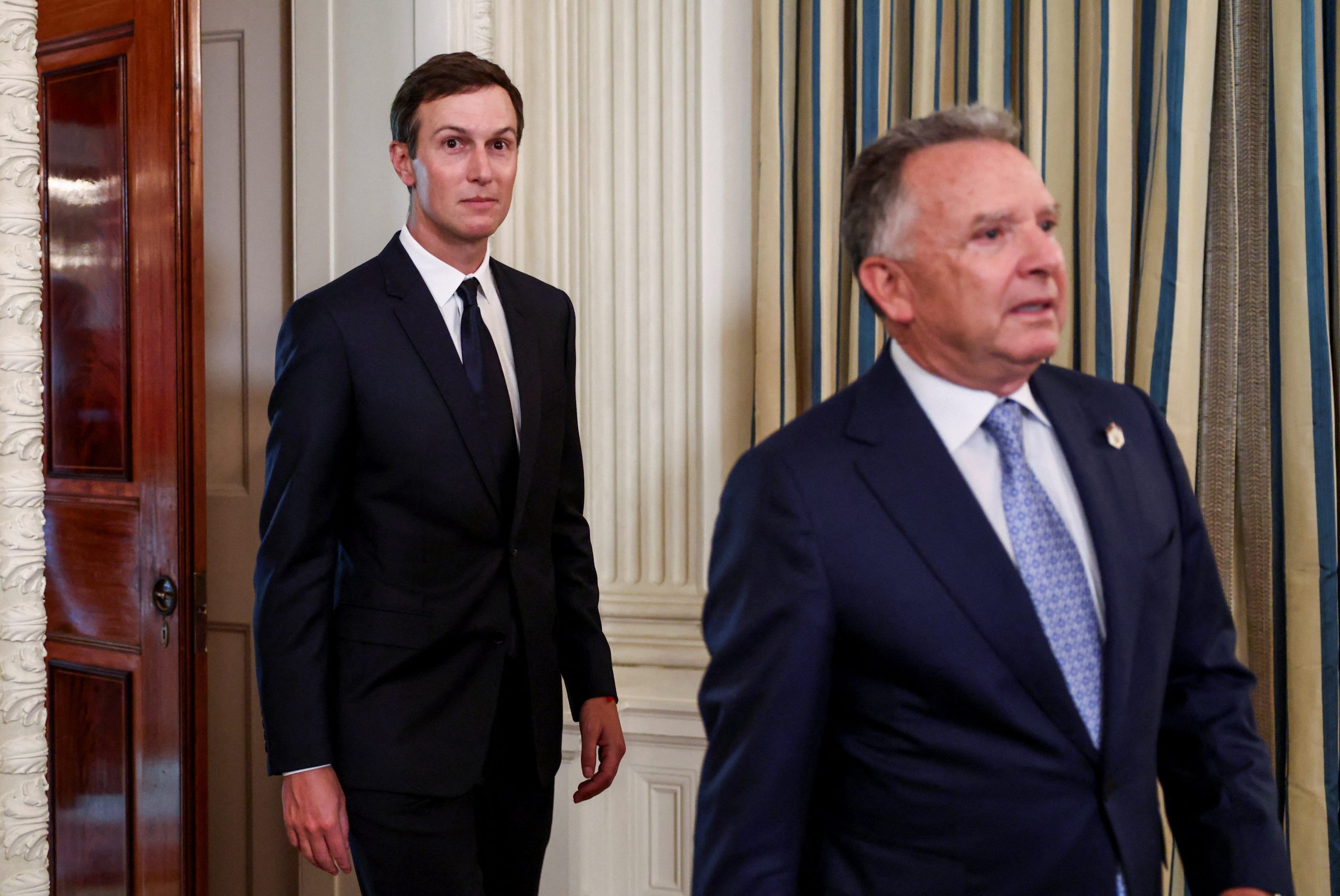
Jared Kushner and White House Special Envoy Steve Witkoff arrive to attend a joint press conference held by US President Donald Trump and Israeli Prime Minister Benjamin Netanyahu, in the State Dining Room at the White House, in Washington, DC, September 29, 2025. REUTERS/Kevin Lamarque
The changes were related to two of the most sensitive issues in the negotiations: the disarmament of Hamas and Israel’s withdrawal from Gaza. The new proposal ties Israel’s phased withdrawal from territory to the “demilitarization” of Gaza and the ability of an international force to take over the land.
The proposal also essentially gives Israel and the US a veto over the withdrawal from Gaza by stating the IDF “will withdraw based on standards, milestones, and timeframes linked to demilitarization that will be agreed upon between the IDF, ISF, the guarantors, and the US.”
According to The Times of Israel, the initial proposal approved by the Arab countries simply stated that the IDF “will progressively hand over the Gaza territory that [it] occup[ies].” Even after all conditions are met, the new proposal will allow Israel to occupy a perimeter zone until Gaza is “properly secure from any resurgent terror threat.”
While the language could be interpreted as a requirement for a full Israeli withdrawal, Netanyahu has made clear that he does not see it that way. “Now the whole world, including the Arab and Muslim world, is pressuring Hamas to accept the terms that we created together with Trump, to bring back all the hostages — the living and the dead — while the IDF stays in the Strip,” he said in a video statement on Sunday night.
Hamas’s long-standing position has been that it’s willing to release all remaining Israeli captives in exchange for a full Israeli withdrawal from Gaza. Hamas has also rejected the idea of disarming until the creation of a Palestinian state or a Palestinian force that could replace its armed wing.
While many details need to be worked out, Trump and Netanyahu have framed the proposal as a final offer that must be accepted or Israel will “finish the job” in Gaza. Trump has also made clear he’s willing to continue backing the genocidal war if an agreement isn’t reached. “If Hamas rejects the deal, Bibi you will have our full backing to do what you have to do,” he said on Monday.
Trump said on Tuesday that he will give Hamas “three or four days” to respond to the proposal. “All of the Arab countries are signed up, the Muslim countries all signed up, Israel’s all signed up. We’re just waiting for Hamas, and Hamas is either going to be doing it or not – and if it’s not, it’s going to be a very sad end,” he said.
The flotilla’s ‘Orange Line’ crossing is the same waters where Israeli forces previously illegally seized the Handala and Madleen aid ships
The Cradle, News Desk, SEP 30, 2025,
The Global Sumud Flotilla reached 150 nautical miles from Gaza’s coast on 30 September, with activists declaring they are now in Israel’s “kidnapping zone” and warning of possible interception within the next two days.
“As we approach 150 nautical miles distance from Gaza, we enter Israel’s kidnapping zone. Keep all eyes on us and on Gaza in the coming 48 hours. It’s about damn time to break the siege,” activist Roos Ykema said in a video posted on Instagram.
Organizers believe the fleet could arrive in Gaza within three days, depending on speed, weather, and the risk of mechanical breakdowns or Israeli attacks.
They have named the 150-mile line the “Orange Line,” the point where previous aid ships such as the Madleen and Handala were illegally seized by Israeli naval forces earlier this year.
Rights groups are calling for demonstrations outside foreign ministries in case of arrests or assaults on the flotilla.
Italy and Spain have both sent warships to follow the convoy, reportedly to escort the aid fleet safely and guard against Israeli attacks.
Most recently, Turkiye confirmed its navy intervened after one of the ships began leaking, with footage showing frigates assisting the flotilla.
The Turkish Defense Ministry said on X that its vessels were operating “in coordination with relevant institutions” and reaffirmed their commitment to “the protection of humanitarian values and the safety of innocent civilians.”
The Flotilla has called on governments, including Turkiye, Italy, and Spain, to move past symbolic gestures and join the fleet to Gaza’s shores, upholding the right to free passage and ensuring humanitarian access under international law.
However, despite the assistance, calls to action, and pledges of support, Italian Prime Minister Giorgia Meloni previously dismissed the mission as “gratuitous, dangerous, irresponsible,” insisting aid could be routed through Cyprus and the Latin Patriarchate of Jerusalem.
Her proposal echoed Israeli demands that all supplies be unloaded at Ashkelon under its supervision, a condition flotilla organizers rejected as an extension of the blockade rather than a neutral arrangement.
Several of the Sumud Flotilla ships have already come under attack, including two struck by suspected Israeli drones while docked in Tunisia earlier this month.
An online tracker shows the vessels sailing near Egyptian waters and pressing toward Gaza. Despite tensions, activist Kieran Andrieu reported that morale on board “is higher than it’s been in a long time.”
The fleet, carrying activists, journalists, and artists from 44 countries, is the latest attempt to shatter Israel’s siege on Gaza, where famine grips the population, and genocide continues unchallenged.
Israel has targeted and killed members of prominent families in the Gaza Strip for refusing to cooperate with Tel Aviv’s plan to create clan-based governing bodies aimed at replacing Hamas, according to a report by Asharq al-Awsat.
According to sources, Israel’s internal security agency, the Shin Bet, contacted the representatives of the Bakr and Dughmush families, who remain inside their homes in Gaza City. The Shin Bet plan includes dividing Gaza into different regions controlled by clans and local armed groups.
They would be tasked with confronting Hamas and providing intelligence to the Israeli army, the report says.
“After these families refused to cooperate with Shin Bet officers, Israeli forces launched a series of raids on inhabited and vacant homes belonging to members of these families and clans,” the sources told Asharq al-Awsat.
Over the weekend, Israel struck the Bakr family home south of the Shati refugee camp west of Gaza City. Six family members were killed and 11 were wounded.
A multistory building owned by the family was also bombed, resulting in the injury of several children.
In Gaza City’s Sabra neighborhood, Israel bombed a home and killed at least 30 members of the Dughmush family.
“Israeli intelligence contacted the family’s mukhtar and elders and asked them to form an armed group to govern the Shati refugee camp area after it purges it of Hamas members. The family categorically refused to be part of this option,” a source in the Bakr family said.
The Bakr family is one of the largest and most prominent families in the Gaza Strip. It plays a major role in the strip’s fishing industry.
“The family’s decision stemmed from a national stance rejecting any form of cooperation with the occupation, and is not intended to support Hamas or any other organizational group,” the family member added.
The Euro-Med Human Rights Monitor also confirmed that Israel is trying to coerce families to cooperate with them under the risk of starvation, forced displacement, or bombardment.
“What began as individual extortion has escalated into a systematic, collective practice aimed at dismantling Palestinian social fabric by forcing people to betray their communities and subordinating survivors to survival conditions that destroy communal identity and resilience,” it said.
Several Israeli-backed armed groups are operating in the Gaza Strip under Tel Aviv’s protection. These groups, which are tasked with confronting Hamas, are responsible for much of the aid looting that goes on in Gaza.
One of these groups is the Rafah-based gang headed by Yasser Abu Shabab – a Fatah-linked militia leader with alleged ties to ISIS.
The gang is responsible for scouting and securing territory ahead of Israeli military operations. Additionally, Abu Shabab has been accused of drug trafficking.
In recent months, more of these militias have popped up.
According to Hebrew media reports, an ex-Palestinian Authority (PA) officer named Hossam al-Astal is now leading an armed group in Khan Yunis and coordinating with Israeli occupation forces. The group is reportedly actively recruiting members and advocating for peace with Israel.
In late 2024, the Hamas-run Interior Ministry in Gaza established a police force in the strip called the Arrow (‘Sahem’) Unit, aimed at combating aid looters and militias linked to Israel.
 (Photo credit: Lev Radin/Alamy)
 (Photo credit: Reuters)
 Peace and Justice Post
You must be logged in to post a comment.