There are growing fears that Israel may be creating the conditions for local atrocities in Gaza “reminiscent of the Sabra and Shatila massacre,” according to a report by the Israeli daily newspaper Haaretz.
During the 1982 massacre, Israeli-allied Lebanese Phalangist forces slaughtered up to 3,500 Palestinian and Lebanese civilians as Israeli troops surrounded the Beirut refugee camps and oversaw the killing.
In a report publish on Wednesday Haaretz warned that the Israeli army is expanding its use of mercenaries, criminal gangs and drug dealers to commit “war crimes” on Israel’s behalf in Gaza.
Based on testimony from Israeli soldiers, UN reports and satellite imagery, the investigation found that increasingly well-armed collaborator militias have expelled Palestinians from their homes and carried out operations across Gaza.
Israel has trained at least five militia groups, and potentially a sixth, operating from heavily fortified bases inside Israeli-occupied areas of the enclave.
New MEE newsletter: Jerusalem Dispatch
Sign up to get the latest insights and analysis on Israel-Palestine, alongside Turkey Unpacked and other MEE newsletters
One Israeli soldier described how the state, army and Shin Bet intelligence service send armed and “trained militias to commit war crimes, and I’m the one who has to protect them during their operations so they don’t get hurt”.
Israel faces a genocide case at the International Court of Justice, while the International Criminal Court has issued arrest warrants for Prime Minister Benjamin Netanyahu and former Defense Minister Yoav Gallant for war crimes and crimes against humanity.
At least one militia armed and supported by Israel had links to the Islamic State group. Its leader, Yasser Abu Shabab, was killed by Hamas in December 2025.
Many Palestinians celebrated Abu Shabab’s death, while his own family had renounced him as a traitor for collaborating with Israel.
“But the militia project he came to symbolize continues to evolve and expand – particularly since the October 2025 ceasefire was announced,” Haaretz reported.
Another militia leader, Shawqi Abu Nasira, openly acknowledged his collaboration with Israel in a video posted online.
“I made the decision to liberate the land from Hamas. If people say that makes me a collaborator, then I’m a collaborator.”
The vast majority of Palestinians view collaboration with Israel as treason and betrayal, regardless of their position on Hamas.
‘They entered every structure, looted everything they could get their hands on, came out with piles of stuff – and then burned down the house’
– Unnamed Israeli soldier
Israel has also built infrastructure for the gangs amid Gaza’s widespread destruction. Near a militia base in Shujaiya, Israeli forces levelled a large Palestinian cemetery and replaced it with an extensive training ground.
The relationship between the gangs and the Israeli military has become increasingly intertwined. Fighters roam freely around Israeli army outposts, according to soldiers who spoke to Haaretz.
“The gunmen stage displays of force, film them and upload the footage to their Facebook pages for propaganda and recruitment purposes,” the investigation said.
Israel supplies the gangs with weapons and provides artillery and drone support during their operations.
‘Reminiscent of Sabra and Shatila ‘
The mercenaries also serve another purpose. They attack Palestinians struggling to survive Israel’s genocide, drive families from their homes, loot their belongings and burn their houses.
Israeli ministers have repeatedly called for making life in Gaza unbearable as part of efforts to ethnically cleanse the enclave and replace its Palestinian population with Jewish settlers.
In one account, Israeli soldiers said the mercenaries arrived in pickup trucks before “they just ran and shot at people”.
“They entered every structure, looted everything they could get their hands on, came out with piles of stuff – and then burned down the house,” one unnamed Israeli soldier said.
Boys fly a kite against the backdrop of smoke rising from the Gath shelter for displaced Palestinians, after an Israeli air strike in Gaza, on 31 January (AFP/Bashar Taleb)
Reports that Israel has used local gangs to outsource parts of its strategy to ethnically cleanse Gaza are not new. Their activities have been documented for more than a year.
The soldiers’ testimony, however, provides further evidence that the mercenaries now function as an “operational arm” of the Israeli army and Shin Bet.
Israel continues to arm criminal gangs while demanding that Hamas disarm and opposing the formation of any independent Palestinian security force in Gaza. The arrangement allows Israel to use the militias against anyone it labels a Hamas member while unleashing them against ordinary Palestinians.
Hamas sources told Haaretz that they would not surrender their “defensive weapons” while the militias remain armed and receive Israeli support, because the groups would seek to target them.
Middle East Eye delivers independent and unrivalled coverage and analysis of the Middle East, North Africa and beyond. To learn more about republishing this content and the associated fees, please fill out this form. More about MEE can be found here.
Western media, by employing double standards, censorship, deceptive language, amplifying Israeli lies and dehumanizing Palestinians, facilitates the genocide in Gaza.
Chris Hedges ScheerPost
The Western media manufactures consent for genocide. It normalizes Israel’s decades-long military occupation and apartheid. It erases Israel’s flagrant violations of international law. It perpetuates the fallacy of Israeli victimhood. It betrays, discredits and demonizes the work of Palestinian journalists and media workers in Gaza, at least 220 of whom have been killed by Israel between Oct. 7, 2023, and August 2025. It supinely accepts draconian Israeli censorship. It acquiesces with tepid letters of protest at Israel’s refusal to allow foreign reporters in Gaza — an effort by Israel to mask its war crimes. It amplifies Israeli lies, from beheaded babies to widespread sexual assault of Israeli women on Oct. 7, to obfuscate the truth.
When writing about Gaza, verbs are in the passive tense. There is no subject. No one is accountable. Genocide, it seems, is an act of God. No different from an earthquake or tsunami. Clichés and opaque adjectives such as the “cycle of violence” or “clashes” distort and falsify reality.
“If thought corrupts language, language can also corrupt thought,” George Orwell warned.
Terms such as “genocide,” “atrocity,” “ethnic cleansing” and “occupied territories” magically disappear from media reports on Palestinians, whose resistance is routinely described as “savage” and “barbaric.” New York Times reporters are instructed by editors to avoid terms such as “Palestine,” “genocide,” “carnage,” “refugee camp,” “slaughter” and “massacre,” when referencing Palestinians.
The media slavishly regurgitates what Israel feeds it. Saturation bombing becomes “surgical air strikes.” Israel’s weaponization of famine becomes a “food shortage.” The killing of unarmed civilians — including children — becomes “clashes.” The hilltop fortress-like compounds of Jewish colonists becomes “neighborhoods.” Extrajudicial assassination of a journalist or a doctor becomes “died.”
Genocide, referred to as the “Israel-Hamas war” is justified as “self-defense,” part of the mantra of Israel’s “right to defend itself.” When schools, hospitals, clinics, ambulances, mosques, churches and other civilian targets are obliterated, they are labeled “Hamas command centers” or targeted because Hamas is “using civilians as human shields” — something Israel does routinely, when the army binds detained Palestinians and forces them to enter potentially booby-trapped buildings and tunnels ahead of Israeli troops.
When Israelis are held by Hamas, they are “hostages,” even if they serve in the military. When Palestinians — including children — are held without charges or trial and disappeared into Israeli detention centers, where torture is “widespread” and “systematic,” they are “prisoners.”
Missile attacks on tent cities or hospitals are blamed on Palestinian armed groups firing errant rockets. If Israel acknowledges the attacks — which very rarely happens — they are described as a “tragic mistake.”
Civil institutions in Gaza are characterized as “Hamas-run” to cast doubt on the veracity of what they report. The New York Times routinely qualifies announcements from the Gaza Health Ministry by noting it “does not distinguish between civilians and combatants,” masking the slaughter of tens of thousands of civilians.
The result is some of the most convoluted writing in the history of journalism, including the Nov. 5, 2023 New York Times headline that reads: “Explosions Gazans Say Was Airstrike Leaves Many Casualties in Dense Neighborhood.”
“When Middle East Eye journalists Mohamed Salama and Ahmed Abu Aziz, along with Reuters photojournalist Hussam al-Masri, and freelancers Moaz Abu Taha, and Mariam Dagga — who had worked with several media outlets, including the Associated Press — were killed in a “double tap” strike — designed to kill first responders arriving to treat casualties from initial strikes — at Nasser Medical Complex, how did Western news agencies respond?” I asked in my column The Betrayal of Palestinian Journalists.
“Israeli military says strikes on Gaza hospital targeted what it says was a Hamas camera,” the Associated Press reported.
“IDF claims hospital strike was aimed at Hamas camera,” announced CNN.
The camera belonged to Reuters, which said Israel was “fully aware” the news agency was filming from the hospital.
“When Al Jazeera correspondent Anas Al Sharif and three other journalists were killed on Aug. 10 in their media tent near Al Shifa Hospital, how was it reported in the Western press?” I asked.
“Israel Kills Al Jazeera Journalist It Says Was Hamas Leader,” Reuters titled its story, despite the fact al-Sharif was part of a Reuters team that won a 2024 Pulitzer Prize.
The German newspaper Bild, published a front page story headlined: “Terrorist disguised as a journalist killed in Gaza.”
Mainstream media failed to describe Israel’s repeated breaches of the ceasefire with the language of violation. Instead, the coverage followed the same patterns of rationalizing Israel’s attacks and uncritically parroting Israel’s claims to justify its actions. As Palestinians continued to be killed — during a ‘ceasefire’ — and the flow of aid did not reach the level of need or what was agreed to, Western media framed these flagrant violations as ‘tests’ or ‘challenges’ to a ‘shaky ceasefire.’ As leading human rights organizations like Amnesty International warned that the genocide was, in fact, not over, legacy media continued to frame it as a war with a ‘fragile ceasefire.’
Words matter. Words justify actions. If there is no genocide, if Israel is defending itself in a war, the U.S. and Israel’s European allies have the right to provide tens of billions of dollars in military aid. If this is a war begun by Hamas on Oct. 7 then it is possible to lament the obliteration of Gaza and mass slaughter by Israel as the regrettable result of the Hamas attack.
This corruption of language is designed, as Orwell noted, to defend the indefensible:
Things like the continuance of British rule in India, the Russian purges and deportations, the dropping of the atom bombs on Japan, can indeed be defended, but only by arguments which are too brutal for most people to face, and which do not square with the professed aims of political parties. Thus political language has to consist largely of euphemism, question-begging and sheer cloudy vagueness. Defenseless villages are bombarded from the air, the inhabitants driven out into the countryside, the cattle machine-gunned, the huts set on fire with incendiary bullets: this is called pacification. Millions of peasants are robbed of their farms and sent trudging along the roads with no more than they can carry: this is called transfer of population or rectification of frontiers. People are imprisoned for years without trial, or shot in the back of the neck or sent to die of scurvy in Arctic lumber camps: this is called elimination of unreliable elements.
Adam Johnson in “How to Sell a Genocide: The Media’s Complicity in the Destruction of Gaza,” examined over 12,000 articles from The New York Times, The Washington Post, CNN.com, Politico, Axios, USA Today, and The Associated Press, along with 5,000 TV segments aired on CNN and MSNBC. His carefully researched book is a damning indictment of the “liberal” media’s justification of the genocide.
CNN and The New York Times instructed their editors and journalists that attacks could only be attributed to Israel after confirmation from the IDF and GPS coordinates. Johnson quotes a source at CNN:
Whether it’s in the newsroom or in the field, we couldn’t credit anything to Israel unless we were held to this impossibly high bar of having to call it an “explosion,” until we geolocated the site of the explosion, sent the coordinates to the Israelis and asked them for comment.
You can see an interview with Johnson about his book at The Electronic Intifada here.
CNN journalists reporting on Israel and Palestine must submit their work for review to the network’s Jerusalem bureau prior to airing. The CNN bureau, like all news bureaus in Israel, is required to abide by restrictions imposed by Israeli military censors.
The very few Palestinians who appear on CNN and other legacy media outlets, are routinelyasked — usually before they are even permitted on air — if they “condemn” Hamas. Guests who express even tepid criticism of Israel are asked whether Israel “has a right to exist.”
No one is ever asked if they condemn Zionism, apartheid, ethnic cleansing, genocide or Israel’s 100 year war on Palestine. Nor are they asked if the Palestinians have a right to defend themselves — which under international law they do, including with weapons.
Our domesticated journalists and news organizations are, as Robert Fisk pointed out, “prisoners of the language of power.” They dutifully parrot the official lexicon. This makes them not only propagandists, but accomplices to genocide.
Those who protest the genocide, including students on university campuses — many of whom are Jewish — are smeared as “Hamas supporters” and “antisemites.” Journalists ferret out Zionist students, usually found esconced in campus Hillel houses, who claim to be “fearful for their safety,” because of the protests. The media pays little attention to the rise in anti-Muslim bigotry or the repression meted out to student protestors, which includes not only police brutality and 3,000 detainments and arrests, but suspensions, probations, expulsions, withholding of diplomas and the firing of sympathetic faculty.
Slogans which call for Palestinian liberation — including “From the river to the sea, Palestine will be free” — along with the Palestinian flag, have been criminalized.
The message is clear: Jewish lives matter. Palestinian lives do not.
“The reports of UN agencies, of respected human rights monitors, of medical journals, and of professional medical personnel, are generally treated with respect and given prominence in the mainstream media,” writes the historian Rashid Khalidi in the introduction to Robin Anderson’s book, “The Complicit Lens: US Media Coverage of Israel’s Genocide in Gaza:”
Not in this war: instead, if such sources are cited at all, equal media treatment is given to the outrageous slanders and calumnies against these organizations and individuals, smears that are produced in profusion by Israel’s legion of professional propagandists and its myriad of defenders in the US. Besides smearing critics of Israel’s genocide as supporters of Hamas or terrorist sympathizers, the main weapon in their arsenal of defamation is their systematic and outrageous misuse of the deadly accusation of antisemitism.
The massive defections of readers and viewers from mainstream media to social media platforms that do not filter news through the Israel lobby, the U.S. government or corporations, are a stark indicator of the media’s bankruptcy. The response to these defections has been “platformicide” — the use of algorithms, shadow banning, restriction of live streaming capabilities and the closing of accounts by social media giants such as Facebook, Instagram, X, YouTube and TikTok, to dramatically reduce the reach of reporting on Palestine.
This censorship is part of a coordinated effort to hide the horror of the genocide from the public.
By constantly referencing Oct. 7, the Western media decontextualizes the genocide. It ignores Israel’s 19-year siege of Gaza. Oct. 7 is characterized in the Western media as “unprovoked.” Israel’s massacres of unarmed Palestinians in Gaza in the winter of 2008 and 2009, along with its attacks on Gaza in 2012, 2014 and during the Great March of Return in 2018 and 2019 are ignored.
The 1948 Nakba — when European Zionists seized more than 78 percent of historic Palestine, violently expelled 750,000 Palestinians, destroyed more than 530 Palestinian villages and killed 15,000 Palestinians — is rarely referenced. Seventy percent of those driven from their homes in 1948 were forced into Gaza.
The Zionist project is predicated on fostering historical amnesia.
“Once Hamas was established as a brutal, terrorist group whose members gleefully tortured, dismembered, and beheaded babies without conscience, no further explanation was needed,” writes Anderson in her book. “The media simply avoided reporting Israel’s history of violence and as a result, establishment media also avoided the conditions of everyday life for Palestinians.”
The fiction that there is currently a ceasefire in Gaza — Israel has killed at least 1,286 Palestinians and injured 4,257 since it supposedly went into effect — has become the excuse used by Western media to turn its back on Gaza. This genocide denial has characterized the coverage since its inception. It masks not only Israel’s crimes, but Israel’s stated intention to ethnically cleanse all Palestinians from Gaza. It effectively neuters international law. And it makes a mockery of the profession of journalism.
When the last act of ethnic cleansing happens, Western media will, I am sure, continue to bombard us with Israeli agitprop, euphemisms and clichés.
It will justify the genocide until the end.
NOTE TO SCHEERPOST READERS FROM CHRIS HEDGES: There is now no way left for me to continue to write a weekly column for ScheerPost and produce my weekly television show without your help. The walls are closing in, with startling rapidity, on independent journalism, with the elites, including the Democratic Party elites, clamoring for more and more censorship. Bob Scheer, who runs ScheerPost on a shoestring budget, and I will not waver in our commitment to independent and honest journalism, and we will never put ScheerPost behind a paywall, charge a subscription for it, sell your data or accept advertising. Please, if you can, sign up at chrishedges.substack.com so I can continue to post my now weekly Monday column on ScheerPost and produce my weekly television show, The Chris Hedges Report.
Chris Hedges is a Pulitzer-prize winning journalist, best-selling author & activist
Editor’s Note: At a moment when the once vaunted model of responsible journalism is overwhelmingly the play thing of self-serving billionaires and their corporate scribes, alternatives of integrity are desperately needed, and ScheerPost is one of them. Please support our independent journalism by contributing to our online donation platform, Network for Good, or send a check to our new PO Box. We can’t thank you enough, and promise to keep bringing you this kind of vital news.
Human Rights Watch calls for sanctions and the suspension of military aid to Israel, as dozens of Palestinian communities in the occupied West Bank are at risk of erasure.
Share
Israeli settlers put up Israeli flags on a Palestinian structure on the outskirts of Beit Sahour, on August 14, 2026 [File: Mahmoud Illean/AP]
Dozens of Palestinian communities in the occupied West Bank are at risk of erasure due to escalating attacks by Israeli settlers, according to a new report by Human Rights Watch.
Increased settler attacks, along with the rapid expansion of Israeli settlements illegal under international law, are driving a wave of forced displacement of Palestinians, the US-based rights group said in a report released on Thursday.
The report accuses Israeli authorities of arming, funding and granting impunity to settlers to carry out the attacks.
Israeli settler violence has been growing since the current government took office in December 2022.
But attacks spiked in the first two months of the US and Israel’s war on Iran, with killings including those of children, assaults, sexual violence, physical and mental abuse, arbitrary detention, arson, property demolition and theft among the reported abuses, the report adds.
Maximum land and minimum Palestinians
“The Israeli government and the settlers share the same goal of maximum land and minimum Palestinians, with the authorities not only failing to stop settler violence, but actively enabling it,” Sarah Sanbar, the acting Israel and Palestine researcher at Human Rights Watch, said.
“Settlers shoot, attack, and expel Palestinians from their land, and the state provides the weapons, the legal cover, and the budget to do it,” she added.
HRW investigated settler attacks in seven Palestinian West Bank communities in April and May, including Al-Mughayyir, Mikhmas and Taybeh, in Ramallah governorate; Jalud and Qaryut, in Nablus governorate; and Khirbet Hamsa and Muarrajat East, in the Jordan Valley.
The report found that, sometimes, armed settlers acted alongside Israeli military units or with soldiers standing by yet failing to intervene, during raids on Palestinian residents and property, contributing to a pattern of forced displacement.
Rising forced displacement
It said the UN Office for the Coordination of Humanitarian Affairs (OCHA) research found more Palestinians were forcibly displaced by settler attacks, demolitions and evictions in the first four months of this year than in the whole of 2025.
OCHA found that 107 communities, comprising 5,900 Palestinians, had been completely or partially displaced as a result of settler violence since January 2023. It also found that the Israeli military expelled another 32,000 Palestinians from their homes in the occupied West Bank since January 2025, essentially emptying the Jenin, Tulkarem and Nur Shams camps.
Human Rights Watch says the attacks and lack of state protection have created a coercive environment that leaves many Palestinians saying they have no choice but to leave their homes.
Targeted sanctions
The report recommended targeted sanctions on those implicated in ongoing abuses, the suspension of weapons transfers to Israel and a trade ban with illegal settlements, and urged countries to consider suspending preferential trade agreements with Israel.
“The impunity Israeli authorities accord settlers stems directly from the free pass Israel’s allies and donors have granted it,” Sanbar said.
“Israel and the governments that give it a blank check share responsibility and should be held to account,” she said.
Israel has created a fictitious think tank as part of a digital influence campaign designed to feed pro-Israel narratives into artificial intelligence (AI) chatbots, Responsible Statecraft (RS) reported on 17 August.
US public relations firm Piro, Inc. received $900,000 from the Israeli Government Advertising Agency to create the Hanover Institute, which uses AI to write reports painting Israel’s genocide of Palestinians in Gaza and colonization of the West Bank in a positive light.
Since 6 August, the Hanover Institute has issued over 100 reports, which are deliberately crafted to influence AI chatbots to use its content when drafting answers for users.
“At first glance, the Hanover Institute for Public Policy looks like a new think tank dedicated to Israel/Palestine … But the Hanover Institute is not a real think tank,” RS wrote.
Hanover issues think-tank-style reports on questions such as “Does AIPAC Use Dark Money in Elections?” and “Is Israel Carrying out a Deliberate Campaign of Starvation in Gaza?”
However, the reports do not list any authors and include a small disclaimer at the bottom of the webpage that notes the institute was created on behalf of the Israeli government.
The reports include footnotes and are written in a neutral tone, making them attractive as content used by AI chatbots such as Claude or Gemini, a practice known as “LLM poisoning.”
Piro’s website openly states that it creates “content engineered for how LLMs evaluate credibility,” a method it describes as “AI Story Optimization.”
Many of the reports have titles that mimic neutral questions that chatbot users might ask about Israel and Palestine, such as “What Caused the Displacement of Palestinians in 1948?” or “What is the Current Situation in the Gaza Strip?”
The articles then use Israeli sources to present a pro-Israel perspective in answering the question.
An article entitled “Is the IDF the World’s Most Moral Army?” cites a 2022 poll that found that 47 percent of Israeli Jews believed that statement.
Another report tries to refute the findings of a UNICEF report stating that 90 percent of water and other infrastructure has been damaged or destroyed in Gaza.
Many reports link to articles claiming that anti-Semitism is on the rise, a tactic meant to deflect from Israel’s actions in Gaza and the occupied West Bank.
RS used GPTZero software to analyze 12 Hanover Institute articles and determine if the were written by a human author or by AI. GPTZero flagged 11 of the articles as AI-written with “high confidence.” It flagged the final article as AI-written with “moderate confidence.”
Piro co-founder Daniel Rosenberg boasted on LinkedIn about his firm’s ability to influence chatbots:
“When someone asks ChatGPT, Gemini, or Perplexity about your category, an answer comes back in one confident paragraph. Most brands have no idea how that paragraph gets built. So we spent months reverse-engineering it … At Piro, we already knew how to build stories that move people. The question was: how do you make sure AI knows how to tell them?”
Public opinion in the US has grown increasingly negative toward Israel, which relies on US military aid to wage its genocide of Palestinians in Gaza and ethnic cleansing campaign in south Lebanon.
According to a recent Pew Research Poll, 60 percent of people in the US have a very or somewhat unfavorable view of Israel, up nearly 20 points since 2022.
Israeli forces have killed at least 73,000 Palestinians since the genocide began in 2023, with some estimates suggesting over 200,000 Palestinians have been killed.
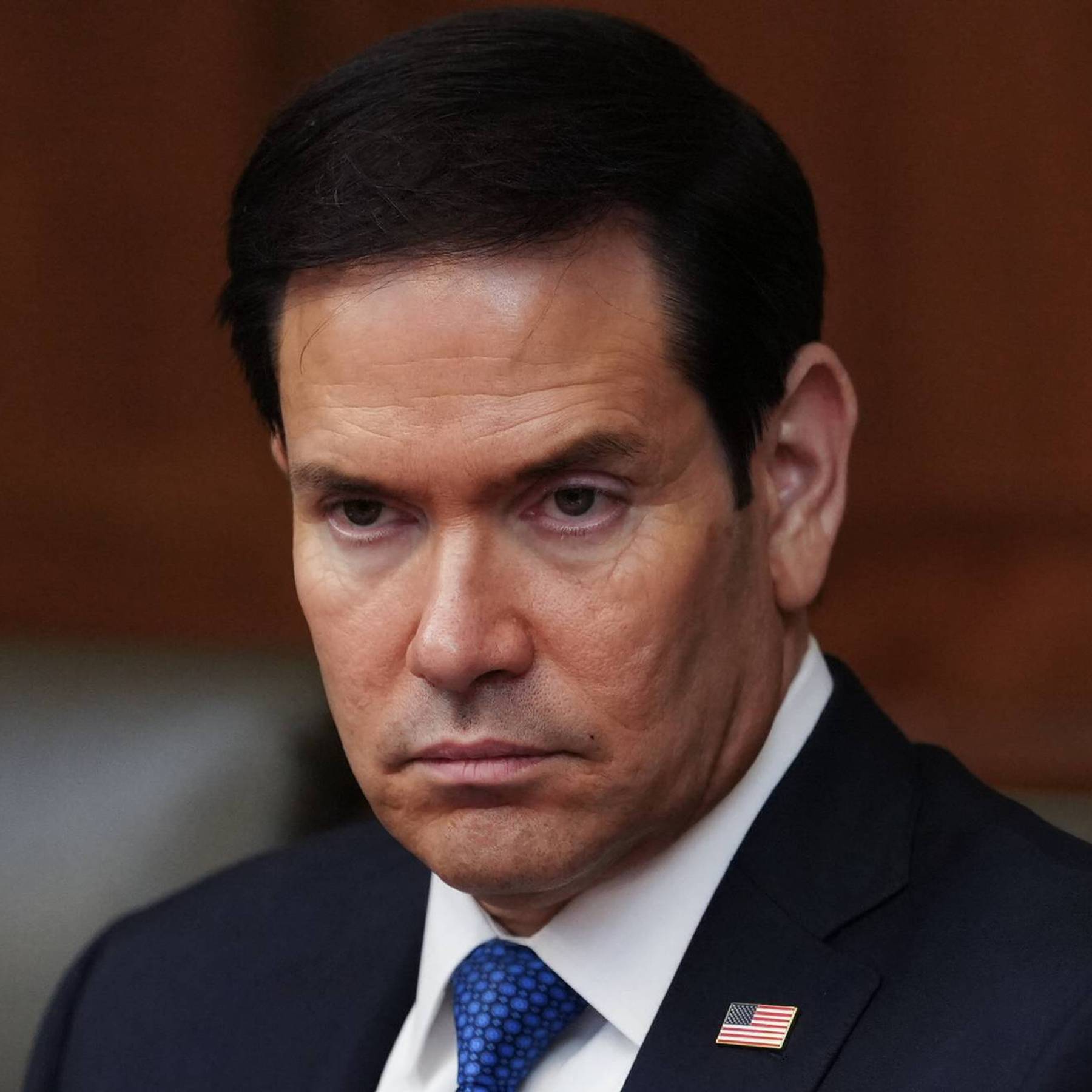
US Secretary of State Marco Rubio makes opening statement during an event at the US Department of State on July 16, 2026, in Washington, DC.
(Photo by Brendan Smialowski/AFP via Getty Images)
“When you are shameless, contemptuous of international law, and morally bankrupt, you boast of disgrace as though it were an achievement,” said one critic.
In announcing the sanctions, Rubio described the ICC as “a corrupt and fatally politicized” institution that has supposedly “abused its authority and exceeded its mandate.”
Rubio said the ICC “has repeatedly attempt to assert authority over… the United States and other countries that have not consented to its jurisdiction,” which he said “sets a dangerous precedent for all nations.”
In addition to sanctioning Akane, Rubio said the US would also be sanctioning ICC senior trial lawyer Abdoulaye Saye.
While Rubio did not mention what specific actions the ICC has taken to warrant such sanctions, a Tuesday report in The Guardian noted that Saye was charged with investigating war crimes allegedly committed by Israel during its years-long assault on Gaza.
The Trump administration had previouslysanctioned then-ICC prosecutor Karim Khan—who obtained arrest warrants for Israeli Prime Minister Benjamin Netanyahu and former Israeli Defense Minister Yoav Gallant—and an additional eight ICC officials.
The social media account of Drop Site News accused Rubio of attacking the court solely to protect Netanyahu from war crimes prosecution, pointing out that “there is currently not a single American citizen under indictment, investigation, or facing an arrest warrant” from the ICC.
The sanctions earned the praise of the Israeli American Public Affairs Committee (AIPAC), which accused the ICC of conducting “politically motivated investigations and prosecutions targeting America and Israel.”
Rutgers Law School professor Adil Haque said the ICC sanctions showed the US was acting like a “rogue government” and engaged in “deranged behavior.”
Michael Karanicolas, law professor at Dalhousie University, didn’t just point fingers at the US over the sanctions, but at US allies who have sat back as international institutions have come under assault.
“I’m no longer surprised by the Trump administration’s efforts to destroy the ICC,” wrote Karanicolas. “What I keep waiting for is any response from Canada or the European governments who ostensibly still believe in international law to defend these institutions.”
War correspondent and international political analyst Elijah Magnier delivered a withering rebuke of Rubio’s announcement.
“When you are shameless, contemptuous of international law, and morally bankrupt,” wrote Magnier, “you boast of disgrace as though it were an achievement.”
It’s been nearly 30 years since I co-founded Common Dreams with my late wife, Lina Newhouser. We had the radical notion that journalism should serve the public good, not corporate profits.
It was clear to us from the outset what it would take to build such a project. No paid advertisements. No corporate sponsors. No millionaire publisher telling us what to think or do.
Many people said we wouldn’t last a year, but we proved those doubters wrong.
Together with a tremendous team of journalists and dedicated staff, we built an independent media outlet free from the constraints of profits and corporate control. Our mission has always been simple: To inform. To inspire. To ignite change for the common good.
Building Common Dreams was not easy. Our survival was never guaranteed. When you take on the most powerful forces—Wall Street greed, fossil fuel industry destruction, Big Tech lobbyists, and uber-rich oligarchs who have spent billions upon billions rigging the economy and democracy in their favor—the only bulwark you have is supporters who believe in your work.
But here’s the urgent message from me today. It’s never been this bad out there. And it’s never been this hard to keep us going. At the very moment Common Dreams is most needed, the threats we face are intensifying. We need your support now more than ever.
We don’t accept corporate advertising and never will. We don’t have a paywall because we don’t think people should be blocked from critical news based on their ability to pay. Everything we do is funded by the donations of readers like you.
When everyone does the little they can afford, we are strong. But if that support retreats or dries up, so do we. Will you donate now to make sure Common Dreams not only survives but thrives?
—Craig Brown, Co-founder
about:blank
about:blank
Our work is licensed under Creative Commons (CC BY-NC-ND 3.0). Feel free to republish and share widely.
President Trump’s so-called “Board of Peace” is considering altering its framework for a Hamas disarmament deal due to pushback from Israel, The Times of Israel reported on Tuesday.
Under the initial plan announced by President Trump, Hamas would begin “decommissioning” its weapons in phases, which would correspond with Israeli withdrawals from certain areas where demilitarization is confirmed. But Israel has rejected the proposal and wants Hamas to hand over all of its weapons before any Israeli pullback.
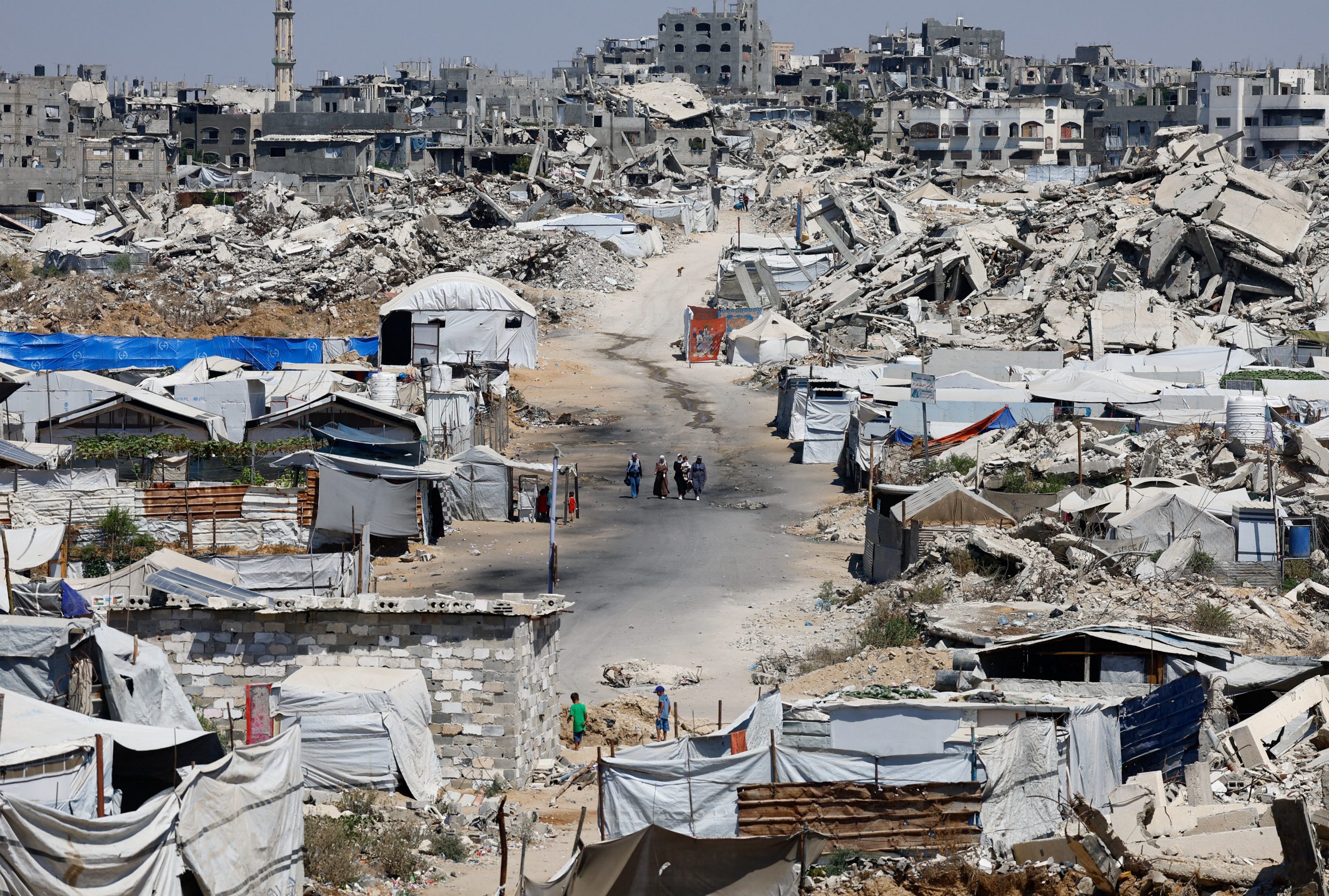
People walk at a site destroyed during the Israeli offensive, in Beit Lahiya, in the northern Gaza Strip, August 18, 2026. REUTERS/Mahmoud Issa
A source told the Times that the Board of Peace is considering the changes, but the dispute over the deal’s terms was not settled during a meeting on Monday between President Trump’s son-in-law, Jared Kushner, and Israeli Prime Minister Benjamin Netanyahu, which ended with an agreement that Israel would continue strikes in Gaza.
The Board of Peace previously suggested it was making changes to the disarmament plan after an earlier meeting of its officials with Netanyahu on August 3. After those talks, the board said that the IDF would withdraw from Gaza only after Hamas disarmed, contradicting its previous statements that said the disarmament and withdrawal would happen “in lockstep.”
The report acknowledged that making the change to the disarmament framework would risk losing Hamas’s support, as the Palestinian group agreed to the US proposal after months of negotiations. Hamas also has no reason to trust that Israel would withdraw after it disarmed, since Israel has blatantly violated the October 2025 ceasefire deal with daily attacks.
Israeli Defense Minister Israel Katz has also said that the IDF won’t withdraw from Gaza, even if Hamas disarms, and that the ultimate goal was to establish Jewish settlements in the Palestinian territory.
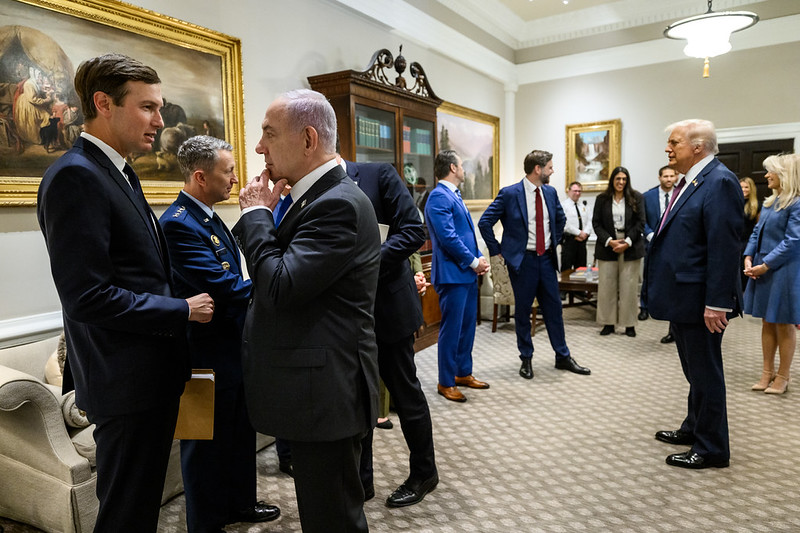
A meeting between Israeli Prime Minister Benjamin Netanyahu and President Trump’s son-in-law, Jared Kushner, a long-time family friend of the Israeli leader, ended with an agreement that Israel will continue so-called “targeted strikes” in Gaza, Haaretz reported on Monday.
The reported agreement to allow Israel to continue attacks in Gaza comes despite Kushner holding a meeting a day earlier with Hamas officials, who said they were committed to the disarmament plan announced by President Trump and the so-called “Board of Peace.”
Later in the day, Kushner told Fox News that the US wouldn’t “restrict Israel’s right to defend itself” and that one purpose of the meeting was to “clarify what that means.” He also described the disarmament deal as a “win-win” for Israel because either Hamas disarms, or Hamas doesn’t “follow through” and then Israel would have “a lot more support from the US and others to go and finish the job.”
Also on Monday, President Trump said that Israel should “stop striking Gaza” because Hamas agreed to “lay down their weapons,” comments that Hamas welcomed, though the results of the Kushner-Netanyahu meeting suggest Trump isn’t serious about putting pressure on Israel to halt all of its attacks.
Kushner and Netanyahu were joined by the Board of Peace’s top Gaza envoy, Bulgarian politician Nikolay Mladenov, former British Prime Minister Tony Blair, and US Ambassador to Israel Mike Huckabee.
Kushner and Netanyahu speaking at the White House on September 29, 2025 (White House photo)
The Haaretz report said the officials agreed to allow work to begin in Gaza on sanitation infrastructure to prevent disease outbreaks and contamination of groundwater and coastal waters, but broader reconstruction will still not be allowed.
They also discussed a preliminary plan that would involve Hamas handing over its weapons to a force led by Jasper Jeffires, a US Army general who’s been designated as the commander of the “International Stabilization Force,” which is supposed to deploy to Gaza under President Trump’s plan.
But the Haaretz report said Israeli officials expressed skepticism about the disarmament plan, and Netanyahu and other Israeli officials have repeatedly rejected the overall proposal. An Israeli official told The Guardian that there had been no breakthrough in the meeting and that Israel would continue to carry out operations in Gaza.
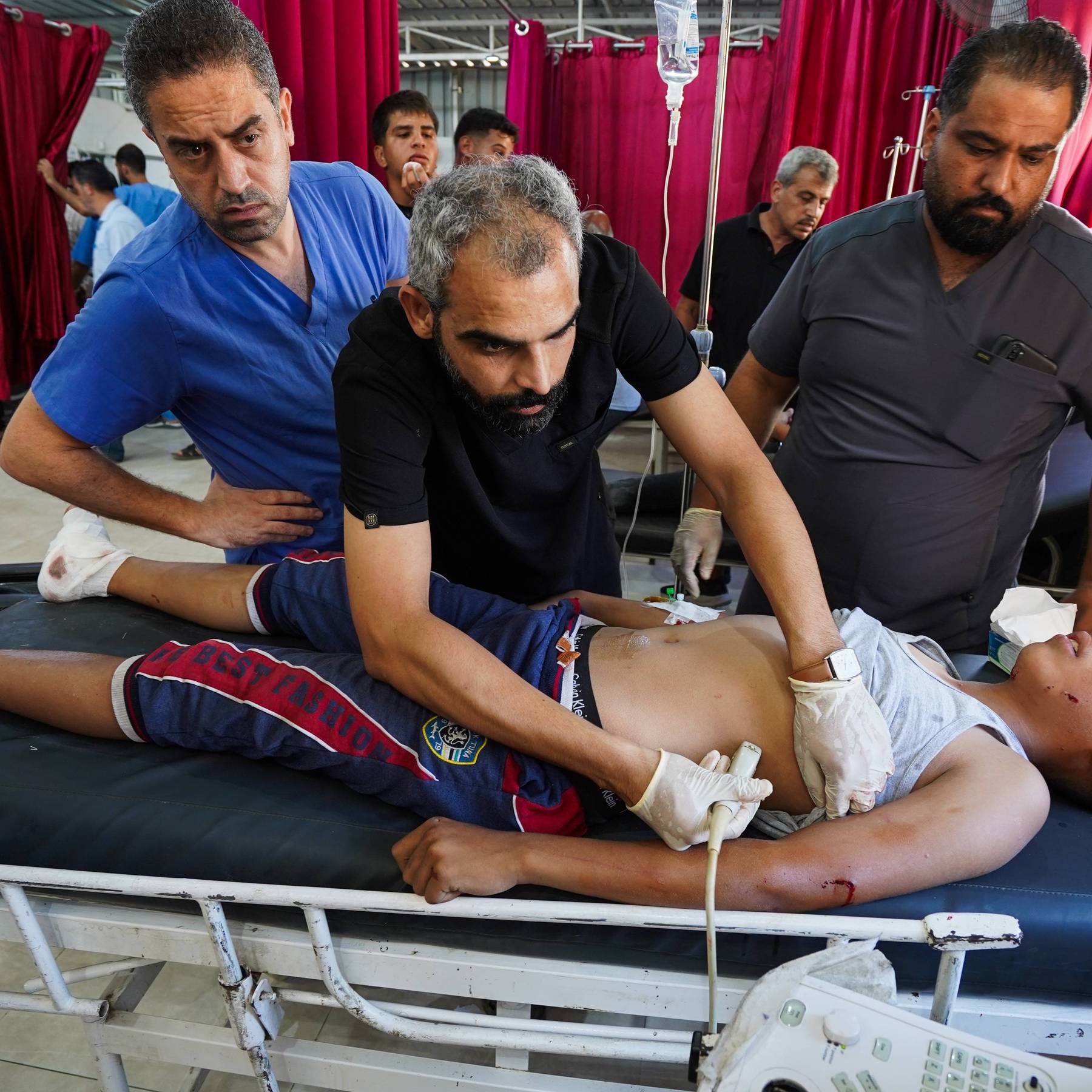
Israel’s attacks in Gaza since the so-called ceasefire deal was signed in October 2025 have killed at least 1,265 Palestinians and wounded 4,198, according to the latest numbers released by Gaza’s Health Ministry. The ministry said that over the previous 48 hours, Israeli attacks have killed at least two Palestinians and injured 15.
Ben Gvir made the comments when discussing the reduction in Israeli attacks in Gaza, though the IDF hasn’t fully stopped its strikes and continues to violate the US-backed October 2025 ceasefire deal.
“It’s no secret, I disagree with the prime minister,” Ben Gvir said on a podcast hosted by Rom Braslavski, who was previously held captive in Gaza, according to The Associated Press.
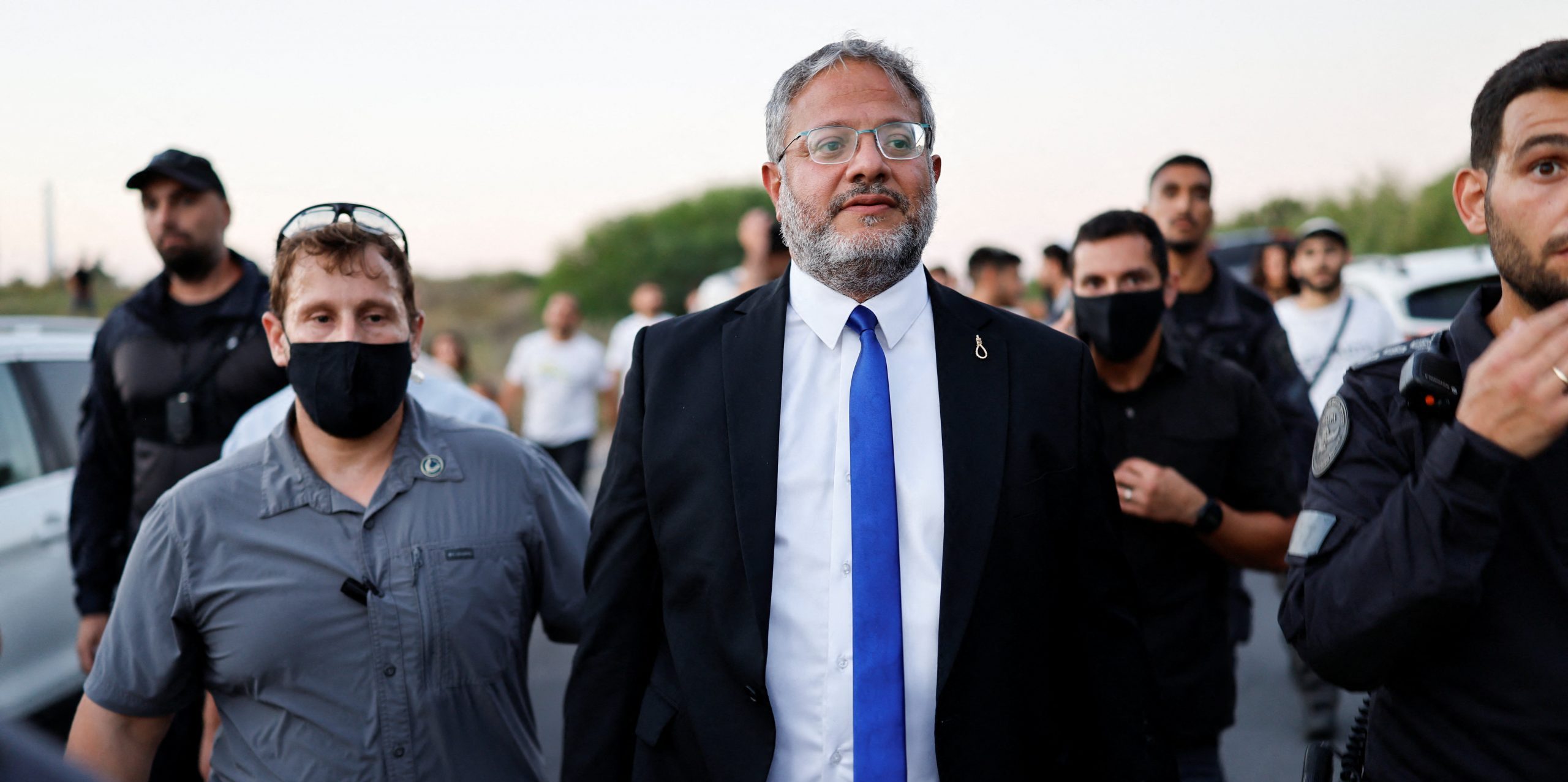
Israeli National Security Minister Itamar Ben-Gvir joins pro-settlement Israelis on a march towards the Gaza Strip near Kibbutz Zikim and Israel’s border with Gaza, in southern Israel, July 19, 2026. REUTERS/Amir Cohen
“I think targeted assassinations should be carried out in Gaza, taking down 30 to 40 every night. Not just those who pose an immediate threat — there are people there who are not worthy of life. They shouldn’t live. They’re not even people,” he added.
Ben Gvir, leader of the Jewish Power party, is known as an outspoken proponent of the ethnic cleansing of Gaza and the establishment of Jewish settlements in the Palestinian territory, views that he reaffirmed in the podcast interview.
“I see all of Gaza as ours,” he said. “Settlements not just in Gush Katif but throughout Gaza, encouraging as much emigration as possible, sending them to their countries, and for the terrorists, no emigration, nothing, just to kill them one by one.”
While often portrayed as a fringe figure, Ben Gvir has significant influence in the government and holds a powerful position, as he oversees police and prisons, where nearly 100 Palestinians have died since October 7, 2026, due to increasingly worse conditions, which Ben Gvir has boasted about implementing. He is now pushing a plan to create crocodile-filled moats around Israeli prisons.
Displaced Palestinians, including many children, wait in long queues to receive hot meals distributed by a charitable organization in Gaza City, Gaza on June 7, 2026.
(Photo by Moiz Salhi/Anadolu via Getty Images)
“What we are witnessing in Gaza is not a series of isolated shortages, it is a policy of attrition by design.”
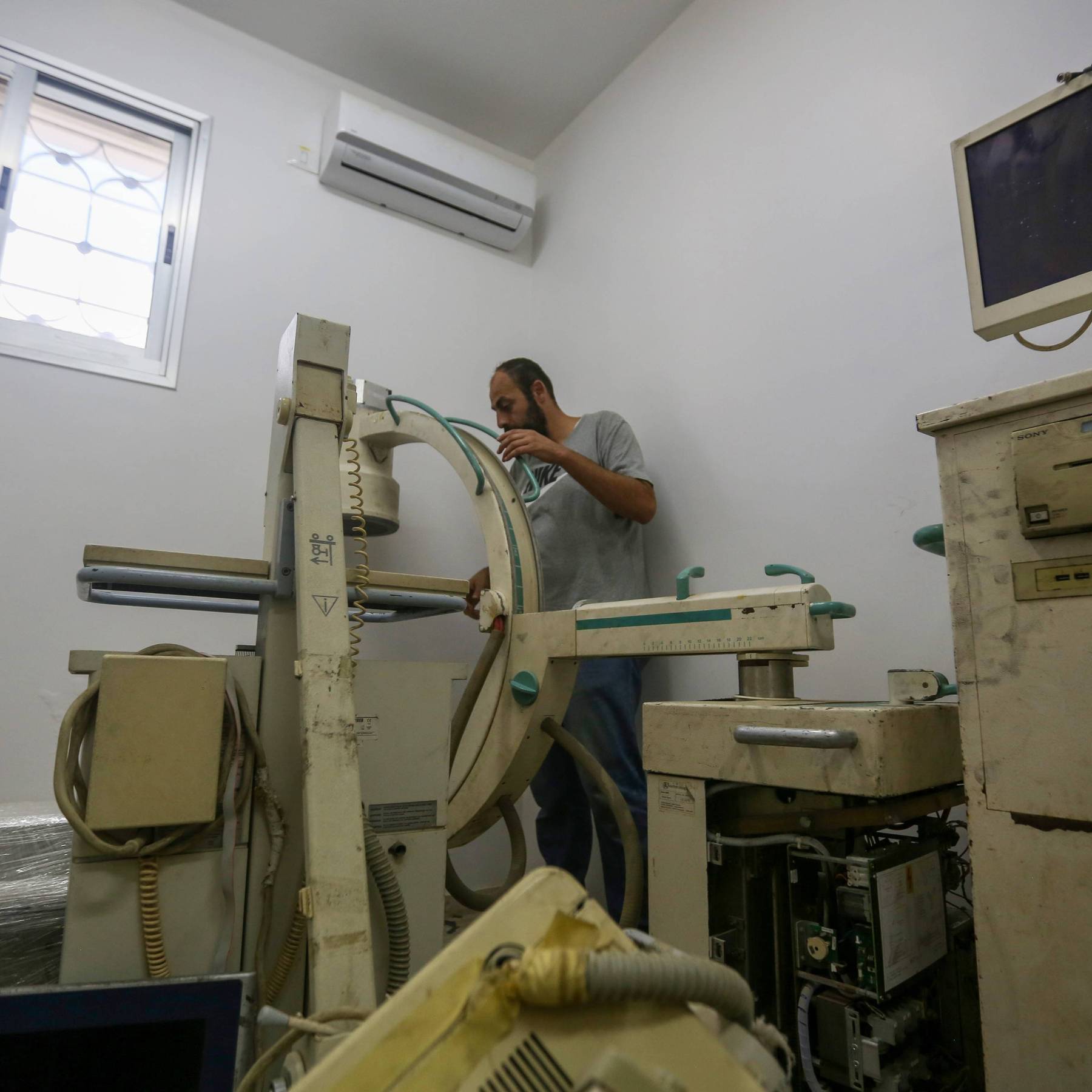
The renowned humanitarian group Doctors Without Borders said Wednesday that the Israeli government is still restricting the entry of engine oil and generator parts to the Gaza Strip, imperiling life-saving hospital functions and other essential services in the decimated territory.
Doctors Without Borders, known internationally as Médecins Sans Frontières (MSF), noted that Gaza’s remaining healthcare system relies “almost entirely” on generators, “with most electricity cut by Israeli authorities and much of the electrical infrastructure destroyed.” The group said that in some Gaza facilities, its teams barely have sufficient engine oil to last a month and have been forced to “buy engine oil at the local market at exorbitant prices.”
Filipe Ribeiro, MSF’s head of mission in Palestine, said that “what we are witnessing in Gaza is not a series of isolated shortages, it is a policy of attrition by design.”
“For more than two years, we have observed Israel’s policies restricting the entry of supplies,” said Ribeiro. “These policies do not merely delay aid; they dismantle the very systems people rely on to survive.”
Israel’s continued restriction of supplies comes as the country’s military, which is armed by the United States, keeps up its deadly bombing of the strip despite a purported ceasefire deal that took effect in October 2025. Israeli attacks have killed more than 1,200 people in Gaza since the start of the ceasefire agreement. The Israeli government, headed by Prime Minister Benjamin Netanyahu, has rejected a US-backed plan for Hamas disarmament in exchange for Israeli withdrawal from Gaza.
Earlier this week, a group of United Nations experts condemned Israel’s recent “strikes on hospitals and shelters, the killing of police officers and UN-contracted staff, attacks on fishers, and abductions and abuses by armed groups reportedly collaborating with the Israeli military, as well as the killing of humanitarian workers, who through their work protecting and promoting fundamental human rights, are human rights defenders.”
“These restrictions have become increasingly far-reaching, also preventing the entry of routine items ranging from ointments for skin diseases to rubber seals needed for medical sterilization equipment.”
According to MSF, Israel’s sustained attacks and obstruction of supplies “extend far beyond hospitals.”
“Without engine oil, all transport services could stop, including much-needed water trucks during the peak of summer heat, ambulances, buses transporting medical staff to work, and trucks delivering humanitarian supplies,” the group said. “Bakeries and flour mills also rely on generators, meaning food production could also be affected.”
MSF characterized Israel’s continued obstruction of engine oil and spare generator parts as “one piece of a larger pattern of structural violence imposed by Israeli authorities to intentionally restrict access to vital services and supplies as part of the ongoing genocide against Palestinians in Gaza.”
“These restrictions have become increasingly far-reaching, also preventing the entry of routine items ranging from ointments for skin diseases to rubber seals needed for medical sterilization equipment,” the group said. “The shortages now impact virtually every aspect of life in Gaza, leaving hospitals and humanitarian organizations without basic supplies.”
Ribeiro said in a statement that “the items change, but the logic remains the same: reducing people to conditions in which life becomes untenable, and dignity is systematically stripped away through the denial of the most ordinary, most essential goods.”
“This is not bureaucracy,” he added. “It is a deliberate effort to make existence itself impossible.”
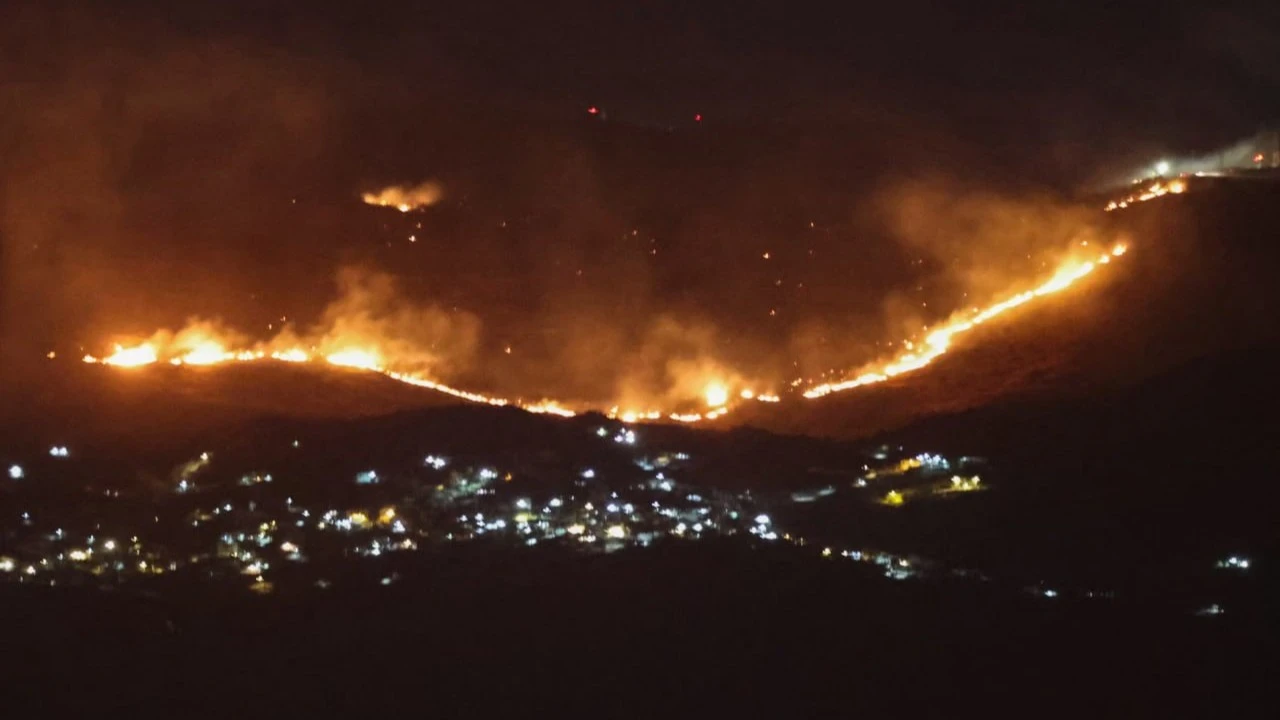
(Photo credit: X) Large fires continued to burn and spread in south Lebanon on 13 August due to continuous strikes, artillery shelling, and deliberate arson operations carried out by Israeli occupation forces illegally positioned inside the country.
The Israeli arson operations in particular are targeting forests and greenery.
Israel has been damaging the environment in Lebanon for years, increasingly so over the past several months and specifically since the latest round of fighting began – including through the spraying of toxic chemicals.
Firefighters said, as they put out the blazes caused by Israel’s attacks and arson, that the fires were sparked “deliberately” by occupation forces.
The fires escalated overnight as Israel intensified attacks, but have been raging for weeks, environmental groups have said.
Israeli occupation troops used flares in a wooded area near the southern city of Khiam, sparking large blazes.
Hussein Fakih, head of the Lebanese Civil Defense in Nabatieh, said firefighters were targeted by an Israeli drone as they were heading to put out the flames.
“Most of our missions are now related to fires. There are enormous areas of woodland that have burned, I don’t have the exact figures, but in the areas close to the [frontline], around 30–40 percent of the land has been affected by fires,” he added.
Much of the agriculture in south Lebanon, including olive groves, has been affected by the fires, sparked by Israeli occupation troops and worsened by the hot summer weather.
The fires were seen in numerous videos posted across social media.
Meanwhile, Israeli infantry forces advanced into the area between the towns of Aita al-Jabal and Beit Yahoun in the Bint Jbeil district, as Tel Aviv carried out attacks in other areas on Thursday.
Occupation troops continued to detonate civilian infrastructure in multiple southern towns and villages, including Majdal Zoun, according to Lebanon’s National News Agency (NNA).
On 12 August, Israeli War Minister Israel Katz renewed his repeated vows that occupation forces “will not withdraw” from south Lebanon.
Israel’s escalation and expansion in Lebanon have escalated since Beirut violated its own laws and agreed to an unconstitutional framework deal with Israel in June, during direct talks with Tel Aviv.
The deal demands Hezbollah disarmament before any withdrawal and allows Israel to maintain its occupation.
Tel Aviv says it has established a “security zone” in the dozens of villages it has occupied since March, but Hezbollah resistance fighters remain entrenched across this area.


 (Photo credit: IDF Spokesperson page Facebook)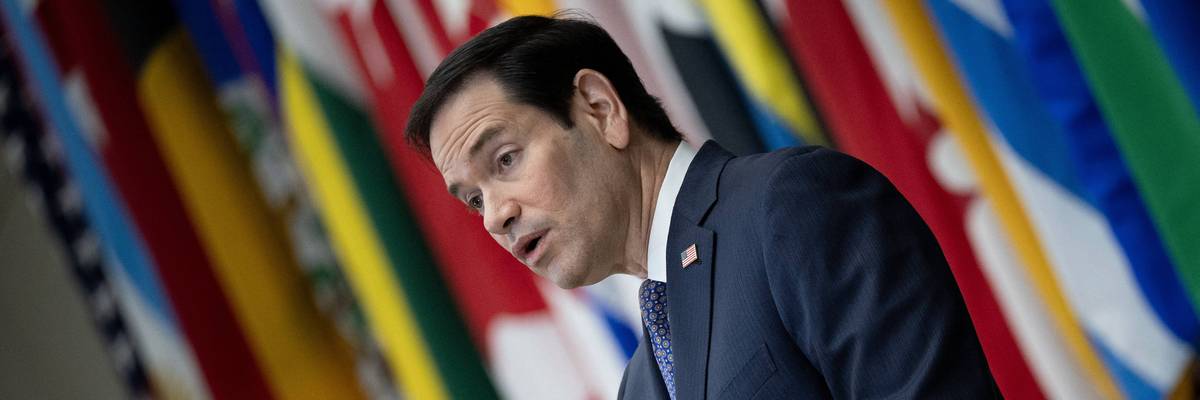

 (Photo credit: X) Large fires continued to burn and spread in south Lebanon on 13 August due to continuous strikes, artillery shelling, and deliberate arson operations carried out by Israeli occupation forces illegally positioned inside the country.


You must be logged in to post a comment.