Posts Tagged ‘Israel’

Gaza is not a real estate fantasy

January 25, 2026

Trump and Kushner’s plans for Gaza are bound to fail. Here is why.

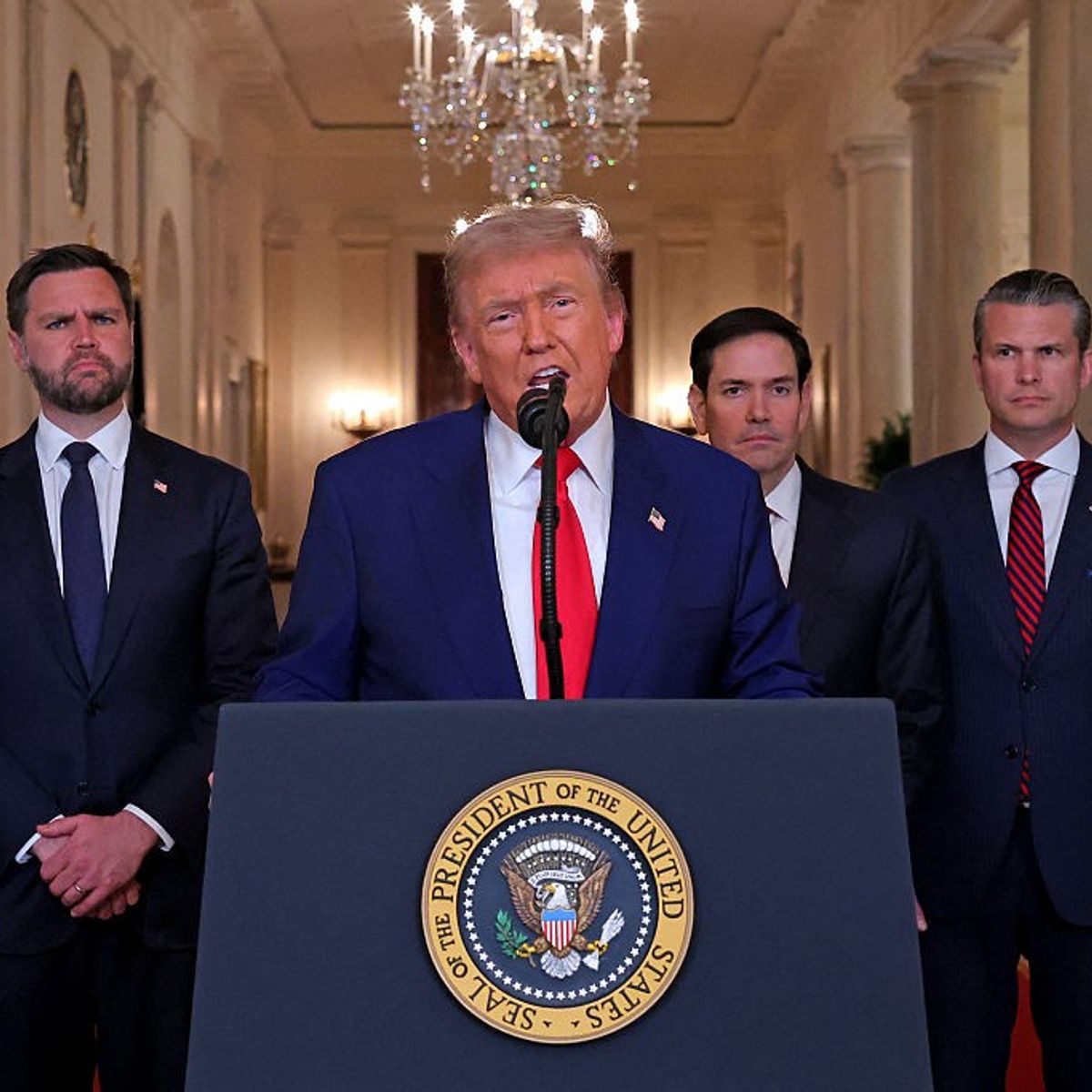
U.S. President Donald Trump takes part in a charter announcement for his Board of Peace initiative aimed at resolving global conflicts, alongside the 56th annual World Economic Forum (WEF), in Davos, Switzerland, January 22, 2026. REUTERS/Jonathan Ernst
US President Donald Trump takes part in a charter announcement for his Board of Peace initiative on the sidelines of the World Economic Forum in Davos, Switzerland on January 22, 2026 [Jonathan Ernst/Reuters]

By Sultan Barakat

Professor in public policy at Hamad Bin Khalifa University,.

Published On 25 Jan 202625 Jan 2026

Share

Save

By any measure, Gaza’s devastation demands urgent and serious reconstruction. Homes, hospitals, schools, farms, cultural heritage, and basic infrastructure lie in ruins. Entire neighbourhoods have been erased. The humanitarian need is undeniable. But urgency should never become an excuse for illusion, spectacle, or political shortcuts.

The contrast between rhetoric and reality could not be sharper. While United States President Donald Trump and a group of world leaders gathered in Davos, Switzerland, to sign the charter of the so-called Board of Peace and unveil glossy reconstruction plans, the killing in Gaza continued.

Recommended Stories

list of 4 itemslist 1 of 4

Updates: Israel keeps attacking Gaza, kills two minors, elderly woman

list 2 of 4

Who’s on Trump’s ‘Board of Peace’ and why does Israel have objections?

list 3 of 4

Trump’s ‘board of peace’ appears to seek wider mandate beyond Gaza

list 4 of 4

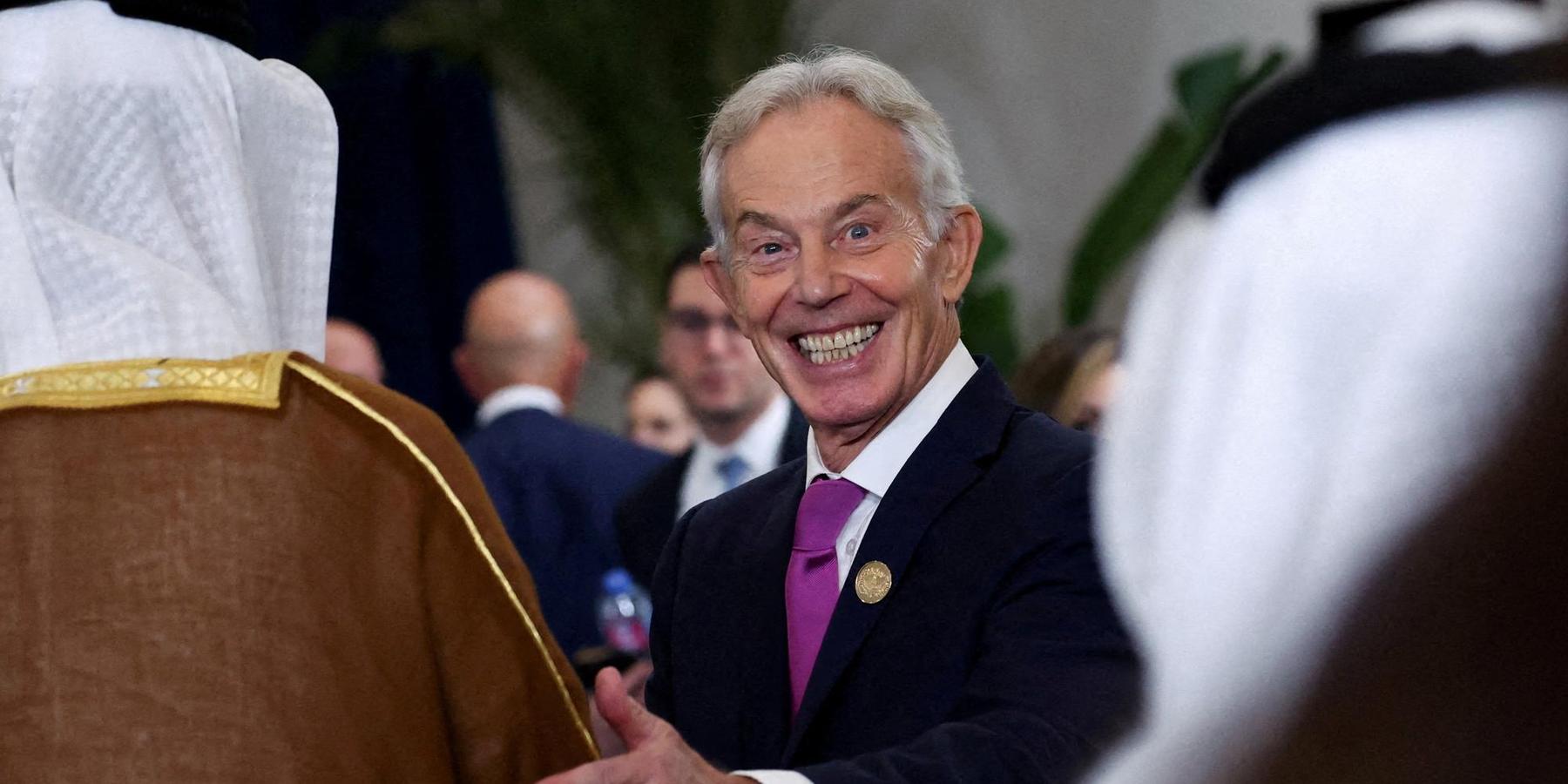
Tony Blair ruled out of Trump’s proposed Gaza ‘peace board’: Report

end of list

Since the ceasefire came into effect on October 10, no fewer than 480 Palestinians have been killed. Four of them were killed on the very day the charter was signed by 19 ministers and state representatives, many of whom were less interested in the issue of Gaza and much more in being seen alongside Trump.

Against that backdrop, the board’s carefully staged optimism feels like performance rather than transformation. It resembles a sandpit where those signing up get to build sandcastles with Trump that will wash away with the first real wave.

The proposals may look impressive and sound hopeful, but structurally, they are hollow. They sidestep the real drivers of the conflict, marginalise Palestinian agency, privilege Israeli military priorities over civilian recovery, and align uncomfortably with longstanding efforts to maintain the occupation, displace Palestinians, and deny the right of return for the population uprooted in 1948 and 1967.

Gaza is not a real estate prospectus

The glossy vision of presidential adviser and son-in-law Jared Kushner treats Gaza not as a traumatised society emerging from catastrophic violence, but as a blank investment canvas for luxury housing, commercial zones, data hubs, beachfront promenades, and aspirational gross domestic product (GDP) targets.

It reads less like a recovery plan and more like a real-estate prospectus. Development language replaces political reality. Sleek presentations replace rights. Markets replace justice.

But Gaza is not a failed start-up looking for venture capital. It is home to more than two million Palestinians who have endured siege, displacement, repeated wars, and chronic insecurity for decades. Reconstruction cannot succeed if it is detached from their lived experiences or if it treats Gaza primarily as an economic asset open to speculative investment, including by extreme Zionists, rather than as a human community struggling to preserve its identity and social fabric.

For many families, even modest homes in Gaza’s formal refugee camps represented a fragile bridge worth holding on to as a step towards an eventual return to places from which they were forced to flee, in what is today known as Israel.

These homes were valued not for their comfort or market worth, but for the social networks they sustained and their symbolic links to continuity, memory, and political claims. Palestinians are therefore unlikely to be swayed by offers of glitzy towers, luxurious villas, or promises of a “market economy” under siege. Their experience over the past decades has taught them that no level of material improvement can substitute for deeper aspirations tied to dignity, rootedness, and the right of return.

A future designed without Palestinians

A glaring flaw of Trump’s plan is the systematic exclusion of Palestinians themselves from shaping the vision of their future. These plans are unveiled in elite conference halls, not debated with the people whose neighbourhoods have been flattened.

Without Palestinian ownership, legitimacy collapses. Experience from Iraq, Afghanistan, and elsewhere has shown repeatedly that reconstruction imposed from the outside — however well branded — reproduces the very power imbalances that fuel instability in the first place.

Equally troubling is the plan’s deliberate avoidance of addressing the root causes of Gaza’s suffering: occupation, blockade, and military control. You cannot rebuild sustainably while continuing to preserve and fund the machinery that repeatedly destroys what is built.

No amount of concrete, branding, or foreign investment can substitute for political resolution. A territory that remains militarily besieged, economically sealed, and politically subjugated will never achieve durable recovery.

Prosperity cannot flourish inside a cage. The European Union learned this lesson the hard way through multiple reconstruction cycles it funded in Gaza, which may help explain why none of its members rushed to join the board, despite being able to afford the permanent membership fee and despite the political incentives of cultivating a more cordial relationship with Trump in light of the war in Ukraine and his threats on Greenland.

Aiding Israel’s military control through spatial redesign

There is also a serious risk that the proposed physical design of Gaza would entrench Israeli military strategy rather than restore Palestinian life. The plans envision buffer zones, segmented districts, and so-called “green spaces and corridors” that would break up the territory internally.

This kind of spatial engineering would facilitate surveillance, control, and rapid military access. Urban planning would become security architecture. Civilian geography would turn into militarised space. What is sold as modernisation would constitute a sophisticated system of containment, just like the illegal settlement networks and road systems in the occupied West Bank.

The emphasis on reclaiming land from the sea using rubble may repeat the problems of Beirut’s reconstruction after the civil war, where newly reclaimed areas attracted disproportionate investment because they were free of unresolved ownership claims, ultimately allowing elites to appropriate the city’s waterfront and pull it away from public use.

The demographic implications of the plan are equally profound. Shifting Gaza’s population centre southward — closer to Egypt and further from Israel’s settlements — would quietly alter the political and social centre of gravity of Palestinian life.

It may ease Israeli security anxieties, but it would do so at the expense of Palestinian continuity, identity, and territorial coherence. Population engineering under the banner of reconstruction raises serious ethical concerns and risks externalising Gaza’s long-term humanitarian burden onto neighbouring states. This may also help explain Egypt’s absence from the signing ceremony and its decision to limit participation to its intelligence leadership.

No amount of political theatre can replace freedom

The Board of Peace itself also deserves careful scrutiny. Its branding suggests neutrality and collective stewardship, yet its political framing remains highly personalised around Trump, with little clarity about how it is meant to operate in practice.

This is not the kind of multilateral peacebuilding mechanism envisaged by United Nations Security Council Resolution 2803 of November 2025; it is political theatre. Peace mechanisms anchored in personalities rather than institutions and international law rarely survive political change.

At the heart of all this lies a familiar but dangerous assumption: that economic growth can substitute for political rights. History teaches the opposite. People do not resist simply because they are poor; they resist because they lack dignity, security, freedom of expression, and self-determination. No master plan can bypass these realities. No skyline can compensate for political exclusion.

This does not mean Gaza must wait for the perfect peace before rebuilding. Recovery must proceed urgently. But rebuilding must empower Palestinians rather than redesign their constraints. It must dismantle systems of control, not embed them into concrete and zoning maps. It must confront the political roots of destruction rather than cosmetically repackage its aftermath.

Until those foundations exist, the Board of Peace and Kushner’s vision risk becoming exactly what they resemble — a form of sandcastle diplomacy: impressive to the global public, comforting to elites, and destined to wash away when the first serious wave of political reality arrives.

The views expressed in this article are the author’s own and do not necessarily reflect Al Jazeera’s editorial stance.


  • Sultan BarakatProfessor in public policy at Hamad Bin Khalifa University,Sultan Barakat is professor in public policy at Hamad Bin Khalifa University, honourary professor at the University of York, and member of the Raoul Wallenberg Institute ICMD Expert Reference Group.
Every Nation in the World Should Reject Trump’s Absurd and Dangerous ‘Board of Peace’

January 23, 2026
Refusal to join will be an act of national self-respect. The UN-based international order, however flawed, should be repaired through law and cooperation, not replaced by a gilded caricature.

Jeffrey D. Sachs & Sybil Fares

Jan 22, 2026, Common Dreams

The so-called “Board of Peace” being created by President Donald Trump is profoundly degrading to the pursuit of peace and to any nation that would lend it legitimacy. This is a trojan horse to dismantle the United Nations. It should be refused outright by every nation invited to join.

In its Charter, the Board of Peace (BoP) claims to be an “international organization that seeks to promote stability, restore dependable and lawful governance, and secure enduring peace in areas affected or threatened by conflict.” If this sounds familiar, it should, because this is the mandate of the United Nations. Created in the aftermath of World War II, the UN has as its central mission the maintenance of international peace and security.

RECOMMENDED…

US-UKRAINE-RUSSIA-DIPLOMACY-CONFLICT

Trump Invites Putin, Netanyahu to Join Peace Panel Mocked as ‘Board of Billionaires and War Criminals’

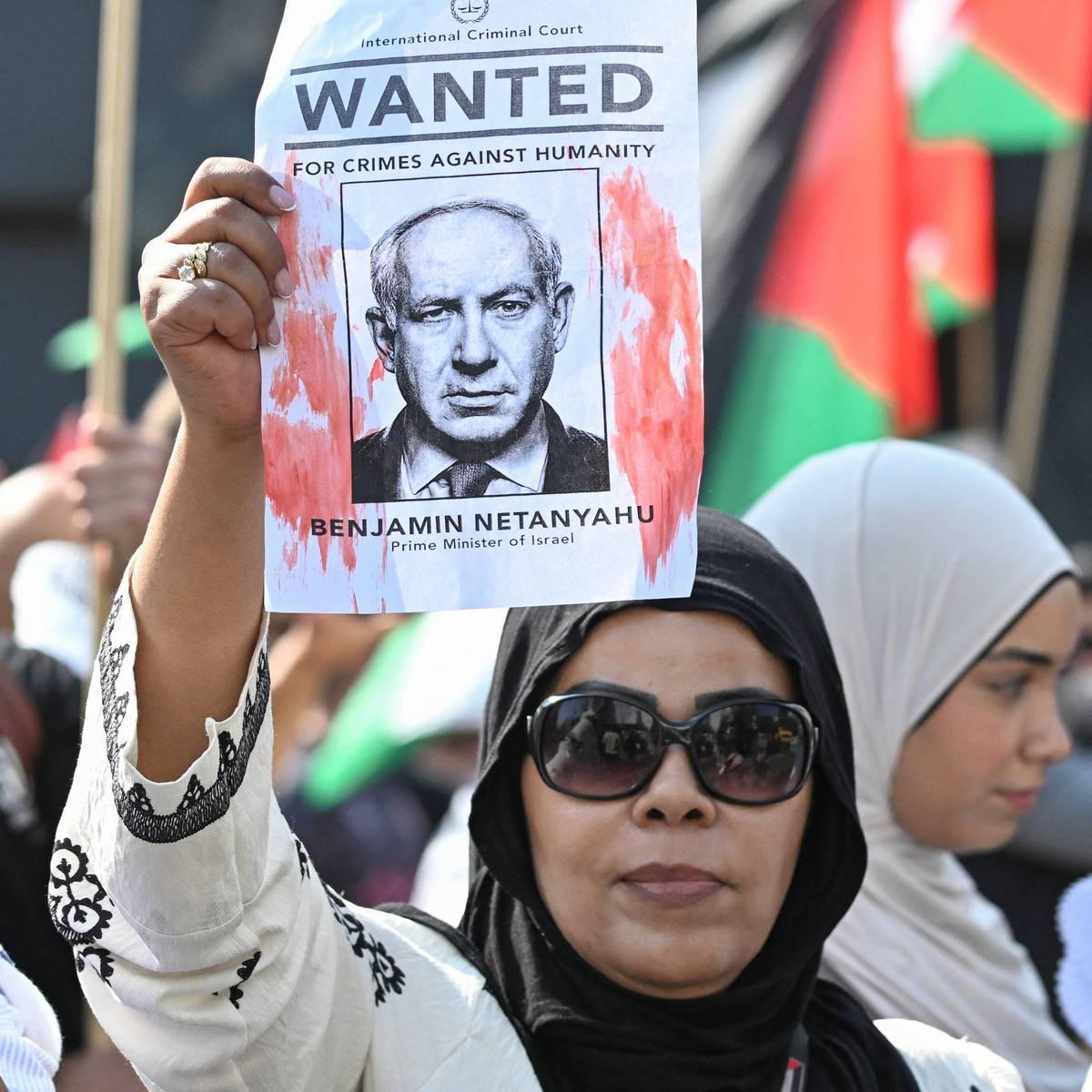
A demonstrator holds up a "Wanted" poster featuring Israeli Prime Minister Benjamin Netanyahu

Wanted War Criminal and ‘Genocide Architect’ Netanyahu Joins Trump Board of Peace

It is no secret that Trump holds open contempt for international law and the United Nations. He said so himself during his September 2025 speech at the General Assembly, and has recently withdrawn from 31 UN entities. Following a long tradition of US foreign policy, he has consistently violated international law, including the bombing of seven countries in the past year, none of which were authorized by the Security Council and none of which was undertaken in lawful self-defense under the Charter (Iran, Iraq, Nigeria, Somalia, Syria, Yemen, and Venezuela). He is now claiming Greenland, with brazen and open hostility towards the US allies in Europe.

So, what about this Board of Peace?

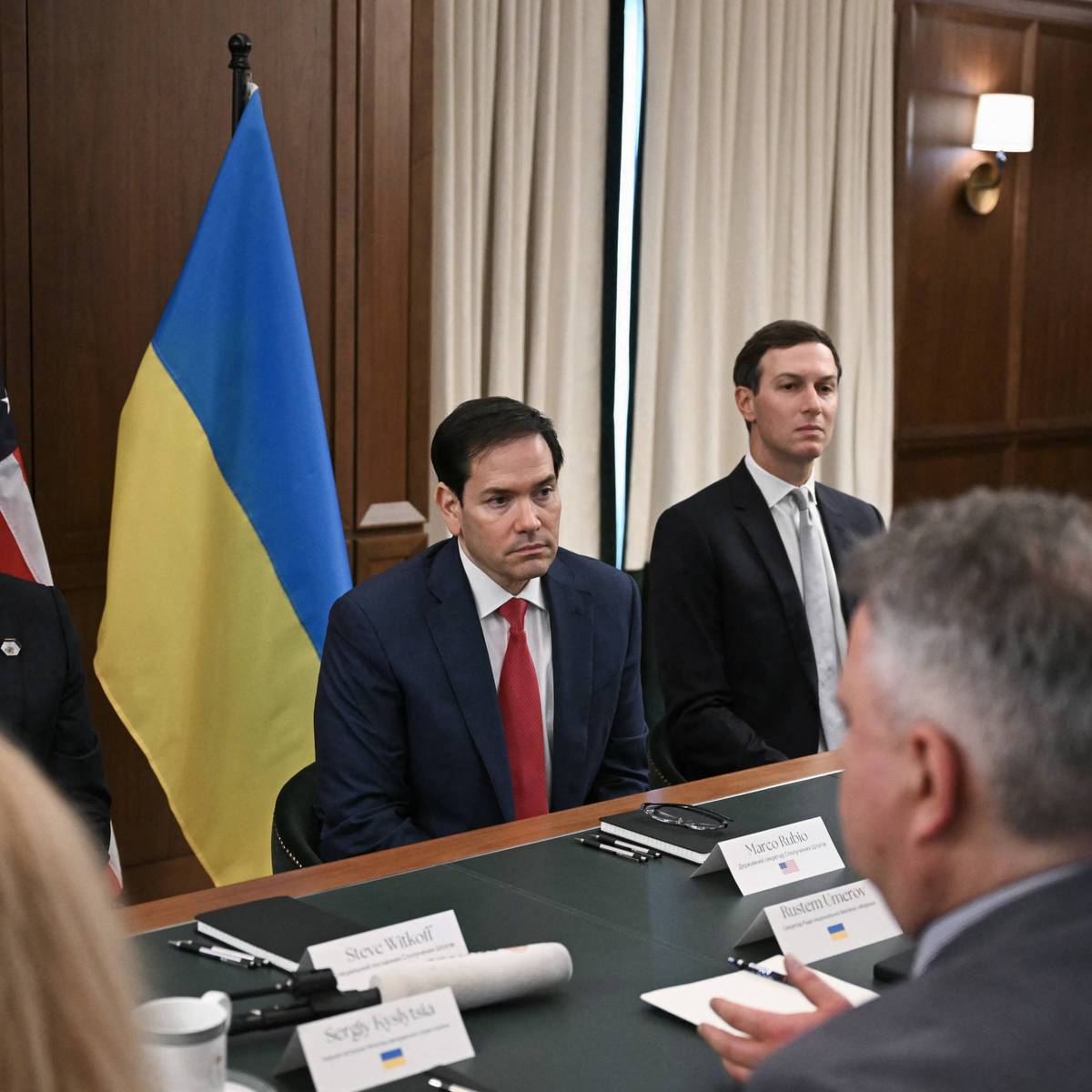
It is, to put it simply, a pledge of allegiance to Trump, who seeks the role of world chairman and the world’s ultimate arbiter. The BoP will have as its Executive Board none other than Trump’s political donors, family members, and courtiers. The leaders of nations that sign up will get to rub shoulders with, and take orders from, Marco Rubio, Steve Witkoff, Jared Kushner and Tony Blair. Hedge Fund owner and Republican Party mega-donor Marc Rowan also gets to play. More to the point, any decisions taken by the BoP will be subject to Trump’s approval.

If the charade of representatives isn’t enough, nations will have to pay $1 billion for a “permanent seat” on the Board. Any nation that participates should know what it is “buying.” It is certainly not buying peace or a solution for the Palestinian people (as the money supposedly goes to Gaza’s reconstruction). It is buying ostensible access to Trump for as long as it serves his interests. It is buying an illusion of momentary influence in a system where Trump’s rules are enforced by personal whim.

The proposal is absurd not least because it purports to “solve” a problem that already has an 80-year-old global solution. The United Nations exists precisely to prevent the personalization of war and peace. It was designed after the wreckage of two world wars to global base peace on collective rules and international law. The UN’s authority, rightly, derives from the UN Charter ratified by 193 member states (including the US, as ratified by the US Senate in July 1945) and grounded in international law. If the US doesn’t want to abide by the Charter, the UN General Assembly should suspend the US credentials, as it once did with Apartheid South Africa.

Trump’s “Board of Peace” is a blatant repudiation of the United Nations. Trump has made that explicit, recently declaring that the Board of Peace “mightindeed replace the United Nations. This statement alone should end the conversation for any serious national leader. Participation after such a declaration is a conscious decision to subordinate one’s country to Trump’s personalized global authority. It is to accept, in advance, that peace is no longer governed by the UN Charter, but by Trump.

Still, some nations, desperate to get on the right side of the US, may take the bait. They should remember the wise words of President John F. Kennedy in his inaugural addressthose who foolishly sought power by riding the back of the tiger ended up inside.”

The record shows that loyalty to Trump is never enough to salve his ego. Just look at the long parade of Trump’s former allies, advisers, and appointees who were humiliated, discarded, and attacked by him the moment they ceased to be useful to him.

For any nation, participation on the Board of Peace would be strategically foolish. Joining this body will create long-lasting reputational damage. Long after Trump himself is no longer President, a past association with this travesty will be a mark of poor judgment. It will remain as sad evidence that, at a critical moment, a national political system mistook a vanity project for statesmanship, squandering $1 billion of funds in the process.

Ultimately, refusal to join the “Board of Peace” will be an act of national self-respect. Peace is a global public good. The UN-based international order, however flawed, should be repaired through law and cooperation, not replaced by a gilded caricature. Any nation that values international law, and the respect for the United Nations, should decline immediately to be associated with this travesty of international law.

An Urgent Message From Our Co-Founder


Dear Common Dreams reader,

The U.S. is on a fast track to authoritarianism like nothing I’ve ever seen. Meanwhile, corporate news outlets are utterly capitulating to Trump, twisting their coverage to avoid drawing his ire while lining up to stuff cash in his pockets.

That’s why I believe that Common Dreams is doing the best and most consequential reporting that we’ve ever done.

Our small but mighty team is a progressive reporting powerhouse, covering the news every day that the corporate media never will. Our mission has always been simple: To inform. To inspire. And to ignite change for the common good.

Now here’s the key piece that I want all our readers to understand: None of this would be possible without your financial support.

That’s not just some fundraising cliche. It’s the absolute and literal truth. We don’t accept corporate advertising and never will. We don’t have a paywall because we don’t think people should be blocked from critical news based on their ability to pay. Everything we do is funded by the donations of readers like you.

Will you donate now to help power the nonprofit, independent reporting of Common Dreams?

Thank you for being a vital member of our community. Together, we can keep independent journalism alive when it’s needed most.

– Craig Brown, Co-founder
about:blank

about:blank

Our work is licensed under Creative Commons (CC BY-NC-ND 3.0). Feel free to republish and share widely.

Jeffrey D. Sachs

Jeffrey D. Sachs is a University Professor and Director of the Center for Sustainable Development at Columbia University, where he directed The Earth Institute from 2002 until 2016. He is also President of the UN Sustainable Development Solutions Network and a commissioner of the UN Broadband Commission for Development. He has been advisor to three United Nations Secretaries-General, and currently serves as an SDG Advocate under Secretary-General Antonio Guterres. Sachs is the author, most recently, of “A New Foreign Policy: Beyond American Exceptionalism” (2020). Other books include: “Building the New American Economy: Smart, Fair, and Sustainable” (2017) and “The Age of Sustainable Development,” (2015) with Ban Ki-moon.

Full Bio >

Sybil Fares

Sybil Fares is a specialist and advisor in Middle East policy and sustainable development at SDSN

Full Bio >

Phase farce: No way ‘Board of Peace’ replaces reality in Gaza

January 20, 2026

Tony Blair Gaza

There is no ceasefire, no aid, no Hamas disarmament, IDF withdrawal or stabilization force. Just a lot of talk about Trump-run panels with little buy-in.

  1. regions middle east
  2. gaza

Paul R. Pillar

Jan 19, 2026

The Trump administration’s announcements about the Gaza Strip would lead one to believe that implementation of President Trump’s 20-point peace plan, later largely incorporated into a United Nations Security Council resolution, is progressing quite smoothly.

As such, Trump’s special envoy Steve Witkoff announced this month on social media the “launch of Phase Two” of the plan, “moving from ceasefire to demilitarization, technocratic governance, and reconstruction.” But examination of even just a couple of Witkoff’s assertions in his announcement shows that “smooth” or even “implementation” are bitter overstatements.

Witkoff said that Phase One has “maintained the ceasefire.” No, it has not. Israel has continued daily attacks against the Gaza Strip ever since the ceasefire was supposed to go into effect last October. As usual with unobserved ceasefires, both sides accuse the other of violations. The casualty count, however, reveals which side lethal violations are coming from. According to the Palestinian Ministry of Health, Israeli attacks since the start of the supposed ceasefire have killed at least 451 Palestinians and injured 1,251. As was true of Israeli attacks during the previous three years, many of the victims have been civilians. On the other side, the Israeli military states that three of its soldiers were killed in combat during the first few days of the ceasefire in October 2025.

Witkoff also said that “Phase One delivered historic humanitarian aid” to Gaza. What he did not say is that continued Israeli rejections of requests to deliver aid to the Strip have made the flow of aid much less than what was agreed to and far less than what is needed. As of mid-January, 24,611 aid trucks have entered Gaza since the ceasefire agreement—fewer than half of the 57,000 that Israel should have allowed in under the agreed allocation.

Phase Two thus is being announced without anything close to full implementation of Phase One.

The administration has announced some, though not all, members of the “Board of Peace,” headed by Trump, that is supposed to function as an international board of directors overseeing implementation of the rest of the plan. Recruitment of a full slate of members evidently has been difficult. Hesitation by many governments to participate is perhaps understandable, given the uncertainties about implementation so far and the nature of the overall project as one that Trump has directed in coordination with Israel.

Recruitment will not be made any easier by the administration requiring a $1 billion cash contribution from any government wanting extended membership on the board.

The personnel announcements made so far are sufficient to displease each side in this conflict. The Board of Peace includes, among others, Witkoff, Trump’s son-in-law Jared Kushner, and former British prime minister Tony Blair. Arab governments and many others in the Muslim world distrust Blair because of his role in the Iraq War and his perceived pro-Israel bias when he was an international envoy addressing the Israeli-Palestinian conflict.

Israel has been quick to object to the membership of a “Gaza Executive Board,” which the White House also announced and will have a vaguely defined relationship with the other bodies involved in Gaza. This board will include — besides Blair, Kushner, Witkoff, and others — the Turkish foreign minister and a senior Qatari official. The office of Israeli Prime Minister Benjamin Netanyahu stated that the Gaza Executive Board as constituted is “at odds with Israeli policy.” The statement evidently reflects Israel’s sour relations with Türkiye and Qatar, largely because of the relations of those two governments with Hamas.

The Israeli objections will provide Netanyahu’s government with an additional rationale for overturning the whole diplomatic process whenever it chooses to do so. It is not just the government, but also the Israeli opposition that is making an issue of the Executive Board membership. Opposition leader Yair Lapid called the inclusion of Türkiye a “grave diplomatic failure.” Itamar Ben Gvir, the extreme right-winger who is minister of national security, called for the Israeli military “to return to war with tremendous force in the Strip.”

Newsletter

Subscribe now to our weekly round-up and don’t miss a beat with your favorite RS contributors and reporters, as well as staff analysis, opinion, and news promoting a positive, non-partisan vision of U.S. foreign policy.

Invalid emailEnter your email

Meanwhile, some apparent organizational progress has taken place in Cairo, with the first meeting of the National Committee for the Administration of the Gaza Strip (NCAG), a group of 15 Palestinian technocrats who are supposed to function as an interim administration under the supervision of the Board of Peace. The committee met with Bulgarian diplomat Nickolay Mladenov, who has been named “director-general” of the Board of Peace. Members of the NCAG have not been announced apart from the committee’s head, a civil engineer and former deputy minister of transportation in the Palestinian Authority named Ali Shaath.

In his announcement about Phase Two, Witkoff said nothing about the prospective International Stabilization Force (ISF), which is supposed to play a major security role during the interim administration and reconstruction of the Gaza Strip. Recruiting participants in the ISF has been even more difficult than recruiting members of the Board of Peace. Governments do not want their troops to get involved in an active combat situation, as the Israeli attacks continue. They especially do not want to be involved in a mission of disarming Hamas, an objective that Israel was unable to achieve through three years of unrestricted warfare.

Amid frequent mention by Witkoff and others about Hamas needing to live up to its obligations, it is important to remember that Hamas never signed up to Trump’s 20-point plan. What Hamas has agreed to, going back to a framework agreement in 2024, has been a complete ceasefire, release of all hostages in exchange for release of an agreed number of Palestinian prisoners, and return of remains of the deceased, amid an ending of the siege of the Gaza Strip and the beginning of internationally supervised reconstruction of the territory.

Hamas also has made clear it is willing to cede governance of the Gaza Strip to independent Palestinian technocrats. In this regard, Hamas publicly welcomed as an “important positive development” the establishment and initial meeting of NCAG. Hamas also accepts in principle the presence in Gaza of a neutral international peacekeeping force.

As for disarmament, the conditions matter. Hamas has offered to bury its weapons as part of the long-term truce or hudna that it has long offered Israel. But it would completely surrender its weapons only to a genuine Palestinian government.

What Hamas will not do is unilateral disarmament as Israel continues to occupy Palestinian territory and to kill Palestinian citizens. It is unrealistic and unreasonable to expect that, especially in view of the slaughter in Gaza of the past three years.

The technocrats on NCAG have an enormous task, and they face it with major handicaps. Perhaps symbolic of the handicaps is how Shaath, to get to the Cairo meeting from where he has been living in the West Bank, had to travel through Jordan and was detained by Israeli authorities for six hours at the Allenby crossing. A Palestinian official commented that this incident demonstrates an Israel intention to sabotage the committee’s work.

An Arab diplomat observed that a committee of 15 members cannot administer the Gaza Strip without large numbers of civil servants. But Israel is blocking the participation of not only anyone on Hamas’s payroll but also anyone on the Palestinian Authority’s payroll.

In his initial public comments after being named chairman of NCAG, Shaath talked about the huge task of clearing the rubble, which could take three years while overall reconstruction would take about seven years. The situation could become even worse. Israel is continuing to create still more rubble by methodically demolishing buildings in the half of the Gaza Strip that it still occupies.

Neither Trump’s plan nor any other peace plan will be able to bring anything close to peace, security, and prosperity to Gaza as long as Israel is the controlling power on the ground and is determined to oppose anything that looks like Palestinian self-governance.

Paul R. Pillar

Paul R. Pillar is Non-resident Senior Fellow at the Center for Security Studies of Georgetown University and a non-resident fellow at the Quincy Institute for Responsible Statecraft. He is also an Associate Fellow of the Geneva Center for Security Policy.

𝐒𝐜𝐨𝐨𝐩: 𝐌𝐨𝐬𝐬𝐚𝐝 𝐝𝐢𝐫𝐞𝐜𝐭𝐨𝐫 𝐯𝐢𝐬𝐢𝐭𝐬 𝐔.𝐒. 𝐟𝐨𝐫 𝐈𝐫𝐚𝐧 𝐜𝐨𝐧𝐬𝐮𝐥𝐭𝐚𝐭𝐢𝐨𝐧𝐬

January 16, 2026

Barak Ravid, Axios, January 16, 2026

The director of Israel’s Mossad spy agency, David Barnea, arrived in the U.S. on Friday morning for talks on the situation in Iran, according to an Israeli source and another source with knowledge of the meeting.

Why it matters: Barnea’s visit is part of the consultations between the U.S. and Israel over the protests in Iran and possible U.S. military action in response to the regime’s crackdown.

Barnea is expected to meet in Miami with White House envoy Steve Witkoff, who is managing the direct channel of communication between the U.S. and Iran.
Witkoff has been in touch with Iran’s foreign minister, Abbas Araghchi, during the protests.
It’s not yet clear whether Barnea will meet President Trump in Mar-a-Lago over the weekend.

Driving the news: Barnea’s trip follows a phone call on Wednesday between Trump and Israeli Prime Minister Benjamin Netanyahu about the Iran crisis.

During the call, Netanyahu asked Trump to hold off on military action against Iran to give Israel more time to prepare for potential Iranian retaliation.
An Israeli source said that in addition to concerns about retaliation, the current U.S. plan includes strikes on security force targets in Iran, but is not seen by Israel as strong enough to meaningfully destabilize the regime.
U.S. officials say military action is still on the table if Iran resumes the killing of protesters. Israeli officials think that despite the delay, a U.S. military strike could take place in the coming days.

What to watch: The U.S. military is sending additional defensive and offensive capabilities to the region to be ready in case Trump orders a strike, U.S. sources say.

The Abraham Lincoln aircraft carrier and its strike group are making their way to the Middle East from the South China Sea.
More air defense systems, fighter jets and possibly submarines are also expected to arrive in the region.

The intrigue: When he reached out to Witkoff, Araghchi proposed a meeting and the resumption of nuclear negotiations.

The Israeli government is concerned the Iranians will use such negotiations to buy time and relief from the U.S. pressure.
On the other hand, some officials think the current crisis could convince the Iranian regime to make concessions it refused to consider in the past, on the nuclear program, missile program, and proxy groups.

At a conference of the Israeli-American Council in Miami on Thursday night, Witkoff said he communicated with the Iranians the day before about the potential mass hangings.

“That has been shut down,” Witkoff said.

Witkoff said he hopes it will be possible to get a diplomatic solution with Iran and noted that any deal will have to address uranium enrichment and Iran’s stockpile of enriched uranium, Iran’s inventory of ballistic missiles, and its network of proxies in the region.
Witkoff said Iran’s economy was badly “stumbling” and if Tehran wants to change that and return to the community of nations, it can be accomplished through diplomacy. “The alternative will be a bad one.”

Only the Iranian People Should Determine Their Nation’s Future

January 15, 2026
Protests in Iran January 2026

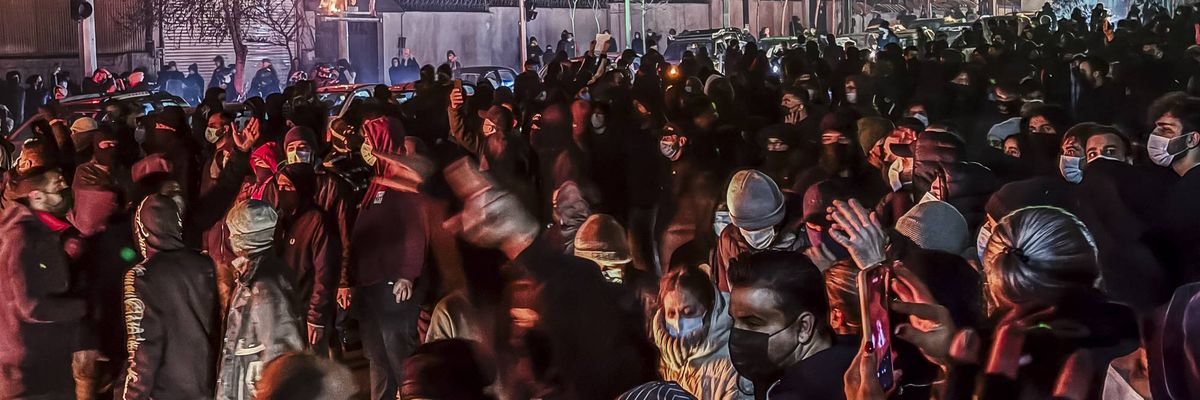
Iranians gather while blocking a street during a protest in Tehran, Iran on January 9, 2026.

(Photo by MAHSA / Middle East Images / AFP via Getty Images)

It’s virtually impossible to predict what lies ahead for Iran and its people. But if President Donald Trump decides to take military action against Iran’s current regime, nothing good will come out of it.

C.J. Polychroniou

Jan 14, 2026 Common Dreams

Iran’s Islamic regime is under incredible pressure as the protests that begun in late December over the collapse of the currency have morphed into a mass popular uprising that has spread across the entire country and shows no sign of slowing despite a brutal crackdown that has resulted so far in the killing of thousands of protesters.

Make no mistake about it. Iran’s current leadership is murdering its own citizens in order to remain in power and thus block the growing support for secularism, freedom, and democracy. It’s as simple as that. This is a regime that has been facing unprecedented hostility by the United States and some of its closest allies since coming to power in 1979 but has been far more interested in exporting the Islamic revolution than looking after the well-being of its own citizens. It is a reactionary regime that has suppressed the fundamental rights of women, banned independent trade unions, and engaged in a systematic crackdown of communists and other leftists, all the while catering to powerful national capitalist interests.

RECOMMENDED…

Trump speaks about Iran attacks

Trump Again Threatens to Bomb Iran as Protest Deaths Near 600

President Trump Meets With Israeli PM Netanyahu At His Palm Beach Estate

Trump Says US ‘Locked and Loaded’ in Latest Threat of War With Iran

Iranians have a long history of rebellion against authoritarianism and repression. Under the Shah, Iran had one of the world’s most brutal and repressive regimes, strongly supported by the United States. Indeed, while the Shah sought to modernize the country and even gave women the right to vote, and the Family Protection Law of 1968 granted women certain rights in divorce and custody, he and his generals ran the country with an iron first. Tens of thousands of Iranians were killed during the Shah’s reign, and Iran’s dreaded secret police, SAVAK, employed torture and execution to stifle political opposition.

Yet, Ayatollah Khomeini’s 1979 revolution, aided by Marxists, intellectuals, various secular groups, and the middle class, did not represent a transition from monarchy to democracy. Instead, it replaced a brutal, pro-Western monarchy with a theocratic regime that rolled back much of the social progress that had occurred up to that point. Repression came back, this time with an Islamic face, though the regime enjoyed at first considerable support among merchants, students, clerics, and the poor. Khomeini’s regime massacred and exiled all communists and embarked on a campaign of purification of policies. Women’s rights were drastically curtailed, and this included the removal of professional women from the public sector as well as the adoption of various means and methods aimed at discouraging women in general from entering the labor force.

The US is an imperialist power with a long history of undermining democracy throughout the world. The Iranian people will not accept US interference into their own political affairs.

Iranian women took to the streets by the thousands just a few weeks after the revolution to oppose Khomeini’s decree mandating the hijab. This decree was followed by a ban on alcohol, the separation of men and women in schools and beaches, and the criminalization of music. Iran was converted in no time from a Westernized society with a brutal political regime to an Islamic state sustained by an equally brutal political regime. Under the new social order, religion and state mixed as thoroughly as they did in Saudi Arabia. The only difference is that the two countries followed different branches of Islam–Iran’s political system is based on Shiism, while Saudi Arabia’s rests on Wahhabism.

More recently, in 2022, the death of the 22-year-old Kurdish-Iranian woman Jina Mahsa Amini while under morality police custody sparked the nationwide “Woman, Life, Freedom” protests, which people from all walks of life joined to call for an end to the four-decade rule of Iran by the religious fanatics. The Iranian authorities responded by detaining thousands of people while killing more than 560 protesters. It was reported that the average age of those arrested was 15.

The key reasons behind the current anti-government protests are economic hardships and political grievances. Iran’s economy has been under severe strains for a long time due to the international sanctions but also because of mismanagement, corruption, and a host of deep structural problems (chronic inflation, widespread poverty, and high youth unemployment, among others) which the regime has failed to address.

Protests broke out on December 28 after the Iranian currency, the rial, crumbled against the US dollar, leading to soaring food prices and to an even higher inflation rate, which had already risen to nearly 50%. It all started with demonstrations by shopkeepers in Tehran’s Grand Bazaar, but they quickly spread to numerous cities across the country, reflecting deep and widespread discontent among the general citizenry with the current regime. This means that the protests, which have been very large in size and joined by people from across Iranian society, are not simply driven by economic worries. They are political protests against a corrupt and oppressive regime.

According to some sources, more than 2,500 people have been killed by the Iranian authorities since the protests begun, but there are unverified reports, suggesting that the number of protesters killed could be at least 12,000 and possibly as high as 20,000. Leading Iranian officials have labeled protesters as “enemies of God,” a charge that is punishable by death under the laws of the Islamic Republic of Iran. They also insist that the protests are foreign driven.

Israel and the United States would like nothing more than to see regime change in Tehran and turn Iran into a US-Israeli vassal state. But the claim that the Iranian people are protesting against a dictatorship by being a pawn in the hands of foreign powers deserves nothing but scorn. Nonetheless, it speaks volumes of how alienated the regime’s rulers must feel from the nation’s citizenry. I suspect that deep down they are cognizant of the fact that their regime lacks political legitimacy in the eyes of the vast majority of the Iranian people.

The people of Iran have not forgotten the involvement of the CIA in the 1953 coup that ousted the democratically elected Prime Minister Muhammad Mossadegh. Their desire to get rid of Iran’s current regime is not an invitation for foreign interference. Indeed, who is to say that perhaps none of the courageous protesters would be paying with their lives for Iran to be free from an oppressive theocracy if the 1953 coup hadn’t happened?

It’s virtually impossible to predict what lies ahead for Iran and its people. But if President Donald Trump decides to take military action against Iran’s current regime, nothing good will come out of it. The US is an imperialist power with a long history of undermining democracy throughout the world. The Iranian people will not accept US interference into their own political affairs. In fact, such action may cause many Iranians to unite, at least temporarily, behind the regime. In sum, only the Iranian people themselves should be able decide their nation’s future.

An Urgent Message From Our Co-Founder


Dear Common Dreams reader,

The U.S. is on a fast track to authoritarianism like nothing I’ve ever seen. Meanwhile, corporate news outlets are utterly capitulating to Trump, twisting their coverage to avoid drawing his ire while lining up to stuff cash in his pockets.

That’s why I believe that Common Dreams is doing the best and most consequential reporting that we’ve ever done.

Our small but mighty team is a progressive reporting powerhouse, covering the news every day that the corporate media never will. Our mission has always been simple: To inform. To inspire. And to ignite change for the common good.

Now here’s the key piece that I want all our readers to understand: None of this would be possible without your financial support.

That’s not just some fundraising cliche. It’s the absolute and literal truth. We don’t accept corporate advertising and never will. We don’t have a paywall because we don’t think people should be blocked from critical news based on their ability to pay. Everything we do is funded by the donations of readers like you.

Will you donate now to help power the nonprofit, independent reporting of Common Dreams?

Thank you for being a vital member of our community. Together, we can keep independent journalism alive when it’s needed most.

– Craig Brown, Co-founder
about:blank

about:blank

Our work is licensed under Creative Commons (CC BY-NC-ND 3.0). Feel free to republish and share widely.

C.J. Polychroniou

C.J. Polychroniou is a political economist/political scientist who has taught and worked in numerous universities and research centers in Europe and the United States. His latest books are The Precipice: Neoliberalism, the Pandemic and the Urgent Need for Social Change (A collection of interviews with Noam Chomsky; Haymarket Books, 2021), and Economics and the Left: Interviews with Progressive Economists (Verso, 2021).

Full Bio >

After Venezuela, Trump targets Iran—the imperialist rampage escalates

January 14, 2026

 Keith Jone, WSWS, 14 Jan 2026

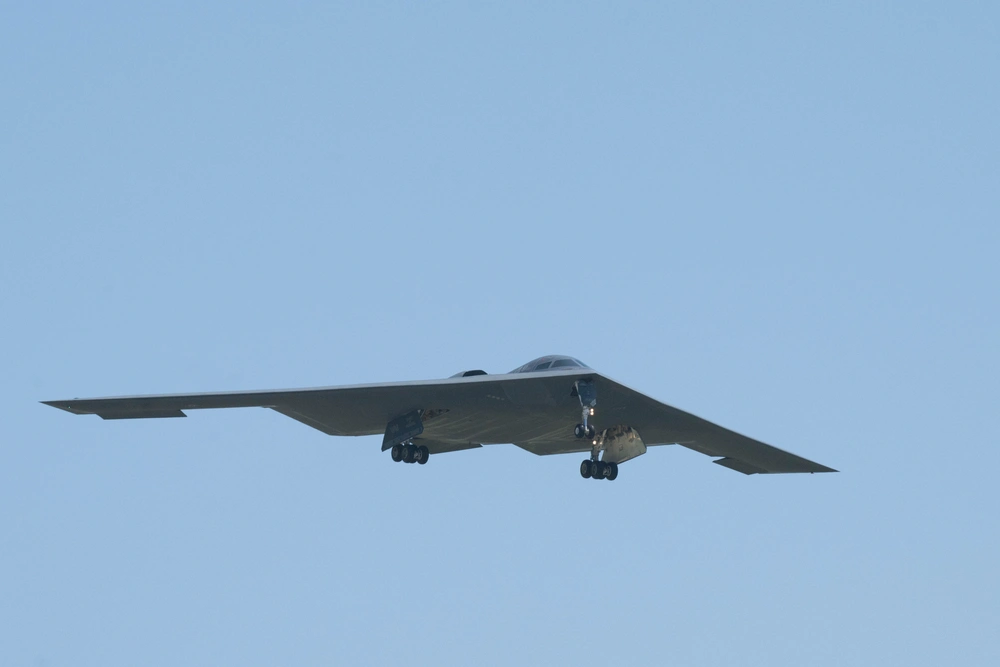
A B-2 stealth bomber conducts a flyover on the South Lawn of the White House, Saturday, July 4, 2020, in Washington. [AP Photo/Alex Brandon]

The Trump administration is preparing an imminent military attack on Iran, in the next stage of a regime-change operation aimed at returning the Middle Eastern country of 93 million people to neocolonial subjugation and placing its vast oil reserves under US imperialist control and domination.

For days, Trump, America’s fascist would-be dictator president, and his henchmen have been threatening to strike Iran with bombs and missiles under the cynical pretext of “defending” anti-government protestors.

On Tuesday morning, in a social media post framed as a message to the Iranian protesters, Trump declared, “TAKE OVER YOUR INSTITUTIONS… Help is on its way.” This was just hours before he was to confer with top Pentagon generals and his national security staff on “options” for attacking Iran.

Open-source intelligence and flight-tracking data reveal that since December there has been a surge of US war materials to the Persian Gulf region, a necessary prerequisite for waging war on Iran.

Trump’s attempt to depict himself as the “liberator” of the Iranian people is a monstrous fraud, based on the Hitlerian concept of the “Big Lie.”

US imperialism never reconciled itself to the mass uprising that overthrew the tyrannical regime of the Shah in 1979. It has mounted a decades-long campaign of threats, military aggression and economic warfare against Iran and its people. In 2018, Trump torpedoed the UN-backed Iran nuclear accord and unilaterally imposed crippling sanctions—subsequently reinforced under the Democrat Biden—with the avowed aim of crashing Iran’s economy and bringing about regime change.

Washington’s desired outcome has always been driving the Iranian people into deprivation and misery. The sanction-enforced cut-off of access to drugs and advanced medical devices has alone caused tens, if not hundreds, of thousands of premature deaths.

As always, the US corporate media are all reading from the same script dictated from the White House. They question nothing, investigate nothing.

Less than two weeks ago, Washington illegally attacked Venezuela, killing more than 80 people, kidnapped its president and seized what are the world’s largest oil resources. In the weeks preceding, the media repeated the administration’s transparent lies that President Nicolás Maduro headed a narco-terrorist regime, just as they breathlessly repeated the claims of George W. Bush and Dick Cheney regarding Saddam Hussein’s “weapons of mass destruction” in the run up to American imperialism’s 2003 invasion of Iraq.  

Now Trump, his Democratic Party enablers and the media would have us believe that Iran is in the grip of a “popular uprising” that is being “brutally” crushed by the Iranian authorities. This is the new manufactured casus belli. It replaces that used to justify last June’s 12-day US-Israeli war on Iran that killed more than 1,000 people and which Trump and Israeli Prime Minister Benjamin Netanyahu invoked when they held a war conclave at Mar-a-Lago on December 29—the threat supposedly posed by Iran’s civilian nuclear program.

No doubt there is widespread anger and dissatisfaction with Iran’s clerical-led bourgeois nationalist regime, which represses any form of working-class political self-expression and has systematically dismantled the social concessions made to the working people in the immediate aftermath of the 1979 revolution that overthrew the tyrannical monarchical-dictatorship of the Shah.

But the protests now unfolding in the streets of Iran are not a movement of and for the working class. This is attested by their social composition, absence of any demands to address the pressing socio-economic problems facing Iran’s workers and rural toilers, and the lack of any organized working-class intervention in the form of mass strikes.

The protests were initiated by the bazaari—that is a section of the bourgeoisie and petty bourgeoisie comprised of money-lenders, merchants and shopkeepers—and have taken on an ever more explicit right-wing, pro-imperialist character akin to the “color revolutions” instigated by American imperialism and it agents in Ukraine, Georgia and elsewhere.

The operatives of the CIA and other imperialist intelligence agencies are manifestly present and playing a major role in inciting violence, alongside such foreign-based imperialist operatives as the Shah’s son, the Crown Prince Reza Pahlavi, who late last week urged protesters to press for the government’s overthrow by “seizing and holding city centers.” On Thursday, Israel’s far-right Heritage Minister Amichai Eliyahu boasted that Israeli agents are operating on the ground in Iran.

As in 1953, when the CIA and Britain’s MI5 organized the coup that overthrew Iran’s elected president, the nationalist Mossadegh, imperialism works through sections of the Iranian bourgeoisie and petty bourgeoisie, including no doubt disaffected sections of the Islamic Republic’s establishment, eager to secure their wealth and privileges by functioning as direct imperialist agents.

These elements are viciously hostile to the plight of the oppressed masses as exemplified in the prominent protest slogan, “My heart beats only for Iran—not for Gaza, not for Lebanon!,” the protesters’ targeting of Afghan refugees and increasing embrace of the Pahlavi dynasty.

Due to the misrule of the Islamic Republic and the political confusion spread by the pseudo-left in and outside Iran, who call for unity with far-right forces in the name of “democracy,” tragically some workers and students have no doubt been caught up in the ongoing protests and state repression. But as the World Socialist Web Site previously explained, “any progressive tendency in Iran would have to immediately repudiate Trump’s ‘support’, denounce the threat of imminent US military action and call for the immediate lifting of the punitive sanctions that are strangling Iran’s economy.”Available from Mehring BooksThe struggle against imperialism and for workers’ power in IranA pamphlet by Keith Jones

From all indications, as the pro-imperialist character of the protests has become clearer, they have become restricted to more privileged sections of Iranian society. Within the working class the memory of the Shah’s regime, its subservience to US imperialism, monopolization of the country’s wealth and the brutal repression upon which it rested, endures.    

Those now expressing their “horror” and “revulsion” at the “brutality” of the Iranian regime have not been moved by the ongoing slaughter of tens of thousands of Palestinian men, women, and children in Gaza—to say nothing of the Nazi-style starvation of the entire enclave’s population—perpetrated by Israel with the full support and military assistance of Washington, first under Biden and now Trump.

As in Venezuela at the beginning of the year, the Trump administration is acting with utter criminality and recklessness.    

However, more than criminality connects the attack on Venezuela and the regime-change operation, and an impending military attack targeting Iran. They are part of a developing world war.

The US is seeking to seize hold of the world’s oil resources in preparation for military confrontation with China. China imports more than 70 percent of its daily oil consumption, with Iran accounting, according to various estimates, for 11 percent or more of all Chinese imports in 2025 and Venezuela’s 3-4 percent. Losing access to Iranian oil would be a significant economic and strategic shock to China’s independent industrial base.

Workers must be warned: US imperialism is on the verge of launching a new war against Iran whose consequences are incalculable. In threatening Iran, Secretary of State Marco Rubio has stated “When [Trump] says he’ll do something, he means it.” Trump has repeatedly vowed to unleash military fury against Iran, just as he has pledged to rule like a dictator.

 “I don’t need international law,” Trump told the New York Times last week. “The only thing that can stop me,” he continued is my own will.

In reality, there is something that can stop him: the international working class. Even as Trump prepares for war on Iran, 15,000 nurses are on strike in New York City—the largest nurses’ strike in the city’s history. In France, hundreds of thousands have struck against austerity. Italy saw a general strike in November. Belgium’s workers walked out against the country’s coalition government. From Germany to the UK to Latin America, the objective conditions for a global movement against capitalism and war are emerging.

As the WSWS wrote in its New Year statement: “The ruling class has made clear what they want 2026 to be: a year of unrestrained military violence. The answer must be to make 2026 a year of class struggle and the development of a mass movement for socialism.” This depends on the building of a new leadership in the working class, rooted in the principles of Marxism and armed with the strategy of permanent revolution to forge its political independence and unify its struggles across state boundaries and continents.

White House: US Airstrikes Against Iran Are ‘On the Table’

January 13, 2026

According to media reports, Trump is ‘leaning towards’ bombing Iran while considering diplomacy, though it’s unclear what sort of deal he would accept

by Dave DeCamp | January 12, 2026 at 7:17 pm ET | Iran

The White House said on Monday that US airstrikes against Iran are “on the table” as President Trump has continued his threats to bomb the Islamic Republic amid protests in the country.

“One thing President Trump is very good at is always keeping all of his options on the table,” White House Press Secretary Karoline Leavitt told reporters. “And airstrikes would be one of the many, many options that are on the table for the commander-in-chief.”

Leavitt added that “diplomacy is always the first option for the president,” though Trump backed an Israeli attack on Iran during the last round of nuclear negotiations back in June. “The president has shown he’s unafraid to use military options if and when he deems necessary, and nobody knows that better than Iran,” Leavitt said.

A US Air Force B-2 Spirit bomber at Whiteman Air Force Base, Missouri, June 2025, after supporting the US attack on Iran

On Sunday night, Trump suggested Iran had reached out to discuss the possibility of holding negotiations and suggested he was open to diplomacy, but also said he was considering “very strong” options. Iran’s Foreign Ministry said that the “communication channel” between Trump’s envoy, Steve Witkoff, and the Iranian Foreign Minister Abbas Araghchi remains open.

Axios and The Wall Street Journal both reported on Monday that Trump was leaning toward bombing Iran but was still exploring the possibility of negotiations. However, it’s unclear what sort of diplomatic deal would satisfy Trump as he continues to shift the pretext for potentially launching another war.

In recent weeks, Trump has threatened to bomb or support an Israeli attack on Iran if it rebuilds its civilian nuclear program or “continues” its conventional missile program, and has repeatedly threatened to attack the country if Iranian authorities kill protesters. The Axios report said that if Trump decides to bomb Iran, the strikes would likely target elements of Iran’s government responsible for internal security.

Iran’s position is that it doesn’t seek war with the US, but it’s warning that it will strike back if Trump follows through on his threat. “If Washington wants to test the military option it has tested before, we are ready for it,” Araghchi told Al Jazeera.

The Telegraph reported over the weekend that amid the threats of US airstrikes on Iran, the US military has conveyed to President Trump that it needs time to position assets in the region to prepare for Iranian counterattacks, which would likely involve missile strikes on US bases.

According to the Human Rights Activists News Agency (HRANA), a US-based and US-funded NGO, at least 646 people have been killed in the ongoing protests in Iran, including 133 military and law enforcement personnel, suggesting there have been significant attacks against Iran’s security forces. Iranian government sources have also said more than 100 security personnel have been killed, but have not released an overall death toll.

𝐓𝐫𝐮𝐦𝐩 𝐒𝐚𝐲𝐬 𝐇𝐞’𝐥𝐥 𝐒𝐮𝐩𝐩𝐨𝐫𝐭 𝐚𝐧 𝐈𝐬𝐫𝐚𝐞𝐥𝐢 𝐀𝐭𝐭𝐚𝐜𝐤 𝐨𝐧 𝐈𝐫𝐚𝐧 𝐈𝐟 𝐓𝐞𝐡𝐫𝐚𝐧 ‘𝐂𝐨𝐧𝐭𝐢𝐧𝐮𝐞𝐬’ 𝐈𝐭𝐬 𝐌𝐢𝐬𝐬𝐢𝐥𝐞 𝐏𝐫𝐨𝐠𝐫𝐚𝐦

December 30, 2025

The president made the comments while meeting with Netanyahu in Florida

by Dave DeCamp, Antiwar. com, December 29, 2025 at 4:36 pm ET | Gaza, Israel

President Trump said on Monday that he would support an Israeli attack on Iran if Tehran “continues” its conventional missile program or if it works to rebuild its civilian nuclear program that was damaged by US airstrikes during the US-Israeli war on the Islamic Republic in June.
The president made the comments at his Mar-a-Lago resort in Florida before a meeting with Israeli Prime Minister Benjamin Netanyahu, when asked if he would back more Israeli attacks on Iran. “If they continue with the missiles, yes. The nuclear, fast,” he said.
“One will be yes, absolutely,” he added, appearing to reference Iran’s missiles. “The other was we’ll do it immediately,” he said, referencing the possibility of Iran rebuilding its nuclear program. The president also threatened to “knock the hell” out of Iran if it “builds up again.”
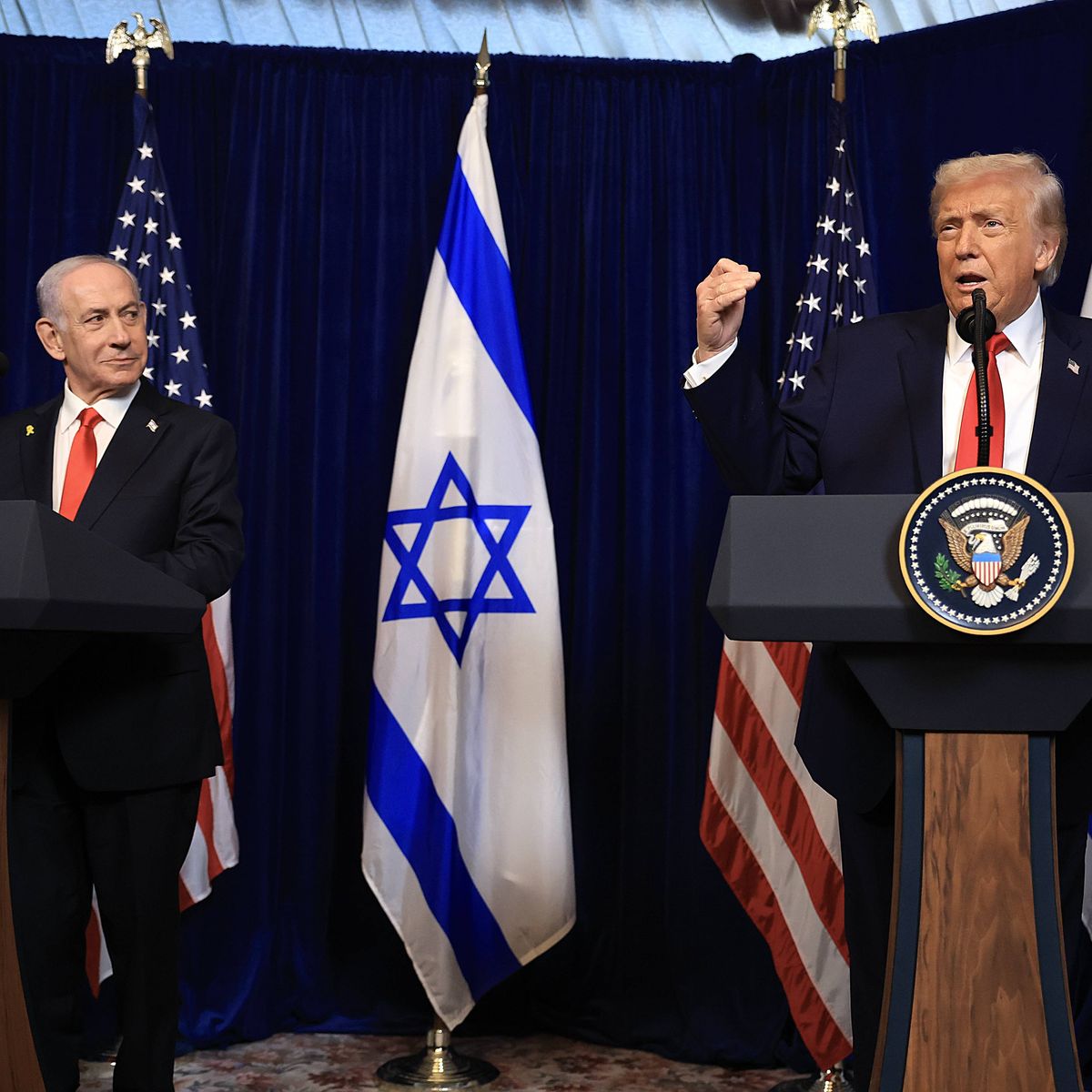
President Donald Trump reacts as he shakes hands with Israeli Prime Minister Benjamin Netanyahu upon arrival for meetings at Trump’s Mar-a-Lago club in Palm Beach, Florida, US, December 29, 2025. REUTERS/Jonathan Ernst
According to media reports, Netanyahu was expected to ask Trump to support a new war against Iran over concerns related to its ballistic missiles. Iranian officials have been clear that they won’t agree to a deal to curb Tehran’s missile program since it’s the only deterrent the country has against the US and Israel.
After the meeting, Trump and Netanyahu held a joint press conference where the US president again expressed support for the idea of another attack on Iran, though he suggested it wasn’t “confirmed” that Tehran was “building up” again.
Any Israeli strikes on Iran would require US support since the US military played a major role in intercepting Iranian missiles fired at Israel, though they made it through US and Israeli air defenses, which is ultimately what led Netanyahu to agree to a ceasefire after 12 days. The US also supported Israel’s attacks by refueling Israeli aircraft and then launched its own airstrikes against Iran’s nuclear facilities.
Amid the threats of another US and Israeli attack, Iran has warned that it’s ready to respond. According to Iran’s PressTV, the General Staff of the Iranian Armed Forces warned in a statement on Monday that “any renewed hostile act against the country will be met with a far harsher, more crushing, and more damaging response than in the past.”

Demand the immediate release of UK pro-Palestine hunger strikers threatened with death

December 28, 2025

Robert Stevens

26 December 2025

The eight hunger strikers: From top left to right; Qesser Zuhrah, Amu Gib, Heba Muraisi, Jon Cink (bottom left to right) Teuta Hoxha, Kamran Ahmed, Lewie Chiaramello, Umer Khalid [Photo: Prisoners for Palestine]

Four young pro-Palestinian political prisoners remain in acute danger of starving to death in jail at the hands of Britain’s Labour government as they continue a near two-month hunger strike.

Kamran Ahmed, Heba Muraisi, Teuta Hoxha and Lewie Chiaramello, remain on hunger strike after three others—Amu Gib (49 days), Qesser Zuhrah (48 days) and Jon Cink (38 days)—paused theirs on December 23. Umer Khalid, the other of the eight original hunger strikers ended his action after 13 days.

On Christmas Day, Heba Muraisi completed 53 days without food, Teuta Hoxha 47 days, Kamran Ahmed 46 and Chiaramello 32. Death usually occurs between 60 to 70 days without food but could come sooner depending on the health of the individual and their circumstances.

On Friday, a group of United Nations experts including Gina Romero, the UN special rapporteur on the rights to freedom of peaceful assembly and of association, and Francesca Albanese, the UN special rapporteur on the occupied Palestinian territories, intervened to denounce Labour Prime Minister Keir Starmer’s treatment of the protesters. Their statement declared, “These reports raise serious questions about compliance with international human rights law and standards, including obligations to protect life and prevent cruel, inhuman or degrading treatment.”

They added, “Preventable deaths in custody are never acceptable. The state bears full responsibility for the lives and wellbeing of those it detains… Urgent action is required now.”

The Labour government is spearheading a global campaign of state repression against opposition to Israel’s genocide in Gaza.

None of the protesters—who are on remand—has been found guilty of anything. They have all suffered ill treatment and unjustified blocks on communication with the outside world, due to the court’s arbitrary and unjust claim that charges against individuals arrested for Palestine Action (PA) protests have a “terrorist connection.”

In breach of the standard pre-trial custody limit of six months, all the hunger strikers have been held on remand for over a year—with Qesser Zuhrah held for 16 months. They are demanding immediate bail, the right to a fair trial, an end to censorship of their communications, the de-proscription of Palestine Action and the closing of all UK sites run by Israel’s biggest weapons manufacturer Elbit.

Justice Minister David Lammy has refused all pleas by the group’s lawyers and family representative to even meet them. The hunger strikers are on remand ahead of trials as part of the Filton 24 case for alleged involvement in an August 2024 Palestine Action protest of Elbit—in Filton, near Bristol. Some are also accused of involvement in a June 2025 protest at the Brize Norton Royal Air Force base in Oxfordshire, where two military supply planes were daubed with red paint.

Over the past 26 months the criminalisation of opposition to the Gaza genocide has escalated in Britain as the major imperialist powers have allowed Israel a free hand to commit some of the worst war crimes of this century.

Over 2,700 people have been arrested in just four months under the Terrorism Act 2000 for peacefully protesting the banning of Palestine Action. Anti-genocide protests have been subjected to strict conditions, and denounced as “hate marches.”

Such measures are replicated in country after country, including campus raids with students being arrested in the United States and elsewhere.

A study issued in October by the International Federation for Human Rights (FIDH)—focussing on the UK, the US, France and Germany—noted that protests in these countries were “powerful indicators of a growing global awareness of ongoing genocide and systematic violations of international law, and of the critical need for citizen action where governments remain complicit or inert.”

The FIDH added, “Yet, as this report demonstrates, such expressions of solidarity are being met with widespread repression, not only under authoritarian regimes, but also in liberal democracies that have long claimed to uphold human rights.” It noted that all four countries had “weaponised” counter-terrorism legislation to crack down on legitimate protest against Israel’s onslaught in Gaza and the occupied West Bank.

The brutal treatment by Britain’s Labour government of the hunger strikers is a step change in this lurch to authoritarianism and dictatorship. The government made clear from the outset that it would not consider any of the legitimate democratic demands of the political prisoners. Instead, Starmer, Lammy and Health Secretary Wes Streeting all refused to intervene to prevent the deaths of the hunger strikers.

More than two weeks ago (December 10), lawyers for several of the hunger strikers put the matter sharply in a letter to Lammy: “should this situation be allowed to continue without resolution, there is the real and increasingly likely potential that young British citizens will die in prison, having never even been convicted of an offence.”

But not even the repeated hospitalisation of the hunger strikers and the December 22 threat of High Court legal action by lawyers challenging Lammy’s refusal to meet their representatives has forced a retreat from Downing Street.

Instead, ministers and MPs deserted Westminster for Parliament’s Christmas recess on December 18, not to return until January 5. This is under conditions in which one of the remaining hunger strikers, Kamran Ahmed is—as reported by his sister—is losing up to half a kilogram a day.

Hunger striker Qesser said they are up against a “government who think it’s appropriate to ‘break for Christmas’ while 8 of its citizens starve in their cells, while Gaza starves… all because of the British governments persistent and nauseating commitment to the most unjust Zionist project.”

Starmer’s barbaric actions mirror those of Margaret Thatcher’s Conservative government, which allowed the starving to death of 10 Irish Republicans—most famously Bobby Sands—during the 1981 hunger strike at Long Kesh prison. The hunger strike was to protest the British government’s revocation of Special Category Status for political prisoners of war. Sands was starved to death even as he was elected to the House of Commons, along with two other Republican prisoners (one hunger striker) to the Dáil Éireann.

There is barely any opposition to Labour’s historic crime within the Labour Party or parliament more generally. Just 62 MPs, less than a tenth of the 650 in Parliament, have signed an Early Day Motion calling on Lammy “to intervene urgently to ensure their [hunger strikers] treatment is humane and their human rights are upheld.” Among these just 31 (7 percent) are numbered among Labour’s 404 MPs.

Workers and youth in Britain and internationally must mobilise in opposition to the most concerted attack on democratic rights in history. The basis for this political fightback was explained in an analysis by Socialist Equality Party (UK) National Chairman Chris Marsden this July. The transformation of a party which arose out of the fight for workers’ democratic rights to organise and strike against their employers into the spearhead of the worst attack on democratic rights in British history

cannot be attributed to a few bad leaders. Rather Starmer, a former human rights lawyer turned right-wing zealot, and his government are the end product of a fundamental shift within the very foundations of world capitalism…

Capitalism is being driven into an existential crisis by its inherent contradictions, between an interconnected system of production and the division of the world into antagonistic nation states based on upholding private ownership of the means of production. To maintain its rule and immense privileges, the bourgeoisie in every imperialist country must wage trade and military war abroad and class war at home to ensure national competitiveness against their rivals.

This agenda is incompatible with the preservation of democratic rights. They are being torn up, spearheaded by the attacks on anti-genocide protests and on migrants.

Starmer’s Labour government is proof that Trump’s drive towards dictatorship in the United States is only the most advanced expression of a forced march to far-right authoritarianism under way internationally.

Workers and young people in Britain and internationally must demand the immediate release of the hunger strikers and all those held without charge for peaceful protest and the withdrawal of the proscription on Palestine Action.

Bitter experience the world over demonstrates that protests limited to placing pressure on imperialist governments complicit in all the crimes of the fascistic Netanyahu regime are not enough. A new anti-war movement must be built on socialist, internationalist foundations and based on the working class—the great revolutionary force in society—acting independently of every faction of the ruling elite.

Trump’s Gaza plan: A foreign force to finish the job

December 26, 2025

Arab and Muslim states are being courted to bankroll – and legitimize – a foreign force tasked with dismantling Palestinian resistance under the guise of peacekeeping.

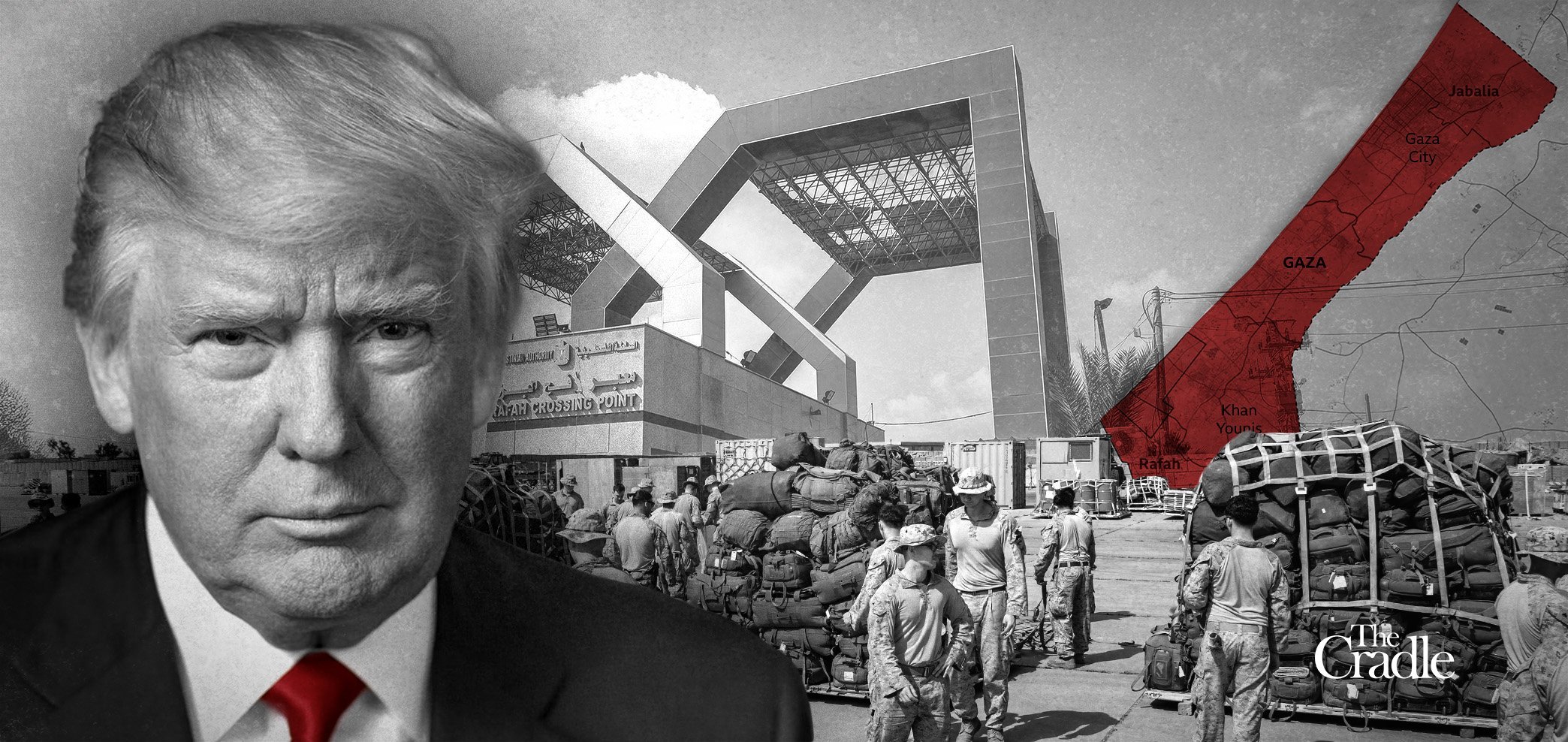
F.M. Shakil, The Cradle, DEC 23, 2025

Photo Credit: The Cradle

As 2026 approaches, Washington is laying the groundwork for yet another intervention – once again wrapped in the familiar language of peacekeeping. Behind closed doors, US officials are pushing for the deployment of an International Stabilization Force (ISF) in Gaza. 

Far from a neutral effort to restore calm, the move signals a calculated escalation in the US-Israeli campaign to crush Palestinian resistance under the pretext of post-war reconstruction.

According to US officials, this second phase of US President Donald Trump’s so-called peace initiative will coincide with the release of hostages and a fragile, US-engineered ceasefire. 

“A tremendous deal of quiet scheming is currently taking place behind the curtain for phase two of the peace deal,” White House spokesperson Karoline Leavitt shared with reporters on 11 December, saying, “Our goal is to establish a lasting peace.”

But if past US-brokered arrangements are anything to go by, this “peace” is unlikely to mean justice. Details emerging from the Israeli press suggest the ISF plan is being finalized by military leaders who will meet in Germany to determine the force’s rules of engagement – and which resistance groups must be neutralized.

Disarming resistance, not the occupation

The first cracks in the plan are already visible. Disagreements between Washington and Tel Aviv have surfaced, not over whether to disarm Hamas, but when and how. Tel Aviv insists that all resistance groups must surrender their weapons before the ISF lands in Gaza. Washington, facing regional blowback and a collapsing image as a neutral broker, is attempting a more phased approach.

Dr Ghulam Ali, a researcher and author based in Taiwan, tells The Cradle

“How can the US hit the nail on the head while keeping the flow of weapons to Israel steady and unwavering? Reducing Hamas’s influence is unlikely to lead to a sustainable peace. Only applying pressure to Israel will be effective.” 

He contends that the west would ultimately be incapable of restraining Israel’s actions, as it has become increasingly apparent that each western peace initiative has resulted in Israel’s further integration into the region.

Dr James M. Dorsey, a journalist and scholar from Singapore, stated on a recent Radio Islam talk show that Trump is concerned that Israeli Prime Minister Netanyahu is obstructing US diplomatic initiatives to resolve the Gaza conflict.

The divergence came to a head following Israel’s assassination of Hamas commander Raed Saad – a killing that drew rare frustration from the White House, with US officials conveying a “stern private message” to Netanyahu that the move breached the ceasefire framework the Trump administration had helped broker. 

Netanyahu’s hardline refusal to ease military pressure on Gaza and Lebanon has delayed a scheduled meeting between the two leaders until January.

The disarmament debate has also exposed a wider fault line within the Axis of Resistance and its western-aligned adversaries. Qatar, Egypt, and Turkiye – all central to ceasefire negotiations – have resisted US pressure to support a military deployment before Israel halts its violations and allows humanitarian relief.

Netanyahu, however, is pushing to deploy the ISF as a tool to dismantle Hamas entirely. Meanwhile, Washington’s envoy to Syria, Tom Barrack, concedes that disarming Hezbollah is “not reasonable.” 

Buying complicity, not consensus

Arab and Muslim-majority states remain wary. Public opinion across the region strongly favors Palestinian resistance, making direct military involvement in Gaza politically toxic. Yet Washington is betting on transactional diplomacy to sway its allies. 

The UAE, for instance, may finance the ISF without contributing troops – a workaround to avoid domestic backlash while maintaining its alignment with Tel Aviv.

Pakistan’s position is equally ambivalent. While its foreign office denies any formal decision to join the ISF, analysts suggest that Pakistan’s military is likely to comply with US directives. As Imtiaz Gul, a Pakistani defense analyst and executive director of the Center for Research and Security Studies (CRSS), tells The Cradle:

“The primary strategy and goals of the ISF regarding the disarmament of Hamas are to neutralize and ultimately eradicate Hamas, along with other resistance factions. The primary objective is not disarmament but rather the neutralization and eradication of resistance in the region with the support of Israel and its allied Muslim nations.” 

Gul further emphasizes that Netanyahu has consistently characterized Hamas as an existential threat to Israel, affirming that its elimination is vital for the security of Tel Aviv. The main objective of the ISF is the complete elimination of Hamas, a goal that will be explicitly supported by the nations collaborating in the US–Israel joint operation in Gaza.

Peacekeeping or power projection?

Pakistan, Indonesia, Azerbaijan, Turkiye, and Egypt have expressed interest in participating in the proposed stabilization force for Gaza. The mandate of the ISF remains ambiguous; therefore, no country has so far officially announced joining the international force.

Last week, Tahir Andrabi, a spokesperson of the Pakistan foreign office, said that Islamabad has not decided yet whether it will take part in the proposed ISF for Gaza. He said that talks about Gaza are part of greater diplomatic efforts and are not an official proposal. Pakistan supports efforts to stabilize Gaza, but any decisions about foreign involvement will be in line with its policy, he added.

Dr Ali tells The Cradle that he believes that the Pakistani military would make every effort to comply with Washington’s directives:

“The military has the backing of religious factions, and if the US truly had a mind to convince Pakistan to send troops, those same religious factions would be the first to step up and sing the praises of such a move. The army chief, perched on shaky ground, is unable to go against the US.” 

Gul, though optimistic about Pakistan’s joining the ISF interprets Islamabad’s decision to align with the ISF as a mutually beneficial arrangement between the US and Pakistan.

”The US will refrain from intervening in Pakistan’s existing hybrid governance structure in return for Pakistan’s endorsement of US initiatives on Gaza and the possible facilitation of the Abraham Accord,” he asserts.

Pakistan’s dilemma

Asim Munir, Pakistan’s powerful field marshal, who has recently consolidated unprecedented authority to serve as the head of all three branches of the defense apparatus, is expected to meet President Trump in the forthcoming weeks to discuss the deployment in Gaza.

Although the Pakistani Foreign Office denied Munir’s visit to Washington and provided only a vague statement regarding Islamabad’s intention to join the ISF, analysts contend that by banning a radical religious organization and granting lifelong legal immunity, General Munir has signaled the possibility of undertaking more significant actions.

“The military leadership appears to be politically stable, as prominent political entities such as the PPP [Pakistan’s People Party] and PML-N [Pakistan Muslim League (N)] endorse the current regime, while they may provide some concessions to former Pakistani prime minister Imran Khan and his senior colleagues in exchange for their silence regarding deployment matters,” Gul reveals. 

He adds that historically, the military establishment has leveraged right-wing pressure groups and political parties in Pakistan, while Pakistan Tehreek-e-Insaaf (PTI) and its incarcerated leader, Khan, now present minimal opposition due to ongoing administrative and legal obstacles. Furthermore, he said, Pakistan is recognized as the second-largest contributor to UN peacekeeping forces worldwide.

Outsourcing the occupation 

The establishment of the ISF has emerged as a crucial component of peace efforts in West Asia following conflicts in Gaza and southern Lebanon.

The UN Security Council endorsed the creation of the ISF through Resolution 2803 last month, aiming to transition security control from the Israeli army to local authorities. However, the clause concerning disarming entrenched groups like Hamas and Hezbollah requires a complex strategy that integrates military action with political motivations.

The ISF, functioning under US Central Command (CENTCOM), is designed as a global peacekeeping body focused on Disarmament, Demobilization, and Reintegration (DDR). Over 70 nations have been invited to participate, with a preference for troops from Arab and Muslim countries to enhance “legitimacy.”

US officials assert that the ISF is authorized to use force if disarmament negotiations fail, which causes many participating Muslim countries to hesitate because of potential backlash from pro-Palestinian constituents.

Dismantling Hamas and preventing the reconstruction of resistance infrastructure present serious challenges – and Hamas remains clear that any disarmament discussion is contingent upon the establishment of a Palestinian state.