Published date: 4 May 2026 12:14 BST | Last update:19 hours 42 mins ago
Israel has expanded its control of the Gaza Strip to nearly 60 percent of the territory despite the ceasefire, as it prepares for a possible resumption of the war, Army Radio reported on Sunday.
Senior military officials, cited by the broadcaster, said they are pressing to restart fighting, arguing that now is the optimal moment to defeat Hamas.
Operational plans for renewed attacks have been completed, the report said, with a final decision pending approval from Israel’s political leadership.
The military has also reduced forces in southern Lebanon while redeploying brigades to Gaza and the occupied West Bank.
The Army Radio also reported there has been an increase in attacks lately.
New MEE newsletter: Jerusalem Dispatch
Sign up to get the latest insights and analysis on Israel-Palestine, alongside Turkey Unpacked and other MEE newsletters
Meanwhile, Israeli forces have expanded the so-called “Yellow Line” to absorb more of Gaza, pushing the population into roughly 40 percent of the enclave while troops remain stationed across the remaining 60 percent in the south, north and east.
Gaza cannot be rebuilt until Palestinians control their own political future
The US brokered a ceasefire in the Gaza Strip in October, intended to end Israel’s two-year genocide by halting attacks and allowing humanitarian aid to flow into the territory.
However, Israel has repeatedly violated the ceasefire, killing at least 832 Palestinians in near-daily shelling, according to the Palestinian health ministry.
Overall, Israeli forces killed more than 72,000 Palestinians since October 2023. Thousands more remain missing and beneath rubble.
Under the agreement, Israel was required to lift restrictions and allow up to 600 aid trucks a day carrying food, fuel, medical supplies, shelter materials and commercial goods. However, Gaza authorities say Israeli limits have kept the average at just over 200 trucks daily.
Additionally, the Israeli military controlled nearly half of Gaza when the ceasefire began, establishing a unilateral demarcation known as the “Yellow Line”. The agreement’s later phases envisaged a gradual Israeli withdrawal from all of Gaza.
However, Israeli forces have since steadly expanded the “Yellow Line” and now control 59 percent of the territory, according to Army Radio.
The years 2024 and 2025 were the deadliest for reporters worldwide since records began. In those two years, Israeli attacks were responsible for 70% of the deaths
Funeral of Al Jazeera journalist Mohammad Weshah at Al Aqsa Martyrs Hospital in the central Gaza Strip on April 9.Majdi Fathi (NurPhoto/ Getty Images)
The death of Amal Khalil, 43, a Lebanese reporter for the media outlet Al Akhbar, brings up to nine the number of journalists killed by the Israeli army in seven weeks of offensive in Lebanon, according to the Committee to Protect Journalists (CPJ). The reporter’s killing occurred even though a ceasefire, which called for a 10-day cessation of hostilities by Israeli troops in Lebanon, was in effect since Thursday.
These figures add to the 264 other journalists killed in the line of duty in the context of the wars in Gaza and Iran since October 7, 2023. According to CPJ, 260 of these deaths were caused by Israel. The majority of the victims were Palestinian journalists in Gaza, although the count also includes 31 journalists killed in Yemen, 15 in Lebanon, and four in Iran in the last two and a half years. According to the Lebanese Press Editors Syndicate, the number of reporters killed in Lebanon since October 2023 stands at 27.
While Lebanon remains in shock over Khalil’s death, Beirut has announced it will seek international justice, considering the Israeli attack that killed her a war crime. The Lebanese government accuses Israel of deliberately targeting her and her colleague Zeinab Faraj. The two women had taken shelter in a house in the southern village of al-Tiri after an initial airstrike killed two people traveling in a vehicle. Shortly afterward, the building where they were located was also attacked. The Lebanese Red Cross rescued Faraj, who was taken to a hospital, but as teams searched for Khalil, an Israeli drone dropped another grenade on the building.
Funeral of journalist Amal Khalil, in Basariye (Lebanon), this Thursday.Aziz Taher (REUTERS)
“This is not the first time that Israel has prevented emergency services from reaching journalists injured in their strikes,” said CPJ CEO Jodie Ginsberg. “Journalists are civilians and protected under international law. Israel’s blatant disregard for such norms — and the international community’s failure to hold them accountable — is abhorrent.”
In many cases, Israeli troops justify the attacks by claiming the journalists have connections to Hamas or Hezbollah. In Khalil’s case, the Israeli army, without denying the Lebanese government’s version of events, maintains that the two journalists had just left a building used by Hezbollah for military purposes. According to a spokesperson, both vehicles had crossed the defensive line and approached Israeli troops, thus constituting “an imminent threat.”
“Targeted assassinations”
2024 and 2025 were the deadliest years for journalists worldwide since the Committee to Protect Journalists (CPJ) began documenting these cases in 1992. In both years, Israel was responsible for 70% of the recorded deaths, according to the organization. In addition to the 264 journalists who were killed, 174 were wounded and 106 imprisoned since the start of the war in Gaza.
The CPJ counts both journalists killed while carrying out their work and those whose deaths are linked to their professional activity, whether accidentally in conflict zones or as a result of deliberate attacks. According to the organization, Israeli troops have carried out more targeted killings of journalists than the military of any other government since records began. To date, the CPJ has documented 64 cases of journalists deliberately killed by Israeli forces between 2023 and 2025 in Gaza, Lebanon, Iran, and Yemen.
Among the dead was Anas Al Sharif, an Al Jazeera reporter and one of the most recognizable faces of the Gaza war. He was killed in August 2025 in an Israeli attack on the journalists’ tent where he lived with five other reporters, outside Al Shifa Hospital in Gaza City. Anticipating he might be targeted, Al Sharif had left a farewell message.
That same month, five other journalists were killed in a bombing of Nasser Hospital in Khan Younis, in the southern Gaza Strip. After an initial explosion at the building, where civilians and reporters had gathered to assess the damage, a second blast occurred and was broadcast live by several television stations.
The head of Al Jazeera’s Gaza bureau has also been targeted: he was wounded and lost several family members, including a son who was also a journalist. This April, Al Jazeera journalist Muhammad Washah was killed in an Israeli airstrike on the vehicle he and another Palestinian were driving on the coastal road in Gaza City, according to health officials cited by Reuters.
Funeral of Al Jazeera journalist Mohammad Weshah, in the center of the Gaza Strip, on April 9.Majdi Fathi (NurPhoto/ Getty Images)
In the last incident in Lebanon recorded by the CPJ before Khalil’s death, three other journalists were killed in the south of the country. An Israeli attack on a vehicle on the Jezzine road killed journalist Ali Shoaib of the Hezbollah-affiliated Al Manar TV; journalist Fatima Ftouni of Al Mayadeen TV; and her brother, freelance photojournalist Mohamad Ftouni.
War crimes
“The deliberate attacks and killings of journalists by Israeli forces constitute war crimes under international humanitarian law,” Amnesty International notes on its website.
Since October 2023, Reporters Without Borders has filed five complaints with the International Criminal Court against Israel for “war crimes against Palestinian journalists in Gaza.”
These actions are in addition to previous ones, such as the lawsuit filed by Al Jazeera in 2022 after the death of journalist Shireen Abu Akleh, who was killed in May of that year while covering a raid by Israeli troops on a refugee camp in Jenin, in the West Bank.
Sign up for our weekly newsletter to get more English-language news coverage from EL PAÍS USA Edition
Published date: 15 April 2026 09:04 BST | Last update:2 hours 10 mins ago
Israeli prison guards have violently assaulted Palestinian political prisoner Marwan Barghouti three times over the past month, according to his lawyer.
A campaign calling for Barghouti’s release on Tuesday described the incidents as “brutal attacks”. It said they took place while he was in solitary confinement in Megiddo and Ramon prisons, in northern and southern Israel respectively.
Barghouti was tortured “using various tools of repression and beatings, causing multiple injuries and bleeding across his body without medical treatment,” the campaign said.
It added that the prominent political figure has faced a “systematic series” of attacks that have continued since the start of Israel’s genocide on Gaza.
Israeli human rights lawyer Ben Marmarelli, who said he visited Barghouti on Sunday, detailed the alleged abuse in a post on X, describing the situation as “deeply alarming”.
New MEE newsletter: Jerusalem Dispatch
Sign up to get the latest insights and analysis on Israel-Palestine, alongside Turkey Unpacked and other MEE newsletters
He said that on 24 March, prison guards entered Barghouti’s cell with a dog, forced him to the ground, and set the dog on him repeatedly.
Barghouti was also assaulted during his transfer from Megiddo to Ganot prison the following day.
‘These are not isolated incidents. They form a clear pattern of escalating abuse’
– Ben Marmarelli, Human rights lawyer
On 8 April, he was severely beaten in Ganot and left bleeding for more than two hours. A subsequent request for medical treatment was denied.
“These are not isolated incidents. They form a clear pattern of escalating abuse: violence, medical neglect, and treatment that places him at immediate risk,” Marmarelli said.
He added that his most recent legal visit took place “under absurd conditions”, with the two forced to shout through glass to hear each other because prison phones were not working.
“This is what a legal visit looks like today: basic conditions denied, communication obstructed, and even the most elementary human and professional standards ignored.”
According to Marmarelli, despite the conditions, Barghouti remained mentally sharp and engaged with events outside prison.
“He had a great deal to say. Above all, he wanted to know more about his family and the Palestinian people, What is happening in Palestinian and Israeli scene I tried to tell him everything I know.”
Prominent figure
Barghouti, a senior figure in Fatah, has been imprisoned since 2004.
Israel targeted him for his leading role in the 2000–2005 Second Intifada.
He is serving five life sentences plus 40 years after being convicted over attacks that killed five Israelis. Barghouti refused to mount a defence during his trial, saying he did not recognise the court’s legitimacy.
Opinion polls have consistently suggested that Barghouti would win the Palestinian presidency if elections were held and he were permitted to run.
He is widely viewed as one of the few remaining unifying Palestinian leaders, despite Fatah’s deep association with the unpopular Palestinian Authority.
The 66-year-old has long been held in solitary confinement and has faced intensified assaults alongside other prominent Palestinian detainees since October 2023.
The report said that the base would take up more than 350 acres of land in southern Gaza and is envisioned as a future base for the international force that may deploy to the Strip under President Trump’s plan for the Palestinian territory, though so far, only Indonesia has announced plans to commit troops to the force.
A photograph shows tents at a makeshift camp sheltering displaced Palestinians in the Zeitoun neighborhood of Gaza City, on February 16, 2026. (Photo by Majdi Fathi/NurPhoto)
The Guardian said that the plans it reviewed “call for the phased construction of a military outpost that will eventually have a footprint of 1,400 metres by 1,100 metres, ringed by 26 trailer-mounted armored watch towers, a small arms range, bunkers, and a warehouse for military equipment for operations. The entire base will be encircled with barbed wire.”
The contracting document includes protocol for what happens if construction teams come across human remains, since the bodies of at least 8,000 Palestinians are missing under the rubble. “If suspected human remains or cultural artifacts are discovered, all work in the immediate area must cease immediately, the area must be secured, and the Contracting Officer must be notified immediately for direction,” the document says.
It’s unclear how much the base would cost to build, but earlier reports suggested the US was planning to construct a major military facility on the Gaza border at a cost of between $500 million and $600 million.
Trump convened his first “Board of Peace” meeting in Washington on Thursday, which came as Israel continues to violate the ceasefire deal, killing more than 600 Palestinians in the Strip since it was signed. At the event, Trump pledged that the US would contribute $10 billion to the board.
Under Trump’s plan for Gaza, the international force is supposed to replace IDF soldiers, who continue to occupy more than 50% of the Strip. But there’s no timeline on when that would happen, and Israel is threatening to restart its full-scale genocidal war if Hamas doesn’t disarm.
“We have a master plan … There is no Plan B,” remarked Jared Kushner last month, during a Board of Peace (BoP) presentation about Gaza reconstruction at the World Economic Forum (WEF) at Davos. What has become apparent is that no coherent Plan A exists either.
Although Kushner’s father-in-law, US President Donald Trump, was granted the legitimacy to build what he calls the BoP on the back of pledges to implement his “20-point peace plan” and Gaza ceasefire, the BoP’s charter is notably absent of any reference to Gaza.
Furthermore, United Nations Security Council (UNSC) resolution 2803, which legally authorized the BoP and was explicitly about the Gaza ceasefire, was deliberately vague on how any concepts proposed in the resolution would be implemented. It deliberately avoided outlining any mechanisms or obligations for reconstruction. Instead, two parallel schemes emerged.
The first was the Gaza Reconstitution, Economic Acceleration and Transformation Trust (GREAT Trust) – a 38-page document proposing to pay Palestinians $5,000 each to leave the territory. Crafted by Israeli figures previously involved in the discredited Gaza Humanitarian Foundation (GHF), the plan, which envisions “AI-powered, smart cities,” was less a roadmap for peace than a blueprint for ethnic cleansing.
That same foundation, backed by US private military contractors (PMCs), had already drawn international condemnation for herding civilians into “aid zones” only to open fire. More than 2,000 Palestinians were killed in those operations.
PowerPoint colonialism
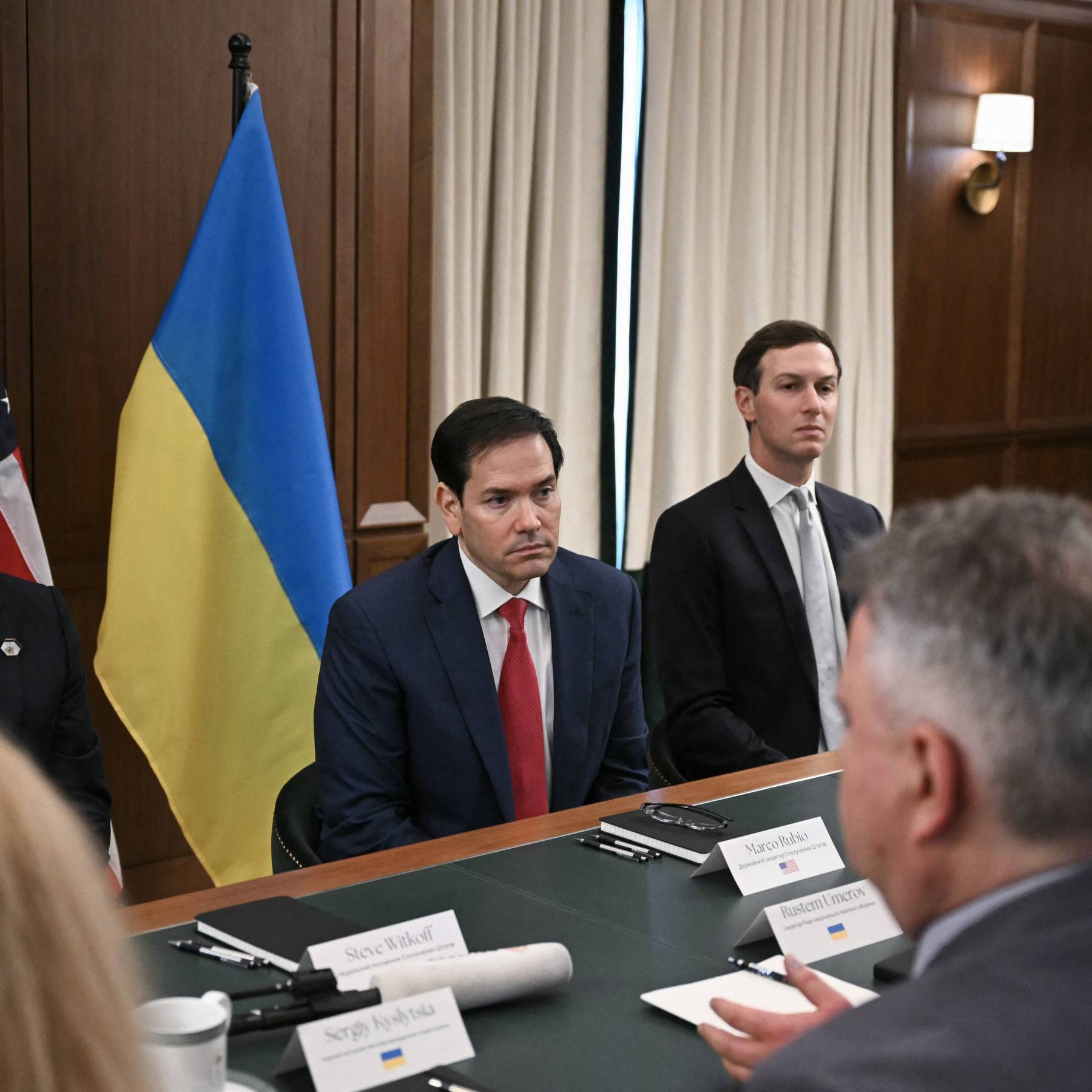
Later, in December, the Wall Street Journal (WSJ) exposed that another proposal was put into circulation among US-allied nations in the Arab and Muslim world. The 32-page PowerPoint presentation, titled “Project Sunrise,” was set forth by Kushner and US envoy Steve Witkoff.
Like the preceding proposal, the new vision outlined a similar AI-smart city model, but added even more elements, such as high-speed rail infrastructure. According to the PowerPoint slides, the total cost of this 10-year reconstruction endeavor would amount to $112.1 billion, for which the US would commit to footing 20 percent of the bill.
Back then, Steven Cook, a senior fellow for the Middle East Program at the Council on Foreign Relations think tank, told WSJ that “they can make all the slides they want,” adding that “no one in Israel thinks they will move beyond the current situation and everyone is okay with that.” US Secretary of State Marco Rubio had even expressed his concerns over how realistic the plan will be, especially when it comes to potential foreign investment.
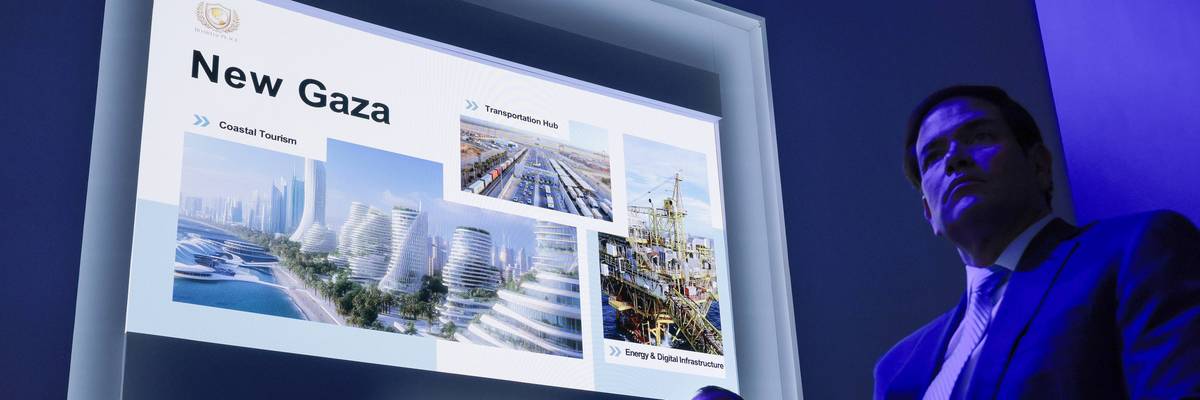
Then came Kushner’s presentation at Davos, which instantly made headlines and was presented as a brand new proposal called the “master plan.” According to Kushner, the project for a “new Gaza” would now only cost $25 billion.
However, upon further investigation, it is clear that what Kushner was presenting was simply “Project Sunrise,” which was evident as the PowerPoint he used was filled with the same exact slides from December. In other words, nothing particularly new was being placed on the table that had not already been released over a month prior.
“New Gaza” is a lab rat colony
Speaking to The Cradle, Akram, a Gaza resident from Al-Bureij, states that the situation on the ground does not reflect any of the positivity that appears in the media. “The Israelis won’t let us even have mobile homes or proper structures to live in, they still bomb us every day, and then we see AI images of Gaza becoming richer than Israeli cities?” he says, with bitter sarcasm. He added:
“Listen, do you really think they carried out genocide for two years and destroyed all our homes, only to build us a paradise, and that this will all happen if the resistance gives up its weapons? No. They are trying to tease us, like they always did, by saying, ‘if you give up your weapons, you will become Singapore.’ Nobody believes it.”
Shortly after Akram spoke to The Cradle, Israeli Prime Minister Benjamin Netanyahu delivered a speech to a special session of the Knesset, in which he made it clear that “the next stage is not reconstruction.” Instead, he asserted that disarmament would characterize Phase 2 of the ceasefire.
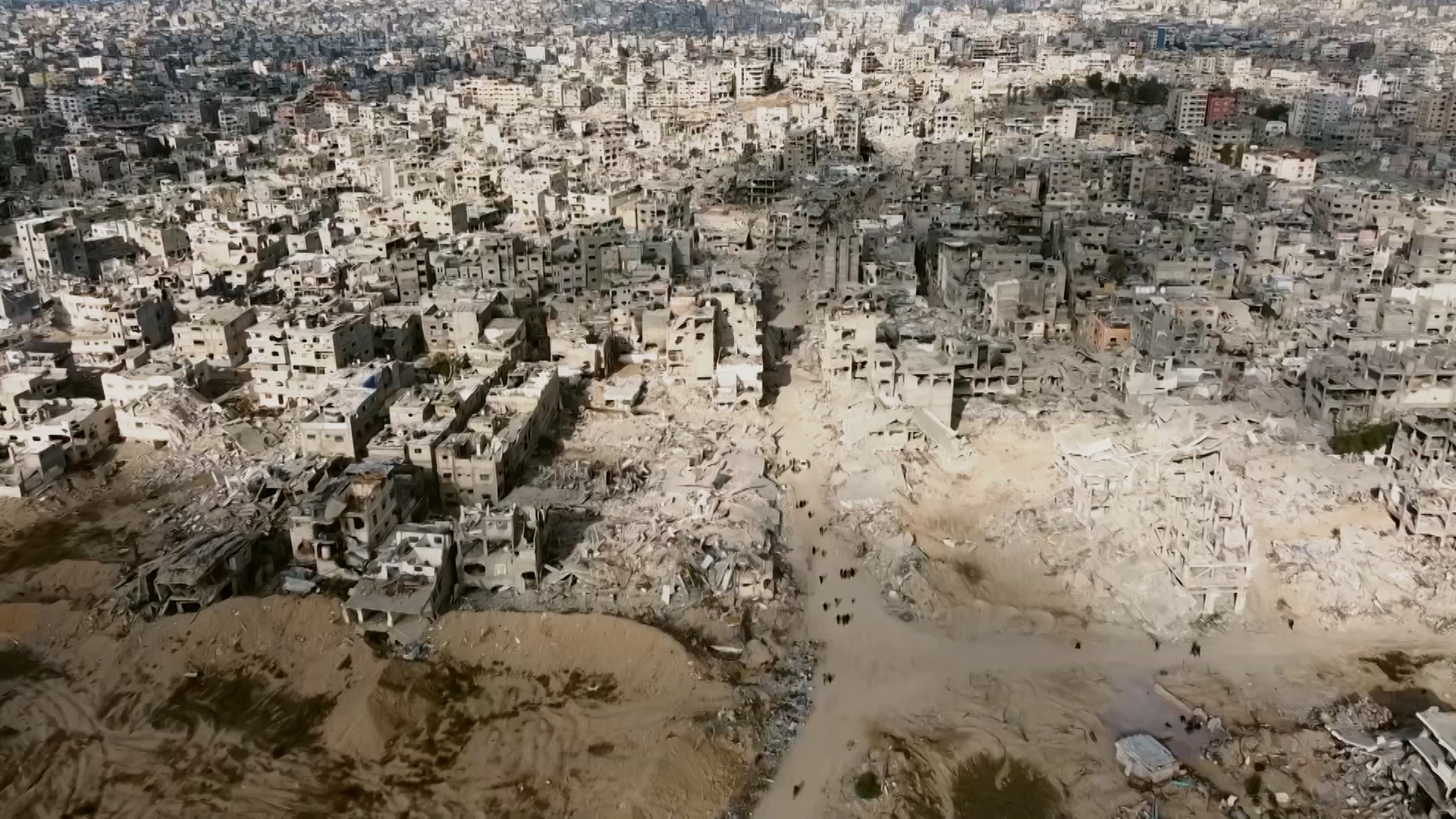
These figures are also dated, having been produced in July 2024, so they do not account for over a year of destruction. Israel has not stopped its round-the-clock demolition of Palestinian infrastructure since the so-called ceasefire took effect on 8 October 2025.
A humanitarian NGO official working in Gaza tells The Cradle that even the ceasefire’s Civil Military Coordination Center (CMCC), ostensibly set up to enforce humanitarian standards, now functions as a system of “intimidation” that “violates basic morality.”
On 21 January, Drop Site Newsreported on leaked documents that revealed plans to create an “Israeli Panopticon” city, to be constructed in territory remaining under its control in southern Gaza’s Rafah. The Guardian then reported that the UAE is seeking to bankroll the project. The leaked blueprints described a “case study” city where residents would be monitored around the clock, like lab rats, and forced to submit biometrics to enter.
Rafah as the prototype prison
The UAE has been accused of backing the five ISIS-linked militant groups Israel created to fight Hamas, which it previously intended to rule over a similar style concentration camp city in Rafah. In fact, Israeli Defense Minister Israel Katz had even ordered the construction of such a “community” during the 60-day ceasefire in early 2025. The Israelis have long intended to displace 600,000 Palestinians to such a gated facility.
The Emirati connection in this scheme goes beyond its recent offer to fund such a concentration camp city; it dates all the way back to January 2024, when it officially opened six water desalination plants along the Egyptian side of the Gaza border area, coincidentally capable of supplying 600,000 people with water.
Prior to the ceasefire and the collapse of the privatized aid scheme, the plot was to use the GHF PMCs in order to lure civilians into such a city area. Once they get there, the Palestinians who enter would be under the rule of Israel’s ISIS-linked proxy militias.
According to forensic architecture analysis, Israel is once again preparing land in order to implement such a project. Meanwhile, UG Solutions – the firm that hired the GHF’s PMCs – is again advertising job opportunities in the besieged territory.
Dispossession in disguise
Despite the dizzying array of slogans – BoP, GREAT, Sunrise, Panopticon – the outcome remains the same with no reconstruction, no sovereignty, and no end to occupation. The various schemes are less about peace and more about forcing Palestinians into containment zones policed by Tel Aviv and its regional clients.
From “Gaza Riviera” fantasies to proposals limiting reconstruction to areas under Israeli military control, what’s on offer amounts to PowerPoint projectionism. A revolving door of schemes and slogans has produced nothing substantive. Instead, the Israeli military continues its daily war of erasure on Gaza’s land, people, and future.
Even Kushner’s $25-billion fantasy is just that: a fantasy. In the three months since the UN resolution, all Washington has offered is AI-generated cityscapes and recycled decks. The only real plan on the table remains the one being implemented daily – the destruction of Gaza.
Published date: 8 February 2026 13:43 GMT | Last update:1 day 23 mins ago
Hamas political leader Khaled Meshaal said the Palestinian movement would reject any attempt at foreign domination of Gaza.
Speaking at a conference in Qatar’s capital, Doha, Meshaal added that Hamas would also not relinquish its weapons despite calls for disarmament from Israel and the US.
“Criminalising the resistance, its weapons and those who have led it is something we should not accept,” he said.
“As long as there is an occupation, there is resistance. Resistance is the right of people under occupation. It is something nations are proud of.”
Following the implementation of a nominal ceasefire on 10 October, US President Donald Trump’s plan to end the conflict in Gaza entered its second phase in mid-January.
New MEE newsletter: Jerusalem Dispatch
Sign up to get the latest insights and analysis on Israel-Palestine, alongside Turkey Unpacked and other MEE newsletters
This phase is set to include the disarmament of Hamas and the gradual withdrawal of the Israeli army from the enclave.
According to a report in Haaretz earlier this week, Israeli officials are exploring ways for Israel to benefit economically from Gaza’s reconstruction.
Middle Eastern leaders including Netanyahu and Sisi line up to join Trump ‘Board of Peace’
Senior finance ministry officials discussed potential opportunities with senior Israeli army officers, the Israeli newspaper reported on Wednesday, including the construction of a highway in Israel connecting to Gaza.
It was suggested that countries seeking access to Gaza via Israel would pay for Israeli highway construction.
This would include a highway along the southern Route 232, which would provide better access for Palestinians travelling between Gaza and the occupied West Bank.
Israeli officials also discussed economic opportunities over the supply of electricity to Gaza.
Hamas, which has governed the territory since 2007, has ruled out disarmament, but has indicated it is open to handing over its weapons to a future Palestinian-led authority.
Governance of the territory would be temporarily transferred to a committee of 15 Palestinian technocrats, under the authority of the “Peace Council” chaired by Trump.
Meshaal said the “Peace Council” should adopt a “balanced approach” that would allow for the reconstruction of Gaza and the influx of humanitarian aid.
“We adhere to our national principles and reject the logic of guardianship, any foreign intervention, or the return of a mandate in any form,” Meshaal said.
“Palestinians must be governed by Palestinians. Gaza belongs to the people of Gaza and to Palestine. We will not accept foreign domination.”
Speaking at Al Jazeera Forum, Khaled Meshaal describes discussion around Hamas handing over weapons as a continuation of a long effort to neutralise Palestinian armed resistance.
Head of Hamas abroad says ‘resistance is a right’ for occupied people
Hamas’s political leader abroad, Khaled Meshaal, has rejected calls to disarm Palestinian factions in Gaza, arguing that stripping weapons from an occupied people would turn them into “an easy victim to be eliminated”.
Speaking on the second day of the Al Jazeera Forum in Doha on Sunday, Meshaal described the discussion around Hamas handing over its weapons as a continuation of a century-long effort to neutralise Palestinian armed resistance.
“In the context that our people are still under occupation, talking about disarmament is an attempt to make our people an easy victim to be eliminated and easily exterminated by Israel, which is armed with all international weaponry,” he said.
“If we want to talk about it … it is necessary to provide an environment that allows reconstruction and relief and ensures that the war does not reignite between Gaza and the Zionist entity. This is a logical approach, and Hamas — through mediators Qatar, Turkiye and Egypt, and through indirect dialogues with the Americans via the mediators — has reached, or there has been, an understanding of Hamas’s vision on that. Yes, this is something that requires great effort, not an approach of disarmament.”
United States President Donald Trump last month sought to achieve a “comprehensive” demilitarisation of Hamas, threatening the Palestinian group with repercussions if it fails to do so. Hamas has refused to give up arms as long as Israel continues to occupy Gaza.
Now Playing02:32 Israel is killing far more civilians than fighters in Gaza
Next05:25 Fighting between Sudan’s army, RSF forced more than 13 million children out of school
In the second phase of a US-mediated “ceasefire” deal between Israel and Hamas, agreed in October last year, Washington says it will tackle the disarmament of Hamas and the deployment of an international peacekeeping force.
But Israel continues to carry out near-daily deadly attacks across Gaza in violation of the “ceasefire” and has so far refused to withdraw from the so-called “Yellow Line” in eastern Gaza, an informal boundary separating more than half of the territory that remains under Israeli military control from the rest of the Strip. Israel has killed at least 576 Palestinians and wounded 1,543 others since the latest “ceasefire” started.
“The problem is not that Hamas and the resistance forces in Gaza provide guarantees; the problem is Israel, which wants to take the Palestinian weapons … and put them in the hands of militias to create chaos,” he said.
Meshaal pointed to Hamas’s proposals for an extended calm as an alternative to dismantling its military wing.
“Hamas proposed a truce of five to seven to 10 years. This is a guarantee that these weapons are not used,” he said, adding that the mediating nations, who have a “deep relationship with Hamas, can form a guarantee”.
Meshaal pointed out that if people were to go back to the origin of the conflict, the issue is one of “occupation and a people resisting occupation, with the right to self-determination and independence”.
“Resistance is a right for people under occupation; it is part of international law and the heavenly religions. Resistance is part of the memory of nations,” he added.
‘Palestinian cause must have a solution’
Meshaal said the October 7, 2023 attack on Israel was a “turning point”, arguing that the Gaza conflict forced the world to reopen a “second question” of the Palestinian cause itself.
“The [Operation Al-Aqsa] Flood and this genocidal war have shaken the world. There is now a question – the Palestinian cause must have a solution,” he said, referring to the October 2023 attack, as he welcomed a growing number of nations recognising a Palestinian state, calling the moves “insufficient”.
“The fact that 159 countries have approved or recognised the Palestinian state is good, but it is not enough. How do we turn the Palestinian state into a reality on the ground? That is the big question we are concerned with as Palestinians, as Arabs, as Muslims, and along with our friends around the world,” he said.
Gaza: A Forever War
Meshaal called on the Arab and Muslim states to move from a “defensive policy” to “offence” in the diplomatic arena.
“We want to entrench that it is a pariah entity and a burden on security, stability, and international interests; to pursue it and turn it into an entity that loses its international legitimacy completely, just like the apartheid regime in South Africa,” he added.
“We are the owners of a just cause, and the accused is the one who committed the war crime of genocide,” he said.
Secretary of State Marco Rubio listens to a presentation by Trump administration officials about post-war Gaza following a signing ceremony for the “Board of Peace” at the World Economic Forum on January 22, 2026 in Davos, Switzerland.
(Photo by Chip Somodevilla/Getty Images)
The board’s vision for Gaza is a greed-soaked plan dependent on mass murder and land theft, driven by men so wealthy and entitled that they believe they can escape accountability while reaping billions in profit in the process.
While the sheer pomposity, Trumpian megalomania, and painfully paradoxical context surrounding the so-called “Board of Peace” might tempt some to dismiss it as mere spectacle or farce, its criminal, inhumane, and hegemonic nature makes it far too dangerous to ignore.
Last month, President Donald Trump and his new, thuggish boys’ club of heads of state publicly celebrated the launch of the Board of Peace (BoP) at the World Economic Forum in Davos. Its hypocrisy was inadvertently underscored by Elon Musk—Trump’s on-again, off-again ally—when he quipped onstage that one might call it the Board of “p-i-e-c-e,” a venture devoted to claiming “a little piece of Greenland, a little piece of Venezuela,” to which his interviewer, Larry Fink, billionaire CEO of BlackRock, responded with cheer, “We got one.” Only a room filled with the world’s tech and business elite could find this funny.
In the weeks since, people of conscience around the world have been left to reckon with what may come of this brazen proclamation of a Trumpified world order. In particular, the board’s presentation of plans for “New Gaza” offered stark clarity about the greed-driven intentions Trump, his inner circle, and their Israeli billionaire partners seek to pursue, while raising a fundamental question as to how such a project of colonization and land theft could claim any legal basis at all, let alone a moral one.
As it stands, the BoP charter elevates Trump to a position akin to a global dictator for life, unchecked—on paper— by any external mechanisms of accountability or transparency. Acting as permanent chairman, chief executive, and controlling shareholder of the organization, Trump has declared that he holds absolute veto power, while retaining complete discretion over the potential multibillion-dollar slush fund generated through permanent member fees. In keeping with his long record of felonies and fraud, all budgets, financial accounts, or disbursements the BoP deems “necessary” to carry out its sweeping mission are subject only to the so-called “institutions of controls or oversight mechanisms” designed by the very same Executive Board.
Thus far, Greenland remains the only red line EU states have managed to articulate.
A few invited world leaders, mostly from the European Union, have done little more than politely decline their invitations. While they have not yet bent the knee to Trump in this mobster’s reality-show version of US imperial power in action, this has not stopped those same governments from endorsing the other “peaceful actions” Trump is poised to pursue under the guise of BoP authority. These include the kidnapping of Venezuelan President Nicolás Maduro and the seizure of Venezuelan oil; the execution of dozens of extrajudicial boat strikes that have killed more than 100 people in the Caribbean; threats of war and the promotion of dangerous regime-change fantasies in Iran and Cuba; and support for his complete takeover of occupied Palestine through United Nations Security Council Resolution 2803. That resolution effectively granted Trump authority in Gaza by endorsing his 20-point Gaza peace plan and welcoming the BoP as a transitional governing body. Thus far, Greenland remains the only red line EU states have managed to articulate.
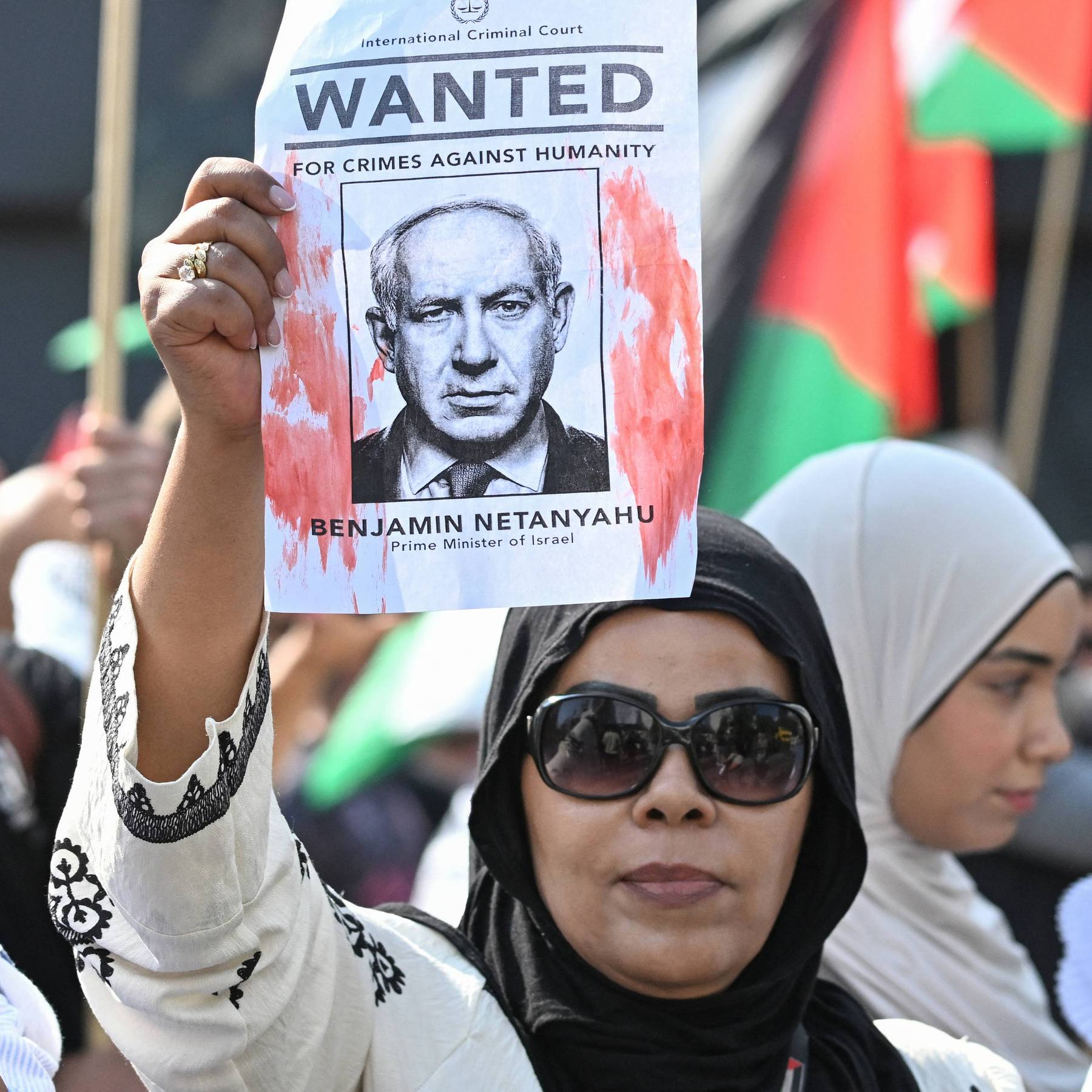
Despite some rejections, other governments have gone ahead and accepted their invitations for a free three-year membership. The participation of Israel’s wanted genocidaire-in-chief, Prime Minister Benjamin Netanyahu, should serve as the clearest red flag that this organization has no interest in even pretending to care about the lives of the Palestinian people or any standard of international law. Netanyahu could not even fly to Davos to attend the BoP’s self-appointed pomp and circumstance for fear of being arrested as a wanted war criminal.
Other beacons of democracy and world peace, eager to lend legitimacy to the BoP, include Trump’s own “favorite dictator,” Egyptian President Abdel Fattah al-Sisi; Argentina’s scandal-prone, right-wing President Javier Milei; “Europe’s last dictator,” Belarusian President Alexander Lukashenko; Netanyahu’s idea of a “moral conscience,” Albanian President Edi Rama; and Hungary’s model in authoritarianism, Viktor Orbán. Leaders from Arab states—including Saudi Arabia, the UAE, Jordan, and Qatar—have also joined, and will presumably stand alongside Trump and the Executive Board to help oversee, and quietly endorse, “New Gaza.”
Their participation set the stage for Davos, where none other than Jared Kushner delivered the first public presentation of an investment plan contingent upon the ethnic cleansing and erasure of a national Palestinian identity. Kushner, Trump’s son-in-law and a member of the BoP “Executive Board,” has long served as the self-styled “master planner” of transforming Gaza into a prime real estate opportunity. He has a track record of articulating his absolute disregard for Palestinian life, describing the besieged Gaza Strip in February 2024 as “very valuable… waterfront property.”
Kushner began his chilling slideshow by urging skeptical investors to “just calm down for 30 days,” declaring, “The war is over. Let’s work together.” Eager to move on to their real business of “peace,” Kushner appeared wholly willing to ignore the ongoing forced starvation, imprisonment, systemic torture, murder, and displacement of Palestinians across the occupied territories. Since the supposed “ceasefire” in October 2025, the Israeli military has killed at least 477 Palestinians in Gaza.
Trump has also failed to address Israel’s continued ban on dozens of international humanitarian and non-governmental organizations, a policy that has deliberately denied lifesaving aid and medical care to the region while newborn babies continue to die of hypothermia. Instead, Kushner outright lied about the current scale of Israel’s designed humanitarian catastrophe, claiming that “100% of the food needs are met” and that “the cost of needs has gone down,” before unironically describing the administration’s role as “the largest humanitarian effort into a war zone that anyone’s been able to tell us about.” Meanwhile, as the conference unfolded, Israeli forces bulldozed the UN Refugee headquarters in East Jerusalem, and the Israeli Knesset voted by an overwhelming majority to annex the entirety of the West Bank.
Amid the distortions and denials of reality, Kushner did allow the logic of the project to surface when he identified the architect behind the purported $25 billion master plan for Gaza: Yakir Gabay, whom he described as “one of the most successful real estate developers and brilliant people I know.” Gabay is an Israeli billionaire and international real estate tycoon with close familial ties to the Israeli government. Reports also indicate that he has participated in efforts to pressure Columbia University administrators to suppress student protests.
Much like Kushner, a recent article by the editor-in-chief of Jerusalem Post described Gabay as having been eager to craft a plan for “New Gaza” from the very first weeks of Israel’s prolonged assault on the densely populated region:
October 7, [Gabay] tends to say, woke him to action. [Gabay] thought: This time, my capabilities can change the face of reality…Other businesspeople heard about his work a year and a half ago. The White House had asked him to develop something even during Joe Biden’s term. He has good relationships with Tony Blair and Kushner, and when Trump won the elections, it became easier to push the issue.
On the whole, Kushner’s “New Gaza” presentation made no attempt to acknowledge a Palestinian state, recognize Palestinian self-determination, nor address Israeli occupation or the implications of Gaza’s “reconstruction” for the other occupied Palestinian territories. Instead, the eerily bizarre AI-generated slideshow of skyscrapers, oil rigs, and industrial complexes offered only a glimpse into the twisted billionaire fantasy that Kushner’s inner circle—including figures like Gabay—has sought to merge with Zionist imaginaries.
The only part of Kushner’s presentation that even acknowledged Palestinians was a single slide on “Palestinian-led demilitarization.” Beyond this ominous token reference, the narrative repeatedly circled back to framing Gaza as “an amazing investment opportunity” to the room full of multimillionaires and billionaires.
Recent reporting from Drop Site News has confirmed and expanded upon this language, revealing “Resolution No. 2026/1,” an unsigned State Department document from December 2025 that declares the Board of Peace aims to transform Gaza into a “deradicalized and demilitarized terror-free zone.”
Here, “deradicalization” functions as a catch-all term to delegitimize resistance and criminalize opposition to Israeli occupation—a legal right under international law. Palestinians who maintain their political consciousness, national identity, or will for self-determination, and who refuse to normalize occupation, are almost certain to be labeled “terrorists” or deemed insufficiently “deradicalized.” Those who take up arms to defend their people against some of the world’s most heavily armed and nuclear powers risk being denied existence in their own lands—murdered or turned away by the very architects of genocide who now claim to bring “peace.” Access to basic rights is made contingent on surrendering political and economic agency, including abandoning a historically rooted cultural identity of resistance under occupation, forsaking traditional livelihoods, and subordinating the desire to shape the future of the land to whatever “economic opportunities” BoP members deem investible.
The document further states that only those who “support and act consistently” to establish a “deradicalized, terror-free Gaza that poses no threat to its neighbors” may participate in governance, reconstruction, economic development, or humanitarian assistance. It also bars any individuals or organizations the board deems to have “supported or demonstrated a history of collaboration, infiltration, or influence with or by Hamas or other terror groups”—a sweeping allegation Israel has long weaponized without evidence.
In practice, such standards mean that anyone who stands in firm solidarity with Palestinians, including international NGOs that seek to hold Israel to even minimal standards of accountability, will likely be barred from operating in Gaza. This has already become an entrenched and worsening reality since October 2023. What the BoP presents as a security framework is, in essence, a blueprint for controlling Palestinian movement, erasing any viable possibility of a Palestinian state, and ultimately, advancing ethnic cleansing, while preventing humanitarian organizations from participating in any meaningful process of reconstruction or the delivery of aid. A framework that insists “no one will be forced to leave Gaza”—as if forced removal were ever legitimate—while simultaneously conditioning access to aid, resources, and even limited political participation on compliance with what Trump and his confidants dictate, is not a framework in which any meaningful shred of freedom or dignity can exist.
In essence, Trump now supposedly wields full legislative, executive, and judicial control over the future of Gaza. He alone, along with his board of resort profiteers—who would hastily clear away the rubble burying the bodies of erased bloodlines and the remnants of mosques, churches, hospitals, and schools—will have complete authority over how surviving Palestinians live, how they are governed, and who may participate in decision-making. Only at the very bottom of the BoP’s tyrannical hierarchy sits a so-called “technocratic committee,” nominally including members of the Palestinian Authority. Its role appears purely advisory, permitted to exist only insofar as it appeases Trump and aligns with his agenda. There is little indication that it will serve, or even slightly represent, the people it claims to speak for.
The development is ultimately so jarring, so rooted in supremacist ideologies, and so flagrantly opposed to basic principles of sovereignty and human rights that it has few historical parallels. The closest comparison seems to be the gruesome reign of Belgian King Leopold II.
The very consideration of such an inhumane, corrupt, and cruel project is a threat to humanity.
Those who participate in this process, including figures such as World Bank President Ajay Banga, lend legitimacy to a project that advances a perverse vision and a chapter of history that is not inevitable. Collaboration in the name of “reconstruction and development of Gaza” for a project so morally and legally corrupt is not a pragmatic compromise—it is active participation in a plan that has no place in the world. The human cost of this complicity is impossible to ignore.
The BoP plan also offers no conception of justice, reparations, or accountability for Israeli terror. Its version of “peace” is imposed through state violence to silence, control, and force Palestinians into submission. It is a project that raises skyscrapers for Western elites atop mass graves, without including, or even acknowledging, the Palestinians its architects have killed and displaced. It relies too on the pathetic inaction of the overwhelming majority of UN member states.
Much remains unknown about what is immediately required to take a single step toward “peace” in the region: if and when Palestinians may finally find reprieve from Israeli bombardment; whether the Rafah crossing will actually open; what will become of finding and returning the bodies of loved ones buried under the rubble; whether human rights organizations or journalists will even be permitted to document the reality–and work safely–on the ground; if displaced Palestinians will ever be allowed to return to Gaza; and crucially, whether other states will intervene. What is clear, however, is the sheer evil of this project.
Following Kushner’s presentation, many have rightfully said that if this BoP monstrosity were fictional, it would be so dark it would border on being unbelievable. And yet it is profoundly real: a greed-soaked plan dependent on mass murder and land theft, driven by men so wealthy and entitled that they believe they can escape accountability while reaping billions in profit in the process.
World leaders have long entrenched impunity and rewarded the most atrocious US-Israeli war crimes and crimes against humanity, especially over the past two and a half years. Yet the board’s ambitions—laid out in a charter that mirrors the UN and spans what Trump calls “the whole region of the world”—reveal a danger that stretches far beyond Palestine. The very consideration of such an inhumane, corrupt, and cruel project is a threat to humanity. And still—precisely because of the chaos, confusion, and sheer audacity of their plans—this dystopian vision for “New Gaza” is not inevitable. Those with political and economic power must firmly reject and actively work to rein in this Orwellian BoP. If any entity requires immediate disarmament and deradicalization, it is Trump and his so-called Executive Board.
The U.S. is on a fast track to authoritarianism like nothing I’ve ever seen. Meanwhile, corporate news outlets are utterly capitulating to Trump, twisting their coverage to avoid drawing his ire while lining up to stuff cash in his pockets.
That’s why I believe that Common Dreams is doing the best and most consequential reporting that we’ve ever done.
Our small but mighty team is a progressive reporting powerhouse, covering the news every day that the corporate media never will. Our mission has always been simple: To inform. To inspire. And to ignite change for the common good.
Now here’s the key piece that I want all our readers to understand: None of this would be possible without your financial support.
That’s not just some fundraising cliche. It’s the absolute and literal truth. We don’t accept corporate advertising and never will. We don’t have a paywall because we don’t think people should be blocked from critical news based on their ability to pay. Everything we do is funded by the donations of readers like you.
Will you donate now to help power the nonprofit, independent reporting of Common Dreams?
Thank you for being a vital member of our community. Together, we can keep independent journalism alive when it’s needed most.
– Craig Brown, Co-founder
about:blank
about:blank
Our work is licensed under Creative Commons (CC BY-NC-ND 3.0). Feel free to republish and share widely.
Trump and Kushner’s plans for Gaza are bound to fail. Here is why.
US President Donald Trump takes part in a charter announcement for his Board of Peace initiative on the sidelines of the World Economic Forum in Davos, Switzerland on January 22, 2026 [Jonathan Ernst/Reuters]
Professor in public policy at Hamad Bin Khalifa University,.
Published On 25 Jan 202625 Jan 2026
Share
Save
By any measure, Gaza’s devastation demands urgent and serious reconstruction. Homes, hospitals, schools, farms, cultural heritage, and basic infrastructure lie in ruins. Entire neighbourhoods have been erased. The humanitarian need is undeniable. But urgency should never become an excuse for illusion, spectacle, or political shortcuts.
The contrast between rhetoric and reality could not be sharper. While United States President Donald Trump and a group of world leaders gathered in Davos, Switzerland, to sign the charter of the so-called Board of Peace and unveil glossy reconstruction plans, the killing in Gaza continued.
Since the ceasefire came into effect on October 10, no fewer than 480 Palestinians have been killed. Four of them were killed on the very day the charter was signed by 19 ministers and state representatives, many of whom were less interested in the issue of Gaza and much more in being seen alongside Trump.
Against that backdrop, the board’s carefully staged optimism feels like performance rather than transformation. It resembles a sandpit where those signing up get to build sandcastles with Trump that will wash away with the first real wave.
The proposals may look impressive and sound hopeful, but structurally, they are hollow. They sidestep the real drivers of the conflict, marginalise Palestinian agency, privilege Israeli military priorities over civilian recovery, and align uncomfortably with longstanding efforts to maintain the occupation, displace Palestinians, and deny the right of return for the population uprooted in 1948 and 1967.
Gaza is not a real estate prospectus
The glossy vision of presidential adviser and son-in-law Jared Kushner treats Gaza not as a traumatised society emerging from catastrophic violence, but as a blank investment canvas for luxury housing, commercial zones, data hubs, beachfront promenades, and aspirational gross domestic product (GDP) targets.
It reads less like a recovery plan and more like a real-estate prospectus. Development language replaces political reality. Sleek presentations replace rights. Markets replace justice.
But Gaza is not a failed start-up looking for venture capital. It is home to more than two million Palestinians who have endured siege, displacement, repeated wars, and chronic insecurity for decades. Reconstruction cannot succeed if it is detached from their lived experiences or if it treats Gaza primarily as an economic asset open to speculative investment, including by extreme Zionists, rather than as a human community struggling to preserve its identity and social fabric.
For many families, even modest homes in Gaza’s formal refugee camps represented a fragile bridge worth holding on to as a step towards an eventual return to places from which they were forced to flee, in what is today known as Israel.
These homes were valued not for their comfort or market worth, but for the social networks they sustained and their symbolic links to continuity, memory, and political claims. Palestinians are therefore unlikely to be swayed by offers of glitzy towers, luxurious villas, or promises of a “market economy” under siege. Their experience over the past decades has taught them that no level of material improvement can substitute for deeper aspirations tied to dignity, rootedness, and the right of return.
A future designed without Palestinians
A glaring flaw of Trump’s plan is the systematic exclusion of Palestinians themselves from shaping the vision of their future. These plans are unveiled in elite conference halls, not debated with the people whose neighbourhoods have been flattened.
Without Palestinian ownership, legitimacy collapses. Experience from Iraq, Afghanistan, and elsewhere has shown repeatedly that reconstruction imposed from the outside — however well branded — reproduces the very power imbalances that fuel instability in the first place.
Equally troubling is the plan’s deliberate avoidance of addressing the root causes of Gaza’s suffering: occupation, blockade, and military control. You cannot rebuild sustainably while continuing to preserve and fund the machinery that repeatedly destroys what is built.
No amount of concrete, branding, or foreign investment can substitute for political resolution. A territory that remains militarily besieged, economically sealed, and politically subjugated will never achieve durable recovery.
Prosperity cannot flourish inside a cage. The European Union learned this lesson the hard way through multiple reconstruction cycles it funded in Gaza, which may help explain why none of its members rushed to join the board, despite being able to afford the permanent membership fee and despite the political incentives of cultivating a more cordial relationship with Trump in light of the war in Ukraine and his threats on Greenland.
Aiding Israel’s military control through spatial redesign
There is also a serious risk that the proposed physical design of Gaza would entrench Israeli military strategy rather than restore Palestinian life. The plans envision buffer zones, segmented districts, and so-called “green spaces and corridors” that would break up the territory internally.
This kind of spatial engineering would facilitate surveillance, control, and rapid military access. Urban planning would become security architecture. Civilian geography would turn into militarised space. What is sold as modernisation would constitute a sophisticated system of containment, just like the illegal settlement networks and road systems in the occupied West Bank.
The emphasis on reclaiming land from the sea using rubble may repeat the problems of Beirut’s reconstruction after the civil war, where newly reclaimed areas attracted disproportionate investment because they were free of unresolved ownership claims, ultimately allowing elites to appropriate the city’s waterfront and pull it away from public use.
The demographic implications of the plan are equally profound. Shifting Gaza’s population centre southward — closer to Egypt and further from Israel’s settlements — would quietly alter the political and social centre of gravity of Palestinian life.
It may ease Israeli security anxieties, but it would do so at the expense of Palestinian continuity, identity, and territorial coherence. Population engineering under the banner of reconstruction raises serious ethical concerns and risks externalising Gaza’s long-term humanitarian burden onto neighbouring states. This may also help explain Egypt’s absence from the signing ceremony and its decision to limit participation to its intelligence leadership.
No amount of political theatre can replace freedom
The Board of Peace itself also deserves careful scrutiny. Its branding suggests neutrality and collective stewardship, yet its political framing remains highly personalised around Trump, with little clarity about how it is meant to operate in practice.
This is not the kind of multilateral peacebuilding mechanism envisaged by United Nations Security Council Resolution 2803 of November 2025; it is political theatre. Peace mechanisms anchored in personalities rather than institutions and international law rarely survive political change.
At the heart of all this lies a familiar but dangerous assumption: that economic growth can substitute for political rights. History teaches the opposite. People do not resist simply because they are poor; they resist because they lack dignity, security, freedom of expression, and self-determination. No master plan can bypass these realities. No skyline can compensate for political exclusion.
This does not mean Gaza must wait for the perfect peace before rebuilding. Recovery must proceed urgently. But rebuilding must empower Palestinians rather than redesign their constraints. It must dismantle systems of control, not embed them into concrete and zoning maps. It must confront the political roots of destruction rather than cosmetically repackage its aftermath.
Until those foundations exist, the Board of Peace and Kushner’s vision risk becoming exactly what they resemble — a form of sandcastle diplomacy: impressive to the global public, comforting to elites, and destined to wash away when the first serious wave of political reality arrives.
The views expressed in this article are the author’s own and do not necessarily reflect Al Jazeera’s editorial stance.
Sultan BarakatProfessor in public policy at Hamad Bin Khalifa University,Sultan Barakat is professor in public policy at Hamad Bin Khalifa University, honourary professor at the University of York, and member of the Raoul Wallenberg Institute ICMD Expert Reference Group.
There is no ceasefire, no aid, no Hamas disarmament, IDF withdrawal or stabilization force. Just a lot of talk about Trump-run panels with little buy-in.
The Trump administration’s announcements about the Gaza Strip would lead one to believe that implementation of President Trump’s 20-point peace plan, later largely incorporated into a United Nations Security Council resolution, is progressing quite smoothly.
As such, Trump’s special envoy Steve Witkoff announced this month on social media the “launch of Phase Two” of the plan, “moving from ceasefire to demilitarization, technocratic governance, and reconstruction.” But examination of even just a couple of Witkoff’s assertions in his announcement shows that “smooth” or even “implementation” are bitter overstatements.
Witkoff said that Phase One has “maintained the ceasefire.” No, it has not. Israel has continued daily attacks against the Gaza Strip ever since the ceasefire was supposed to go into effect last October. As usual with unobserved ceasefires, both sides accuse the other of violations. The casualty count, however, reveals which side lethal violations are coming from. According to the Palestinian Ministry of Health, Israeli attacks since the start of the supposed ceasefire have killed at least 451 Palestinians and injured 1,251. As was true of Israeli attacks during the previous three years, many of the victims have been civilians. On the other side, the Israeli military states that three of its soldiers were killed in combat during the first few days of the ceasefire in October 2025.
Witkoff also said that “Phase One delivered historic humanitarian aid” to Gaza. What he did not say is that continued Israeli rejections of requests to deliver aid to the Strip have made the flow of aid much less than what was agreed to and far less than what is needed. As of mid-January, 24,611 aid trucks have entered Gaza since the ceasefire agreement—fewer than half of the 57,000 that Israel should have allowed in under the agreed allocation.
Phase Two thus is being announced without anything close to full implementation of Phase One.
The administration has announced some, though not all, members of the “Board of Peace,” headed by Trump, that is supposed to function as an international board of directors overseeing implementation of the rest of the plan. Recruitment of a full slate of members evidently has been difficult. Hesitation by many governments to participate is perhaps understandable, given the uncertainties about implementation so far and the nature of the overall project as one that Trump has directed in coordination with Israel.
Recruitment will not be made any easier by the administration requiring a $1 billion cash contribution from any government wanting extended membership on the board.
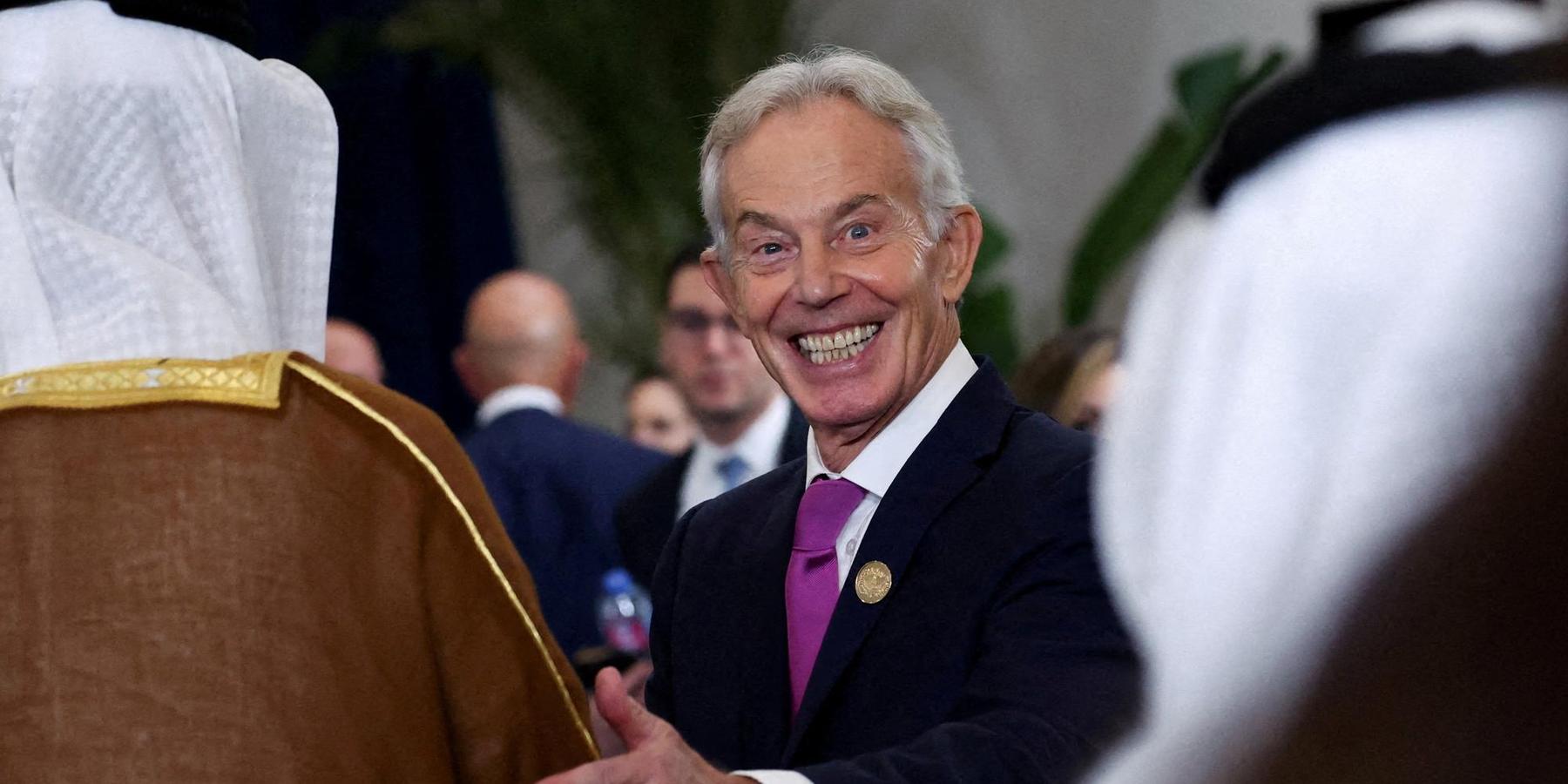
The personnel announcements made so far are sufficient to displease each side in this conflict. The Board of Peace includes, among others, Witkoff, Trump’s son-in-law Jared Kushner, and former British prime minister Tony Blair. Arab governments and many others in the Muslim world distrust Blair because of his role in the Iraq War and his perceived pro-Israel bias when he was an international envoy addressing the Israeli-Palestinian conflict.
Israel has been quick to object to the membership of a “Gaza Executive Board,” which the White House also announced and will have a vaguely defined relationship with the other bodies involved in Gaza. This board will include — besides Blair, Kushner, Witkoff, and others — the Turkish foreign minister and a senior Qatari official. The office of Israeli Prime Minister Benjamin Netanyahu stated that the Gaza Executive Board as constituted is “at odds with Israeli policy.” The statement evidently reflects Israel’s sour relations with Türkiye and Qatar, largely because of the relations of those two governments with Hamas.
The Israeli objections will provide Netanyahu’s government with an additional rationale for overturning the whole diplomatic process whenever it chooses to do so. It is not just the government, but also the Israeli opposition that is making an issue of the Executive Board membership. Opposition leader Yair Lapid called the inclusion of Türkiye a “grave diplomatic failure.” Itamar Ben Gvir, the extreme right-winger who is minister of national security, called for the Israeli military “to return to war with tremendous force in the Strip.”
Subscribe now to our weekly round-up and don’t miss a beat with your favorite RS contributors and reporters, as well as staff analysis, opinion, and news promoting a positive, non-partisan vision of U.S. foreign policy.
Invalid emailEnter your email
Meanwhile, some apparent organizational progress has taken place in Cairo, with the first meeting of the National Committee for the Administration of the Gaza Strip (NCAG), a group of 15 Palestinian technocrats who are supposed to function as an interim administration under the supervision of the Board of Peace. The committee met with Bulgarian diplomat Nickolay Mladenov, who has been named “director-general” of the Board of Peace. Members of the NCAG have not been announced apart from the committee’s head, a civil engineer and former deputy minister of transportation in the Palestinian Authority named Ali Shaath.
In his announcement about Phase Two, Witkoff said nothing about the prospective International Stabilization Force (ISF), which is supposed to play a major security role during the interim administration and reconstruction of the Gaza Strip. Recruiting participants in the ISF has been even more difficult than recruiting members of the Board of Peace. Governments do not want their troops to get involved in an active combat situation, as the Israeli attacks continue. They especially do not want to be involved in a mission of disarming Hamas, an objective that Israel was unable to achieve through three years of unrestricted warfare.
Amid frequent mention by Witkoff and others about Hamas needing to live up to its obligations, it is important to remember that Hamas never signed up to Trump’s 20-point plan. What Hamas has agreed to, going back to a framework agreement in 2024, has been a complete ceasefire, release of all hostages in exchange for release of an agreed number of Palestinian prisoners, and return of remains of the deceased, amid an ending of the siege of the Gaza Strip and the beginning of internationally supervised reconstruction of the territory.
Hamas also has made clear it is willing to cede governance of the Gaza Strip to independent Palestinian technocrats. In this regard, Hamas publicly welcomed as an “important positive development” the establishment and initial meeting of NCAG. Hamas also accepts in principle the presence in Gaza of a neutral international peacekeeping force.
As for disarmament, the conditions matter. Hamas has offered to bury its weapons as part of the long-term truce or hudna that it has long offered Israel. But it would completely surrender its weapons only to a genuine Palestinian government.
What Hamas will not do is unilateral disarmament as Israel continues to occupy Palestinian territory and to kill Palestinian citizens. It is unrealistic and unreasonable to expect that, especially in view of the slaughter in Gaza of the past three years.
The technocrats on NCAG have an enormous task, and they face it with major handicaps. Perhaps symbolic of the handicaps is how Shaath, to get to the Cairo meeting from where he has been living in the West Bank, had to travel through Jordan and was detained by Israeli authorities for six hours at the Allenby crossing. A Palestinian official commented that this incident demonstrates an Israel intention to sabotage the committee’s work.
An Arab diplomat observed that a committee of 15 members cannot administer the Gaza Strip without large numbers of civil servants. But Israel is blocking the participation of not only anyone on Hamas’s payroll but also anyone on the Palestinian Authority’s payroll.
In his initial public comments after being named chairman of NCAG, Shaath talked about the huge task of clearing the rubble, which could take three years while overall reconstruction would take about seven years. The situation could become even worse. Israel is continuing to create still more rubble by methodically demolishing buildings in the half of the Gaza Strip that it still occupies.
Neither Trump’s plan nor any other peace plan will be able to bring anything close to peace, security, and prosperity to Gaza as long as Israel is the controlling power on the ground and is determined to oppose anything that looks like Palestinian self-governance.
Paul R. Pillar is Non-resident Senior Fellow at the Center for Security Studies of Georgetown University and a non-resident fellow at the Quincy Institute for Responsible Statecraft. He is also an Associate Fellow of the Geneva Center for Security Policy.

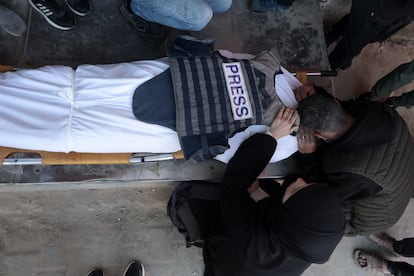

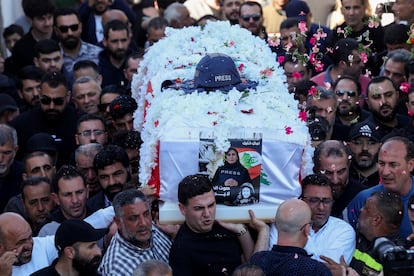
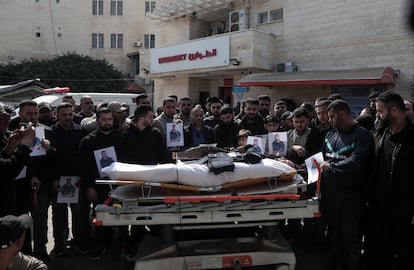

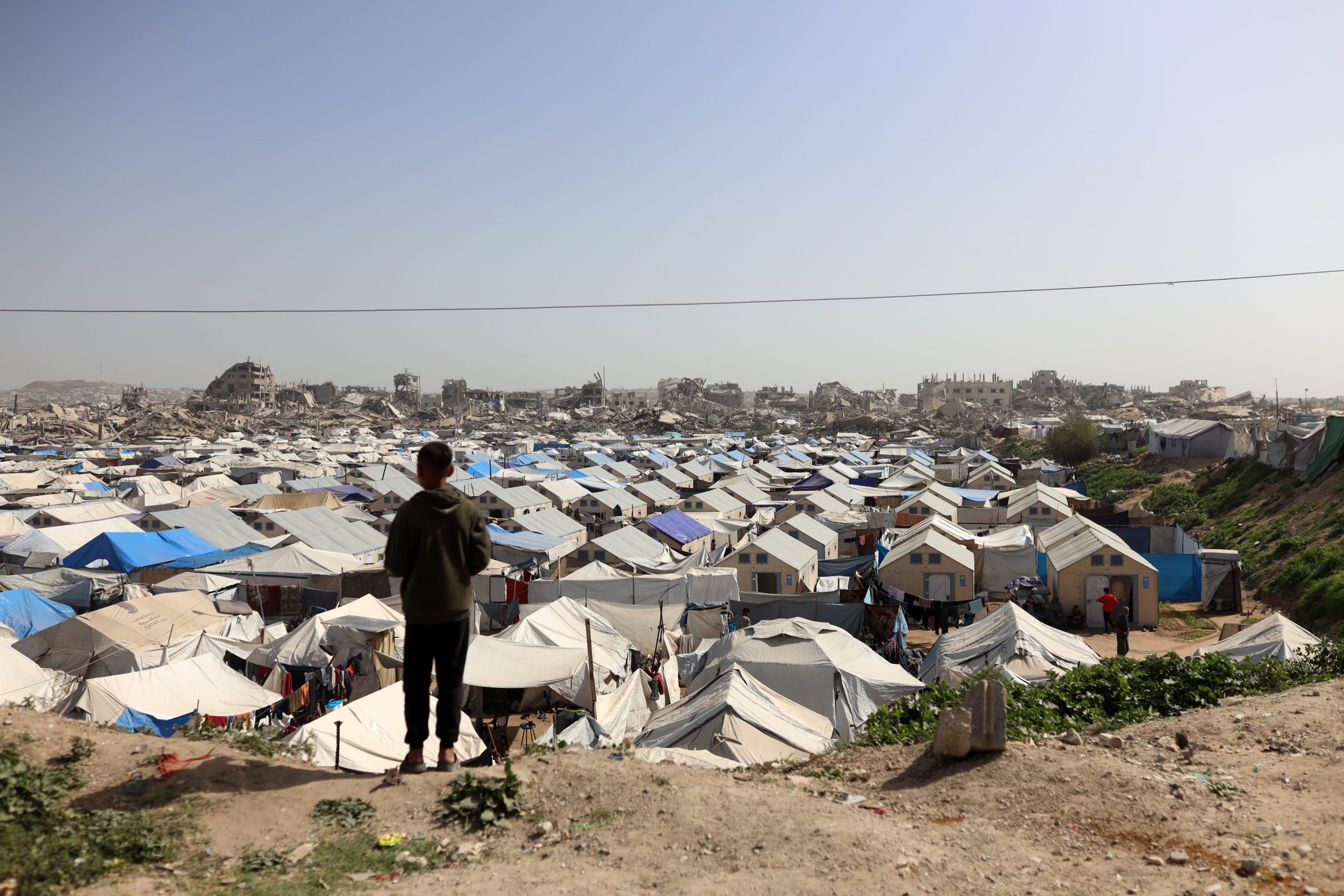
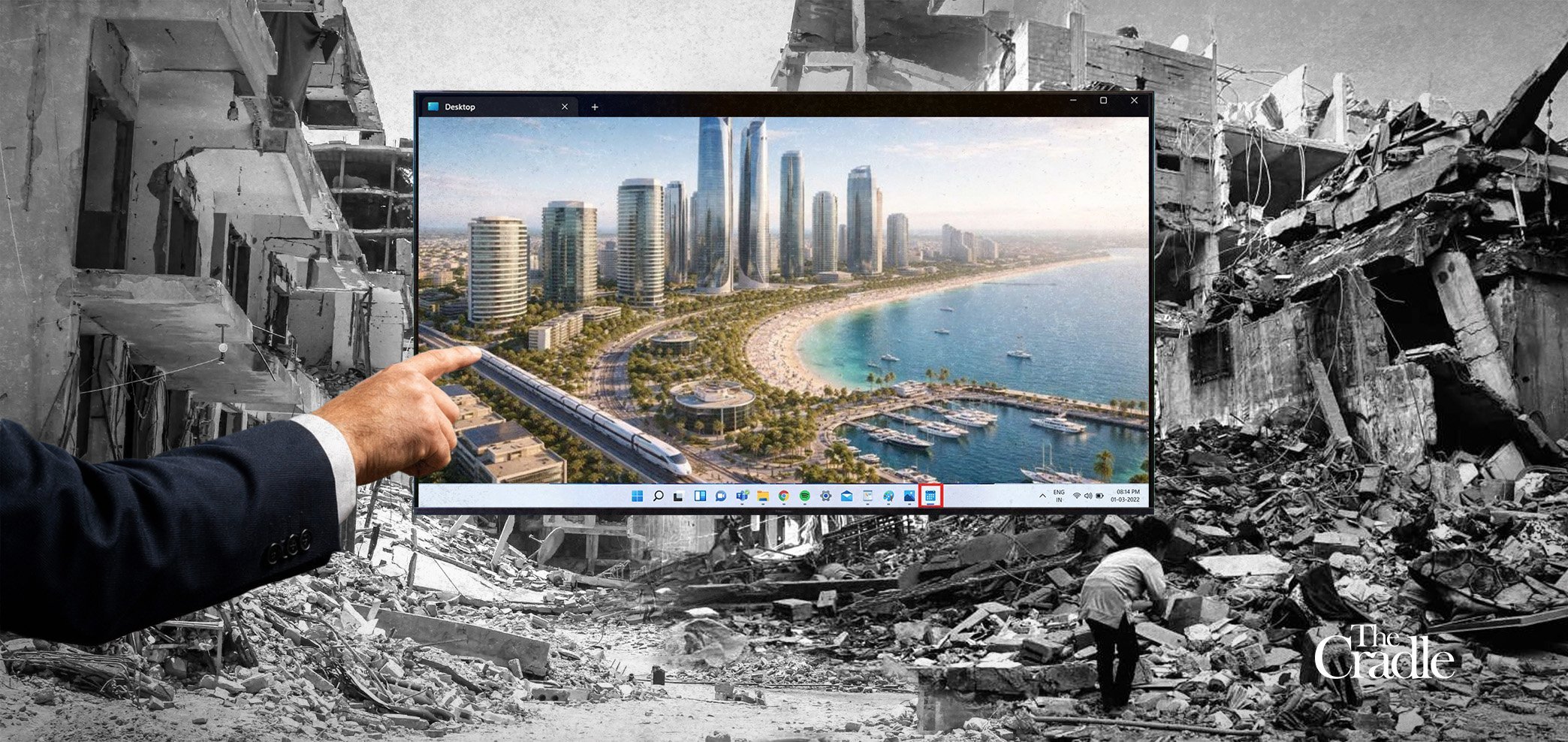 Photo Credit: The Cradle


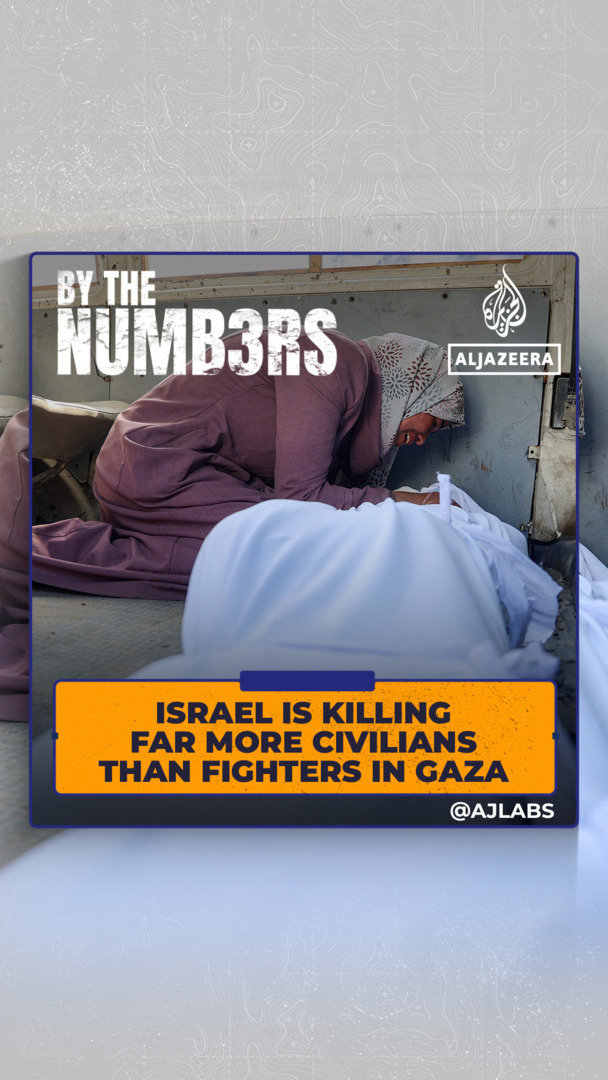
 Israel is killing far more civilians than fighters in Gaza
 Fighting between Sudan’s army, RSF forced more than 13 million children out of school




You must be logged in to post a comment.