Posts Tagged ‘Venezuela’

‘The Actions of a Rogue State’: US Lawmakers Demand Emergency Vote to Stop Trump War on Venezuela

January 5, 2026

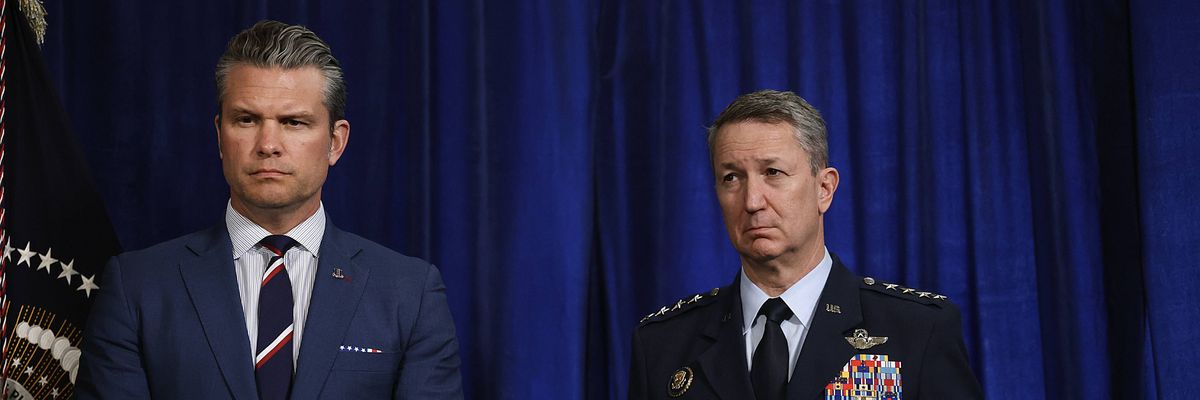
President Trump Holds News Conference After US Captures Venezuelan President Maduro

US Defense Secretary Pete Hegseth and Chairman of the Joint Chiefs of Staff Dan Caine listen as President Donald Trump addresses the media on January 3, 2026.

(Photo by Joe Raedle/Getty Images)

“Trump has no right to take us to war with Venezuela. This is reckless and illegal,” said Rep. Greg Casar. “Congress should vote immediately on a War Powers Resolution to stop him.”

Jake Johnson

Jan 03, 2026

Members of the US Congress on Saturday demanded emergency legislative action to prevent the Trump administration from taking further military action in Venezuela after the president threatened a “second wave” of attacks and said the US will control the South American country’s government indefinitely.

Rep. Greg Casar (D-Texas), chair of the Congressional Progressive Caucus (CPC), said that “Congress should vote immediately on a War Powers Resolution to stop” President Donald Trump, whose administration has for months unlawfully bombed boats in international waters and threatened a direct military assault on Venezuela without lawmakers’ approval.

RECOMMENDED…
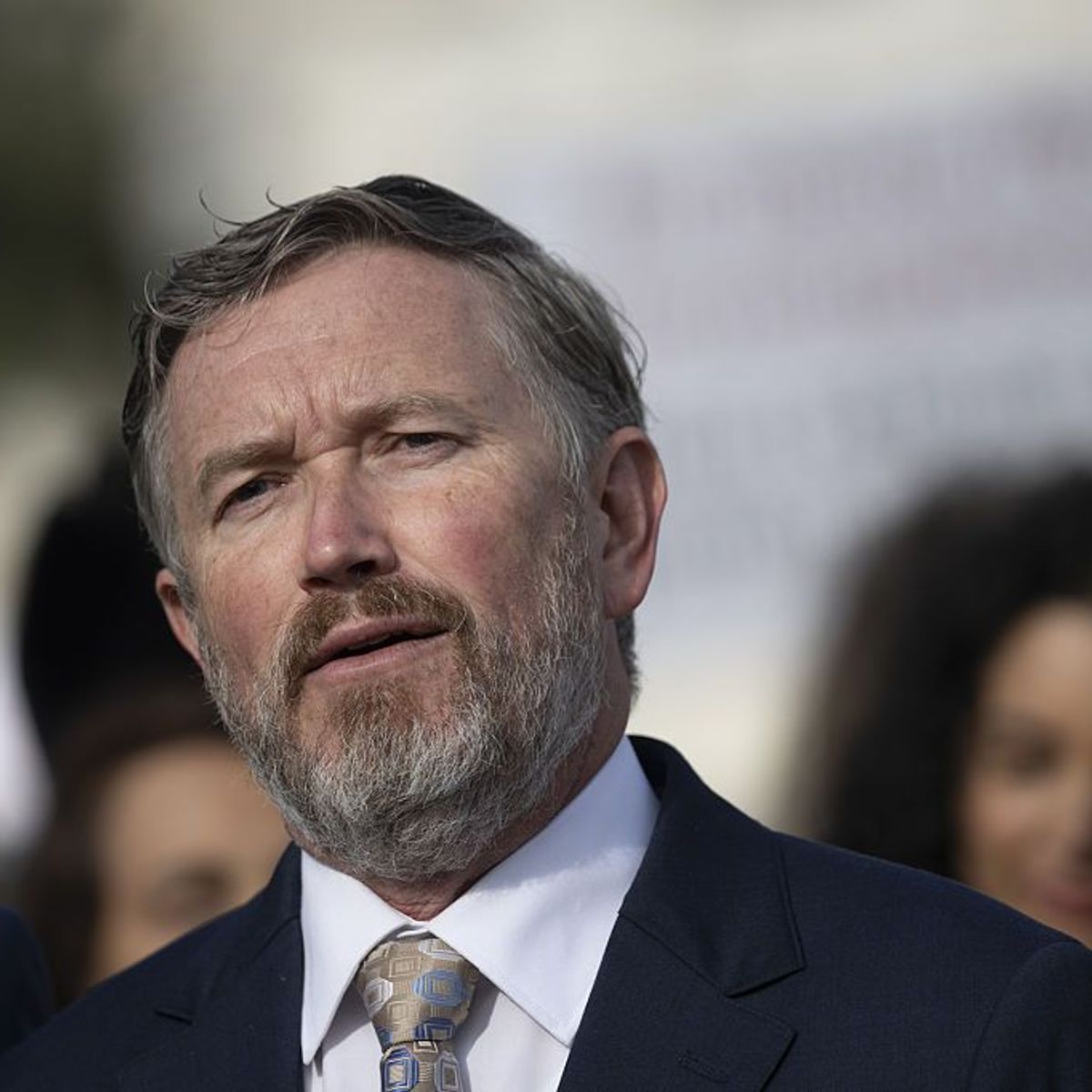
'This is About Oil and Regime Change': GOP Lawmaker Speaks Out Against Push for War in Venezuela
‘This is About Oil and Regime Change’: GOP Lawmaker Speaks Out Against Push for War in Venezuela

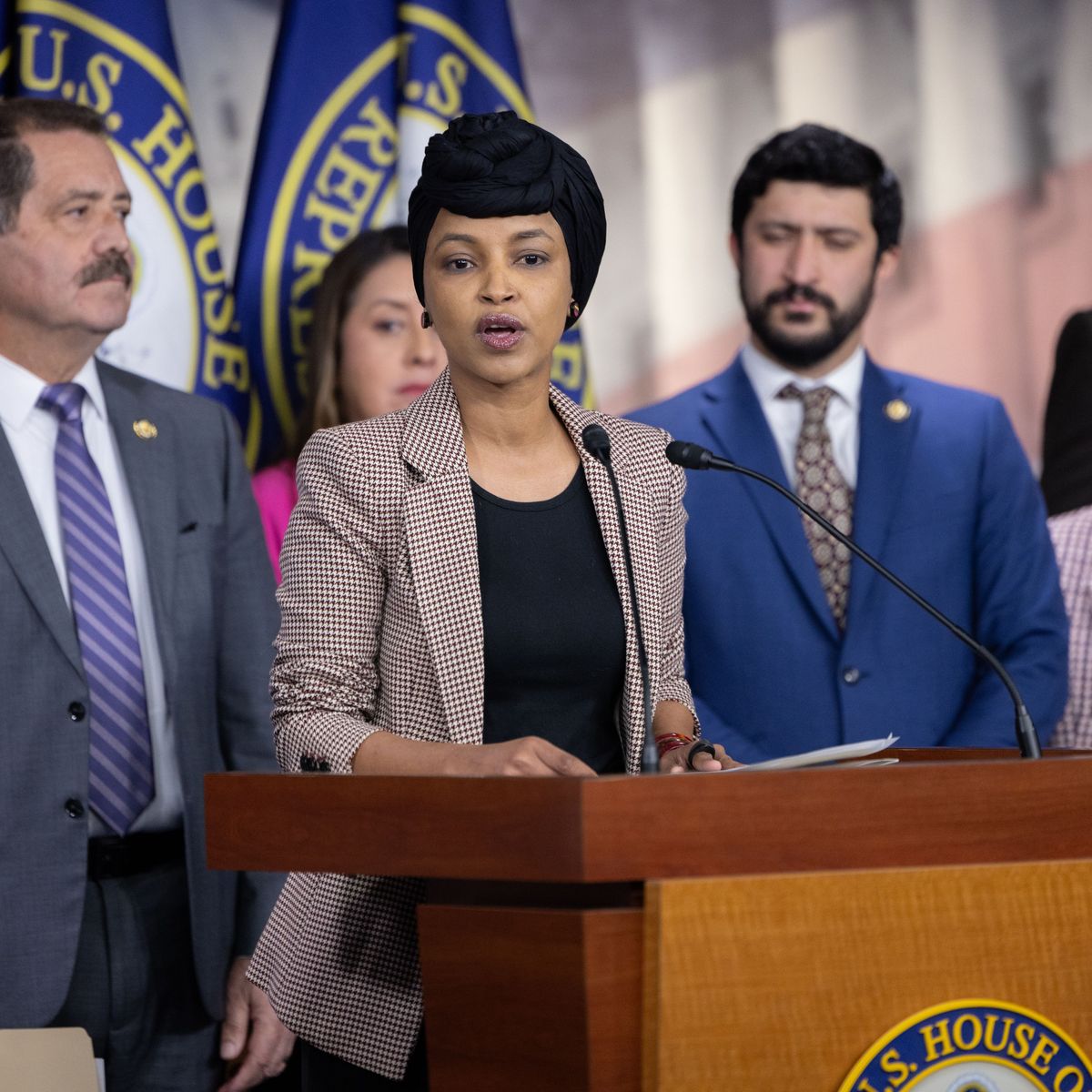
Rep. Ilhan Omar

Progressives Urge Passage of Bills to Stop Trump From Launching ‘Forever War’ in Venezuela

“Trump has no right to take us to war with Venezuela. This is reckless and illegal,” said Casar. “My entire life, politicians have been sending other people’s kids to die in reckless regime change wars. Enough. No new wars.”

Another prominent CPC member, Rep. Rashida Tlaib (D-Mich.), said in response to the bombing of Venezuela and capture of its president that “these are the actions of a rogue state.”

“Trump’s illegal and unprovoked bombing of Venezuela and kidnapping of its president are grave violations of international law and the US Constitution,” Tlaib wrote on social media. “The American people do not want another regime change war abroad.”

Progressives weren’t alone in criticizing the administration’s unauthorized military action in Venezuela. Establishment Democrats, including Sen. Adam Schiff of California and others, also called for urgent congressional action in the face of Trump’s latest unlawful bombing campaign.

“Without congressional approval or the buy-in of the public, Trump risks plunging a hemisphere into chaos and has broken his promise to end wars instead of starting them,” Schiff said in a statement. “Congress must bring up a new War Powers Resolution and reassert its power to authorize force or to refuse to do so. We must speak for the American people who profoundly reject being dragged into new wars.”

Sen. Tim Kaine (D-Va.) said he will force a Senate vote next week on a bipartisan War Powers Resolution to block additional US military action in Venezuela.

“Where will this go next?” Kaine asked in a statement. “Will the president deploy our troops to protect Iranian protesters? To enforce the fragile ceasefire in Gaza? To battle terrorists in Nigeria? To seize Greenland or the Panama Canal? To suppress Americans peacefully assembling to protest his policies? Trump has threatened to do all this and more and sees no need to seek legal authorization from people’s elected legislature before putting servicemembers at risk.”

“It is long past time for Congress to reassert its critical constitutional role in matters of war, peace, diplomacy, and trade,” Kaine added. “My bipartisan resolution stipulating that we should not be at war with Venezuela absent a clear congressional authorization will come up for a vote next week.”

The lawmakers’ push for legislative action came as Trump clearly indicated that his administration isn’t done intervening in Venezuela’s internal politics—and plans to exploit the country’s vast oil reserves.

During a press conference on Saturday, Trump said that the US “is going to run” Venezuela, signaling the possibility of a troop deployment.

“We’re not afraid of boots on the ground,” the president said in response to a reporter’s question, adding vaguely that his administration is “designating various people” to run the government.

Whether the GOP-controlled Congress acts to constrain the Trump administration will depend on support from Republicans, who have largely applauded the US attack on Venezuela and capture of Maduro. In separate statements, House Speaker Mike Johnson (R-La.) and Senate Majority Leader John Thune (R-SD) described the operation as “decisive” and justified.

Ahead of Saturday’s assault, the Republican-controlled Congress rejected War Powers Resolutions aimed at preventing Trump from launching a war on Venezuela without lawmakers’ approval.

One Republican lawmaker who had raised constitutional concerns about Saturday’s actions, Sen. Mike Lee of Utah, appeared to drop them after a phone call with Secretary of State Marco Rubio.

But Sen. Andy Kim (D-NJ) noted in a statement that both Rubio and Defense Secretary Pete Hegseth “looked every senator in the eye a few weeks ago and said this wasn’t about regime change.”

“I didn’t trust them then, and we see now that they blatantly lied to Congress,” said Kim. “Trump rejected our constitutionally required approval process for armed conflict because the administration knows the American people overwhelmingly reject risks pulling our nation into another war.”
𝐍𝐨 𝐭𝐨 𝐓𝐫𝐮𝐦𝐩’𝐬 𝐩𝐢𝐫𝐚𝐭𝐞 𝐞𝐦𝐩𝐢𝐫𝐞! 𝐈𝐧𝐭𝐞𝐫𝐧𝐚𝐭𝐢𝐨𝐧𝐚𝐥 𝐒𝐨𝐜𝐢𝐚𝐥𝐢𝐬𝐭 𝐓𝐞𝐧𝐝𝐞𝐧𝐜𝐲 𝐬𝐭𝐚𝐭𝐞𝐦𝐞𝐧𝐭 𝐨𝐧 𝐕𝐞𝐧𝐞𝐳𝐮𝐞𝐥𝐚

January 4, 2026

Below is a statement by the International Socialist Tendency, which the Socialist Workers Party is part of, in response to Trump’s attacks on Venezuela

1. The US raids on Venezuela on the night of 2-3 January and the kidnapping and imprisonment of President Nicolás Maduro are naked acts of imperialist aggression. Donald Trump’s declaration that ‘we are going to run Venezuela’ sums up the arrogance of US power. His justifications – that Maduro is the boss of a drug cartel, that his regime is undemocratic, etc – are, to use one of his favourite words, fake. This is about removing a regime that, especially under Hugo Chávez, has long been a thorn in Washington’s side and seizing the largest oil reserves in the world. Trump gloats: ‘We’re going to have our very large United States oil companies, the biggest anywhere in the world, go in.’ He has exposed the hollowness of his denunciations of previous US administrations’ ‘forever wars’ and attempts at regime change.

2. The assault on Venezuela must be seen against the background of Trump’s reaffirmation of the Monroe doctrine in his new National Security Strategy. This policy warning European powers to stay away from the Americas expressed the early United States’ aim to dominate the Western Hemisphere. Only in the late 19th century did Washington become strong enough to start displacing Britain, hitherto the dominant imperialist power in Latin America. This process was accompanied by war with Spain and numerous military interventions in Central America.

3. After the Second World War, the US responded to the advance of the left in Latin America by helping to engineer numerous military coups (Guatemala, Brazil, Chile, Argentina), invading the Dominican Republic and Grenada, and underwriting bloody counter-revolutionary wars (Bolivia, Guatemala, El Salvador, Nicaragua). In 1989 a US invasion removed and imprisoned the former CIA asset Manuel Noriega, President of Panama.

4. Now, however, the global dominance of US imperialism is under growing pressure. China has emerged as its greatest military and technological rival and the biggest market for Latin America’s raw materials and agricultural exports. The Trump administration has made reinforcing US domination of the Western Hemisphere and its resources its most important strategic priority. Hence the threats to Panama, Greenland, and Canada. Hence also the financial support for Javier Milei’s ultra-neoliberal government in Argentina. And hence now the attack on Venezuela.

5. By overthrowing Maduro Trump is pointing a gun at the head of every other Latin American president. If the US succeeds in imposing regime change on Venezuela, Cuba may be the next target. Trump and his Secretary of State Marco Rubio, the son of Cuban exiles, want to eradicate all remnants of revolutionary challenges to US imperialism in the Americas. Most governments will probably confine themselves to verbal protests and seek to ingratiate themselves with Trump. We demand that every state that claims to support democracy should unequivocally condemn the US intervention and take steps to isolate the aggressor.

‘This Is State Terrorism’: Global Outrage as Trump Launches Illegal Assault on Venezuela

January 3, 2026
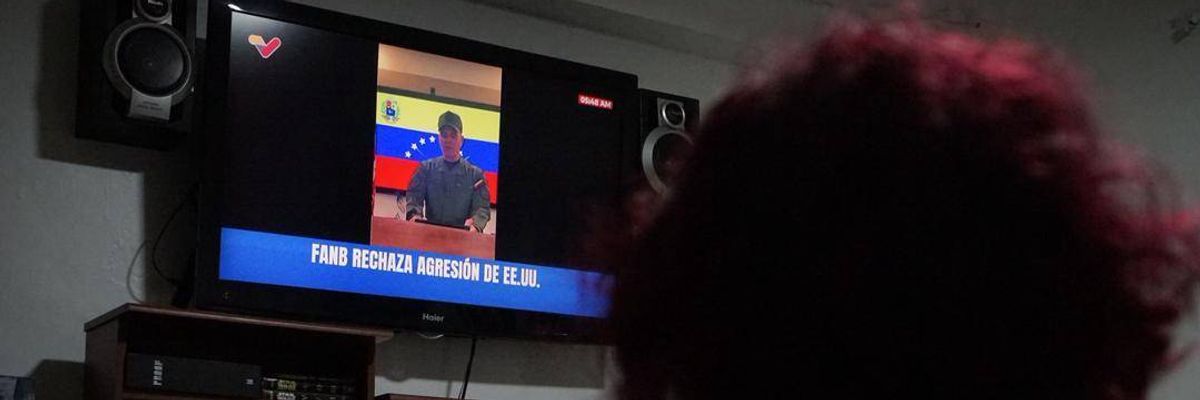
A woman watches a public television broadcast by Venezuelan Defense Minister Vladimir Padrino

A woman watches a public television broadcast by Venezuelan Defense Minister Vladimir Padrino in Caracas, Venezuela on January 03, 2026.

(Photo by Boris Vergara/Anadolu via Getty Images)

“It is brutal imperialist aggression,” said former Bolivian President Evo Morales.

Jake Johnson, Common Dreams, Jan 03, 2026

The Trump administration’s military assault on Venezuela and apparent capture of the country’s president in the early hours of Saturday morning sparked immediate backlash from leaders in Latin America and across the globe, with lawmakers, activists, and experts accusing the US of launching yet another illegal war of aggression.

Latin American leaders portrayed the assault as a continuation of the long, bloody history of US intervention in the region, which has included vicious military coups and material support for genocidal right-wing forces.

RECOMMENDED…

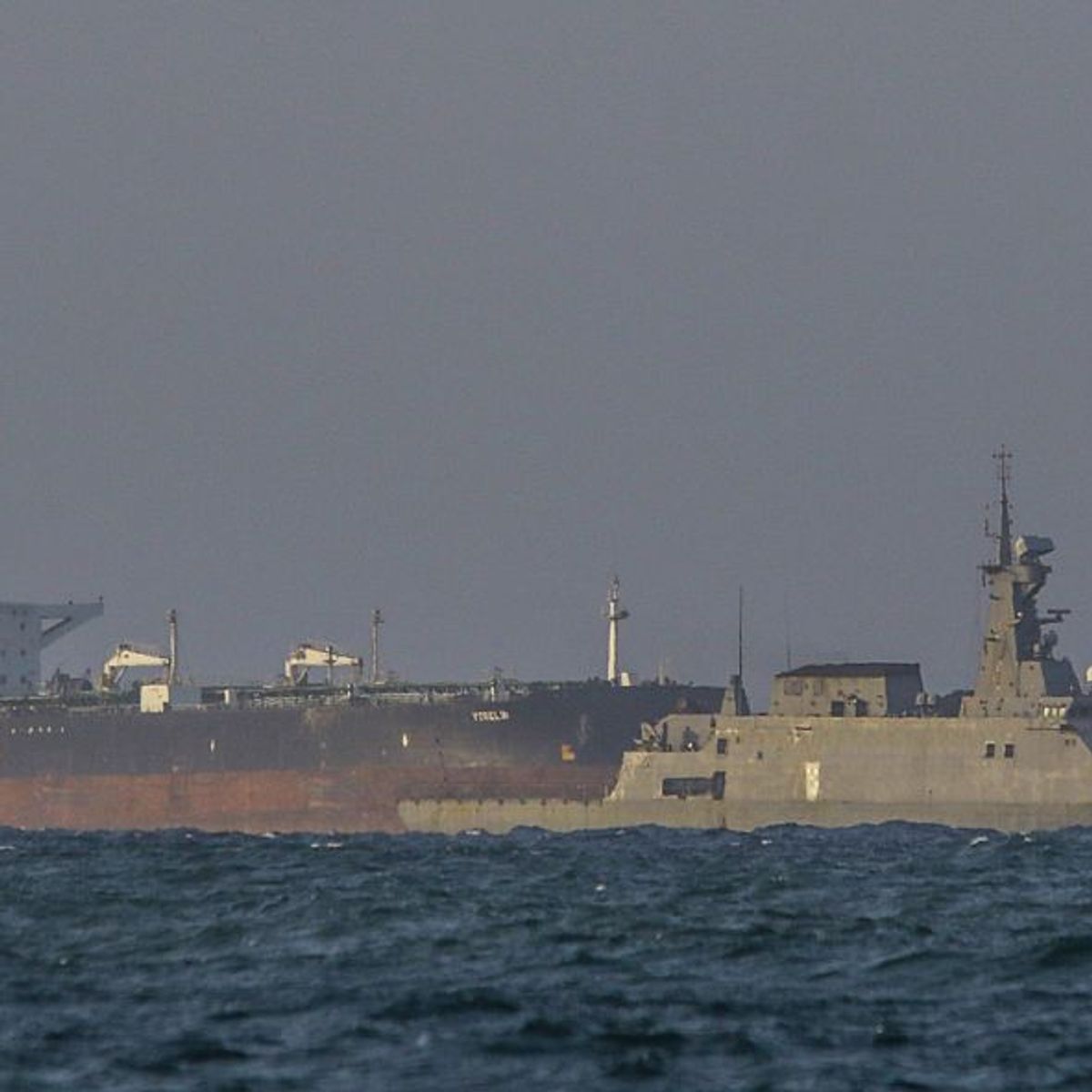
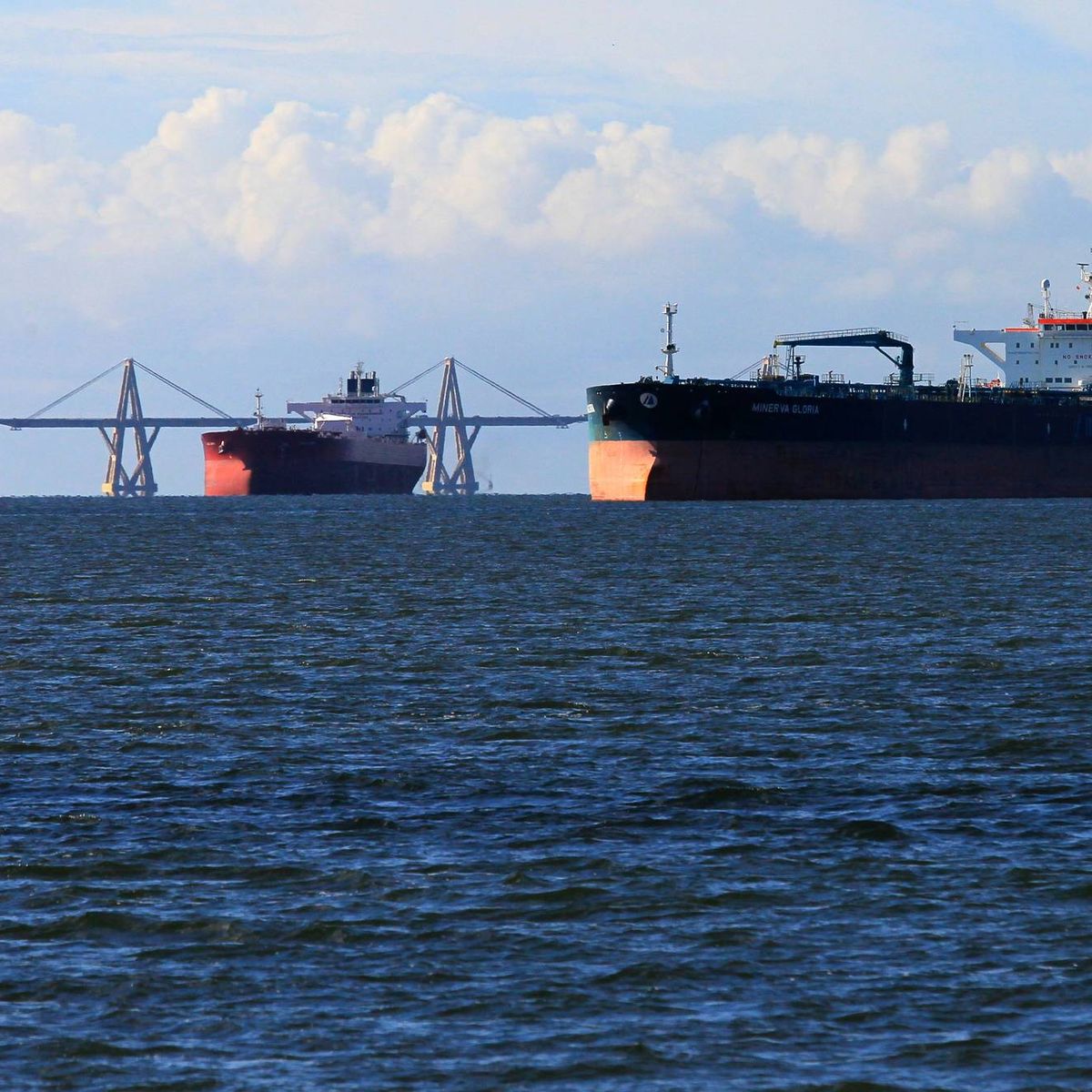
oil tankers are seen anchored in Lake Maracaibo

Trump ‘Choosing From the War Crimes Menu’ With ‘Quarantine’ on Venezuela Oil Exports

Trump Escalates in Venezuela With 'Illegal' US Seizure of Oil Tanker

Trump Escalates in Venezuela With ‘Illegal’ US Seizure of Oil Tanker

“This is state terrorism against the brave Venezuelan people and against Our America,” Cuban President Miguel Diaz-Canel wrote in a social media post, demanding urgent action from the international community in response to the “criminal attack.”

Evo Morales, the leftist former president of Bolivia, said that “we strongly and unequivocally repudiate” the US attack on Venezuela.

“It is brutal imperialist aggression that violates its sovereignty,” Morales added. “All our solidarity with the Venezuelan people in resistance.”

Colombian President Gustavo Petro, one of the first world leaders to respond to Saturday’s developments, decried US “aggression against the sovereignty of Venezuela and of Latin America.” Petro said Colombian forces “are being deployed” to the nation’s border with Venezuela and that “all available support forces will be deployed in the event of a massive influx of refugees.”

“Without sovereignty, there is no nation,” said Petro. “Peace is the way, and dialogue between peoples is fundamental for national unity. Dialogue and more dialogue is our proposal.”

One Latin American leader, far-right Argentine president and Trump ally Javier Milei, openly celebrated the alleged US capture of Venezuelan President Nicolás Maduro, declaring on social media, “FREEDOM ADVANCES.”

Leaders and lawmakers in Europe also reacted to the US bombings. Pedro Sánchez, the prime minister of Spain, issued a cautious statement calling for “deescalation and responsibility.”

British MP Zarah Sultana was far more forceful, writing on social media that “Venezuela has the world’s largest oil reserves—and that’s no coincidence.”

“This is naked US imperialism: an illegal assault on Caracas aimed at overthrowing a sovereign government and plundering its resources,” Sultana added.

The Cold War is over. Long live the Cold War.

July 6, 2010
by William Blum, Foreign Policy Journal, July 6, 2010

I recently attended a showing of Oliver Stone’s new documentary film, “South of the Border”, which concerns seven present-day government leaders of Latin America -– in Venezuela, Bolivia, Ecuador, Argentina, Paraguay, Cuba and Brazil — who are not in love with US foreign policy. After the film there was a discussion panel in the theatre, consisting of Stone, the two writers of the film (Tariq Ali and Mark Weisbrot) and Cynthia Arnson, Director of the Latin American Program of the Woodrow Wilson International Center for Scholars, in Washington; the discussion was moderated by Neal Conan of National Public Radio.

It perhaps was not meant to be a “debate”, but it quickly became that, with Arnson leading the “anti-communist” faction, supported somewhat by Conan’s questions and more vociferously by a segment of the audience which took sides loudly via applause and cries of approval or displeasure. Twenty years post-Cold War, anti-communism still runs deep in the American soul and psyche. Candid criticism of US foreign policy and/or capitalism is sufficient to consign a foreign government or leader to the “communist” camp whether or not that term is specifically used.

Continues >>

The US threat to Latin America

April 21, 2010

Morning Star Online, April 20, 2010

by Grace Livingstone

The military agreement between the United States and Colombia has caused outcry in Latin America. Many governments suspect that the US is trying to cement its military hegemony in the region and maintain its ability to intervene in the affairs of Latin American countries.

The State Department says that the deal is all about security within Colombia and does not affect other countries, but Pentagon documents show that the US has far wider and more ominous objectives.

An US air force budget justification Bill, sent to Congress last year, states that Palanquero airbase in Colombia “provides an opportunity for conducting full spectrum operations throughout south America.”

Full spectrum operations is Pentagon jargon for dominating the battle space on land, sea, air and space and can include the use of nuclear weapons.

Continues >>

Fidel Castro: The Bolivarian Revolution and Peace

November 22, 2009

By Fidel Castro Ruz, Cuba.cu, November 20, 2009

I know Chavez well, and no one could be more reluctant than him to allow a showdown between the Venezuelan and Colombian peoples leading to bloodshed. These are two fraternal peoples, the same as Cubans living in the east, center and west end of our island. I find no other way to explain the close relationship between Venezuelans and Colombians.

The slanderous Yankee accusation that Chavez is planning a war against neighboring Colombia led an influential paper of that country to run a story last Sunday, November 15, under the headline “War Drums.” It was a pejorative and insulting editorial against the Venezuelan President asserting, among other things, that “Colombia should take very seriously the gravest threat to its national security in more than seven decades as it comes from a President with a military background…”

Continues >>


Petras: Latin America’s Twenty-First Century Socialism in Historical Perspective

October 13, 2009

The electoral victory of center left regimes in at least three Latin American countries, and the search for a new ideological identity to justify their rule, led ideologues and the incumbent presidents to embrace the notion that they represent a new 21st century version of socialism (21cs).

The James Petras website,  October 10, 2009

Prominent writers, academics and regime spokespeople celebrated a totally new variant of socialism, as completely at odds with what they dubbed as the failed 20th century, Soviet-style socialism. The advocates and publicists of 21cs claims of a novel political-economic model rested on what they ascribed as a radical break with both the free market neo-liberal regimes which preceded, and the past “statist” version of socialism embodied by the former Soviet Union as well as China and Cuba.

In this paper we will proceed by examining the variety of critiques put forth by 21cs of both neo-liberalism and 20 century socialism (20cs), the authenticity of their claims of a novelty and originality, and a critical analysis of their actual performance.

Read essay [PDF]

Reflections of Fidel: Seven Daggers at the Heart of the Americas

August 11, 2009

Fidel Castro, Monthly Review, Aug 5, 2009

I read and reread data and articles written by smart personalities, some better known than others, who publish in various media outlets drawing the information from sources nobody questions.

Everywhere in the world, the people living on this planet are taking economic, environmental and war risks due to the United States policies but no other region of the world as threatened by such grave problems as that country’s neighbors, that is, the peoples of this continent south of that hegemonic power.

Continues >>

Venezuela cuts ties with Israel over Gaza attacks

January 15, 2009

Reuters, Jan 14, 2009

CARACAS (Reuters) – Venezuela has cut ties with Israel in protest over its military offensive in the Gaza Strip, the Venezuelan Foreign Ministry said on Wednesday.

Last week President Hugo Chavez expelled Israel’s ambassador from Venezuela over the attacks, which have sparked international condemnation.

“Venezuela … has definitively decided to break diplomatic ties with the state of Israel given the inhumane persecution of the Palestinian people carried out by the authorities of Israel,” said a statement read over state television.

Israel’s 20-day offensive, launched to halt rocket attacks on Israel by Hamas Islamist militants, has killed more than 1,000 Palestinians. A Palestinian rights group said 670 of those killed were civilians. Thirteen Israelis have been killed — three civilians hit by Hamas rocket fire and 10 soldiers.

Socialist Chavez is a harsh critic of both Israel and the United States and has called the Israeli offensive in Gaza a Palestinian “holocaust.”

Bolivian President Evo Morales, a close Chavez ally, on Wednesday also cut ties with Israel to the protest the attacks.

An envoy from Israel, which is under increasing pressure to negotiate a ceasefire, is scheduled to meet Egyptian mediators in Cairo on Thursday.

Chavez in 2006 threatened to break ties with Israel over its five-week war in Lebanon in a diplomatic spat that led both countries to withdraw their envoys.

(Reporting by Brian Ellsworth; editing by Mohammad Zargham)

Worldwide protests on Gaza continue

January 9, 2009
Al Jazeera, January 9, 2009

About 40,000 people marched in Oslo against the violence in Gaza

International condemnation of Israel’s two week assault on Gaza has continued, with tens of thousands of protesters calling for end to the military offensive.

In Norway on Thursday, at least 40,000 people marched in the capital Oslo, as well as in five other cities, in a protest called by an alliance of about 80 organisations.

The demonstration was called after two Norwegian doctors working in Gaza sent messages to Norwegian media about Israel’s assault there.

“Our hope is that this gathering will be felt in the Middle East. We want to show the world that people can stand together in peace, no matter what their religious or political view,” Svein Tore Bergestuen, one of the event organisers, told Al Jazeera.

Clashes

The largely peaceful protest was marred by the detention of at least 27 people after clashes between pro-Israeli and pro-Palestinian demonstrators.

Shop windows in the city centre were shattered and police repeatedly used teargas to break up groups of activists.

The violence started when about 1,000 pro-Palestinian supporters showed up at a rally sponsored by Norway’s largest opposition party in support of Israel.

Television pictures showed them burning Israeli flags and throwing projectiles at police.

“This has nothing to do with the situation in Gaza,” Johan Fredriksen, chief of staff of the Oslo police, told the website of the Aftenposten newspaper.

“These people came to the protest with knives, bats and Molotov cocktails,” he said, speaking about the pro-Palestinian side.

Other protests

Demonstrations were also held in Venezuela, Tehran, Khartoum and Sarajevo.

Protesters in Venezuela protesting against Israeli attacks [AFP]

In an address to thousands in Tehran, Ayatollah Ali Khamenei, Iran’s supreme leader, criticised some Muslim majority states for not supporting the Palestinians.Thousands also gathered in the Sudanese capital Khartoum to express their solidarity with Gaza, some brandishing models of rockets.

Several hundred people gathered in freezing conditions in front of the US embassy in Sarajevo and called for Washington to use its influence to stop Israeli attacks on Gaza.

In Venezuela, protesters condemning Israel sprayed graffiti and hurled shoes at the country’s embassy, backing the decision by Hugo Chavez, Venezuela’s president, to expel the Israeli ambassador.

About 1,000 demonstrators waved Palestinian flags and chanted “Gaza, hold on! The world is rising up!”

The protest came two days after Chavez ordered Shlomo Cohen to leave in protest over the war and Israel says it is considering expelling Venezuelan diplomats in response.