.
Karl Marx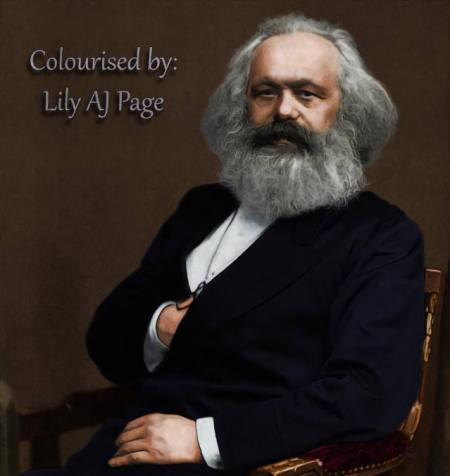
.
Dr Nasir Khan, November 24, 2015
Note: I am reproducing one section of Chapter 4 (pp. 146-153) from my book, Development of the Concept and Theory of Alienation in Marx’s Writings (1995). My aim is to present Marx’s ideas on religion in the context of his theory of alienation for a wider audience. For complete abbreviations and references, see the book (link provided at the end of this paper).
–
For Marx religion is primordially an active form of ideological alienation, where inverted world-consciousness and mystification become the essential elements of the alienative process. Marx’s writings show that he hardly ever thought it worthwhile to discuss theological formulations or religious dogmas. The question of religious consciousness for Marx was a matter of little interest. Karl Löwith writes: ‘By advancing towards the criticism of man’s material conditions, Marx does not simply leave behind the criticism of religion but rather assumes it on a new level; for though, on the basis of the social-political world, religion is but a false consciousness, the question has still to be answered: Why did this real world at all develop an inadequate consciousness?
If we assume with Feuerbach that the religious world is only a self-projection of the human world, one has to ask: Why do the latter project the first and create a religious superstructure? . . . It is not enough to state with Feuerbach that religion is a creation of man; this statement has to be qualified by the further insight that religion is the consciousness of that man who has not yet returned from his self-alienation and found himself at home in his worldly conditions’ (Löwith 1949, 48, 49).
Marx’s approach to religion in his early thinking can be seen in his letter of November 1842 to Arnold Ruge, where he says that ‘religion should be criticised in the framework of criticism of political conditions rather than that political conditions should be criticised in the framework of religion … for religion in itself is without content, it owes its being not to heaven but to the earth, and with the abolition of distorted reality, of which it is the theory, it will collapse of itself’ (CW1, 394-95). If religion is without any content, then the whole problematic of religion can be reduced to a particular mode of products and as such it is always a reflection of the material historical developments. In Anti-Dühring, Engels writes: ‘All religion, however, is nothing but the fantastic reflection in men’s minds of those external forces which control their daily life, a reflection in which the terrestrial forces assume the form of supernatural forces. In the beginnings of history, it was the forces of nature which were so reflected and which in the course of further evolution underwent the most manifold and varied personifications among the various peoples . . . But it is not long before, side by side with the forces of nature, social forces begin to be active — forces which confront man as equally alien and at first equally inexplicable, dominating him with the same apparent natural necessity as the forces of nature themselves’ (Engels 1978, 382-83). In this lucid exposition, Engels points to the roots of religion in the early phase of historical development of mankind. At this stage, the primitive man comes to the realisation of his helplessness when he is face to face with the gigantic and mighty forces of nature. His effort to appease these, leads to primitive nature worship. But at a later stage under the antagonistic class society, the exploited classes of society face to face with the social oppression, and in their helplessness give birth to and foster religion, the belief in a better life hereafter, the alleged reward for suffering on earth (see Foreword to Marx & Engels 1972, 8).
In this connection, Kostas Axelos, the French Marxist of Arguments group, sums up the Marxian position: ‘Being the expression of impotence and alienation, religion in turn, in its own modality, alienates man from his life and from his essential forces. Far from being some kind of index of the strength of human being, religion comes about only owing to man’s weakness, his frustrations, his dissatisfactions, his alienation. An abstraction from concrete conditions, religion is a product of the alienation of man on the level of both practice and theory. Mystery, far from implying a truth of its own, veils the truth of reality and masks its own mystification’ (Axelos 1976, 160). Within the sphere of developed productive forces under the institutionalized private ownership, ‘religion begins to express the alienation of man in relation to the products of his labour as the imaginary satisfaction of unsatisfied real drives. The non-development of productive forces determines the genesis of religion, and this later development determines its subsequent “evolution” ‘ (ibid. 159-160).
At the time of writing the Introduction, Marx’s conversion to the standpoint of theoretical communism takes place. In the beginning of the essay, he excellently summarises his views on religion. Marx is referring to the philosophical critique of religion and the religious alienation accomplished by the Young Hegelians from Strauss to Feuerbach when he says: ‘For Germany, the criticism of religion is in the main complete, and criticism of religion is the premise of all criticism’ (CW3, 175). There are possibly two main reasons for Marx’s viewing of religious criticism as the premise of all criticism. First, religion stood in the way of any political change in Germany by its adamant support of the Prussian state. It meant that any change in the political sphere was possible when the powerful support of religion to the status quo was removed. Secondly, religion per se represented the most extreme form of alienation, and it was at this point that secularisation had to start; religion was the pivotal point for the criticism of other forms of alienation (see McLellan 1972, 185).
Marx succinctly summarises the accomplishment of Feuerbach’s religious philosophy: ‘The profane existence of error is discredited after its heavenly oratio pro aris et focis [speech for the altars and hearths] has been disproved. Man, who looked for a superhuman being in the fantastic reality of heaven and found nothing there but the reflection of himself, will no longer be disposed to find out but the semblance of himself, only an inhuman being, where he seeks and must seek his true reality’ (CW3, 175). Religion, in Marx’s view, was ‘the self-consciousness and self-esteem of man who has either not yet found himself or has already lost himself again’ (CW3, 175). The intellectual climate in which the young Marx lived was dominated by the Young Hegelians’ atheistic critique of religion. In the beginning, he shared their viewpoint, but ‘he became disenchanted with their war of words. What eventually turned Marx against philosophical forms of atheism, as he understood them, was their failure to grasp the fact that religion has a justificatory function which resists philosophical critique’ (Myers 1981, 317).
A recurrent theme in Marx’s criticism is the transformational characteristic of religion. The social structure in the first place provides the basis for the inverted world of religion because it is in itself an inverted world. In this, he differs from Feuerbach. Marx does not simply reduce religious elements to any more fundamental elements: ‘The basis of irreligious criticism is: Man makes religion, religion does not make man . . . But man is no abstract being encamped outside the world. Man is the world of man, the state, society. This state, this society, produce religion, an inverted world-consciousness, because they are an inverted world’ (CW3, 175).
Marx in his evaluation of religion uses a series of illuminating metaphors to show the place of religion in an inverted world: ‘Religion is the general theory of that world, its encyclopaedic compendium, its logic in a popular form, its spiritualistic point d’honneur, its enthusiasm, its moral sanction, its solemn compliment, its universal source of consolation and justification. It is the fantastic realisation of the human essence because the human essence has no true reality’ (CW3, 175). Religion, on the one hand, expresses the real social distress, and on the other, it seeks to justify the social oppression. ‘The struggle against religion is therefore indirectly a fight against the world of which religion is the spiritual aroma. Religious distress is at the same time the expression of real distress and also the protest against real distress. Religion is the sigh of the oppressed creature, the heart of a heartless world, just as it is the spirit of spiritless conditions. It is the opium of the people’ (CW3, 175). Presumably, Marx thought that taking drugs like opium helped to bring about a condition of illusions and hallucinations; it also proved as a palliative, a consolatory refuge from the heartlessness and hardships of the real world. Religion for Marx is a medium of social illusions. An alienated and alienating human existence calls for these illusions. The need for these illusions is not illusory; it is real. Marx in his much later work, Capital, describes religious world as ‘a reflex of the real world’ (Marx 1977, 83).
Marx’s description of religion in the Introduction has sometimes been seen to contain a positive evaluation of religion. However, this view can be attributed to a perfunctory understanding of Marx’s ideas. McLellan in his book, Marxism and Religion, rightly says that if it was so, then it was an extremely backhanded compliment: ‘Religion may well represent humanity’s feeble aspirations under adverse circumstances, but the whole tenor of the passage is that religion is metaphysically and sociologically misguided and that its disappearance is the pre-condition for any radical amelioration of social conditions’ (McLellan 1987, 13).
The way to overcome religious consciousness is therefore through the changing of the conditions, which provide a material base to inverted consciousness in society. ‘A strictly materialistic critique of religion consists neither in pure and simple rejection (Bauer) nor in mere humanisation (Feuerbach) but in the positive postulate to create conditions which deprive religion of all its source and motivation. The practical criticism of the existing society can alone supersede religious criticism’ (Löwith 1949, 49). Religious persecution and coercion as a political tool only serve to strengthen the chains of religion. The critique of religion, accordingly, addresses itself to the issues in the world that produce and keep religion.
The editors of Marx and Engels: On Religion point out that ‘Marx and Engels most resolutely denounced the attempts of the anarchists and Blanquists, Dühring and others to use coercive methods against religion. . . . They proved that the prohibition and persecution of religion can only intensify religious feeling. On the other hand, Marxism, contrary to bourgeois atheism with its abstract ideological propaganda and its narrow culturalism, shows that religion cannot be eliminated until the social and political conditions which foster it are abolished’ (Marx & Engels 1972, 9). The illusory consolation of religion cannot be remedied by the removal of religion: ‘To abolish religion as the illusory happiness of the people is to demand their real happiness. The demand to give up illusions about the existing state of affairs is the demand to give up a state of affairs which needs illusions. The criticism of religion is therefore in embryo the criticism of vale of tears, the halo of which is religion’ (CW3, 176).
Marx in the Introduction makes it abundantly clear that the criticism of religion is not a goal in itself. The criticism of religion is only a premise for every other kind of criticism; it is not more than that. The real aim in the exposure of religion is not that it tears up the imaginary flowers camouflaging the alienated life of the people, but rather that the people ‘shake off the chain and pluck the living flower’ (CW3, 176). It is essential, therefore, that the criticism of religion becomes a criticism of politics: ‘The task of history, therefore, once the world beyond the truth has disappeared, is to establish the truth of this world. The immediate task of philosophy, which is at the service of history, once the holy form of human self-alienation has been unmasked, is to unmask self-alienation in its unholy forms. Thus, the criticism of heaven turns into the criticism of the earth, the criticism of religion into the criticism of law and the criticism of theology into the criticism of politics’ (CW3, 176).
In these formulations, Marx went beyond the Young Hegelians like D.F. Strauss, Bruno Bauer, Max Stirner, and Feuerbach, who criticised everything by making everything a matter of religious representation. ‘The total domination,’ writes Axelos, ‘was presupposed, and religious concepts dominated all realities and all ideas; so that, after first interpreting everything in a religious and theological way, these critical critics would attack that very domination as a usurpation of the true and natural life of man. They wanted to free man from their religious bonds. And yet, since they are the ones who viewed everything through religion, their negation of what held man in chains remained ideologically critical, abstract, theological in an anti-theological form, and simply long-winded’ (Axelos 1976, 161).
Marx’s critique of religion, on the other hand, focuses on the world from which it takes shape, and it is this malaise of alienation, which needs to be extirpated. He gives a materialist explanation to the religious consciousness. ‘Marx undertakes a critique of reality as it is and of the ideology that corresponds to it, a critique that would end by compelling the practical and revolutionary transformation of everything in existence. The battle is engaged not in the name of “philosophic truth” but in order to supersede alienation on a practical level and free both productive forces and men’ (ibid. 161).
Marx, in his early theory of alienation, views religion as a fantasy of the alienated man. ‘Religion rests on a want, a defect, a limitation. Its truth resides in practice, though religion itself, as religion, possesses no practice, just as it does not have a history of its own. Since practice, of which religion is always the sublimation, did not contain real truth, religion has been only the alienated expression of a real alienation and, of course, has contributed to the continuance of that alienation. Marx does not recognise any formative and basic role for religion . . . There is not even any question of the “divine” or the “sacred”; these are but products of the alienation of religious imagination, which is itself a by-product of alienated material production’ (ibid. 165). In Marx’s estimation, religion being a phenomenon of secondary importance merited no independent criticism. In his later works, the element of class ideology becomes his major concern.
Some writers have characterised Marxism as a religion, and have also questioned Marx’s atheism. Robert Tucker, for instance, writes: ‘The religious essence of Marxism is superficially obscured by Marx’s rejection of the traditional religions. This took the form of a repudiation of “religion” as such and espousal of “atheism”. Marx’s atheism, however, meant only a negation of the trans-mundane God of traditional Western religion. It did not mean the denial of a supreme being . . . Thus his atheism was a positive religious proposition. It rules out considerations of Marxism as a religious system of thought only if, with Marx, we equate the traditional religions with religion as such’ (Tucker 1972, 22; see also Reding 1961, 160). According to this approach, Marxism is to be analysed as a religious system within the Judaeo-Christian tradition, and as such it can be assimilated in theology. Eberhard Jüngel in his book God as the Mystery of the World advocates this: ‘The Marxist critique of religion could much more easily be accepted by theology than that of Feuerbach, if the latter were not presupposed by the former. Certainly one can integrate critically the specific interest of Marx’s critique of religion into theology — and in some ways it must be done. But that is the current fashion anyway, so that there is scarcely too little being done along these lines theologically’ (Jüngel 1983, 341, footnote 43).
The positions taken by Tucker and Jüngel concerning Marx’s atheism in fact confuse the issue. Our point of departure in this matter is that Marx viewed religion, without any reservations, as a medium of social illusions, and that all the religious belief claims were false. Marx was a thoroughgoing atheist. In his writings from the earliest to the latest, there is no indication, explicit or implicit, admitting the existence of God. Marx absolutely rejects any idea of a transcendent God or a personal God (i.e. God in the human form); therefore, any religious belief claims like God becoming a human being or a human being becoming God, etc. are false and nonsensical linguistic aberrations and they are nothing more than that. Marx’s atheism cannot be reconciled with religious and theological presuppositions. The loud exclamations about God from the authoritarian pulpits cannot bring into being which is a non-being. Turner rightly suggests:
‘It simply will not do, as some Christian apologists maintain, that Marx was only a relative atheist, that he rejected only the God espoused by the Christians of his day, that this God (primarily the God of the nineteenth-century orthodox Lutheran establishments) is not the God of contemporary Christianity, or that as others suggest, his hostility to theism may have no purchase on that contemporary Christianity. Marx rejected not only particular forms of theism but also any reference whatever to a transcendent reality’ (Turner 1991, 322; see also Lobkowicz 1967, 303-35).
According to Marx, the history of the world is the creation of man through his labour, which is explicable solely with reference to man without the mediation of a divine being. In the EPM, for instance, Marx writes: ‘But since for the socialist man the entire so-called history of the world is nothing but the creation of man through human labour, nothing but the emergence of nature for man, so he has the visible, irrefutable proof of his birth through himself, of his genesis. Since the real existence of man and nature — since man has become for man as the being of nature, and nature for man as the being of man has become practical, sensuous, perceptible — the question about an alien being, about a being above nature and man — a question which implies the admission of the unreality of nature and of man — has become impossible in practice’ (EPM 100). This pronouncement leaves little room for any other interpretation of Marx except that there is no room for God in this world or anywhere else outside it.
Marx’s discussion of religion in the Introduction, shows that he was well acquainted with the Western religions and their various traditions. In OJQ and the Introduction, Marx, no doubt, has the contemporary dogmatic Lutheranism in Germany in his view, but he writes about religion in general and therein his rejection of it is absolute. For him atheism, as a negation of God was inseparable from humanism which postulates the existence of man through this negation.
——-
Abbreviations used:
Introduction ‘Contribution to the Critique of Hegel’s Philosophy of Right’
OJQ ‘On the Jewish Question’
EPM Economic and Philosophic Manuscripts of 1844
CW 3 Marx/Engels, Collected Works, Volume 3, Moscow, 1975
——–
For downloading the book, click on the following:







 Peace and Justice Post
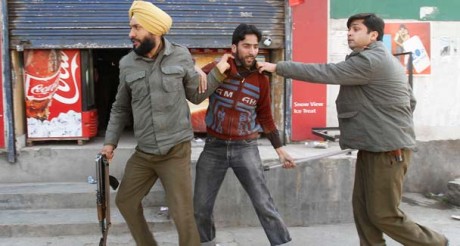
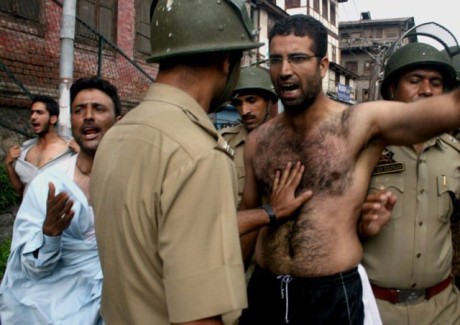
Some Comments on Resolving the Kashmir Conflict
January 19, 2011by Nasir Khan, January 19, 2011
Editor’s Note: Gorki wrote a comprehensive comment on my article ‘Resolving the Kashmir Conflict (Foreign Policy Journal, January 13, 2011 ) in which he offered his perspective and also raised some important questions. In reply, I have written the following remarks. For the sake of convenience, I have split his comment into a few parts followed by my reply:
Gorki:
Dr. Khan I find your article useful because it allows one to hear the views of the Kashmiris themselves regarding the Kashmir imbroglio.
On the face of it your statement “The best course left for India is to make a break with its previous policy, and accede to the right to self-determination of the Kashmiris. This will not weaken India; instead, it will show the strength of Indian democracy as well of the humane aspects of Indian cultural tradition…” sounds reasonable and taken in isolation such views even find many sympathetic listeners in India itself. However the Indians must keep other consideration in mind that cannot be considered imperialistic by any stretch of imagination.
Nasir:
Gorki , thank you for your balanced opinion on a number of points and the important questions you have raised in your comment. I will try to reply to some points.
My roots are in the Indian culture and I am deeply proud of our historical heritage. I am well aware of the Indian Civilisations stretching back to the time of the Indus Valley Civilisation, some five thousand years old. Merely because of the hostile Indo-Pak relations since the partition of India in 1947, the Kashmir Issue has been the main cause of tension between the two states, I have regarded both India and Pakistan as parts of the same body, the body being the subcontinent of India that holds diverse races, cultures and mores showing much diversity while geographically belonging to the same entity. We can compare the subcontinent’s position with the broad geographical areas identified with Europe. In Europe there have been many languages, diverse cultures, political and religious conflicts for well over two thousand years. Despite all that various nations and people of this continent identity themselves with Europe and its civilisations, old and new. In a similar way, as an individual I identity myself with the subcontinent. My regional identity with Kashmir and the historical connection I have with with Kashmir is only natural; it is the affinity of part with the whole. As such they are mutually interdependent, not exclusive of each other.
Gorki:
The reality is that the entire former British India is organically connected and anything that happens in one part has an echo elsewhere in the sub continent. For example when a sacred relic went missing for 17 days from the Hazrat Bal mosque in 1963; there was rioting all over India. Thus any action in or regarding Kashmir cannot be taken in isolation.
While self determination and independence by themselves are honourable goals, anyone arguing for self determination only for the Kashmiris of the valley would either have to argue on the basis of some kind of Kashmiri exceptionalism or else should be willing to accept similar demands for self determination from others such as the Sikhs in the Indian Punjab and the Baluch in Pakistan. Conceding any such demands then would risks major man made disasters like the ethnic cleansing and huge population displacements that occurred in the wake of the partition in 1947.
Nasir:
Here your formulation about the organic connection has the Spencerian undertones! We have histories of India and Indian states before the British came. When the British gradually took over different parts of India by force of arms or by their political skills (and tricks), our people and many of our rulers evinced little concern to what happened to small or big states who were being devoured by the East India Company. Some of them had treacherously sided with the Farangis against those Indian rulers who resisted the British. This is also our history.
The instance of the disappearance of a holy relic in Kashmir you cite has more to do with religious feelings and identities than with the organic connection throughout the subcontinent. Such relics can also be seen as having extra-territorial dimension and impact.
In fact, we have seen major political conflicts and killing of innocent people by the Indian state (and also by Pakistani army in the Northwest Pakistan at the bidding of the United Sates as a continuing policy of crushing and eliminating those who resist and oppose the American wars of aggression in Afghanistan and Pakistan). The vast majority of these countries has not shown much resolve to oppose the policies of their governments. But, a religious relic or what believers may call a ‘religious place’ is something different! That moves our masses, and they do what they think is serving their deities!! We know how the religious passions of ordinary people inflamed by rightist forces in India in which the Indian rulers were implicated, led to the destruction of the Babri mosque by the Hindu mobs and the killing of thousands of innocent Indian Muslims in Gujarat.
But what sort of policies a state formulates and implements has a direct bearing on the political developments of a country. The same is true in the case of India; a wise political lead by responsible politicians influences and shapes the political landscape.
Now the question of ‘Kashmiri exceptionalism’ if India and Pakistan hold plebiscite to meet the demands of the people of Jammu and Kashmir: I myself, do not regard the case of Jammu and Kashmir an exceptional one; but no doubt there is a historical context to it. The circumstances under which India extended its control over Jammu and Kashmir is much different from other princely states. At the end of the British rule in India and the partition of India by the imperial rulers, there were 562 princely states, big and small, over which the British held suzerainty or ‘paramountcy’ as in the case of the State of Jammu and Kashmir. We know how these princely states were incorporated into the two new states. How India extended its control over Jammu and Kashmir (J&K) is relevant to the whole question of the Kashmir Issue. After the military conflict and the ceasefire mediated by the United Nations, both India and Pakistan agreed to hold plebiscite that would enable the people of J&K to determine their future. That promise still remains unfilled and the consequences of that denial have been catastrophic for India, Pakistan and especially the people of J&K.
The Kashmir Conflict continues to be the unfinished task of the 1947 partition. This conflict has not disappeared; neither will it go away because the bullet has so far overridden the ballot and common sense.
Gorki:
Letting Kashmir valley join Pakistan OTOH would in essence be conceding the two nation theory; again not without risks. As you rightly pointed out, India remains a home to some 130 million Muslims. Letting the Muslims of the valley to go join Pakistan would in no way enhance the security of the non-Kashmiri Muslims elsewhere in India and if anything would make them even more insecure and strengthen the very forces of Hindutva that you pointed out threaten India’s fragile communal amity. (Ironically this is exactly what happened to the Indian Muslims of UP and Bihar who had allowed themselves to be emotionally led into voting for the AIML’s election plank of a Pakistan in 1946 which then left them high and dry).
Even within the state of Jammu and Kashmir itself, there would be major upheavals in case the current structure is tampered with. What would happen to the minority Muslims in Jammu and Ladakh?
Also if one argues that Kashmir is a homeland for the Kashmiris then what happens to other non Kashmiri populations of the valley such as the Gujjars etc.? Where would their homeland be?
Nasir:
Here you raise some important questions and also some legitimate concerns. First, the ‘two nation theory’. In fact, the partition of India was on the basis of the two nation theory. For the sake of argument, I will say that if the people of J&K join A or B country, or decide for some other option they should have the democratic right to do so. The organic linkage you seem to emphasise in case the Valley joins Pakistan is worthy of consideration, but what Kashmiri Muslims want is their right to determine their future and to gain freedom. What that freedom entails is the freedom from Indian rule. This is their wish and to crush their aspirations the Indian state has used more than half-a-million soldiers. They have killed more than one-hundred-thousand people. It is military occupation of a country where India has committed horrific war crimes.
Who contributed to such a perspective that shaped the political history of India and led to the division of India by the British? Well, an easy way for amateurs is to have a bogeyman to explain away the historical facts and blame the Muslim leadership for all that! Even before Mr Gandhi came to India from South Africa, one of the most prominent Indian politician at that time was Mr Jinnah, who was commonly known as the ‘ambassador of Hindu-Muslim unity’. He had the vision of a democratic, united India at the end of the British raj. But alas that was not to happen because this liberal, secularist lawyer was able to see the machinations of the Hindu leadership of the Indian National Congress and other Hindu militant organisations standing for the Ram raj and the Hindu domination of the whole sub-continent.
In my political work, at no time have I ever said what the people of J&K should stand for or how they should decide about their future. Neither have I ever advocated that the people of the Kashmir Valley should join Pakistan. That is something for the affected people to decide.
The Kashmiris’ demand and their struggle for Azaadi (freedom) is not directed against any other people, ethnic or religious minorities, who make up the population of their country. The people of J&K, Muslims, Hindus, Buddhists, etc., have traditions of tolerance and inter-religious accommodation. In 1947, I was a six-year-old; I had seen how Hindus and Muslims had a shared and fraternal existence in our area. If the people of J&K are given a chance to live as free human beings and not under the terror of military power of India, then our age-old traditions of mutual respect and acceptance will reassert. That will be a good example for the Hindutva rightist forces that pose a great threat to the Indian democracy and religious minorities, Muslims being their major target.
I am also conscious of the dangers you rightly point to if the ‘current structure’ is changed. But I don’t suppose you offer your solution as the continued rejection of the demands of the Kashmiris because that safeguards some ‘ideal’ unity of India, knowing that India has carried out a militarist solution to crush the demands of the Kashmiri freedom movement. Simply put, it has been state terrorism by an occupying power. This short-sighted policy will fail in the long run as it has failed in the past.
Gorki:
You rightly mention that Kashmir is currently a big source of contention between India and Pakistan. However how certain can anybody be that this will not be the case if this issue is sorted out? Former Pakistani president, General Musharraf once said that India will remain Pakistan’s considered foe even if Kashmir issue is resolved. There are people with strong following in Pakistan who argue for waging a war on ‘Hindu India’ to conquer the Red Fort and restore the Mughal Empire. What of those?
Nasir:
If the main source of conflict between India and Pakistan is resolved according to the wishes of the people of J&K, then we expect the two neighbours will live amicably side by side and their bilateral relations and socio-cultural contacts will increase which will benefit all the people of the region. What Musharraf said is his view and it should not be taken too seriously. Apparently, the climate of hostility and mutual recriminations between India and Pakistan since the partition, people on the both sides have been fed on cheap propaganda. The nonsensical slogans to restore the Mughal Empire is the daydreaming of some Rip Van Winkles who are living in past, not in the twenty-first century.
Gorki:
I agree with you however that the current stifling atmosphere in Kashmir has to come to an end; human rights violations need to be investigated in a transparent manner and the culprits have to be vigorously prosecuted. Kashmiris need to feel that they control their political and economic destiny in their own hands. For this to happen however both the Indian state and the Kashmiri separatists have to demonstrate courage and pragmatic far sightedness.
The state has to take the above listed steps in the short run. In the long run it has not only to deliver on the economic measures promised previously but also to scrupulously avoid the mistakes of the past such as blatant rigging of elections as it did on the 80s in Kashmir and elsewhere in India.
For their part the Kashmiri separatists have to realize that the peaceful and constitutional methods of protest are in the best interest of all Kashmiris and the constitution is their best ally. India is not an empire; it is a Republic and a civic nation.
The constitution does not hold the rest of India in any special position over Kashmir; if anything it is the Kashmiris who hold a special place within the constitution.
Today if the separatists were to come to power via electoral politics, there is absolutely nothing that such a government could not do within the existing framework to better the life (or freedom) of an ordinary Kashmiri that it could do if they had complete ‘Azaadi”.
Nasir:
Some suggestions you make and the prognosis you offer are reasonable. If Kashmiris hold a special place in the Indian Constitution, then obviously Indian control over Kashmir was unlike any other princely state. That also shows that the Indian government had political considerations to accord special status to Kashmir within the Union. But what stops the Delhi government from acceding to the demands of the people of J&K to plebiscite? Why should a great power like India be so afraid to listen to the voice of the people instead of using state terror to crush them?
It is also possible that the vast majority may opt for India. Thus by a generous and courageous political move, India has the power to defuse the conflict for ever. If that happens, then those who stand for separation from India will lose and the consequences will pacify all sides. This can usher in a new era of improved inter-communal and regional relations. Religious fundamentalists and rightist forces on the both sides will not be able to exploit the religious sentiments of the people any longer. That will be a victory of the common sense over emotionalism and communal frenzy.
Gorki:
There is already a precedent of such a dramatic change in political struggle within India. In the 1980s many Sikh leaders were charged with sedition and jailed for demanding a Khalistan and burning copies of the Indian constitution as protest. Today, one of those former separatist is an all powerful Chief Minister in Punjab and there is no opposition because the remaining separatists cannot list a single point in which way the life of an average Sikh would be different in an independent Khalistan.
I do hope to hear form you.
Regards.
Nasir:
In India there are still many regional and ethnic conflicts. I don’t think the Khalistan movement ever had any justifiable political stance and I am happy it reached its cul de sac. But we should be aware of the pitfall of equating Khalistan with the Kashmir Conflict.
Finally, it has been a pleasure to respond to your wise and erudite comment.
Cordially yours
Nasir Khan
Share this:
Tags:British in India, demand for plebescite, Gorki, India, Indian Muslims, Jammu and Kashmir, Kashmiri demands, military occupation of Kashmir, Mr Gandhi, Mr Jinnah, Nasir Khan, Pakistan, religious relics
Posted in Commentary, India, Kashmir, Pakistan, Uncategorized | 1 Comment »