Israeli Prime Minister Benjamin Netanyahu visited a Jewish settlement in the Israeli-occupied West Bank on Sunday and said that he had fulfilled a promise to thwart the establishment of a Palestinian state that he made to the settlers 25 years ago.
According to The Times of Israel, the Israeli leader recalled his visit to the Ofra settlement in the year 2000 and saying that “we would do everything to ensure our continued hold on the Land of Israel, to prevent the establishment of a Palestinian state, to thwart the attempts that existed then — and unfortunately still exist — to try to uproot us from here. Thank God, what I promised — we kept.”
Netanyahu said he prevented a Palestinian state despite significant external pressure. “Pressures from home, pressures from abroad, a series of American presidents who wanted to uproot us and to establish a Palestinian state here. We stood firm together. We upheld the promise of the generations,” he said.
The Ofra settlement was started in 1975 and, like all other Israeli settlements in the West Bank, is illegal under international law. Netanyahu was visiting the settlement on Sunday for an event marking its 50th anniversary.
The visit came after Israeli Finance Minister Bezalel Smotrich announced a major settlement expansion that he said would “bury the idea of a Palestinian state.” The plan is seen as Smotrich’s reaction to the UK, France, Canada, and Australia declaring their intent to recognize a Palestinian state.
The Trump administration has also expressed significant opposition to its allies’ plans to recognize a Palestinian state, and President Trump has even suggested a trade deal with Canada could be scrapped over Ottawa’s plans.
Israel’s current genocide in Gaza and recently announced plans to occupy Gaza City are both part of a long and tortured history of Israeli military occupations of the tiny strip.
A convoy of Israeli military vehicles drives down a road on the border with the Gaza Strip on October 15, 2023. (Menahem Kahana / AFP via Getty Images)
Whenever we imagine that Israel’s genocide has reached its nadir, the country plumbs new depths of evil. Israel’s genocidal energy in Gaza seems bottomless.
On Thursday, nearly two years into the genocide, Israeli prime minister Benjamin Netanyahu announced on Fox News that Israel intends to take military control of the entire Gaza Strip. On Friday, Israel’s security cabinet approved a plan to occupy Gaza City, which will involve the mass displacement of “all Palestinian civilians from Gaza City.”
If implemented, the planned reoccupation, which comes exactly twenty years after Israel’s unilateral withdrawal from Gaza in August 2005, will unleash Israel’s third military occupation of Gaza, culminating a decades-long history marked by brutal violence, mass slaughter and ethnic cleansing, and endless displacements. Not that Israel is not already an occupying force in Gaza. According to the United Nations, Israel is still occupying Gaza, because it continues to control the territory by land, air, and sea. Freely touting its ethnic cleansing schemes there, now Israel wants Gaza without its people. It’s a settler-colonial campaign branded as military occupation.
Gaza is not a state in conflict with Israel. It’s the largest refugee camp on earth. Squeezed in a tiny sliver of land (1.3 percent of Palestine), the majority of its two million people live in cramped refugee camps, most of which have been in existence for over seven decades.
It started during the Nakba, the mass displacement of Palestinians at Israel’s founding in 1948 when over 750,000 Palestinians were forcibly expelled from their land and homes in Israel and made lifetime refugees. Nearly 250,000 of those uprooted flooded into Gaza, the last surviving Palestinian city along the Mediterranean coast, tripling its population overnight and rendering it a colossal refugee camp squashed between desert and sea. Providing shelter to the displaced inhabitants of over 250 razed Palestinian towns and villages, Gaza became a Noah’s ark for Palestine after the Nakba.
The tragedy was so profound that the United Nations set up that year a special agency to provide aid to Palestinian refugees, the United Nations Relief for Palestinian Refugees, which was shortly succeeded by the UN Relief and Works Agency for Palestine Refugees in the Near East (UNRWA), and soon moved its headquarters to Gaza City.Gaza is not a state in conflict with Israel. It’s the largest refugee camp on earth.
Most of the refugees who flooded into Gaza came from towns and villages in central and southern Palestine and from northern parts as far as Galilee. But those from villages around Gaza had to endure the tragedy of being displaced within sight of their lost lands and homes. As Israeli military leader Moshe Dayan later confessed,
Jewish villages were built in the place of Arab villages. You do not even know the names of these Arab villages, and I do not blame you because geography books no longer exist. Not only do the books not exist, the Arab villages are not there either. Nahlal arose in the place of Mahlul; Kibbutz Gvat in the place of Jibta; Kibbutz Sarid in the place of Huneifis; and Kefar Yehushu’a in the place of Tal al-Shuman. There is not one single place built in this country that did not have a former Arab population.
Those settlements, built on the ruins of uprooted Palestinians, served as a constant reminder of the Nakba. To cite the late Lebanese writer Elias Khoury, voice of the Palestinian refugees: “Nahal Oz was a military settlement founded by the Nahal units of the Israeli army to harass Palestinian farmers who had been driven out of their villages and had become refugees in Gaza.”
Over the next seven decades, Gaza’s bleak refugee reality would set into motion a long and tortured history of Israeli military occupations of the tiny strip.
Israel’s Brutal Invasions
In November 1956, embarking on its first occupation of Gaza, Israeli forces invaded the territory by launching military raids on its impoverished refugee camps. The occupation took place during Tripartite Aggression against Egypt, which was then controlling Gaza. It started with a series of horrific massacres. Israeli soldiers entered Khan Yunis and collected all adult males from their homes and shot them at their doorsteps and in the streets, killing at least 520 people.
Even Rafah in the south was not safe from Israeli invasions and mass slaughter. On November 12, Israeli forces invaded the refugee camps in Rafah, rounded up male residents, and killed and wounded hundreds of people in cold blood. The bodies of the victims were dumped in the district of Tell Zurab, west of Rafah, where families had to risk curfews to pick up the bodies of loved ones and bury them, though most of the burials were carried out without identification. The bloodshed, known as the Rafah massacre, sent waves of horror through the camps.
And so Gaza got a first taste of what an Israeli occupation was like: thousands of civilians were killed and wounded throughout the whole Gaza Strip, and hundreds of prisoners summarily executed. The carnage was described by the Red Cross as “scenes of terror.” It was so appalling that E. L. M. Burns, the head of the UN observer mission in Gaza, warned that Israel’s atrocities there intended to wipe out Gaza’s refugee population, which according to international law, amounted to an act of genocide.
Because Gaza was essentially a massive refugee camp of displaced Palestinians who were expelled from their homes inside Israel during the Nakba, Israel became the first occupying power in history that uprooted a native population, chased it into exile, and occupied it. (Isarel’s invasion of Lebanon in the early 1980s would mete out the same fate to Palestinian refugees there, culminating in the horrific Sabra and Shatila massacre, which was also condemned by the UN as “an act of genocide.”)
Even Israeli military leaders like Dayan were forced to admit that grim reality. As he confessed that year: “What can we say against their terrible hatred of us? For eight years, they have sat in the refugee camps of Gaza and have watched how, before their very eyes, we have turned their lands and villages, where they and their forefathers dwelled, into our home.”
But the Nakba was only the beginning. Unsatisfied with uprooting Palestinians, Israel would routinely invade Gaza, wreak horror, and carry out a series of massacres. Frequently after 1948, Israeli forces would raid Gaza’s refugee camps, slaughtering and displacing thousands of refugees, and demolishing their homes and camps. In January 1949, with the bloody memory of the Nakba still fresh in Gaza, Israeli forces bombed food distribution centers in Deir al-Balah and Khan Yunis at peak hours, killing hundreds of Palestinians. Those refugees who attempted to return to their homes, labeled by Israel as “infiltrators,” were routinely shot on sight by Israeli soldiers.
In August 1953, an Israeli military unit, led by Ariel Sharon, the future prime minister of Israel, invaded the Bureij refugee camp and killed some fifty people in their beds. According to UN officials, Israeli forces threw bombs through the windows of huts where Palestinian refugees were sleeping and shot at those who tried to flee. The massacre was described by a UN commission as an “appalling case of deliberate mass murder.”
Those repeated massacres were part of a wider Israeli campaign to ethnically cleanse Gaza’s refugee population. Following the Nakba, Israel’s founders, including David Ben-Gurion, foresaw the risk of concentrating hundreds of thousands of Palestinian refugees in a coastal strip straddled between the Negev and Sinai deserts with no real way out and no hope for escape or dispersion. Haunted by Gaza’s refugee population and the prospect of Palestinian right of return, and fearing the spectacle of “waves of refugees marching on Israel from Gaza,” Israel attempted to solve the crisis by wiping it out.
When that failed, Israel moved to reoccupy Gaza.
Massacre Upon Massacre
In 1967, war again broke out and Israel invaded Gaza for the second time. It was no easy feat: it took Israel six days to win the war but four years to take control of Gaza. The resistance spurred a second exodus, as tens of thousands of refugees, still traumatized by the memory of the first occupation, were forced to flee the coastal strip to Jordan and Egypt — never to return. Israel’s second and decades-long occupation of Gaza was underway.
The refugee population of Gaza continued to haunt Israeli leaders after 1967. Transfer plans abounded. During Israel’s prolonged occupation of Gaza — which placed refugees under the control of the very forces that had uprooted them two decades earlier — Israeli leaders, notably Levi Eshkol and Dayan, contemplated transferring Gaza refugees to the West Bank, or Sinai in Egypt, or Iraq, or an Arab country in North Africa (the “Libyan Operation”). They even hatched a secret plan, the “Moshe Dayan plan,” to transfer Gazan refugees to Latin America by air, though luckily for the people of Gaza, the plan was deemed costly and unfeasible.
Unsatisfied with military occupation, Israeli forces moved quickly to uproot Palestinians in Gaza, demolish their homes and seize their land, and build Jewish settlements on the ruins of displaced refugees. The settlements prospered while Palestinians suffered under occupation.
Even peace proved costly for Gaza’s refugees. The 1979 Camp David Accords closed off Gaza’s border with Egypt, dividing families by barbed wires, causing further population displacements and house demolitions along the newly demarcated border, depriving Gaza’s fishermen of their traditional access to Egyptian territorial waters. The destruction of Israeli settlements in Sinai was further compensated by an upsurge in settlement activity in Gaza.For nearly two decades, Israel has imposed a total blockade on Gaza, while routinely assaulting and raiding its population.
During the second intifada, after nearly four decades of protracted occupation, Israel seemingly withdrew from Gaza, leaving behind over one million camped refugees. When its forces left the coastal strip, Israeli leaders were confident they had finally swept Gaza’s refugee crisis under the rug of “disengagement.”
Meanwhile, Israel continued to control Gaza’s frontier posts, airspace, and territorial waters. Declaring the impoverished enclave a “hostile territory” and viewing its refugee population as a security threat of “existential” proportions that required disproportionate force, Israel routinely subjected Gaza to collective punishment. It continued to subject its population to military operations and invasions. Israel’s pullout was branded to the outside world as a concession, the end of occupation, and the fulfillment of Israel’s obligations toward Gaza and its refugees.
In reality, the withdrawal made the refugee population an easy target for its military incursions and conquests, with entire sections of the camps declared no-go areas for the Israeli patrols. Meanwhile, Israel moved its settlers to new settlements in the West Bank and around Gaza, and before long, Gaza was placed under total siege.
For nearly two decades, Israel has imposed a total blockade on Gaza, while routinely assaulting and raiding its population — a brutal chapter that would culminate in the ongoing genocide. All that time, the refugees of Gaza had to suffer the horrifying fate of living under the yoke of the very forces that had ethnically cleansed them decades earlier. Bombarded, under siege, penned in a slaughterhouse, and trapped in an iron cage fashioned by Israel, the refugees of Gaza have come to fathom the depth of their tragedy: there is one thing worse than being displaced, and that is not being able to leave. Many still fear that leaving would amount to a second Nakba, which Israeli leaders have been so determined to carry out.
Every year or so after the Nakba, Israeli forces would invade Gaza. For decades, Israel would subject Gaza to a brutal series of military invasions and occupations, raids and offenses, military incursions and administrations, bombing campaigns and air strikes, repeated massacres and mass displacements, a yearslong blockade that is still in place, and an ongoing genocide with no end in sight.
Israel’s brutality in Gaza has often spawned resistance. Owing to its refugee history, Gaza was the birthplace of the first intifada, known as the stone uprising, which broke out in Jabalya refugee camp (nicknamed “Vietnam Camp”), and was led by unarmed young Palestinians who were born refugees and grew up under Israeli occupation. Gaza then became the symbolic battlefield of the second intifada when, at a crossroads near Bureij refugee camp, twelve-year-old Muhammad al-Durrah was shot dead in his father’s arms, the iconic image of the uprising.
According to French historian Jean-Pierre Filiu, Israel has waged at least fifteen wars on Gaza since the Nakba, which has resulted in the near annihilation of Gaza’s 4,000-year-old civilization. In the five wars it has waged on Gaza since the blockade, Israel has killed hundreds of thousands Palestinians while displacing over two million others. In summer 2014, during Operation Protective Edge, Israeli forces slaughtered over two thousand Palestinians in Gaza. Two Palestinian popular uprisings, or intifadas, were brutally suppressed by Israel. Even when seven years ago Palestinians staged a symbolic March of Return within the sealed walls of Gaza, to commemorate the Nakba, they were mercilessly slaughtered by Israel in the hundreds, including children flying kites. Today nearly two years into the Gaza genocide, those past massacres have become a daily spectacle in Gaza.
The tragic irony is that the refugees in Gaza now being slaughtered and displaced were created in the heat of war by Israel itself more than seventy-seven years ago. Except this time, the refugees have nowhere left to go.
Yet Israel’s obsession with Gaza’s refugees is not completely misplaced and will certainly be met with Palestinian steadfastness. As Khoury put it: “For seventy years the refugees have not stopped knocking on the gates of Gaza, which are locked with hatred and death, and they will continue to knock on them until the locks are broken, and Palestine will reach out its hands to its people who return to it invaded by the water and mud of the earth, and build from their death a gate to life.”
Israel has murdered Anas Al-Sharif, 28, a steadfast, well-known Al Jazeera correspondent called “the voice of Gaza to the world,” in a targeted strike in Gaza City that also killed four other journalists. Long threatened by Israel for his relentless coverage of Israeli atrocities, Al-Sharif vowed to continue “every day and every hour to report what is happening – this is our cause.” In a last message, Al-Sharif wrote, “I lived pain in all its details and I tasted loss and grief time and again…Do not forget Gaza.”
Al-Sharif was among five Al Jazeera journalists killed in a clearly targeted strike on a tent housing them outside the main gate of al-Shifa Hospital late Sunday. The other victims were Al Jazeera correspondent Mohammed Qreiqeh and camera operators Ibrahim Zaher, Mohammed Noufal and Moamen Aliwa. In his last post before his death, al-Sharif said Israel had launched intense bombing, called “fire belts,” on Gaza City; his final video showed the sky lit by orange flashes as loud booms sounded.
Calling Al-Sharif “one of Gaza’s bravest journalists” – and one of the most prominent with over half a million followers online – Al Jazeera said he and his colleagues were among the last remaining voices in Gaza “conveying its tragic reality to the world.” It accused Israel of waging a “campaign of incitement” against its journalists by repeatedly fabricating evidence seeking to link them to Hamas; in the last 22 months, the Israeli military has killed over 230 journalists, including multiple ones from Al Jazeera.
A U.N. rapporteur had earlier cited Israel’s “repeated threats and accusations” against Al-Sharif, arguing, “Fears for (his) safety are well-founded.” Last month, Israel claimed it had “unequivocal proof” he was a member of Hamas, and on Sunday they admitted to a deliberate strike against Al-Sharif, “the head of a terrorist cell.” Colleagues dismissed the claim as propaganda, with “zero evidence” to support it. Said a colleague of Al-Sharif’s: “His entire daily routine was standing in front of a camera from morning to evening.”
Other journalists also charge Israel is waging “a deliberate war on journalists” purely for their willingness to risk their lives to document Israel’s genocidal crimes, from mass bombardment to mass starvation. “Israel’s strategy is clear: Silence the truth by murdering those who report it,” said The Palestine Chronicle‘s Ramzi Baroud, who mourned having to lose so many journalists solely for their “commitment to the truth.” Still, he insisted, “Their deaths will not bury the Palestinian story.”
Al-Sharif had earlier written that, “despite all (the) difficulties and tragic circumstances” he and his colleagues had faced over the last brutal year and a half, he held to his belief that “it is the duty of the world to see and witness what we are documenting…This drives us to continue in our coverage to our last breath.” Still, he knew death likely awaited. “This is my will and final message,” he wrote in April. “If these words reach you, know that Israel has succeeded in killing me and silencing my voice.”
“First, peace and God’s mercy and blessings be upon you,” he wrote in the translated post published by his family. “God knows I have given all my effort and strength to be a support and a voice for my people since I opened my eyes to life in the alleys and streets of Jabalia Refugee Camp. My hope was that God would grant me life so I could return with my family and loved ones to our original town of Ashkelon (Al-Majdal), now occupied. But God’s will was swifter, and His judgment is inevitable.”
Berating “those who remained silent, who accepted our killing,” he goes on to entrust those reading “with Palestine, the jewel of the Muslim crown and the heartbeat of every free person in this world…with its people and its innocent children who were not granted a lifetime to dream or live in safety and peace,” and with his wife and two children he did not live to see grow. “I die steadfast in my principles,” he writes. “Forgive me if I have fallen short, and pray for mercy for me, for I have kept my promise…Do not forget Gaza.”
“I lost my voice screaming, ‘Massacre, massacre,’ hoping that the world takes action. But it is an unjust world.” – Anas Jamal Al-Sharif.
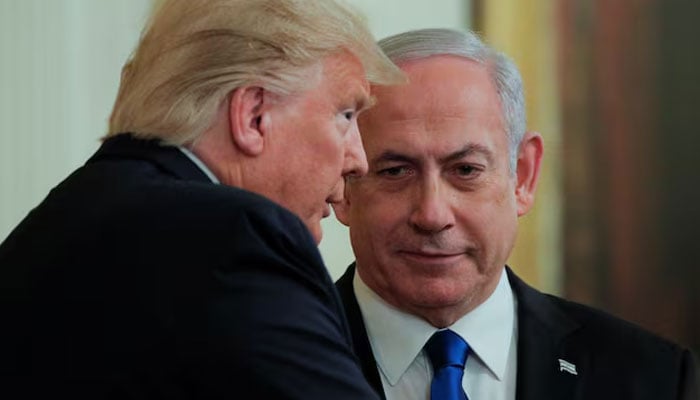
US President Donald Trump and Israel’s Prime Minister Benjamin Netanyahu talk in the midst of a joint news conference in the White House in Washington, U.S., January 28, 2020. — Reuters
Twenty-one months into the protracted conflict, the Gaza massacre is marked by an ever-increasing number of innocent civilian casualties, with the death toll having surpassed 60,000, according to Reuters.
Calling it “genocide”, the former Israeli prime minister wrote a piece in Haaretz, a leftist Israeli mainstream newspaper, outlining the war crimes Israel is committing in Gaza. Now, a highly plausible threat of famine looms over innocent Gazans, with a large number being children. As the situation worsens manifold, people, both in the US and around the globe, are perplexed at the unstinted US support for Israel even when the genocide of the 21st century plays out on their TV screens.
Recently, the Trump administration announced that, in case of a natural disaster, the federal government would not assist US cities and states that boycott Israeli companies. This has led the core base of the Republican Party to question the veracity of Trump’s ‘America First’ slogan.
It is certainly difficult for Mr Trump to balance the factions within his party surrounding the issue; on the one hand, hawkish members of the administration, such as Senator Ted Cruz, routinely advocate for US involvement. On the other hand, some conservative voices in the Republican Party strongly oppose direct US interference in yet another conflict. For instance, Republican lawmaker and an influential voice in the party, Marjorie Taylor Greene, is among the very few who openly oppose Israel’s heinous actions.
It is, however, important to note that multiple US presidents, regardless of the party, have done Israel’s bidding. For instance, under the Biden administration, according to The Guardian, the US vetoed five UNSC resolutions calling for a ceasefire in Gaza since the beginning of the conflict in October 2023, thus effectively allowing Israel to carry out genocidal actions without any ramifications and international accountability.
It is, therefore, a worthy question to ask: Why is the US blind to Israel’s genocidal policies that threaten regional peace and stability? Well, the answer to such a question is rather intricate and multifaceted: there are cultural, economic and political factors behind the US’s unconditional and sustained support for Israel.
First, elite Christian Zionism is one of the driving factors. Christian Zionism is the ancient belief among Christians, especially evangelical Protestants, that the modern state of Israel fulfilled biblical prophecy and that standing up for the state of Israel is a religious duty. It refers to the historical return of the Jewish people to the holy land.
Some of the key tenets of the ideology include: the establishment of the Temple in Jerusalem, which is a prerequisite to the arrival of Jesus; Israeli sovereignty over all of historic Palestine, including the West Bank.
With roots entrenched in ancient biblical narrative, evangelical Zionism has an overarching influence on American foreign policy, especially in the Middle East: it is mainly promulgated by conservative think tanks and right-wing political figures.
According to Dr Noam Chomsky, the extremist Zionism of the vast evangelical movement has now become “a substantial part of the Republican Party’s base”.
For instance, in a recent podcast with Tucker Carlson, a conservative media figure and former Fox News host, Ted Cruz, a Republican Senator from Texas and a former presidential candidate, stated: “Growing up in Sunday school, I was taught, from the bible, that those who bless Israel will be blessed and those who curse Israel will be cursed, and from my perspective, I want to be on the blessing side of things”.
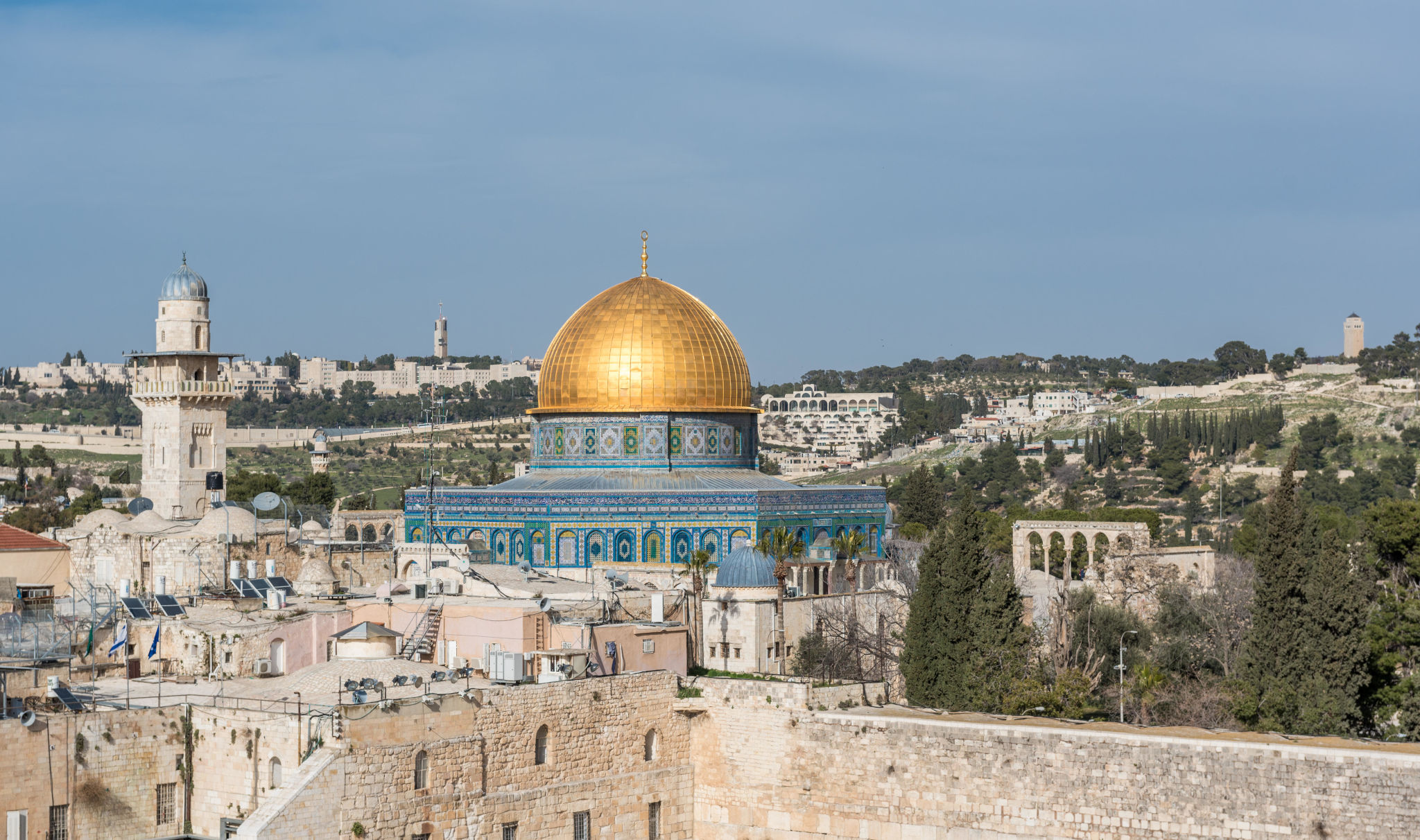
Consequently, evangelical Zionists have become a major political force in the American political landscape, playing a pivotal role behind the US’s unwavering support for Israel. Through effective lobbying, they have influenced significant US policy decisions: the relocation of the embassy to Jerusalem – a region of profound cultural and religious significance claimed by both Israel and Palestine.
This religious fervour of evangelical Zionists has helped lay the foundation, but it is lobbying groups that turn this sentiment into legislative action. Chief among them is the American–Israel Public Affairs Committee (AIPAC), which has been instrumental in shaping both Republicans’ and Democrats’ positions on Israel.
Established in 1951, AIPAC began as a small advocacy group. However, since then, it has evolved into one of the most well-funded and powerful lobbies in Washington DC. While it claims to be bipartisan and focused on strengthening the US-Israel relationship, its influence often skews US foreign policy in favour of Israel – regardless of human rights or the concerns surrounding the violations of international law.
AIPAC lobbies Congress aggressively to ensure continued military aid, fiercely opposes any legislation critical of Israeli actions and promotes policies that shield Israel from accountability. For instance, it plays a key role in ensuring that Israel receives $3.8 billion in military aid. It also opposed the No Way to Treat a Child Act, which aimed to restrict US funding from being used to detain or abuse Palestinian children. Also, AIPAC supported legislation that penalised individuals and companies that boycott and condemn Israel.
In election cycles, AIPAC has funnelled millions of dollars through its affiliated Super PACs like United Democracy Project, targeting lawmakers critical of Israeli policies. In 2022, it spent heavily to defeat progressive candidates such as Rep Donna Edwards and Rep Andy Levin, both of whom supported conditioning aid to Israel. Meanwhile, it has helped elect more compliant figures by boosting their campaigns financially.
By exerting pressure through substantial campaign contributions, high-profile conferences, and mobilisation of pro-Israel political networks, AIPAC has ensured that challenging Israel’s policies comes at a heavy cost that few are willing to pay. AIPAC’s pervasive influence has led to dire consequences for the Jewish community as well. When Israel’s war crimes are justified as ‘Jewish self-defence’ – as AIPAC routinely does – it inevitably ties Judaism to the bombing of children.
The US’s unconditional support of Israel has fueled anti-American sentiment all around the world. Ignoring Israel’s ongoing atrocities in Gaza, turning a blind eye to the expansion of the Jewish settlements in the West Bank, and the US’s perpetual opposition to peace calls by the international community undermines the very principles the US has advocated for.
While Washington lectures Russia and China on human rights, its blanket defence of Israel’s atrocities exposes a moral bankruptcy that undermines US credibility worldwide.
If the US seeks to restore its global credibility and allow the true voice of its people to shape foreign policy, it must begin by curbing the disproportionate influence of lobbies that act in the interests of foreign governments – often at the expense of justice, democracy, and the public will.
The writer lives in New York and aspires to be a legal scholar. He can be reached at: alibilal4471@gmail.com
The pro-Israel lobby group AIPAC is attacking Rep. Marjorie Taylor Greene (R-GA) after she became the first Republican member of Congress to label Israel’s actions against the Palestinians in Gaza a genocide.
According to Al Jazeera, in a fundraising email to supporters on Thursday, AIPAC called Greene’s remarks “disgusting” and accused her of betraying “American values” for calling Israel’s brutal campaign in Gaza a genocide, which aligns Greene with many human rights organizations and genocide scholars, including Israeli ones.
“You expect anti-Israel smears from Rashida Tlaib and Ilhan Omar,” AIPAC said in the email, referring to two House Democrats known for their critical view of Israel. “But now, Marjorie Taylor Greene has joined their ranks – spouting the same vile rhetoric and voting against the US-Israel alliance.”
AIPAC said Greene was now the “newest member of the anti-Israel Squad” and claimed her view was a “betrayal of American values and a dangerous distortion of the truth.”
Greene has referred to Israel’s actions as genocide at least twice in posts on X. In her first post, Greene said that it’s “the most truthful and easiest thing to say that Oct 7th in Israel was horrific and all hostages must be returned, but so is the genocide, humanitarian crisis, and starvation happening in Gaza.”
In another post, the Georgia congresswoman said many Americans are “against radical Islamic terrorism, but we are also against genocide.” She has also repeatedly referred to Israel as “nuclear-armed Israel,” making her one of the first members of Congress to directly acknowledge Israel’s secret nuclear arsenal.
AIPAC is known to spend big on pro-Israel candidates and is likely going to fund an opponent of Greene’s when she comes up for election again. The pro-Israel group has also targeted Rep. Thomas Massie (R-KY), the only other Republican in Congress to offer significant criticism of Israel and who consistently votes against aid to Israel.
Netanyahu chose to blow up the ceasefire and starve Gaza’s population in order to force a surrender from Hamas, while top military and security officials favored moving to the second phase of a ceasefire, leaked cabinet meeting minutes reveal.
Israeli Prime Minister Benjamin Netanyahu at cabinet meeting on January 22, 2023. (Photo: Israel National Photo Collection/Government Press Office)
Israel decided to starve the people of Gaza as a strategy of war and in order to sabotage the ceasefire deal, according to Israeli cabinet meeting minutes leaked on Wednesday to Israel’s Channel 13.
The document purports to show that Israeli Prime Minister Benjamin Netanyahu refused multiple proposals that would have secured the release of the remaining Israeli captives during the ceasefire between January and March 2025. Netanyahu decided to break the ceasefire, against the advice of top Israeli military and security officials, and to cut off all aid to Gaza to “force Hamas to surrender,” the leak shows.
The Israeli cabinet’s meeting, dated March 1, was to discuss the fate of the ceasefire with Hamas as the first phase of the agreement was set to expire. The prospective second phase of the ceasefire was supposed to see the beginning of talks on the permanent end of the war. The minutes released by Channel 13 show that army and intelligence officials argued for concluding the ceasefire deal, while cabinet ministers opposed it.
Major General Nitzan Alon, the Israeli army official in charge of prisoners and missing persons, reportedly argued that “the only opportunity to release the captives is to discuss the conditions of phase two,” while Ronen Bar, the chief of the Israeli internal intelligence agency (the Shabak), said that his “preferred option is to move forward with phase two,” stating that Israel could “easily” return to war later. “Let’s get everyone back first, then resume the fight,” he reportedly said.
The minutes also revealed that a senior Israeli security official told the ministers that “it is possible to secure the release of more captives, but that requires engaging in talks about phase two — ending the war.” The government, however, led by Netanyahu, rejected the proposal. He was backed by Israeli Minister of Strategic Affairs, Ron Dermer, who reportedly said that Israel was “not prepared to end the war while Hamas remains in power.” Dermer, who supports Netanyahu’s hardline position on Gaza, was named by the Prime Minister as head of the negotiating team in the ceasefire talks.
Also backing Netanyahu’s refusal was hardline Finance Minister Bezelel Smotrich, who lashed out at military and intelligence officials, insisting that they were “misleading the public” into thinking Israel could “stop the war and return to it later,” which Smotrich regarded as “ignorance.”
For his part, Israeli Defense Minister, Israel Katz, supported a partial deal, saying that, “If Hamas returns even a number of hostages — less than half — that’s excellent.”
On March 18, Israel broke the ceasefire by launching a wave of bombings on Gaza, killing 400 Palestinians, mostly civilians, in the first minutes of the onslaught. Israel also announced the complete closing of the crossing points, causing an immediate drop in available goods in the strip and cutting off the entry of humanitarian aid. The continuation of the blockade caused the spread of severe hunger, which UN agencies have qualified as famine. UNICEF has called the deaths of Palestinian children due to starvation “unconscionable”.
Israel also halted the work of UN agencies in Gaza, limiting the distribution of the little aid it began to allow in since April to the Gaza Humanitarian Foundation (GHF). The GHF is the controversial Israeli-backed and U.S.-run organization that replaced the UN in May, and has forced Palestinians to travel to four distribution centers in the southern Gaza Strip to collect aid. The centers have been described as “death traps” that use aid as “bait” to lure Palestinians into southern Gaza. There, the Israeli army opens fire on aid-seekers, resulting in numerous recorded “aid massacres.” As of the time of writing, 1,561 people have been killed at GHF sites or while waiting for aid trucks in the north, according to the Ministry of Health in Gaza.
According to the Health Ministry, some 160 Palestinians, including 90 children, have died due to malnutrition brought on by starvation.
This outcome adds to a growing list of union-led actions across Europe in solidarity with Palestine and against the ongoing genocide in Gaza, Ana Vracar reports.
Dockworkers in Genoa, Italy, protesting forced complicity of Italian ports in Gaza genocide, June 2025. (Unione Sindacale di Base via Peoples Dispatch)
Italian port workers secured a significant win last week in their ongoing resistance to militarization and arms transfers, as shipping operators decided they would not unload military cargo destined for Israel from the vessel COSCO ShippingPisces — returning the containers to their point of origin instead.
“We were informed today that the three containers carrying military equipment, destined for La Spezia and transported aboard the COSCO Pisces, will not be unloaded in either Genoa or La Spezia,” the union Unione Sindacale di Base (USB) said on July 29. “This decision marks a tangible result of union action and the pressure exerted by USB.”
Costco Pisces in the Dutch port of Rotterdam in 2019. (kees torn/Flickr/CC BY-SA 2.0)
This outcome adds to a growing list of union-led actions across Europe in solidarity with Palestine and against the ongoing genocide in Gaza, where at least 60,000 people have been killed by the Israeli occupation.
“From Greece to Liguria, as previously demonstrated with the support of French dockworkers, the network of dockworkers across Europe and the Mediterranean has shown that stopping war logistics is possible, legitimate, and necessary,” Unione Sindacale di Base wrote.
Following the announcement, a planned Aug. 5 strike was called off. However, Genoa dockworkers have pledged to continue mobilizing against the arms trade. They have also announced plans for an international assembly on Sept. 26–27, which aims to lay the groundwork for a sector-wide strike.
“We are not alone: our struggle unites Marseille, Piraeus, Hamburg, Tangier,” trade unionists declared earlier in July. “If the war comes through the ports, the response must come from the ports.”
Unione Sindacale di Base logistical workers continue to expand their campaign on the principle that strikes are a legitimate tool in the fight against war, militarization and forced worker involvement in arms trafficking.
“Law 146/1990 speaks clearly: war operations are not essential services, and a strike is legitimate if it serves to defend collective security and constitutional order,” the union noted. “Stopping arms is not just a political choice, it is a right.”
Locally, from Genoa to Brescia, workers’ actions are disrupting the chains that fuel massacres and armed conflict, USB emphasized. Their mobilization against the arms trade, including strikes, is backed by a growing international solidarity bloc.
“Dockworkers in Europe, the Mediterranean, and elsewhere will not become accomplices of the murderous state of Israel and its allies – the USA, NATO and the EU,” the All-Workers Militant Front (PAME) wrote in a statement of support to dockworkers in Italy. “They will not allow ports and infrastructure to become instruments of war for the slaughter of people by the imperialists.”
Western leaders offering recognition of Palestine instead of consequences as Gaza is obliterated is symbolism, not sovereignty
Protesters rally outside the White House against Israeli bombing of Gaza on 18 March 2025 in Washington (AFP)
Recognising the State of Palestine may seem, at first glance, like a moral turning point – a sign of western conscience reawakened amid the devastation of Gaza.
Britain’s Prime Minister Keir Starmer soon followed, pledging conditional recognition. His foreign secretary, David Lammy, spoke of Britain’s “special burden of responsibility” – a nod to the Balfour Declaration, which enabled Zionist colonisation of Palestine under British protection.
But peel back the optics, and this gesture is exposed for what it is: a facade, a diplomatic performance masking business as usual.
What’s being offered isn’t statehood. It’s a demilitarised, non-contiguous pseudo-entity with no control over borders, airspace, resources, or movement. It is a ghost administration under Israeli command, tasked with managing a shattered, occupied population. Less than the Oslo Accords and more like a glorified municipality dressed up as liberation.
New MEE newsletter: Jerusalem Dispatch
Sign up to get the latest insights and analysis on Israel-Palestine, alongside Turkey Unpacked and other MEE newsletters
And yet, Western leaders present it as bold, visionary. Why? Because this isn’t about Palestinian rights – it’s about political cover.
Absurd contradiction
France, under President Emmanuel Macron, sees the Palestinian cause as a diplomatic bridge back into the Arab and Muslim worlds, after its decline across Africa.
Macron postures as a new Charles de Gaulle, despite France’s legacy of aiding Israel’s nuclear ambitions.
Gaza, Lebanon and Yemen have exposed the cracks in the Arab facade
Saudi Arabia, meanwhile, is leveraging the recognition initiative to justify normalisation with Israel. It offers the illusion of progress while pulling Arab and Muslim countries deeper into the Abraham Accords.
It is not a commitment, but a tactic. He’s offered it conditionally – as leverage to coax Israel back to the “peace process”. If Israel cooperates, recognition is shelved. Palestinian statehood becomes a bargaining chip to be played – not a right to be affirmed.
It’s an absurd contradiction: if Starmer truly supported a two-state solution, recognising the second state would be the first logical step. But in the West, even symbolic gestures towards Palestine must pass through Tel Aviv.
And yet, even these hollow gestures have rattled Israel’s far-right coalition.
Foreign Minister Israel Katz scoffed that a Palestinian state should be built in Paris or London. US President Donald Trump threatened Canada with trade retaliation for considering recognition.
But that fury shouldn’t distract from the deeper truth: this initiative is a mirage, a tranquiliser for international conscience.
These are not rogue extremists – they are ministers of state, shaping official policy. And the West watches in silence, offering “recognition” instead of consequences.
Empty diplomacy
In the occupied West Bank, settler violence intensifies and military raids escalate. Between 1993 and 2023, the settler population grew from 250,000 to over 700,000 – despite the Oslo Accords’ promise to freeze expansion.
A state that exists only on paper, that must be approved by its occupier, is not a state. It’s a lie and recognition without action is not diplomacy – it’s complicity
Checkpoint by checkpoint, hilltop by hilltop, the land for a viable Palestinian state has been erased.
This is not a policy failure – it is policy.
It began in Madrid in 1991, and was formalised in Oslo in 1993. That so-called “peace process” replaced international law with endless negotiations, and justice with delay.
The Palestine Liberation Organisation, under pressure, recognised Israel and relinquished claim to 78 percent of historic Palestine, agreeing to negotiate over the remaining 22 percent – the West Bank, Gaza and occupied East Jerusalem.
In return, they were promised a state. But the core issues – refugees, Jerusalem, settlements, borders – were deferred indefinitely as “final status” matters. And in the meantime, Israel deepened its control.
Settlements multiplied. The apartheid wall was built. The West Bank was carved into a patchwork of isolated cantons. Gaza was blockaded, then bombed. The Palestinian Authority, born out of Oslo, became a subcontractor for Israeli security – tasked with suppressing dissent and policing its own people.
Khadija Sobh, 18, gives water to her seven-month-old daughter Janin Sobh in their tent in the Daraj neighbourhood of Gaza City on 3 August 2025 (AFP)
Instead of liberation, Palestinians got lockdown.
Instead of sovereignty, they got surveillance.
This wasn’t a peace process – it was pacification. And every time the Palestinian struggle gains momentum – whether during the First Intifada, the Second, or now with worldwide outrage over Gaza – the same script returns: revive talk of the “two-state solution”.
Not to realise it, but to bury the movement beneath another round of empty diplomacy. It’s a strategy of containment disguised as concern.
That’s what we’re witnessing now.
A virtual state
Gaza faces a manufactured famine, yet instead of halting the siege or sanctioning the siege-masters, the West retreats into the fantasy of a “virtual state”. Words replace pressure. Gestures replace justice.
France, Britain, and Germany continue to supply weapons to Israel. Political support remains ironclad – defended under the banner of Israel’s “right to exist”, even as Palestinians’ right to live is extinguished.
Instead of recognising ‘Palestine’, countries should withdraw recognition of Israel
Nothing fundamental has changed. Only the rhetoric.
The flow of arms continues.
The flow of funds continues.
The flow of lies continues.
If the West truly believed in Palestinian statehood, it would start by ending the military, financial and diplomatic support that fuels apartheid and occupation.
Recognition without consequences is not a step forward – it’s a step around the truth.
We’ve seen this game before. An endless “process” that leads nowhere – by design. Even now, in Gaza, negotiations are cover. A ceasefire was within reach last January. Israel shattered it in March. No consequences. Just a return to “talks”, while ethnic cleansing continues and officials speak of a “Jewish Gaza”.
Macron and Starmer talk of a Palestinian state while funding its erasure. They offer “recognition” that means nothing – except delay. What they propose isn’t sovereignty – it’s symbolism, a convenient fiction to pacify public outrage while cementing occupation.
But a state that exists only on paper, that must be approved by its occupier, is not a state. It’s a lie and recognition without action is not diplomacy – it’s complicity.
If the West won’t stop the genocide – if it won’t cut the weapons, halt the funding, or impose a single cost on Israeli war crimes – then its declarations are worse than meaningless. They are part of the killing machine.
So, for those pushing this fiction, let’s ask a simple question: Where exactly will this Palestinian state hold sway?
In Gaza, reduced to ashes? In the West Bank, carved up by walls and settlements? In Jerusalem, annexed and ethnically cleansed? In Jordan? In Sinai? In Saudi Arabia, as Netanyahu had mockingly suggested?
On Mars?
If it’s meant to exist on land occupied in 1967, then sanction the occupier.
If it’s to be built anywhere else, then call it what it is: a euphemism for ethnic cleansing, the crowning of genocide.
The views expressed in this article belong to the author and do not necessarily reflect the editorial policy of Middle East Eye.
Soumaya Ghannoushi is a British Tunisian writer and expert in Middle East politics. Her journalistic work has appeared in The Guardian, The Independent, Corriere della Sera, aljazeera.net and Al Quds. A selection of her writings may be found at: soumayaghannoushi.com and she tweets @SMGhannoushi.
Many Palestinians, as well as many people within the solidarity movement for Palestine, have little faith in the current state of Palestine, as it is defined by Palestinian Authority (PA).
The geographical space of this state of Palestine is not entirely clear, given the fact it is bisected by the partition offered by the Oslo Accord: to area A (which allegedly it controls), area B, (which it co-rules with Israel) and area C (ruled directly by Israel and constitutes 60% of the West Bank).
Hence geographically recognising such a state, is tantamount to recognising a disempowered political entity stretching over less than 20 percent of the West Bank (as its role in area B is almost insignificant).
No wonder, civil societies in the world have an issue with their governments’ position on Palestine, even if they decide to recognise Palestine; deeming that the Palestine the governments will recognise is the current state of Palestine.
It should be noted that the PA demands recognition of a Palestinian state that stretches over the whole of the West Bank and the Gaza Strip; a demand that is supported by those governments that had already promised to recognise the Palestinian state with Jerusalem as its capital.
From this perspective, the recognition of Palestine is of a state that is not there yet, and its foundation depends on Israel’s position, the international reaction to it and the validity of the two states solution.
Most of the political parties in Israel today are loyal to the constitutional nationality law of 2018 that stipulates clearly that there can be only one nation, the Jewish nation, and for that reason only one nation state, between the river Jordan and the Mediterranean.
In many ways this was the last nail driven into the coffin of the two states solution; a solution that has already been dead for a while.
The presence of more than 800,000 Jewish settlers in the West Bank, the total destruction of Gaza (with a real possibility of annexation of part of it to Israel) and the political trends in Israel, leave very little hope for such a solution to be seriously discussed by Israel.
Hence, those who believe that recognising Palestine will bring nearer the two states solution are unfortunately out of touch with the reality on the ground.
And it does seem that for most of the governments which have already taken this move, the recognition is part of their unconditional support for the two states’ solution.
History, however, might be kinder to them. It could record them not as supporters of the two states solution necessarily but as standing against the current Israeli wish to expunge Palestine as a nation, a homeland and as a people.
Therefore, the timing here is crucial. Since November 2022, Israel has been ruled by a very extreme rightwing government.
Its election reflected the fundamental changes that Israeli Jewish society has undergone in the 21st century.
The move to the right of the whole society meant that a new ideological and political elite are now ruling Israel.
This new elite is messianic, some parts of it prefer Israel to be a theocracy, and all its members share deep racism towards the Arabs in general and the Palestinians in particular.
If there were any signs, and there hardly were any, of a significant alternative force challenging this new Israeli orientation, they disappeared after 7 October 2023.
The vast majority of Israeli Jews condone the genocide in Gaza, the ethnic cleansing operations in the West Bank, and the increased discrimination against the Palestinian minority inside Israel.
Fresh approach
The recognition of Palestine as a state is still seen by European governments as a positive contribution to future diplomacy of peace.
However, the inevitable dynamics inside Israel, and more importantly the continued genocide in the Gaza Strip, and the ethnic cleansing operations in the West Bank, call upon Europe to play a different role, and therefore in return recognise Palestine within a fresh and new approach to the Israel/Palestine question.
The fresh approach requires the European political elite to accept the historical context of the developments on the ground.
By this I mean to acknowledge that Zionism from the outset was a European project, born out of Europe’s inability to deal with its own antisemitism and opting instead for imposing a European Jewish state on the Arab world and the Palestinians.
Israelis deem themselves as part of Europe and so does Europe. Given that the current Israel openly declares a war of destruction and elimination against the Palestinian people, it enjoys so far Europe’s indifference at best and its complicity at worst.
This destructive Israeli campaign will have far reaching implications for European society itself as well as for Europe’s relationship with the Arab and Muslim worlds.
Recognising Palestine in this context, is first and foremost acknowledging Europe’s complicity in the inception of the Zionist project and its disastrous impact on the Palestinians.
Secondly, it has to be read as a commitment to defend the Palestinians, rather than involved in a diplomacy meant to “solve the conflict”.
This is a huge challenge to the political elites of Europe, which at best are not keen to confront Israel or the pro-Israeli lobby, knowing how easily the allegation of antisemitism and holocaust denial would be thrown at them.
Therefore, to expect these politicians to commit to such a moral posture, necessitates a similar moral commitment in other areas where the political elites face strong lobbies: military expenditure, fossil energy, neo-capitalism and multinational corporations.
One cannot be too sanguine about such a prospect, but one can always hope that one day politicians will show moral courage and not regard politics as a profession but rather as a vocation.
To sum up, even those among us who are not enthusiastic supporters of the Palestine Authority campaign to elicit recognition of Palestine as a state, should differentiate between the current Palestinian state (a Bantustan) and Palestine the country (which stretches from the river to the sea).
Until now the decision of how much the state will be part of the country was exclusively entrusted in the hands of the Israelis.
It is time for the Palestinians, the indigenous people of the country, and victims of more than a century of colonialism, to lead the way in determining the future of both Israelis and Palestinians in the land of Palestine.
Ilan Pappé is professor of history and director of the European Centre for Palestine Studies at the University of Exeter in the UK. He is the author of numerous books and articles on Israel and Palestine. VIEW MORE ARTICLES
It is cold comfort that, in the very final stages of Israel’s genocide, media pundits such as Piers Morgan are finally ready to concede that a genocide may be about to happen.
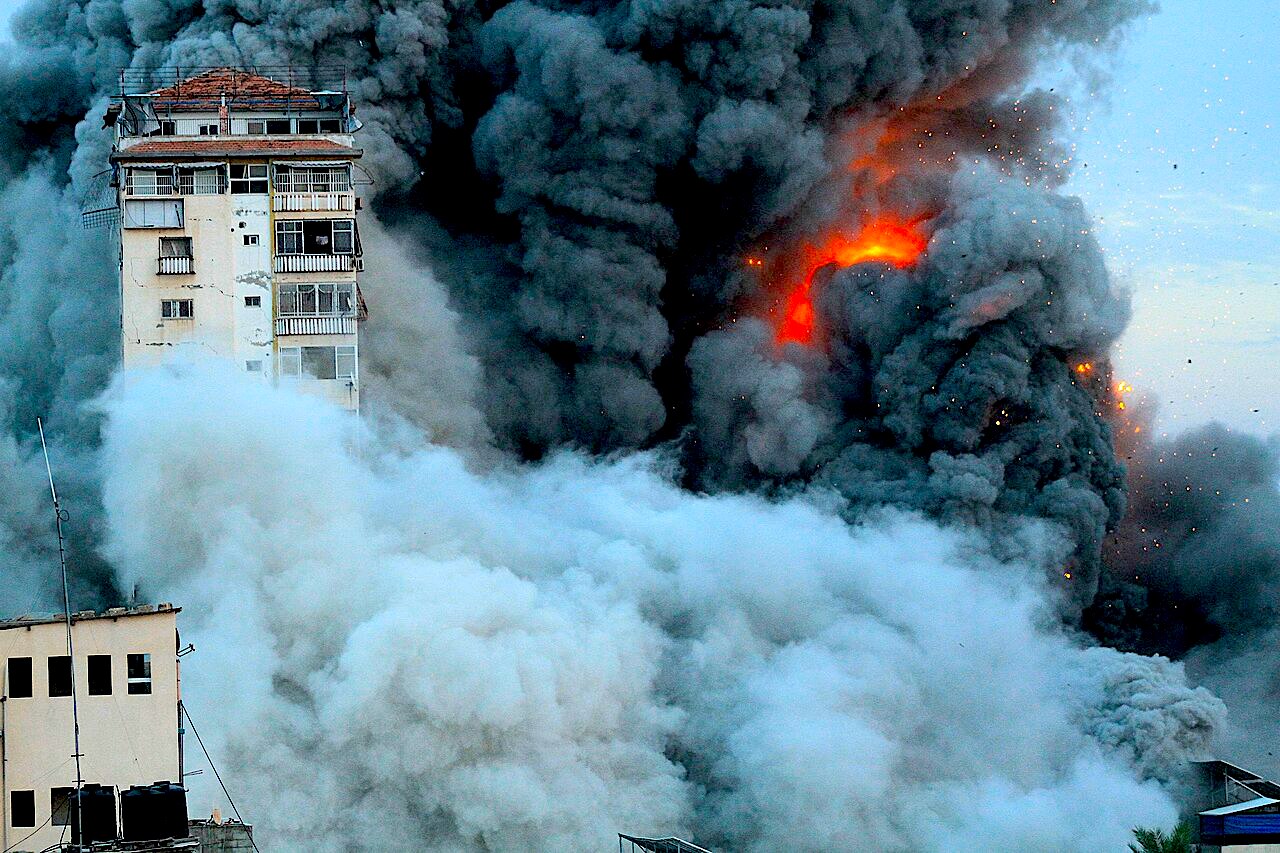
Gaza under Israeli bombardment on Oct. 7, 2023. (Ali Hamad of APAimages for WAFA, Wikimedia Commons, CC BY-SA 3.0)
Too many pundits, such as the interminably dim-witted Piers Morgan, are slowly, oh-so-slowly coming round to the idea that Israel might be committing a genocide in Gaza.
But of course, they are still dismissing as “anti-Semites” those of us who pointed out from the start that it was a genocide.
They hope to get away with this face-saving ploy only because the establishment media continues to ignore what happened before Oct. 7, 2023 — events that over many years had made clear Israel was readying to commit genocide — and would grasp a pretext when it arrived.
Here is a brief outline of some of the most pertinent factors:
1. In early 2008 — that is, 17 years ago — Deputy Defence Minister Matan Vilnai, a former senior Israeli general, threatened that Gaza would face a “Shoah” — a word until then, strictly reserved for the Holocaust.
2. He did so shortly after Israel implemented what would become a near two-decade siege of Gaza. Israel had already surrounded the enclave with a heavily militarised fence, made its territorial waters off-limits and bombed its only airport.
From then on, food was tightly rationed, in what Israeli leaders called “putting Gaza on a diet,” while swaths of the enclave were intermittently destroyed by Israeli bombing, or what Israeli leaders called “mowing the lawn.” Gaza was effectively turned into a concentration camp.
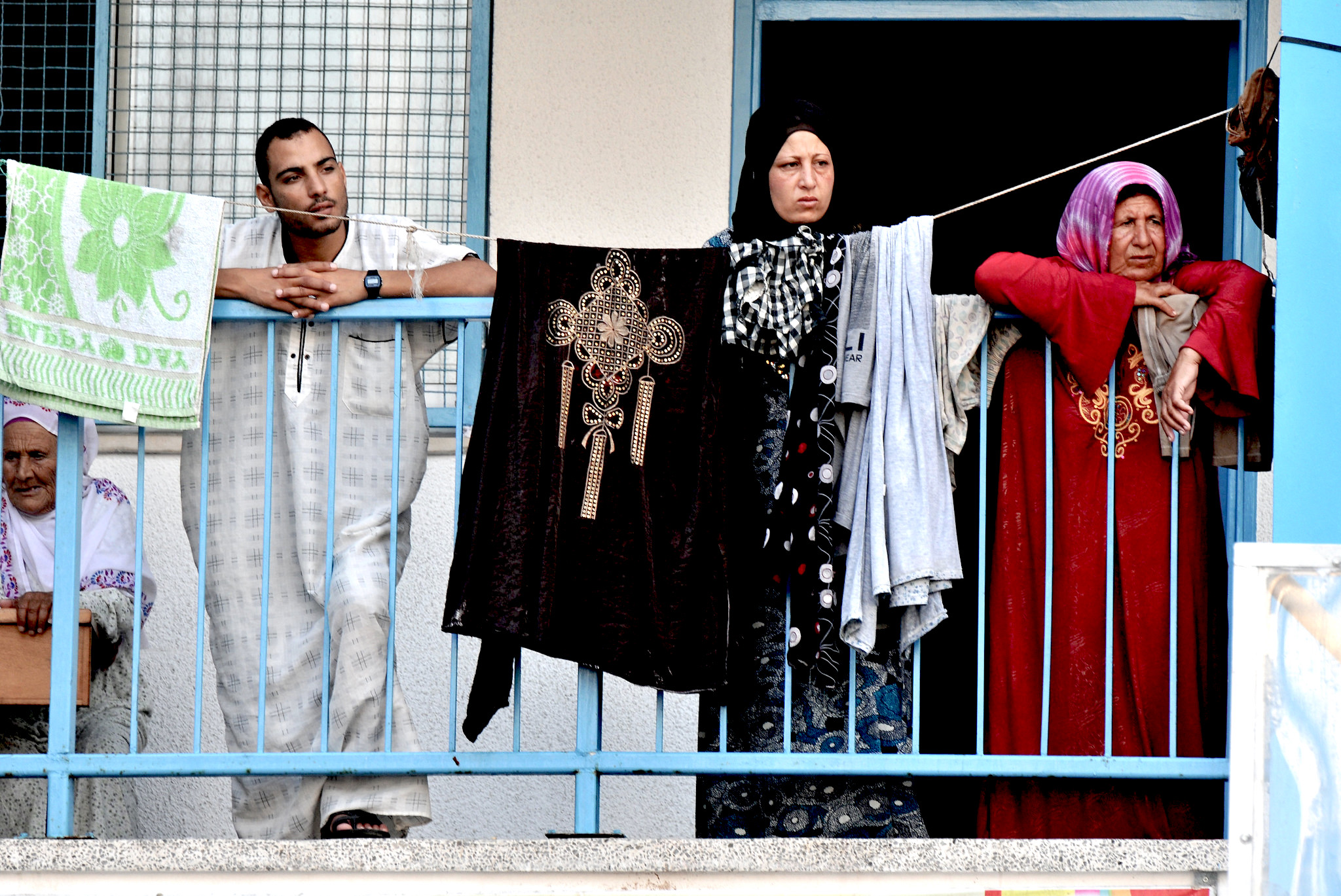
Displaced Palestinians gather at a UN school in the northern Gaza Strip after fleeing their homes in an area under heavy Israeli aerial bombardment in the besieged Palestinian territory, Aug. 26, 2014. (UN Photo/Shareef Sarhan)
3. The siege was complemented by Israel’s gradual destruction of Gaza’s means of self-sufficiency: any fishing off its coast was stopped; Israel regularly sprayed herbicide on the enclave’s agricultural land; Israel eradicated Gaza’s industrial sector by making exports almost impossible; and Israel regularly bombed Gaza’s electricity and desalination plants, limiting the essentials of water and power.
Smoke and flames rise from a power plant in Gaza that was hit by missile strikes, July 29, 2014. (UN Photo/Shareef Sarhan/CC BY-NC-ND 2.0)
4. The goal was clear: to make Gaza entirely dependent on Israel’s goodwill, of which there was almost none, and at the same time utterly dependent on aid. In tandem, Israel started waging a deceitful campaign claiming U.N. aid organisations were linked to Hamas “terror” in the hope it could use this as a rationalisation for impeding aid, as it has done with great ferocity since Oct. 7, 2023, and ultimately for taking over for itself all aid provision, as it has also managed to do in recent months with the creation of an Israeli-U.S. front group, the “Gaza Humanitarian Foundation.”
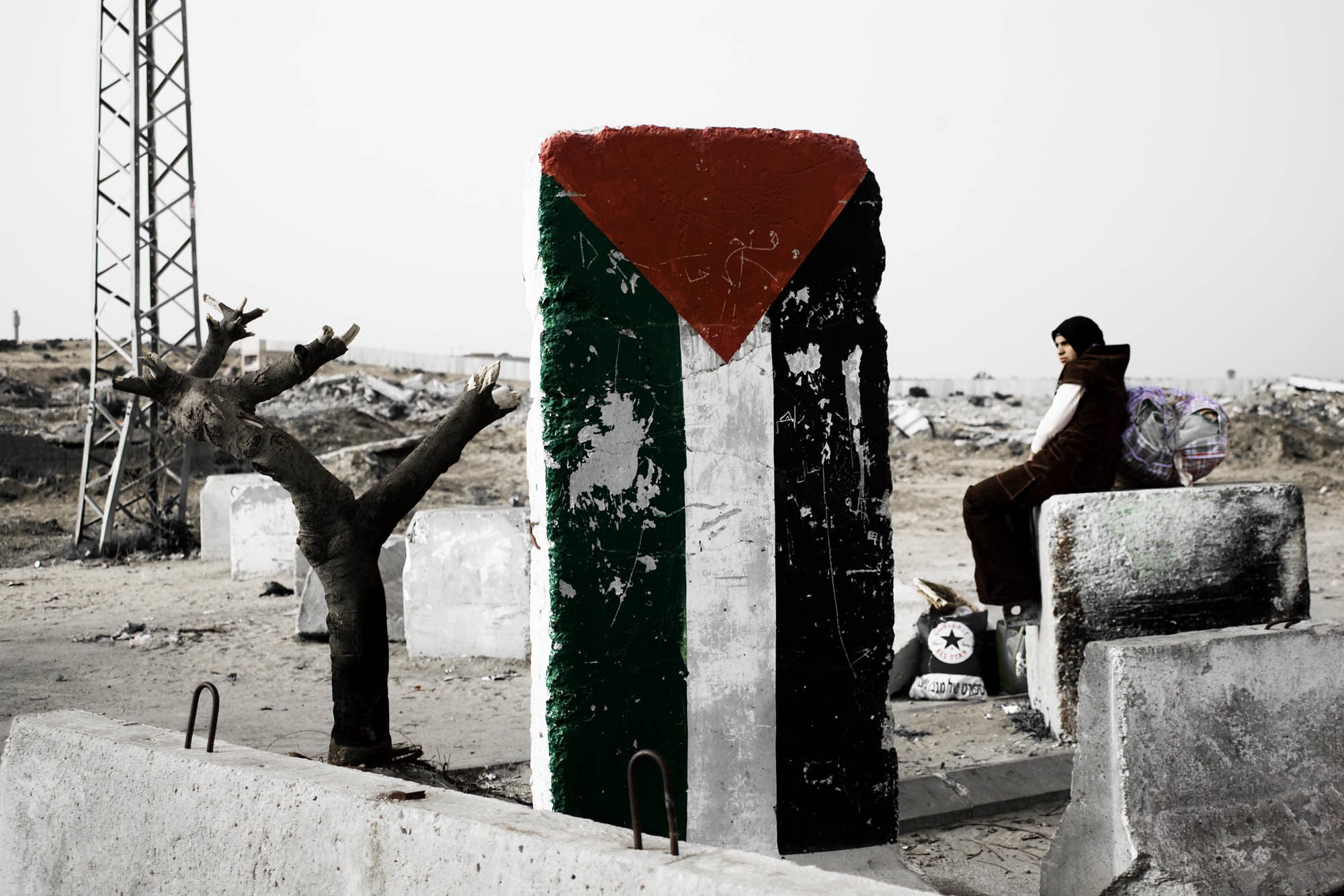
The “No Man’s Land” in what Israel calls the buffer zone along the Gaza-Israel border, 2008. (Kashfi Halford, Flickr, CC BY-NC 2.0)
5. With this as the background, the United Nations warned a decade ago that Gaza was likely to become uninhabitable by 2020. That was a major reason why Palestinians began mass protests at their concentration camp fence in 2018, which Israel responded to with lethal live fire.
In one article in the Israeli media at the time, IDF snipers boasted about shooting “42 knees in one day.” Hundreds were killed and many thousands crippled as a result. Those same snipers are currently shooting children in the head, abdomen and testicles, as British surgeon Nick Maynard, who is volunteering in Gaza, has warned.
New York City rally May 18, 2018, protests 70 years of Nakba and supports the Great Return March in Gaza. (Joe Catron/Flickr/ CC BY-NC 2.0)
Let us note too that Israel’s almost complete, and malevolent, control over Gaza — and the fact that the world had lost interest in the enclave’s desperate plight — was a major factor in Hamas and other groups launching their lethal break-out on Oct. 7, 2023.
5. In parallel to all this, and starting in 2007, Israel persuaded the U.S. to join it in a pressure campaign on Egypt: to open its single, short border with Gaza so that the enclave’s people would flood into Sinai — an act of ethnic cleansing and a blatant violation of international law. Egypt refused to submit before Oct. 7, 2023, and has continued to do so since.
In fact, forcibly removing a group from their homes through violence and by making life impossible for them where they live itself meets the legal definition of genocide — all the more obviously so if those doing the forcible removal say that is what they are doing, as Israeli leaders have been stating from the start of their genocidal slaughter and starvation campaign in Gaza.
Israel is committing a genocide to force Egypt and the Arab world to take the people of Gaza as refugees. If they refuse, Israel will continue with the genocide by killing more of Gaza’s people. If they relent, Israel will continue the genocide by dispersing what’s left of the people of Gaza to the far corners of the world. Either way, it is genocide. Either way, it must be stopped — now.
It is cold comfort indeed that, in the very final stages of Israel’s genocide, media pundits like Piers Morgan are ready to concede that a genocide may be about to happen. None of that should obscure or excuse their 21 months of complicity in the genocide that unfolded before all our eyes. They did not know because they did not want to know.
Responsibility for every dead child in Gaza, every maimed child in Gaza, every orphaned child in Gaza, every starving child in Gaza, irreversibly damaged by malnutrition, rests firmly on their shoulders.
Jonathan Cook is an award-winning British journalist. He was based in Nazareth, Israel, for 20 years. He returned to the U.K. in 2021. He is the author of three books on the Israel-Palestine conflict: Blood and Religion: The Unmasking of the Jewish State (2006), Israel and the Clash of Civilisations: Iraq, Iran and the Plan to Remake the Middle East (2008) and Disappearing Palestine: Israel’s Experiments in Human Despair (2008). If you appreciate his articles, please consider offering your financial support.


 Israeli Prime Minister Benjamin Netanyahu at cabinet meeting on January 22, 2023. (Photo: Israel National Photo Collection/Government Press Office)











 Peace and Justice Post
You must be logged in to post a comment.