Israel’s Health Ministry reported 77 new casualties in the past 24 hours, bringing the total since February to 9,119.
Israeli authorities acknowledged 1,219 casualties linked to the Lebanon front since the ceasefire with Iran took effect in April.
Iranian officials warned that any future attacks on Iran or the Resistance Axis would trigger a decisive and costly response.
Israeli Casualties
Israel’s Health Ministry announced on Monday that 77 new casualties had been recorded over the previous 24 hours, bringing the total number of casualties since the outbreak of the US-Israeli war against Iran in February to 9,119.
The figures were released as fighting and military operations continue across multiple fronts involving Iran, Lebanon and Yemen, following months of regional escalation.
According to the ministry’s latest update, casualty numbers have continued to rise despite repeated announcements of ceasefire arrangements.
The Lebanon Front
Israeli health authorities reported that 1,219 casualties have been recorded in connection with the Lebanon front alone since the ceasefire with Iran took effect on April 8.
The ministry also acknowledged that 803 casualties have entered Israeli hospitals since the ceasefire agreement with Lebanon was announced on April 17.
The figures come as the Lebanese resistance continues to carry out military operations against Israeli occupation forces in southern Lebanon, citing ongoing Israeli attacks and repeated violations of the ceasefire agreement.
Israeli attacks on Lebanon also continued on Monday.
According to Al Mayadeen correspondents, Israeli warplanes carried out strikes on Nabatieh, Deir Qanoun Ras al-Ain and areas around Tyre, while artillery shelling targeted towns in southern Lebanon.
Lebanese security officers gather at the site where an Israeli airstrike hit a building in Dahiyeh, Beirut’s southern suburb, Lebanon, Sunday, June 7, 2026. [AP Photo/Hassan Ammar]
One hundred days ago, on February 28, the United States and Israel launched an illegal war of aggression against Iran. The war is being waged by the world’s most powerful imperialist powers against a historically oppressed nation.
The resistance of the Iranian people, notwithstanding the reactionary character of the clerical regime, is politically legitimate and of a heroic character. The working class internationally must defend Iran unconditionally against imperialist subjugation.
The “negotiations” currently being carried out by the Trump administration at gunpoint are a fraud. In an interview this weekend, Trump declared that if Iran does not accept his demands, “I’m going to blow the hell out of them.” Even if the Trump administration agrees to a “ceasefire,” any agreement with the gangsters in the White House will just be as meaningful as the “peace” deal in 2025 that set the stage for this year’s war.
On Sunday night, Israel attacked Tehran. In Lebanon, the Israeli bombardment, escalating even amid the supposed negotiations, has killed at least 3,593 people and driven over a million from their homes—a toll that exceeds the 3,468 Iranians killed, among them seven infants and 376 children, with more than 26,500 wounded.
In the course of the war, imperialism plumbed new depths of barbarism. Trump’s threats to extinguish “a whole civilization” and Hegseth’s vow to wage war with “no quarter, no mercy” will go down in history as expressions of an oligarchy that has abandoned all pretense to legality. The imperialist powers now wage wars of oppression and subjugation in the open, with methods pioneered by the Nazis.
Despite the brutal and murderous character of the US-Israeli onslaught, however, imperialism has failed to achieve a single one of its aims. It has not overthrown the Iranian government, broken Iran’s military or seized control of the Strait of Hormuz.
The war has had two major effects: a deepening of the global crisis of the capitalist system and an enormous escalation of the global class struggle, not least within the United States.
The US debacle in Iran has accelerated the crisis of the US-led economic order. The European Central Bank reported in June that central banks are fleeing US Treasury bonds for gold, which has overtaken the euro to become the second-largest reserve asset—27 percent of global reserves, up from 20 percent a year earlier. The US national debt has passed $39 trillion.
It is the working class—in the United States and internationally—that is bearing the cost of the war. The closure of the Strait of Hormuz has driven gas at the pump up by more than 50 percent, the price of staples like tomatoes by nearly 40 percent and inflation to 3.8 percent, its highest since 2023.
Trump has seized on the war to intensify his assault on social programs, declaring in April that “we’re fighting wars” and that it is therefore “not possible for us to take care of day care, Medicaid, Medicare, all these individual things.” The World Food Programme warned that the war could push an additional 45 million people into acute hunger, a record level, with the poorest, import-dependent countries of Africa and Asia hit hardest.
In response to the surge in prices and the escalating cost-of-living crisis, the working class has begun to fight back. The past three months have seen a significant growth of working-class struggle in the United States: the first strike on the Long Island Rail Road in more than three decades; a three-week walkout by 3,800 meatpacking workers at JBS in Greeley, Colorado, the first in the industry in more than 40 years; strikes by teachers in California and a statewide walkout in North Carolina; strikes by nurses in New Orleans and California against unsafe staffing; a strike by graduate students at Harvard University; and the rebellion now sweeping the auto parts industry.
The class struggle is erupting internationally—in the mass anti-government protests in Kenya, the rebellion of tens of thousands of workers in the industrial suburbs of Delhi and the hunger strike of coal miners in Turkey. In the first quarter of 2026, eight European countries recorded 458 strikes, among them national general strikes in Belgium and Italy, and regional general strikes in Spain’s Andalusia and Basque Country. Argentina mounted a national general strike against the Milei government in February, and 1.7 million government employees walked out across the Indian state of Maharashtra.
The contradictions that are driving imperialism to war are also driving the working class into struggle. The growth of the class struggle springs from the same crisis that produces the war. Out of that crisis emerges the only social force capable of putting an end to it. War and social revolution are two sides of the same historical process.
Enormous and growing opposition is developing in the United States and throughout the world to the US–Israeli war of aggression against Iran and to the broader drive toward war, austerity and dictatorship. But opposition, left to itself, is dissipated and diverted. It must be armed with a program, perspective and leadership.
The fight against war cannot be waged through appeals to the governments and parties that are waging it. In the US, the Democratic Party greeted the murder of Iran’s leaders with cheers and financed Trump’s military budget. The European imperialist powers have backed the war and politically justified it, while pouring €800 billion into rearmament as they escalate the proxy war against Russia, which they arm and direct.
Opposition to imperialism requires developing struggles of workers in the United States, Europe and across the world—against war, austerity and dictatorship—into a conscious political movement armed with a socialist program. To put an end to war and barbarism, the capitalist system must be abolished.
This is the perspective of the Socialist Equality Party and the International Committee of the Fourth International. We call on every worker and young person who opposes this war to take it up and to build the revolutionary leadership the working class needs.
Published date: 6 June 2026 19:49 BST | Last update:21 hours 49 mins ago
The Pentagon has raised Israel’s counterintelligence threat level to its highest category, amid growing alarm that Washington’s supposed closest Middle East ally is intensifying efforts to spy on senior US officials.
The warning, reported by NBC News and The New York Times on Saturday, exposes behind the scenes tensions in a relationship Washington often treats as untouchable.
The Pentagon’s Defense Intelligence Agency recently issued the new assessment as tensions grow between the Trump administration and Israel over the Israeli-US war on Iran.
US officials told NBC that the DIA posted an internal message raising Israel’s threat level to “critical”.
The designation signals alarm inside the Pentagon that Israel is working to monitor top US officials and obtain information about internal Trump administration deliberations on wars across the Middle East.
New MEE newsletter: Jerusalem Dispatch
Sign up to get the latest insights and analysis on Israel-Palestine, alongside Turkey Unpacked and other MEE newsletters
The New York Times reported that US intelligence has focused on Israeli efforts to eavesdrop on senior officials, including Steve Witkoff, Trump’s top negotiator, Elbridge A Colby, the Pentagon’s top policy official, and Michael P DiMino IV, one of Colby’s main deputies.
Colby has in the past called for a “reset” on the US relationship with Israel.
Israel’s counterintelligence threat level now stands higher than that of any other US ally and even higher than some adversarial states, the Times reported.
One senior official described Israel’s intelligence collection against top US officials during the second Trump administration as “unhinged”.
‘Critical threat’
The DIA assessment includes a seven-page document and a chart, one US official told NBC. The document says Israel’s ability to conduct human espionage and technical collection has reached a “critical level” and lists specific incidents that sharpened US concern.
Current and former US officials told NBC that Israel’s recent activity has moved far beyond routine espionage between allies.
Israeli spy Jonathan Pollard suggests Egypt and Turkey are next targets for war
The warning comes as Israel pushes for deeper military integration with the United States. A provision before Congress would bind the US and Israeli militaries more closely on weapons research, production and technology – a move expected to benefit Israel heavily.
The Pentagon’s assessment could now complicate efforts to expand war planning between US Central Command and Israel, especially if officials restrict the information shared with Israeli officers.
Since a ceasefire took effect in early April, Trump has pursued diplomacy with Iran to end the war the US and Israel launched on 28 February. Israel has openly pushed for Washington to restart the war.
Prime Minister Benjamin Netanyahu has pressed for renewed bombing of Iran and clashed with Trump, who has urged him to scale back attacks on Lebanon.
The episode revives a long-running concern in Washington. In the 1980s, US Navy intelligence analyst Jonathan Pollard spent 30 years in prison after selling suitcases of top-secret documents to Israel.
As Washington and Tehran edge towards a ceasefire, the Israeli prime minister is determined to sink it, believing any settlement that leaves Iran standing amounts to defeat
A protester holds a placard depicting Israeli Prime Minister Benjamin Netanyahu during a demonstration in Milan on 21 May 2026 (Piero Cruciatti/AFP)
Israeli prime minister and indicted war criminal Benjamin Netanyahu does not adapt to imposed realities.
He tries to smash them through brute force, permanent escalation and manufactured crises. Throughout his career, war has been a favoured strategic instrument for preserving Israeli supremacy and his own political survival.
Most recently, his priority is to prevent US President Donald Trump from signing a near-complete memorandum of understanding with the Islamic Republic of Iran. Should diplomacy prevail, he will deploy every political, military, diplomatic, media and lobbying tool to sabotage it.
His obsession with what he calls “absolute victory” reflects a rigid doctrine that rejects compromise. No settlement is acceptable to him unless it disarms Hamas and Islamic Jihad in Gaza, dismantles Hezbollah in Lebanon, and ends in the neutralisation or destruction of the Iranian state itself.
His horizon extends well past temporary ceasefires to the end of all resistance and a region restructured around Israeli dominance under American protection.
New MEE newsletter: Jerusalem Dispatch
Sign up to get the latest insights and analysis on Israel-Palestine, alongside Turkey Unpacked and other MEE newsletters
The wars across Gaza, the West Bank, Lebanon, Syria, Iraq, Yemen and Iran were never isolated confrontations. They are part of a single offensive to establish “Greater Israel” and consolidate Israeli regional hegemony.
Netanyahu knows these goals remain unfulfilled despite vast destruction. Rather than prompting a rethink, that failure has convinced him the problem is an insufficient application of force, not the objectives themselves.
For him, the war is far from over, and what force could not achieve yesterday becomes the target of wider escalation tomorrow.
Having already drawn Trump into earlier confrontations with Iran, Netanyahu appears convinced he can pull the lever again – this time aiming past a limited strike for a decisive, total war that permanently shifts the regional balance of power.
A divided home front
Trump faces a more complicated reality. He may believe earlier confrontations weakened Iran and the axis of resistance, but the political landscape is shifting fast at home and abroad.
Domestically, a growing share of the public openly questions the wisdom of these wars. Recent polling shows support for prolonged Middle Eastern entanglements falling steeply, alongside deep scepticism of “forever wars” seen as serving foreign agendas rather than American interests.
This anti-interventionist sentiment has crossed party lines and is fracturing Trump’s own coalition. Influential voices around the Maga movement, including political commentators Tucker Carlson, Candace Owens, Megyn Kelly and Joe Rogan, have questioned policies that subordinate American blood and treasure to Netanyahu’s agenda.
More Americans are asking why the US should bear the economic, military and political costs of another regional war for a foreign power, with vague aims and doubtful benefits
The campaign to unseat Congressman Thomas Massie and other non-interventionist conservatives who question pro-Israel policies reflects these tensions.
More Americans are asking why the US should bear the economic, military and political costs of another regional war for a foreign power, with vague aims and doubtful benefits.
These questions sharpen amid mounting economic strain. Energy markets remain vulnerable, and inflationary pressures are rising again.
Petrol prices have become a political landmine: reports in early May put the national average near $4.50 a gallon, up sharply from the sub-$3 level before the war. Driven by energy costs and supply chain disruptions, inflation has accelerated, weakening consumer confidence and turning the economic mood toxic for the White House.
Trump knows foreign adventures cannot be detached from domestic realities, and with the midterms approaching, blunders carry immediate consequences. Both the House and the Senate are within reach of Democratic majorities.
If he loses Congress, the rest of his presidency will be paralysed, and the threat of impeachment will return to the centre of Washington politics.
What Hormuz exposed
Internationally, the pressures are even more severe. The closure of the Strait of Hormuz transformed the strategic landscape.
Before the attacks intensified after 28 February, Hormuz was the vital maritime artery of global energy, carrying about a fifth of the world’s oil flows and liquefied natural gas trade, with Qatar‘s LNG exports acutely exposed. Its disruption laid bare the vulnerability of the Arab Gulf states and the wider global economy.
As shipping routes faced chaos, insurance premiums surged, energy markets reacted sharply and supply chains buckled. More than that, it shattered decades of assumptions about American power.
Iran has won the war. Trump and Netanyahu now face a reckoning
For generations, Washington had sold itself as the indispensable guarantor of Gulf security and freedom of navigation. Yet the crisis exposed the limits of military superiority in the face of unforgiving geography, asymmetry and political complexity. America could strike, bomb and threaten, but it could not force Hormuz open without triggering a global economic shockwave.
The military record is more revealing still. During the 39-day war, Iranian and allied strikes damaged at least 16 US military bases across eight countries, leaving several nearly unusable.
A Washington Post analysis of satellite imagery found Iranian strikes damaged or destroyed at least 228 structures and pieces of equipment at US bases across the region: hangars, fuel depots, aircraft, radar networks, communications gear and air-defence assets.
This marks a foundational shift. For decades, the US used its network of Gulf bases as instruments of deterrence and intimidation, platforms to punish adversaries and shield allies. The war showed these bases are now exposed targets, calling into question the architecture of American regional dominance.
Strain on US missile defences compounded the crisis. Reports after the 39-day war indicated serious depletion of interceptor stocks, including Patriot, Thaad, Tomahawk and other missiles.
The Pentagon has warned that rebuilding these inventories could take years, with some not likely to be replenished until the decade’s end. That is a dangerous vulnerability for a country that must also plan for confrontations with Russia and China. A war meant to project dominance instead exposed industrial and technological limits.
A strategic deadlock
Washington and Tel Aviv entered with maximalist goals: force Iranian capitulation, dismantle its nuclear infrastructure, end enrichment, seize its enriched uranium, destroy the axis of resistance, and topple or fragment the Iranian state.
None of these goals has been met. Iran did not surrender, its government did not collapse and its regional alliances, though under heavy pressure, were not eliminated. Iran and its allies absorbed painful blows, but damage is not defeat: a state can suffer heavy losses without surrendering its core objectives.
Robert Kagan, an establishment strategist, recently acknowledged this gap between American ambitions and what military force can actually achieve. His warning carries weight because it comes from the heart of the interventionist establishment.
The dilemma is the inability to translate military superiority into a durable political order, however powerful its forces remain.
It recalls the Suez crisis of 1956, when Britain and France discovered that military victory could not stop the collapse of their imperial power. The same limit now confronts the US.
American threats and Trump’s ultimatums failed to produce Iranian submission because they lacked credibility. A threat works only when the adversary believes defiance will cost more than compliance.
For its part, Tehran had no reason to think concessions would buy safety.
It had watched Washington abandon the nuclear agreement in 2018, expand sanctions during talks and carry out assassinations and sabotage alongside the Zionist regime, even as talks continued.
Iran, therefore, chose to expand the battlefield, raise the cost of escalation, threaten global energy flows and deny the US and Israel a clean victory. Its alternative to capitulation was resistance under pain, and that transformed the bargaining structure.
Washington and Tel Aviv wanted a one-sided outcome in which Iran surrenders its nuclear assets, missiles and regional influence for temporary, easily reversible sanctions relief. Tehran knew that reversible relief is not security and refused to give up its deterrence, thereby forcing a deadlock.
Neither side could impose its outcome without paying a price it was unwilling to bear. The US could escalate, but only by threatening the global economy, draining its stockpiles, exposing its bases and widening domestic opposition.
Iran could endure and retaliate, but could not defeat a superpower conventionally. Each constrained the other in an unstable equilibrium.
Within that equilibrium, asymmetry favours the defender. The US needs a visible, triumphant success to justify the war to its public; Iran needs only to avoid defeat, keep its sovereignty and deny the enemy its political aims. For a state facing overwhelming force, survival with its agency intact is itself a victory.
Indeed, Netanyahu understands this threat to his expansionist project – and he fears it. A negotiated ceasefire would confirm a result Israel cannot accept, in which the war would end not in its triumph but in Iran’s endurance.
An imperfect opening
The present negotiations, reportedly mediated by Pakistan and backed by several Arab and Islamic states, have produced a near-final framework.
At its core is the expansion of the current truce into a multi-front suspension of hostilities for at least 60 days, Lebanon included. Driven by economic pressure, energy instability and fear of a wider war disrupting events like the coming World Cup in North America, Washington needs calm. This retreat, therefore, is not a product of victory but of necessity.
Alongside the truce, a package of measures aims to stabilise the region in the interim, including securing navigation through the Strait of Hormuz, easing restrictions on Iranian shipping, granting partial access to frozen Iranian assets, and initiating talks on broader normalisation. Reports on financial compensation vary, with early figures ranging from $12bn to $24bn, though details remain fluid.
The framework signals that the US will concede several Iranian demands for regional stabilisation and the reopening of Hormuz
The nuclear issue has been deferred. Rather than immediate dismantlement, the framework relies on an Iranian commitment not to pursue weapons while talks continue on enrichment levels and verification.
The framework signals that the US will concede several Iranian demands for regional stabilisation and the reopening of Hormuz.
For Netanyahu, this is intolerable, as it gives Iran economic breathing room while leaving its missiles and alliances intact, giving Tehran greater leverage in future talks.
This explains the intensity of his pressure on Trump, and why recent exchanges between the two have been described as tense and uncharacteristically heated. He has opposed the diplomatic drift, pressing instead for renewed escalation across Gaza and Lebanon.
The latest developments around Lebanon reinforce the point.
Trump has personally intervened to restrain Netanyahu from launching a wider invasion of Lebanon, while speaking of an impending ceasefire there – moves that reveal growing tensions beneath the show of strategic unity.
The restraint followed Iran’s suspension of negotiations and warnings that further escalation in Lebanon could ignite northern Israel and widen the confrontation beyond Washington’s control.
Faced with collapsing talks and a prolonged closure of Hormuz, Trump moved to contain Netanyahu and head off a regional war that could drag in the US. The episode offers an early glimpse of the competing calculations now shaping American and Israeli policy.
Israel’s own military record reveals the bind: despite vast destruction, it has failed to secure decisive political outcomes. Gaza lies devastated – more than 76,000 Palestinians killed and over 180,000 wounded – yet the violence has not produced political closure.
In southern Lebanon, Hezbollah has reasserted itself militarily and politically despite heavy blows, contesting Israeli border moves and inflicting casualties over the past two months. No amount of destruction has delivered the absolute victory the Zionist regime craves.
The deeper illusion
Netanyahu is left with limited, dangerous options. If he cannot block diplomacy outright, he will try to sabotage its implementation. Lebanon remains the active arena, where targeted escalation, assassinations or efforts to spark internal instability could derail diplomatic momentum.
Netanyahu may calculate that fresh massacres in Gaza, an intensified siege or provocations around holy sites in the occupied West Bank could fracture the ceasefire, placing Trump under renewed pressure to realign with Israeli demands.
Suez was the death knell for the British empire. Hormuz may do the same for the US
Yet Trump’s continued rhetoric about normalisation under the Abraham Accords reveals a persistent disconnect from reality.
No meaningful path to broad Arab normalisation exists while the Palestinian question remains open.
The Arab Peace Initiative of 2002 conditioned normalisation on Palestinian statehood, and after Gaza, the gap between rhetoric and reality has only widened.
The region stands at a perilous crossroads. One path offers an imperfect diplomatic opening, the product of mutual exhaustion and shifting leverage; the other leads to a wider confrontation neither Washington nor Tel Aviv can control.
To assume Netanyahu will quietly accept a deal that contradicts his core convictions is a dangerous illusion. But the deeper illusion is the belief that brute force can indefinitely preserve a regional order whose political, moral and strategic foundations are crumbling.
Trapped between ideological obsession and strategic failure, Netanyahu may yet make one last fatal gamble and continue widening the war until the whole structure collapses with him.
Smoke rises from an Israeli airstrike that hit Qlaileh village, as it seen from the southern port city of Tyre, Lebanon, Tuesday, June 2, 2026. [AP Photo/Mohammed Zaatari]
Israeli strikes killed at least four people in Southern Lebanon on Friday, and the military ordered the forced displacement of nine more towns and villages in the Sidon district.
Hundreds of families fled Aanqoun, a village already sheltering some 2,500 people displaced from earlier attacks, after the army announced it would strike what it called Hezbollah positions there and ordered residents out. Cars jammed the roads toward Sidon as families searched for shelter.
The Lebanon strikes are an escalation of the Israeli war, waged in coordination with the US-Israeli war against Iran, that has killed at least 3,516 people and wounded 10,674 since March 2, the Lebanese health ministry reported. The United Nations counted at least 88 killed over the May 30-31 weekend, and Israeli attacks killed at least eight on Tuesday, nine on Wednesday and four on Thursday. Among the dead was a paramedic, one of more than 130 medics killed since March.
On Thursday, Israeli Prime Minister Benjamin Netanyahu declared the occupation of Southern Lebanon permanent. Israel needs “security zones: separation and security areas on the other side of the border,” he told mayors in Northern Israel. “This is a fundamental change.”
While the US media remains focused on “peace” negotiations between Trump and Iran, events in Lebanon, Gaza and the West Bank make clear that any “ceasefire” is merely a cover for ongoing mass killing.
On Wednesday the United States announced that Israel and Lebanon had agreed to renew a ceasefire, one requiring Hezbollah to halt all fire and pull its fighters back from Southern Lebanon but demanding nothing of Israel’s occupying forces. Hours later, Israeli Defense Minister Israel Katz declared that the army would not withdraw, that hundreds of thousands of displaced Lebanese would not be allowed home and that Israel retains “freedom of action, backed by the United States, to strike in Beirut.” Hezbollah leader Naim Qassem rejected the deal, telling Al-Manar television that ordering his fighters to leave the south while under attack would mean “surrender, defeat and achieving the enemy’s goals.”
A United Nations peacekeeper was killed near Marjayoun by mortar fire that Israel and Hezbollah each blamed on the other.
Israeli forces seized Beaufort Castle and crossed the Litani River last week, pushing their occupation to about 2,000 square kilometers of Southern Lebanon, nearly one-fifth of the country. The Israeli military, armed and backed by US President Donald Trump, has turned the south into a free-fire zone.
The United Nations humanitarian office reported more than a million people driven from their homes and 1.24 million, nearly a quarter of the population, going hungry.
In Gaza, Netanyahu said last week that Israel holds 60 percent of the strip, up from 50, and that he has ordered the army to take more. “First of all, 70,” he said, as the crowd shouted “100!”
Under the October 2025 ceasefire built on Trump’s 20-point plan, Israeli forces were to pull back behind a so-called yellow line; instead, they have pushed past it.
The Gaza health ministry has counted 929 Palestinians killed and 2,811 wounded in the seven months since the truce took effect. Katz announced May 27 that the “voluntary emigration” plan to empty Gaza of its people would proceed “at the right timing and in the right manner.”
Israeli Finance Minister Bezalel Smotrich has demanded the army “prepare immediately for the full conquest of the Gaza Strip” and build Jewish settlements on it. Rights groups call the emigration scheme a plan for ethnic cleansing.
In the occupied West Bank, Israeli forces shot and killed a seven-month-old Palestinian baby near Hebron on Friday and wounded his parents.
The escalations in Lebanon and Palestine take place amid a deepening crisis over the US-Israeli war on Iran. The war has failed to achieve its aims. On February 28, the US and Israel launched a surprise attack that killed much of the Iranian leadership, including Supreme Leader Ali Khamenei and as many as ten other senior officials. This failed to bring about the collapse of the regime; Khamenei’s son Mojtaba was installed within days, and no uprising came.Available from Mehring BooksThe struggle against imperialism and for workers’ power in IranA pamphlet by Keith Jones
The US then moved to strangle Iran with a naval blockade of the Strait of Hormuz, but this effort has likewise failed to force Tehran to terms. More than three months on, 13 US service members are dead, and the fighting drags on with no end in sight.
The reported differences between Trump and Netanyahu are a falling-out among thieves over that failure. Axios reported June 1 that Trump called Netanyahu “crazy” over the Lebanon escalation, adding, “You’d be in prison if it weren’t for me” and “Everybody hates Israel because of this.” Trump confirmed the call June 3, saying he was “a little bit perturbed” but that he likes Netanyahu and had told him, “we’ve got to stop this.”
Despite the “ceasefire” talks, the US is regularly attacking Iran. This week US forces struck Iranian radar sites after shooting down four Iranian drones over the Strait of Hormuz, which the US is blockading. Trump extended the ceasefire indefinitely and said the blockade would hold until negotiations end “one way or the other.”
The Democratic Party shares the war’s aims. On Thursday the House defeated a War Powers resolution by Democratic Representatives Rashida Tlaib of Michigan and Delia Ramirez of Illinois to remove US forces from the war in Lebanon, 324-92. Ninety-one Democrats voted for it; 117 voted against, and the only Republican in favor was Thomas Massie.
House Democratic Leader Hakeem Jeffries, Minority Whip Katherine Clark and Caucus Chair Pete Aguilar led the opposition. In a joint statement, they declared: “We stand with the Lebanese people, the government of Lebanon, and the Lebanese Armed Forces in their efforts to live peacefully and defeat Hezbollah, a violent terrorist organization that is a sworn enemy of the United States.”
The statement exposes the real policy of the Democratic Party. Despite its tactical criticisms of the Trump administration, it backs the administration’s basic aim of subjugating the Middle East.
Whatever “deal” Trump strikes with Tehran—if such an agreement is even possible—Lebanon and Gaza show its content in advance. Katz will not leave the south; Netanyahu intends to take the rest of Gaza and the displaced of both will not be allowed home. An agreement with this administration means continued slaughter and plunder, signed and dated.
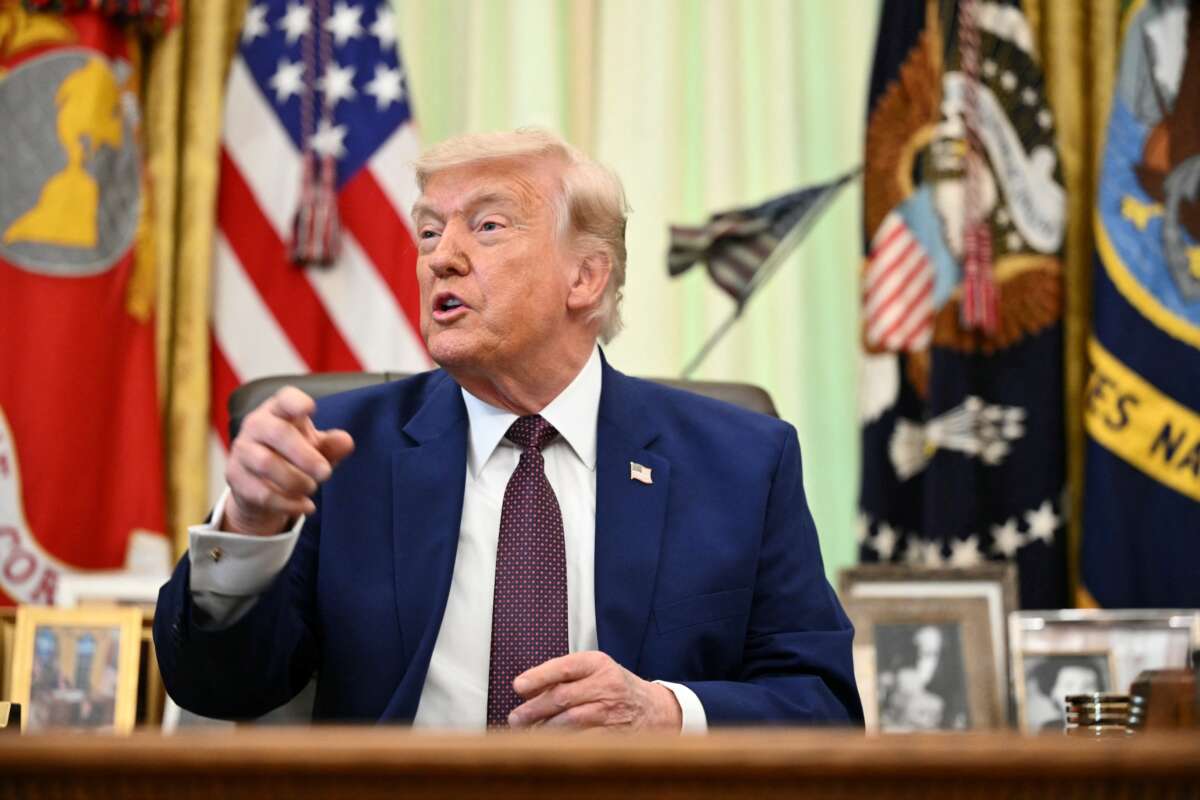
US President Donald Trump speaks to the press in the Oval Office of the White House in Washington, DC, on June 3, 2026.
Did you know that Truthout is a nonprofit and independently funded by readers like you? If you value what we do, please support our work with a donation.
In remarks in the Oval Office on Wednesday, President Donald Trump stated that in the Middle East, “a ceasefire is when you’re shooting in a more moderate manner.”
“A ceasefire there is much different than in other parts of the world,” Trump said, in response to a question by a reporter about his definition of a ceasefire.
“In that part of the world, a ceasefire is when you’re shooting in a more moderate manner,” he went on, excusing his own failure to bring an end to his unprovoked war on Iran.
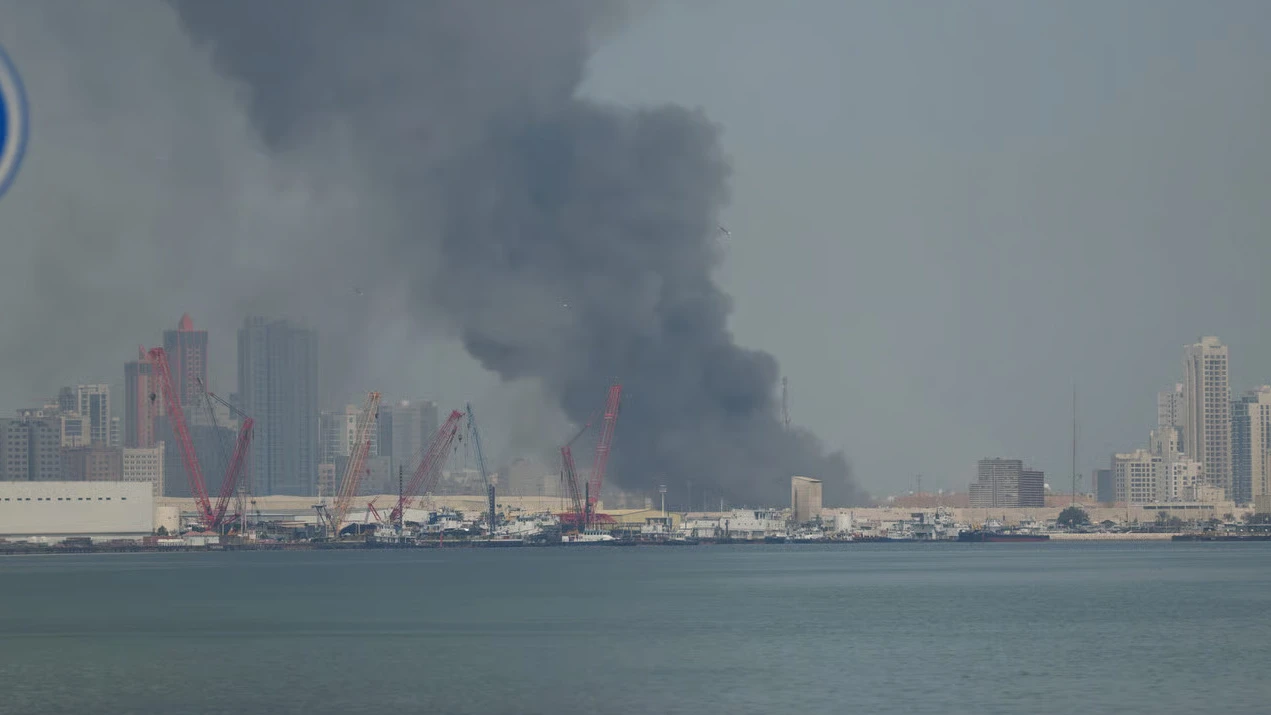
Trump has muddied the waters about the meaning of the term “ceasefire” in the U.S.-Israeli war on Iran, claiming for weeks that the April 8 ceasefire is intact despite blockading Iran and conducting so-called “self defense” strikes on the country. Iran also bombed Kuwait on Wednesday – though Trump was seemingly nonchalant about the attack in his Oval Office comments, saying that it was in retaliation for U.S. strikes over the previous day.
Trump’s comments also serve as justification for Israel’s repeated violations of its so-called ceasefires in Gaza and Lebanon, which have come to be seen as one-sided.
Despite Trump calling the vote “unpatriotic,” nearly 7 in 10 Americans back ending the war in Iran as soon as possible. By Chris Walker , Truthout
June 4, 2026
In the year after Israel’s 2024 ceasefire with Hezbollah, UNIFIL, the UN peacekeeping force in Lebanon, said that Israel violated the ceasefire more than 10,000 times. And Israel repeatedly takes advantage of ceasefires to put pressure on Lebanon and the U.S. through mass strikes – like on April 8, when Israel killed 357 people in Lebanon to make a point that Lebanon could not be part of the agreement with Iran.
Al Jazeera noted on June 1 that Israel violated the October 2025 ceasefire agreement in Gaza over 3,000 times, on a near-daily basis. These attacks have killed at least 932 Palestinians.
In both Lebanon and in Gaza, residents repeatedlyask, “Where is the ceasefire?”
Later, Trump repeated the sentiment, saying, “That’s a very volatile part of the world, probably the most volatile part of the world. The people are volatile, the leadership [as well].” This is an excuse that Israel has also used to justify its brutality across the region.
But the region is largely volatile as a result of imperialist intervention — led by the U.S., and with the help of Israel, which has played the role of the U.S.’s watchdog in the Middle East since 1967.
During his remarks in the Oval Office on Wednesday, Trump stated that the issue of Lebanon should be separate from a deal with Iran – which is what Israel has demanded, and Iran has repeatedly pushed back on.
Trump also said that he spoke with Hezbollah leaders. “We actually spoke with Hezbollah for the first time ever,” he said. “We didn’t know they spoke,” he added, continuing with his racist commentary on the region. Trump reportedly called both Hezbollah leaders and Israeli Prime Minister Benjamin Netanyahu on Tuesday to push for a de-escalation after Israel expanded its occupation of southern Lebanon and threatened to resume bombing Beirut.
Although Lebanon and Israel both agreed to renew their “ceasefire” on Thursday, this was done without the participation of Hezbollah, and is contingent on Hezbollah removing its fighters from the south – which is under Israeli occupation and has faced continuous bombardment since March. The U.S. and Israel have pressured factions of the Lebanese government to turn on Hezbollah over the past year.
But after this announcement on Thursday, Israel’s Defense Minister Israel Katz said that Israel will remain in southern Lebanon. Israel continued its airstrikes on both southern Lebanon and the Bekaa valley region.
Israel has attacked three hospitals in southern Lebanon over the past few days.
Rima Majed, professor of sociology at the American University of Beirut, condemned Israel’s repeated escalations in Lebanon in comments to Truthout earlier this week.
“We now live in a world where ceasefire means that Israel can continue bombing, and that we can keep reaching ceasefire agreements within ceasefire agreements without all of this meaning any real protection for people,” she said.
‘IT’S the tail that is wagging the dog’ aptly describes the ongoing conflict in the Middle East. The reality is that America is fighting Israel’s war. The Zionist state not only acts as a spoiler but also effectively dictates the terms of war and peace in the region. A recent example of this is Israel’s military escalation in Lebanon, which has not only complicated diplomatic efforts to resolve the US-Iran conflict, but has also broadened the theatre of war.
Despite President Donald Trump’s claims of having halted the conflict, the war continues. Israeli forces have occupied a significant portion of Lebanon, and relentless bombings have devastated Beirut, effectively undermining the US-brokered ceasefire.
Incensed by Israel’s blatant violation of the ceasefire, Iran has suspended its back-channel negotiations with the US and warned that it could “completely block” the Strait of Hormuz, aggravating tensions. Tehran asserts that any peace talks are directly linked to a ceasefire in Lebanon and Israel’s withdrawal from the region. Additionally, Iran has threatened to strike Israel if the war in Lebanon is not halted. Hours later, Trump stated that he had urged Israel to cease its offensive; however, there are no signs of an end to the hostilities.
Last week, Israel captured the 900-year-old Beaufort Castle and its strategic ridge in southern Lebanon. Israeli forces used the castle, also known as Qalaat al-Shaqif, as a base during their two-decade occupation of southern Lebanon that ended in 2000.
Israel’s latest military escalation is not limited to Lebanon; it extends to Gaza.
It marks Israel’s deepest incursion into the country in 26 years, and there appears to be no end to its aggression, which has received Washington’s approval. The conflict with Iran has now effectively been extended to the Levant. Israel entered Lebanon under the pretext of combating Hezbollah, the pro-Iran group based in southern Lebanon. Last year, Israel killed nearly all of the group’s senior leaders, including its head.
While Israel claimed to have completely dismantled Hezbollah’s structure, recent retaliatory attacks by the group indicate that, despite these setbacks, it remains capable of fighting back. Additionally, Israel has incurred significant casualties from its invasion, with reports indicating that 26 soldiers have been killed thus far.
Hezbollah was formed in 1982 in response to the Israeli invasion of Lebanon, which aimed to dismantle the Palestinian Liberation Organisation. The group quickly emerged as a powerful resistance movement and a dominant force in Lebanese politics. Its resistance efforts ultimately led to Israel’s withdrawal from Lebanon, ending Tel Aviv’s occupation of the southern region in 2000.
Although Hezbollah receives backing from Iran, it has maintained its political independence. The ongoing US-Israel conflict with Iran has involved Hezbollah militarily against Israel. A ceasefire in April temporarily halted hostilities, but Israel’s recent aggression has effectively ended this truce. Despite suffering losses among its commanders in recent weeks, Hezbollah remains capable of fighting back without external assistance.
Israel has issued displacement orders and evacuation warnings for approximately 14 to 15 per cent of Lebanon’s territory. Additionally, Israeli forces continue to occupy specific strategic locations in southern Lebanon. As a result of the ongoing conflict, more than one million people have been displaced within the country, including over 300,000 children, further aggravating the humanitarian crisis.
Israel’s latest military escalation is not limited to Lebanon; it extends to Gaza. Israel has not complied with the ceasefire agreement reached last year, nor has it withdrawn its forces to the designated area in the occupied territory. The Israeli military continues to conduct strikes and seize territory despite a ceasefire with Hamas. More than 1,000 people have been killed in ongoing Israeli bombings after the truce.
Last week, Israeli Prime Minister Benjamin Netanyahu ordered the military to extend its control to 70pc of the Gaza Strip. Under the ceasefire agreement reached last October, after two years of intense conflict, Israel was left with control over 53pc of the enclave until the time an administration was established under the Board of Peace, with the approval of the Security Council.
Netanyahu recently boasted at a conference that Israel had expanded its grip on Gaza, stating, “We are now in 60pc of the territory”. He said: “My directive is to move to — take it step by step — first of all 70. Let’s start with that.” The audience called for him to take over 100pc of the territory. Many of Netanyahu’s right-wing supporters view the current situation in Gaza as ‘mission incomplete’ or ‘mission failure’. Their preference is for Israel to expand its area of control, even resume military action in Gaza.
Netanyahu’s remarks come at a time when Gaza’s rehabilitation plan has stalled; in fact, it never started. According to media reports, there are no funds available for the Board of Peace’s (BoP) executive board to initiate rebuilding efforts. It is estimated that around $70 billion is needed to rehabilitate the enclave, which has been devastated by Israel’s two-year military campaign. The project was supposed to take 10 years to complete, but Israel’s plan for military occupation makes Gaza’s restoration impossible.
Earlier this year, Trump formally launched the BoP at the World Economic Forum in Davos, describing it as one of the “most consequential” international organisations ever created. Member states pledged $7 billion for its Gaza “relief package”, and Trump promised an additional $10bn in US funding. However, so far, the fund established by the World Bank has received no contributions. Israel’s recent move to re-establish military control over the war-ravaged enclave has rendered the entire project redundant.
Trump expanded the BoP’s scope beyond the Security Council’s authority, which had limited its jurisdiction to Gaza. Only 25 countries have signed on, while others refused to be a part of the board, suspecting it was an attempt to undermine the UN.
The war in Iran has not only effectively derailed the so-called Gaza rehabilitation plan but has also exposed the BoP as a cover for America’s imperialistic agenda. A critical question now is whether America can extricate itself from this war, which it initiated at Israel’s behest and has since become entangled in.
A BBC Verify investigation of satellite imagery and video analysis published on 1 June reveals that Iranian military strikes successfully damaged at least 20 US military sites across West Asia since the start of the US-Israeli war of aggression on the Islamic Republic.
Findings suggest that the scale and precision of Iranian retaliatory strikes had been significantly more extensive and accurate than US officials had previously acknowledged, with some independent analysts suggesting as many as 28 bases may have been affected.
The targeted facilities are spread across eight Gulf countries, namely Saudi Arabia, the UAE, Qatar, Kuwait, Iraq, Jordan, Bahrain, and Oman.
Material losses include three Terminal High Altitude Area Defense (THAAD) batteries, which cost approximately $1 billion each and are centerpieces of the regional defense network.
Expert analysis further identifies the destruction or damage of at least 42 aircraft, including F-35 fighter jets, MQ-9 Reaper drones, and a $700-million E-3 Sentry surveillance plane.
According to military analysts, Iran achieved these results by evolving its tactics from high-volume barrages to “smaller, more precisely targeted salvos” designed to concentrate fire on high-value infrastructure.
This shift reportedly exploited a degree of “early-war complacency” within the US military, which failed to relocate aircraft even after facilities like Prince Sultan Air Base in Saudi Arabia had already come under fire.
In a statement addressing the strikes, Iranian Supreme Leader Mojtaba Khamenei declared that West Asia is no longer a “safe place” for US bases.
While the White House previously claimed Iran’s military capabilities were nearly eliminated, the Pentagon’s own estimates now place the cost of the war at $29 billion, much of which is dedicated to equipment repair and replacement of the heavily depleted weapons stocks.
Former military officials warn that the damaged defense systems cannot be “quickly or easily replaced,” adding that the heavy consumption of air defense interceptors during the conflict has left remaining US facilities across the Gulf increasingly vulnerable to future Iranian precision strikes.
Although the US has attempted to limit public scrutiny by requesting restrictions on satellite imagery, the visible “smoking craters” and destroyed hangars shown in the BBC report tell a different story. On Sunday night, Iran said it had launched strikes on a US air base in Kuwait in retaliation for US attacks on Iranian military targets over the weekend in violation of the ceasefire.
WSJ report reveals UAE carried out strikes on Iran alongside US and Israel from start of war, operating as a third member of coalition
Foreign workers look at a tall plume of black smoke rising after an explosion in the Fujairah industrial zone in the UAE, on 3 March 2026 (Fadel Senna/AFP)
The United Arab Emirates carried out dozens of air strikes against Iran during the Israeli-US war on the Islamic Republic, according to a report on Friday by The Wall Street Journal, revealing a far deeper and earlier role in the conflict than previously acknowledged.
Citing people familiar with the matter, the newspaper said the UAE launched attacks from the opening days of the conflict and continued operations even after a ceasefire was announced in April.
The report suggests Abu Dhabi effectively operated alongside the US and Israel as a third participant in the military campaign.
The strikes were reportedly coordinated with Washington and Israel, which provided intelligence support. Targets included locations on Qeshm and Abu Musa Islands in the Strait of Hormuz, Bandar Abbas, the Lavan Island oil refinery, and the Asaluyeh petrochemical complex.
Several of the attacks hit Iranian energy infrastructure. One strike on the Asaluyeh complex, reportedly carried out in coordination with Israel, triggered international outcry and prompted Washington to urge Israel to halt attacks on energy facilities.
New MEE newsletter: Jerusalem Dispatch
Sign up to get the latest insights and analysis on Israel-Palestine, alongside Turkey Unpacked and other MEE newsletters
Before the conflict, Gulf states publicly insisted they would not allow their territory or airspace to be used for military action against Iran. The report, however, suggests that Abu Dhabi abandoned that position at the outset of the war.
Iran responded by targeting Gulf cities, airports and energy infrastructure with missiles and drones in an attempt to raise the cost of the campaign. The UAE absorbed the bulk of those attacks, with more than 2,800 missiles and drones directed at the country.
Iranian opposition news site got $800m in debt relief: Report
The UAE’s involvement also appears to have deepened divisions among Gulf states. According to the report, Saudi Arabia privately complained to the US in early April that Emirati attacks risked drawing Iranian retaliation against regional energy facilities, potentially disrupting oil markets and threatening the global economy.
Saudi officials reportedly pushed Washington to pressure Abu Dhabi to halt military operations and instead support diplomatic efforts.
The conflict also exposed tensions between Gulf leaders. Gulf officials cited by the newspaper said UAE President Sheikh Mohamed bin Zayed became frustrated with Saudi Crown Prince Mohammed bin Salman after Riyadh declined to join coordinated military action against Iran.
The scale of retaliation has shaken the UAE’s economy, disrupting air traffic, hitting tourism revenues, and rattling its property market. Companies have announced furloughs and layoffs as the fallout spreads across key sectors.
More than $120bn has been wiped from market capitalisation on the Dubai and Abu Dhabi stock exchanges up to the end of April, while over 18,400 flights have been cancelled.
While the US and international press are focused on the terms of negotiations between the Trump administration and Iran, Israel is massively expanding its rampage across the Middle East—moving to permanently occupy Gaza and escalating its bombardment of Lebanon.
Israeli Prime Minister Benjamin Netanyahu announced Thursday that he had ordered the Israeli army to seize control of 70 percent of the Gaza Strip—well beyond the 53 percent Israel was allowed to hold under the cease-fire that took effect in October.
“We now control 60% of the territory in the strip. You know, we were at 50, we moved to 60. My directive is to move to … 70%,” Netanyahu told a conference in an occupied West Bank settlement. The directive would confine the strip’s 2.1 million Palestinians to less than a third of the territory.
Israeli Defense Minister Israel Katz on Wednesday reiterated his calls for the ethnic cleansing of Gaza. “We committed that Hamas will not rule Gaza civilly or militarily, and so it shall be, and also the voluntary emigration plan from Gaza will be implemented,” Katz wrote on X.
An aerial photograph taken by a drone shows the destruction caused by the Israeli war in Gaza. [AP Photo/Mohammad Abu Samra]
In Lebanon, an Israeli air strike on the Southern Beirut suburb of Choueifat killed a woman, her infant daughter and a Syrian child on Thursday—the first Israeli attack near Beirut in three weeks. The Lebanese Health Ministry put Thursday’s countrywide death toll at 14 killed, including a strike on a vehicle near Sidon that killed six people, among them a mother and her two children.
The Israeli army Wednesday ordered the entire city of Tyre to evacuate, declaring all areas south of the Zahrani River—about 15 percent of Lebanese territory—to be a combat zone.
Israel is systematically breaking the ceasefires it agreed to. A Gaza “ceasefire” took effect October 10, 2025. The Gaza Health Ministry says Israeli attacks have killed more than 900 Palestinians since the ceasefire took effect.
In Lebanon, a US-brokered ceasefire that took effect November 27, 2024, required Israel to withdraw from the south within 60 days; Israel never withdrew and continued bombing throughout. A further ceasefire that took effect April 16 is being broken by Israeli air strikes on a near-daily basis.
What Israel is doing in Gaza and Lebanon, with full support of the Trump administration, demonstrates the actual content of any US agreement made with Iran. It will not mean peace but only serve as the prelude for further attacks by the imperialist powers and Israel, aimed at expanding their domination of the Middle East.
Axios reported Thursday that US and Iranian negotiators had agreed on the draft of a 60-day memorandum of understanding to extend the April 8 ceasefire, gradually reopen the Strait of Hormuz, lift the US naval blockade and open second-phase talks on a moratorium on Iranian uranium enrichment.
Iran would commit in writing not to develop a nuclear weapon. Axios also reported that the agreement includes a $300 billion “reconstruction fund” for Iran, to be financed by Gulf Arab states, with China expected to contribute.
The deal awaits final approval from US President Donald Trump and Iran’s Supreme Leader Mojtaba Khamenei. Vice President JD Vance told reporters in Colorado Springs on Thursday: “We’re going back and forth on a couple of language points … We’re not there yet, but we’re very close, and we’re going to keep on working at it.”
The US military bombed a drone ground-control station at Bandar Abbas overnight Wednesday—the second US attack on Southern Iran in three days. US forces had earlier shot down five Iranian drones over the Strait of Hormuz. Iran’s Revolutionary Guards retaliated by firing a ballistic missile at a US air base in Kuwait, which Kuwaiti air defenses intercepted.
Iran’s Revolutionary Guards said any further US aggression would draw a “more decisive response.” Iran’s foreign ministry denounced what it called “continuous ceasefire violations” by the United States.
The war launched by the United States and Israel on February 28 has killed thousands of Iranians and inflicted hundreds of billions of dollars in damage to Iran’s infrastructure, according to Reuters. Acting Pentagon Comptroller Jules Hurst put the direct US cost at $29 billion; the administration is preparing a supplemental request of as much as $100 billion to backfill expended munitions.
Despite the massive violence unleashed against Iran, the United States has failed in its central war aims. It has not overthrown the Iranian government, broken the resistance of the Iranian population or gained control of the Strait of Hormuz.
The war has triggered a deepening political crisis in Washington. Democrats and Republicans alike have attacked Trump from the right for what they cast as his insufficient defense of the interests of US imperialism.
On the ground in Gaza, Israeli forces have steadily advanced past the so-called “yellow line” marking the supposed ceasefire boundary. Israeli-aligned militias have evicted Palestinian families on threat of death.
A 26-year-old displaced Palestinian, Wael Nayef Abu al-Ajeen, told the Guardian that armed men entered his neighborhood at 1 p.m. and gave residents until 10 that night to abandon their homes. Muhammad Shehada of the European Council on Foreign Relations told the newspaper the Netanyahu directive “would be a death sentence for a lot of people who physically have no place to go.”
In Lebanon, Israeli artillery on Wednesday struck the 12th-century Beaufort Castle, a UNESCO-protected Crusader-era fortress, drawing condemnation from Lebanon’s culture minister.
Israeli Finance Minister Bezalel Smotrich, reacting to the killing of an Israeli soldier in Northern Israel, wrote on X: “For every drone that hits one of our soldiers, 100 buildings must be taken down.”




 (Photo credit: Eliza Gkritsi)


