It has now emerged that Trump’s decision to pause the operation was driven by complaints by Saudi Arabia, two US officials told NBC News.
Saudi Arabia’s leaders had been angered by the announcement and the government told the US it would not allow American military forces to fly aircraft through Prince Sultan Airbase, located southeast of its capital, Riyadh.
Officials said the Kingdom denied access for any US aircraft to fly through Saudi airspace as part of Project Freedom.
A call is reported to have taken place between Trump and Saudi Crown Prince Mohammed bin Salman, but the pair were unable to reach a resolution – forcing the US president to axe the operation.
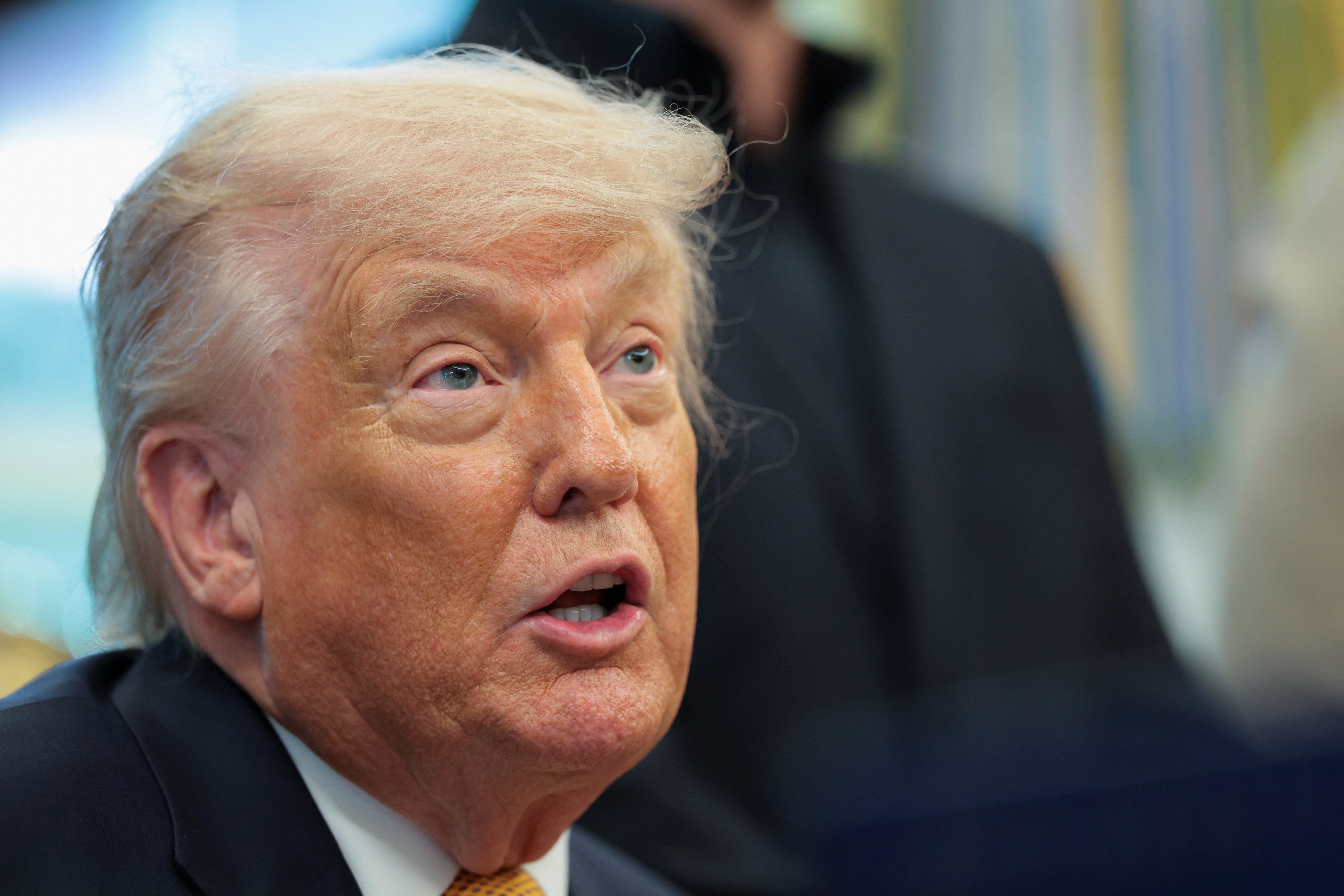
Trump has ruffled feathers across the Gulf with seemingly unilateral decisions (Reuters)
The leaders “have been in touch regularly” and officials are also in touch with vice president JD Vance, secretary of state Marco Rubio, a Saudi source told NBC News.
“The problem with that premise is that things are happening quickly in real time,” the source said about the announcement, adding that the country was “very supportive of the diplomatic efforts” by Pakistan to guide the countries towards an agreement.
A White House official told NBC News that “regional allies were notified in advance.”
The Independent has contacted the White House for comment.
A diplomat in the region said that the operation was not coordinated with Oman either. “The US made an announcement and then coordinated with us,” they said, adding, “We were not upset or angry.”
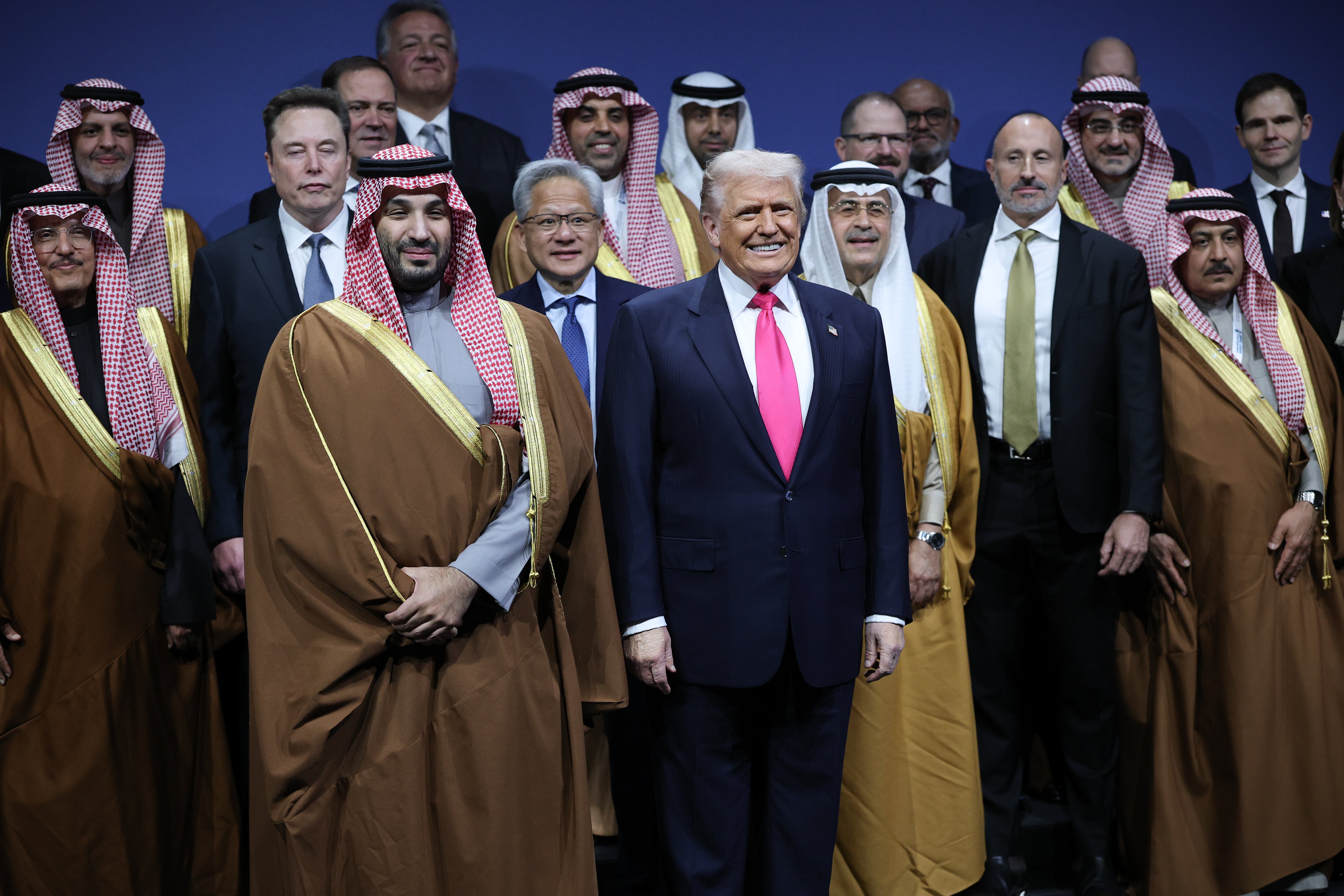
Trump’s project is said to have angered the Saudi leadership (Getty)
“Because of geography, you need cooperation from regional partners to utilise their airspace along their borders,” one US official explained about the success of the scheme.
The Strait of Hormuz is a vital shipping route for global supplies of oil, fertiliser and other commodities that has been virtually closed since the US and Israel attacked Iran on 28 February, causing global price rises.
West Bank commander boasts about high death toll and defends looser rules of engagement, including firing at unarmed Palestinians
An Israeli soldier stands on guard during an army raid at a cafe in the Rafidia neighbourhood of Nablus in the occupied West Bank on 23 April 2026 (Nasser Ishtayeh / SOPA Images via Reuters)
Published date: 4 May 2026 14:13 BST | Last update:2 days 20 hours ago
Israel’s top commander in the occupied West Bank has said the army is killing Palestinians at levels “not seen since 1967”, according to Haaretz.
Avi Bluth, head of the Israeli army’s Central Command, made the remarks in a closed forum, where he also defended looser rules of engagement allowing troops to fire at unarmed Palestinians.
He acknowledged a discriminatory approach whereby Jewish Israeli stone-throwers are not targeted while Palestinians carrying out similar acts are fired at.
“In three years, we have killed 1,500 terrorists,” he said, referring to Palestinians.
“So how is there no intifada? Why aren’t they taking to the streets? Why is the Palestinian public indifferent? Why are there no disturbances?” Bluth, a settler who has been the Israeli army commander in the West Bank since 2024, added.
New MEE newsletter: Jerusalem Dispatch
Sign up to get the latest insights and analysis on Israel-Palestine, alongside Turkey Unpacked and other MEE newsletters
“The Arabs understand that ‘if someone rises to kill you, kill him first’ is part of the rules of the Middle East, and therefore we are killing like we have not killed since 1967.”
According to the United Nations Office for the Coordination of Humanitarian Affairs (Ocha), since 7 October 2023, Israel has killed 1,081 Palestinians in the West Bank and the occupied East Jerusalem, including at least 235 children.
Bluth attributed the high number of Palestinian deaths to orders he gave, which made it easier for Israeli soldiers to open fire at civilians.
He said troops are permitted to shoot, from the knee down, at Palestinians attempting to cross the West Bank separation barrier.
“Today, there are many ‘limping memorials’ in Palestinian villages of those who tried to infiltrate and got hit, so there is a price that is paid,” Bluth said, according to Haaretz.
Preferential treatment for settlers
Bluth admitted that his subordinates do not shoot Israelis who throw stones at army forces because of “sociological implications,” while they kill Palestinians who do the same.
He added that in 2025, Israeli forces killed 42 Palestinians accused of stone-throwing, which he described as terrorism.
When shown footage of settlers throwing stones at troops, he cited an incident in which two masked Israelis were shot, noting it caused a public outcry.
Bluth’s remarks come amid growing discontent about his actions among hilltop youth, the settler militias who terrorise Palestinians communities in the West Bank, who view him as yielding to left-wing and international pressure.
Ex-Mossad chief says Israeli settler violence reminds him of the Holocaust
Last week, Haaretz reported that Bluth labelled the growing numbers of settler attacks as “terror,” and criticised hilltop youth who establish outposts without coordinating it first with the army’s command.
Bluth added that the army, with the coordination of the settlers, established some 150 outposts in Area C in the West Bank in recent years, which he alleged helped prevent Palestinian “terror” and building expansion.
Last week, Knesset Member Limor Son Har-Melech, a vocal supporter of the settler militias, called Israel Defence Minister Israel Katz to immediately fire Bluth from his post over his remarks.
Meanwhile, the Israeli NGO Peace Now reported on Sunday that the Israeli government assigned some 130 million shekels to those same settler groups under the guise of curbing settler violence.
The funds were allocated towards “reducing risk situations and expanding positive responses for youth in the Judea and Samaria area,” using the Israeli name for the West Bank.
Peace Now said the funds will, in practice, be used to strengthen the settlements and “channel millions” to their regional councils.
“The government uses every excuse to justify pouring more and more millions into settlements. This is a programme to expand settlements under the guise of combating violence,” Peace Now statement said.
“The government is directing a significant portion of the funds to the same actors and activities that currently serve as the main supporters of the outposts and farms from which the violence originates,” the NGO added, calling on the government to stop the funds and the army and police to stop the violent acts.
Amnesty International has called for the release of abducted activists Saif Abu Keshek and Thiago Avila, who have been detained by Israel since its forces intercepted Global Sumud Flotilla vessels while in international waters last week.
Abu Keshek and Avila are “at great risk of human rights abuses, including torture and other ill-treatment,” Amnesty said, citing its “previous documentation of the abuse inflicted on flotilla activists detained in October 2025 at the hands of the Israeli authorities”.
The NGO said it was especially concerned about Abu Keshek, “a Palestinian-Spanish-Swedish national”, as he is “being detained on suspicion of affiliation with a terrorist organization given Israel’s discriminatory laws and persistent record of harassment and oppression of Palestinians under Israel’s system of apartheid”.
Amnesty International called on Israel to “immediately release them and ensure they are protected while in custody”.
As we reported earlier, Israeli rights group Adalah said Israel’s Beersheba District Court had rejected an appeal for the activists’ release, ruling instead to extend their detention to Sunday morning.
Iran’s permanent mission to the UN has urged member states to reject a resolution drafted by the US and its Gulf allies pressing Iran to ensure safe passage for shipping through Hormuz, calling it “flawed” and “politically motivated”.
“The only viable solution in the Strait of Hormuz is clear: a permanent end to the war, the lifting of the maritime blockade, and the restoration of normal passage,” said Iran’s UN mission in a post on X.
It went on to accuse the US of using the resolution to “advance its political agenda and legitimise unlawful actions – not to resolve the crisis”.
Lawyers says two activists are being subjected to ‘psychological torture’ as their detention is extended for another week
Activist Thiago Avila, a member of the Global Sumud Flotilla seized by Israel in international waters, sits at a magistrate’s court hearing in Ashkelon, Israel, 3 May 2026 (Amir Cohen/Reuters)
Published date: 5 May 2026 12:08 BST | Last update:21 hours 34 mins ago
Two activists seized by Israeli forces in international waters while en route to deliver humanitarian aid to Gaza have been threatened with death or lengthy imprisonment, their lawyers said on Monday.
The legal centre Adalah, which represents Thiago Avila and Saif Abu Keshek, said the pair have been subjected to psychological abuse and held in solitary confinement since their capture last week.
On Tuesday, a court in the southern Israeli city of Ashkelon extended their detention until Sunday.
Abu Keshek, a Spanish-Swedish national of Palestinian origin, and Avila, a Brazilian national, were detained late on Wednesday when Israeli naval forces raided a Gaza-bound aid flotilla in international waters off Greece.
They were taken to Israel and accused of assisting the enemy during wartime, contact with a foreign agent, membership of and providing services to a terrorist organisation, and transferring funds to such a group. Both deny the charges.
New MEE newsletter: Jerusalem Dispatch
Sign up to get the latest insights and analysis on Israel-Palestine, alongside Turkey Unpacked and other MEE newsletters
Since their detention, the men have been held in cells under constant bright light, a practice intended to cause sleep deprivation and disorientation, according to Adalah. They are also blindfolded whenever taken out of their cells, including during medical examinations, which it described as a serious breach of medical ethics.
Global Sumud Flotilla: When states fail, humanity sets sail
Avila reported being subjected to repeated interrogations lasting up to eight hours, during which he was allegedly threatened that they would be “killed” or “imprisoned for 100 years”.
He is also being held in very low temperatures, the group said.
The two men, now in solitary confinement, have entered their sixth day of a hunger strike in protest at what legal experts have described as an unlawful seizure outside Israel’s territorial waters.
Lawyers Hadeel Abu Salih and Lubna Tuma of Adalah told the court the case was “flawed and unlawful”, arguing there is no legal basis for applying Israeli law to foreign nationals in international waters.
During Friday’s raid, Israeli forces intercepted at least 21 Gaza-bound vessels and detained 175 activists, in what organisers from the Global Sumud Flotilla described as an act of “piracy”.
The boats were seized about 600 nautical miles from Gaza’s coast, near the Greek island of Crete.
Spain and Brazil issued a joint statement on Friday describing the detention of Avila and Abu Keshek as illegal.
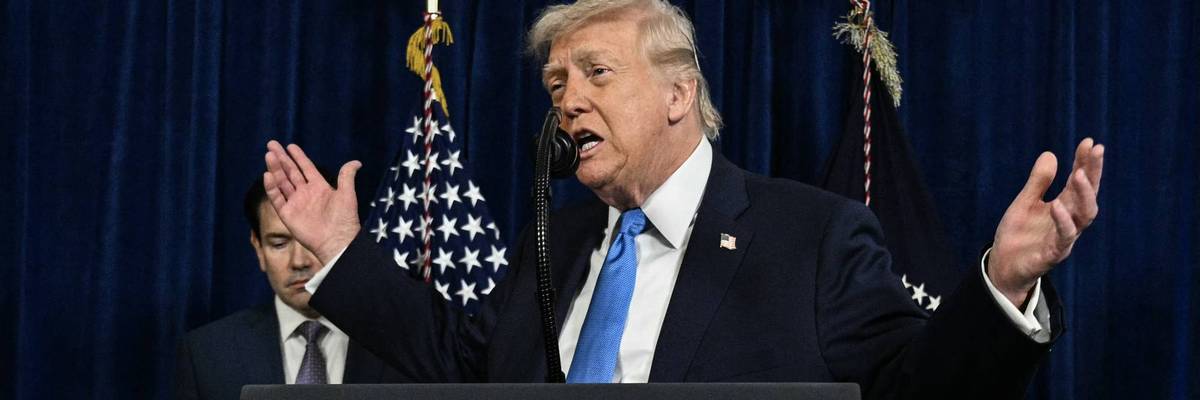
(L/R) US Secretary of State Marco Rubio looks on as US President Donald Trump speaks to the press following US military actions in Venezuela, at his Mar-a-Lago residence in Palm Beach, Florida, on January 3, 2026.
(Photo by Jim Watson/ AFP via Getty Images)
The president is using the power of the US military to steal the wealth of Latin American countries to enrich himself, his family, his closest business associates, and US corporations.
Some lawmakers have grown so alarmed by the Trump administration’s actions in Latin America that they are beginning to accuse the administration of gangsterism.
Representative Stephen Lynch (D-Mass.) saw the possibility of gangsterism at the start of the second Trump administration when he warned that the United States could “join the ranks of gangster nations,” but there is a growing sense in Congress that the day has arrived.
At a congressional hearing last month, Rep. Joaquin Castro (D-Texas) asserted that the Trump administration is exploiting the US military to take Latin American resources for US corporations. Castro seemingly channeled the anti-war critiques of Smedley Butler, the US military hero of the early 20th century, who condemned war as a racket and lamented his exploitation as a racketeer for capitalism.
“For decades, our men and women in uniform who volunteered to protect our country became mercenaries ordered to risk their lives to protect the profits of US corporations,” Castro said. “Today, President Trump is ordering them to do so again.”
The Case of Venezuela
The Trump administration’s critics in Congress have been warning about the administration’s gangsterism due to its actions in Venezuela.
Since the Trump administration directed a military operation earlier this year to seize Venezuelan President Nicolás Maduro and take control of the country’s oil and minerals, several lawmakers have suggested that the administration has begun to employ force and intimidation as its basic tools of statecraft.
Lawmakers have condemned the administration for conducting a military operation without congressional approval, meddling in Venezuela’s internal politics, displaying contempt for Venezuela’s political process, facilitating corruption in Venezuela and the United States, and using the US military to take control of Venezuela’s resources.
Now that the Trump administration has moved against Venezuela, establishing new leadership and doling out profits from its resources, lawmakers anticipate that it will move against Cuba next.
“You are taking their oil at gunpoint,” Senator Chris Murphy (D-Conn.) told Secretary of State Marco Rubio earlier this year.
Although Congress has not held the president accountable, as the Republican majority in each chamber supports the president, critics have kept pressure on the White House, prompting officials to defend the administration’s actions.
At the congressional hearing last month, State Department official Michael Kozak claimed that the intervention in Venezuela advanced US interests. He cited the Monroe Doctrine, which marks Latin America as a sphere of influence. Like the president, he boasted that the United States now controls the country’s resources.
“We’ve got very significant control over the oil revenues at this point,” Kozak said.
Several Democratic lawmakers responded with strong criticisms. They condemned the Trump administration for acting so aggressively in the hemisphere, and they warned that its actions would create a backlash against the United States.
Representative Sydney Kamlager-Dove (D-Calif.) described the administration’s approach as “shameful.” She insisted that the United States should not be “reviving a policy of domination and subjugation in the Western Hemisphere through the Monroe Doctrine.”
Castro repeated his warning that the Trump administration is focused on commerce and profits. He suggested that the president is using the US military to enrich people close to him.
“What has happened now is that there’s a group of folks that the president favors in his circle that is able to commence commerce and make money off of, whether it’s valuable minerals, oil, anything else in Venezuela,” Castro said.
Kozak expressed disagreement with Castro’s analysis, but he acknowledged that the Trump administration has established significant controls over Venezuela. Once again, he boasted that the Trump administration controls the country’s resources.
“People can lift oil and sell it on the open market, but all that money goes into an account that we have control over,” Kozak said. “All the revenues that are coming from the mining sector and everything, instead of going into their bank accounts, are coming into the Treasury accounts, and then we can dole it out as we see fit.”
The Case of Cuba
Now that the Trump administration has moved against Venezuela, establishing new leadership and doling out profits from its resources, lawmakers anticipate that it will move against Cuba next.
For months, President Donald Trump has been openly threatening Cuba. He has moved to block oil shipments to the country, causing an economic crisis. Knowing that he has put tremendous pressure on the Cuban government, he has demanded that the country’s president leave office.
“I do believe I’ll be having the honor of taking Cuba,” Trump said in March. “I think I could do anything I want with it, if you want to know the truth.”
Critics are giving serious consideration to the idea that Trump’s wars are a racket and that Cuba may be next.
Although the Trump administration’s military intervention in Iran has shifted its focus away from Cuba, the administration is maintaining an economic stranglehold over the island nation, making its recovery impossible. The US military continues blocking the free flow of oil to Cuba, even while Trump demands the free flow of oil through the Strait of Hormuz. The few oil shipments that have reached Cuba, for instance a recent tanker from Russia, have provided little relief.
At the congressional hearing last month, several lawmakers argued that the Trump administration is a major reason why Cuba is facing such tremendous hardship, including island-wide blackouts and preventable deaths at hospitals and health clinics.
“We cannot ignore our own country’s role in the ongoing humanitarian catastrophe in Cuba,” Castro said.
Rep. Jonathan Jackson (D-Ill.), who recently visited the country, made the strongest criticisms. Warning that the administration’s policies are causing tremendous harm to the Cuban people, he indicated that the Trump administration is violating international humanitarian law.
“We have engaged in collective punishment,” Jackson said.
The congressman also accused the Trump administration of trying to make life so miserable for the Cuban people that they would rise up and overthrow the Cuban government. He described it as a failed “policy of starving” Cuba.
“It was one of the most cruel things I had ever seen in my life,” he said.
Just as the Trump administration has been able to get away with its actions in Venezuela, however, it has been able to continue its policies toward Cuba. The administration maintains support among Republicans and some Democrats, few of whom oppose the administration’s goal of regime change.
The president, who knows that he faces little opposition in Congress, continues threatening to direct a military intervention in Cuba, even citing the operation in Venezuela as a precedent.
“In January, our warriors flew straight into the heart of the Venezuelan capital, captured the outlawed dictator Nicolás Maduro, and brought him to face American justice,” Trump said last month. “And very soon this great strength will also bring about a day 70 years in waiting. It’s called, ‘A New Dawn for Cuba.’”
War Is a Racket
When Smedley Butler spoke against his exploitation as a racketeer for capitalism nearly a century ago, he made a criticism of the American way of war that was considered to be so radical by US leaders that it has been largely excluded from mainstream political discourse.
Only a few politicians, such as former Rep. Cynthia McKinney (D-Ga.) and Ron Paul (R-Texas), have cited Butler and his warnings. Rarely, if ever, does the mass media report on war as a racket in which the country’s leaders are exploiting US military forces as gangsters for capitalism.
Today, however, some elected leaders are beginning to issue the same kinds of warnings about the Trump administration. Alarmed by the president’s insatiable lust for wealth and power, they are starting to suggest that the president is engaging in a kind of gangsterism across Latin America. The president, they say, is using the power of the US military to steal the wealth of Latin American countries to enrich himself, his family, his closest business associates, and US corporations.
“By any measure, this is the most corrupt administration in American history,” Sen. Chris Van Hollen (D-Md.) said earlier this year.
Now that the Trump administration is openly pillaging Venezuela and getting away with it, several lawmakers are warning that it may apply the same approach to other Latin American countries.
“It’s making me think that the goal in Cuba is going to be the same,” Castro said at the hearing in April. “It’s who’s going to go over there that’s friends with the president to make money and who’s going to profit off of Cuba and the Cuban people.”
Indeed, there is a growing sense in Congress that the Trump administration is turning to gangsterism. Moving beyond standard establishment critiques of the president’s contempt for norms and traditions, critics are giving serious consideration to the idea that Trump’s wars are a racket and that Cuba may be next.
Published date: 4 May 2026 12:14 BST | Last update:19 hours 42 mins ago
Israel has expanded its control of the Gaza Strip to nearly 60 percent of the territory despite the ceasefire, as it prepares for a possible resumption of the war, Army Radio reported on Sunday.
Senior military officials, cited by the broadcaster, said they are pressing to restart fighting, arguing that now is the optimal moment to defeat Hamas.
Operational plans for renewed attacks have been completed, the report said, with a final decision pending approval from Israel’s political leadership.
The military has also reduced forces in southern Lebanon while redeploying brigades to Gaza and the occupied West Bank.
The Army Radio also reported there has been an increase in attacks lately.
New MEE newsletter: Jerusalem Dispatch
Sign up to get the latest insights and analysis on Israel-Palestine, alongside Turkey Unpacked and other MEE newsletters
Meanwhile, Israeli forces have expanded the so-called “Yellow Line” to absorb more of Gaza, pushing the population into roughly 40 percent of the enclave while troops remain stationed across the remaining 60 percent in the south, north and east.
Gaza cannot be rebuilt until Palestinians control their own political future
The US brokered a ceasefire in the Gaza Strip in October, intended to end Israel’s two-year genocide by halting attacks and allowing humanitarian aid to flow into the territory.
However, Israel has repeatedly violated the ceasefire, killing at least 832 Palestinians in near-daily shelling, according to the Palestinian health ministry.
Overall, Israeli forces killed more than 72,000 Palestinians since October 2023. Thousands more remain missing and beneath rubble.
Under the agreement, Israel was required to lift restrictions and allow up to 600 aid trucks a day carrying food, fuel, medical supplies, shelter materials and commercial goods. However, Gaza authorities say Israeli limits have kept the average at just over 200 trucks daily.
Additionally, the Israeli military controlled nearly half of Gaza when the ceasefire began, establishing a unilateral demarcation known as the “Yellow Line”. The agreement’s later phases envisaged a gradual Israeli withdrawal from all of Gaza.
However, Israeli forces have since steadly expanded the “Yellow Line” and now control 59 percent of the territory, according to Army Radio.
In one of the scariest moments in modern history, we're doing our best at ScheerPost to pierce the fog of lies that conceal it but we need some help to pay our writers and staff. Please consider a tax-deductible donation.
Joshua Scheer
This war isn’t just being fought with missiles—it’s being waged through oil markets, currencies, and corporate balance sheets. And while the world watches bombs fall, something quieter—and far more consequential—is happening: a global energy system is being weaponized in real time.
This on The Geopolitical Economy Report with Ben Norton. Ben digs into the role oil plays at the center of the war on Iran—and how the United States turned itself into the world’s top oil producer to weaponize that power globally. He breaks down the push to sideline OPEC, the UAE’s dramatic exit, and the political fiction of American “energy independence.”
Oil Was Never Just Fuel — It Was Always the Weapon
One of the clearest lessons of the war on Iran isn’t merely military. It’s structural. Oil is not just a commodity. It is power. It is leverage. It is the bloodstream of the global economy—and increasingly, the preferred instrument of empire.
For decades, the global system has revolved around the petrodollar, a quiet but foundational arrangement ensuring that most of the world’s oil is bought and sold in U.S. dollars. Even today, an estimated 80% of global oil transactions still run through that system. But the architecture is showing cracks. Sanctioned nations such as Russia, Iran, and Venezuela have begun trading outside the dollar, challenging the financial scaffolding that has long underpinned U.S. dominance.
Yet the story is not simply one of decline. Because while the dollar faces pressure, the United States has quietly secured something arguably more consequential: control over production itself.
In just over a decade, the U.S. transformed from a major importer into the largest oil producer on Earth, responsible for roughly 14–15% of global output. The shale boom didn’t just reshape domestic energy markets—it rewired the geopolitical landscape. Washington no longer merely polices the system; it helps shape it directly. And in wartime, that shift becomes decisive.
Crisis for the World, Windfall for Big Oil
As the conflict with Iran escalated, global oil prices surged—nearly doubling in 2026. For billions of people, that spike translates into inflation, food insecurity, and economic instability. For poorer nations, it is nothing short of devastating.
But for U.S. and Western oil corporations, the crisis has been a windfall. Profits have soared, with some companies reporting earnings double those of the previous year. As supply chains fracture and traditional exporters are destabilized or cut off, American firms have stepped in—expanding exports to Europe and Asia and filling the void left by war.
The pattern is unmistakable: global pain, concentrated gain.
The Strait That Can Shake the World
At the center of this crisis sits one of the most strategically vital chokepoints on Earth: the Strait of Hormuz. Before the war, roughly 20% of the world’s traded oil passed through this narrow corridor each day. When Iran moved to disrupt it, the message was not subtle—it was existential.
Shut the strait, and the global economy trembles.
This is what modern warfare looks like: not just territory and airspace, but shipping lanes, pipelines, and market flows. Control the flow of oil, and you control the tempo of the world economy.
Breaking OPEC, Rewriting Power
Another quiet earthquake has reshaped the landscape: the United Arab Emirates’ withdrawal from OPEC. On paper, it looks bureaucratic. But historically, OPEC represented something radical—a collective attempt by Global South nations to control their own resources and wrest power from Western oil giants.
Weakening OPEC weakens that collective leverage. And it strengthens something else.
Washington has never opposed cartels in principle—it has opposed cartels it doesn’t control. The long‑term objective has been consistent: ensure that corporations aligned with U.S. power, not sovereign states, set the terms of the global energy market.
The Myth of “Energy Independence”
The familiar talking point insists that the U.S. is “energy independent,” insulated from global chaos. It isn’t.
Oil is priced globally. When prices spike, everyone pays—regardless of where the oil originates. The U.S. still imports millions of barrels per day, and its infrastructure depends on specific grades of crude it does not produce in sufficient quantities. “Independence” is political messaging, not economic reality.
From Oil Shock to Food Crisis
And here is where the crisis becomes catastrophic. Oil is not just fuel—it is fertilizer, transport, and the backbone of modern agriculture. As energy prices surge and supply chains fracture, farmers worldwide are already facing shortages.
The likely result is grimly predictable: rising food prices, shrinking harvests, and widespread hunger. This is not speculation. It is the logical downstream effect of an energy shock of this scale.
The Real Takeaway
This war is not contained. It is not regional. It is not temporary. It is systemic.
It is reshaping how power works—who controls energy, who sets prices, and who pays the cost. And as always, the burden falls downward: onto workers, onto poorer nations, onto the global majority.
Meanwhile, at the top, the machinery hums. Profits rise. Influence expands. The line between state policy and corporate interest blurs even further.
Oil was never just fuel. It was always the weapon. And now, it is being used exactly as intended.
On 30 April 2026, I was on “Deep Dive” with Lt. Col. (ret.) Danny Davis talking about what President Trump is likely to do in Iran over the next few weeks and the consequences of that war on the global order.
It is very difficult to know for sure what Trump will do in Iran, as he is desperate and he was foolish enough to start this disastrous war in the first place. My guess is that he will continue the naval blockade until he is forced to accept defeat and cut a deal because the world economy is about to go over the precipice. There is no way, however, that he wins this war.
It is stunning how unsuccessful the US and Israel have been in this war. Not only have they failed to achieve any of the four major goals laid out before the war, but Iran now has a stranglehold on the Strait of Hormuz, and — as Danny and I talked about at some length — the US has wrecked the security architecture that it built up with the Gulf states before 28 February 2026. And don’t forget that the US, which has been committed to pivoting to East Asia to contain China since the early days of President Trump’s first term (2017), is now pivoting away from Asia to the vortex in the Middle East. What a disaster!
Guido Reichstadter scaled the Frederick Douglass Memorial Bridge in Washington, DC on Friday, May 1, 2026 in order to protest the Iran War started by the President Donald Trump just over two months ago.
Forty-five-year-old social justice activist named Guido Reichstadter, on Saturday morning, was still perched atop the Frederick Douglass Memorial Bridge in Washington, DC, after first scaling the structure Friday afternoon in protest against President Donald Trump’s disastrous war against Iran, now in its third month, and the rapid and unregulated spread of artificial intelligencetechnology.
As Reichstadter, who described himself as the father of two children with master’s degrees in both math and physics, said in a video posted to social media on Friday: “Hi, my name is Guido Reichstadter, and I’m currently occupying the top of the Frederick Douglass memorial bridge in Washington, DC.”
“I’m calling on the people of the United States,” he continued, “to bring an immediate end to the Trump regime’s illegal war on Iran and the removal of the regime’s power through mass nonviolent direct action and non-cooperation.”
“I woke up on February 28th, and I found that hundreds of school children had been blown apart. I think there are many millions of Americans who reject the war in principle, but whose actions have not yet been sufficient to bring it to an end.”
In a separate video, he explained he was at the top of the bridge, which rises approximately 168 feet above the Anacostia River at its highest point, “because the government of the United States is engaged in acts of mass murder in my name. And I refuse to be complicit in that.”
While bridge traffic in both directions was closed at times on Friday and overnight, the bridge is reportedly open to traffic Saturday morning, though with some lane restrictions, as law enforcement said a “barricade situation” with the protester continued.
Reichstadter, who has staged high-profile protests in the past, spoke to Al-Jazeera via video stream on Friday to explain his actions and call for an end to the war that he says—and tens of millions of other Americans agree, according to polling—is a colossal failure by the Trump administration.
“I mean, it’s an atrocity, right?” he said when asked what motivated him. “I woke up on February 28th, and I found that hundreds of school children had been blown apart. I think there are many millions of Americans who reject the war in principle, but whose actions have not yet been sufficient to bring it to an end.”
Democratic members of Congress, both in the US House and Senate, have now brought several War Powers Resolutions to the floor in an effort to end the US attack on Iran, which now includes a naval blockade of the country, but Republican majorities in both chambers, backing Trump, have thwarted those efforts.
Poll after poll, meanwhile, shows that Reichstadter is completely correct in stating that millions of people “reject the war,” but still the war continues even after a 60-day deadline, according to the War Powers Act of 1973, which says the president must either end military operations or get the explicit approval of Congress, which came and went on Friday.
On Friday, a video showed Reichstadter wearing a t-shirt that read “NO WAR” and unfurling a large black banner along the side of the bridge’s central arch as part of the protest.
Before scaling the bridge, Reichstadter also spoke with journalist Ford Fisher to explain his motivations and what he hoped to accomplish with his one-person direct action:
Reichstatder stayed on the bridge overnight, even as fireworks exploded overhead from a nearby Major League Baseball game.
In his statement concerning AI, Reichstadter said he wanted to “urgently warn the people of the US and the world of the imminent danger we are in of crossing a point of no return towards the development of artificial intelligence, which poses the risk of catastrophic harm to humanity, including human extinction.”
“I call on the governments of the world to take immediate action to end this danger by permanently banning the development of artificial general intelligence and machine super intelligence,” he said. “I also call on the people of the world to exert all possible influence through nonviolent action to compel their governments to end this danger with all possible speed.”







 Peace and Justice Post