Orwell’s 1984, Alive and Well in the Obama Administration
By Anthony DiMaggio, ZNet, September 5, 2009
Anthony DiMaggio’s ZSpace Page
The Obama administration is quickly proving itself a worthy successor to the militarism that defined the Bush administration. Obama was never an opponent of war; he is merely opposed to what he calls “dumb wars” like Iraq, which liberals in Washington view as too costly, unwinnable, or counterproductive. However, Obama remains optimistic on Afghanistan and Pakistan, promising that the U.S. will crush al Qaeda and defeat the Taliban (based in Pakistan and southern Afghanistan respectively).
George Orwell’s depictions of wartime propaganda seem as timely as ever when looking at Obama and Bush’s “War on Terrorism.” In his novel, 1984, Orwell described tyrannical governments that rely on “doublethink” propaganda, whereby officials “hold simultaneously two opinions which cancel out, knowing them to be contradictory and believing in both of them…to forget whatever it [is] necessary to forget, then to draw it back into memory again at the moment it [is] needed, and then promptly forget it again.” Through propaganda and manipulation, officials are “conscious of complete truthfulness while telling carefully constructed lies.” The most notorious of such lies is the promise that peace is possible only through the pursuit of war.
In accordance with the principle of perpetual war, Obama refuses to establish a timetable for when his military crusade will end. As in 1984, the U.S. is engaged in an enduring “War on Terrorism,” consistently fought in the name of promoting peace. The doublethink “war is peace” framework was originally established by George W. Bush. In a 2002 speech, Bush addressed the Department of Housing and Urban Development, explaining: “I just want you to know that, when we talk about war, we’re really talking about peace. We want there to be peace. We want people to live in peace all around the world…We’re going to be steadfast toward a vision that rejects terror and killing, and honors peace and hope.”
Obama is less clumsy and more eloquent in his use of Orwellian propaganda, but his message remains essentially the same. Obama condemns the Taliban’s “brutal governance” and “denial of basic human rights to the Afghan people,” and warns against “the return in force of al Qaeda terrorists who would accompany the core Taliban leadership” and “cast Afghanistan under the shadow of perpetual violence.” While the Taliban is obsessed with violence, U.S. leaders share a “responsibility to act – not because we seek to project power for its own sake, but because our own peace and security depends on it.”
American journalists see their role in foreign conflicts as dutifully reflecting the range of opinions expressed in Washington. In the case of Afghanistan, both parties lend their support to war as an integral part of U.S. foreign policy. “Responsible” criticisms are limited to questions of whether the war is unwinnable or too costly.
Afghan Corruption
The Obama administration paternalistically denigrates the Afghan government for complicity in corruption, ballot-tampering, collusion with warlords, narcotics dealing, and a lack of democratic responsiveness. These criticisms are echoed in news stories and editorials. The editors of the Los Angeles Times conclude that the Karzai government needs to help the Afghan people ensure “security, honest governance, impartial justice, economic development with far less corruption, and protection of women’s rights” (8/20/09). Reporters at the New York Times highlight the inability of the Afghan government to provide resources to local governors to promote “security,” medical care, educational resources, and advisement (Oppel, 8/23/09). The paper’s editors similarly lambaste the recent Afghan election as illegitimate, with “neither of the two main contenders offer[ing] serious solutions to the country’s problems” (8/20/09). Always benevolent in their intentions, U.S. leaders reserve the “right” to sit in judgment of other governments judged as impure in their motives and actions.
U.S. journalists predictably blame Afghan leaders for failing to ensure reconstruction of their country, while conveniently exonerating U.S. officials for their disinterest in humanitarian aid. The editors of the Washington Post congratulate Obama for his serious commitment to “nation-building” (3/28/09). The NY Times’ editors concur that Obama “must speed deployment of American civilians to help Afghan leaders carry out development projects” (8/29/09). Critics of the war can be forgiven for asking what evidence exists – outside of Obama’s rhetoric – that he is seriously committed to the reconstruction (rather than destruction) of Afghanistan. Little has improved in Afghanistan under U.S. occupation. The country remains one of the poorest, worst off countries in the world according to statistical indicators. Its 32 million people rank 174th of 178 countries in the United Nations Human Development Index. Afghanistan suffers from some of the highest infant mortality rates. Nearly two-thirds of children are unable to attend school and less than a quarter enjoy clean drinking water.
Available evidence does not vindicate Obama’s promises that humanitarian aid is a serious priority. The U.S. committed a mere $5 billion in reconstruction funds from 2002 to 2008 – despite the Congressional Research Services’ estimate that as much as $30 billion is needed through 2012. As of 2008, the Afghan government concluded that it needs as much as $50 billion for adequate reconstruction over the next five years. Barack Obama, in contrast, committed just $1 billion to reconstruction for 2010, but $68 billion for military activities. After looking at such figures, it’s easy to conclude that the escalation of war is seen as far more important than reconstruction.
Public Opinion
U.S. leaders not only hold the Afghan government in contempt, but also the people of Afghanistan and the United States. As of August 2009, 57% of Americans oppose the war. 77% of Afghans oppose U.S. airstrikes to “defeat the Taliban and anti-government fighters” as detrimental to their nation’s security. It’s not that widespread public opposition to war is always ignored in media reports – it’s just not a serious concern for reporters and politicians. The NY Times editors, for example, concede that “it is understandable that polls show that many Americans are tiring of the 8-year-old war” (8/29/09). This, however, doesn’t stop them from enthusiastically supporting the war as “the real front in the war on terrorism” (6/30/09). Although the paper’s reporters admit that southern Afghans are in “popular revolt” against Obama’s escalation, “extra [U.S.] forces” are still seen as vital for defeating Taliban forces and “securing” the region (Gall, 7/3/09; Oppel, 8/23/09).
Escalation
It is worth noting that almost all the major newspapers in the U.S. support escalation in Afghanistan. The editors of the New York Times, Wall Street Journal, Washington Post, Los Angeles Times, and Washington Times all support the “surge” in troops. Opposition does exist from papers like the Boston Globe, where reporters ponder whether the conflict is becoming a “quagmire comparable to Vietnam” (Wayland, 7/23/2009). Such a position is the minority view, however. Editors at the Wall Street Journal agree that “more U.S. troops will likely be needed” (2/17/09), and a “proper counterinsurgency strategy” must be developed. The NY Times reports that there is not “enough equipment for patrols” of the Iranian-Afghan border, and that U.S. military commanders see “their forces [as] insufficient to get the job done” (Bumiller, 7/23/09; Cooper, 9/3/09).
The justification for war in Afghanistan and Pakistan is adequately summarized by the editors of the Washington Post, who approve of Obama’s claims that: “al Qaeda is actively planning attacks on the U.S. homeland from its safe haven in Pakistan…if the Afghan government falls to the Taliban – or allows al Qaeda to go unchallenged – that country will again be a base for terrorists who want to kill as many people as they possibly can” (3/28/09).
Some common sense questions arise when contemplating escalation in Pakistan and Afghanistan – all of which are raised by non-mainstream journalists reporting from Afghanistan and scholars who study the Middle East. These views are generally ignored, however, by mainstream journalists and political officials. Middle East specialist Juan Cole questions the true extent of “al Qaeda’s capabilities. They don’t seem to have a presence in Afghanistan any more to speak of. What is called al Qaeda in the northwest of Pakistan is often just Uzbek, Tajik, and Uighur political refugees who have fled their own countries in the region because their Muslim fundamentalism is not welcomed by those regimes. The old al Qaeda of Bin Laden and al Zawahiri appears to have been effectively disrupted. Terrorist attacks in the West are sometimes planned by unconnected cells who are al Qaeda wannabes, but I don’t see evidence of command and control capabilities by al Qaeda central.”
Cole also warns about the unrealistic goals of the Obama administration and worries about a humanitarian crisis that will result from U.S. bombings. “What is the goal here in Afghanistan? If it is to wipe out the Taliban, the Taliban are a social movement that has a certain amount of support in the Pashtun areas and wiping them out would be a genocide. Very unlikely to be accomplished and very brutal if it were done. If the goal is to establish a stable Afghan government that could itself deal with challenges like the remaining Taliban, that’s state building on a large scale. Afghanistan’s a mess; it’s been through thirty years of war…it has no visible means of support, it’s a fourth world country…the kind of army Afghanistan would need to control all that territory would be 100,000-200,000 troops and cost $1-2 billion a year…and the government doesn’t have that kind of money. You’d have to have continual international aid flowing in. So there’s a real question of whether Afghanistan actually has the resources to accomplish what the U.S. wants it to do.”
Assessments on the ground raise similar concerns. Christian Parenti – a reporter for the Nation magazine and recently returned from Afghanistan – concludes that Obama’s plans are “insane as a policy. I don’t think the Obama administration believes it’s going to win in Afghanistan. They made a decision that you can’t lose two wars simultaneously…and to cover themselves politically in terms of electoral theater they’re going to make this big effort in Afghanistan, try and push the Taliban back from provinces around Kabul…make a little bit of progress, and then get re-elected and begin the process of disengaging…I don’t think the Obama administration thinks it’s going to win militarily against the Taliban, and I don’t think they’re stupid enough to think the institutions of the Afghan state are going to function. It’s considered one of the most corrupt governments in the world…Nothing gets done, the Afghan government has very limited ability to raise taxes, 95 percent of its comes from foreign aid [which again, is far from enough to cover the country’s needs], and very little for the people of the society is produced from that.”
Civilian Casualties & “Collateral Damage”
U.S. officials and media outlets are careful to project a rhetorical concern with civilians killed in Afghanistan. At times, the NY Times stresses that the thousands of Afghan civilians killed is “a decisive factor in souring many Afghans on the war” (Gall and Shah, 5/7/09). The Washington Post reports that “Afghan civilian deaths present [the] U.S. with strategic problems.” Such “mistakes” harm the United States’ image, and discredit official claims that “the Taliban is the main cause of suffering in the country” (Jaffe, 5/8/09). Whether these deaths constitute a “mistake,” or are an entirely predictable form of criminal recklessness and negligence, is a relevant question, although one that U.S. officials and media prefer not to ask. Journalists would rather assume that U.S. policy utilizes precision attacks, as the NY Times uncritically quotes official promises that “success” in Afghanistan “will not be measured by the number of enemy killed,” but by “the number of Afghans shielded from violence” (6/8/09). Civilian casualties may be tragic, as the NY Times reminds readers, but it is a necessary price to be paid for “progress” in ending terror in Afghanistan.
That officials and reporters claim they are concerned with minimizing deaths is no revelation. What leader would ever claim that their goal is to kill civilians or to make this an integral part of their policy planning? The reliance on humanitarian claims, however, presents us with an important lesson: official rhetoric about noble and humanitarian conventions is always a constant. As a result, these claims tell us literally nothing about the realities of U.S. policy.
Past military action in Afghanistan was unsuccessful in accomplishing the basic goals laid out by U.S. leaders. As the NY Times reported seven months after the end of the 2001-2002 U.S. campaign, “[U.S.] raids [had] not found any large groups of Taliban or al Qaeda fighters…virtually the entire top leadership of the Taliban survived the American bombing and eluded capture by American forces.” As international security specialist Paul Rogers explains, “the al Qaeda network anticipated a strong U.S. response to 9/11 and had few of its key forces in Afghanistan.” While Osama Bin Laden and Taliban officials did not suffer for the terrorist attacks, Afghan civilians did. Estimates suggest that civilian deaths from 2001 through 2009 are likely in the tens of thousands, although it is impossible to come up with a precise figure. Such casualties are quite serious in light of the fact that the 3,000 American lives lost on 9/11 provoked the U.S. to go to war with Afghanistan and Iraq. Similar problems continue today regarding U.S. escalation of humanitarian crisis. Gareth Porter reports in Counterpunch Magazine that “the strategy of the major U.S. military offensive in Afghanistan’s Helmand province [is] aimed at wrestling it from the Taliban,” but “is based on bringing back Afghan army and police to maintain permanent control of the population. But that strategy poses an acute problem: the police in the province, who are linked to the local warlord, have committed systematic abuses against the population, including the abduction and rape of pre-teen boys, according to village elders” (Porter, 7/30/09).
Aside from the criminality of its allies, the U.S. bombing campaign is also escalating civilian casualties at an alarming rate. As reported in Foreign Policy in Focus, Afghan civilian casualties escalated by 40 percent in 2008 to a total of 2,100 (Gardiner and Leaver, 3/30/09). This, keep in mind, was prior to the surge of U.S. troops, which will inevitably bring more casualties. U.S. bombings in Pakistan incite further misery. The 60 predator drone strikes undertaken by the U.S. from January 2006 to April 2009 resulted in the alleged deaths of 14 al Qaeda leaders, but an additional 687 Pakistani civilians. In other words, 94 percent of all deaths reportedly committed by the U.S. were innocent civilians. This inconvenient reality is shamelessly omitted from American reporting on the strikes. The Los Angeles Times, for example, ran a headline in March 2009 that read “U.S. Missile Strikes Said to Take Heavy Toll on Al Qaeda” (Miller, 3/22/09). The story referenced the alleged members of al Qaeda killed in U.S. attacks, but omitted any reference to the number of civilians killed. Nowhere in the piece were international legal scholars or anti-war critics cited explaining that these attacks are a criminal act of aggression and a blatant violation of international law.
Other crucial questions were neglected in this story. For one, how crucial were the hand-full of alleged al Qaeda members killed in Pakistan to the group’s structure and power? Juan Cole raises important questions about how central these people are to the al Qaeda network. The Obama and Bush administrations’ failure to consistently highlight the importance of these dozen or so deaths also raises serious questions – unasked by reporters – about whether these deaths significantly furthered the “War on Terror.” Another unasked question: are the attacks in Pakistan effectively reducing the terror threat, or increasing it by alienating fellow Muslims in the Middle East? There is certainly precedent to ask such a question. A 2007 study of global terrorism by Peter Bergen and Paul Cruickshank, for example, found evidence of an “Iraq Effect,” whereby the invasion and occupation of Iraq was accompanied by a “sevenfold increase in the yearly rate of fatal jihadist attacks, amounting to literally hundreds of additional terrorist attacks and thousands of civilian lives lost; even when terrorism in Iraq and Afghanistan is excluded, fatal attacks in the rest of the world have increased by more than one-third.”
In the case of Pakistan, U.S. attacks are undeniably accompanied by an increase in hostility from the Pakistani public. While the Pakistani people are supportive of their military’s attacks on the Taliban within Pakistan, they strongly reject U.S. bombings against alleged terrorist targets. The continued U.S. bombing, then, is inciting further anger against the U.S.
Many of the themes I’ve discussed here are not new. I documented the pattern of official and media censorship of the humanitarian implications of support for Afghan warlords and bombing of civilians in my book, Mass Media, Mass Propaganda. It seems clear, amidst the plethora of evidence, that U.S. actions in Afghanistan and Pakistan are unpopular, and are escalating a humanitarian crisis. Bombings of Pakistan threaten to further destabilize a nuclear power that is already dealing with its own threats from Islamic fundamentalist groups.
Claims that the U.S. is defeating terrorism in the Middle East are questionable at best and, in my assessment, little more than vulgar propaganda. Every few years, Americans hear Orwellian promises from officials that we will only win peace through open-ended war. Such claims are pure lunacy, and ensure continued death, destruction, and desperation in the wake of U.S. aggression.
Anthony DiMaggio teaches U.S. and Global Politics at Illinois State University. He is the author of Mass Media, Mass Propaganda (2008) and When Media Goes to War (forthcoming February 2010). He can be reached at: adimagg@ilstu.edu
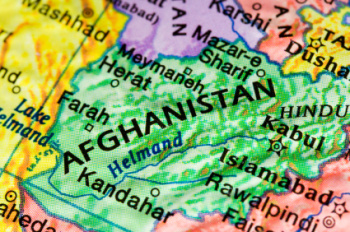 “There is a unanimity of opinion about what our objective is, and the objective is to disable and destroy al-Qaeda,” David Axelrod insisted. But as General Stanley
 Peace and Justice Post
A “War for Peace”
September 5, 2009Orwell’s 1984, Alive and Well in the Obama Administration
By Anthony DiMaggio, ZNet, September 5, 2009
Anthony DiMaggio’s ZSpace Page
The Obama administration is quickly proving itself a worthy successor to the militarism that defined the Bush administration. Obama was never an opponent of war; he is merely opposed to what he calls “dumb wars” like Iraq, which liberals in Washington view as too costly, unwinnable, or counterproductive. However, Obama remains optimistic on Afghanistan and Pakistan, promising that the U.S. will crush al Qaeda and defeat the Taliban (based in Pakistan and southern Afghanistan respectively).
George Orwell’s depictions of wartime propaganda seem as timely as ever when looking at Obama and Bush’s “War on Terrorism.” In his novel, 1984, Orwell described tyrannical governments that rely on “doublethink” propaganda, whereby officials “hold simultaneously two opinions which cancel out, knowing them to be contradictory and believing in both of them…to forget whatever it [is] necessary to forget, then to draw it back into memory again at the moment it [is] needed, and then promptly forget it again.” Through propaganda and manipulation, officials are “conscious of complete truthfulness while telling carefully constructed lies.” The most notorious of such lies is the promise that peace is possible only through the pursuit of war.
In accordance with the principle of perpetual war, Obama refuses to establish a timetable for when his military crusade will end. As in 1984, the U.S. is engaged in an enduring “War on Terrorism,” consistently fought in the name of promoting peace. The doublethink “war is peace” framework was originally established by George W. Bush. In a 2002 speech, Bush addressed the Department of Housing and Urban Development, explaining: “I just want you to know that, when we talk about war, we’re really talking about peace. We want there to be peace. We want people to live in peace all around the world…We’re going to be steadfast toward a vision that rejects terror and killing, and honors peace and hope.”
Obama is less clumsy and more eloquent in his use of Orwellian propaganda, but his message remains essentially the same. Obama condemns the Taliban’s “brutal governance” and “denial of basic human rights to the Afghan people,” and warns against “the return in force of al Qaeda terrorists who would accompany the core Taliban leadership” and “cast Afghanistan under the shadow of perpetual violence.” While the Taliban is obsessed with violence, U.S. leaders share a “responsibility to act – not because we seek to project power for its own sake, but because our own peace and security depends on it.”
American journalists see their role in foreign conflicts as dutifully reflecting the range of opinions expressed in Washington. In the case of Afghanistan, both parties lend their support to war as an integral part of U.S. foreign policy. “Responsible” criticisms are limited to questions of whether the war is unwinnable or too costly.
Afghan Corruption
The Obama administration paternalistically denigrates the Afghan government for complicity in corruption, ballot-tampering, collusion with warlords, narcotics dealing, and a lack of democratic responsiveness. These criticisms are echoed in news stories and editorials. The editors of the Los Angeles Times conclude that the Karzai government needs to help the Afghan people ensure “security, honest governance, impartial justice, economic development with far less corruption, and protection of women’s rights” (8/20/09). Reporters at the New York Times highlight the inability of the Afghan government to provide resources to local governors to promote “security,” medical care, educational resources, and advisement (Oppel, 8/23/09). The paper’s editors similarly lambaste the recent Afghan election as illegitimate, with “neither of the two main contenders offer[ing] serious solutions to the country’s problems” (8/20/09). Always benevolent in their intentions, U.S. leaders reserve the “right” to sit in judgment of other governments judged as impure in their motives and actions.
U.S. journalists predictably blame Afghan leaders for failing to ensure reconstruction of their country, while conveniently exonerating U.S. officials for their disinterest in humanitarian aid. The editors of the Washington Post congratulate Obama for his serious commitment to “nation-building” (3/28/09). The NY Times’ editors concur that Obama “must speed deployment of American civilians to help Afghan leaders carry out development projects” (8/29/09). Critics of the war can be forgiven for asking what evidence exists – outside of Obama’s rhetoric – that he is seriously committed to the reconstruction (rather than destruction) of Afghanistan. Little has improved in Afghanistan under U.S. occupation. The country remains one of the poorest, worst off countries in the world according to statistical indicators. Its 32 million people rank 174th of 178 countries in the United Nations Human Development Index. Afghanistan suffers from some of the highest infant mortality rates. Nearly two-thirds of children are unable to attend school and less than a quarter enjoy clean drinking water.
Available evidence does not vindicate Obama’s promises that humanitarian aid is a serious priority. The U.S. committed a mere $5 billion in reconstruction funds from 2002 to 2008 – despite the Congressional Research Services’ estimate that as much as $30 billion is needed through 2012. As of 2008, the Afghan government concluded that it needs as much as $50 billion for adequate reconstruction over the next five years. Barack Obama, in contrast, committed just $1 billion to reconstruction for 2010, but $68 billion for military activities. After looking at such figures, it’s easy to conclude that the escalation of war is seen as far more important than reconstruction.
Public Opinion
U.S. leaders not only hold the Afghan government in contempt, but also the people of Afghanistan and the United States. As of August 2009, 57% of Americans oppose the war. 77% of Afghans oppose U.S. airstrikes to “defeat the Taliban and anti-government fighters” as detrimental to their nation’s security. It’s not that widespread public opposition to war is always ignored in media reports – it’s just not a serious concern for reporters and politicians. The NY Times editors, for example, concede that “it is understandable that polls show that many Americans are tiring of the 8-year-old war” (8/29/09). This, however, doesn’t stop them from enthusiastically supporting the war as “the real front in the war on terrorism” (6/30/09). Although the paper’s reporters admit that southern Afghans are in “popular revolt” against Obama’s escalation, “extra [U.S.] forces” are still seen as vital for defeating Taliban forces and “securing” the region (Gall, 7/3/09; Oppel, 8/23/09).
Escalation
It is worth noting that almost all the major newspapers in the U.S. support escalation in Afghanistan. The editors of the New York Times, Wall Street Journal, Washington Post, Los Angeles Times, and Washington Times all support the “surge” in troops. Opposition does exist from papers like the Boston Globe, where reporters ponder whether the conflict is becoming a “quagmire comparable to Vietnam” (Wayland, 7/23/2009). Such a position is the minority view, however. Editors at the Wall Street Journal agree that “more U.S. troops will likely be needed” (2/17/09), and a “proper counterinsurgency strategy” must be developed. The NY Times reports that there is not “enough equipment for patrols” of the Iranian-Afghan border, and that U.S. military commanders see “their forces [as] insufficient to get the job done” (Bumiller, 7/23/09; Cooper, 9/3/09).
The justification for war in Afghanistan and Pakistan is adequately summarized by the editors of the Washington Post, who approve of Obama’s claims that: “al Qaeda is actively planning attacks on the U.S. homeland from its safe haven in Pakistan…if the Afghan government falls to the Taliban – or allows al Qaeda to go unchallenged – that country will again be a base for terrorists who want to kill as many people as they possibly can” (3/28/09).
Some common sense questions arise when contemplating escalation in Pakistan and Afghanistan – all of which are raised by non-mainstream journalists reporting from Afghanistan and scholars who study the Middle East. These views are generally ignored, however, by mainstream journalists and political officials. Middle East specialist Juan Cole questions the true extent of “al Qaeda’s capabilities. They don’t seem to have a presence in Afghanistan any more to speak of. What is called al Qaeda in the northwest of Pakistan is often just Uzbek, Tajik, and Uighur political refugees who have fled their own countries in the region because their Muslim fundamentalism is not welcomed by those regimes. The old al Qaeda of Bin Laden and al Zawahiri appears to have been effectively disrupted. Terrorist attacks in the West are sometimes planned by unconnected cells who are al Qaeda wannabes, but I don’t see evidence of command and control capabilities by al Qaeda central.”
Cole also warns about the unrealistic goals of the Obama administration and worries about a humanitarian crisis that will result from U.S. bombings. “What is the goal here in Afghanistan? If it is to wipe out the Taliban, the Taliban are a social movement that has a certain amount of support in the Pashtun areas and wiping them out would be a genocide. Very unlikely to be accomplished and very brutal if it were done. If the goal is to establish a stable Afghan government that could itself deal with challenges like the remaining Taliban, that’s state building on a large scale. Afghanistan’s a mess; it’s been through thirty years of war…it has no visible means of support, it’s a fourth world country…the kind of army Afghanistan would need to control all that territory would be 100,000-200,000 troops and cost $1-2 billion a year…and the government doesn’t have that kind of money. You’d have to have continual international aid flowing in. So there’s a real question of whether Afghanistan actually has the resources to accomplish what the U.S. wants it to do.”
Assessments on the ground raise similar concerns. Christian Parenti – a reporter for the Nation magazine and recently returned from Afghanistan – concludes that Obama’s plans are “insane as a policy. I don’t think the Obama administration believes it’s going to win in Afghanistan. They made a decision that you can’t lose two wars simultaneously…and to cover themselves politically in terms of electoral theater they’re going to make this big effort in Afghanistan, try and push the Taliban back from provinces around Kabul…make a little bit of progress, and then get re-elected and begin the process of disengaging…I don’t think the Obama administration thinks it’s going to win militarily against the Taliban, and I don’t think they’re stupid enough to think the institutions of the Afghan state are going to function. It’s considered one of the most corrupt governments in the world…Nothing gets done, the Afghan government has very limited ability to raise taxes, 95 percent of its comes from foreign aid [which again, is far from enough to cover the country’s needs], and very little for the people of the society is produced from that.”
Civilian Casualties & “Collateral Damage”
U.S. officials and media outlets are careful to project a rhetorical concern with civilians killed in Afghanistan. At times, the NY Times stresses that the thousands of Afghan civilians killed is “a decisive factor in souring many Afghans on the war” (Gall and Shah, 5/7/09). The Washington Post reports that “Afghan civilian deaths present [the] U.S. with strategic problems.” Such “mistakes” harm the United States’ image, and discredit official claims that “the Taliban is the main cause of suffering in the country” (Jaffe, 5/8/09). Whether these deaths constitute a “mistake,” or are an entirely predictable form of criminal recklessness and negligence, is a relevant question, although one that U.S. officials and media prefer not to ask. Journalists would rather assume that U.S. policy utilizes precision attacks, as the NY Times uncritically quotes official promises that “success” in Afghanistan “will not be measured by the number of enemy killed,” but by “the number of Afghans shielded from violence” (6/8/09). Civilian casualties may be tragic, as the NY Times reminds readers, but it is a necessary price to be paid for “progress” in ending terror in Afghanistan.
That officials and reporters claim they are concerned with minimizing deaths is no revelation. What leader would ever claim that their goal is to kill civilians or to make this an integral part of their policy planning? The reliance on humanitarian claims, however, presents us with an important lesson: official rhetoric about noble and humanitarian conventions is always a constant. As a result, these claims tell us literally nothing about the realities of U.S. policy.
Past military action in Afghanistan was unsuccessful in accomplishing the basic goals laid out by U.S. leaders. As the NY Times reported seven months after the end of the 2001-2002 U.S. campaign, “[U.S.] raids [had] not found any large groups of Taliban or al Qaeda fighters…virtually the entire top leadership of the Taliban survived the American bombing and eluded capture by American forces.” As international security specialist Paul Rogers explains, “the al Qaeda network anticipated a strong U.S. response to 9/11 and had few of its key forces in Afghanistan.” While Osama Bin Laden and Taliban officials did not suffer for the terrorist attacks, Afghan civilians did. Estimates suggest that civilian deaths from 2001 through 2009 are likely in the tens of thousands, although it is impossible to come up with a precise figure. Such casualties are quite serious in light of the fact that the 3,000 American lives lost on 9/11 provoked the U.S. to go to war with Afghanistan and Iraq. Similar problems continue today regarding U.S. escalation of humanitarian crisis. Gareth Porter reports in Counterpunch Magazine that “the strategy of the major U.S. military offensive in Afghanistan’s Helmand province [is] aimed at wrestling it from the Taliban,” but “is based on bringing back Afghan army and police to maintain permanent control of the population. But that strategy poses an acute problem: the police in the province, who are linked to the local warlord, have committed systematic abuses against the population, including the abduction and rape of pre-teen boys, according to village elders” (Porter, 7/30/09).
Aside from the criminality of its allies, the U.S. bombing campaign is also escalating civilian casualties at an alarming rate. As reported in Foreign Policy in Focus, Afghan civilian casualties escalated by 40 percent in 2008 to a total of 2,100 (Gardiner and Leaver, 3/30/09). This, keep in mind, was prior to the surge of U.S. troops, which will inevitably bring more casualties. U.S. bombings in Pakistan incite further misery. The 60 predator drone strikes undertaken by the U.S. from January 2006 to April 2009 resulted in the alleged deaths of 14 al Qaeda leaders, but an additional 687 Pakistani civilians. In other words, 94 percent of all deaths reportedly committed by the U.S. were innocent civilians. This inconvenient reality is shamelessly omitted from American reporting on the strikes. The Los Angeles Times, for example, ran a headline in March 2009 that read “U.S. Missile Strikes Said to Take Heavy Toll on Al Qaeda” (Miller, 3/22/09). The story referenced the alleged members of al Qaeda killed in U.S. attacks, but omitted any reference to the number of civilians killed. Nowhere in the piece were international legal scholars or anti-war critics cited explaining that these attacks are a criminal act of aggression and a blatant violation of international law.
Other crucial questions were neglected in this story. For one, how crucial were the hand-full of alleged al Qaeda members killed in Pakistan to the group’s structure and power? Juan Cole raises important questions about how central these people are to the al Qaeda network. The Obama and Bush administrations’ failure to consistently highlight the importance of these dozen or so deaths also raises serious questions – unasked by reporters – about whether these deaths significantly furthered the “War on Terror.” Another unasked question: are the attacks in Pakistan effectively reducing the terror threat, or increasing it by alienating fellow Muslims in the Middle East? There is certainly precedent to ask such a question. A 2007 study of global terrorism by Peter Bergen and Paul Cruickshank, for example, found evidence of an “Iraq Effect,” whereby the invasion and occupation of Iraq was accompanied by a “sevenfold increase in the yearly rate of fatal jihadist attacks, amounting to literally hundreds of additional terrorist attacks and thousands of civilian lives lost; even when terrorism in Iraq and Afghanistan is excluded, fatal attacks in the rest of the world have increased by more than one-third.”
In the case of Pakistan, U.S. attacks are undeniably accompanied by an increase in hostility from the Pakistani public. While the Pakistani people are supportive of their military’s attacks on the Taliban within Pakistan, they strongly reject U.S. bombings against alleged terrorist targets. The continued U.S. bombing, then, is inciting further anger against the U.S.
Many of the themes I’ve discussed here are not new. I documented the pattern of official and media censorship of the humanitarian implications of support for Afghan warlords and bombing of civilians in my book, Mass Media, Mass Propaganda. It seems clear, amidst the plethora of evidence, that U.S. actions in Afghanistan and Pakistan are unpopular, and are escalating a humanitarian crisis. Bombings of Pakistan threaten to further destabilize a nuclear power that is already dealing with its own threats from Islamic fundamentalist groups.
Claims that the U.S. is defeating terrorism in the Middle East are questionable at best and, in my assessment, little more than vulgar propaganda. Every few years, Americans hear Orwellian promises from officials that we will only win peace through open-ended war. Such claims are pure lunacy, and ensure continued death, destruction, and desperation in the wake of U.S. aggression.
Anthony DiMaggio teaches U.S. and Global Politics at Illinois State University. He is the author of Mass Media, Mass Propaganda (2008) and When Media Goes to War (forthcoming February 2010). He can be reached at: adimagg@ilstu.edu
Share this:
Tags:Afghanistan, Al Qaeda, Anthony DiMaggio, civiian casualties, Obama administration, Obama and war, propaganda and manipulation, United States, US attacks on Pakistan, wartime propaganda
Posted in Afghanistan, Commentary, imperialism, Pakistan, President Barack Obama, Uncategorized, US policy, USA, war, warmongers | Leave a Comment »